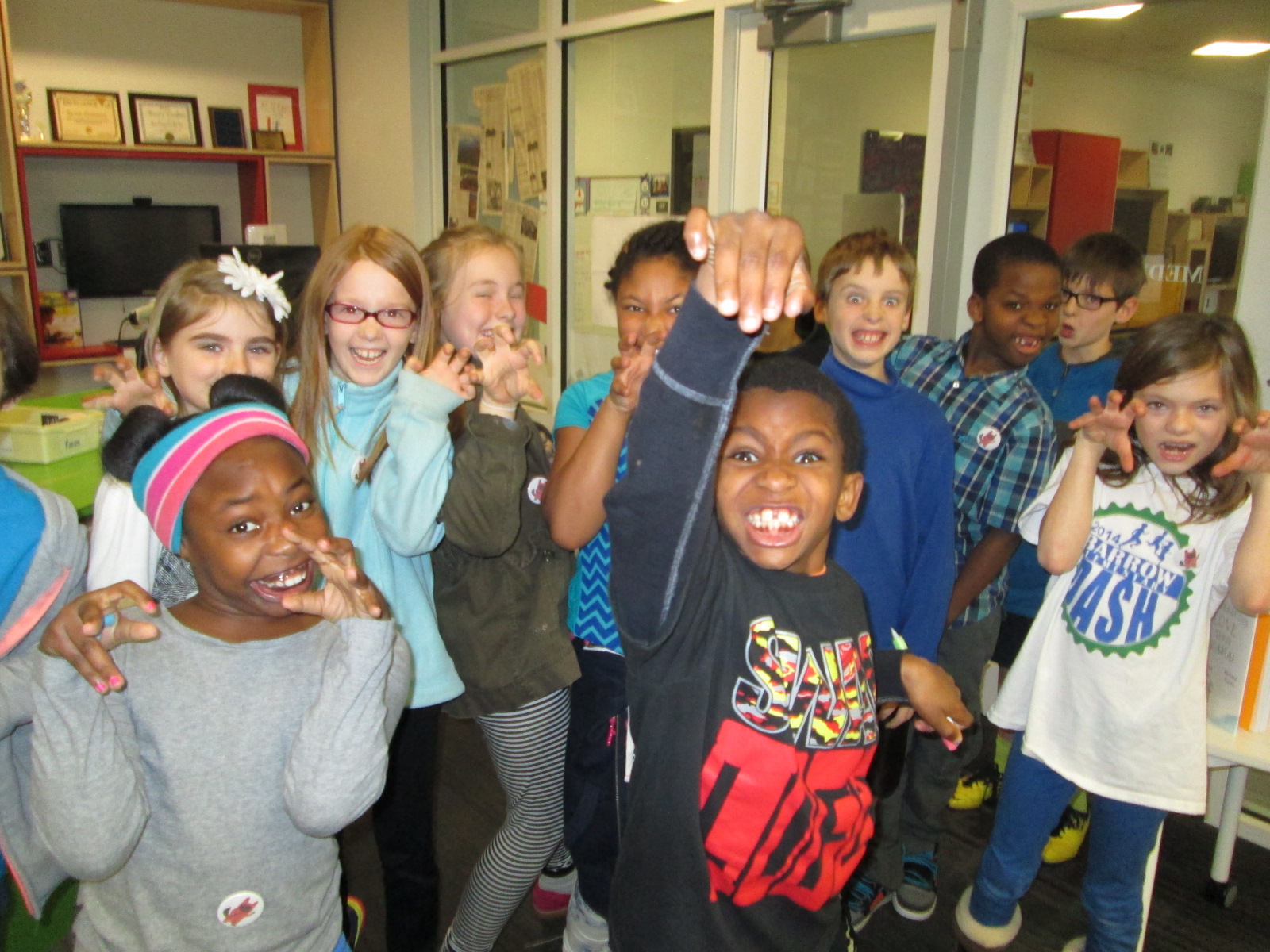
Connecting through Stories: 2015 World Read Aloud Day Part 2

WRAD15 Day 2 (79)

Wow!  Day 2 was busy.  We had much smoother Skype connections and plenty of stories.  Here’s a quick look at what happened.

Ms. Hicks’ 3rd grade ELT students connected with Crystal Hendrix in Asheville, NC.  We shared the story I’m Bored.  Then, students had fun asking about life in each other’s communities.  We made several connections between Asheville and Athens including college towns and weather.

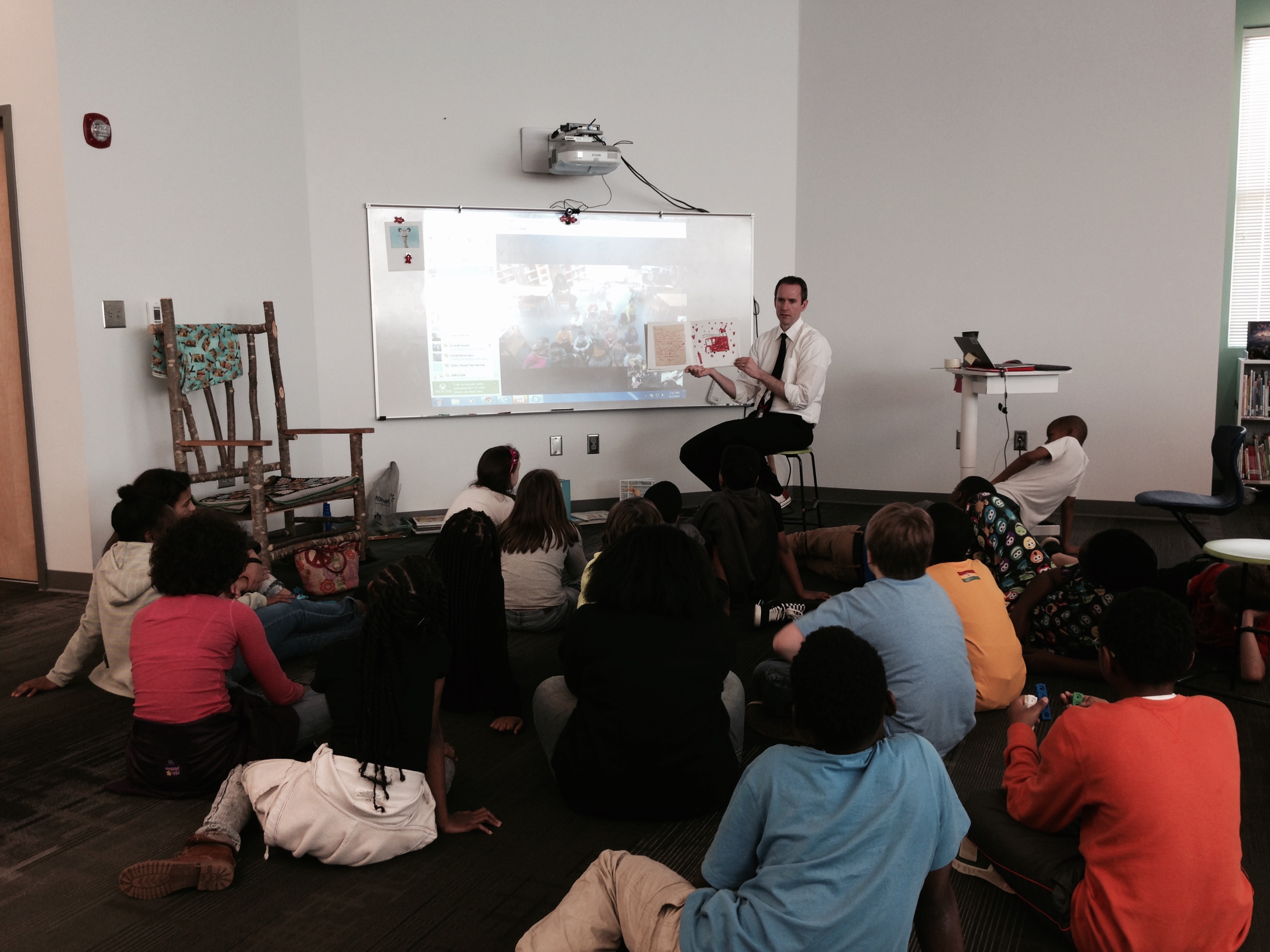
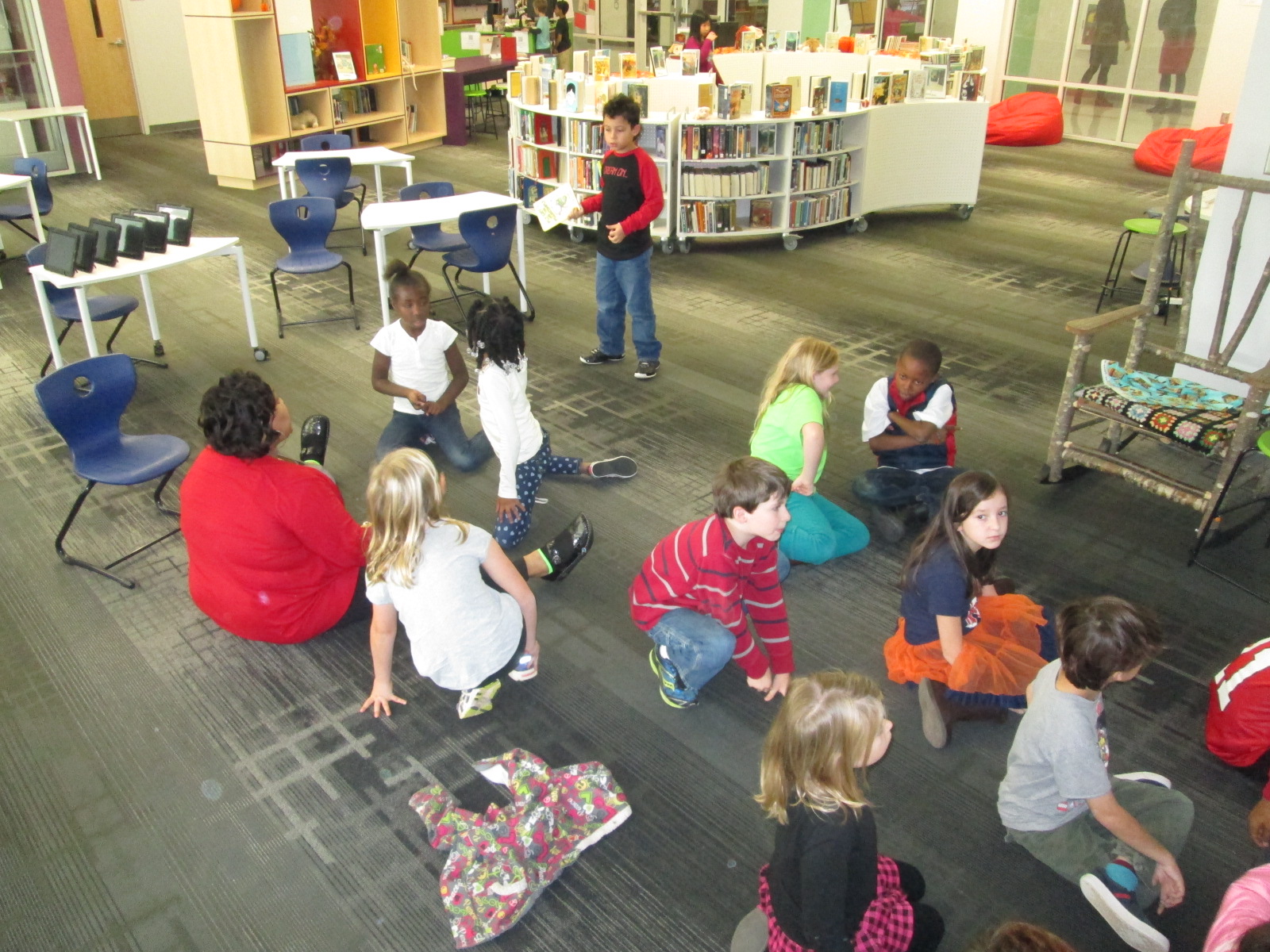
Next Ms. Brink and Ms. Wright’s 2nd grade connected with Carol Scrimgeour and her 2nd grade in Essex, VT.  We read the story Mr. Tiger Goes Wild.  We had our students form lines and step up to the camera and take turns reading pages of the book.  It was great fun to hear student voices reading across the miles.

Ms. Yawn’s 2nd grade came and read Elephant and Piggie Waiting is Not Easy.  We had some trouble getting the right Skype accounts connected for our author visit, but we finally got it worked out in time to make our connection with Alison Randall, author of The Wheat Doll.  She told us about her book and then read from Roald Dahl’s The Witches.  It was scary fun.

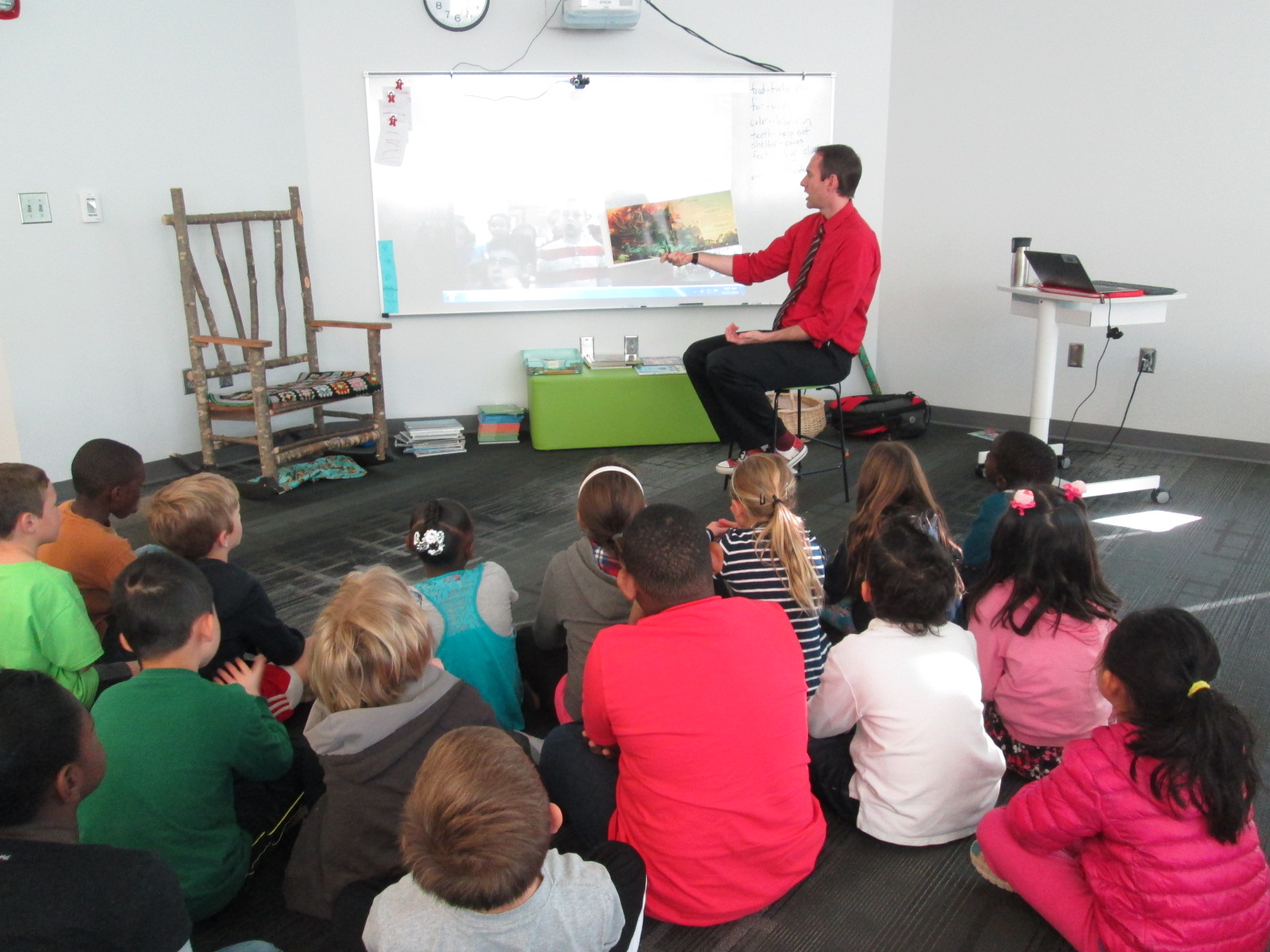
Ms. Clarke’s 3rd grade class connected with Cathy Potter’s students in Maine.  We were fortunate to be joined by Natalie Lloyd, author of A Snicker of Magic.  We got to meet her camera-shy dog, Biscuit.  Then, we saw some of her favorite books before hearing her read aloud the first chapter of Snicker of Magic.  It truly was magical to hear her words drifting to Georgia and Maine from Tennessee.  We even got to hear just a bit about her book that was just sent off to the editor.

Ms. Clarke plans to read Natalie’s book to her class as their next read aloud, so The Beedle just happened to put a new copy of the book in Ms. Clarke’s box.

Ms. Ramsey’s 3rd grade connected with Shannon Hyman’s Kindergarten in Virginia.  We were joined by author Melissa Guion.  She shared her wonderful penguin stories and illustrations.  Shannon’s students were able to share some facts about penguins that they had just learned.

Ms. Em’s 1st grade connected with Okle Miller’s Kindergarten in Tampa, FL.  We were joined by the amazing poet Laura Purdie Salas.  She had our students chanting poetry about rocks and listening to poems about books and unusual pets.

Ms. Slongo’s 4th grade had a special treat Skyping with Barbara Walsh, author of The Poppy Lady.  Barbara visited our school last year in person and it was her very first school visit.  This time, we were her very first Skype visit.  Our students loved hearing about the Athens connection to Moina, who is responsible for getting the poppy to be a symbol of remembrance.

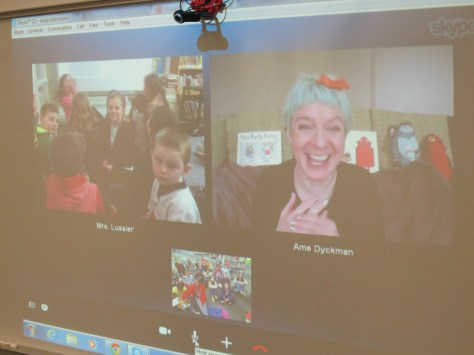
Finally, we closed out our day with a high-energy Skype with 2 authors, Ame Dyckman and Adam Lehrhaupt.  These two were full of laughs and energy.  They took questions and then shared some stories.  Adam shared a book that isn’t coming out until October (shhhh….don’t tell anyone).  Ame shared Wolfie the Bunny.  Ame even sent some amazing book swag for all of the readers in the class.

It was truly an amazing day.  It was exhausting, but we feel connected to so many readers across our great country.  Thank you to each and every author and class who connected with us for World Read Aloud Day.
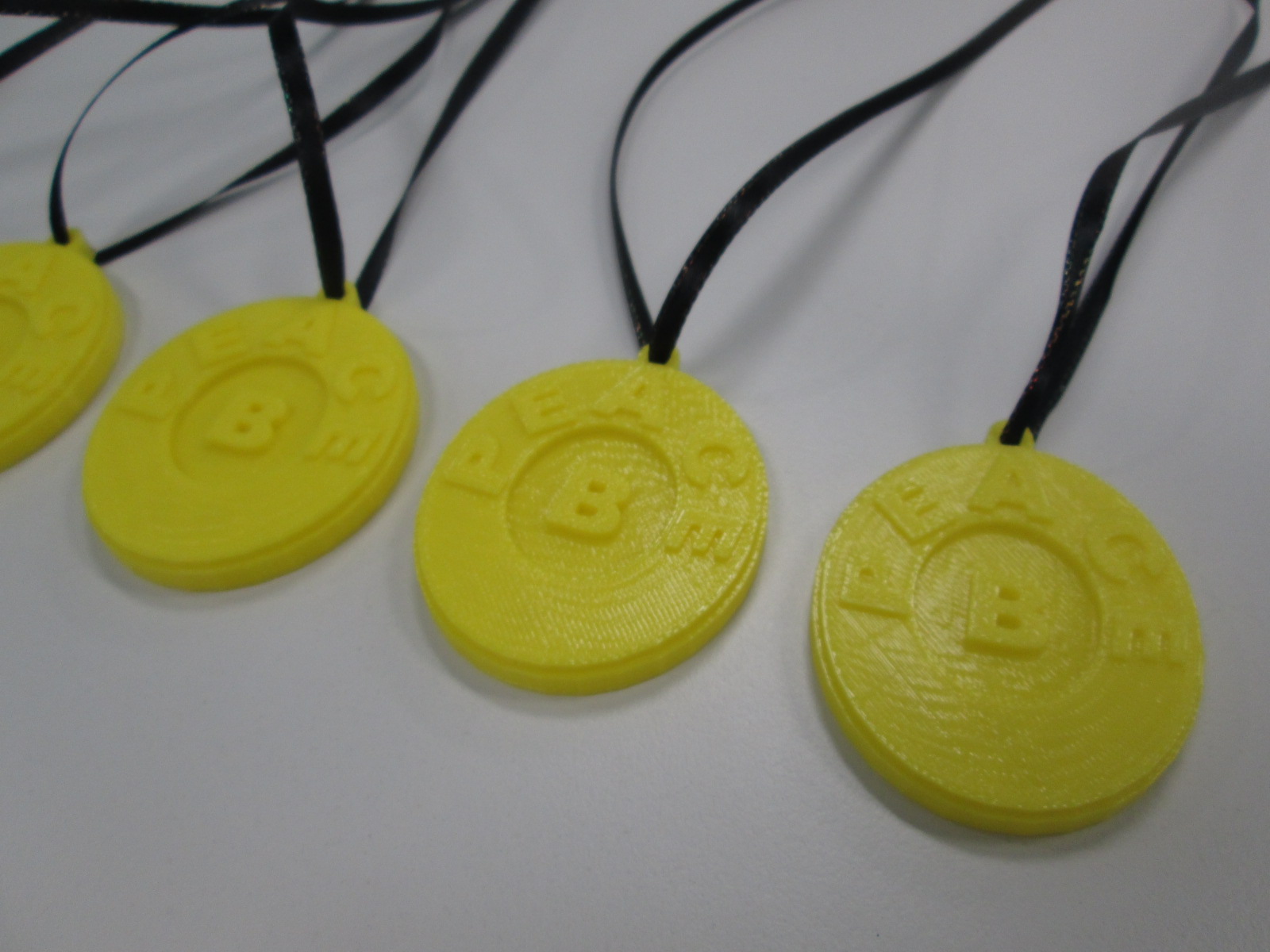
The 2015 Barrow Peace Prize with the Flipgrid Team: And the winner is…

Flipgrid Barrow Peace Prize (2)For the entire month of February, people around the globe have been voting on our 2nd grade black history Flipgrid project.

After all of the research, the writing, the filming, the promoting, and the designing, we are ready to announce our winner.

Flipgrid Barrow Peace Prize (4)

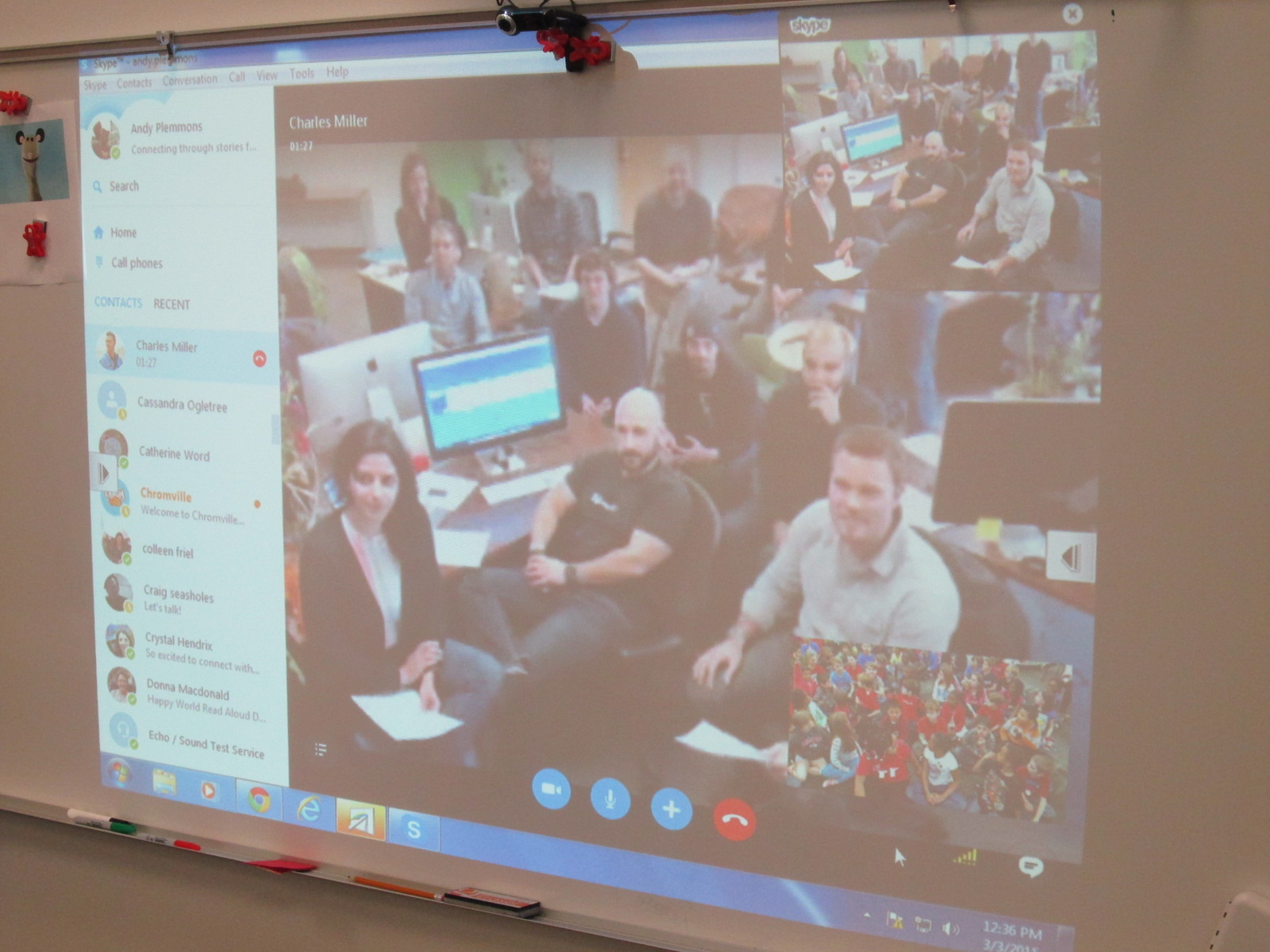
Today, we Skyped with the Flipgrid team in Minneapolis, Minnesota to learn about Flipgrid, announce the winner, and also give out some very special recognitions.

First, students got to meet the Flipgrid team and ask some questions about creating an app.  I love when students get to talk directly to the developers.  They gain an understanding of how coding plays into real careers.  They also hear that app developers come from many different backgrounds and didn’t necessarily come into their role with all of the expertise to create an app.

Flipgrid Barrow Peace Prize (3)

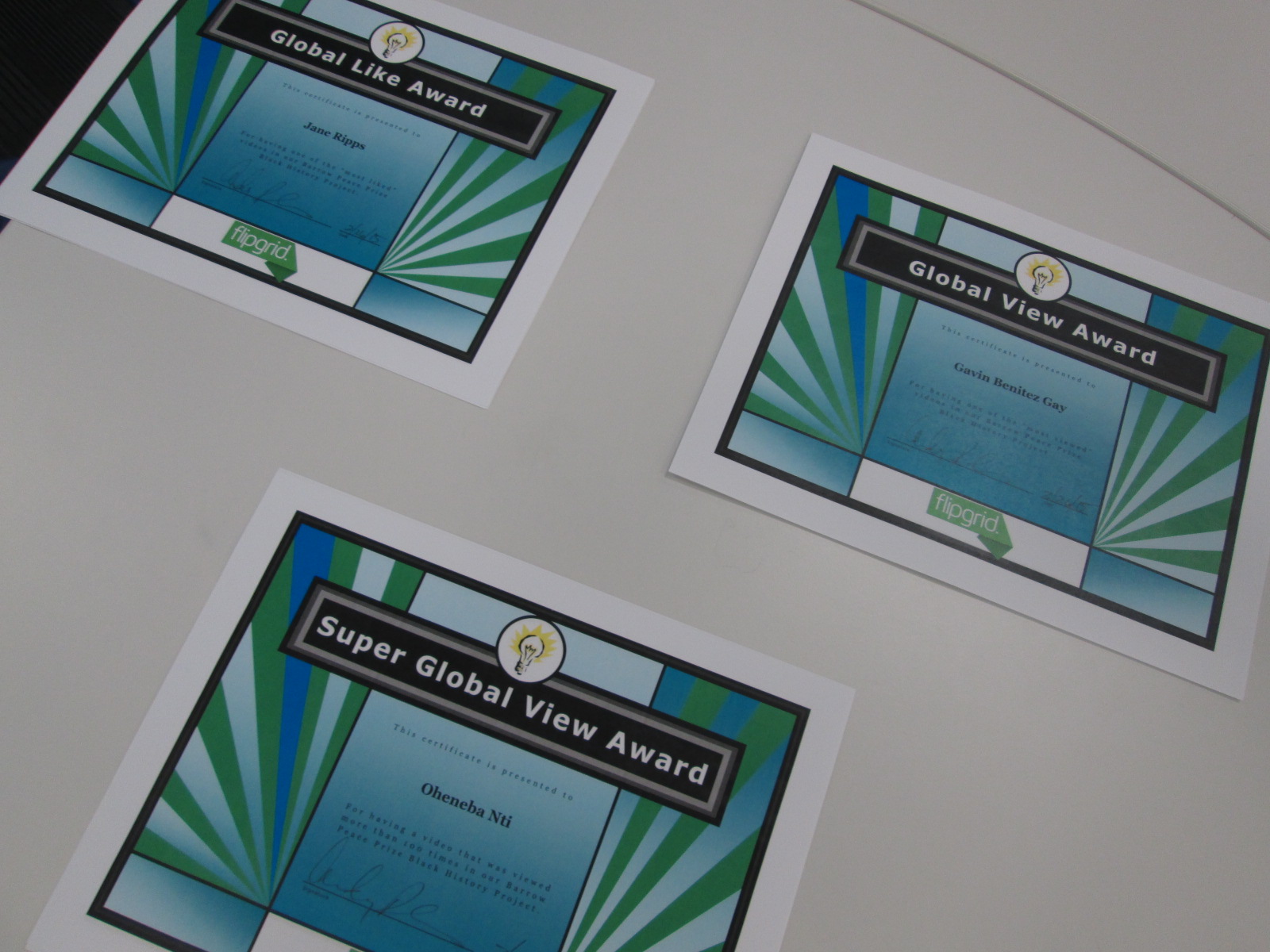
One of the very special parts of our Skype with Flipgrid is giving out awards.  I combed through our grids and looked for students who had the most views and the most likes.  These students received some special awards called “The Global Like Award” and “The Global View Award”.  Three students had more than 100 views each so they received a special award called “The Super Global View Award”.

I emailed the names to the Flipgrid team and they took turns calling out student names.  The teachers and I handed out certificates, and it was so much fun to see the kids cheering each other on.  It was a supportive community.  Since there were several awards, we did our best to do silent cheers and silent claps for one another.  Even the Flipgrid team joined in with our silent celebrating.

Another special moment happened when Taylor, the designer of our Barrow Peace Prize medal, stepped up and told the Flipgrid team about his design.  I presented him with the very first Barrow Peace Prize to take home with him.

We also told the Flipgrid team that we are sending a Barrow Peace Prize medal to them as well.  They are going to hang it in a special place in the office with their many other awards.

Finally, it was time for us to announce the winner of the 2015 Barrow Peace Prize.  The votes were very close between our 6 people from Black History, but in the end, we are happy to announce that the 2015 Barrow Peace Prize goes to….Jesse Owens!

Another copy of the Barrow Peace Prize medal was presented to the 2nd grade in  honor of Jesse Owens, and it will be passed around among the classes.

Flipgrid Barrow Peace Prize (1)

Of course, when you’re Skyping it’s always interesting to see the perspective from the other side.  Here are a few views of what it looked like in the Flipgrid headquarters.

At the close of our Skype, the Flipgrid team let the students know that they would be getting a special Peace Prize party complete with Flipgrid stickers!

Flipgrid Barrow Peace Prize (19)

We would like to send another big thank you to the Charlie Miller, Brad Hosack, and the whole Flipgrid team for taking time out of your day to connect with us and remind our students that their voices matter in our global community.  This project just keeps growing and inspiring us (and others) to do even more.

Connecting through Stories: 2015 World Read Aloud Day Part 1

FullSizeRender

Our first day of Read Across America and World Read Aloud was filled with wonderful stories and plenty of technical difficulties, but we didn’t let the technical difficulties prevent us from connecting through stories.

The day began with my first cancellation emails.  Since World Read Aloud Day is right at the beginning of March, many states are still experiencing winter weather.  Two connections were cancelled before we could even begin due to snow.  Did this stop us? No.  Ms. Wyatt’s 1st grade class still came, and we read aloud Goodnight Already and Waiting Is Not Easy and noticed many similarities between the two books.  We just didn’t have a Skype connection to go with it.

Ms. Freeman’s 5th grade students came to connect with Cassandra Ogletree and her students in Forsyth, GA.  Before we connected, our students made predictions about where they thought Forsyth, GA was located.  Then, we used Google Maps to take a look.  During our connection, we read Goodnight Already with Cassandra and her students.  I was Bear and Cassandra was Duck.  Since our 5th graders are studying perspective, they noticed how the book showed the different perspectives of bear and duck.  As usual, students had time to ask one another questions about where they live.  We often take for granted that students realize how connected we are around the world, but these Skypes surface that our students have lots of wonderings about the day to day lives of others around the world.  When we disconnected, we took time to look at a street view in Google Maps to see the school that we had just Skyped with.  Student were amazed by the lack of buildings around the school.  It seemed to be way out in the country surrounded by pastures and trees.  This is very different from our school that is right next to UGA.

Ms. Boyle’s class skyped with Colleen Friel and her 1st grade in Long Island, NY.  We shared The Story of Fish and Snail.  Our Skype calls kept freezing or dropping, so we reached a point where we just had to stop the call and finish the story on our own.  Once again, the students were so patient during the technical difficulties and we didn’t let it stand in the way of the story.

Ms. Haley’s class had an opportunity to connect with Elizabeth Garton Scanlon, author of wonderful treasures such as All the World and The Good Pie Party.  The downside was that we couldn’t get Skype to work at all in order to connect with her.  I tried every trick I could think of to make the connection better and faster and nothing worked.  Finally, I took out my phone and we huddled around my phone for over 30 minutes listening to her share about her books, her ideas, her dog, and her upcoming work.  We had the treat of hearing the first few pagers of her upcoming book The Great Good Summer.  Within just a few pages, several of our students started opening up about connections they had to the book.  One student shared about losing her dad.  Another talked about her dad being gone on tour.  I love how stories help us make connections to the emotions we wrestle with and give us a pathway to conversation with one another.  It must be amazing as an author to hear how your words open up conversations for readers.

Ms. Freeman’s 5th grade returned at the end of the day to connect again with Colleen Friel in Long Island, NY.  This time, our Skype connection was much better since the district worked on the network.  We read the book The Day the Crayons Quit.  Students loved finding out that even though there were 7 inches of snow on the ground, the New York students were still in school.

Finally, we closed our day by doing a triple Google Hangout with Donna MacDonald in South Burlington, VT and Craig Seasholes in Seattle, WA.  Ms. Carney’s Kindergarten class joined their Kindergarten classes in reading 3 Elephant and Piggie stories.  It was fun to connect across the country and hear words being spoken between thousands of miles of the United States.  We had fun, engaged in some silliness while we read, and made some new friends.  Even though Donna had some technical difficulties, we still made it work.  We could hear her, but not see her.

I won’t lie that I was a bit flustered today with all of the problems, but I have to say how important it is to persevere.  I could have easily given up and called it all off, but we made things work with what we had.  Because of that, our students had an amazing first day of connections through stories.

Let’s All Connect For LitWorld’s World Read Aloud Day Again In March

World Read Aloud Day — LitWorld

On March 4th, we will celebrate World Read Aloud Day with LitWorld.  This special day “calls global attention to the importance of reading aloud and sharing stories”.

For teacher librarians and other educators, it has come to be a week-long celebration of sharing stories through Skype and Google Hangouts. This year, these connections will happen on March 2-6.Jenny & Ame (2) small

Connecting through stories is always such a rewarding experience for our students.  Students often discover that we are all very much the same even though we are different.

Shannon McClintock Miller and I invite you to post your schedule to our shared Google Doc and start making connections for this special week.  You may even discover a long-time collaborative partner through this one experience.

2015 World Read Aloud Day Blog   Google Docs

You can read about our 2014 World Read Aloud Day experiences in my post “World Read Aloud Day Final Thoughts” as well as others on the Barrow Media Center Blog.  Shannon shares how she documented her school’s World Read Aloud Week via a Smore journal.

Be sure to check out the LitWorld site for more information on planning for World Read Aloud Day.  They even have a special classroom kit with ideas for schools.
World Read Aloud Day — LitWorld (1)

If you are interested in connecting with others on this day, please add your name, schedule, and ideas to the informations in the Google Doc that we started.  This will begin to fill up with others around the world as they want to connect their students and schools too.  We plan to celebrate throughout the entire week of March 2-6th.


Google Tour

We think it’s important to know that there’s no “right” way to plan for World Read Aloud Day.  Whatever you decide to do will be the right plan for your school and your students.  Whatever you do, your life will be richly rewarded with the power of spoken word and voices connecting together across the miles to lift up our right to read!
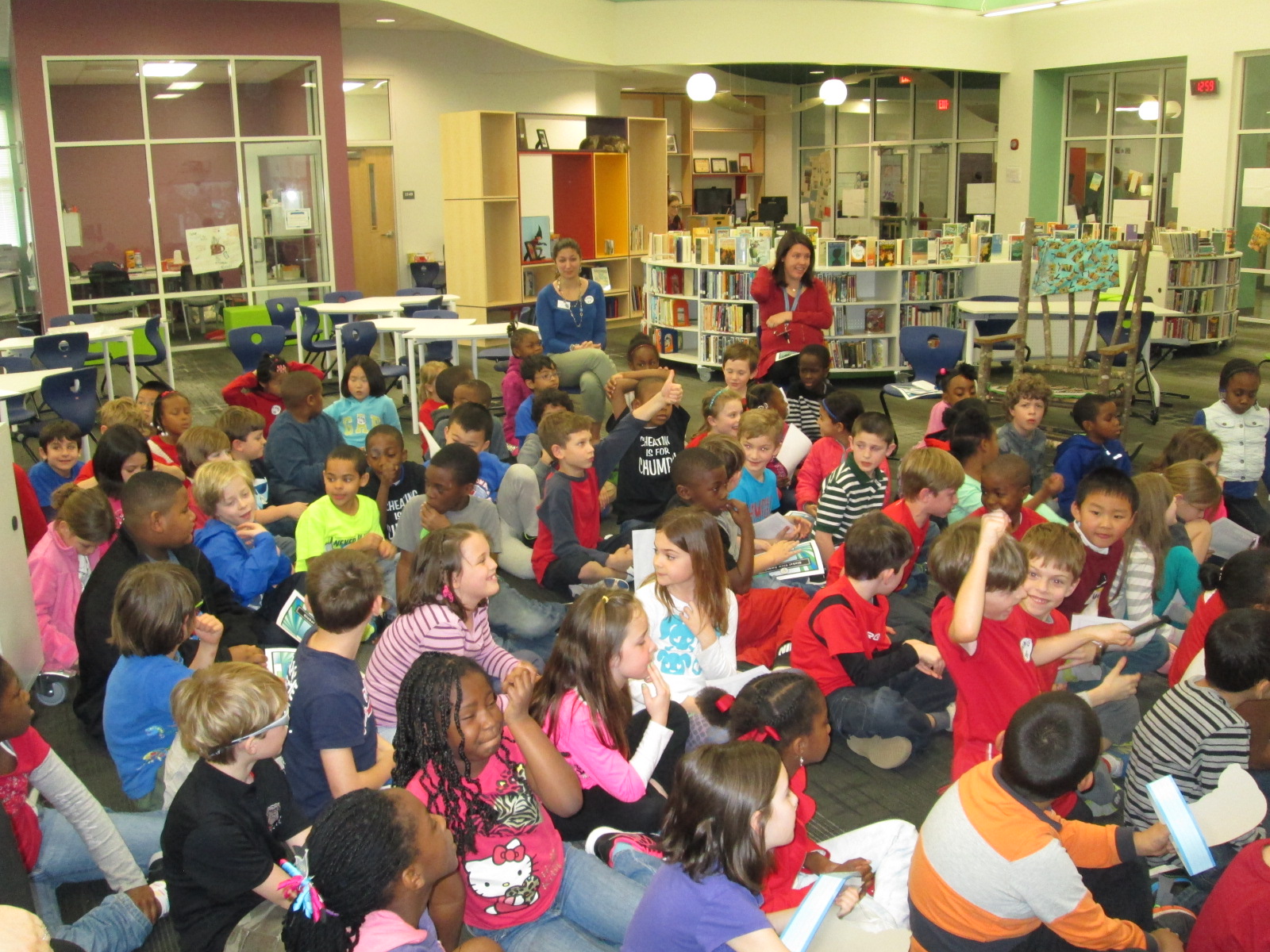
In the words of Kate DiCamillo, National Ambassador for Young People’s Literature, “Stories Connect Us”.  We can’t wait to connect students around the world through story.

Make a Resolution to Collaborate Globally and Join us for the TL Virtual Cafe January 5th

It’s almost 2015!  Many of us will make resolutions for the year, but in the education world a new calendar year most likely is a halfway point in the year.  For me, it’s a great time to pause and check in on what I hoped to accomplish for the year, and think about what I still need to tackle.  One of my big goals for the 2014-2015 school year was to “engage in global thinking and global collaboration”.

So far this year:

  • We collaborated with multiple schools for International Dot Day and used Google Drawing to create works of art with our collaborating schools.
  • We beta tested Wandoo Reader for Evanced and held Skype sessions to offer feedback on improving the tool for schools.
  • We exchanged our recycling problem with multiple schools during America Recycles week and brainstormed solutions for one another, while realizing that we all have recycling challenges as well as ideas for both recycling and reusing.
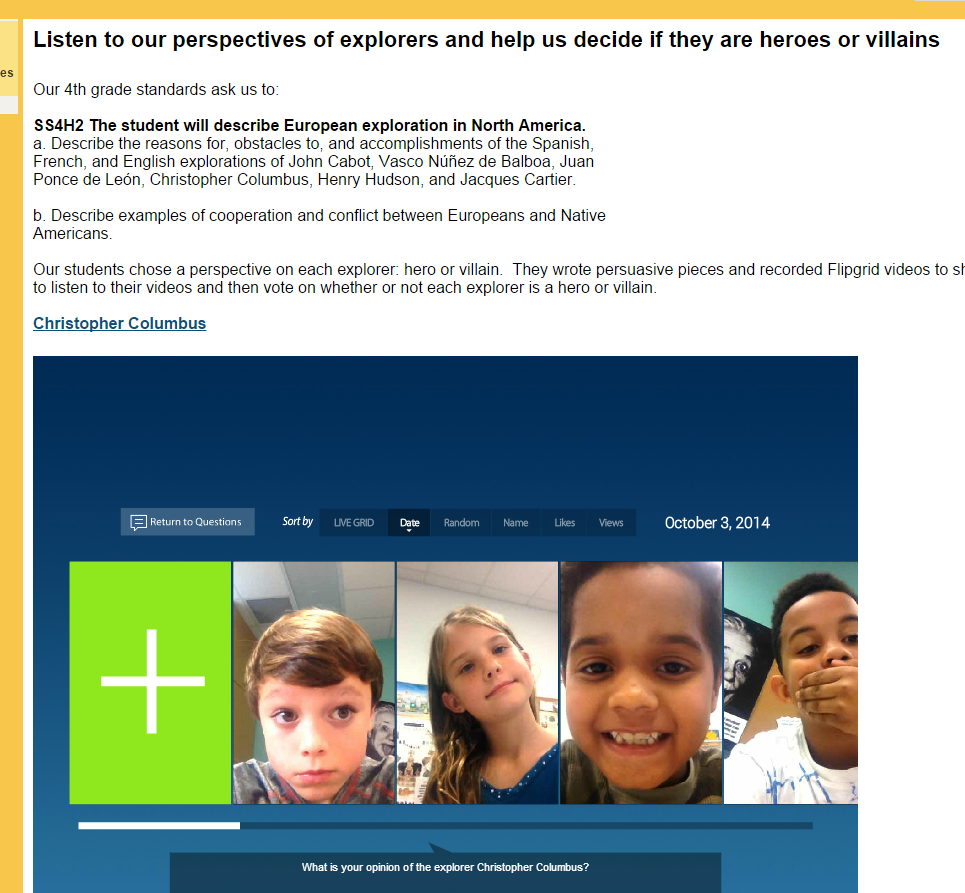
  • Our 4th grade pushed their explorers project out to the global audience and invited people to view and vote on the explorer perspectives that were offered
  • Joyce Valenza and I hosted a GlobalTL Google Hangout to encourage librarians to push the start button on global collaboration through multiple online communities including the GlobalTL Google Plus Community

2global

What I know:  I still have a lot of work to do!  While I’ve had many collaborative experiences, I still feel like I’m just scratching the surface of  something that could be much bigger and meaningful.  I also know that I have lots of ideas, but I can’t expand those ideas alone.  I need my professional learning network of global librarians to think, plan, and create with me.

Global TL logo

Joyce Valenza and I will be hosting the 1st TL Virtual Cafe of 2015 on January 5th at 8PM EST.  During our session, we plan to outline three levels of global collaboration.

This process might happen as a three-level taxonomy:

  • Introduction: We learn to use the tools for connection and share their affordances with learners, through engaging, though often one-shot, activities, like__Mystery Skypes__.
  • Inquiry: Guided by teachers and librarians, students engage in authentic partnerships to address issues and problems, engaged in curricular projects like__Flat Classroom__.
  • Independence: Students transfer use of the tools and strategies we’ve modeled, using hashtags to identify global experts, setting up their own investigatory conversations and events. They become citizen journalists, scientists, collaborative writers and creators, engaging in such projects as our Eyes Wide Open initiative.

Our children deserve teachers and librarians who are global. TLs who can plan meaningful global learning partnerships, connecting learners, classrooms and libraries through inquiry projects and expanding the possibilities of expanding the books we read.

Join us for what we hope will be a global conversation.  We want this TL Cafe to not just be a presentation of success, but instead have it be an opportunity to ponder what we’ve tried and brainstorm new ideas for what we can do together as teacher librarians around the world.

Plan to join us.  Bring your ideas and be ready to share them in the chat, on Twitter, and even on the mic during the session.  See you there!

http://tlvirtualcafe.wikispaces.com/

Celebrating Our Explorer Project with the Flipgrid Team

Flipgrid Skype (1)

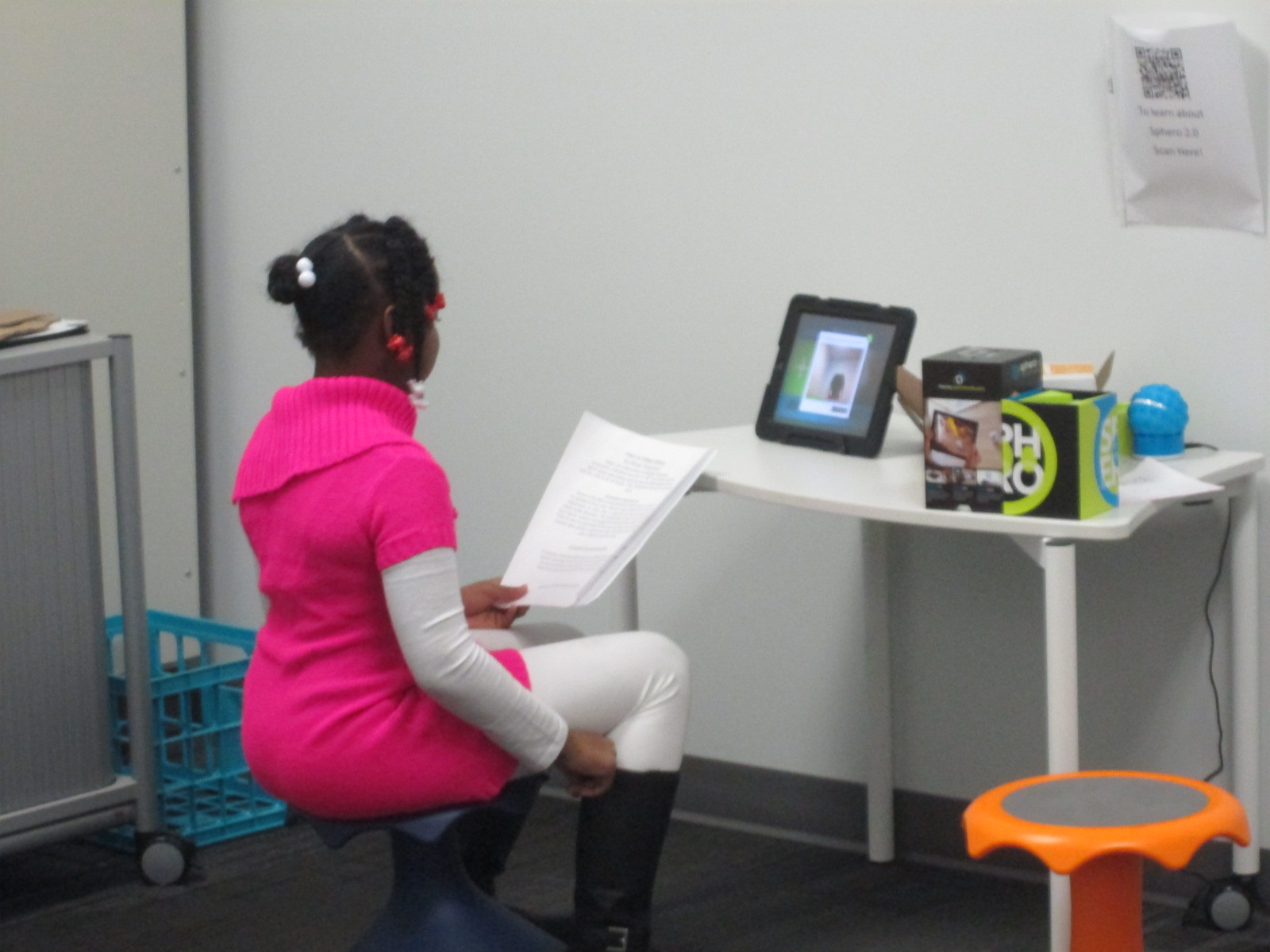
Today our 4th graders had the chance to Skype with Charlie Miller and the rest of the Flipgrid team in Minneapolis, Minnesota.  This was the conclusion of the explorers project that 4th grade students have worked on for the past few weeks.  As part of the project, we encouraged people around the world to watch our Flipgrid videos and vote on whether explorers were heroes or villains.

The team congratulated our students on their hard work on this project and also took questions and suggestions from students.  Several 4th graders stepped to the microphone and shared suggestions such as:

  • Extending the 90 second time limit by offering a choice of time limits
  • Allowing you to categorize your video with tags

Other students shared what they liked about Flipgrid such as:

  • the ability to watch other people’s videos before making your own
  • the like button
  • being able to film your video again if you weren’t happy with it

Since this Skype came the week after our hour of code lessons, it was also a great time to hear about how an app was developed.  It sounded like developing an app is a much longer process that developing a website because in one of the student questions we learned that the app took about 6 months to create while the website took 2 really long weekends.  We also heard how an app is never really done because you are always trying to make it better.  I loved how this connected both with our hour of code sessions but also to other areas such as writing instruction.  Students also learned about how the name Flipgrid was chosen since the videos are on a grid and they flip when you play them, but they also heard other considerations that go into a name such as web domain registration and what is actually available.

Flipgrid Skype (11)

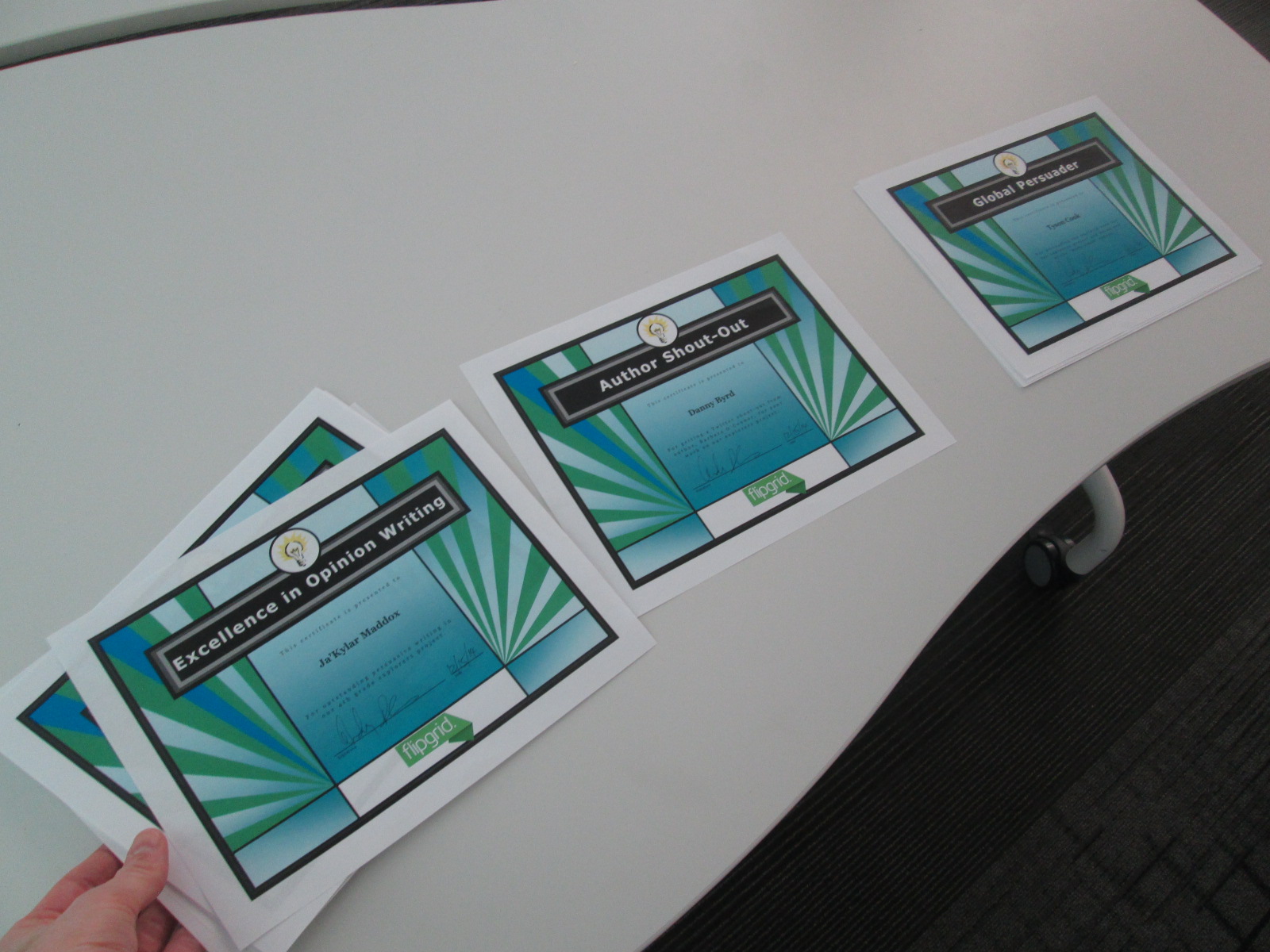
One of the most fun parts of the Skype was the announcement of awards.  Several students received awards for Excellence in Writing, Shout-outs from authors, and Global Persuader awards.  I sent these names to the Flipgrid team and they took turns calling out student names as I handed out the certificates.  Students had fun giving silent cheers for their classmates as awards were handed out.

I also took time to share with the students the results of all of the voting that had taken place for their project.  It was interesting to see their reactions as they heard that Christopher Columbus was the only explorer voted to be a villain.

Just for fun, we closed out our Skype with a Christmas singalong of Rudolph.  Luke performed on the guitar and we belted out our best Rudolph even through the time delay on Skype.  It may not have sounded like it was together, but it was still fun.

https://www.youtube.com/watch?v=ZXsM1RRplzY

Thank you to the entire Flipgrid team for creating a tool that has helped our student voices to reach a global audience, and thank you for taking time to celebrate with us.

We Need You to Vote on Whether these Explorers are Heroes or Villains!

IMG_4397

Fourth grade has been hard at work.  They have been researching multiple explorers in their social studies standards and considering whether those explorers are heroes or villains.  It all started with a lesson in the library using a video about Christopher Columbus, Encounter by Jane Yolen, and Tagxedo.

IMG_4399

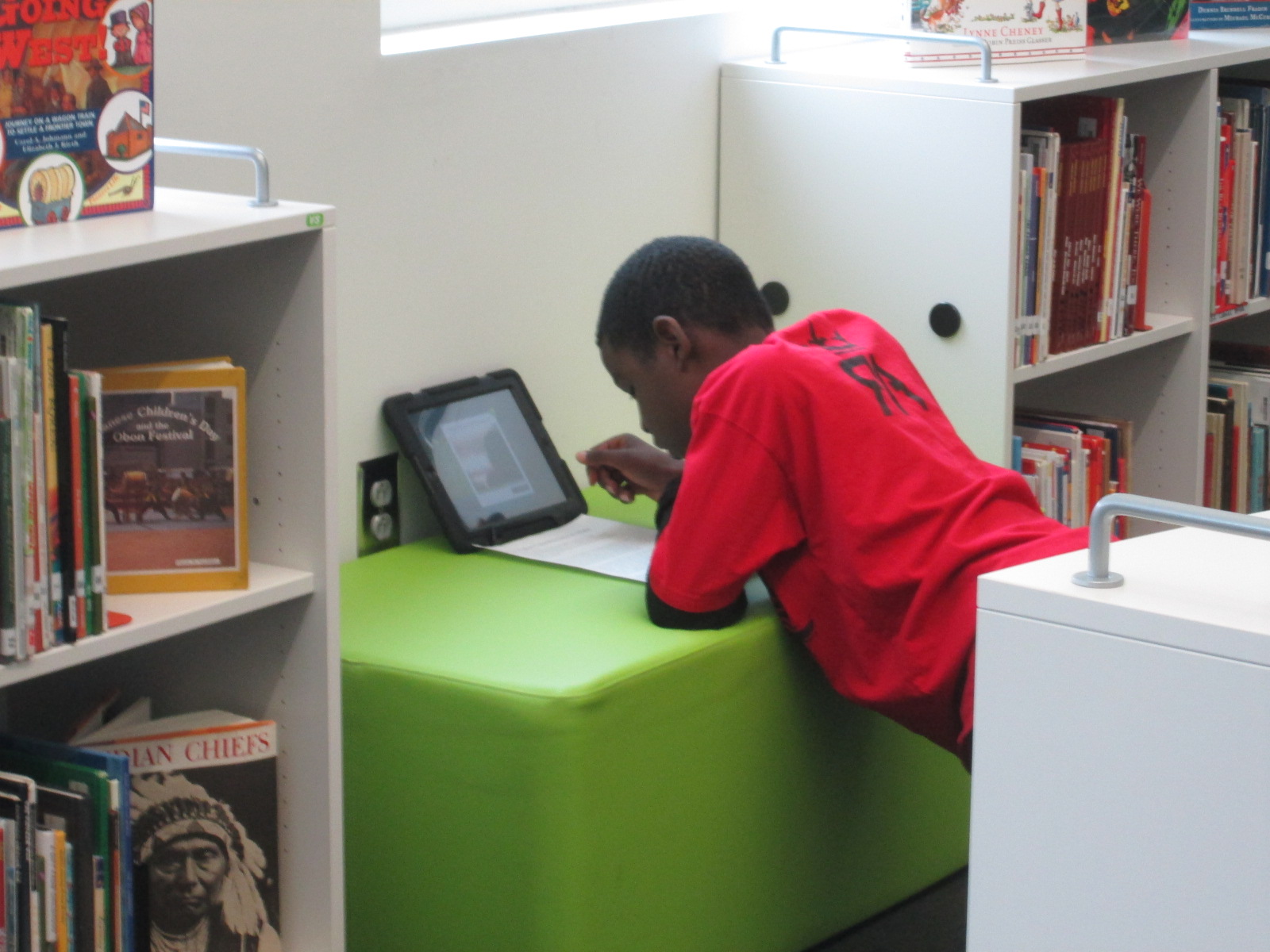
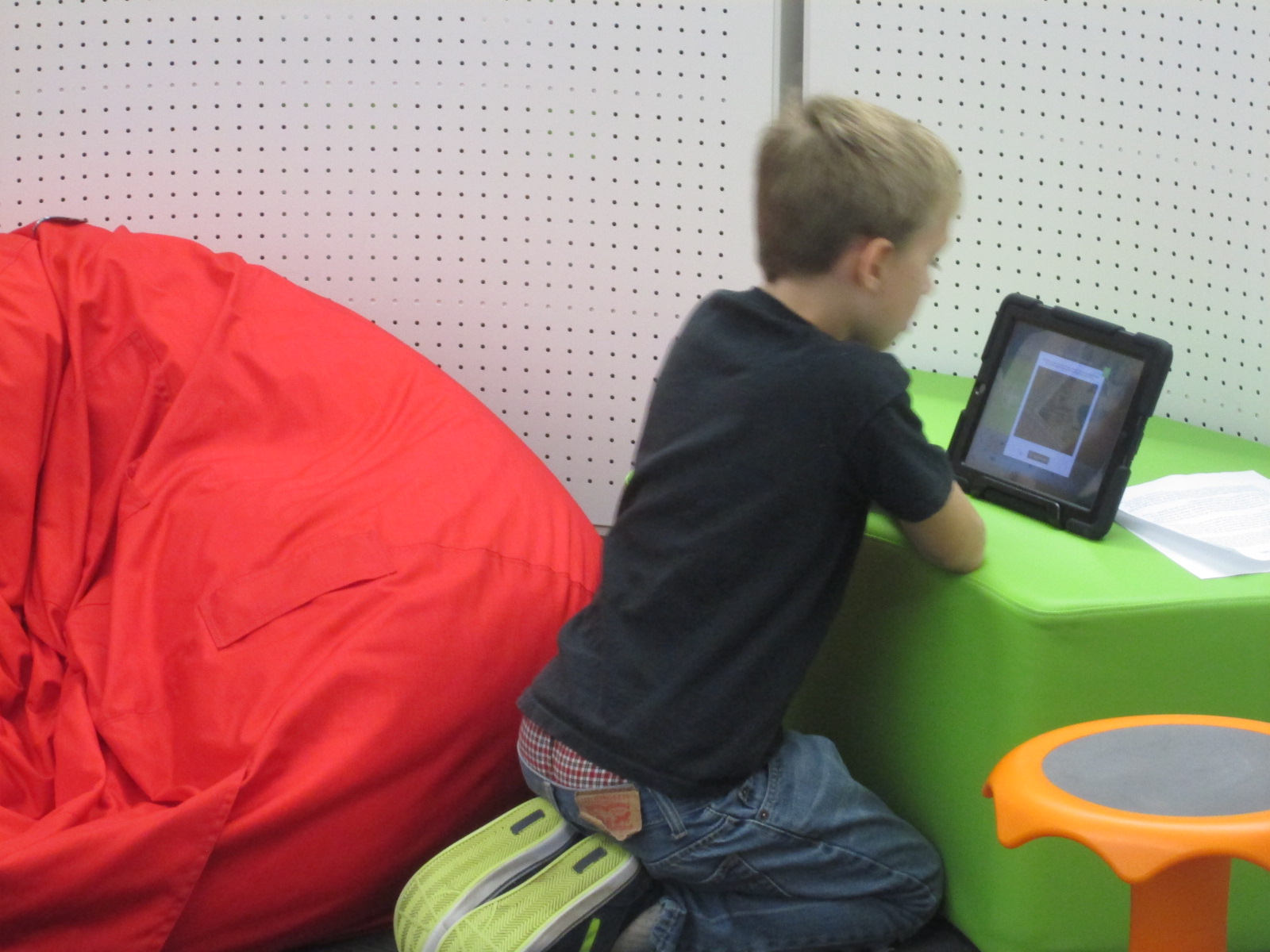
After that, students selected an explorer and began their research.  They took their information and used that to write a persuasive piece convincing an audience that their explorer is a hero or villain.  They used Flipgrid to record themselves reading their persuasive piece.  All of the Flipgrid videos are housed on an Google Site for easy access and each explorer has a Google form voting tool to indicated whether that explorer is a hero or a villain.

IMG_4398

Now, this is where you come in!  We need you to watch our videos and vote on our heroes or villains.  You can choose an explorer and spend some time on that one explorer or you can watch them all!  You can share this project with other classrooms or educators and ask them to share.

If you choose to do this with a class, we would love to hear about it!  You can tweet pictures or comments to @plemmonsa  Most importantly we want you to vote and share.


Soon after our Thanksgiving break, we will take a look at the results and most likely connect with our friends at Flipgrid to talk about coding and our project’s reach.

We hope that our project makes you think about the many perspectives in our world’s history and that you enjoy hearing our voices.

Barrow Explorers

Click here to access our Explorer Google Site!  Tip:  If you are in Google Chrome, you will need to click on the shield in your address bar to load the “unsafe script”. This will show you the embedded grids.  Otherwise, just click on the link on each explorer’s name to access the Flipgrid on a separate page.  Feel free to “like” student videos by clicking the hearts, but don’t forget to vote on the Google forms on our site.

Celebrating Picture Book Month with the 2014 Picture Book Smackdown

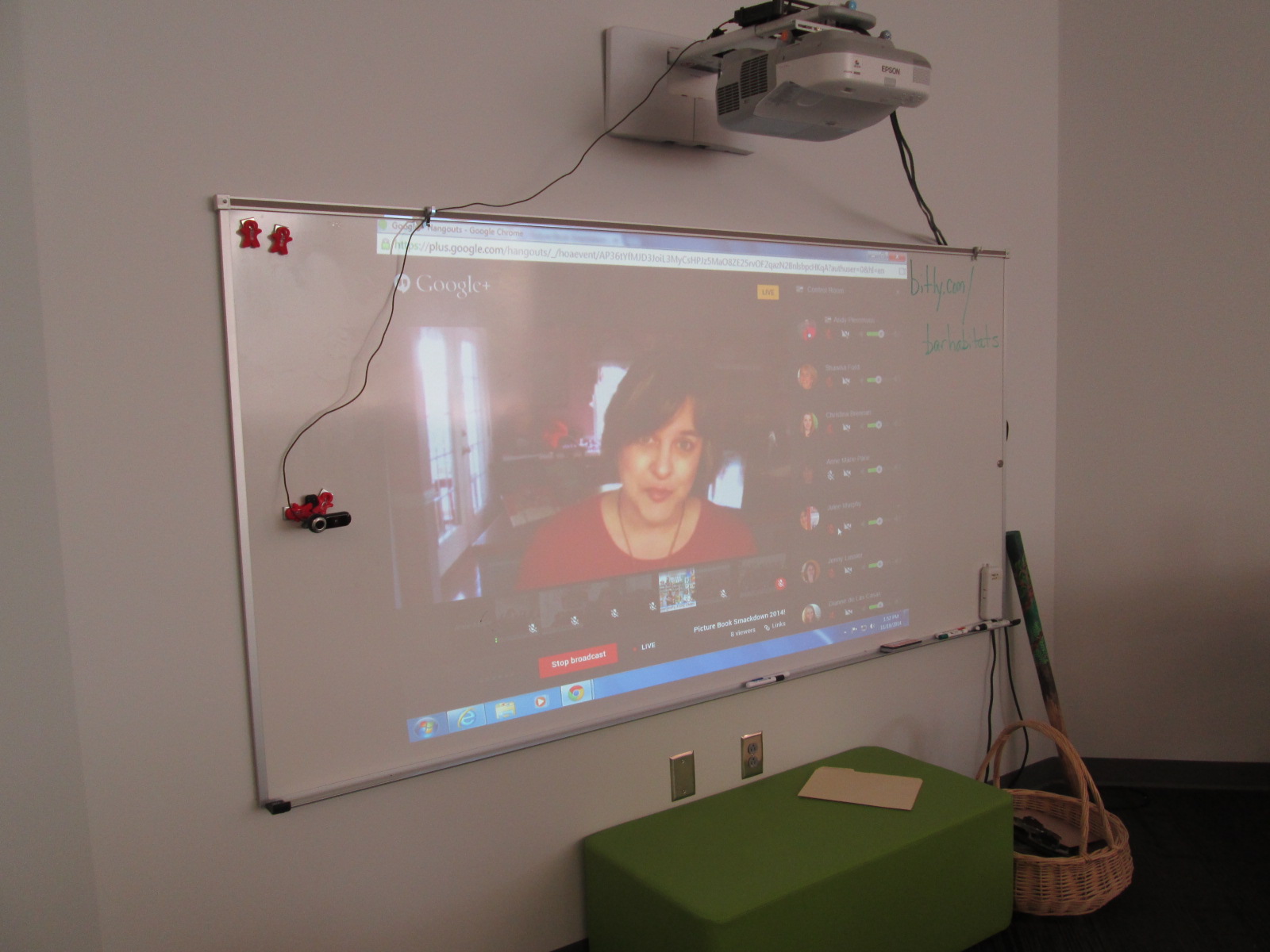
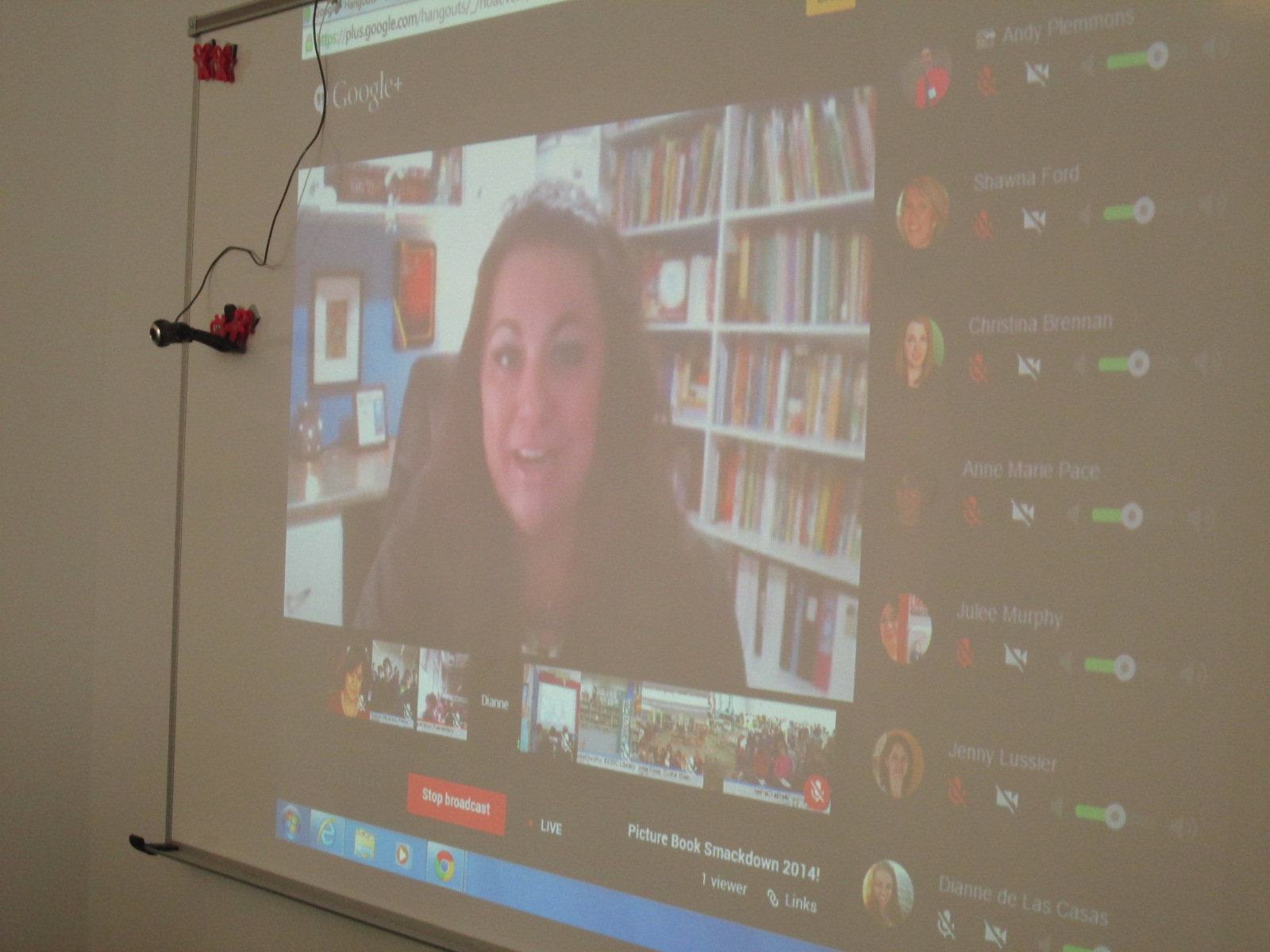
IMG_4429Our 2014 Picture Book Smackdown was a huge success.  Students in 5 states including Georgia, Texas, Connecticut, Maine, and Pennsylvania shared their favorite picture books along with 2 amazing authors, Dianne de Las Casas and Anne Marie Pace.

IMG_4428

Anytime you host an event like this, you worry about technical difficulties.  However, today the internet gave us smooth sailing.  I do want to take a moment to uncover some of the pieces that went into making this event successful.  There was a lot of preparation that went on behind the scenes.

  • I created our Google Plus Hangout on Air event page well in advance so that we could advertise our smackdown to all of our networks.

https://twitter.com/JuleeMurphy/status/534543601665966080

  • All of the authors and participating schools have been communicating with one another via email, twitter, and a shared Google doc.  The doc contained tips for making the hangout run smoothly such as keeping our microphones muted unless we were speaking as well as listed the order that we would speak.

Picture Book Smackdown Notes   Google Docs

  • All of the participating schools had students prepare in advance.  Many of our students wrote our scripts or memorized a brief blurb about their books.  Some of us hosted a practice for our students to run through their talks.

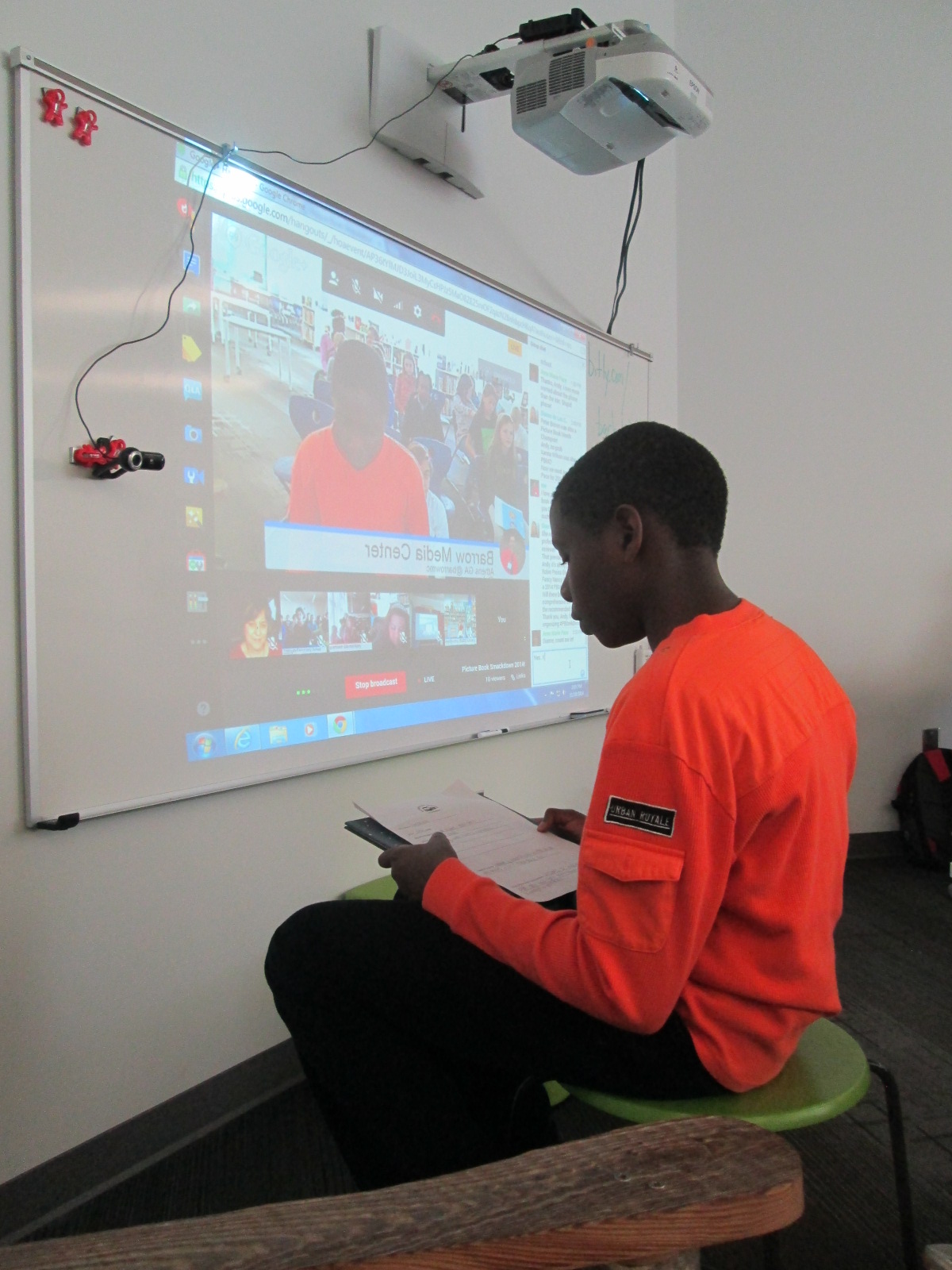
  • We opened the hangout well in advance so that we could test our microphones as needed.  I sent everyone a direct link to join the hangout rather than sending everyone a G+ invite.
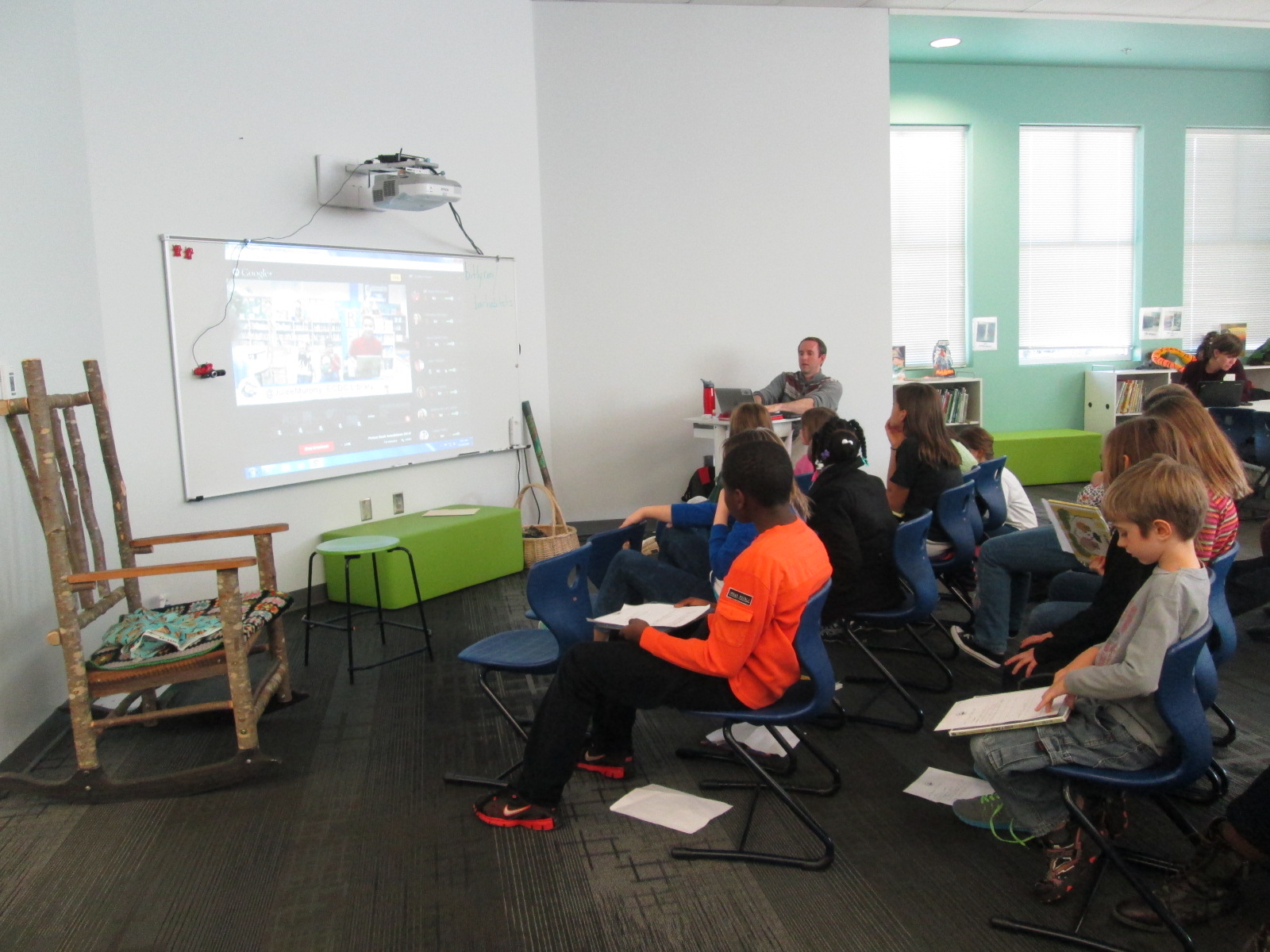
  • Many of us had organization to how our students came up to the microphone. For example, I setup my chairs in groups of 3 so that students were already sitting in the groups of 3 that would come up to the microphone.

  • Some of us had helpers who were assisting us behind the scenes.  I recruited a parent volunteer, a UGA student, and UGA teacher to help me.  The parent volunteer took pictures and assisted students to the microphone.  The UGA teacher created a Google doc of all of the picture books that were shared during the event.  The UGA student helped students to the microphone.  Since I was in charge of the hangout, I wanted to be able to focus on the technology and supporting any issues that came up with our event.

  • As we had time, we tweet pictures or publicity about the event while it was happening.

I hope that you will take time to listen to the archive because it truly was miraculous.  We heard from Dianne de Las Casas about why Picture Book Month was started and it was amazing to see how many authors and  illustrators she has recruited to be picture book champions.

https://twitter.com/JuleeMurphy/status/534776441255116800

We also heard Dianne de Las Casas and Anne Marie Pace share some of their favorite picture books.  I wish we could have heard more from them, but they were gracious enough to step aside so that students could voice their love for so many wonderful books.

IMG_4427 IMG_4421

We heard titles, authors, and summaries.  One of my favorite things to hear from students was why picture books matter in our world.  To hear their own reasoning about why picture books matter was truly inspiring.

https://twitter.com/scsdmedia/status/534780277713694720

https://twitter.com/AnneMariePace/status/534783108596641792

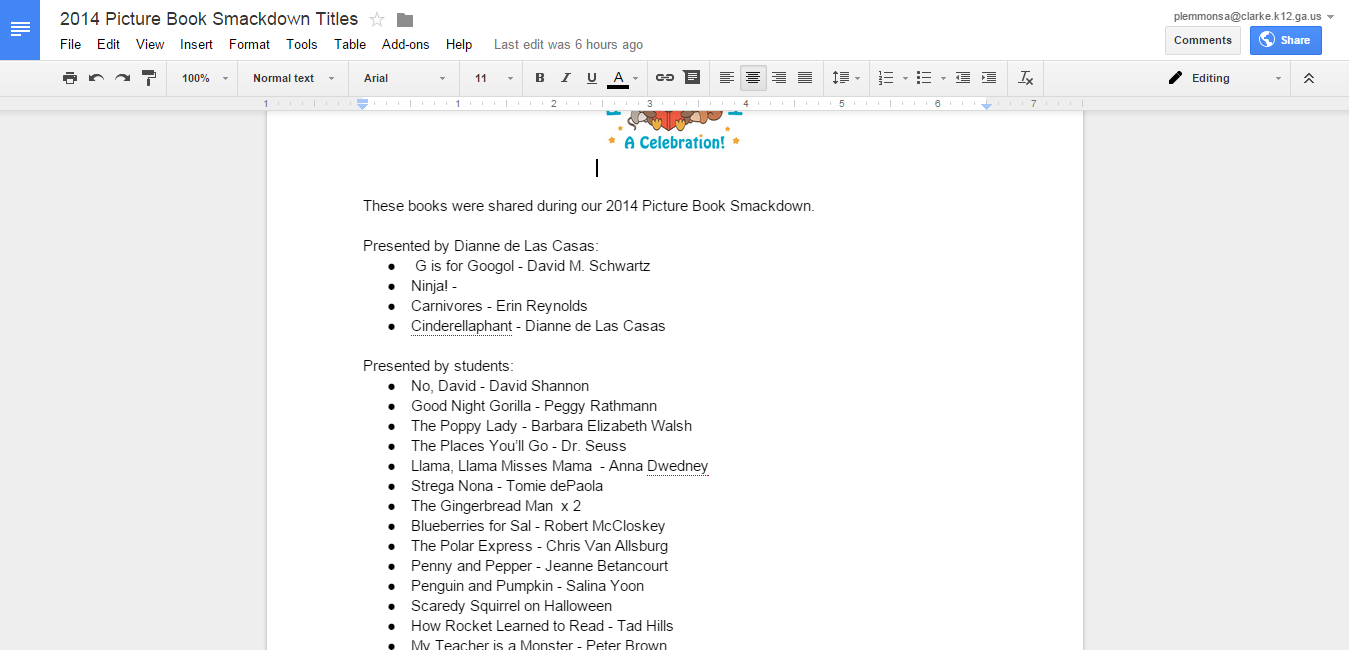
2014 Picture Book Smackdown Titles   Google Docs

Click here to see a full list of the picture books that were shared during the 2014 Picture Book Smackdown.

I would like to take a moment to thank our participating author, librarians, and schools for the 2014 Picture Book Smackdown.

Dianne de Las Casas, founder of Picture Book Month
Anne Marie Pace, author
Andy Plemmons, school librarian in Athens, Georgia
Jenny Lussier, school librarian in Durham, Connecticut
Cathy Potter, school librarian in Falmouth, Maine
Shawna Ford, school librarian in Weatherford, Texas
Julee Murphy, school librarian in Texas
Christina Brennan, school librarian in Pennsylvania

This will definitely be an annual event for me, and I encourage you to think about how you might host your own event like this to get kids connected and sharing their passions and interests.  Happy Picture Book Month!

Watch the archive!

America Recycles Day: Connecting with the World and Making a Difference

IMG_4370

This year, I’ve been thinking a lot about what it means to collaborate globally.  In the past, I’ve participated in amazing events such as Dot Day, Talk Like a Pirate Day, and World Read Aloud Day.  Each of those events has connected our students to classrooms and authors around the globe, and I’ve found so many collaborative colleagues through these events.  It’s these very events that have pushed me to wonder what more we can do with our students.  I’ve been pondering how we can have collaborations that allow our students to make a difference in the world and share their ideas, their questions, their problems, and their solutions.

When our spectrum teacher, Natalie Hicks, came to me with a flyer about America Recycles Day, I knew that this day had potential to spark some action projects with our students and students around the globe.  I made a Google doc, crafted a blog post, and started inviting anyone and everyone to connect for America Recycles Day.  It didn’t take long for some of the very people I’ve connected with for other events to start posting their own schedules in the doc and making connections.  I want to thank Shawna Ford, Jenny Lussier, Cathy Potter, Donna MacDonald, Misti Sikes, Ly Phan, Kathy Schmidt, and Craig Seasholes for taking a risk with me and trying something new.  These people put their schedules out there and started making connections.

This week, my own students started making connections for America Recycles Day.  Each Skype or Google Hangout offered a little something different.

Ms. Clarke and Ms. Haley’s 3rd grade class connected with Kathy Schmidt and her 3rd graders in Gwinnett County, GA.  We learned about how her students are collecting items from home to put in the library’s tinker lab rather than throw them away.

Ms. Wright’s 2nd grade class connected with Cally Flickinger in South Burlington, Vermont.  We read the book Here Comes the Garbage Barge by Jonah Winter.  The story sparked a great conversation about how our trash can take over our world and how important it is to recycle or reuse instead of throw things away.

Ms. Ramseyer’s 2nd grade class connected with Donna MacDonald in South Burlington, Vermont.  Her students shared how they are using Drew Daywalt’s The Day the Crayons Quit to inspire a save the crayons campain.  Students are collecting crayons and sending them to be melted into new crayons.  Our students took time to offer some other ways that the crayons might be used such as making candles, melting crayons for artwork, fusing crayons together to make two-sided crayons, and investigating what crayons are made of so that they might discover even more things that crayons could make.

Ms. Li’s Kindergarten connected with Misti Sikes and her Kindergarten in Forsyth, Georgia.  They shared how they recycle at their school by separating white paper and color paper as well as other ways that recycling has to be prepared before it goes into the bin such as removing paper clips and staples.

Ms. Boyle’s Kindergarten connected with Holly Esterline & Katie LeFrancois’s grade 1 & 2 class in Bolton, Vermont.  We shared the book Compost Stew and heard about how their school is doing TerraCycling.  Even with our connection issues, we still learned a lot about something we don’t do much of at our school.

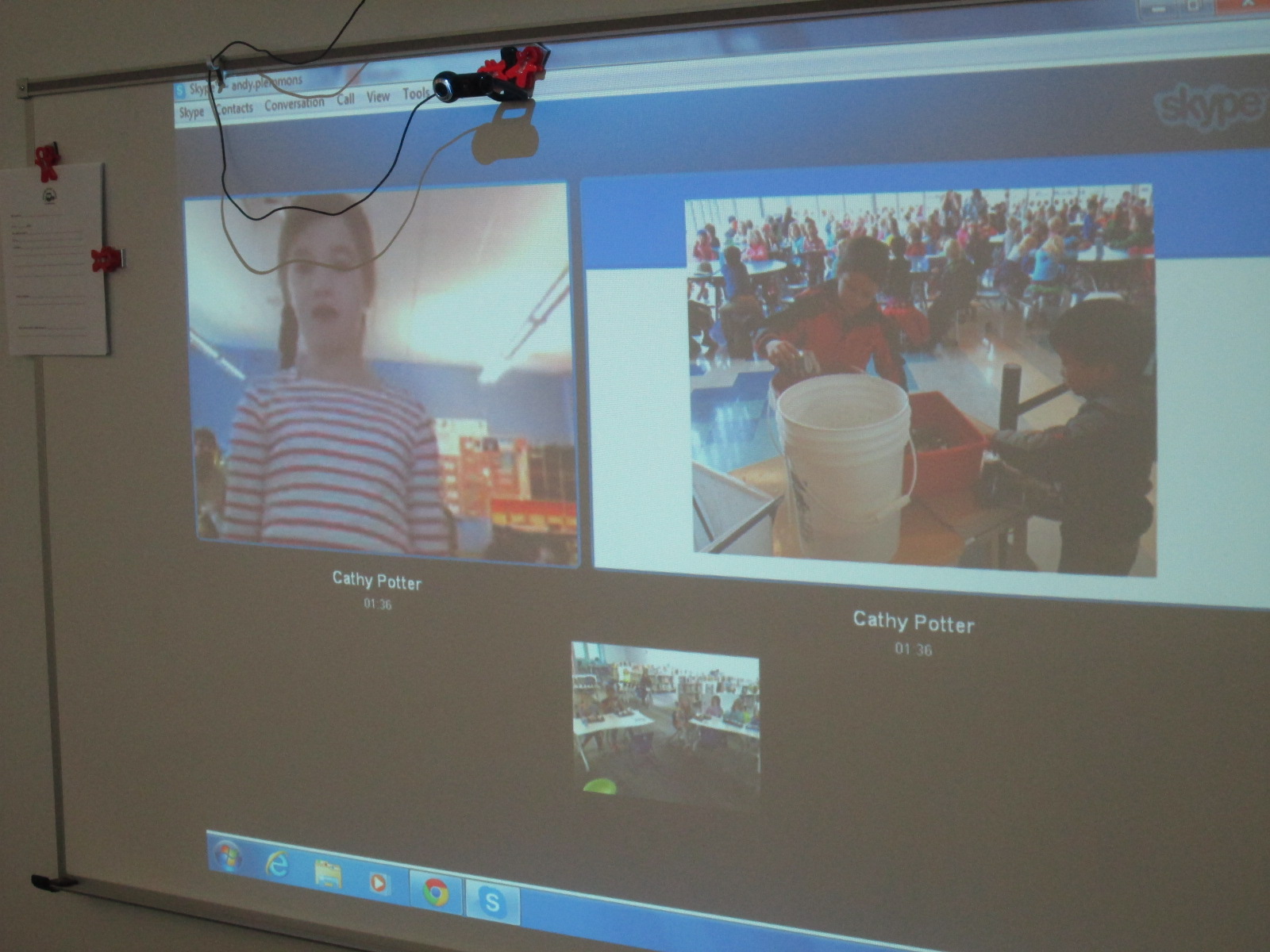
Ms. Tesler’s 4th grade students gathered a lunch bunch together to connect with Cathy Potter and her students in Falmouth, Maine.  The 1st graders at her school showed us a Google presentation with pictures of recycling and composting efforts in their school.  They have a whole process of how their scraps at lunch get put into a bucket to go to the composting bin.

IMG_4405

Finally, Ms. Spurgeon’s 3rd grade class connected with Karre Sloan’s 6th grade students in Nashville, Tennessee.  They shared the recycling program from their school and how their 3rd graders are in charge of recycling.  They also shared their ideas and tips for our own recycling problem at our school.

IMG_4410

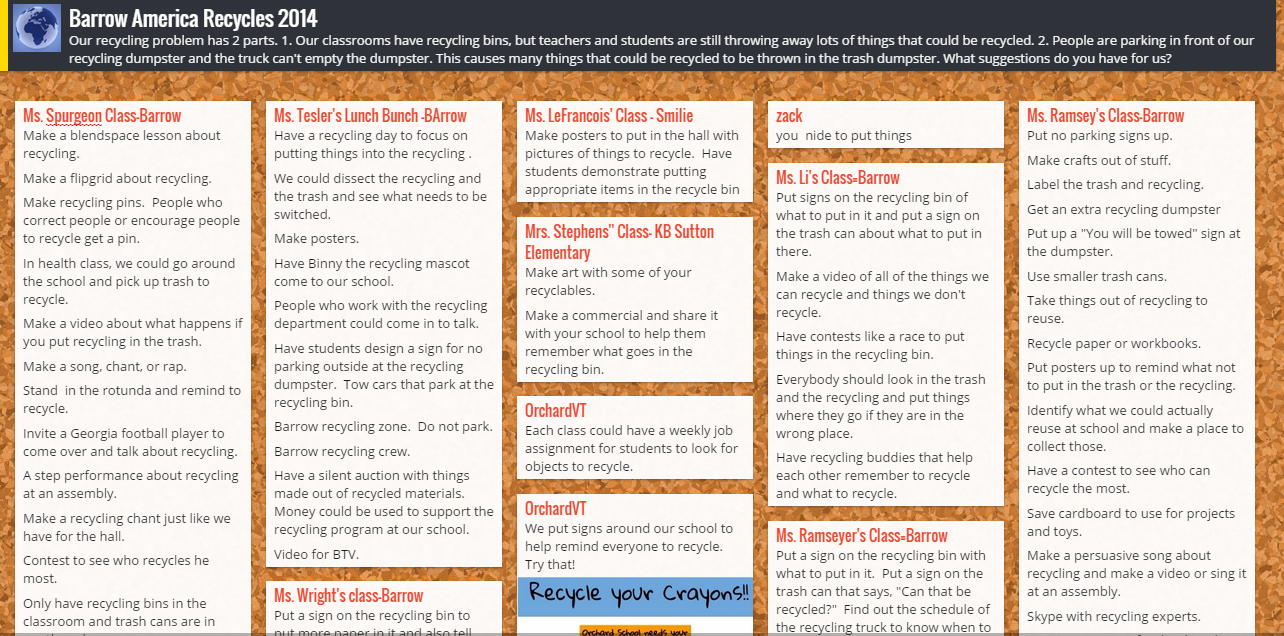
In every connection, our students shared our own school problem.  We have recycling bins in every classroom, but we are finding that people are still throwing away recyclable things.  Even when we recycle, we have an additional problem.  People are parking in front of our recycling dumpster and the recycling truck can’t get to the recycling to empty it.  We posted these problems onto a Padlet.  We showed each connecting class the bins that we have in our classrooms and read the recycling instructions that can be found on the bag inside.  Sometimes our connecting classes gave us new ideas right on the spot or shared what their own school is doing that might support our problem.  Other classes added to our Padlet after we disconnected.  We also added to the Padlet.

Barrow America Recycles 2014

Our next step is to take this Padlet and share the ideas with our environmental committee which is chaired by Natalie Hicks.  We also have 2 enrichment clusters that we can share the Padlet with.  Our hope is that some of the ideas that came from so many perspectives will spark change within our school problem.  We want to connect back with some of the classes we met this week and share what we’ve done to improve our problem, and we want to see what they have done since our connection.

I loved that during our very last connection, students arrived in the library to put signs on our recycling bin that were sent by our recycling department.


Miraculous things came out of our connections:

  • We saw that we weren’t alone with our problem and that there were multiple things to test out to try to reach a solution.
  • We learned that recycling is very different from place to place.  We are so fortunate in Athens to have a state of the art recycling facility and single stream recycling.  Some communities have to put forth a lot of effort to recycle, and it is so easy for us.
  • We realized that there were so many things we could do with our “recycling” other than put it in the bin.  The concept of makerspaces is really causing a lot of us to think about turning trash into functional creations.
  • We saw that together we could come up with out-of-the-box ideas.  We often started with “put up posters about recycling”, but with the energy of collaboration, new ideas surface such as make smaller trash cans, create a recycling contest, write a catchy song about recycling to sing on morning announcements, and more.

My hope is that this week of connections really does spark change in our school and others.  At the very least, I think it made us more aware of what we are throwing away.  These types of connections have the potential to grow into large-scale collaborations around the globe.  The combination of powerful texts such as Here Comes the Garbage Barge and Eyes Wide Open along with the innovative ideas of students, teachers, and families fosters a healthy environment for long-lasting collaboration.  Our students are the future of our world, and when we allow them to unite with one another around authentic dilemmas in our world, we are equipping them with problem solving skills to keep our world a peaceful place.


Making Our Mark with Dot Day 2014 (and I hope well beyond)

Dot Day (42)

International Dot Day is one of our favorite days (weeks) of the year.  It gives us permission to be creative and see what we can do just by making a mark.  It also connects us with so many classrooms around the world.  Classes are always looking to connect on this day, and we have made many collaborative relationships with schools because of this one day of the year.

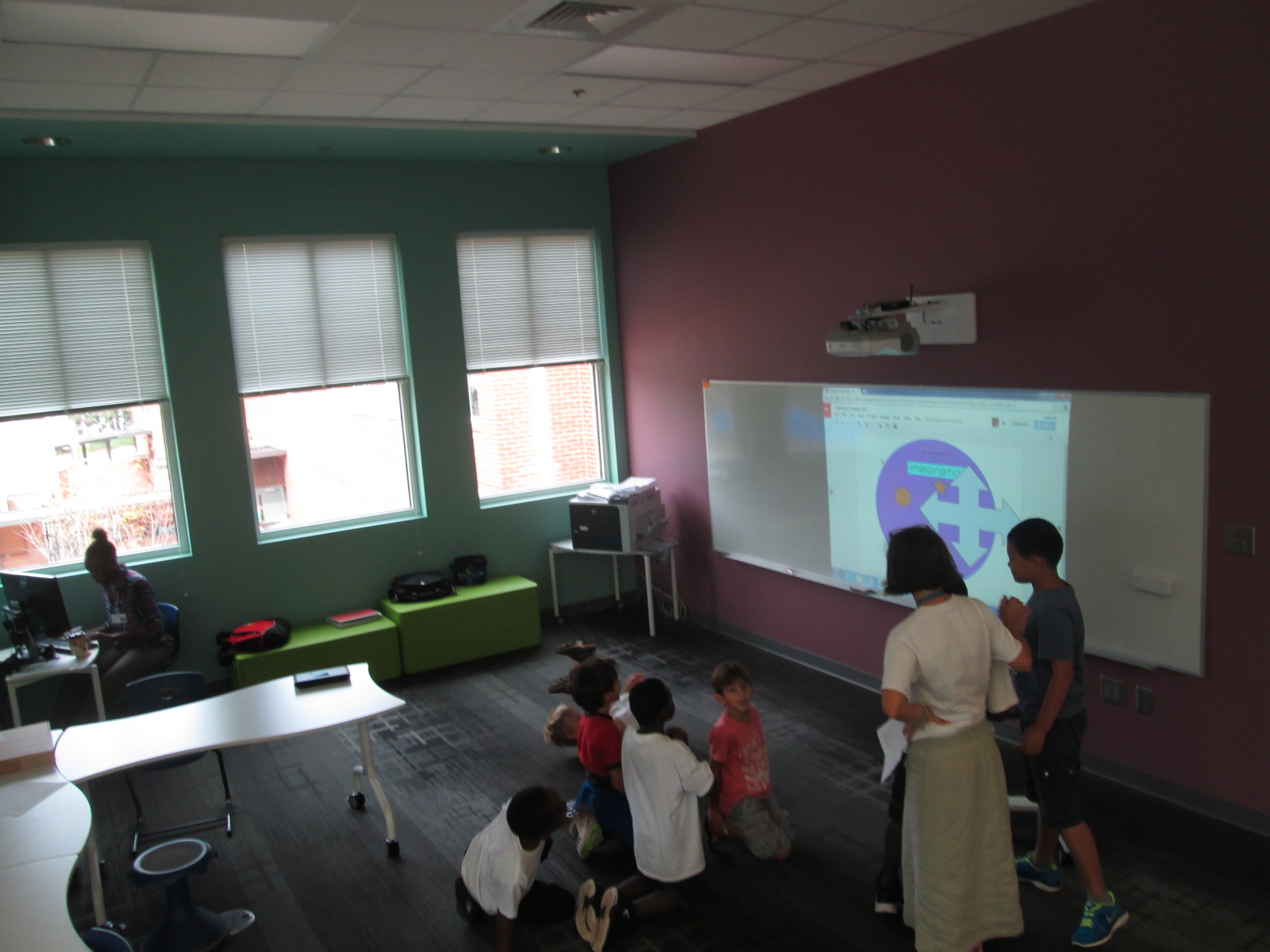
This year, we used Dot Day as a way to explore our goal of dreaming, tinkering, creating, and sharing.  We explored Google Drawing, which was a new tool for most students.  We used Dot Day as a time to tinker and see how Google Drawing functioned as well as how to collaborate on a drawing with another student or class.

We also used colAR mix again this year to make augmented reality dots.  This year, I encouraged students to think more globally as they made their dots by embracing the them of “making your mark on the world” that is the essence of The Dot.  Students were encouraged to design a dot that represented their talents, hopes, dreams, and passions.  I loved this new twist on a tool that we used last year because it revealed so many stories from students.  One student drew a picture of an airplane flying through the clouds because of his dream to be a pilot when he grows up.  Another student drew an astronaut and UFOs because of his desire to explore space.  Another drew her whole family because they are what she loves in life.  Some students chose to highlight their creativity as a way that they make their mark by designing unusual dots with their favorite colors.  These were empowering stories because they allowed students to have a voice to share something personal about themselves in a way that they might now have shown before.

One amazing thing that happened while students were using the colAR app was how they discovered different ways to scan their dot. It started out as what some people might see as a mistake.  A student’s hand was on top of their dot while they were scanning their image, and the hand became a part of the rotating sphere on the iPad screen.  This resulted in an uproar of excitement as sharing began and the idea spread like wildfire.  Soon students were trying to put their faces on their spinning spheres.  Others stacked towers of crayons on top of their dot and tried to see if that would scan into the 3D image.  All of this happened because of an opportunity to tinker.  When we give kids a space to explore, they figure out amazing things and they willingly share and teach others what they learned.  They get excited about their learning and they want to do more.  I bet that these students would have spent an extended period of time continuing to experiment with colAR mix to see what else they could figure out, and they would have done this without getting tired or bored.  These are the things that days like Dot Day reveal.

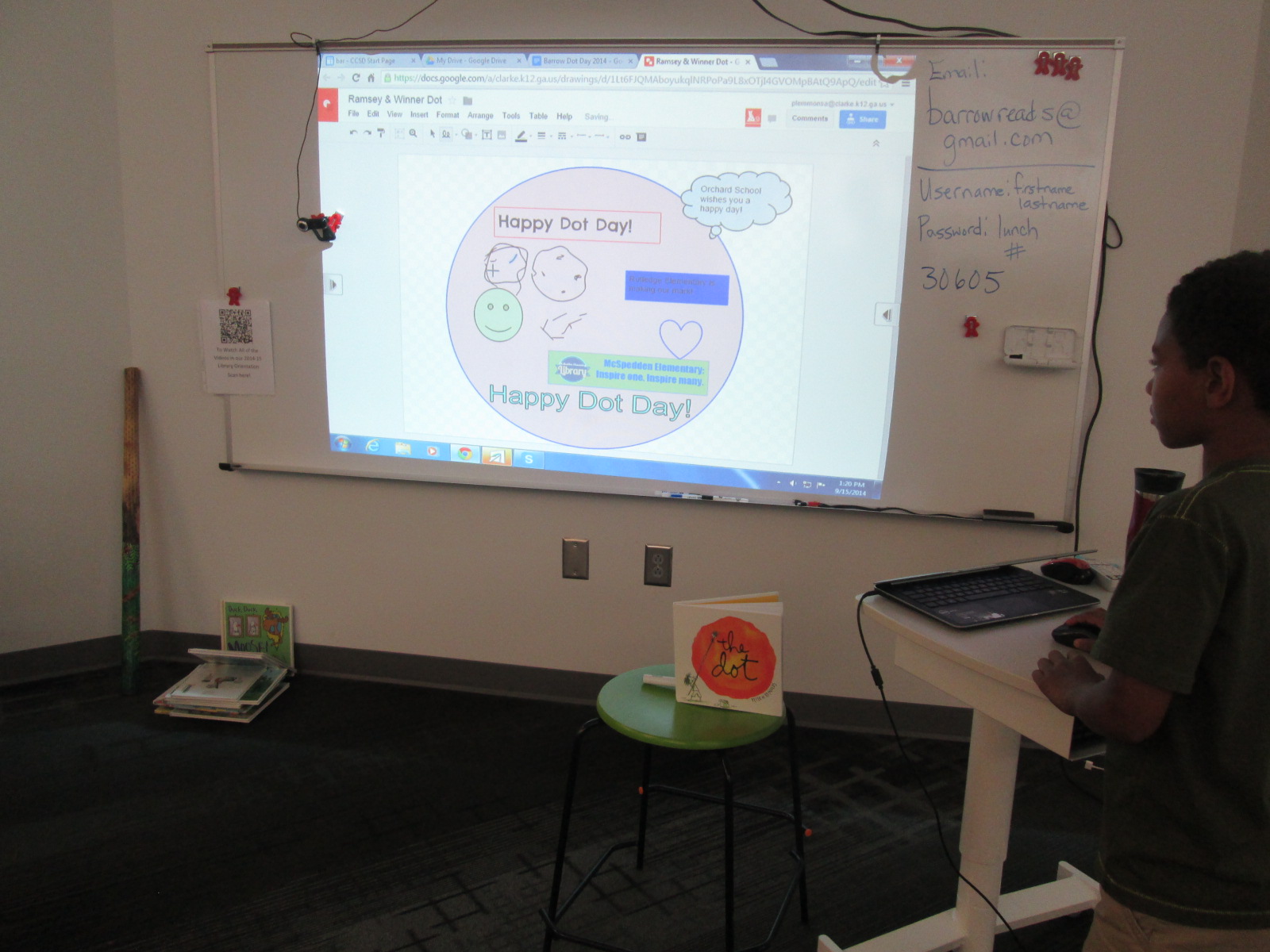
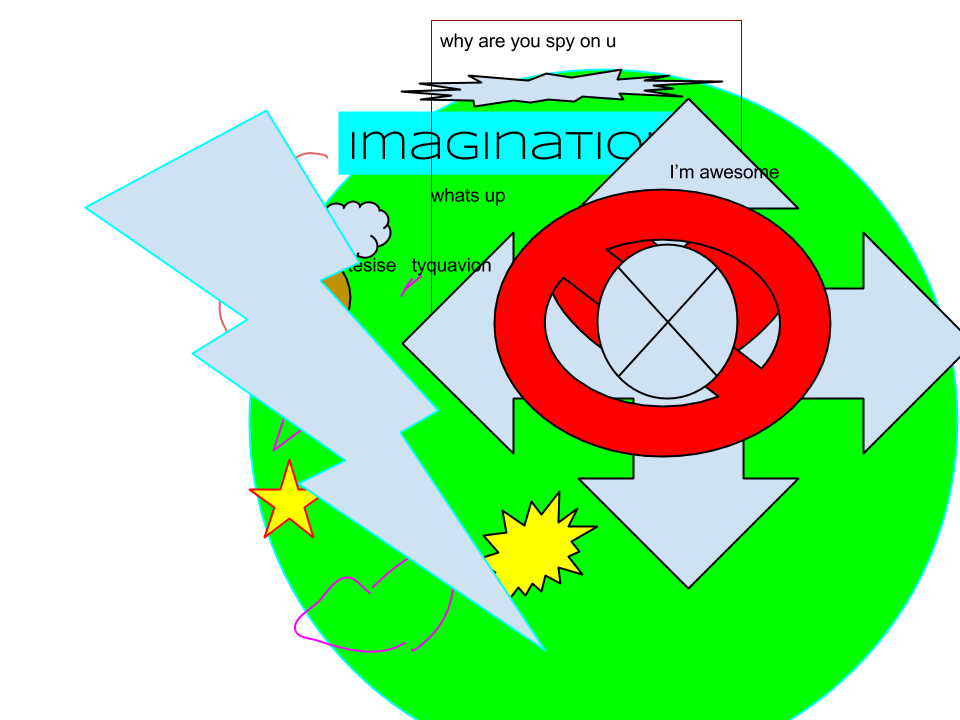
We had numerous Skype connections.  Each one had its own unique twists and conversations between students and teachers.  In many of these Skypes, we collaborated on a Google Drawing dots after reading the book.  This included dots with our friend Okle Miller in Tampa, Edie Crook in North Carolina, and Crystal Hendrix in North Carolina (just to name a few).  Sometimes this was live during a Google Hangout or Skype and other times it was after we disconnected.  One of our hangouts was a large hangout between Matthew Winner in Maryland, Nancy Jo Lambert in Texas, Donna MacDonald in Vermont, and Esther Uribe in Texas.  It was fun to read The Dot to students in so many states at one time, but what was even more fun was drawing with all of them at the same time!  We definitely did some tinkering with this one.  Many of us learned of the challenges of younger students but found ways to involved them even with computer-use difficulties.  The students loved seeing drawings “magically” appear on our shared dot.

Ramsey & Winner Dot

Our multi-school collaborative dot

With Jennifer Reed in Massachusetts, we accidentally deleted all of our work on our collaborative dot.  The kids were in a panic, but it was a fantastic opportunity to do an impromptu lesson on the power of revision history in Google Drive.  We were able to recover our work and learn an important trick.  We even talked about how revision history is one way that work is never deleted, which can be a positive but also a negative if you have written something that you wished you hadn’t.

Wright & Reeder Dot

Our dot with Jennifer Reed that was almost lost!

Mrs. Clarke’s class had a Skype connection, but we weren’t able to do a collaborative dot with our connecting class.  Instead, we split the class in half at our 2 projection boards and they created a dot together as a class.  They got just a bit competitive as they tried to cover up each other’s work, but even this was a great opportunity to talk about how to work with others on a doc without being disrespectful of the contributions.

Clarke & Lussier Dot

Mrs. Clarke’s class competitive dot

Some classes that we connected with had already spent a great deal of time being creative, and they shared with us dots that they are going to physically mail to us.  Jenny Lussier in Connecticut had colAR dots as well as Morse code greeting cards.  We can’t wait to decode what they say!  We also discovered with Jenny that there’s more than one version of The Dot floating around out there.

Cathy Potter’s students in Maine read the book Ish to our students and shared their own illustrations for the book.  We had a great conversation about the connections between both books.

Dot Day (60)

Students and teachers alike love this day, but I do leave this day with a wondering.  I’m thinking so much this year about global thinking and global collaboration.  This day is filled with thousands of Skype and Google Hangout connections around the world.  We connect.  We read.  We dream.  We create.  But then what?  We leave one another until the next big event.  I’m by no means being negative about Dot Day.  I’m a huge advocate, but I do wonder about why we don’t build upon these connections we make.  If we are really going to “make our mark” on the world, shouldn’t we be taking some actions together beyond connecting, reading, and creating?  I would like to gently nudge us all to think about this.  I’m just as guilty.  I connect every year and then I move on, but I can’t help but carry this on my mind, reflect on it, and consider what more we might do beyond today.  Think with me!  Let’s keep our dots connected.

Dot Day (43)