World Read Aloud Day Blogging Challenge #2: Adult & Child

World-Read-Aloud-Day-2014For the next 3 weeks, I’m participating in the World Read Aloud Day blogging challenge.  Each week, I will respond to a question along with many other bloggers participating in this global celebration of reading aloud.  Our students, teachers, and families will also be involved with these questions each week as I invite them to respond through Flipgrids, Thinglinks, and more.

Last week, the students and I, along with students from Van Meter Iowa & Okle Miller in Tampla FL, added to a Flipgrid to share our favorite read aloud memories.  You can watch and listen to those here:  http://flipgrid.com/#ae0e8232

The challenge for Week 2 is to have conversations between adults and children.  To give my students, teachers, and families a voice, I created a Google Form to respond to this week’s question.  Each Barrow student who fills out the form will have a chance to win a new book to read aloud to someone!

Because of the icy week we had last week, I spent a lot of time at home.  I took time to have a conversation about these questions with my 4 year old daughter, Alora.  I’ve expanded on my answers a bit in this post, but these are the topics that Alora and I discussed together.
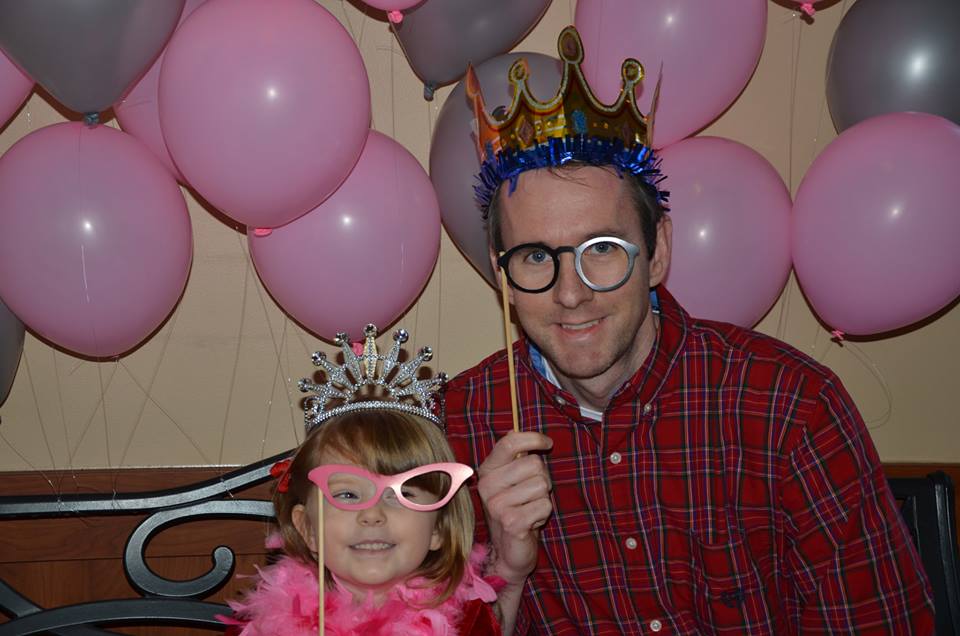
daddy daughter

Daddy & Daughter

1. I think everyone in the world should read…

Me:  books that speak to their hearts.  I think that we all have common connections to why we all read, but I love that we all enjoy different kinds of books.  We don’t all have to love Diary of a Wimpy Kid or Harry Potter or Princess books, but each of those books speaks to different readers in different ways.  It’s no secret that my favorite author is Kate DiCamillo, but the reason she is my favorite author is that there’s something about her voice in her writing that connects with my heart.  From a little girl befriending a dog and hearing the stories of a community to a rabbit trying to find his way home to a tiny mouse looking for the light in the world to a miraculous superhero squirrel, Kate DiCamillo’s books are filled with words that seem like magic on a page to me.

Child:  Peter Pan and princesses because I like those.  I like princesses and Tinker Bell.  Everybody likes princess books.

2. If I could listen to anyone in the world read aloud to me it would be…

Me:  It’s hard to pick just one!  My second grade teacher Mrs. DeLoach (whose name has changed to Mrs. McKinney) would be one.  She brought the characters of the Uncle Remus stories to life and a beautiful southern accent.  Those voices were ones that I wanted to imitate in my own reading.  Now, I love to hear Carmen Agra Deedy read stories and tell stories.  The tones, rhythms, movements, and volumes of her voice keep me hooked into every detail of the story.  I think I could listen to her tell stories for hours.

Child:  Mommy and Daddy because I don’t know how to read until I get bigger.

3. When I read aloud, my favorite character to impersonate is…

Me:  So many people love to hear me read southern stories and create the voices for those characters.  I love to make the voices for the characters in Epossumondas.  Both Mama and Eppossumondas are such fun to bring to life.  I also love to hear how the voices that I create are different that the voices that other readers create for those same characters.

Child:  Tinker Bell because she just rings a bell and doesn’t say anything.

4. The genre or author that takes up the most room on my bookshelf (or e-reader) is…

Me:  Books by Kate DiCamillo.  I have every book that she has written and most of them are signed.  Of course now they aren’t all in one place on the bookshelf because they are spread between the living room and both kids’ rooms.  That’s a good sign of being well-loved.

Child:  Fairytales like Cinderella, Beauty and the Beast, Pinocchio….Dora went to a fairytale one time too.

5. My favorite part about reading aloud or being read to is…

Me:  It allows me to escape into the story in a different way than if I was reading it myself.  When a story is read aloud, the words seem to transform the space around everyone listening to the story.  For just a few moments, the busy world disappears and I get to step into a time machine that allows me to escape and experience the world through different eyes.  When I’m read aloud to, I don’t have to think about saying the words just right.  I can just listen and imagine.

Child:  hearing the different voices that you and Mommy make.

For more information on World Read Aloud Day visit http://litworld.org/worldreadaloudday 

To connect with other libraries and classrooms, visit our shared Google Doc.

Connecting Libraries: Using Tinkercad with Students in Van Meter, IA

Hanging out in Iowa from my kitchen!

Hanging out in Iowa from my kitchen!

I had so much fun today spending some time in Van Meter, IA from my kitchen.  Shannon Miller and her students just received their Makerbot 3D Printer from Donors Choose.  Her students are starting an Olympic project where they will be designing new symbols for the Olympics.  Students will eventually use Tinkercad for their designs.  Since this is a new tool for her students, Shannon thought it would be a good idea for us to connect and share what we’ve learned.  I had a group of 5th graders eager to share their expertise, but the GA ice and snow caused us to be out of school today.  Rather than keep her students waiting, I went ahead and shared my own learning about Tinkercad.  We plan to reconnect when we are back in school so that students can share.  I’m sure that her students will have just as much to share with mine by the time we reconnect next week.

Here’s our Google Hangout from today:

After the Hangout, I realized that I forgot to tell them an important step, so I made a quick screencast to fill in the hole I missed.  I also share with them the steps that wouldn’t screen share through hangouts.

http://youtu.be/YgQ_fN7WQwY

It was wonderful to be a part of another library.  We all have expertise to share, so why not share beyond our walls.  Happy making, friends!

#GeniusCon: Topic Selection and Question Development

question development (9)We’ve been having so much fun participating in #GeniusCon.  Haven’t heard of #GeniusCon? Visit this archived webinar to learn more and read the post about our first steps.

After students left the library for our kickoff session, they spent time in class reflecting on our chalk talk, writing in their notebooks, and fine tuning their topics.  Today, they came to the library with their topics ready to work on question development.

We started with an overview of what happened since our last session.  I shared tweets from Sherry Gick, Matthew Winner, Peter Reynolds, and more.  I also told them how their work had been featured in the #GeniusCon webinar.  Their eyes lit up knowing that their work was already making a difference!

I framed our session for the day by talking about how questions help us think about what we need to know about our topics in order to focus our research.  We did a practice session asking questions about a topic that I could do for #Geniuscon:  Teaching all of my lessons from home.   At the moment, I’m not really doing this topic, but I wanted to choose something that might raise some eyebrows, and it really did!  Students began asking questions about my topic, but as we progressed they started to ask questions like “how would you feel if you didn’t see us anymore?” and “what if we needed help with something in the library?” and “Wouldn’t you miss being here?”.  This topic did exactly what I wanted because it allowed us to have a conversation about our chosen topics.  I told them that it wasn’t our jobs to tell one another that our topics aren’t possible, that they’re wrong, or that we need to pick a different topic.  Our job is to push one another’s thinking through questions and to support one another even if it means we disagree with topic choice or we feel personally that a topic is “impossible”.

We spent a bit more time brainstorming questions for my topic with partners.  Here are a few questions that they came up with:

  • What lessons should I teach?

  • Do I know anyone that will be interested in learning from home?

  • How will I do it?

  • How many students will I have?

  • How many lessons from home can I teach?

  • What happens if someone needs help checking out and I’m not here?

  • Why would I want to do this?

  • How would people know how to connect with me?

  • What if the Internet doesn’t work?

Next, students logged into their Google Drive and created a document with their topic listed at the top.  Then, they started a bullet list and began adding their own questions.  After all students were set with their doc ready, we began passing the laptops around the circle and asking one another questions.  Students looked at the topic at the top and read the question already generated.  Then, they thought of what questions they would add to the list for the researcher to consider.  I’ll admit that this part was difficult.  Even with our lively opening, students had a hard time generating questions.  Several adults had individual conversations with students to support their question development.  These conversations were critical.  At different times we had me (the media specialist), the classroom teacher, a gifted teacher, a tech integration specialist, and and early intervention teacher supporting students.  Here are a few topics with the questions generated.

Taking Tablets Home:

  • can we for a week?

  • or for month?

  • what happens if you break it?

  • What do students do if they don’t know how to use it?

  • what happen’s if somone needes one at school and you forget it at home?

  • how long?

  • what if people don’t have internet at home?


More Playground Equipment:

  • what equipment should we get?

  • how much equipment?

  • what   kind?

  • what if there’s not enough space?

  • isn’t it expensive?

  • why do you wont to change the playground?

  • will we be kind on it?

  • is the play ground equipment safe?

  • who would pay for it?

At our closing, students got their own computers back, read their questions, and shared their documents with me.  I told them that it was ok if they didn’t understand a question or if they even disagreed with a question.  We closed by once again asking “Why are we asking questions and not jumping into answers?”  We framed the idea of thinking about what we need to research.  Next, we will spend some time developing a research plan.  We’ll brainstorm where we need to look for answers and begin our search for answers.


World Read Aloud Day Blogging Challenge #1: Read Aloud Memories

World-Read-Aloud-Day-2014For the next 3 weeks, I’m participating in the World Read Aloud Day blogging challenge.  Each week, I will respond to a question along with many other bloggers participating in this global celebration of reading aloud.  Our students, teachers, and families will also be involved with these questions each week as I invite them to respond through Flipgrids, Thinglinks, and more.  For week 1, I’ve created a Flipgrid.  You are welcome to add your own response to week 1’s question along with our students and families by visiting http://flipgrid.com/#ae0e8232    We will be adding to this grid throughout this week.

The Question for week 1

What is your earliest or fondest memory in which someone read aloud to you?”

My Mom

My Mom

When I was little, my mom took me every week to the public library in our rural community of Blue Ridge, GA.  I vividly remember climbing the steps, walking up the ramp, pulling open the heavy doors, breathing in the smell of the used books for sale in the entryway, and being greeted by name by the public librarian.  The children’s section was small, but I had no problem getting an armload of books to take home each week.

My Mammaw

My Mammaw

My mom and I would sit in my bed at night and read aloud stories together.  Even more than reading aloud the words, we spent time imagining and creating our own stories about the pictures.  I remember looking at the characters circling the back of every Little Golden Book and how we would pause at each character and tell a story about that one character.  This shared storytelling experience was a foundation of my love for reading.  On this same note, my grandmother, “Mammaw”, would look at pictures with me and ask me what was beyond what we could see in the picture.  She had a talent for imagining what was beyond the edges of the illustration and telling it in a way that was fact.  “There’s a little barn with a man sitting on a stool milking a cow.  Do you see it?”  Whatever she said I believed.  Mammaw would also take to me to yard sales and used book stores to buy books for my own library and we would spend time sharing those stories and talking about them together while my parents were at work.

Those experiences led me to imagine and create stories on my own.  Magnets on the refrigerator, porcelain figures lining the shelves, miniature figures, and more all became characters in my own stories and just about anything and everything in the house became a stage.  My Mammaw even used a tape recorder (if you know what that is) to record me sharing my made-up stories.

I hope that when I read aloud stories with students whether it’s print, digital, or oral storytelling that I somehow unleash a bit of imagination that will lead to students creating their own story experiences in their lives.

This year, World Read Aloud Day will be a grand experience in our library.  Here’s a glimpse at what our week will look like. On March 3rd, we’ll kick off the week with in-person guest readers from our community. These readers will share favorite Dr. Seuss books in every classroom in our school.  Immediately following this, our World Read Aloud connections will begin.

Across the week, we have at least 36 connections planned with libraries and classrooms in Florida, Massachusetts, Connecticut, Washington, Georgia, Pennsylvania, Iowa, Vermont, Maryland, Indiana, North Carolina, New Hampshire, Texas, Maine, and Germany!

We’ll also connect with authors like Tanya Lee Stone, Barbara O’Connor, Laurel Snyder, Anne Marie Pace, Jenny Sue Kostecki-Shaw, and Jesse Klausmeier!

Each session will be a bit different, but they will have some common elements too.

    • We’ll greet one another and tell them where we are located.
    • We’ll read aloud across the miles. Sometimes this will be students reading to students. Other times, the adults might take turns reading pages from the same book or select characters to portray. Authors will read from their own books or favorite books and take time to allow kids to ask questions about their writing.
    • To close, students will have a chance to make some connections between the 2 locations. Students often like to find out what the weather is like or what kids like to do for fun in different states. These closing moments build connections between us as a human race.
    • In some cases, we will collaborate with classes on some type of project. For example, we might create a Padlet or a Flipgrid to share written and video responses to the books we read.
    • We also take time to look at a Google map and chart the distance between the two connecting schools. It’s really fun when there’s more than one school or author on the Skype call and you can connect multiple dots on a map to see how our voices are uniting across the miles.

I hope that you will plan your own World Read Aloud Day activities.  There’s a wealth of resources that can be found at http://litworld.org/worldreadaloudday

It’s Time to Vote for Your Favorite Historical Figure from Black History with Our 2nd Graders!

flipgrid 2nd (7)Second grade has been hard at work.  For the past few weeks, they have explored the art of persuasion, researched 5 historical figures from black history, designed potential US Postage Stamps featuring these historical figures, and writing persuasive scripts to convince an authentic audience that their historical figure is the most deserving of a US Postage Stamp.  You can read more about the beginnings of this project here.  

flipgrid 2nd (6)

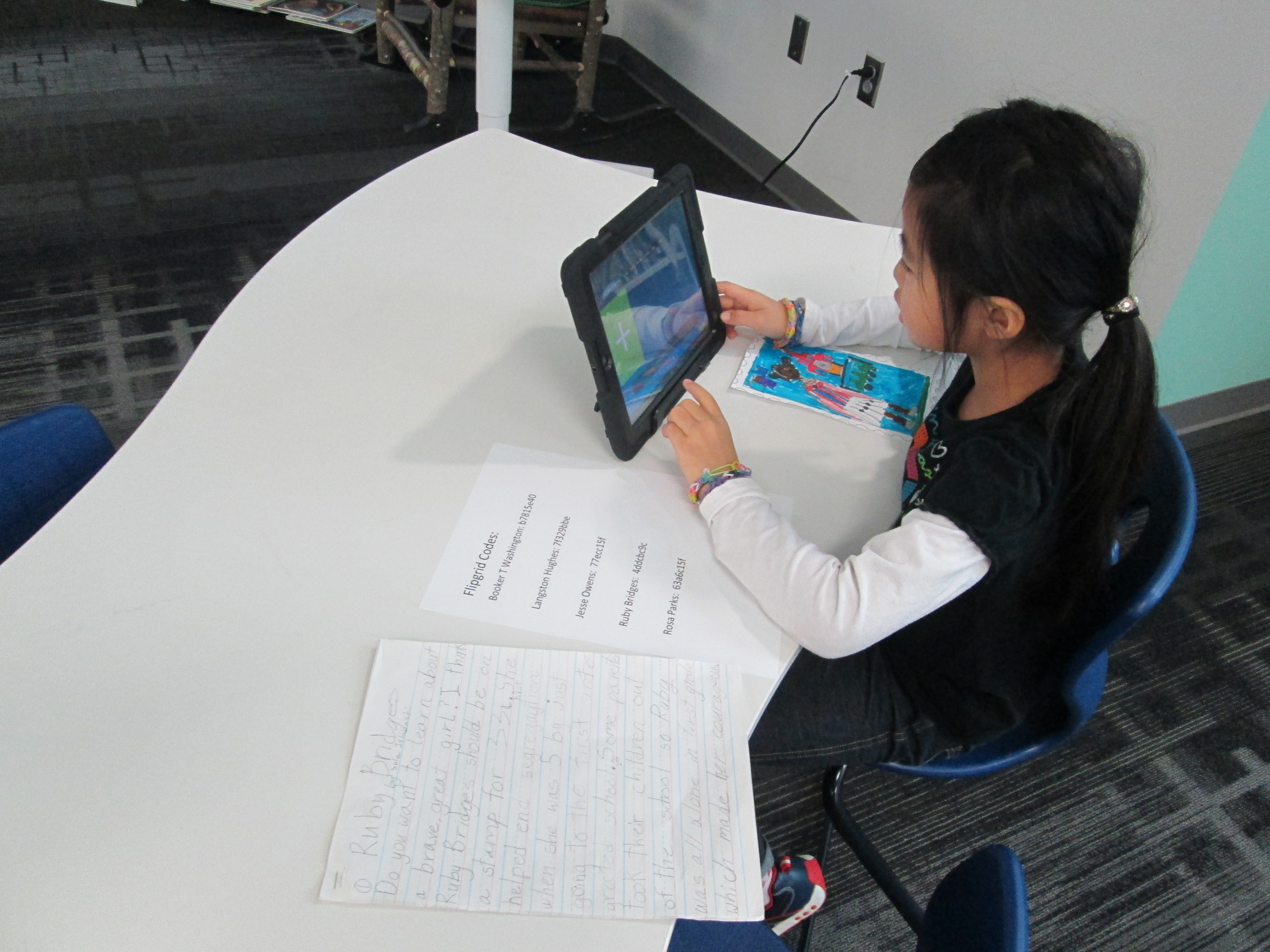
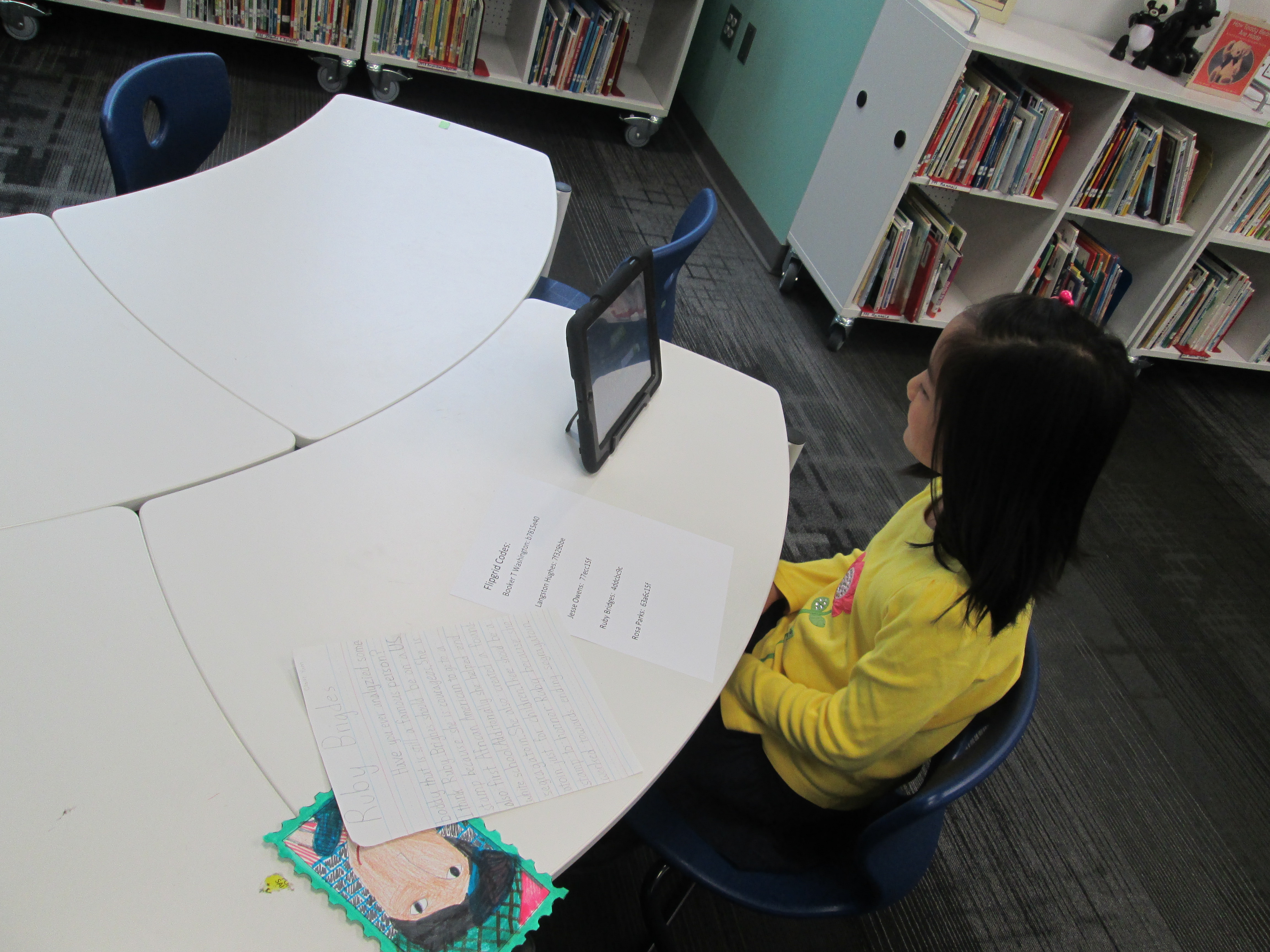
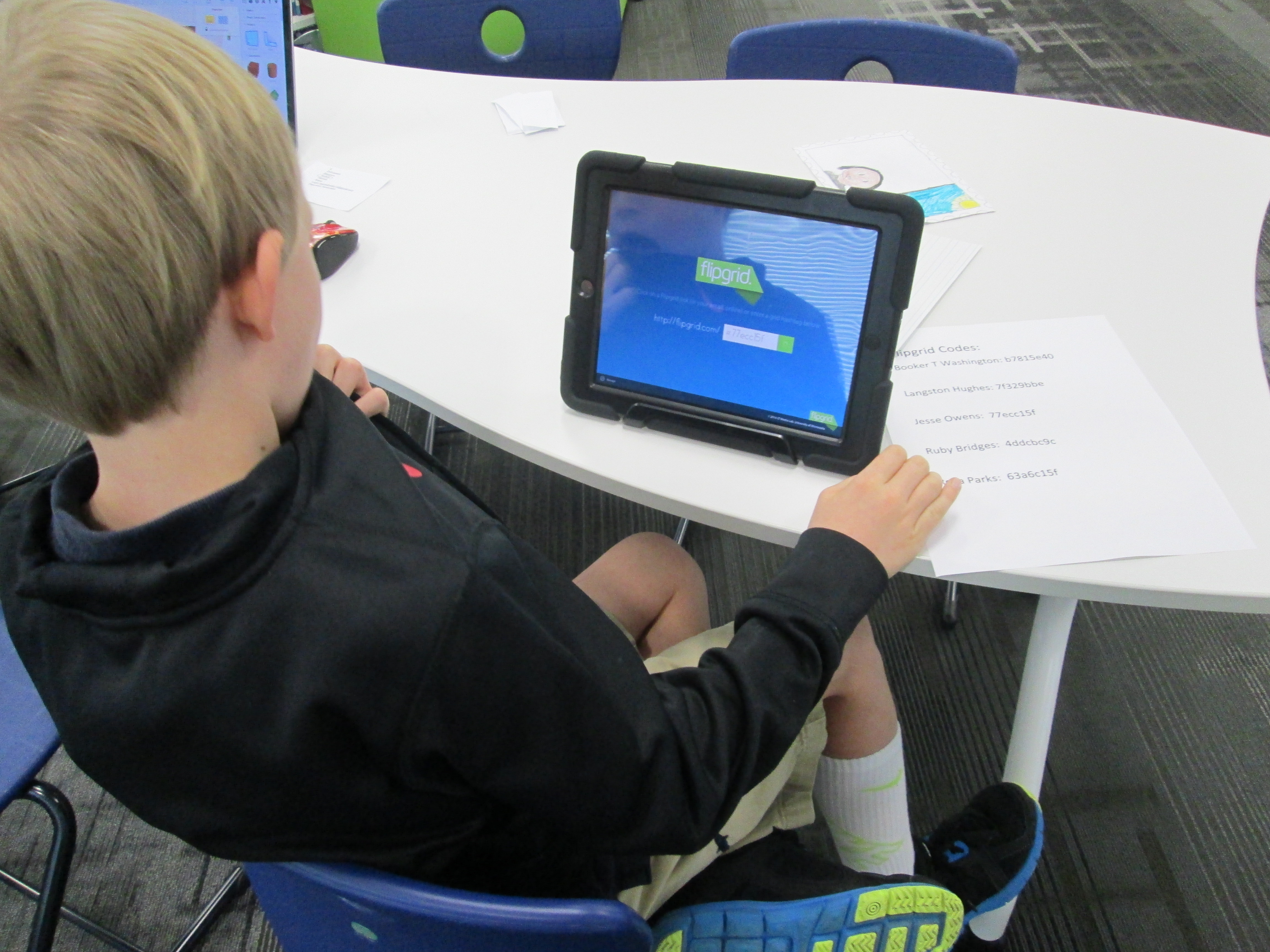
Over the past 3 days, students have been coming to the library with their persuasive scripts and stamp designs to record a persuasive commercial using Flipgrid.  This tool, which is web-based or available as an iPad app, allows you to create up to 90 seconds of video in response to a question.  I setup a question for each historical figure that was researched.  To record in Flipgrid, you just need the special code that takes you straight to the question where you will record your message.  I made a sheet of codes and placed them by iPads in the library.  Students entered the library, chose a recording spot, and entered their code.

flipgrid 2nd (5)

Next, they had a few steps to complete in order to create their video.  They had to:

  • Click the +
  • Click “I agree”
  • Take a picture.  Some took a picture of themselves and others took a picture of their stamp
  • Record their video
  • Review the video
  • Submit the video to the grid.  Students had to put their first name, last initial, and an email address.  For speed, I put my own email address in the box, copied it, and then pasted it in each time a student recorded.
historical figure smore

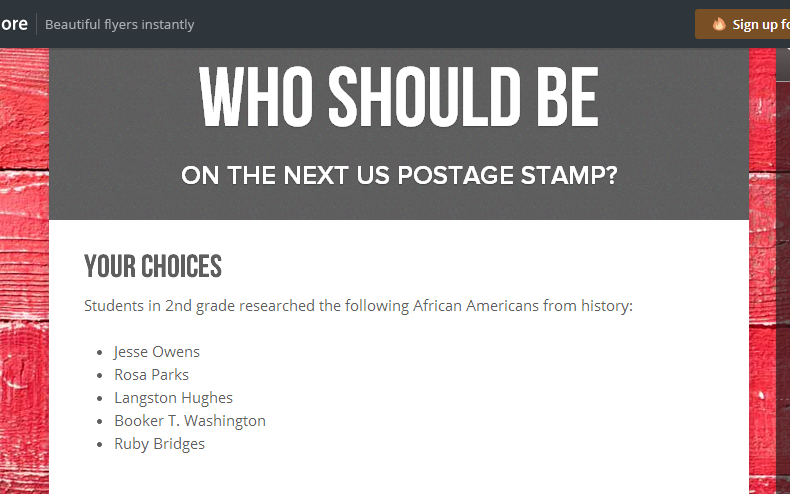
Visit our Smore to watch videos and vote! https://www.smore.com/17bq3

Now, students are collectively trying to persuade you to vote for their historical figure.  We have created a Smore to pull all of the information together.  On this Smore, you can visit each set of videos for a historical figure.  Please take some time to listen to the students’ hard work.  If you love one of their videos, click on the heart on Flipgrid which is similar to “liking” something on Facebook.  This will show the students some appreciation for their efforts.  After watching some videos for each person, we invite you think about which historical figure you were the most persuaded to vote for.  Then, use the Google Form at the bottom of the Smore, cast your vote.

flipgrid 2nd (4)

We’ll be asking all students in our school to vote.  In addition, we’ll be posting our Smore to our Barrow Media Center Facebook page and Mr. Plemmons’s Twitter account.  We want as many votes as possible to show students how far reaching their audience is when they put their work out to the world.

flipgrid 2nd (2)

The students have worked so hard on this project.  I can’t wait to tally the results and analyze the data with them.

Visit Our Smore to participate and feel free to share!

flipgrid 2nd (1)

Black History Month Research and Persuasive Commercials in 2nd Grade

IMG_1815Second grade has been working on a big research project.  Each student selected one of five African Americans to research.  Rather than write a traditional informational paper on their person, the 2nd grade teachers and I decided to weave persuasive writing into the project.  Students would think about which historical figure should be on a next US postage stamp and would create a persuasive commercial to convince an authentic audience to vote for their historical figure.

We actually began our project with persuasion.  Students spent time talking with one another about what it means to persuade.  They mentioned things like:

  • convince someone to do something
  • get someone to get something for you
  • make someone change their mind

Anytime I teach persuasive writing, I want kids to leave with an understanding that persuasive writing isn’t just about getting someone to get something for you.  It’s one of the most powerful kinds of writing that can bring about change.  However, many kids connect with the idea of commercials and convincing their families to buy something for them, so we often start there and expand.

We watched a commercial of one of this year’s hot holiday toys, the Flutterbye Fairy.

IMG_1814We used this commercial to think about a structure for persuasion.  Students first noticed what we called a hook at the beginning.  “Can you keep a secret?” was a phrase that hooked our attention to want to watch the rest of the commercial.  We noticed that the rest of the commercial showed us just how easy it is to use the fairy, so this was like giving the facts about what you are writing about.  Finally, we noticed the closing line “the magic is in your hands”.  This was a phrase that would stick with us long after we watched the commercial.  In fact, I told the students that my own daughter uttered this phrase the first time she flew her own Flutterbye fairy, so I knew it was a phrase that stuck in your head.

To continue our exploration of persuasion, we read Melanie Watt’s Have I Got a Book For You.  This book uses just about every persuasive technique that you can think of.  We noticed these techniques along the way and folded them in to our noticings from the fairy commercial.

After this initial exploration of persuasion, students worked some in their classrooms.  They selected the African American they would research and got a graphic organizer to located some basic facts about their person.  We referenced the fairy video and how important facts are when you are persuading.

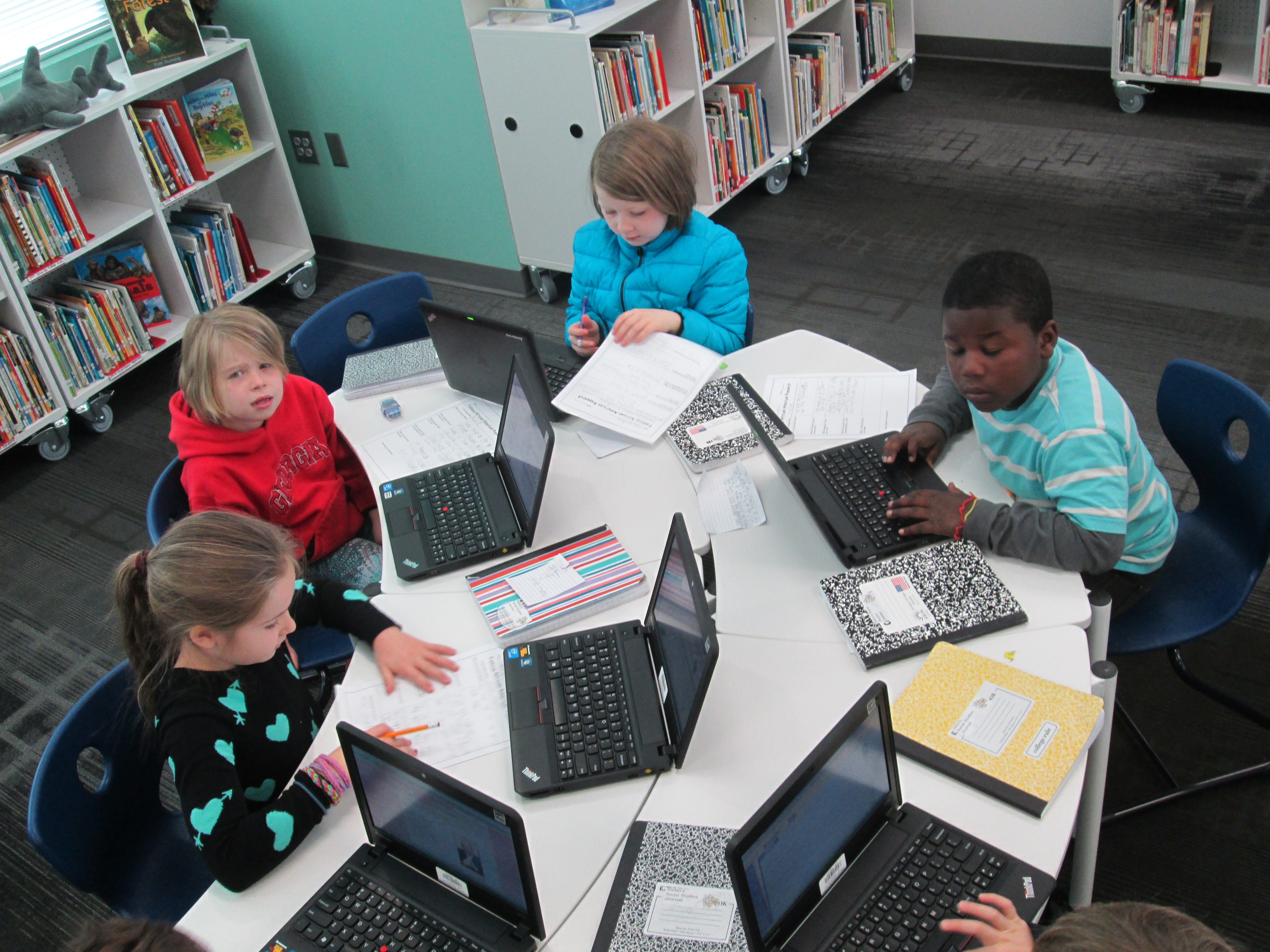
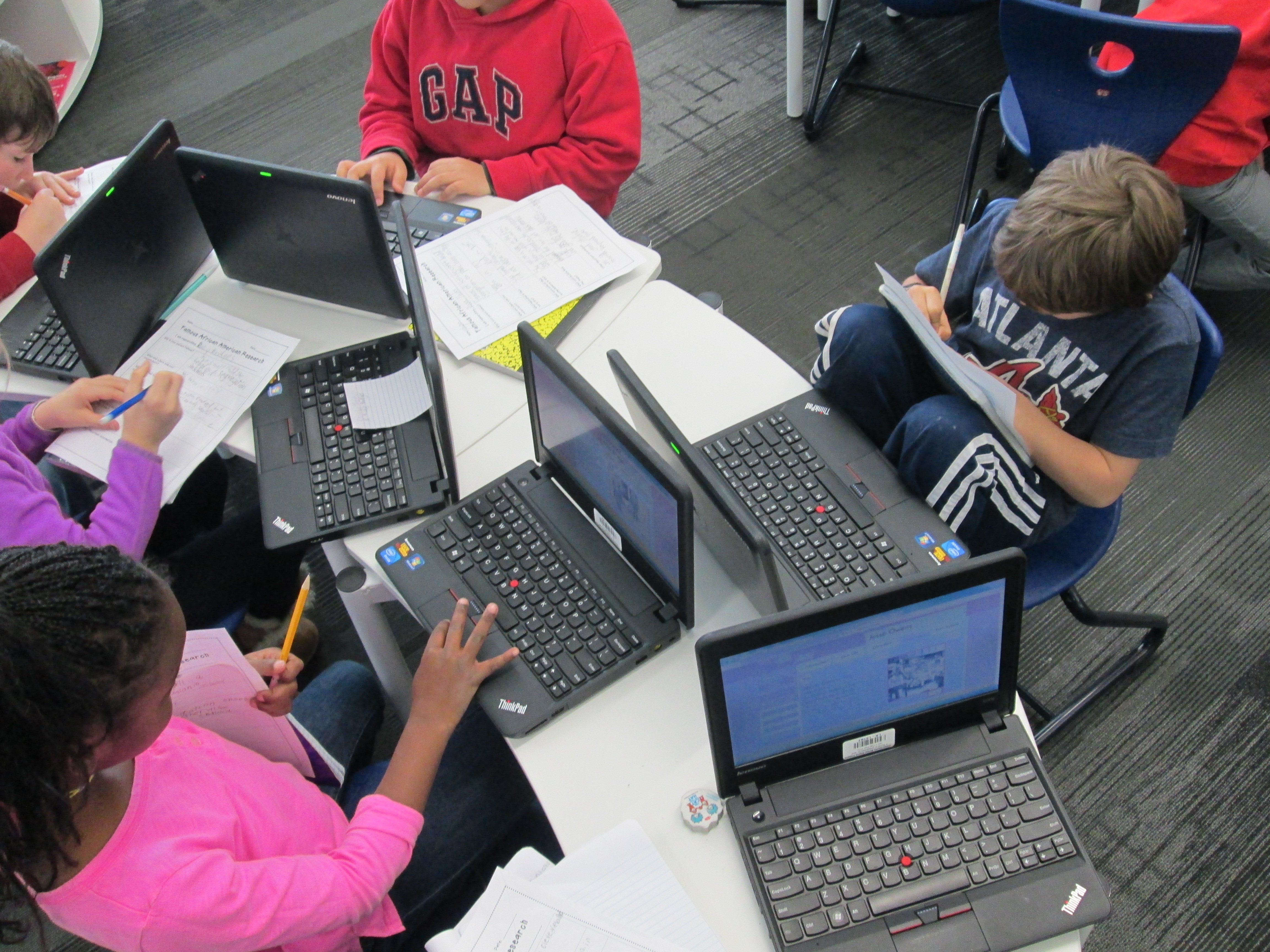
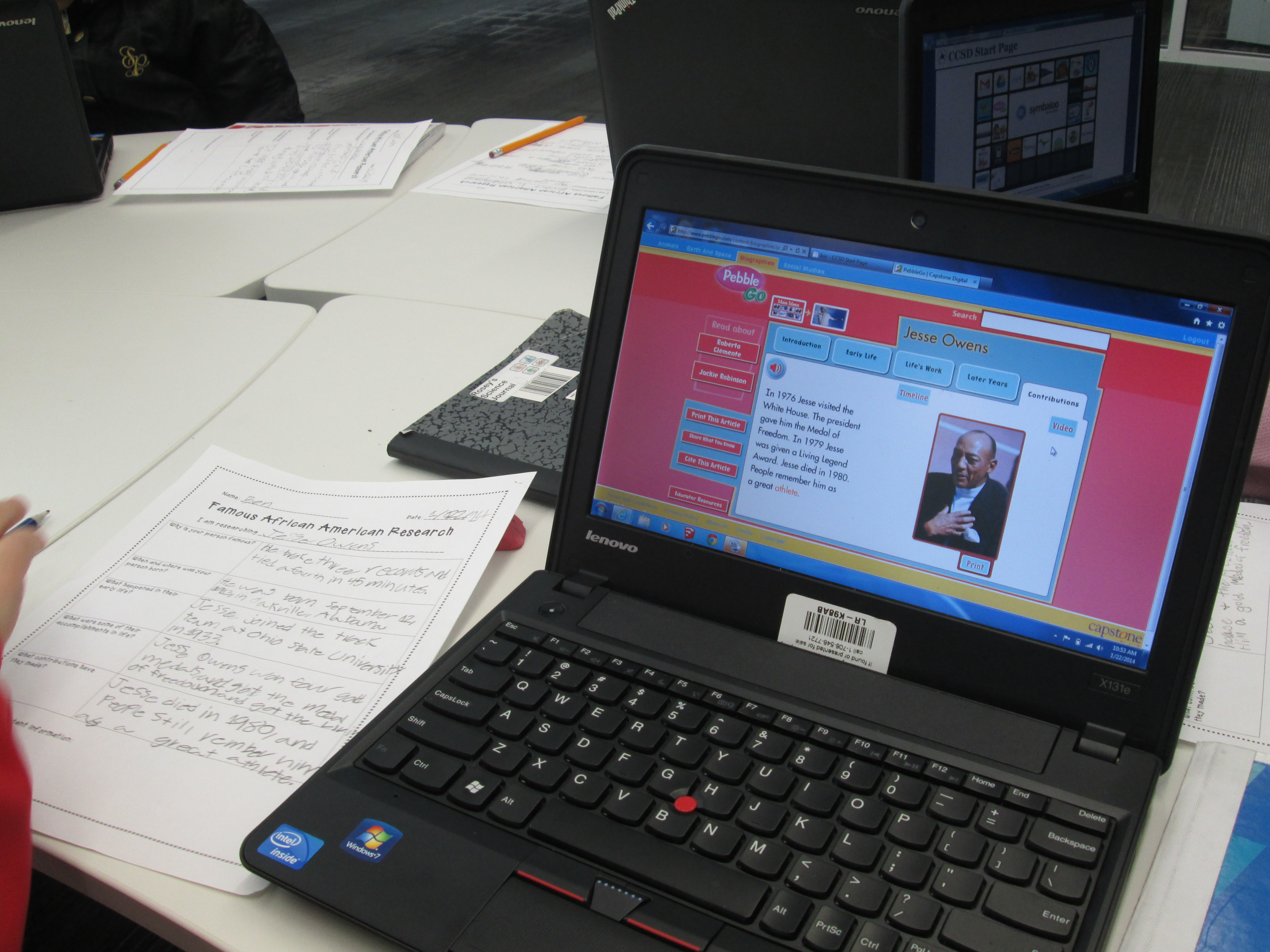
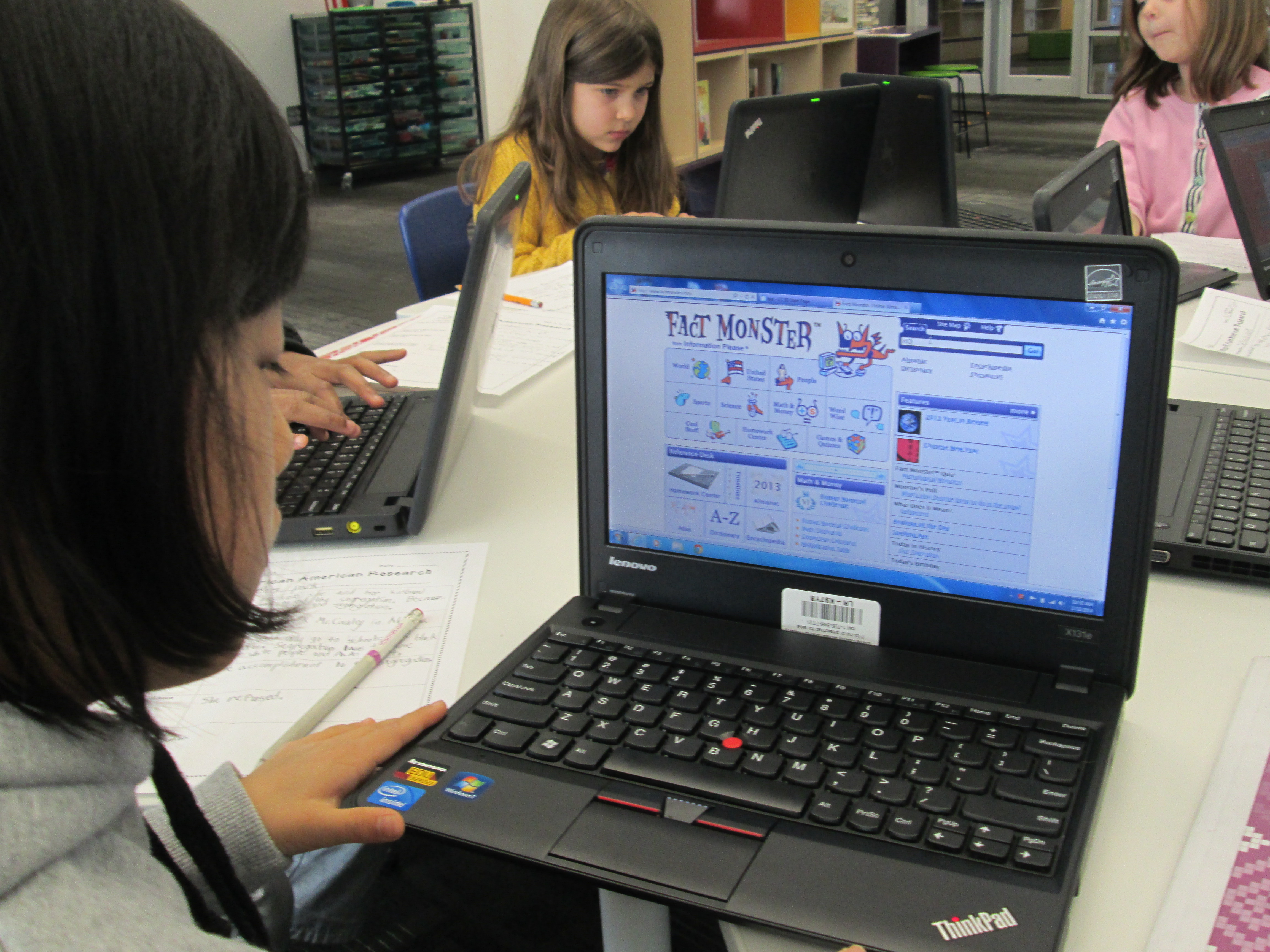
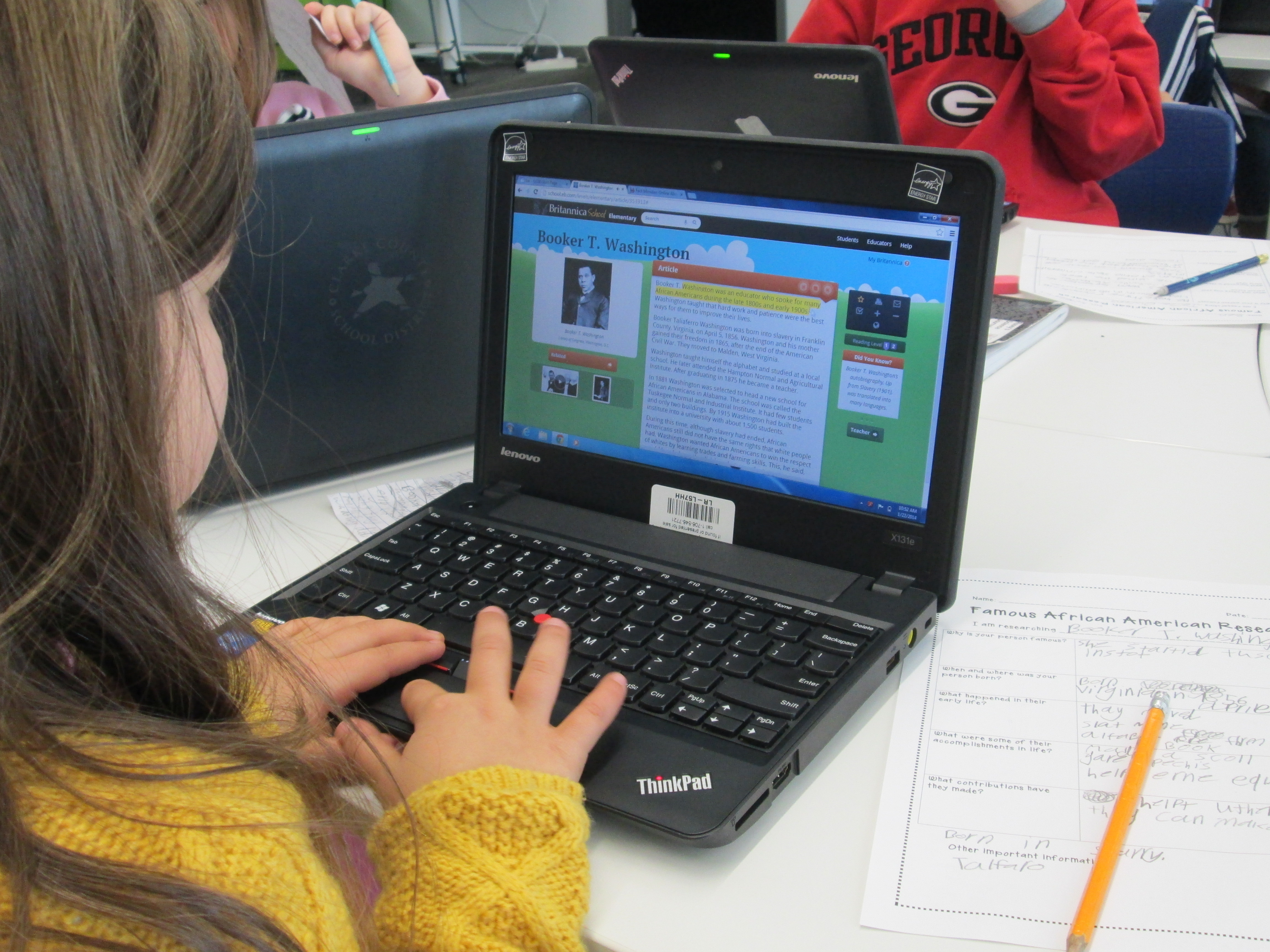
IMG_1813Students spent time in class and in the library using several tools to research.  I did a quick mini-lesson on using PebbleGo, Galileo’s SIRS Discoverer, and Galileo’s Britannica.  All of these tools had text to speech features to support learners of all reading levels.  During this mini-lesson, I also stressed how research is never really “done”.   You just reach a point where you feel like you have enough to tell your story.  Adults circulated and conferenced with students on their progress as they researched.  I loved that not many said “I’m done”, but when they did, we gently reminded them that research is never really done.

IMG_1812Now students are pulling their facts together, creating hooks, and coming up with a great closing like “the magic is in your hands”.  Once they have these scripts written, we will move forward with the next part of this project which will involve recording commercials in Flipgrid and creating a Google form for voting on which commercials are the most persuasive.  I’m compiling all of this onto a Smore which will populate with information in the coming days.

IMG_1811