Angry Birds Action Research (Part 2)

IMG_0055Mrs. Shealey’s 3rd grade class is still investigating our bird problem at Barrow.  They have made observations, developed questions, tracked suggestions and research findings, and made hypotheses about what they might try to stop the birds from flying into the window while still making our campus a bird-friendly place.  Last week, Ms. Hicks and I reached out to several people through email, Facebook, and Twitter to try to find people to connect with our students through Skype.
IMG_0051

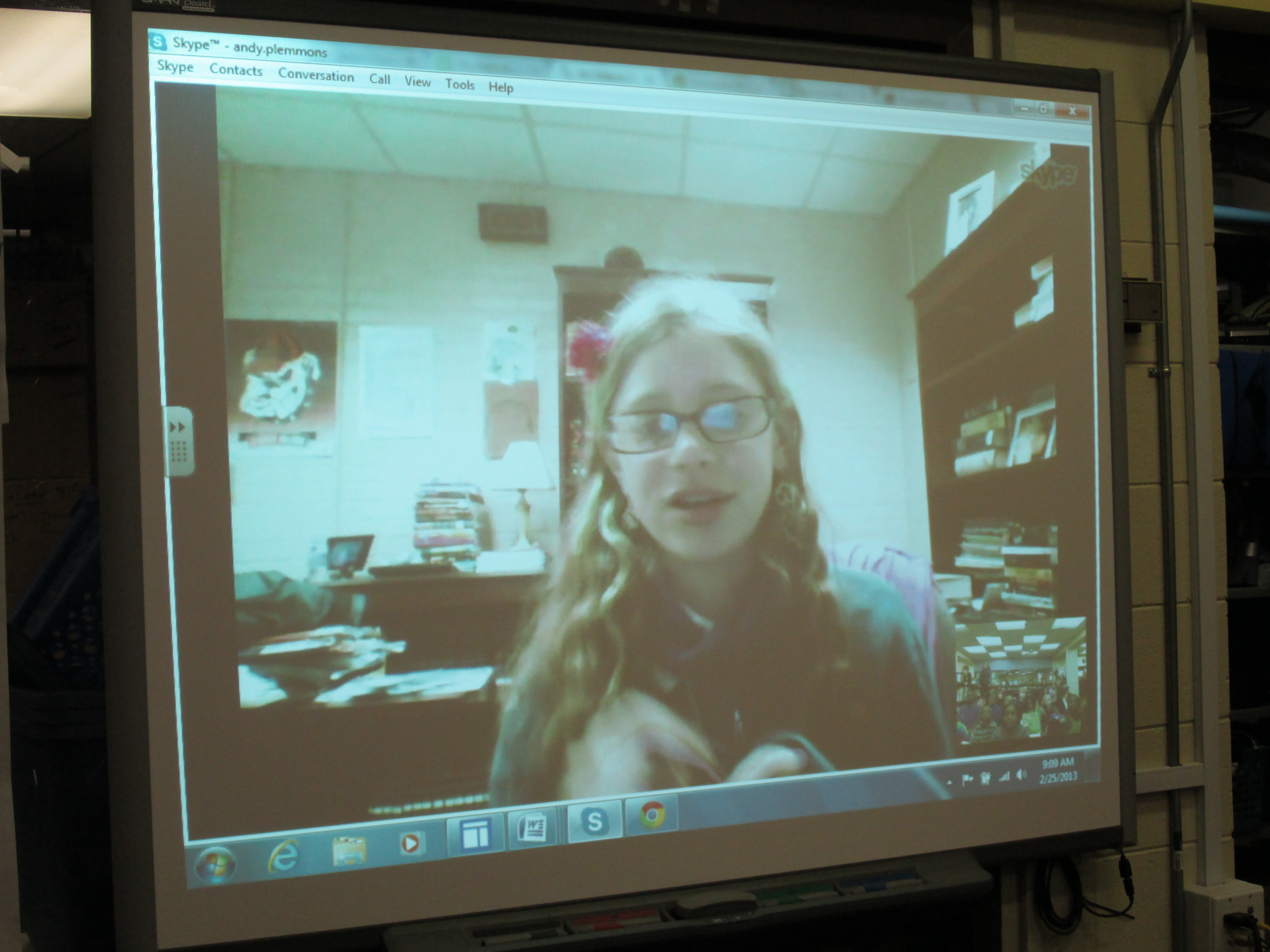
Expert 1: Claire Wislar, Middle School Student
IMG_0065

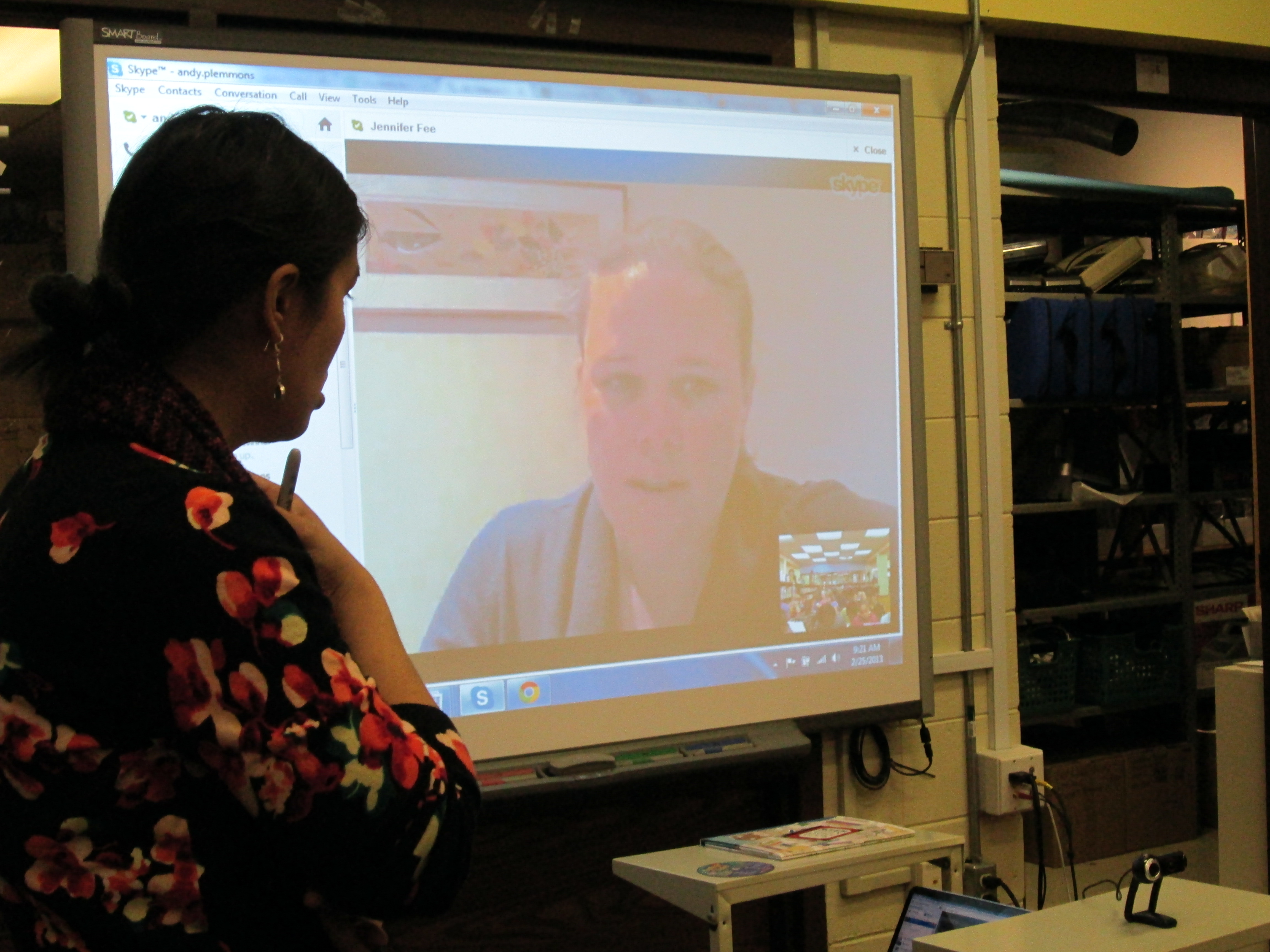
Expert 2: Jennifer Fee, Cornell University

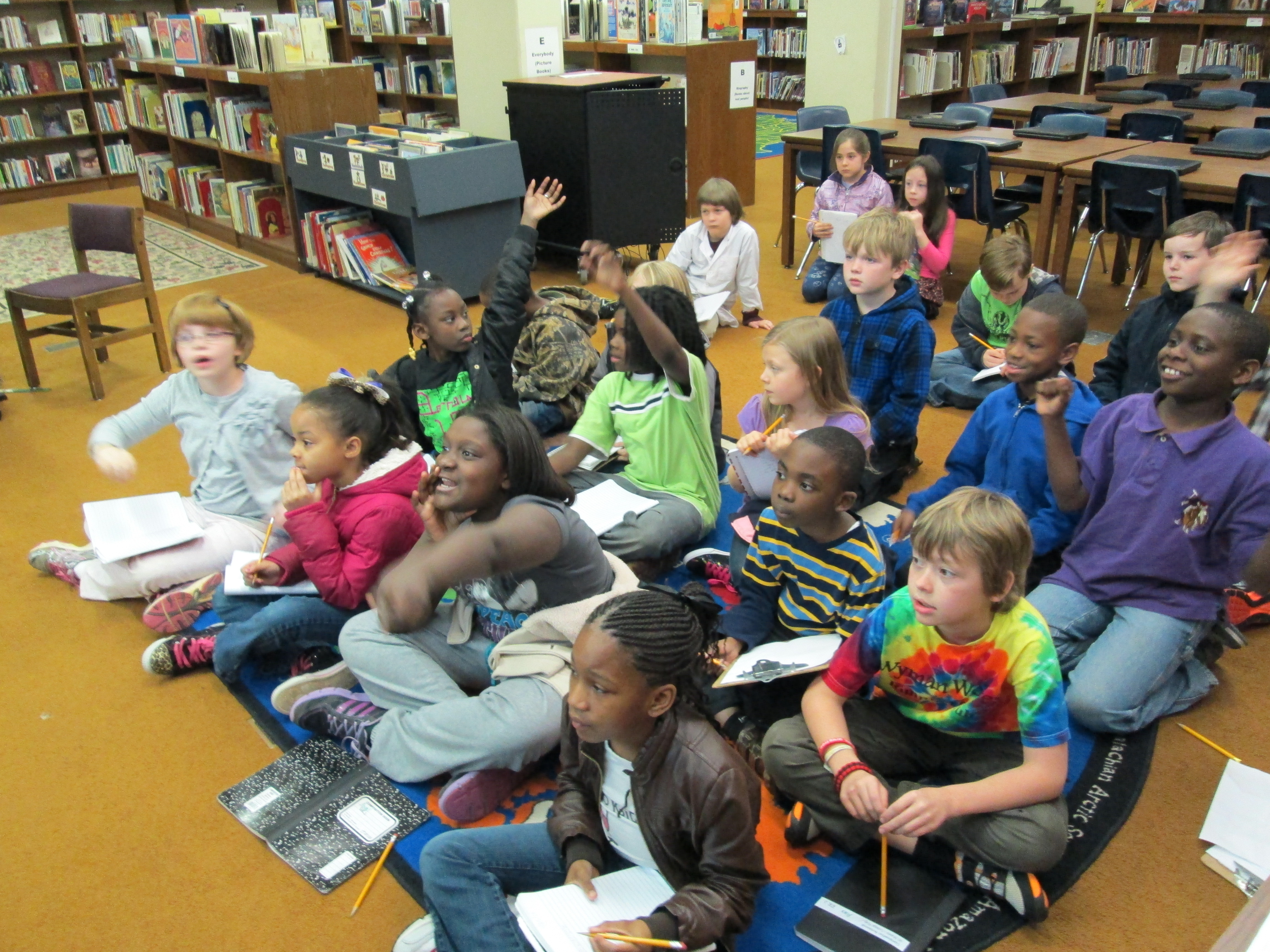
Today, Mrs. Shealey’s class came to hear from 2 experts.  Expert 1 was Claire Wislar, a former Barrow student.  She is a middle school student and aspires to be an ornithologist.  Over the weekend, she did some research on the topic for us as well as thought about her own knowledge and experiences with birds and windows.  Shawn Hinger, Clarke Middle Media Specialist, setup a computer in her office for Claire to use.  During her short Skype session, Claire let the students ask questions as well as shared to things that the students might try: wind chimes to scare the birds,electrical tape in lines on the window, and putting Saran wrap on the windows.  It was so much fun to have a connection to a student who used to go to our school who was able to share her expertise with students.
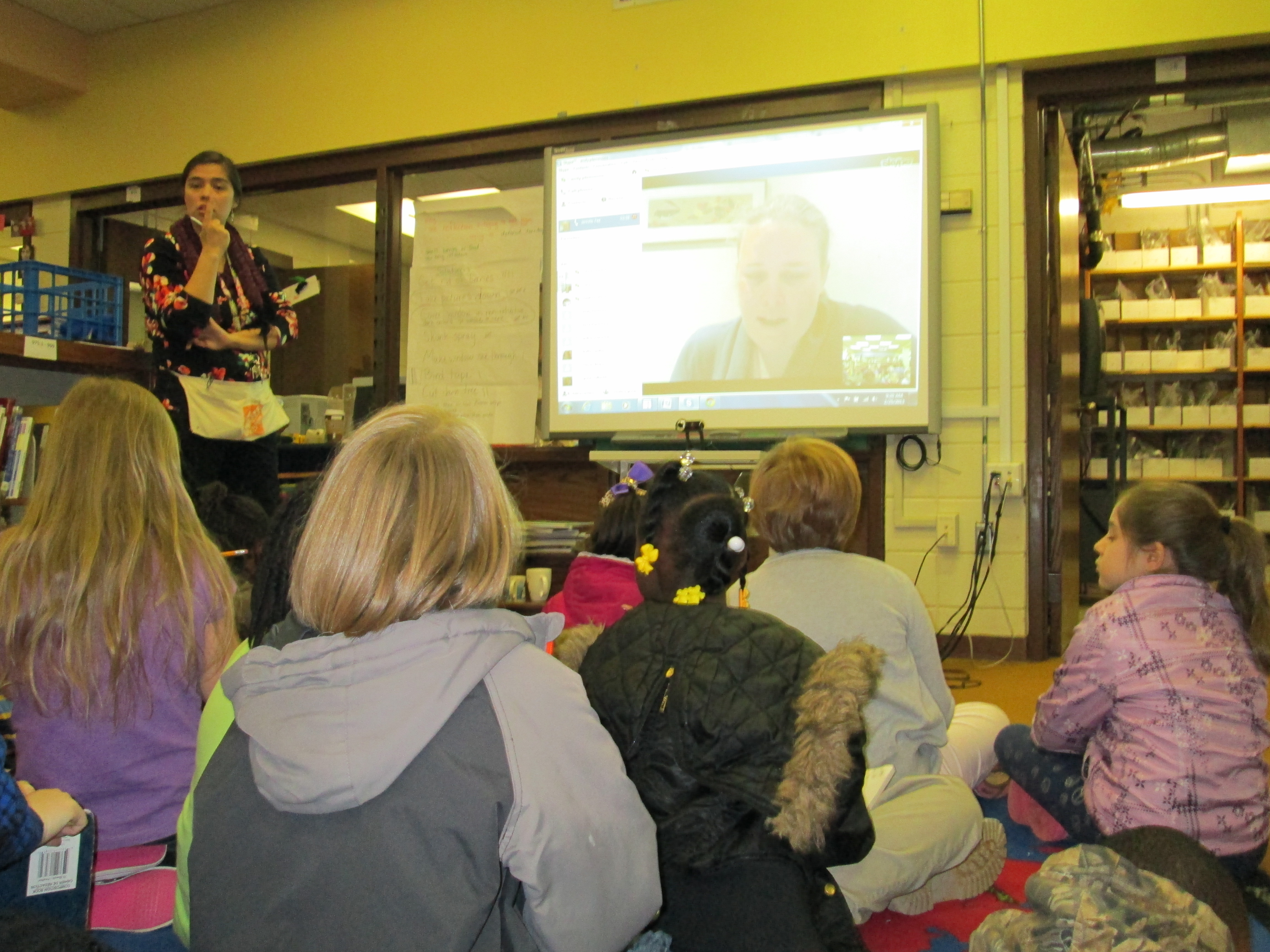
As info was learned, students wrote notes and Mrs. Shealey captured ideas on chart paper.

As info was learned, students wrote notes and Mrs. Shealey captured ideas on chart paper.

Expert 2 was Jennifer Fee with Cornell University in Ithaca, New York.  Cornell has an impressive program in Ornithology and a great website resource that we have already been using.  It was really interesting because Jennifer has experience with this same problem at her building at Cornell.  She and her colleagues did an action research project, too, and tried several solutions and collected data.  She explained this process to the students.  She also made some suggestions about what students might try:  shiny decals, hang CDs by windows, bird feeders that stick to windows or bird feeders that aren’t right by the windows, and bird shape cutouts.  She also encouraged the students to keep trying the things that they are trying and to constantly collect data on what was happening.  We were so excited that at the end of our time together she told us that she would be sending a window bird feeder for us to try!
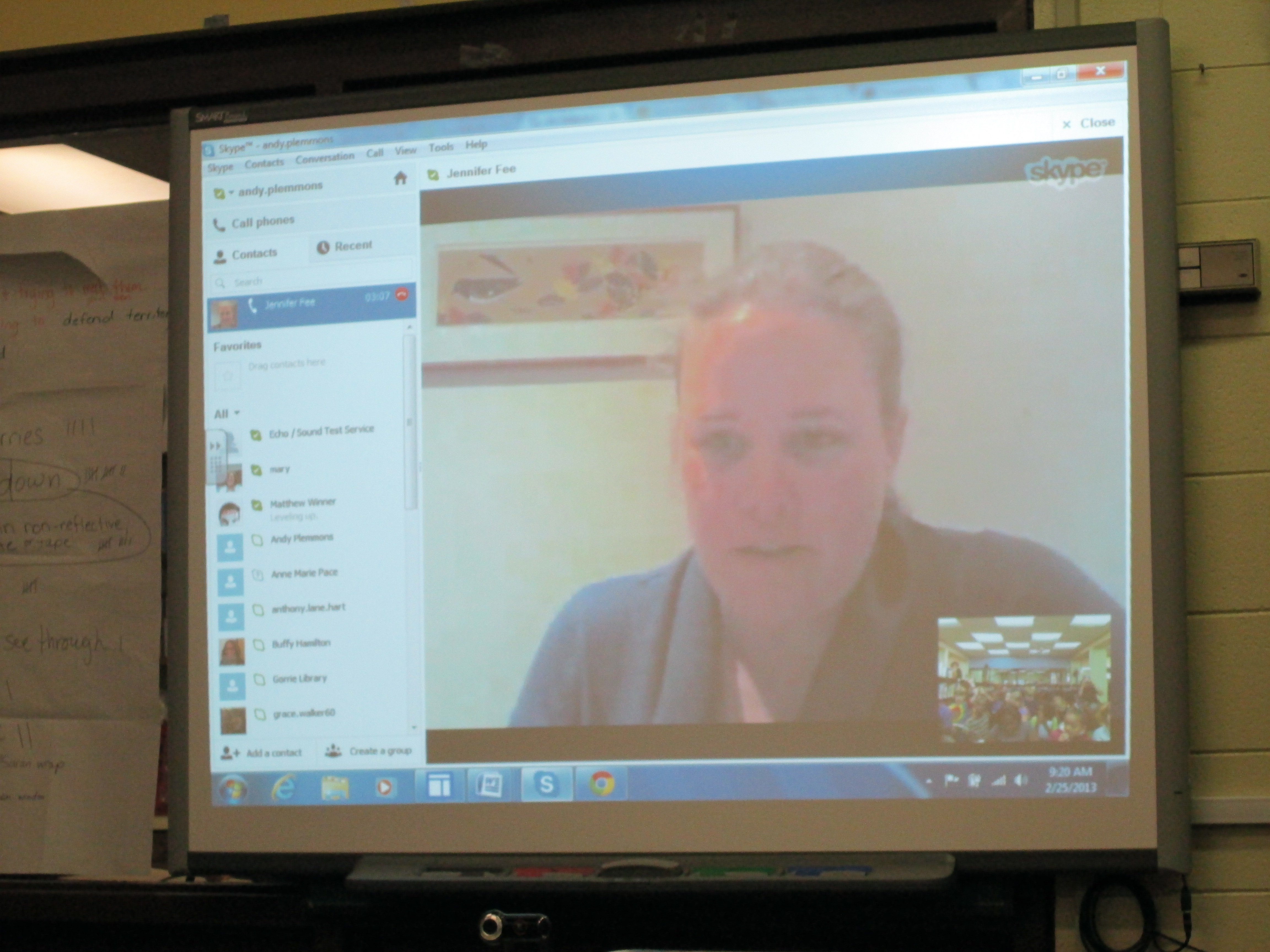
IMG_0063Expert 3 did not connect with us in real-time but sent us an email instead.  Richard Hall is the president of the local Audubon Society.  He suggested that student visit this website and also try cross-hatching the window with a yellow hi lighter.  He also invited the students to write about their experience in the local Audubon Society newsletter!  They are so excited about this opportunity.
IMG_0053This is such an exciting project.  It is full of higher order thinking, student ownership, multiple standards, and authenticity.  I was sure to be transparent with students about how we connected with so many fantastic people.  The power of social media and technology “for good” is incredible.
Tweeting with 1st Graders

IMG_0047Can 1st graders tweet?  Sure they can.  Since our district opened up Twitter for teachers to use, I’ve been incorporating it into lessons.  It allows kids to put their thoughts into a succinct statement, and it also connects kids with the world.  We can send tweets out to Web 2.0 tools, organizations, or just a general tweet to get some help with a project.

Today, 1st grade came to the library to work on the conventions of writing and opinion/persuasive writing.  I thought Twitter would be great for this because it would require the students to write 1 short sentence that used capital letters, punctuation, and persuasion.  To start, we looked at my Twitter page to see what a tweet looked like and how tweets create conversations with people around the world.  We talked about the 140 character limit, too.

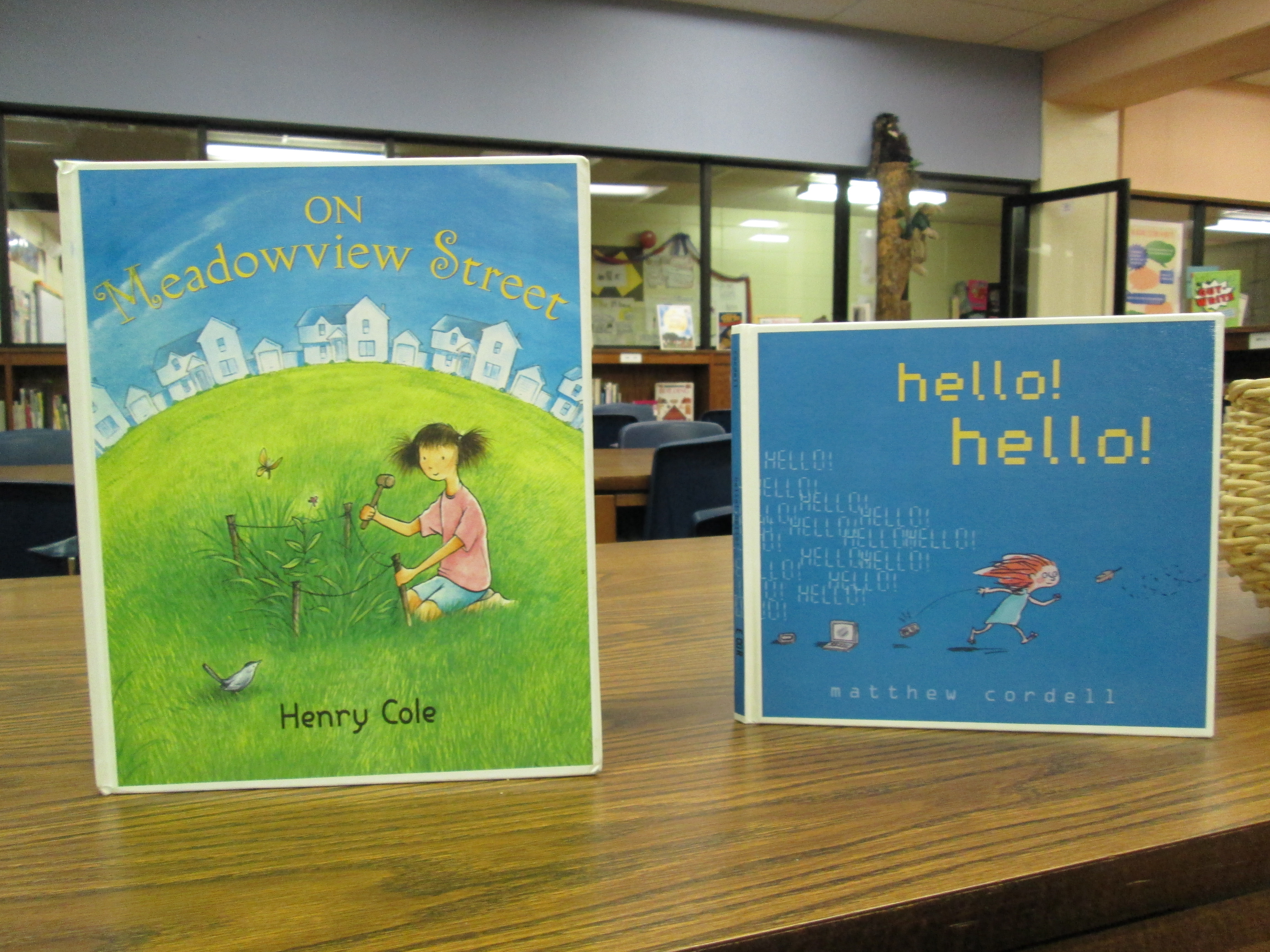
Next, we read the books hello! hello! by Matthew Cordell and On Meadowview Street by Henry Cole.  I chose these books because both have a hint of persuasion in them.  The teacher and I had a conversation about how we wanted students to think beyond just “what can I get people to give me?”.  We wanted their persuasive writing to be more about taking action or creating change.  In hello! hello! , there is a theme of connecting with nature, spending quality time with family, and disconnecting from technology.  In On Meadowview Street, there is a theme of caring for nature rather than destroying it and how small steps can inspire a community.  As we read these stories, we talked about those themes to spark ideas for tweets.

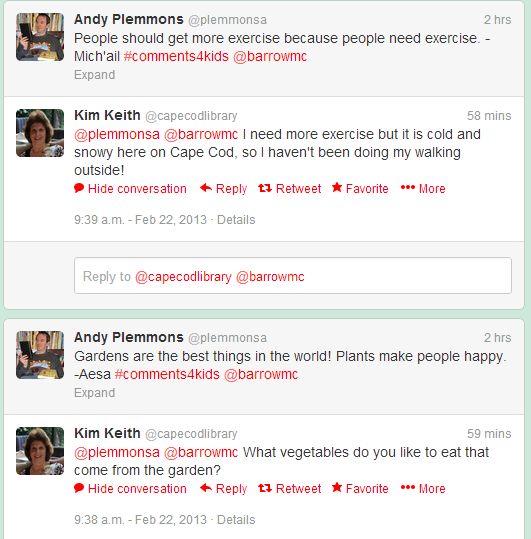
IMG_0046Students then talked with a partner to put their idea for a tweet together.  The tweet needed to be an opinion or persuasive thought connected to or inspired by the books.  It needed to have capital letters and correct punctuation.  Once they had their ideas, they moved to tables and wrote their tweet on a small sheet.  The substitute teacher and two student teachers conferenced with students and then sent them to me when their tweet was ready.  I gave it a final read, and if it needed some addition I sent them back to the tables.  If it was ready, I tweeted it from my account @plemmonsa and tagged the library @barrowmc.  I also added the hashtag #comments4kids so that the kids would hopefully get some feedback or responses on their tweets.

Within just a few minutes, we started getting some responses some fantastic friends around the country.  Kim Keith @capecodlibrary and Sue Kowalski @spkowalski were the first to respond with some comments, questions, and even pictures to respond to the students’ tweets.  They were so excited to see that their thoughts were being read by people around the world.twitter convo 1

twitter convo 3 twitter convo 2

I plan to do this with the other three 1st grade classes soon.

Real-Life Angry Birds: A 3rd Grade Action Research Project

Our school has a problem that I’m sure many of you have seen or have experience with.  We have angry birds.  Not the ones that live on an iPhone, iPad, or other device.  These are ones that take a crash dive into the windows of the school and either knock themselves out or something a little more grimm.  Our students, of course, notice this every time they pass by a window.

Mrs. Shealey’s 3rd grade students have decided to do something about this, so they have launched into an action research project which ties to many of their curriculum areas including habitats, research, information writing, data collection & interpretation, and more.  It would be easy for a small group of adults to sit down and figure this out, but it is much more meaningful when the students are involved.  It is also our hope that the process of this project will carry over into the lives of students outside of school to notice problems, investigate, and take action.

Mrs. Shealey is doing a tremendous amount of work for this project within her classroom, but the library has been one small piece of this larger initiative.  Mrs. Shealey, Ms. Hicks (spectrum teachers), and I met to brainstorm and map out a timeline.

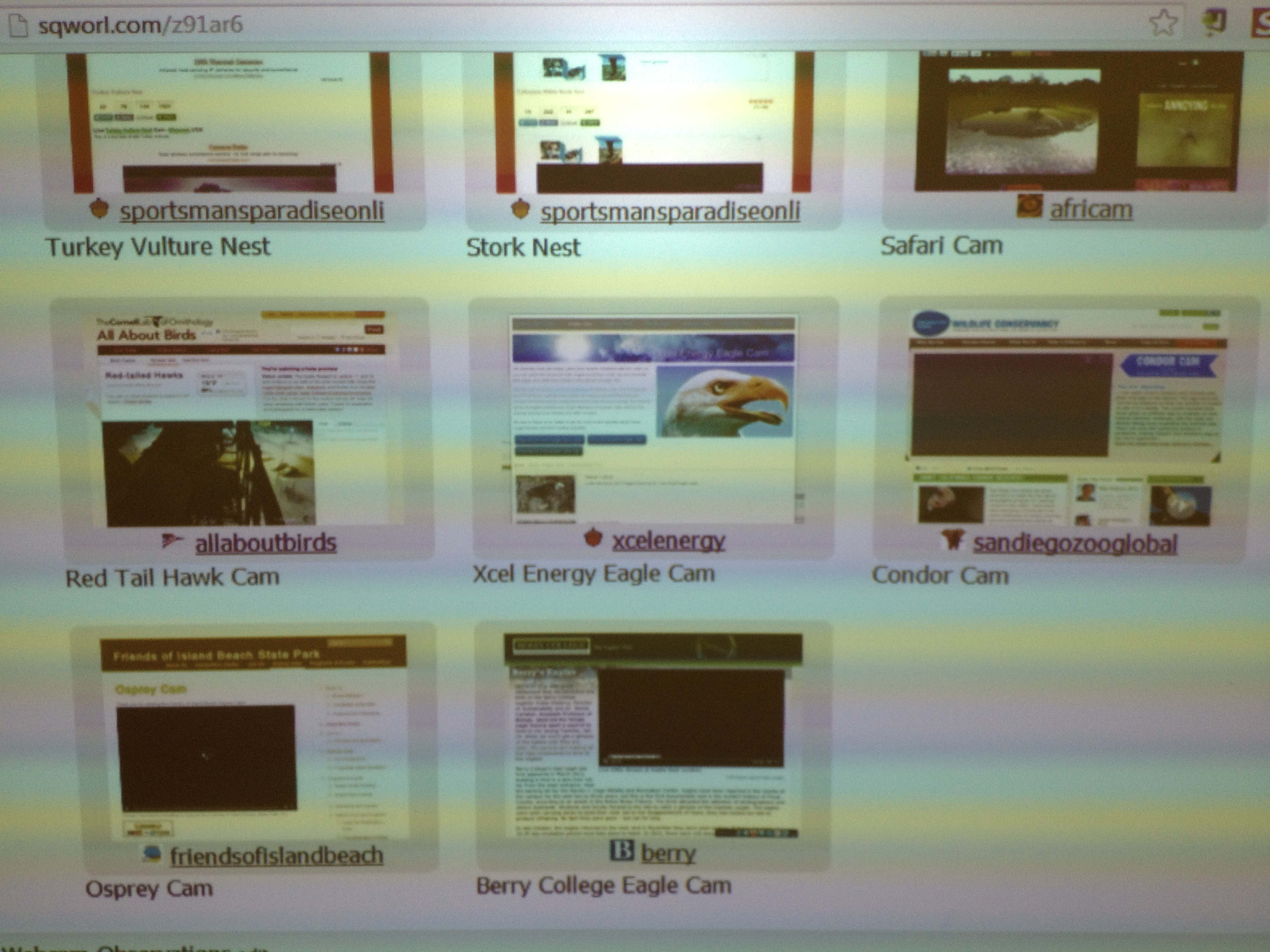
Our webcam pathfinder

Our webcam pathfinder

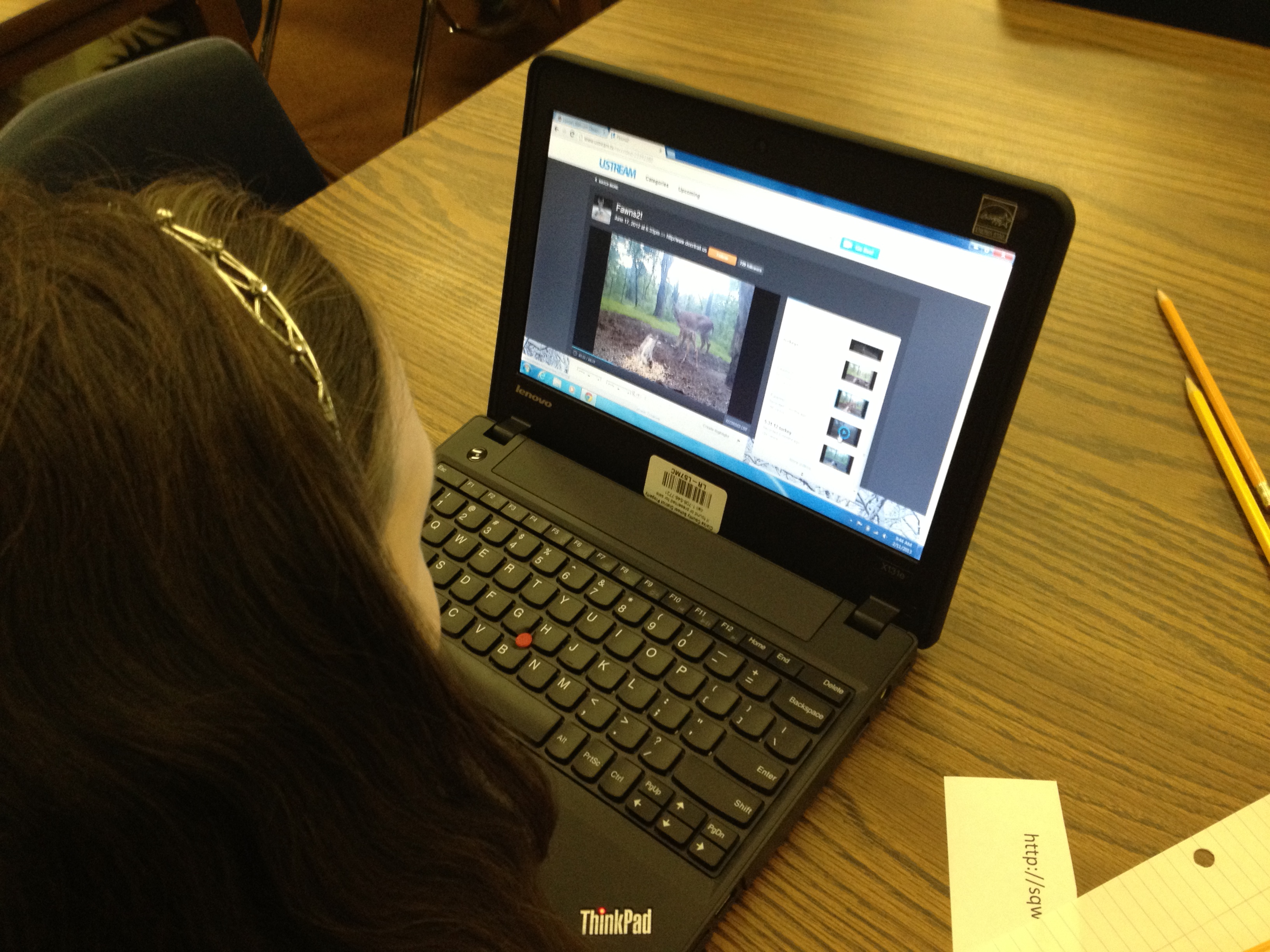
I wanted to help the students with observational skills.  When I stayed on Skidaway Island for 2 weeks a few years ago, I practiced careful observation in a field journal.  We decided to have one lesson in the library that explored careful observation.  I shared my journal including the sketches, quick notes, and deep reflection that I did on various pages.  I talked about the importance of being still, staying focused, noticing the small things, and observation stamina.  Then, students moved to computers where they used multiple live and recorded webcams to practice observing.  While students observed, the three of us made note of what they were doing well, what needed to be worked on, and what we might need to focus on as we did our actual observations of the birds at Barrow.  I think this practice session was really helpful to the process.

Using webcams to practice observation

Using webcams to practice observation

In class, students began making bird feeders that they plan to put outside the windows that birds are crashing into.

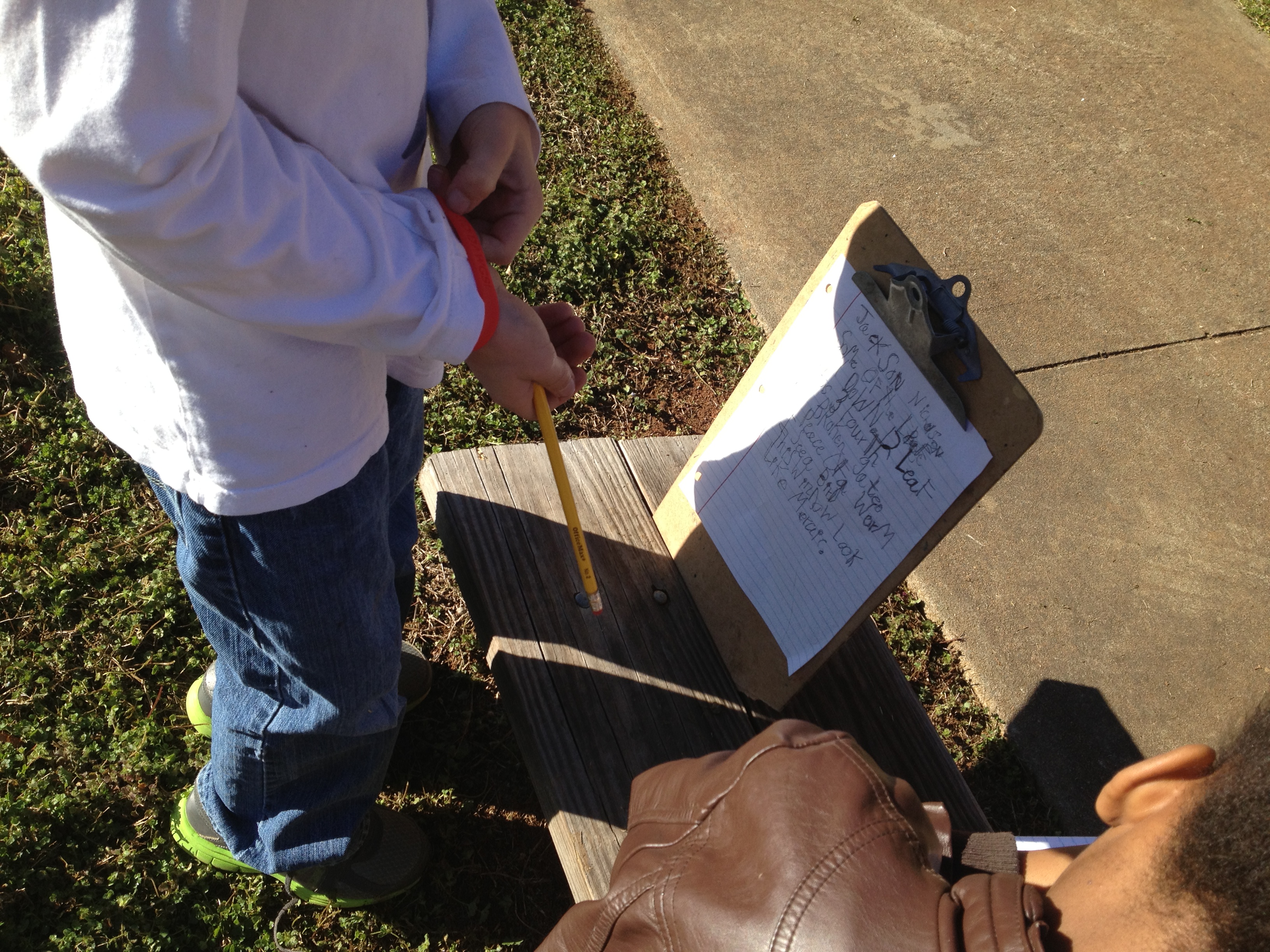
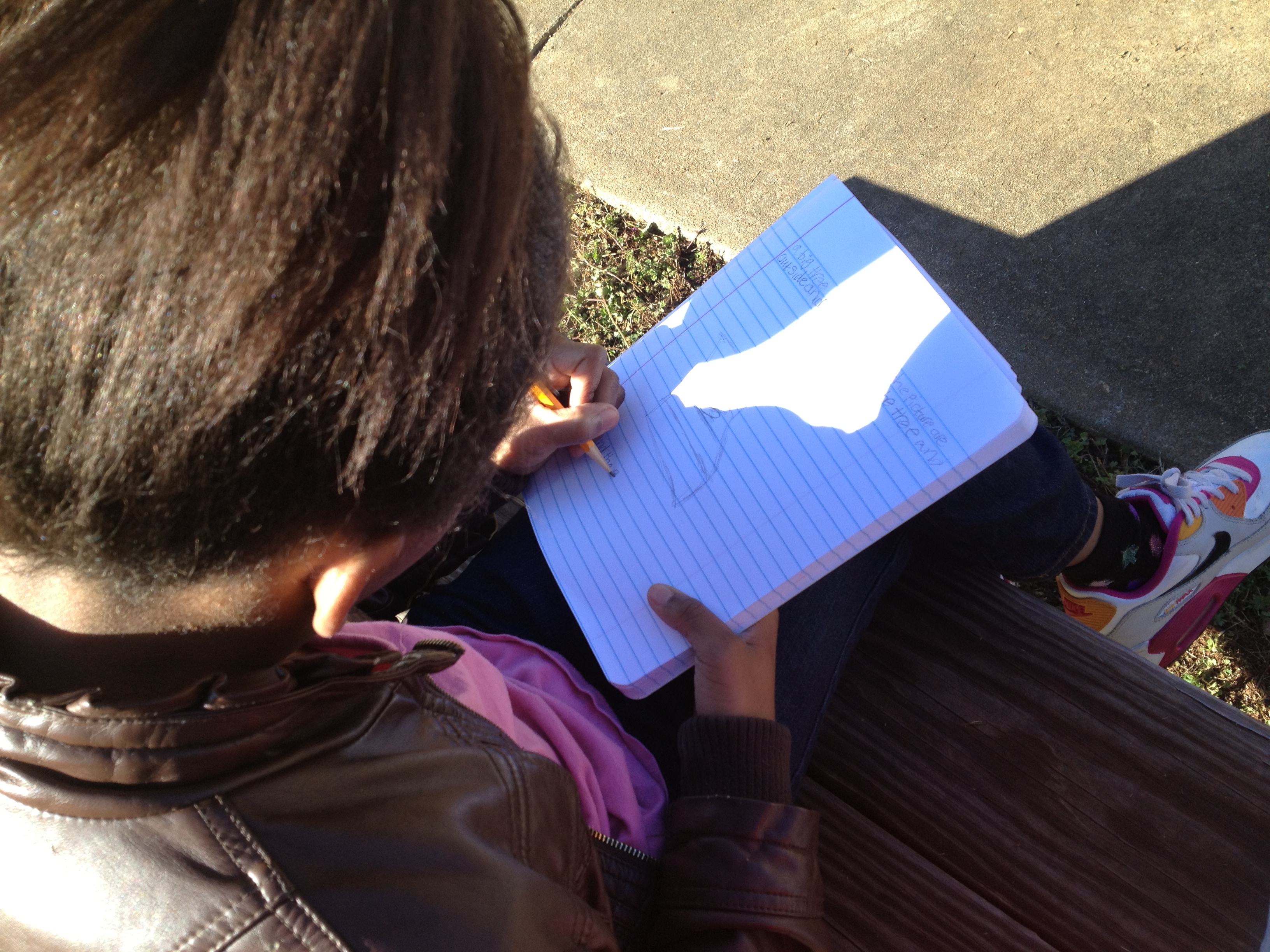
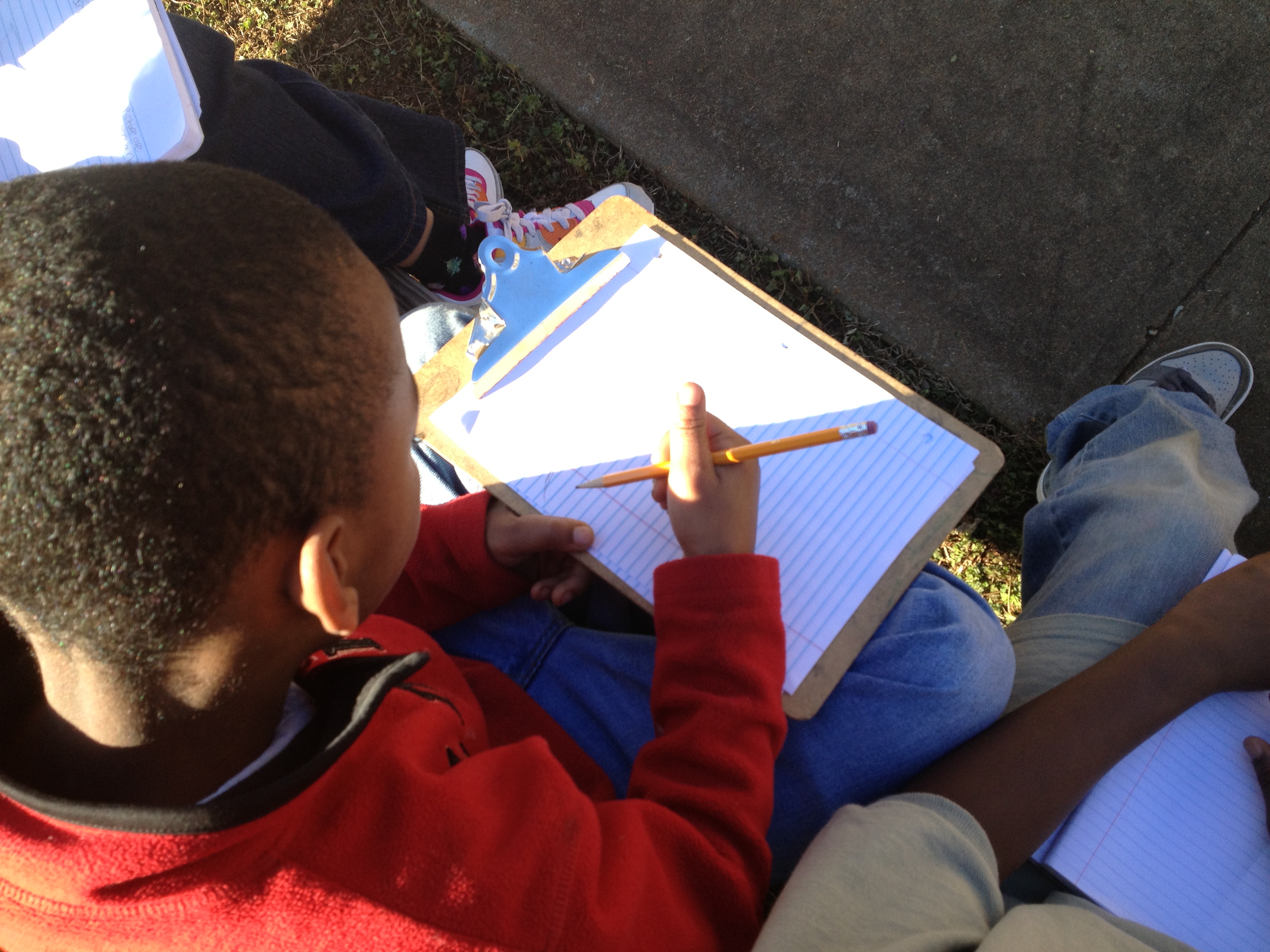
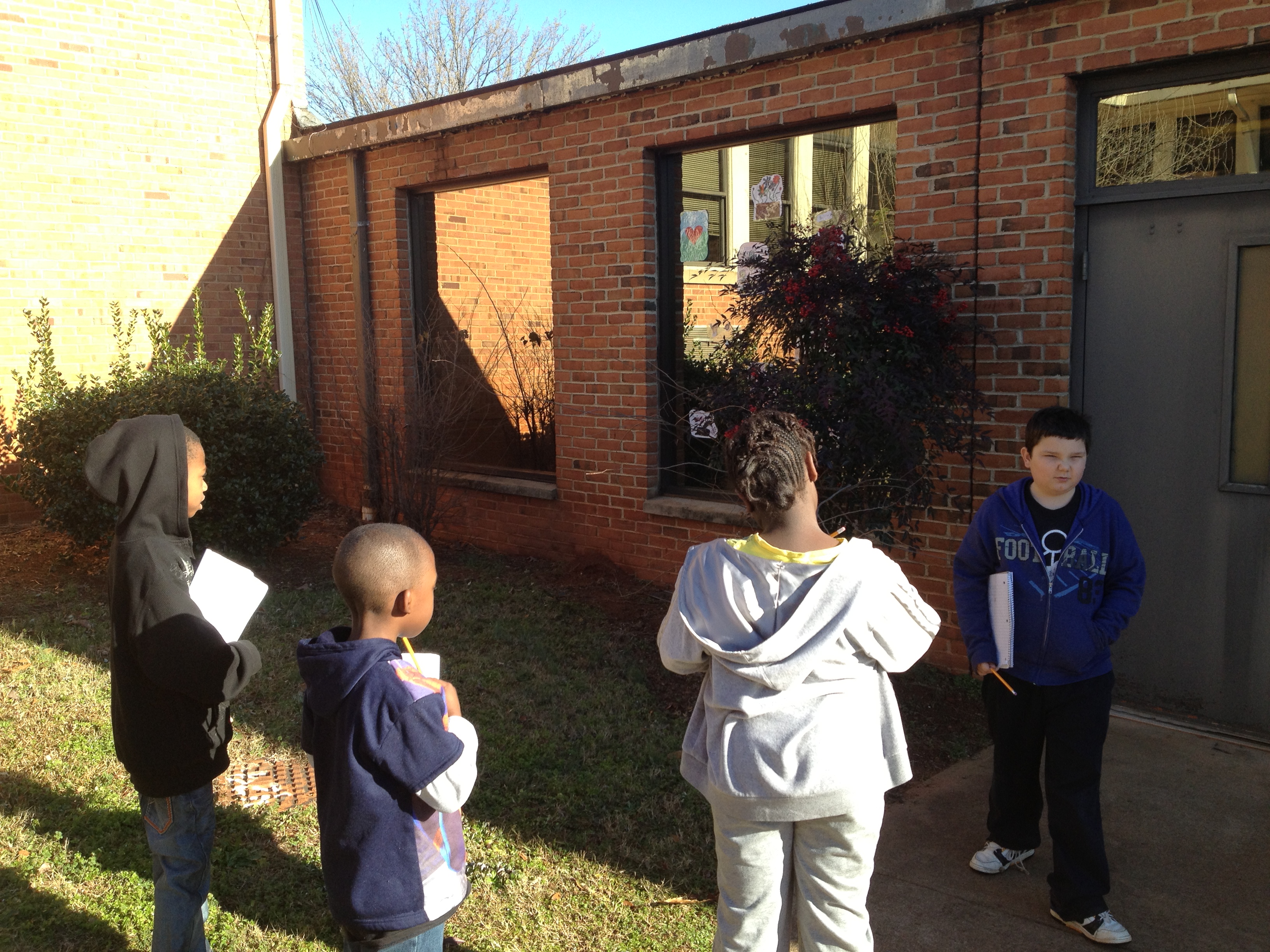
Mrs. Shealey also split the class into 4 small observation groups that both me and Ms. Hicks took to observe at the windows in the hallway leading down to the media center.

Here’s a quick look at what we saw:

I was amazed by the noticings the kids made after 30 minutes of careful observations and prompting from me and Ms. Hicks.  Some examples are:

  • Birds were more attracted to the tree that had berries and leaves on it outside the window than to the tree that was bare.
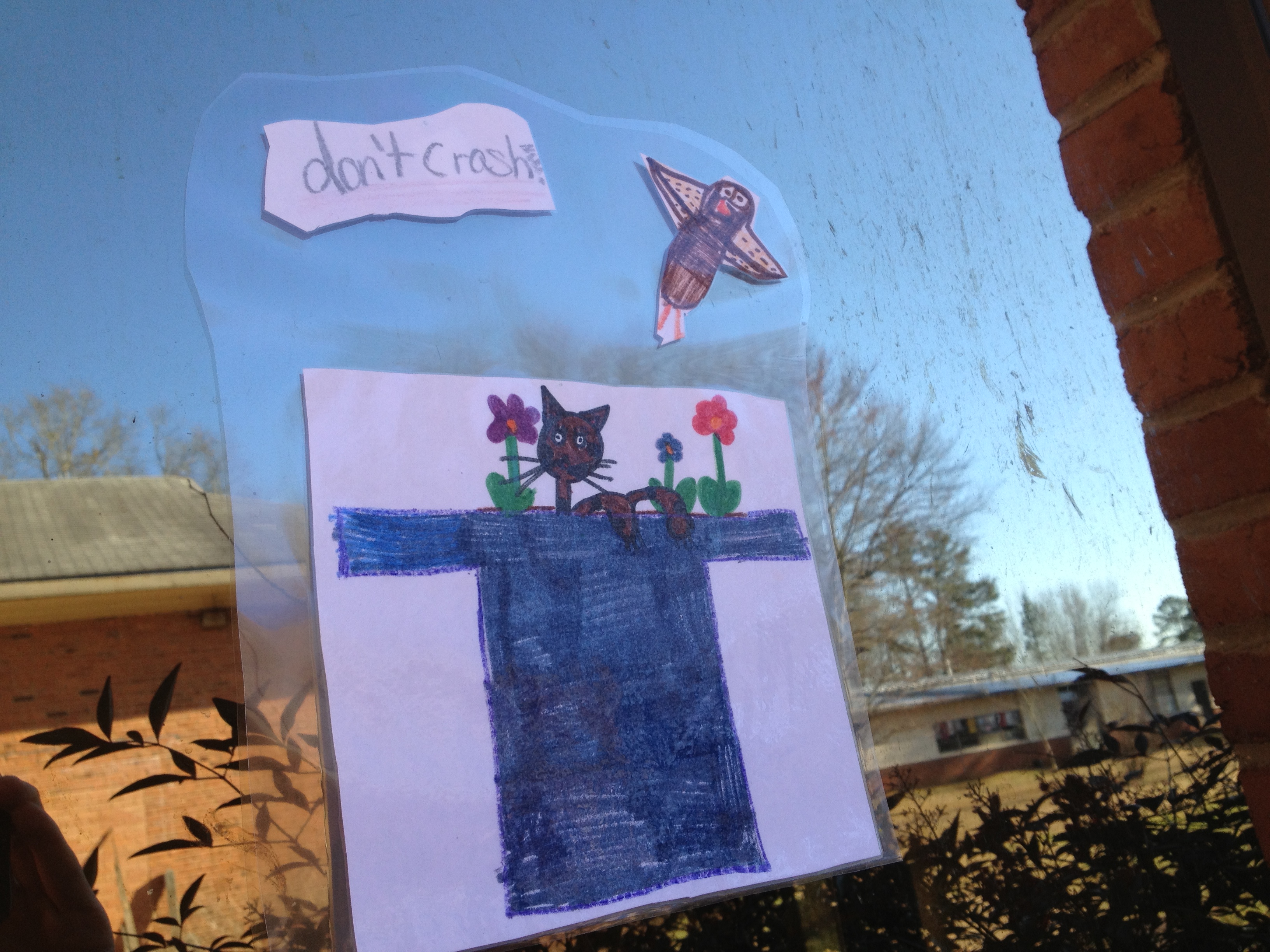
  • Some students had put laminated colorful pictures of flowers on the outside of the window and birds were flying straight into those pictures.
  • The window is different than other windows because the outside is exactly like a mirror.
  • Birds did not fly into the window when we were outside watching, but they did fly into the window when we were inside.
  • The tree with the berries seemed to have a smell that some students thought might attract birds.
  • Students noticed that birds were not flying into the windows of other hallways and wondered if it was the height of those windows that caused that.
  • Students began to wonder if bird feeders, statues, dark colored window decals, and perches might deter the birds from the window.

I think that these students crafted some wonderful, authentic questions that they can now research and create things to test out in this space.  As we observed, several teachers stopped and thanked the students for working on this project and asked them to share their findings with the whole school because some teachers are having the same problem at their classroom windows.

birds8 birds7 birds6 birds3 birds2 birds


Here are a few of the student reflections about what they saw:


5th Grade Little Free Library Project Part 2

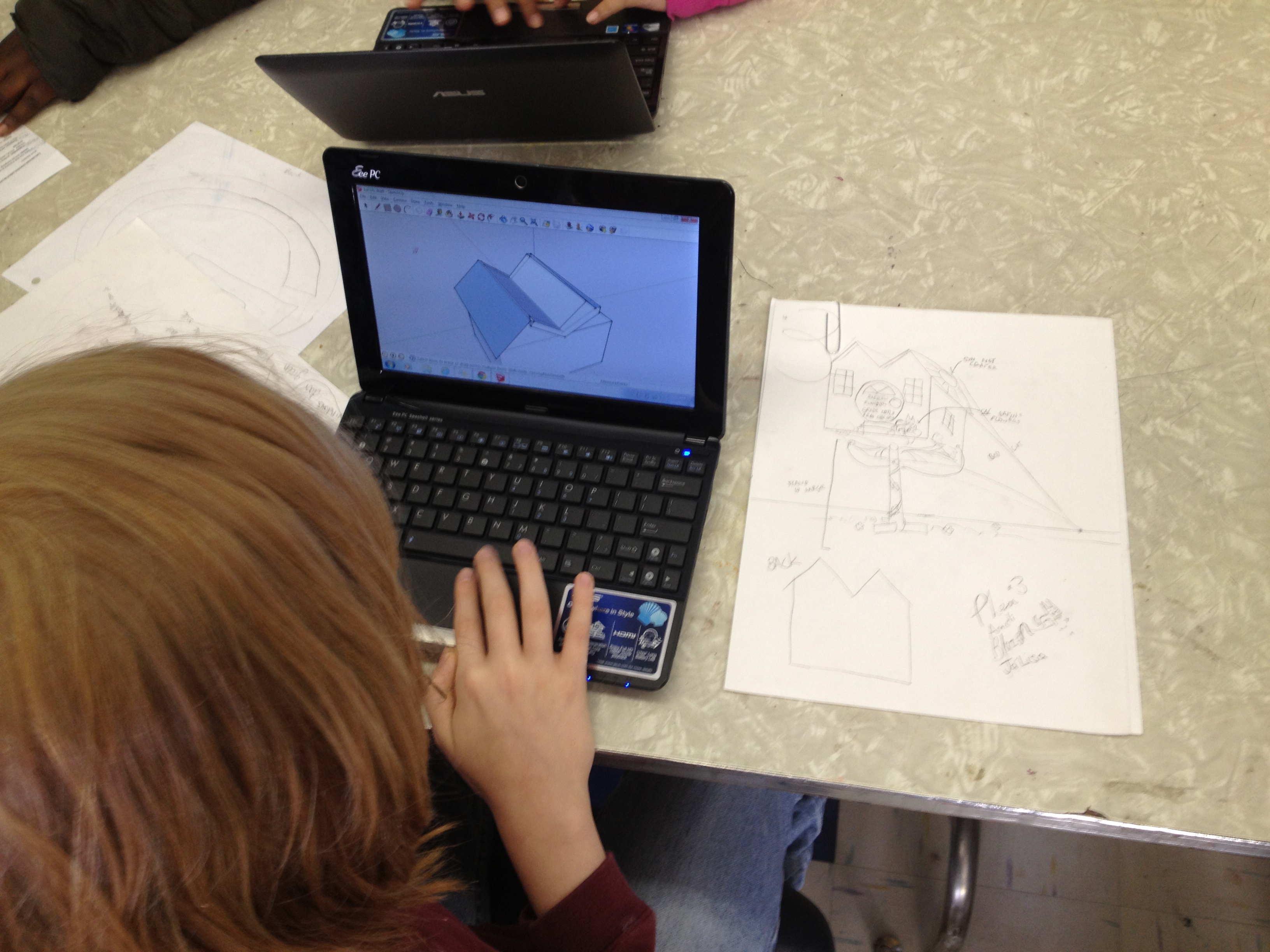
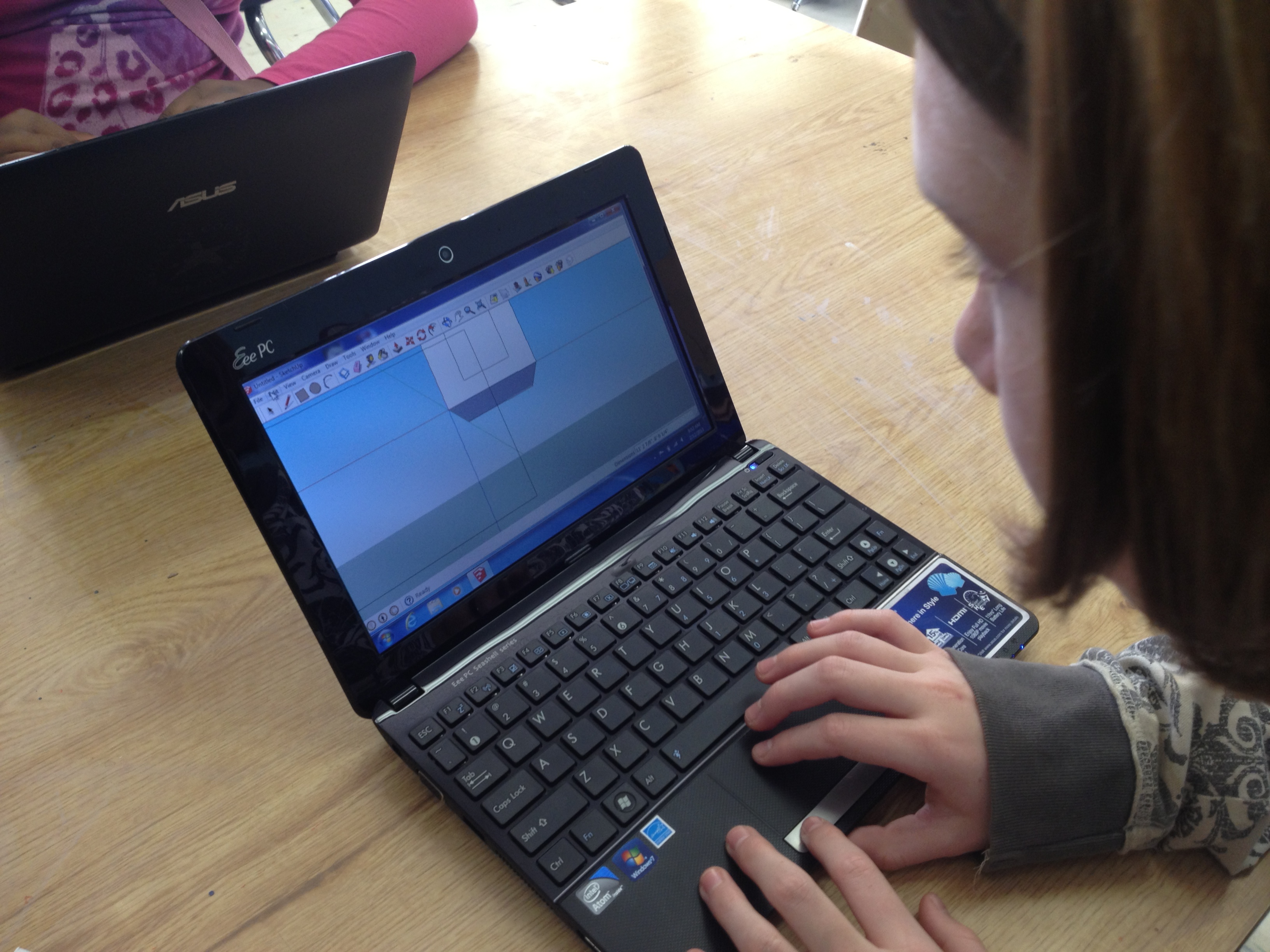
Students designed on paper before using Google Sketchup

Students designed on paper before using Google Sketchup

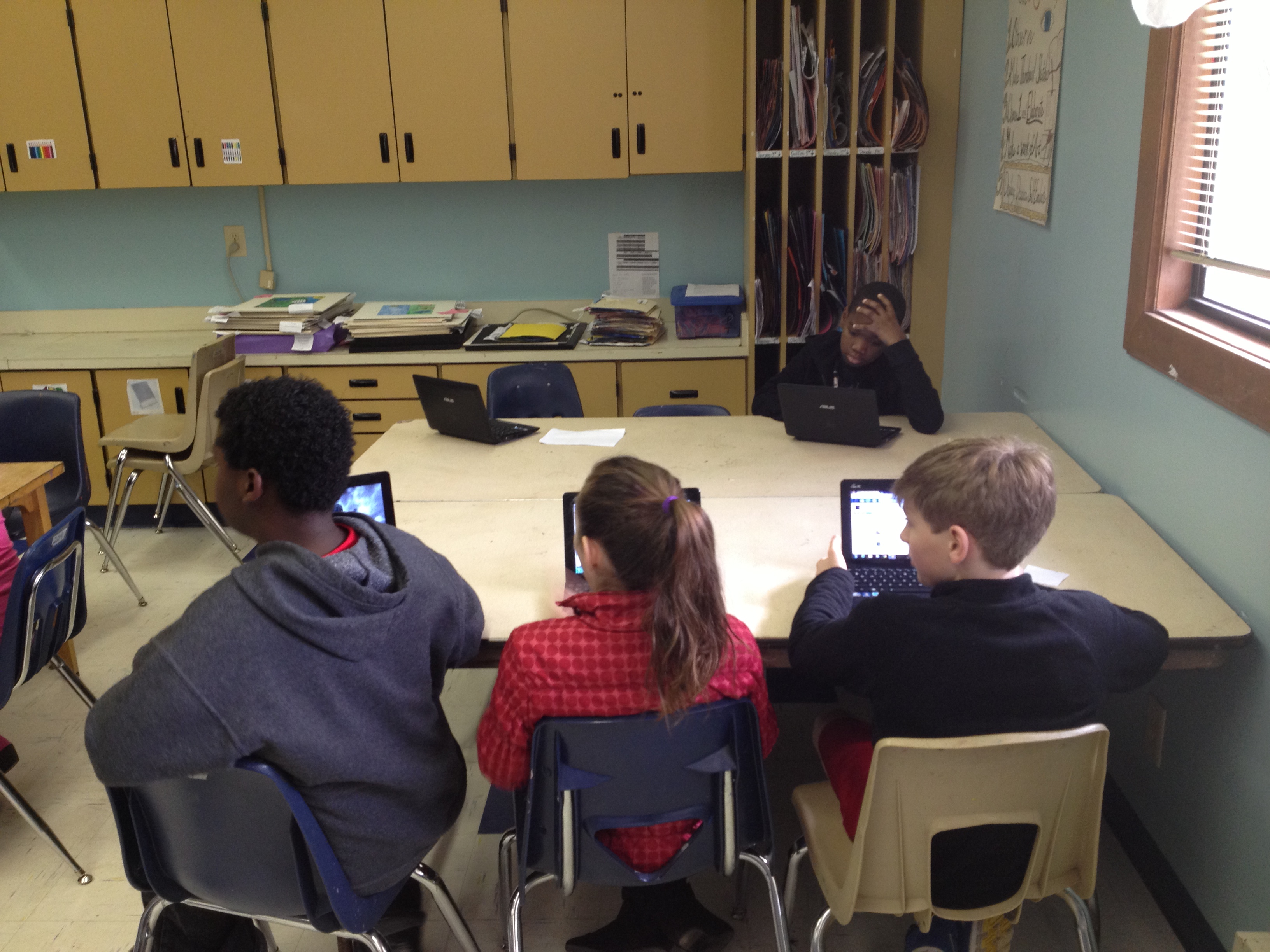
Our 5th grade Little Free Library Project is picking up speed.  Thanks to the amazing collaboration of Rita Foretich and her student teacher, this project is really getting off the ground.  In art, students from both 5th grade classes have been split into teams of 4-5 students.  Each team has a lead designer, a task manager, a researcher, a writer, and a presenter.  Each job has specific responsibilities which Ms. Foretich and her student teacher constantly check in on.  They also give the task managers checklists to help them check in with each person on the team.

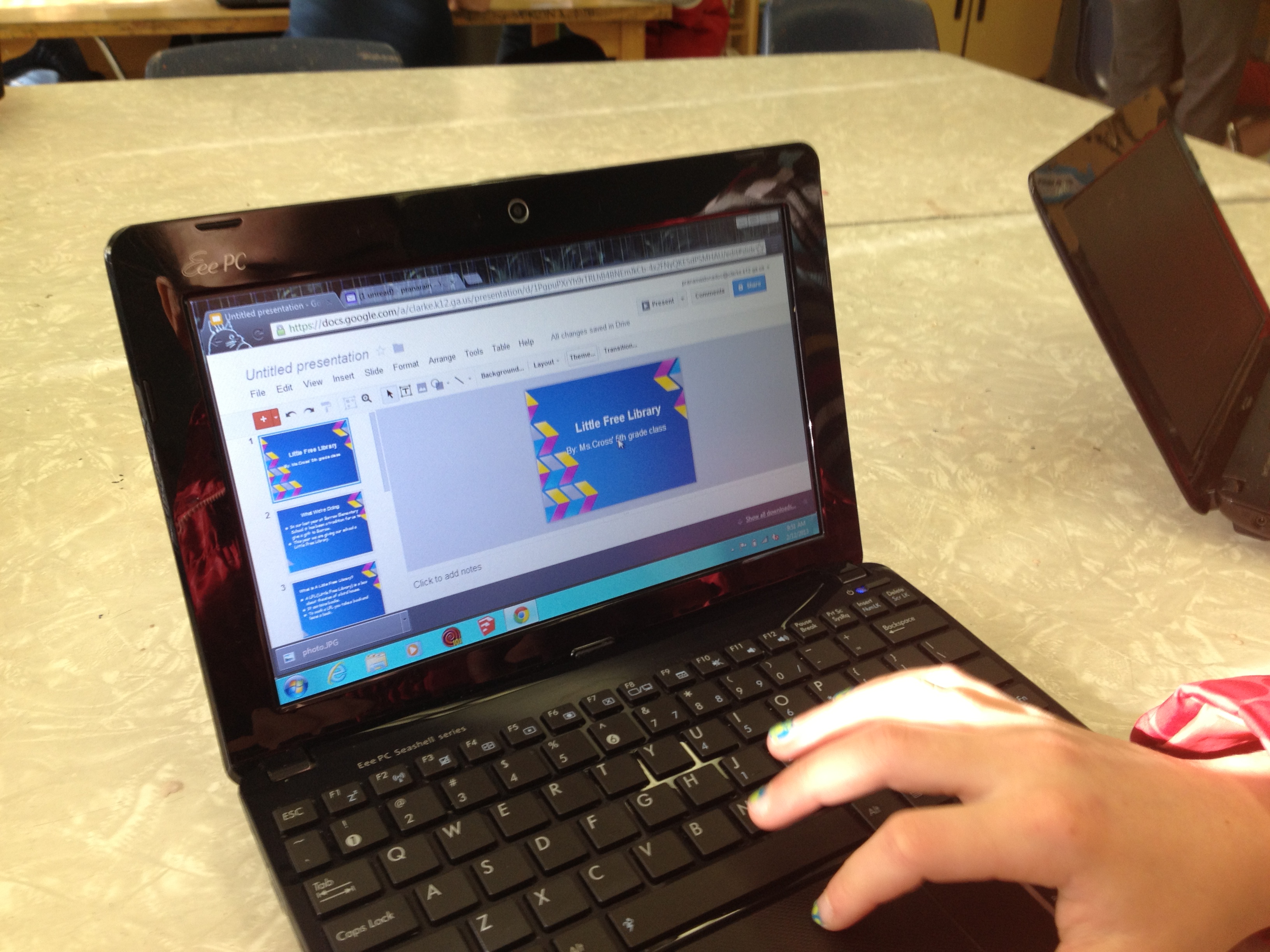
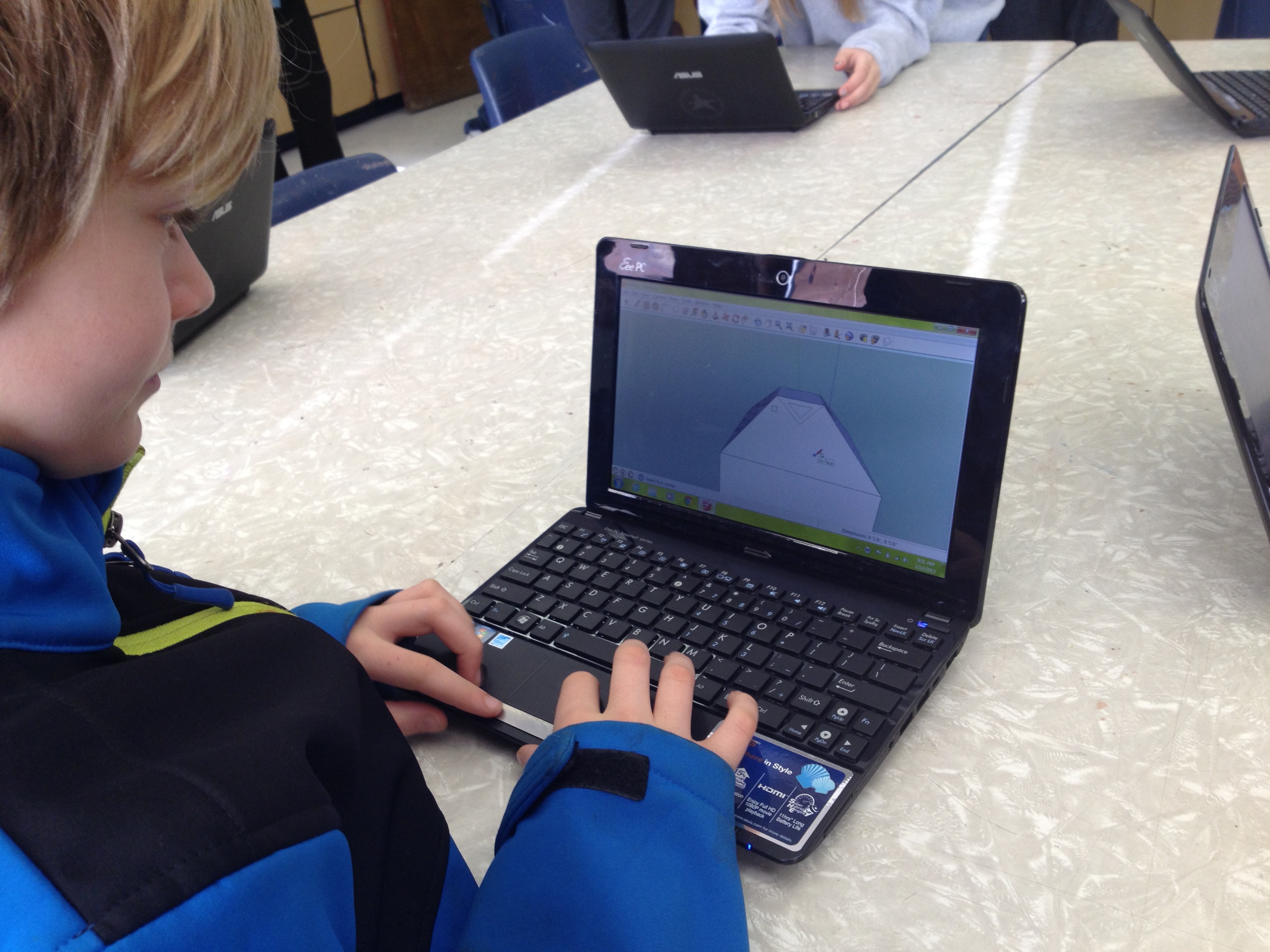
The student teacher is a Google Sketchup expert, so she has the lead designers using this tool to design a potential Little Free Library.  Students have made sketches on paper and moved to Google Sketchup to create a model of their library.  Presenters are putting together a presentation to inform our audience about each library design.  We may end up having the principal choose 2 designs or we may move forward with a student vote. LFL 4

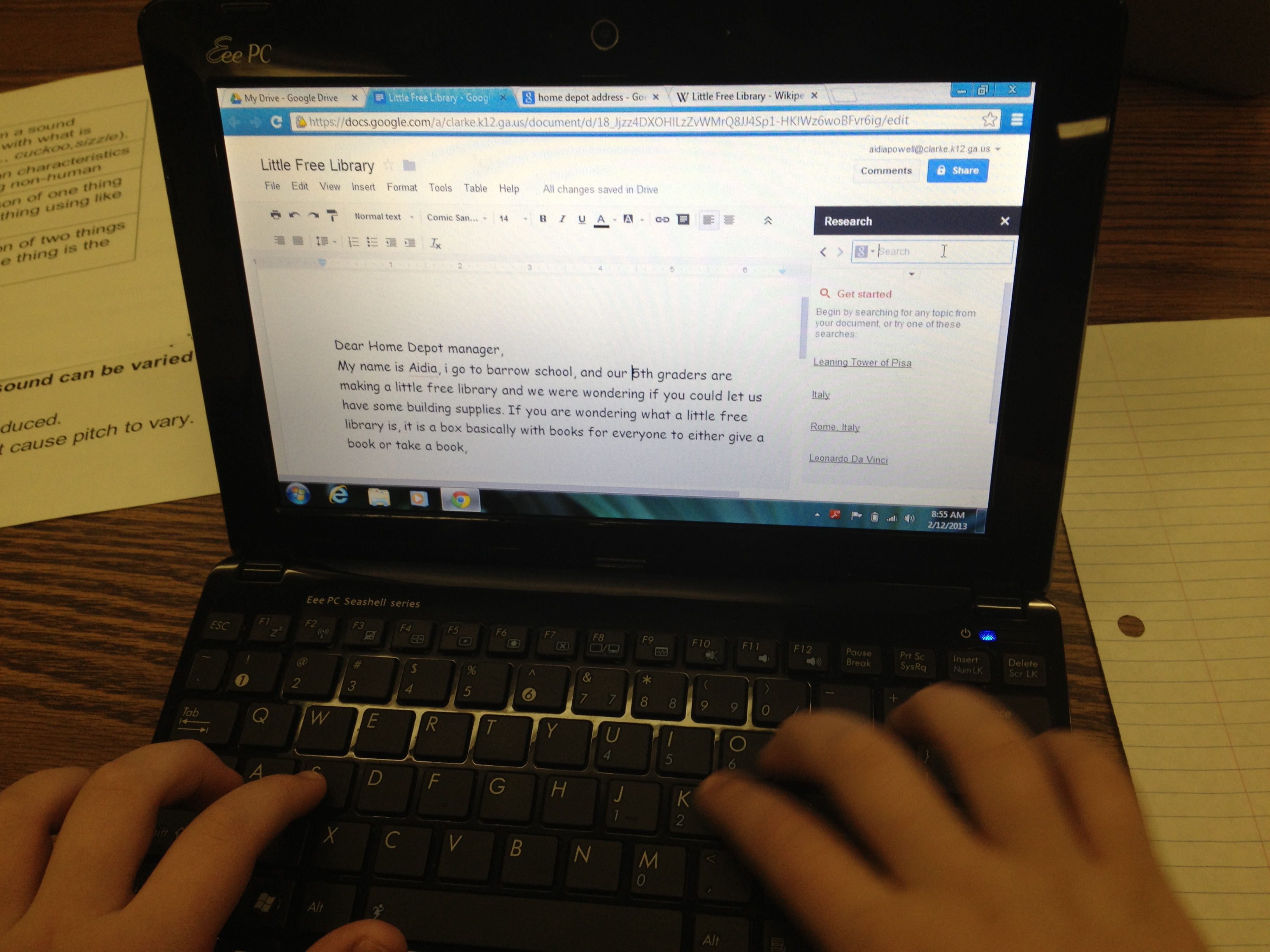
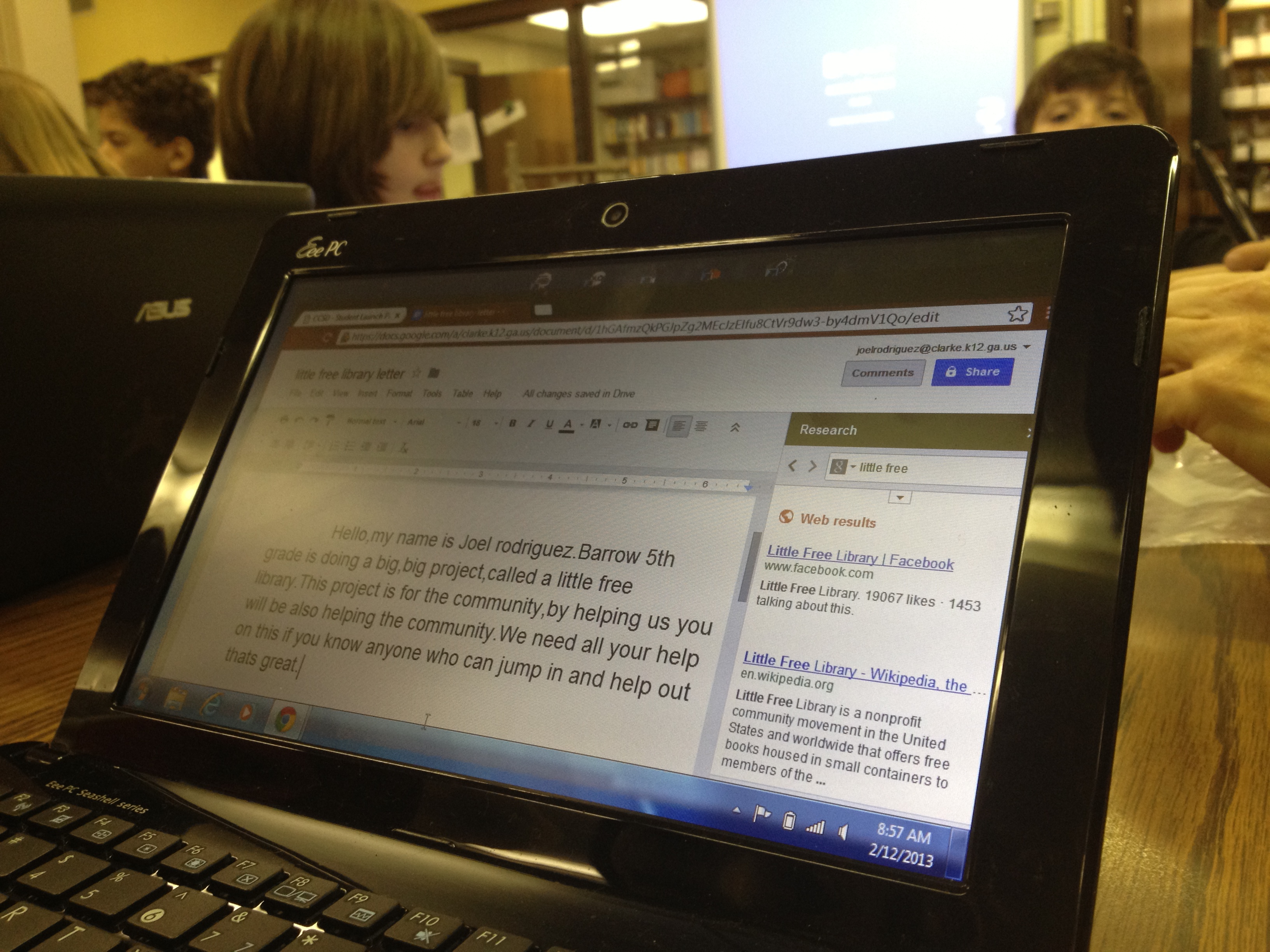
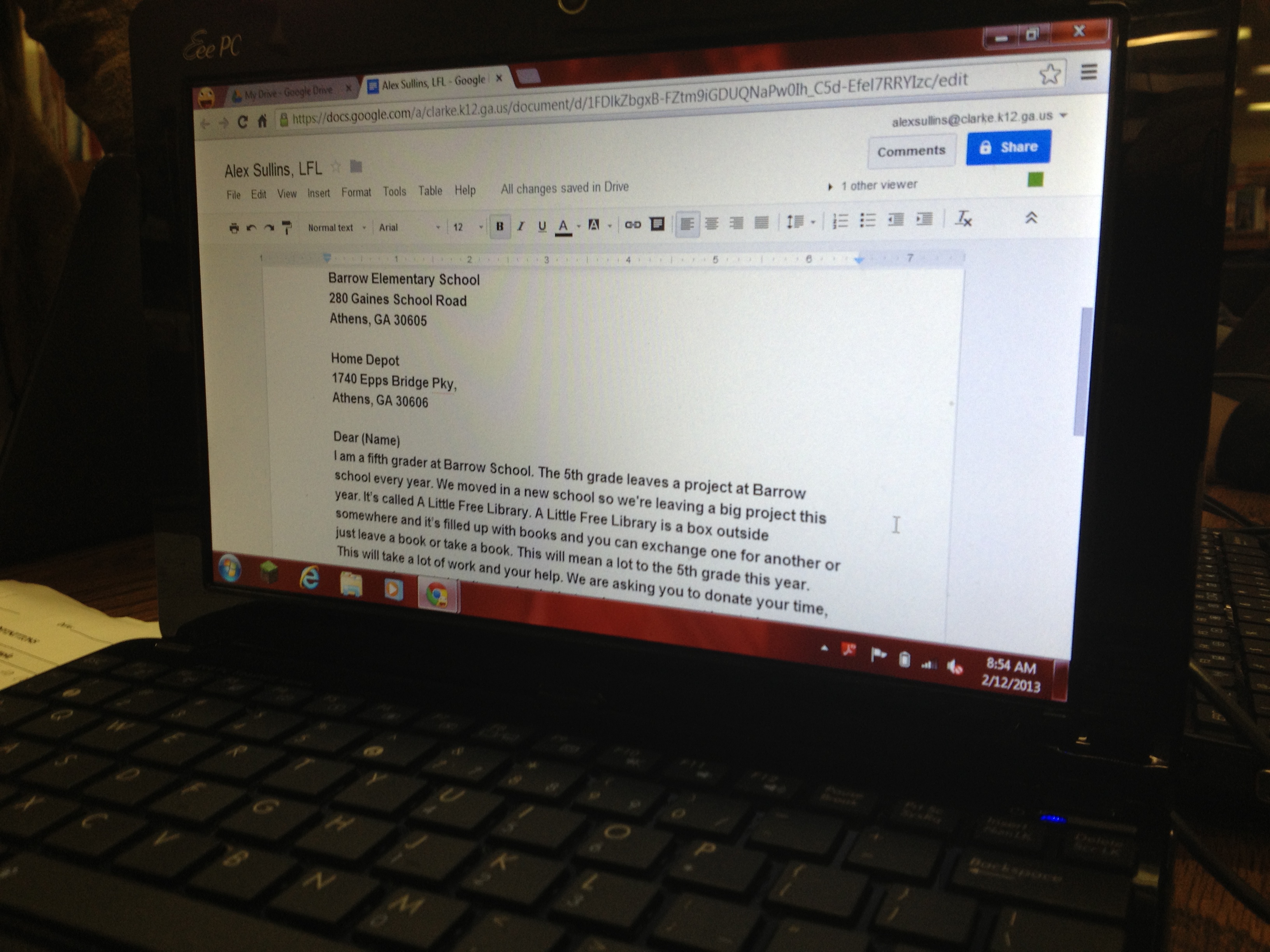
The researchers and writers are working with me in the library to research the Little Free Library site for information about building the actual structure.  As we research the many tips on the site, we are considering other topics that we may need to research such as reusing materials and green building techniques.  We’re thinking of careers that we may need to research in order to identify experts to connect with or people to target for persuasive writing.  The writers are writing persuasive letters to send to potential donors, builders, or collaborators on this project.  They are also considering persuasive tweets they may need to craft for me to tweet out to target audiences for support.

5th graders used the Google Research tool in Google Docs to look for reading statistics

5th graders used the Google Research tool in Google Docs to look for reading statistics

I’m also working with the 5th grade classes on persuasive writing techniques.  We used the Read Write Think powerpoint of strategies and thought about what information we might include underneath each strategy.  I also showed them the research tool within Google Docs.  The students (and teachers) were excited that you could search for a topic such as “reading statistics” to find quotes about reading in the United States and automatically cite the source within your Google Doc.  I think this tool alone will spill over into many other projects now that the students know how to use it!  All 5th graders are writing letters to businesses, builders, parents, students, and other groups in order to ask for money, labor, supplies, books, and a location for our 2nd library.  The teachers are continuing this writing in the regular classroom as well as exploring the Little Free Library site for additional information.  One student was even able to locate a Little Free Library from his hometown in India!

Google Sketchup is proving to be a helpful tool in design

Google Sketchup is proving to be a helpful tool in design

I can’t wait to see where this project goes because it is certainly exploring many of the standards that our 5th graders work on in a variety of areas.


lfl8

A team checks in with one another before starting individual work

A team checks in with one another before starting individual work

LFL7 LFL 8 LFL 6 LFL 5

Google Forms: Choose Your Own Adventure

IMG_1645I had heard about how you could write a Choose Your Own Adventure story using a Google form, but I had not been brave enough to give it a try until this year.  The idea got placed back in front of me at one of our media specialist professional learning meetings by Tanya Hudson.   Then, I went into Google forms and gave it a try.  I made a very short, basic fiction story. I won’t go into detail in this post about how the story is made, but it is all about adding multiple page breaks in a form and then directing answers to go to those pages based on the response of the reader.

Mr. Plemmons’s very rough practice story!

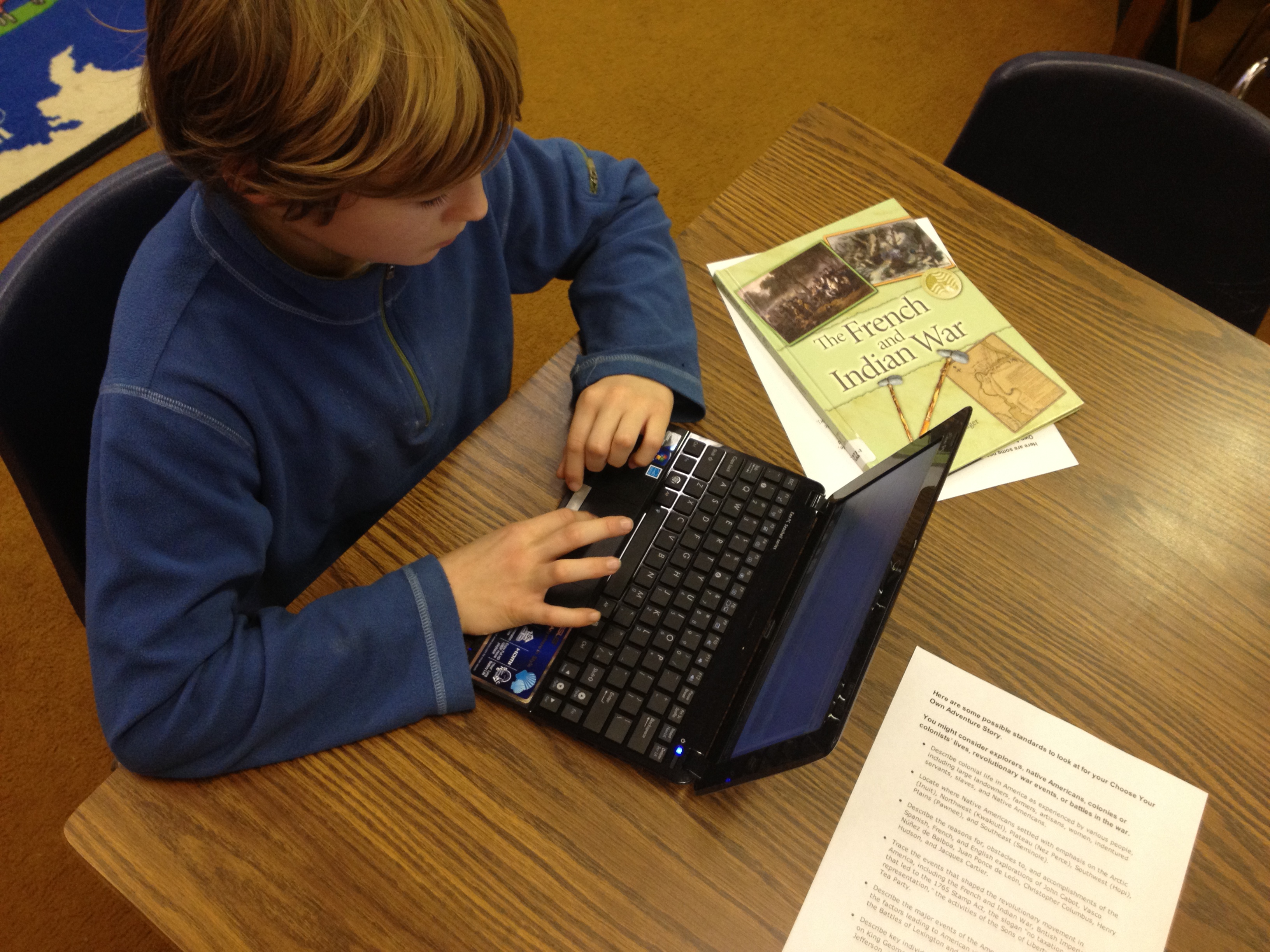
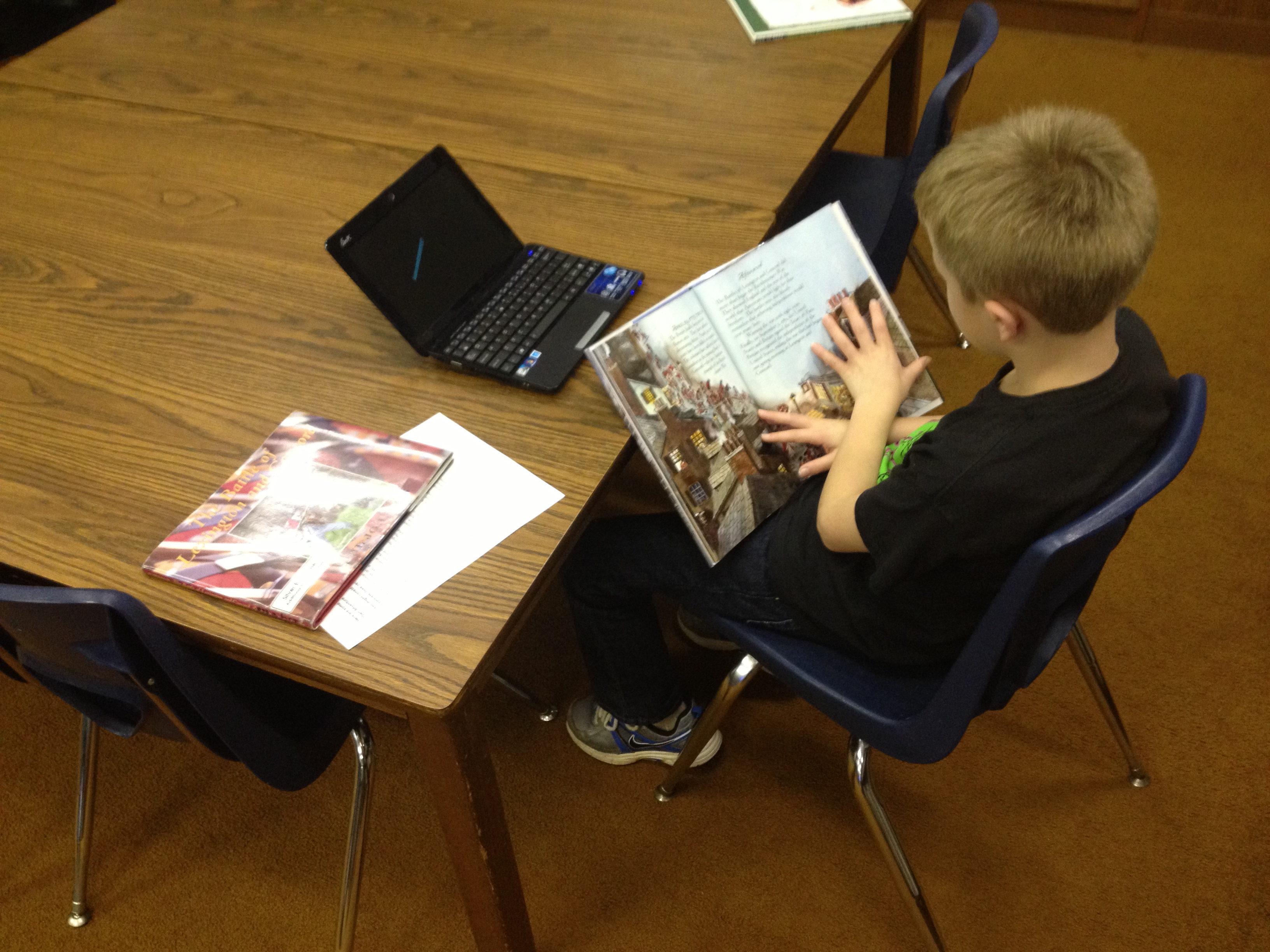
Then, at our school level professional learning day in January, I did a session on using Google forms.  I shared some very basic uses of forms and also included this advanced idea.  Our 4th grade teachers were very interested in how this might be used by their students.  After some brainstorming, we decided on writing historical fiction choose your own adventure using some of the 4th grade standards.  In the library, I have several nonfiction choose your own adventure stories from Capstone Press, so these became mentor texts for the project.IMG_1644

The teachers gave me a small group  of students from each of their classrooms.  The reason we started with a small group was so that I could work with them in a smaller setting to explore the possibilities of creating this kind of story.  Then, these students could pair with other students in the class to show them the steps to making the stories.  The students worked with me during 5 hour-long sessions.

In session 1, we read some excerpts from the informational Capstone Press books.  Then, I walked them through the story I made and how it was created.  They ended this session by “messing around” in Google forms to practice some of the things I modeled.

In session 2, students looked at the standards and chose their topics to begin researching.  They chose from:

  • Describe colonial life in America as experienced by various people, including large landowners, farmers, artisans, women, indentured servants, slaves, and Native Americans.
  • Locate where Native Americans settled with emphasis on the Arctic (Inuit), Northwest (Kwakiutl), Plateau (Nez Perce), Southwest (Hopi), Plains (Pawnee), and Southeast (Seminole).
  • Describe the reasons for, obstacles to, and accomplishments of the Spanish, French, and English explorations of John Cabot, Vasco Núñez de Balboa, Juan Ponce de León, Christopher Columbus, Henry Hudson, and Jacques Cartier.
  • Trace the events that shaped the revolutionary movement in America, including the French and Indian War, British Imperial Policy that led to the 1765 Stamp Act, the slogan “no taxation without representation,” the activities of the Sons of Liberty, and the Boston Tea Party.
  • Describe the major events of the American Revolution and explain the factors leading to American victory and British defeat; include the Battles of Lexington and Concord, Saratoga, and Yorktown.
  • Describe key individuals in the American Revolution with emphasis on King George III, George Washington, Benjamin Franklin, Thomas Jefferson, Benedict Arnold, Patrick Henry, and John Adams.

IMG_1643In all of the other sessions, students mixed research from books, websites, ebooks, and the research tool in Google Docs with actually creating their form.  Students supported one another as they figured out things, but students also conferenced with me on their stories.  About mid-way through their sessions, I had students go ahead and submit the link to their form to me.  I used a Google form to gather all of their links.  Then, I could easily check-in on students without disturbing their writing.

As I look back at what we’ve done so far, it has been a very messy process with lots of different kinds of learning going on simultaneously.  If I had it to do again, I think it would be easier to start with a fiction story than weaving in history.  Just making the structure of the Google form and getting it to work took a lot of time and students were also trying to research facts.  When they moved to research, their skills at creating their forms were getting a little rusty.  I think if students started with fiction where they could just make everything up, they could spend more time being creative and actually getting the form to work.  We learned a lot about the process, and I definitely think that these students will be able to show others the steps it would take to create their own.

All of their stories are still works in progress, but you can try them out here:

JP’s Boston Massacre

Henry’s Seige of Yorktown

Dmitri’s French and Indian War

Lucy’s Colonial Times

Jake’s Taxes of the British

Will’s Battle of Lexington and Concord

Lilli’s Battle of Lexington and Concord

Hadley’s Boston Tea Party

Graham’s French and Indian War

Anna’s Native American Tribes

Samantha’s Boston Tea Party

Feel free to leave feedback on any of the stories as a comment and I’ll pass it along to the students to celebrate and improve their stories.

IMG_1642


More Kindergarten Storybirds

These cards were used prior to moving into Storybird.

These cards were used prior to moving into Storybird.

You may remember from earlier in the year that Ms. Hocking’s Kindergarten class worked on a sequence of lessons in the library and in their classroom to eventually produce their own story inspired by art using Storybird.  Now, even more of the Kindergarten classes are working on a similar sequence of lessons.  We have spent time on the common core standard:

ELACCKRL7:  With prompting and support, describe the relationship between illustrations and the story in which they appear (e.g., what moment in a story an illustration depicts).

This has been done through wordless picture books, picture books where part of the story is told in text and part in pictures, and picture books where the pictures support the text.  Students read these books in class lessons as well as in the library.

To prepare for Storybird, we started by using storytelling cards from a set of cards called “Tell Me a Story“.  I chose a sequence of cards and then had the kids begin telling the story and linking the story from one card to another.  As we transitioned to Storybird, I told them that it was like pulling illustrations from a big deck of cards and figuring out how the story connected together across cards.  We wrote a Storybird together as a class to model the thinking it takes to select a sequence of pictures as well as create text that ties together the pictures.

Finally, in small groups with an adult, students wrote their own storybird. The role of the adult was to lower the barriers to artistic expression by helping students with things like typing, taking turns, etc.   Today, Ms. Seeling’s class (Mrs. Boyle’s Class), created their stories in small groups.  We had 5 groups led by me, Ms. Seeling, the parapro, a student teacher, and a parent volunteer.  Here are their final stories:

They Are Friends

The Rabbit and His Friends

A Porcupine Babysitter

The Mean Gorilla

The Porcupine Dream

Ms. Seeling also hopes to have some students make individual stories and then use Screencast-o-matic to record the students reading their stories.  I love how each teacher and class is learning from what previous classes did and building onto what was accomplished.


Martin Luther King Jr Lessons: A Different Spin


DSCF2368

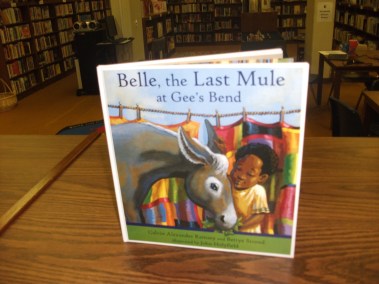
Every year, I offer lessons to accompany the Martin Luther King, Jr. holiday.  There are so many inspiring stories about this influential man, but students hear some of the same stories every year.  This year, I wanted to offer a different spin and introduce a recent book called Belle, The Last Mule at Gee’s Bend by Calvin Ramsey and Bettye Stroud.  The book is most appropriate for grades 3-5, but it could certainly be used with others.

Prior to reading the story, I build a bit of background knowledge about Gee’s Bend by watching the first few minutes of this video about the Gee’s Bend Quilters.

I wanted students to know the importance of the quilts to the people of Gee’s Bend as well as understand a bit of the culture of Gee’s Bend, so we only watched a bit of the first Bender’s interview.

Next, we used Google Earth to zoom into Gee’s Bend and talk a little about the geography of the area and where the name “bend” came from.

In 4th grade, students are working on common core standard ELACC4RL3:  Describe in depth a character, setting, or event in a story or drama, drawing on specific details in the text (e.g., a character’s thoughts, words, or actions).  As we read the story, I asked students to pay close attention to the characters, setting, and plot so that they could discuss it at the close of the story.

In 5th grade, students are working on common core standard ELACC5RL2:  Determine a theme of a story, drama, or poem from details in the text, including how characters in a story or drama respond to challenges or how the speaker in a poem reflects upon a topic; summarize the text.  To build some background knowledge on theme, we watch the first few minutes of this video:

5th grade reflected on theme throughout the book to inform their conversation at the close of the story.

In both 4th and 5th grade, we read the book and stopped along the way to have impromptu discussions.  Many of our discussions came around the part of the book that is about the right to vote and how Martin Luther King, Jr. encouraged all African Americans to vote because it was their right.

last mule today's meet

Student contributions in Today’s Meet

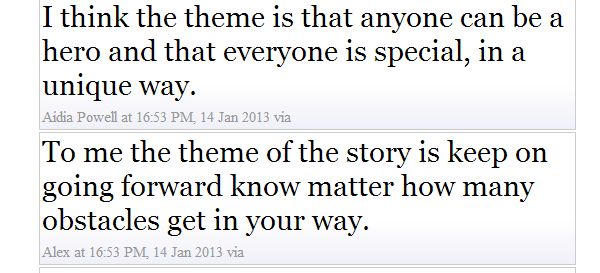
At the close of both lessons, students went to computers and used Today’s Meet to have a silent conversation about their particular standard.  4th grade posted about characters, setting, and plot, and 5th grade posted about theme.  I encouraged students to read what others were writing and write follow-up posts or questions for their classmates.  I wouldn’t say that the conversation was particularly connected at this first attempt, but there were definitely things that I liked.  For example, in 5th grade, every student was able to post a comment about theme whether it was right or not.  I could quickly see who really understood theme and who didn’t without publicly naming what was “right” and “wrong”.  Also, at the very end, I had students read back through the posts and decide which comments stood out to them the most as really identifying theme.  Students could easily name who said what as they were speaking.  For example, “I liked how Aidia said that anyone can be a hero”.  It was a way for students to acknowledge the contributions of their peers and accurately quote their contributions.  Sometimes it’s hard for students to remember exactly what someone said aloud, but this printed text made that easier to remember.

I definitely would like to try Today’s Meet again in other settings, and I’m happy to find a place for this wonderful story to give new life to a topic that students have heard many times.

Stone Soup: A Folktale Follow-up

Ms. Spurgeon, a fabulous third grade teacher, does a Stone Soup folktale study with her students each year.  This is a part of the folktale study that third grade just kicked off.  She has her students study multiple versions of Stone Soup and consider how the characters, setting, and plot change based on where the story is taking place or which country the story comes from.  Students are quickly discovering that the basic themes of Stone Soup stay the same but characters, setting, and the ingredients in the soup change.

DSCF2366Today, we read Jon J. Muth’s version of Stone Soup.  We loved hearing the many different kinds of ingredients that were added to the soup such as pea pods, lily buds, taro root, winter melon, and more.

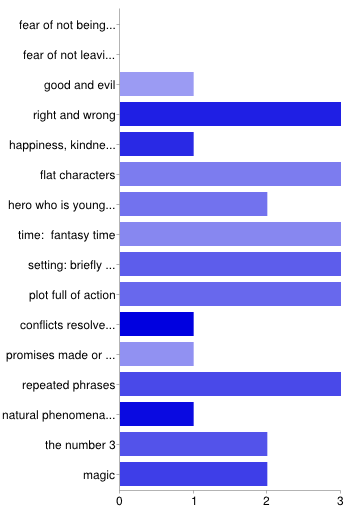
After we finished the story, we revisited our Google form of folktale elements to see how Stone Soup compared with other folktales we have read.  We noticed that the following elements appeared in all 4 folktales that we have read in 3rd grade:

  • flat characters
  • fantasy time
  • setting briefly described
  • plot full of action
  • repeated phrases

Classes will continue to fill out the form and make comparisons.

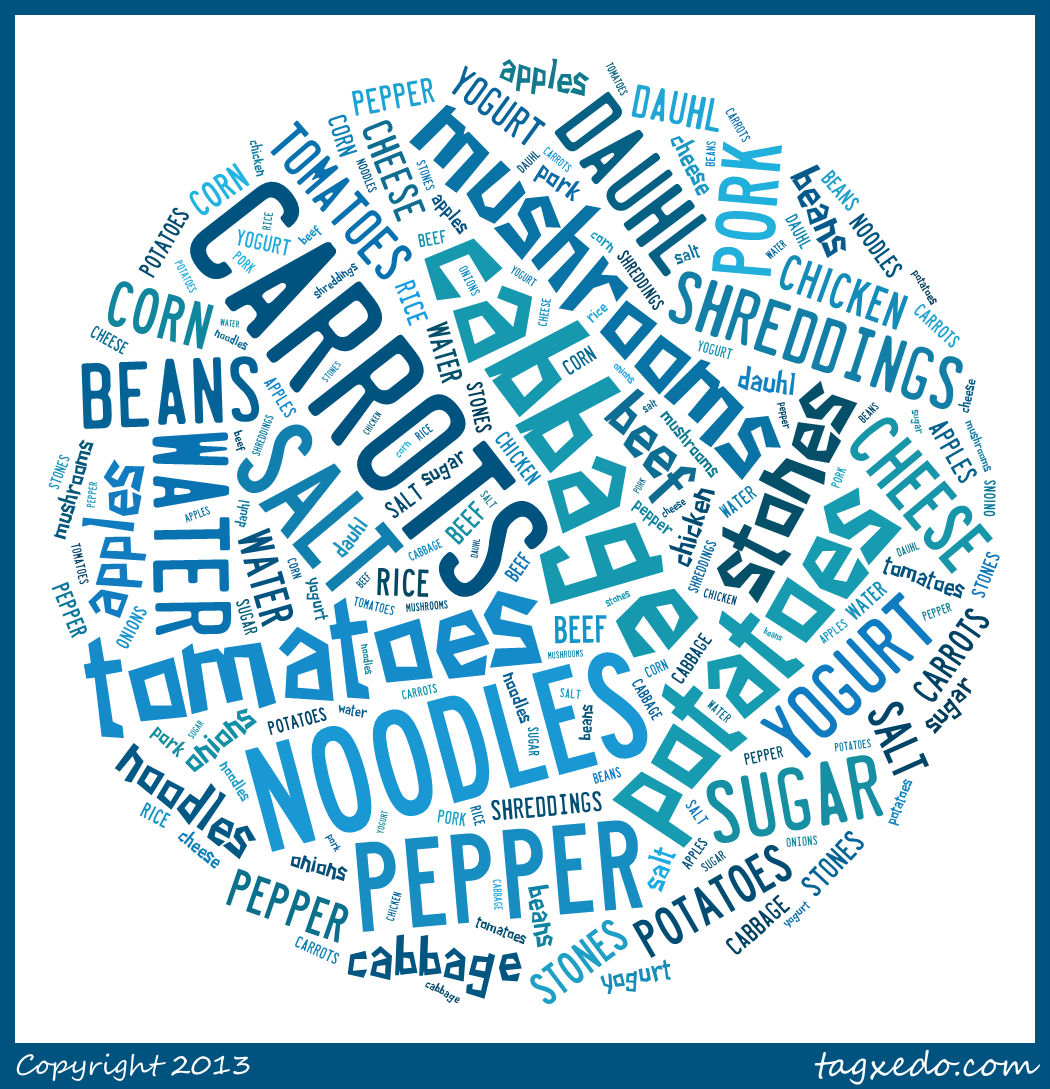
To conclude this lesson, we used Tagxedo to make our own digital bowl of Stone Soup.  I asked students to think about what ingredients they might add to a class stone soup if they were to go home right now and get something out of their cabinets, refrigerator, or from a neighbor.  While students were checking out books, they came up to me and told me 2-3 ingredients, which I typed into Tagxedo.  I selected a circle shape to represent the pot of soup, and here is what our soup looked like at the end of our time together.

stone soup

Little Free Library 5th Grade Project

I’ve known about Little Free Libraries for awhile now, and since I learned about them I wanted to help establish one at our school.  I was waiting for just the right moment.  This summer I attended the Decatur Book Festival and saw several creative Little Free Libraries that were being auctioned off and it made me want to establish one even more.  I posted a picture of the libraries on our media center facebook page and immediately Ms. Cross, a 5th grade teacher, said she wanted to help make this happen at our school.  Her comment made me think about the gift that our 5th grade gives to the school at Moving On Ceremony at the end of each year as a way for the 5th graders to make their mark on the school before they leave.  Since our 5th graders won’t get the opportunity to go to school in our brand new building next year, I thought this year’s gift needed to be extra special.  I had found the perfect fit for the idea.

I began talking with people at our school about the project.  As always, our art teacher, Rita Foretich, was on board to help weave this project into an interdisciplinary experience.  Other teachers in the school that don’t even work with our 5th graders began offering ideas too and within a few days our spark of idea was really starting to grow.

I sat down with Mrs. Foretich and we did an initial brainstorming of what our project might look like.  We thought of materials, resources, locations, and also a sequence of events that would need to happen in order for the project to be done by the end of the year.  Our plan consisted of:  an intro to Little Free Libraries for the whole 5th grade, persuasive writing in 5th grade classroom, continued research and conversation in the media center, and little free library designs and artwork in art.  I took our plan to the 5th grade team for feedback and additions.  The teachers brainstormed ways for the students to really take ownership of the project such as donating their own books to stock the libraries and bringing in $1 each to cover the registration for the 2 libraries.

We launched into the first phase right after this session.  I made a short introduction video using screencast-o-matic and uploaded it to Youtube.  Mrs. Foretich showed the video at the beginning of an art class.

As she showed it, the kids immediately began having ideas and wanting to contribute them.  She developed a Google form to share with the students so that they could all submit their feedback without taking up too much of the class time to hold a discussion.  Mrs. Foretich’s student teacher also began contributing her knowledge and connections to UGA.

The next step will be for the student to brainstorm more about the materials, labor, and location so that they can begin writing persuasive letters to individuals and organizations for support.

Our goal is to create 2 Little Free Libraries by the end of the year.  One will be installed at the new Barrow and one will be installed somewhere near downtown so it is accessible to our students and the community on that end of town.  Who knows what this project will develop into, but it is already full of participatory culture as more and more people contribute their ideas, their expertise, and their creativity.

If you have ideas or resources for this project, feel free to leave them in the comments or contact our library.

Folktales with Google Forms

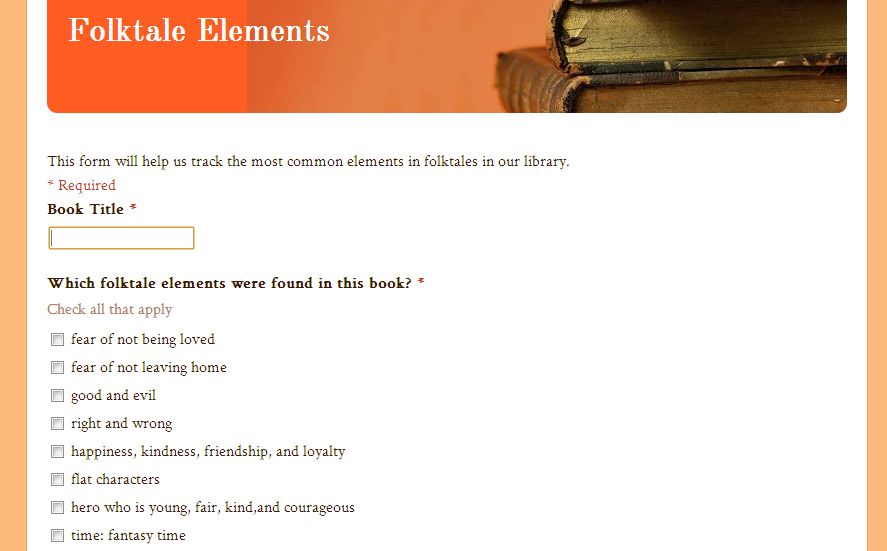
Third grade just launched into a study of folktales.  As a kickoff, each class came to the library for an introduction to folktales.  We used a slideshare that listed many elements of folktales as well as kinds of folktales.

Then, I showed students a Google form with 3 questions. This form was displayed while I read a folktale aloud. Question 1 was the title of the book.  Question 2 was a list of checkboxes that listed out all of the elements from the slideshare.  Question 3 was about what kind of folktale.folktales

At the end of the story, students paired and discussed each of the checkboxes to decide if those elements were present in the story that we read.  Finally, we came back together and checked off the elements that were present in the story.  Students raised their hands as I called out the elements.  If we had a majority of hands, we automatically checked the box.  If it was less than half the class, we stopped and discussed and voted again.  If few people raised their hands, we left the box blank.

For the first class, this was the end of the lesson, but for the other two classes we looked at the summary of responses in Google forms to see what folktale elements were the most common in the stories we read.  I sent the form to the 3rd grade teachers and they are  going to share it with their students.  A next step will be for students to read folktales on their own and fill out the form.  Then, we’ll really be able to notice the trends of which folktale elements are most common in our library folktales.chart

One piece I didn’t incorporate into this, which would be really cool, is to insert a question about where the various folktales are from.  Then, I could have embedded a gadget to put a pin on  a world map (like I did in this lesson) to track where our folktales were from.  This might be an addition for next year.