Makerspace Maniacs Enrichment Cluster

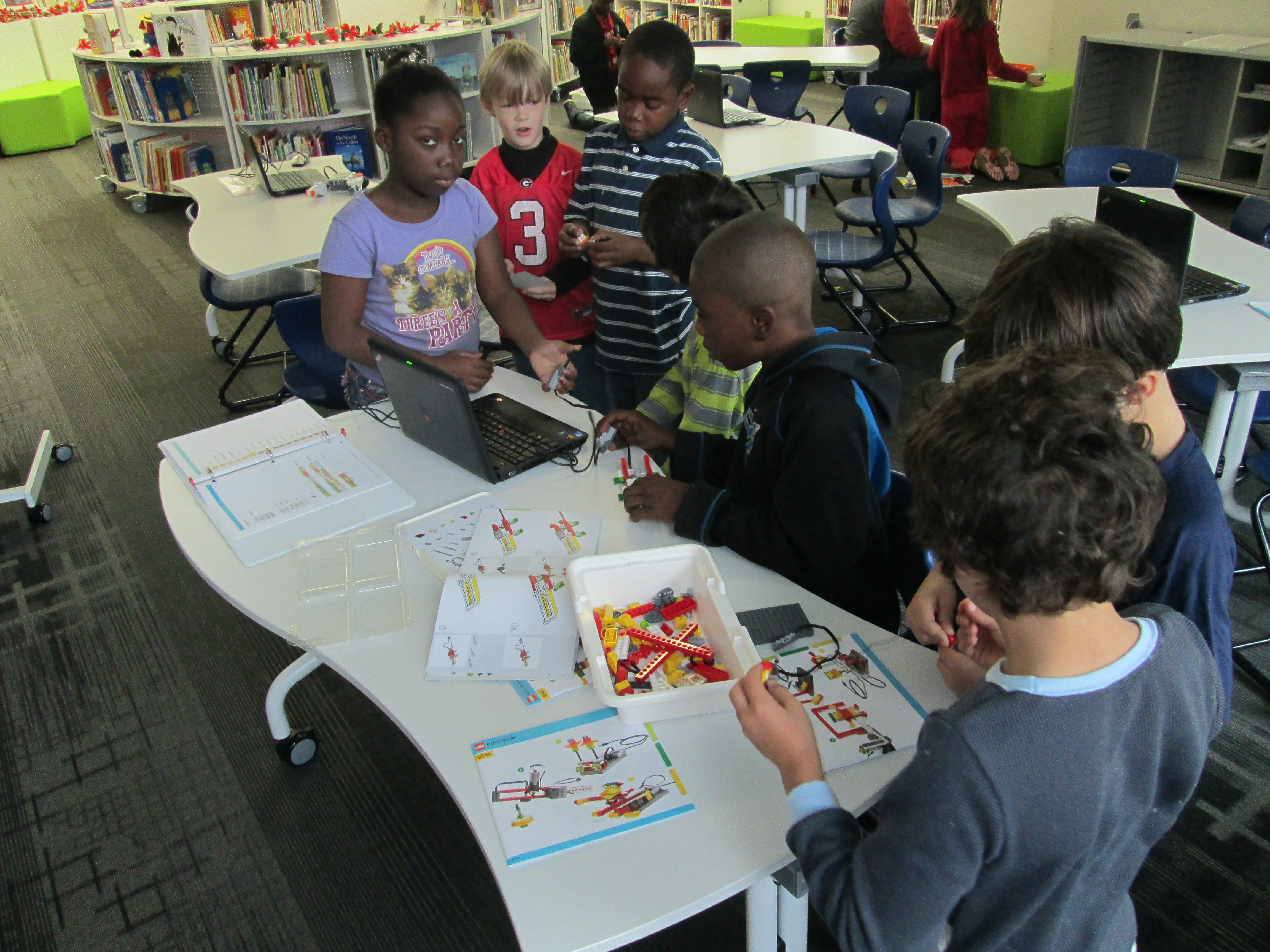
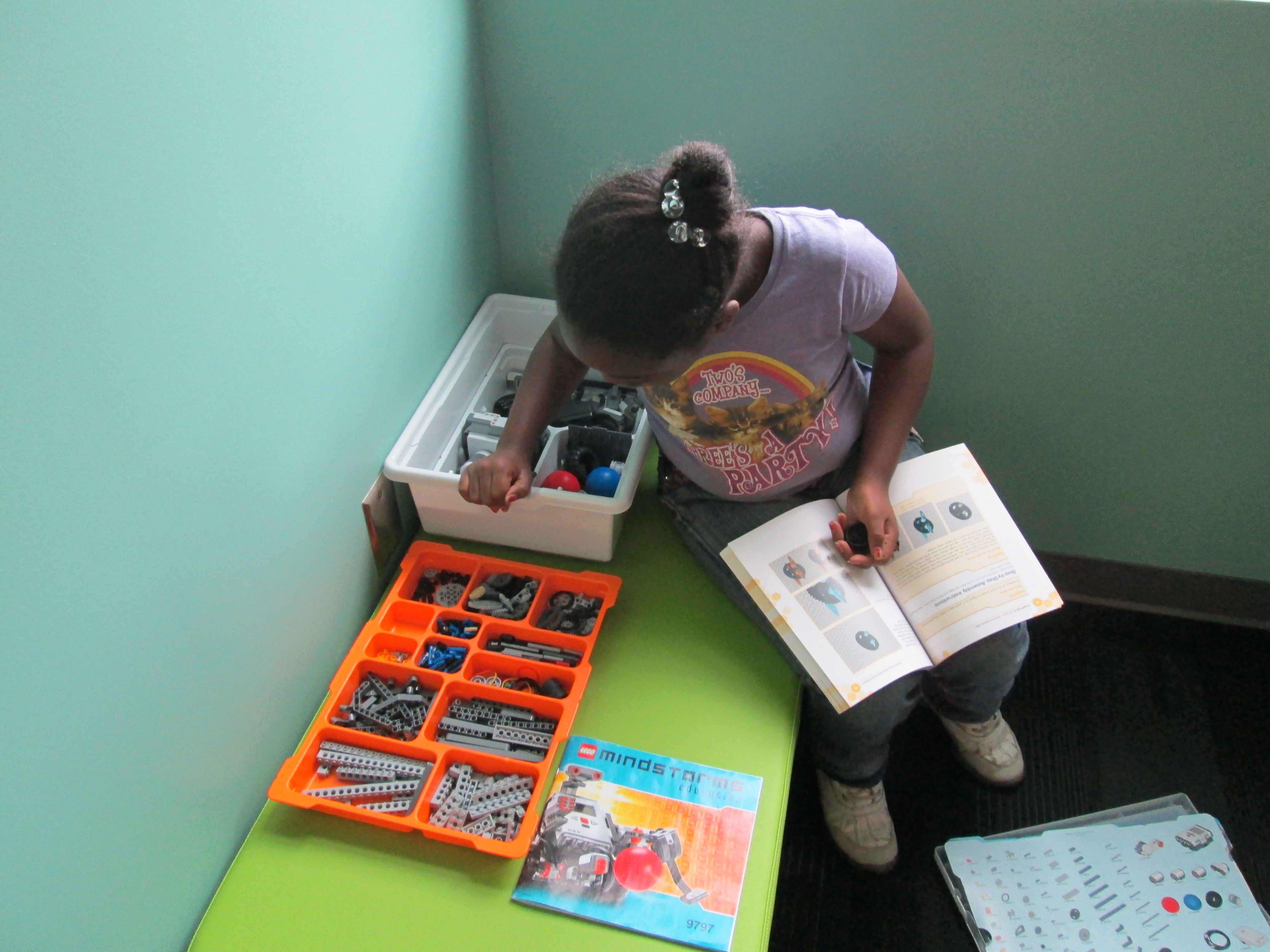
first robots (10)For about 4 weeks, a group of 2nd-5th graders have been meeting with me on Fridays from 8:15-9:15AM.  This time is called enrichment clusters at our school which basically means that kids select a group based on their interest and spend a period of time learning and creating around that topic.  Our cluster is called Makerspace Maniacs.  Our first sessions have been about exploring the world of making.
first robots (3)

So far we have:

  • Watched Caine’s Arcade and explored the idea of making interactive creations with cardboard.

  • Watched Sylvia Super Awesome Maker Show and explored how we can take our creations and create instructional videos about them.

  • Watched Landfill Harmonic and explored how makers take other people’s trash or unwanted items and turn them into functional creations.

  • Watched how a 3D printer works and imagined what we would create on it.

  • Tinkered with Lego robotics and programming.
  • Explored making things out of duct tape.

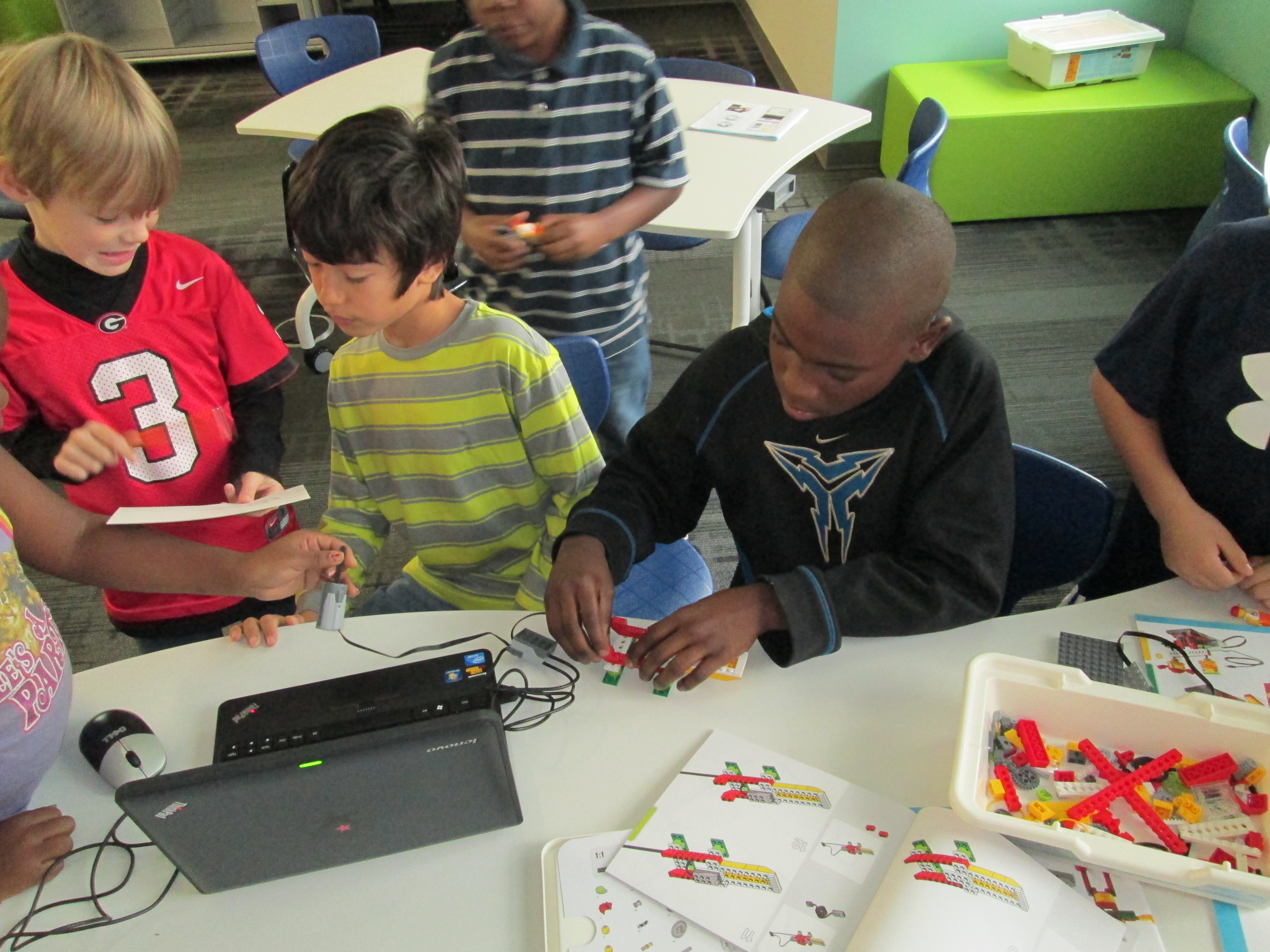
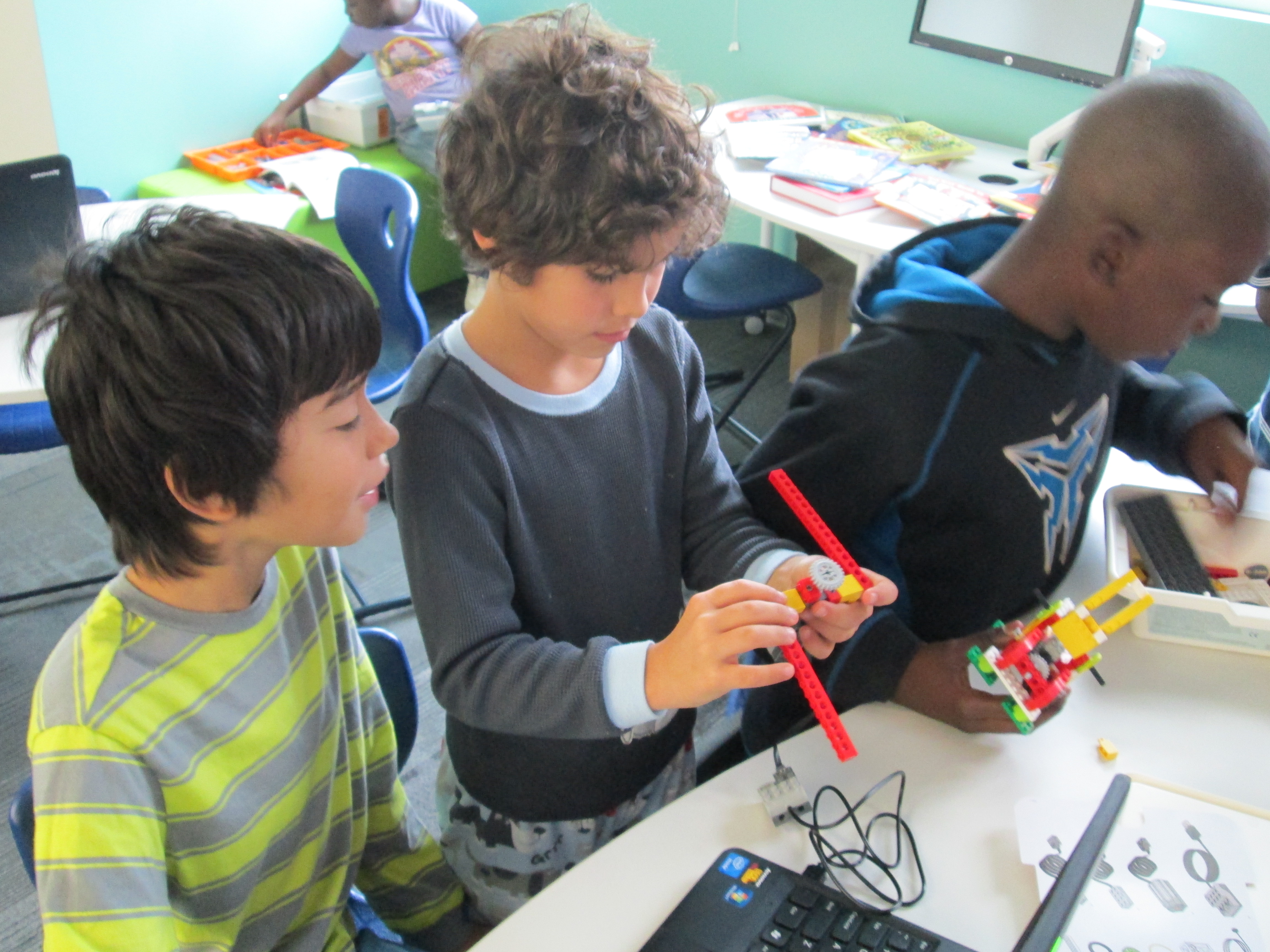
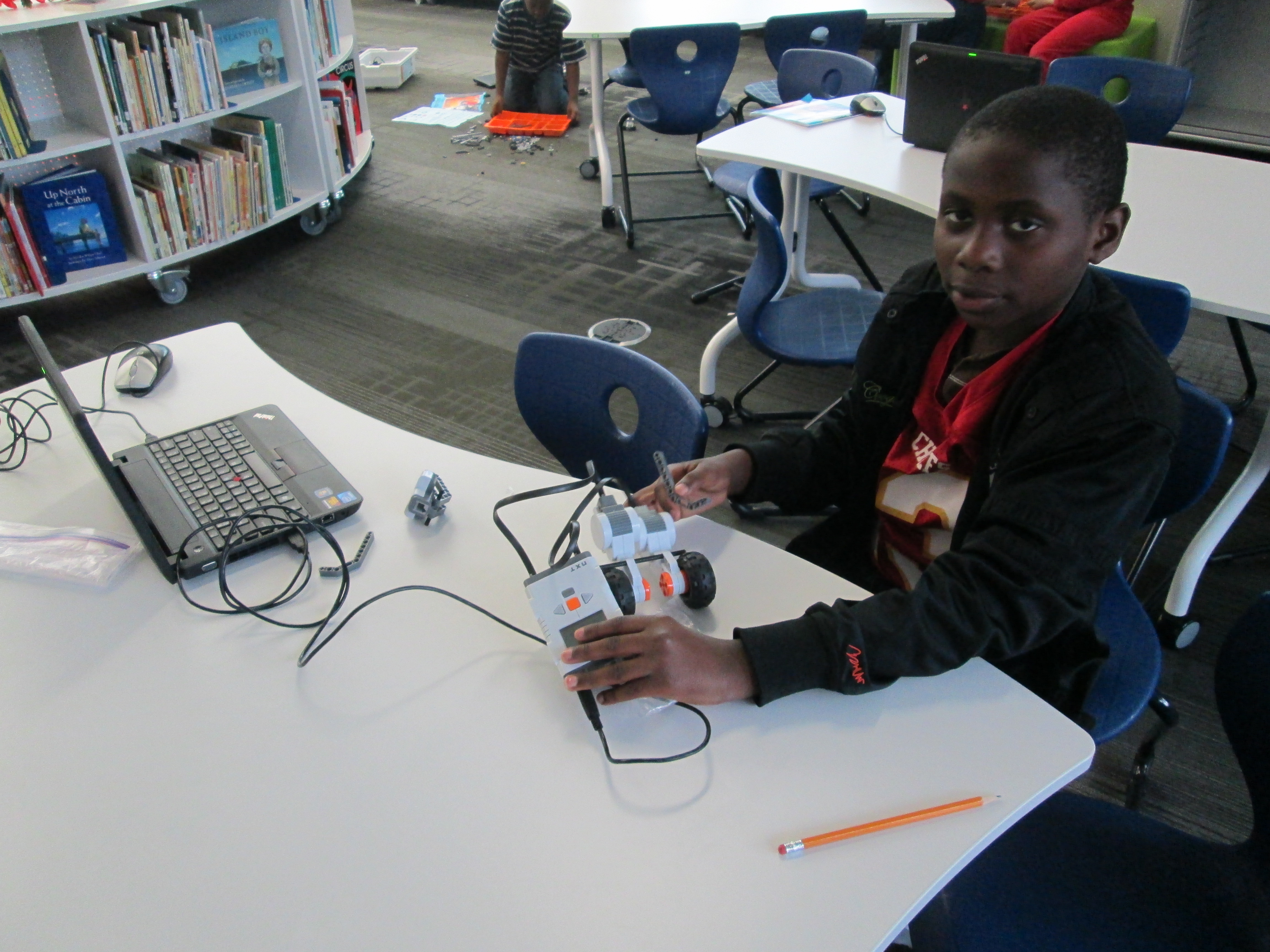
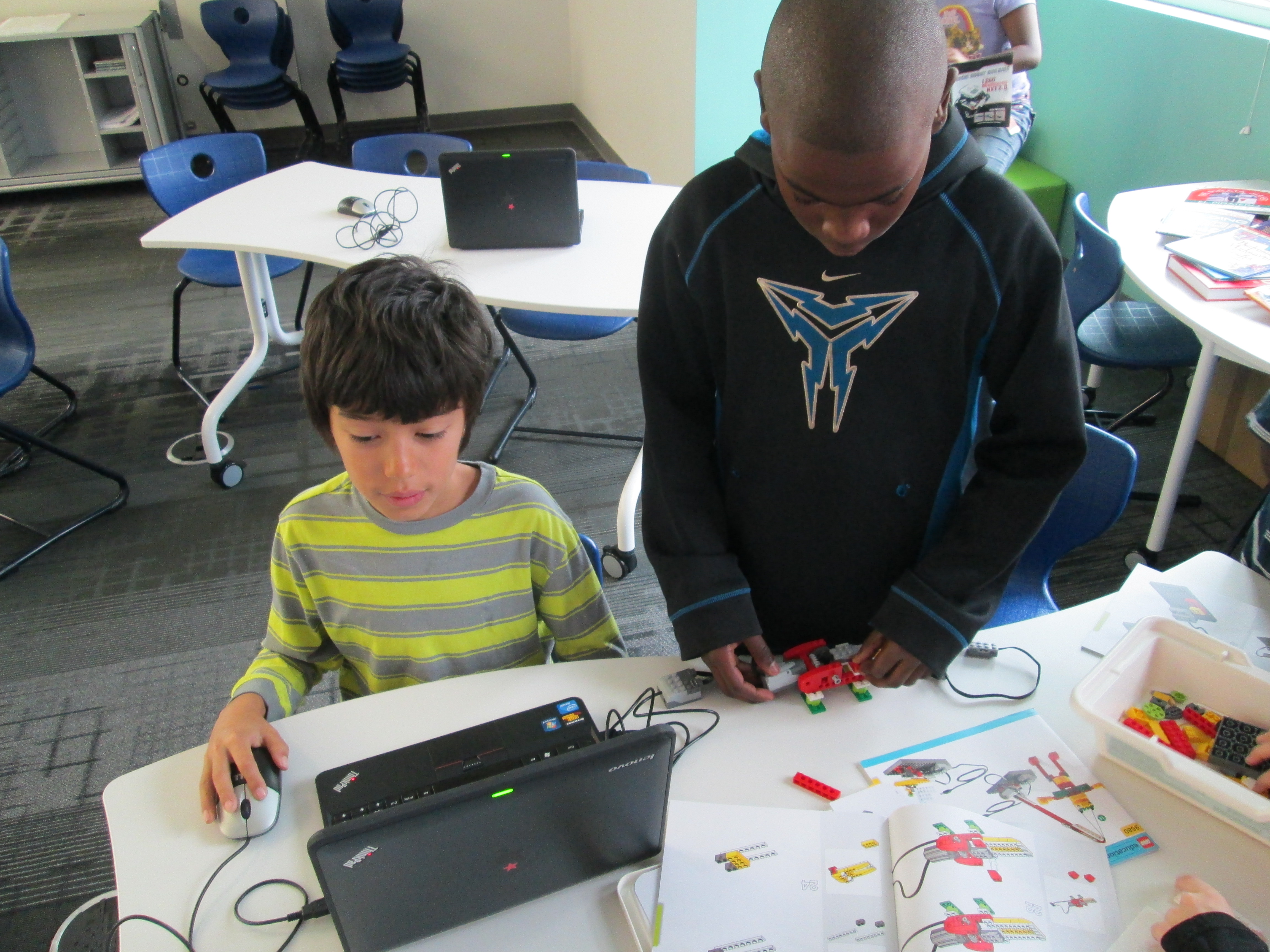
Now, students are beginning to think about what they are interested in spending more time with.  Right now, we have a lot of interest in robotics.  Today, one student spent time exploring the directions to build a mindstorm NXT robot and began the building process.  Another group of students looked at the Lego WeDo kit and followed instructions to build an alligator.  Other students spent time, exploring how the various lego pieces fit together.  Since their interests are so drawn to robotics, Christa Deissler from UGA will be helping me coordinate a guest speaker to talk to students and demonstrate programming of robots.
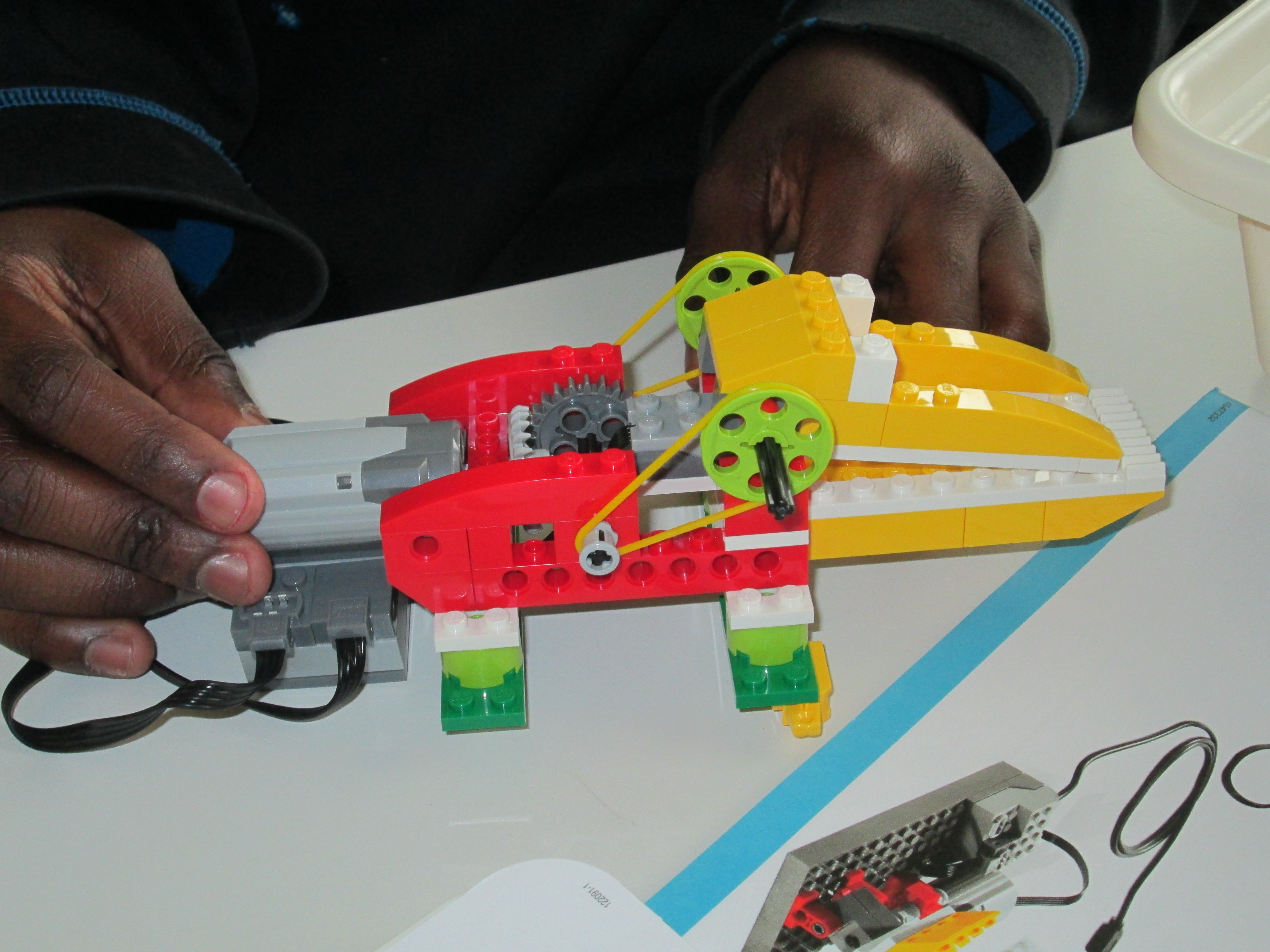
first robots (9)Seeing something tangible really inspires the students.  Today a student figured out how to use the WeDo software to make the alligator open and close its mouth.  When students saw this happen, they immediately wanted their creations to do something too.  Once we get past the exploration stage, I think students are going to want to get into the workings of the programming software and figure things out.

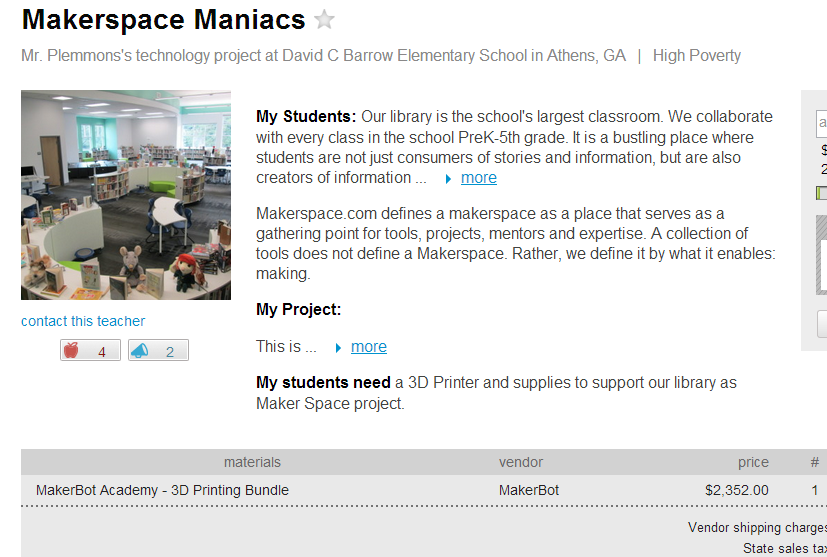
In other news, our Donors Choose project to get a 3D printer is fully funded!  This will give these students access to even more tools for making.  Two other classes already have ideas for how the printer might be used in their own projects.  Once it’s here, I’m sure that there will be lots of exploring, learning, and sharing between classes to figure out how this tool can support the learning in classrooms.
first robots (7) first robots (5) first robots (2) first robots (1)

3D Printing: A Huge Opportunity from Donors Choose and Makerbot

MakerBot News (MakerBotNews) on TwitterThose of you who know me know that I’ve been wanting a 3D printer in our library for awhile.  It seems that just when I think we’re about to get one, something happens that puts a barrier in our way.  This isn’t just about having cutting edge technology.  This is about allowing kids to experience another level of creating.  It’s about allowing kids to explore a technology that is possibly a piece of technology that we will all eventually have in our homes.  It’s about giving kids the power to dream something up, design it, print it, and  hold it in their hands.  It’s about bringing STEAM education to life for our students.  For these reasons, I haven’t given up hope that we will have a 3D printer in our library.  Recently, we started a conversation with UGA to partner with them and use the 3D printers that they have.  We are very grateful for this opportunity, but we know that if we truly want to have a 3D printer as a part of our daily resources available to students, then we need to have one in our building all the time.

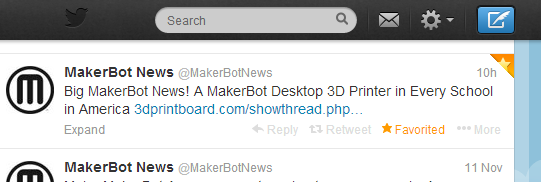
Today, Makerbot announced a partnership with Donors Choose to put a 3D printer in every classroom.  This is a bold claim, but it is a step toward thinking that 3D printers aren’t just for colleges, public libraries, or industry.  Each time I’ve mentioned putting a 3D printer in an elementary library, I’ve been met with the “why” questions.  I’ve also been met by the “I can’t see elementary students doing that…” statements.  My philosophy that I have embraced since reading Flora and Ulysses by Kate DiCamillo is to “Expect the Miraculous”.  I have faith that if students have access to a cutting edge tool such as a 3D printer paired with expertise from mentors over Skype & Google Hangouts paired with expertise from our community who already use 3D printers, then miraculous things will happen for students.  I don’t have all of the answers of what this should look like in an elementary school, but someone has to be willing to step up and walk into the unknown and trust that students and multiple experts will learn together, figure things out, and shape how this technology can support what we do and hope to do in schools.

As soon as I saw the Donors Choose opportunity, I submitted a project.  By the end of the day, our project was approved and we already had a matching grant.  This match brought our project down to approximately $1500.  If what Makerbot says is true, as more donors donate to the project, other business and private donor contributions will fulfill this project.  Once again, I’m taking a leap of faith that this project will be filled for our school and we can begin exploring and leading the way for 3D printing in schools.   

Two donors have already contributed to our project along with our matching donation.  I invite you all to take a look at our project, consider donating, or at the very least, consider sharing our project with your circles.  Giving kids the opportunity to create, share, and contribute to the current conversation on 3D printing in education is a great gift to give, especially this time of year.

Makerspace Maniacs


Student-made bookmarks: a piece of Participatory & MakerSpace Culture

Two of the goals for our library program this year are to explore how MakerSpaces, or the culture of MakerSpaces, could influence the structures and happenings in our library and to increase the participatory culture of our library program.  Two of the things that I emphasized in our library orientations this year were the idea that the library is a place to create just as much as it is a place to get books and that if students have an idea for our library program they need to help me think about how to make it happen.

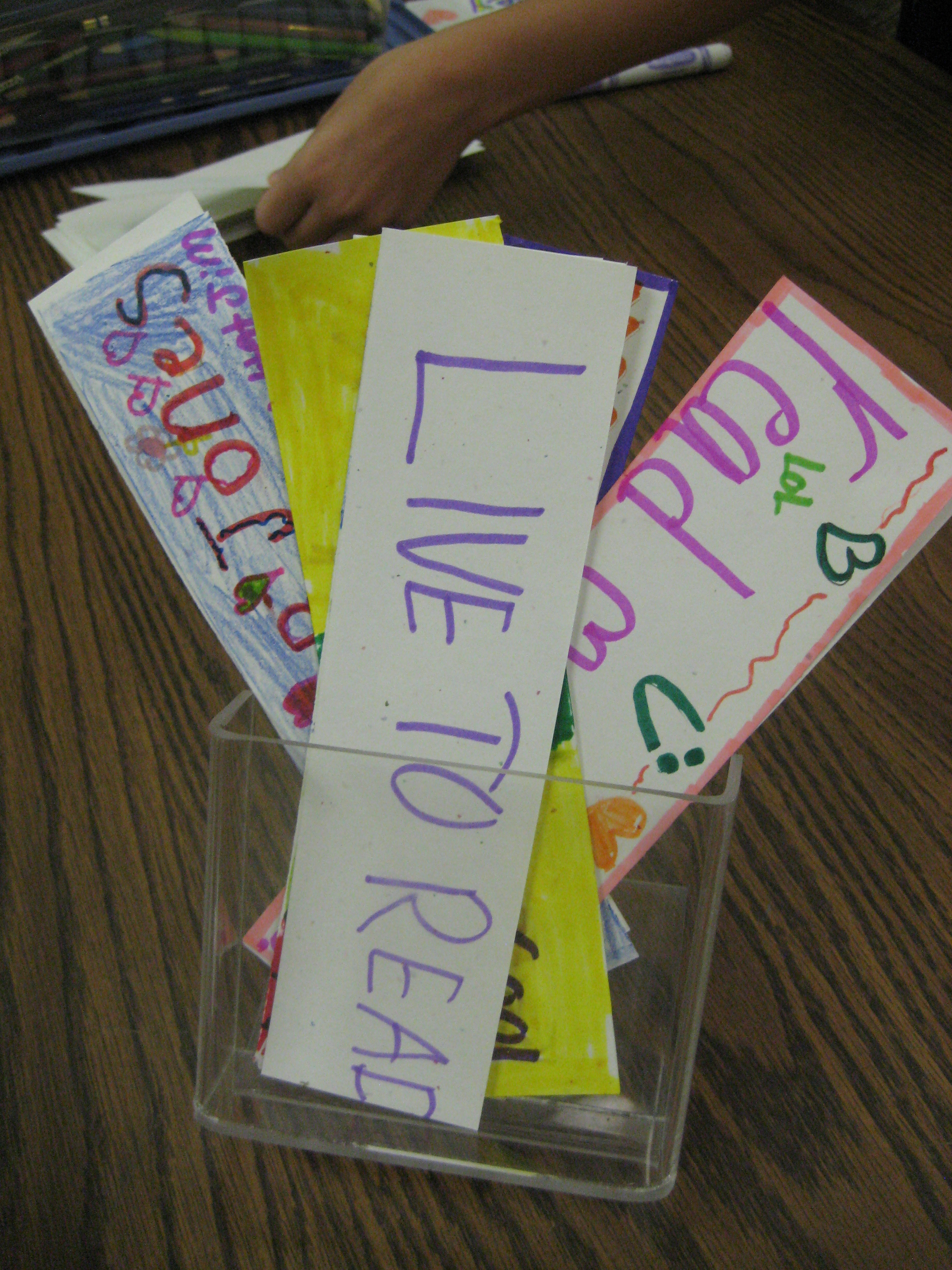
While the following idea is not one of the most significant examples of participatory culture or MakerSpaces, it is a small piece that serves to spark other happenings during the year.  During orientation I suggested several examples of things that students might “make happen” during the year:  create book trailers, shelve books, become a technology consultant, etc.  One of those suggestions was to make bookmarks for other people to take.  I suggested that if you want to see bookmarks in the library why not make that happen by making your own and putting them in the bookmark holder.  Of course, with the busy start of the year, students forgot about it.  This week students have been coming to the library for Scantron testing on the computers.  When they finish, they just sit or read a book.  Today, I pulled out markers, color pencils, crayons, and chopped-up card stock and told them they also had an option of making bookmarks.  Almost every student chose to make a bookmark and their energy and excitement almost got out of control and disturbed testing!  Imagine that!  I documented their time through photographs and made an Animoto to play on our morning broadcast.  Some of the students took blank bookmarks with them to make and bring back later.  My hope is that their initial start will spark other students to want to participate.  Not all students have to participate, but they need to feel that if they do contribute that their participation matters.  I plan to do a quick talk on BTV after the video and see if this catches on spontaneously.  I want our participatory culture to become more organic where students are coming up with ideas themselves, making suggestions, and taking action, but I don’t think that can happen all of a sudden.  I’ll keep you posted!

Make It Happen @ Your Library: Orientation 2012-13

I am energized by the start of our orientations in the Barrow Media Center.  Today, all of 5th grade and a 1st grade class came for orientation.  This year we’ve embraced the theme “Make It Happen….@ Your Library!”  This theme has many meanings for our program.  The most obvious is that this year will be our first year without a media paraprofessional.  I’m calling on all members of our library (teachers, students, families, community) to come together to make our space work this year with less paid help.

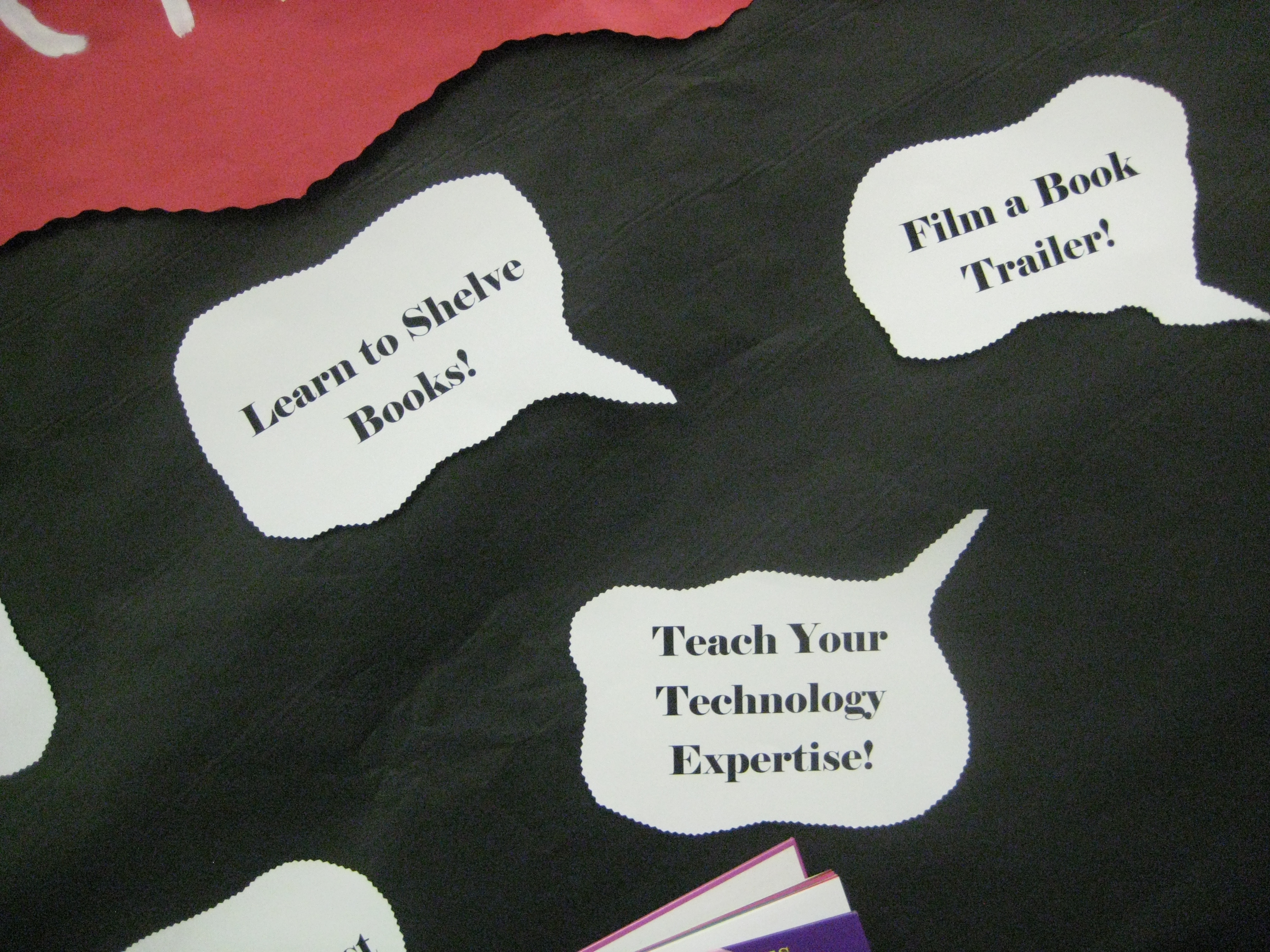
“Make It Happen” also means that our space is going to be a space for creating.  This year, many collaborative lessons and projects will happen in our space and a main goal will be to facilitate students in creating their own projects.  Even though students will be creating within these lessons, I also want them to have choices and opportunities for creating on their own.  On the bulletin board, I’ve listed things such as design a bookmark, compose a library theme song, teach someone your technology expertise, film a book trailer, and more.  In orientation, I’m openly inviting students to think about which of these ideas speaks to them and what other ideas they might have in their own minds and to make those happen somehow this year.

Our orientation itself is much more interactive this year.  Rather than talk about all of the rules and expectations, we’ve been reading Ish by Peter Reynolds and Not a Box by Antoinette Portis.  I’ve asked students to think about what they can take away from these stories to help us this year.  They have named things such as be creative, dream, pretend, encourage, imagine, and more.  I can’t think of better words to fill our library space this year!

After connecting those thoughts to the theme of “Make It Happen”, we do go over a few details about the library that students need to know.  Then in grades 2-5, students participate in a scavenger hunt to locate several parts of the library as well as do many of the things they will do this year on their own like looking up a book in Destiny.  I also have students name themselves as experts or consultants in a variety of areas:

  • Who knows how to use Destiny Quest?
  • Who knows how to check themselves out?
  • Who knows how to use a shelf marker?
  • Who knows how to put a book on hold?
  • Who can locate a book on the shelf after finding it in Destiny?

As students identify themselves as experts, students who are unsure about these questions can write down their names and call on them for help when checkout time comes.  Since one of my goals is to build the participatory culture of our library, I’m immediately calling on the students to start participating rather than looking to me for all of the help.

In the lower grades, we do the scavenger hunt together, but the basic idea is still the same:  setup the theme of the year and let students start to take ownership.

This was such a freeing process.  I felt like I could give more quality attention to some of the students while I knew that other students were taking care of other students with questions in the class.  I can’t wait to see how this different orientation style supports what we will do this year.  I feel like we’re off to a great start.

This slideshow requires JavaScript.