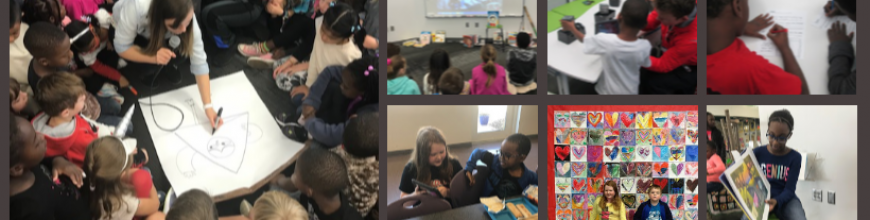
Recently, I blogged about a collaborative project that I did with a Prek classroom creating shape poem. Over the past few days, these students have been coming to our BTV studio to record their poetry. Students practiced reading their poems before coming to the studio, but many chose to add additional words to their poems or even change the words when they read their poems. This is something that they try in their centers in the classroom. They have a center option of doing freestyle poetry. You can listen to Ms. Spurgeon’s introduction of the poetry project and the Prek poets by clicking the links below.
Tag Archives: Poetry Month
Joyce Sidman Poetry Study
 An amazing opportunity came through my email a few weeks ago when Jennifer Graff, co-chair of the Children’s Literature Assembly Breakfast at NCTE, was looking for student poetry inspired by Joyce Sidman, the keynote speaker at the breakfast. I immediately agreed to work with students on a poet study because Joyce Sidman is one of the poets that most inspires me as a writer.
I sent out an email to teachers with possibilities for this study. Here were some options:
- Read Red Sings From the Treetops: A Year in Colors and write poems about colors in the various seasons
- Read Ubiquitous: Celebrating Nature’s Survivors and write poems and informational text about things in nature that have survived the test of time
- Read Dark Emperor & Other Poems of the Night and write poems and informational text about plants and animals of the night
- Read multiple books by Joyce Sidman and write poetry that was inspired by the elements of her poetry
Each one of these options could involve multiple forms of technology or be done with paper and pencil. So far, one teacher has completed a Joyce Sidman collaboration with me and another has signed up to begin in late April.
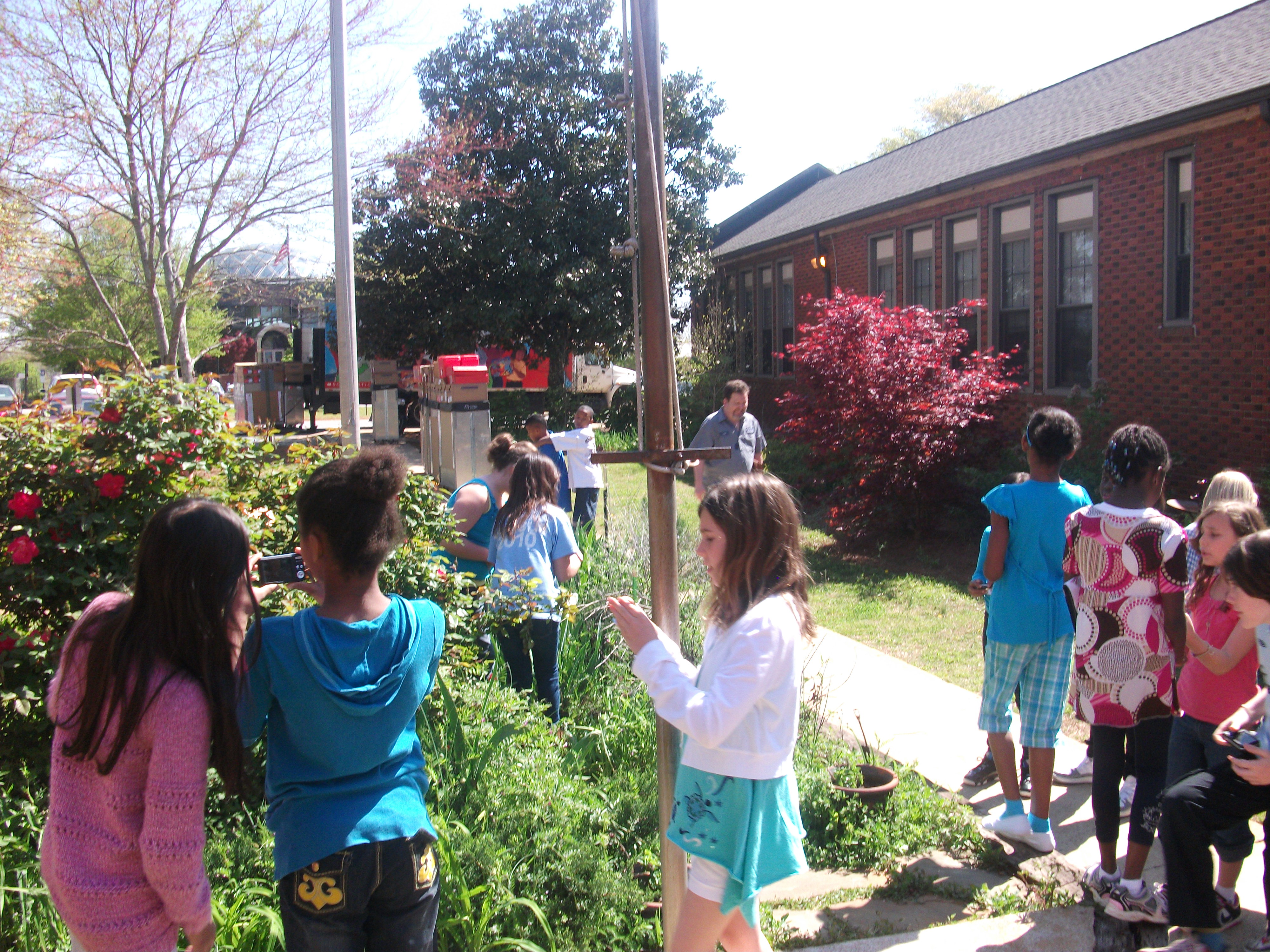
I collaborated with Ms. Olin, my former paraprofessional and now student teacher, to read multiple poems from Joyce Sidman’s books and talk about “noticings” from each of the poems. We looked at things like similes, repetition, rhythm, shape, form, word choice, and more. Students decided to write poems about nature since much of Sidman’s work is nature and science based. They took photographs of flowers, trees, and other nature around our school and also searched on Creative Commons for images. Students wrote poems at the media center tables and conferenced with me, Ms. Olin, Ms. Biehl, and their teacher, Mrs. Selleck. Finally, students used Photo Story to import their pictures, add text and music, and record their voices reading their poems.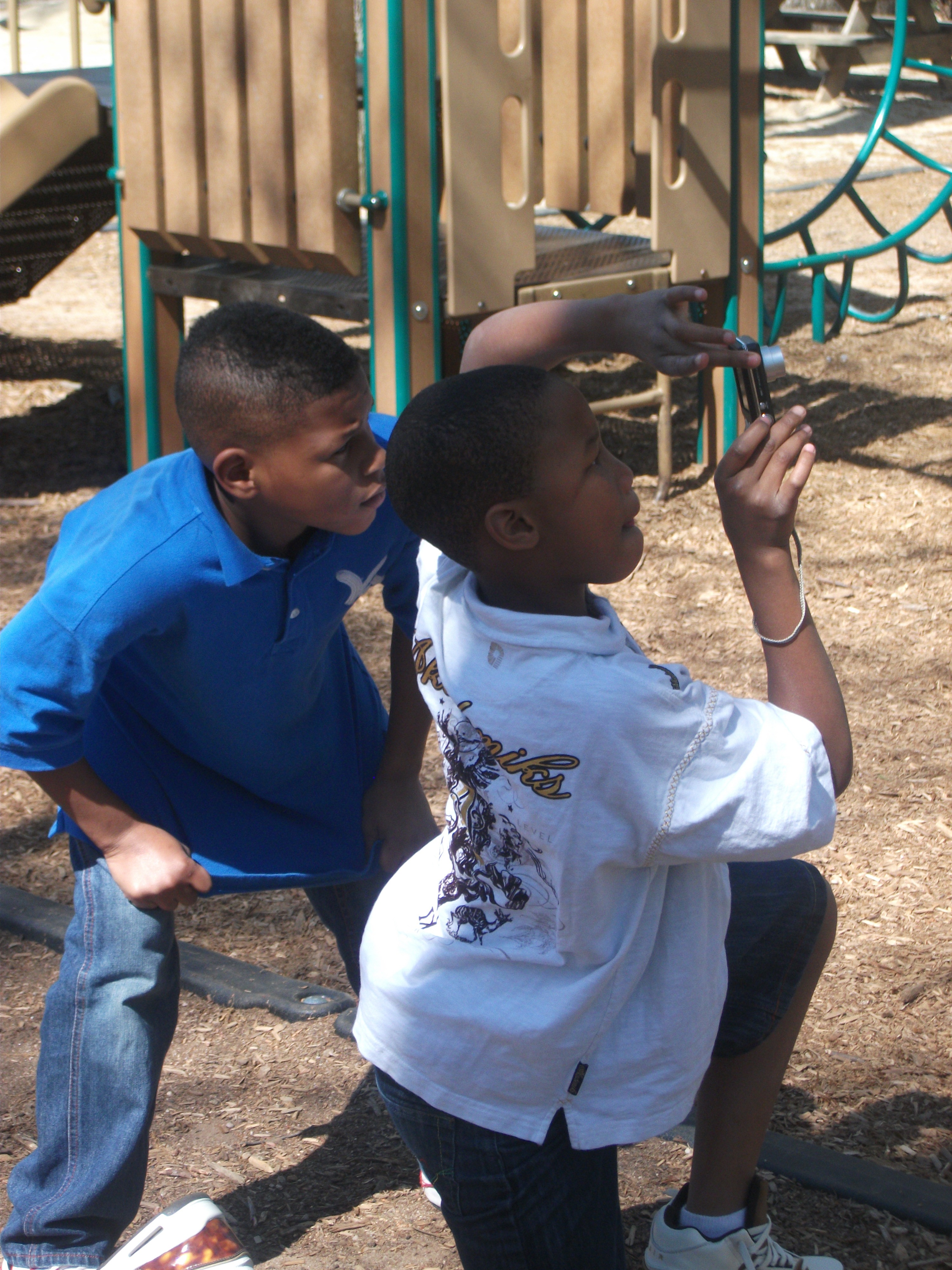
These poems and others created in the coming weeks will be played at the Children’s Literature Assembly Breakfast at NCTE in Chicago. I’m so excited that our students’ work will have this authentic audience to appreciate their creative endeavors. You can get a sneak peek at some of the poems by clicking these links.
Autobiographical Poetry: A 5th grade collaborative art project
 The art teacher, Mrs. Foretich, and I love to collaborate with one another. Recently, we wrapped up a collaborative unit focused on digital photography, using technology to transform a photograph, and autobiographical poetry.
Students spent 2 days rotating through a center taught by Mrs. Foretich taking digital pictures of themselves and using Picnik.com to edit their photos and center taught by me about the many elements of poetry including personification, similes, strong verbs, and repetition. Then students spent 2 sessions in a writing workshop using their photograph to write an autobiographical poem that included some of the poetry elements learned in my center. Students typed their poems in word and printed them.
Mrs. Foretich had all of the student images printed at Snapfish, and she mounted these pictures on matting board. Now, an amazing display sits atop the shelves of the media center. Today was the debut, and students and teachers have been reading the poems all day. If you can’t stop by the media center during poetry month, take a moment to view the pictures of the display and watch a video tour given by two students, Maggie and Delia.
New Poetry Books
We just received a new shipment of poetry books for our media center thanks to a donation from the UGA Athletic Association and profits from our book fair. Guest readers are coming on Monday from UGA to share them with students. Here’s a list of the books and some possible uses for them in classrooms.
• Hummingbird Nest: a book written as a journal. Great for doing poetry about nature observations
• In the Spin of Things: a book about motion. A great tie-in with science, machines, and motion.
• Bone Poems: poems about dinosaurs.
• Today at the Bluebird Café: poems about birds
• A Poke in the I: concrete poems. There are many unique shape poems in this book. Some are complex. Great to show many ways of doing concrete (shape) poems.
• A Kick in the Head: a book filled with different forms of poetry. It tells about each form in the back. I love the “found” poem, which is where you look for poems in unexpected places (phonebook, street signs, newspaper, magazine, cereal box, etc)
• Earth Magic: poems about the Earth. Great tie-in with Earth Day and writing poems about conservation and the natural world.
• Monarch’s Progress: All poems about butterflies, monarchs, and migration.
• If the Shoe Fits Voices from Cinderella: Poems from many perspectives in Cinderella tales. A great way to write a collection of poems from many different points of view.
• Birds on a Wire: a collection of renga poems (ancient Japanese verse where poets take turns adding verses)
• Winter Eyes: poems about winter
• Hey You! Poems to Skyscrapers, Mosquitoes, and Other Fun Things: poems written specifically to different objects. Good for thinking about letter writing in a poem form.
• Wing Nuts Screwy Haiku: not your traditional haiku. These are like haiku but they break the rules. A great way to show that not all poets follow the rules of poetic form.
• Behind the Museum Door: a collection of poems about museums. Good for showing how to write a collection of poems about a particular thing or place.
• A Pocketful of Poems: short poems. Good for showing
• Zig Zag Zoems for Zindergarten: poems that focus on being in Kindergarten. Good for thinking about poems from school experience.
• The Place My Words are Looking For: a collection of poems from many great poets and each poet tells about what poetry is for them. A great way to learn where poets get their inspiration.
• Thanks a Million: poems of thanks written for various people and things. A great way to write “thank you’s” to someone in a poem form (even our guest readers)
• Once Around the Sun: a poem about each month of the year.
• Yum! Mmmm! Que Rico! America’s Sprouting: haiku about food. It tells about each food and where it comes from/how it’s used. A great way to show how to write a poem and also include information writing.
• Frankenstein Takes the Cake: poems about monsters
• Silver Seeds: a book a acrostic poems
• Once Upon a Tomb: a book of epitaphs for gravestones. A great way to write a short poem and create your own dead poet grave yard.
• Monumental Verses: poems about famous landmarks. A great way to tie in social studies and write poems about GPS places/landmarks.
• The Great Frog Race: another collection of nature-inspired poems with great examples of personification and similes.
• Knock on Wood: poems about superstitions
• Thirteen Moons on a Turtle’s Back: poems about a Native American year. Another good tie-in to GPS social studies.
• Read a Rhyme Write a Rhyme: gives examples of poems and then includes a writing activity (your lesson is done!). It gives possibilities of how to start the poem and possible rhyming words to use.
• Hey You C’Mere a Poetry Slam: fun poems for reading aloud.
• Mural on Second Avenue and Other City Poems: poems about the city.
• Come with Me: poems for a journey
• Falling Down the Page: a book of list poems. Gives a great description about how poets write list poems and is filled with fun examples. A great way to have students create a list of words and then add rich description to them to create a poem.
• Honey, I love: the book that Deborah Wiles referred to in her lessons with students.
• A Foot in the Mouth: poems to speak, sing, and shout.
• Jazz: a collection of poems all about jazz. Great to tie in to jazz music and people.
• Flamingos on the Roof: poems about people in an apartment building. Great for writing a collection of poems about what happens inside one building.
• One Leaf Rides the Wind: a Japanese counting book
• City Love: poems about the city
Pieces a Year in Poems and Quilts: poems about the seasons
 Expect the Miraculous