Poem in Your Pocket Day: LIVE!

We have some exciting news about this year’s Poem in Your Pocket Day Friday April 15th in the Barrow Media Center.  Two things will be happening for the 1st time:

1.  Most students will be reading original poetry at our open mic poetry cafe.  Many of these poems were entered in our 1st annual media center poetry contest.

2.  Parents and other interested individuals will be able to listen to the poetry readings live on the web!

Thanks to our district’s new purchase of Adobe Connect, we will be broadcasting each class’s poetry readings online.  An email has been sent out to the PTA listserve with the link to the room.  In the spirit of trying to give our students an authentic audience while still maintaining a safe online atmosphere, we do ask that anyone who would like to view our poem in your pocket day poetry readings register at the following link by Friday morning.  Because of the number of classes doing poetry readings, we are holding poetry readings on two different days.  You will receive a link to our room and can come in and out of the room throughout the day on Friday April 15th and Monday April 18th.  The two-day schedule is posted below.  We hope you will join us and celebrate each student’s poetry with online snaps and positive vibes.  “See” you online 🙂

Poem in Your Pocket Schedule Friday April 15th (Times are EST)

Time Class
8:00 AM Hart
8:20 Sheppard
8:40 Watson
9:00 Brewer
9:20 O’Prey
9:40 Beshara
10:00 Slongo
10:20 Freeman
10:40 Selleck
11:00 Landstrom
11:20 Em
11:40
12:00 PM Brink
12:20 Sitler
12:40 Yawn
1:00 Cantrell
1:20 Griffith
1:40 Rogers
2:00 Shealey

Poem in Your Pocket Schedule Monday April 18th (Times are EST)

Time Class
8:00 AM
8:20 Boyle
8:40 Li
9:00 Carney
9:20 Hocking
9:40 Spurgeon
10:00
10:20
10:40
11:00 Stuckey
11:20
11:40
12:00 PM Wyatt

UGA Poetry Support

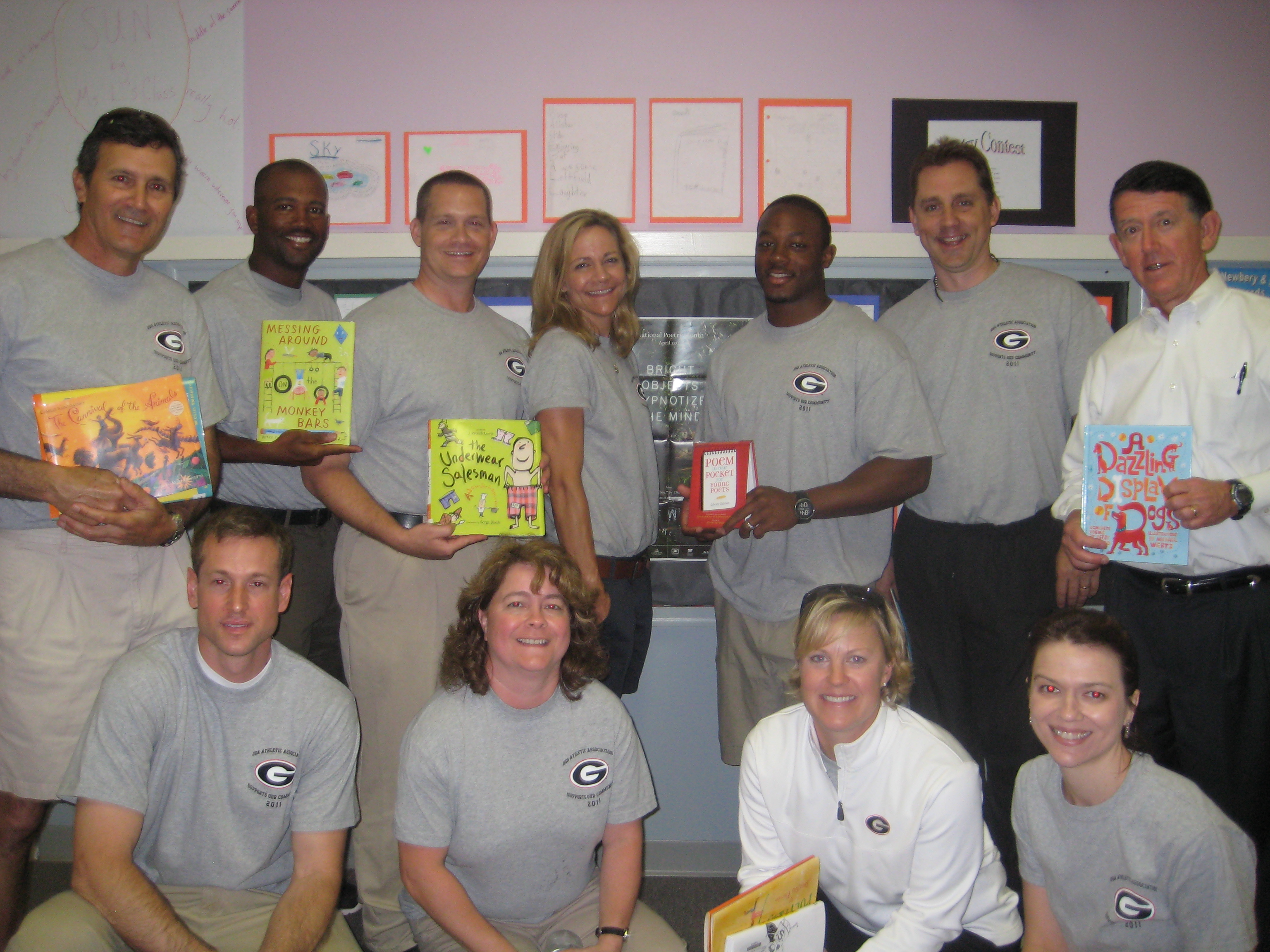
Today the University of Georgia Athletic Association had a day of service in Clarke County Schools and the community.   We used these volunteers to support the many poetry lessons that are happening in the media center and in individual classrooms.  Along with send twelve readers to go into classrooms, the athletic association also purchased 12 new poetry books to donate to our media center.  Volunteers went to 5 classrooms:  Ms Spurgeon’s PreK, Mrs. Hart’s 1st grade, and Mrs. Oprey, Mrs. Slongo and Mrs. Beshara’s 5th grade classrooms.  They read poetry to students and worked alongside students as they wrote poems for our poetry contest and for Poem in Your Pocket Day.

This slideshow requires JavaScript.

Thank You! to the following volunteers from UGA:

Steve Colquitt

Carol Capitani

Tim Cearley

Julie Clark

Jay Clark

George Cleare

Sara Bradburry

Manuel Diaz

Kelley Hester

Todd Grantham

Claire Foggin

Greg McGarity

Also many thanks for donating the following books:

You Read to Me I’ll Read to You: very short fables to read together

A Dazzling Display of Dogs

Messing Around on the Monkey Bars

The Underwear Salesman

Every Second Something Happens

The Wonder Book

Change Up

One Big Rain

Our Farm

The Carnival of the Animals

Poetrees

Poem in Your Pocket for Young Poets

PreK Poets in Action

Recently, I blogged about a collaborative project that I did with a Prek classroom creating shape poem.  Over the past few days, these students have been coming to our BTV studio to record their poetry.  Students practiced reading their poems before coming to the studio, but many chose to add additional words to their poems or even change the words when they read their poems.  This is something that they try in their centers in the classroom.  They have a center option of doing freestyle poetry.  You can listen to Ms. Spurgeon’s introduction of the poetry project and the Prek poets by clicking the links below.

Ms. Spurgeon’s Introduction

PreK Poets 1

PreK Poets 2

PreK Poets 3

Joyce Sidman Poetry Study

An amazing opportunity came through my email a few weeks ago when Jennifer Graff, co-chair of the Children’s Literature Assembly Breakfast at NCTE, was looking for student poetry inspired by Joyce Sidman, the keynote speaker at the breakfast.  I immediately agreed to work with students on a poet study because Joyce Sidman is one of the poets that most inspires me as a writer.

I sent out an email to teachers with possibilities for this study.  Here were some options:

  • Read Red Sings From the Treetops: A Year in Colors and write poems about colors in the various seasons
  • Read Ubiquitous: Celebrating Nature’s Survivors and write poems and informational text about things in nature that have survived the test of time
  • Read Dark Emperor & Other Poems of the Night and write poems and informational text about plants and animals of the night
  • Read multiple books by Joyce Sidman and write poetry that was inspired by the elements of her poetry

Each one of these options could involve multiple forms of technology or be done with paper and pencil.  So far, one teacher has completed a Joyce Sidman collaboration with me and another has signed up to begin in late April.

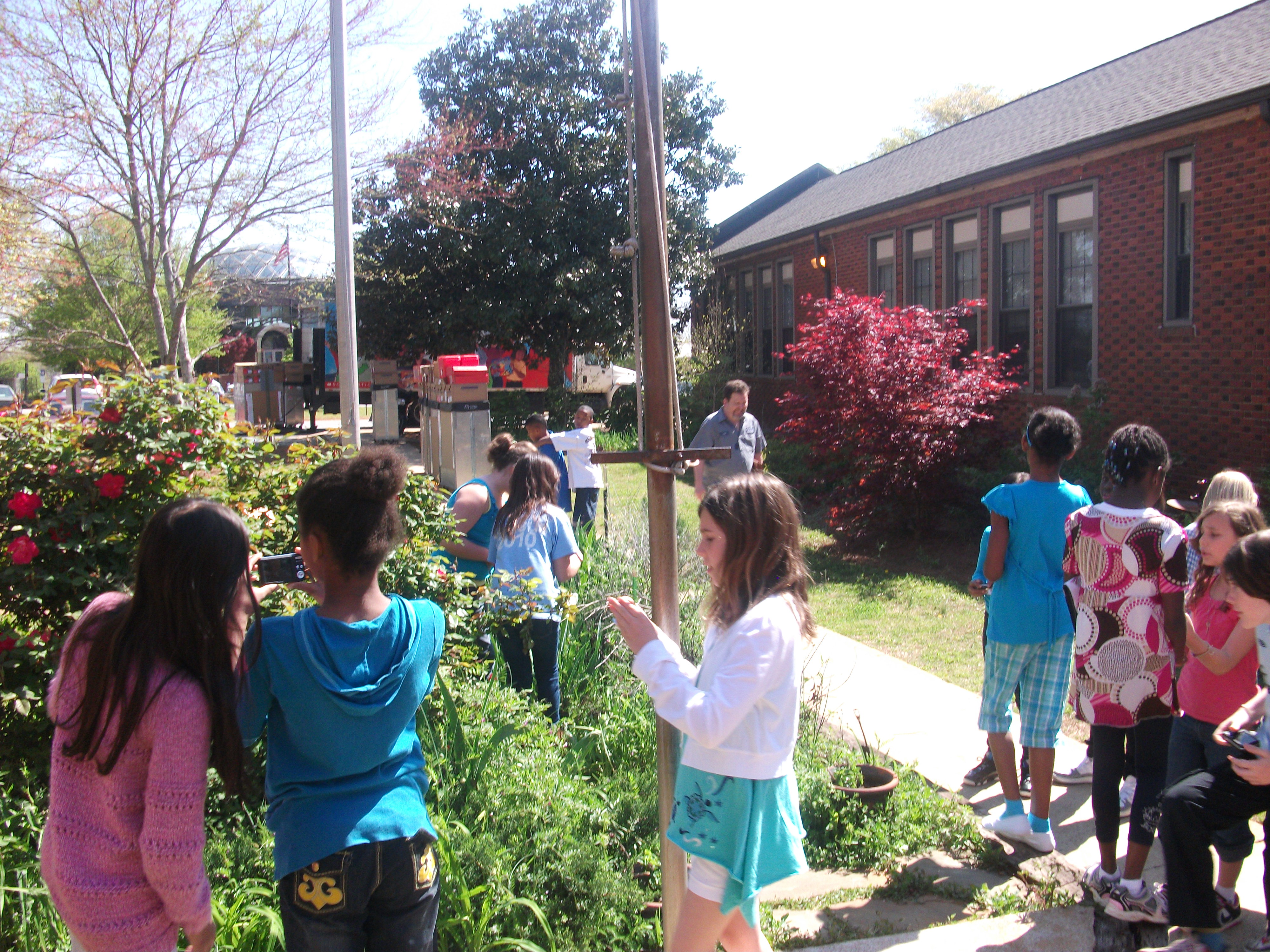
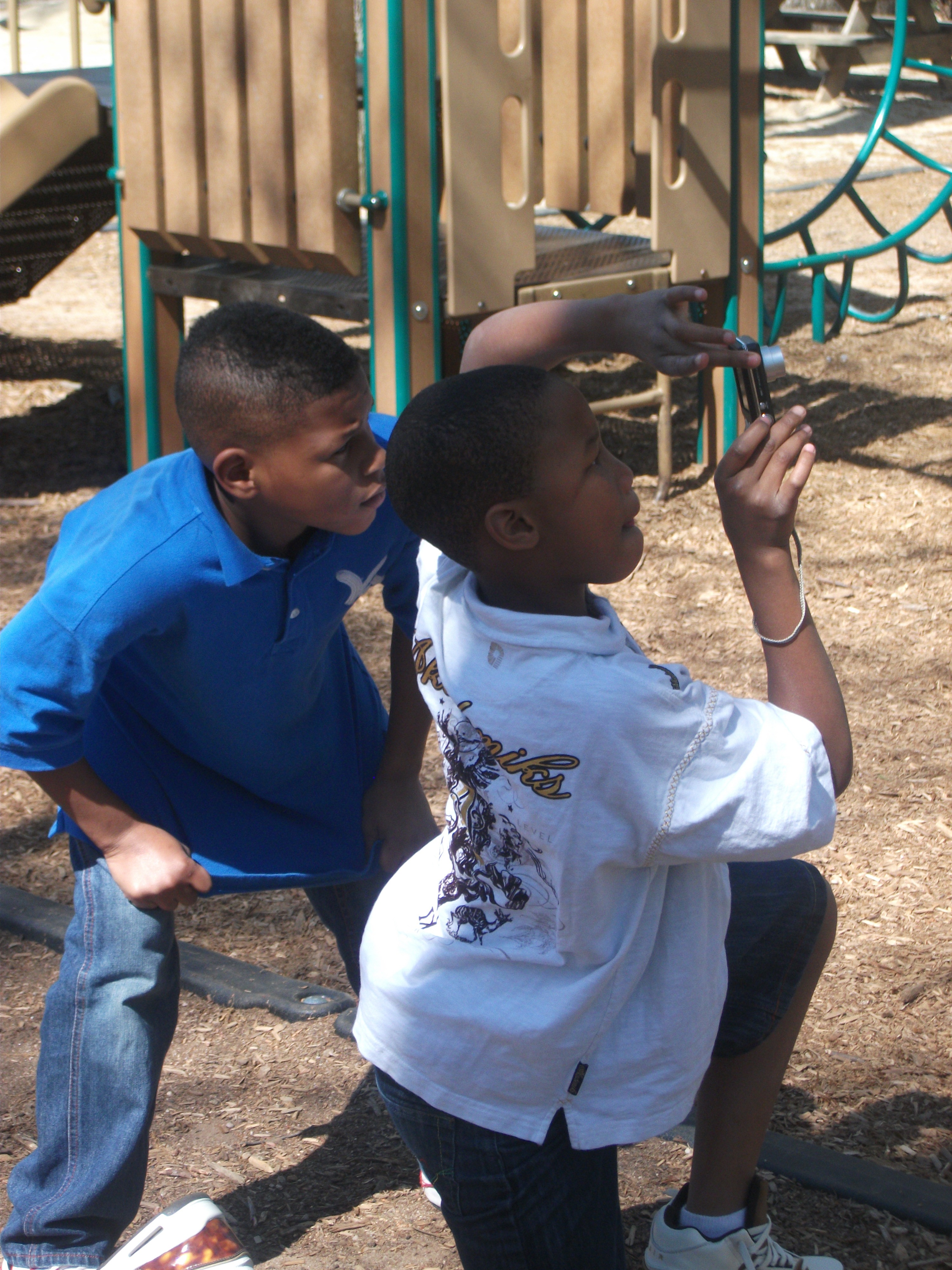
I collaborated with Ms. Olin, my former paraprofessional and now student teacher, to read multiple poems from Joyce Sidman’s books and talk about “noticings” from each of the poems.  We looked at things like similes, repetition, rhythm, shape, form, word choice, and more.  Students decided to write poems about nature since much of Sidman’s work is nature and science based.  They took photographs of flowers, trees, and other nature around our school and also searched on Creative Commons for images.  Students wrote poems at the media center tables and conferenced with me, Ms. Olin, Ms. Biehl, and their teacher, Mrs. Selleck.   Finally, students used Photo Story to import their pictures, add text and music, and record their voices reading their poems.

These poems and others created in the coming weeks will be played at the Children’s Literature Assembly Breakfast at NCTE in Chicago.  I’m so excited that our students’ work will have this authentic audience to appreciate their creative endeavors.  You can get a sneak peek at some of the poems by clicking these links.

This slideshow requires JavaScript.

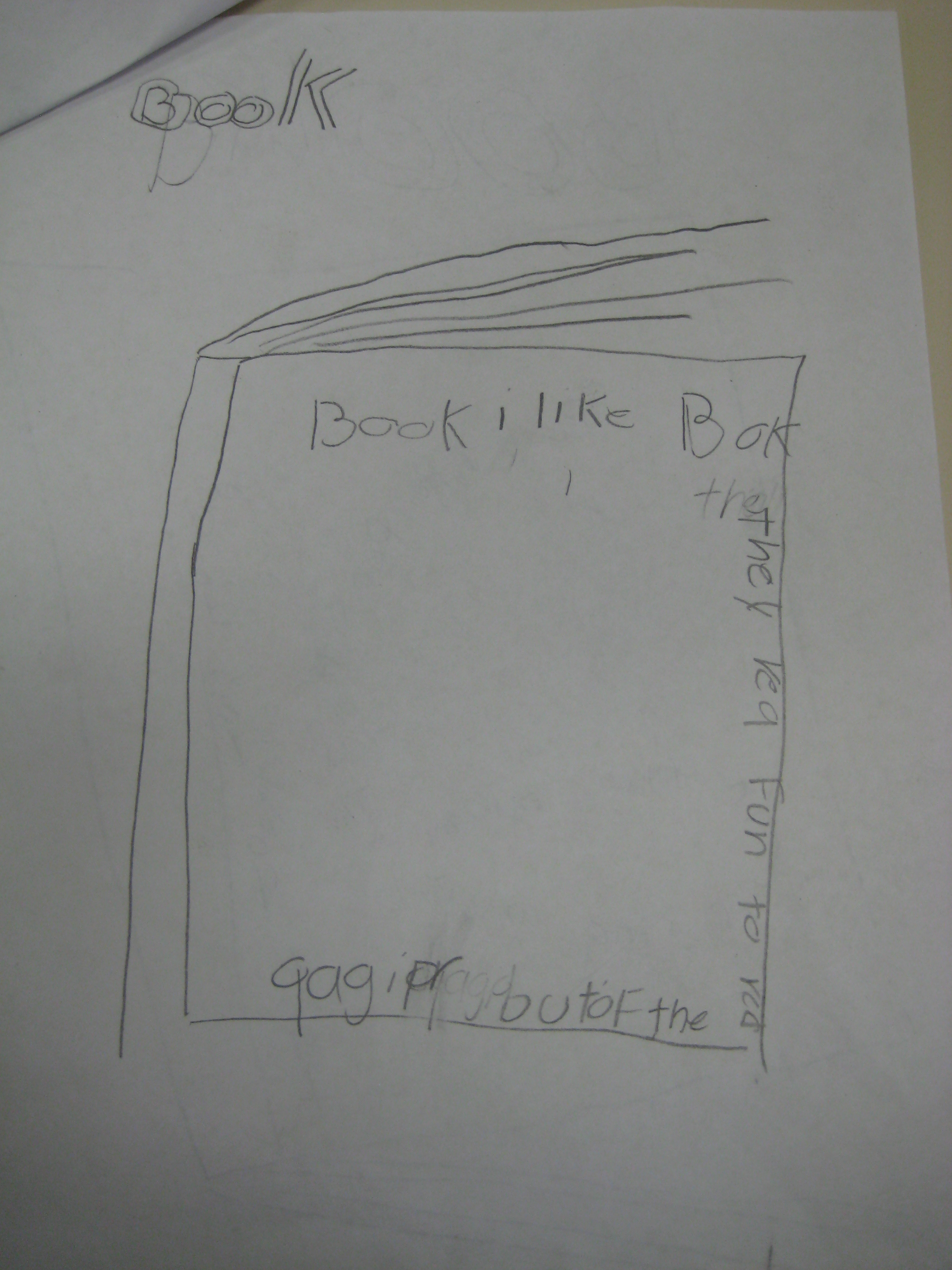
Book Spine Poetry 2011

Two classes have come to the media center so far to create book spine poetry.  I got this idea last year after reading the 100 Scope Notes blog.

To make a book spine poem, you arrange a stack of books so that the titles create a poem.  Each title of a book becomes a line in the poem.

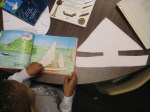
In my lessons, we’ve done some examples together and listened to past examples from classes.  Students get in groups of 3 and wander around the media center browsing the shelves for interesting titles that seem to fit together.  Once they make their decisions on 3-5 books, they pull the books off the shelf and arrange them in a stack.

Stacks of books go to tables and a teacher helps students take a picture of their stack.

Next students bring the camera to a computer where another volunteer helps them download the picture into a class file.  Students then find a space to practice reading their poem aloud.

Once ready, students come to me and use Photo Story 3 to record themselves reading their poem.

When students finish checking out, they sit on the carpet to hear their final product.

Enjoy listening to one of the book spine poems here.

Mrs. Brink’s Book Spine Poem

Mrs. Yawn’s Book Spine Poem

This slideshow requires JavaScript.

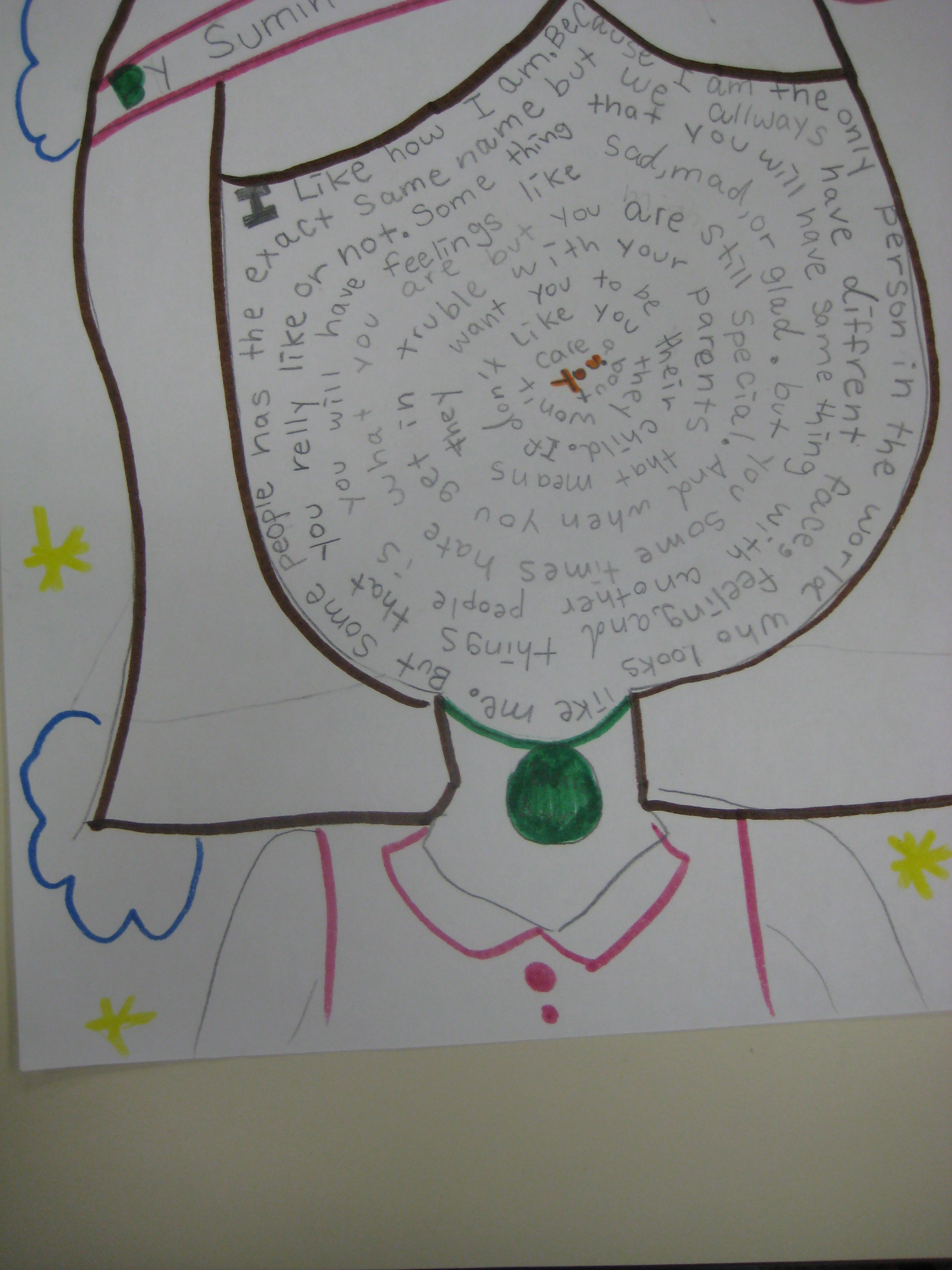
Autobiographical Poetry: A 5th grade collaborative art project

The art teacher, Mrs. Foretich, and I love to collaborate with one another.  Recently, we wrapped up a collaborative unit focused on digital photography, using technology to transform a photograph, and autobiographical poetry.

Students spent 2 days rotating through a center taught by Mrs. Foretich taking digital pictures of themselves and using Picnik.com to edit their photos and center taught by me about the many elements of poetry including personification, similes, strong verbs, and repetition.  Then students spent 2 sessions in a writing workshop using their photograph to write an autobiographical poem that included some of the poetry elements learned in my center.  Students typed their poems in word and printed them.

Mrs. Foretich had all of the student images printed at Snapfish, and she mounted these pictures on matting board.  Now, an amazing display sits atop the shelves of the media center.  Today was the debut, and students and teachers have been reading the poems all day.  If you can’t stop by the media center during poetry month, take a moment to view the pictures of the display and watch a video tour given by two students, Maggie and Delia.

This slideshow requires JavaScript.

Happy Poetry Month 2011 « Georgia Library Media Association

Happy Poetry Month 2011 « Georgia Library Media Association.

PreK Shape Poetry

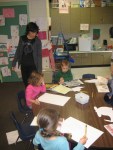
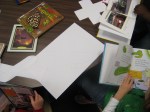
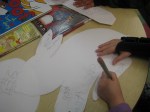
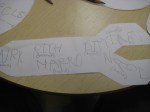
Today was lesson 2 in a 3-part collaboration with Ms. Spurgeon’s PreK class.  Last week, we read multiple examples of shape poems and wrote a model poem as a class.  Today, students focused on writing their own poems.  To prepare, Ms. Spurgeon and her parapro, Ms. Melissa, drew large shapes for each student and cut them out.  These shapes were the symbols that each student uses in class to label various belongings.  Each symbol has come to have special meaning to each student.  I pulled nonfiction and fiction books related to each symbol so that students could reference the books for words to put inside their shapes.

I opened today’s lesson by reading a poem from Joyce Sidman’s Meow, Ruff: A story in concrete poetry.  I used this as a reminder to students that the words that go inside the shape must somehow represent the shape.  Ms. Spurgeon and I found that it was a common mistake for students to want to put whatever words were in their heads instead of focusing on their shape.  She reiterated my opening by sharing a poem that she wrote about chocolate and reminding students that all of her lines were about chocolate.

Next, students each received the books about their symbol and proceeded to 3 work spaces where the pre-cut symbols were already out at chairs.  Ms. Spurgeon, Ms. Melissa, and I each went to these areas and sat with students as they worked.  Students began by looking through their books for ideas from the pictures or reading the words with adult assistance.  As they decided on words, students sounded out words and wrote their words inside the shapes with their best handwriting and spelling.  Next, students read their lines to an adult and the adult wrote the correct spelling of each word in parentheses.

Ms. Spurgeon will continue this lesson by giving students time to finish their poem and add color to it.  They will also practice reading their poems before part 3.  The last part of this collaboration will be recording each student reading his/her poem on camera and sharing those videos on Teacher Tube.

I was surprised by how helpful having books about their symbols was for the students.  Many got ideas from the pictures and several even used direct words from the text.  For example, one girl wrote a poem about rabbits.  In the picture, she got so excited when she saw that the rabbit’s ears were going down.  This turned into a line in her poem that was actually written on the rabbit’s ear.  Another student read her books about apples with Ms. Melissa.  She took facts such as “apples can be made into applesauce” and “apples are mostly harvested in the fall” and used pieces of those lines in her apple shape.

I’ll be sharing more about our media center’s support of poetry writing in the coming days and weeks.

Poetry Lessons 2011

Poetry Month is already in full swing in the Barrow Media Center even though it’s still March.  I’ve found that April gets shortened due to testing, so we start celebrating poetry early.  Classes at every grade level are signing up for various kinds of lessons from now through April.  Some lessons are done in a single session while others span 3-4 lessons.  Here are some of the lessons coming up:

  • Overview of multiple kinds of poetry
  • Book spine poems
  • List poetry
  • Shape poetry
  • Poetry and photography
  • Joyce Sidman poet study
  • Animoto and Photo Story poems

Yesterday, Mrs. Yawn’s class came to learn about many kinds of poetry and we explored a list poem together.  After using poems from the book Falling Down the Page collected by Georgia Heard, students wrote  a list poem together.  Every student thought of an object that was in their pouch in the classroom (the place where they keep their stuff), and they shared their line with a partner in order to give each other feedback to make the line more descriptive.  Then, I went around to every student and typed their line into a poem that we then read together.  I printed a copy for the class and a copy to display in the media center.

In PreK, Ms. Spurgeon and I are studying shape poetry with her class.  We explored many examples of shape poems in books such as A Poke in the I, A Curious Collection of Cats, and Doodle Dandies. Then we wrote a shape poem together about a flower.  Next, I’m going to their classroom to lead a writing

workshop where they will write their own shape poems.  Each student has a symbol that represents them that is used to label things in the classroom.  Each student will write a shape poem about their symbol.  Ms. Spurgeon is preparing chart paper with symbols already drawn on them, and I’m gathering nonfiction books that are about each student’s symbol.  These books will be a source for gathering words about the symbols.  On writing day, Ms. Spurgeon, the paraprofessional, parent volunteers, and I will sit with students to conference and assist as they write.

Finally, we’ve just kicked off our poetry contest.  Every student in the school is invited to submit a poem and prizes will be awarded in PreK-1st grade, 2nd-3rd grade, and 4th-5th grade.  Poems can be any form, can be short or long, and must be original.  Students can submit poems in any format:  a piece a paper, on a napkin, a digital file in my drop box, or anything else they can think of.

I’ll be sharing more about poetry in the media center over the next month.  If you have great things going on in your own library, or if you have a poem to share, feel free to leave a comment.

What poem is hiding inside you?

written by Joyce Sidman illustrated by Pamela Zagarensky Houghton Mifflin, 2009 ISBN-13: 978-0-547-01494-4

Summer is the perfect time to sit outside in the sunshine by the pool, under a tree, next to a stream, or wherever else your heart leads you and take time to appreciate the beauty of the world.  It’s also the perfect time to capture your observations in a journal, sketchbook, or your favorite piece of technology.  One thing that I love to do is take my observations of the world and turn them into poetry.  I just finished reading Red Sings from the Treetops: A year in colors by Joyce Sidman & Illustrated by Pamela Zagarenski.  This book was a 2010 Caldecott Honor book, and it was very deserving of this recognition.  The illustrations are exquisite, and the text is lyrical and insightful.  Joyce Sidman uses her poetic eye and creative imagination to capture how colors change throughout the year.  Definitely check this book out for writing and drawing inspiration.

On Joyce’s website, students can submit their poems for publication.  She posts student poems with only first names visible.  I’m always looking for places where students can make their voices heard through their writing.  If you choose to write a poem this summer (and I hope you do), consider sending it to her site. You can also post it here in the comments section whether your an adult reading this or a student!  If you know other great outlets for young authors to publish their work, leave that in the comments section, too.  Now go outside, pick a spot, listen & observe, and craft a poem!