Talk Like a Pirate Day 2014

Our pirate map of connections

Our pirate map of connections

September 19th is Talk Like a Pirate Day.  There are so many fun pirate stories out there, and each year we seem to discover a few more thanks to the connections we make around the globe through Google Hangouts and Skype.  Planning a day of connections like this definitely takes some time but students love talking with people around the globe, sharing a story, and learning a bit about one another.  It always seems to reinforce the idea that we aren’t alone in our bubble of routines of day to day life.  There are other people out there doing the same things that we are and quite possibly they are doing those things in different ways.  I love the spontaneous conversations that take place on days like this that you could never plan through a standard or a lesson plan.  Students always bring up a question or a comment that makes the day special.

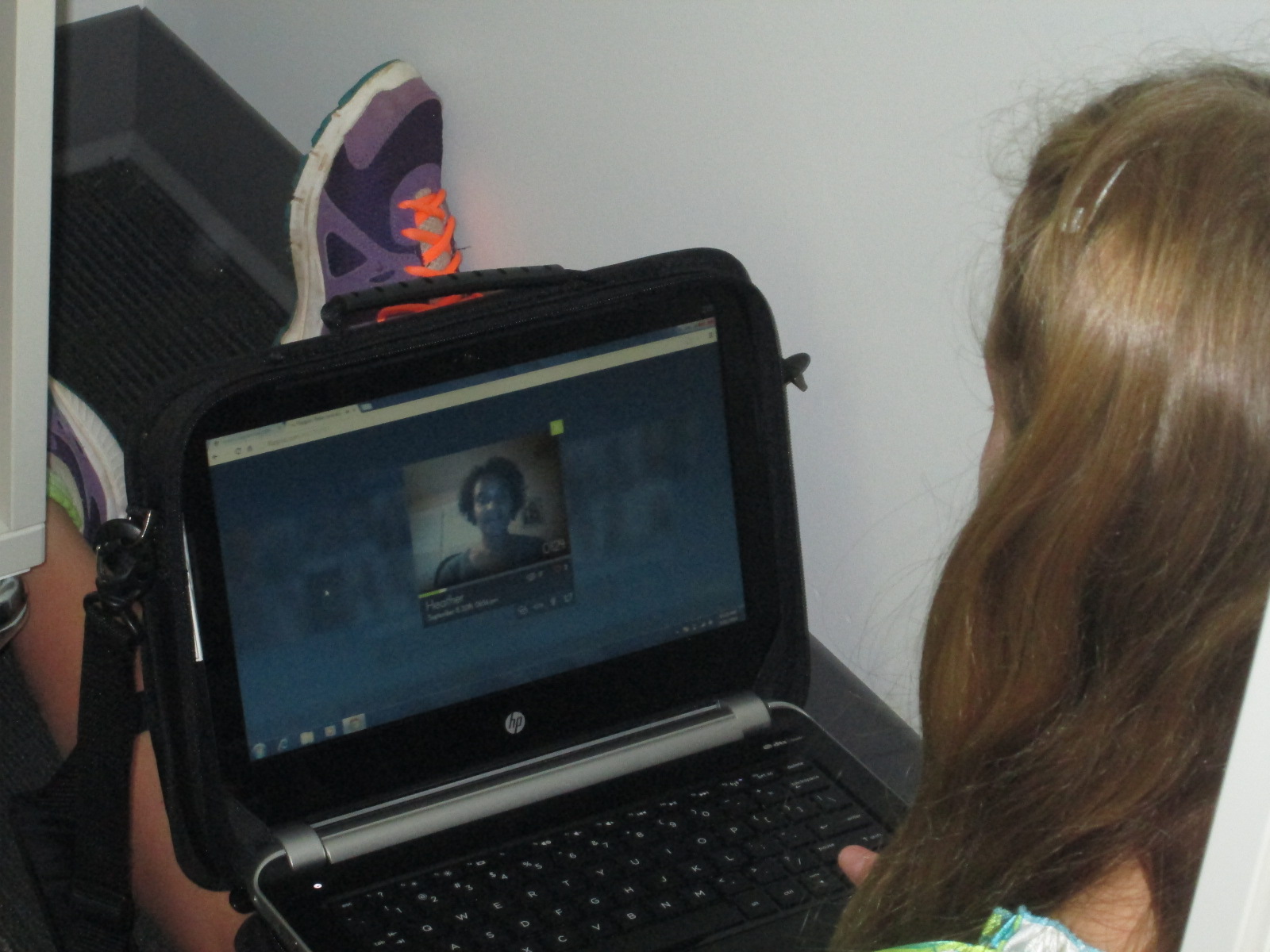
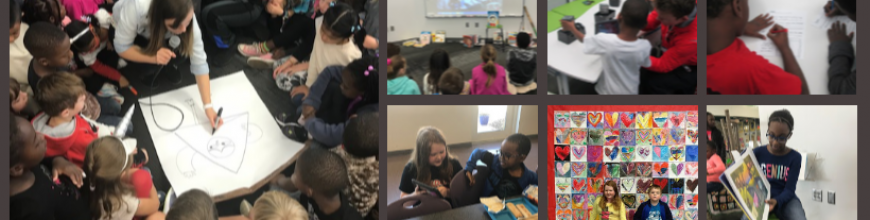
This year, 8 classes came to the library for Talk Like a Pirate Day and we connected with 6 different schools in 5 different states.

  • We connected with Edie Crook in Gastonia North Carolina to read the book No Pirates Allowed Said Library Lou.  We had a great conversation about “treasure” and students took turns stepping up to say what treasure meant to them.  We were delighted with words such as being kind, family, friends, Skylanders, and baseball.
  • We connected with Jan Pelias through Google Hangouts in Frisco Texas to read the book How I Became a Pirate.  It was fun to connect with someone in another time zone because we could talk about how time is different at the same moment around the world.
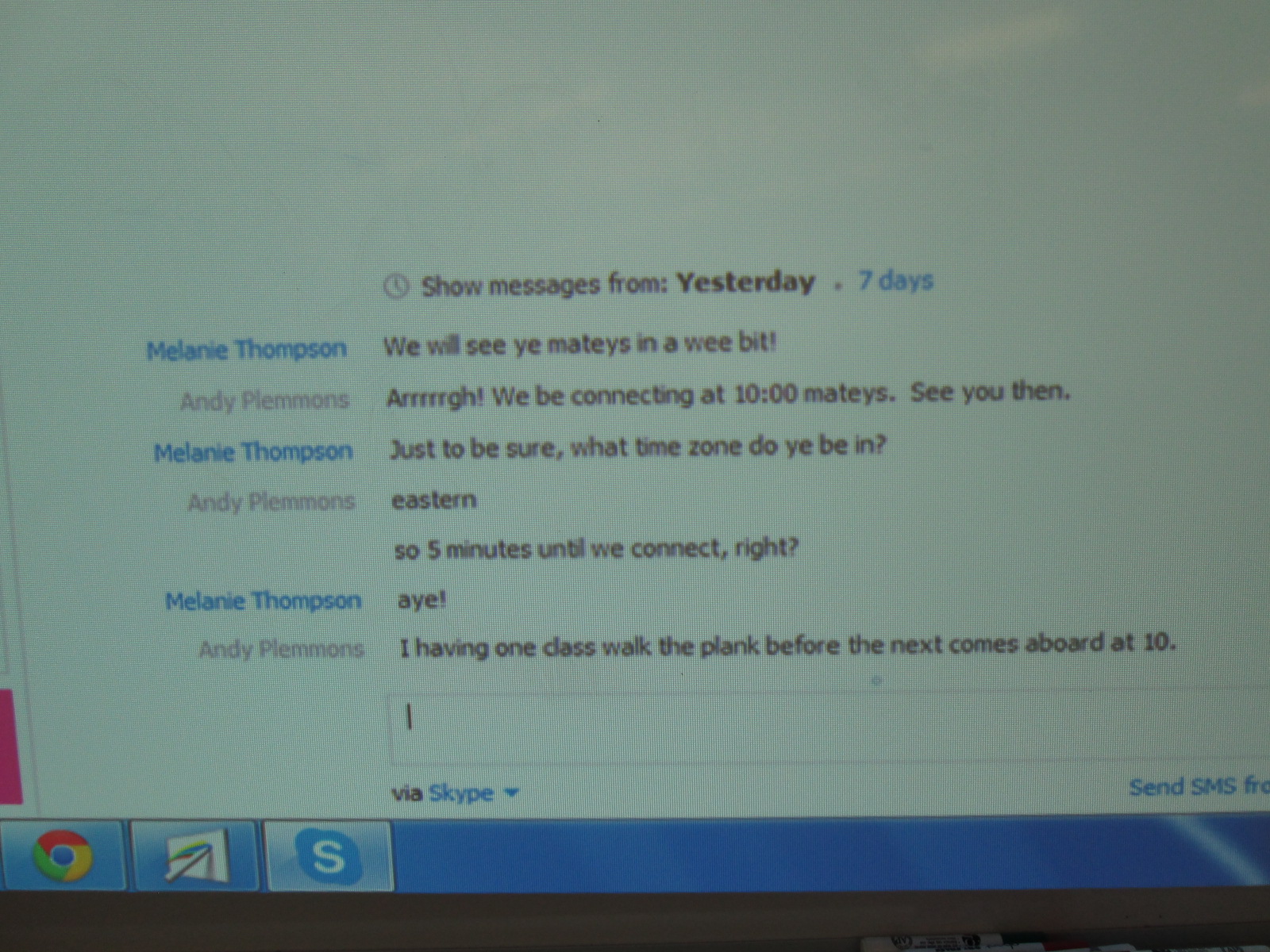
  • We connected with Melanie Thompson in Jefferson City, Missouri to read the book How I Became a Pirate.  Melanie’s students had researched pirates and they took time to share all of their facts.  This made our students very curious about pirates as well.  I have a feeling all of our nonfiction pirate books will be checked out for a long time.  I also love how Melanie embraced her inner pirate as we chatted with each other through Skype chat prior to our connection!
Pirates (11)

  • We connected with Okle Miller in Tampa, Florida to read the book No Pirates Allowed Said Library Lou.  Tampa has a pirate festival called Gasparilla .  Students loved hearing how pirates take over Tampa during this festival and kidnap the mayor (all for fun).  The class we connected with even called themselves pirates and used the word “pirate” as an acronym for their classroom expectations and beliefs.
  • Both of our PreK classes came to the library for their first visit of the year.  In class, they made pirate hats and hooks as well as added some pirate mustaches to their faces.  We read the book Pirates Go to School and made a class video chanting the pirate chant at the end of the book.
  • We connected with Carol Scrimgeour in Essex Town, Vermont to read the book No Pirates Allowed Said Library Lou.  We noticed that all of the kids were wearing warm clothes, so we had a great conversation about how cold it had been in the northeast.  It was sunny in both places but with a very different temperature.
  • Finally, we connected with Shawna Ford in Texas and she read a new pirate book we had not heard before: No Bath No Cake Polly’s Pirate Party.  Now the students want to get it for our library.

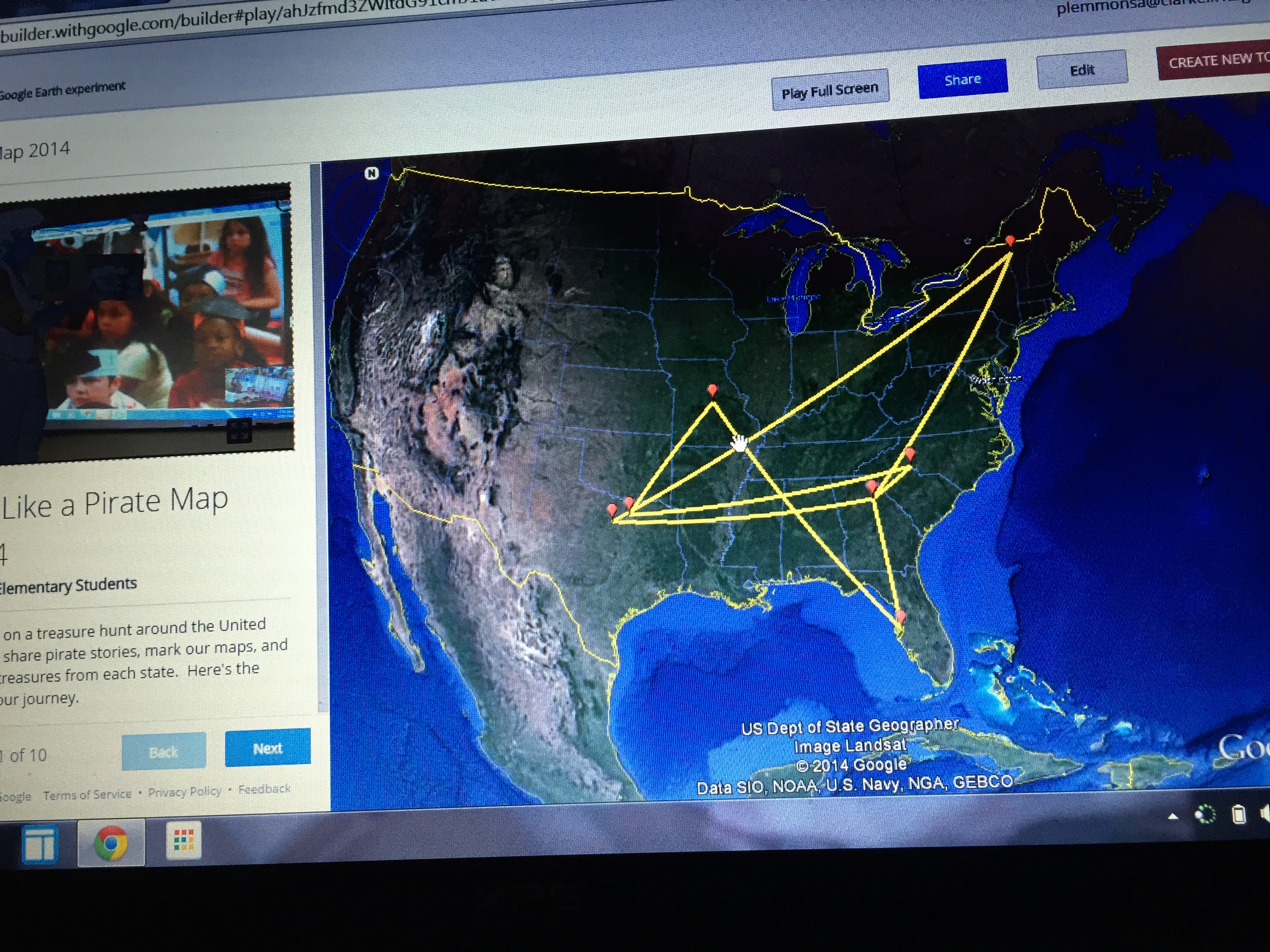
Before each connection, we looked at a map from our school to the school we were connecting with.  We talked about distance, travel time, and also all of the decisions that go into choosing your route for a trip.  We also created a Google tour of our trip using Google Tour Builder.  After each connection, we wrote a summary together.
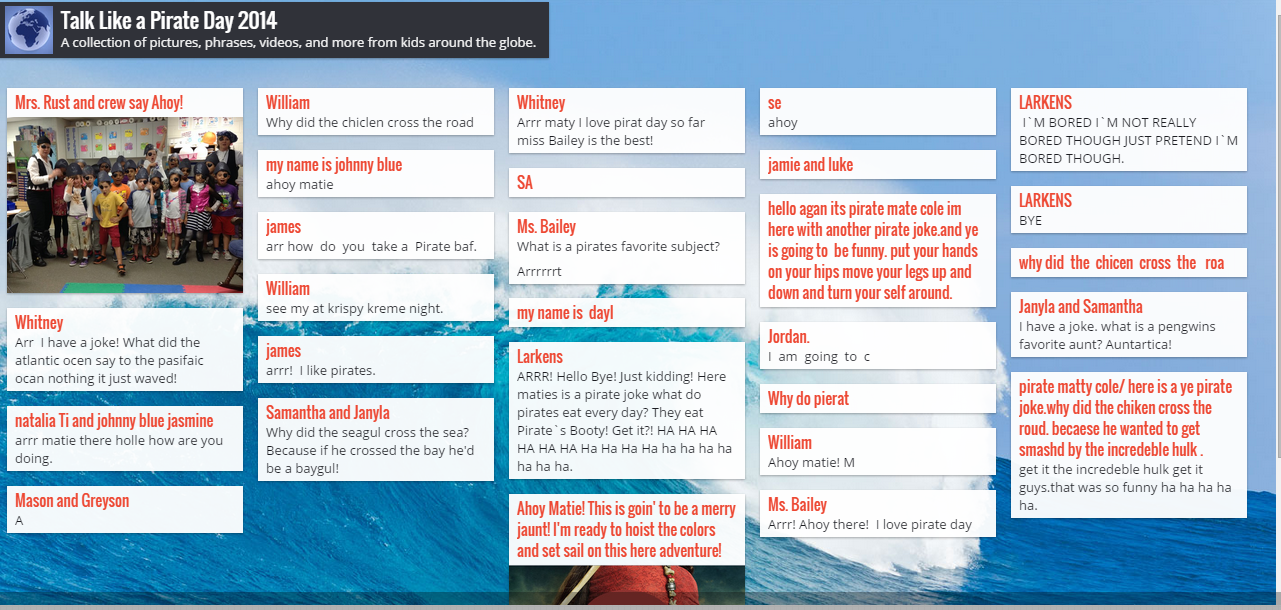
We also created a Padlet to write pirate sentences.  This was shared with our friends around the country and became a place to crowdsource our words.
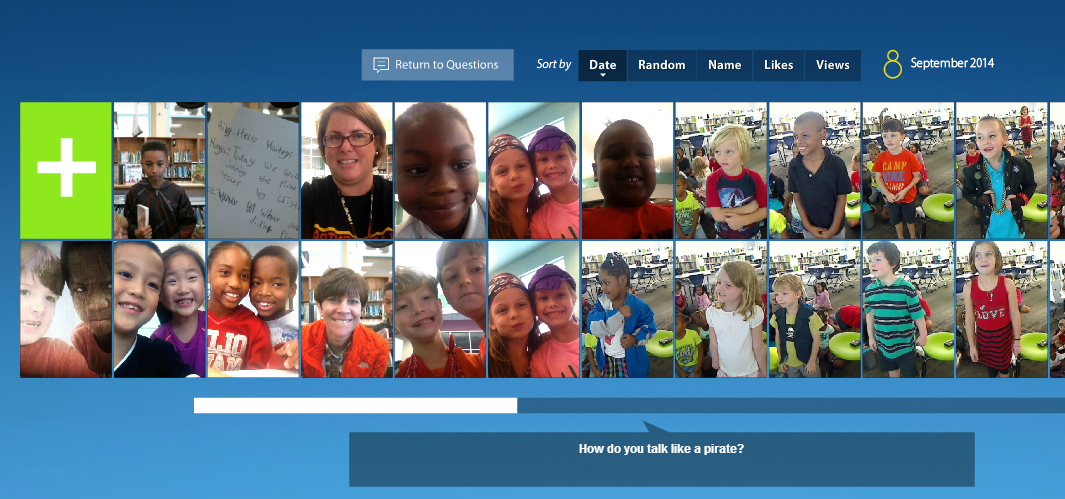
Finally, we spent a lot of time creating pirate sentences, phrases, and even conversations and practicing them aloud.  Students had access to a list of pirate vocabulary words as well as multiple pirate stories to get ideas.

We used Flipgrid as a place to record our favorite pirate expressions.  Students also had a great time trying to imitate a pirate voice and pirate faces and gestures.  Take a moment to listen to them because they are quite entertaining!  I loved how this evolved from a sentence writing activity into a practice of fluency, oral speaking, and performance.  Again, Flipgrid became a place for us to crowdsource our voices with the voices of our connecting schools.

I love how these events connect us with new people around the world.  This year we connected with some old friends, but we also met some new teachers, librarians, and students we hope to connect with again.  I also want to continue to think about days like this to build long term collaborative relationships.
Making Our Mark with Dot Day 2014 (and I hope well beyond)

Dot Day (42)

International Dot Day is one of our favorite days (weeks) of the year.  It gives us permission to be creative and see what we can do just by making a mark.  It also connects us with so many classrooms around the world.  Classes are always looking to connect on this day, and we have made many collaborative relationships with schools because of this one day of the year.

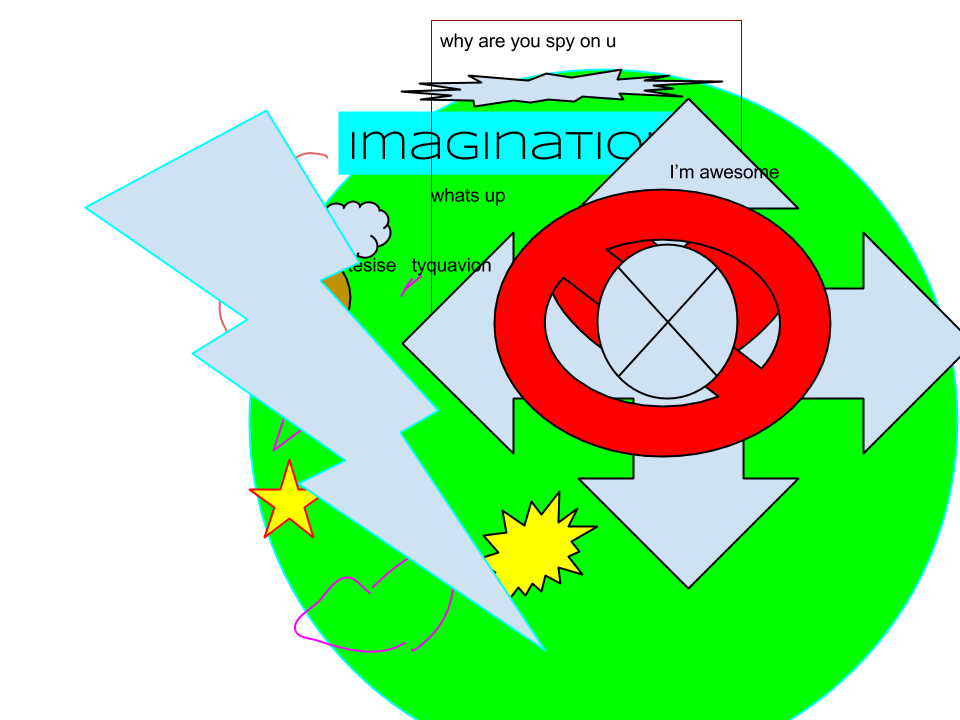
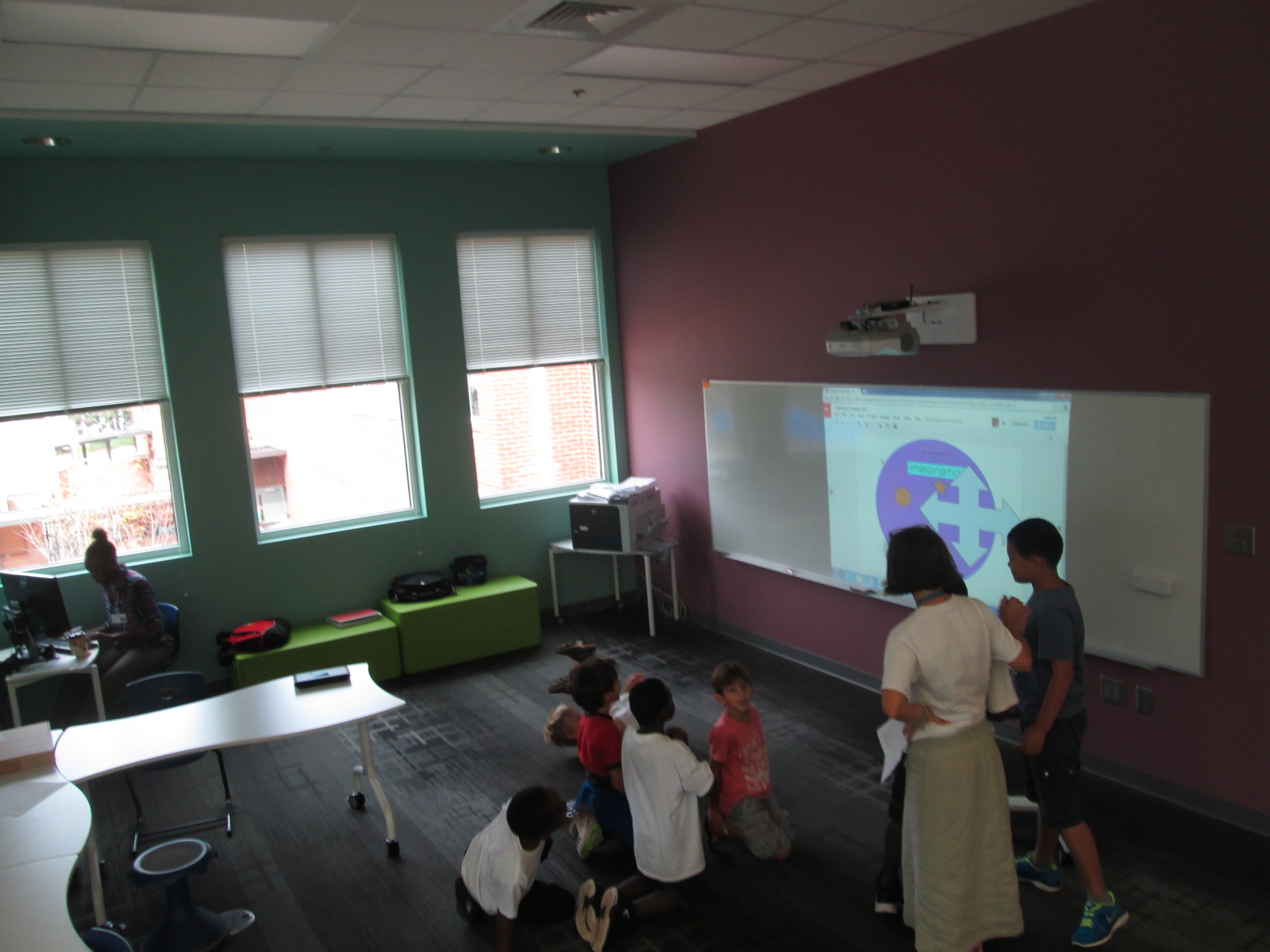
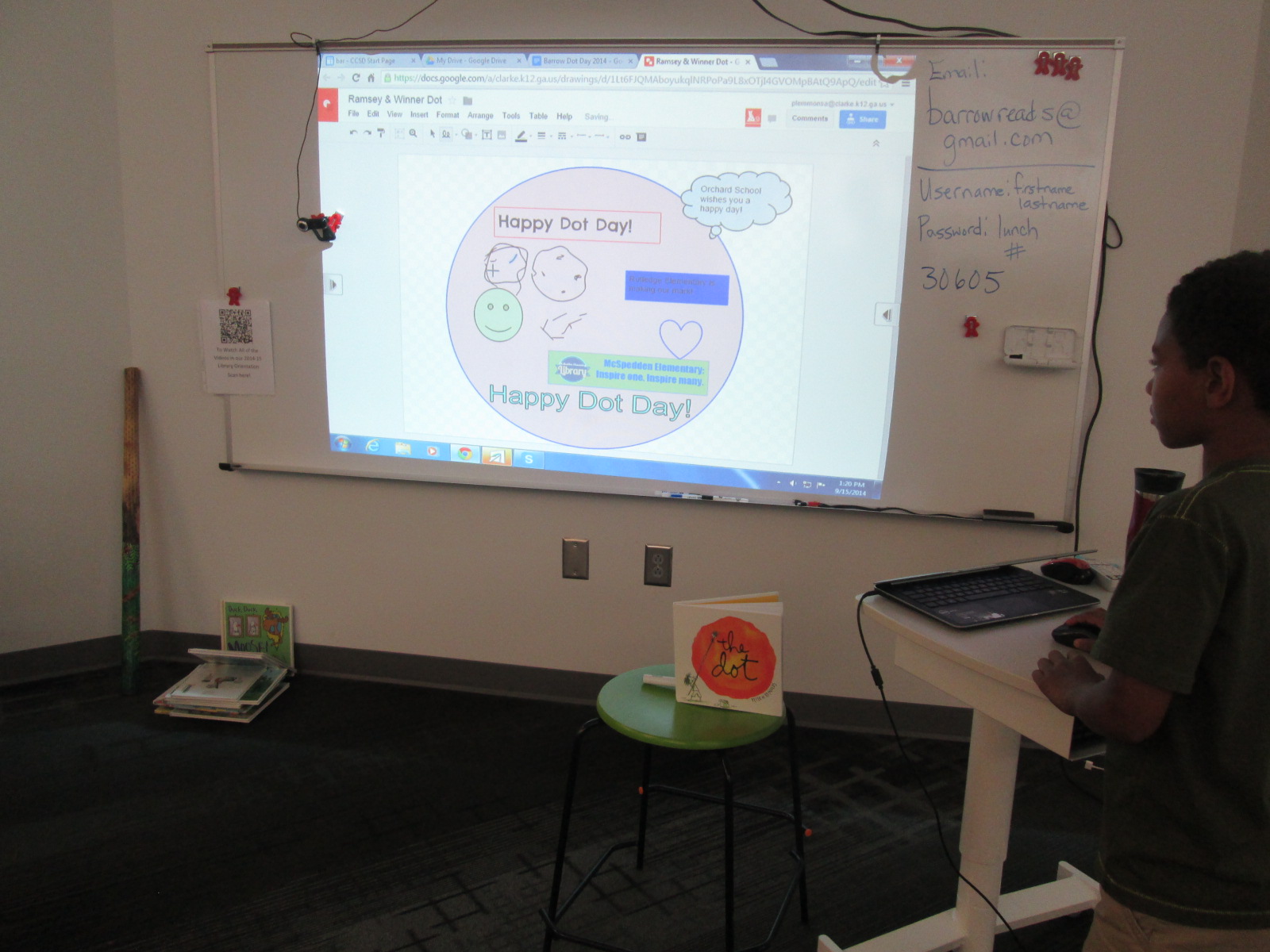
This year, we used Dot Day as a way to explore our goal of dreaming, tinkering, creating, and sharing.  We explored Google Drawing, which was a new tool for most students.  We used Dot Day as a time to tinker and see how Google Drawing functioned as well as how to collaborate on a drawing with another student or class.

We also used colAR mix again this year to make augmented reality dots.  This year, I encouraged students to think more globally as they made their dots by embracing the them of “making your mark on the world” that is the essence of The Dot.  Students were encouraged to design a dot that represented their talents, hopes, dreams, and passions.  I loved this new twist on a tool that we used last year because it revealed so many stories from students.  One student drew a picture of an airplane flying through the clouds because of his dream to be a pilot when he grows up.  Another student drew an astronaut and UFOs because of his desire to explore space.  Another drew her whole family because they are what she loves in life.  Some students chose to highlight their creativity as a way that they make their mark by designing unusual dots with their favorite colors.  These were empowering stories because they allowed students to have a voice to share something personal about themselves in a way that they might now have shown before.
One amazing thing that happened while students were using the colAR app was how they discovered different ways to scan their dot. It started out as what some people might see as a mistake.  A student’s hand was on top of their dot while they were scanning their image, and the hand became a part of the rotating sphere on the iPad screen.  This resulted in an uproar of excitement as sharing began and the idea spread like wildfire.  Soon students were trying to put their faces on their spinning spheres.  Others stacked towers of crayons on top of their dot and tried to see if that would scan into the 3D image.  All of this happened because of an opportunity to tinker.  When we give kids a space to explore, they figure out amazing things and they willingly share and teach others what they learned.  They get excited about their learning and they want to do more.  I bet that these students would have spent an extended period of time continuing to experiment with colAR mix to see what else they could figure out, and they would have done this without getting tired or bored.  These are the things that days like Dot Day reveal.

We had numerous Skype connections.  Each one had its own unique twists and conversations between students and teachers.  In many of these Skypes, we collaborated on a Google Drawing dots after reading the book.  This included dots with our friend Okle Miller in Tampa, Edie Crook in North Carolina, and Crystal Hendrix in North Carolina (just to name a few).  Sometimes this was live during a Google Hangout or Skype and other times it was after we disconnected.  One of our hangouts was a large hangout between Matthew Winner in Maryland, Nancy Jo Lambert in Texas, Donna MacDonald in Vermont, and Esther Uribe in Texas.  It was fun to read The Dot to students in so many states at one time, but what was even more fun was drawing with all of them at the same time!  We definitely did some tinkering with this one.  Many of us learned of the challenges of younger students but found ways to involved them even with computer-use difficulties.  The students loved seeing drawings “magically” appear on our shared dot.

Ramsey & Winner Dot

Our multi-school collaborative dot

With Jennifer Reed in Massachusetts, we accidentally deleted all of our work on our collaborative dot.  The kids were in a panic, but it was a fantastic opportunity to do an impromptu lesson on the power of revision history in Google Drive.  We were able to recover our work and learn an important trick.  We even talked about how revision history is one way that work is never deleted, which can be a positive but also a negative if you have written something that you wished you hadn’t.

Wright & Reeder Dot

Our dot with Jennifer Reed that was almost lost!

Mrs. Clarke’s class had a Skype connection, but we weren’t able to do a collaborative dot with our connecting class.  Instead, we split the class in half at our 2 projection boards and they created a dot together as a class.  They got just a bit competitive as they tried to cover up each other’s work, but even this was a great opportunity to talk about how to work with others on a doc without being disrespectful of the contributions.

Clarke & Lussier Dot

Mrs. Clarke’s class competitive dot

Some classes that we connected with had already spent a great deal of time being creative, and they shared with us dots that they are going to physically mail to us.  Jenny Lussier in Connecticut had colAR dots as well as Morse code greeting cards.  We can’t wait to decode what they say!  We also discovered with Jenny that there’s more than one version of The Dot floating around out there.

Cathy Potter’s students in Maine read the book Ish to our students and shared their own illustrations for the book.  We had a great conversation about the connections between both books.

Dot Day (60)

Students and teachers alike love this day, but I do leave this day with a wondering.  I’m thinking so much this year about global thinking and global collaboration.  This day is filled with thousands of Skype and Google Hangout connections around the world.  We connect.  We read.  We dream.  We create.  But then what?  We leave one another until the next big event.  I’m by no means being negative about Dot Day.  I’m a huge advocate, but I do wonder about why we don’t build upon these connections we make.  If we are really going to “make our mark” on the world, shouldn’t we be taking some actions together beyond connecting, reading, and creating?  I would like to gently nudge us all to think about this.  I’m just as guilty.  I connect every year and then I move on, but I can’t help but carry this on my mind, reflect on it, and consider what more we might do beyond today.  Think with me!  Let’s keep our dots connected.

Dot Day (43)


September 11th: A Global Perspective

September 11 (3)

Each year our 5th graders take an entire day to explore the tragic events of September 11, 2001.  Each year, the students become more and more removed from the topic because they weren’t even born at the time of the tragedy.  The events of September 11 and the impact they had on our war on terrorism are part of the 5th grade social studies standards, but we also spend a great deal of time at our school on social emotional learning and how we support one another in a community.

September 11 (22)

Each year I write a blog post about how we teach September 11th, and each year there is a new addition or a new angle in which to explore the day.  This year, students opened the day in their classrooms by talking about everyday heroes.  They shared where their own families work and how each of us can be an everyday hero.

September 11 (17)

Then, students split into 4 groups and rotated through 4 experiences every 30 minutes which were facilitated by me and the classroom teachers.

Experience 1:  Haiku poetry.  With Ms. Mullins, students learned about the unlikely heroes of the day including dogs.  They studied the poetry form of haiku and how a brief 3-line poem with 17 syllables can magically express a feeling or an image.  They focused their haiku on heroes.  They didn’t have to specifically write about the heroes of 9/11, but many chose to.

September 11 (28)

Experience 2:  Response to tragedy from afar.  With Ms. Selleck, students looked at how people around the country and the world responded to the tragic events of 9/11.  It was a time that people wanted to take action and do something to help.  Children wrote letters, drew pictures, and made cards.  The Maasai people of Africa offered 14 cows as a gift for America.  Ms. Selleck shared Carmen Agra Deedy’s story 14 Cows of America and students considered how people who weren’t even in our country wanted to help.  This posed an interesting question of how we might respond to the tragedies taking place every day in other countries.

September 11 (20)

Experience 3:  Heroes of 9/11.  There were so many heroes that stepped forward on 9/11 and many of those heroes lost their lives in the process.  At this experience, students took a look at many example of heroes and read the story Fireboat by Maira Kalman.  Students learned about this old fireboat first launched in 1931 and how it was called to duty on 9/11 to help pump water to fight the fires.  Students designed a drawing to represent the many heroes that took action on 9/11.

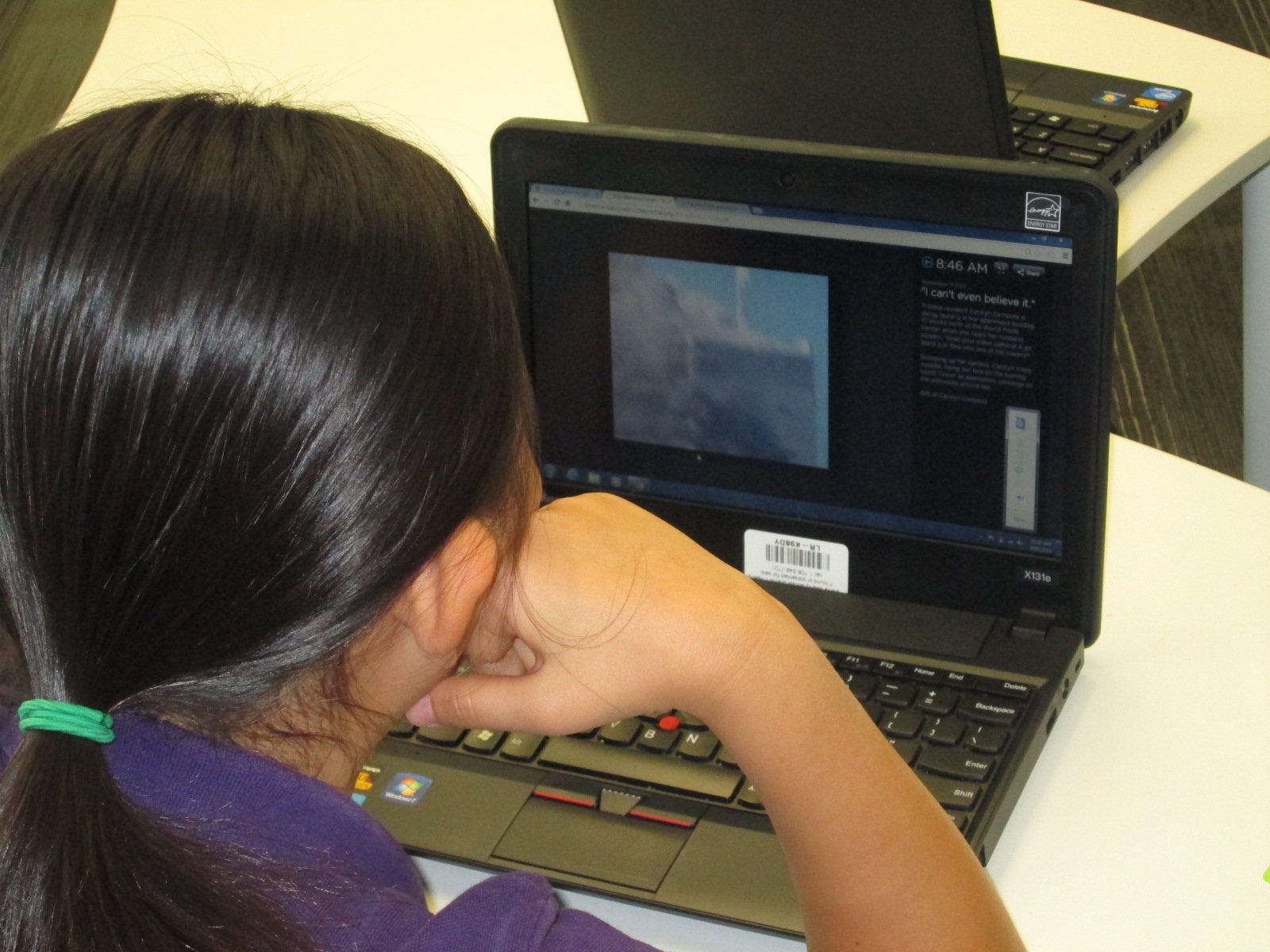
Experience 4: The events of 9/11.  This is the most sensitive of the experiences for students because we all react differently to seeing the tragedy of 9/11.  Over the years, I’ve developed a pathfinder of sites that explore 9/11 from multiple angles.  There are interactive timelines, eyewitness accounts, actual video footage of the day, oral histories of memories from victims’ family members, virtual tours of the memorials, and cartoon videos explaining the events in kid-friendly language.  We start with a video:

This video frames that on 9/11 we remember but we also take action to create good in the world.  I invite students to view the various resources and reflect on what they might do to create good instead of evil.  At the bottom of the pathfinder there is a padlet where students can record their actions that they want to take.  During this experience, I always tell students that they don’t have to watch any of the videos.  They can also take a break at any moment if the tragedy just becomes too much to handle.

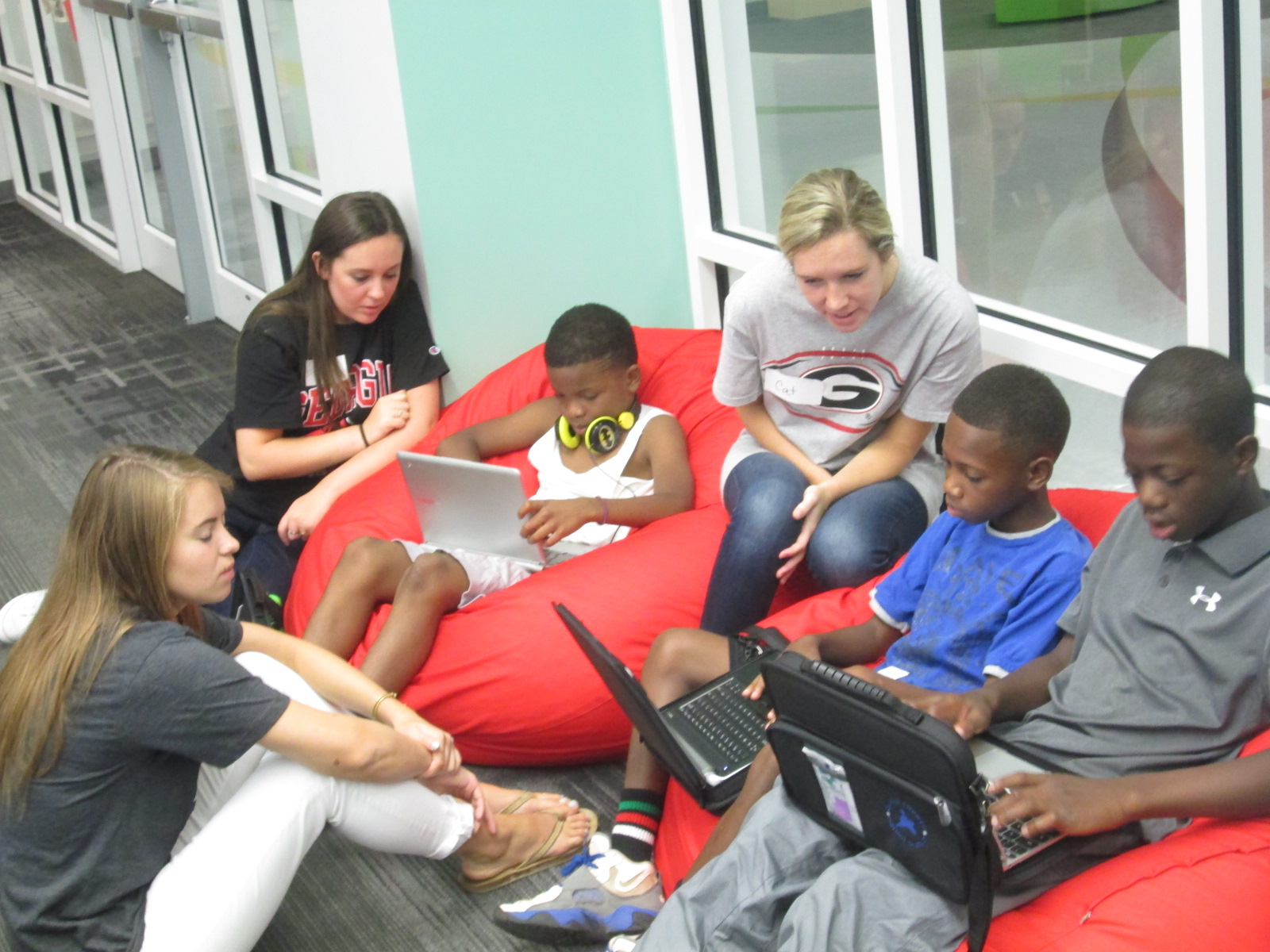
This year, 2 new pieces were added to this experience.  First, Gretchen Thomas, a UGA teacher in instructional technology, brought one of her #EDIT2000 classes to support students.  This was a piece that I’ve always felt was missing from the pathfinder experience.  September 11th is such a heavy topic, and I do worry about how kids are processing the information.  With these UGA students, we were able to pair every 5th grader with a UGA student to have reflective conversation about each website, video, and story that students experienced.  UGA students shared their own understanding of 9/11 as well as their own memories of being in elementary school when it happened.


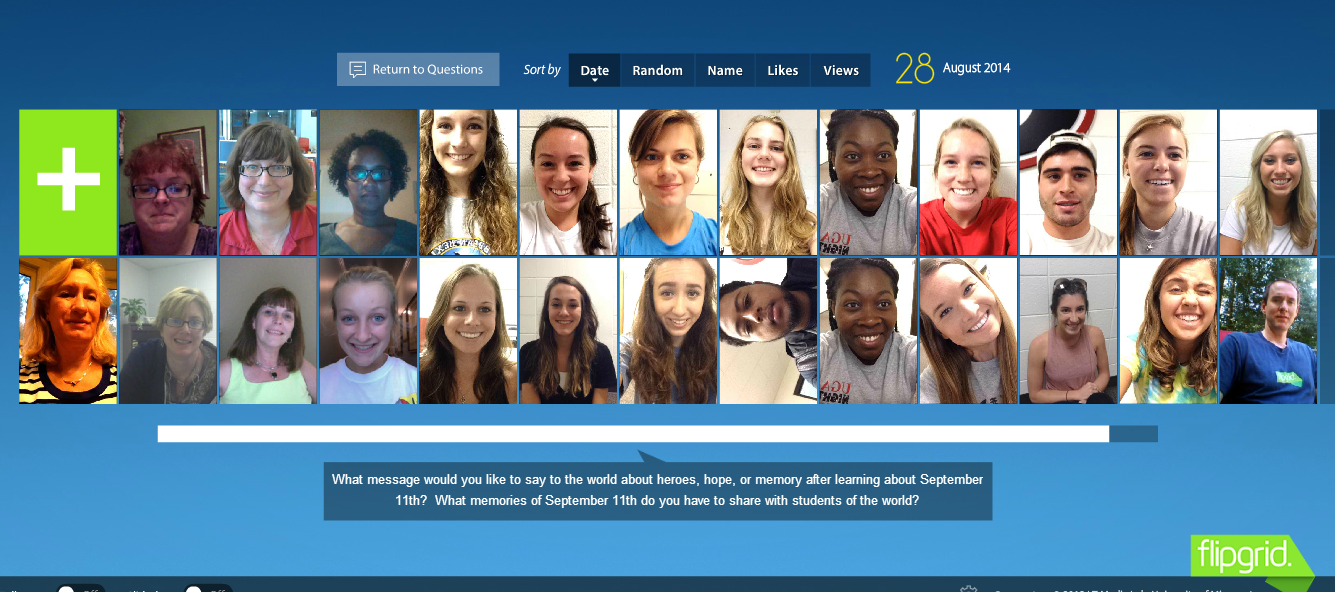
I’ve also been thinking a lot about global thinking, global collaboration, and global perspectives.  This year, I decided to make a Flipgrid well in advance of today.  Through social media, I’ve been sharing the Flipgrid in the hopes that multiple people will share their own perspectives of 9/11.  While there wasn’t an overwhelming response to share stories, the stories that were shared were powerful.  The students in Gretchen Thomas’s class shared their own memories of being in elementary school at the time.  These stories included very personal connections to the tragedy such as family members who were in New York on the day of the tragedy and a student coming into New York on a plane from another country and being diverted to Canada.  Several librarians stepped up to share stories as well.  Beth Miller of Georgia shared her story of working in the World Trade Center during the bombing in the 1990’s and how she had family and friends who were in the towers on 9/11.  Her family made it but several friends did not.  Elissa Malespina of New Jersey shared the story of her husband being in New York on 9/11.  He was on one of the last trains coming into the city.  It was chilling to think how many people have been affected by 9/11 in very personal ways.  Even if you don’t have a personal connection, there are many stories about where people were when the tragedy happened.  I wish that I could talk about every story on this Flipgrid because each one is meaningful in its own way.  Please take time to listen to these stories and feel free to add your own.

September 11 (25)

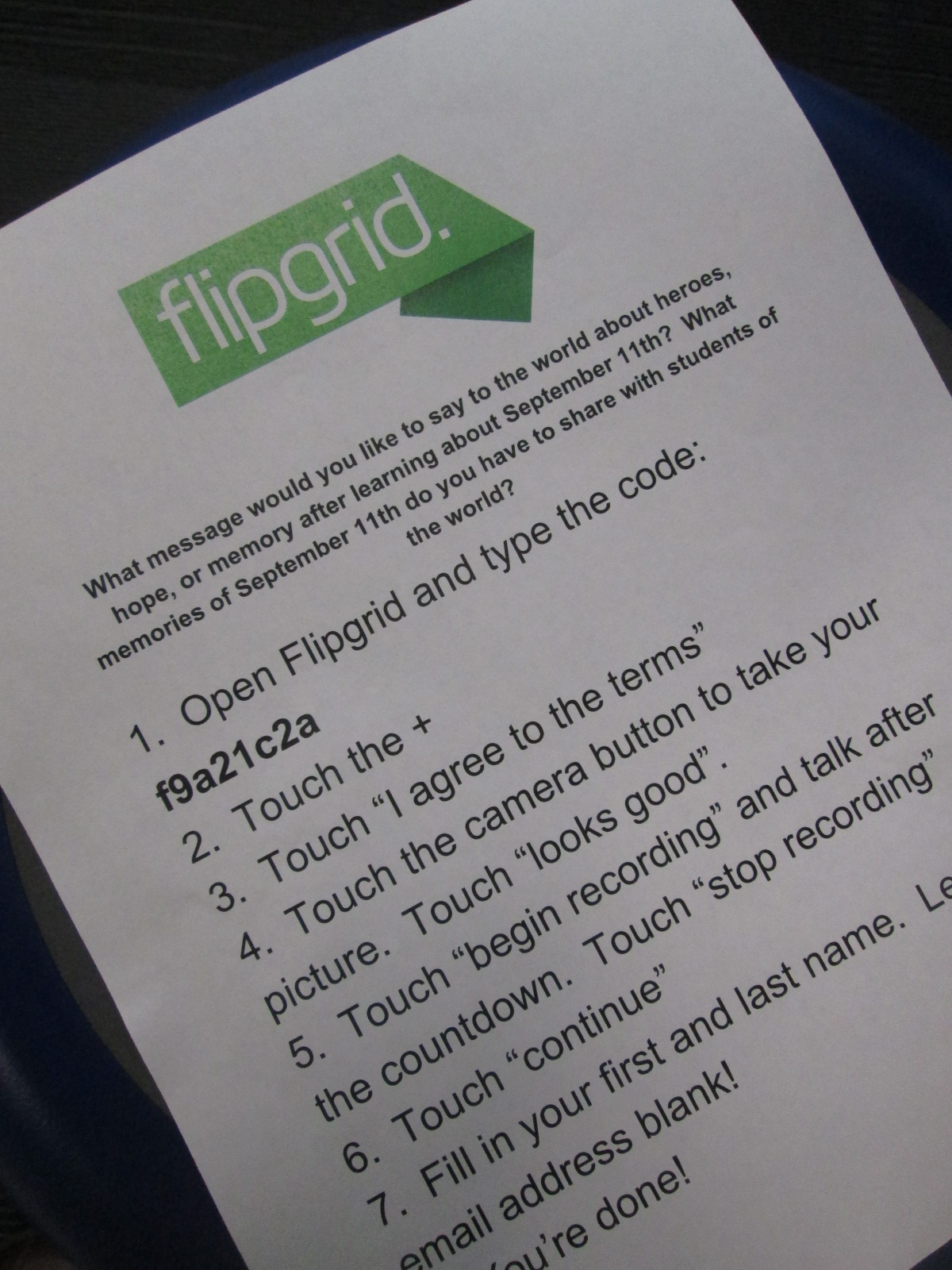
This Flipgrid was a part of the pathfinder but it was also a place that students recorded their own thoughts at the end of the day.  Students spent some time reflecting in classrooms.  Then, they came out into the 5th grade hallway with iPads to record their reflections on the Flipgrid.  Another of Gretchen’s UGA classes came to assist with this process.  I had instructions typed up with the Flipgrid code and we got as many students recorded as possible at the end of the day.  Students loved collaborating with students from UGA to create their videos.

I think that this project has such potential for a global collaborative project.  What would it be like if students in another country shared the tragedies taking place in their own countries?  What would happen if our students in the  US considered how they could respond to the tragedies taking place in other countries?  What are people’s perspectives on 9/11 from other countries around the world?  What do everyday heroes look like around the globe?

My hope is that this project can continue in some way this year.  If it doesn’t, I hope that next year’s layer that gets added on is developing a more global perspective on tragedies around our world and how we respond to those tragedies as a global society.


Our 1st #3dprinting Project of 2014-15: Native American Hopes and Dreams stamps

native american stamps (15)

Fourth grade has launched into an incredible project for the 1st quarter of the year.  I’m so excited to be a small part of the project in the library.  In social studies, they are studying Native Americans.  Their standards include:

SS4H1 The student will describe how early Native American cultures developed in
North America.
a. Locate where Native Americans settled with emphasis on the Arctic (Inuit),
Northwest (Kwakiutl), Plateau (Nez Perce), Southwest (Hopi), Plains (Pawnee),
and Southeast (Seminole).
b. Describe how Native Americans used their environment to obtain food, clothing,
and shelter.

During this study, they are exploring the folklore of Native Americans through several folktales.  The brought them to the idea of a grade level dream catcher.  The beginning of the school year is a time full of hope.  It’s a time where students, teachers, and families set goals for what they hope to accomplish throughout the year, and many spend time writing about hopes and dreams.  The teachers in collaboration with the art teacher decided to design a project to capture the hopes of dreams of students in the form of meaningful symbols on a dream catcher.

native american stamps (1)

Working together, students will creative a massive dream catcher.  In art, they are designing symbols that represent their hopes for the year.  They are designing shapes that can be drawn in one continuous line.

native american stamps (2)


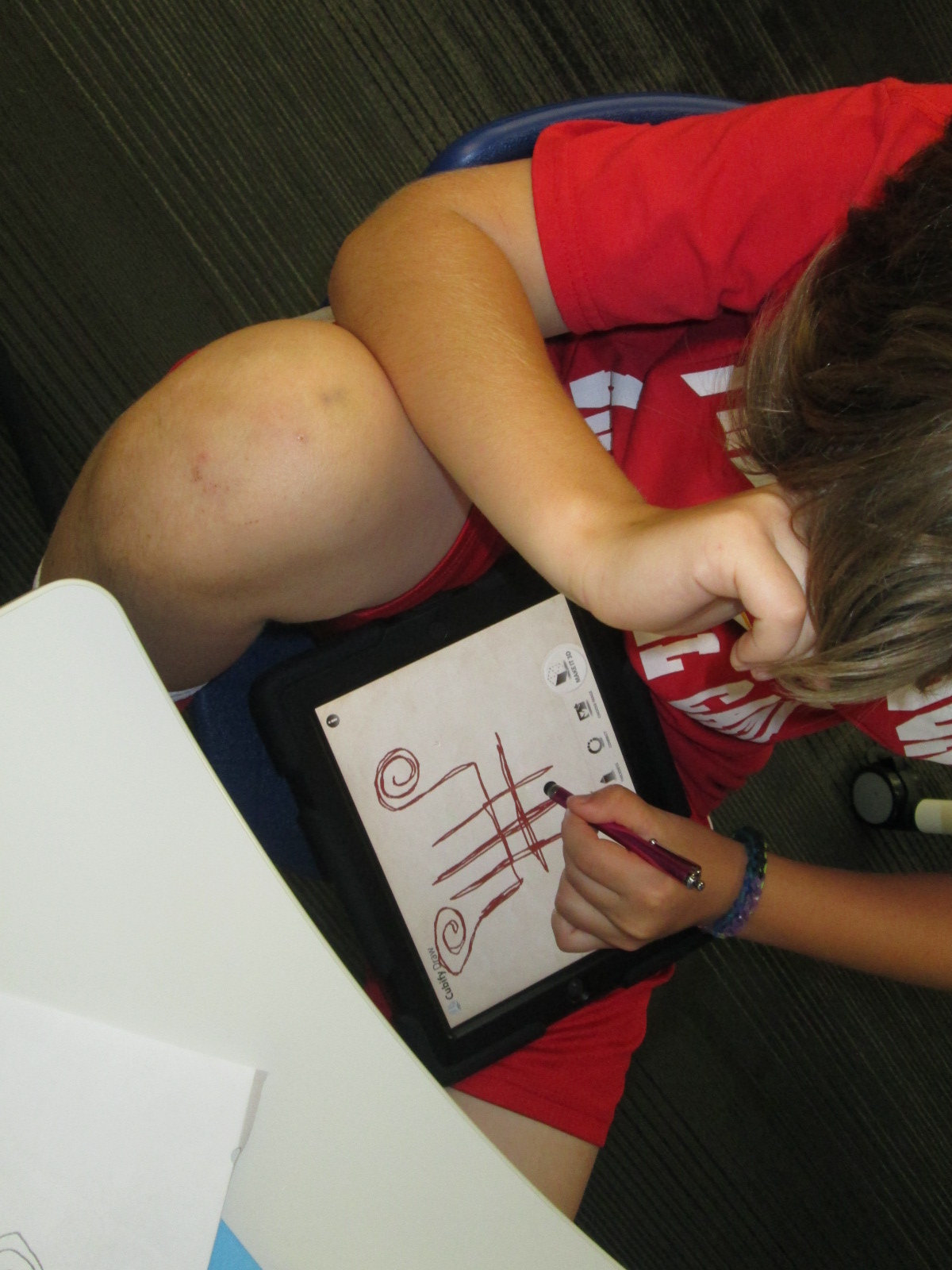
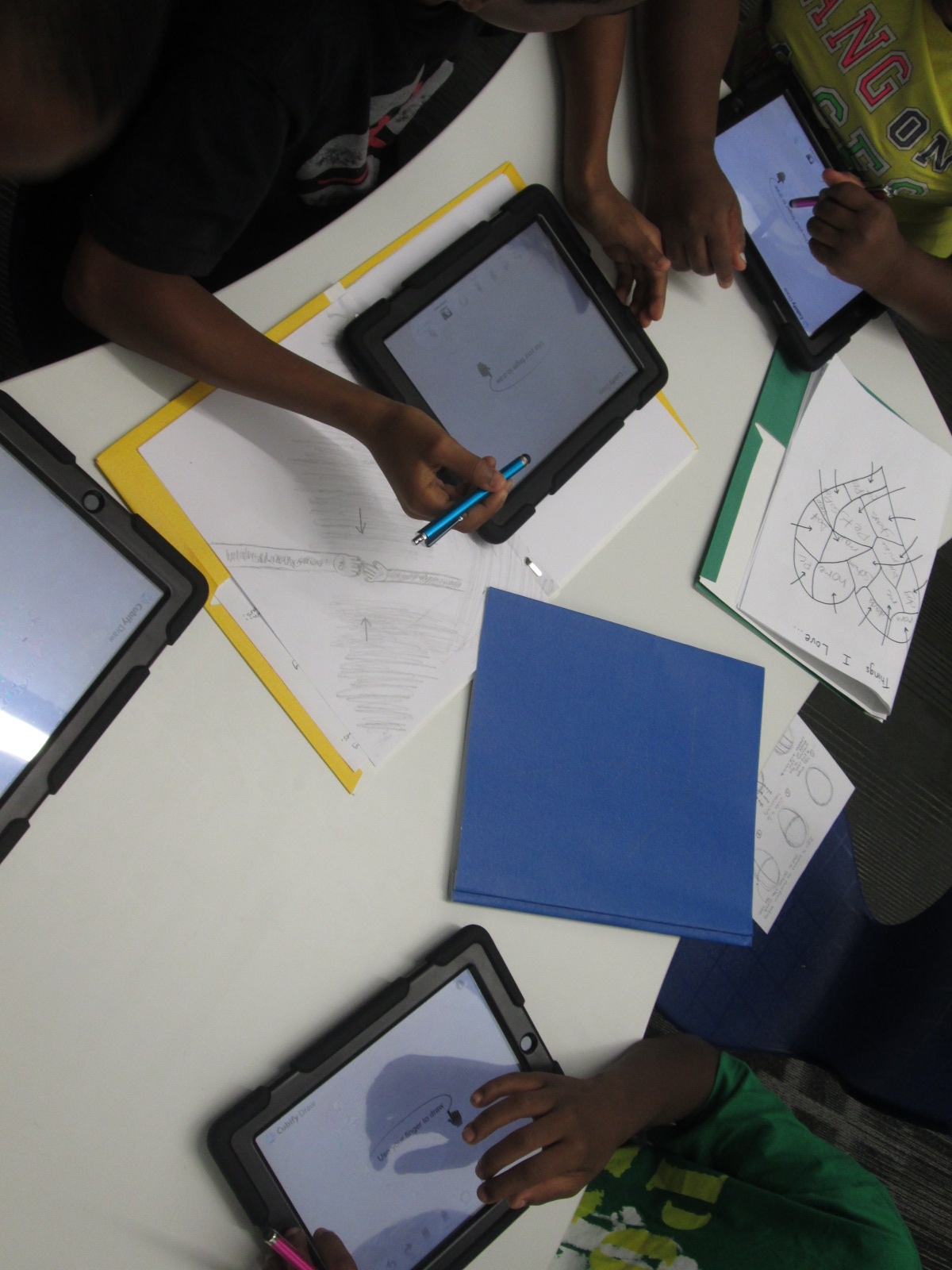
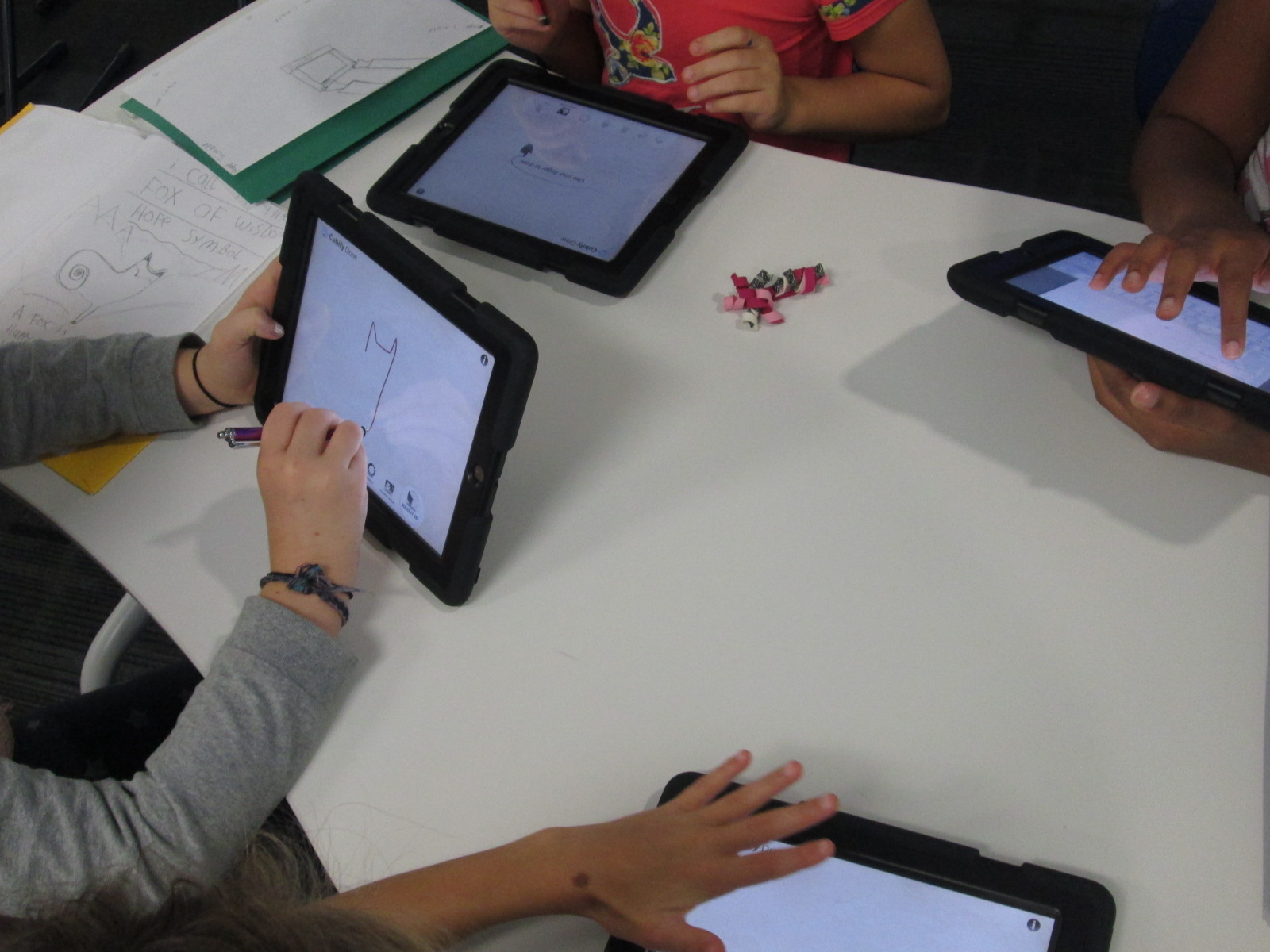
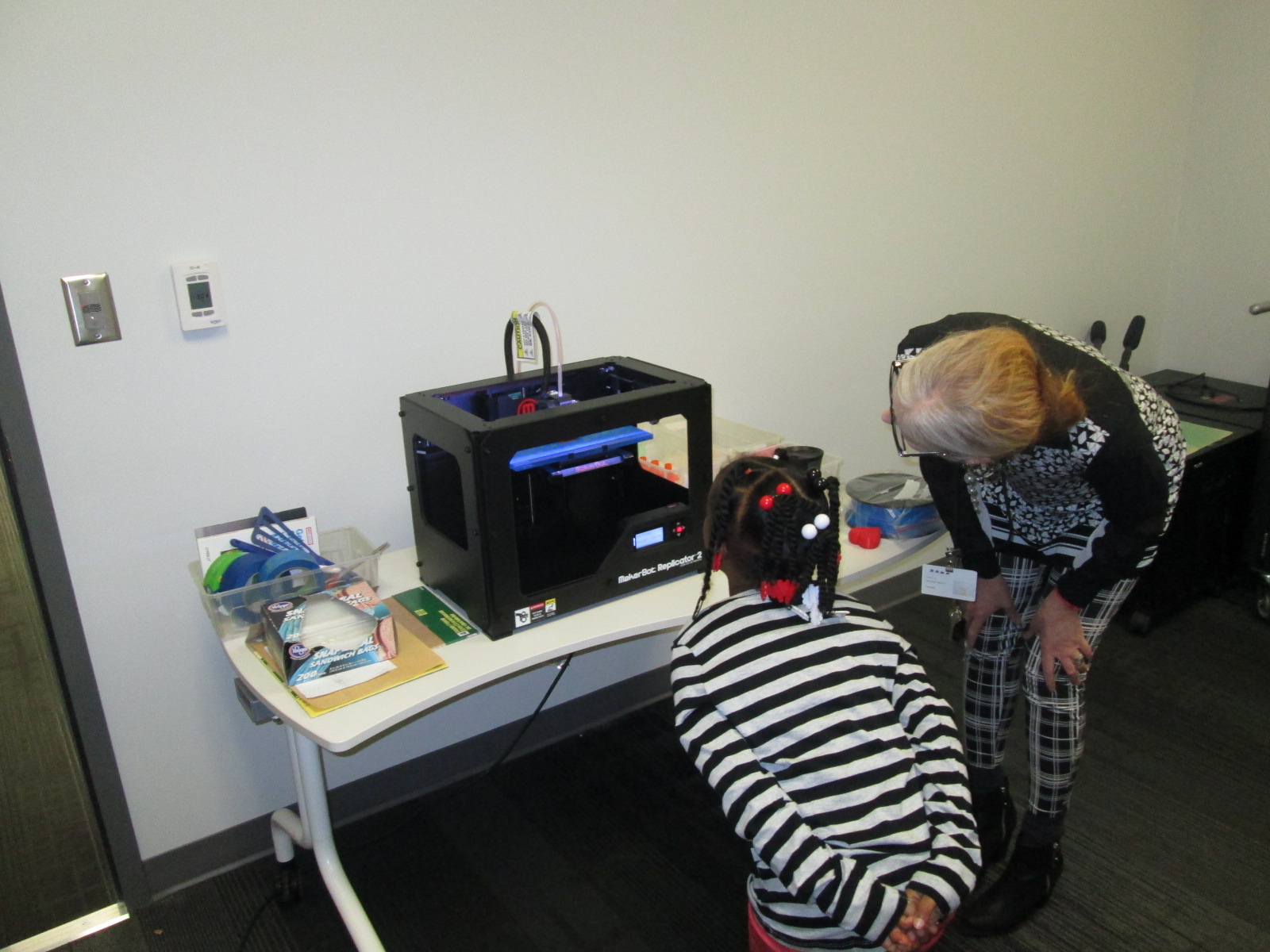
With me, students are using an iPad app called Cubify Draw which is designed by 3D Systems.  The app is very simple to use.  With your finger or a stylus, you draw one continuous line to create pretty much anything you can dream up.  You can adjust the thickness of the line and then touch “make 3d”.  The shape automatically turns 3D and you can adjust the height and thickness.  Once your design is ready, you can email the file to a central location to prep for 3D printing.

native american stamps (10)

For the lesson in the library, I gave a very brief intro to the app and shared some tips that I discovered through my own tinkering.  Big open swirls seem to print better than lines that are close together.  The shortest height and thickest line tends to print best.

native american stamps (4)

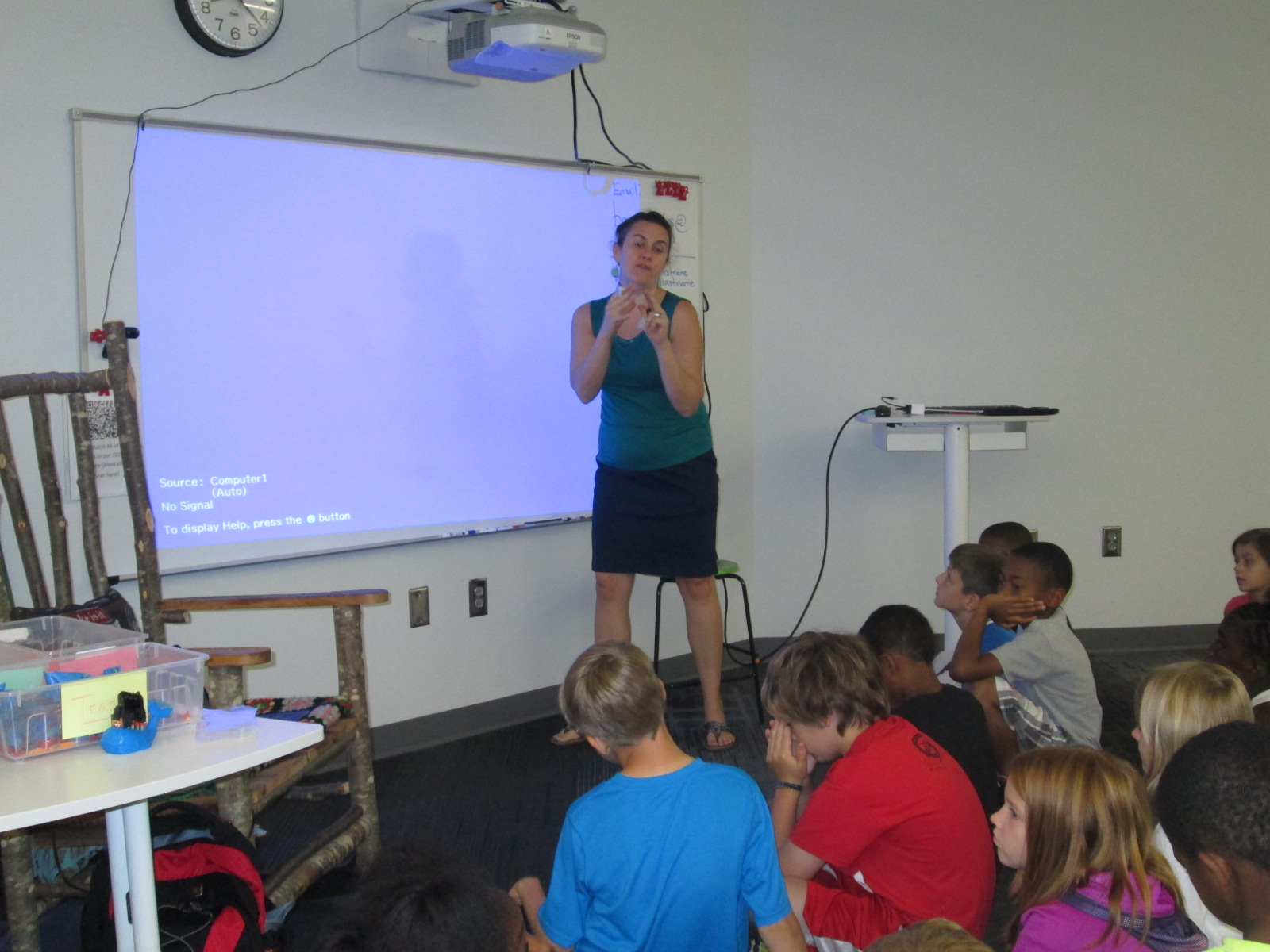
Mrs. Foretich, our art teacher, passed out the paper designs students made in art and gave students another opportunity to make adjustments to their designs and practice tracing the design with their finger.  I passed out iPads and the tinkering began.  Most students made several designs until they got the design just the way they wanted it.  Mrs. Foretich and I walked around and conferenced with students about adjustments they might need to make to their designs as well as helped troubleshoot problems.  Students emailed their designs to me with their teacher name and first name in the subject line.

native american stamps (5)

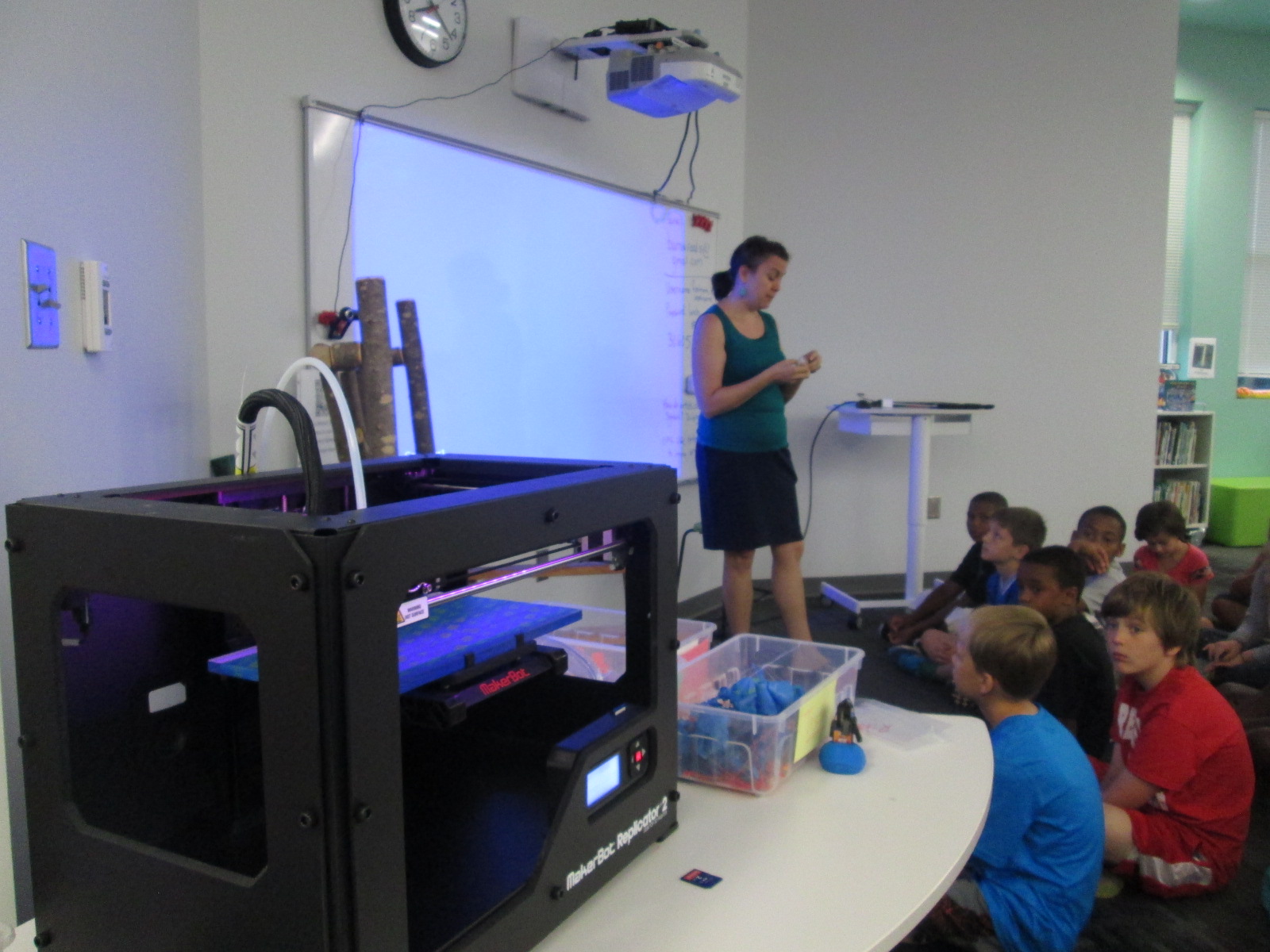
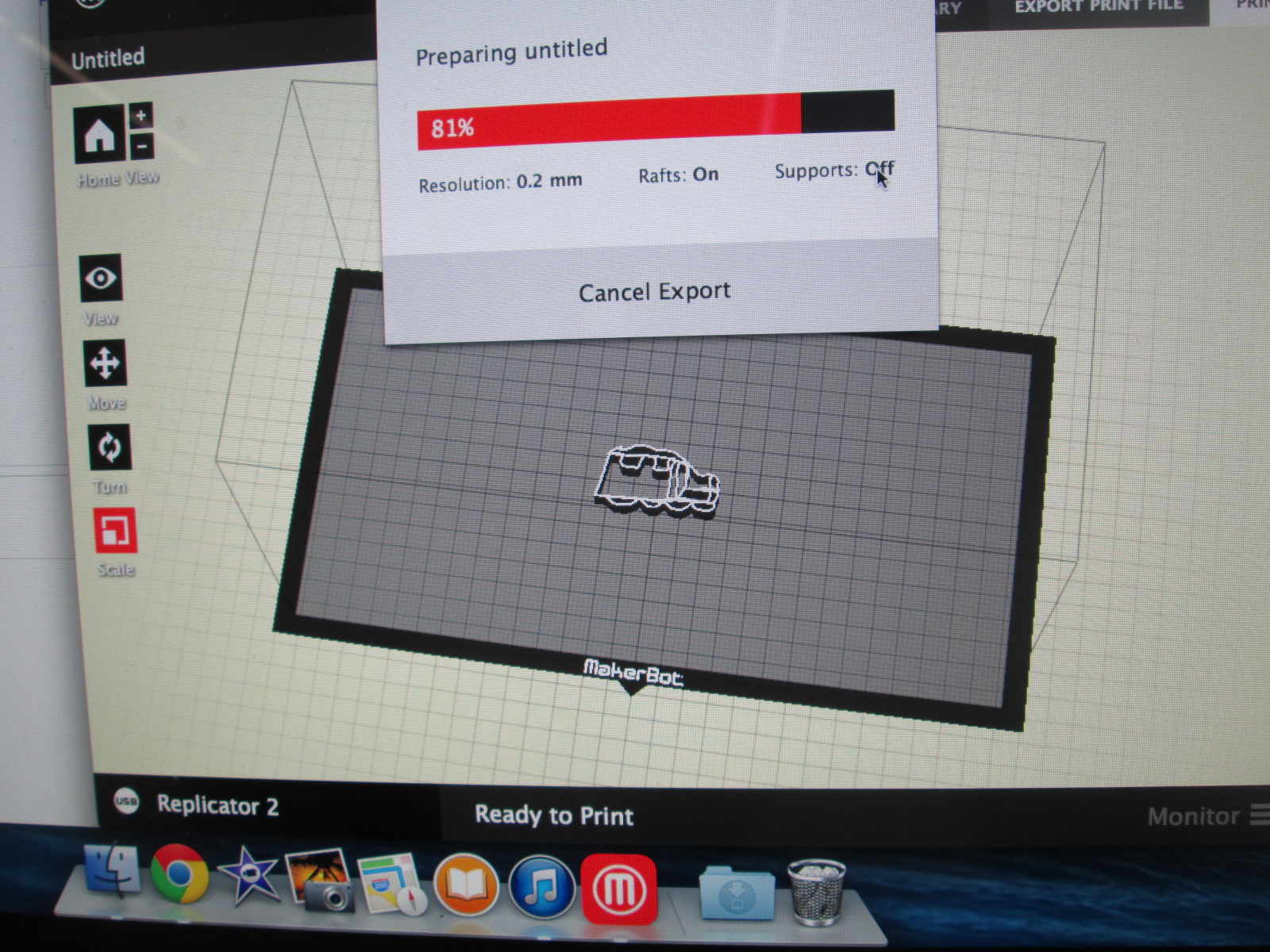
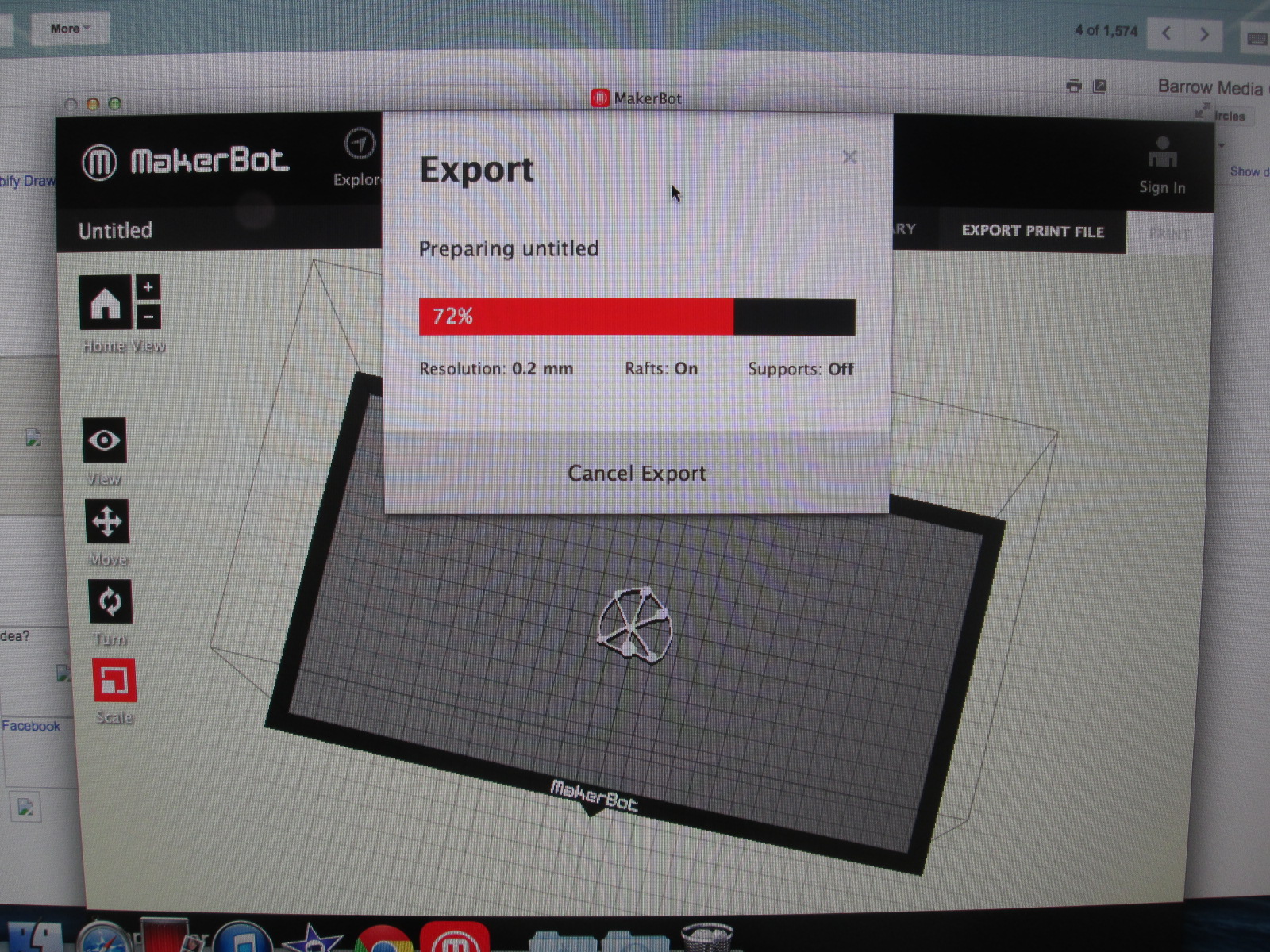
We are doing this lesson with the entire 4th grade, so that makes for roughly 60 designs.  Each design has to be imported into Makerware, reduced in size, and exported as a file for our Makerbot Replicator.  These files are being placed onto SD cards.  To speed up the file prep progress I used multiple computers and multiple SD cards.

native american stamps (12) native american stamps (11)

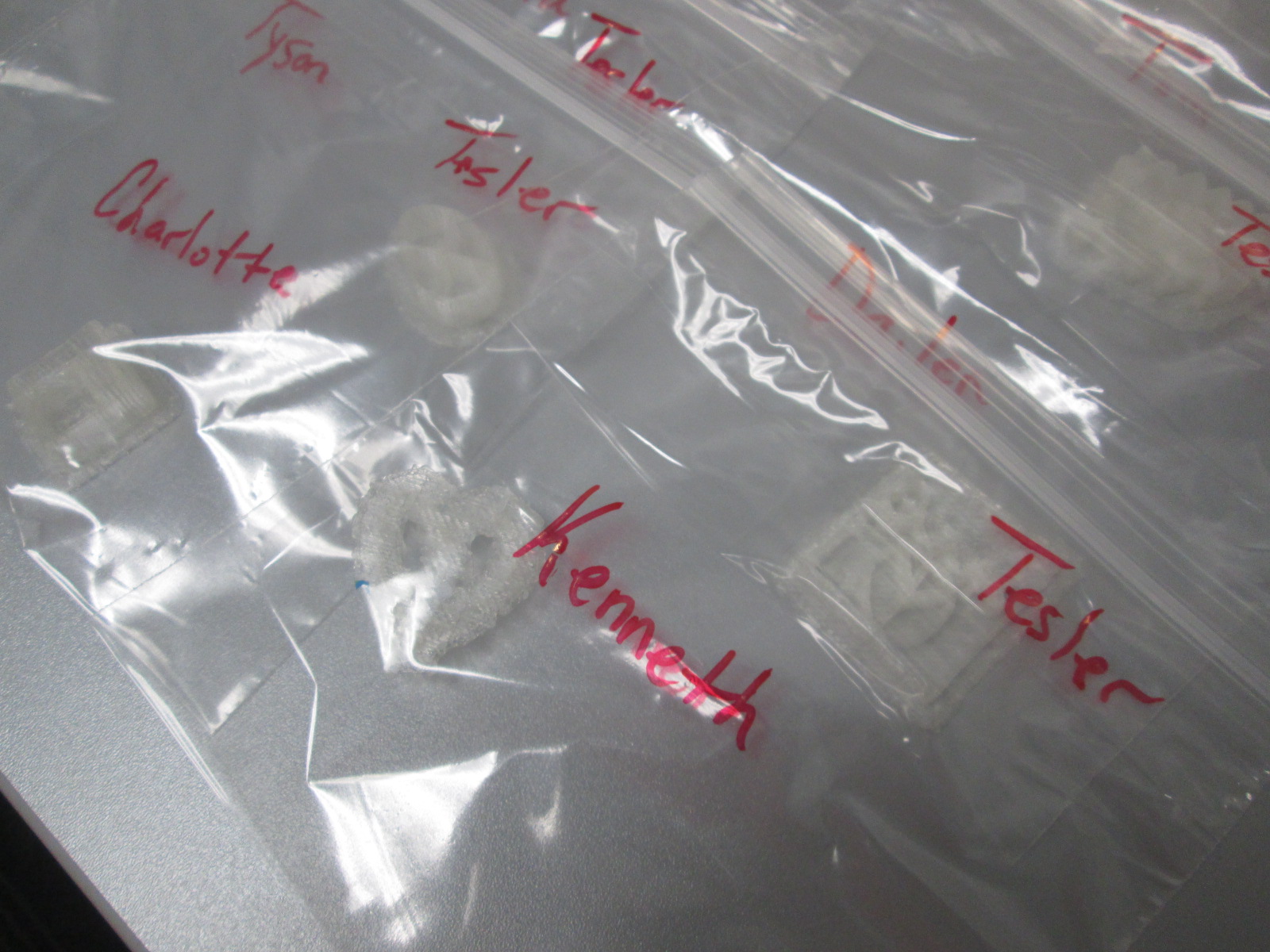
Then, the printing began.  Print after print is now running in the library.  It took about a day and half to print the first class batch.  Now I have 2 more to go.  Each student print is being placed in a ziploc bag with the student and teacher name on the bag for easy distribution.

native american stamps (14) native american stamps (13)

The next step will be for students to create a vessel out of clay in art.  They will use their 3d stamp to press designs into their vessel.  All of the vessels will hang from  the grade level dream catcher, including vessels designed by all of the teachers involved in the project.  This will serve as a symbol for the year to represent our connectedness and our common goal of working together to achieve many hopes and dreams this school year.  Our vessels and dream catcher will hold these safe throughout the year.

Thank you Mrs. Foretich and the 4th grade team for an incredible project for our students that allows them to dream, tinker, create, and share.


2014 SLJ School Librarian of the Year Finalist

An incredible honor happened this week.  I was named a finalist for the 2014 School Library Journal & Scholastic School Librarian of the Year.  My Twitter and Facebook feeds have been flooded with congratulations and I’ve received numerous emails and phone calls as well.  Being recognized is such an honor, but more importantly to me, recognitions like this highlight the powerful work that takes place in school libraries around the world who have librarians who are connected educators constantly staying on the cutting edge of innovation, advocating for students, and sharing their work for the good of libraries worldwide.  I stand tall with Michelle Colte, School Librarian of the Year, and Colleen Graves, co-finalist.

You can read the full SLJ story here.

Read about Michelle Colt.

Read about Colleen Graves.

Read about me.

Here’s the official press release.

School Library Journal and Scholastic Announce Winners of the Inaugural School Librarian of the Year Award Library Media Specialist Michelle Colte is recognized for her innovative use of technology and exceptional

NEW YORK, NY – September 3, 2014 – School Library Journal today announced the winners of the first annual School Librarian of the Year Award, which honors K–12 school library professionals for outstanding achievement and the exemplary use of 21st- century tools and services to engage students toward fostering multiple literacies. Michelle Colte of Hale Kula Elementary School in Wahiawa, HI, was named the winner and will receive a $2,500 cash award and $2,500 worth of materials of her choosing from Scholastic Library Publishing, the award’s founding sponsor. Additionally, Andy Plemmons of David C. Barrow Elementary School in Athens, GA and Colleen Graves of Lamar Middle School in Flower Mound, TX, were both recognized as finalists and will each receive $500 in Scholastic materials of their choice. All three school librarians are currently featured in the September 2014 issue of School Library Journal, available now with winner Michelle Colte as the cover story, and on SLJ.com.

A panel of school librarians, School Library Journal editors and other industry professionals from Scholastic and the International Society for Technology in Education (ISTE) determined the winners of the award. All nominations were judged based on several criteria, including creativity in programming, exemplary use of technology and integration of library resources with curricula.

To learn more about the School Librarian of the Year Award and its honorees, visit http://www.slj.com/librarianoftheyear.

Quotes about the School Librarian of the Year Award:

Michelle Colte, 2014 School Librarian of the Year, stated, “I believe that being a librarian is about so much more than providing access to information and promoting literacy – it’s about helping people make connections and share knowledge within the community and beyond. I am honored to be named School Library Journal School Librarian of the Year, and I hope that my passion for learning will inspire others in my field to push themselves, their fellow educators and students in their schools creatively.”

Kathy Ishizuka, Executive Editor of School Library Journal, said, “This inaugural award is a unique opportunity to highlight the work of school librarians who help K–12 students gain critical literacy skills, discover great literature, and engage personal, creative expression, using technology. School Library Journal is pleased to honor these exemplars of the profession, underscoring the important role of librarians and media specialists in fostering future generations and bettering the greater community.

Allison Henderson, Vice President and General Manager of Scholastic Library Publishing, shared, “It’s an honor to recognize and celebrate the innovative and dedicated work school librarians are doing to engage students, foster literacy and encourage lifelong learners through technology. Scholastic is thrilled to sponsor the School Librarian of the Year Award and we look forward to seeing how the winners, all of whom creatively and passionately have implemented exciting ideas in their schools, continue to inspire their students as well as their fellow school librarians.”

About the 2014 School Librarian of the Year Winner and Finalists:

2014 School Librarian of the Year Michelle Colte, who has served as the library media specialist at Hale Kula Elementary School in Wahiawa, HI for nine years, is a passionate advocate of integrating technology into instruction as well as building community. Her efforts and accomplishments have included:

  • Emphasizing the importance of playful learning through initiatives such as Hour of Code, where students learn the fundamentals of computer programming;
  • enhancing her library’s technological capacity by actively seeking out grants for netbooks and tablets;
  • working hand-in-hand with teachers to incorporate technology into instruction through the use of student-developed websites and fostering collaboration through Google Apps;
  • developing a sense of “ohana,” or family, in the library by regularly coordinating school events to bring together students, staff and parents;
  • understanding her school’s community, which predominantly serves military families and providing resources specific to their needs, both in the library and through its online portals; and
  • sharing best practices with other educators throughout Hawaii and nationally through social media and as a frequent presenter at tech and education conferences.

Finalist Andy Plemmons of David C. Barrow Elementary School in Athens, GA, aims to enrich classroom instruction with lessons and activities from his school’s media center program, focused on empowering students to experiment with new technologies. He continuously encourages students to use various apps and social media channels, not only to create content, but to share their creations with fellow classmates and the community. As a lifelong learner himself, Plemmons understands the importance of professional collaboration and often presents at conferences or webinars.

Finalist Colleen Graves of Lamar Middle School in Flower Mound, TX, established a Makerspace and introduced a series of Maker Monday workshops at her school where students have the opportunity to design and create during activities such as app-making. An early adapter of new technologies and programs, Graves shares her knowledge by organizing “lunch and learn” sessions where students and staff discover innovative strategies using programs such as GarageBand, Google Sites and more.

Each of the honorees provides a unique look into what a modern-day school librarian’s role is in today’s schools. To learn more about the winners and their accomplishments, visit http://www.slj.com/librarianoftheyear.


Goal 4: Supporting the Reading Habits and Curiosities of Students with Wandoo Reader

Wandoo Reader Kickoff (18)

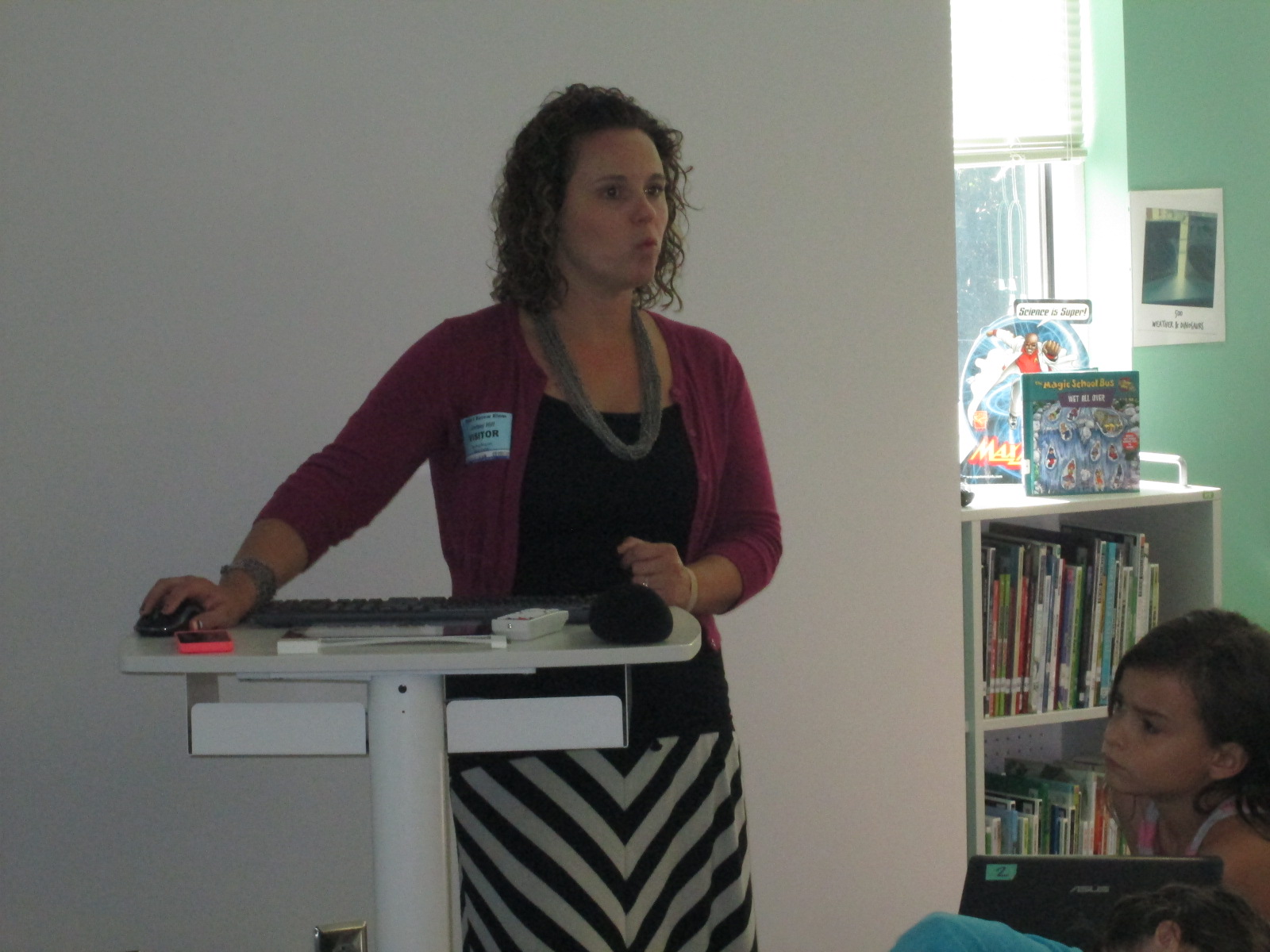
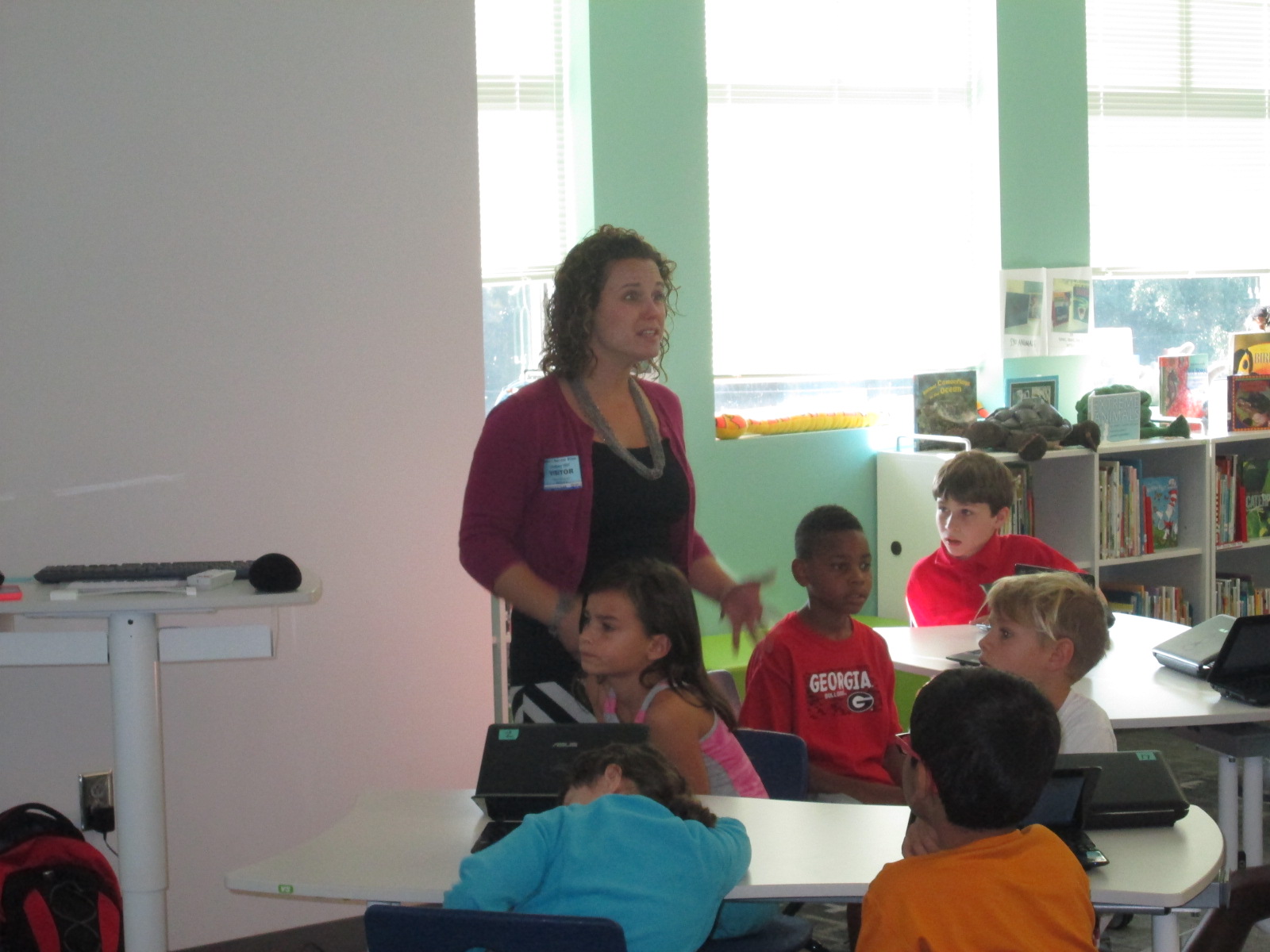
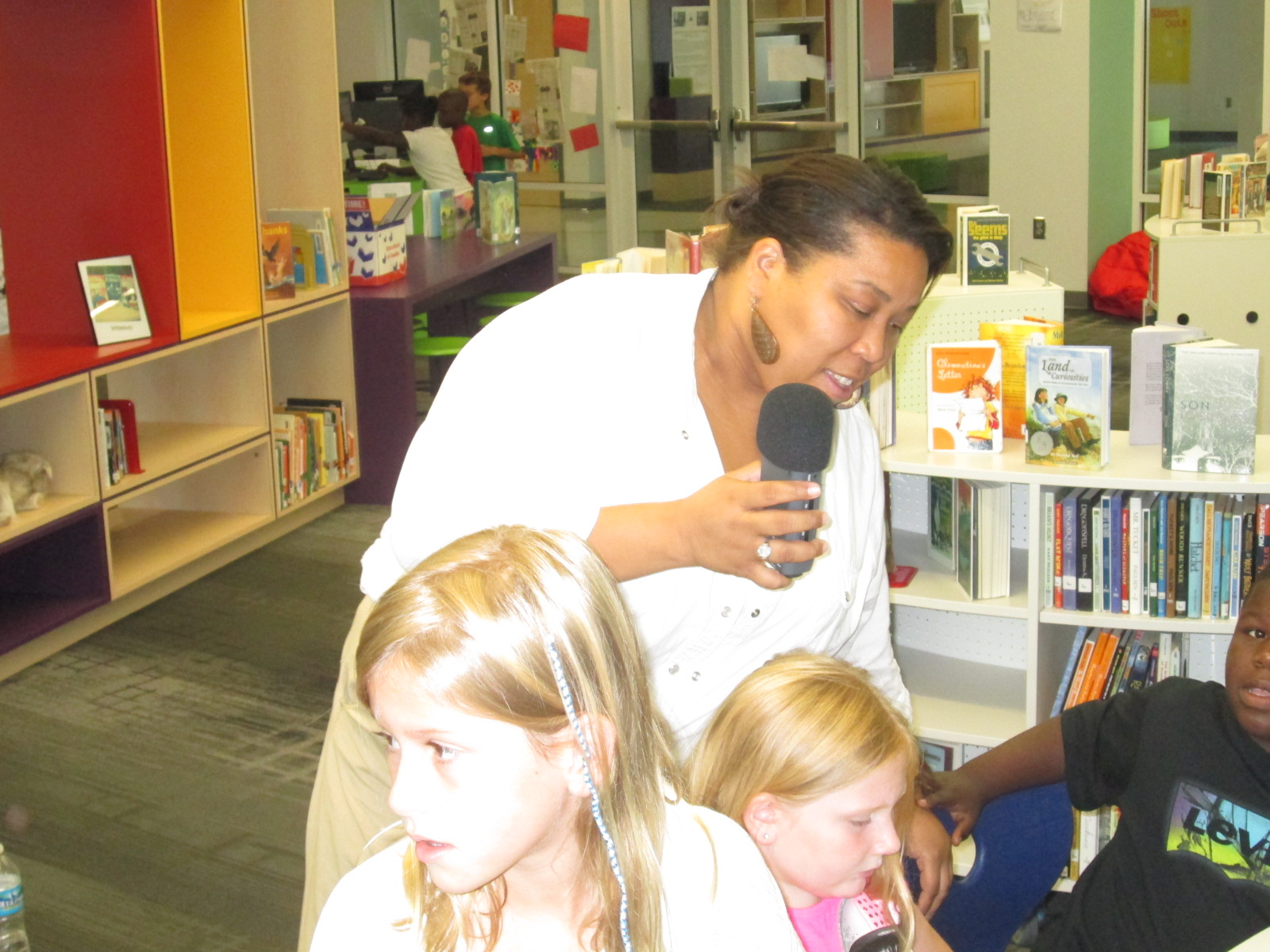
Lindsey Hill, educator superstar from Evanced Solutions, visited our library to help us with goal 4 for the library this year, “Supporting the reading habits and curiosities”.  In fact, this goal is so important that it is a part of our school improvement plan.  We believe that one of the best ways to become better readers is to read, read, read.  More importantly, we believe that finding books that we are interested in that match us as readers is an essential part of building stamina as a reader.  This year we are piloting a tool called Wandoo Reader to see how it supports us in tracking our reading habits and curiosities.  This tool is still in development for schools so we are figuring out what works well and what needs to be adjusted.

Wandoo Reader Kickoff (2)


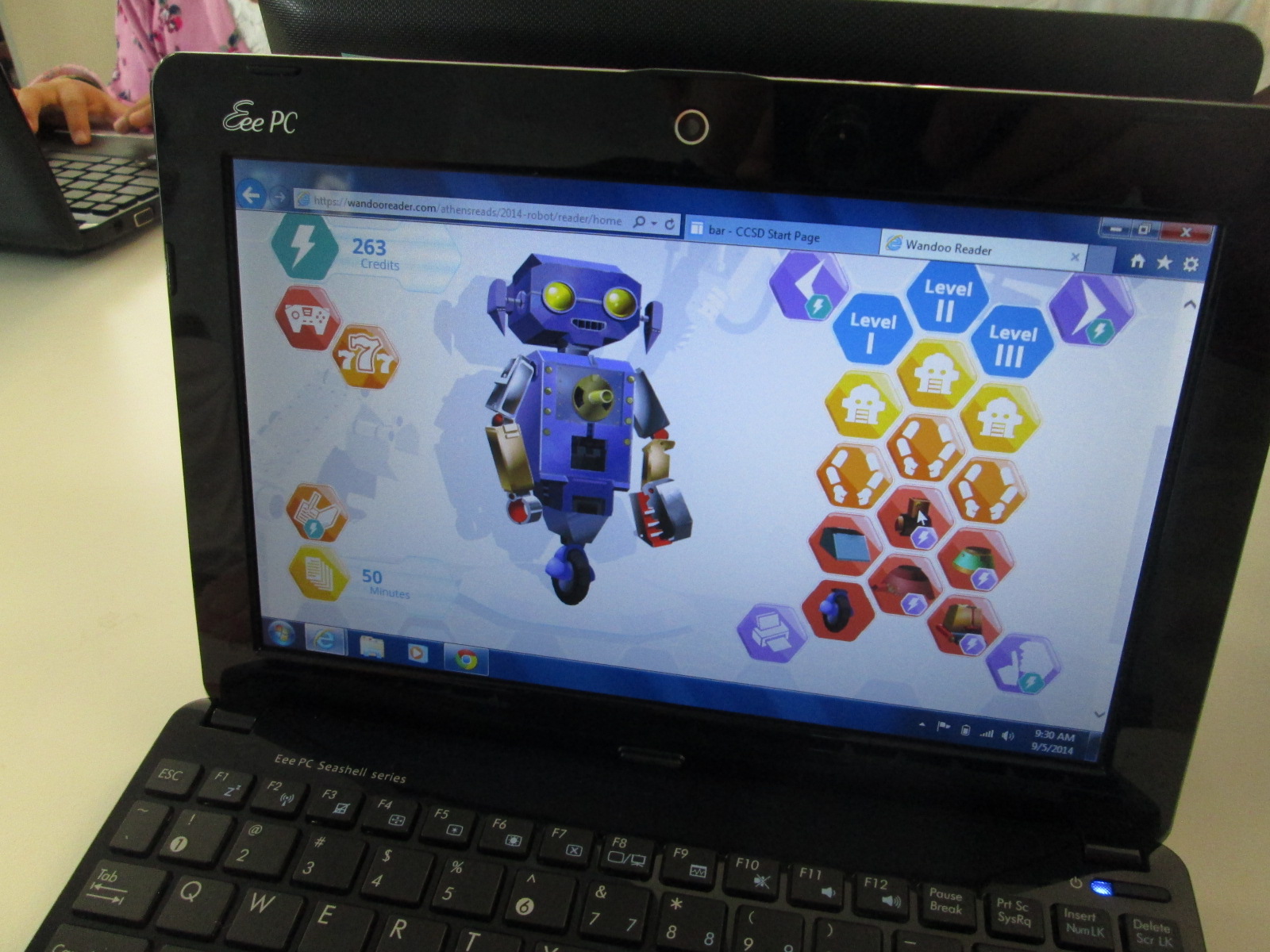
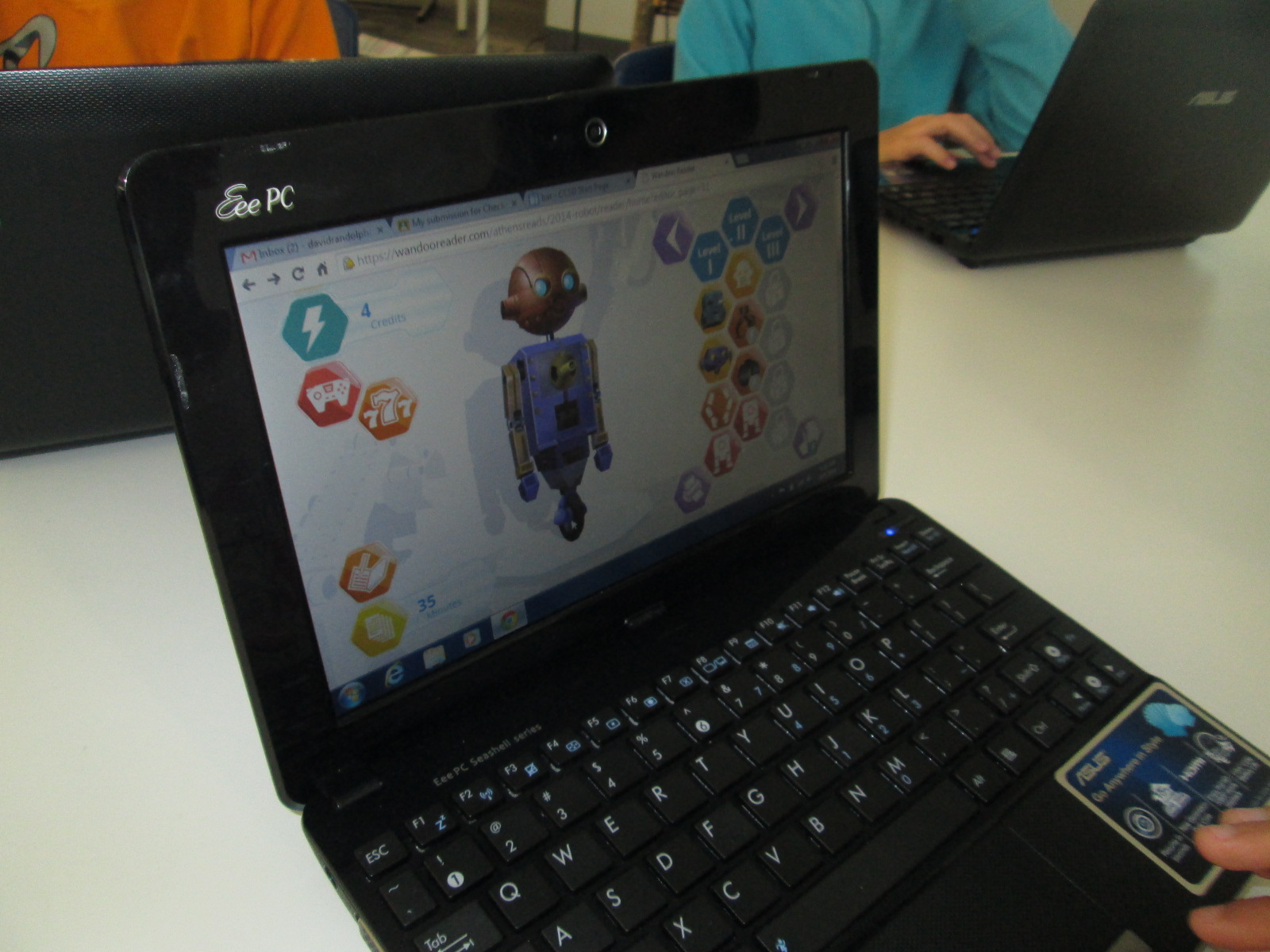
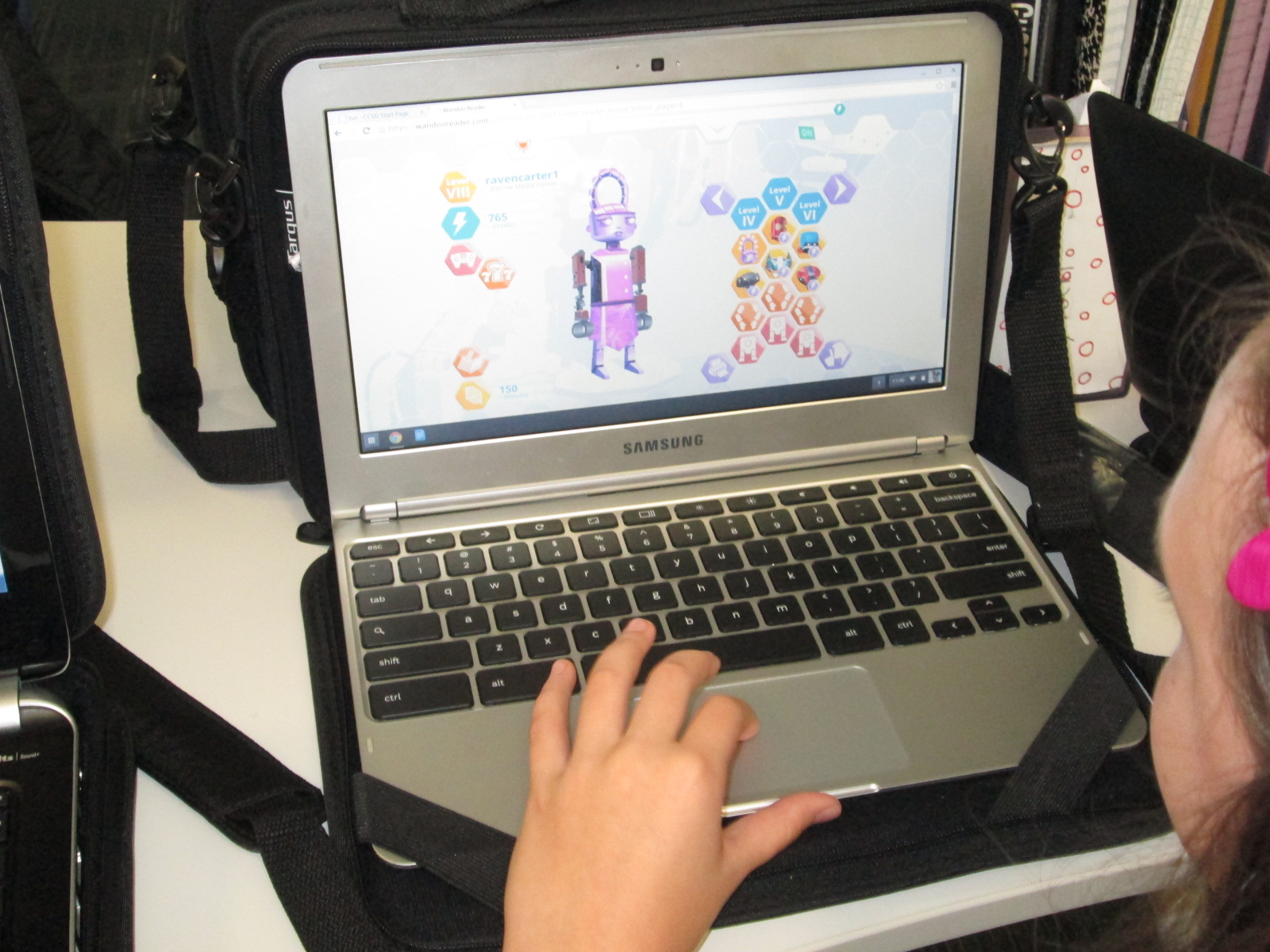
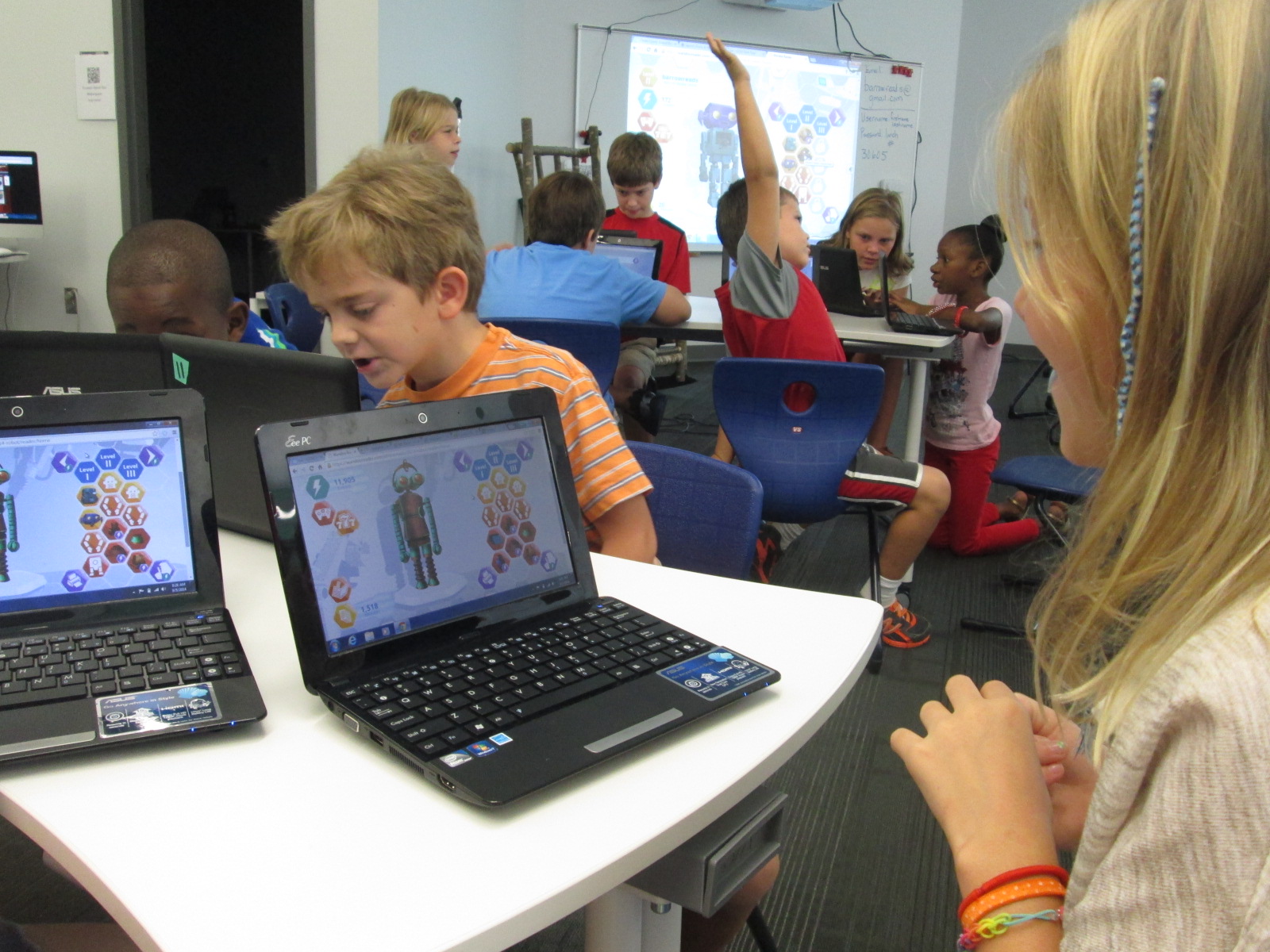
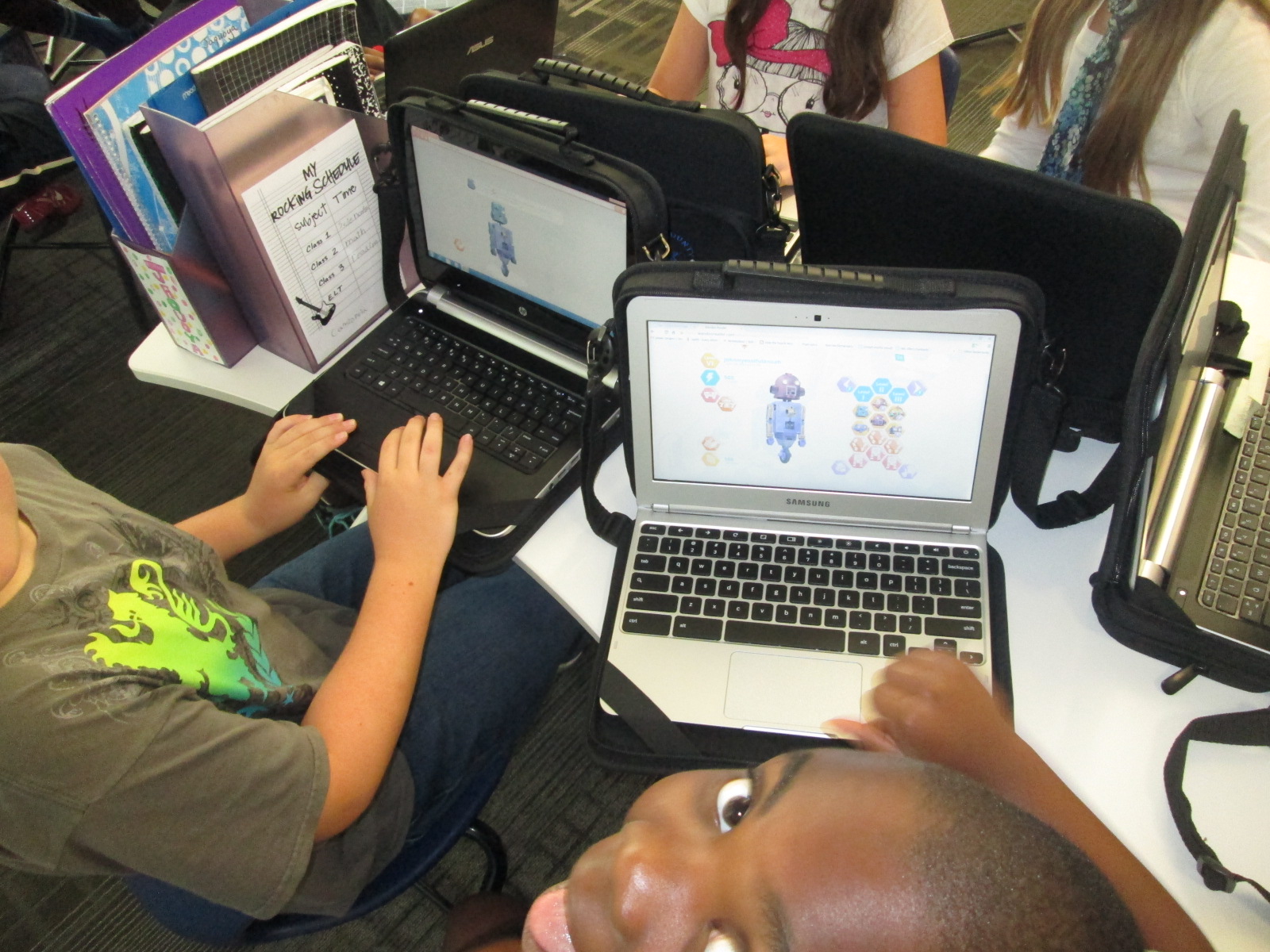
Wandoo reader is a “game and a reading tracker”.  It follows the story line of a robot who stumbles into a library but is low on power.  In order for the robot to power up, the robot needs kids to read books.  Students read books or really anything of their choosing.  In the online reading log, students submit the reading material title, amount of time read, and whether or not they finished reading the material.  Each time they log reading, they earn credits which allows them to purchase parts to the robot.  There are over 8,000 combinations of parts, so it’s pretty difficult for students to ever be truly “finished”.  Wandoo Reader also allows the administrator to setup incentives or prizes as well as secret codes for completing various challenges.

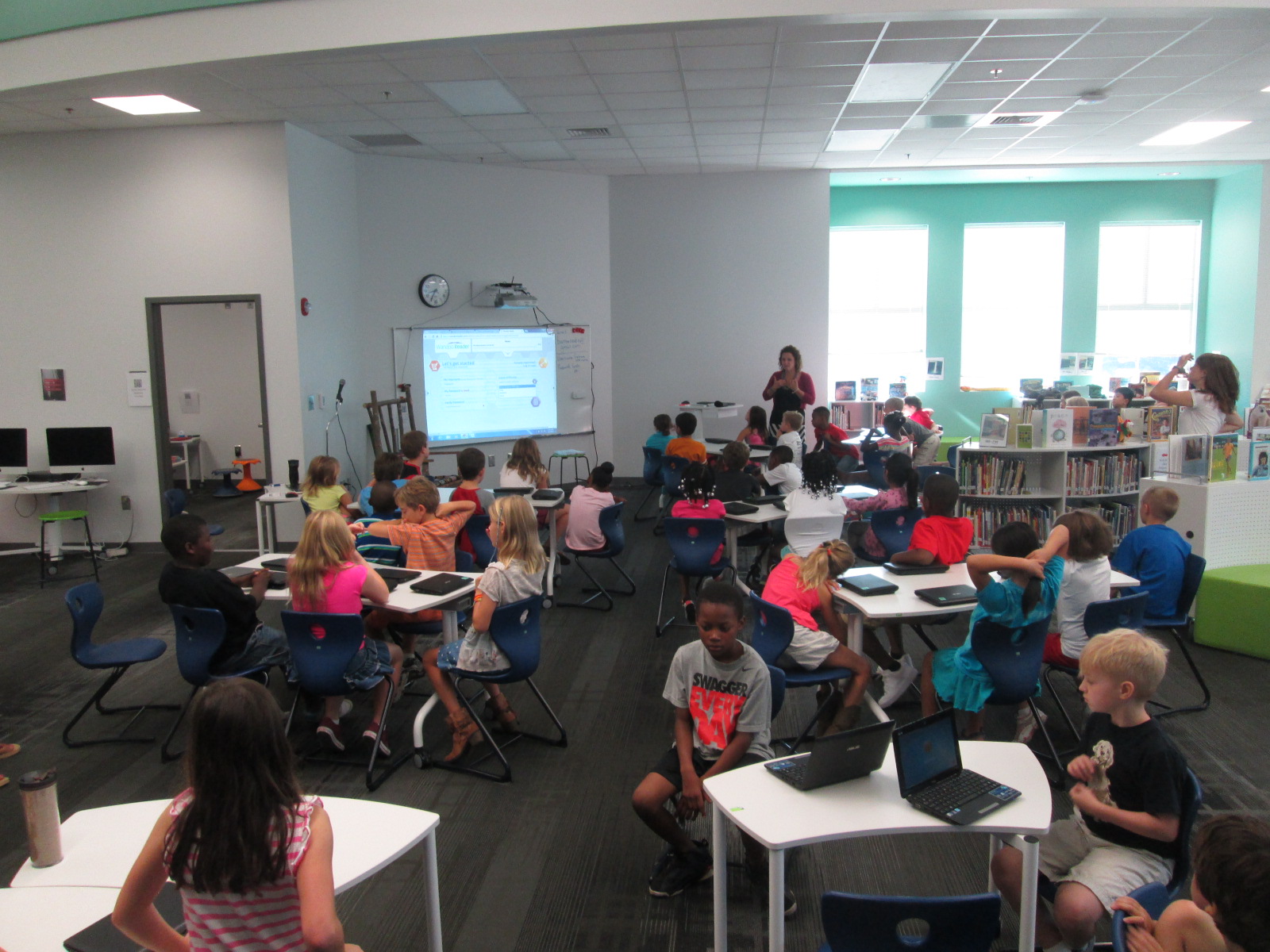
Our goal for Lindsey’s visit (and next week) was to get all of our 3rd-5th graders setup with accounts in Wandoo Reader.  Lindsey and I met with many classes.  I kicked off each session by sharing the news with students that we are the only school in the world currently using Wandoo Reader.  I wanted to emphasize the potential in this.  I brought in a conversation about empowering student voice in this opening (goal 3 for this year).  Students have an opportunity to test out a tool, figure out what they love, get frustrated with what doesn’t work, and point out what they just don’t like.  Each observation or failure that they make goes directly to Evanced Solutions for consideration in improving Wandoo Reader for future schools, so our student voice really matters and makes a difference.

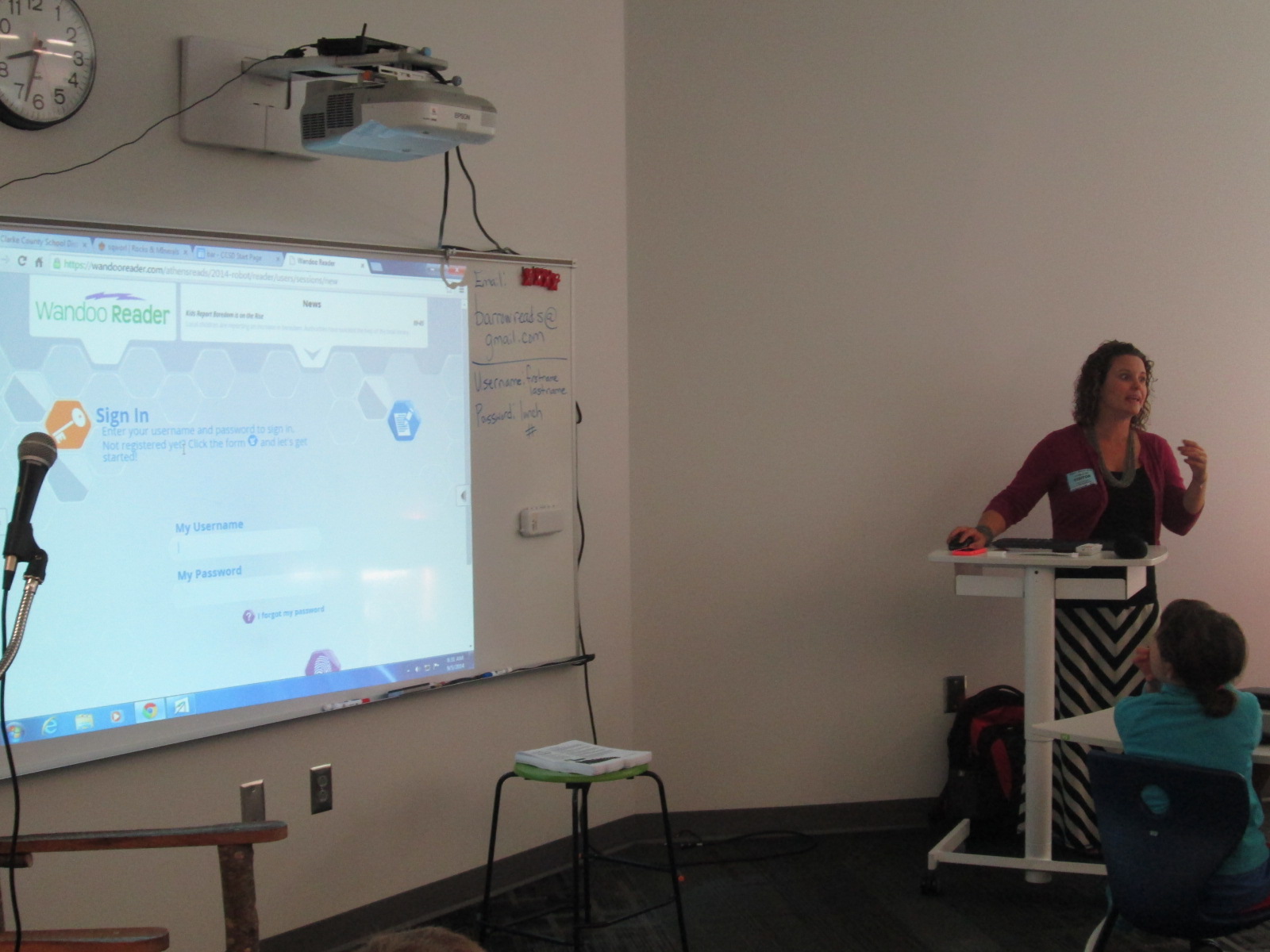
Lindsey did a demo of what Wandoo Reader would look like once students registered.  She show them how to log their minutes, how to earn credits, and how to purchase a robot part.

Wandoo Reader Kickoff (11) Wandoo Reader Kickoff (12)

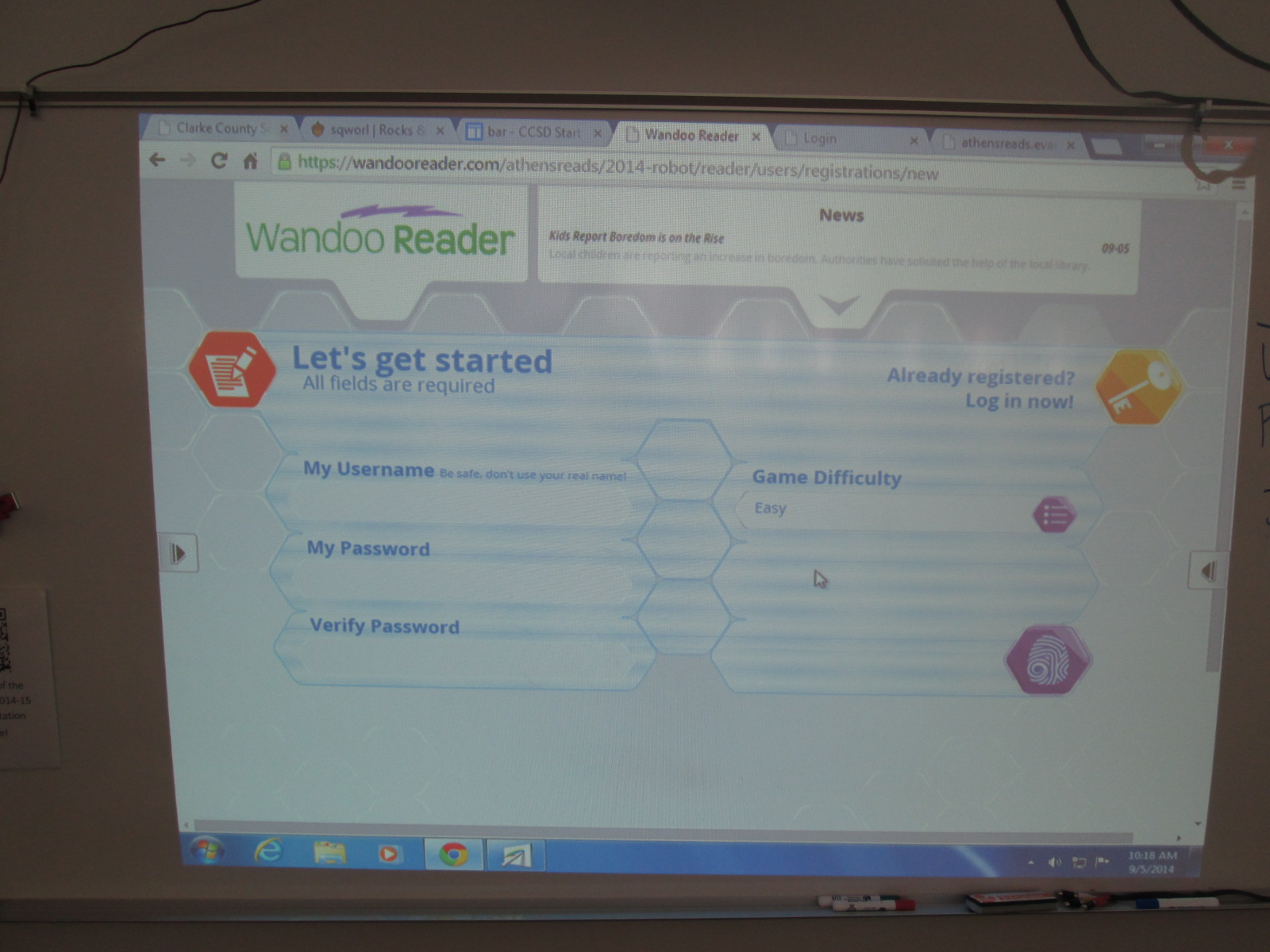
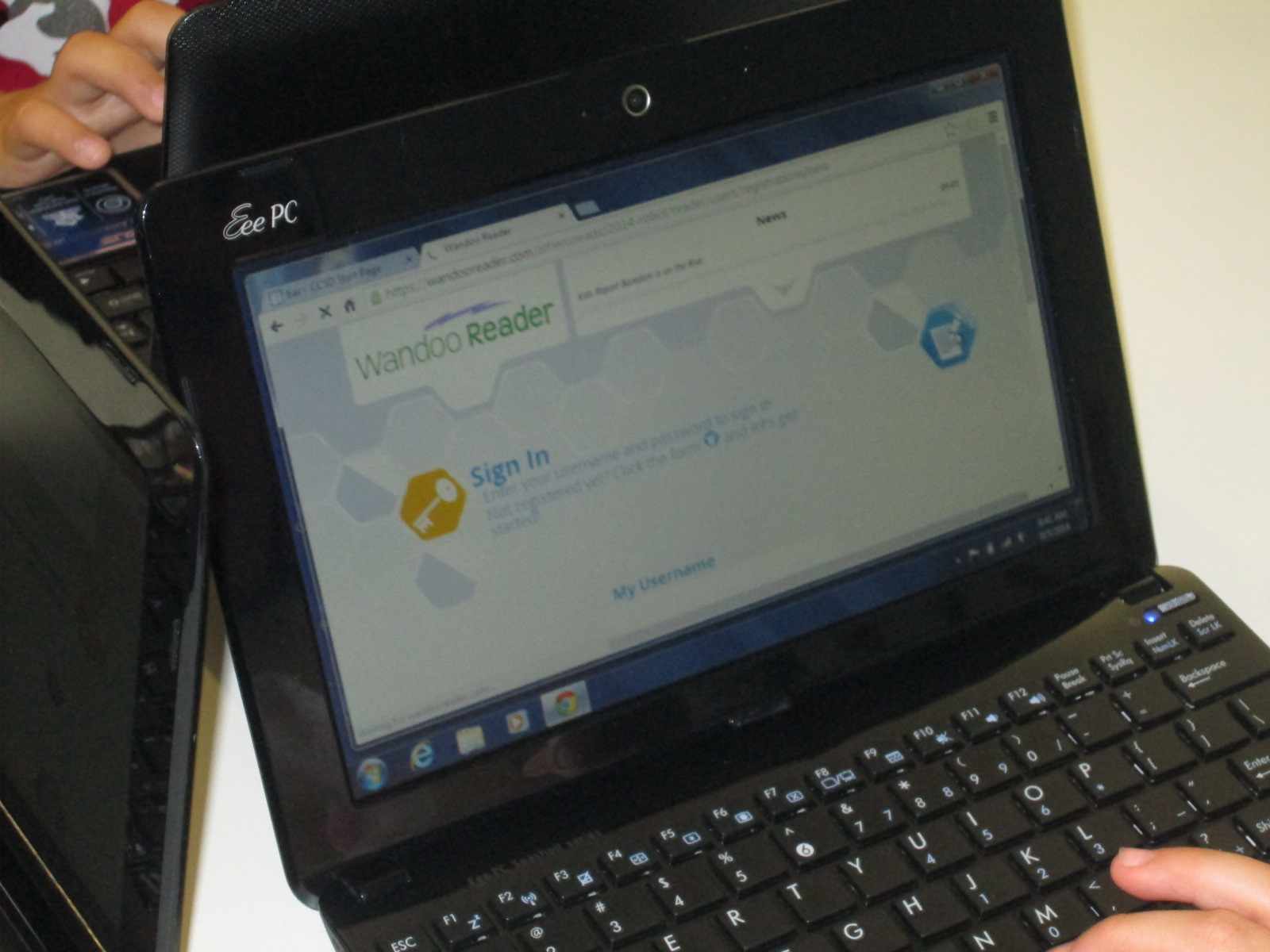
Then, we started the long process of getting students registered.  It didn’t take us long to discover that this process is not quite ready for schools and will need some adjustment.  Each student had to create a username, password, confirm password, and select the difficulty level for the game.  Then, students had to type my email address to send an email confirmation.  Each email had to be clicked on to activate each student account before they could proceed.  Bulk uploading is already in development and it is essential for schools to have this feature because the wait time students felt while I clicked on each email was too long.

Wandoo Reader Kickoff (20) Wandoo Reader Kickoff (25)

Once students have accounts activated, Wandoo Reader takes them through a tutorial which reveals the story line of the game and shows students the different buttons they will click to log reading, purchase parts, build a robot, etc.  This tutorial is text-only for now.  Some students read every word, others clicked through without reading at all, and others really tried to read but got frustrated without the support of audio or an adult’s help.  Again, this was an area where students and teachers offered feedback about their experience and observations and would really love to see an audio feature or simpler text.

Wandoo Reader Kickoff (8)

After the tutorial, students come to another screen where they have to put in their name, birthday, zip code, gender, and select their teacher.  There was a lot of learning here for students because it revealed that most students had no idea what a zip code is.  It was a great lesson, but it did slow down the registration process.  Our suggestion for this page was to cut out much of this page.  The essential information is the student name and the teacher.  These are the two pieces that will be used the most when running reports for data from Wandoo Reader.

Wandoo Reader Kickoff (16)

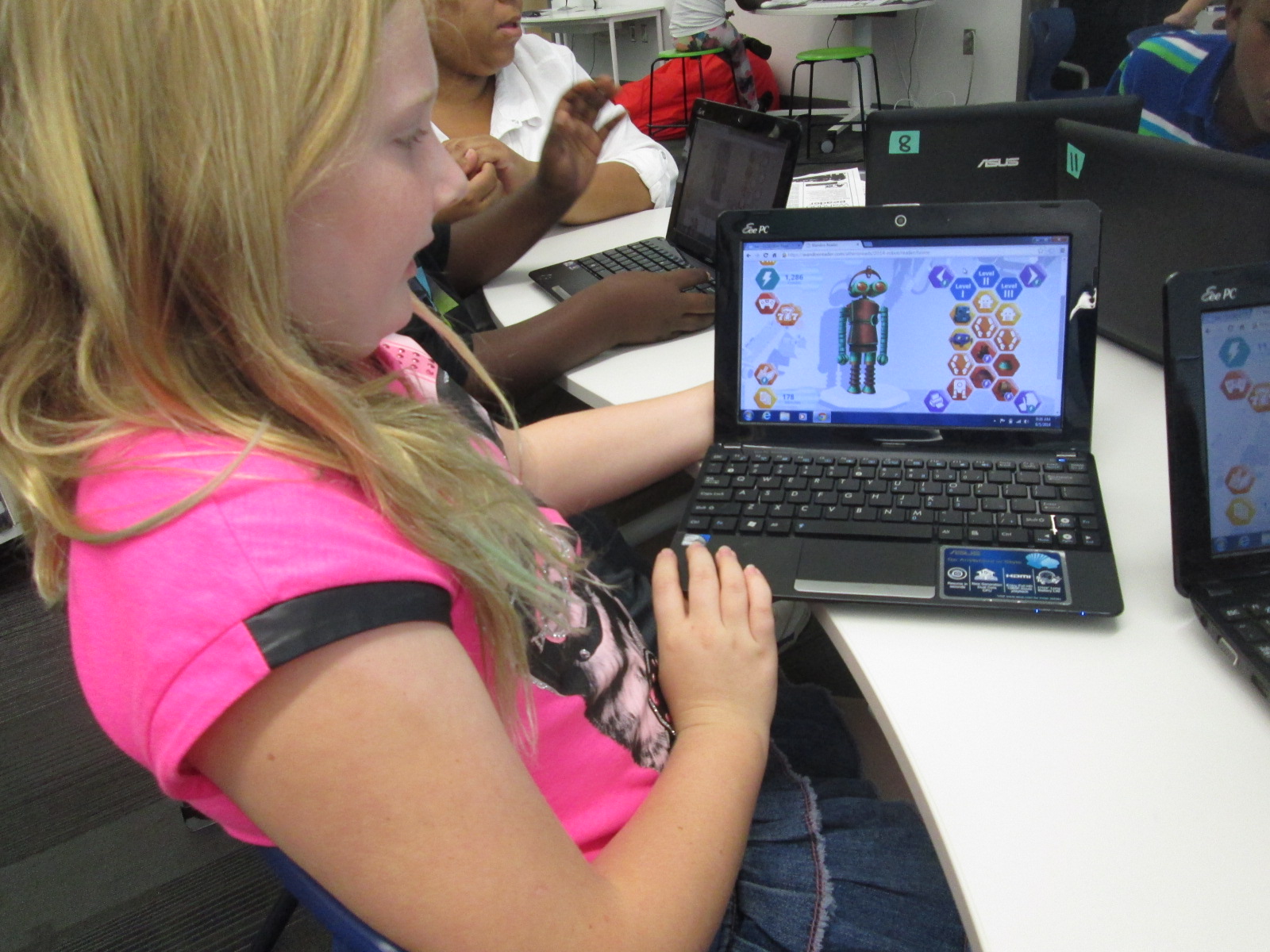
Once students made it through registration, the fun began.  Students practiced logging some books that were recently read, earned points, and started building robots.  Every student logged “Wandoo Reader” as a book if they read the tutorial.  There were smiles all around as each robot looked a little bit different than the next.  I loved how this feature gives students a sense of personalization, which is so important to students.  Once kids got into the program, we heard things like:

and

Students were really engaging in goal 1 from the library this year, “dreaming, tinkering, creating, and sharing”.  Of course, some students started testing the system to see how many points they could earn for more parts.  We can always clear that out through the administration portal, but they had permission to tinker.  They figured out how things worked, how things didn’t work, and also revealed to us what Wandoo Reader might need in order to focus kids on the true goal of the tool which is increasing student reading ability.

Wandoo Reader Kickoff (14)

Students were so proud of their robots

Wandoo Reader Kickoff (24)

We closed our time by talking about the importance of the data that Wandoo Reader will produce for our school.  I gave specific examples.  For example, if I see that a student clicks “still reading” on multiple books and never clicks “finished reading”, it might reveal to me that the student isn’t finding a good match for reading.  If a student reads the exact same book over and over, it might reveal to me that I need to have a conversation with that student to find similar books to the trusted favorite.  If I notice that several students are reading a lot in a particular genre, it might reveal to me that I need to purchase more of that genre for our library collection.  The list could go on and on because the data that Wandoo Reader can produce for me as the librarian as well as for classroom and collaborating teachers is something we have never had access to in a single location shared across the school.  If kids use it with “fidelity” as our superintendent says, then we can start to notice and really pay attention to the amount of time that our students are spending reading.  If we want to close the achievement gaps in reading, then one of the most important steps is getting the right books in kids’ hands and giving them time to read and have fun with that reading.  Wandoo Reader has great potential for this.

Wandoo Reader Kickoff (19)

Ms. Spurgeon record feedback for Evanced while supporting a student

Looking back over the day, there were many frustrating moments in the registration process.  In fact, there were times that it was that level of frustration where you just want to say “no thanks” and move on.  For students, there were moments where meltdowns, shut downs, and giving up could have happened.  However, the thing that sticks out to me most about the day is that there weren’t any tears.  Not a single student gave up.  I won’t pretend that they didn’t get frustrated because they did.  However, it is more important to me to see what they did with that frustration and it makes me ask “why?”.  Why didn’t they crawl under tables, cry, close their computer screens, or say I don’t like this?

I can’t prove why at the moment, but I can’t help but wonder about the library goals for this year.  We began each session by giving students permission to tinker and fail (goal 1 dream, tinker, create, and share).  We established a sense of purpose by helping them realize that their failure and feedback was contributing to the greater good of the world (Goal 2 global thinking & collaboration).  We empowered them to notice what wasn’t working as well as what they loved and share that into Lindsey’s recorder to take back to the developers (Goals 3 empowering student voice).  We talked about reading multiple kinds of text and logging everything and even gave them permission to log Wandoo Reader as a book (Goals 4 supporting reading habits).

Wandoo Reader Kickoff (15) Wandoo Reader Kickoff (21)

When I started the day, I really didn’t plan for every library goal to be evident in this one lesson.  As we moved through the first session, it became very clear to me that I needed to be transparent with students about the multiple layers of why we were using Wandoo Reader.  When I did that, the library goals naturally came to life because they are a part of my thinking every day.  If I can continue to replicate experiences like today, I feel like our students will continue to develop perseverance and stamina as well as feel like their voice matters in our school as well as the world.

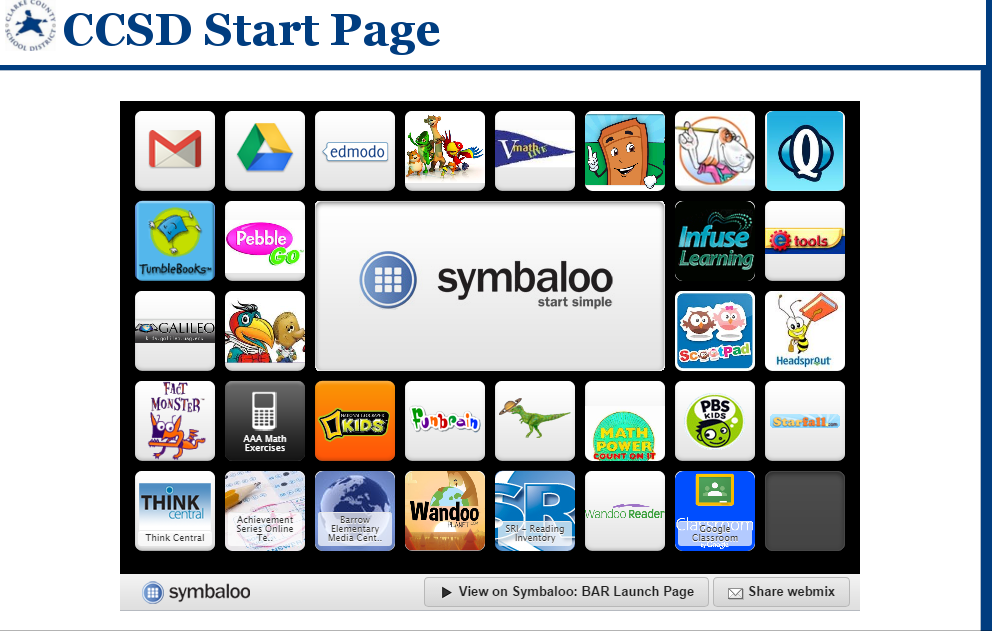
Now the students who are setup are ready to start logging everything they read and building robots.  I told them to not worry about what they have read in the past but instead start with what they are reading right now.  Many will probably log minutes this weekend by visiting our Symbaloo page where we keep all of our resources.  Others will start logging minutes at school next week.  Regardless, the task now is to continue to tinker for a bit until we all figure out the best process for having kids log their minutes.  I will also follow up with teachers to see how they are feeling about Wandoo Reader and see what our next steps really are.

bar   CCSD Start Page

Even with the frustrations of registration, I feel like we all gained so much from this day to support us throughout this school year.  Thank you Evanced for this opportunity, and we can’t wait to see the changes to Wandoo Reader based on what was learned from these first student users.

Exploring Themes & Goals at the Decatur Book Festival

Decatur Book Festival 001

I’m no stranger to the Decatur Book Festival.  This Labor Day weekend tradition always has a prime spot on my calendar each year.  It’s not often that you get the opportunity to connect with so many profound adult, teen, and children’s authors in one location.  Each year, the festival seems to take on new life and I gain something for myself, for my own children, and for my students every time I attend.

This year, the children’s stage featured panels of authors and illustrators rather than single speakers.  Panels were organized around themes and were facilitated by a children’s author or literature-loving moderator.  I loved this revision to how the festival worked in the past because the facilitators of each panel made sure that the audience learned about each author/illustrator, each book, the process behind how it was created, as well as exploring the theme of the panel.

Here are a few of the sessions I attended.

Bugs, Birds, and Birthday Cake!

This panel was all about the fun of animals and humor in stories.  Mac Barnett shared his upcoming book Telephone.  LeUyen Pham shared her book A Piece of Cake.  Angela DiTerlizzi shared Some Bugs.   One of the quirkiest things about this panel was when each author/illustrator shared 2 truths and shenanigan about themselves.  Each author/illustrator shared some pretty off the wall examples, so it was really hard to decide which of the 3 examples was truth and which was made up.  This brought about so much audience participation and engagement, but it also revealed to us each speaker’s personality which in turn revealed something about their work as an author/illustrator.

Pure Imagination

This panel explored the power of imagination in children’s books and kids’ lives and featured Matt Phelan (Druthers), Amy Krouse Rosenthal (Uni the Unicorn), and Kelly Light (Louise Loves Art).  This panel reminded us all of the importance of taking time to imagine and dream even as an adult.  Panelists also emphasized the importance of play and tinkering without judgement.  We each hold within us the power to dream and imagine and have to give ourselves permission to let the ability continue to shine through even in constraints that we face.

All in the Family

This panel featured family teams of author/illustrators including Frank Morrison & Connie Schofield-Morrison (I Got the Rhythm) and James & Kimberly Dean (Pete the Cat and the New Guy).  It was interesting to hear how married couples collaborate with one another on a project.  The speakers revealed that it can definitely be a challenge and a blessing to work with someone that you are so close to.  Each collaborative partnership seemed to have developed strategies to push one another while at the same time respecting one another’s creative talents.  Author Elizabeth Dulemba moderated this panel, and I loved how she highlighted each creative duo equally well.  She also took time to bring up the conversation of diversity by specifically pointing to I Got the Rhythm and it’s pages where so many people can find themselves within the illustrations.  The Decatur Book Festival had many aspects of diversity represented this year.  I will nudge that racial diversity wasn’t at the top of the list.  I hope that diversity will continue to be explored at this festival along with many other kinds of diversity so that readers will continue to find themselves in the books and in the authors and illustrators in attendance.

Great Books for New Readers

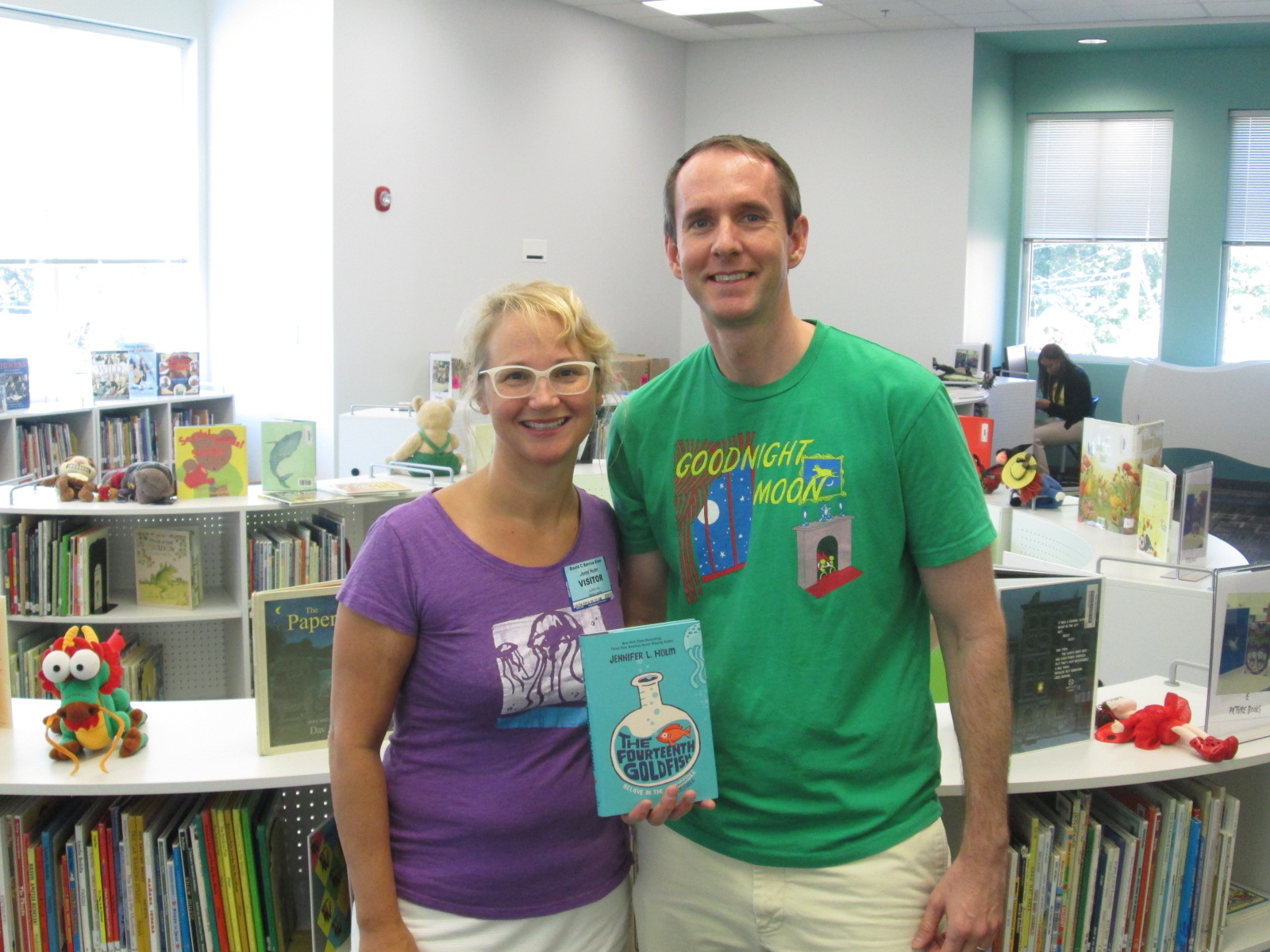
This panel focused on newly released books to hook a variety of readers including Jon Scieszka (Frank Einstein and the Antimatter Motor), Jennifer Holm (The Fourteenth Goldfish), Tom Watson (Stick Dog Chases a Pizza), and Mike Lane (The Vanishing Coin).  This was a really interesting panel full of fun and laughs.  Each author had a unique way of presenting his or her work.  Mike Lane performed a magic trick with the audience.  Jenni Holm shared stories of how her father kept bacteria cultures in the fridge.  Jon Scieszka performed his own magic trick by growing hair on his head right before our eyes.  It was easy to see why new readers would gravitate toward these authors.  They write stories that connect with readers, especially readers who want to read about magic, fun, experimenting, and just plain silliness.

This Really Happened: Graphic Memoirs for Kids

Decatur Book Festival 034

This panel explored how real life events can be relived in a graphic novel format and featured CeCe Bell (El Deafo) and Jimmy Gownley (The Dumbest Idea Ever).   I had already heard lots of buzz about El Deafo, but when I watched CeCe Bell stand up and share the very personal story of where her graphic novel came from, I was inspired.  To take a life changing event that some people might look at as tragic or confining and turn that story into a graphic novel superhero story is a true artistic gift to readers.  So many students will find themselves in this character and feel strength in their own disabilities.  I can’t wait to put this book in students’ hands to read for enjoyment but also as a strong example of how our life experiences become the stories we tell.

All the Girls in the World


This was a panel of women authors who write about strong girl characters and featured Jennifer Holm (The Fourteenth Goldfish), Laurel Snyder (Seven Stories Up), and Megan Jean Sovern (The Meaning of Maggie).  The always-profound Deborah Wiles moderated this panel with carefully crafted questions.  Her wonderings explored the true stories behind the fictional novels as well as the hard topics that each author chose to explore in her writing.  This panel was the perfect way to end my festival experience because it left me with so many wonderings as well as so much wisdom.  Multiple times kids in the audience raised their hands to express that they experience sadness in their lives and survive that sadness, which reinforced the idea that authors need to include sadness in books.  We can’t shield our young readers from a world where sadness and heartache exists.  Books can show readers how they might persevere through these trials just as the characters in these 3 novels do.


How did the festival inform my library goals?

My library goals for this year really are proving to be something that I carry with me wherever I go.  To me, this means that they really are goals that matter.  In the past, I can’t recall writing goals that I could recite with memory or goals that I could connect to so many experiences throughout the school year.

As I experienced the Decatur Book Festival, I couldn’t help but think about my goals.

1.  To provide students, teachers, and families opportunities to dream, tinker, create, and share

Dreaming. Tinkering. Imagining.  These words kept surfacing throughout the whole festival.  Kelly Light talked about how she let her daughter pick 2 books at bedtime as well as share one story.  She believed in the power of using the imagination to create soemthing new as well as be inspired by the stories created by others.  LeUyen Pham created individualized illustrations in each book that she signed in her autograph line.  I heard her ask one person if she had a picture of a baby that a book was being signed for.  She drew an image of the baby in the book by looking at a cellphone picture.  She made my own daughter feel like a rockstar while signing her copy of Vampirina Ballerina and drew Alora as a ballerina in the book.  Throughout the festival, there were opportunities for families to spend time together dreaming, tinkering, and making from booth with cardboard boxes and art supplies promoting the new film The Boxtrolls to the Decatur Makers booth where a variety of maker opportunities existed for families.

Decatur Book Festival 023

2.  To engage in global thinking and global collaboration

The panels organized by themes really pushed my thinking.  As I listened, I started to think…..what if global collaboration revolved around themes?  When I think about connecting around a particiular book, I mostly think about American-published books.  I honestly have no idea about books, authors, etc from other countries.  What if we concentrated on a theme, connected with other schools around the world, and read books and created content around that theme?  I imagine that we would experience new authors, new books, and new perspectives that we never dreamed of before. I really don’t have a definite path because of this, but it has sparked something in me that is listening and watching for opportunities for global collaboration and thinking.

3.  To empower student voice

During the “All the Girls in the World” panel, a girl stood up and talked about The Fourteenth Goldfish and Seven Stories Up.  She shared how reading those stories shows her and other girls that it is ok to feel they way that they feel and that there are other people in the world struggling with those same topics.  I wish I had captured her exact words so that I could carry them with me because she reminded me of how much wisdom our students are carrying.  That panel gave her an opportunit to stand up and make her voice be heard and she reminded me that I need to continue to think about the opportunties that I’m providing students to stand up and make their own voices be heard.  So many students need so many different kinds of experiences to find their moment to speak up.  My hope is that I can maximize those opportunities for the students of our school.

4.   To support the reading habits and curiosities of students, teachers, and families

Visitng this festival always exposes me to authors and books that haven’t been on my radar before.  By listening carefully to each author/illustator’s story, I have a personal experience to share with readers as they make decisions about the next book that they will explore.  Listening to each author/illustratore share they journey they have made to publishing the works that we hold in our hands makes me even more aware that every book on our library shelves holds a story of how it came to be and makes me want to know that story to share with readers.  I wish that more authors would use blogs and social media to share their stories of their journey to publication so that we could connect these backstories to readers.  Hearing these stories makes me want to dig a little more to connect readers with the stories of the authors that are hiding on our library shelves.


Believing in the Possible with Jennifer Holm

IMG_3888 IMG_3884

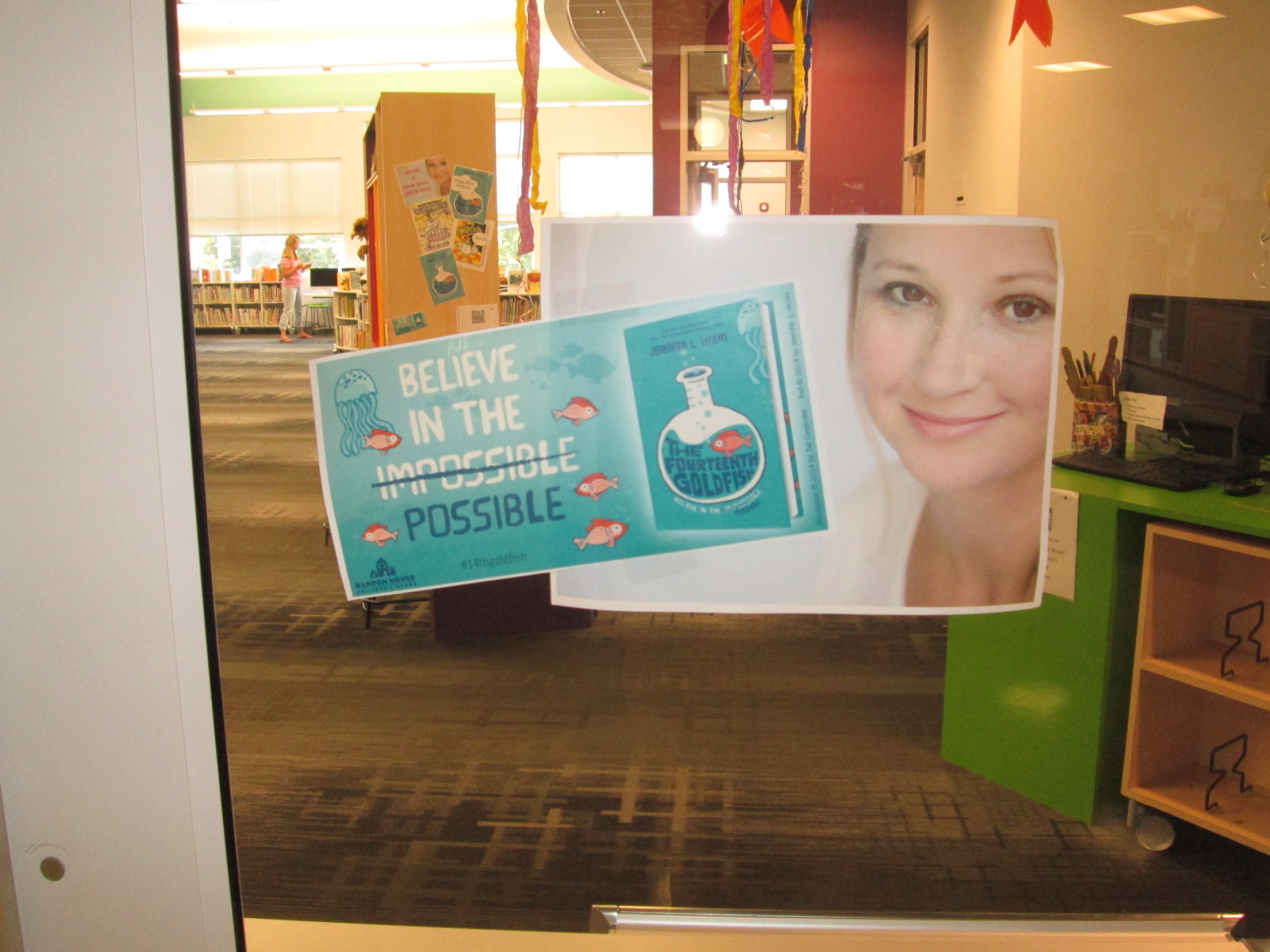
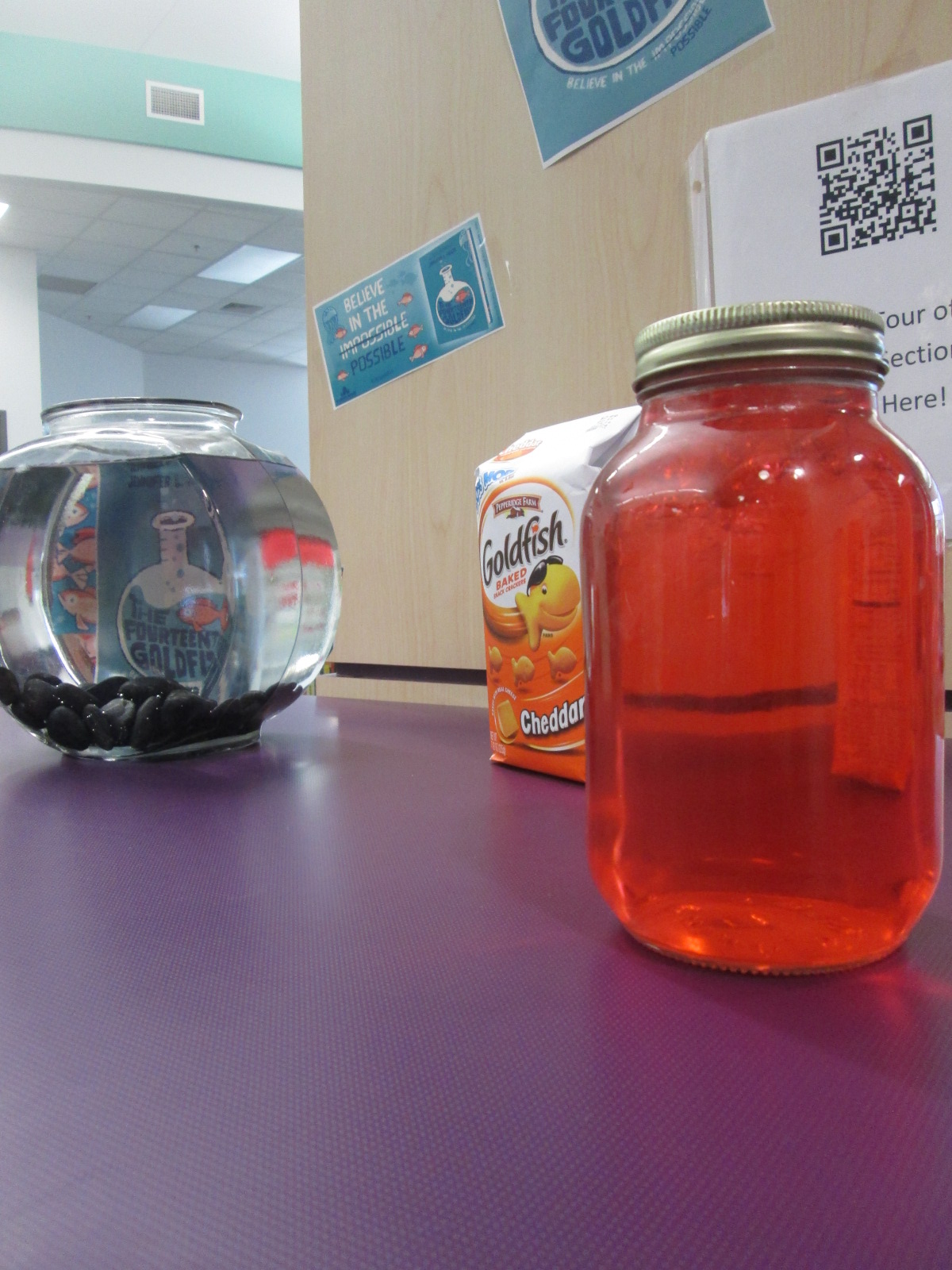
Many of you know that our motto in the library is “Expect the Miraculous” based on the book Flora & Ulysses.  When I saw the cover for Jennifer Holm’s The Fourteenth Goldfish for the first time I was immediately drawn into the tagline “Believe in the  impossible possible.”  Before I even read the book, I felt a connection.  I was lucky enough to score an advanced reader’s copy of the book at the Texas Library Association Conference back in April and I was hooked from the opening chapter.  In fact, you can read the opening chapter here.

IMG_3913

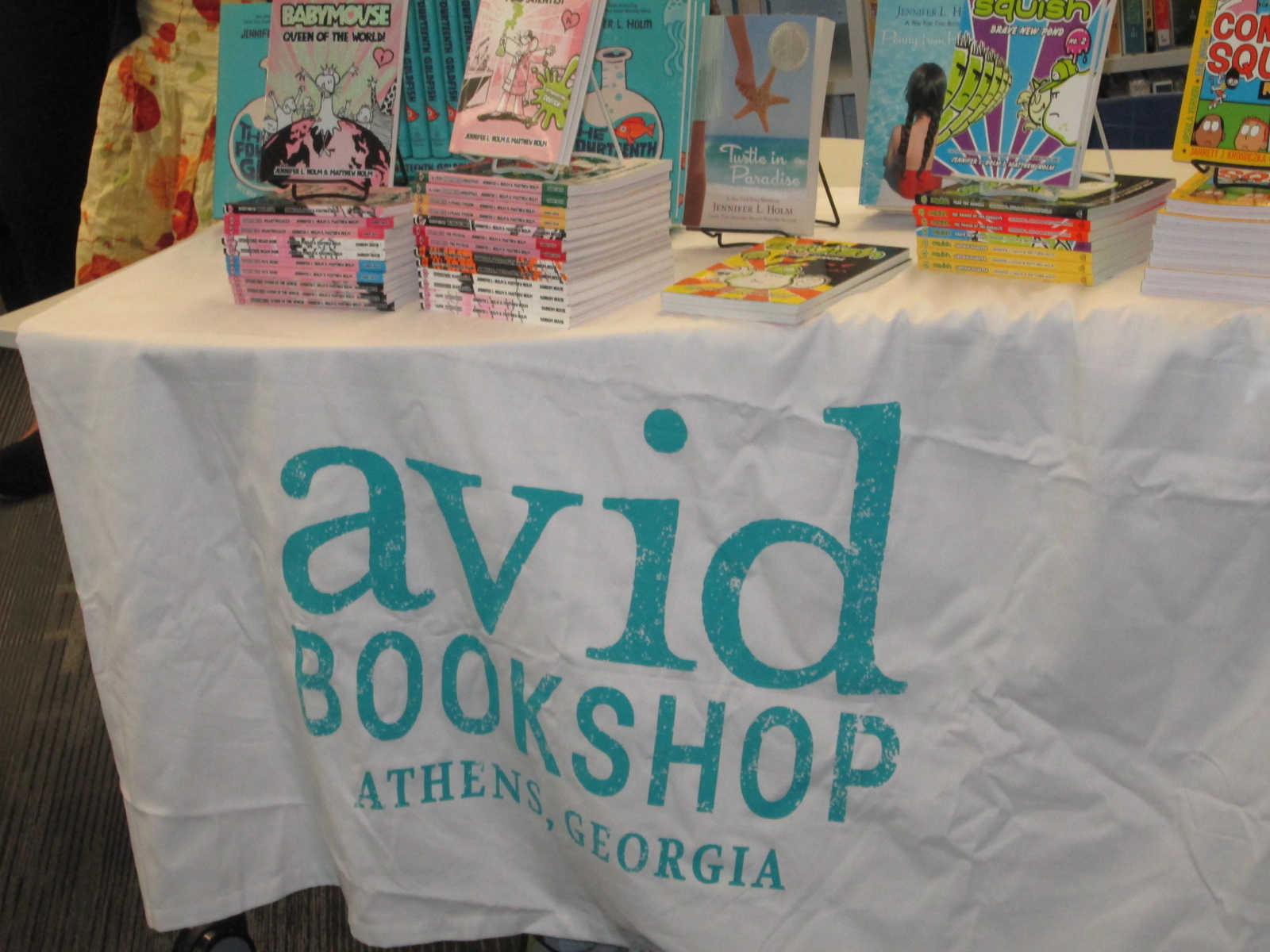
During the summer, I was contacted by the wonderful people at Avid Bookshop about a potential author visit with Jennifer Holm.  She was planning to be at the Decatur Book Festival on Labor Day weekend and was spending some time visiting bookstores and schools ahead of the festival.  It was fate.  The author of a book that I absolutely loved that connected with our philosophy of the library was available to visit our school.  I immediately said yes and the planning began.

Pulling off an author visit in the first two weeks of school is tricky.  When an author visits, I love to have time to preview their books with kids, have classes sharing the books as a read aloud, and allowing students to create decorations to welcome the author to our school.  There’s also the presales of books.  Forms must be sent home, collected, organized, and books ordered for autographing.  Two weeks is hard, but we expect the miraculous.

Here’s what happened ahead of the event.

  • Every single Holm book was checked out by either teachers or students.  In fact, I didn’t have any library books available for her to autograph at the visit!
  • Announcements were made on BTV advertising the visit
  • Three teachers received advanced reader copies of The Fourteenth Goldfish and began reading it aloud.
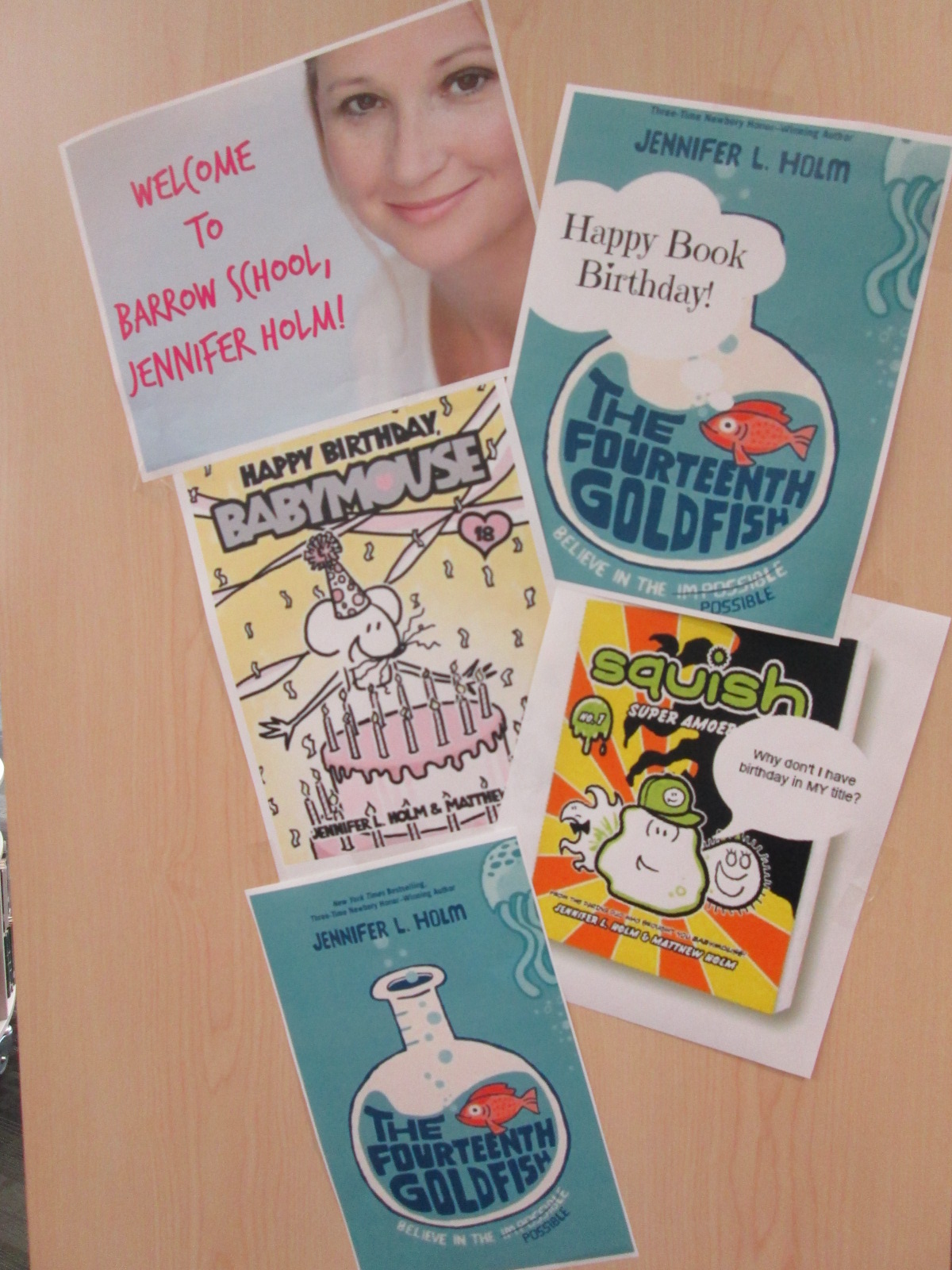
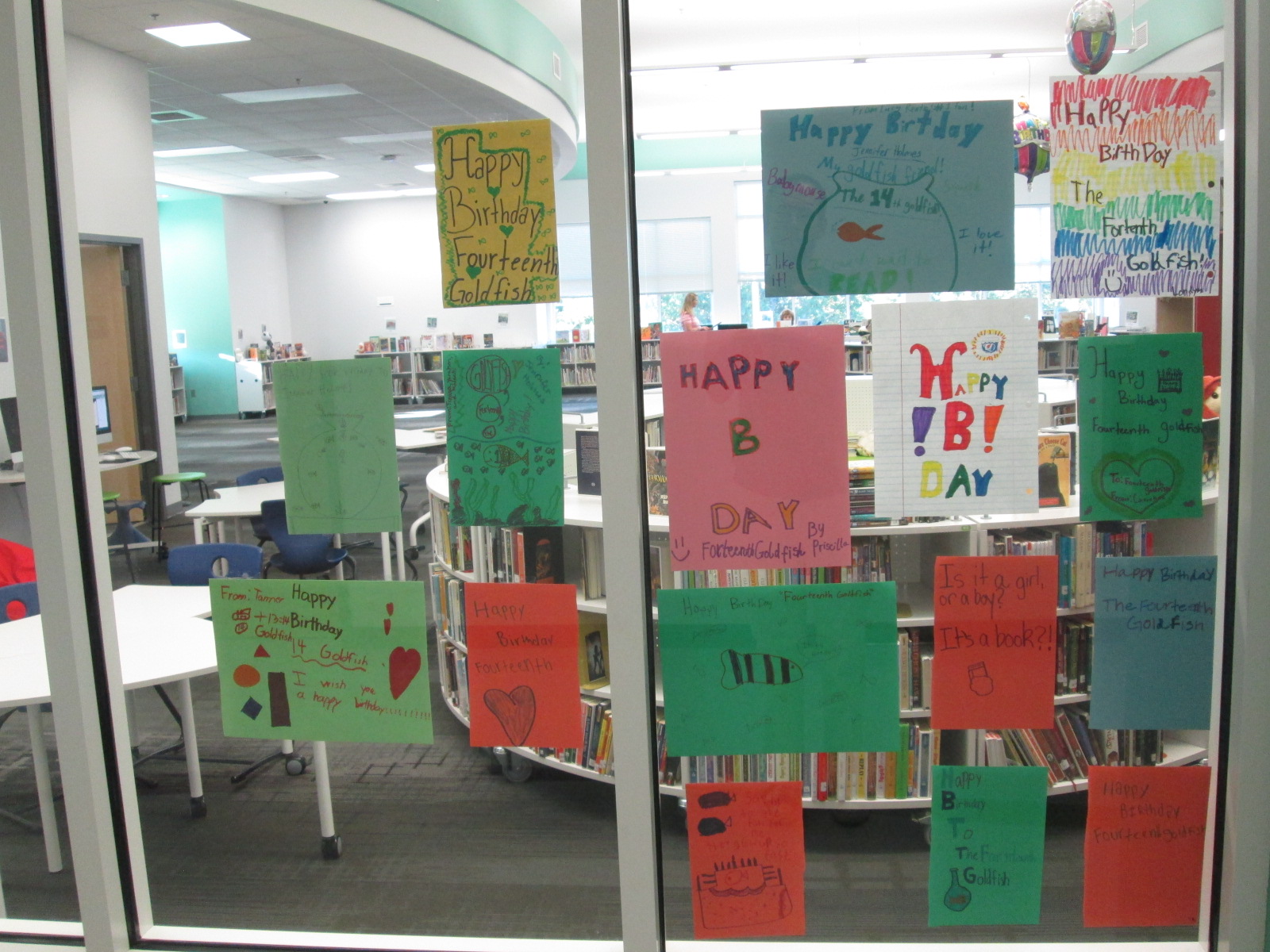
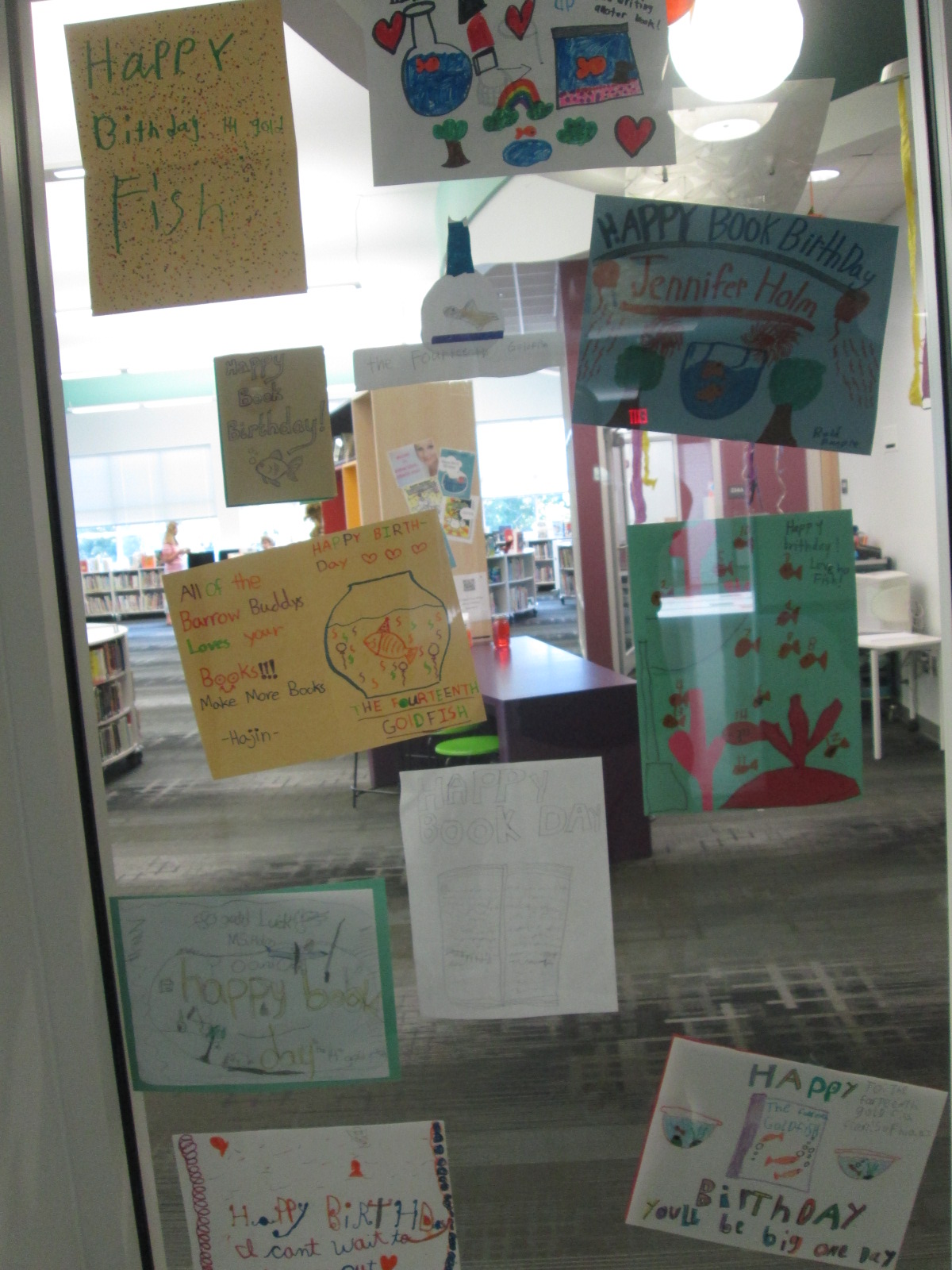
  • The entire school was invited to make book birthday cards since the book came out 2 days before Jenni’s visit.

IMG_3891 IMG_3890 IMG_3889

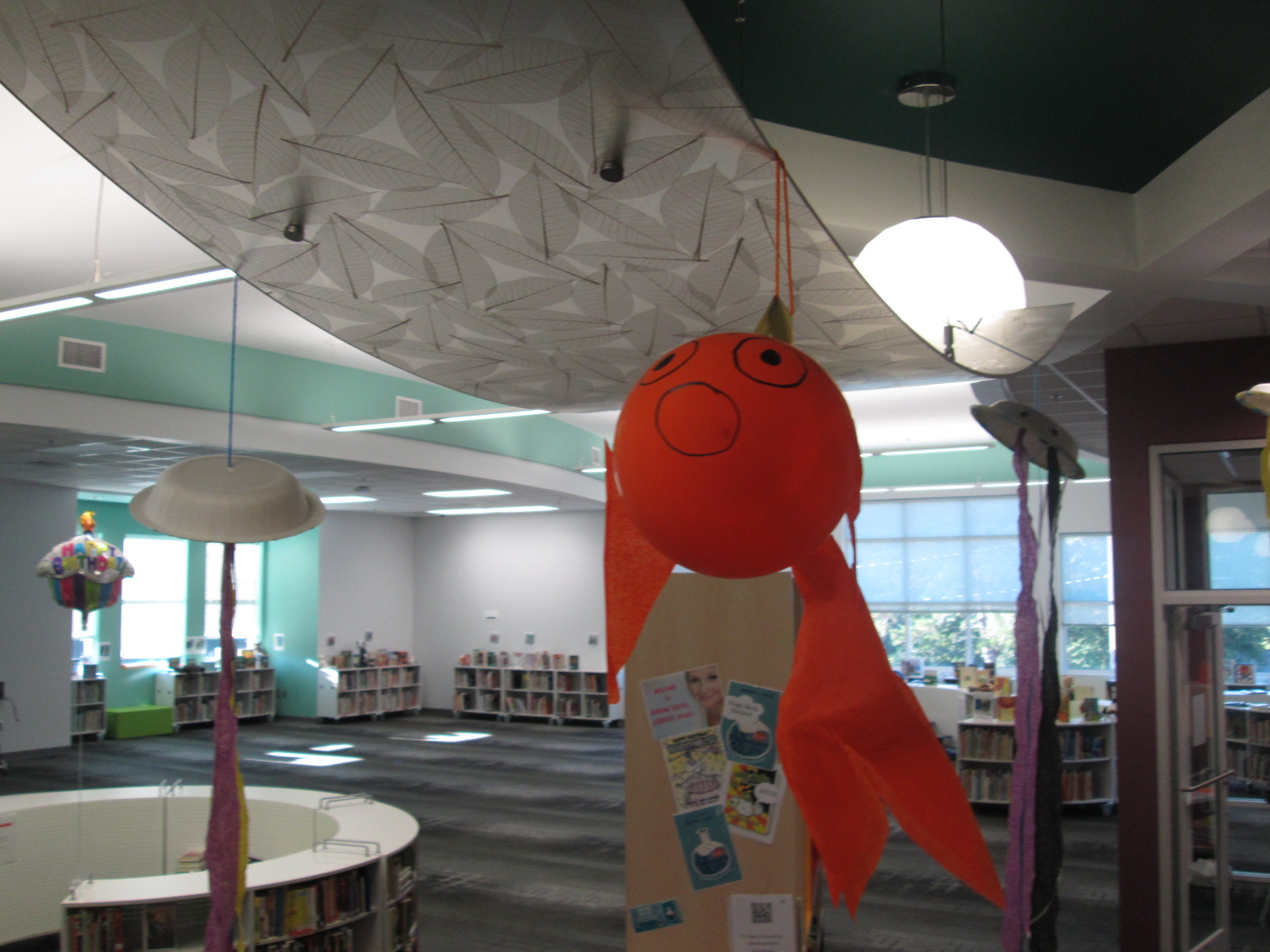
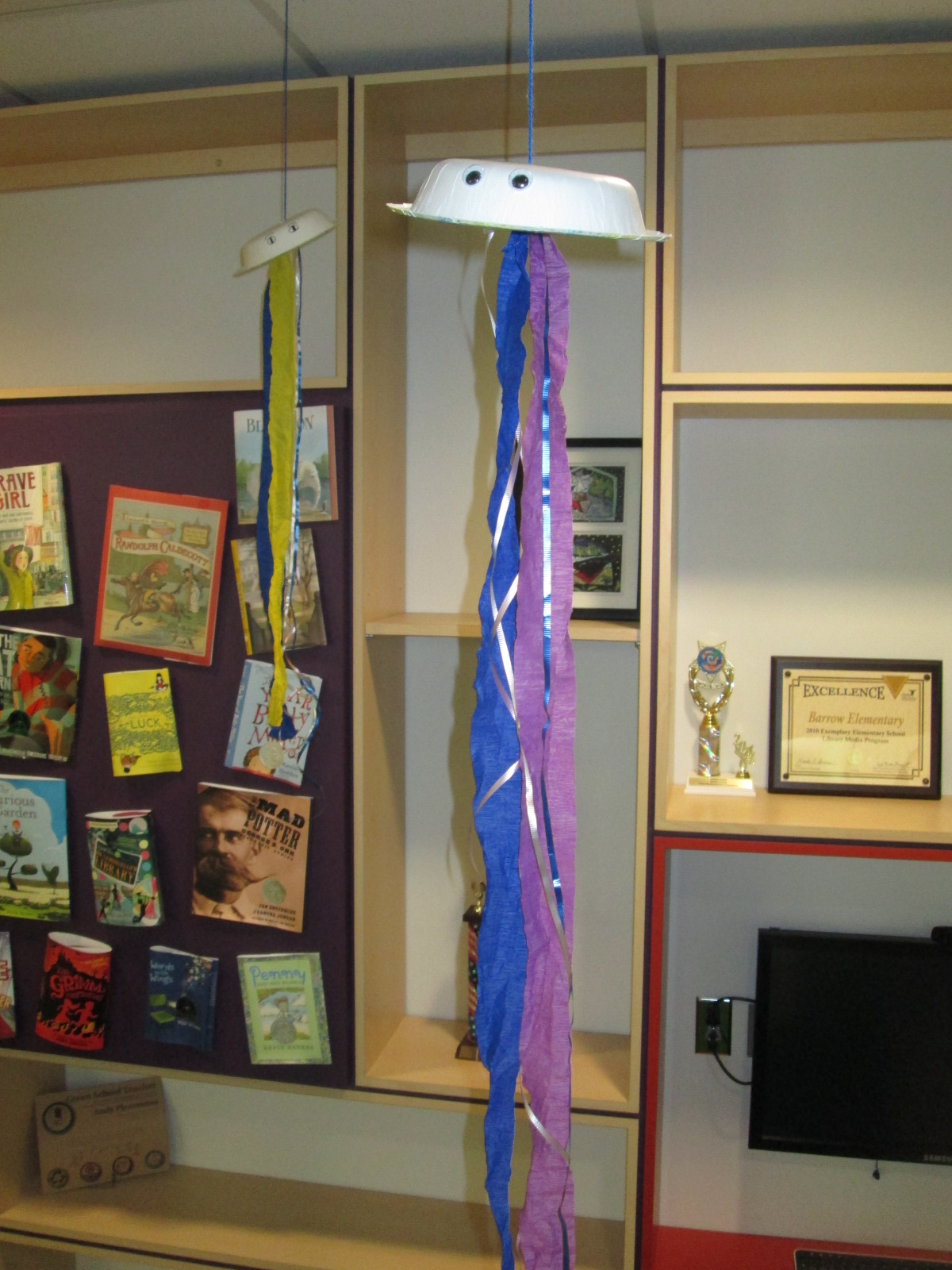
  • Several people helped make decorations for the event including jellyfish and goldfish balloons to hang from the ceiling as well as some posters.

IMG_3892 IMG_3893 IMG_3883


  • Preorders went home on the 1st day of school and were due 4 days later.
  • Classes watched the book trailer for The Fourteenth Goldfish.

IMG_3900

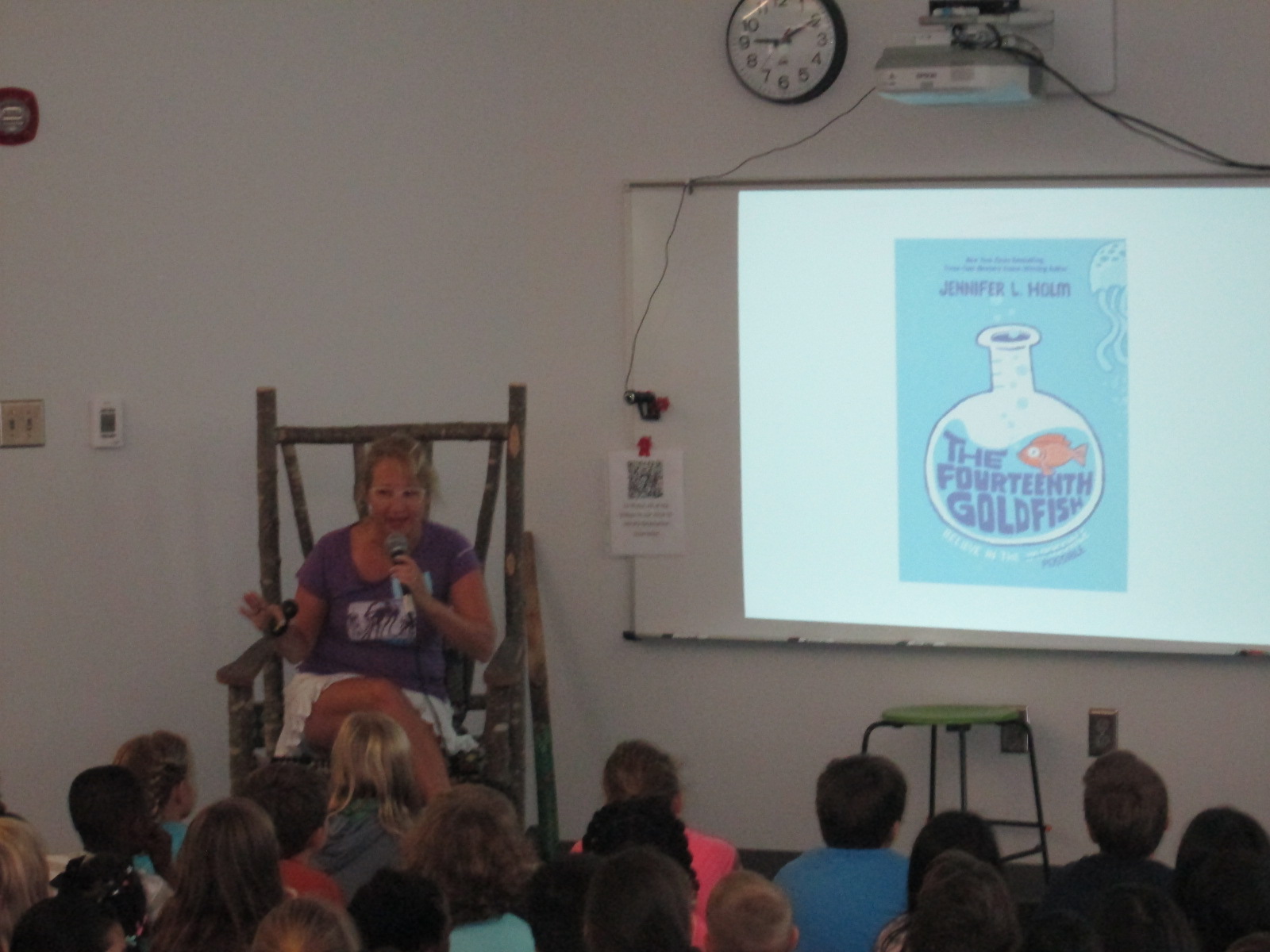
Today’s visit was incredible.  Every 3rd-5th grade class came which was a little more than 200 students.  We shifted back the library shelves to make room for everyone.  Jennifer kicked off the visit by sharing with students the story of how The Fourteenth Goldfish came to be.  She shared the stories of famous scientists and what it means to be an true observer.  She shared family stories of scientists in her family and built up to the science behind the main idea of the book which revolves around a fountain of youth found within a jellyfish.  She held up an apple and invited students to think about whether or not it was alive or if it held new life within it.

Then, she spent some time having students ponder what it would be like to be old and suddenly be transformed back into a teenager.  What problems might people face if they changed ages?  What success would they have?  She turned this into a game by having kids come up to the board in teams and write everything good about being old and everything good about being young.  Then she tallied up the number of reasons to see which was better.  She did the same thing with new groups of students but switched to everything bad about each age.  While students were racing against time to make their lists, she took questions from students about her books and the writing process.  She also shared the secret Babymouse signal and had students do it (which was really a clever way to keep the audience focused and settle down).

I loved how she pushed students to think deeply about whether they would ever want to go back to being young if it was possible.  I also loved how she shared the idea of believing in the possible by connecting the story to an actual jellyfish that can revert back to a younger version of itself.  If it’s possible for a jellyfish, could it be possible for us?

I hope many students will take time to read this book, and I have a feeling after this visit that many will.  I know several teacher who are considering it as their next read aloud.  With tie-ins to science and the belief in the possible, it has so many implications for what it means to be a dreamer, a tinkerer, and a maker.

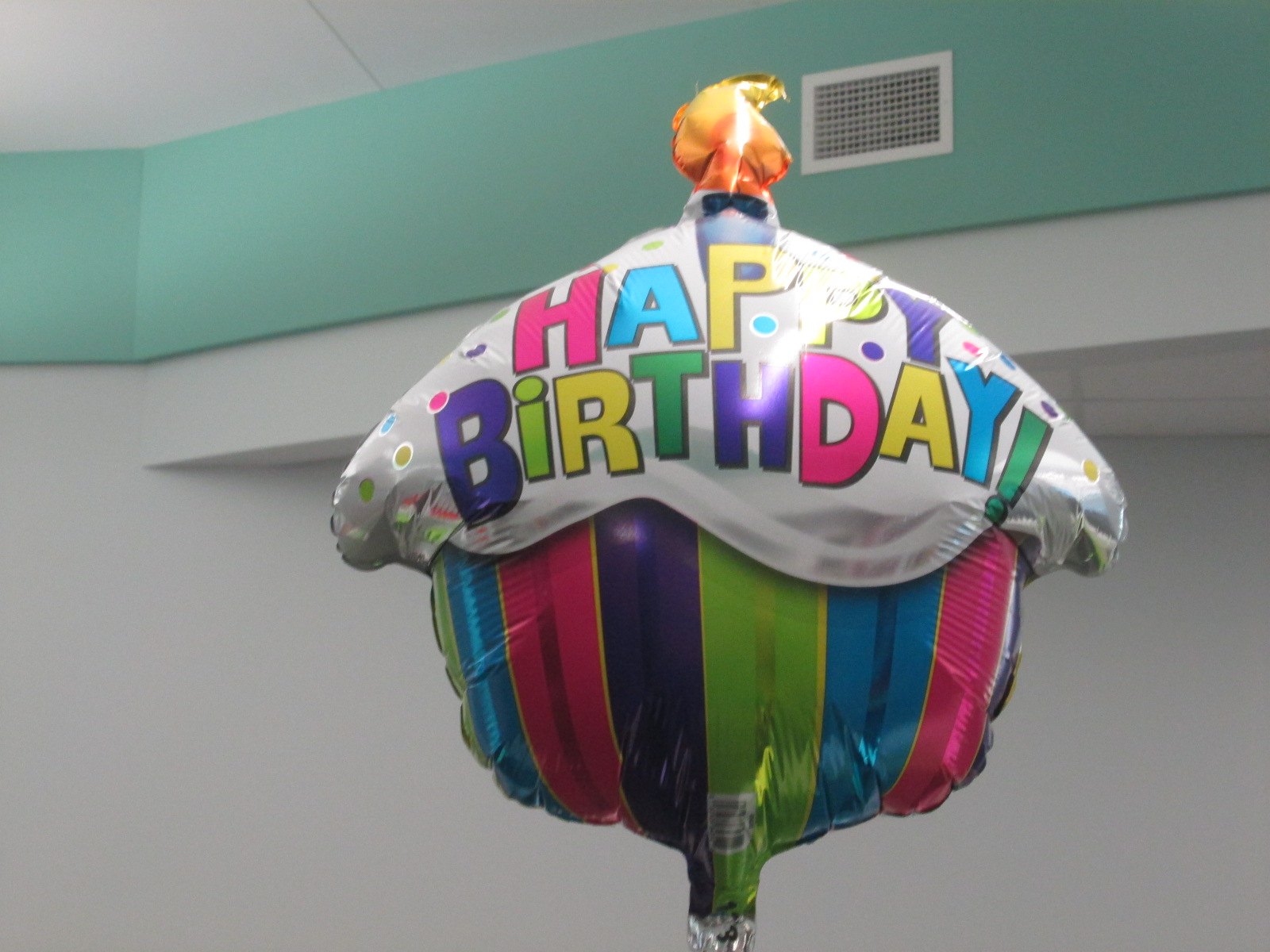
We ended our time by sing happy birthday to The Fourteenth Goldfish.

IMG_3894

Following her talk, she spent time connecting with students and signing books.  We found out that she had not signed a copy of The Fourteenth Goldfish yet, so Hannah was the lucky student who has the 1st signed copy of the released book.

We are so fortunate to have Avid Bookshop in our community making connections between the community, authors, and our students in schools.  Thank you Jennifer Holm for taking time to visit our school and share your wisdom with us.  Thank you Avid and thank you Random House for this wonderful experience.  Our students will never forget it.

IMG_3947

Library Orientation: Starting the Year with Failure

QR orientation (6)

Last year, I decided to try something new for my library orientation.  Rather than have students sit and listen to me go on and on about how the library works, I let them explore the library with QR codes.  I loved this change so much that I decided to try this again this year and add some new twists.

First, I thought about all of the main questions that pop up during the year about using the library and made a list.  Then, I took this list and tried to make videos that were concise and addressed one task rather than weaving in multiple topics into one video.  This included topics such as how to search in Destiny, how to check out with and without a student id, how to check in, how to use a shelf marker, how to place a hold, and where supplies are located.  I also had some pieces of the library that I wanted students to know about such as areas where participatory opportunities would be displayed and what was new in our makerspace.

I took each video, improved the sound quality in iMovie, and uploaded to Youtube.  Using Kaywa QR Code generator, I made a QR code to each video, labeled it, printed it, and put it in a sleeve to hang in the library.

When 2nd-5th grade came to the library, they entered to a rolling slideshow of our 4 library goals.

1dream

2global

3empower

4reading

I wanted our first focus to be what we hope our library is about this year.  The procedures are important because they affect the flow of the year, but the goals are what drive us every day.

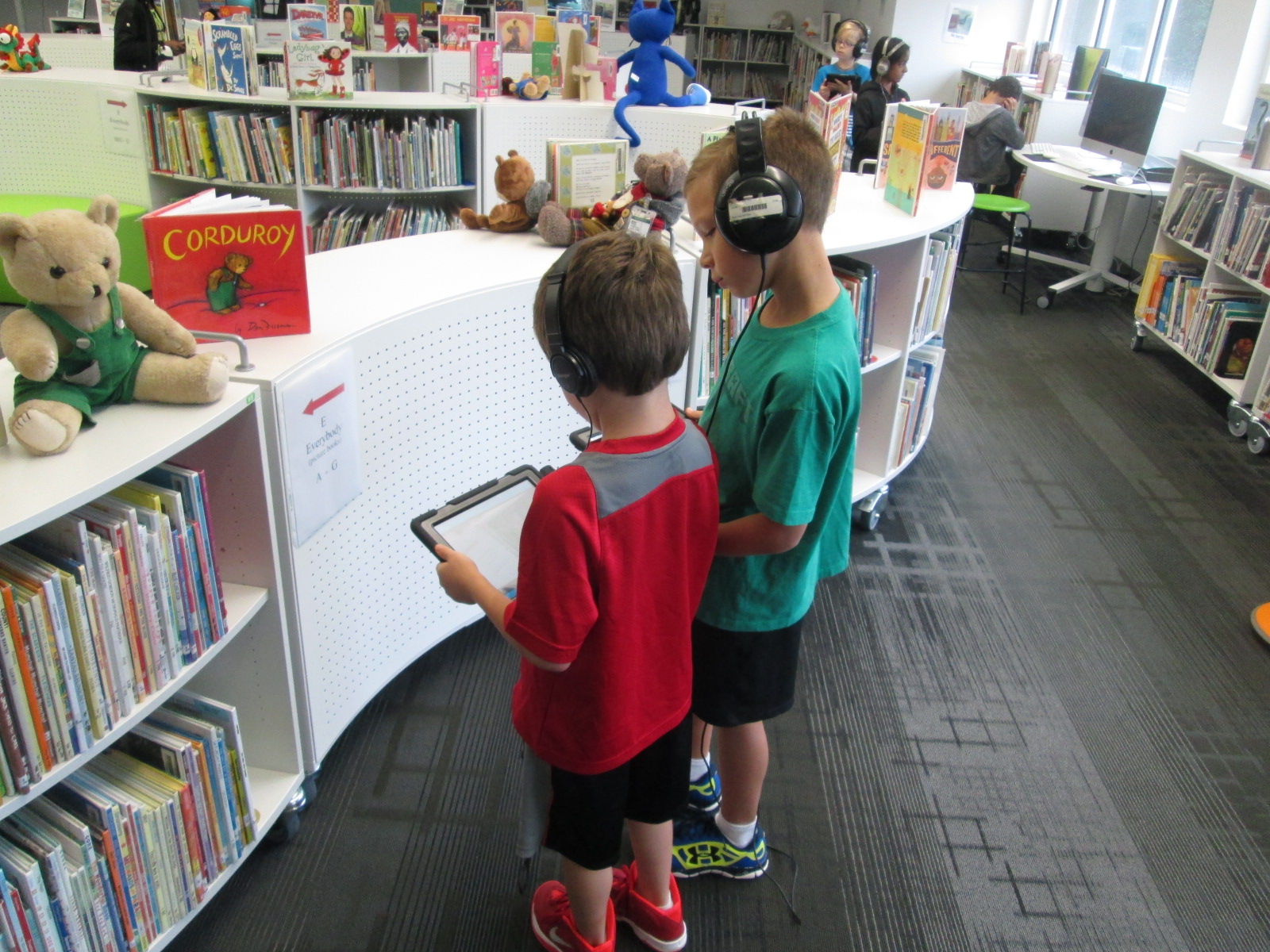
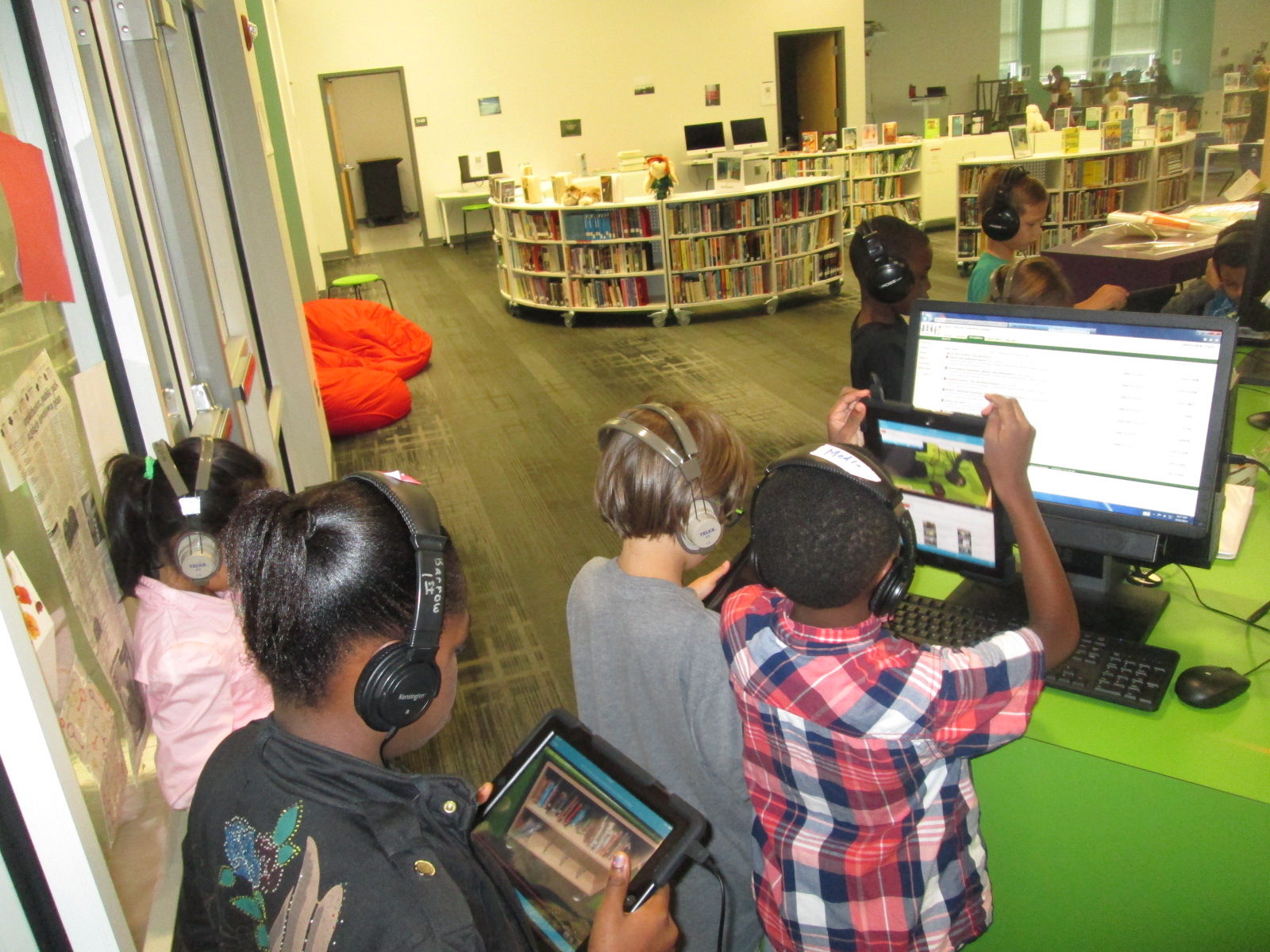
After talking about the 4 goals, I showed students how the orientation would work.  Each student would have an iPad with headphones.  Using the Layar app, students would scan each QR code and tap on the video to begin listening.  There were 4 videos that I wanted every student to review:  how to check out, how to check in, how to use Destiny, and a tour of the library sections.  I placed these 4 codes on 4 tables so that students could easily keep track of which videos they needed to watch first.  Following the 4 videos, students could scan a QR code on the project board that took them to a playlist so that they could choose any of the other videos to watch.

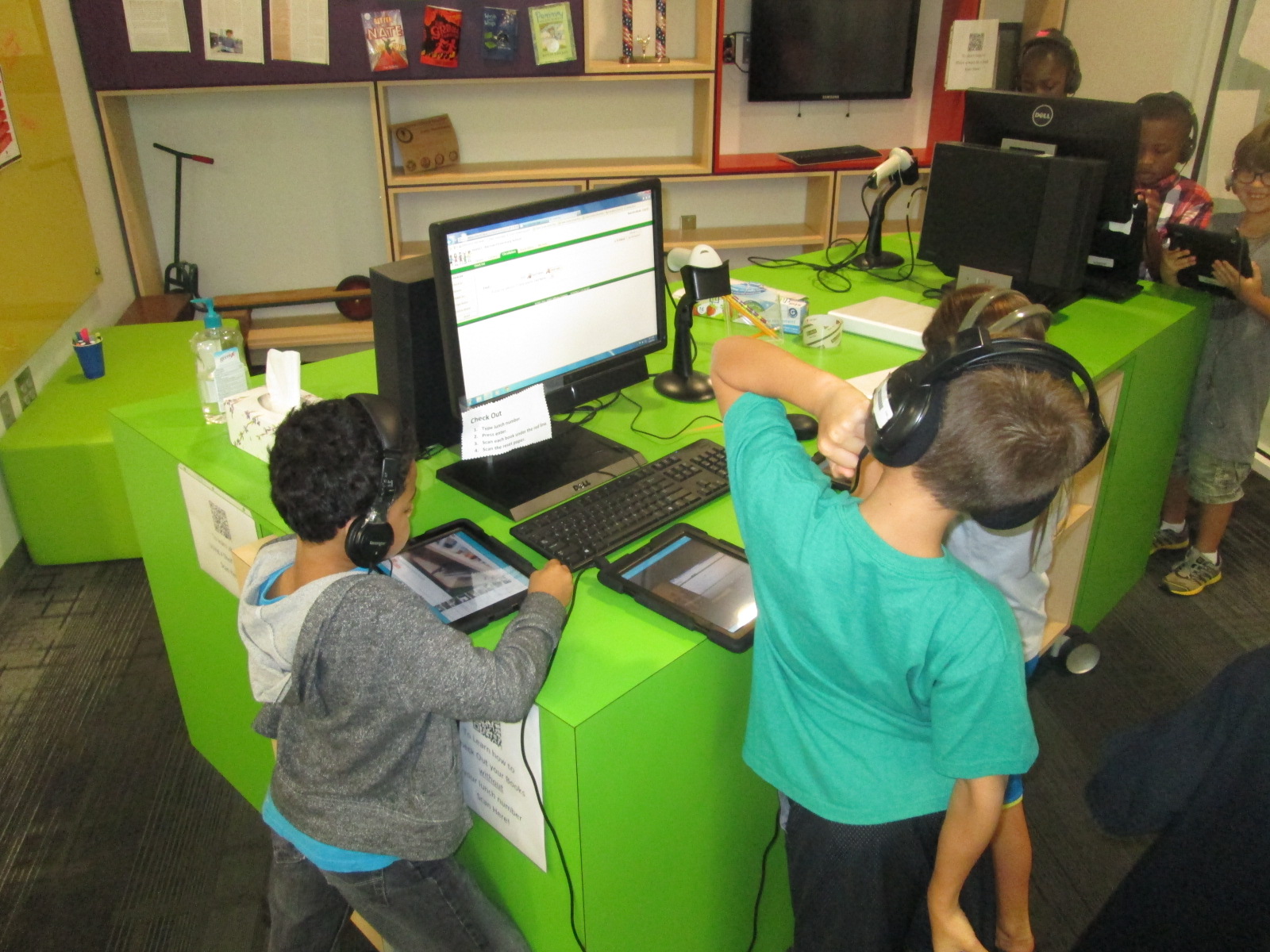
QR orientation (5)QR orientation (8)Once students scanned a video, I encouraged them to carry their iPad and go to that section of the library so that they could physically see the things that I was talking about in the video.  Once again, this was a wonderful experience because it allowed students to move, replay videos if needed, and actually see the library spaces rather than sit and listen.

QR orientation (4) QR orientation (2)

This worked beautifully some of the time, but here’s where the failure comes in.  On the 2nd week of school, our district implemented a new filter.  Filters can be wonderful things to protect our students, but anytime something new is implemented the bugs have to be worked out.  On day 1, every Youtube video was blocked on the iPads.  As soon as students started scanning, they got the no access screen.  Luckily, I could still access Youtube on my own computer so I decided we could just watch some of the videos on the projector.  Then, the internet speed became so slow that no videos would work.  Finally, we just got in a line and did an old-fashioned tour around the library.  The coolness of the QR codes was gone, but we still accomplished learning about the library.

While this experience was very frustrating, it allowed me to model what it means to not give up, to persevere through failures, and to expect that great things will happen even when things don’t work.  Rather than bottle all of my thinking in my head, I began to share it with the kids.  I said things like, “This was an epic failure, so let me back up and rethink this” and “Why don’t we try…”.  In future lessons, I built this conversation into our mini-lesson.  I prepped the kids by sharing the failures we had already encountered and how we worked through them together.  What I started to see was kids who were being more patient and were trying different strategies when the internet was slow or a code didn’t scan rather than kids who were giving up or kids who were yelling out about something not working and asking for an adult’s help.  I was reminded of the importance of sharing that it’s ok to fail as long as you use that failure to learn what you might do differently.

QR orientation (3)

In Kindergarten and 1st grade, we used the book Awesome Dawson by Chris Gall.  I chose this book because Dawson is a “maker”.  I felt like he embodied what I hoped that all of us would consider ourselves across the course of the year.  During our reading of this book, we paused to notice how Dawson never gave up.  We pointed out his epic failures along the way and how he took those failures, backed up, and tried something new.  He never lost his cool.  Instead, he took a different path or split a huge invention into 3 smaller ones.  As we made these noticings, we made connections to our own learning and the goals that we had for this year in the library.

QR orientation (1)

Following our read aloud and/or QR code tour, we used Kahoot to review a few of the library procedures.  I chose Kahoot for a few reasons.  One was to put it in front of teachers at the very beginning of the year as an engaging tool to use with students to check for understanding.  Several teachers were eager to try it in their classrooms.  Another reason was to make the really boring topic of library procedures fun and get us all on the same page.  It worked.  Even another reason was to throw a tool at students that was new to just about all of them and once again practice our acceptance of failure.  Several students couldn’t login.  Others had games that didn’t load as fast as other i Pads.  Still others got kicked out in the middle of the game and had to log back in.  Did any of these failures stop of us from learning? No.  We used each and every barrier, glitch, and student error as a learning tool for how we will work together this year.

Now that our orientations are over. We are ready for a year of miraculous projects.  The QR codes are now hanging all over the library for students to continue to reference throughout the year as they forget how to check out or place a hold.  The videos are also being sent to all of the library volunteers so that they can also review the different ways the library works before assisting students and shelving books.

I’m sure I will make even more changes to next year’s orientation, but I love how this one set the stage for our year.


Developing Library Goals to Carry Into Every Collaborative Meeting

photo 2 photo 1

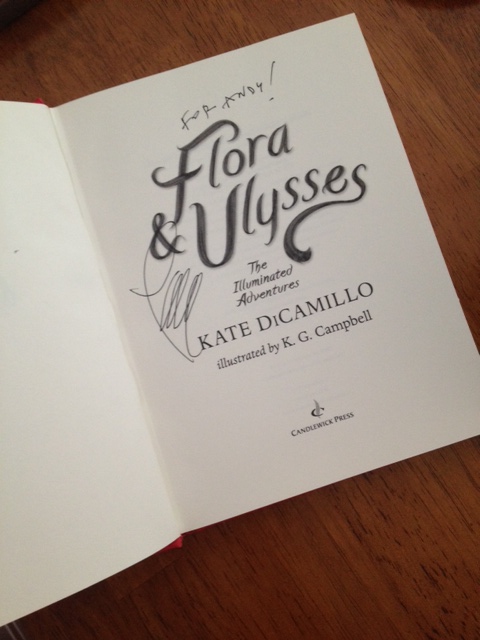
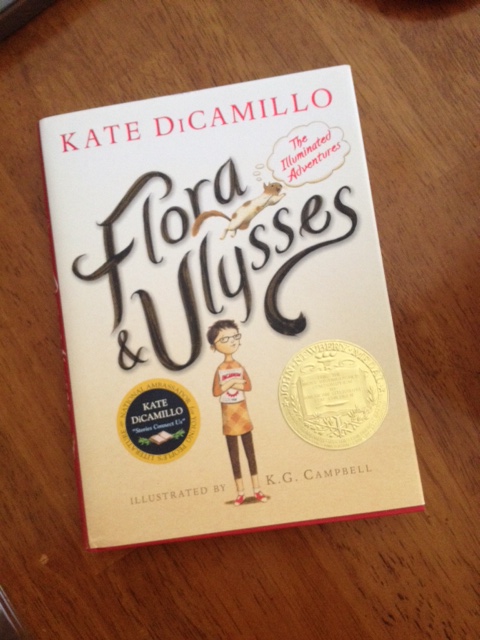
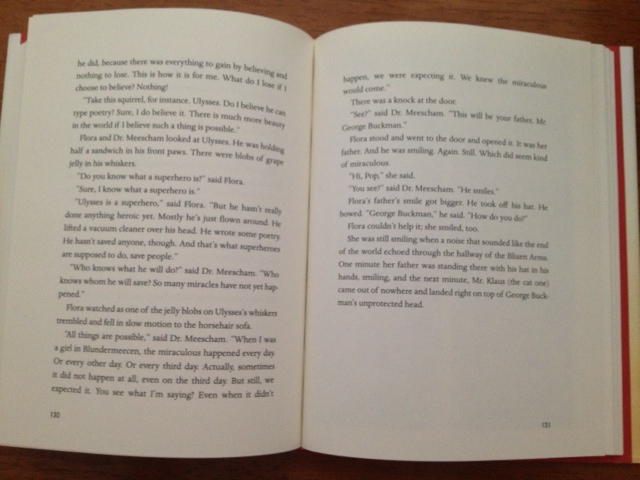
Last year, a book impacted my life, my library program, and found its way into so many conversations with students, teachers, and librarians.  “Expect the Miraculous” came to be our mantra in the Barrow Media Center thanks to Flora & Ulysses: The Illuminated Adventures by Kate DiCamillo.  It was all thanks to p. 130-131.

photo 3

This summer, as I sat down to develop our library program goals for the 2014-2015 school year, that mantra of expecting the miraculous everyday was still a big part of my thinking.  However, this summer I carried so much more with me as I reflected on goals.

I had my experiences and conversations with the #Wandoo5 at Evanced Games in Indianapolis.

photo 3 (3)


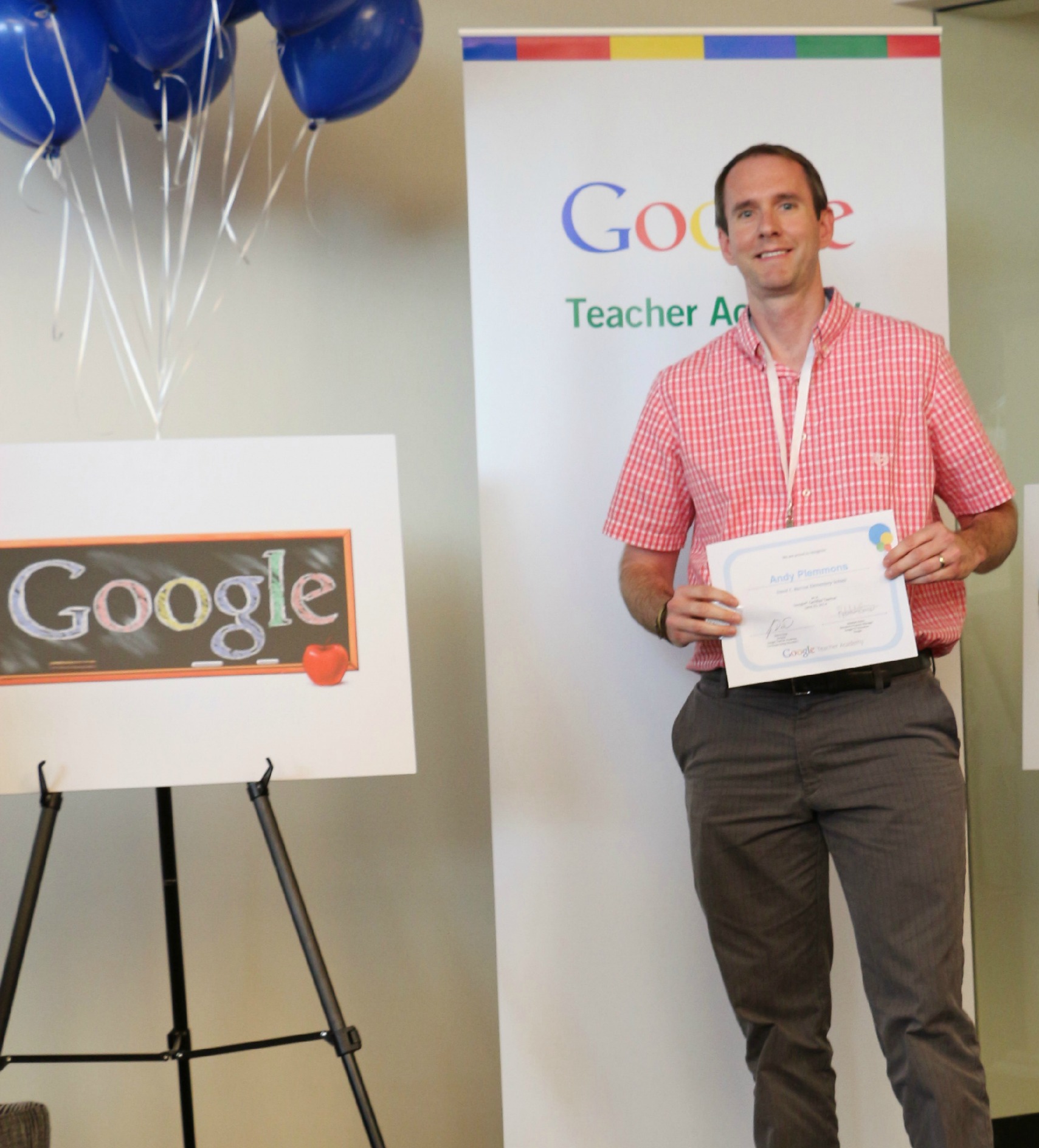
I had the moonshot thinking and action plan of the Google Teacher Academy and becoming a Google Certified Teacher.

graduation


I had the Invent to Learn Workshop with Sylvia Martinez and Gary Stager.

Photo credit: Sue Levine


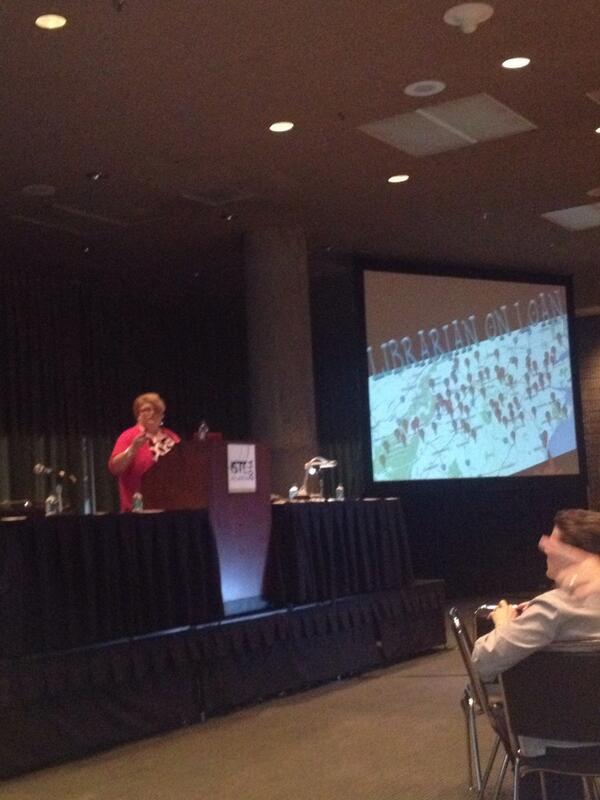
I had numerous experiences at the ISTE 2014 conference including a zombie fighting keynote from Jennifer LaGarde, empowering talks from George Couros and Todd Nesloney, and inspiring keynotes from Ashley Judd and Kevin Carroll about the importance of each child’s story and the importance of play.

The more I reflected on my summer professional learning experiences the more I realized that I wanted this year’s goals to be different.  In the past, I’ve made big goals about developing the participatory culture in our library, but I’ve also made specific goals about the collection.  While the collection is important, it is not my primary focus for the library program.  I was reminded of a question in Jennifer LaGarde’s keynote about the Dewey decimal system and her answer of “who cares”.  Who cares if I have specific goals about the library collection?  What cares if the 300’s have the recommended number of books?  Who cares what the average age of the biographies is?  The heart of the program isn’t the physical collection.  The heart of the program is the students, the teachers, the families, and the community.  The heart of the program is the opportunities that they have through the library.  Now, I’m not saying that I’m abandoning the collection or that I don’t have goals about the collection.  It’s just that my primary goals of the library aren’t about the collection.

I want goals that I can carry with me into every collaborative meeting that I attend.  I want goals that I can put up on the walls of the library and add tangible evidence throughout the year of how they are impacting the students, teachers, and families in our school.  I want goals that support our school and district goals as well as reflect what is being talked about on a global level.

This week, I will share these goals with our faculty during pre-planning, but they’ve already faced their first test.  During our first day of pre-planning our principal set the stage for our year.  I must say that it was one of the most inspiring opening days that I’ve ever been a part of because it wasn’t filled with duties and responsibilities, mandates, and daunting changes.  Of course, all of those things  will be present this year, but our principal chose to focus on how we can value each child’s story, how we can add to and enhance that story by what we offer at school, and how we can develop a vision and mission for our school that represents what we truly believe in education.  As I listened and as I talked with other teachers, I was already carrying my goals with me, and I must say that I felt really good about the 4 goals that I’ve chosen.

These are the goals that are based on the themes that consistently surfaced in all of my reading, professional learning, conversations, and reflections.

Goal 1:  To provide students, teachers, and families opportunities to dream, tinker, create, and share

blokify printing (2)

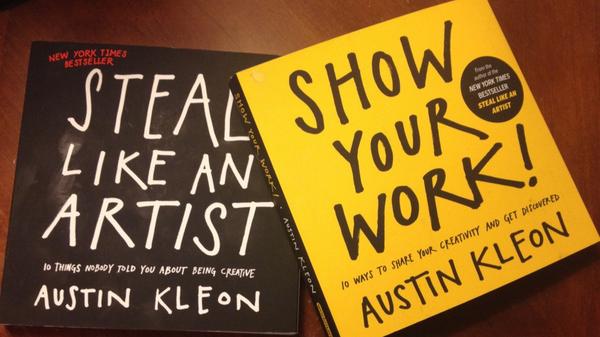
I chose these verbs carefully because I think that the order matters.  So often, we feel the time crunch in education and I think we often jump to having students make something with so many detailed requirements that they don’t have time to dream about what they hope they could make or have time to mess around, fail, and learn from those failures.  As I plan projects with teachers this year, I want to intentionally plan spaces for students to pause and wonder and have time to explore before they actually create a final product that is shared with an authentic audience.  I want us to think carefully about how we “show our work” just as Austin Kleon outlines in his books.  He says, “If your work isn’t online, it doesn’t exist.”  I’ll be thinking carefully about how we give students opportunities to create and also how they share their process as well as their final product.

Within this goal, I have subgoals about the number of large-scale projects I will do with each grade level, the development of our library makerspace, the collaborative relationships with our community makerspace and tech startup, and embedded digital citizenship.

Goal 2:  To engage in global thinking and global collaboration

Global TL logo

I can’t even count the number of times that global thinking and collaboration came up this summer.  I feel like so many people around the world are primed and ready for this endeavor during the upcoming year.  Last year, our library was more connected than it has ever been through authors, guest speakers, reading events, and peer feedback through Skype and Google Hangouts.  Even though we felt connected, most of our work was projects or single connections.  I would love to see global thinking and collaboration become more evident in what we do through long-term collaborative relationships around the globe and authentic questions and projects that matter to the world.  Within this goal are the many networks that I will be a part of this year including GlobalTL, Connected Classroom, Skype in the Classroom, and my Twitter PLN.  I’m inspired by the work of Sylvia Rosenthal Tolisano and will look at her work as we plan this year.

As teachers and I plan this year, we will ask ourselves how we are being global thinkers and how we are connecting our students beyond the walls of our school.

Goal 3:  To empower student voice

IMG_3479

When I thought about this goal, I was reminded of many stories shared by George Couros at ISTE including the story of a little boy who made a video where he overjoyed by getting one “like” on a social media post.  I was reminded of Todd Nesloney sharing about his math fair and how he asked students to “wow” him by showing their math knowledge.  Students did more that “wow” him.  They shared their passions in life, involved their families, and were empowered.  I was reminded of how we all want to be heard and feel like we’ve made a difference.  As I plan with teachers this year, I want to ask how we are empowering each student by allowing them to share their passions and feel that their voice is heard.  In the library, I will continue to explore this as well by giving students opportunity to document our year, make decisions about library resources, share their passions through contests and displays, pass on their expertise through co-teaching experiences, and listening closely for opportunities I don’t even know about.

Goal 4:  To support the reading habits and curiosities of students, teachers, and families

It’s no secret that the more you read the better reader you become.  You of course need to have the skills and strategies to accompany that time commitment.  You also need access to reading that matters to you.  This year I want to be more intentional about supporting reading curiosities to match students, teachers, and families to the kinds of stories and information they are looking for.  I also want to be more intentional about documenting that commitment to reading.  Our library is not the only source of reading materials, so I want to continue to build a collaborative relationship with the public library, local bookstores, and other community resources to all work together toward a common goal.

This year, we will explore an Evanced tool called Wandoo Reader.  This tool will give students a portal for documenting their reading lives through tracking book titles and minutes read.  Along the way, there will be challenges issued to students, and within Wandoo Reader, they will earn pieces to a robot that they will customize.  I hope that this tool will offer a level of engagement for tracking reading as well as encourage students to spend more time reading in multiple ways from multiple locations.

IMG_3035


Our planning will begin this week and I look forward to carrying these goals with me, trying them out, and see what miraculous things happen this school year.

What are YOUR library goals?  I invite you to think about them in new ways and share.