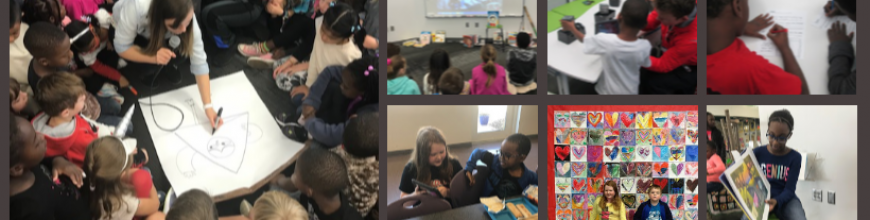
2nd Grade Monster Stories

Brink Every year our 2nd graders write monster stories leading up to the end of October and a PACT time called Monster Mash where families come into the classrooms to engage in what students are learning.

The project has many hands involved.  In art, Ms. Foretich works with the students to create their own monsters.  She then takes digital photographs or scans of those monsters and prints out mini versions of each student’s monster.

In class, students create scenes where their monster might live, where they might terrorize, or where they might go on an adventure.  They use their monster and scene to write a story.  Through several writing workshops, students develop their pieces, revise/edit, and publish.
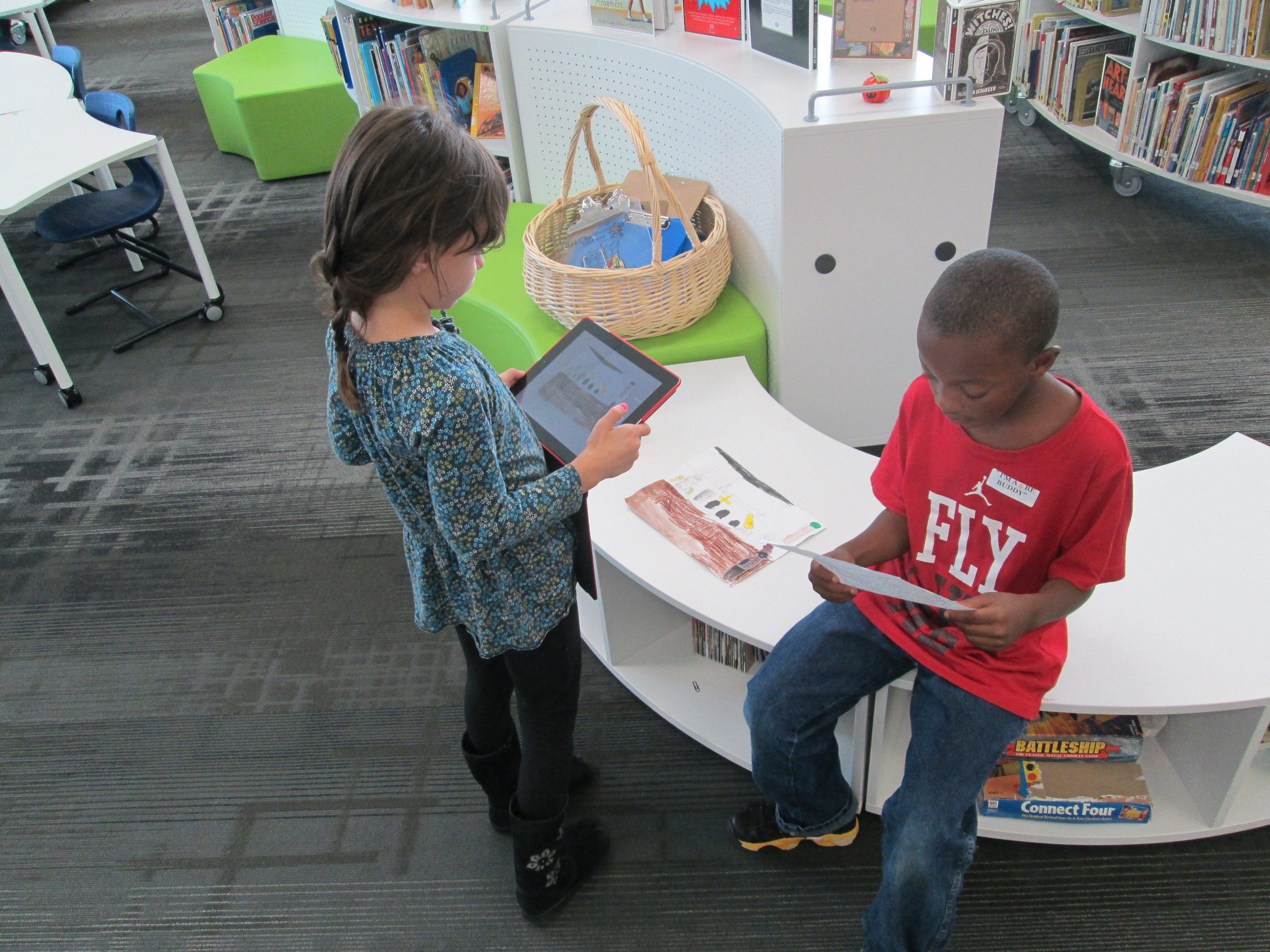
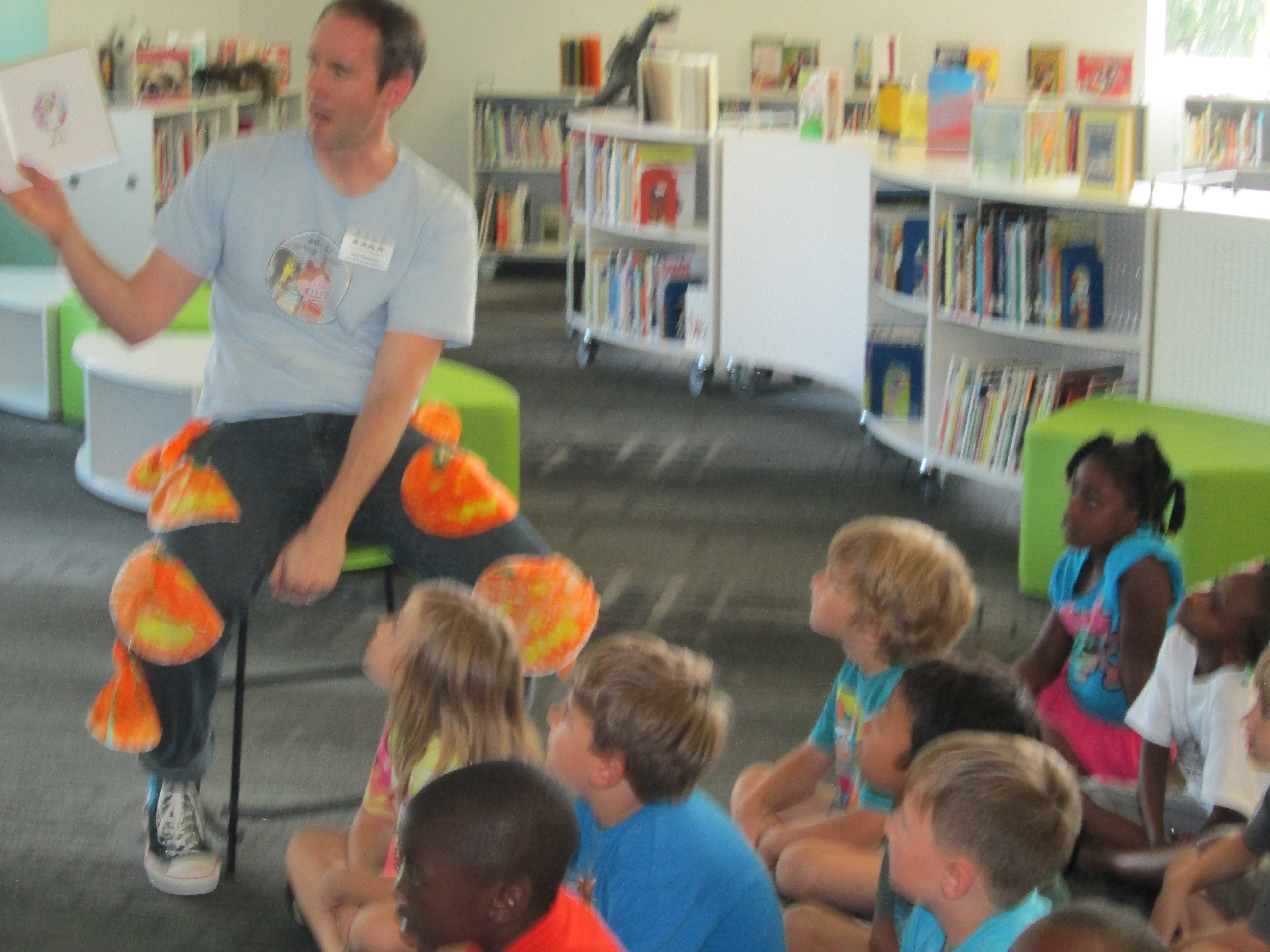
IMG_1251In the media center, students come to me to film their monster story with our iPads.  Some students come with one scene and one monster, while others come with multiple scenes, multiple monsters, and pages and pages of story.  This year, we created a huge recording schedule that was quite ambitious.  Over almost 2 weeks, I would have 3 students every 15 minutes during a 90 minute time frame.  During this 15 minute window, we had to film the movie, upload it to an iMac, check the volume, add a title slide, and export the movie to a flash drive for Youtube uploading at a later time.  It took quite a while to get a flow going, but by the final few days, we were getting really efficient in our 15 minute window.  With a few students at the beginning, we made an opening slide with footsteps and a creaking door.  This same slide was used for every student, so we just had to change the title and author each time.  I set this up on 2 iMacs so that we could double up on uploads.  Some students filmed by themselves by using the iPad on a tripod.  Other students were filmed by Ms. Maher, a gifted teacher, or Mrs. McGee, a grad assistant.  If enough students were available and ready, students filmed for each other.  My role was to walk students through the steps of creating the video.  With every student, I talked through what we were doing on the screen.  Students approved the volume on their videos, added their title, and stayed with me through the export process.  I uploaded the video to Youtube after they left.

http://www.youtube.com/watch?v=UncYXD1tW0I

Teachers showed the videos during the Monster Mash PACT time.  To make sharing and viewing the videos easy, the teachers took all of the links to student videos and put them on a Thinglink.  To make these, we put all of the student monsters on a table, took a picture of them, uploaded the picture to thinglink, and attached each student video to his/her monster.  Now, when parents ask how to get to the videos, it is very easy to just share the thinglink with them.
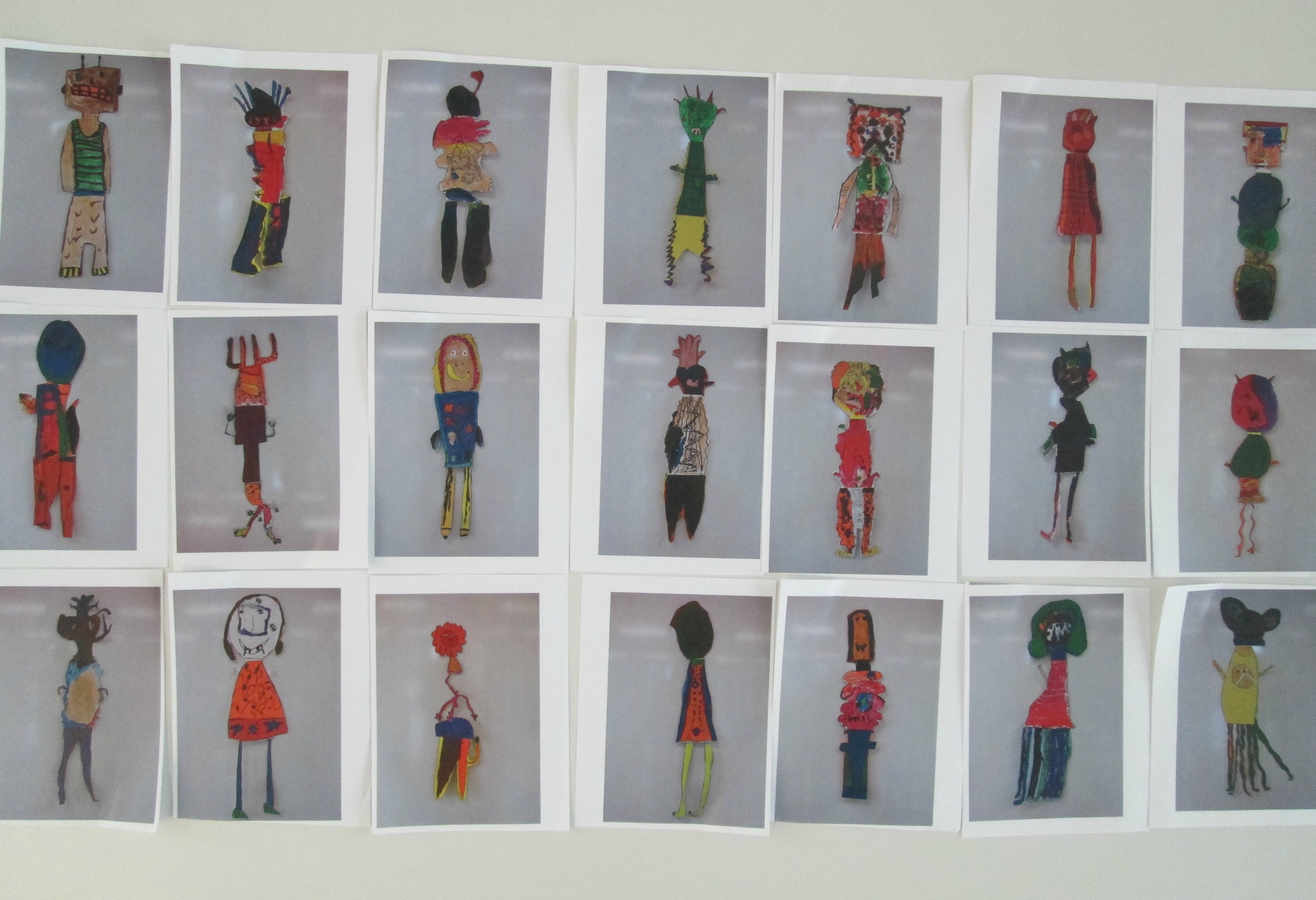
RamseyerNext year, I want to think about how to give students even more ownership in the process.  Because of the tight time frame, it was hard to let students do all of the work of filming and uploading, but I know there has to be another way.  I’m going to reflect on that and suggest some improvement for next year.  For now, we can enjoy the amazing creations of these students in art, the classroom, and the media center.
Brink

Ramseyer

Wright

Yawn 

Studying Illustrations with Jerry Pinkey

Pinkey art (8)Third grade is beginning a folktale project that is a collaboration between classroom teachers, the art teacher, and the media center.  This week, we kicked the project off with a lesson in the media center to explore the artwork of Jerry Pinkney, who writes and illustrates many folktales.

Students came to the library during art.  The purpose of this time was to get familiar with Pinkney’s illustrations before students take a field trip to the High Museum of Art  in Atlanta to see an exhibit of Jerry Pinkney’s art.  We wanted students to think about 2 questions.

  • What clues does the illustrator give us about the setting of the story?
  • What clues does the illustrator give us about what the characters are doing in the story?

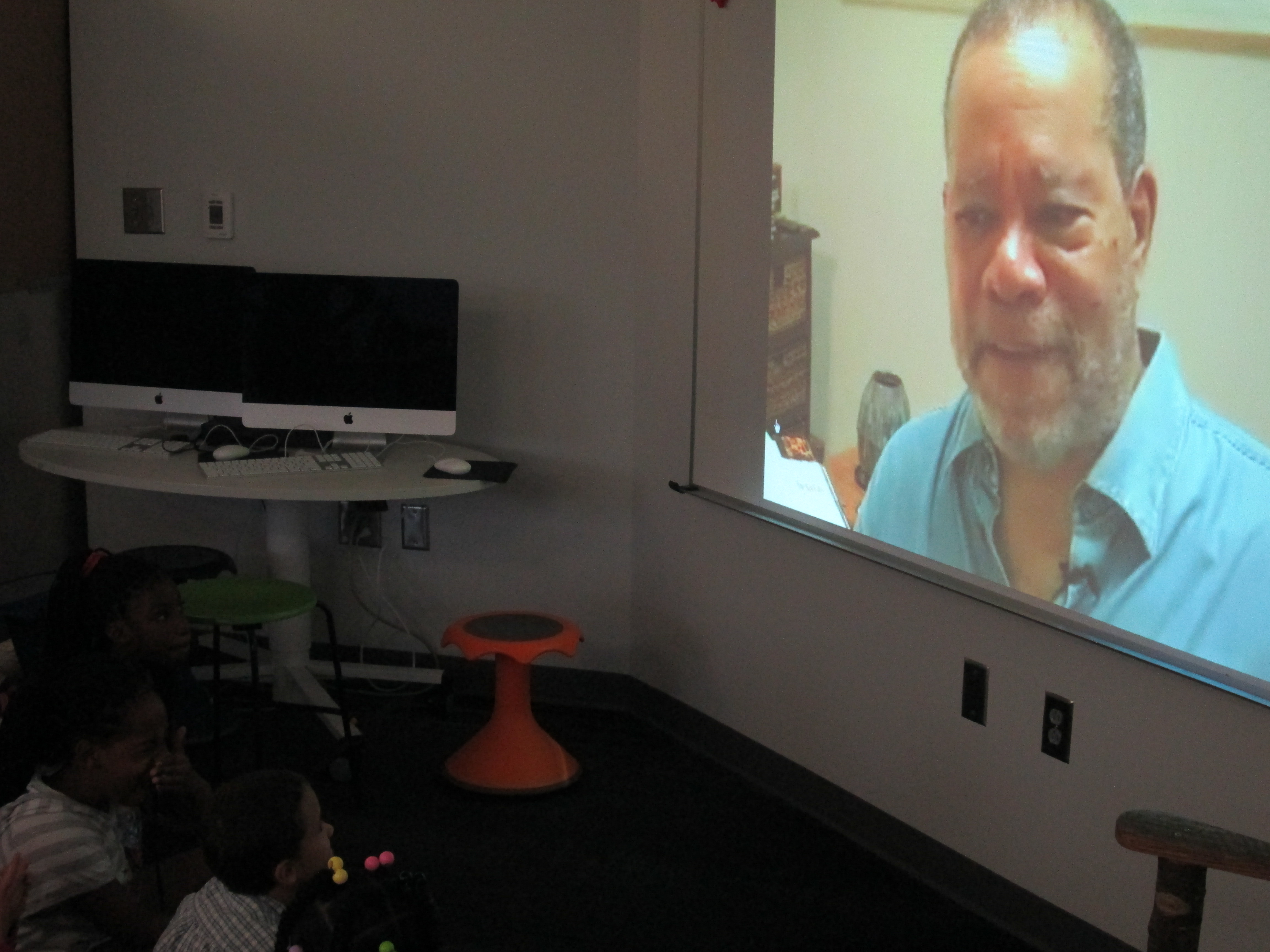
We started with this video of Jerry Pinkney discussing The Lion and the Mouse.

After the video, I asked the students how Jerry Pinkney started working on the book and what he realized once he made those first steps.  This took our conversation to focus on the importance of illustrations and how they can tell the whole story or how they can work with the text to tell the story.

Next, we looked at this slideshare that showed Caldecott honor and medal winners along with the criteria used to decide the winners.

The purpose of this part was to highlight the many ways you can look at an illustration and how it interacts with the text or tells the story.  Jerry Pinkney has received several Caldecott Honor Awards along with the Caldecott Medal.

Pinkey art (10)Finally, we modeled how someone might study one illustration in a book very carefully and consider our 2 focusing questions.  I used We Give Books to display the book Big Red Lollipop.  Students in each class noticed things such as the red cross as a symbol for a hospital, an envelope on the side of a building to show a post office, the number of buildings close together to show a town, etc.  They also noticed how the character’s hair was blowing in the wind and how her leg was lifted high to show that she was running.  They noticed how she was carrying a letter and smiling to indicate that she was probably going home to show her family something she was excited about.

For the last part of the lesson, students split into groups of 4-5 students.  Each group received 4-5 books by Jerry Pinkney to examine.  Their job was to study the illustrations using the 2 questions just like we did in our model illustration.  As groups talked, the art teacher, art student teacher, and I walked around and chatted with students about what they saw in the illustrations.  We then asked groups to choose one illustration that they wanted to show to another group and discuss.  They used iPads to take a photograph of the illustration.  When they shared with another group, they could zoom in and out of the illustration on the iPads to show the fine details.

In art, students will now have a lesson on museum etiquette  where they will practice the skills it will take to visit a fine art museum.

On the trip to the High on October 23, we will tweet our observations using the hashtag #barrowbuddies.

Next steps will include:

  • Learning elements of folktales.
  • Reading multiple folktales and using a Google form to track the most common elements.
  • Choosing a folktale to read in class without seeing the illustrations.
  • In Art, developing illustrations for that folktale.
  • In the media center, put the illustrations and folktale version together with technology.
  • Share the new creation with the world

We can’t wait to see how this project develops and how Jerry Pinkney’s art inspires what the students create.

International Dot Day 2013 @ Barrow

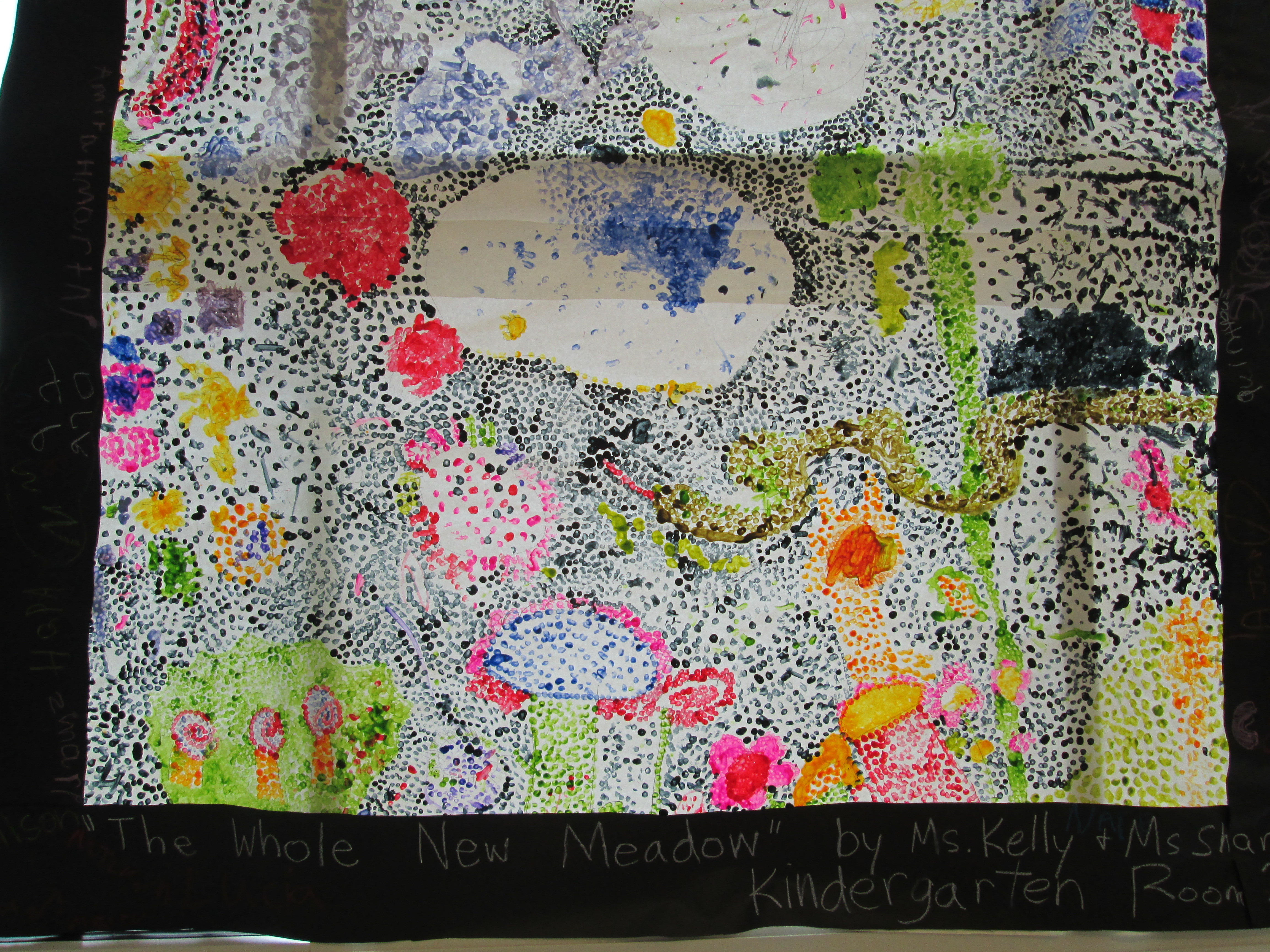
Ms. Kelly Hocking's class mural inspired by Chuck Close

Ms. Kelly Hocking’s class mural inspired by Chuck Close

International Dot Day has become a special day at our school and it seems to grow a bit each year.  This day was created by author/illustrator Peter Reynolds.  Each of Peter’s books focus in some way on creativity, expressing your individuality, and making your mark on the world.  It’s so much more than a day to create dots.  It’s a day to embrace your own uniqueness and express the things that you truly love.  It’s a day to establish an environment of innovation and encourage students to express their ideas through multiple formats.

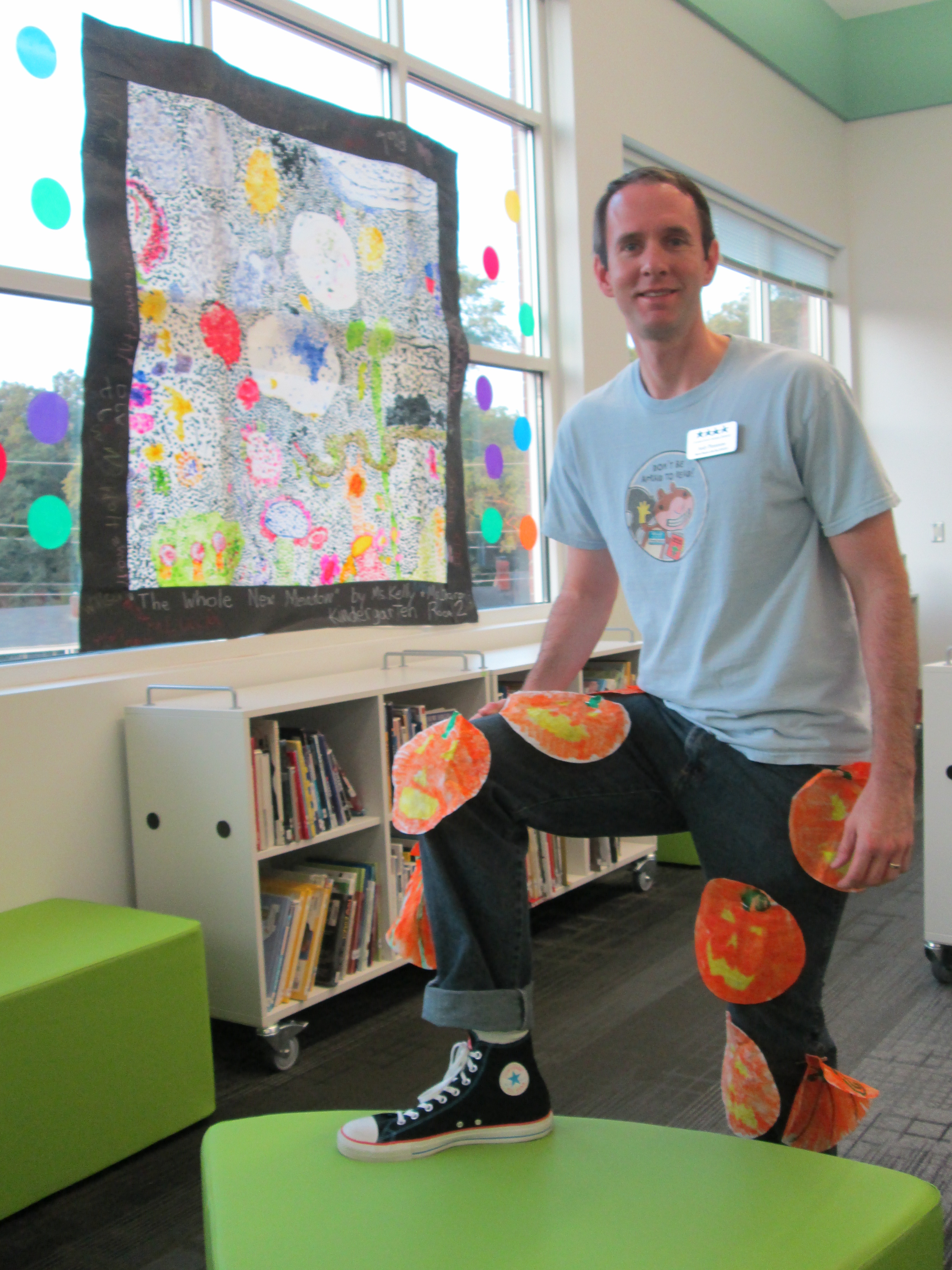
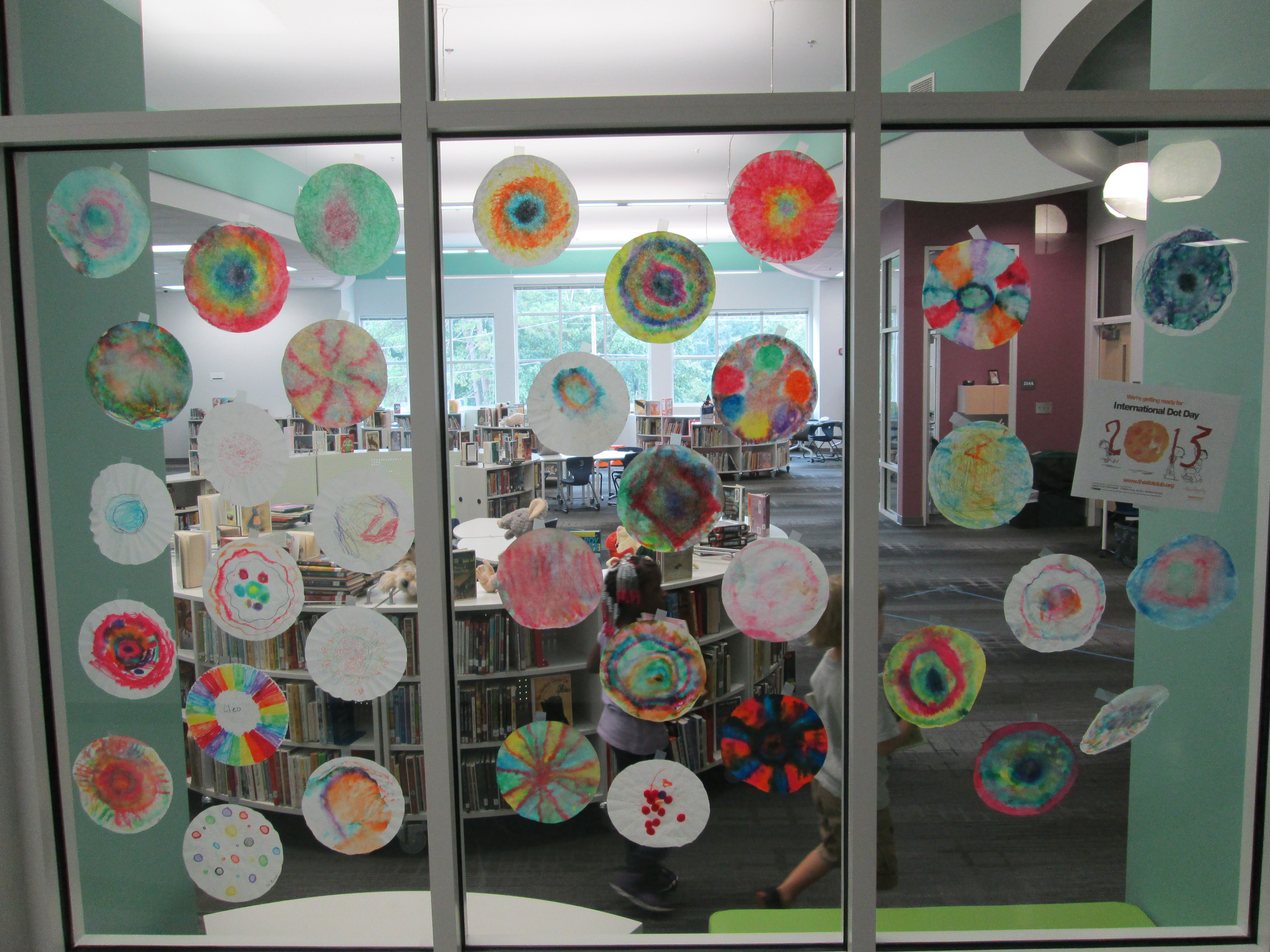
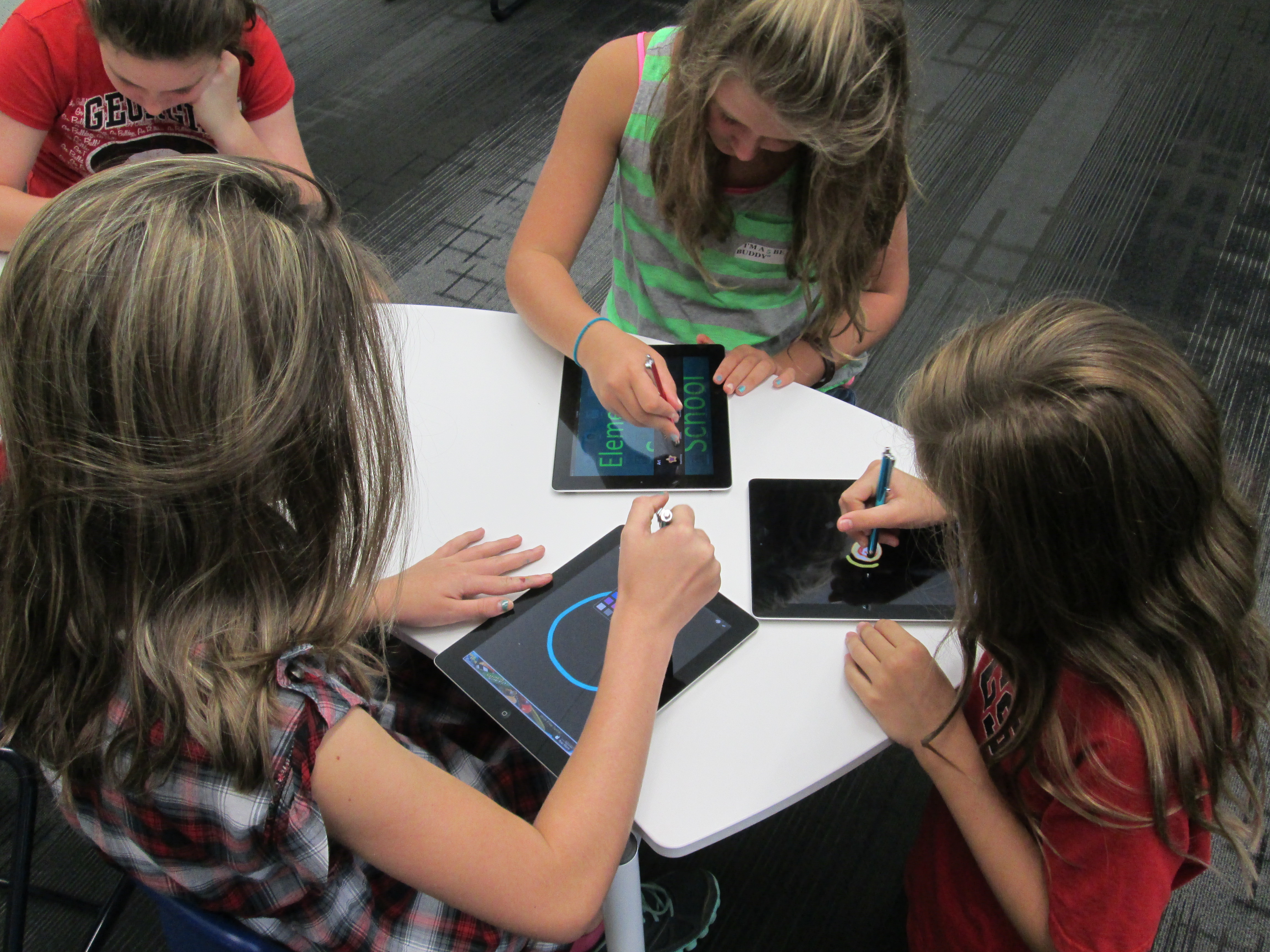
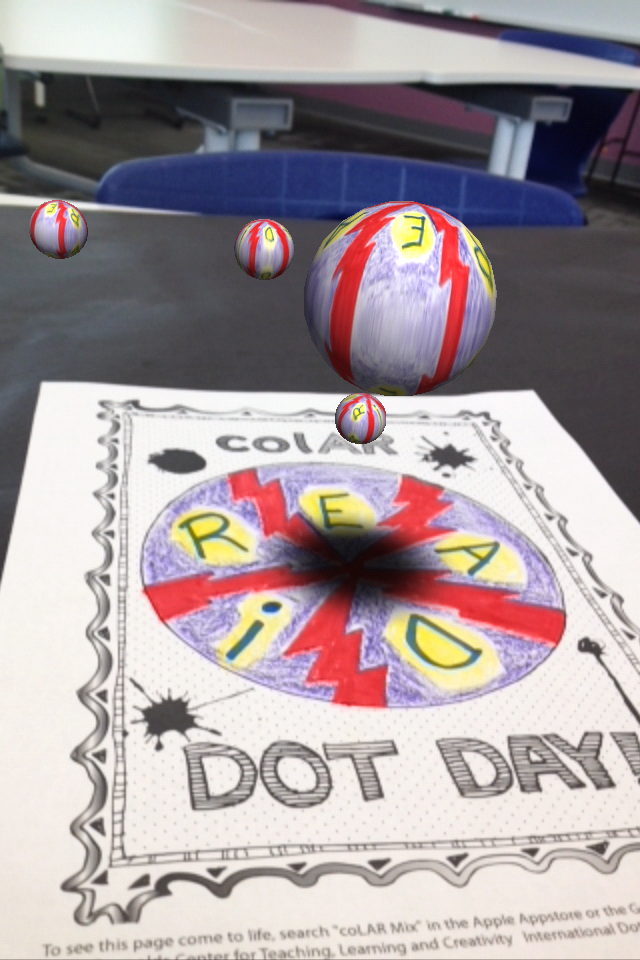
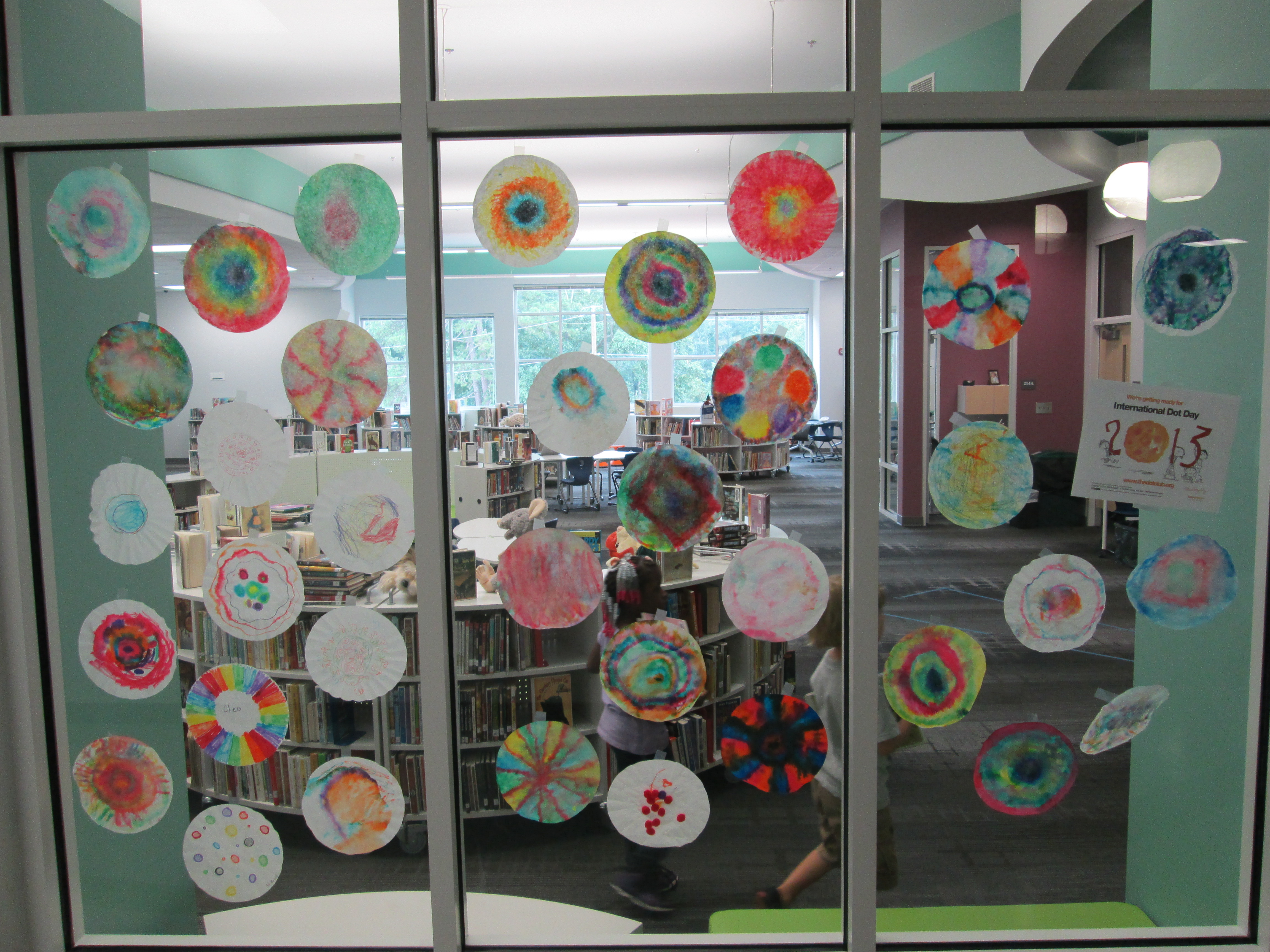
This year at Barrow many classes came to the library to read The Dot by Peter Reynolds and Press Here by Herve Tullet.  Students made digital dots using Drawcast and Glow Coloring on the iPads.  They made coffee filter dots with markers and water.  They used the super cool app colAR Mix to create augmented reality dots.  The media center windows have filled with dots throughout the past week to the point that you can barely see in.  Our principal even let us have a Dot Dress-up Day today.  It was so much fun to look down the halls and see dots everywhere.

Mr. Plemmons with pumpkin dots, converse dot, and Scaredy Squirrel dot.

Mr. Plemmons with pumpkin dots, converse dot, and Scaredy Squirrel dot.

hocking mural (2)A unique project that emerged was Ms. Kelly Hocking’s Kindergarten class.  Kelly always listens carefully to her students’ interests and this year she has heard their interest in art.  They are looking carefully at multiple artists and recently started looking at Chuck Close.  His artwork had a direct connection to dot day with its many dots to make a larger image.  This spark took us on a great journey.  We read Sky Color by Peter Reynolds where students were introduced to murals.  We spent time learning about Diego Rivera’s murals.  I shared my own mural that is in my son’s room and how it was designed and painted.  Students started looking in the community for murals.  Some even began to report back about the murals that they saw while in Atlanta.  Ms. Hocking facilitated her students in deciding what kind of mural they could make and over several class periods they penciled in their mural onto a large piece of paper and began filling it with dots just like they had seen in Chuck Close’s art.  Today, their dot mural was displayed on the large window of our media center.  The sunlight gave the mural a stained glass effect.  It was breathtaking and so many people were in awe as they saw it.  When I posted the picture of the mural on our media center facebook page, it immediately was showered with likes.  The mural was surrounded by window cling dots that a Barrow parent discovered and collaborated with other parents to purchase some for the library.hocking mural (1)

dot day (15)Today was also a day for students to come and tour the dot gallery on the media center windows.  I had all of our iPads available for classes to come and interact with the colAR dots on the inside and outside of the windows.  Ms. Li’s Kindergarten class was here bright and early to look at the dots.  Look at how much fun they had!

http://www.youtube.com/watch?v=5ga4bNA65AE


Reading The Dot with Van Meter

Reading The Dot with Van Meter

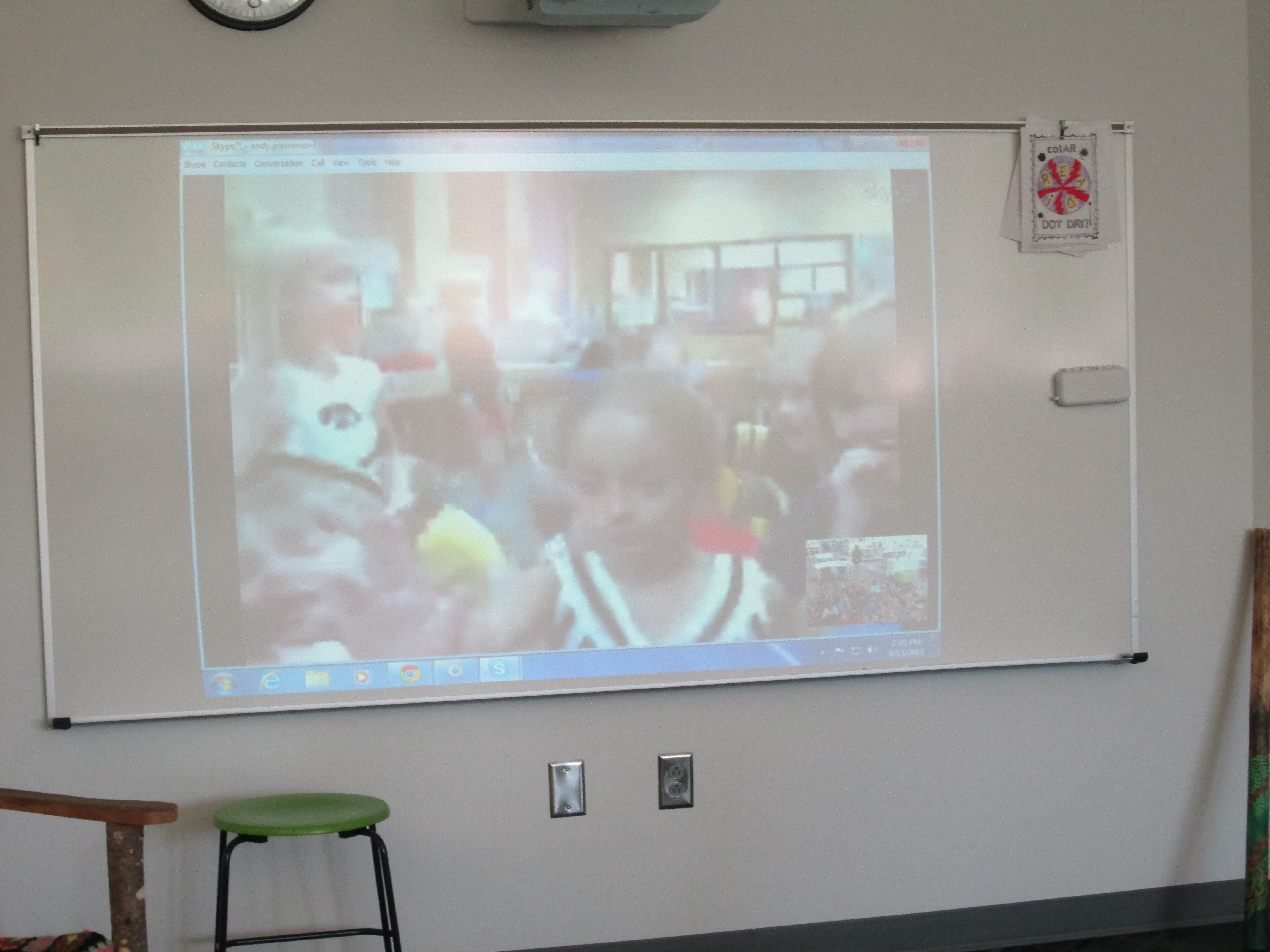
At the end of the day, Mrs. Wyatt’s 1st grade class skyped with Shannon Miller’s students in Van Meter Iowa.  We read the dot together.  Then, Mrs. Wyatt’s class used Google Earth to go on a virtual tour of a walking field trip that they will soon take in 5 Points.  Each stop on the tour was of course a dot on the map!

Our Van Meter dot friends

Our Van Meter dot friends

I look forward to next year and how we might celebrate even bigger when we aren’t in the middle of moving in to a new school.


International Dot Day: First Steps

dot day (14)Today, the very first classes came to participate in International Dot Day lessons.  Ms. Olin’s 5th grade class read The Dot by Peter Reynolds.  We talked about what it means to make your mark on the world.  I loved hearing their ideas because they really had a sense of how they could make a difference.  I had 2 separate areas setup for them.  One area had coffee filters, a variety of coloring supplies, a water bottle, and tables covered in black butcher paper.  They could use the materials in any way they wanted to be creative making a dot.  The other area had iPads loaded with Glow Coloring and Drawcast.  Students who chose iPads used a stylus to draw a dot and save it to the camera roll on the device.

Students chose where they went.  I made no requirements about doing a dot at both locations.  Some students chose to make several coffee filters dots by trying different techniques of using markers, crayons, color pencils, and water.  Others chose to make multiple iPad dots.  A few chose to do both.  Once students’ dots dried, I started making our dot gallery on the windows of the library.dot day (15)

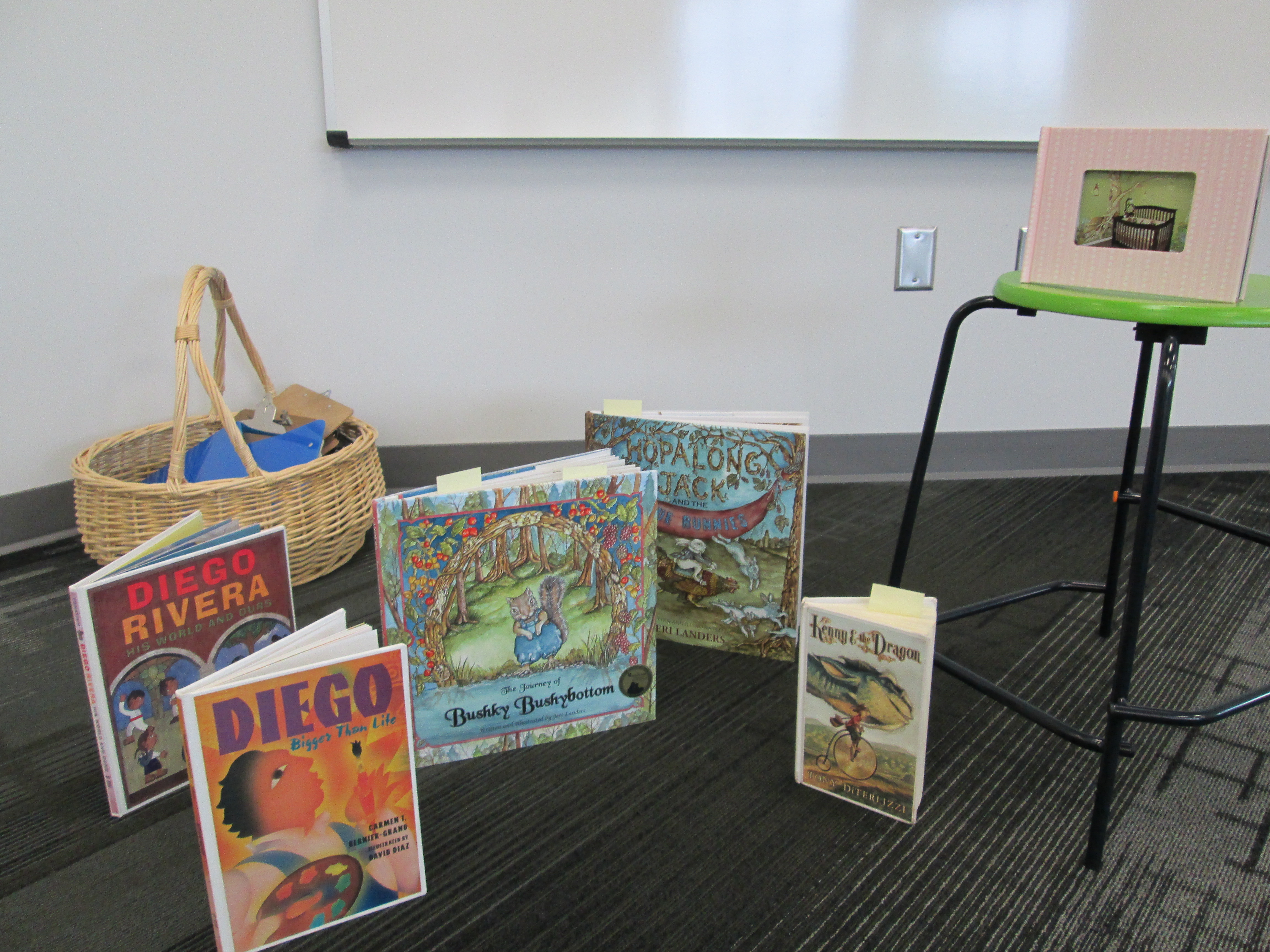
dot day (16)Later in the day, Mrs. Kelly Hocking’s Kindergarten class came to begin a dot project.  They are going to be studying several artists and learning how they can express themselves through art.  One of the artists they will learn about is Chuck Close.  This is a perfect tie-in to Dot Day since Chuck Close creates paintings that are made of numerous dots that come together to make a larger picture.  I had already read Sky Color to her class and they became very interested in painting murals.  Today, I showed them pictures of a mural in my daughter and son’s room and how the idea for the mural came from several children’s books.  Then, we read Diego Rivera His World and Ours.  The book details how Rivera traveled Mexico to get ideas for his murals.  It also raises the question about what Rivera would paint if he were alive today.  I love that the book ends by saying, “Today Diego is not around to make this happen.  So it is up to us to make our own murals and bring them to life.”  This was Mrs. Kelly’s lead-in to the mural that they will now create using dots in their classroom.  The mural will be displayed in the library, and we will probably have some more lessons before it is done.

dot day (17)I also discovered a great new iPad app after reading about it on Fablevision.  colAR Mix is an augmented reality app that brings coloring pages to life in 3D.  They have made a special coloring page just for dot day.  I made a practice dot, and it was so much fun seeing it pop off the page on the iPad.  You can take a picture of your 3D dot and save it to the camera roll.  I’m sure several classes will try this one out.dot day

Painting our Little Free Libraries

Paint generously donated by the Athens Oconee Home Depot

Paint generously donated by the Athens Oconee Home Depot

It’s been awhile since I’ve done an update on our 2 Little Free Libraries.  We’ve had so many end-of-the-year events that it has slowed us down a bit.  Mrs. Foretich, our art teacher, and I sat down and looked at the designs that student groups submitted and narrowed it down to the 2 designs.  One will feature things that show “where I am in the world”.  It will include GA & US symbols as well as some Athens symbols.  The other design features a sun shine with a red color that resembles the bricks of Barrow school.  Ms. Foretich worked with Kenneth Sims and other employees at the Athens-Oconee Home Depot to select paints, and once again Home Depot generously donated these items.  I can’t say “Thank You” enough to this business.  They have been a huge supporter of this project.

While the 5th grade is practicing for the Moving On Ceremony and making music videos in music class, Mrs. Foretich is pulling small groups to paint.  Students primed both libraries first.  Then, designs were drawn on in pencil before beginning the painting process.  Students repeatedly went back to the paper designs and also talked with the designers to make sure the design was staying true to the vision.  Students even worked on mixing paints to get various shades of colors that were needed on the libraries.IMG_0715

Next week, Mrs. Foretich and I will travel to Lay Park and meet with Randy Haygood to discuss the exact location of our second library.  KenDarius, a Barrow 5th grader, is working on a plan for some rising 4th & 5th graders to deliver books to this library throughout next year as it needs to be filled.  He will join us next week when we meet with Randy.

Throughout this project, we’ve tried to keep students at the center.  They have been a part of almost every decision in the project and were instrumental in getting us the supplies that we needed through their carefully written letters.  Of course, this student involvement has stretched this project to a year-long project, but I think it just shows how when you take time to allow students to participate in the process, rich and rewarding experiences and learning occur.

Not A Box Display

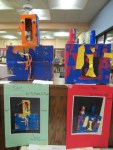
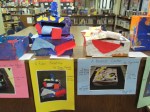
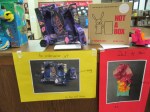
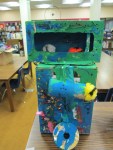
IMG_0400As part of the participatory culture of the Barrow Media Center, we like to feature student art exhibits.  We haven’t had as many this year due to our temporary space while our school is rebuilt.  However, today one of my favorite displays returned.  Ms. Foretich, our fabulous art teacher, setup the PreK Not a Box display.  Students read the book Not a Box by Antoinette Portis and designed their own artistic creations out of boxes.  This book always inspires creativity.  One of the things I love about this display is how each design is accompanied by a digital photograph of the creation that is labeled so that visitors can understand what each box represents.   In the future I could see this project evolving to include some QR codes to make the exhibit more interactive.  There’s always something new and innovative that we could include.  Time always creates some limitations on what we can do.  If you happen to be near the Barrow Media Center, please stop by and take a look.  If not, then take a look at the gallery below and feel free to leave comments for Ms. Foretich and her students.

Connecting Libraries with Extra Yarn (Part 2)

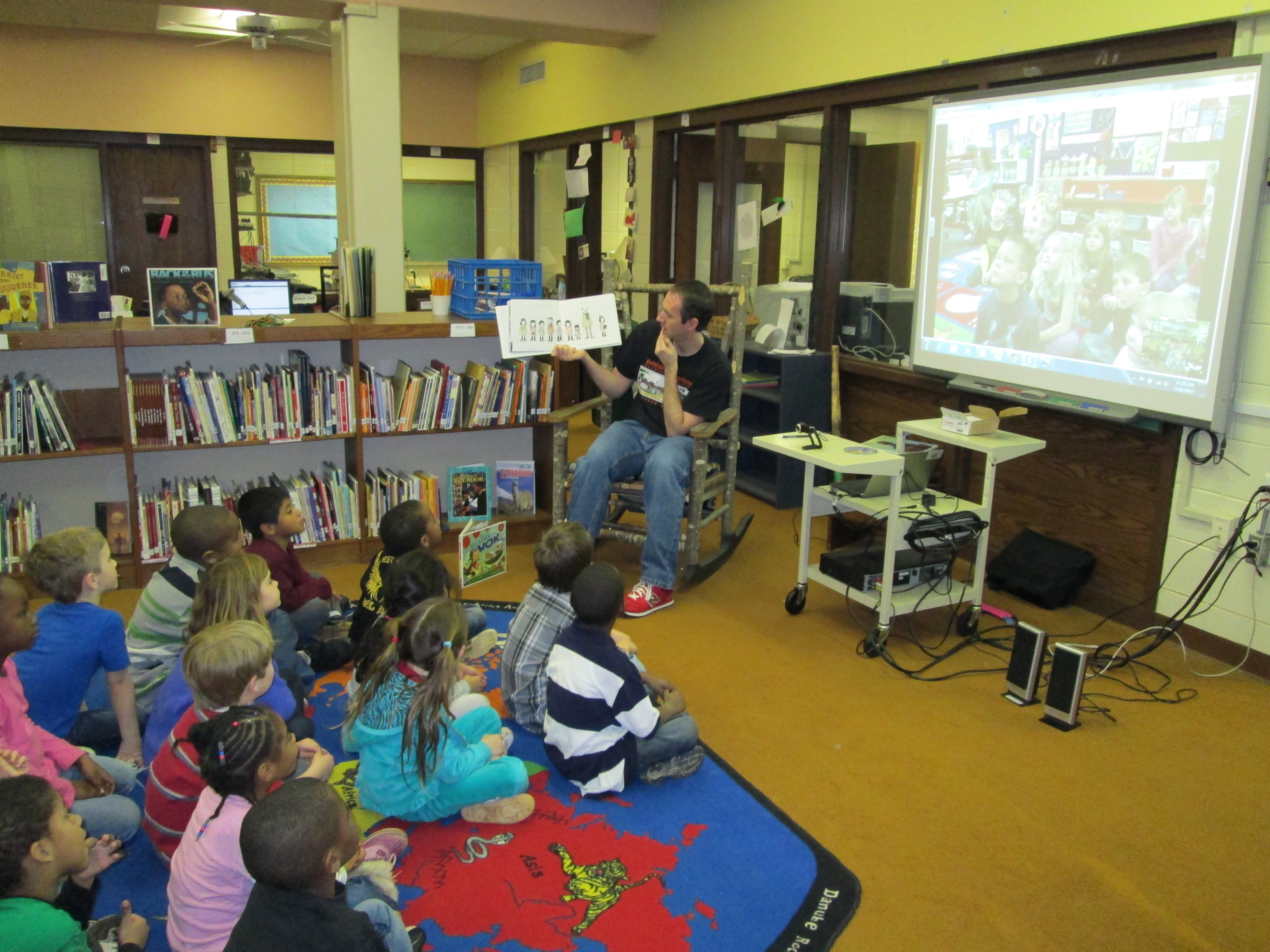
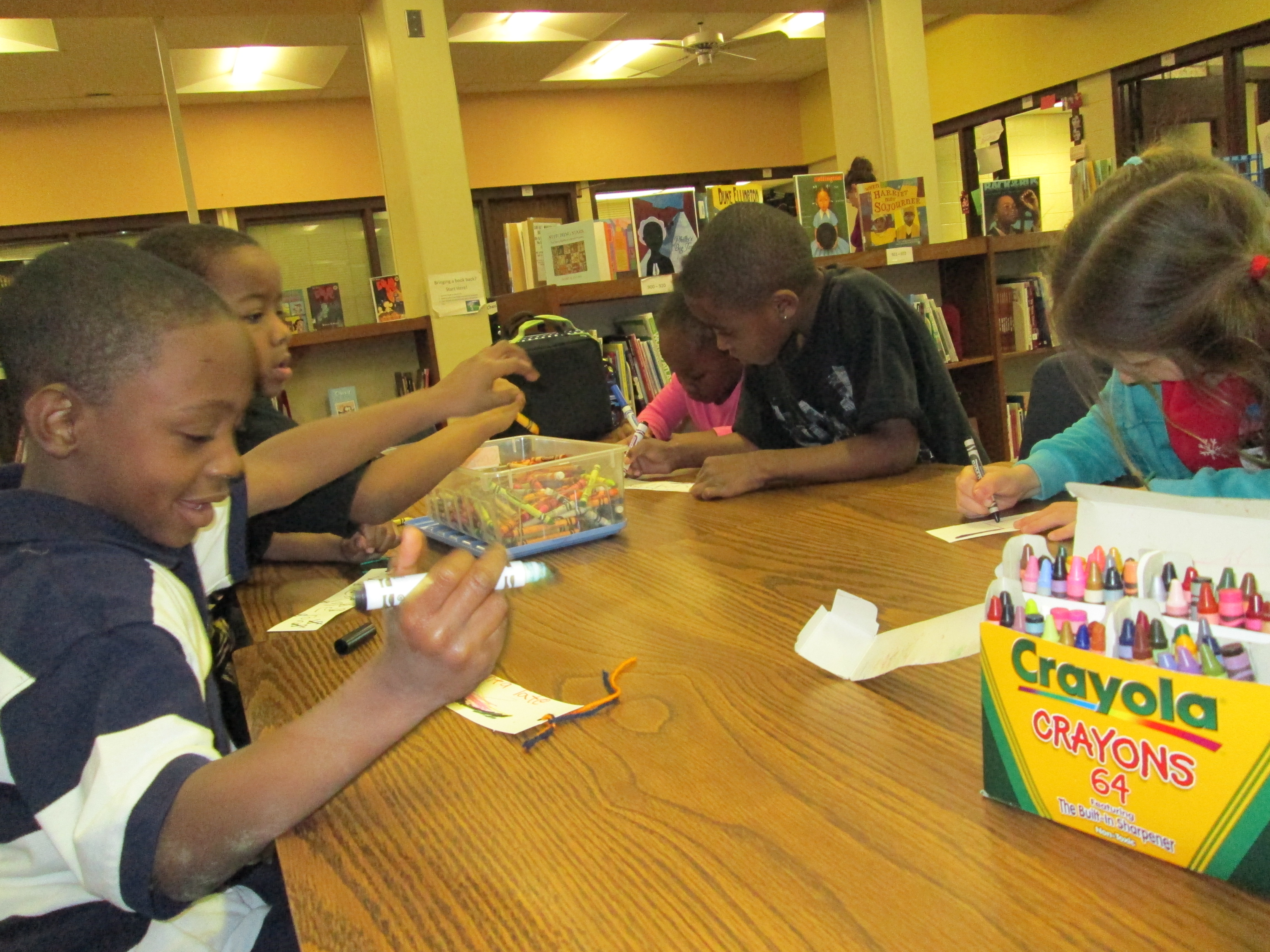
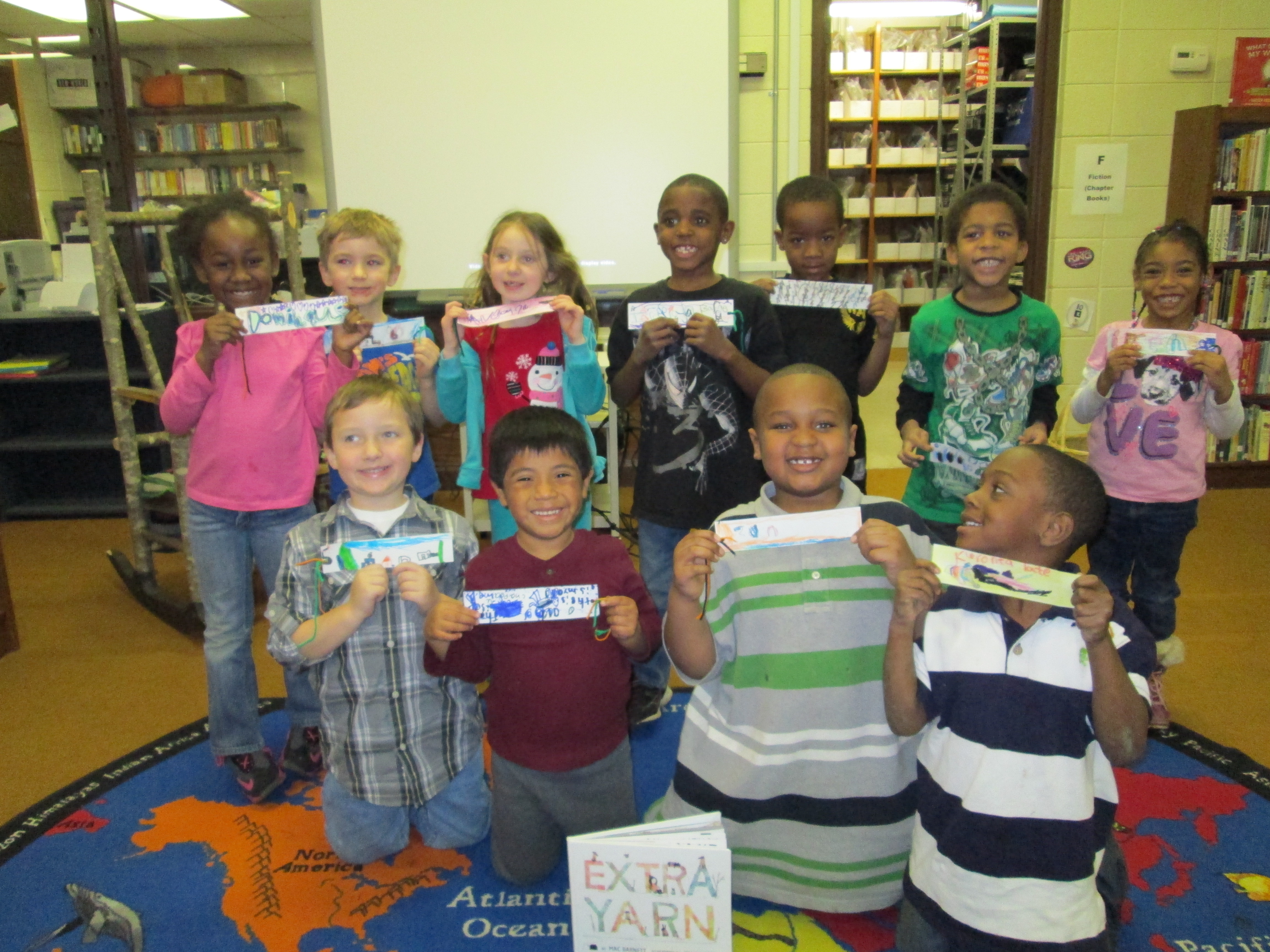
IMG_0001Today, Ms. Seeling’s students had the chance to connect with another Kindergarten class in Van Meter, Iowa.  Librarian Shannon Miller and I read the book Extra Yarn once again and students made bookmarks to send to one another.  It was another magical time.

I made some fun observations this time:

  • Students wondered if Shannon’s students could read the same letters that they do.
  • Students wondered if they would get their bookmarks in the mail by this afternoon.
  • Students wondered if Shannon’s students were in another country.
  • Students had personal stories for each of their bookmarks.IMG_0010

Any of these wonderings would have been great next steps of investigation in the library or in the classroom.  The personal stories really made me curious, so I grabbed my phone and tried to capture a few of the stories.  Each student had a reason they were using particular color and shapes.  Many were trying to tell the Van Meter students something about themselves through their artwork.  It really made me wonder how many stories we miss from students about the work that they create when we don’t stop to listen.  I want to do better capturing these kinds of stories.

http://www.youtube.com/watch?v=qRSiZPZKQZk

http://www.youtube.com/watch?v=UO7UcFu1CRc

http://www.youtube.com/watch?v=9Vah4vM2nPc


Bookmarks are almost ready to mail to Iowa.

Bookmarks are almost ready to mail to Iowa.

Since Shannon and I connected our 2 classes, I’ve had some brainstorming going on with teachers and other librarians about other activities to do with the book Extra Yarn.  Today, Ms. Seeling talked about doing a compliment web using yarn.  A student gives another student a compliment and then tosses the yarn to that student.  This continues until students have made a big web of yarn.  Kathy Schmidt in Gwinnett County brainstormed with me on twitter.  Now I really want to read the book again and try some of these new activities.  There’s always next year.  Who wants to connect?  It’s not too early to start planning 🙂


Kathy and I brainstormed on Twitter.

Kathy and I brainstormed on Twitter.

After our brainstorm, Kathy extended the lesson Shannon and I did and shared on Twitter.

After our brainstorm, Kathy extended the lesson Shannon and I did and shared on Twitter.


5th Grade Little Free Library Project Part 2

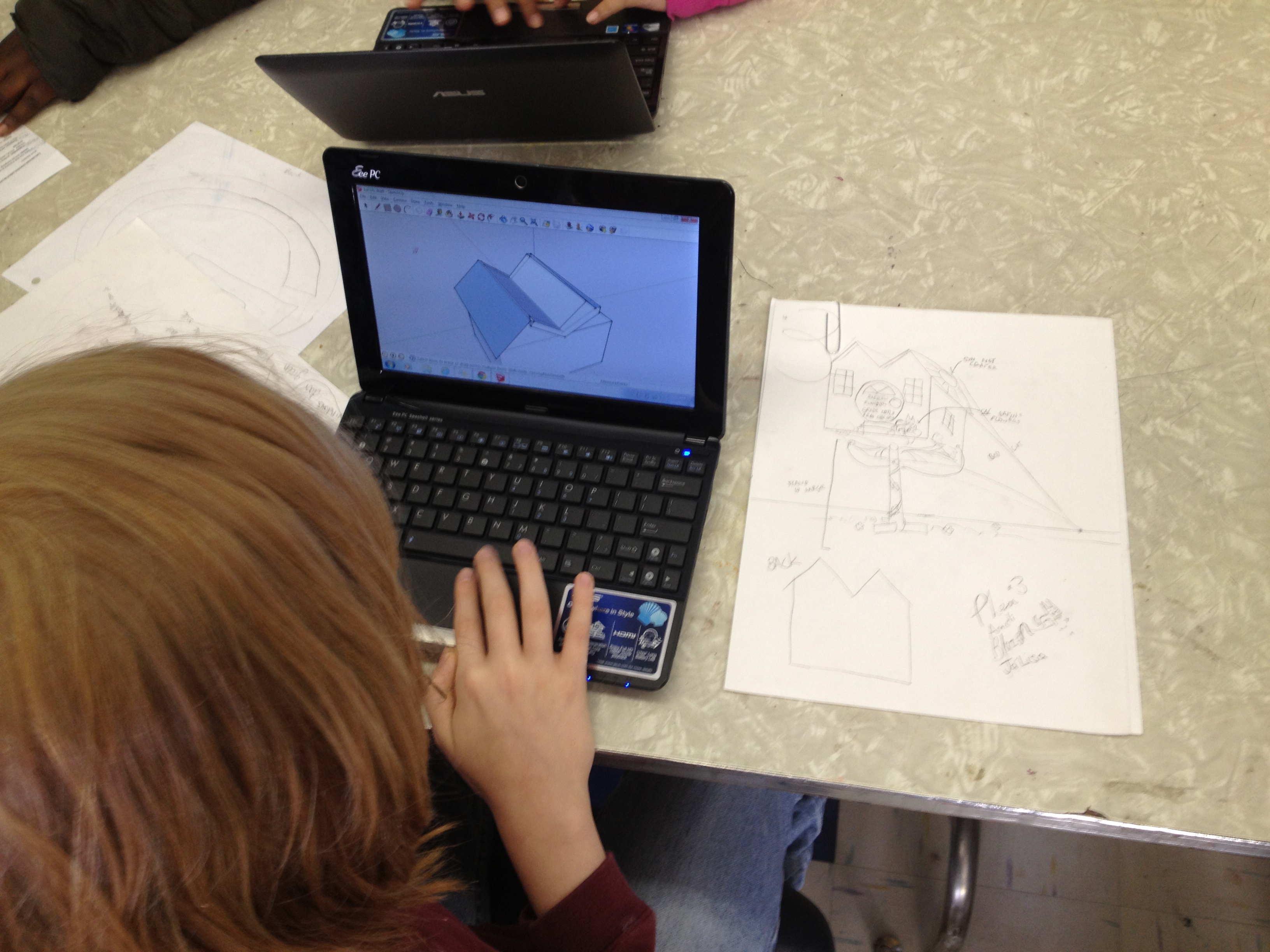
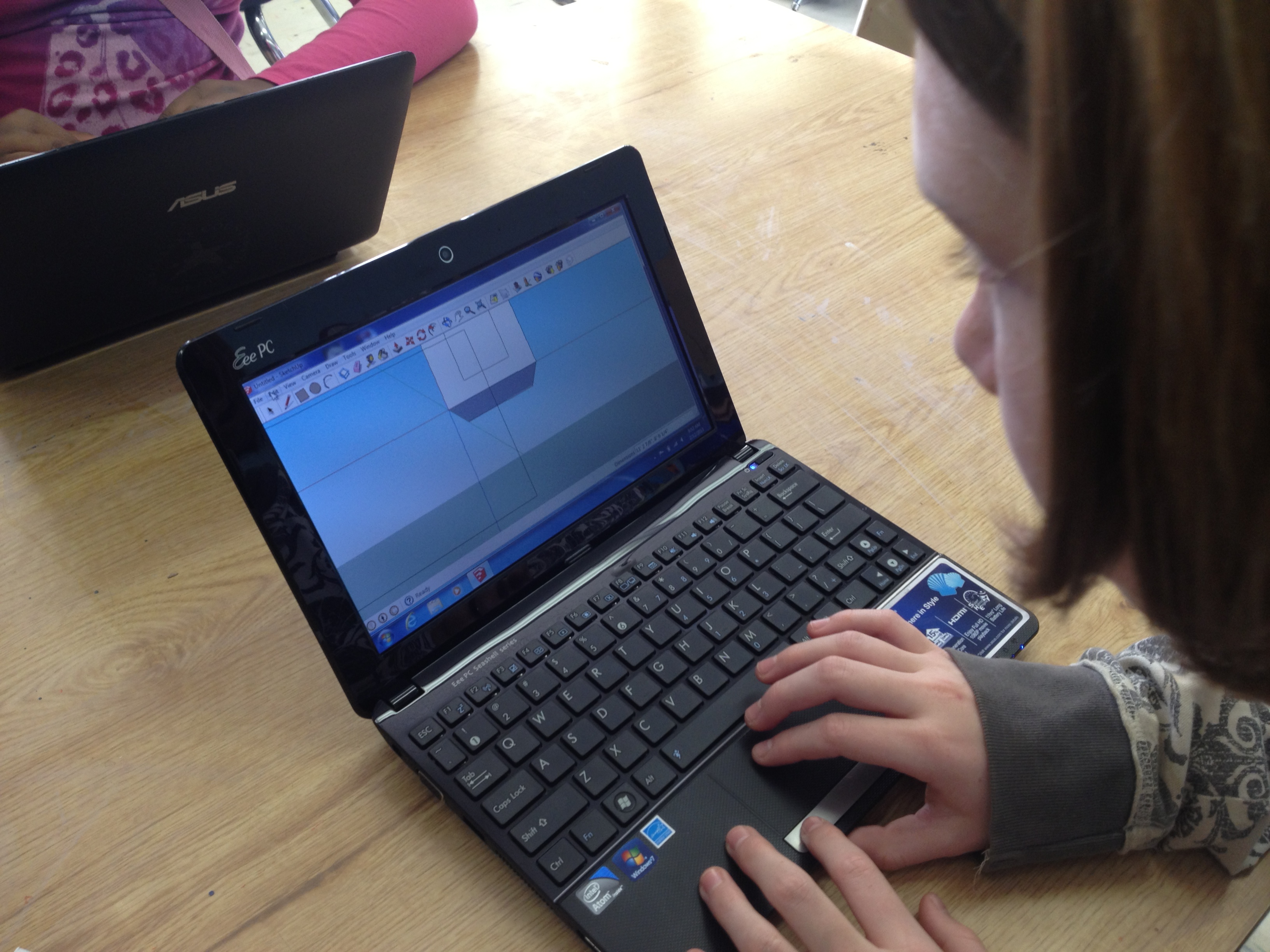
Students designed on paper before using Google Sketchup

Students designed on paper before using Google Sketchup

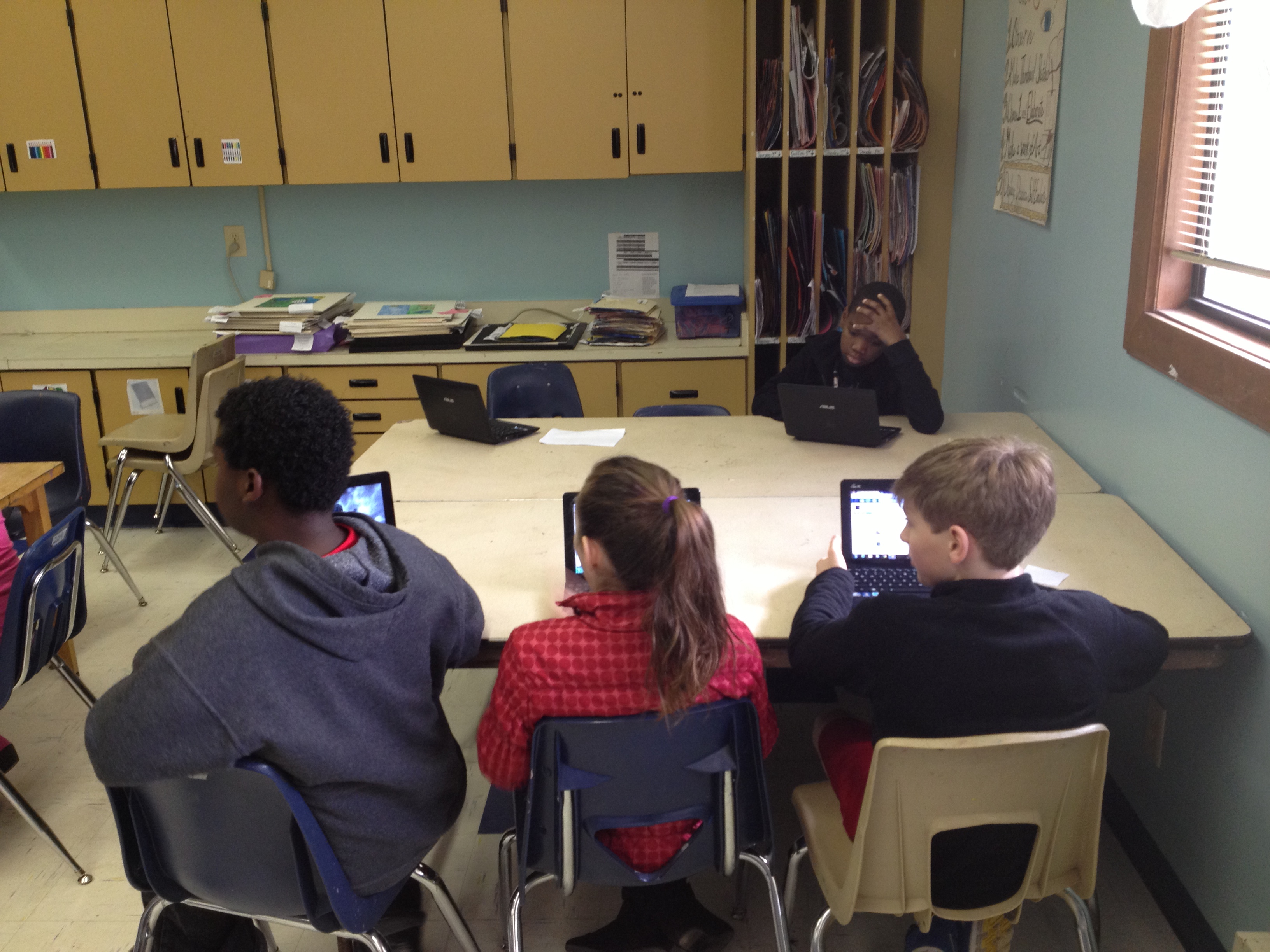
Our 5th grade Little Free Library Project is picking up speed.  Thanks to the amazing collaboration of Rita Foretich and her student teacher, this project is really getting off the ground.  In art, students from both 5th grade classes have been split into teams of 4-5 students.  Each team has a lead designer, a task manager, a researcher, a writer, and a presenter.  Each job has specific responsibilities which Ms. Foretich and her student teacher constantly check in on.  They also give the task managers checklists to help them check in with each person on the team.

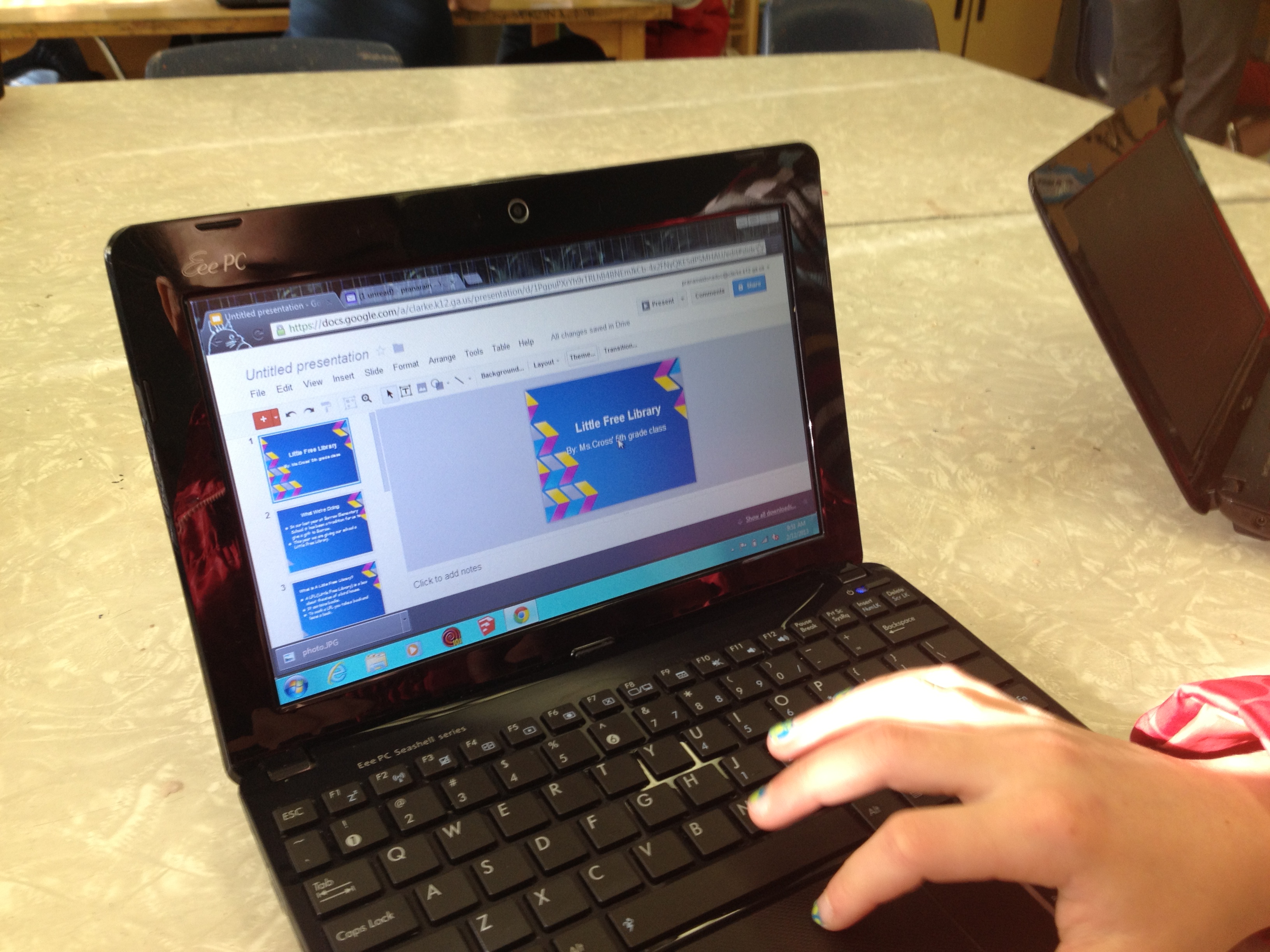
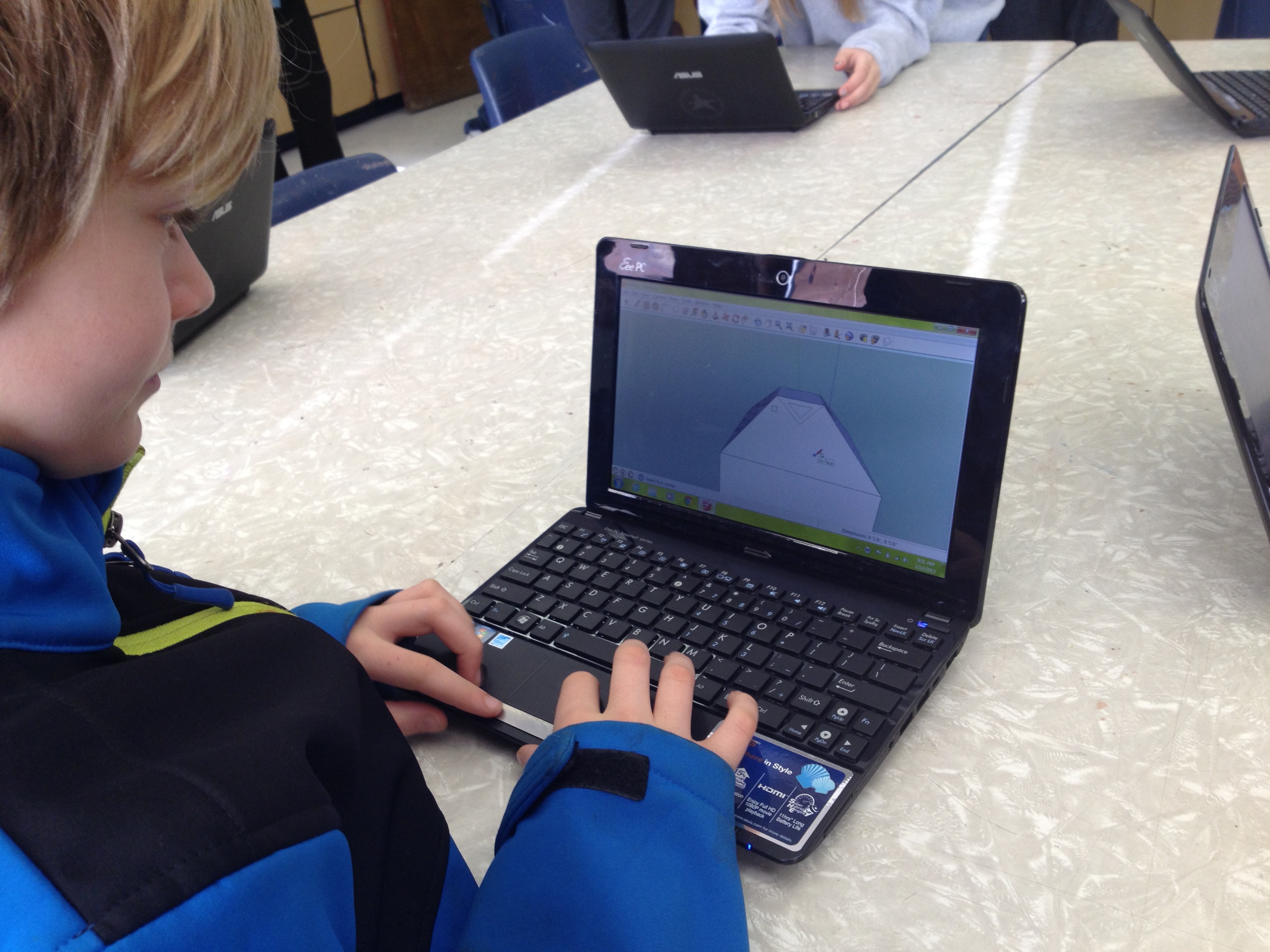
The student teacher is a Google Sketchup expert, so she has the lead designers using this tool to design a potential Little Free Library.  Students have made sketches on paper and moved to Google Sketchup to create a model of their library.  Presenters are putting together a presentation to inform our audience about each library design.  We may end up having the principal choose 2 designs or we may move forward with a student vote. LFL 4

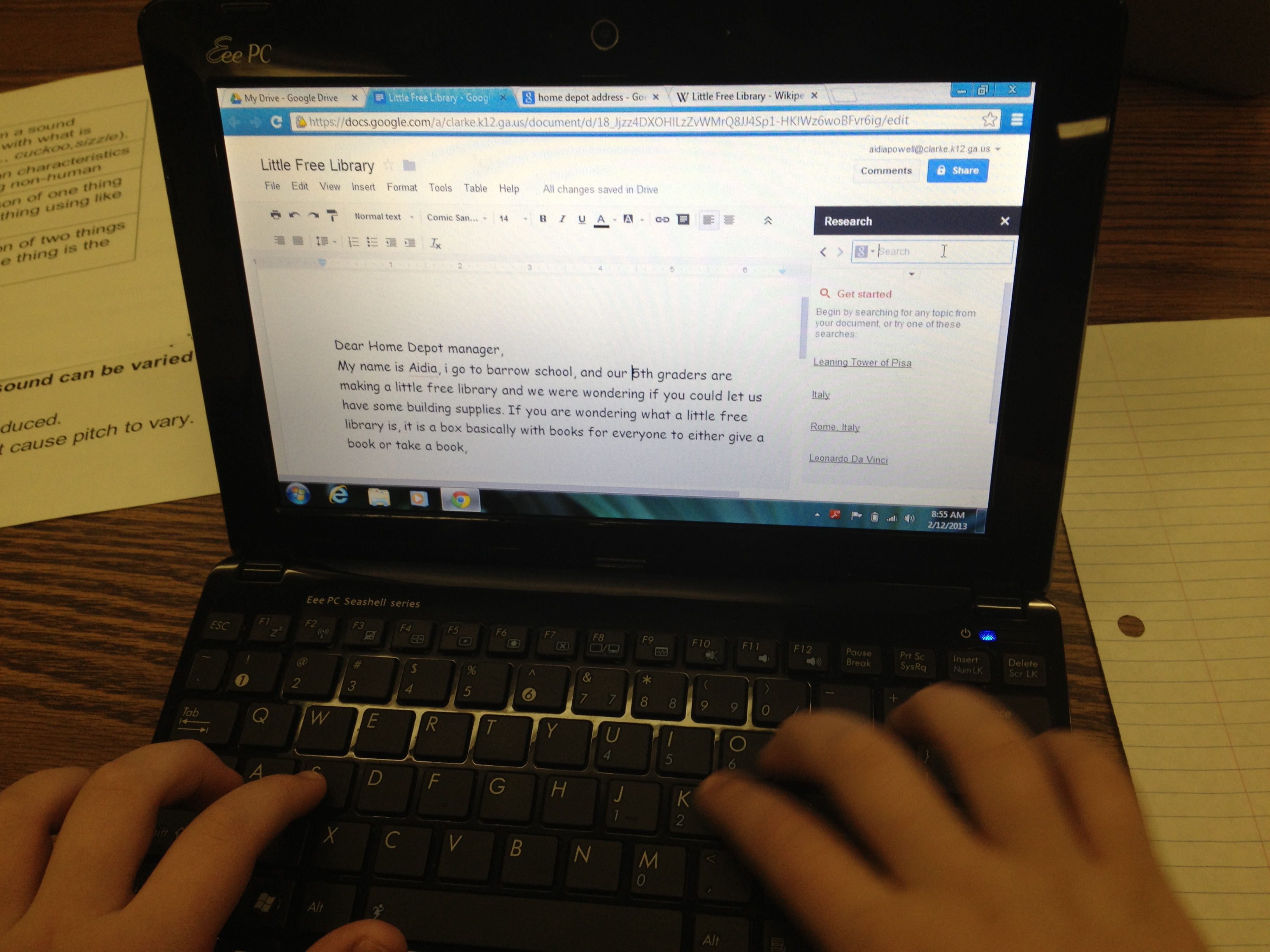
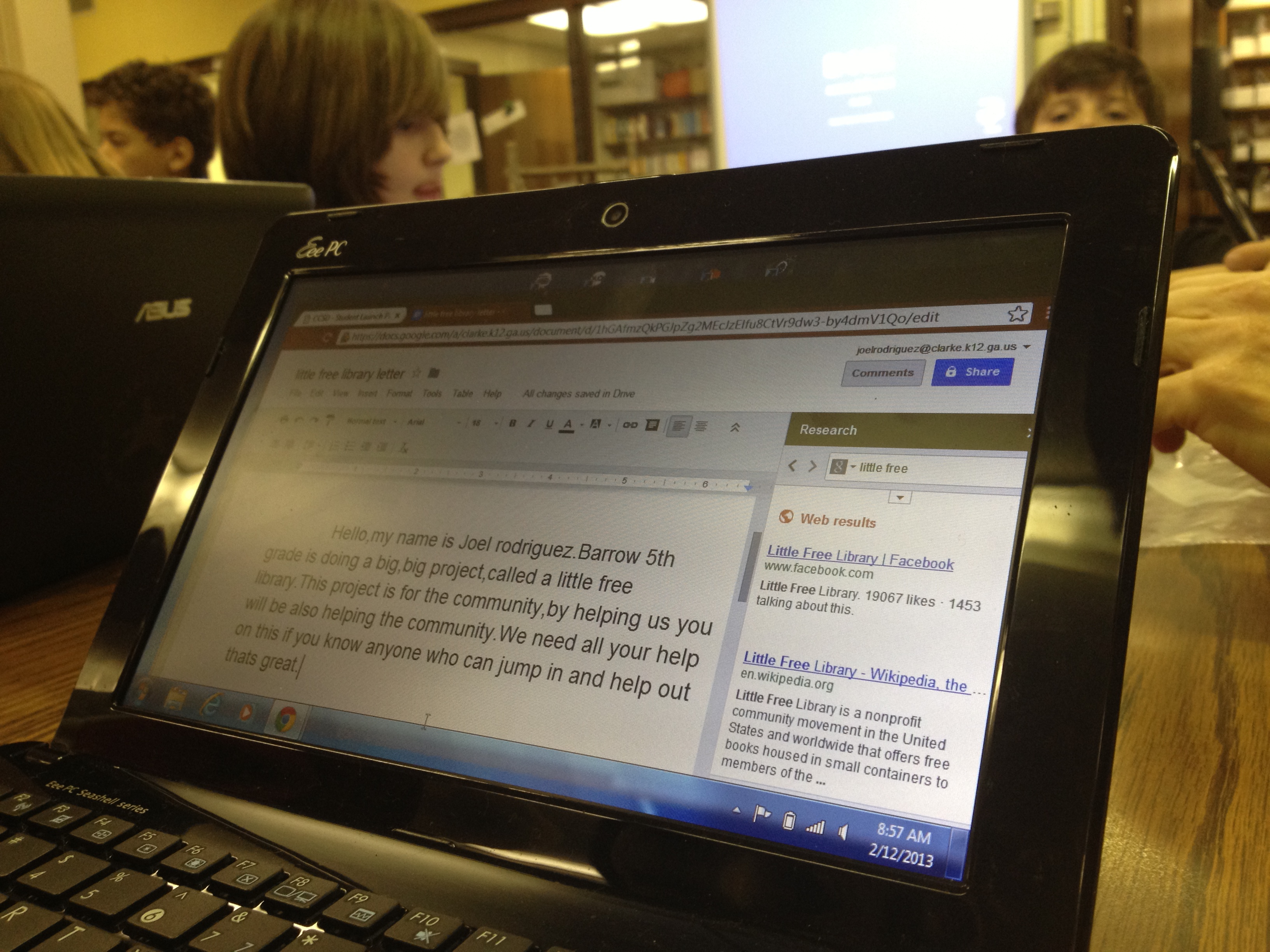
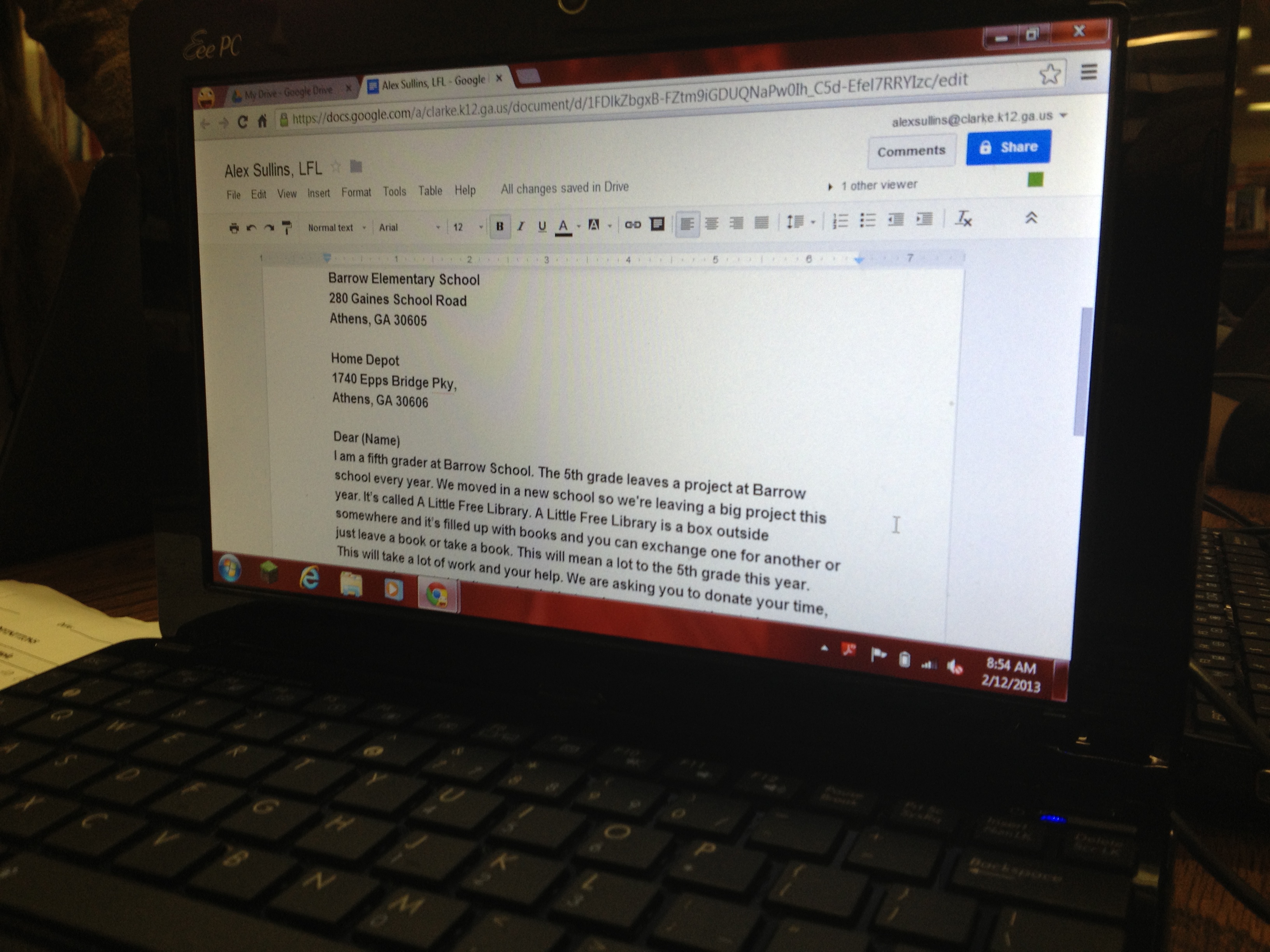
The researchers and writers are working with me in the library to research the Little Free Library site for information about building the actual structure.  As we research the many tips on the site, we are considering other topics that we may need to research such as reusing materials and green building techniques.  We’re thinking of careers that we may need to research in order to identify experts to connect with or people to target for persuasive writing.  The writers are writing persuasive letters to send to potential donors, builders, or collaborators on this project.  They are also considering persuasive tweets they may need to craft for me to tweet out to target audiences for support.

5th graders used the Google Research tool in Google Docs to look for reading statistics

5th graders used the Google Research tool in Google Docs to look for reading statistics

I’m also working with the 5th grade classes on persuasive writing techniques.  We used the Read Write Think powerpoint of strategies and thought about what information we might include underneath each strategy.  I also showed them the research tool within Google Docs.  The students (and teachers) were excited that you could search for a topic such as “reading statistics” to find quotes about reading in the United States and automatically cite the source within your Google Doc.  I think this tool alone will spill over into many other projects now that the students know how to use it!  All 5th graders are writing letters to businesses, builders, parents, students, and other groups in order to ask for money, labor, supplies, books, and a location for our 2nd library.  The teachers are continuing this writing in the regular classroom as well as exploring the Little Free Library site for additional information.  One student was even able to locate a Little Free Library from his hometown in India!

Google Sketchup is proving to be a helpful tool in design

Google Sketchup is proving to be a helpful tool in design

I can’t wait to see where this project goes because it is certainly exploring many of the standards that our 5th graders work on in a variety of areas.


lfl8

A team checks in with one another before starting individual work

A team checks in with one another before starting individual work

LFL7 LFL 8 LFL 6 LFL 5

More Kindergarten Storybirds

These cards were used prior to moving into Storybird.

These cards were used prior to moving into Storybird.

You may remember from earlier in the year that Ms. Hocking’s Kindergarten class worked on a sequence of lessons in the library and in their classroom to eventually produce their own story inspired by art using Storybird.  Now, even more of the Kindergarten classes are working on a similar sequence of lessons.  We have spent time on the common core standard:

ELACCKRL7:  With prompting and support, describe the relationship between illustrations and the story in which they appear (e.g., what moment in a story an illustration depicts).

This has been done through wordless picture books, picture books where part of the story is told in text and part in pictures, and picture books where the pictures support the text.  Students read these books in class lessons as well as in the library.

To prepare for Storybird, we started by using storytelling cards from a set of cards called “Tell Me a Story“.  I chose a sequence of cards and then had the kids begin telling the story and linking the story from one card to another.  As we transitioned to Storybird, I told them that it was like pulling illustrations from a big deck of cards and figuring out how the story connected together across cards.  We wrote a Storybird together as a class to model the thinking it takes to select a sequence of pictures as well as create text that ties together the pictures.
Finally, in small groups with an adult, students wrote their own storybird. The role of the adult was to lower the barriers to artistic expression by helping students with things like typing, taking turns, etc.   Today, Ms. Seeling’s class (Mrs. Boyle’s Class), created their stories in small groups.  We had 5 groups led by me, Ms. Seeling, the parapro, a student teacher, and a parent volunteer.  Here are their final stories:
They Are Friends

The Rabbit and His Friends

A Porcupine Babysitter

The Mean Gorilla

The Porcupine Dream

Ms. Seeling also hopes to have some students make individual stories and then use Screencast-o-matic to record the students reading their stories.  I love how each teacher and class is learning from what previous classes did and building onto what was accomplished.


Little Free Library 5th Grade Project

I’ve known about Little Free Libraries for awhile now, and since I learned about them I wanted to help establish one at our school.  I was waiting for just the right moment.  This summer I attended the Decatur Book Festival and saw several creative Little Free Libraries that were being auctioned off and it made me want to establish one even more.  I posted a picture of the libraries on our media center facebook page and immediately Ms. Cross, a 5th grade teacher, said she wanted to help make this happen at our school.  Her comment made me think about the gift that our 5th grade gives to the school at Moving On Ceremony at the end of each year as a way for the 5th graders to make their mark on the school before they leave.  Since our 5th graders won’t get the opportunity to go to school in our brand new building next year, I thought this year’s gift needed to be extra special.  I had found the perfect fit for the idea.

I began talking with people at our school about the project.  As always, our art teacher, Rita Foretich, was on board to help weave this project into an interdisciplinary experience.  Other teachers in the school that don’t even work with our 5th graders began offering ideas too and within a few days our spark of idea was really starting to grow.

I sat down with Mrs. Foretich and we did an initial brainstorming of what our project might look like.  We thought of materials, resources, locations, and also a sequence of events that would need to happen in order for the project to be done by the end of the year.  Our plan consisted of:  an intro to Little Free Libraries for the whole 5th grade, persuasive writing in 5th grade classroom, continued research and conversation in the media center, and little free library designs and artwork in art.  I took our plan to the 5th grade team for feedback and additions.  The teachers brainstormed ways for the students to really take ownership of the project such as donating their own books to stock the libraries and bringing in $1 each to cover the registration for the 2 libraries.

We launched into the first phase right after this session.  I made a short introduction video using screencast-o-matic and uploaded it to Youtube.  Mrs. Foretich showed the video at the beginning of an art class.

https://www.youtube.com/watch?v=n8ojwb-tYYY

As she showed it, the kids immediately began having ideas and wanting to contribute them.  She developed a Google form to share with the students so that they could all submit their feedback without taking up too much of the class time to hold a discussion.  Mrs. Foretich’s student teacher also began contributing her knowledge and connections to UGA.

The next step will be for the student to brainstorm more about the materials, labor, and location so that they can begin writing persuasive letters to individuals and organizations for support.

Our goal is to create 2 Little Free Libraries by the end of the year.  One will be installed at the new Barrow and one will be installed somewhere near downtown so it is accessible to our students and the community on that end of town.  Who knows what this project will develop into, but it is already full of participatory culture as more and more people contribute their ideas, their expertise, and their creativity.

If you have ideas or resources for this project, feel free to leave them in the comments or contact our library.