Celebrating Our Explorer Project with the Flipgrid Team

Flipgrid Skype (1)

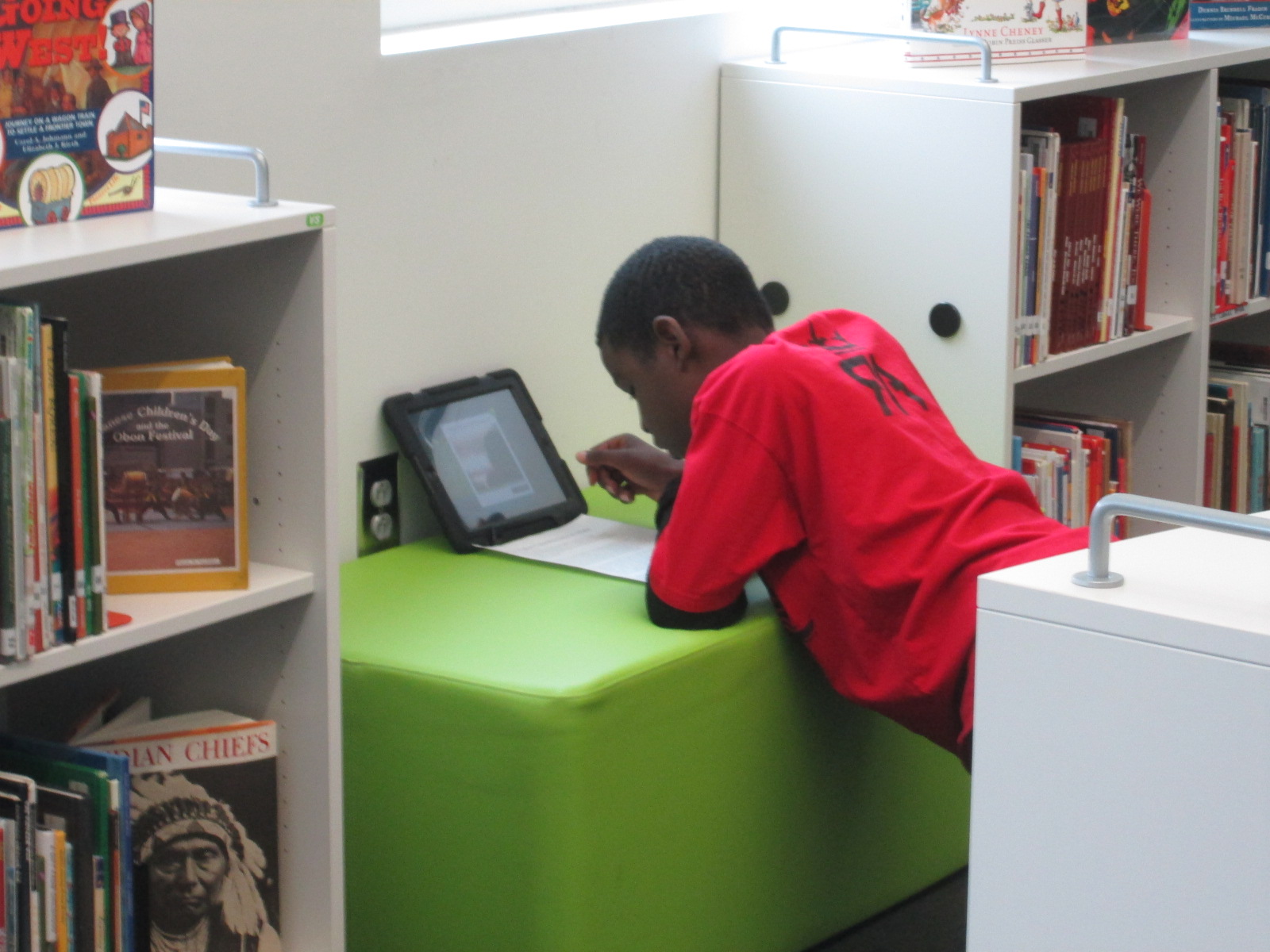
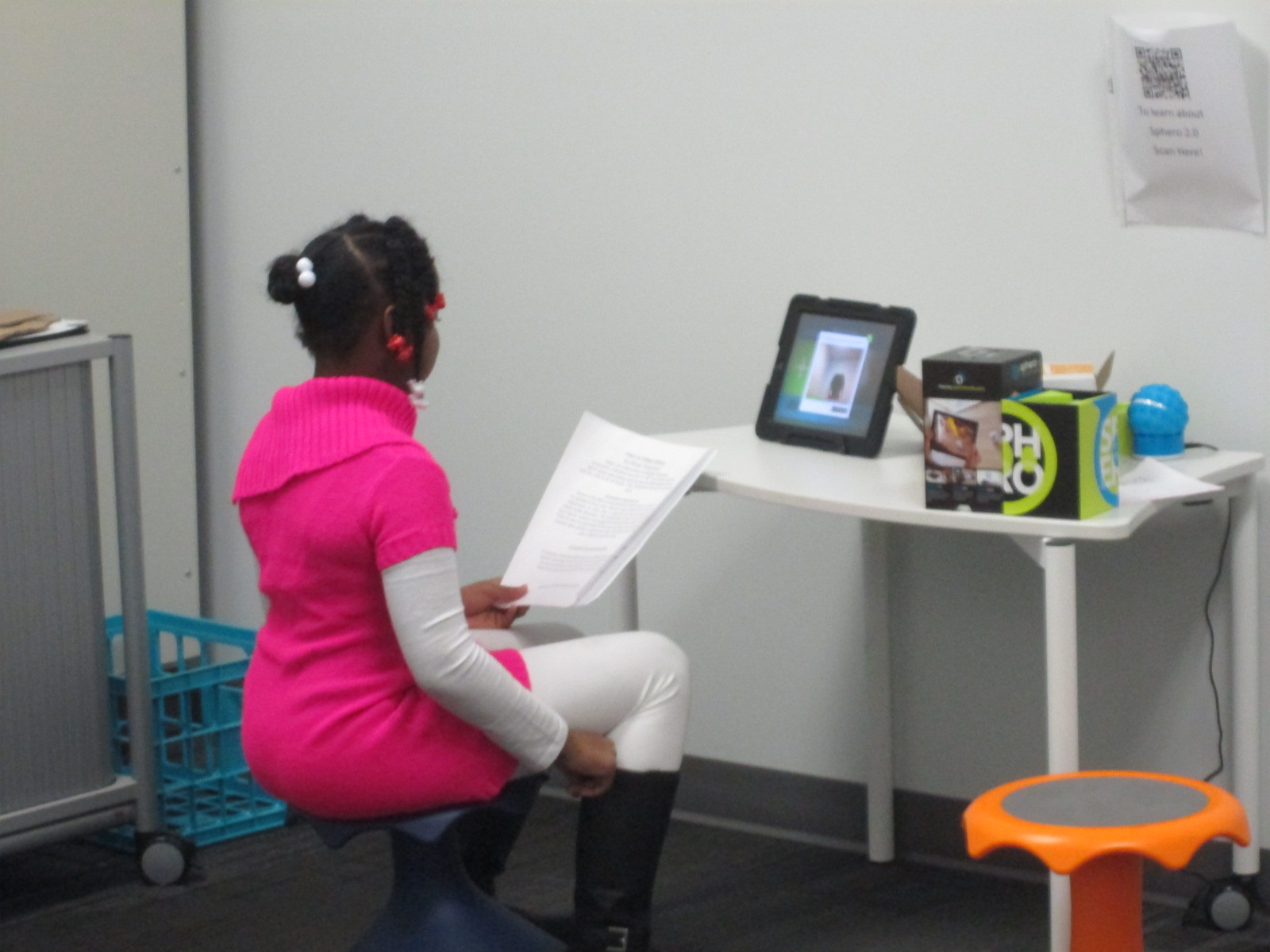
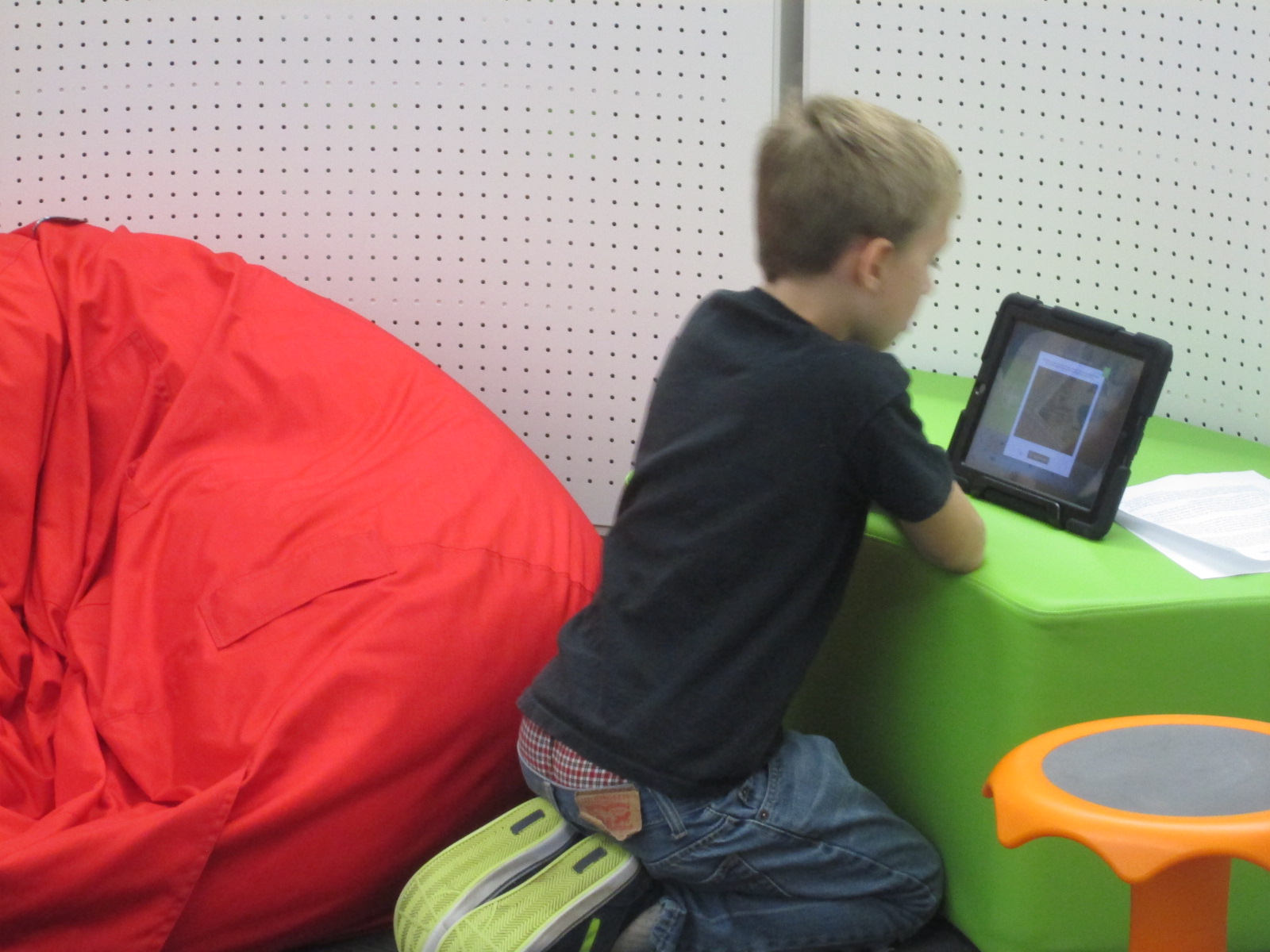
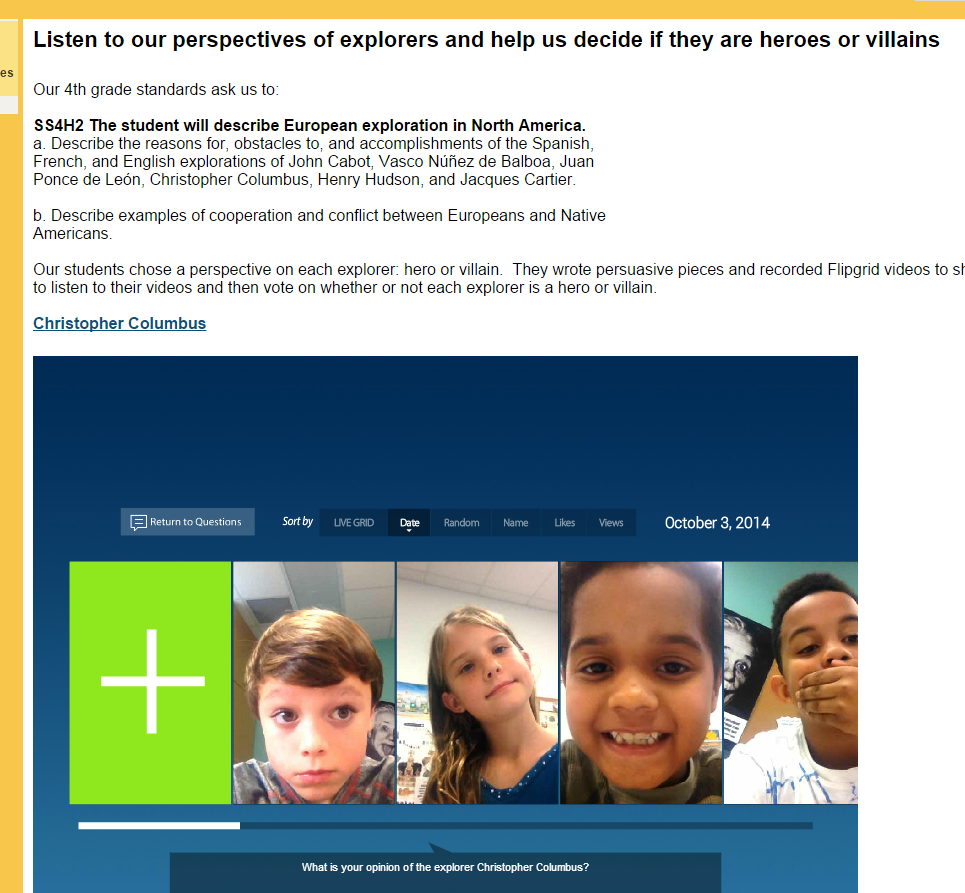
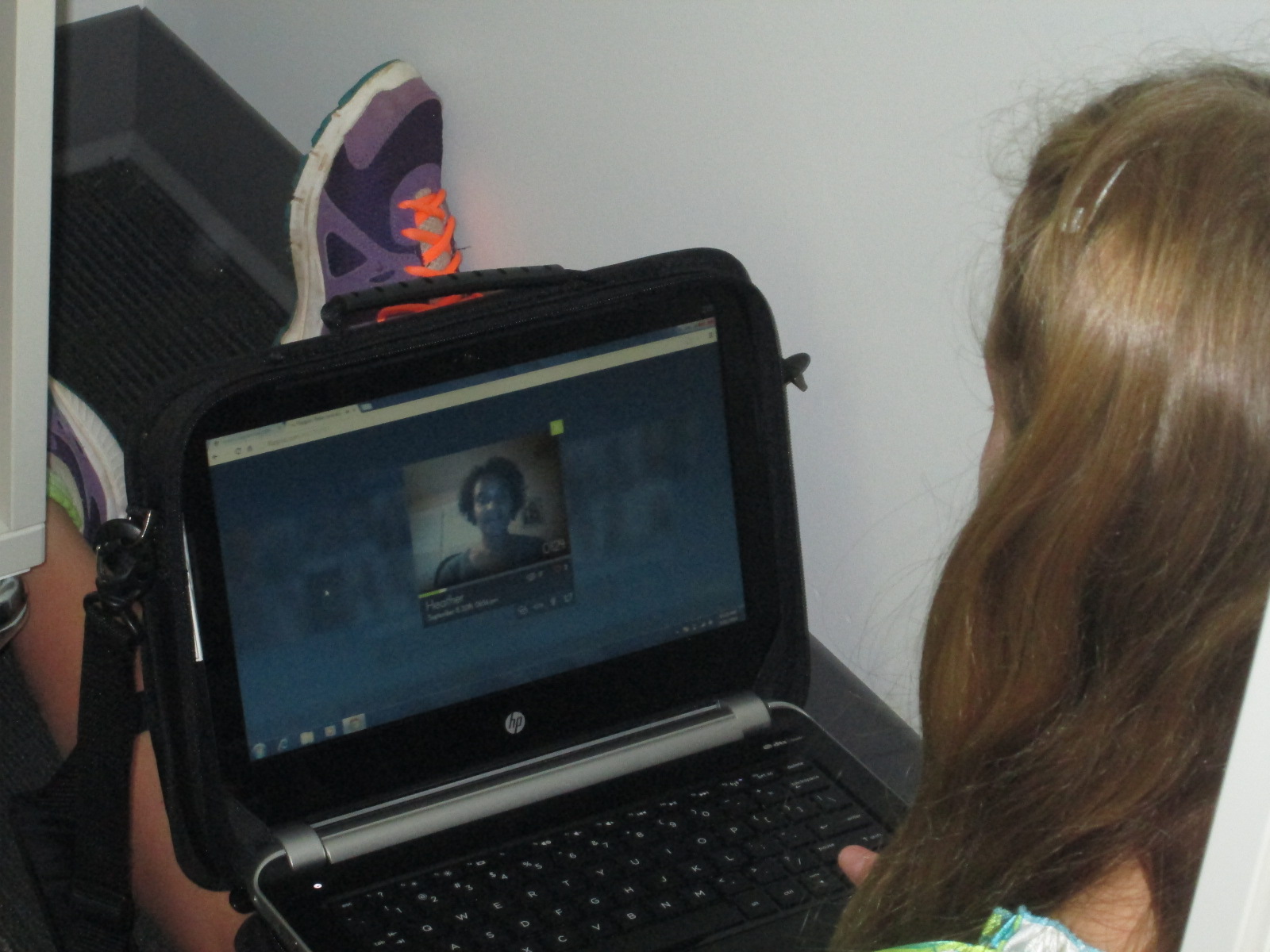
Today our 4th graders had the chance to Skype with Charlie Miller and the rest of the Flipgrid team in Minneapolis, Minnesota.  This was the conclusion of the explorers project that 4th grade students have worked on for the past few weeks.  As part of the project, we encouraged people around the world to watch our Flipgrid videos and vote on whether explorers were heroes or villains.

The team congratulated our students on their hard work on this project and also took questions and suggestions from students.  Several 4th graders stepped to the microphone and shared suggestions such as:

  • Extending the 90 second time limit by offering a choice of time limits
  • Allowing you to categorize your video with tags

Other students shared what they liked about Flipgrid such as:

  • the ability to watch other people’s videos before making your own
  • the like button
  • being able to film your video again if you weren’t happy with it

Since this Skype came the week after our hour of code lessons, it was also a great time to hear about how an app was developed.  It sounded like developing an app is a much longer process that developing a website because in one of the student questions we learned that the app took about 6 months to create while the website took 2 really long weekends.  We also heard how an app is never really done because you are always trying to make it better.  I loved how this connected both with our hour of code sessions but also to other areas such as writing instruction.  Students also learned about how the name Flipgrid was chosen since the videos are on a grid and they flip when you play them, but they also heard other considerations that go into a name such as web domain registration and what is actually available.
Flipgrid Skype (11)

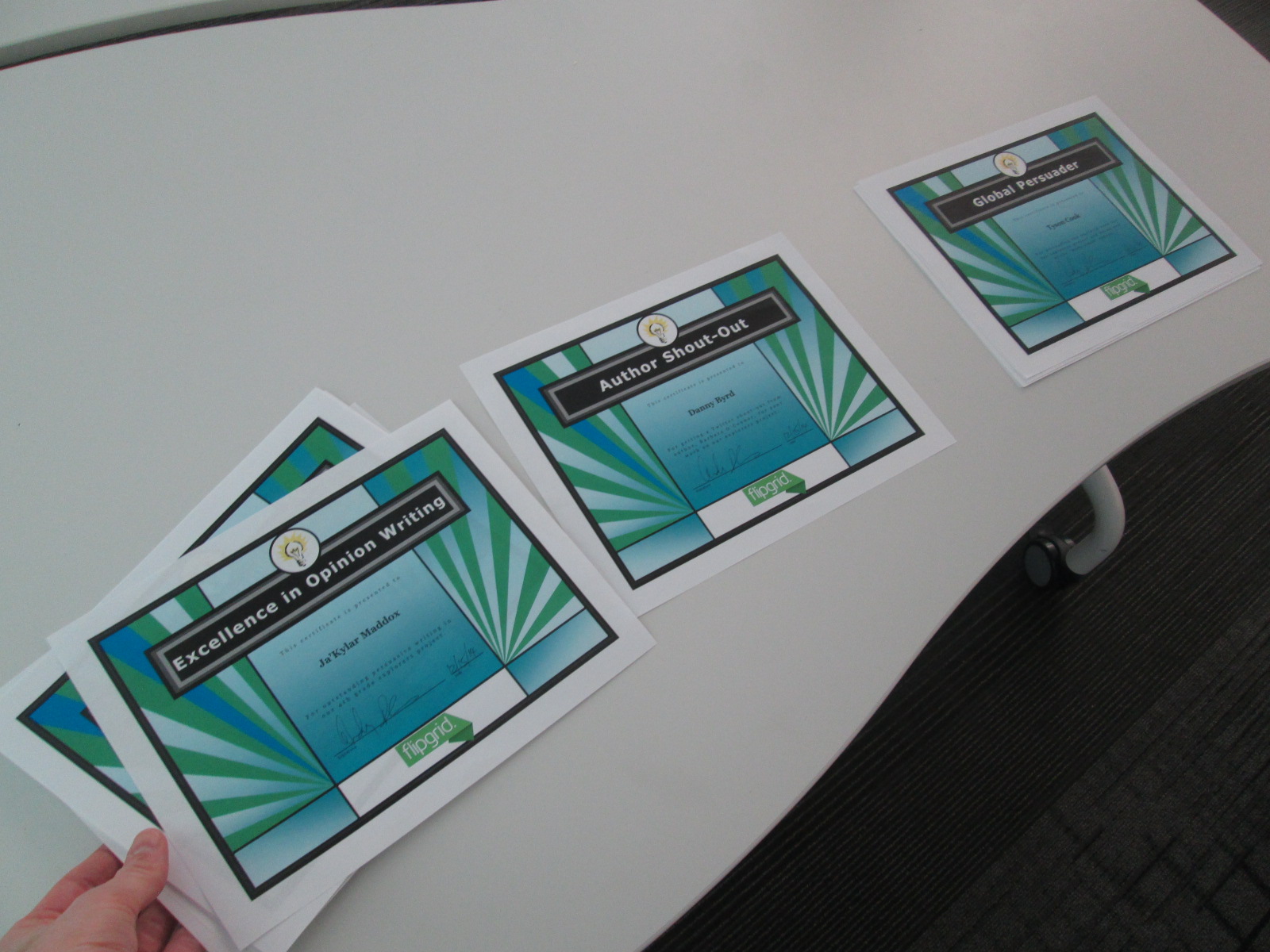
One of the most fun parts of the Skype was the announcement of awards.  Several students received awards for Excellence in Writing, Shout-outs from authors, and Global Persuader awards.  I sent these names to the Flipgrid team and they took turns calling out student names as I handed out the certificates.  Students had fun giving silent cheers for their classmates as awards were handed out.

I also took time to share with the students the results of all of the voting that had taken place for their project.  It was interesting to see their reactions as they heard that Christopher Columbus was the only explorer voted to be a villain.

Just for fun, we closed out our Skype with a Christmas singalong of Rudolph.  Luke performed on the guitar and we belted out our best Rudolph even through the time delay on Skype.  It may not have sounded like it was together, but it was still fun.

https://www.youtube.com/watch?v=ZXsM1RRplzY

Thank you to the entire Flipgrid team for creating a tool that has helped our student voices to reach a global audience, and thank you for taking time to celebrate with us.

Celebrating Thanksgiving Traditions with Balloons Over Broadway and Looking Ahead

Second grade signed up for a rotation through the library as part of their Thanksgiving feast celebration on the day before our holiday break.  Their request was to read the book  Balloons Over Broadway by Melissa Sweet.  If you’ve never read this book, it is amazing!  The illustrations are filled with details that you can search through for hours and it is packed full of information while being very readable as a read aloud.  While I love biographies, sometimes it is hard to read a biography aloud because of the length.  Balloons Over Broadway is just right.

Before we read the book, we looked at information about the Macy’s Thanksgiving Day Parade.  Watching this parade has always been a part of my Thanksgiving tradition.  I was very surprised to see how many students had never watched the parade or even heard of it.  I was reminded of the importance of the picture book and how it brings out conversations that might never have happened without the sharing of a story.  Some of our conversations included perseverance, immigration, failure, and growth mindset along with some other Thanksgiving traditions.

There are numerous resources you can use to share about the parade and the book:

After we read the story, we used on of the pages out of the activity kit to design our own balloons.

www.hmhbooks.com kids resources BalloonsOverBroadway_ActivityKit.pdf

I loved watching what students came up with.  Once they finished, they had the option of sharing their balloon on a Flipgrid.

Students came up to the webcam on the projection board and I helped them click through the Flipgrid menus to take a picture and record.  Then, students came up to type their name.  I normally use the iPad app for Flipgrid, but this was a fast way of doing a lesson closing as students finished their coloring on their own time.


balloons

Click here to see and here about their balloon designs!

The book also made me think ahead.  Last year in 2nd grade, we did a great project with the force and motion standards in science where students investigated Rube Goldberg and made their own inventions.  Balloons Over Broadway was a perfect introduction to the idea of tinkering and using everyday objects and simple machines to take mundane tasks and make them interesting.  I want to revisit the opening pages of the book where Tony Sarg invents a way t feed the chickens when we do the simple machine project later this year.

I also thought about the Hour of Code and how that event brought about so many conversations about failure and perseverance.  This book would be a great example to share ahead of Hour of Code to think about a growth mindset and prep students for the failure that comes with coding and how you handle that failure as a learning experience.

Who knew that so many thoughts would come about from a simple request to read a story.


We Need You to Vote on Whether these Explorers are Heroes or Villains!

IMG_4397

Fourth grade has been hard at work.  They have been researching multiple explorers in their social studies standards and considering whether those explorers are heroes or villains.  It all started with a lesson in the library using a video about Christopher Columbus, Encounter by Jane Yolen, and Tagxedo.

IMG_4399

After that, students selected an explorer and began their research.  They took their information and used that to write a persuasive piece convincing an audience that their explorer is a hero or villain.  They used Flipgrid to record themselves reading their persuasive piece.  All of the Flipgrid videos are housed on an Google Site for easy access and each explorer has a Google form voting tool to indicated whether that explorer is a hero or a villain.

IMG_4398

Now, this is where you come in!  We need you to watch our videos and vote on our heroes or villains.  You can choose an explorer and spend some time on that one explorer or you can watch them all!  You can share this project with other classrooms or educators and ask them to share.

If you choose to do this with a class, we would love to hear about it!  You can tweet pictures or comments to @plemmonsa  Most importantly we want you to vote and share.


Soon after our Thanksgiving break, we will take a look at the results and most likely connect with our friends at Flipgrid to talk about coding and our project’s reach.

We hope that our project makes you think about the many perspectives in our world’s history and that you enjoy hearing our voices.

Barrow Explorers

Click here to access our Explorer Google Site!  Tip:  If you are in Google Chrome, you will need to click on the shield in your address bar to load the “unsafe script”. This will show you the embedded grids.  Otherwise, just click on the link on each explorer’s name to access the Flipgrid on a separate page.  Feel free to “like” student videos by clicking the hearts, but don’t forget to vote on the Google forms on our site.

Honoring Our Veterans with The Poppy Lady, Padlet, and Flipgrid

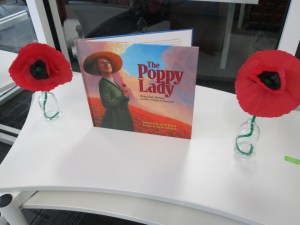
Last year, we were honored to have Barbara Walsh, author of The Poppy Lady, visit our school and share her book about Moina Michael’s vision for honoring veterans with the poppy.  Now, last year’s fourth graders that attended that visit are in the 5th grade.   They are about to host several veterans at our school for Veteran’s Day on Tuesday.

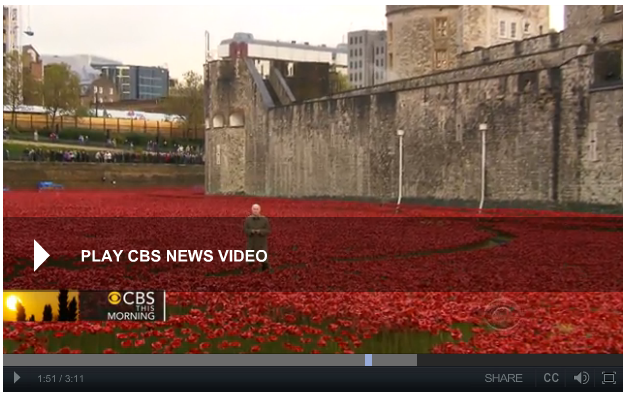
British use poppies to commemorate WWI

To prepare for our luncheon, the 5th grade classes each came to the library.  We read The Poppy Lady again.  We also watched a video from CBS news.  The video gave the students some great context on why the poppy is so important and what it really symbolizes.  This paired nicely with the advocacy story of Moina Michael.

We also had a great discussion about the importance of honoring veterans and what students might ask when they sit at a table with a veteran.  They brainstormed questions/statements like: “Tell me more about your time of service”, “What division of the military did you serve in”, “What were some of your biggest challenges in the military”, etc.

Then, students took time to visit 2 centers in the library.  I setup multiple iPads as a Flipgrid recording station.  With Flipgrid, students reflected on how we could continue to honor veterans just like the poppy lady did.

Flipgrid. Relax and discuss.


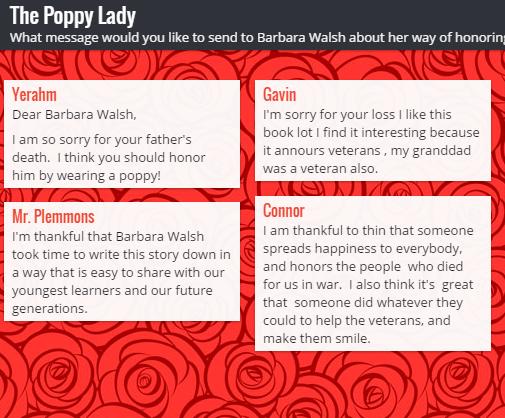
The 2nd station was a padlet where students could send messages to author Barbara Walsh about their appreciation for honoring the work of Moina Michael.  I pulled the site up on both projection screens and three other computers in the library for students to visit.

The Poppy Lady

Now the 5th graders will continue to work on poems, artwork, letters, and speeches for Tuesday’s luncheon.  During the luncheon, they will sit with veterans and have meaningful conversations.  I hope that they will take time to bring up the Poppy Lady while they talk.


Perspective on Explorers

I’m very excited about a project with our 4th graders this month.  This project is a spinoff of something we did last year with explorers and Native Americans.  This year, we are just focusing on explorers.

To kickoff the lesson, we did a very similar kickoff to last year’s project.  The entire fourth grade came, which was about 65 students.  We used a video from Biography.com about Christopher Columbus.  We only watched the first two minutes of the video.

http://www.biography.com/people/christopher-columbus-9254209/videos/christopher-columbus-mini-biography-6831683604

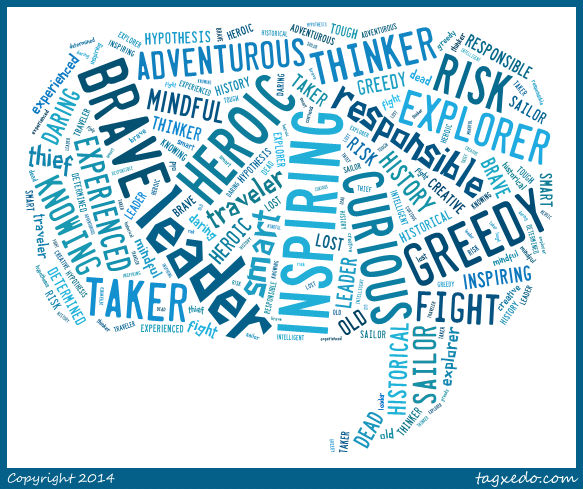
Following the video, I asked students to tell me what words they would use to describe Columbus.  They turned and shared with a neighbor first and then I used Tagxedo to capture several of their words into an image.

columbus video

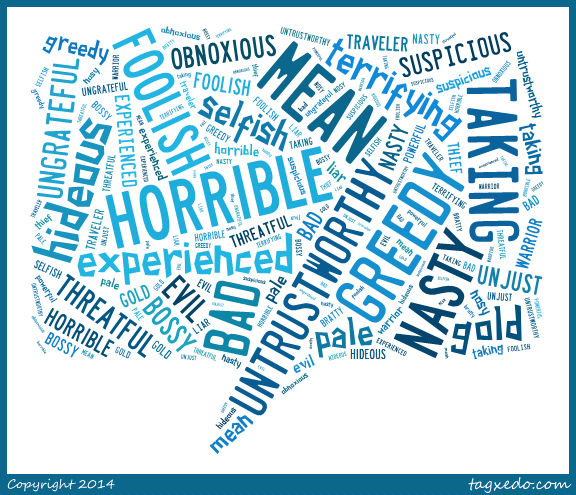
Then, we read the book Encounter by Jane Yolen.  I love pairing this book with what students are already thinking about Columbus because it typically flips their outlook on Columbus and explorers in general.  I asked them the same question about Columbus, to describe him based on the book they just heard.  Here’s how their words changed.

columbus encounter


This lesson was meant to setup the whole research process that students will now embark on.  They will each select one of the explorers from the 4th grade standards:

SS4H2 The student will describe European exploration in North America.

a. Describe the reasons for, obstacles to, and accomplishments of the Spanish,
French, and English explorations of John Cabot, Vasco Núñez de Balboa, Juan
Ponce de León, Christopher Columbus, Henry Hudson, and Jacques Cartier.

b. Describe examples of cooperation and conflict between Europeans and Native
Americans

They will ask themselves, “Is this explorer a hero or a villain?”  Some teachers may even assign a perspective for students to take even if they disagree with that perspective.  I told them to think back to Columbus.  Even though many of us think he’s a villain after reading Encounter, we were still able to come up with all kinds of words to describe why he was a hero.  Students will use a Sqworl pathfinder along with other databases and print books to research. They will write a short persuasive piece convincing an audience to believe that their chosen explorer is a hero or a villain.
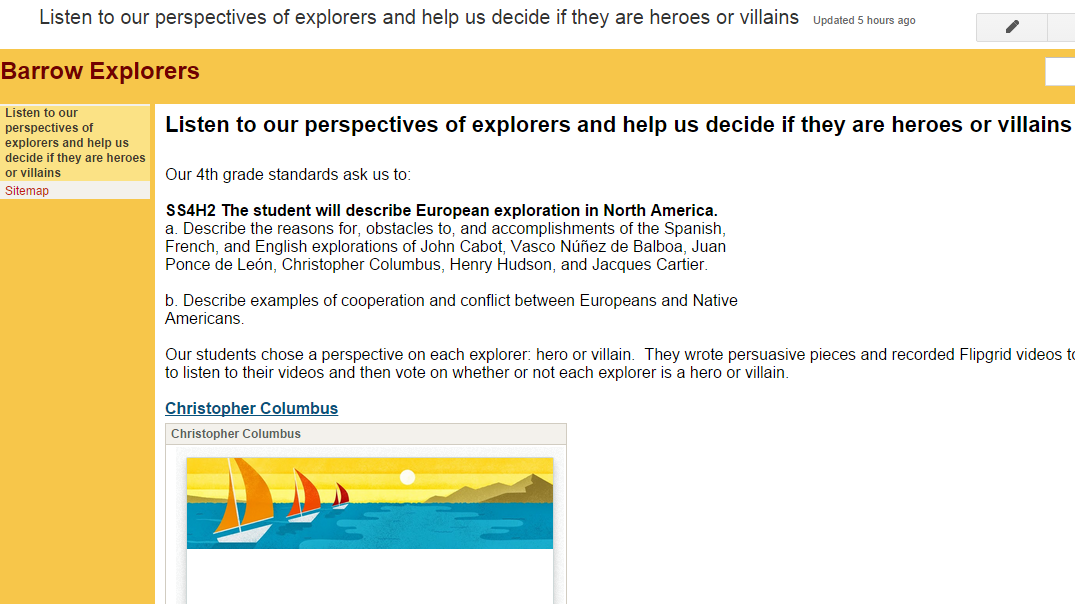
Barrow Explorers

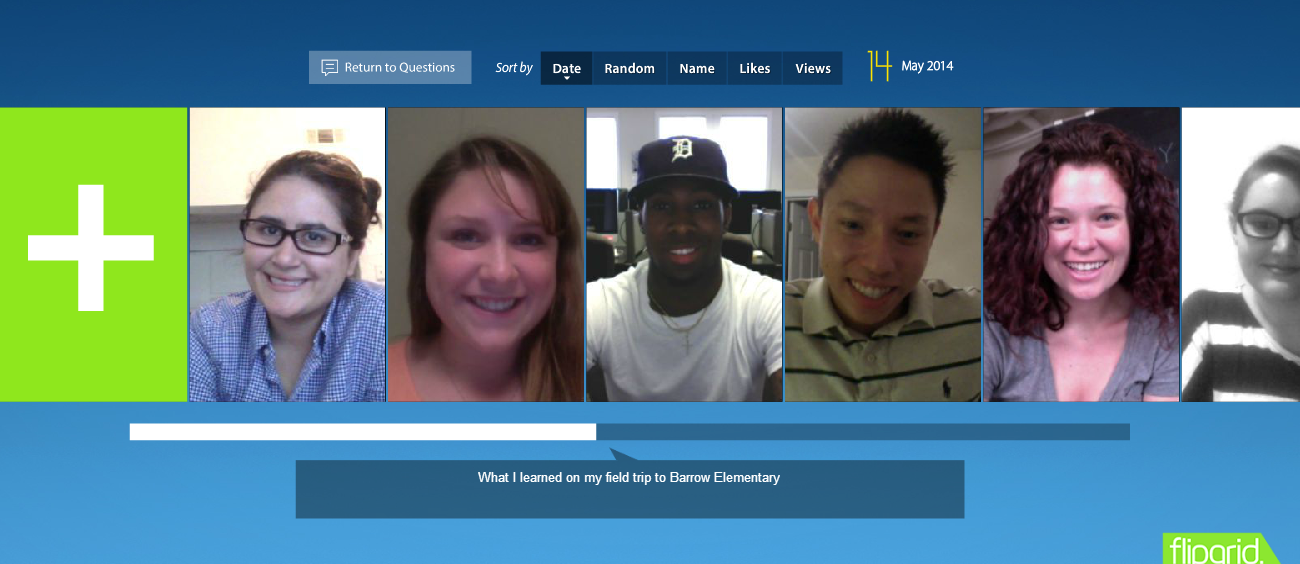
We will use Flipgrid to create videos of all of these writing pieces.  I made one grid for each explorer so that we hear both perspectives in one place.  They will be stored on a Google site so that we can easily view all of the videos.  I also made a Google form so that viewers can easily vote for whether they think each explorer is a hero or a villain.
Our plan is to share this with our entire school as well as share on social media and this blog when we have everything ready to go.

Be on the lookout for your opportunity to give the students feedback on their work and participate in this project.


Talk Like a Pirate Day 2014

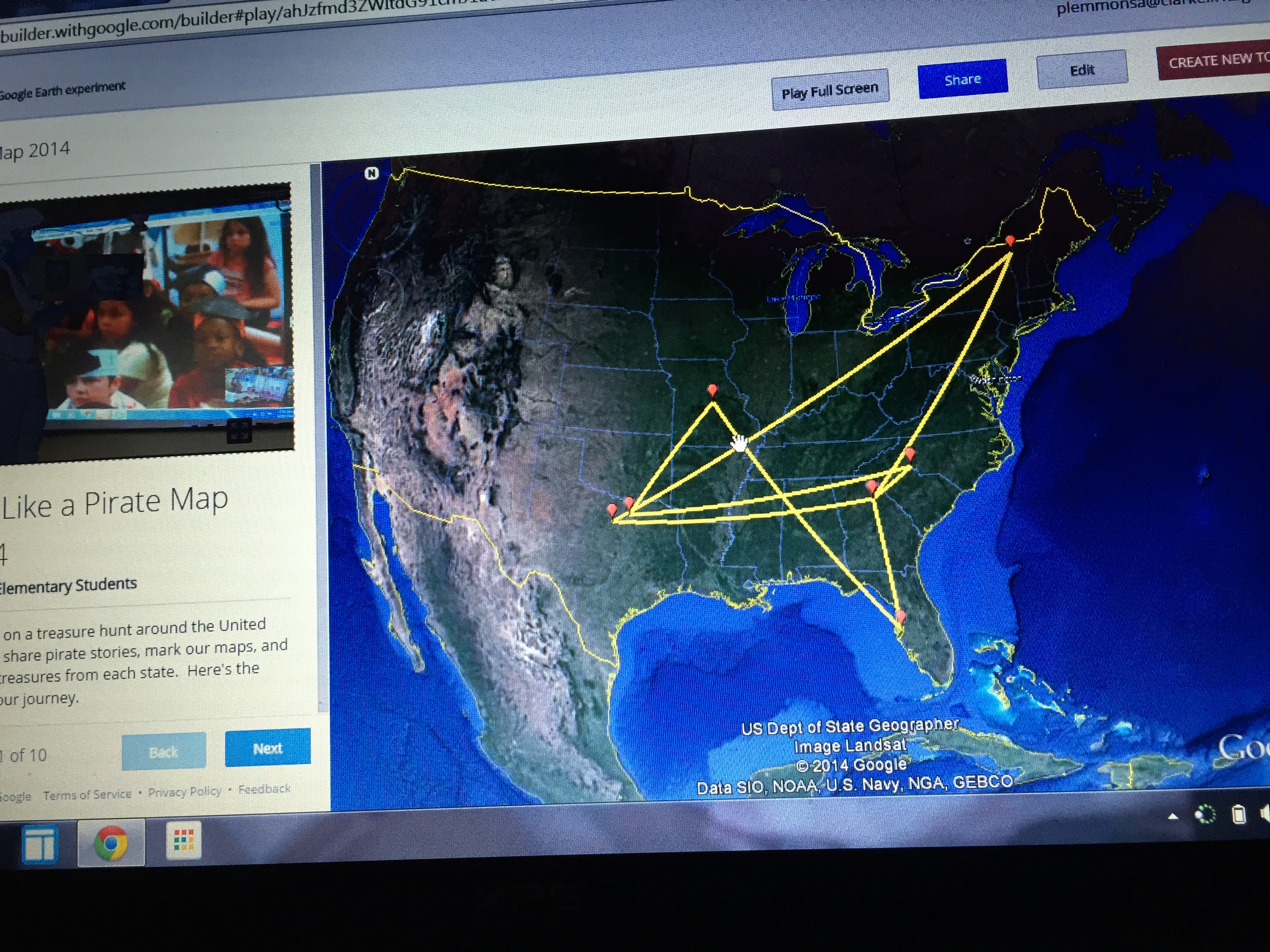
Our pirate map of connections

Our pirate map of connections

September 19th is Talk Like a Pirate Day.  There are so many fun pirate stories out there, and each year we seem to discover a few more thanks to the connections we make around the globe through Google Hangouts and Skype.  Planning a day of connections like this definitely takes some time but students love talking with people around the globe, sharing a story, and learning a bit about one another.  It always seems to reinforce the idea that we aren’t alone in our bubble of routines of day to day life.  There are other people out there doing the same things that we are and quite possibly they are doing those things in different ways.  I love the spontaneous conversations that take place on days like this that you could never plan through a standard or a lesson plan.  Students always bring up a question or a comment that makes the day special.

This year, 8 classes came to the library for Talk Like a Pirate Day and we connected with 6 different schools in 5 different states.

  • We connected with Edie Crook in Gastonia North Carolina to read the book No Pirates Allowed Said Library Lou.  We had a great conversation about “treasure” and students took turns stepping up to say what treasure meant to them.  We were delighted with words such as being kind, family, friends, Skylanders, and baseball.
  • We connected with Jan Pelias through Google Hangouts in Frisco Texas to read the book How I Became a Pirate.  It was fun to connect with someone in another time zone because we could talk about how time is different at the same moment around the world.
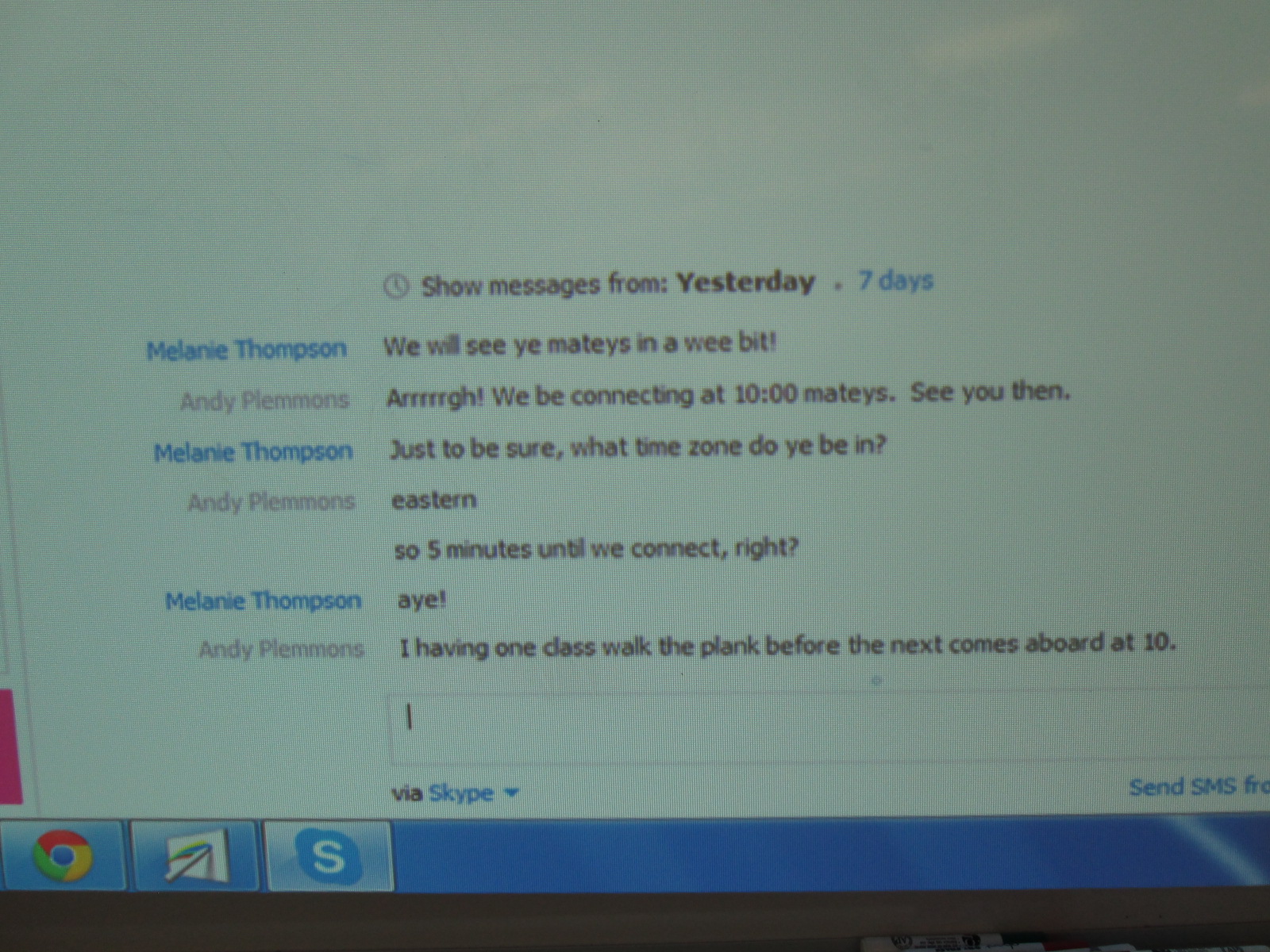
  • We connected with Melanie Thompson in Jefferson City, Missouri to read the book How I Became a Pirate.  Melanie’s students had researched pirates and they took time to share all of their facts.  This made our students very curious about pirates as well.  I have a feeling all of our nonfiction pirate books will be checked out for a long time.  I also love how Melanie embraced her inner pirate as we chatted with each other through Skype chat prior to our connection!

Pirates (11)

  • We connected with Okle Miller in Tampa, Florida to read the book No Pirates Allowed Said Library Lou.  Tampa has a pirate festival called Gasparilla .  Students loved hearing how pirates take over Tampa during this festival and kidnap the mayor (all for fun).  The class we connected with even called themselves pirates and used the word “pirate” as an acronym for their classroom expectations and beliefs.
  • Both of our PreK classes came to the library for their first visit of the year.  In class, they made pirate hats and hooks as well as added some pirate mustaches to their faces.  We read the book Pirates Go to School and made a class video chanting the pirate chant at the end of the book.
  • We connected with Carol Scrimgeour in Essex Town, Vermont to read the book No Pirates Allowed Said Library Lou.  We noticed that all of the kids were wearing warm clothes, so we had a great conversation about how cold it had been in the northeast.  It was sunny in both places but with a very different temperature.
  • Finally, we connected with Shawna Ford in Texas and she read a new pirate book we had not heard before: No Bath No Cake Polly’s Pirate Party.  Now the students want to get it for our library.

Before each connection, we looked at a map from our school to the school we were connecting with.  We talked about distance, travel time, and also all of the decisions that go into choosing your route for a trip.  We also created a Google tour of our trip using Google Tour Builder.  After each connection, we wrote a summary together.

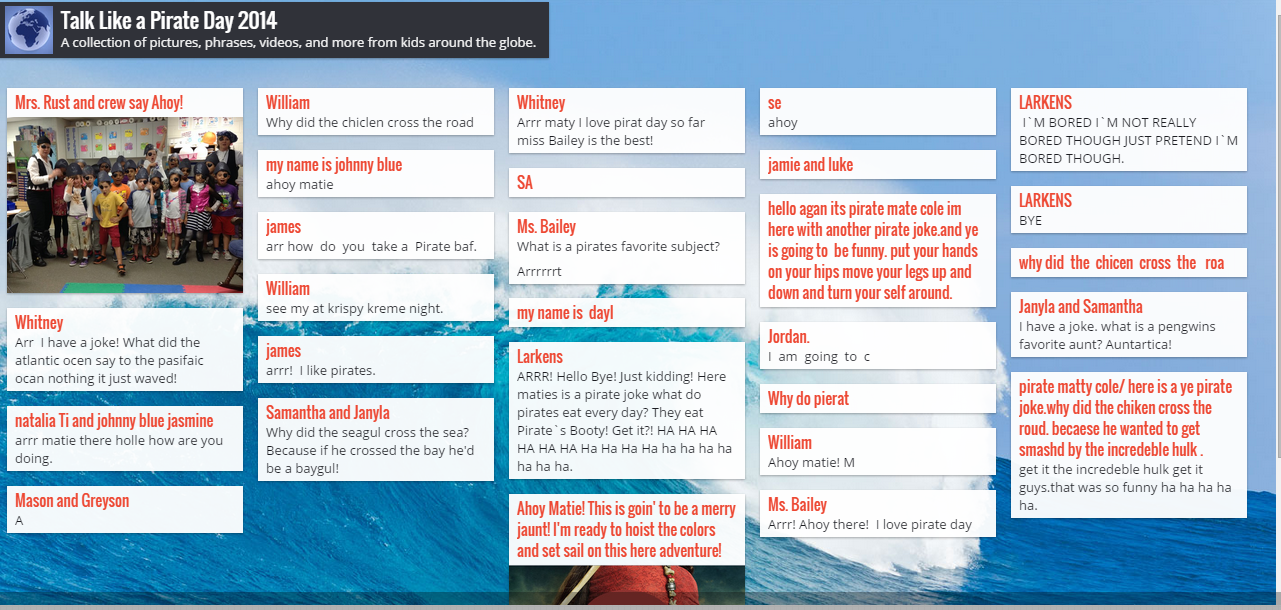
We also created a Padlet to write pirate sentences.  This was shared with our friends around the country and became a place to crowdsource our words.

Finally, we spent a lot of time creating pirate sentences, phrases, and even conversations and practicing them aloud.  Students had access to a list of pirate vocabulary words as well as multiple pirate stories to get ideas.

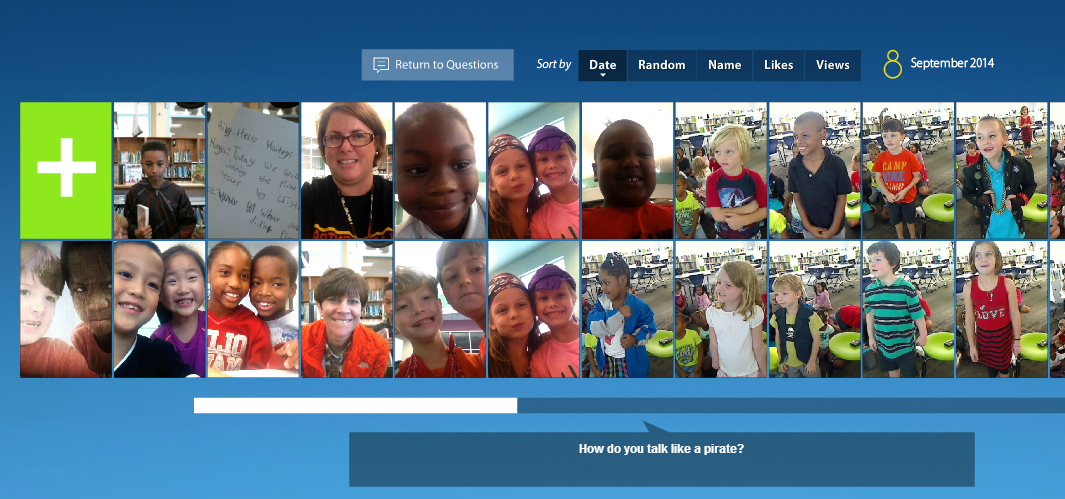
We used Flipgrid as a place to record our favorite pirate expressions.  Students also had a great time trying to imitate a pirate voice and pirate faces and gestures.  Take a moment to listen to them because they are quite entertaining!  I loved how this evolved from a sentence writing activity into a practice of fluency, oral speaking, and performance.  Again, Flipgrid became a place for us to crowdsource our voices with the voices of our connecting schools.

I love how these events connect us with new people around the world.  This year we connected with some old friends, but we also met some new teachers, librarians, and students we hope to connect with again.  I also want to continue to think about days like this to build long term collaborative relationships.

September 11th: A Global Perspective

September 11 (3)

Each year our 5th graders take an entire day to explore the tragic events of September 11, 2001.  Each year, the students become more and more removed from the topic because they weren’t even born at the time of the tragedy.  The events of September 11 and the impact they had on our war on terrorism are part of the 5th grade social studies standards, but we also spend a great deal of time at our school on social emotional learning and how we support one another in a community.

September 11 (22)

Each year I write a blog post about how we teach September 11th, and each year there is a new addition or a new angle in which to explore the day.  This year, students opened the day in their classrooms by talking about everyday heroes.  They shared where their own families work and how each of us can be an everyday hero.

September 11 (17)

Then, students split into 4 groups and rotated through 4 experiences every 30 minutes which were facilitated by me and the classroom teachers.

Experience 1:  Haiku poetry.  With Ms. Mullins, students learned about the unlikely heroes of the day including dogs.  They studied the poetry form of haiku and how a brief 3-line poem with 17 syllables can magically express a feeling or an image.  They focused their haiku on heroes.  They didn’t have to specifically write about the heroes of 9/11, but many chose to.

September 11 (28)

Experience 2:  Response to tragedy from afar.  With Ms. Selleck, students looked at how people around the country and the world responded to the tragic events of 9/11.  It was a time that people wanted to take action and do something to help.  Children wrote letters, drew pictures, and made cards.  The Maasai people of Africa offered 14 cows as a gift for America.  Ms. Selleck shared Carmen Agra Deedy’s story 14 Cows of America and students considered how people who weren’t even in our country wanted to help.  This posed an interesting question of how we might respond to the tragedies taking place every day in other countries.

September 11 (20)

Experience 3:  Heroes of 9/11.  There were so many heroes that stepped forward on 9/11 and many of those heroes lost their lives in the process.  At this experience, students took a look at many example of heroes and read the story Fireboat by Maira Kalman.  Students learned about this old fireboat first launched in 1931 and how it was called to duty on 9/11 to help pump water to fight the fires.  Students designed a drawing to represent the many heroes that took action on 9/11.

Experience 4: The events of 9/11.  This is the most sensitive of the experiences for students because we all react differently to seeing the tragedy of 9/11.  Over the years, I’ve developed a pathfinder of sites that explore 9/11 from multiple angles.  There are interactive timelines, eyewitness accounts, actual video footage of the day, oral histories of memories from victims’ family members, virtual tours of the memorials, and cartoon videos explaining the events in kid-friendly language.  We start with a video:

This video frames that on 9/11 we remember but we also take action to create good in the world.  I invite students to view the various resources and reflect on what they might do to create good instead of evil.  At the bottom of the pathfinder there is a padlet where students can record their actions that they want to take.  During this experience, I always tell students that they don’t have to watch any of the videos.  They can also take a break at any moment if the tragedy just becomes too much to handle.

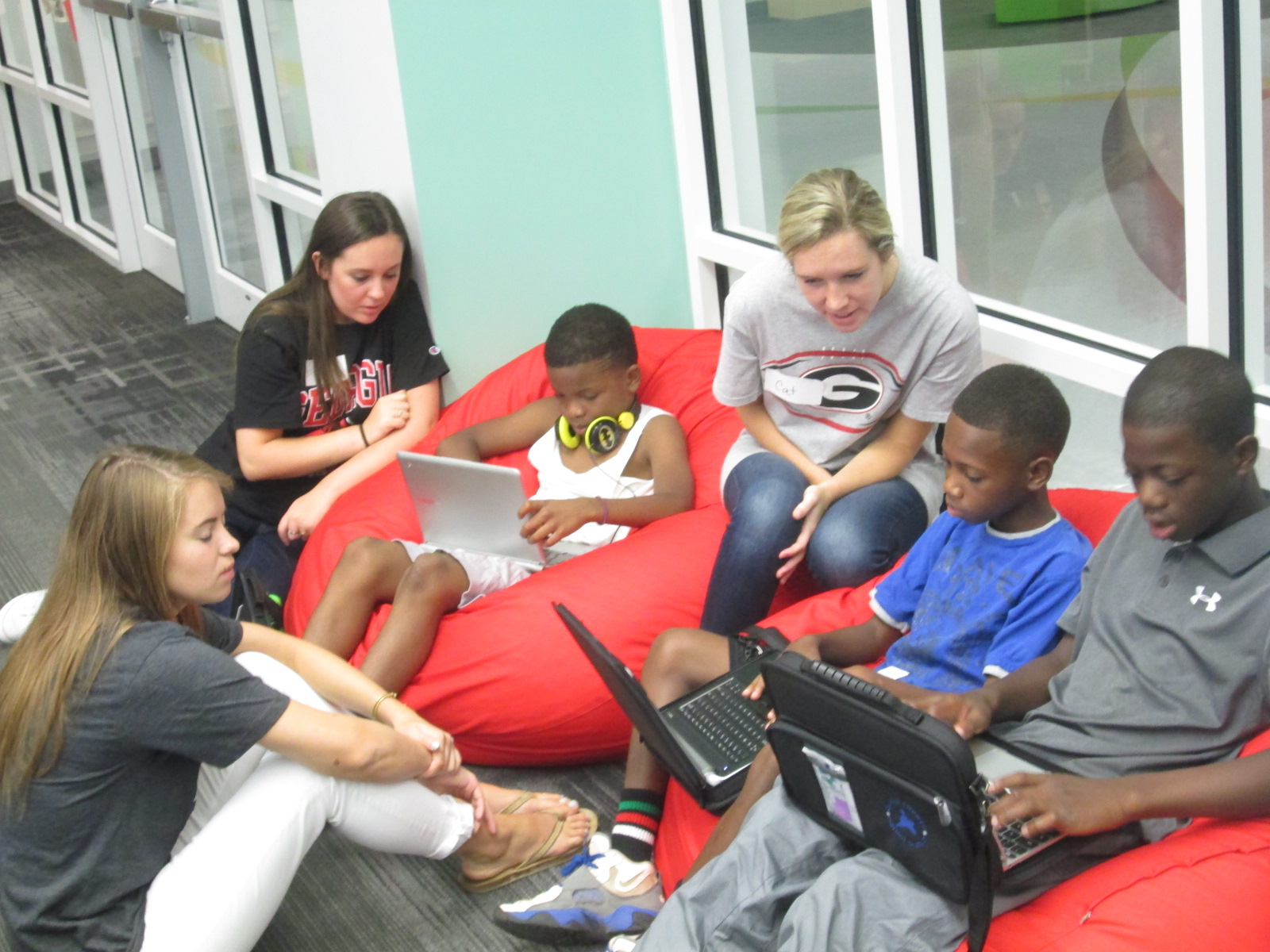
This year, 2 new pieces were added to this experience.  First, Gretchen Thomas, a UGA teacher in instructional technology, brought one of her #EDIT2000 classes to support students.  This was a piece that I’ve always felt was missing from the pathfinder experience.  September 11th is such a heavy topic, and I do worry about how kids are processing the information.  With these UGA students, we were able to pair every 5th grader with a UGA student to have reflective conversation about each website, video, and story that students experienced.  UGA students shared their own understanding of 9/11 as well as their own memories of being in elementary school when it happened.


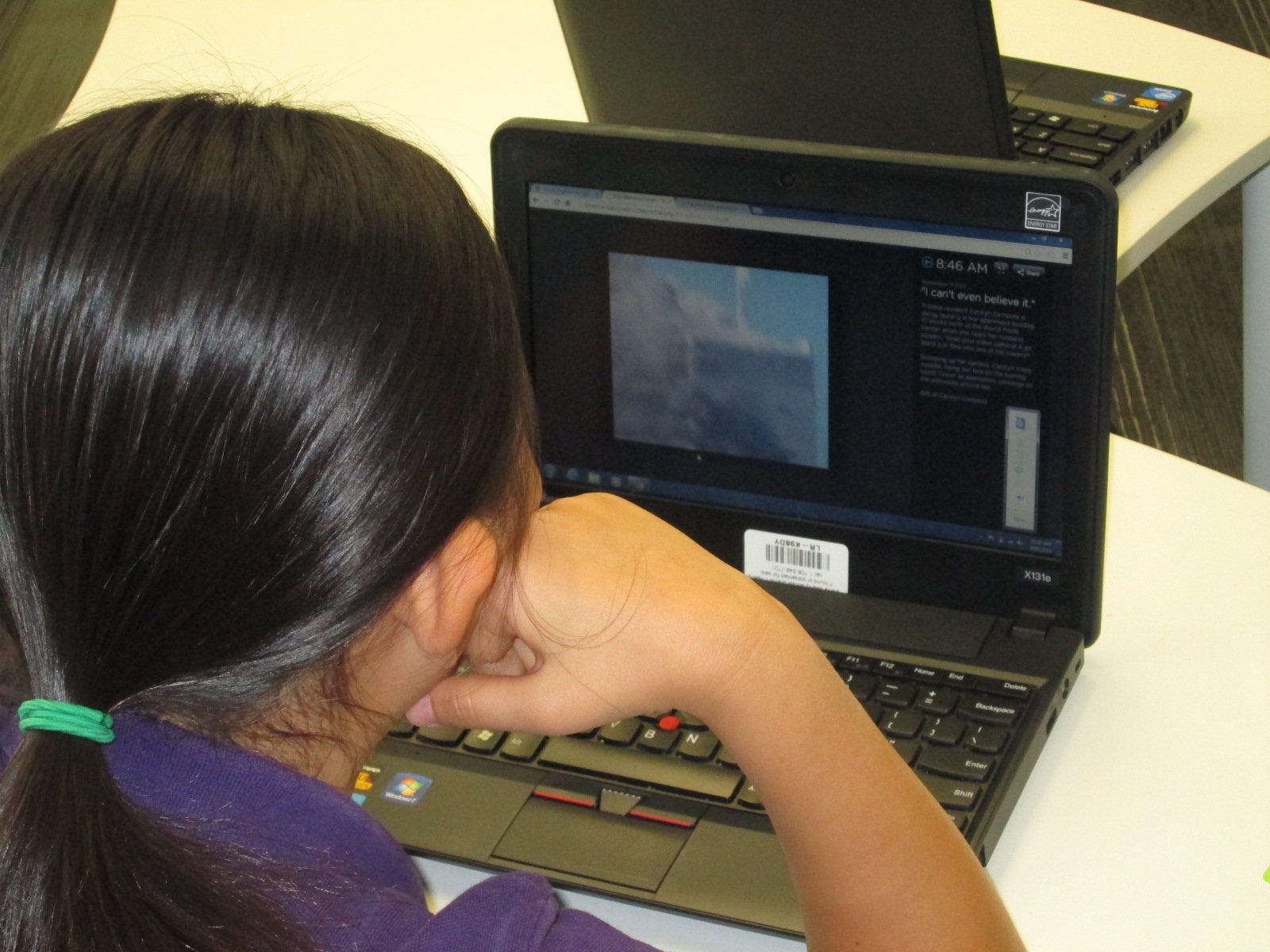
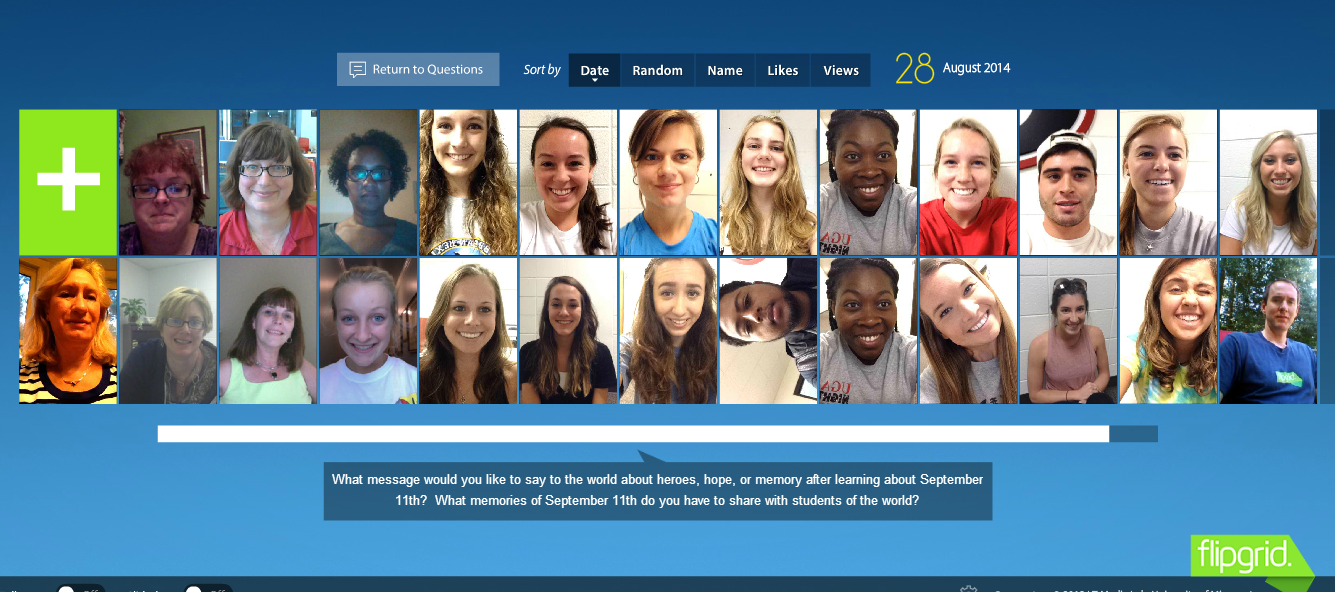
I’ve also been thinking a lot about global thinking, global collaboration, and global perspectives.  This year, I decided to make a Flipgrid well in advance of today.  Through social media, I’ve been sharing the Flipgrid in the hopes that multiple people will share their own perspectives of 9/11.  While there wasn’t an overwhelming response to share stories, the stories that were shared were powerful.  The students in Gretchen Thomas’s class shared their own memories of being in elementary school at the time.  These stories included very personal connections to the tragedy such as family members who were in New York on the day of the tragedy and a student coming into New York on a plane from another country and being diverted to Canada.  Several librarians stepped up to share stories as well.  Beth Miller of Georgia shared her story of working in the World Trade Center during the bombing in the 1990’s and how she had family and friends who were in the towers on 9/11.  Her family made it but several friends did not.  Elissa Malespina of New Jersey shared the story of her husband being in New York on 9/11.  He was on one of the last trains coming into the city.  It was chilling to think how many people have been affected by 9/11 in very personal ways.  Even if you don’t have a personal connection, there are many stories about where people were when the tragedy happened.  I wish that I could talk about every story on this Flipgrid because each one is meaningful in its own way.  Please take time to listen to these stories and feel free to add your own.

September 11 (25)

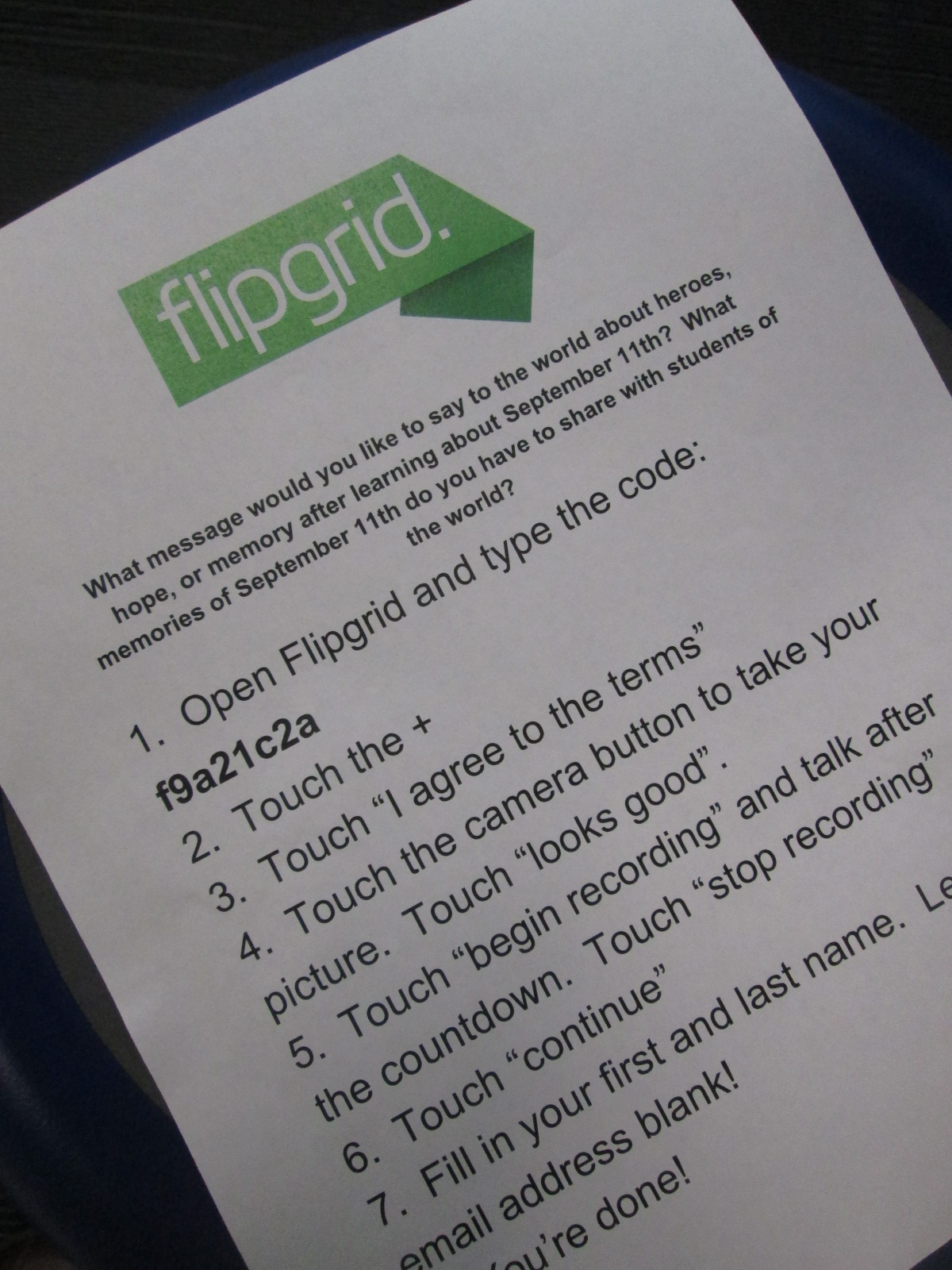
This Flipgrid was a part of the pathfinder but it was also a place that students recorded their own thoughts at the end of the day.  Students spent some time reflecting in classrooms.  Then, they came out into the 5th grade hallway with iPads to record their reflections on the Flipgrid.  Another of Gretchen’s UGA classes came to assist with this process.  I had instructions typed up with the Flipgrid code and we got as many students recorded as possible at the end of the day.  Students loved collaborating with students from UGA to create their videos.

I think that this project has such potential for a global collaborative project.  What would it be like if students in another country shared the tragedies taking place in their own countries?  What would happen if our students in the  US considered how they could respond to the tragedies taking place in other countries?  What are people’s perspectives on 9/11 from other countries around the world?  What do everyday heroes look like around the globe?

My hope is that this project can continue in some way this year.  If it doesn’t, I hope that next year’s layer that gets added on is developing a more global perspective on tragedies around our world and how we respond to those tragedies as a global society.


Barrow Students are Banishing Boredom with Wandoo Planet

BnrkJhaIMAAhM3L

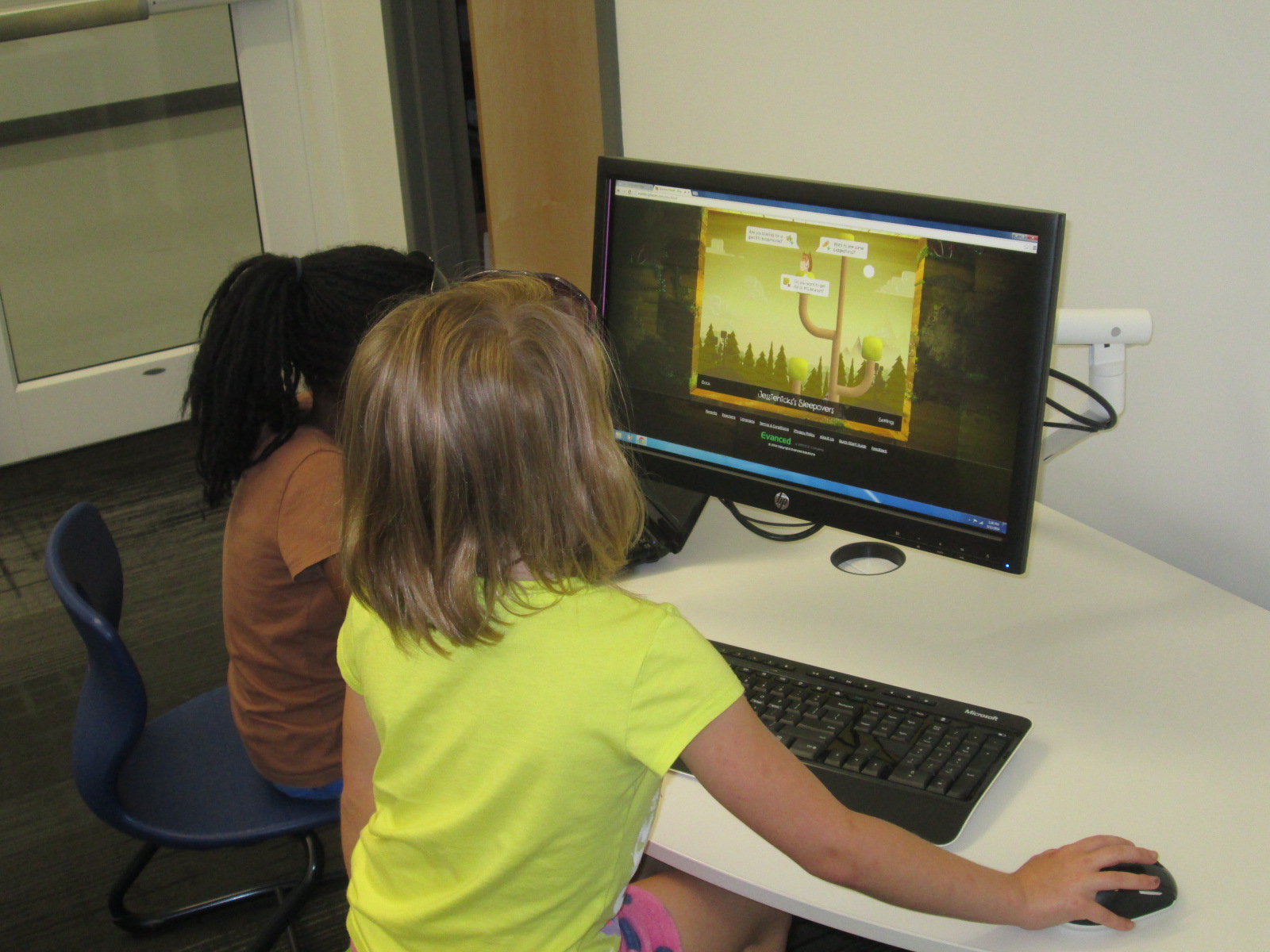
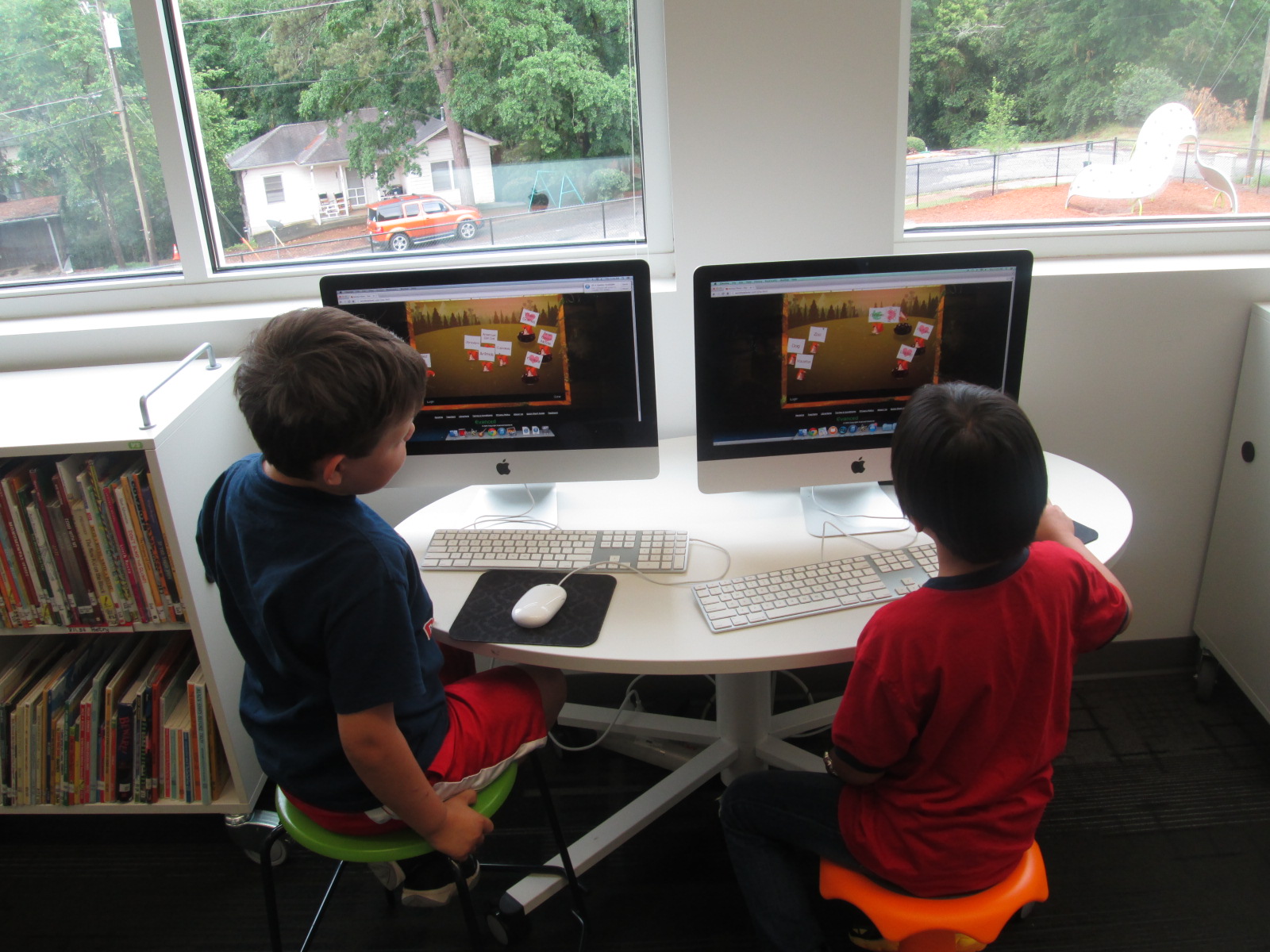
Back in early February, a group of 5th graders became beta testers for a new tool from Evanced Kids called Wandoo Planet.  It is a kid-powered interest genome project similar to Spotify, Pandora, or Netflix.  Through a visually-stunning, game-like interface, students train the system to understand what their interests are and Wandoo Planet offers book and movie recommendations.

lindsey 1

Since our beta testing began, Evanced has released the beta version to anyone who wants to register for an account.  The polished version will be released in summer or early fall.  I thought this would be the perfect launch to summer reading.  In the past, I’ve tried to get students to think about their interests and begin making lists of possible reading topics, but I felt like it was difficult to carry those initial plans into the summer.  With Wandoo Planet, kids can start thinking about their interests and continue to grow and develop their interests throughout the summer and beyond.  They can take the books and movies that are recommended to the public library or bookstores and gather their summer reading materials.

lindsey

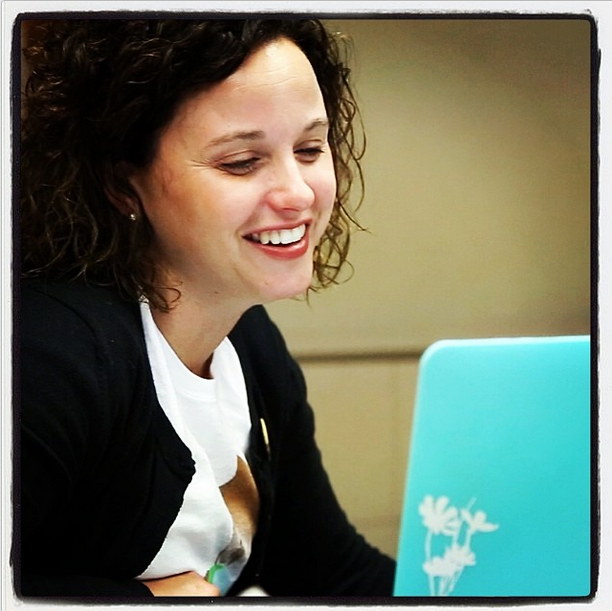
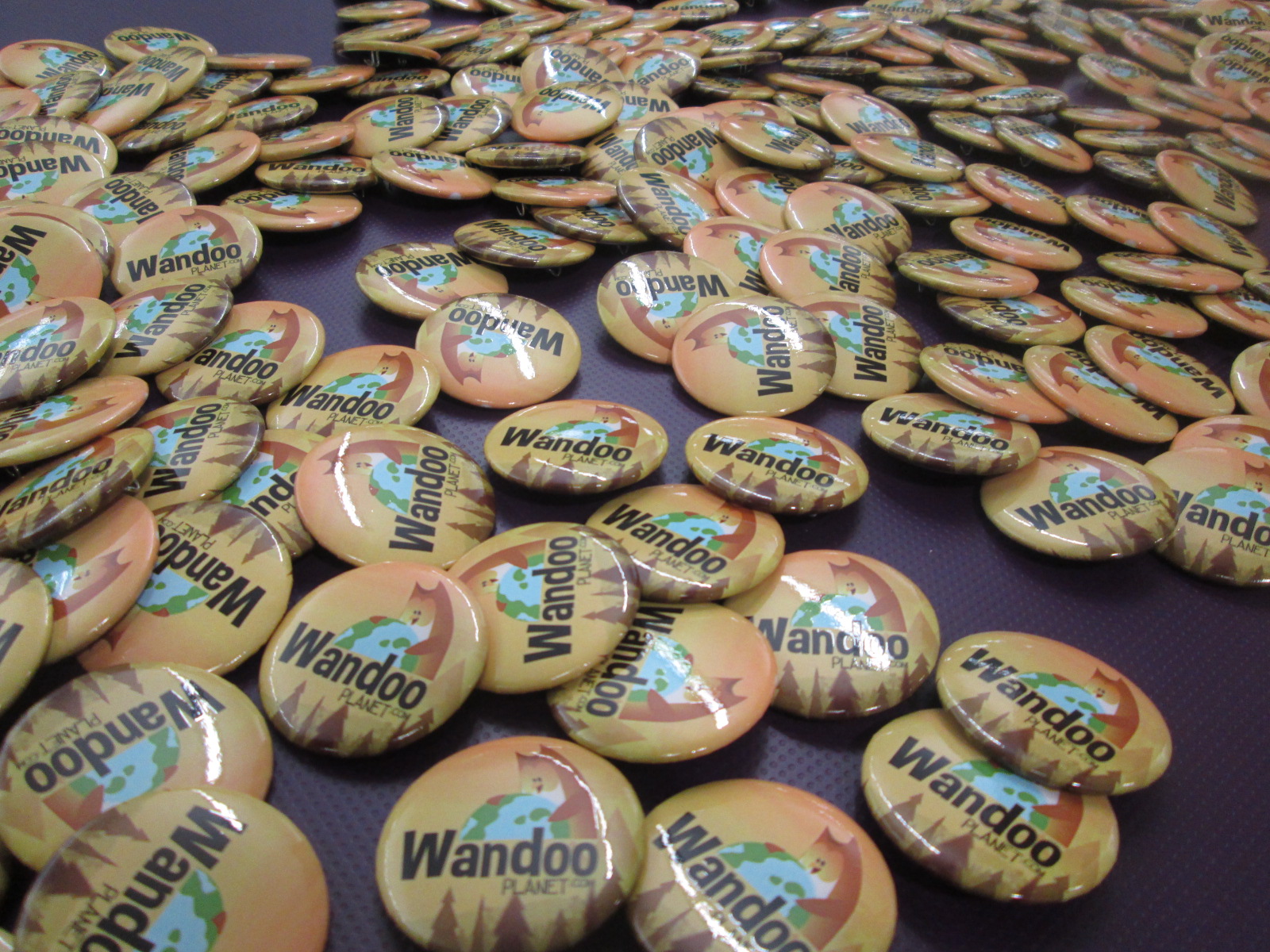
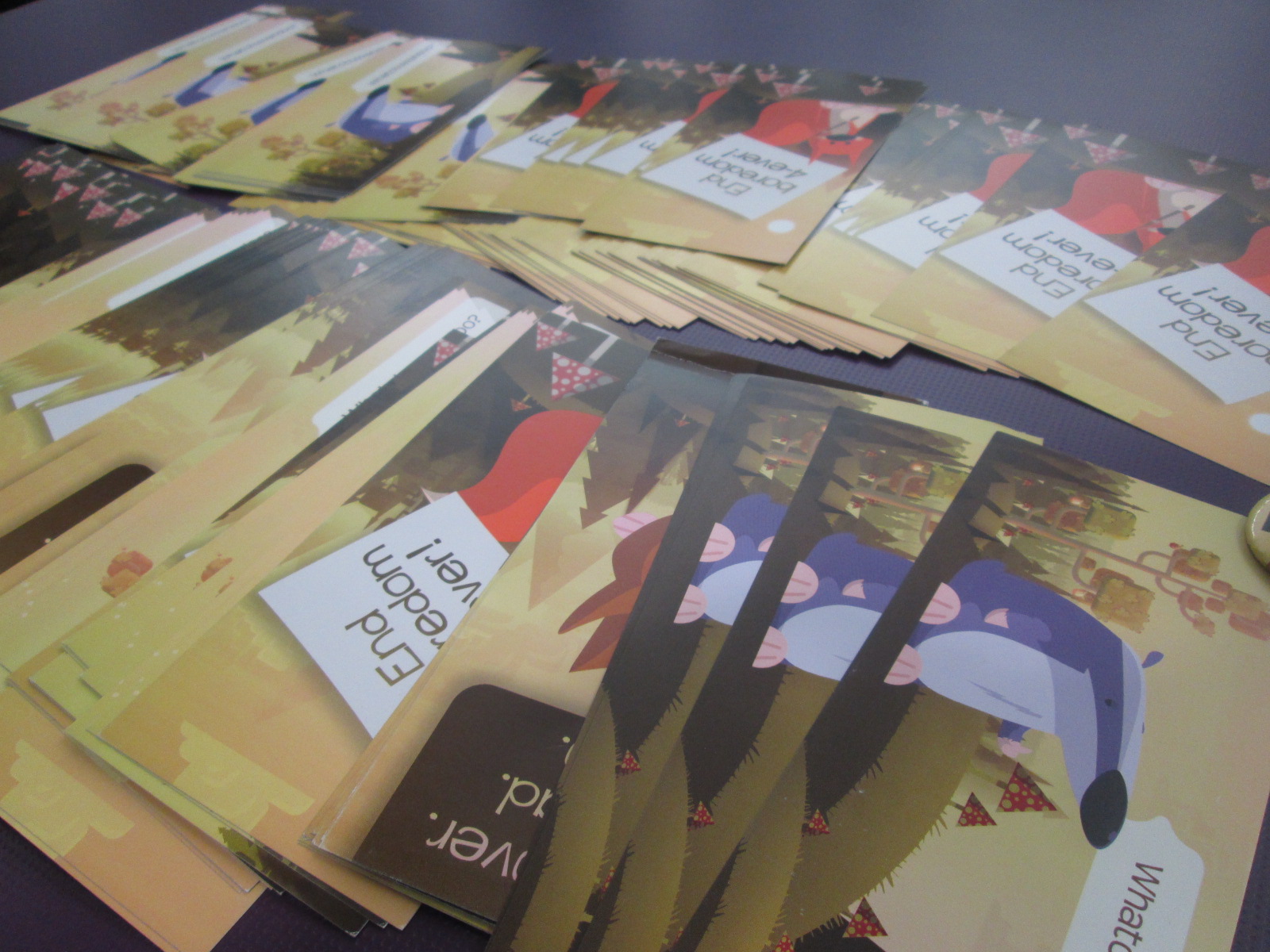
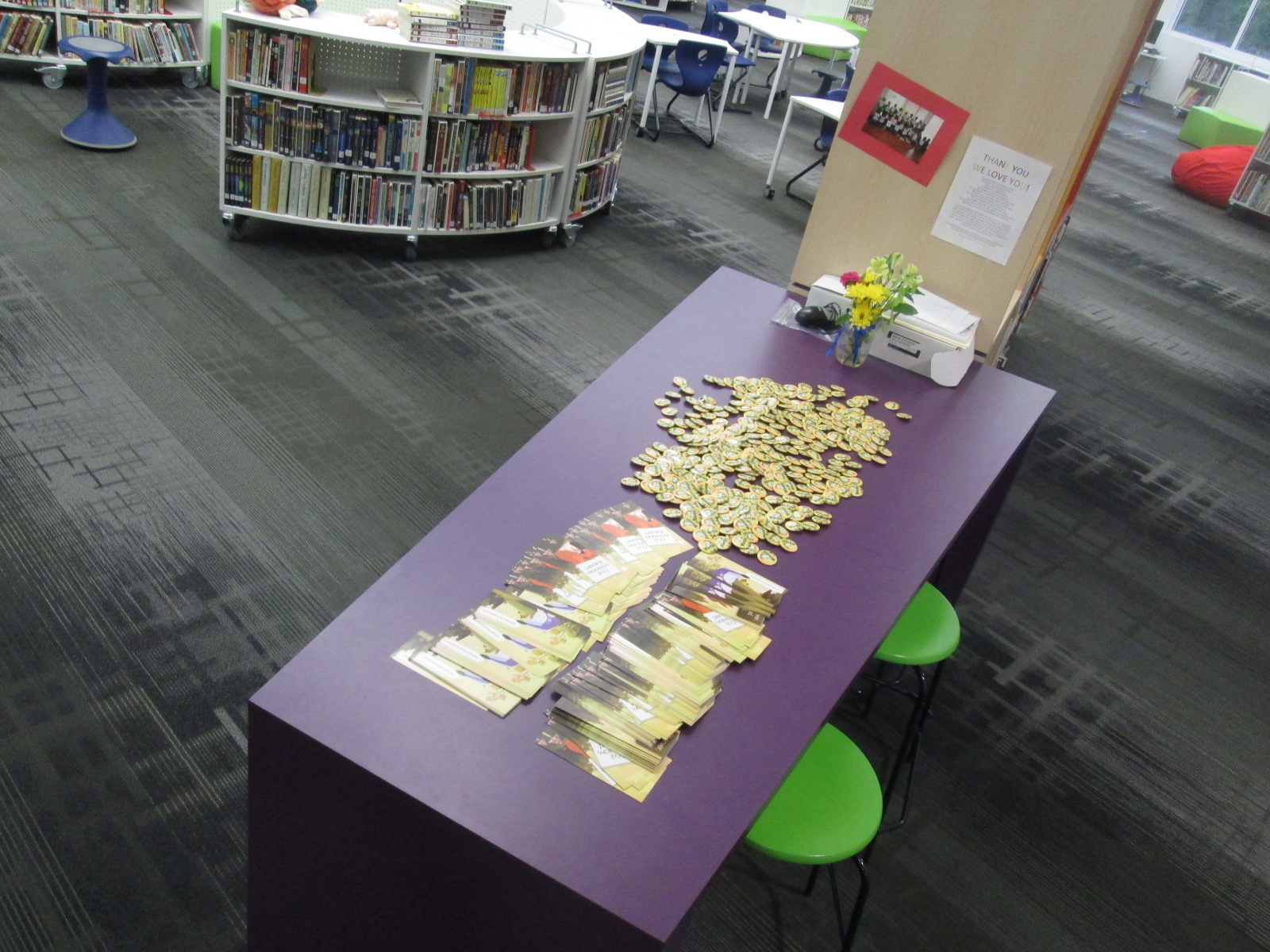
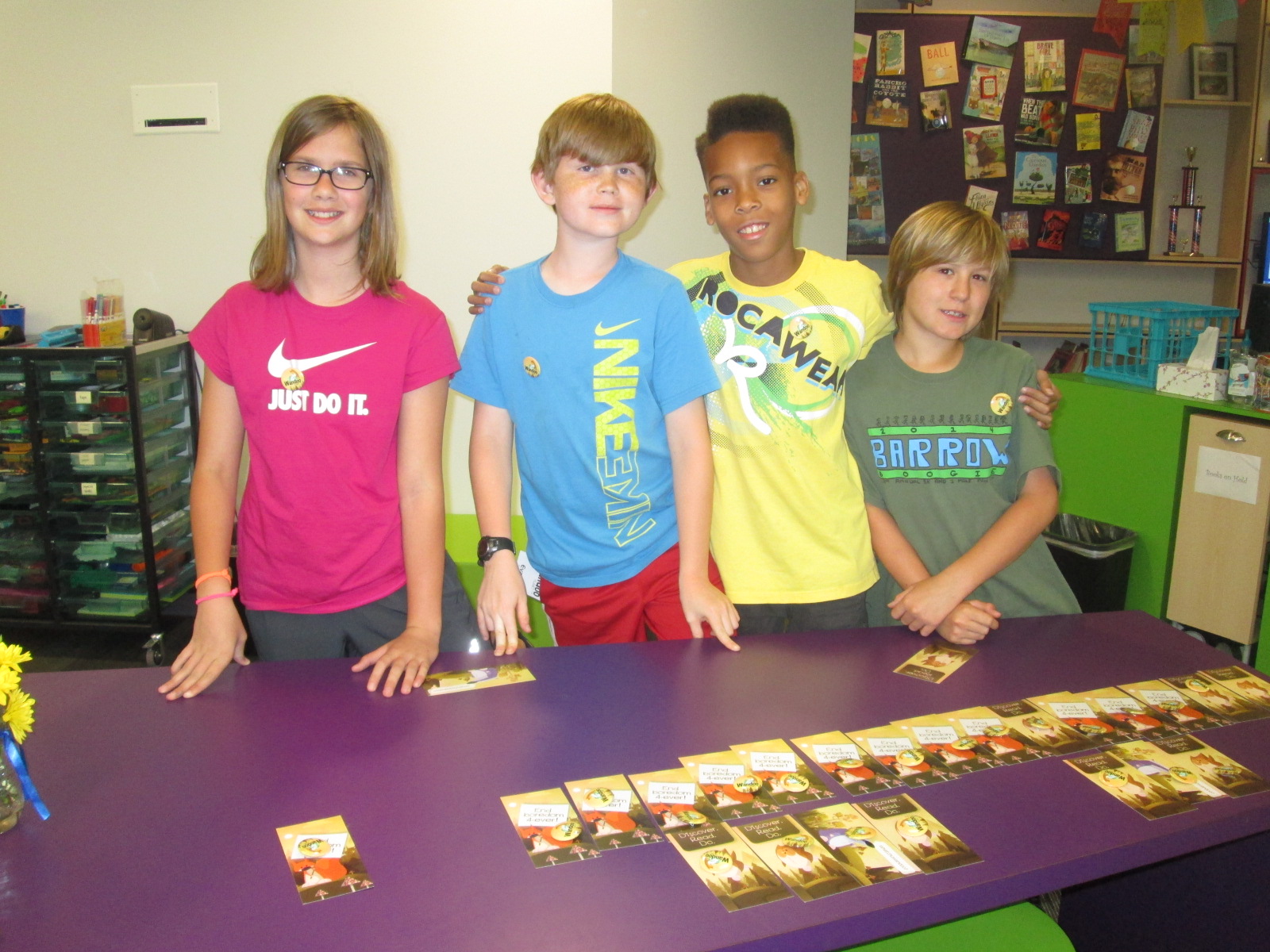
Lindsey Hill at Evanced began brainstorming with me on Twitter and email to plan a virtual visit right before we leave for the summer.  She mailed me bookmarks, username/password cards, and buttons to give to all of the students.

IMG_3414 IMG_3415 IMG_3416

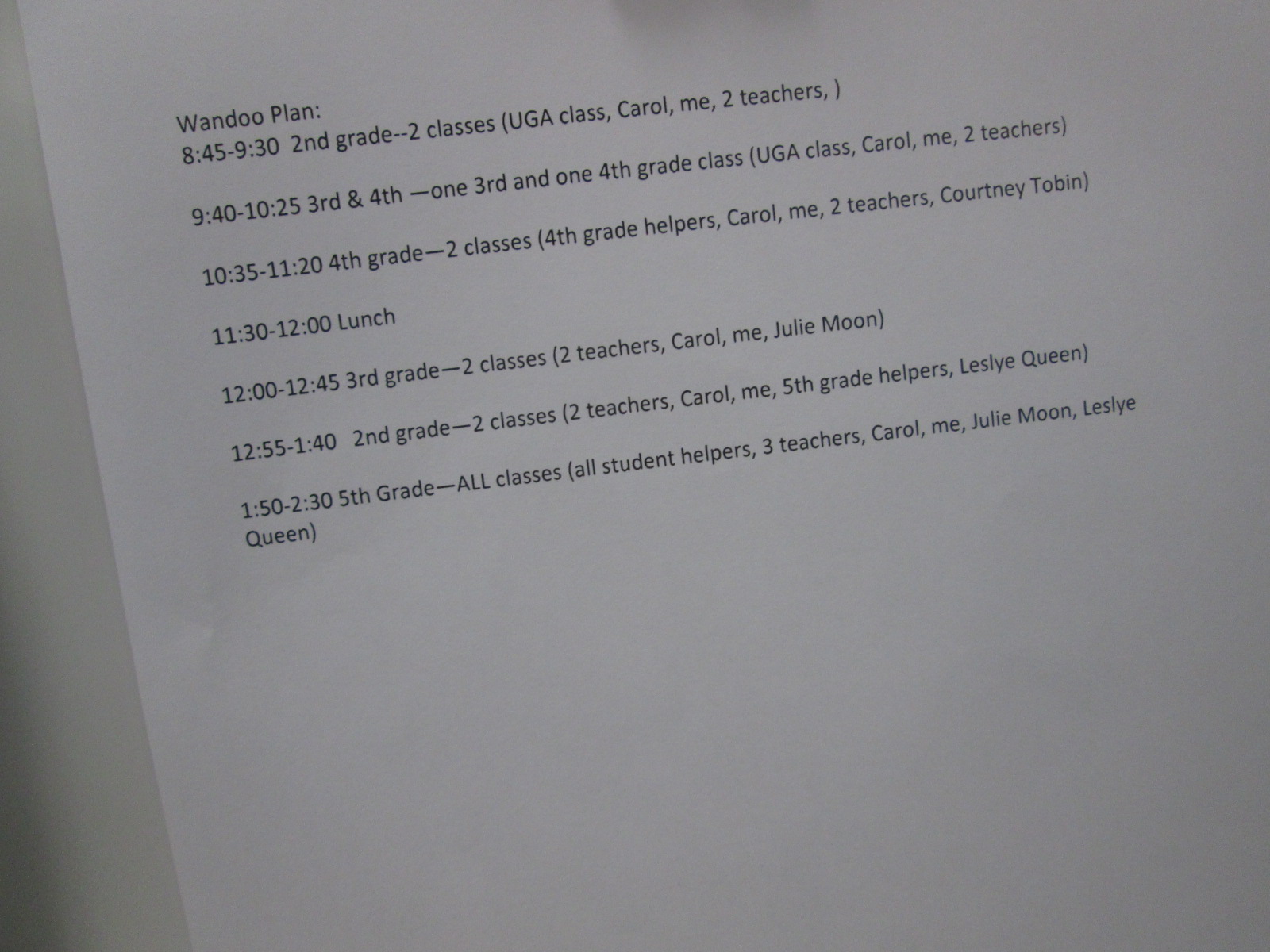
We thought through which classes would come, a schedule that made sense, how to structure the virtual components, and how to best use student time in the library.  We decided on having 2 classes for 45 minute intervals with a 10 minute cushion of time in between sessions.  This allowed us to see all 2nd-5th grade classes.

IMG_3418

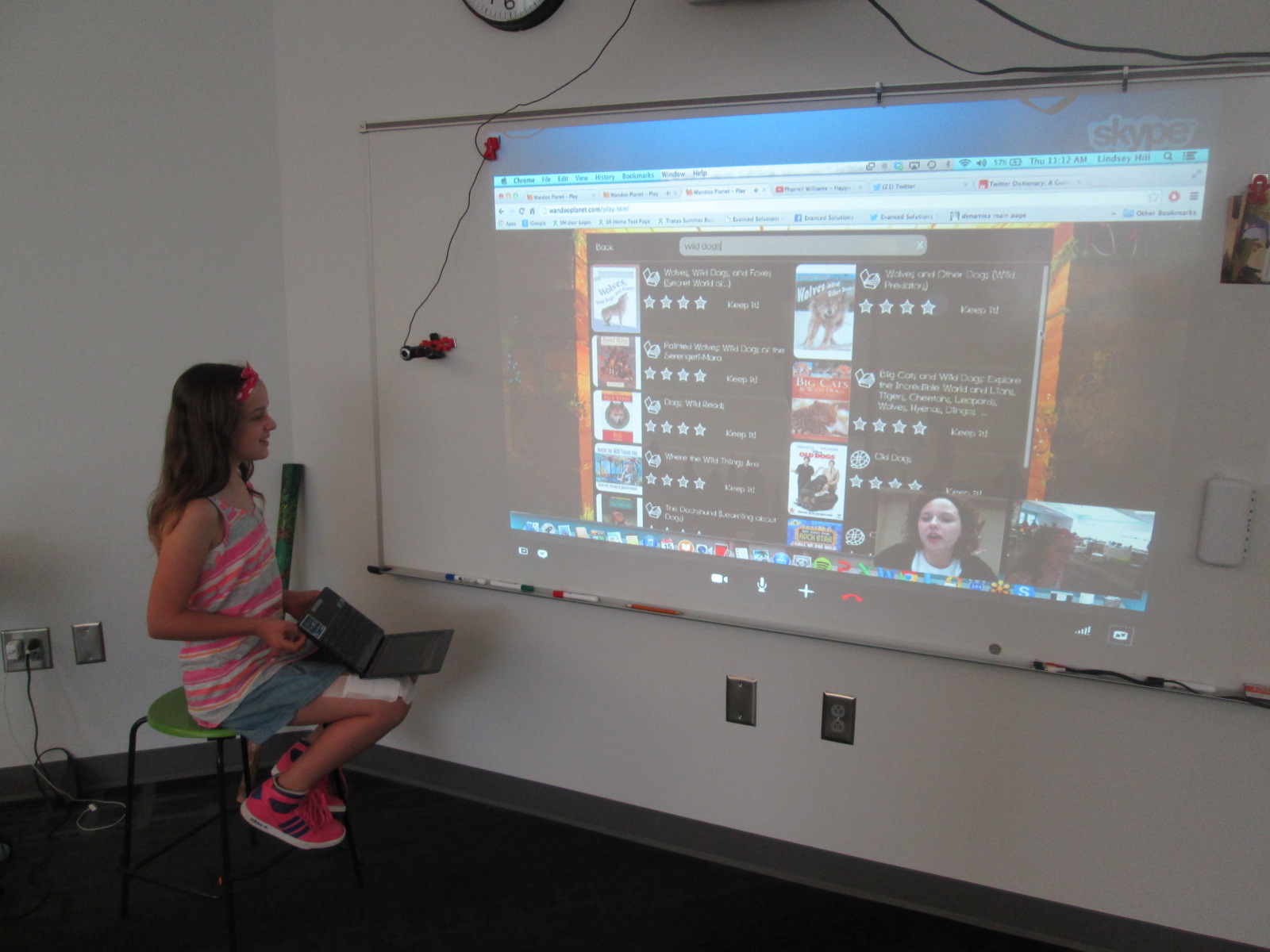
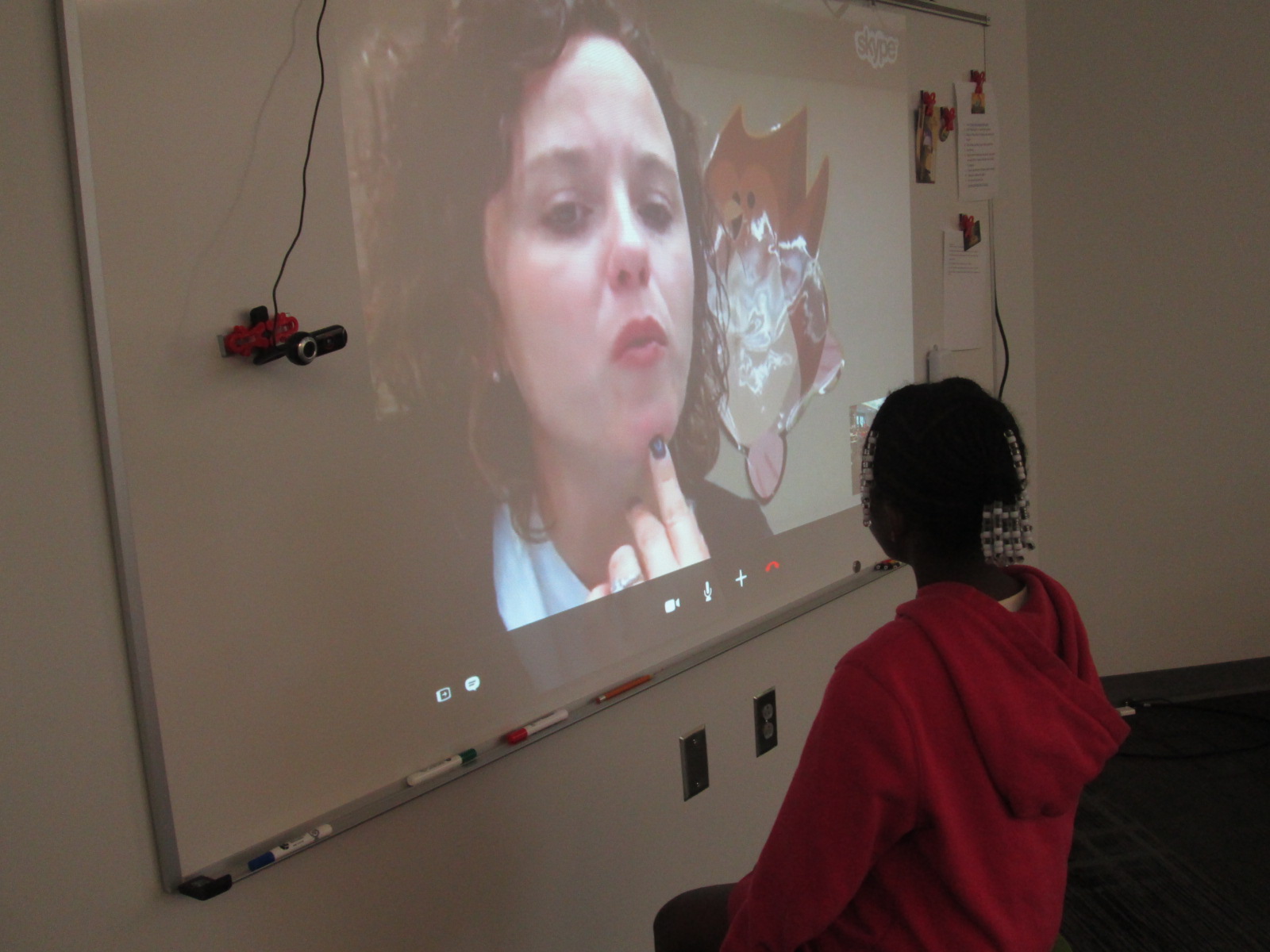
Lindsey agreed to Skype with each group and explain Wandoo.  She used this time to explain how Wandoo works as well as how to setup an account.

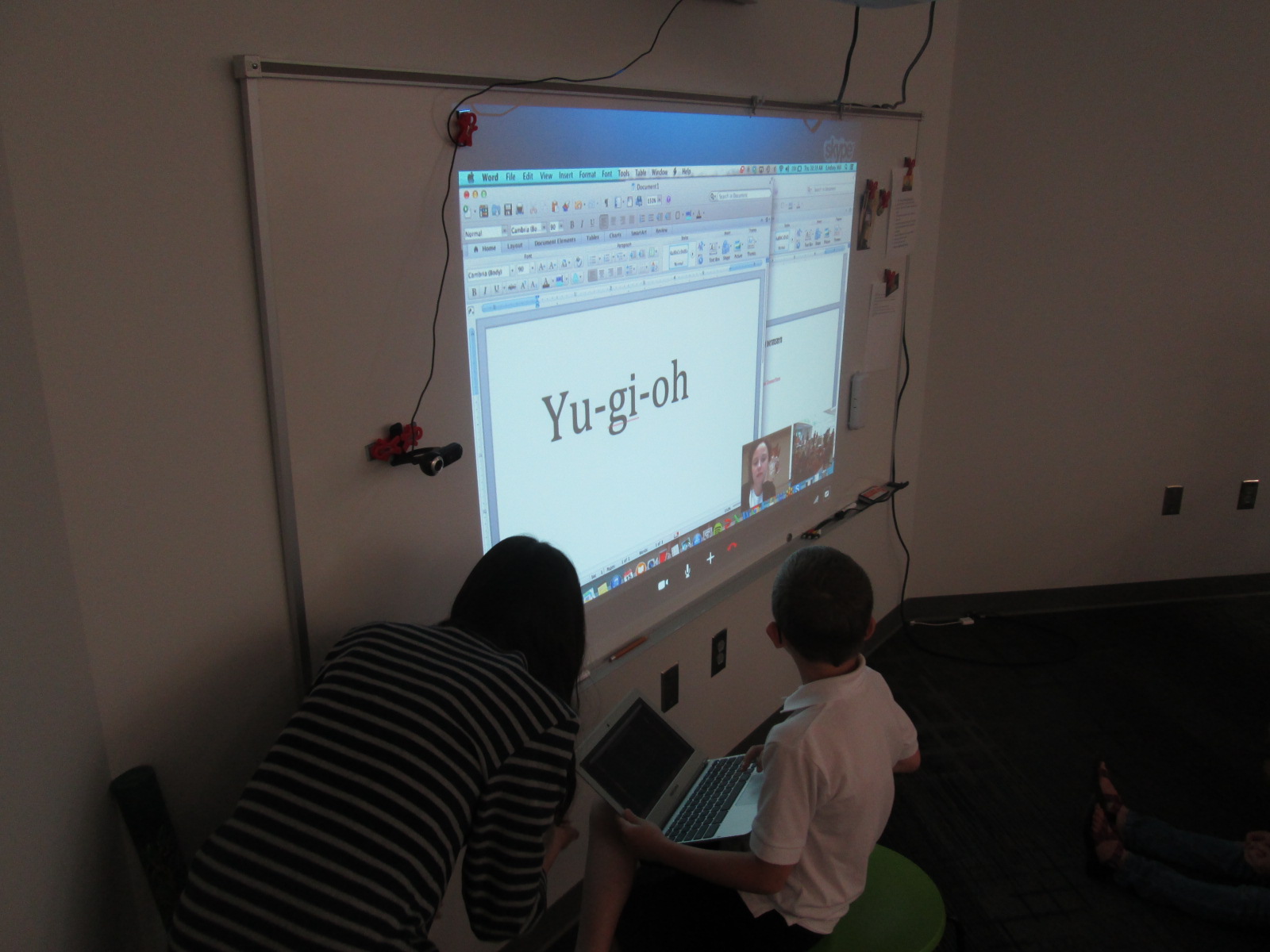
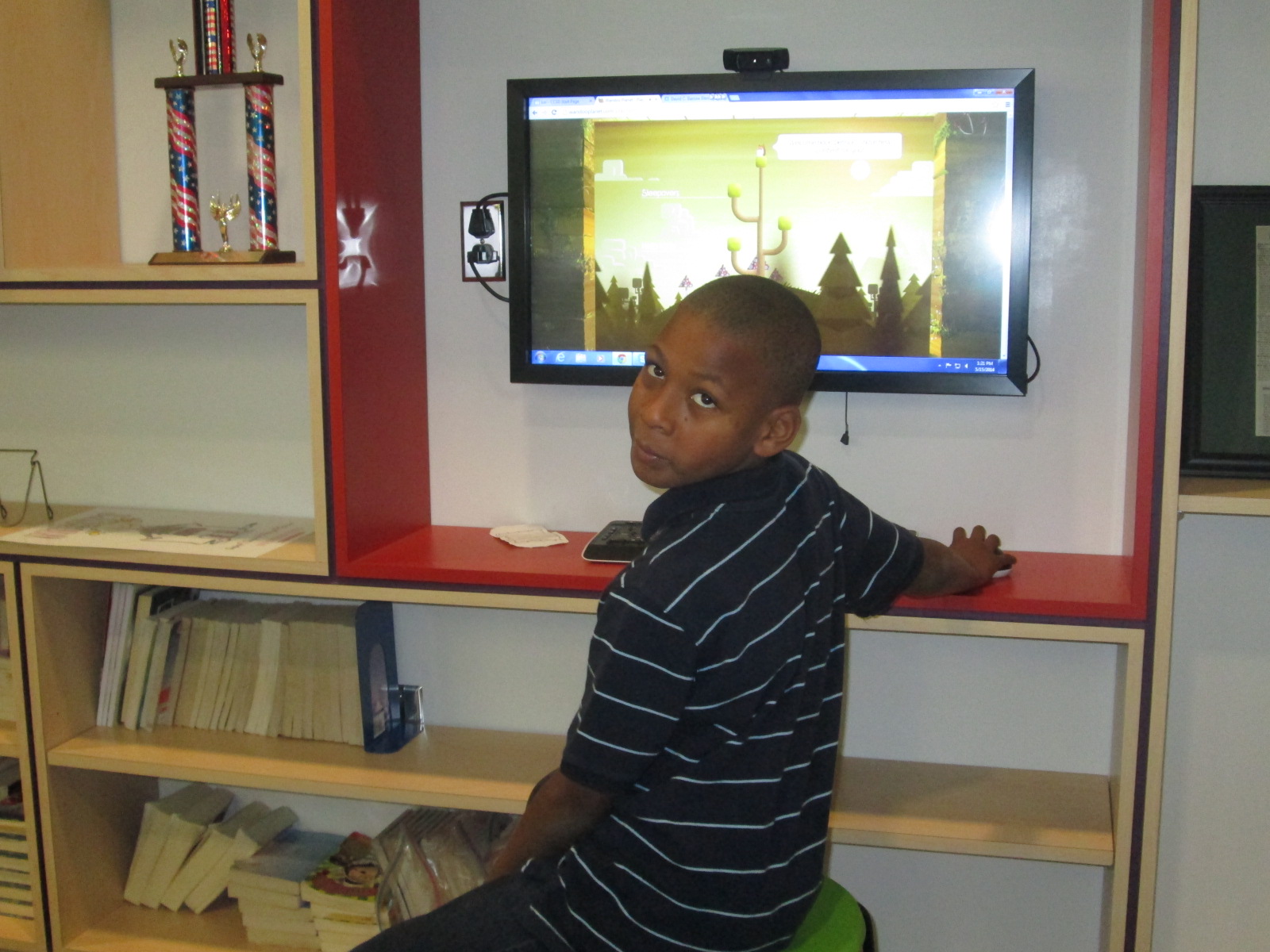
She also agreed to stay online all day so that students could give her feedback about Wandoo and ask questions.  I loved watching students walk up and have genuine conversations with her.

IMG_3460 IMG_3452 IMG_3447 IMG_3446

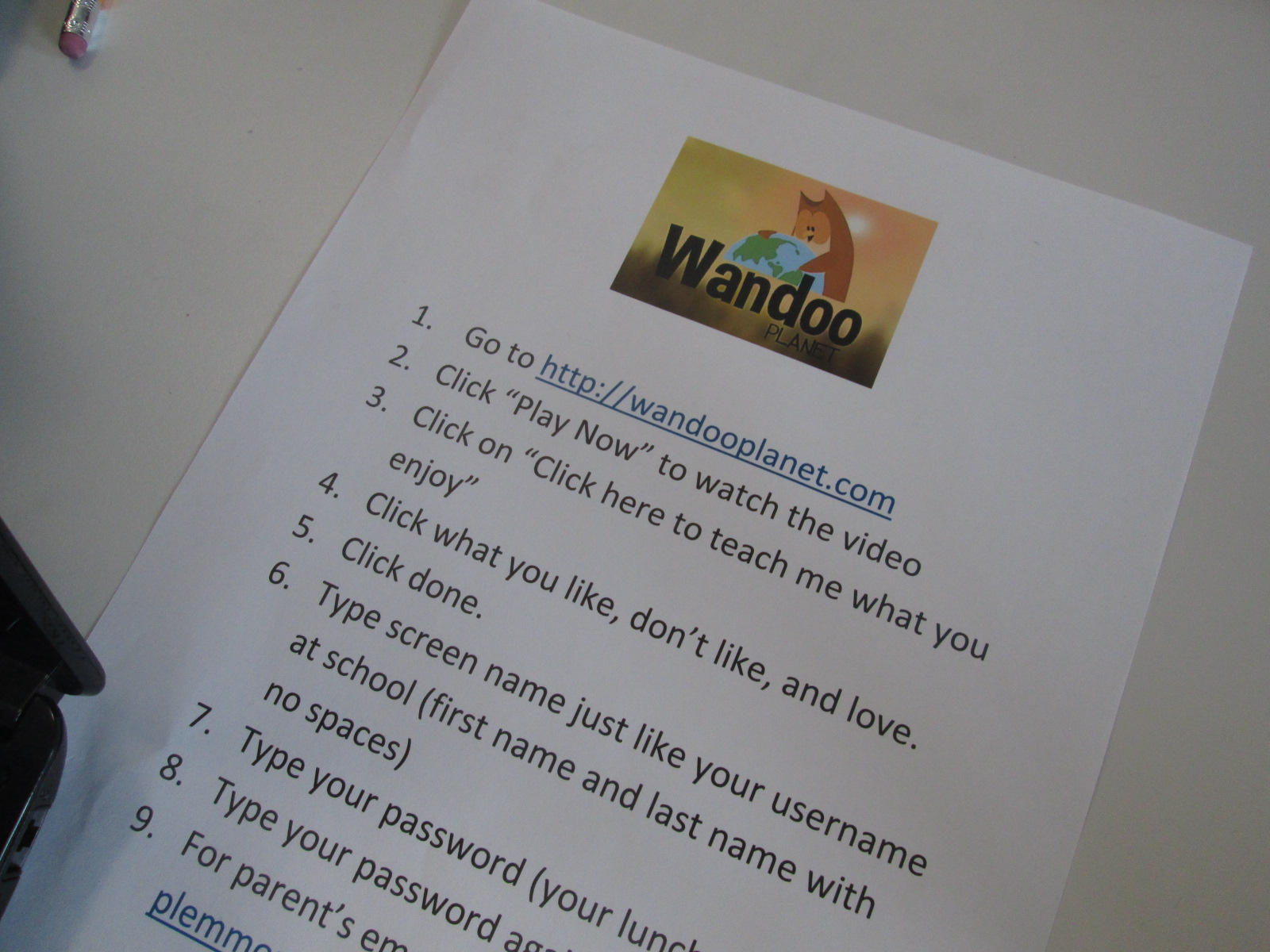
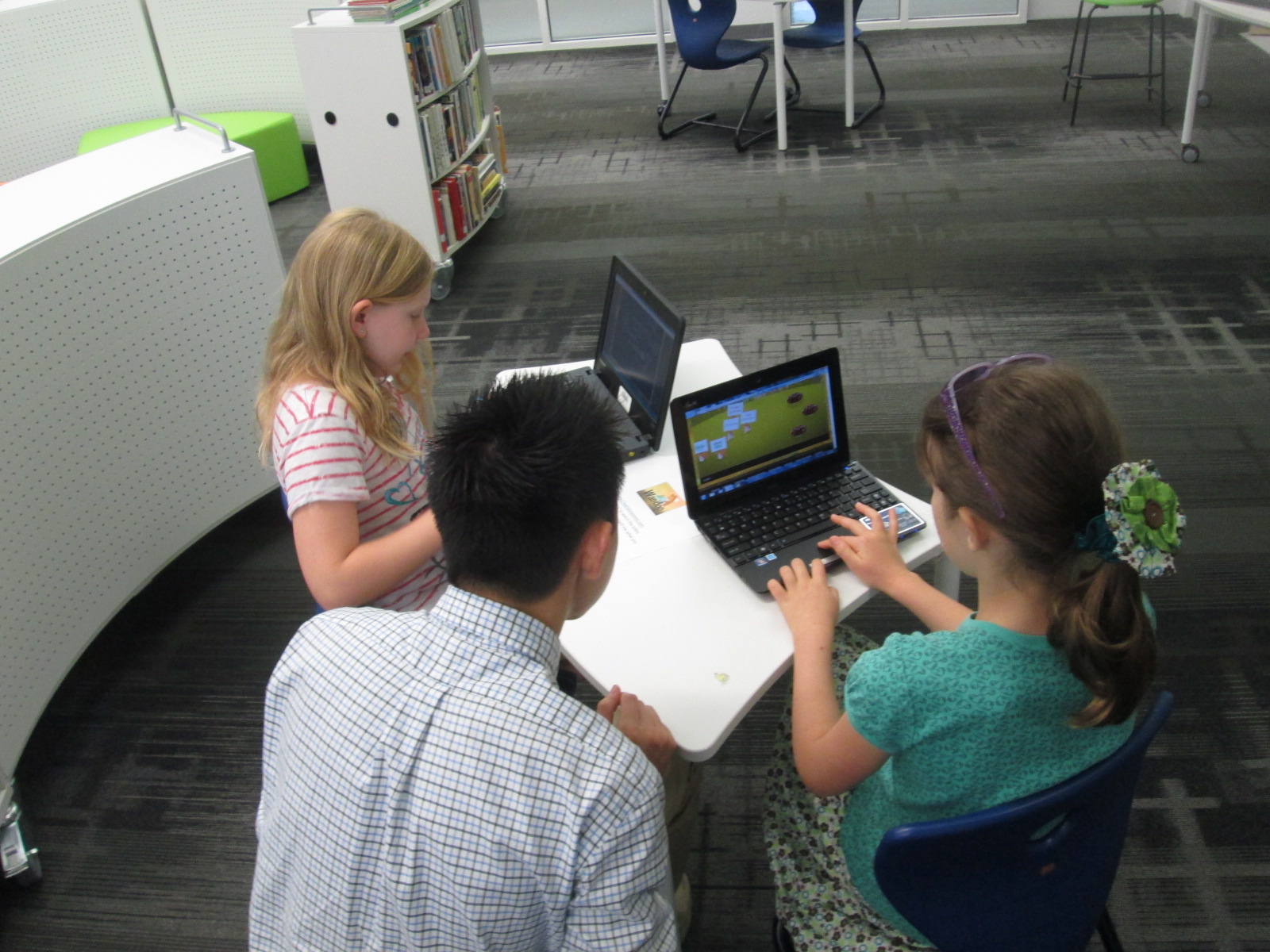
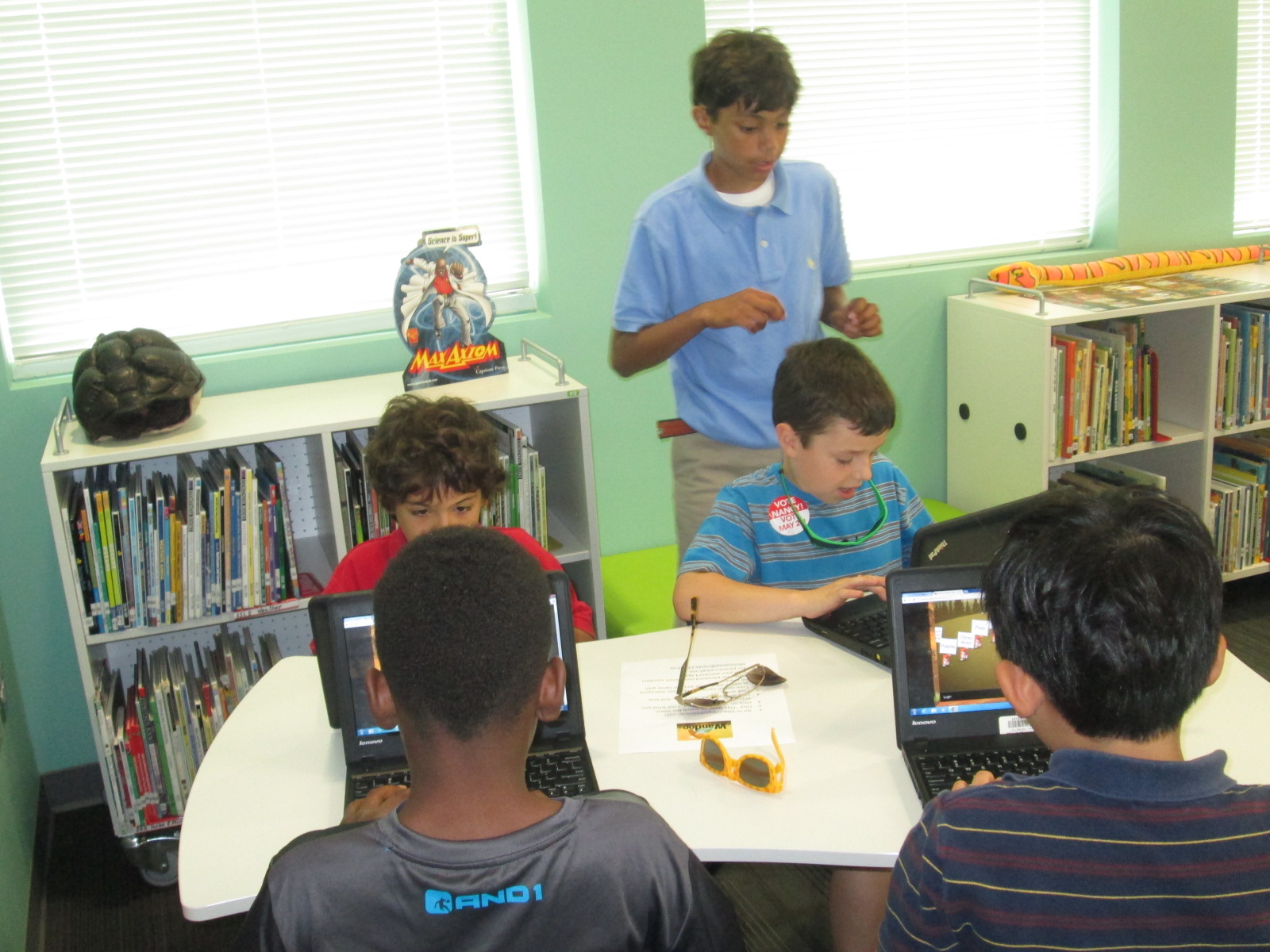
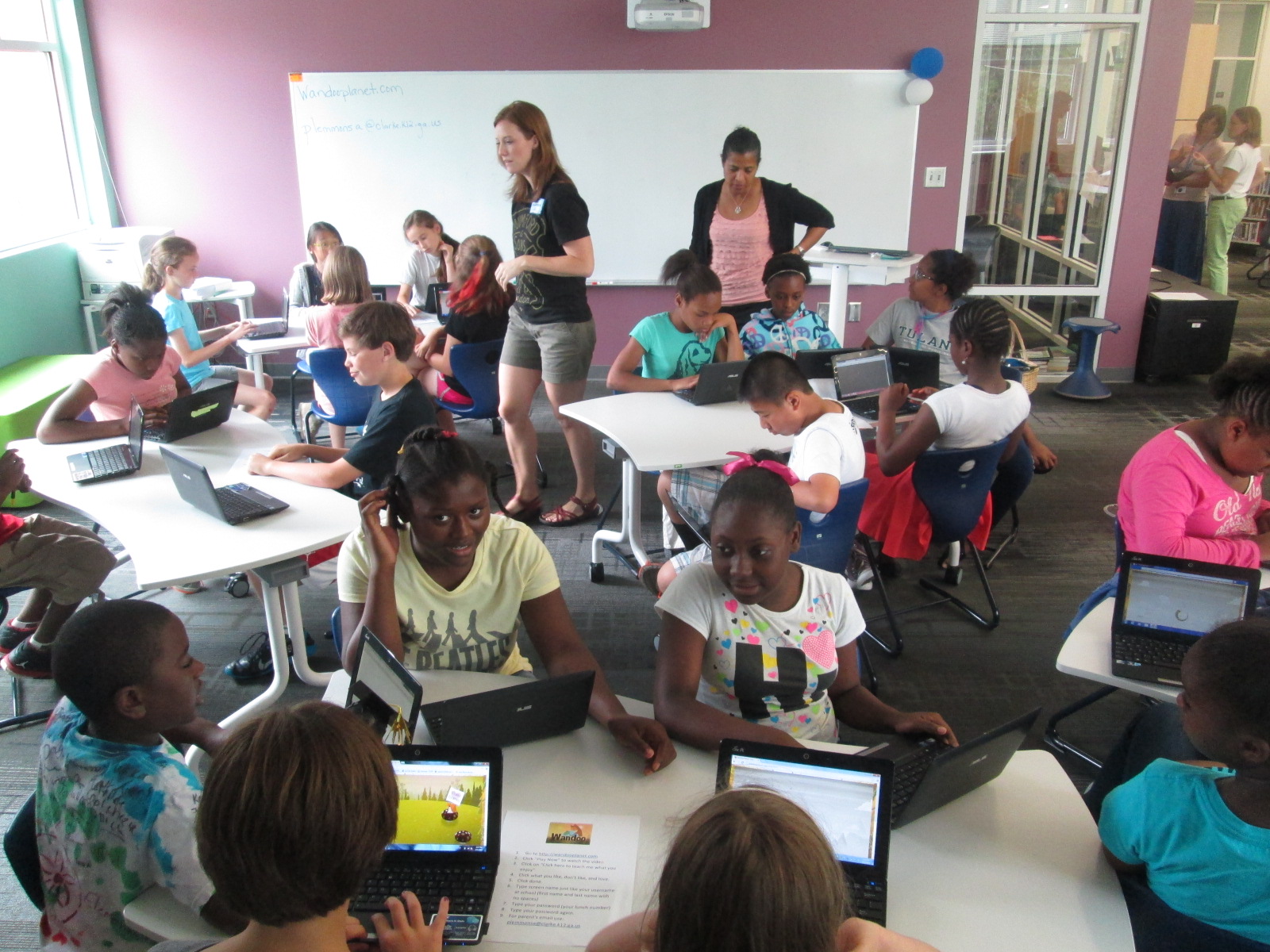
The goal for students during the work session portion of the 45-minute segments was to view the “squirrel parade” on Wandoo planet and begin teaching Wandoo what they like, dislike, and love.  After about 5-10 minutes, they setup an account and begin building their Wandoo tree.  The tree gives students recommendations for books.  If they mark a book to keep, it puts a bud on their virtual tree.  After they read and rate the book, the bud turns into leaves on the tree.  Students can also add interest branches to their tree by revisiting the squirrel parade or typing a topic directly onto a branch.  Students had a small amount of time to do this today.  I put a sheet on every table to remind students about all of the steps.

IMG_3456

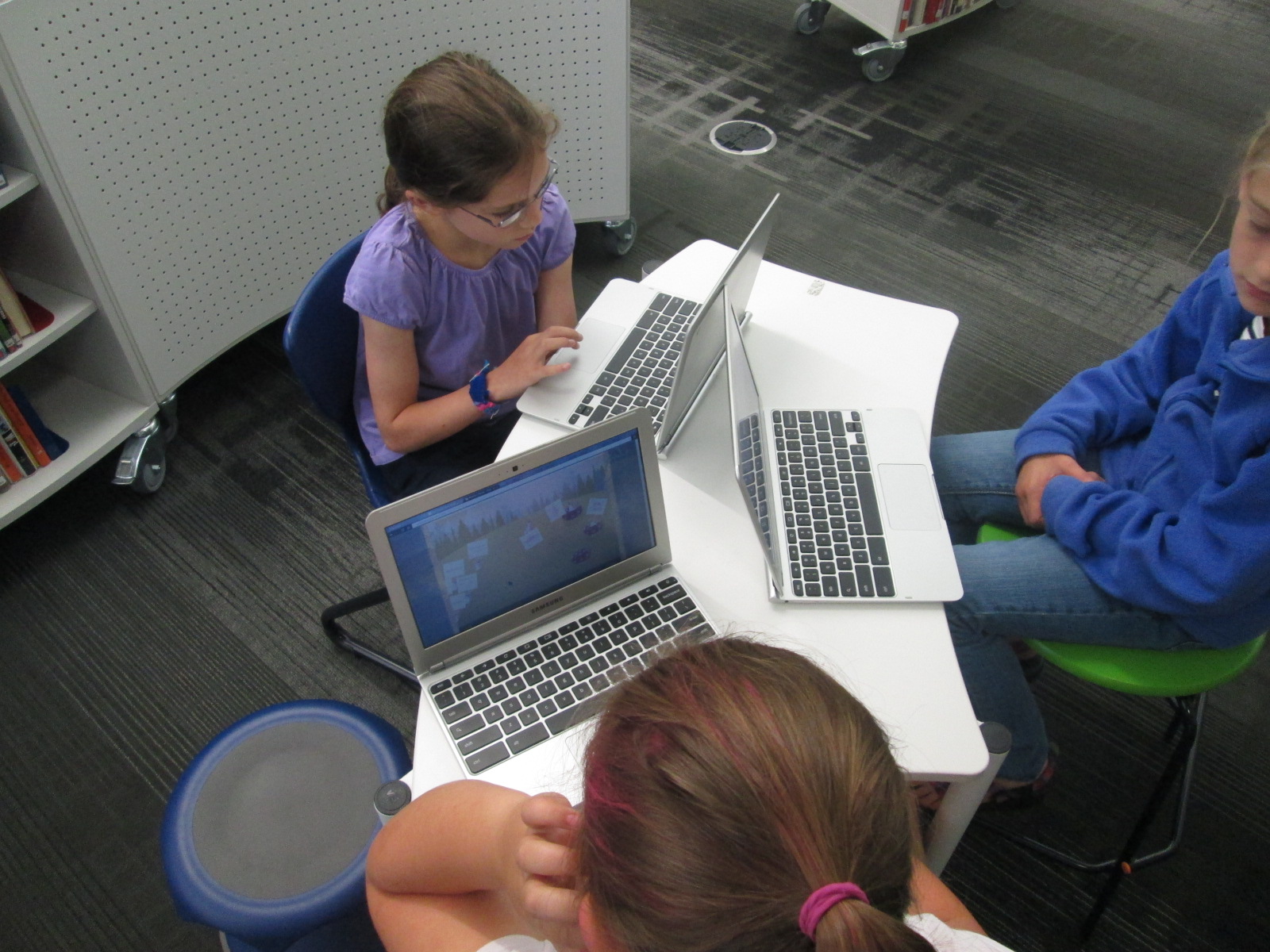
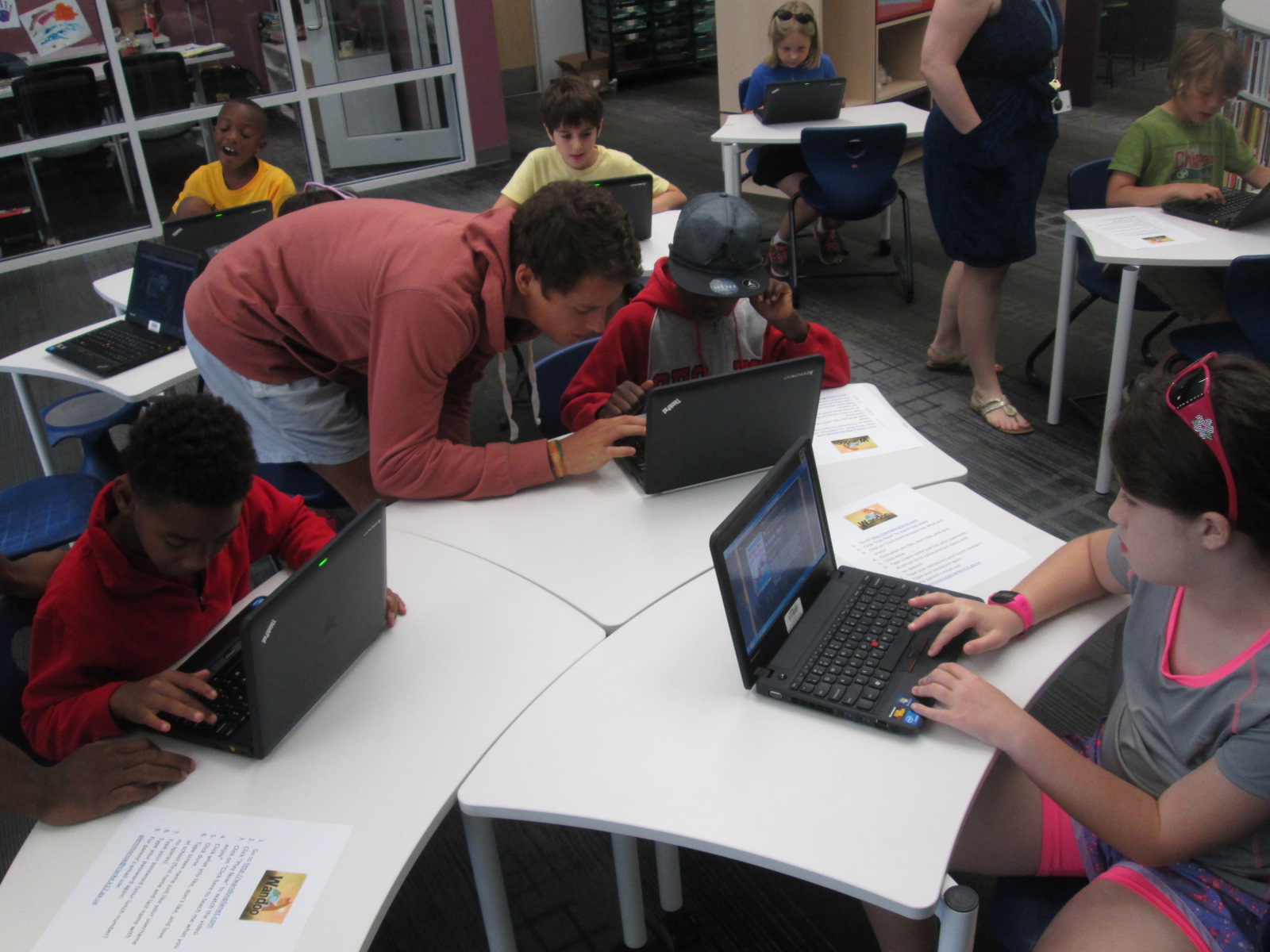
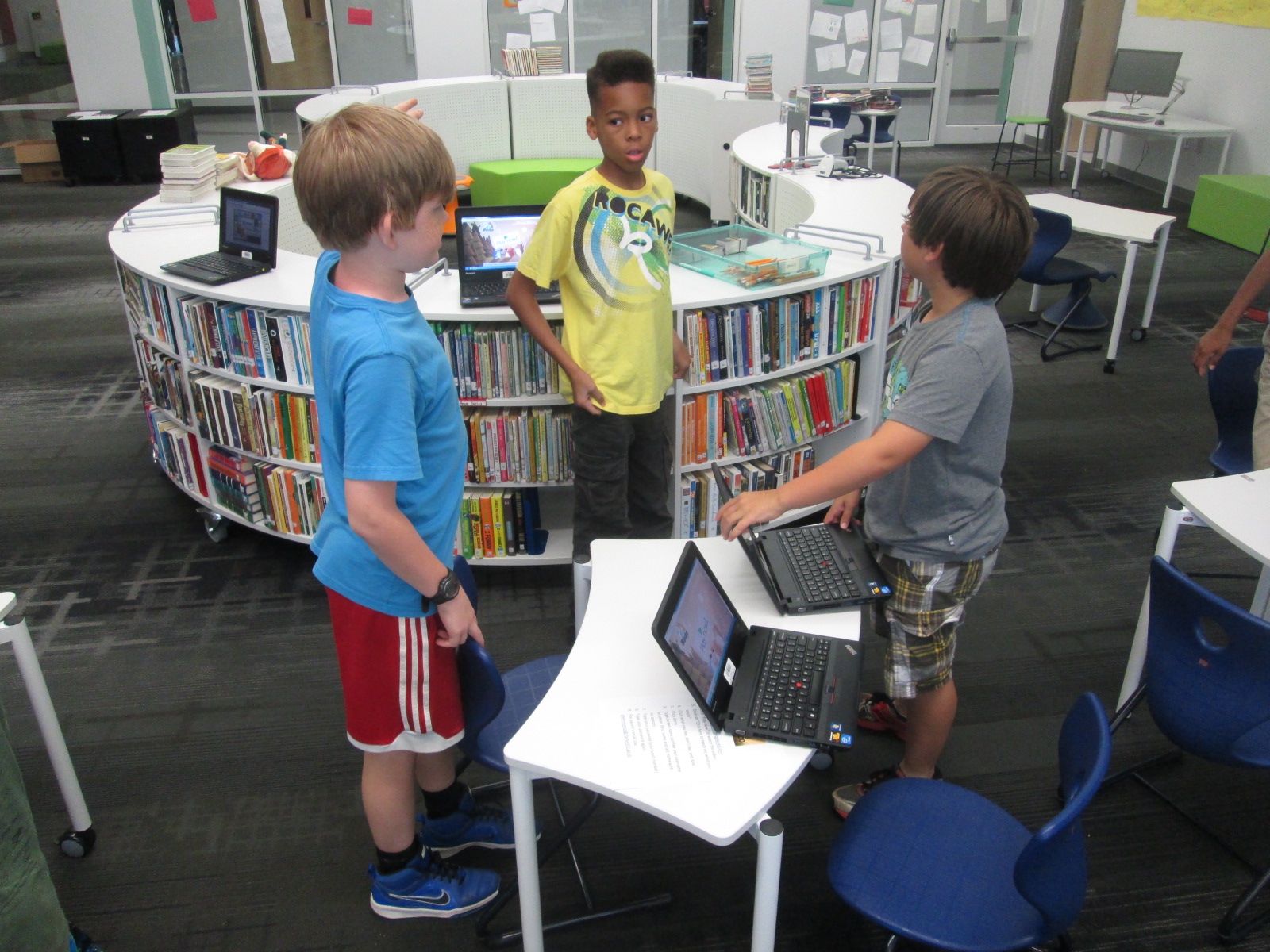
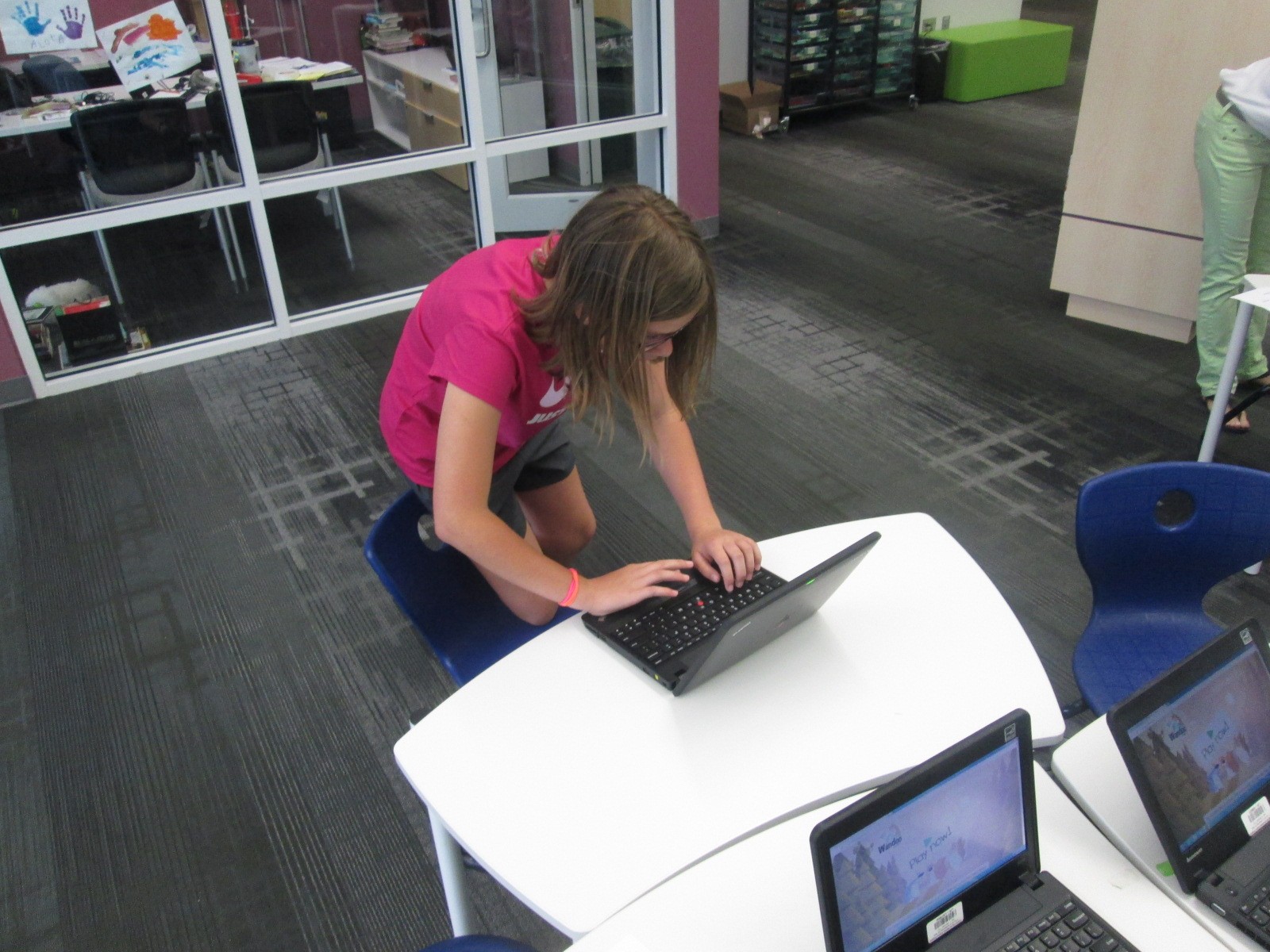
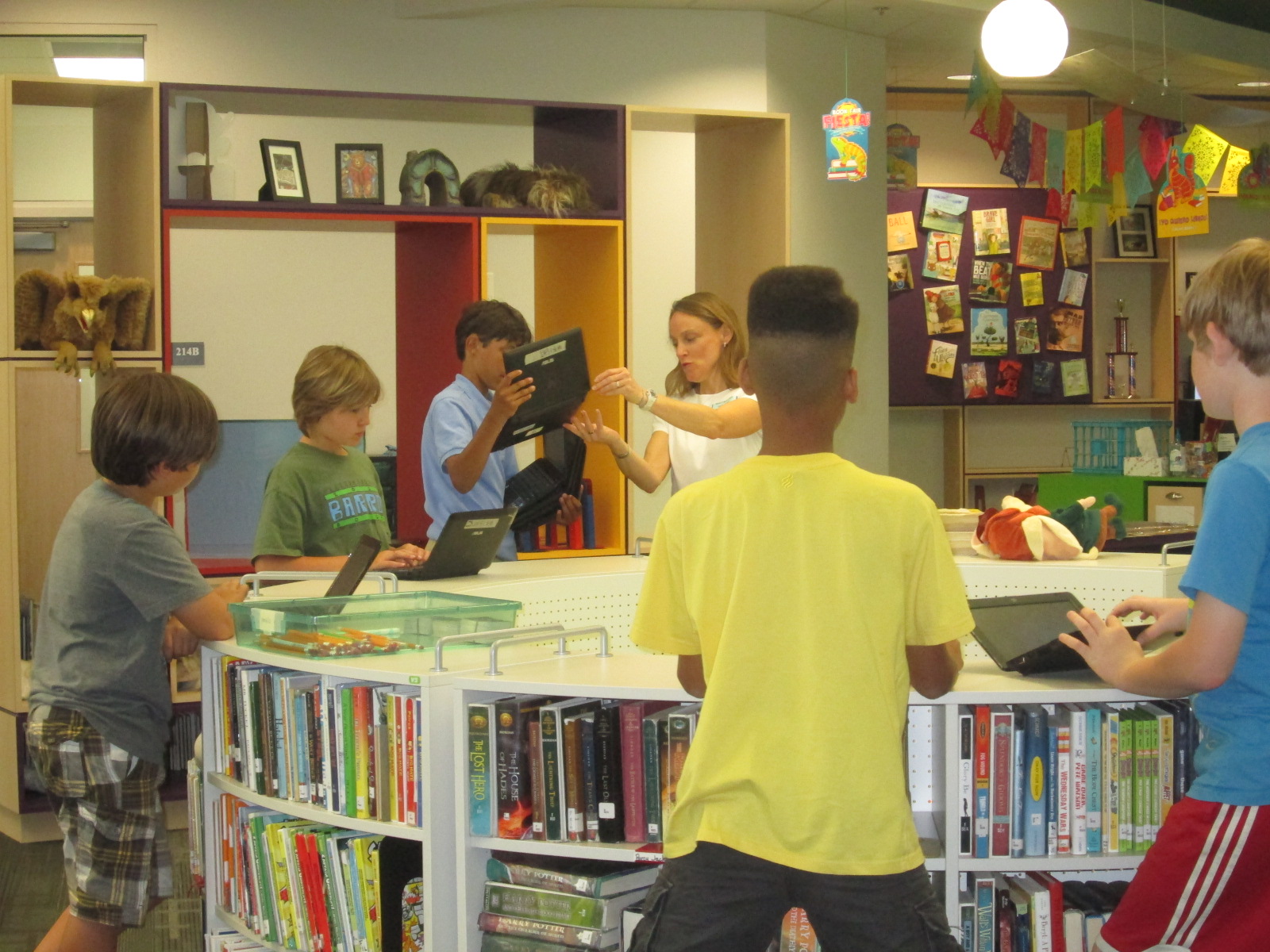
Students brought their classroom computers with them, but for 2nd grade we had to use the library laptop cart and other library computers.  It was interesting to look around and see all of the ways that students were accessing Wandoo.

IMG_3440 IMG_3483 IMG_3482 IMG_3481

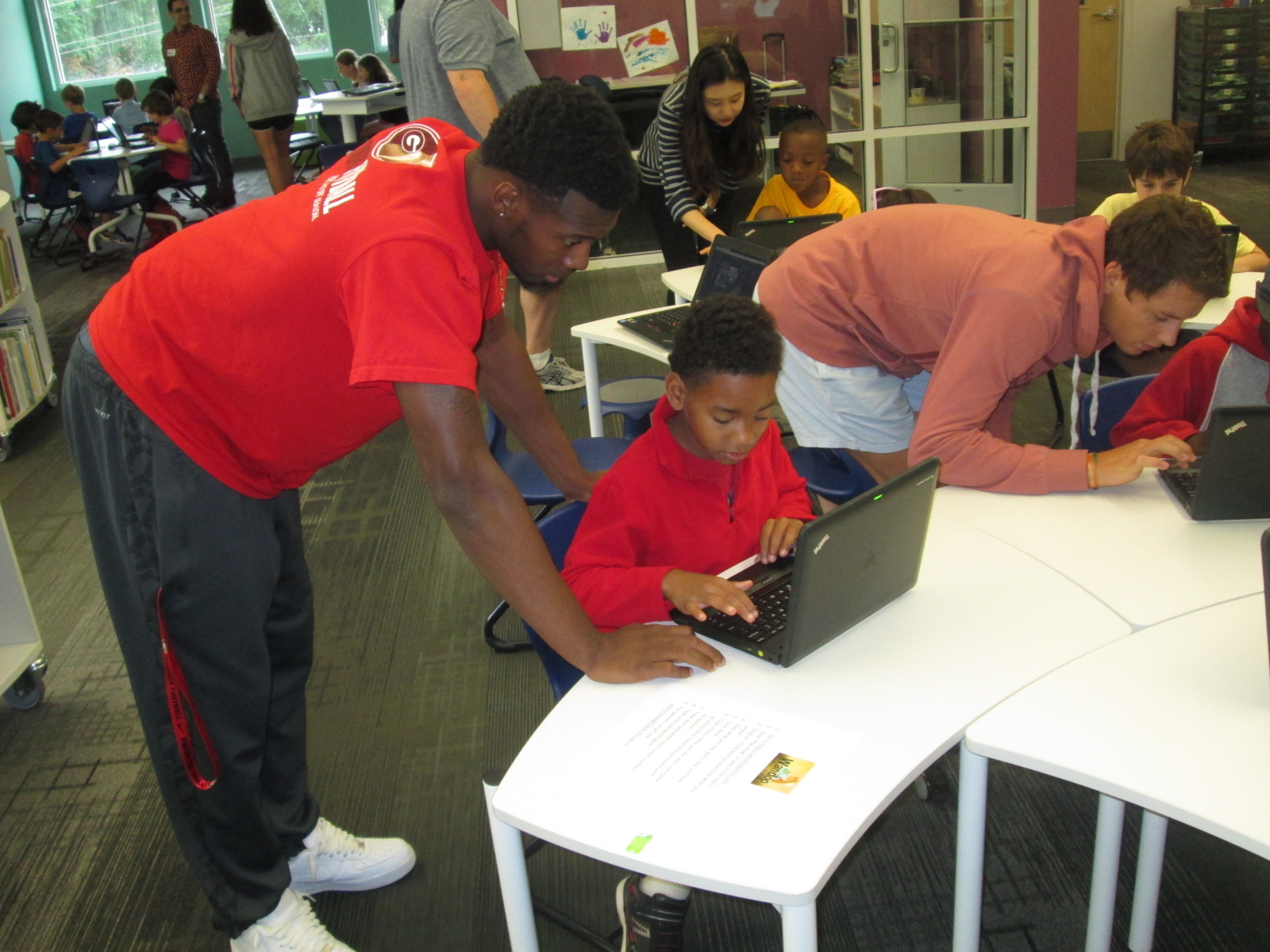
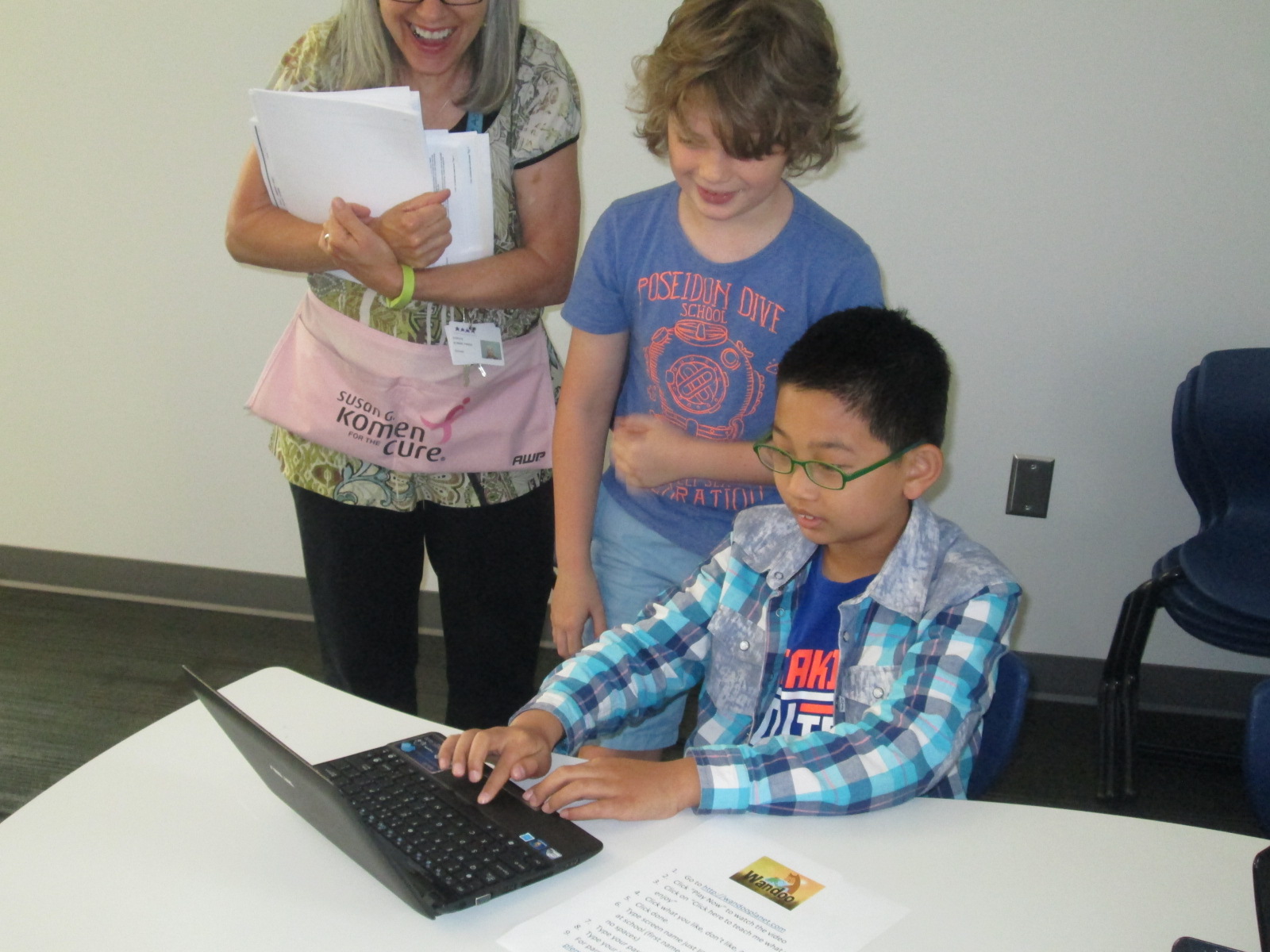
While students were working, we had quite an extensive team of helpers during the day. For the most part, students were independent.  We scheduled helpers to assist students with typing, following directions, and thinking of feedback to go to the camera and give to Lindsey at Evanced.

IMG_3431 IMG_3430 IMG_3428

During our 1st two session, we had Gretchen Thomas’s maymester EDIT2000 class.  These students were extremely helpful in getting extra computers setup for 2nd grade and having individual conversations with students.  Even if they didn’t feel like they “helped”, their conversations pushed students’ thinking about reading interests.  I loved that these students used Flipgrid to reflect on their visit to Barrow.

Flipgrid. Relax and discuss.

We also had fantastic parent volunteers during the day that helped us as well.  Having these parents seeing how kids are using technology and how we encourage continued connection over the summer was so valuable to our school and library program.

IMG_3489 IMG_3476

Finally, we had a great team of student ambassadors to help throughout the day.  These students included my original beta testers as well as members of my student book budget group.  Each student had already created an account in Wandoo and tried it out for themselves.  I loved seeing their leadership as they setup computers, gently nudged peers to stay focused, and problem-solved technical difficulties.

IMG_3492 IMG_3479 IMG_3474 IMG_3475 IMG_3478 IMG_3458

Hosting this many students in one day in the library was exhausting, but the help of all of these UGA students, parents, and student ambassadors made all the difference in the world.

We closed each session by connecting once again with Lindsey.  She encouraged students to use Wandoo all summer long and each group had a special visit from Winston, the Wandoo Planet mascot.  We all had fun watching Winston’s dance moves and joining in.

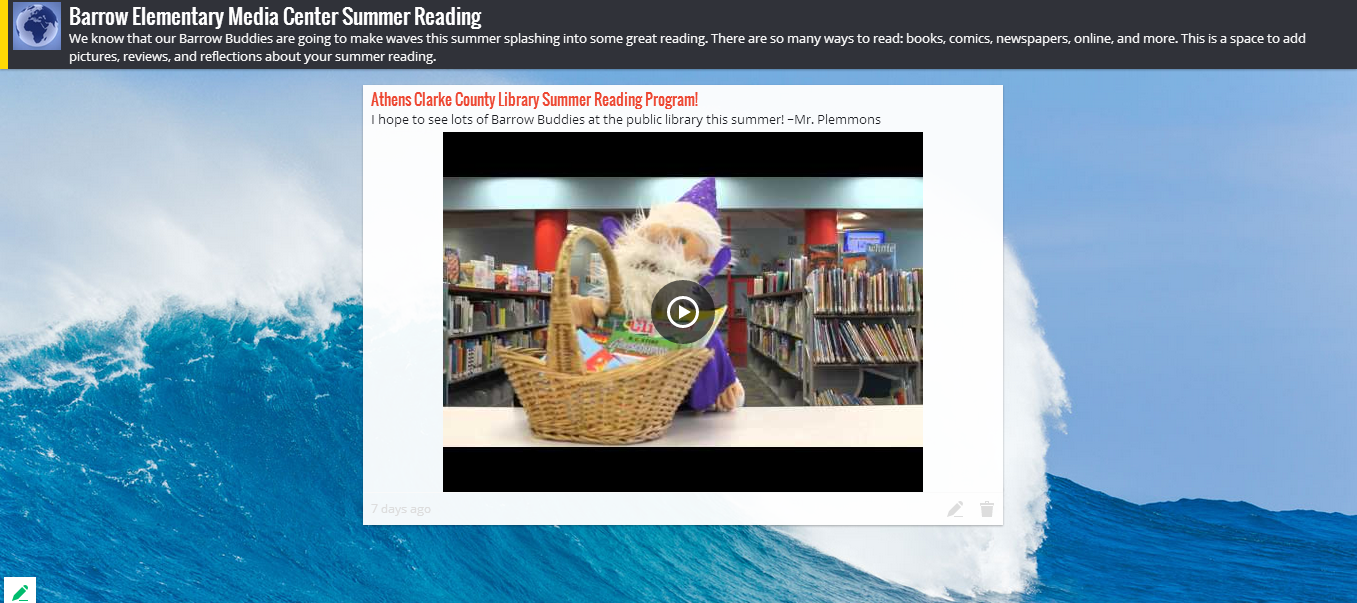
After saying goodbye to Lindsey, I showed students how they can continue to connect with our library all summer long by using our digital resources.  I also created a Padlet for them to post to throughout the summer.  Lindsey and Winston are going to add to the Padlet too!

Barrow Elementary Media Center Summer Reading

I also gave students a strongly worded statement that there’s not really an excuse to not access books and digital resources during the summer.  We have an incredible public library system that is within walking distance of most of our students. I hope they will take advantage of our public library’s many resources this summer.

Thank you Evanced Kids for creating a great tool for kids to think about their reading interests and for listening to kids in order to improve your system.  I can’t wait to see what our kids experience this summer!

3rd Grade Environmental Projects with Flipgrid, Story Me, and Blackout Poetry

IMG_3405Third grade has been revisiting their environmental science standards at the end of this year.

S3L2. Students will recognize the effects of pollution and humans on the environment.
a. Explain the effects of pollution (such as littering) to the habitats of plants and
animals.
b. Identify ways to protect the environment.
• Conservation of resources
• Recycling of material


In the library, I pulled tons of environmental print books and made a pathfinder of ebooks, database resources, and websites around the environment.

IMG_3389

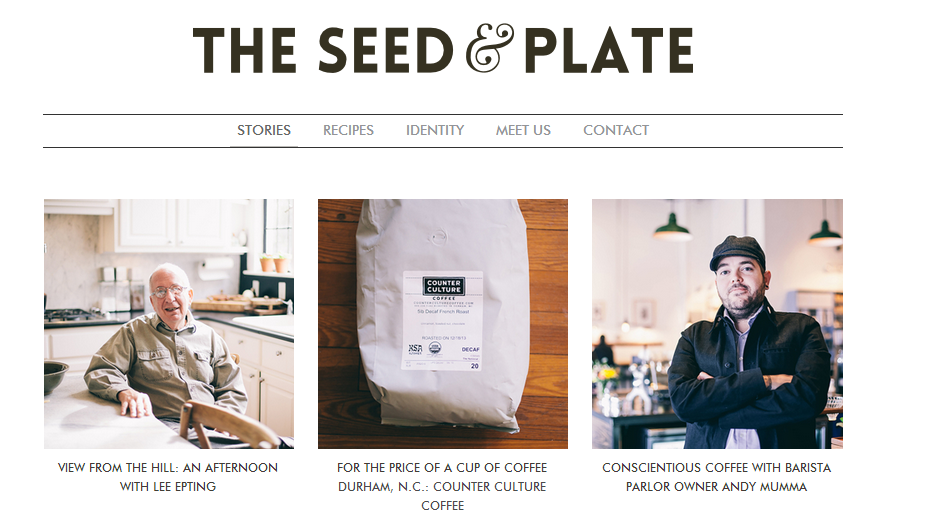
We’ve also had guest speakers from The Seed and Plate   What is The Seed and Plate?

We are an independent magazine in Athens, Ga. with a focus on food, farming and community in the Southeast. We hope to educate and inspire using our surroundings and the amazing people we’ve met along the way. We begin now as an online media publication, with an eye towards a print version in the future. Enjoy.

The Seed and Plate

The Seed and Plate has been fantastic because they have presented to the students several times on composting, community farming, and being friendly to our earth.  They have also supported students as they work on environmental projects and plan to give our students an outlet for publishing their work.

We’ve also hosted the Athens Clarke County Recycling Department to talk to the students about composting.  Students have been using compost bins and paying attention to the amount of food that is being thrown away in our cafeteria.  Since students are watching this closely, they are really starting to think about what we can do as a school to be friendly to our Earth.

IMG_3404

After our exploration of print and digital resources as well as our guest speakers, I sent all of the resources into classrooms for students to continue using. Students chose a focus area to learn more about.  Then, they came back to the library to learn about 3 options for final projects during the last week of school.

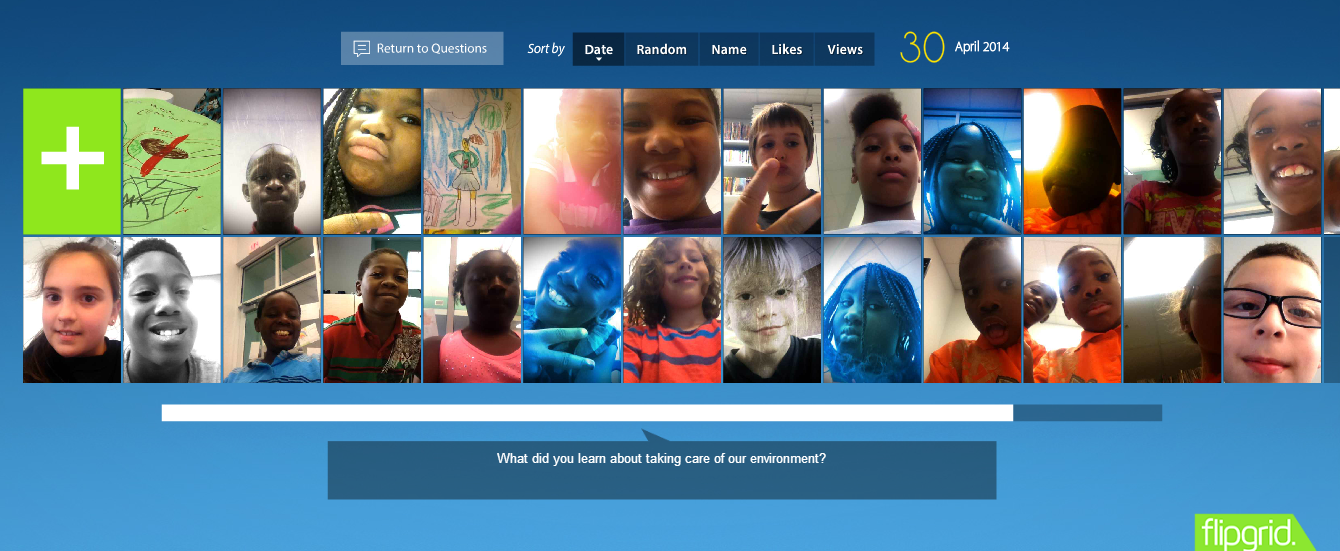
Option 1: Students could write a script with or without props and record it on our environmental Flipgrid.

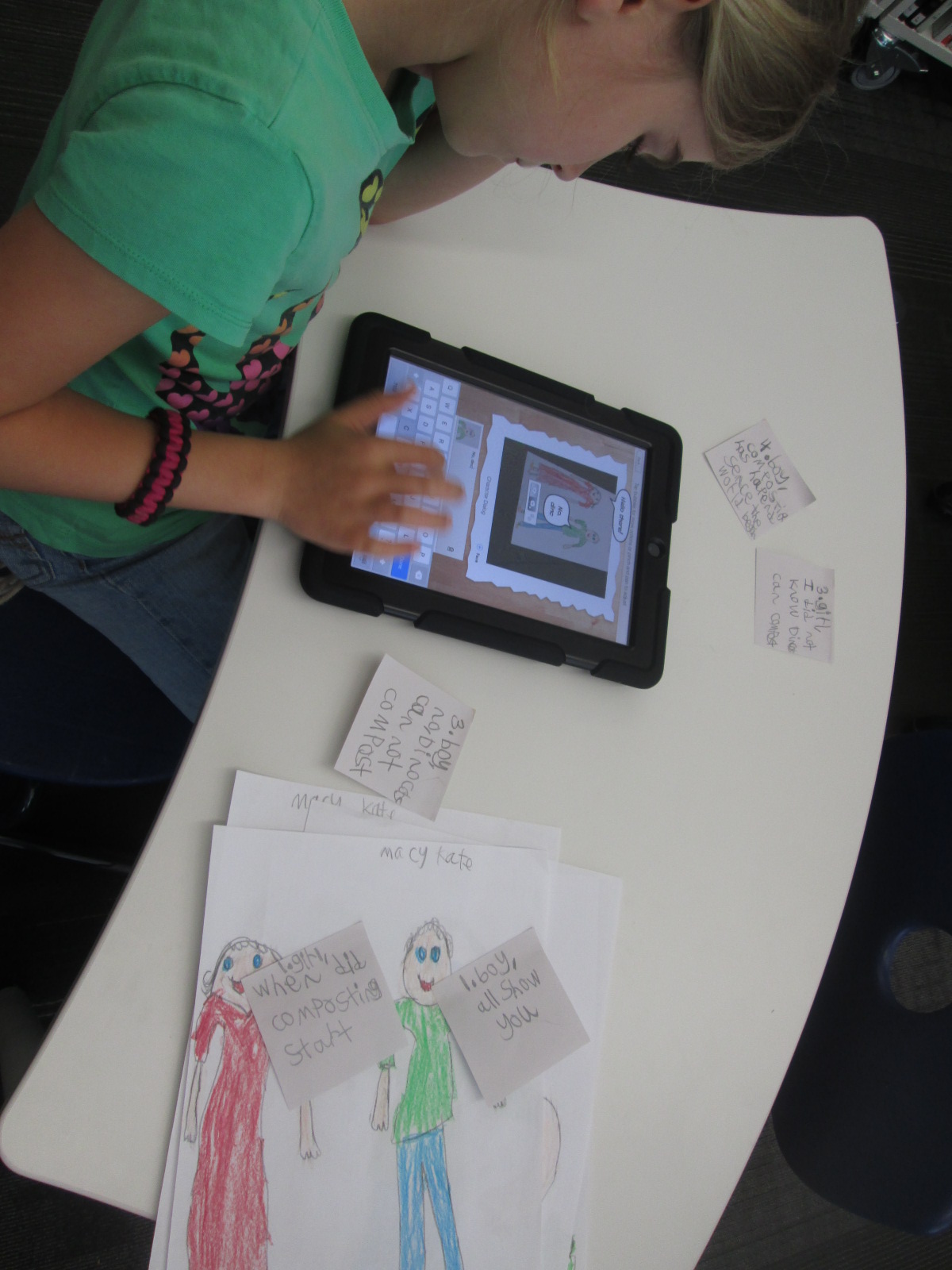
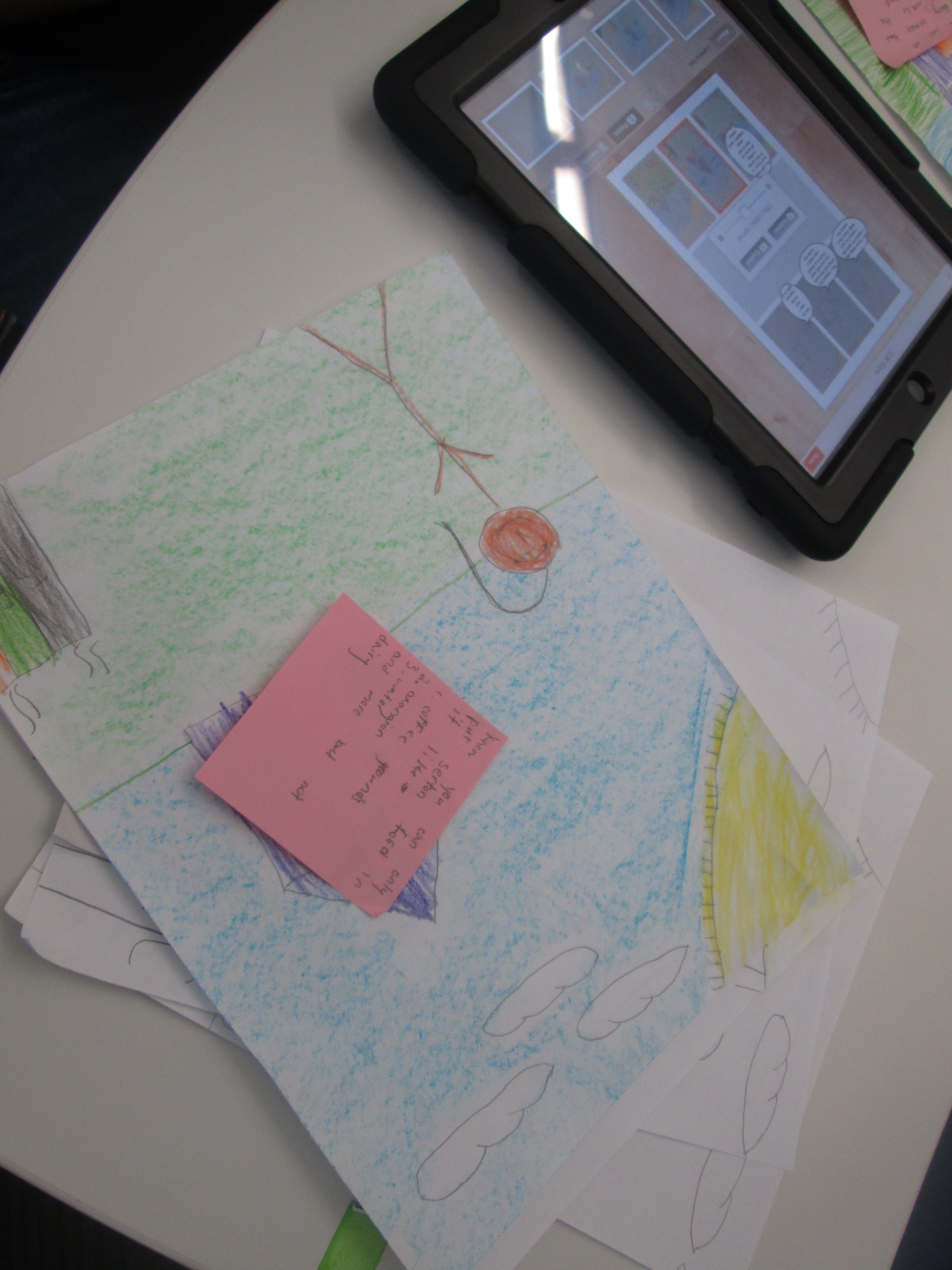
Option 2: Students could use the Story Me app on the iPad to create a comic strip about their chosen topic.

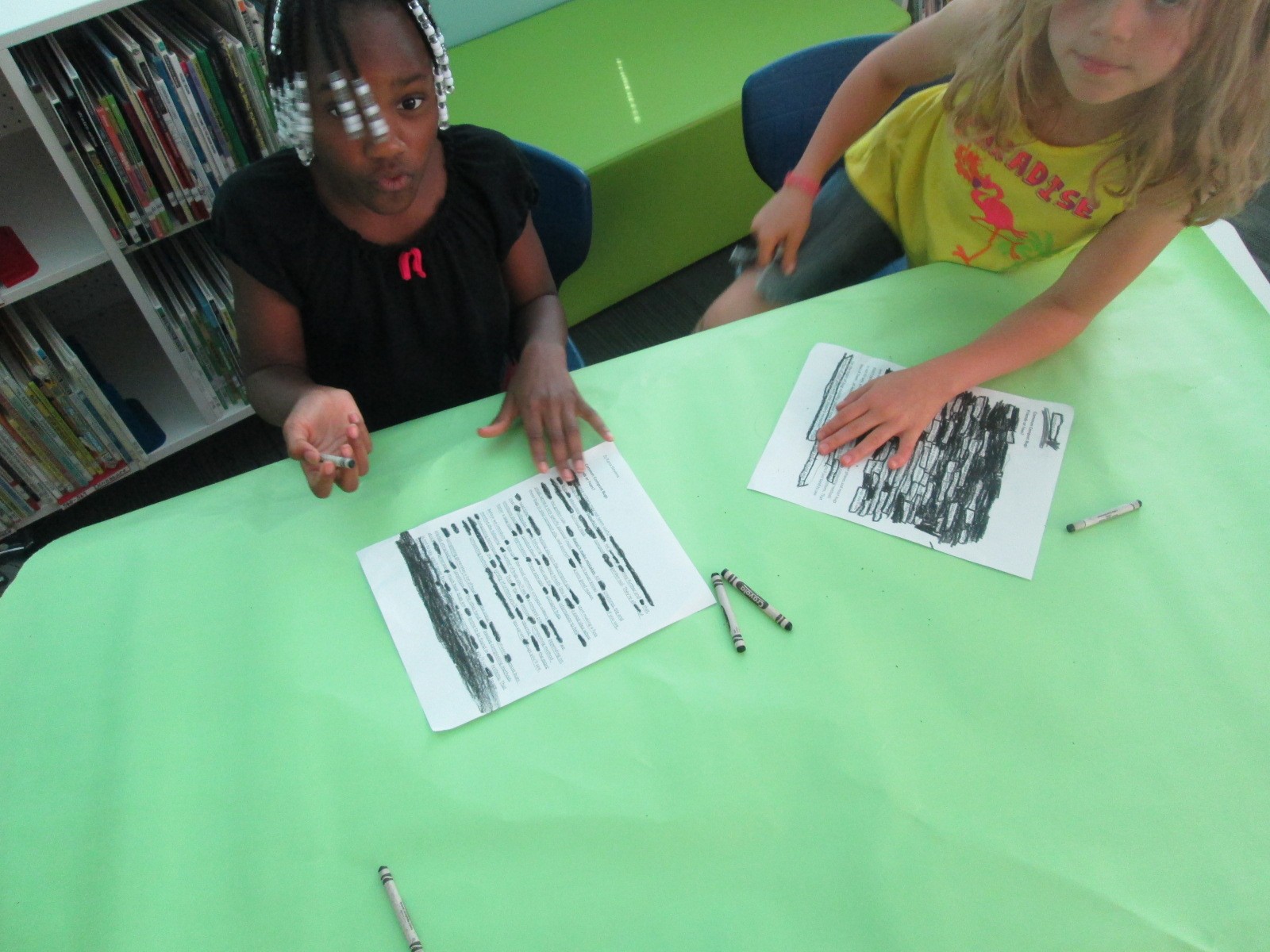
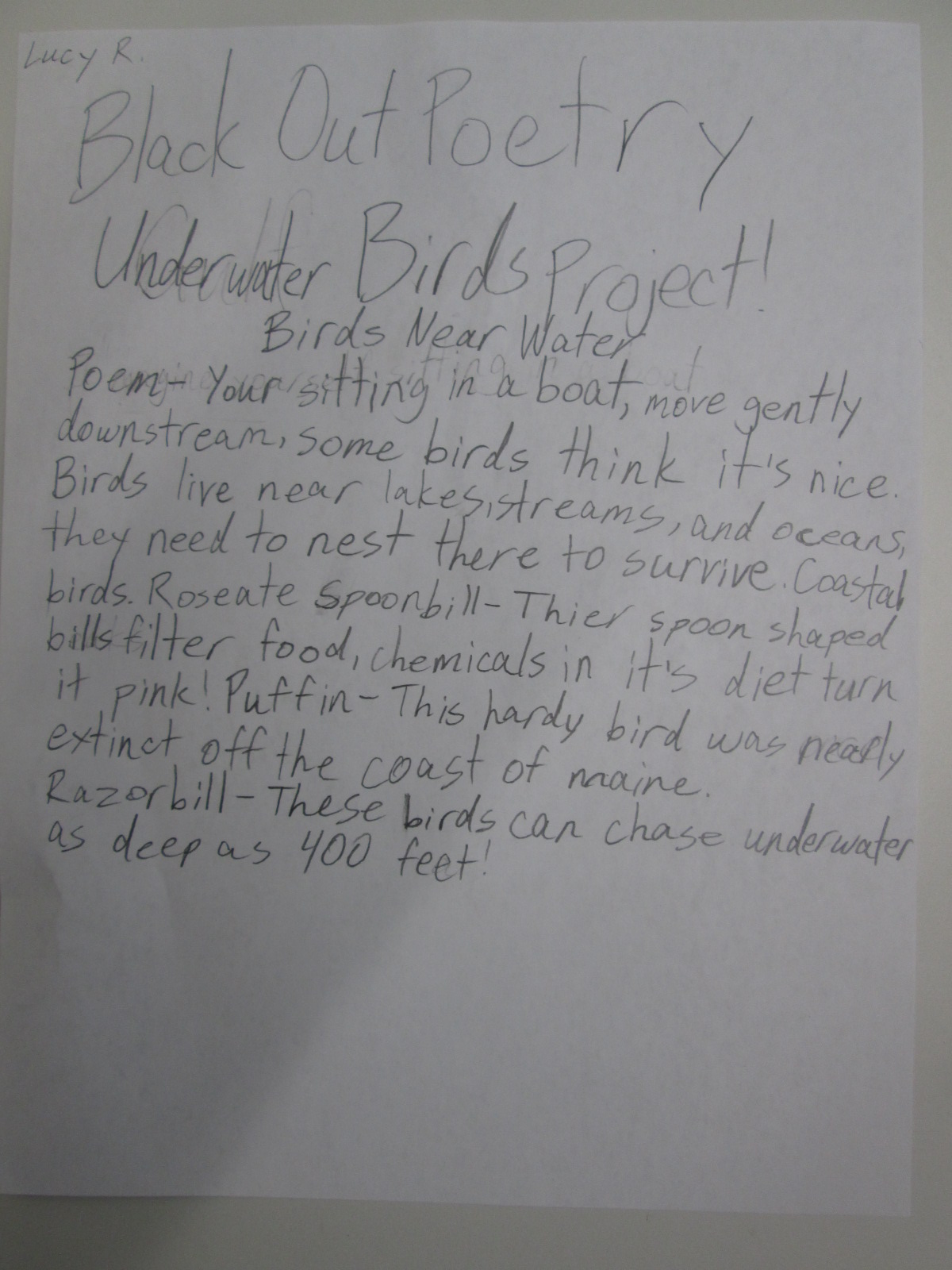
Option 3: Students could create a blackout poem using text from a web resource or a copied page from an environmental book.

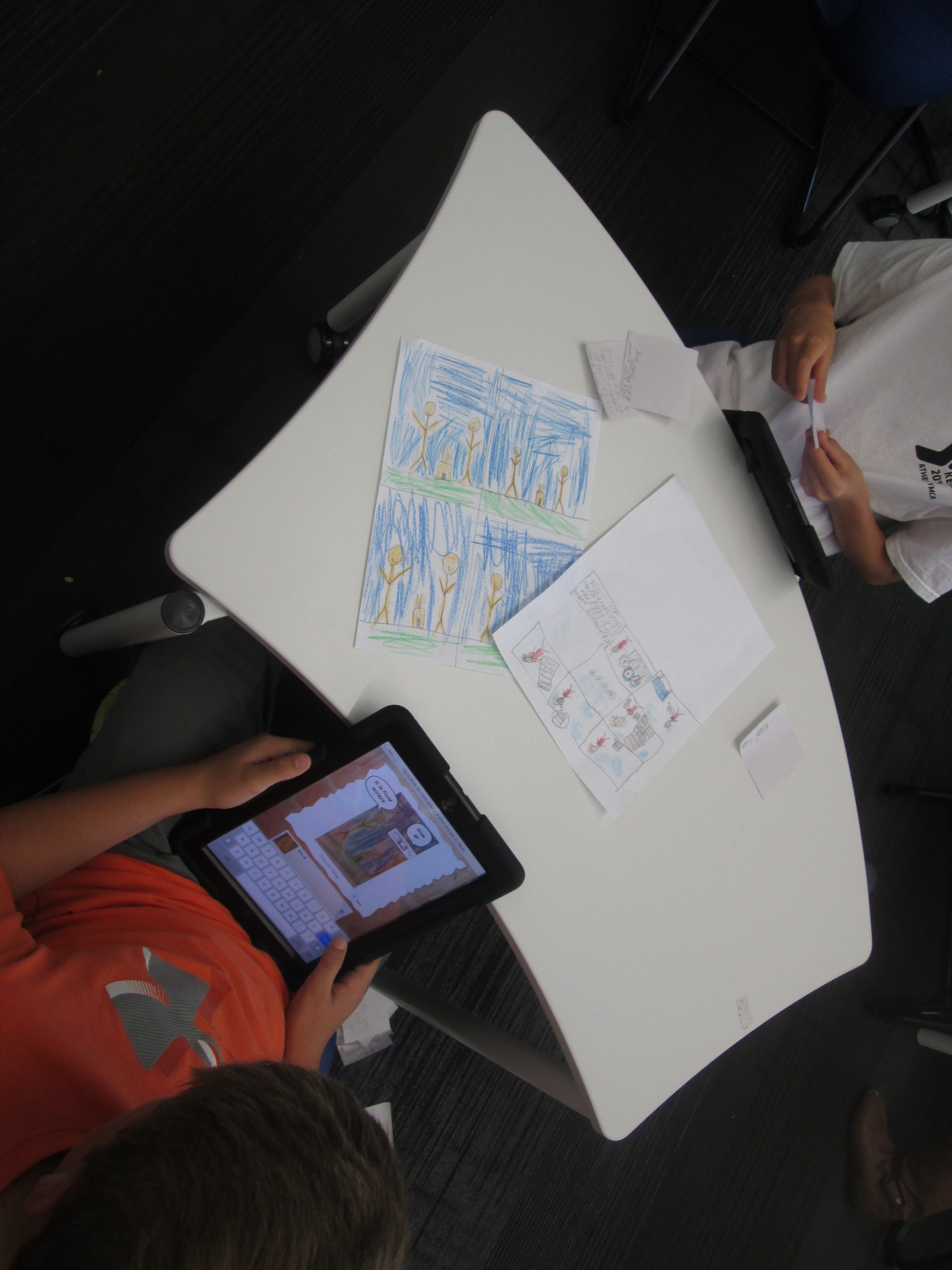
As I shared each option with students, I let them know what they would need to prepare in order to create their final product in one work session.  For Flipgrid, students would need their scripts and prop.  For Story Me, students would need drawings that they wanted to include in their comic and possible text that would go into speech bubbles written on post it notes.  For blackout poetry, students needed to print the page from the web or have teachers copy a page from a book to use.  Students spent 2 days in class preparing their materials.

IMG_3397

Today, students came to the library with their materials ready.  I gave one more quick overview of the projects and we designated areas for record, areas for coloring for blackout poetry, and areas for spreading out to take photographs for Story Me.  The classroom teacher, Natalie Hicks (spectrum teacher), folks from The Seed and Plate, and I all walked around and helped students think through the process of creating their product.

IMG_3399

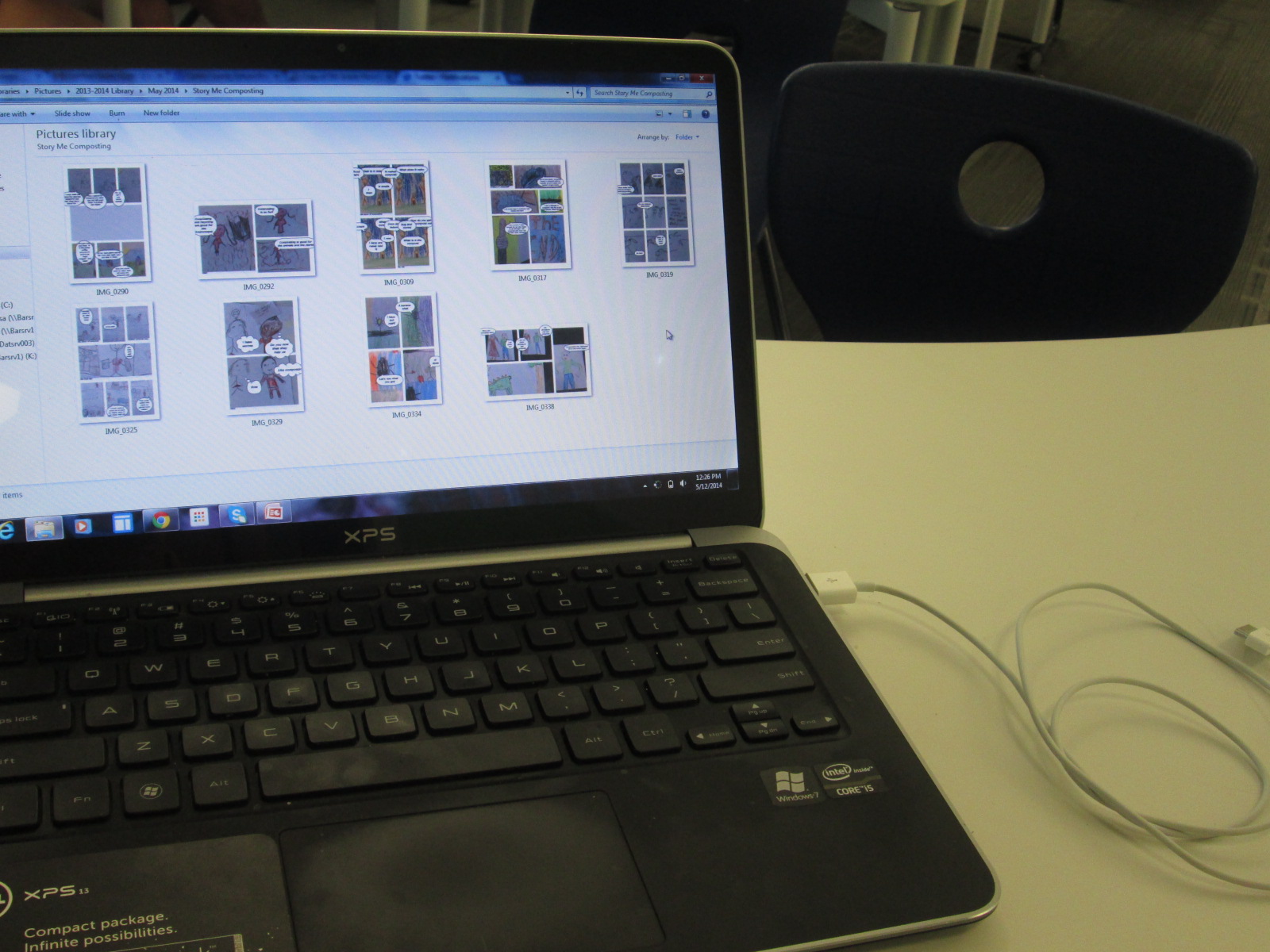
Eventually, I stopped roaming around so that I could focus on collecting work from students.  Each Story Me comic was saved to the camera roll on the iPad and then downloaded to a folder on my computer. Each blackout poem was photographed and downloaded to a separate folder.  Flipgrids were automatically added to the online grid as students submitted.

IMG_3388

The students were truly prepared when they came to the library today. This allowed them to really focus on putting together their final product rather than focus on trying to create all of the content.  Students supported one another and adults were able to focus on students who needed extra support.

IMG_3391 IMG_3392

Now our work is ready to show to the world.  We’re sharing it all with our new friends at The Seed and Plate to highlight on their website but we also have a gallery to share with you here.

IMG_3410

Flipgrid:

Flipgrid. Relax and discuss.

Blackout Poetry:

Story Me Comics:

World Read Aloud Day Blogging Challenge Week 4: Raising Our Voices with Flipgrid

World-Read-Aloud-Day-2014

I’m participating in the World Read Aloud Day blogging challenge.  Each week, I will respond to a question along with many other bloggers participating in this global celebration of reading aloud.  Our students, teachers, and families will also be involved with these questions each week as I invite them to respond through Flipgrids, Thinglinks, and more.

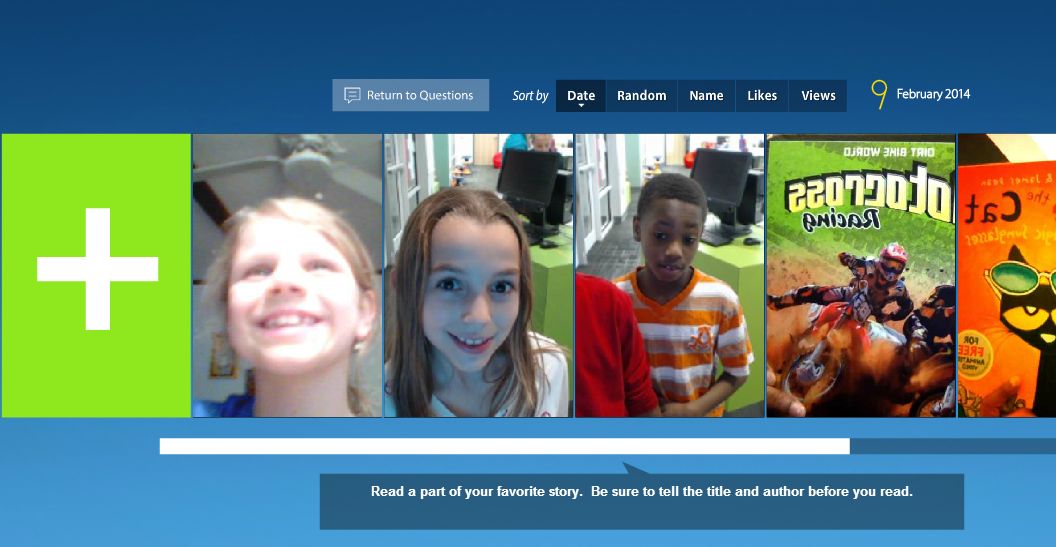
For the final week, I’m asking students, teachers, and families to raise their voices by reading aloud parts of their favorite books.  We are using a Flipgrid to capture these read alouds because it gives students 90 seconds to read aloud.  To get them ready, I made a Youtube video of myself reading my favorite part of this year’s Newbery-winning book, Flora & Ulysses: The Illuninated Adventures.

http://youtu.be/6yOVC7cHMuo

Kate DiCamillo’s writing speaks to me in so many ways, but this particular part of Flora & Ulysses has proven to be inspiration for our whole school this year as well as our library.  We are expecting the miraculous every day!

Flipgrid Read Aloud

Visit our Flipgrid to hear more readers share their favorite stories, and feel free to try out Flipgrid by adding your own.

http://flipgrid.com/#f4ad9b3e

For more information on World Read Aloud Day visit http://litworld.org/worldreadaloudday 

To connect with other libraries and classrooms, visit our shared Google Doc.