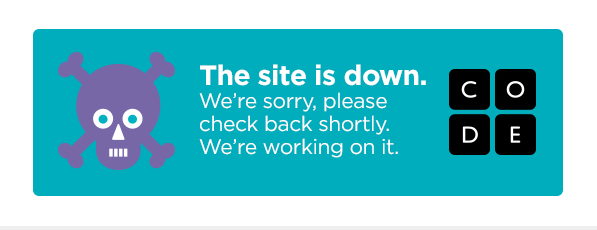
We had a great day of hour of code even though there were many technical difficulties. We wanted to start our day with coding snowflakes using Anna and Elsa, but unfortunately much of our day gave us messages like this:
Just as great coders do, we didn’t let a road block get in our way. We had many backup plans. Our 2nd graders used Tynker to explore block commands.
I loved their pride when they reached the end of the hour!
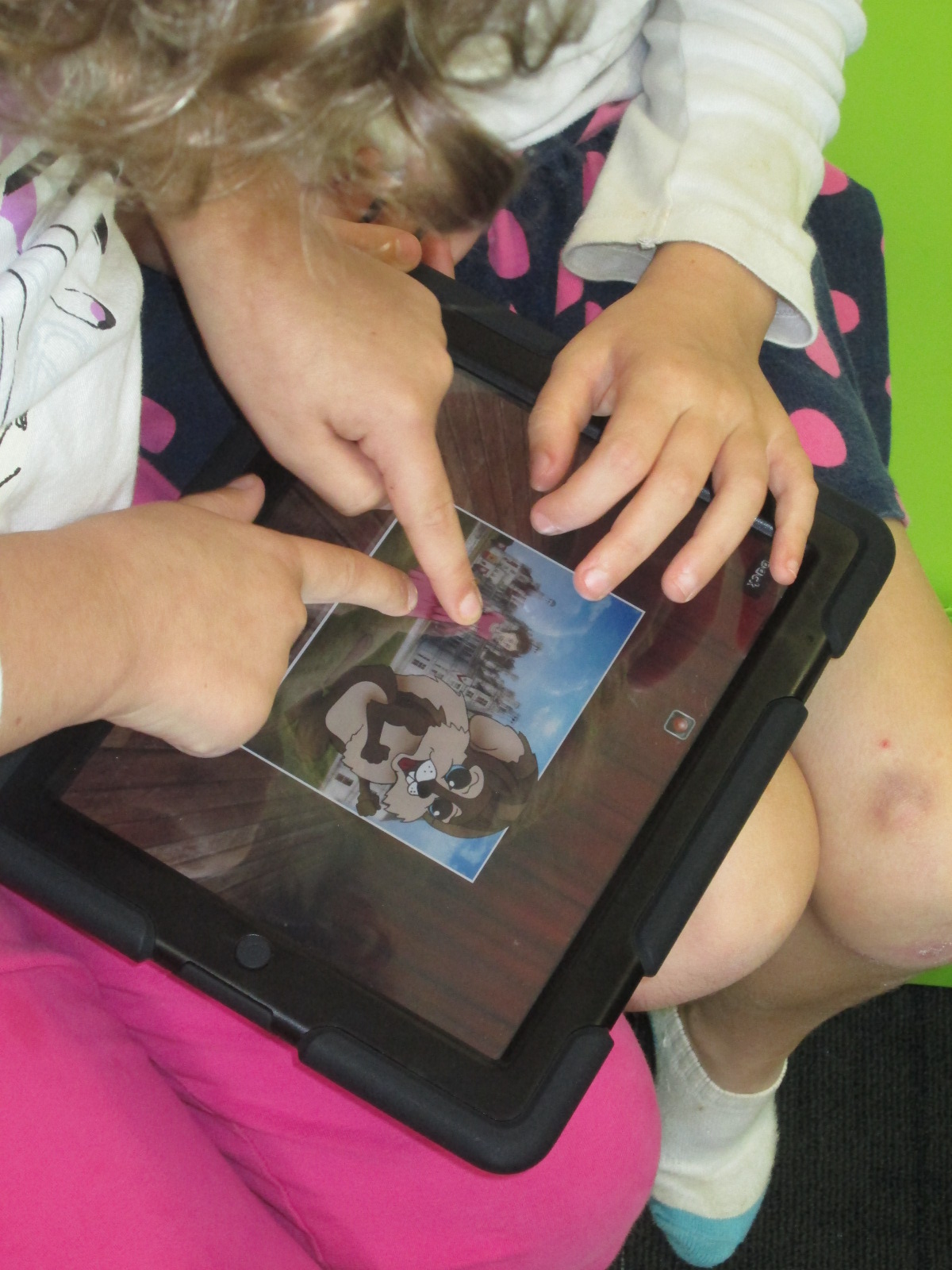
Our Kindergarten and 1st grade students used the iPad app “The Foos”. This was a new app for us, so we all had a lot to learn. I quickly saw that students weren’t necessarily writing their full code and were still being successful in getting their character to perform by repeatedly hitting the run button. This was great learning for me and helped to adjust my setup as we went. I loved how groups of students would gather together to code together and offer tips. I saw very little frustration, no tears, and lots of perseverance.
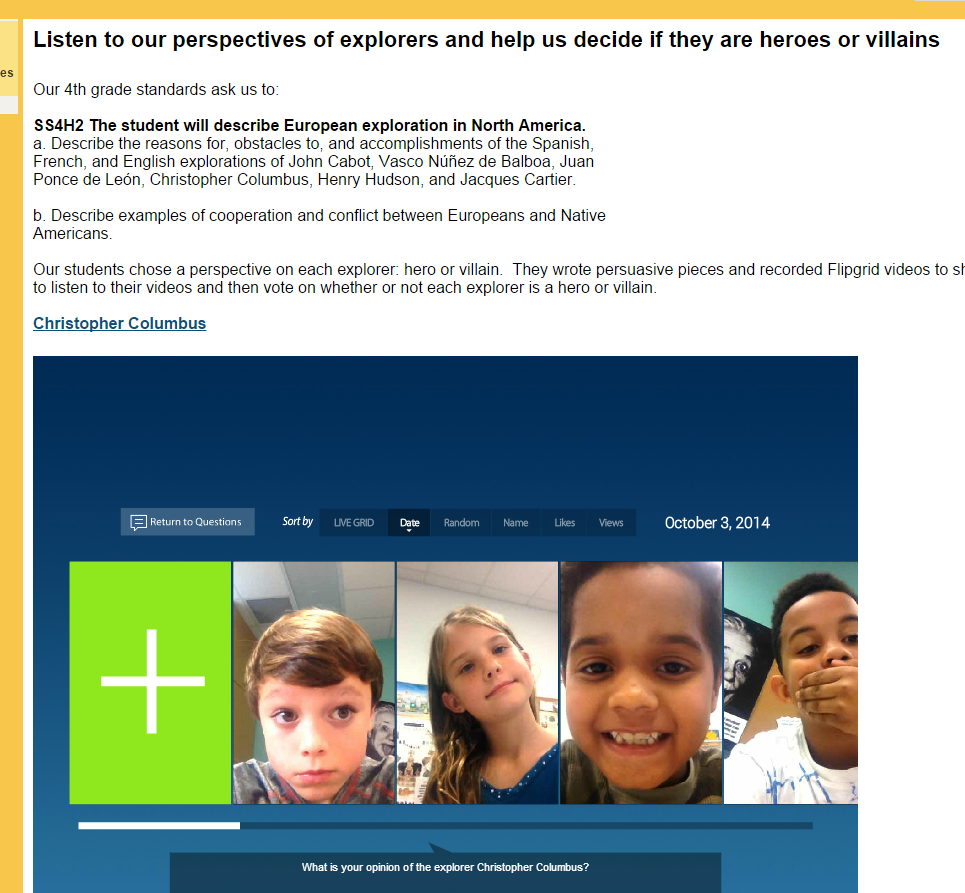
After that, students selected an explorer and began their research. They took their information and used that to write a persuasive piece convincing an audience that their explorer is a hero or villain. They used Flipgrid to record themselves reading their persuasive piece. All of the Flipgrid videos are housed on an Google Site for easy access and each explorer has a Google form voting tool to indicated whether that explorer is a hero or a villain.
Now, this is where you come in! We need you to watch our videos and vote on our heroes or villains. You can choose an explorer and spend some time on that one explorer or you can watch them all! You can share this project with other classrooms or educators and ask them to share.
If you choose to do this with a class, we would love to hear about it! You can tweet pictures or comments to @plemmonsa Most importantly we want you to vote and share.
Soon after our Thanksgiving break, we will take a look at the results and most likely connect with our friends at Flipgrid to talk about coding and our project’s reach.
We hope that our project makes you think about the many perspectives in our world’s history and that you enjoy hearing our voices.
Click here to access our Explorer Google Site! Tip: If you are in Google Chrome, you will need to click on the shield in your address bar to load the “unsafe script”. This will show you the embedded grids. Otherwise, just click on the link on each explorer’s name to access the Flipgrid on a separate page. Feel free to “like” student videos by clicking the hearts, but don’t forget to vote on the Google forms on our site.
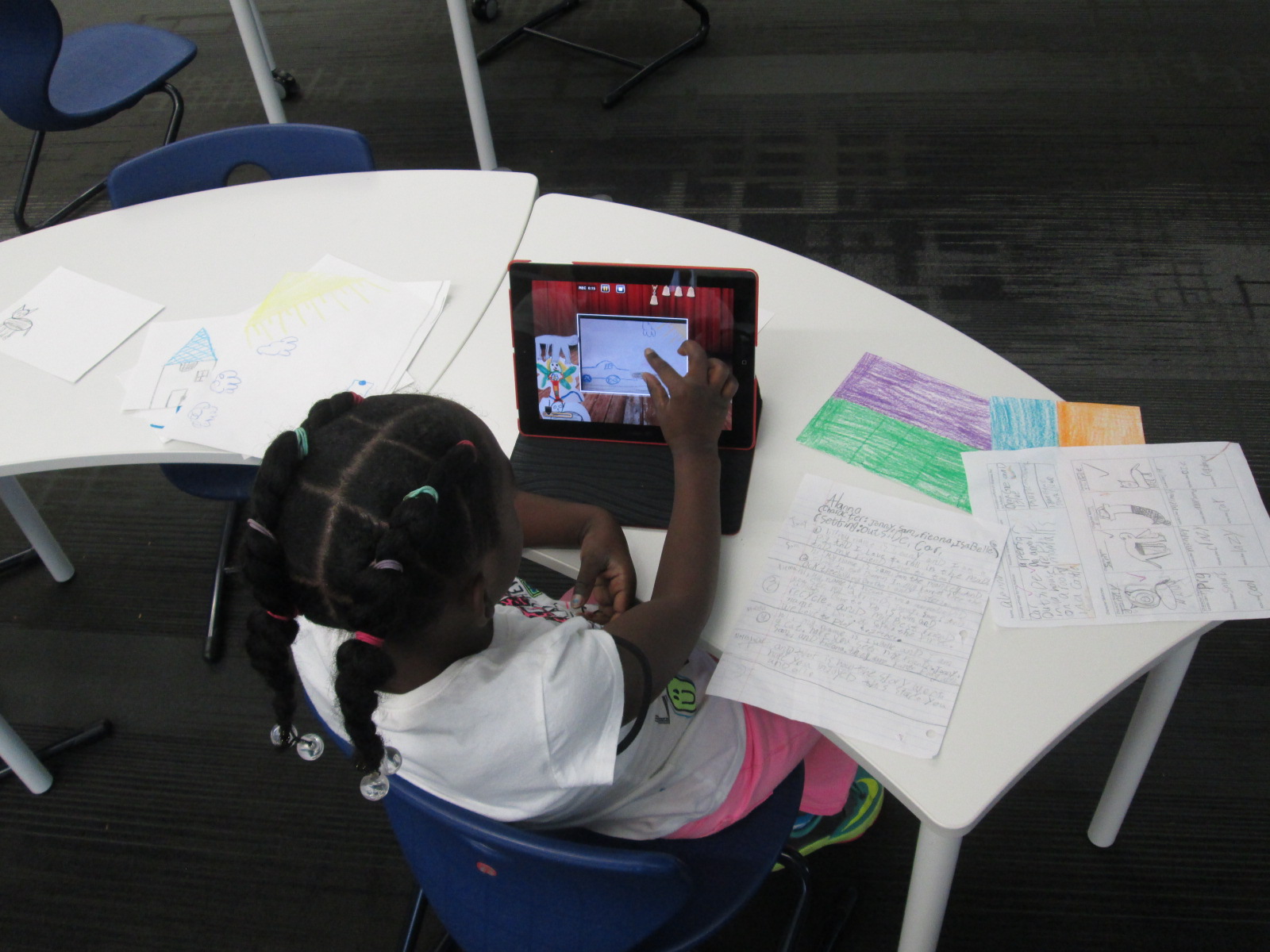
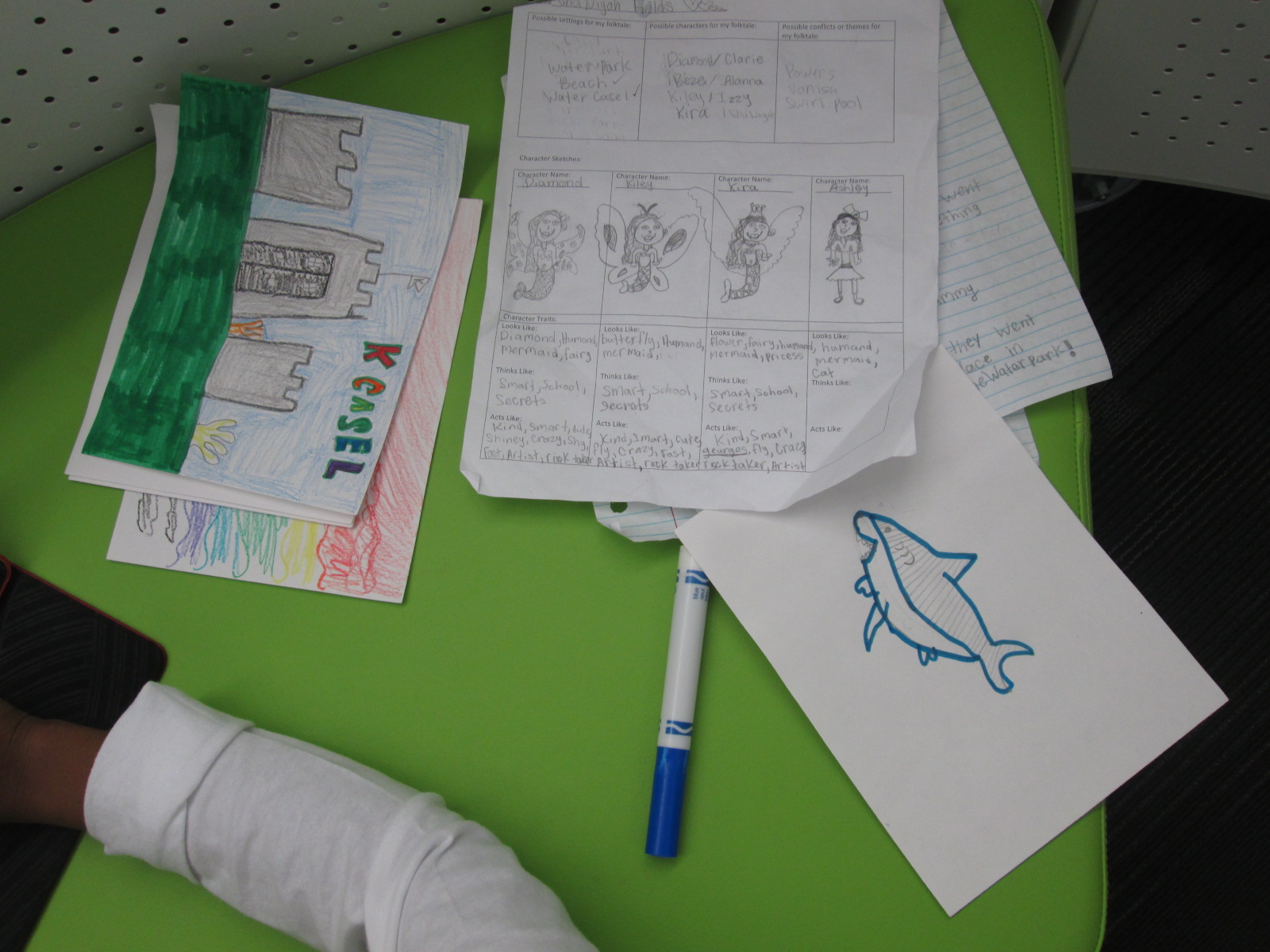
A few weeks ago, I introduced the iPad app, Puppet Pals, to 3rd grade through a tinkering lesson connected with an author study. After that lesson, the teachers and I started planning an extension of their folktale unit using this app. Each class chose a folktale to read multiple version of such as Cinderella, Goldilocks, Three Little Pigs, etc. Then, students wrote their own story using some of the elements that they had noticed in their study of folktales. In art, students designed characters and settings for the stories that they wrote in writing time.
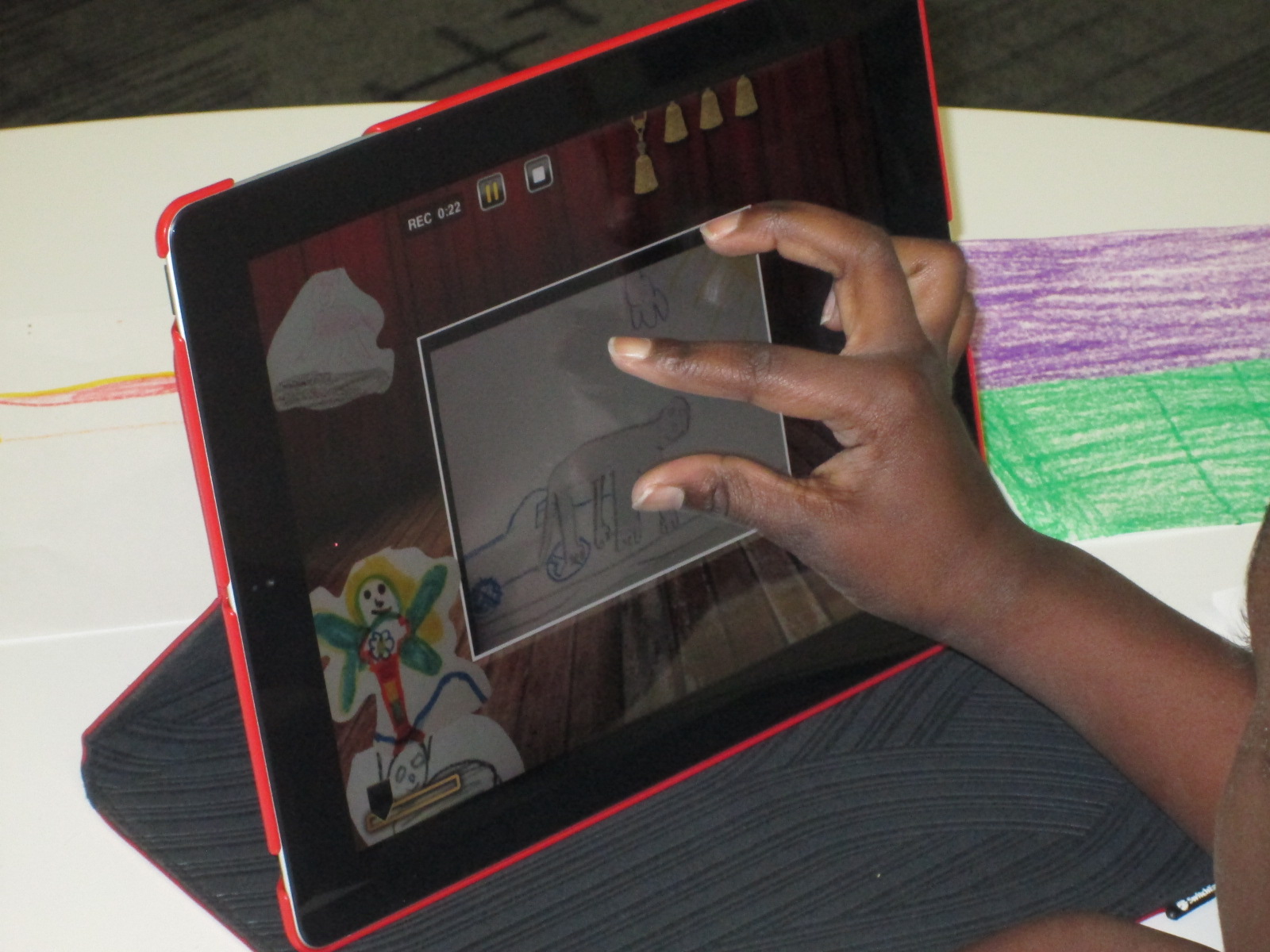
Puppet Pals HD is a free app, but if you upgrade the app for $4.99, you have access to so many more features. My favorite feature is the ability to take photographs of anything and turn it into a character or a setting for your story. Students used their artwork from art to create the characters and settings in the app. From there, students took their script and recorded their folktales. Some students had multiple characters and settings, so it was nice that they could pause the recording to switch out settings or characters.
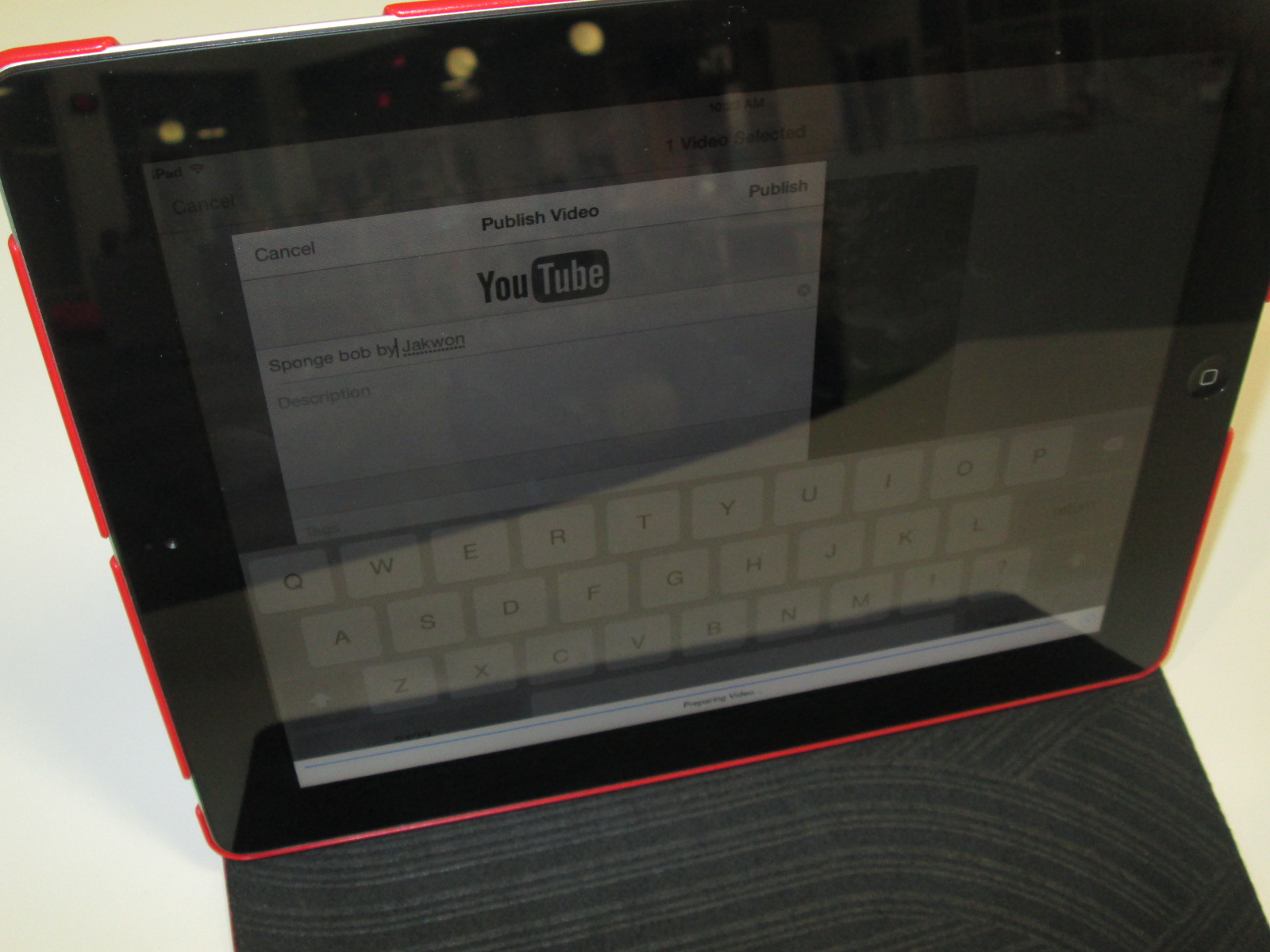
Once the recordings were done, we exported them to the camera roll and uploaded them to Youtube. The app does allow you to name each story, but it doesn’t transfer the name into the camera roll. I wish we had done the Youtube upload as part of recording because I couldn’t tell which story belonged to which student. For now, all of the stories are just called “Puppet Pals” in Youtube. We’ll go back later and add the student titles and names.
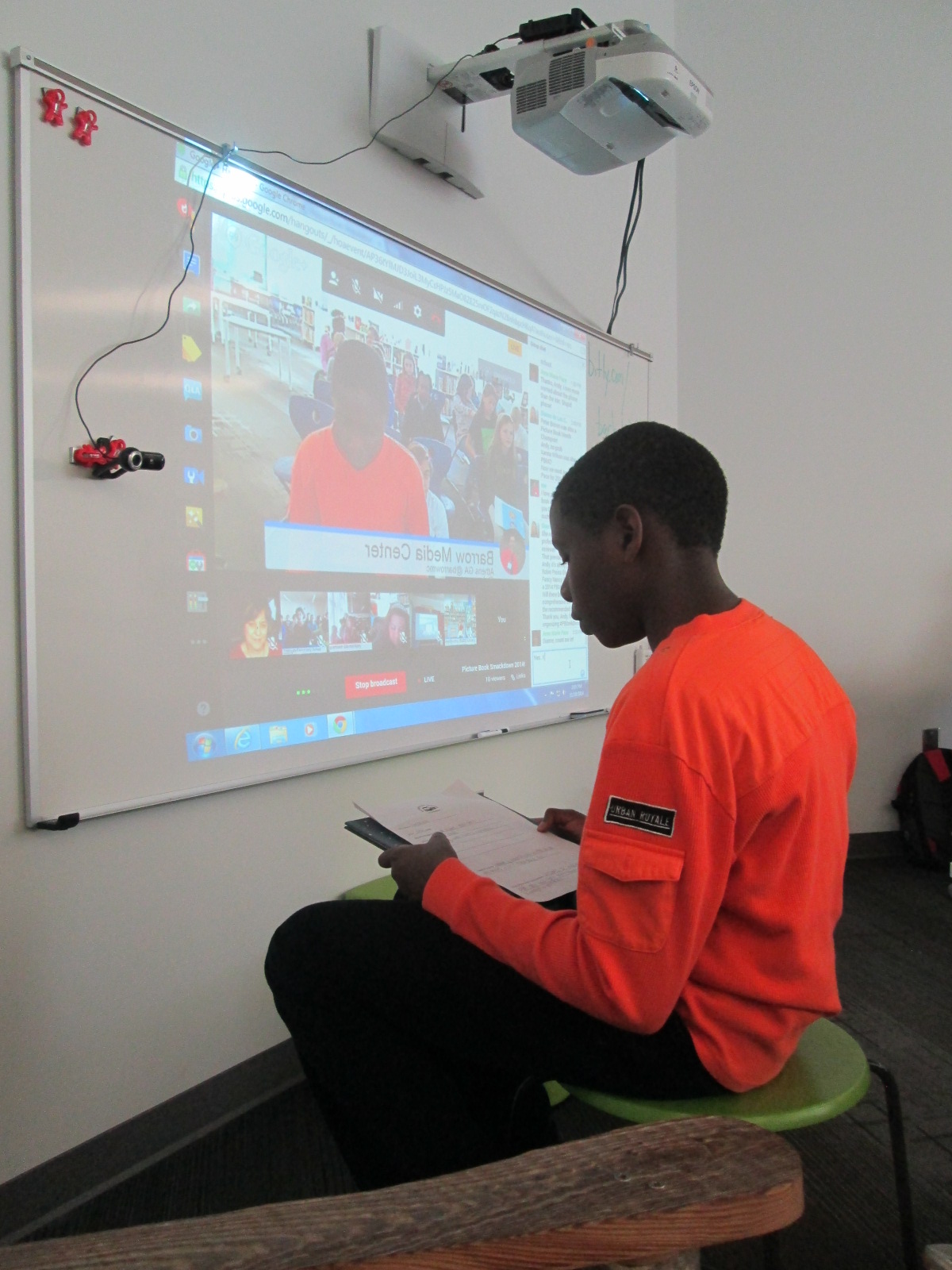
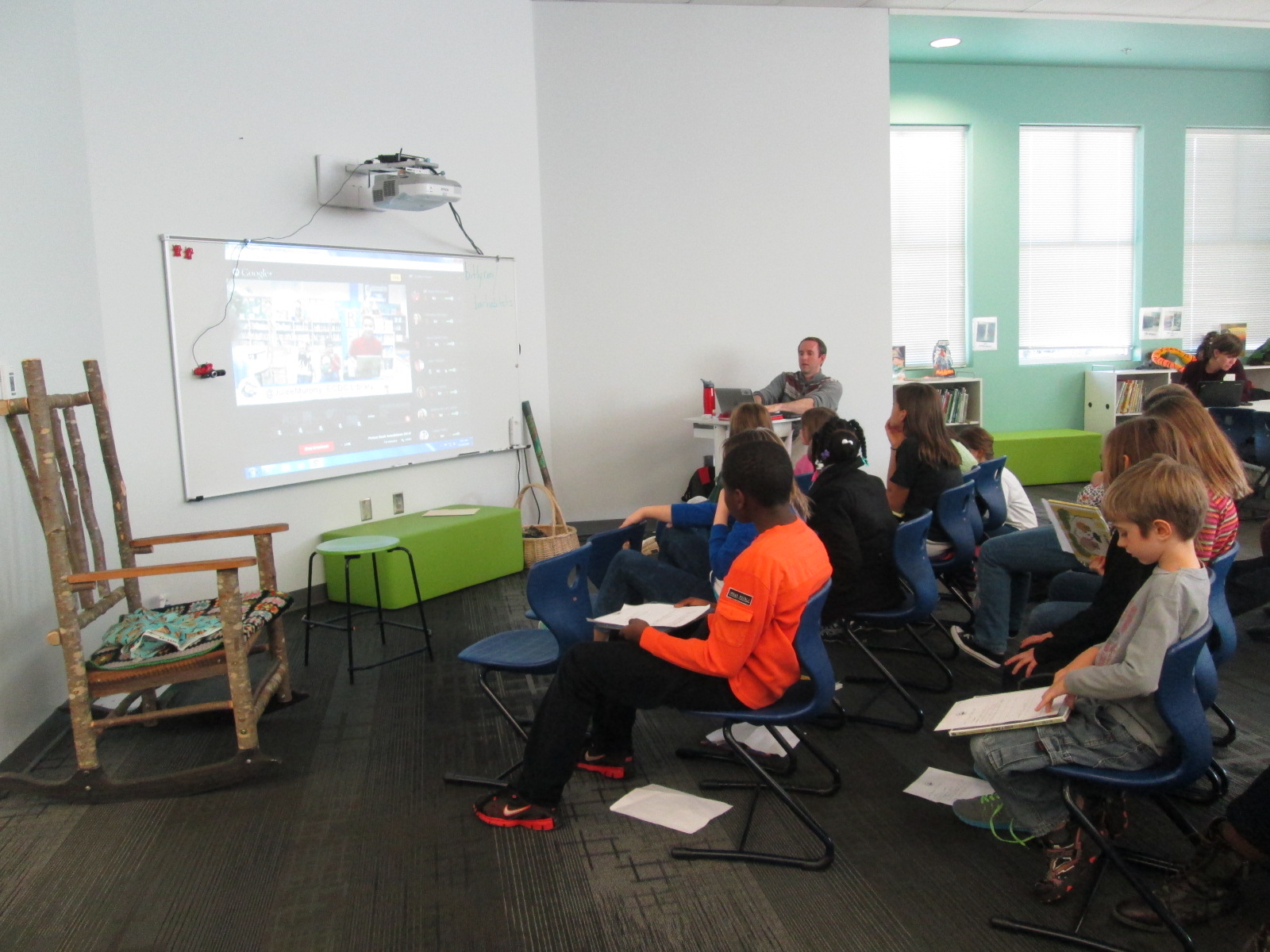
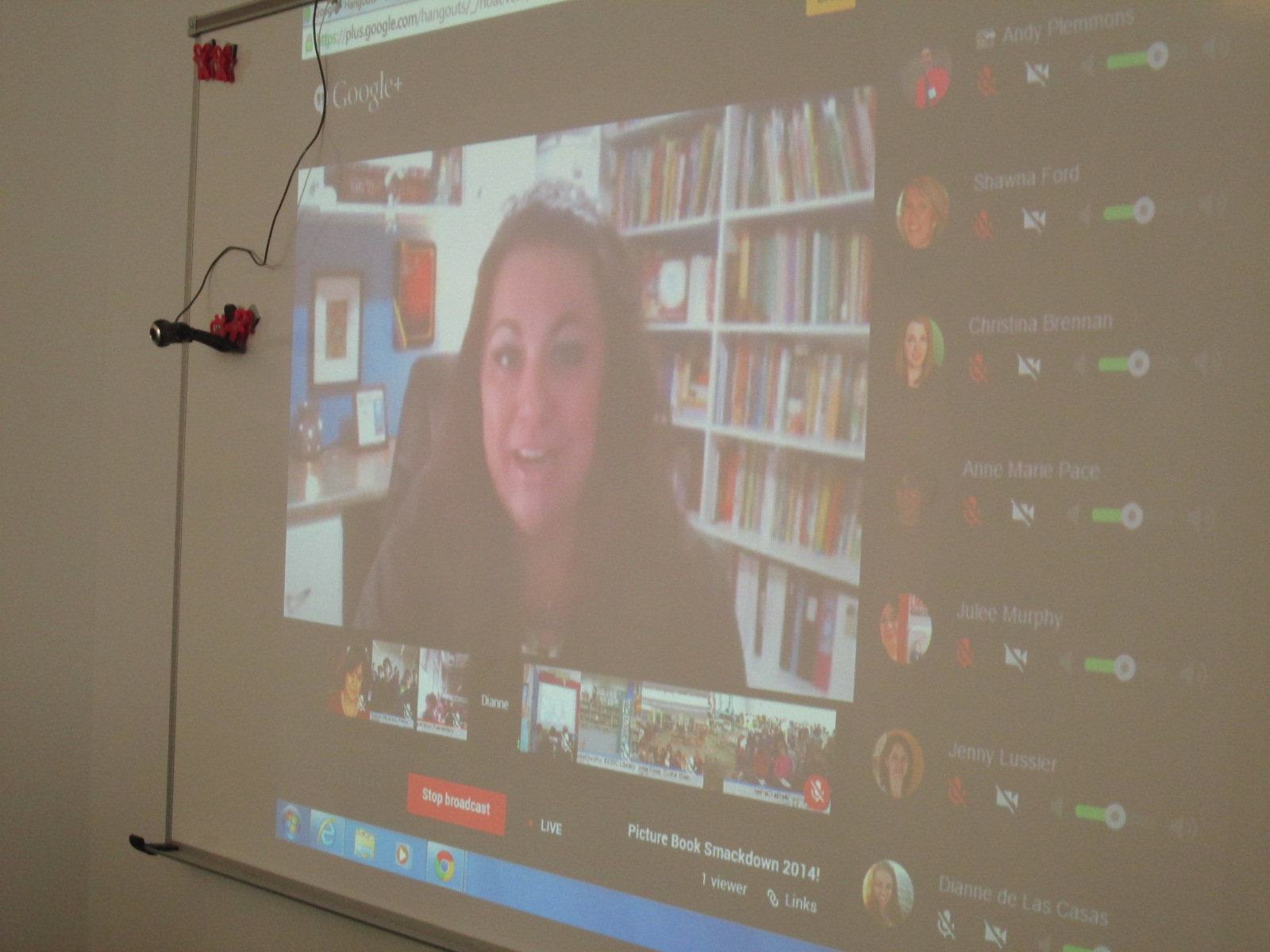
Our 2014 Picture Book Smackdown was a huge success. Students in 5 states including Georgia, Texas, Connecticut, Maine, and Pennsylvania shared their favorite picture books along with 2 amazing authors, Dianne de Las Casas and Anne Marie Pace.
Anytime you host an event like this, you worry about technical difficulties. However, today the internet gave us smooth sailing. I do want to take a moment to uncover some of the pieces that went into making this event successful. There was a lot of preparation that went on behind the scenes.
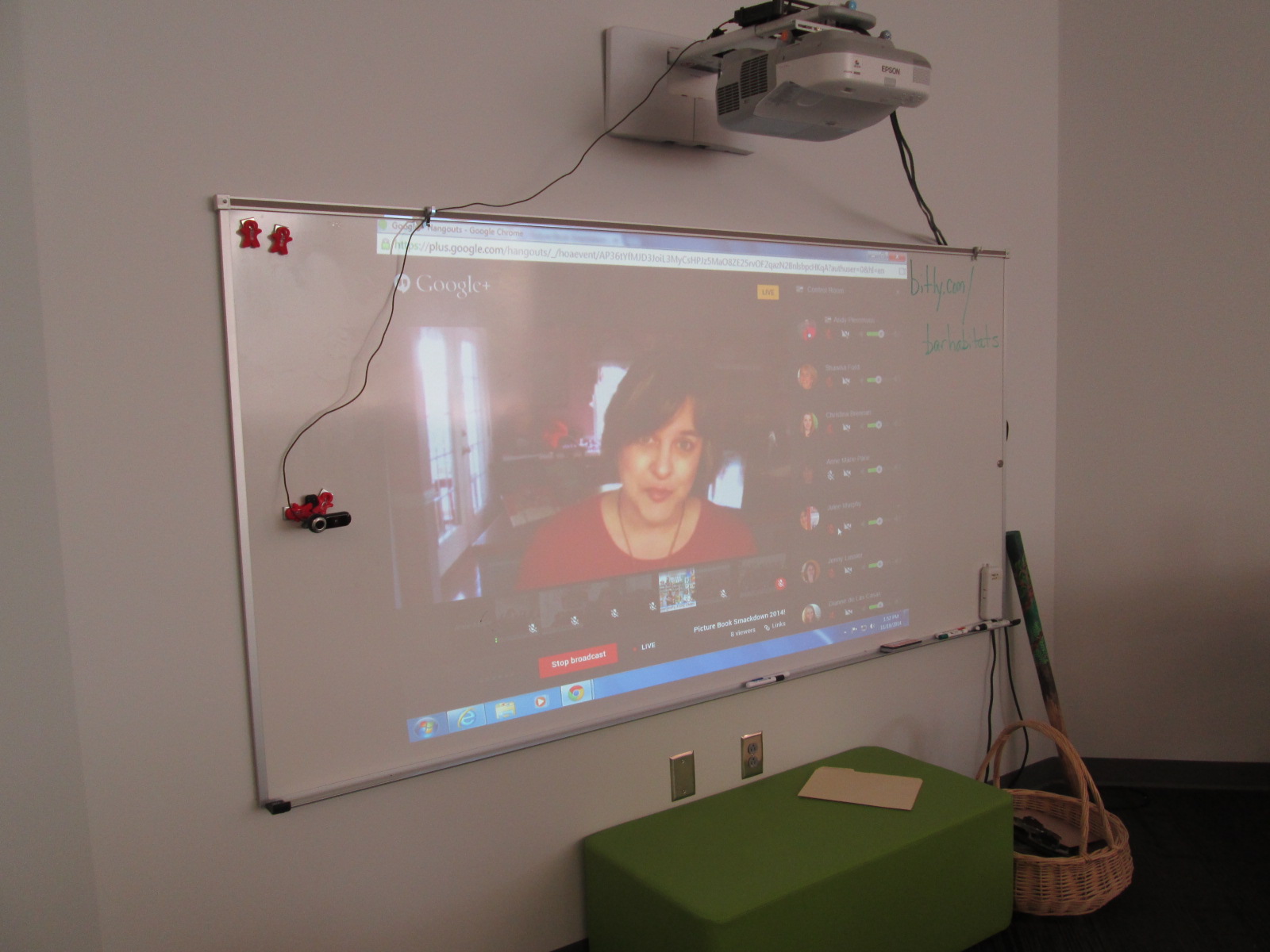
I created our Google Plus Hangout on Air event page well in advance so that we could advertise our smackdown to all of our networks.
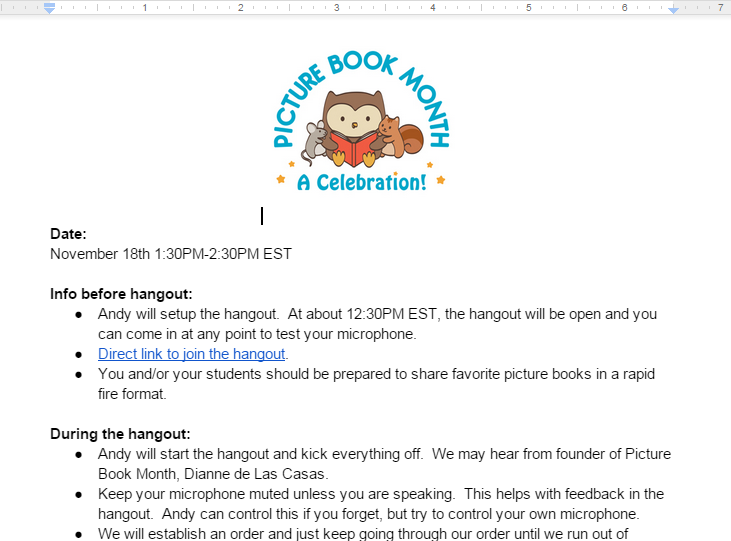
All of the authors and participating schools have been communicating with one another via email, twitter, and a shared Google doc. The doc contained tips for making the hangout run smoothly such as keeping our microphones muted unless we were speaking as well as listed the order that we would speak.
All of the participating schools had students prepare in advance. Many of our students wrote our scripts or memorized a brief blurb about their books. Some of us hosted a practice for our students to run through their talks.
We opened the hangout well in advance so that we could test our microphones as needed. I sent everyone a direct link to join the hangout rather than sending everyone a G+ invite.
Many of us had organization to how our students came up to the microphone. For example, I setup my chairs in groups of 3 so that students were already sitting in the groups of 3 that would come up to the microphone.
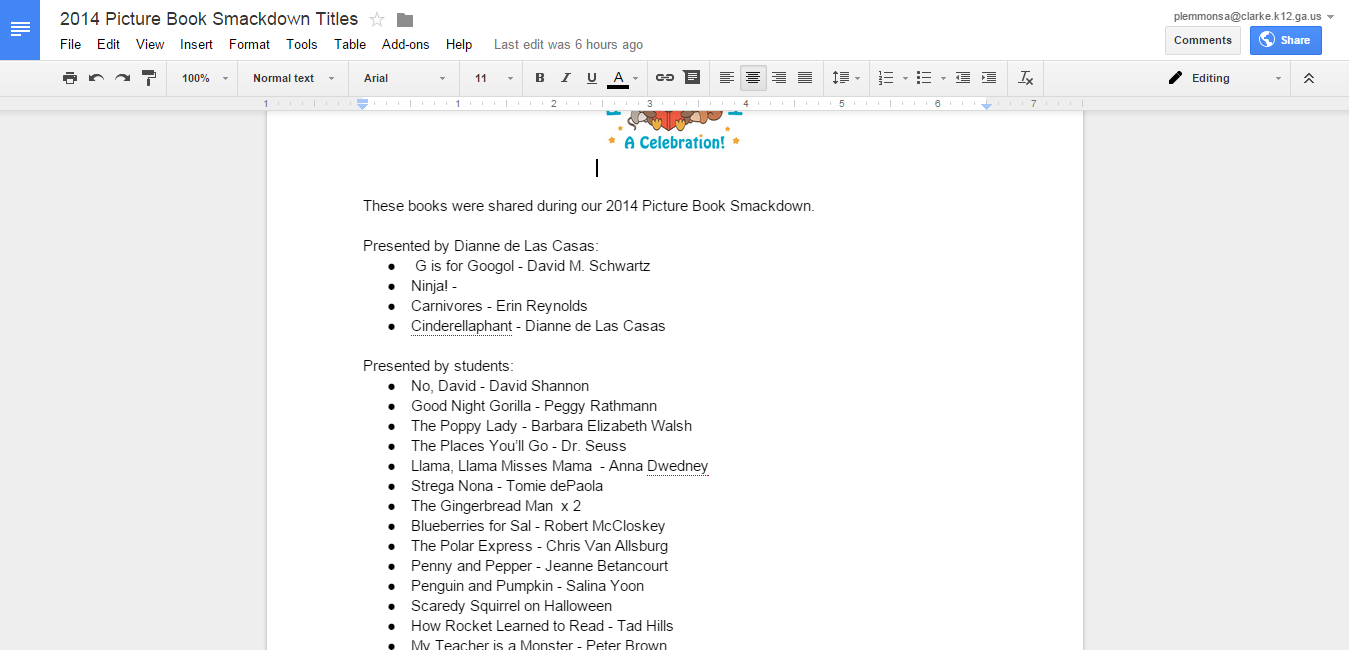
Some of us had helpers who were assisting us behind the scenes. I recruited a parent volunteer, a UGA student, and UGA teacher to help me. The parent volunteer took pictures and assisted students to the microphone. The UGA teacher created a Google doc of all of the picture books that were shared during the event. The UGA student helped students to the microphone. Since I was in charge of the hangout, I wanted to be able to focus on the technology and supporting any issues that came up with our event.
I have @ilovethisclass creating a list of all of the picture books that are shared during #pbsmkdwn Thank you! On the blog later.
As we had time, we tweet pictures or publicity about the event while it was happening.
I hope that you will take time to listen to the archive because it truly was miraculous. We heard from Dianne de Las Casas about why Picture Book Month was started and it was amazing to see how many authors and illustrators she has recruited to be picture book champions.
We also heard Dianne de Las Casas and Anne Marie Pace share some of their favorite picture books. I wish we could have heard more from them, but they were gracious enough to step aside so that students could voice their love for so many wonderful books.
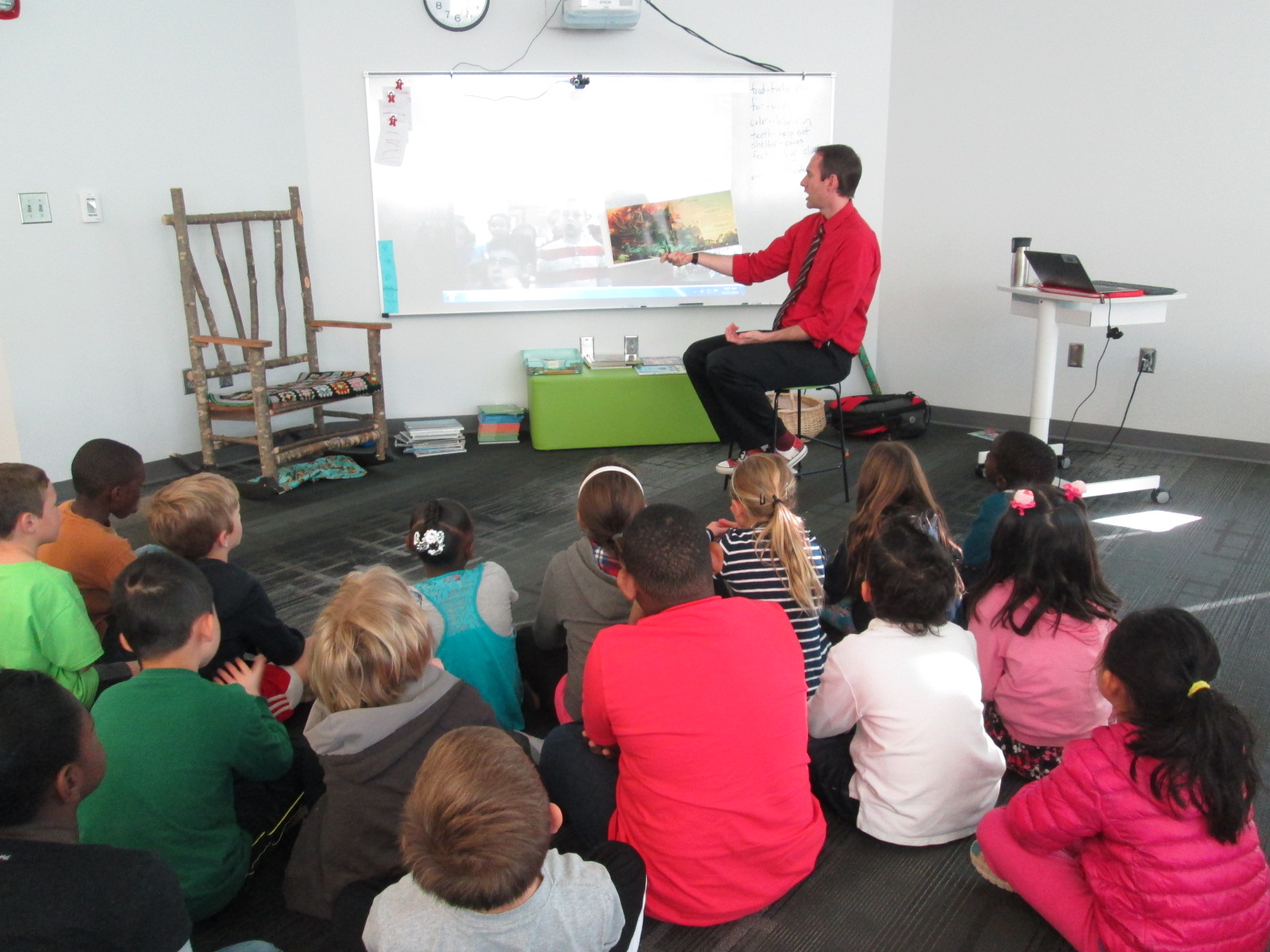
We heard titles, authors, and summaries. One of my favorite things to hear from students was why picture books matter in our world. To hear their own reasoning about why picture books matter was truly inspiring.
What's better than having an author read her picture book? Listening to it with @barrowmc kids #pbsmkdwn
This will definitely be an annual event for me, and I encourage you to think about how you might host your own event like this to get kids connected and sharing their passions and interests. Happy Picture Book Month!
This year, I’ve been thinking a lot about what it means to collaborate globally. In the past, I’ve participated in amazing events such as Dot Day, Talk Like a Pirate Day, and World Read Aloud Day. Each of those events has connected our students to classrooms and authors around the globe, and I’ve found so many collaborative colleagues through these events. It’s these very events that have pushed me to wonder what more we can do with our students. I’ve been pondering how we can have collaborations that allow our students to make a difference in the world and share their ideas, their questions, their problems, and their solutions.
When our spectrum teacher, Natalie Hicks, came to me with a flyer about America Recycles Day, I knew that this day had potential to spark some action projects with our students and students around the globe. I made a Google doc, crafted a blog post, and started inviting anyone and everyone to connect for America Recycles Day. It didn’t take long for some of the very people I’ve connected with for other events to start posting their own schedules in the doc and making connections. I want to thank Shawna Ford, Jenny Lussier, Cathy Potter, Donna MacDonald, Misti Sikes, Ly Phan, Kathy Schmidt, and Craig Seasholes for taking a risk with me and trying something new. These people put their schedules out there and started making connections.
This week, my own students started making connections for America Recycles Day. Each Skype or Google Hangout offered a little something different.
Ms. Clarke and Ms. Haley’s 3rd grade class connected with Kathy Schmidt and her 3rd graders in Gwinnett County, GA. We learned about how her students are collecting items from home to put in the library’s tinker lab rather than throw them away.
Ms. Wright’s 2nd grade class connected with Cally Flickinger in South Burlington, Vermont. We read the book Here Comes the Garbage Barge by Jonah Winter. The story sparked a great conversation about how our trash can take over our world and how important it is to recycle or reuse instead of throw things away.
Ms. Ramseyer’s 2nd grade class connected with Donna MacDonald in South Burlington, Vermont. Her students shared how they are using Drew Daywalt’s The Day the Crayons Quit to inspire a save the crayons campain. Students are collecting crayons and sending them to be melted into new crayons. Our students took time to offer some other ways that the crayons might be used such as making candles, melting crayons for artwork, fusing crayons together to make two-sided crayons, and investigating what crayons are made of so that they might discover even more things that crayons could make.
I'm amazed at all of the ideas that kids come up with for reusing materials instead of throwing away. #AmericaRecyclesDay@dsmacdonald
Ms. Li’s Kindergarten connected with Misti Sikes and her Kindergarten in Forsyth, Georgia. They shared how they recycle at their school by separating white paper and color paper as well as other ways that recycling has to be prepared before it goes into the bin such as removing paper clips and staples.
Ms. Boyle’s Kindergarten connected with Holly Esterline & Katie LeFrancois’s grade 1 & 2 class in Bolton, Vermont. We shared the book Compost Stew and heard about how their school is doing TerraCycling. Even with our connection issues, we still learned a lot about something we don’t do much of at our school.
@plemmonsa Students want to create TerraCycling video to share with you. Thanks for organizing this! #americarecyclesday
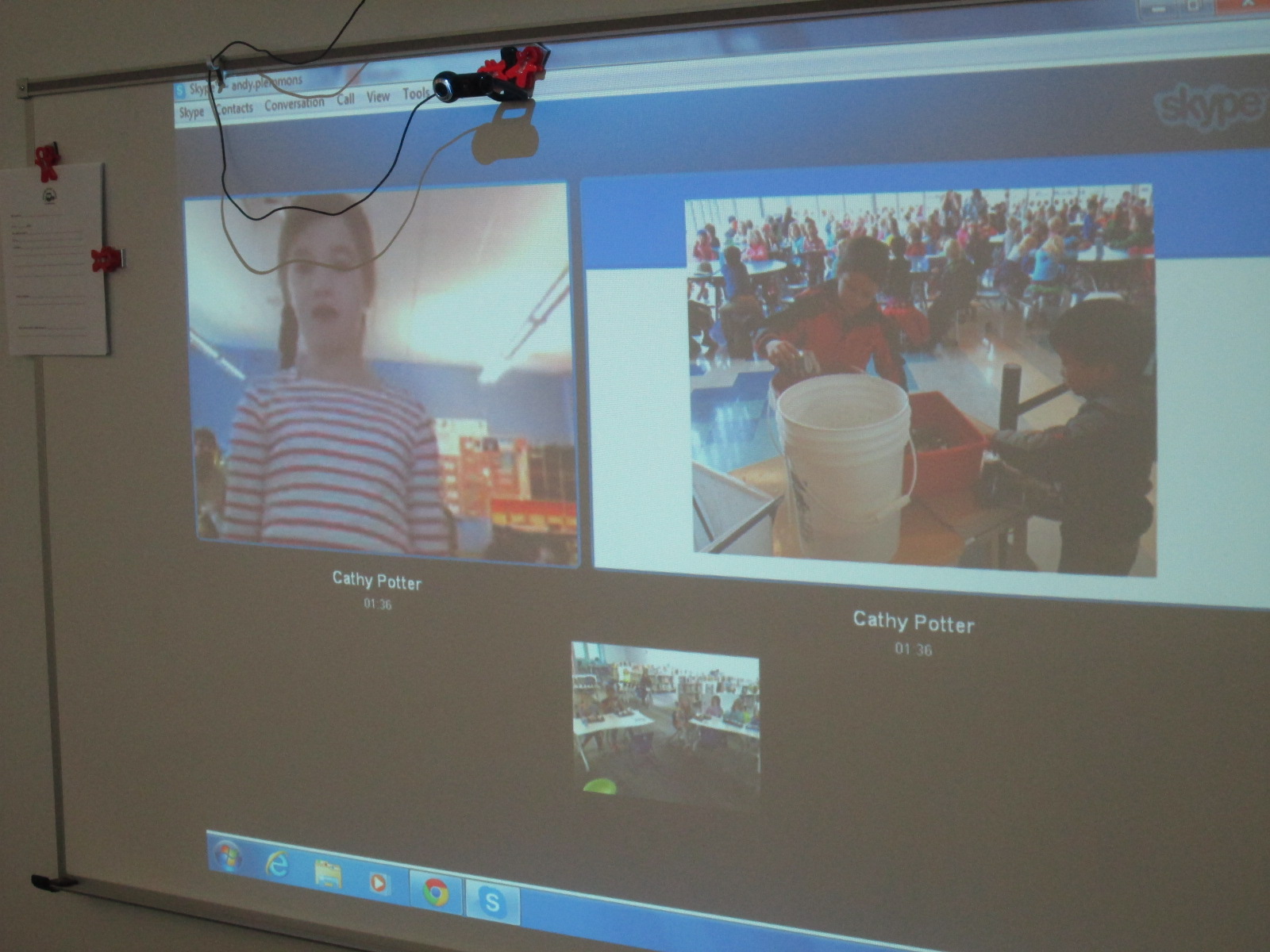
Ms. Tesler’s 4th grade students gathered a lunch bunch together to connect with Cathy Potter and her students in Falmouth, Maine. The 1st graders at her school showed us a Google presentation with pictures of recycling and composting efforts in their school. They have a whole process of how their scraps at lunch get put into a bucket to go to the composting bin.
Finally, Ms. Spurgeon’s 3rd grade class connected with Karre Sloan’s 6th grade students in Nashville, Tennessee. They shared the recycling program from their school and how their 3rd graders are in charge of recycling. They also shared their ideas and tips for our own recycling problem at our school.
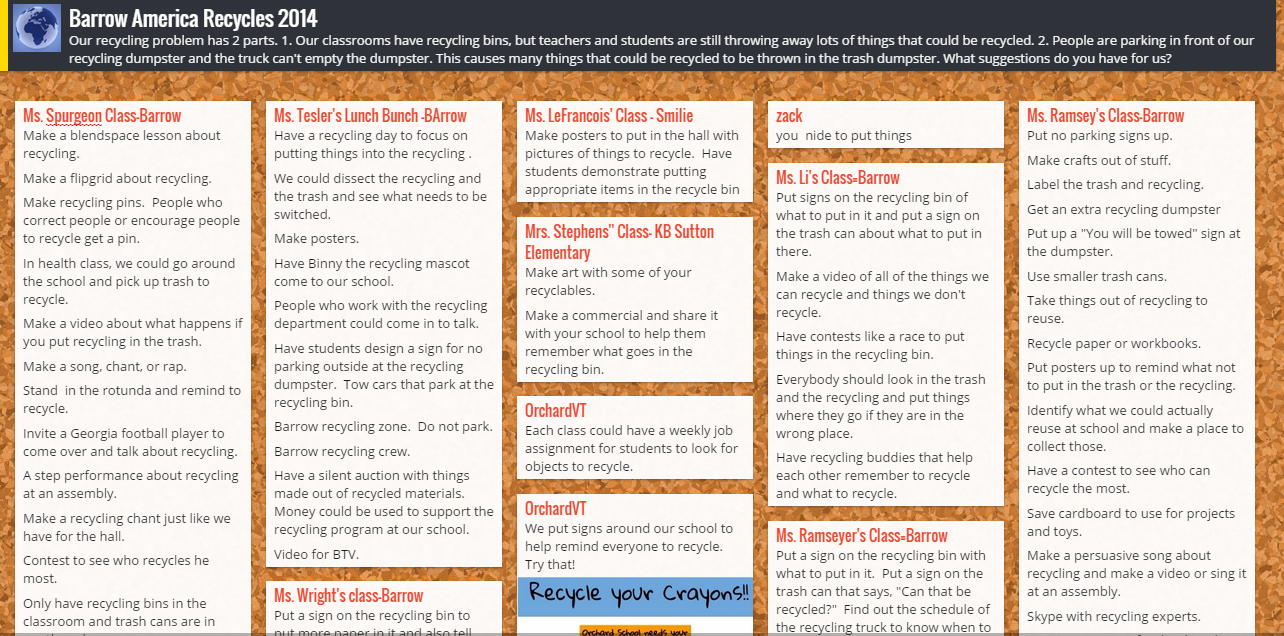
In every connection, our students shared our own school problem. We have recycling bins in every classroom, but we are finding that people are still throwing away recyclable things. Even when we recycle, we have an additional problem. People are parking in front of our recycling dumpster and the recycling truck can’t get to the recycling to empty it. We posted these problems onto a Padlet. We showed each connecting class the bins that we have in our classrooms and read the recycling instructions that can be found on the bag inside. Sometimes our connecting classes gave us new ideas right on the spot or shared what their own school is doing that might support our problem. Other classes added to our Padlet after we disconnected. We also added to the Padlet.
Our next step is to take this Padlet and share the ideas with our environmental committee which is chaired by Natalie Hicks. We also have 2 enrichment clusters that we can share the Padlet with. Our hope is that some of the ideas that came from so many perspectives will spark change within our school problem. We want to connect back with some of the classes we met this week and share what we’ve done to improve our problem, and we want to see what they have done since our connection.
I loved that during our very last connection, students arrived in the library to put signs on our recycling bin that were sent by our recycling department.
We saw that we weren’t alone with our problem and that there were multiple things to test out to try to reach a solution.
We learned that recycling is very different from place to place. We are so fortunate in Athens to have a state of the art recycling facility and single stream recycling. Some communities have to put forth a lot of effort to recycle, and it is so easy for us.
We realized that there were so many things we could do with our “recycling” other than put it in the bin. The concept of makerspaces is really causing a lot of us to think about turning trash into functional creations.
We saw that together we could come up with out-of-the-box ideas. We often started with “put up posters about recycling”, but with the energy of collaboration, new ideas surface such as make smaller trash cans, create a recycling contest, write a catchy song about recycling to sing on morning announcements, and more.
My hope is that this week of connections really does spark change in our school and others. At the very least, I think it made us more aware of what we are throwing away. These types of connections have the potential to grow into large-scale collaborations around the globe. The combination of powerful texts such as Here Comes the Garbage Barge and Eyes Wide Open along with the innovative ideas of students, teachers, and families fosters a healthy environment for long-lasting collaboration. Our students are the future of our world, and when we allow them to unite with one another around authentic dilemmas in our world, we are equipping them with problem solving skills to keep our world a peaceful place.
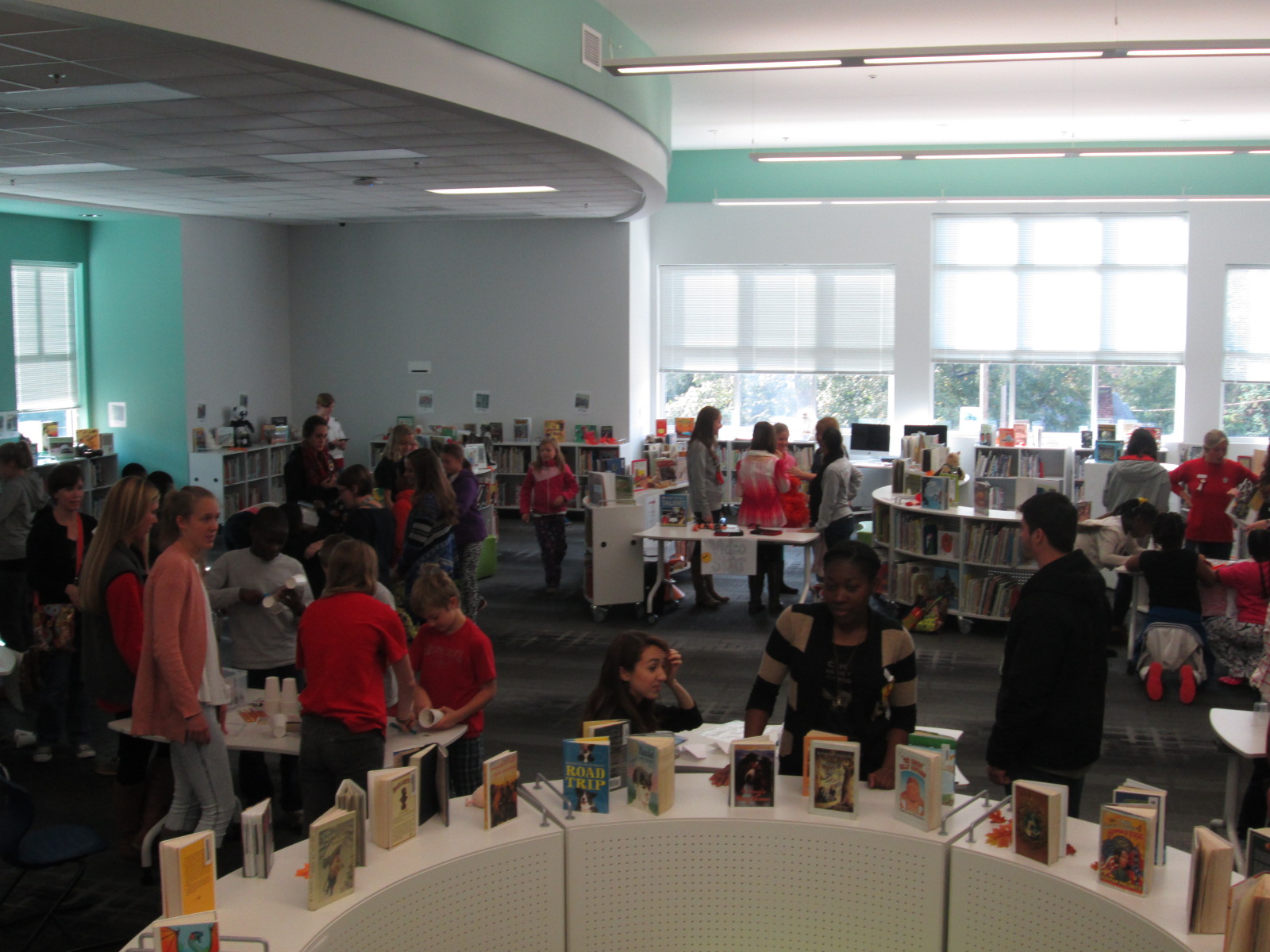
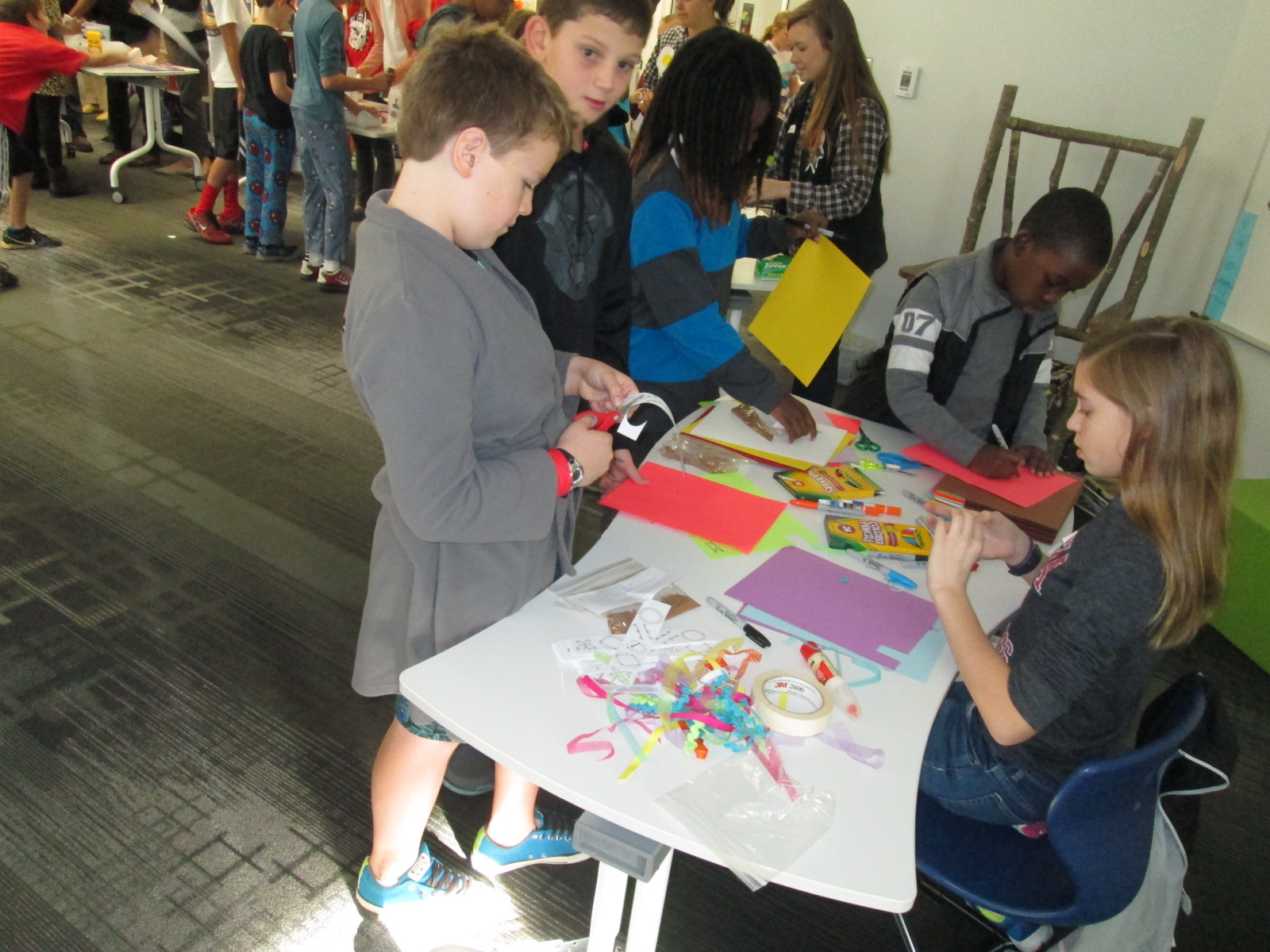
Today Gretchen Thomas from the University of Georgia brought one of her EDIT 2000 classes to the library for a mini maker faire. She and I have been brainstorming about how to give students more opportunities to come and use the makerspace in the library for tinkering and exposing students to various types of making. These conversations have come from my constant requests from students to come and use the makerspace. I struggle with finding a balance between the standards-based lessons and projects that I offer in the library, weaving in the makerspace into curriculum, and the students’ desire to just mess around with the tools in the space. Gretchen has been coming to lead maker recess times with me.
Today, her EDIT 2000 students brought multiple maker centers for students to explore. These UGA students are mostly undergraduate students from a variety of backgrounds. Some of them plan to be education majors while others have a range of other majors. I love the range of expertise and interests that live within these classes. Gretchen’s students designed a center that would explore some aspect of making.
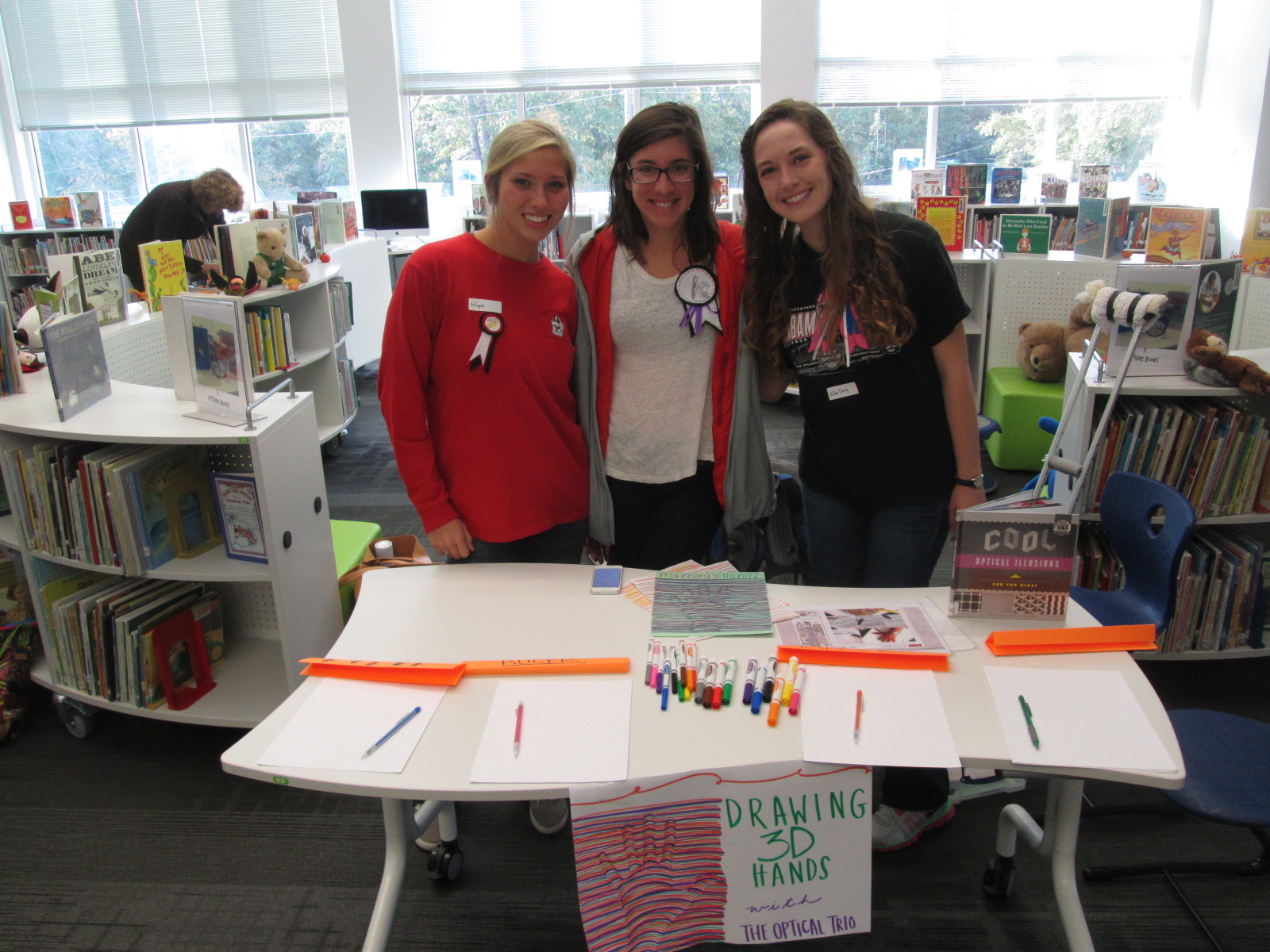
One center explored optical illusions. These students displayed a book of optical illusions and helped students create a drawing of their hand that looked like it was lifting off the page.
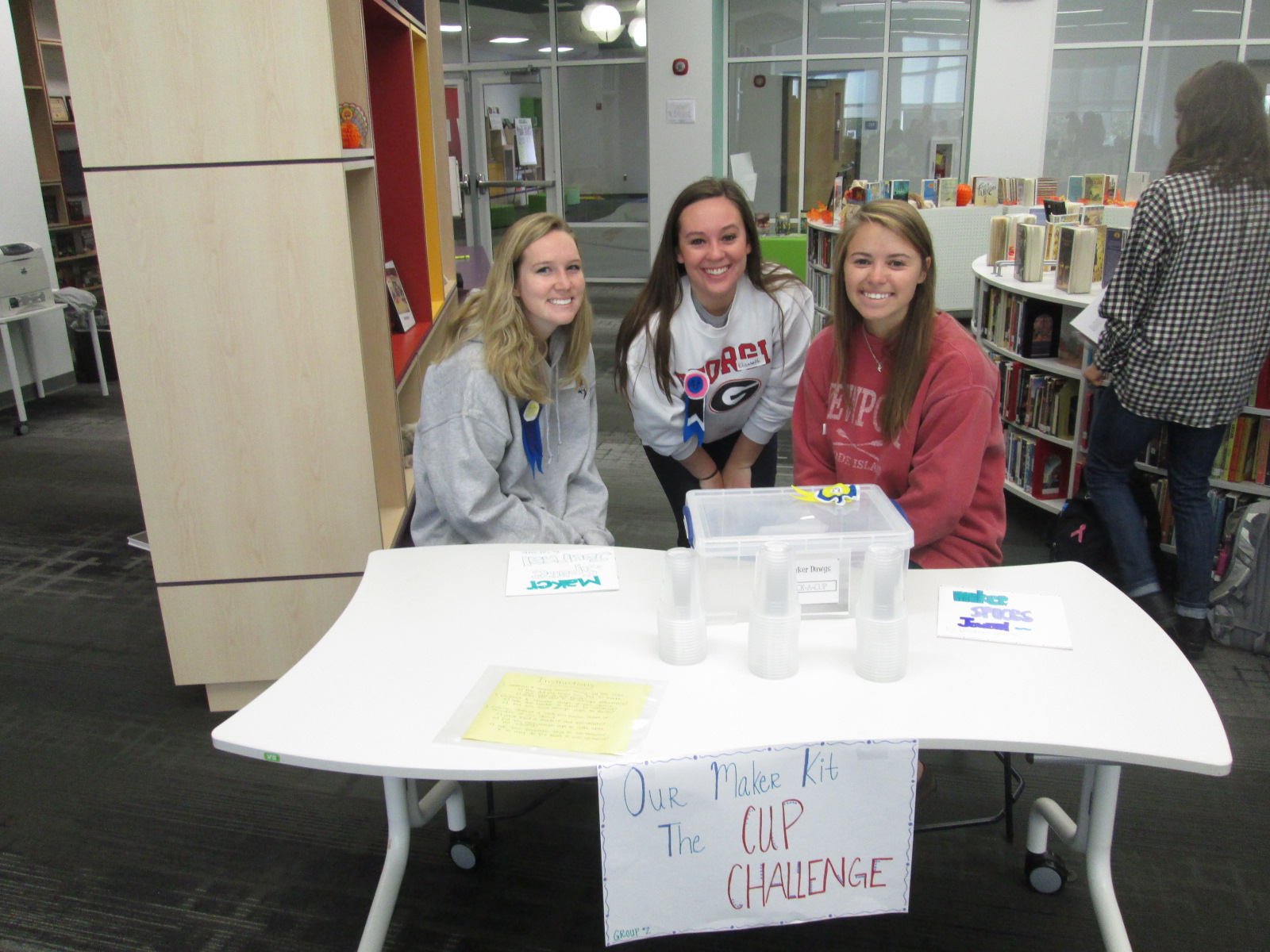
Another center was a cup stacking challenge. These students had multiple clear plastic cups and students spent time stacking the cups into different formations to see how tall they could stack as well as which shapes seemed to hold up better. I loved seeing all the strategies that students tried in order to stack and unstack the cups. They were fearless and really demonstrated what it means to tinker, fail, and try again.
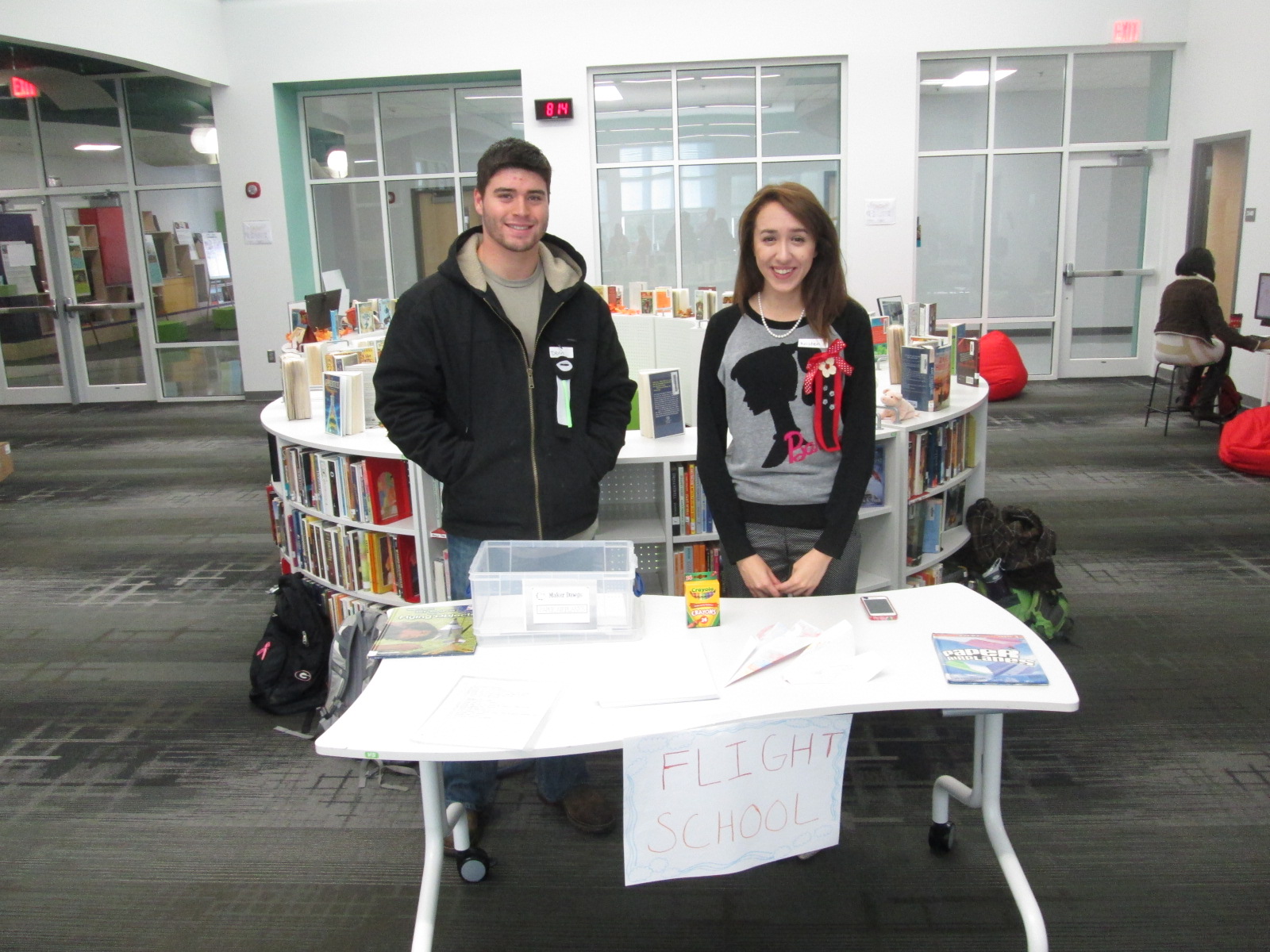
Students loved the paper airplane center. These UGA students had books about paper airplanes and materials for making planes. Students spent time making their planes and then testing them out in the library. I loved watching planes flying around the library and hearing teachers ask “are students supposed to be flying airplanes around?”.
I saw several students refold their airplane to try something new in their design, so once again there was a strong demonstration of tinkering, failure, and perseverance.
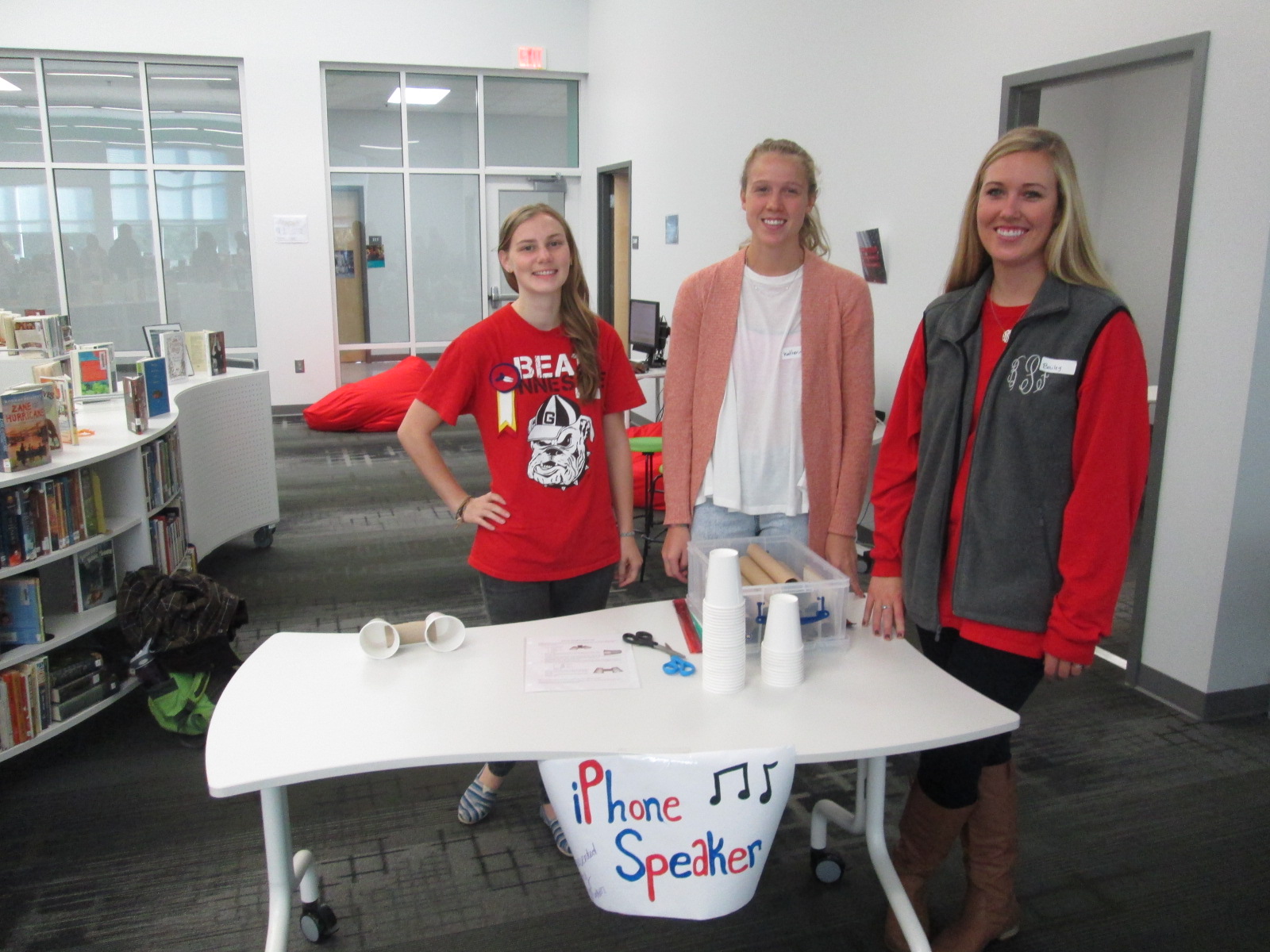
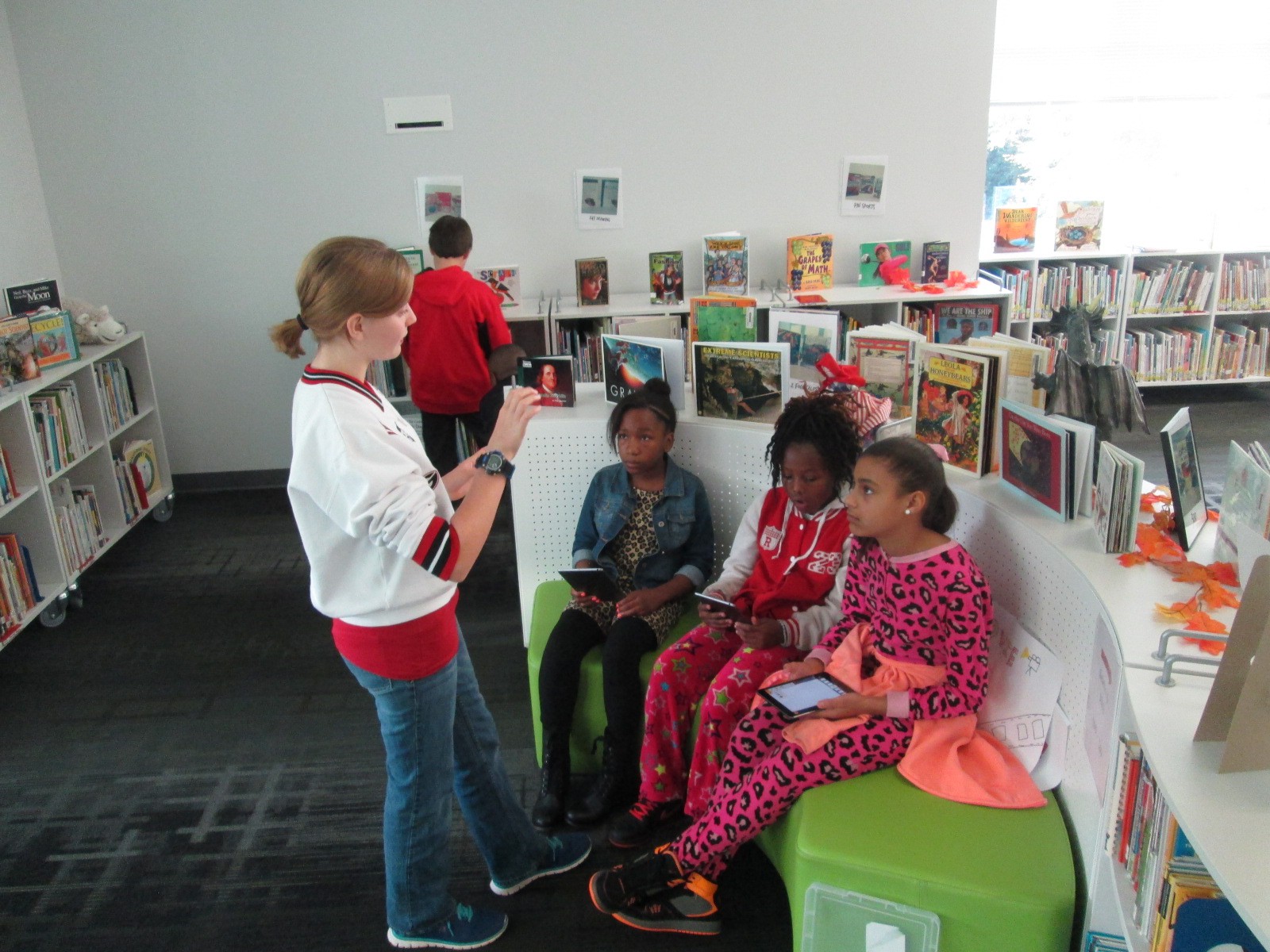
Some of our stations involved technology or could be incorporated into technology. One station was space for students to explore how to create speakers for iPods or iPhones using cups and paper towel rolls. Students were eager to take their creations home and try them with their own devices.
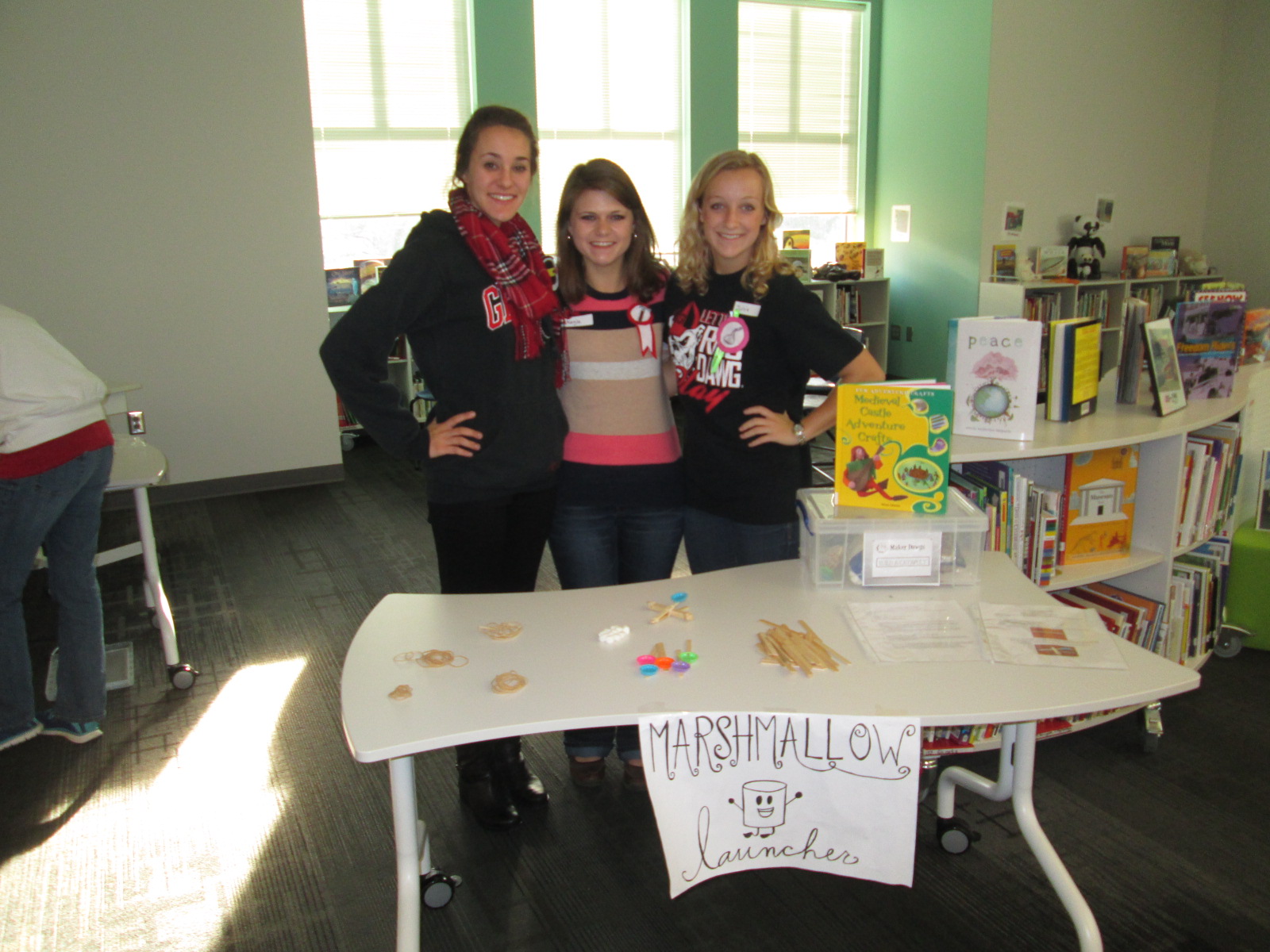
One of the most lively centers was the marshmallow launcher. Students used rubber bands and Popsicle sticks to create a tool to launch marshmallows. They tested their creations and made adjustments to see how they could make their marshmallows launch higher and farther. Again, it was fun to see marshmallows flying through the air along with the planes.
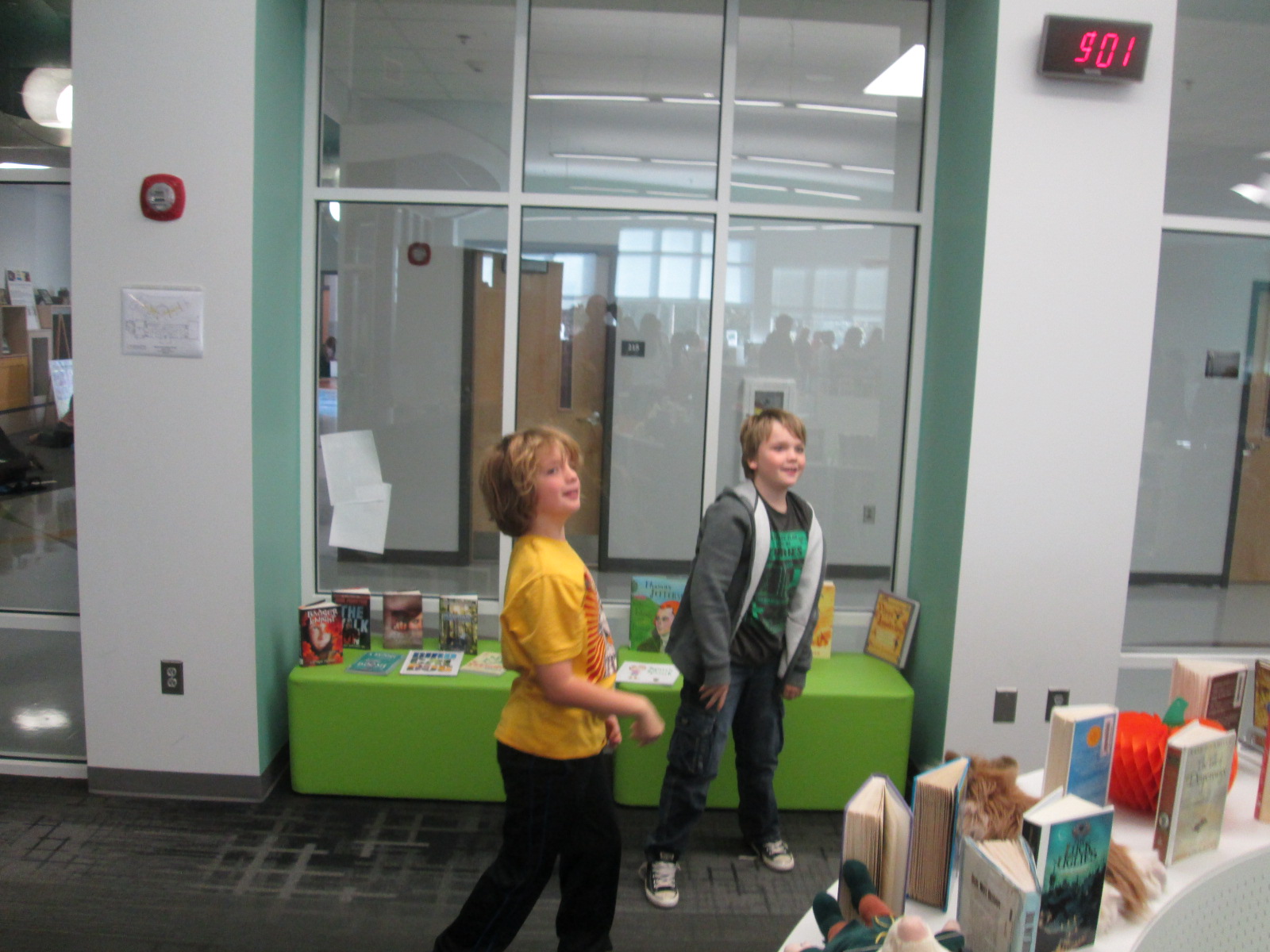
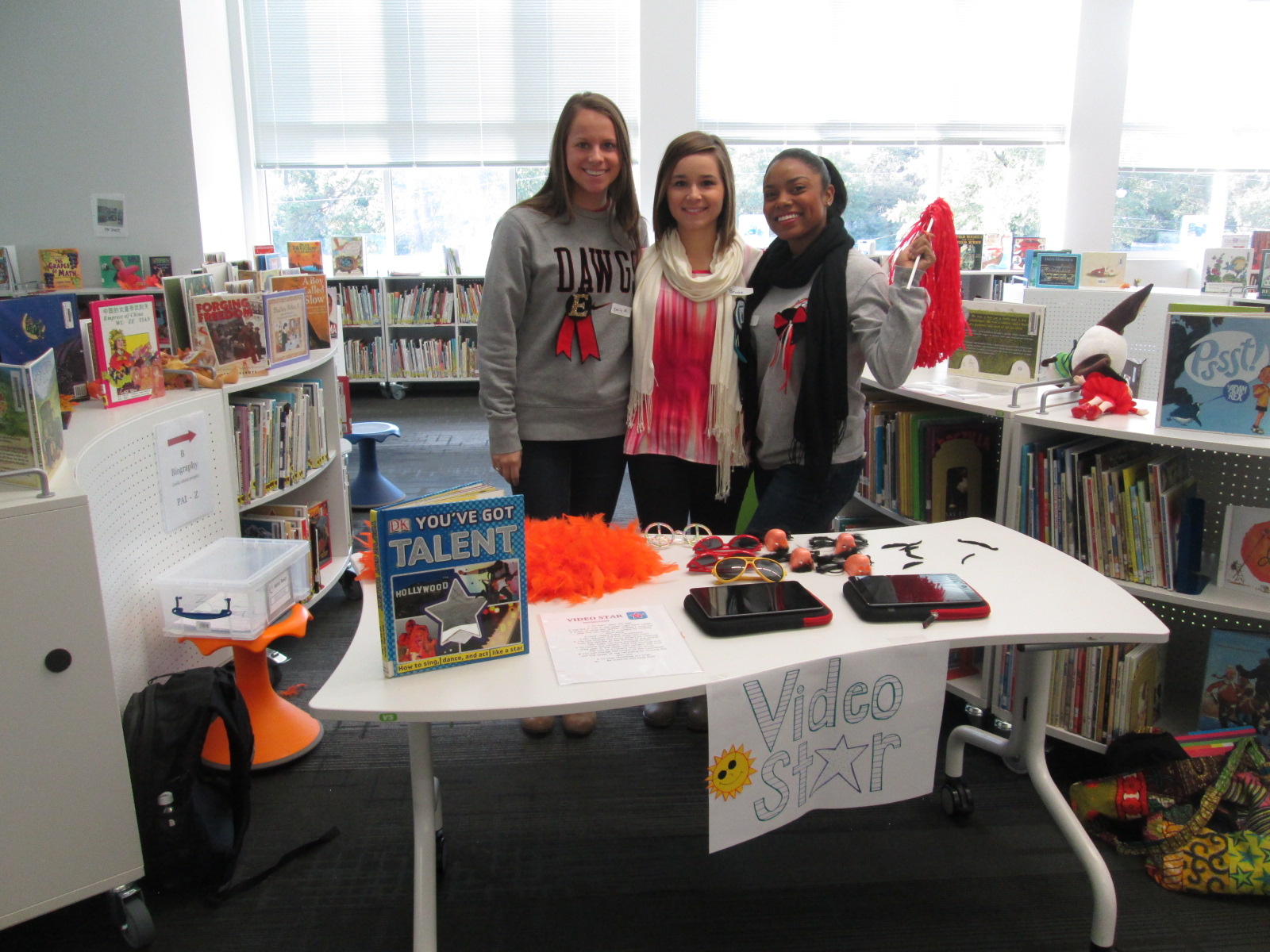
Another lively center was Video Star where students got to create their own costumes and form a mini flash mob dance to be recorded in the Video Star app. These videos will be coming soon, so I hope to add a few to this blog post when they are ready. It was interesting to see some students show their personality, come out of their shell, and be totally engaged when given an opportunity to make a music video.
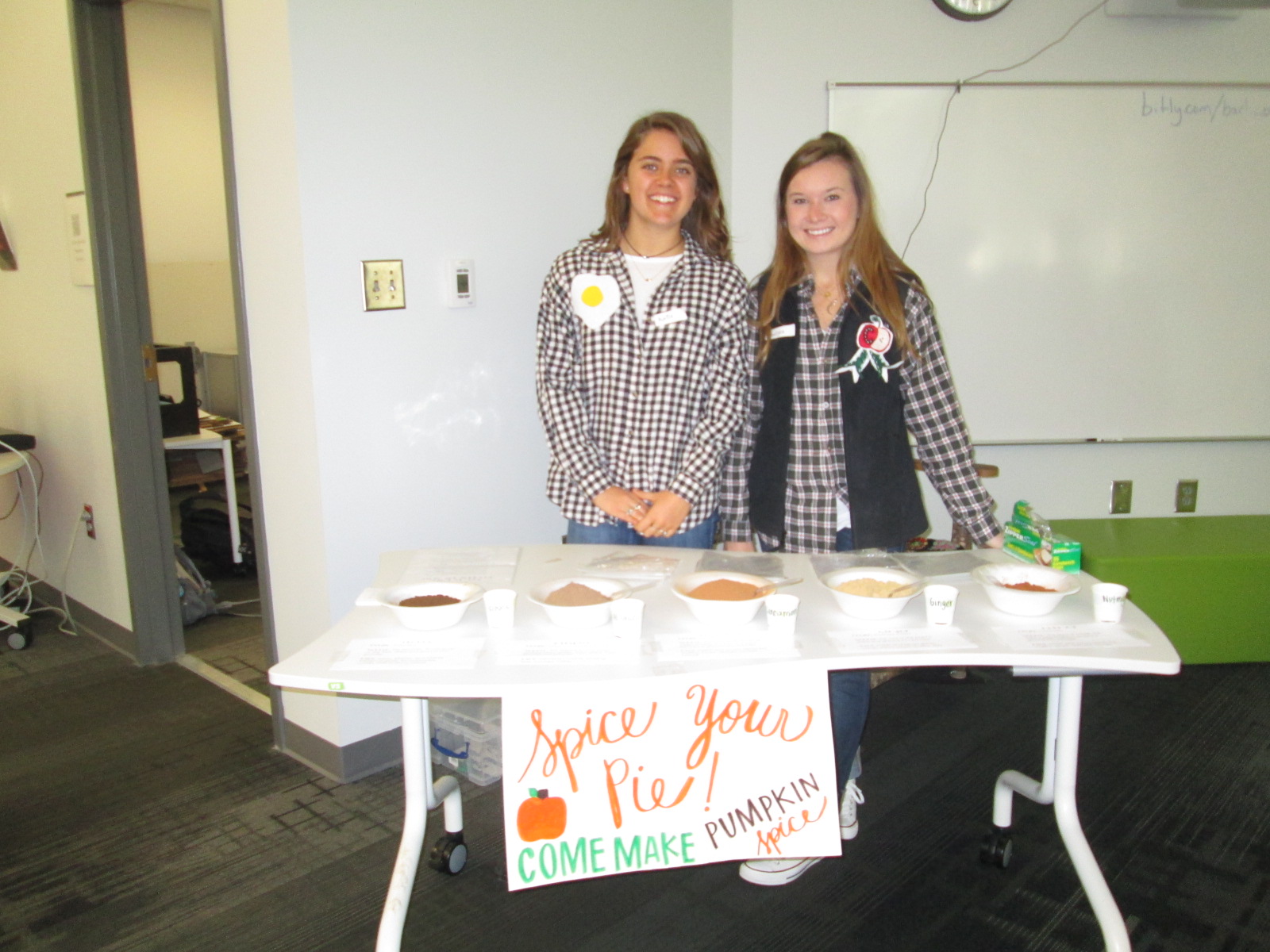
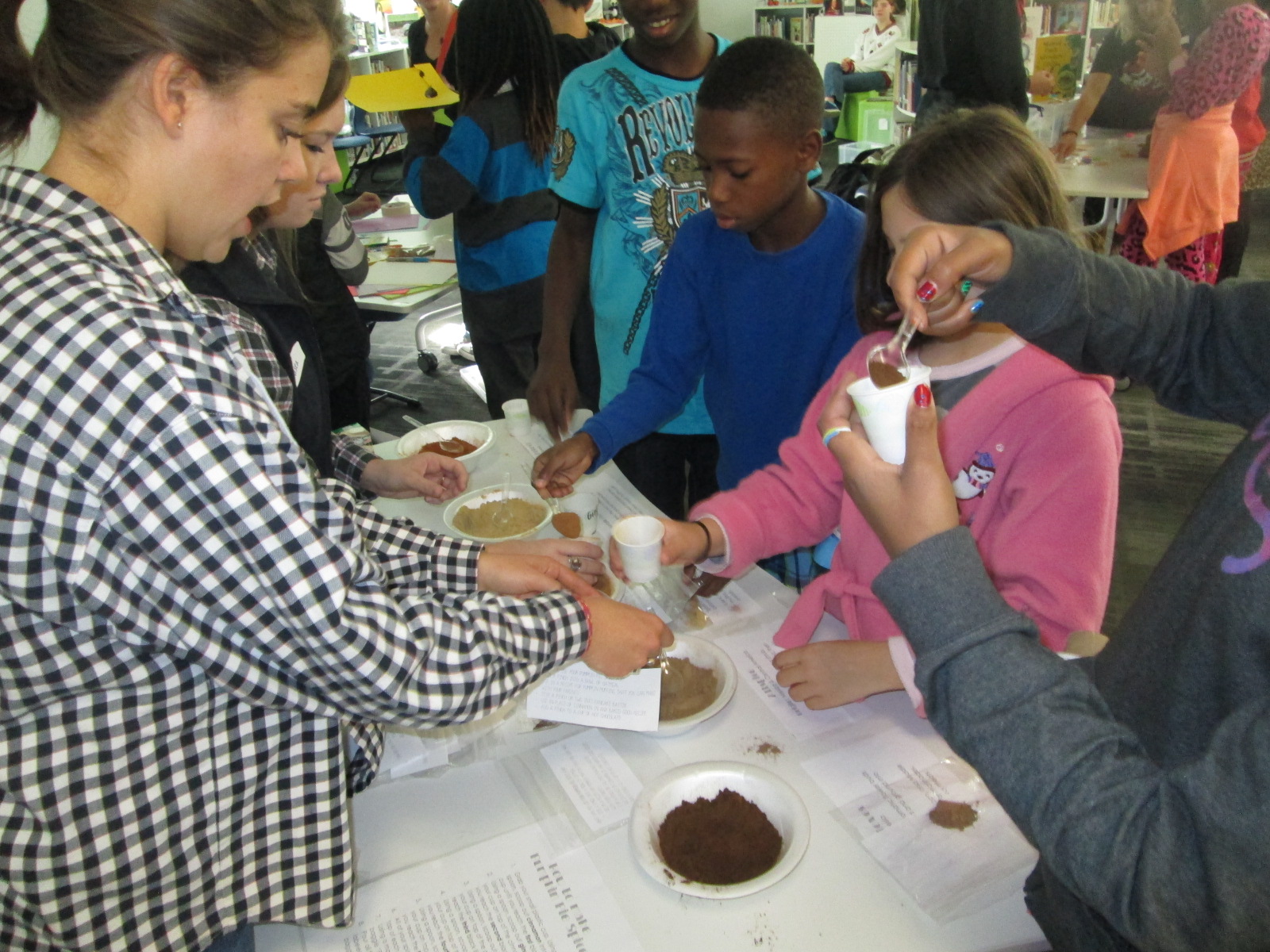
A different take on making was the center that explored spices. These students had a variety of spices that you might put in fall pies and students spent time examining the spices and creating their own mix.
I loved hearing what they planned to do with the spices when they get home. One boy wanted to make a cake for his teacher and even talked about making a new fried chicken recipe.
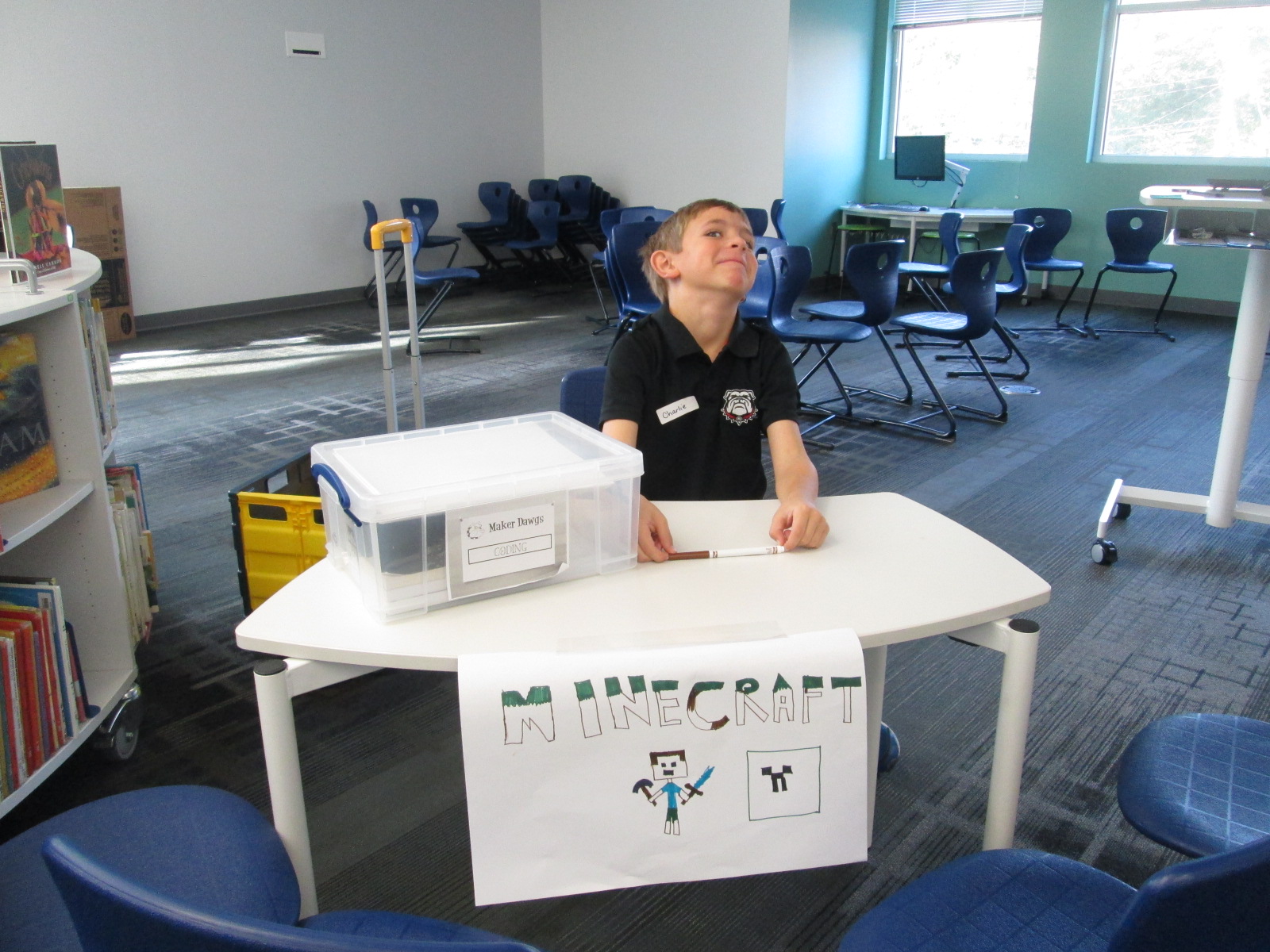
Three of our centers were facilitated by kids. Two kids were Gretchen’s own kids and one was a neighbor. They had centers on Minecraft, Goldieblox, and badge making. They ran their centers like pros and I was reminded of how powerful it is when we give kids a voice to share their expertise with others.
Our entire 5th grade rotated through this experience across the course of an hour. Students were able to visit about 3 centers. After the centers are assessed and used at another school, they will be making their way back to our school for students to use in our makerspace. I am so thankful to have Gretchen and her students so close to us. She is willing to give any crazy idea a try and see what happens. In this case, I think there were many miraculous moments.
As students left, they had smiles on their faces, energy in their bodies, and ideas flowing in their minds. I invited them to think about how what they discovered fit into what they are doing in their classrooms. I wish that I had been able to have them express some of these ideas before they left, but perhaps I can capture some of these reflections in another way such as a Flipgrid or Google form.
Our annual storybook celebration was another huge success. I often get questions about how our storybook celebration is organized and what we do throughout the day.
Planning for this day begins in early October. It takes multiple steps and multiple people for this day to be successful.
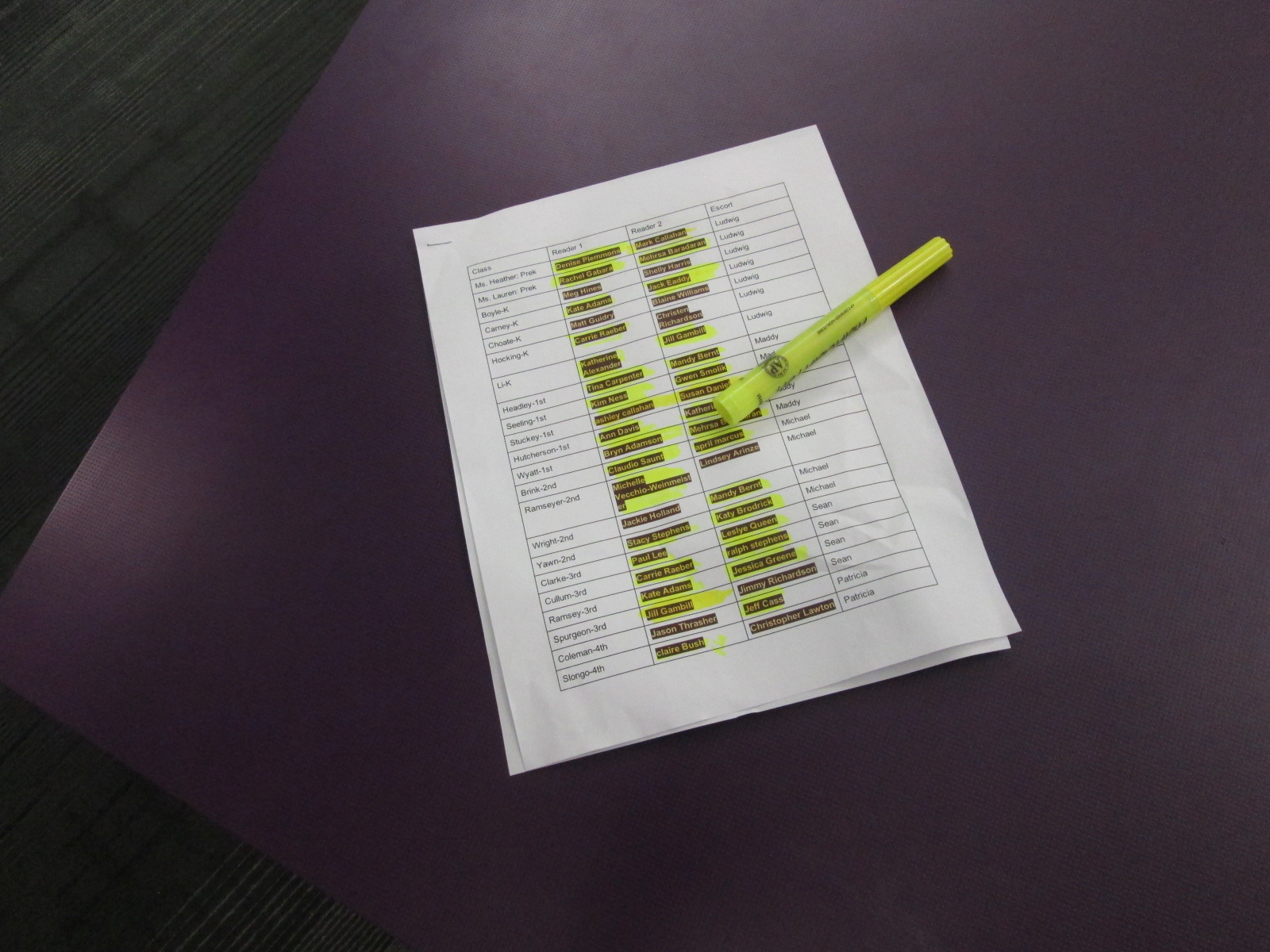
Storybook celebration begins with guest readers in every classroom. To organize readers, we create a Signup Genius to easily share the signup as well as send out updates and reminders to those who have signed up. My volunteer coordinator, Courtney Tobin, from PTA helped with this. She created the signup and she and I began sharing it. She contacted parent representatives at each grade level to also send out the link to families.
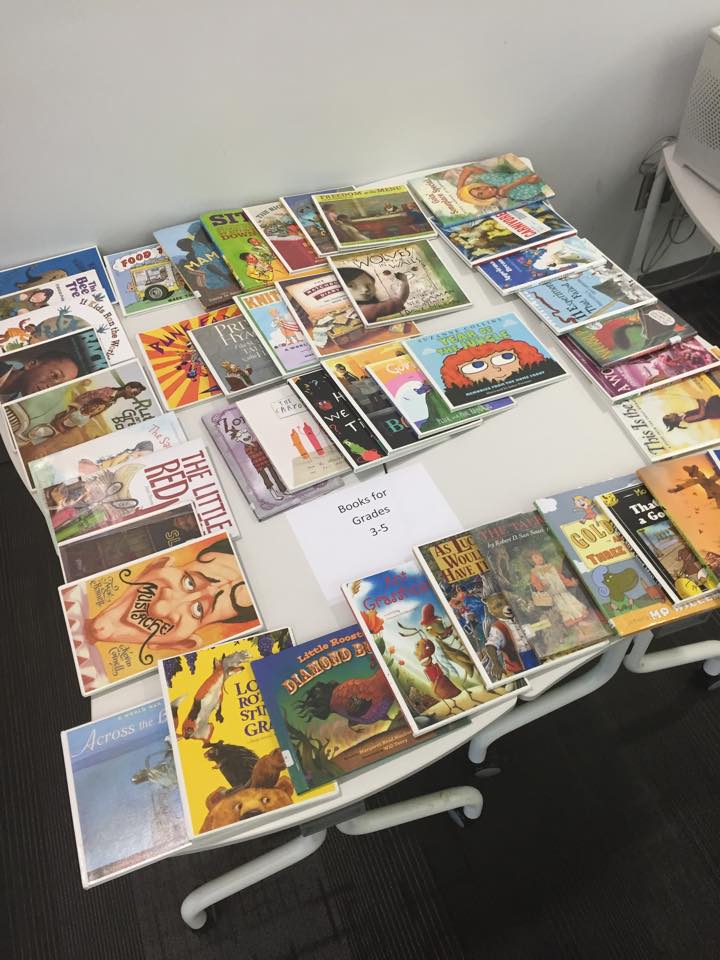
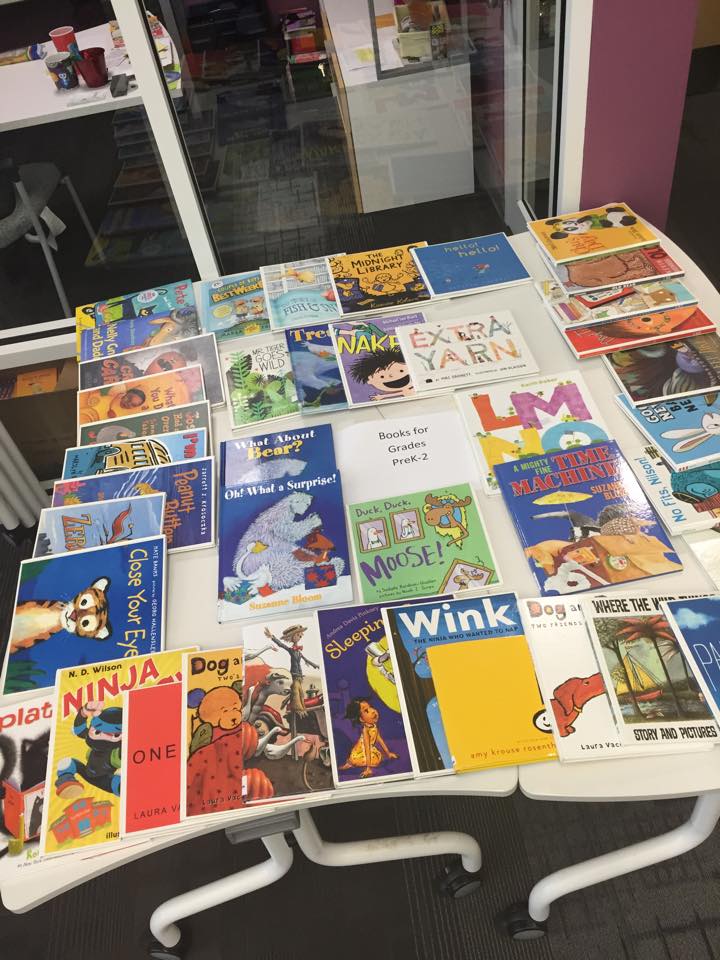
On the morning of storybook celebration, guest readers arrive in the library between 7:30-7:50. They sign in at the counter and select a book from 2 tables that are organized by books for PreK-2 and 3-5. All of these books are pulled by me ahead of time. Some readers bring their own book.
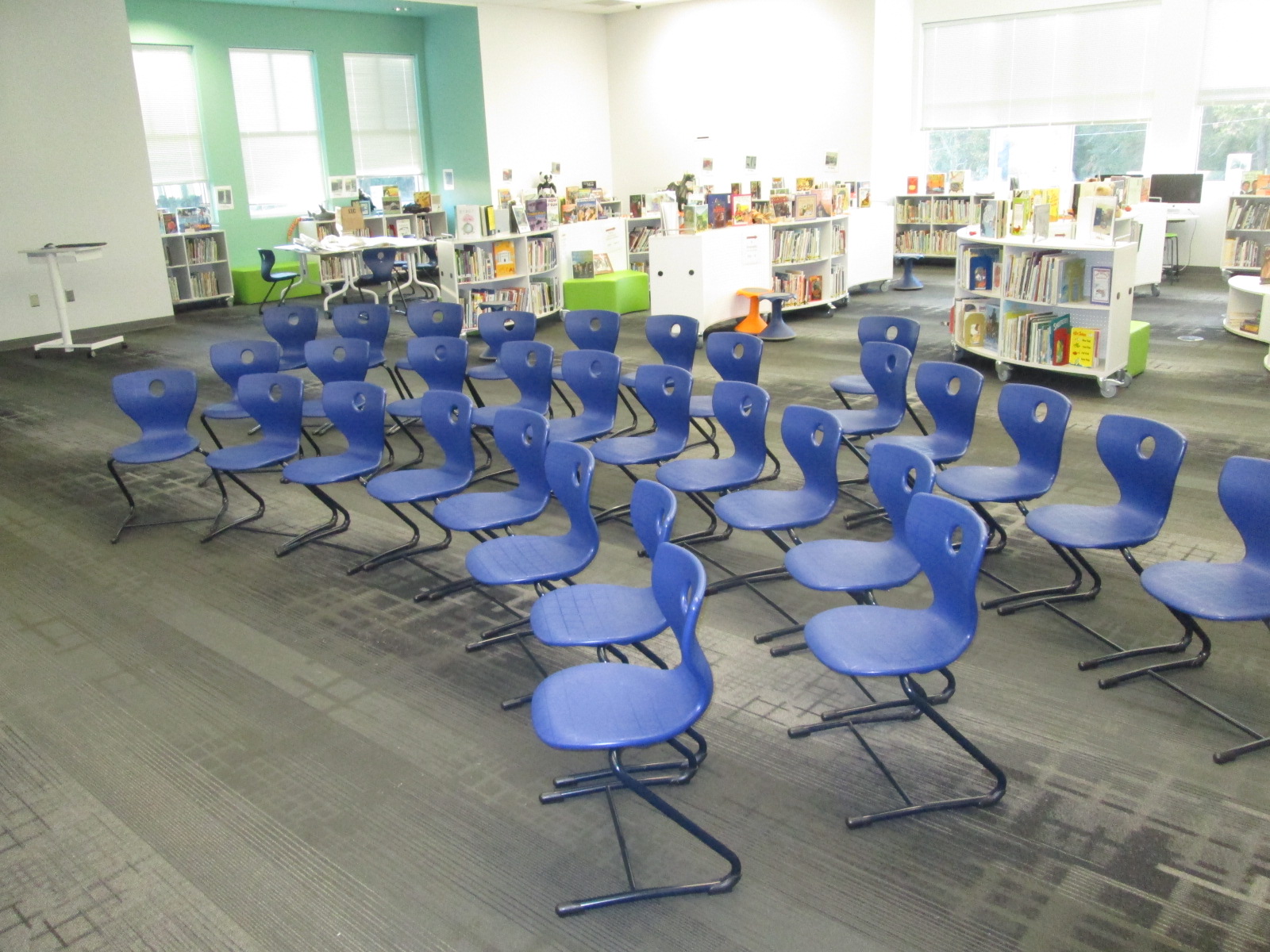
While readers wait to go to classes, they mingle, pre-read their books, and find a place to sit in the chairs that are ready for a group photo.
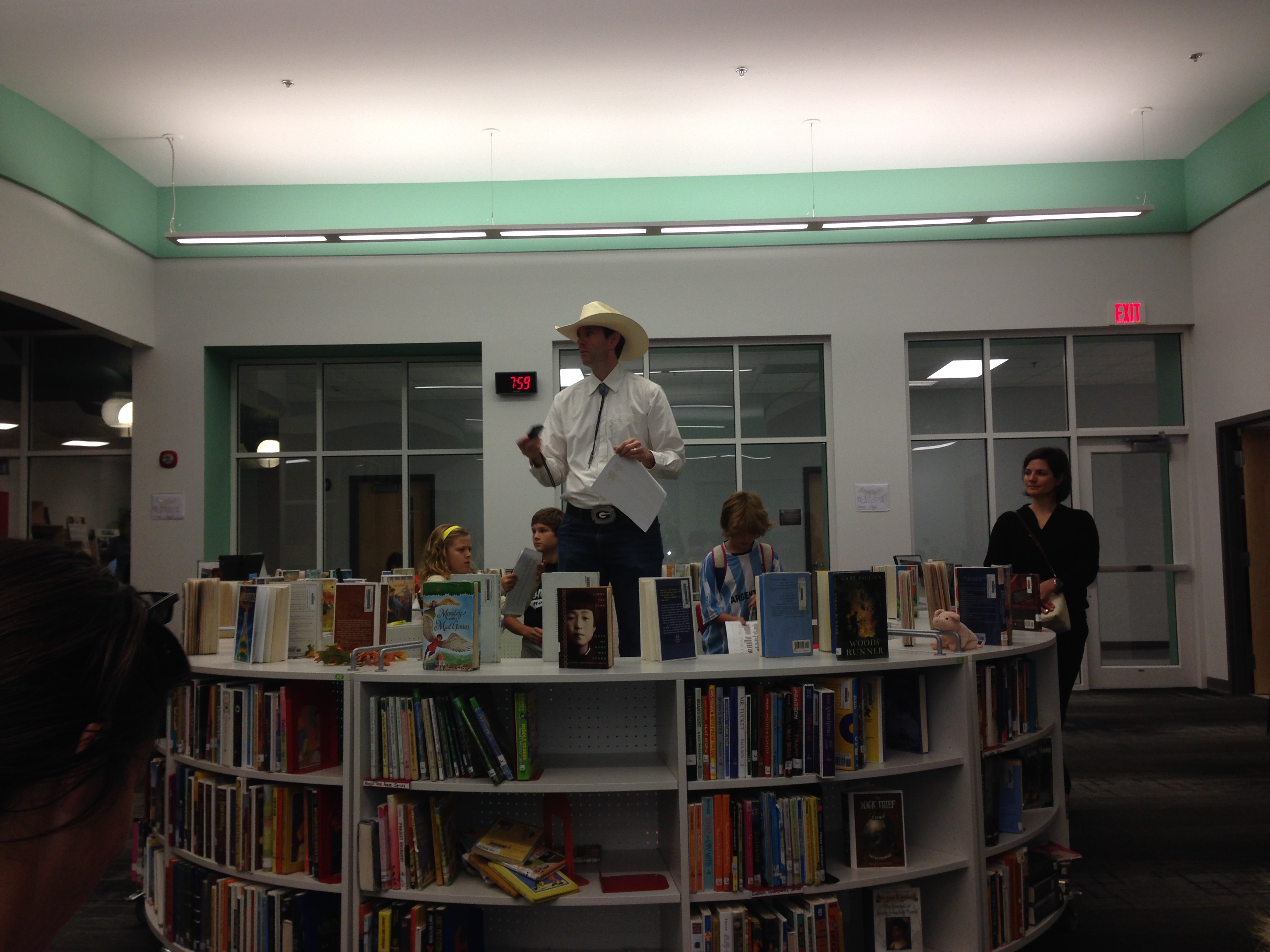
At 7:55, we all gather and I give a quick welcome.
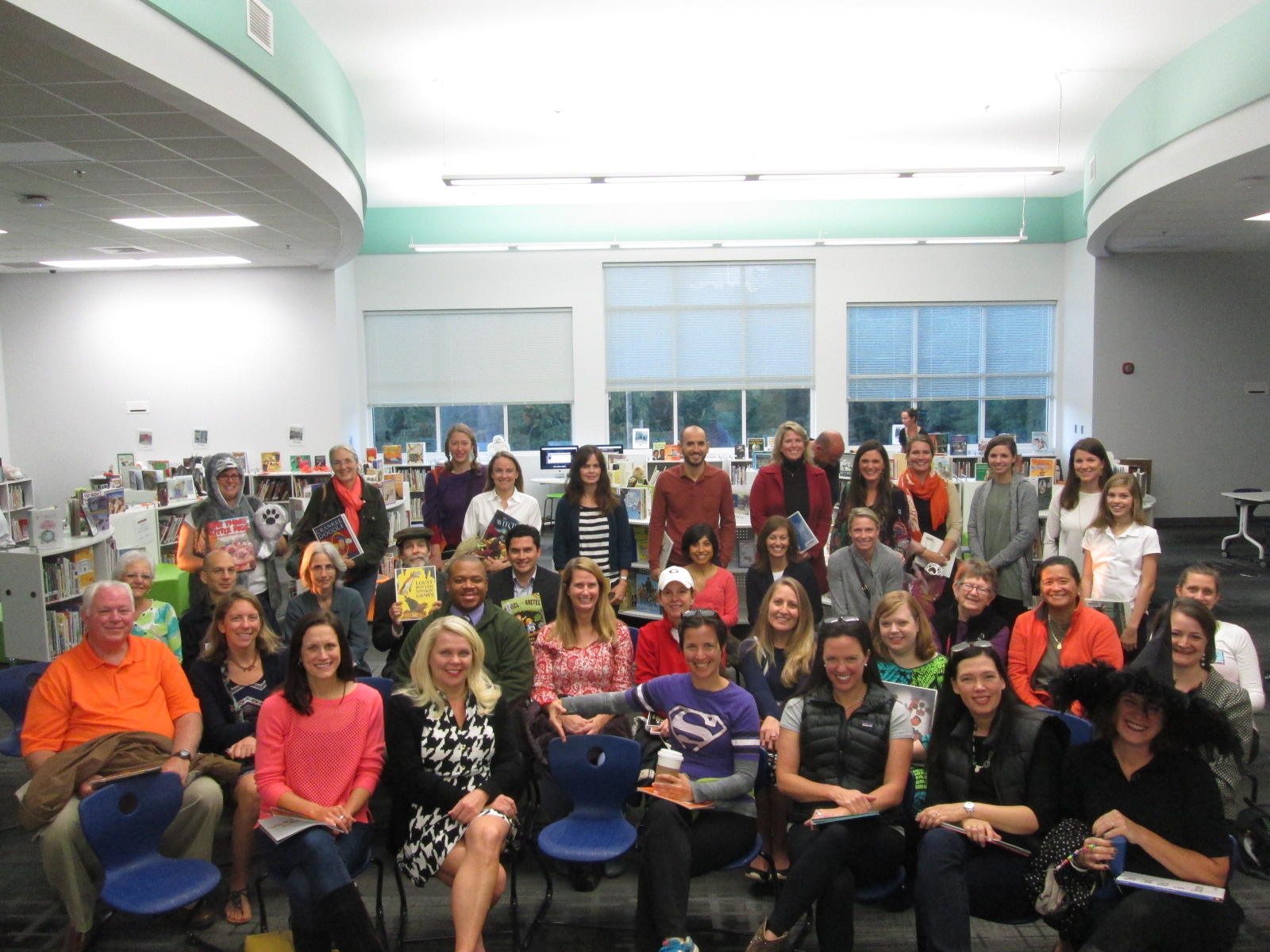
Then we take a group photo.
My morning BTV crew escorts readers to classrooms by grade level, so I have a sheet with all of the readers and their assigned classes that I give to each crew member.
Once all readers make it to their rooms, I race around the school to take pictures of as many readers as I can. There are about 2 readers for every classroom. They read and talk with the kids about their book. Some even leave the book in the room so that kids can keep enjoying it during the day, but most bring the book back to the library.
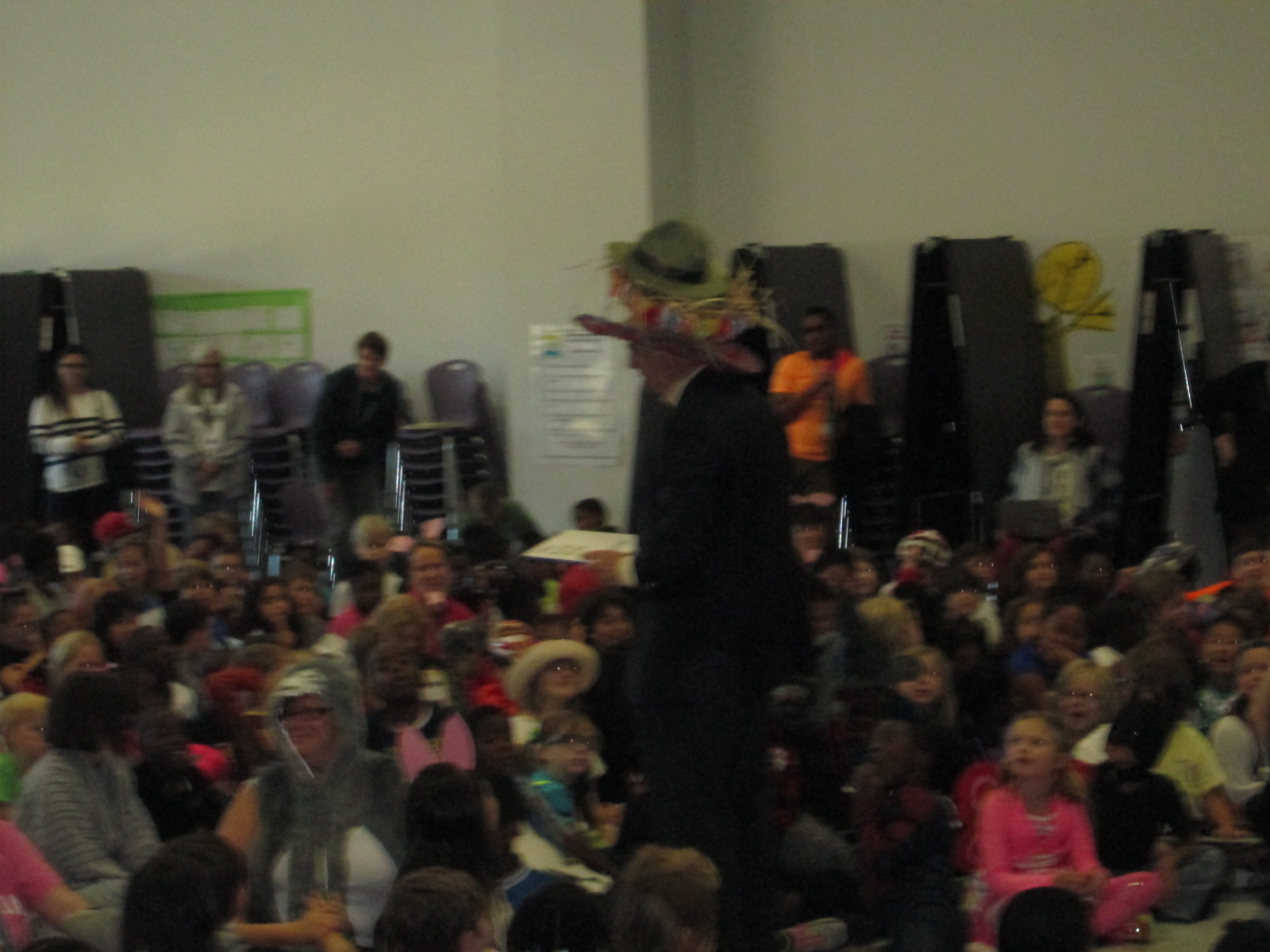
At 9:00, we gather in the cafeteria for the assembly. This year, we tried some new things in the assembly, which required some organization in advance. We had an assembly guest reader. Our family engagement specialist helped a lot with the assembly. She contacted and organized Dan Coenen, a UGA professor and community member. He read The Book with No Pictures and had the kids laughing and engaged.
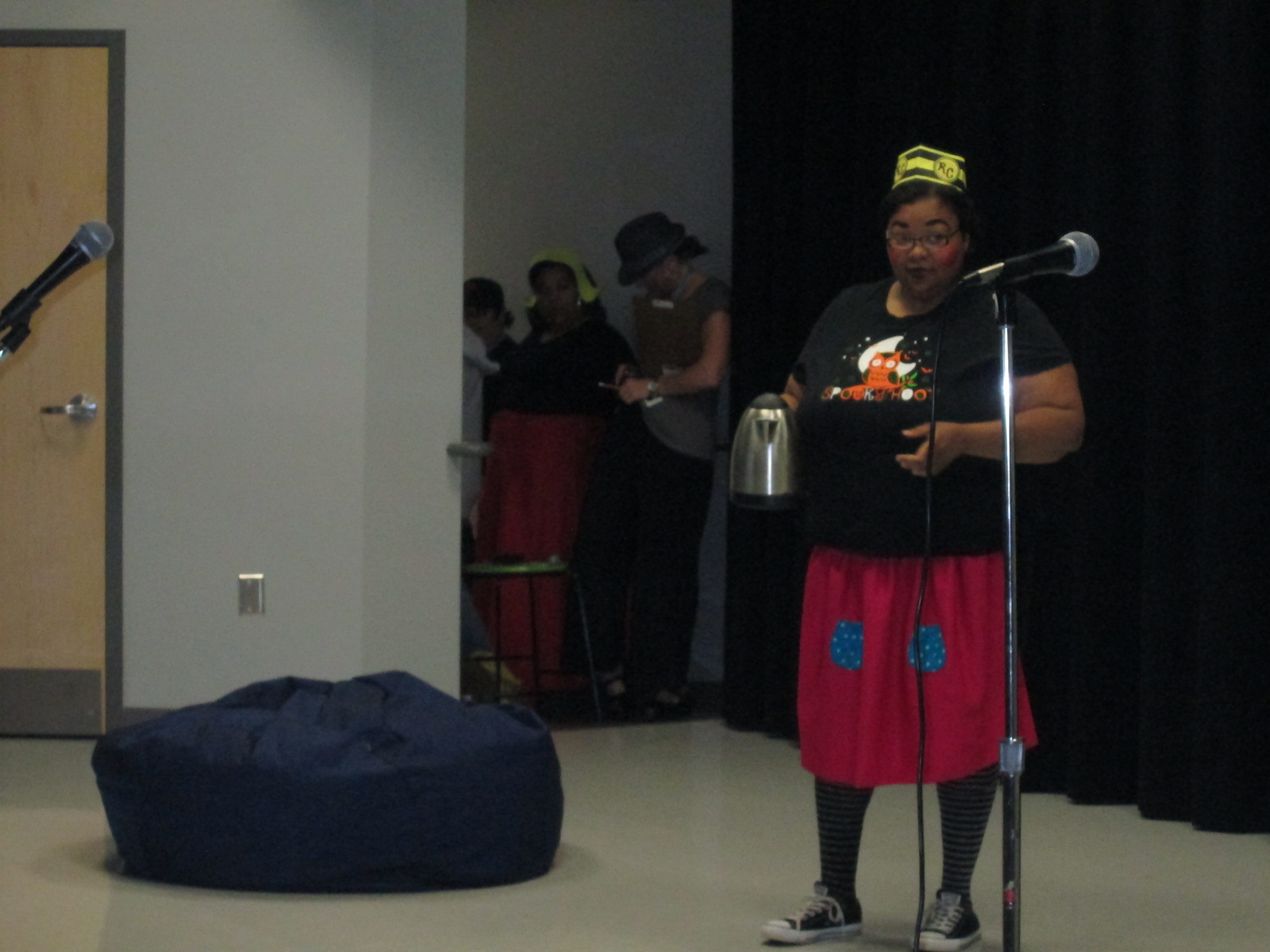
We also had a skit performed by teachers. It was written by the teachers and reviewed many of the Daily 5 strategies that kids use in class. One again, Mimi Elliott-Gower, our family engagement specialist, got this organized along with Carrie Yawn, 2nd grade teacher.
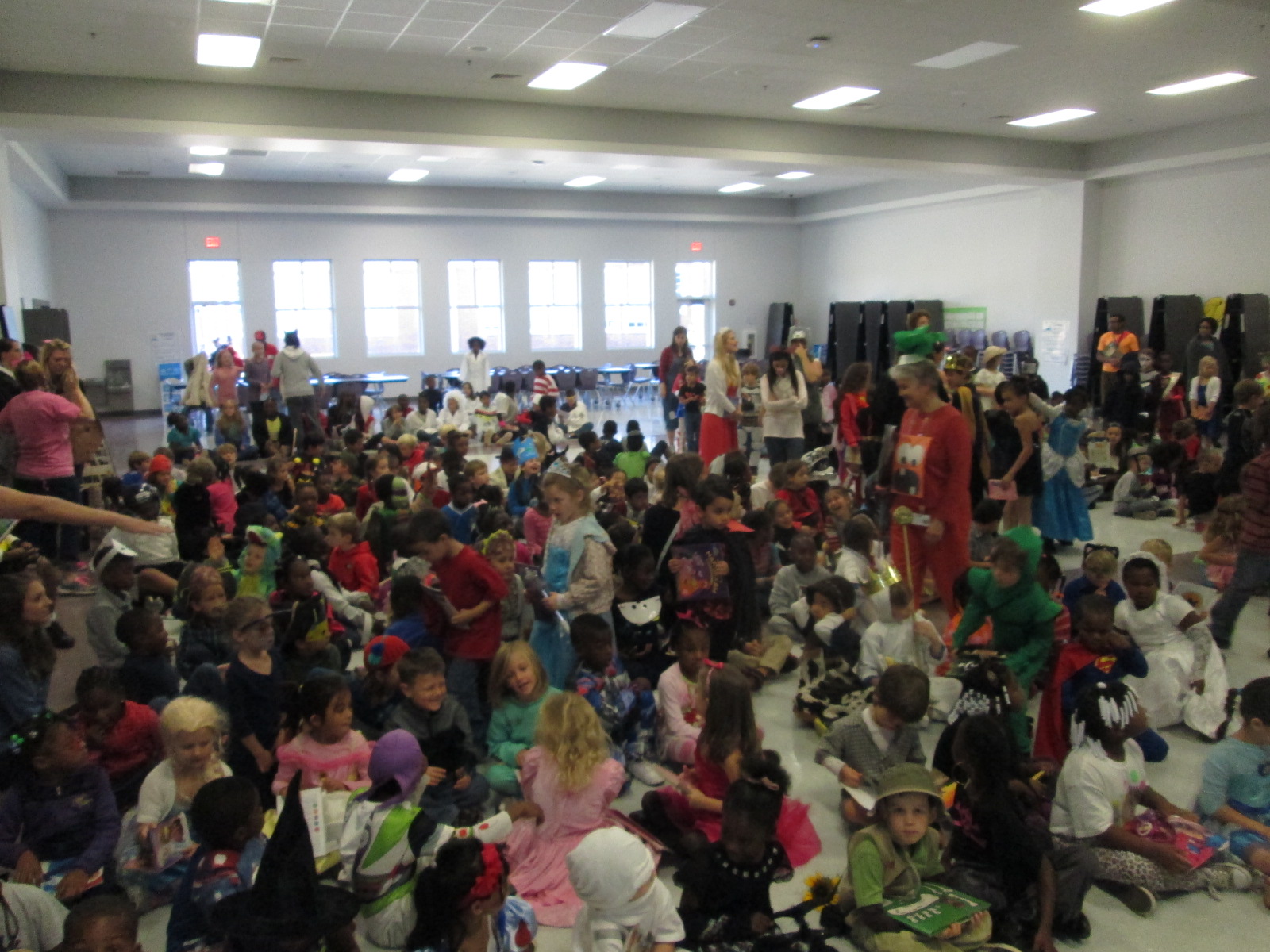
In the past, all students have walked across the stage to show off their costume. This has been very time consuming, so this year we tried something new. Each row of students stood, twirled, and sat down facing the back of the cafeteria. We did this until every student was facing the back.
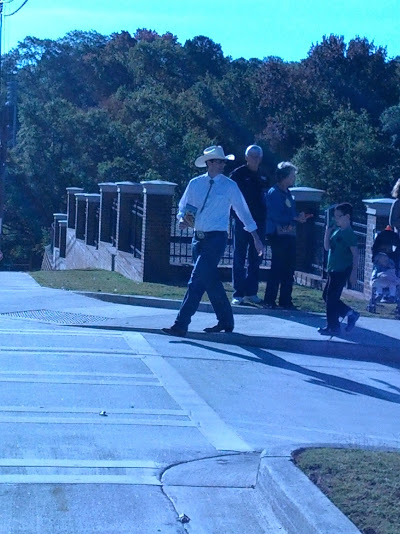
Then we were ready for a parade! The parade is outside on the sidewalks of our community. I send out the parade route to families in my newsletter and via facebook. Our principal emails UGA and lets them know so that they can come out of their buildngs and wave.
Taking almost 600 kids on a walk is a big task, and safety is one our biggest concerns. I drive around to make sure that the route we plan to take is all clear before we decide the way to go. Our family engagement specialist contacts the police and they help us cross streets and watch for unsafe drivers to pull over. We talk to the kids about staying away from the road while they are on the sidewalk and we want them to walk in a single line.
I lead the parade so that we make the right turns, but I communicate the route to all of the teachers as well so that they know where we are going.
The kids chant “Read more books!” as we go down the sidewalks and we usually get lots of waves and honks as we walk.
Our 5th graders break off of the parade route and stop at the GA Center for hot chocolate while the rest of the parade returns to Barrow. Once again, several people help with buying, prepping, and pouring the hot chocolate. This is a special treat for our 5th graders’ final storybook parade.
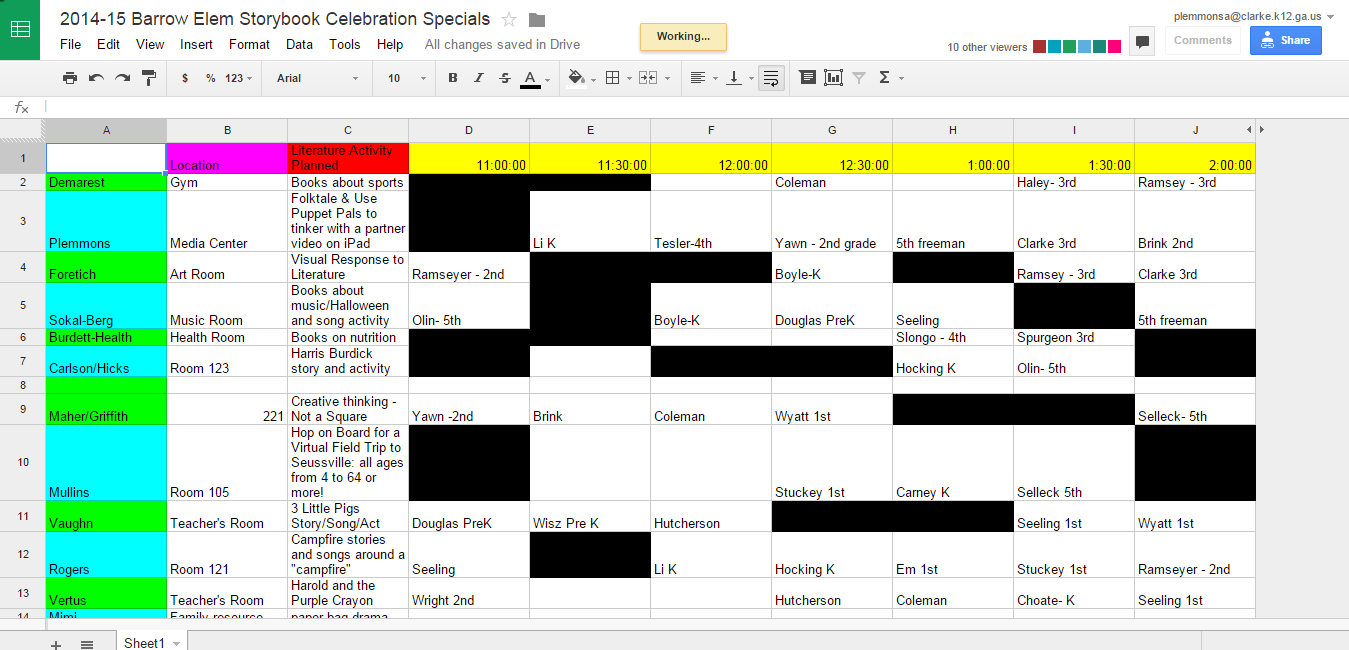
Once we are all back at school, classes carry on with their normal lunch schedule and literature activities in their classrooms. We also have a specials schedule that teachers sign up for. Because teachers miss their planning period, we create some 30-minute segments that they sign up for. Art, music, PE, resource teachers, and I all offer literature-based activities. I create a Google spreadsheet with times and each teacher posts what he/she will be offering. This is done a few weeks before storybook celebration. The week before, I send out the schedule for people to signup.
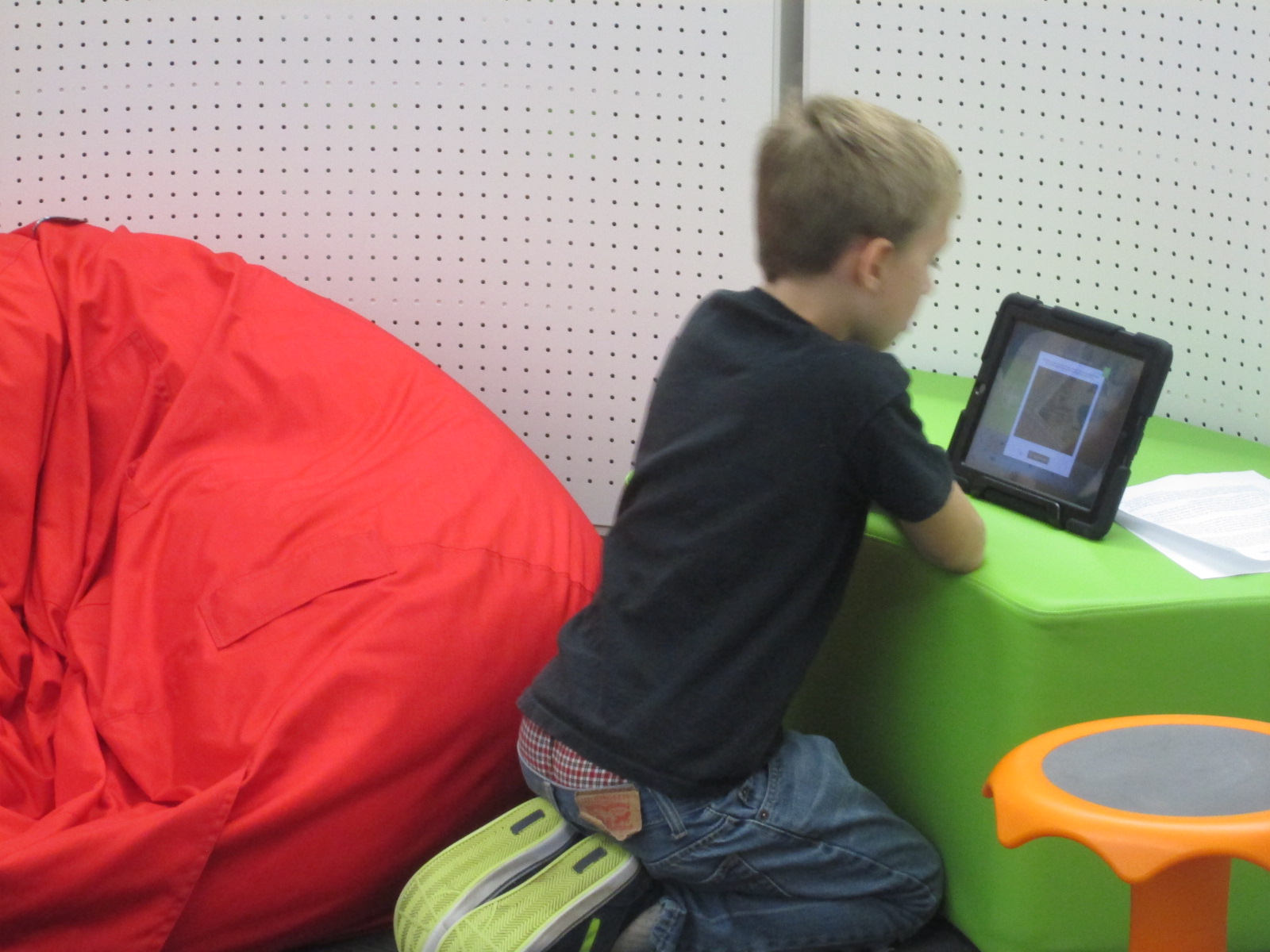
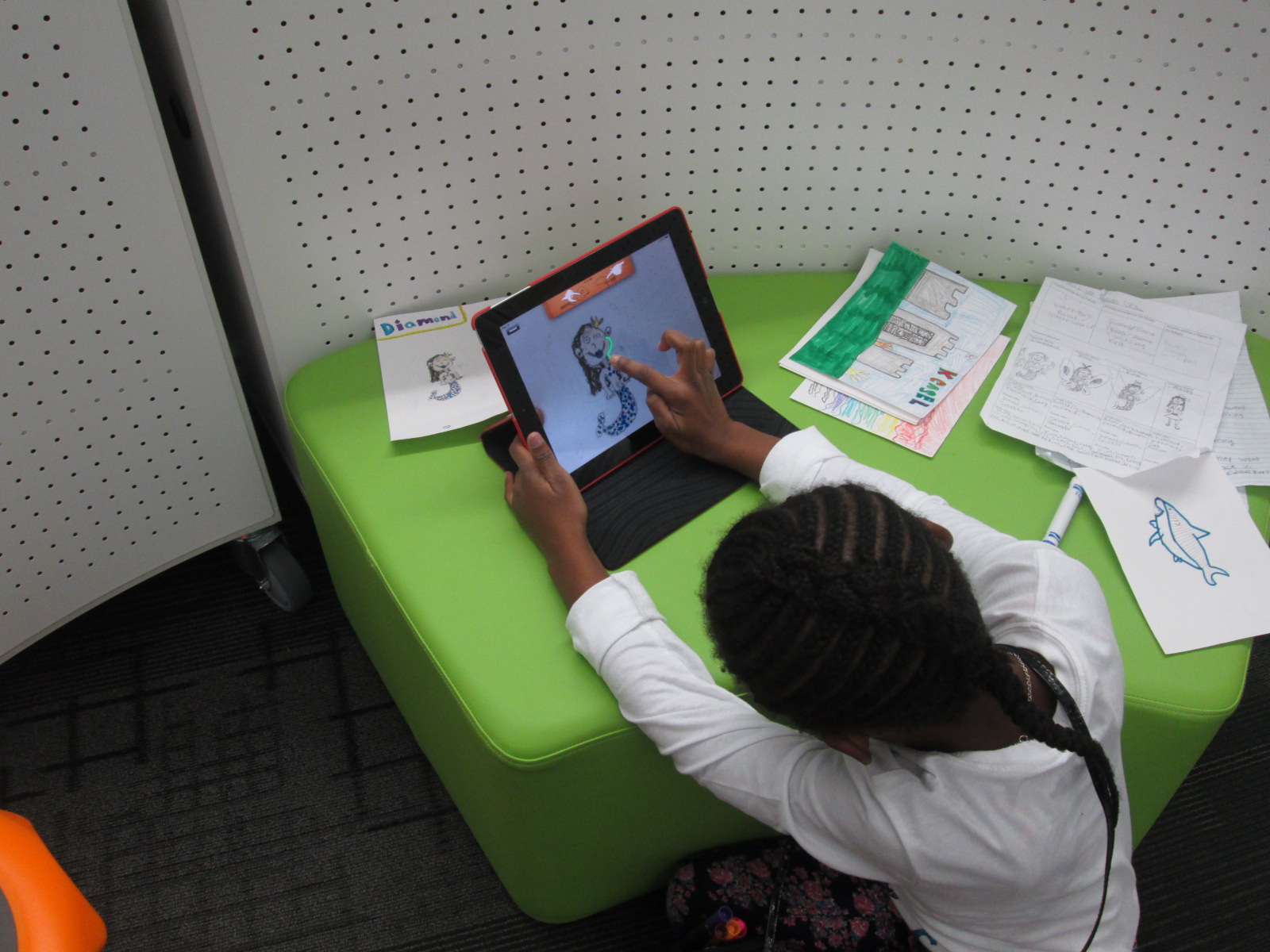
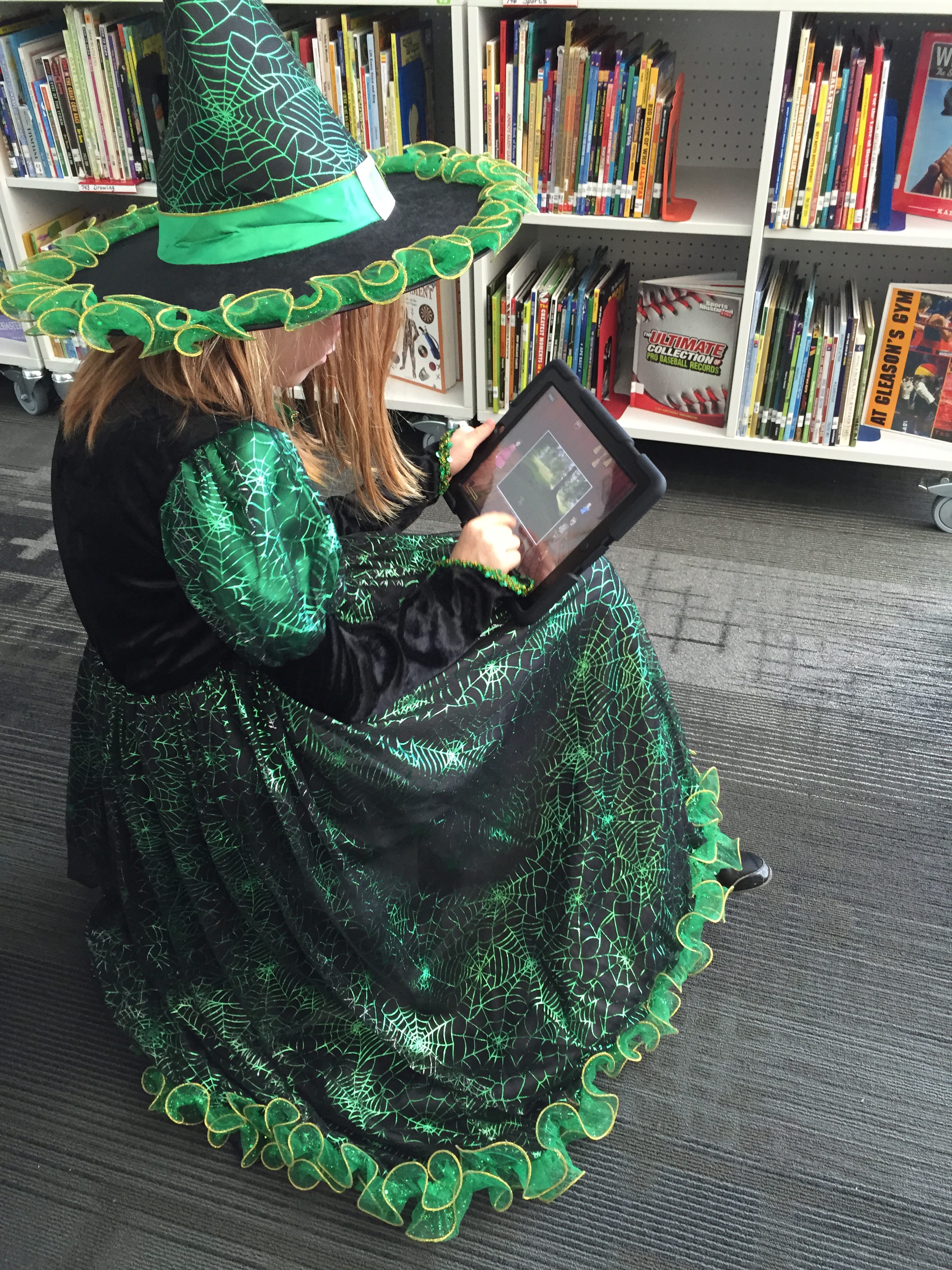
This year I read the book Ol’ Clip Clop to some classes and Precious and the Boo Hag to other classes. Then, we used the Puppet Pals app on the iPad to create our own stories.
Days like these are filled with learning opportunities, collaboration, tinkering, dreaming, and community. It is a difficult kind of event to pull off by yourself. It can be done, but I’m very thankful to have the support that I do to create days like these for our students.
Third grade has been working on an Allen Say author study. In class, they have read multiple books, compared and contrasted, and started identifying what marks a book as Allen Say’s work. In the library, we also read a book by Allen Say to fold into this class conversation, but we used the library lesson for another purpose, too: tinkering.
Our read aloud was Kamishibai Man, which tells the story of an old man who has retired from his work of traveling into the city to sell candy and tell stories. A kamishibai uses a wooden box mounted on a bicycle to display beautiful paintings which inspire oral stories. The stories are told in a series so that audience members want to come again and again. At each storytelling session, the kamishibai man would sell homemade candies which was how he made his living. During the story, we had great discussions about how technology has impacted our lives in positive and negative ways because in the story the kamishibai man has to quit his job because people would rather watch tv.
Following the story, we practiced our own way of oral storytelling using puppet stages, characters, and backdrops in an iPad app called Puppet Pals. This app allows you to select up to 8 characters and 5 scenes. You can upload your own images for the characters and scenes or choose from the library of options. Users can move their scenes and characters off stage when they are not in use. With a record button, every movement and voice is recorded as long as it takes place in front of the backdrop. Puppet Pals lets you record up to 2 minutes of audio which sets it apart from some other apps that only let you record for 30 seconds.
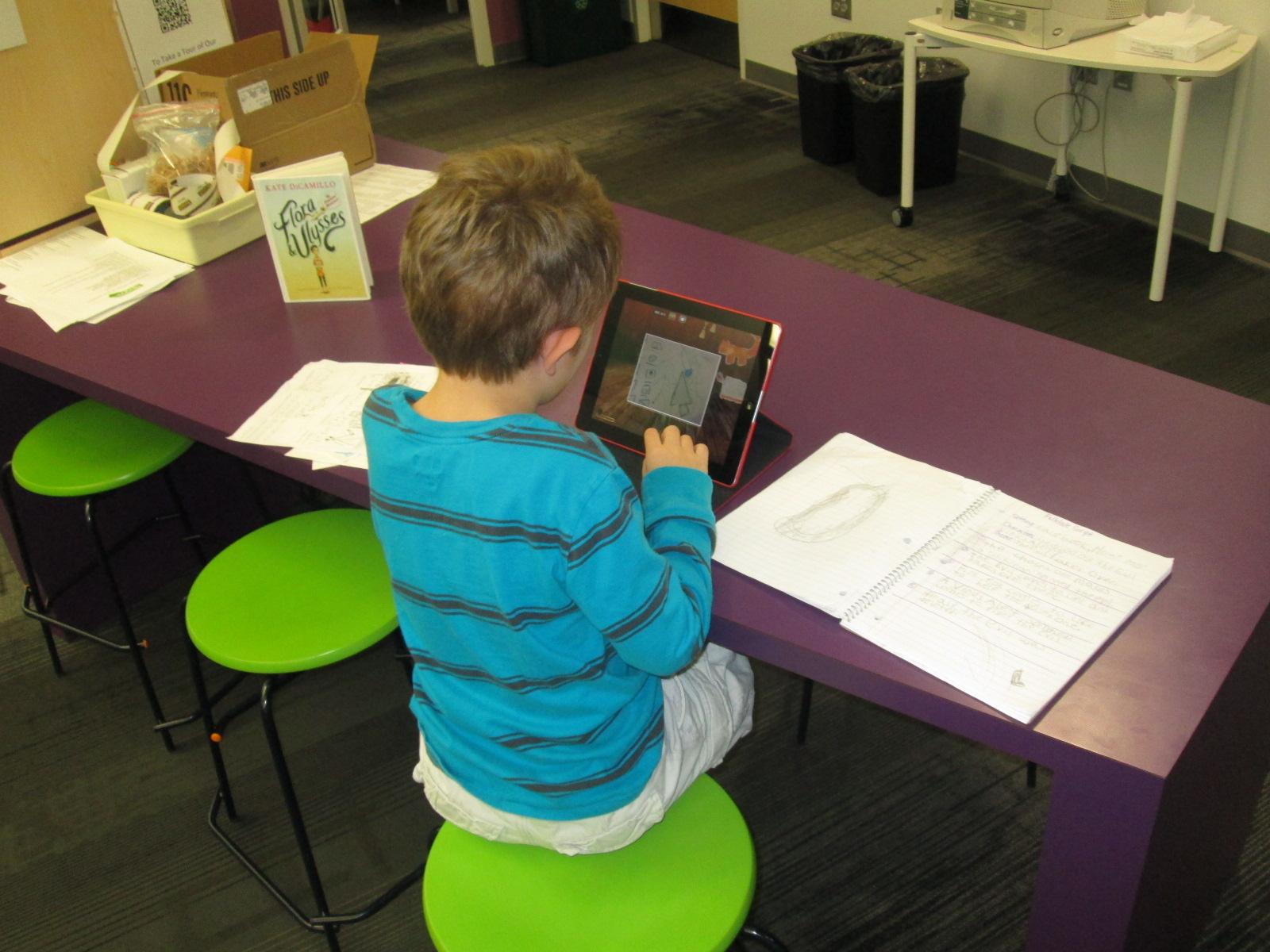
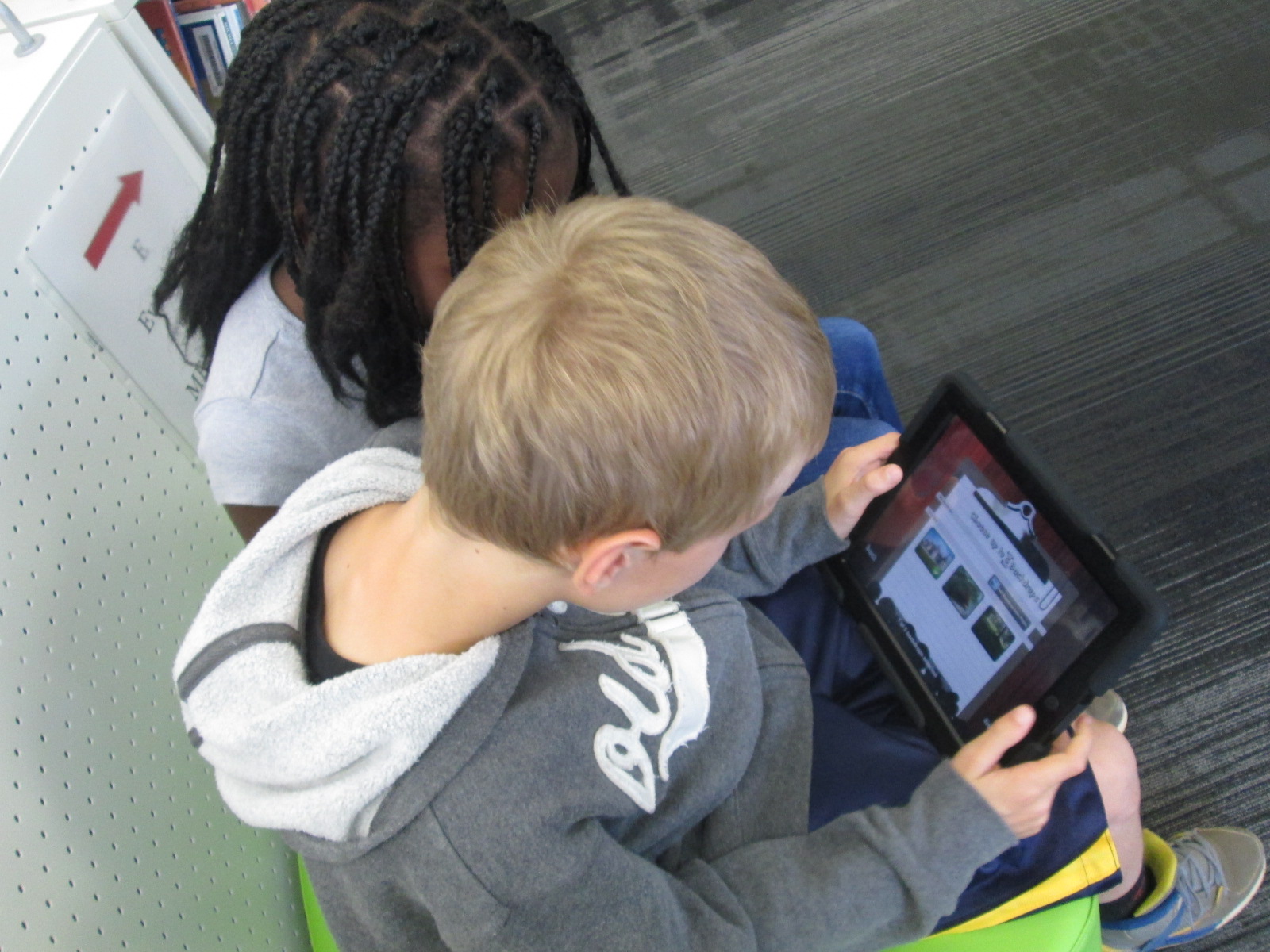
We did a quick demo on the board by having 2 students come up and make a quick story in the moment. Then, students split into groups of 2 or 3 with an iPad and spread out throughout the library. They quickly got to work figuring out how puppet pals worked. Most groups made multiple stories because they would think about something else they wanted to try once they finished one story. It was fun to step back and listen to all of the voices that students were creating for characters as well as how they were moving characters in and out of the set and making them larger and smaller on the screen. The students were trying this app without fear of failure, and they were learning so much about how the app functioned. Some of them even created some pretty decent videos in the short time that they had to tinker.
Our closing time was once of my favorite times. I asked students to think for a moment about what they might want to do if they made a longer video and had a longer time to work on it. They listed out several things that probably would have come from a teacher checklist or instructions, but the difference was that they came to the realization of why these checklist items were needed because of their tinkering. It wasn’t just something the teacher or I was asking them to do. Instead, the checklist served to improve their work and organize their product. They named things like:
Write a script for the characters.
Include instructions about when to change the backdrop
Write notes about when to shrink or enlarge a character.
Pause the recording in order to switch out characters or scenes. Put this in the script too.
Practice before recording.
and much more.
Third grade is about to launch into a study of folktales. I think Puppet Pals has great potential to be a part of this project, so I intentionally used this tool as part of our Allen Say project to have a purpose for tinkering but also to make sure that tinkering happened before we asked students to create a more polished product. Now, I feel like the stage is set for all 3rd grade classes to create a folktale Puppet Pal project if they want to. I want to think more about how tinkering opportunities can be built naturally into lessons prior to larger projects beginning. This type of model takes knowledge of the upcoming curriculum and early conversations about the kinds of collaborative projects that will be taking place each quarter. I love this new thinking that has potential for future planning with teachers and students.
September 19th is Talk Like a Pirate Day. There are so many fun pirate stories out there, and each year we seem to discover a few more thanks to the connections we make around the globe through Google Hangouts and Skype. Planning a day of connections like this definitely takes some time but students love talking with people around the globe, sharing a story, and learning a bit about one another. It always seems to reinforce the idea that we aren’t alone in our bubble of routines of day to day life. There are other people out there doing the same things that we are and quite possibly they are doing those things in different ways. I love the spontaneous conversations that take place on days like this that you could never plan through a standard or a lesson plan. Students always bring up a question or a comment that makes the day special.
This year, 8 classes came to the library for Talk Like a Pirate Day and we connected with 6 different schools in 5 different states.
We connected with Edie Crook in Gastonia North Carolina to read the book No Pirates Allowed Said Library Lou. We had a great conversation about “treasure” and students took turns stepping up to say what treasure meant to them. We were delighted with words such as being kind, family, friends, Skylanders, and baseball.
We connected with Jan Pelias through Google Hangouts in Frisco Texas to read the book How I Became a Pirate. It was fun to connect with someone in another time zone because we could talk about how time is different at the same moment around the world.
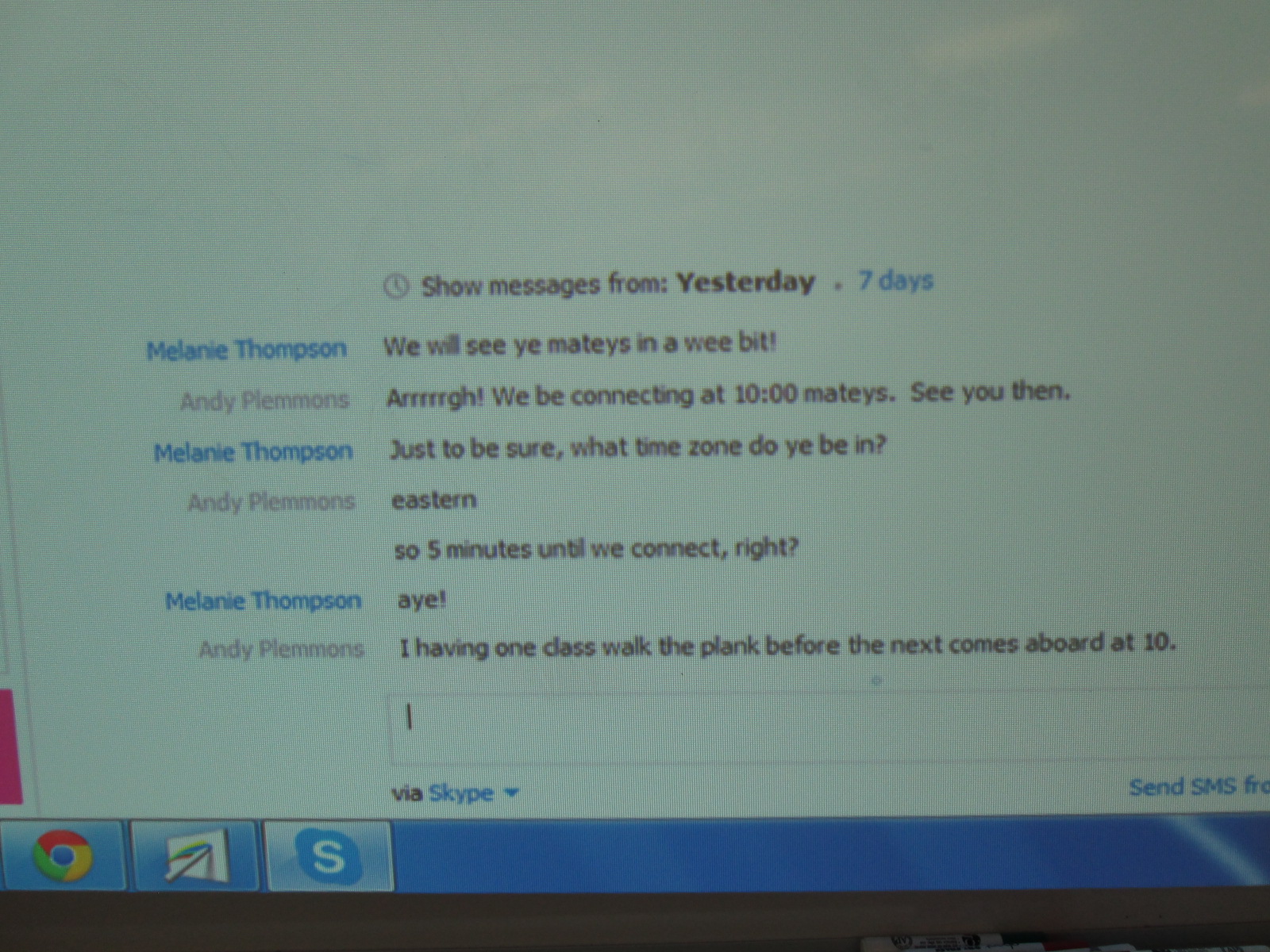
We connected with Melanie Thompson in Jefferson City, Missouri to read the book How I Became a Pirate. Melanie’s students had researched pirates and they took time to share all of their facts. This made our students very curious about pirates as well. I have a feeling all of our nonfiction pirate books will be checked out for a long time. I also love how Melanie embraced her inner pirate as we chatted with each other through Skype chat prior to our connection!
We connected with Okle Miller in Tampa, Florida to read the book No Pirates Allowed Said Library Lou. Tampa has a pirate festival called Gasparilla . Students loved hearing how pirates take over Tampa during this festival and kidnap the mayor (all for fun). The class we connected with even called themselves pirates and used the word “pirate” as an acronym for their classroom expectations and beliefs.
Both of our PreK classes came to the library for their first visit of the year. In class, they made pirate hats and hooks as well as added some pirate mustaches to their faces. We read the book Pirates Go to School and made a class video chanting the pirate chant at the end of the book.
We connected with Carol Scrimgeour in Essex Town, Vermont to read the book No Pirates Allowed Said Library Lou. We noticed that all of the kids were wearing warm clothes, so we had a great conversation about how cold it had been in the northeast. It was sunny in both places but with a very different temperature.
Finally, we connected with Shawna Ford in Texas and she read a new pirate book we had not heard before: No Bath No Cake Polly’s Pirate Party. Now the students want to get it for our library.
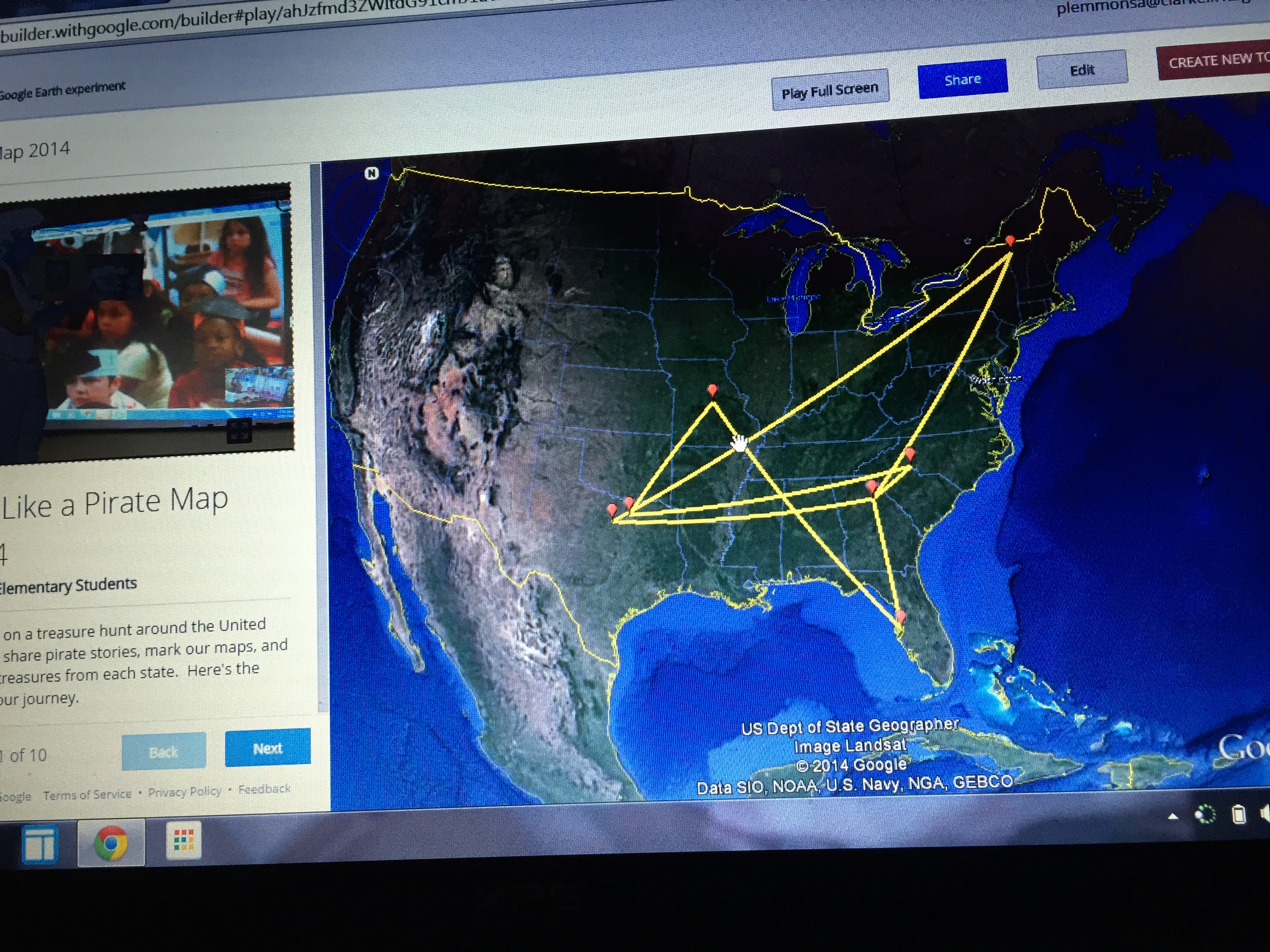
Before each connection, we looked at a map from our school to the school we were connecting with. We talked about distance, travel time, and also all of the decisions that go into choosing your route for a trip. We also created a Google tour of our trip using Google Tour Builder. After each connection, we wrote a summary together.
Finally, we spent a lot of time creating pirate sentences, phrases, and even conversations and practicing them aloud. Students had access to a list of pirate vocabulary words as well as multiple pirate stories to get ideas.
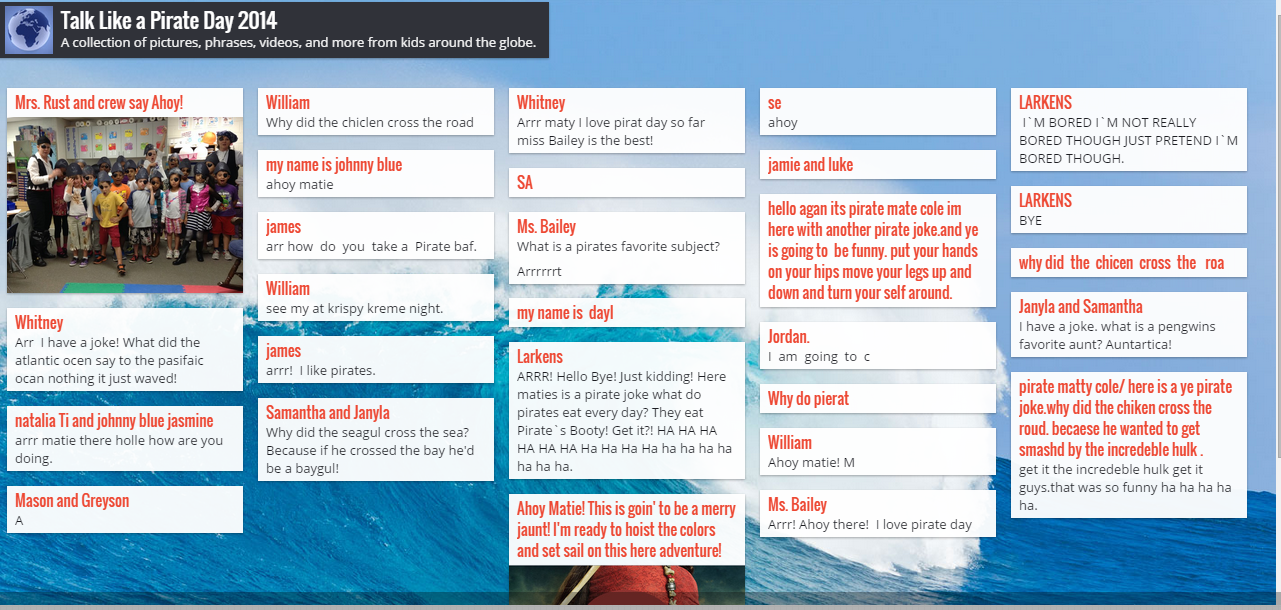
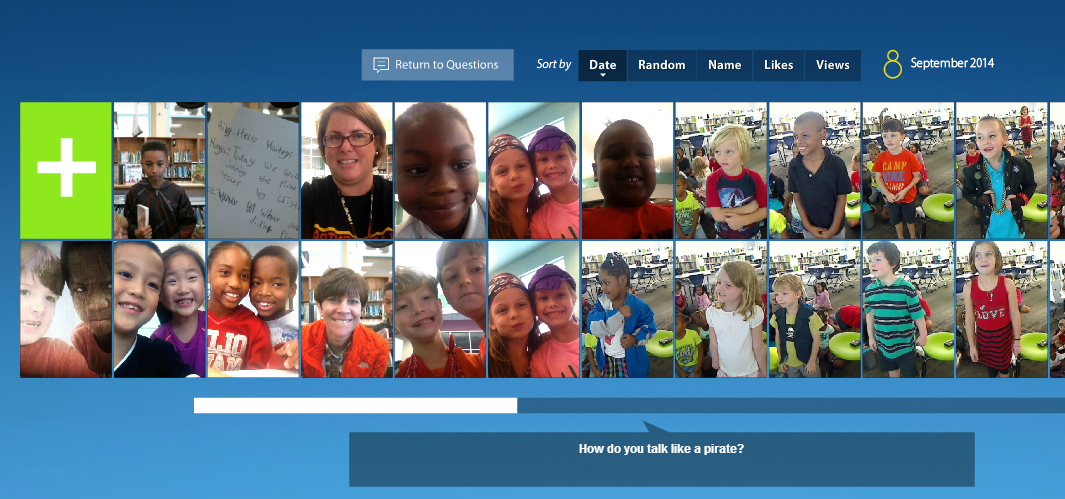
We used Flipgrid as a place to record our favorite pirate expressions. Students also had a great time trying to imitate a pirate voice and pirate faces and gestures. Take a moment to listen to them because they are quite entertaining! I loved how this evolved from a sentence writing activity into a practice of fluency, oral speaking, and performance. Again, Flipgrid became a place for us to crowdsource our voices with the voices of our connecting schools.
I love how these events connect us with new people around the world. This year we connected with some old friends, but we also met some new teachers, librarians, and students we hope to connect with again. I also want to continue to think about days like this to build long term collaborative relationships.
International Dot Day is one of our favorite days (weeks) of the year. It gives us permission to be creative and see what we can do just by making a mark. It also connects us with so many classrooms around the world. Classes are always looking to connect on this day, and we have made many collaborative relationships with schools because of this one day of the year.
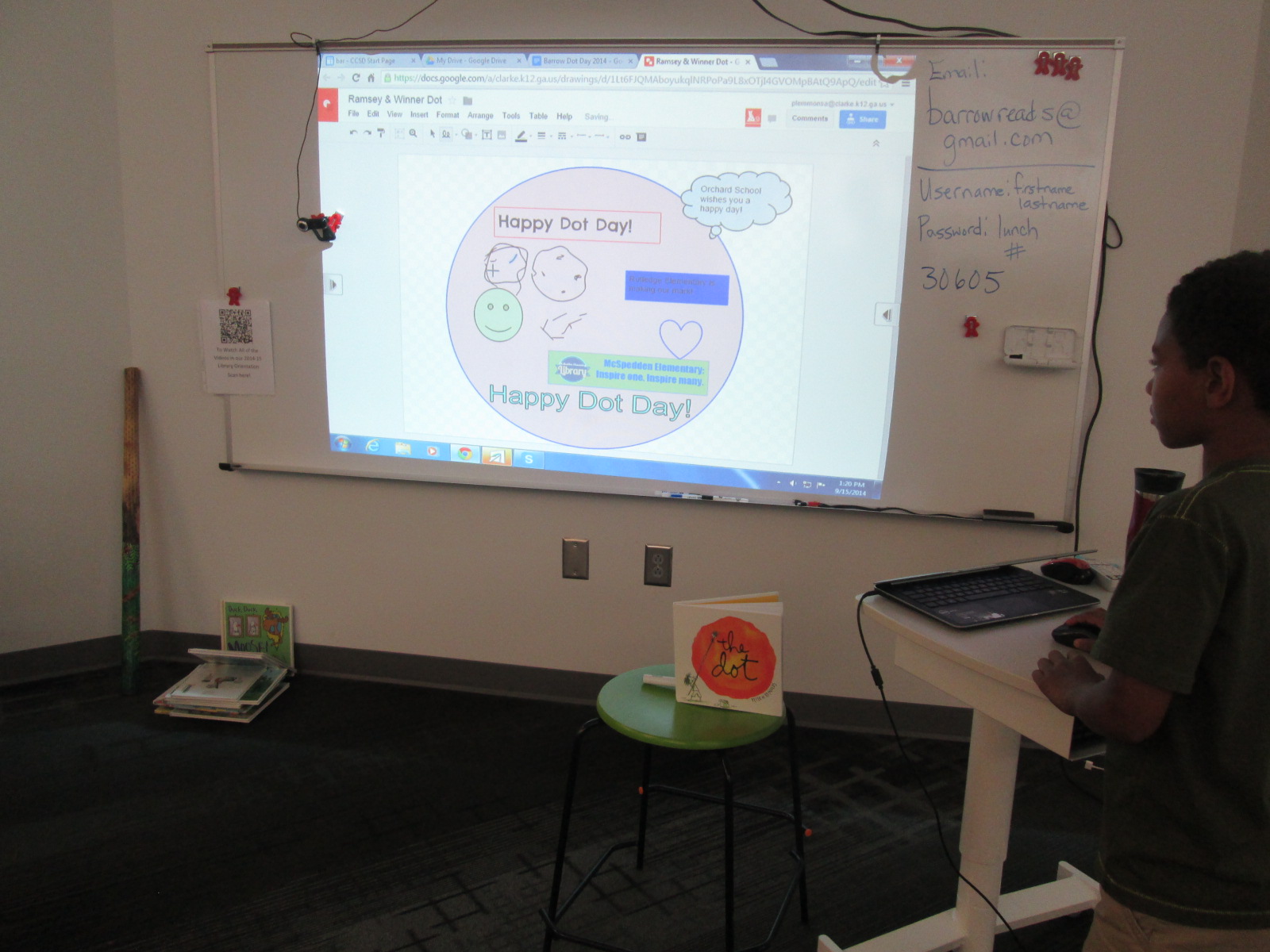
This year, we used Dot Day as a way to explore our goal of dreaming, tinkering, creating, and sharing. We explored Google Drawing, which was a new tool for most students. We used Dot Day as a time to tinker and see how Google Drawing functioned as well as how to collaborate on a drawing with another student or class.
We also used colAR mix again this year to make augmented reality dots. This year, I encouraged students to think more globally as they made their dots by embracing the them of “making your mark on the world” that is the essence of The Dot. Students were encouraged to design a dot that represented their talents, hopes, dreams, and passions. I loved this new twist on a tool that we used last year because it revealed so many stories from students. One student drew a picture of an airplane flying through the clouds because of his dream to be a pilot when he grows up. Another student drew an astronaut and UFOs because of his desire to explore space. Another drew her whole family because they are what she loves in life. Some students chose to highlight their creativity as a way that they make their mark by designing unusual dots with their favorite colors. These were empowering stories because they allowed students to have a voice to share something personal about themselves in a way that they might now have shown before.
One amazing thing that happened while students were using the colAR app was how they discovered different ways to scan their dot. It started out as what some people might see as a mistake. A student’s hand was on top of their dot while they were scanning their image, and the hand became a part of the rotating sphere on the iPad screen. This resulted in an uproar of excitement as sharing began and the idea spread like wildfire. Soon students were trying to put their faces on their spinning spheres. Others stacked towers of crayons on top of their dot and tried to see if that would scan into the 3D image. All of this happened because of an opportunity to tinker. When we give kids a space to explore, they figure out amazing things and they willingly share and teach others what they learned. They get excited about their learning and they want to do more. I bet that these students would have spent an extended period of time continuing to experiment with colAR mix to see what else they could figure out, and they would have done this without getting tired or bored. These are the things that days like Dot Day reveal.
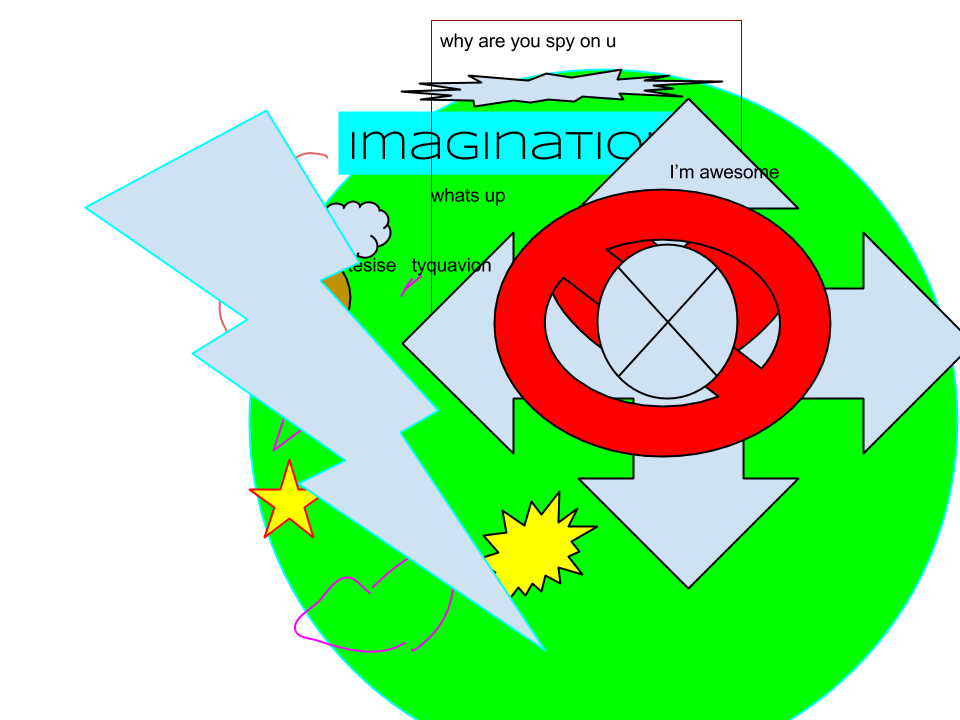
We had numerous Skype connections. Each one had its own unique twists and conversations between students and teachers. In many of these Skypes, we collaborated on a Google Drawing dots after reading the book. This included dots with our friend Okle Miller in Tampa, Edie Crook in North Carolina, and Crystal Hendrix in North Carolina (just to name a few). Sometimes this was live during a Google Hangout or Skype and other times it was after we disconnected. One of our hangouts was a large hangout between Matthew Winner in Maryland, Nancy Jo Lambert in Texas, Donna MacDonald in Vermont, and Esther Uribe in Texas. It was fun to read The Dot to students in so many states at one time, but what was even more fun was drawing with all of them at the same time! We definitely did some tinkering with this one. Many of us learned of the challenges of younger students but found ways to involved them even with computer-use difficulties. The students loved seeing drawings “magically” appear on our shared dot.
Our multi-school collaborative dot
With Jennifer Reed in Massachusetts, we accidentally deleted all of our work on our collaborative dot. The kids were in a panic, but it was a fantastic opportunity to do an impromptu lesson on the power of revision history in Google Drive. We were able to recover our work and learn an important trick. We even talked about how revision history is one way that work is never deleted, which can be a positive but also a negative if you have written something that you wished you hadn’t.
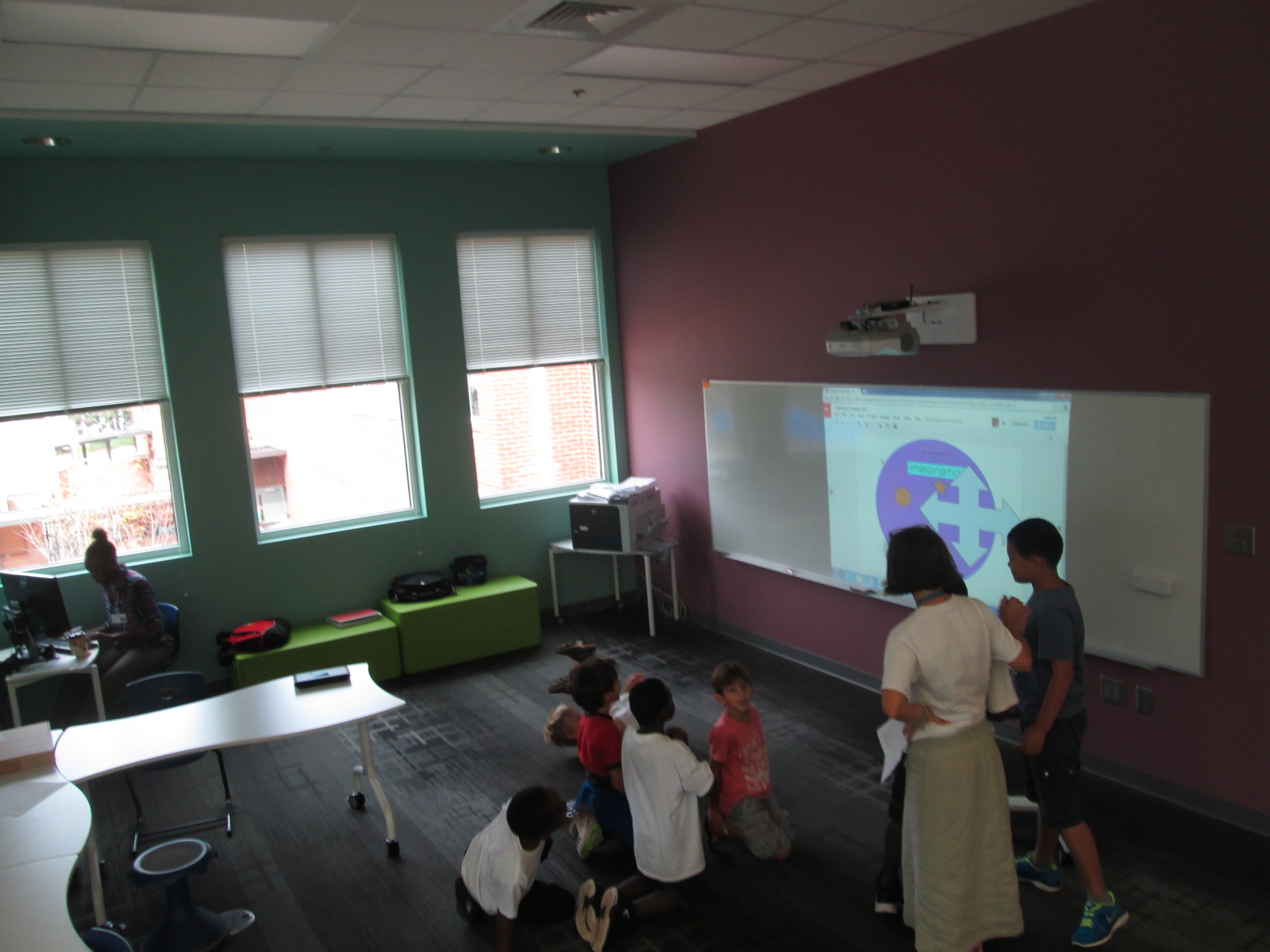
Mrs. Clarke’s class had a Skype connection, but we weren’t able to do a collaborative dot with our connecting class. Instead, we split the class in half at our 2 projection boards and they created a dot together as a class. They got just a bit competitive as they tried to cover up each other’s work, but even this was a great opportunity to talk about how to work with others on a doc without being disrespectful of the contributions.
Mrs. Clarke’s class competitive dot
Some classes that we connected with had already spent a great deal of time being creative, and they shared with us dots that they are going to physically mail to us. Jenny Lussier in Connecticut had colAR dots as well as Morse code greeting cards. We can’t wait to decode what they say! We also discovered with Jenny that there’s more than one version of The Dot floating around out there.
It has been fun to discover today that The Dot has different words depending on the version of the book you have! #dotday@peterhreynolds
Cathy Potter’s students in Maine read the book Ish to our students and shared their own illustrations for the book. We had a great conversation about the connections between both books.
Students and teachers alike love this day, but I do leave this day with a wondering. I’m thinking so much this year about global thinking and global collaboration. This day is filled with thousands of Skype and Google Hangout connections around the world. We connect. We read. We dream. We create. But then what? We leave one another until the next big event. I’m by no means being negative about Dot Day. I’m a huge advocate, but I do wonder about why we don’t build upon these connections we make. If we are really going to “make our mark” on the world, shouldn’t we be taking some actions together beyond connecting, reading, and creating? I would like to gently nudge us all to think about this. I’m just as guilty. I connect every year and then I move on, but I can’t help but carry this on my mind, reflect on it, and consider what more we might do beyond today. Think with me! Let’s keep our dots connected.








































 Expect the Miraculous