What a Media Center Looks Like

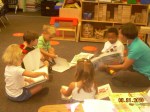
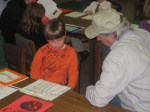
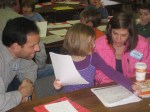
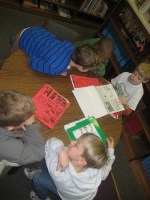
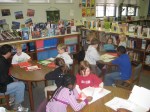
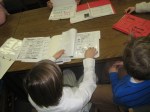
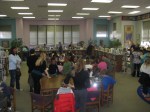
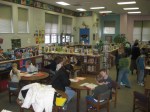
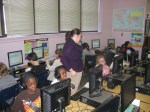
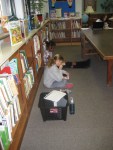
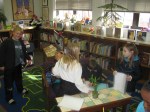
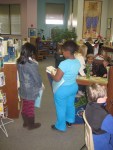
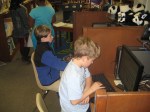
Today I offer you a glimpse into one moment in the David C. Barrow Elementary Media Center.  I found myself stopping in my tracks today and just looking around at all that was going on in a moment in time.  Here’s what I saw simultaneously:

  • A group of fourth graders with their teacher making a list of books to read in the future
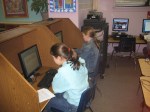
  • A group of early learners with their teacher in the computer lab using Headsprout software to practice reading
  • A group of 5th graders with their teacher at tables and the computer lab writing scenarios for future problem solving
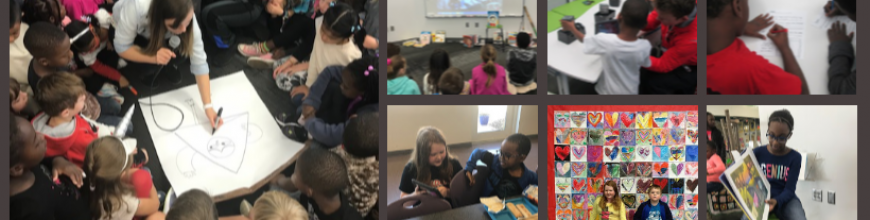
  • A class of 2nd graders presenting graphic novels they had created and sharing the process they used to create them.  Parents, teachers, and other second grade classes were hearing their presentations.
  • A group of upper grade students was working with their teacher to find resources for a project in the media center while others in the group quietly read in the floor.
  • A small group of 3rd graders sat at a table with a timer and discussed their books for battle of the books.

In all, there were more than 125 learners in the media center fully-engaged in activities.  Those are the moments that I love in the media center.  Those are the moments that show the productivity and enthusiasm for reading and learning that can happen in a school library.  I wish that legislators, school board members, and community members could have paused and observed this moment with me!

Leader Librarians: A Reflection

Today I received feedback from a survey that was given to the students who participated in leader librarians.  The students were asked:

What did you enjoy most? Almost all students in the group listed “buying books” as what they enjoyed.  They also listed things like using Animoto for the school to see what was done, ordering and unpacking books, and bringing more books into our library.

What did you learn from Leader Librarians? Students said they learned how hard it is to spend the amount of money that you have to buy books.  They learned how to use money wisely and that it’s a big process to order books for a library.  They learned how to be a “good librarian”.

If you could change something or do something differently, what would it be? They wished that they could have bought more books and checked more of the books out to read before other students got to read them.  They also wished that more people could have come to the enrichment fair to see what they accomplished across our 9 weeks together.  Most of all, they said they really wouldn’t change anything.

It was such a treat to hear what these 12 students had to say about being a part of the budgeting decisions in the library.  We ran out of time to sit together and reflect on what we had accomplished, so I was thankful that our enrichment cluster coordinator found time to collect data from all students in the school about their clusters.  Hearing these students’ voices confirmed for me the importance of giving students the opportunity to be a part of decision-making in the library.

Leader Librarians in Action

Today the Leader Librarians’ 108 books went into circulation.  These students spent the last 8 weeks finding out what books students at our school are interested in reading.  They divided their budget among the categories they discovered and met with vendors to look at possible books for selection.  Last night, the students presented their books at our school enrichment fair.  By the end of today, only 24 books were left on the shelves.  Kids came in all day asking if they could check out the books and they raced one another to the display to make their selections!  Here’s a video of the Leader Librarians talking about their work.

September GLMA Post

Read my post this month on the GLMA blog about collaborative centers.

Collaboration Carousel

Barrow Oral History Project: A Student Perspective

Barrow Oral History Project: A Student Perspective.

A student from last year’s oral history project shares his thoughts on the project.

What does it mean to read?

I recently got an email from one of our preK teachers, Ms. Kelly, asking if I would join her class during small group time for a library lesson.  She sensed that some of her students were feeling frustrated with reading books because they couldn’t read the words on the page.  Like many teachers, she wanted to model doing a “picture walk” for her students so that they could read the story from the pictures.  I happily agreed and the two of us did some ping pong collaboration via email where we batted our ideas back and forth until we had a plan.

Ms. Kelly’s observations made me start thinking about the many ways that we read, and I decided to open our lesson with these thoughts.  We started by learning about oral traditions and how people tell stories aloud and others read the story by listening to the storyteller.   We talked about reading the words in a book.  We also looked at a book called The Black Book of Colors and thought about how someone who is blind might read a story by feeling the pages of a Braille book.  We could have kept going and talked about e-readers and smart phones and more, but I left the ideas at that.  I wanted students to know that there wasn’t just one way to read a story.

With this seed of reading planted in the students’ minds, they selected a book from a selection of books in my cart around the theme of families, which was the topic Ms. Kelly is focusing on right now with her students.  They checked out with me at my laptop and returned to the floor.

Next was one of my favorite kinds of collaboration where each adult in the room takes a group of students and works with them in their own style using the same topic.  Ms. Kelly, Ms. Clarke (the parapro), a parent volunteer, and myself each took a small group of students.  Each of us shared picture walking in our own style.  In my group, we used the book Chalk, a wordless picture book, and practiced reading the pictures very slowly until we gleaned every detail we could before turning the page.  My hope was that students would notice this slow way of looking at the picture and replicate it in their own reading.  I quickly learned that they did notice the slowness, but many still flew through the pages without pausing to “read” what was there.  Next I worked with each student to picture walk slowly through a few pages of his or her book.
Ms. Kelly invited us all back to the floor and each group shared something that they noticed or learned about how to picture walk.  It was so much fun to support our youngest learners in the school with a strategy for reading.  It was also fun to get out of the library and interact with students in their own classroom environment.  Finally, it was such a treat to work with three other adults with different ideas and expertise.  I look forward to many other experiences where adults bring their expertise to support a classroom of students.  Thank you Ms. Kelly for this great idea and finding such wonderful adult support for your students.

Library on Wheels

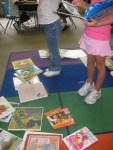
Each year, just as I get the library up and running, classes in the routine of coming to the library for lessons & checkout, and kids excited about books, the library has to “close” for two weeks. For two weeks, our students are involved in Scantron testing. This testing provides valuable information to teachers about student strengths and weaknesses as they begin the year, but testing takes place in the media center. During testing, we are only open for checkout before school and from 2-2:30 at the end of the day. It always saddens me to see kids unable to come checkout books, so this year, I’m taking the library to them. Today I filled my rolling cart with books, got my laptop and scanner, and set off to classrooms. I did an impromptu lesson using the book My Librarian is a Camel and showed how children around the world get their library books in many unique ways. Then, I spread the books out on the floor.  Students looked at the books and decided if they wanted to keep their current library books or if they wanted to exchange for a new one.  The kids were so excited, and they didn’t even seem to mind the limited selection of books that I had to offer. Since today was a success, I think my next step is to see if there are genres of books that teachers would like me to focus on in my cart when I visit their room. My time to visit classrooms is limited because I have to help with the Scantron testing, but I was overjoyed to see books leaving our library and getting into student hands. It was a mini access enabler project, and what fun it was!

Barrow Media Center 2009-2010 Year in Review

Barrow Media Center 2009-2010 Year in Review.

A few thoughts from Charlotte…

My mind is overflowing with new ideas for our media center.  I’m at the AASL Conference in Charlotte, NC, and I’m in awe at the creativity & knowledge of my librarian colleagues from across the country.  I’m also overwhelmed by the support that authors are giving to librarians and their role in creating sanctuaries for kids to come and access information and stories.  Tonight, I heard Laurie Halse Anderson talk about censorship and how censorship is an evil brew made up of power, fear, and frustration.  She continued by naming library budget cuts and cuts of library positions as a form of censorship.

Laurie Halse Anderson was not the only author who spoke of the importance of school librarians.  James Patterson began the day by praising the work that librarians do to open doors for young readers.  He stressed the importance of helping children have positive experiences with books.  Kids should have access to the books that they want to read.  Once they find a love of books, other books that adults want them to read can be sprinkled into the mix.  I want to highlight James Patterson’s website Read Kiddo Read because it is a wonderful resource for finding new books to read whether you’re a student, a parent, a teacher, a friend, or a family member.  Mr. Patterson includes many categories of books, including a section on supporting reluctant boy readers.  Please check out his site and see what you find.

I invite you to include any thoughts in the comments section of this post about:  censorship, librarians, how you find your own books to read, or resources you have to share.

read kiddo read