Sharing Our Math Strategies Using Educreations

math tutorials (3)

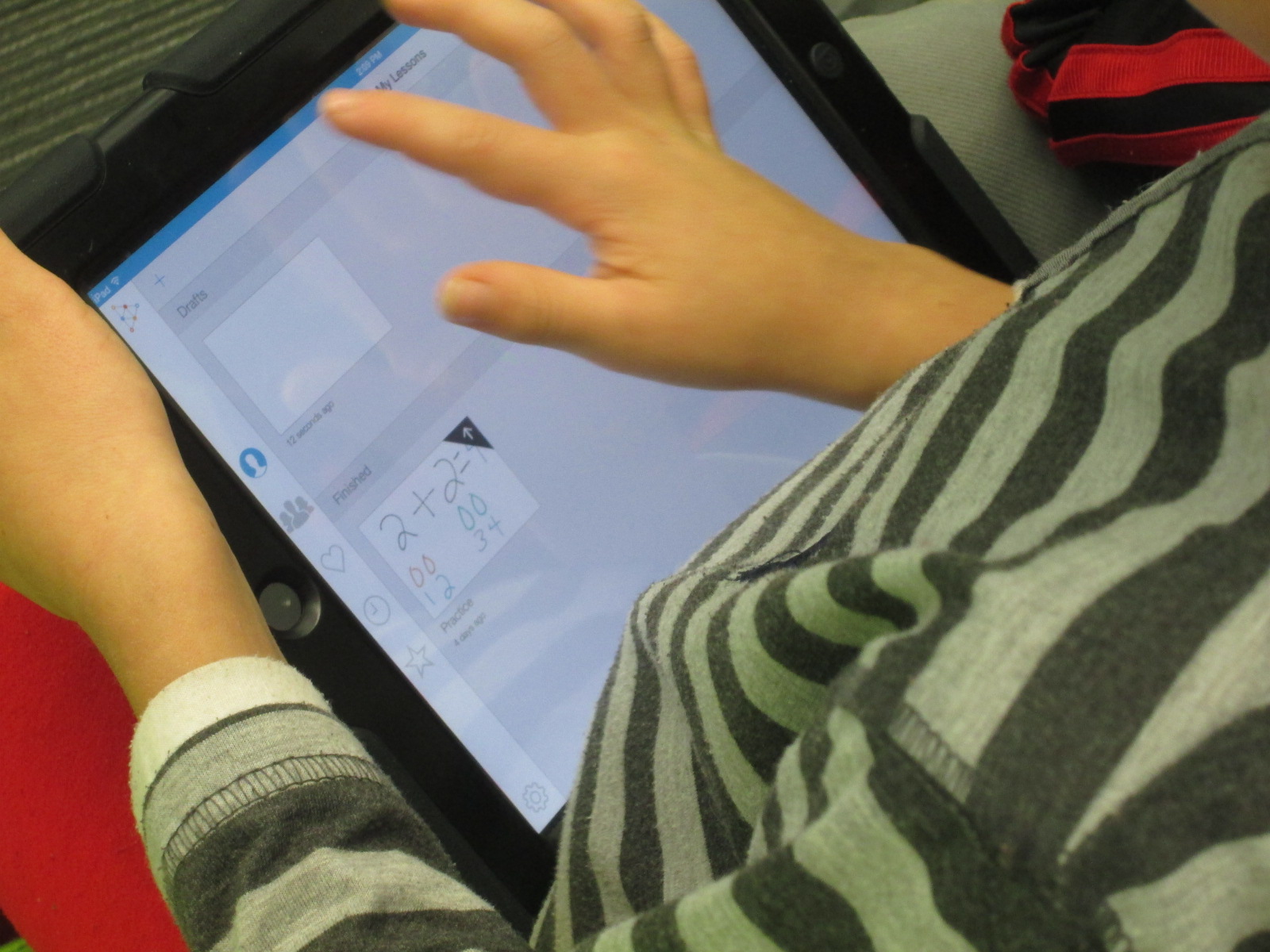
Second grade has spent some time tinkering with Educreations.  Educreations is a screencasting tool for iPad as well as a limited web-based program for computers.  Teachers can create an account and then have students join their class similar to Edmodo or Google Classroom.  As students login and save their work, the teacher can easily see each student’s work in the admin panel.  With Educreations, students can create a screencast about pretty  much anything.  They can draw or type, upload their own photographs as backgrounds, and search for existing photos for backgrounds.  Each movement on the screen as well as the audio is recorded and saved as a flash video.  Each video has a link to make it easy to share a student’s work online with the world.
math tutorials (15)

Math is not one of the main areas that develops into collaborative projects in the library.  I think we naturally gravitate to reading, language arts, science, and social studies.  However, I would love to support math in the library!  This year we made one of our school improvement plan goals centered on something that could potentially be a project for the library.

Students will utilize personal learning devices to create math instructional videos that demonstrate ways to solve math problems. These will be shared within and outside the school community.

A few teachers have been exploring this, but the 2nd grade team decided to take this on as a grade level project.  After tinkering with the app in the library, I asked teachers to setup a class account and have students join their class.  To help them, I made a screencast:

When students arrived for the 2nd lesson in the library, we quickly reviewed the many buttons in Educreations.  The students did all of this review based on the tinkering that they did in lesson one.  I reminded them that this 2nd work time was not about tinkering.  It was about focusing on using Educreations to show our mathematical thinking.  I reminded students that this would be very different than just solving a problem on a piece of paper or a computer.  Showing our thinking means that we have to talk about what is going on inside our heads.  During our mini lesson, I created a quick example to show them what I mean by sharing what is in our heads.
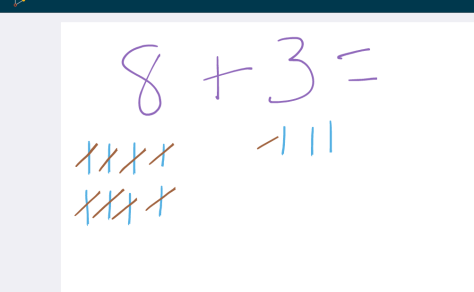
educreations example


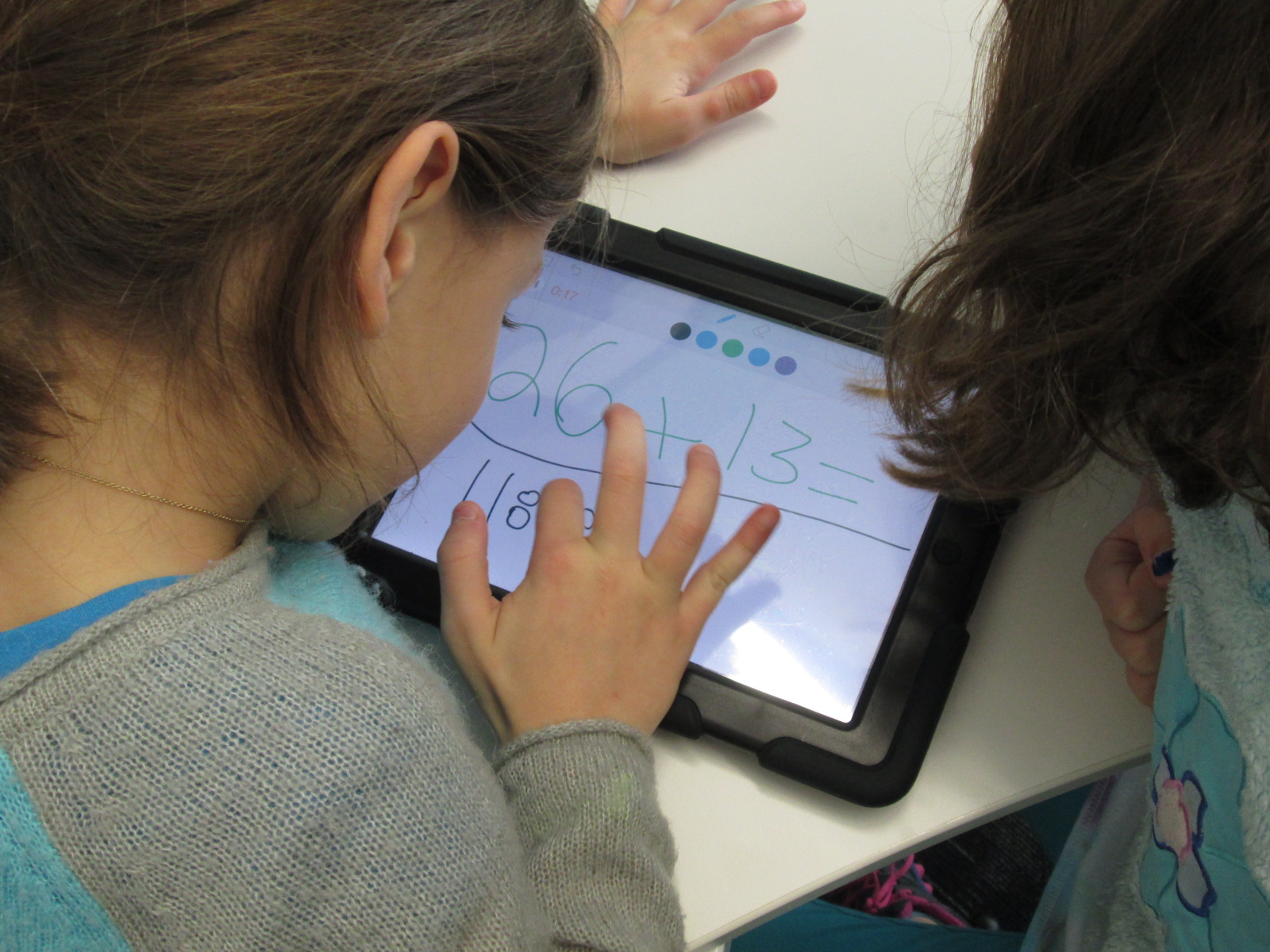
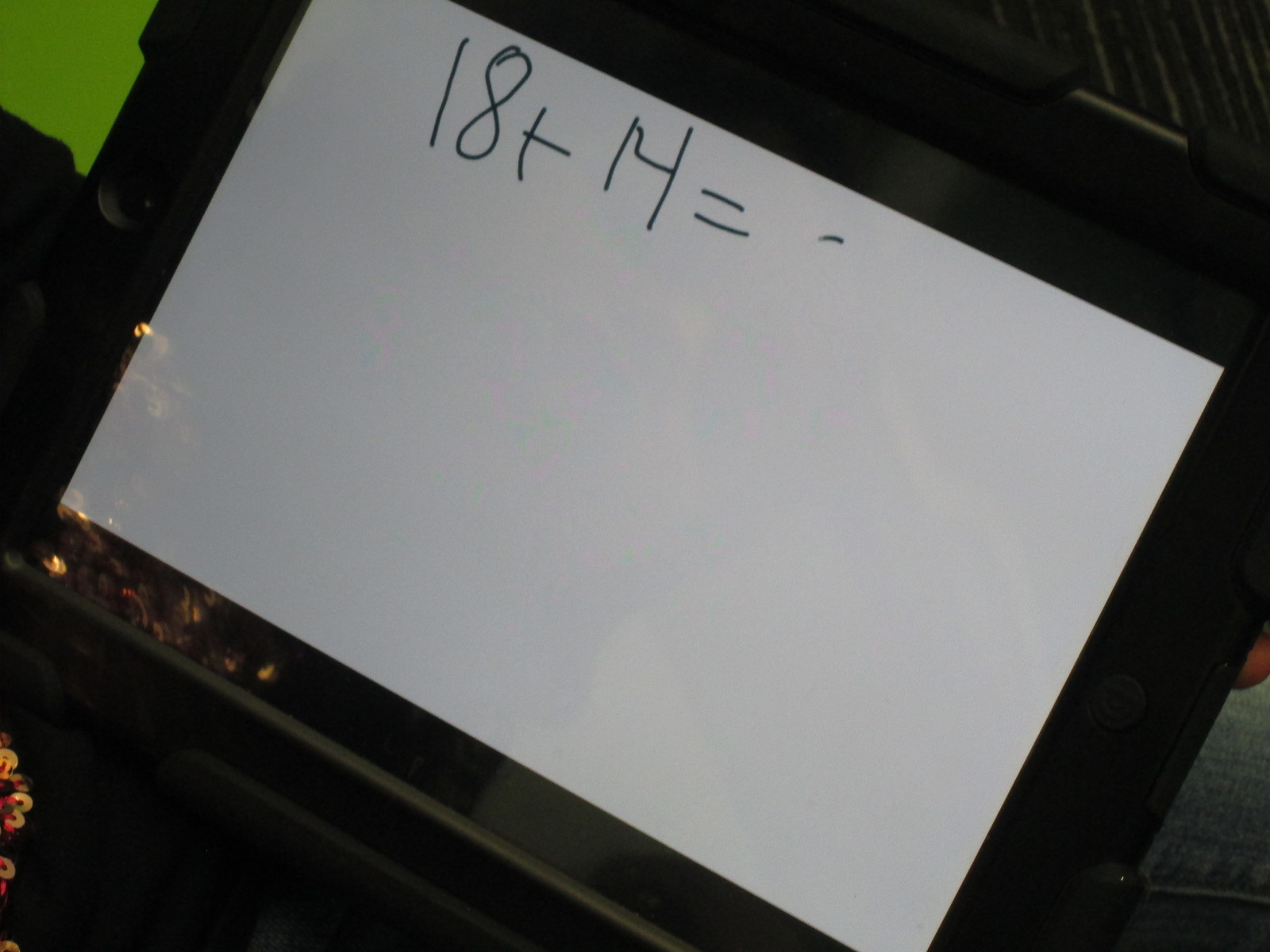
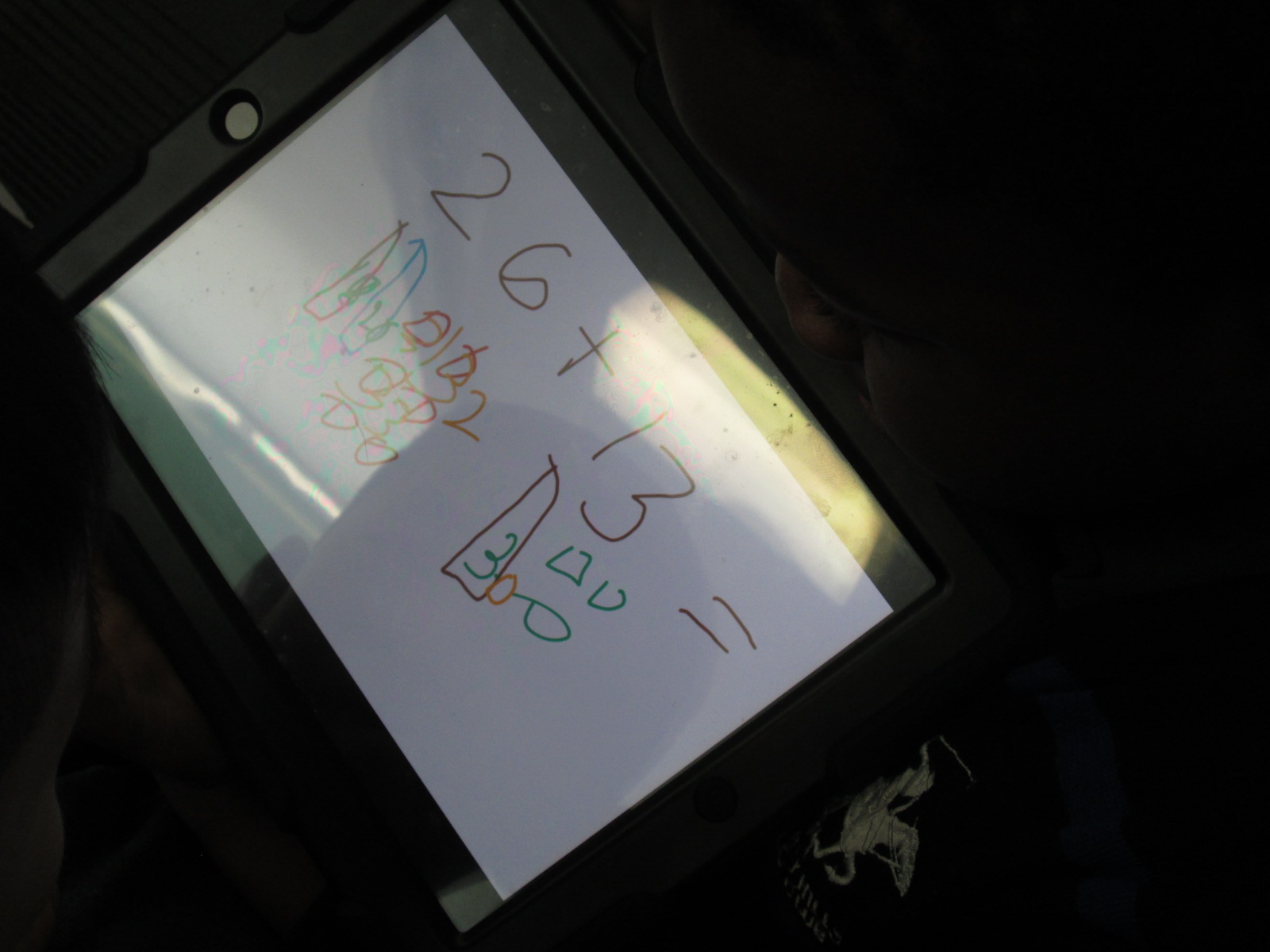
The teachers and I gave students 3 math problems to choose from for their first practice tutorial:  14 + 18, 26 + 13, and 57 + 39.  I did this lesson with 2 classes at a time, so we paired students together on an iPad.  One partner wrote one of the math problems down, created a tutorial, logged in to his/her account to save, and then logged out.  The other partner was there for technical support.  Then, the students switched roles.  They did this back and forth until time ran out.
math tutorials (14) math tutorials (13)

The main problem we ran into was when students would forget to logout of their account.  The next student would record a video and then it would save that video into the other students account.  When you press logout, the videos disappear from the iPad because they save into the individual student account.  This became a great piece of learning that I built into lessons with other classes.  I think it will just take some practice to remember these specific steps of saving.  Also, if there are existing Educreations videos on the iPad when a student opens the app, those should be deleted before the student logs in.  Otherwise, those practice videos get saved into the student’s account.  It’s not a big deal, but it does cause their account to be a bit messy and it takes up storage.

Students were very productive and focused during the recording of the tutorials.  There was almost no questions about how to use Educreations.  I was able to see a big benefit from taking time to tinker in the first lesson, and it is something that I want to continue to experiment with.

Now, teachers are reserving iPads to use in their classrooms so that students can continue to create math tutorials.  I sent a follow up email to teachers to let them know that I am happy to work with small groups, individual students, or even the whole class again if needed.  Some of the teachers want to schedule another series of lessons using word problems instead of basic addition problems.  When we do this, we will use the camera to take a picture of the word problem and make it the background.



Riley's math problem I Educreations_ - https___www.educreations.com_lesson_

Check out how Riley solved 57 + 39.

Our Student Book Budget Order from Capstone Has Arrived!

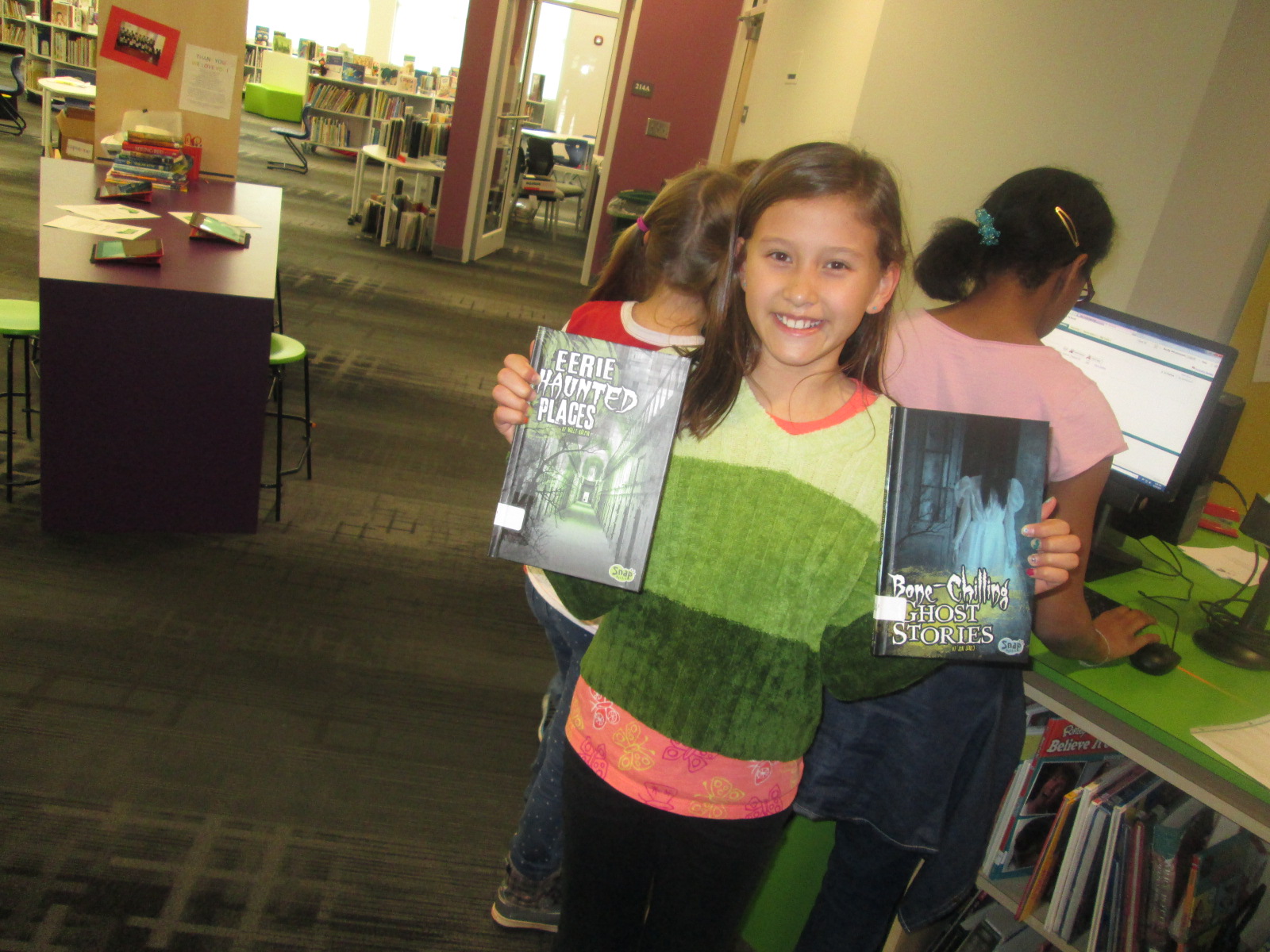
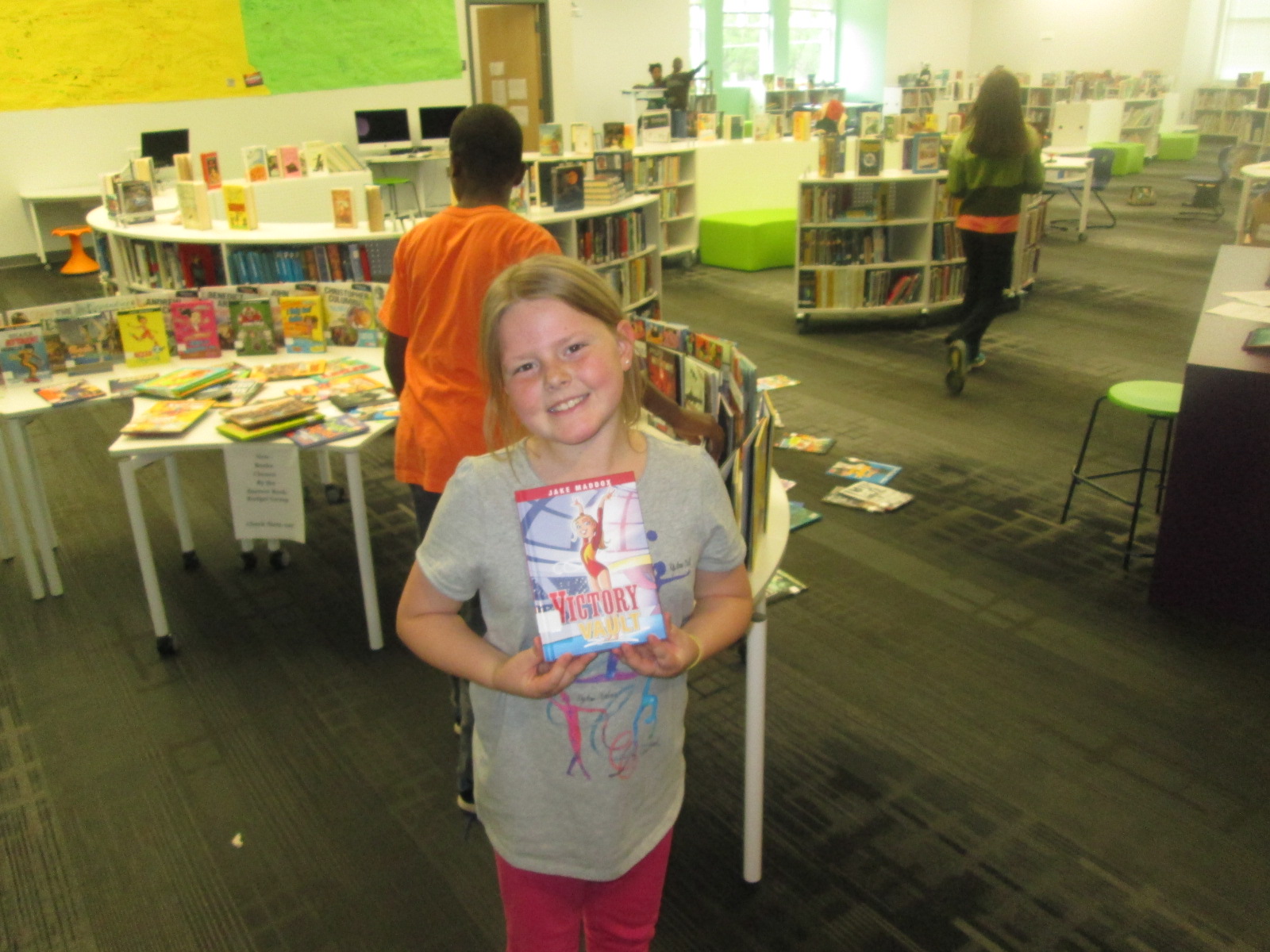
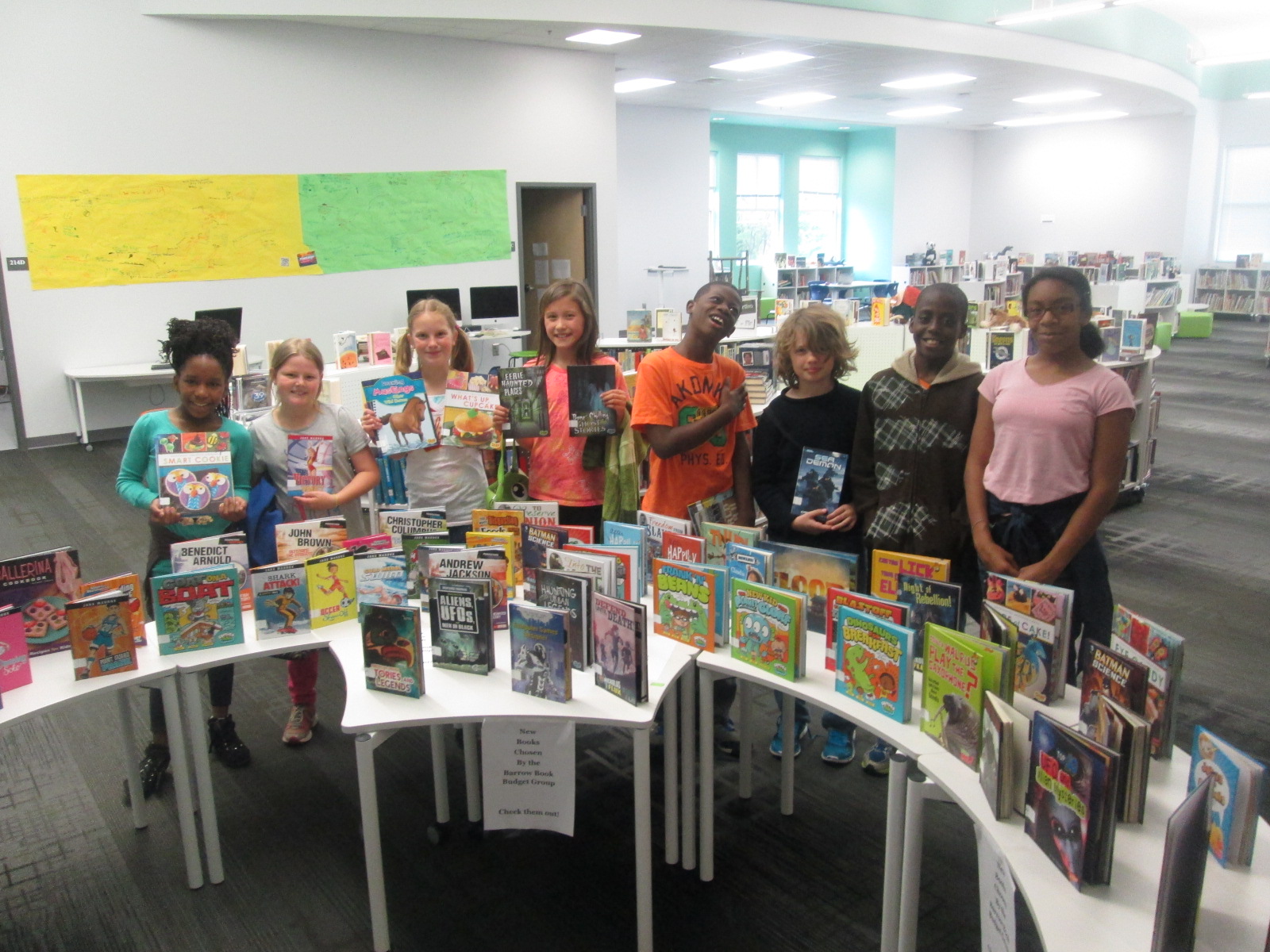
IMG_3014Each year when students participate in the student book budget group, the most exciting day for them is the day that we unpack the boxes when they arrive.  It’s the day that all of their hard work and tough decisions pays off.  After surveying almost the entire school, setting goals, meeting with vendors, creating wish lists, cutting books from the lists to fit the budget, and placing the order, the students finally get to hold books  in their hands.

Today our order from Capstone came.  We love buying books from Capstone each year for many reasons.  One reason is that their books are popular with our students.  We also love their customer service.  Our sales representative, Jim Boon, always comes in and helps students with the book selection process.  We also love how Capstone stretches our budget.  This year’s order from Capstone was $1750, and with Capstone’s current promotion, we earned an additional $525 in books.  When we were unpacking the order today, a student said, “Capstone Rewards sure does help us get a lot of extra books.”  I love that this project really pushes students each year to think about fiscal responsibility and how to stretch a dollar.

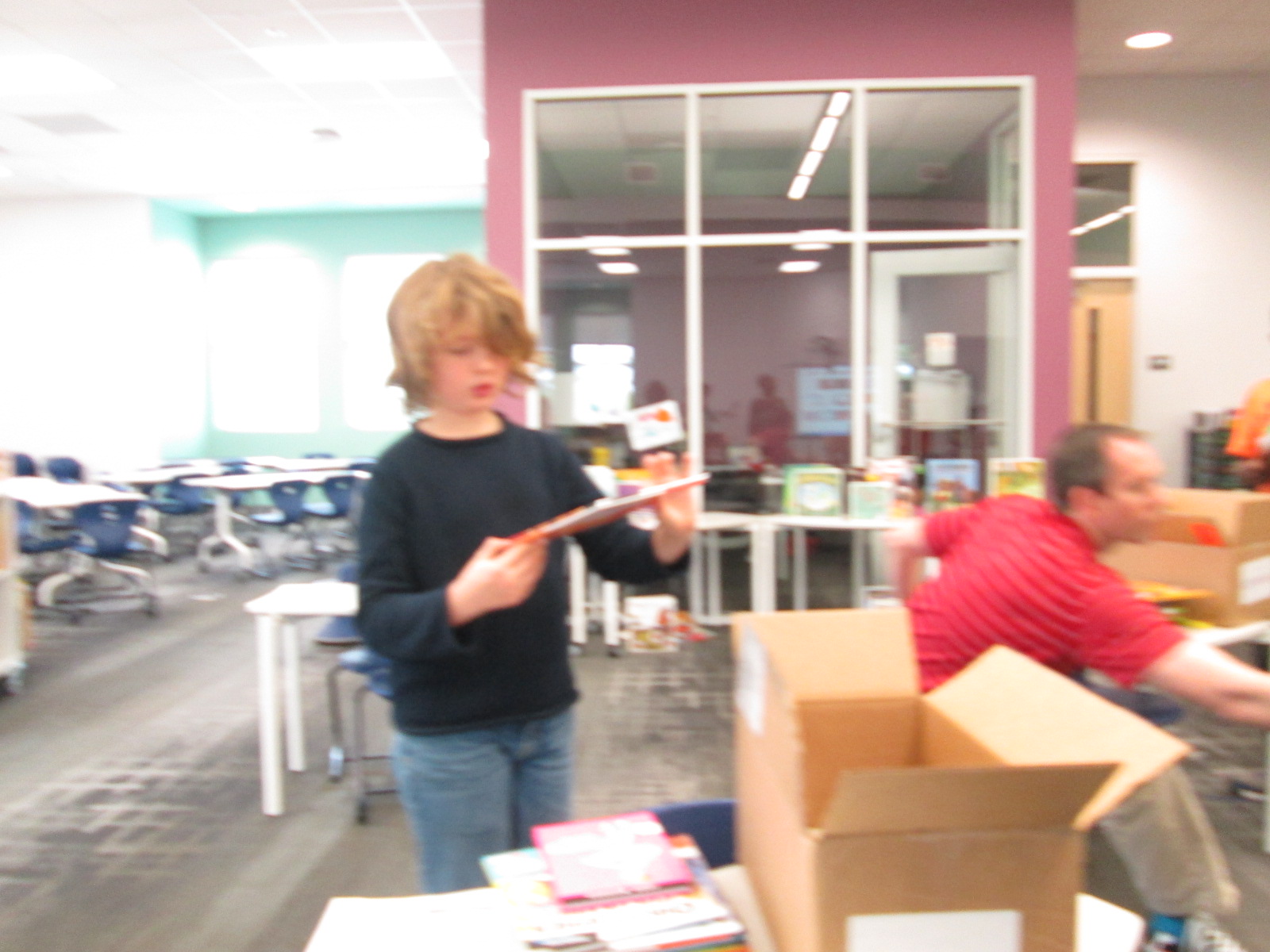
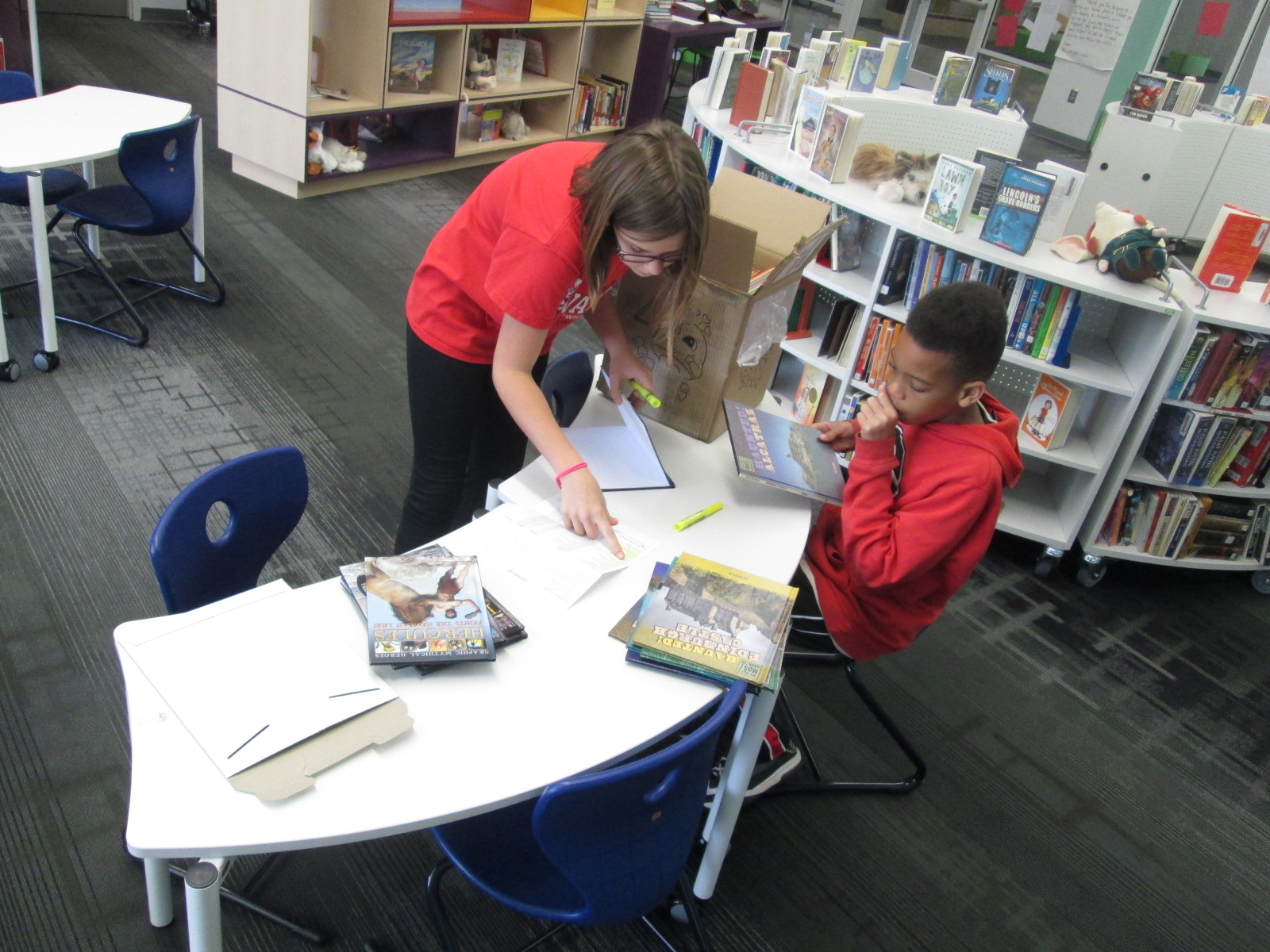
Just like every other step of the way, the students are involved in every step of unpacking the books.  We basically form an assembly line.

Some students pull books out of the boxes and inspect them for any damage.  There’s usually not any, but we always check.

IMG_2951

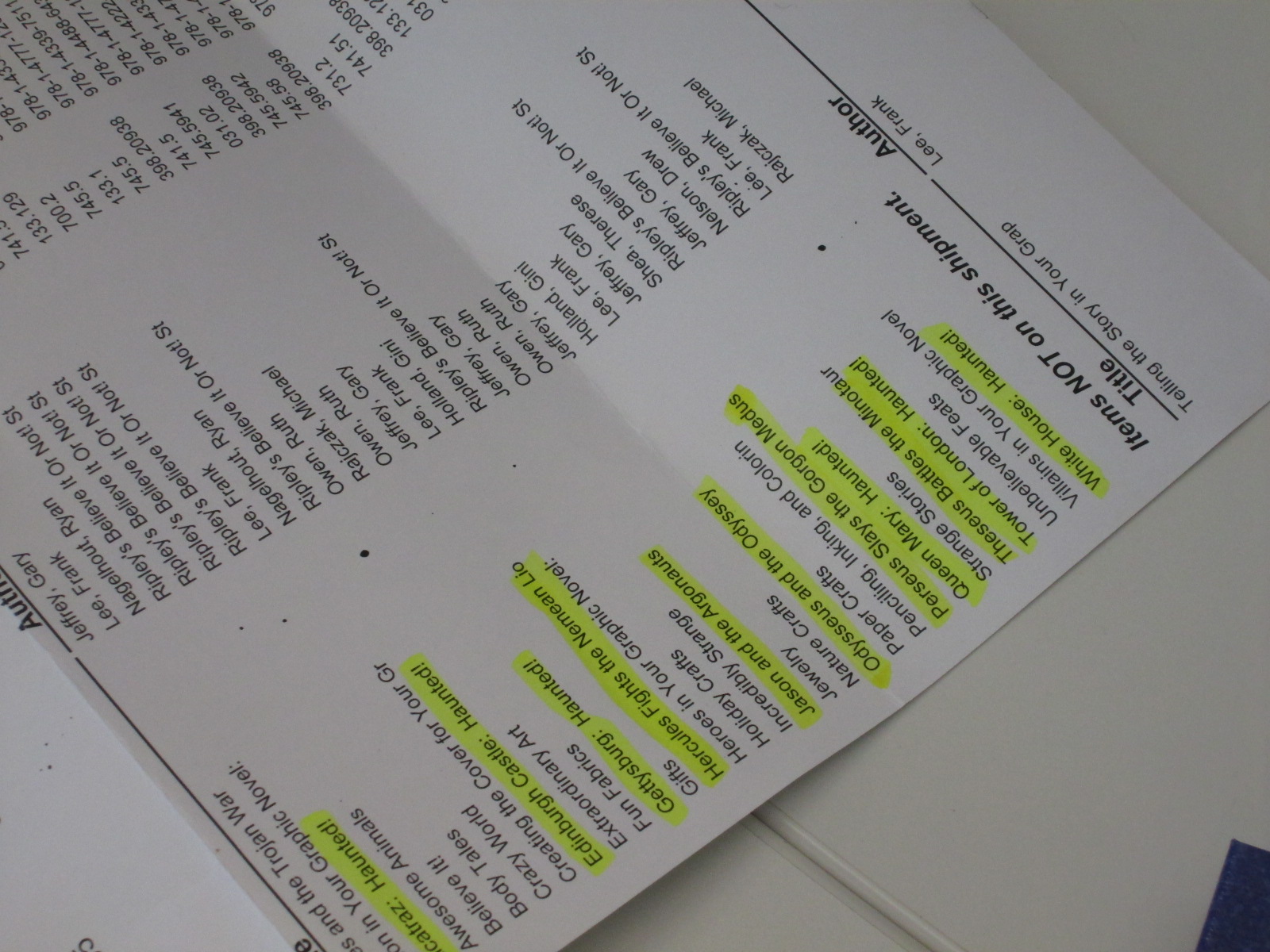
Another student takes these books and highlights each one on the packing slip to make sure they are all accounted for.  Today, I helped with the highlighting process because there were so many books to take through the entire process in only 45 minutes.

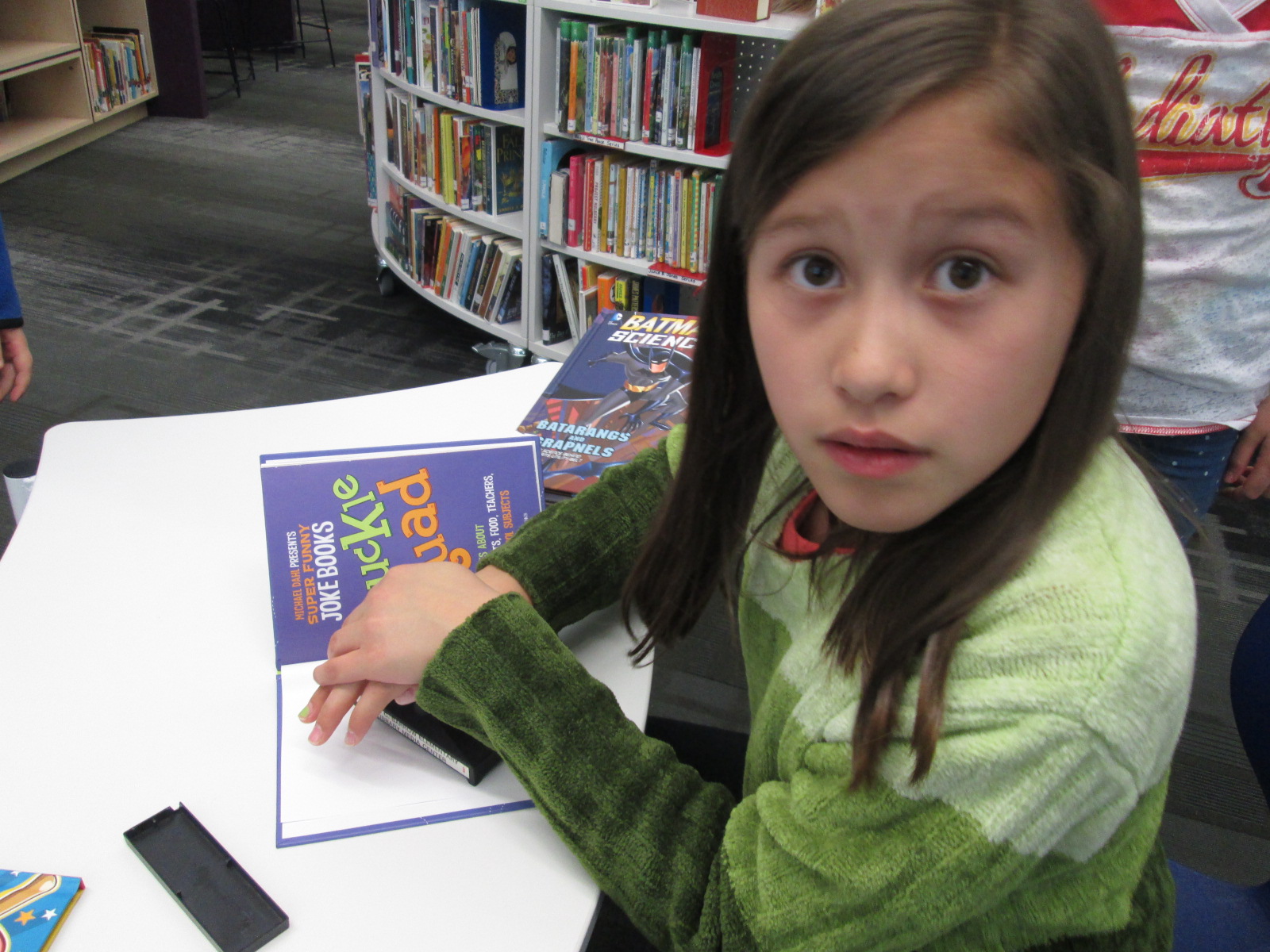
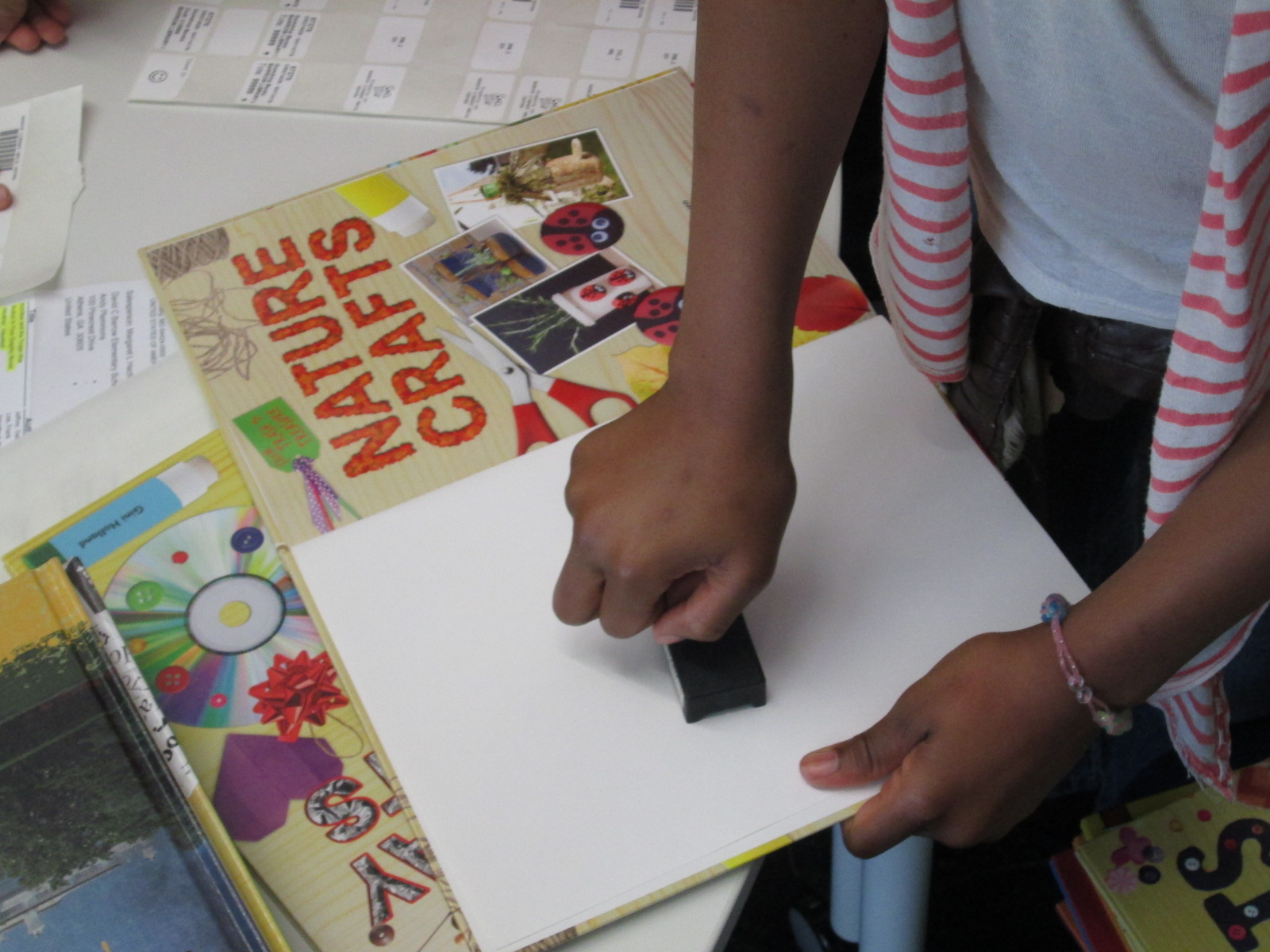
These books then go to a student who stamps them with our library stamp.

IMG_2938

From there, a group of students takes pictures of the covers to put into an Animoto to show on our morning broadcast.

IMG_2942 IMG_2949

When all pictures are taken, the pictures are uploaded to Animoto by another group of students.

IMG_3009

https://www.youtube.com/watch?v=DJwRefE1YjA

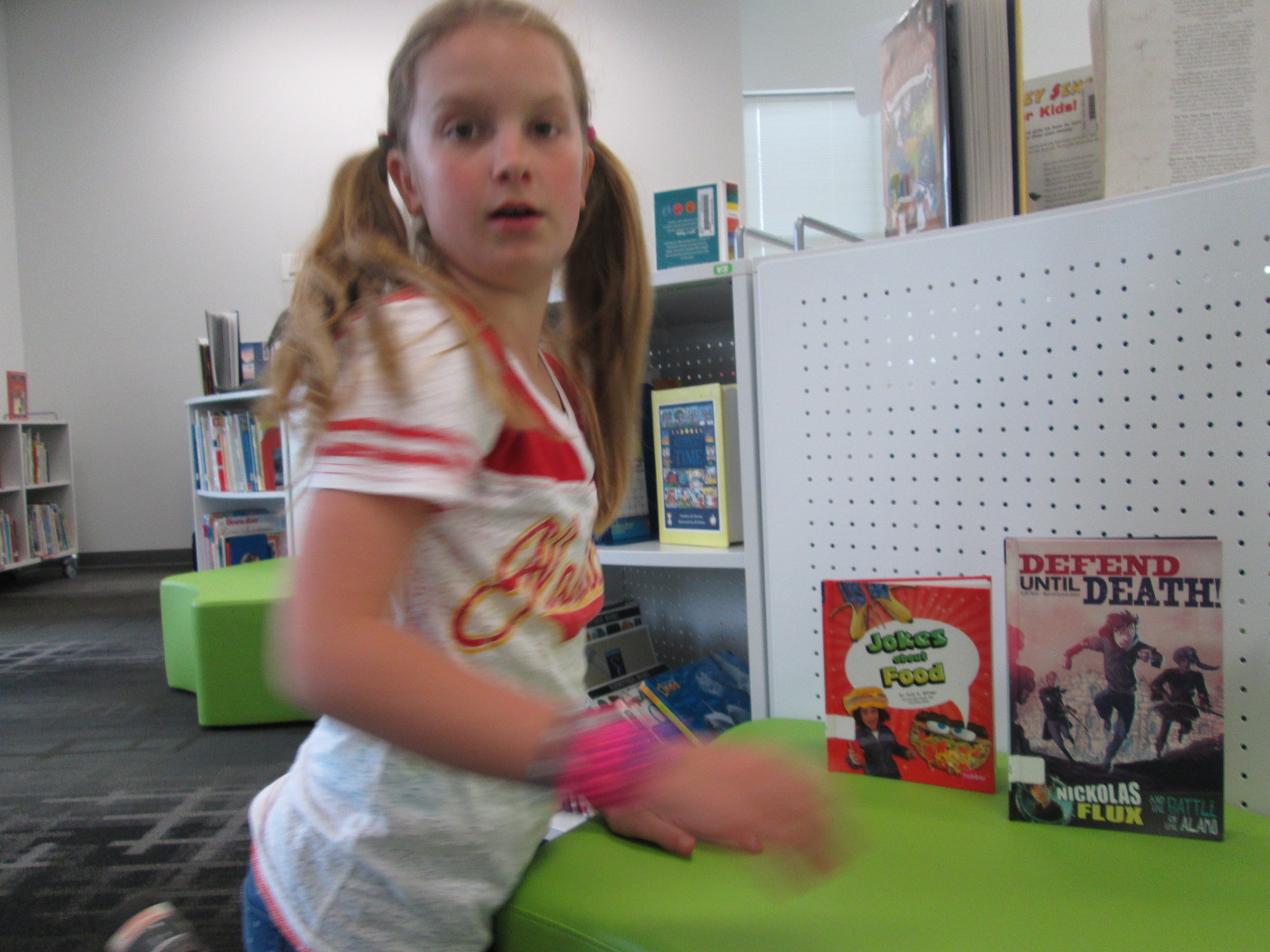
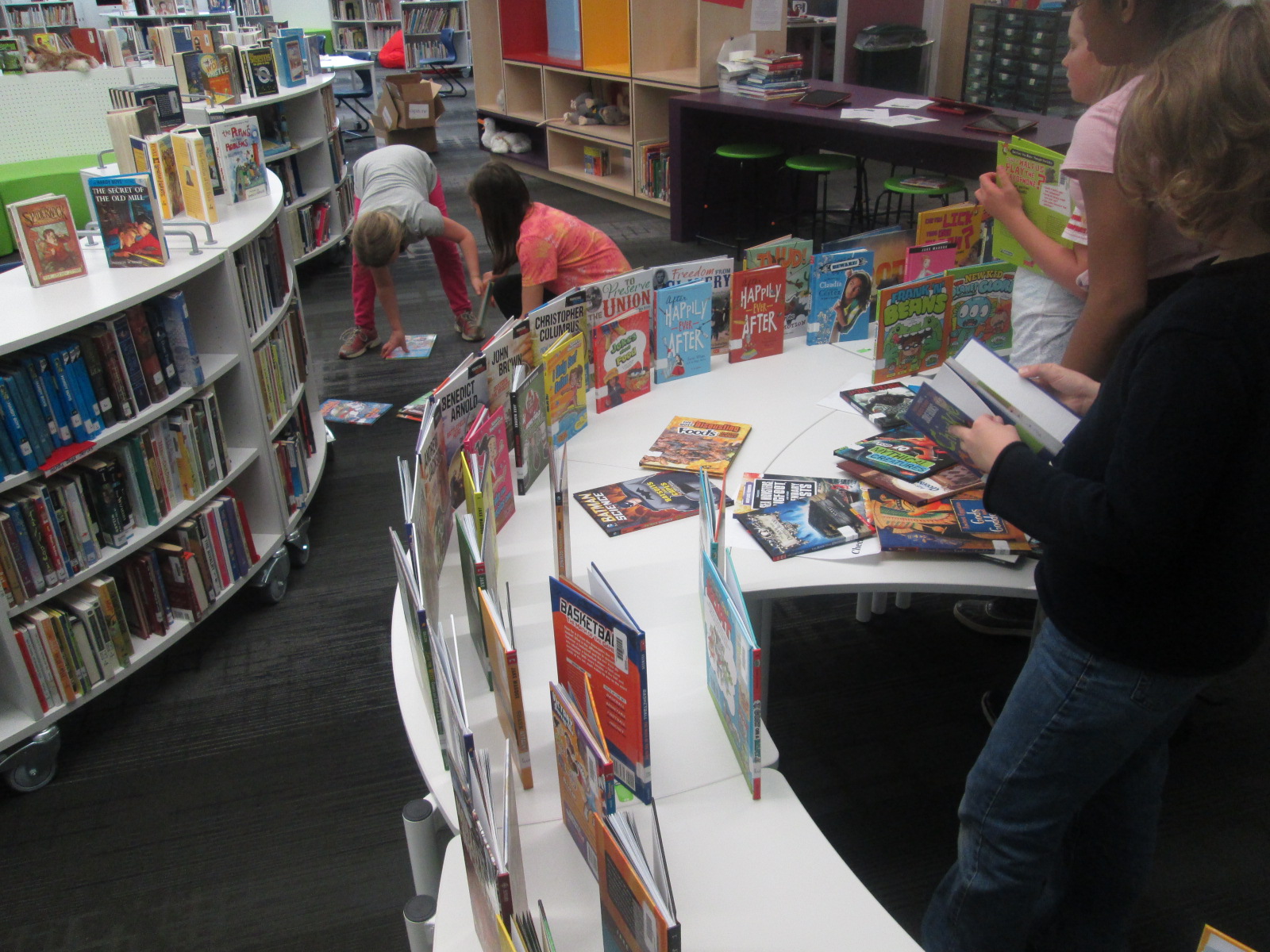
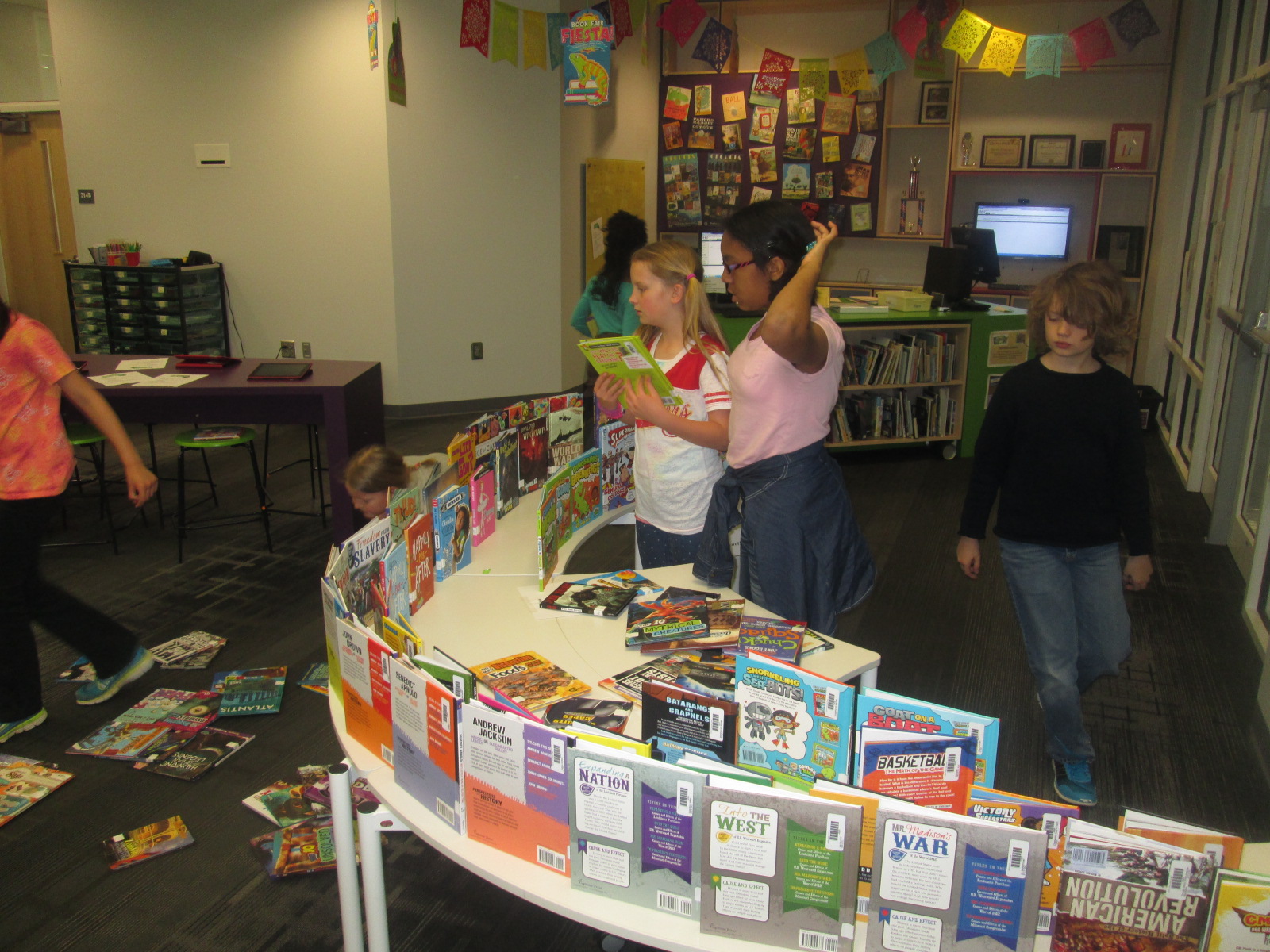
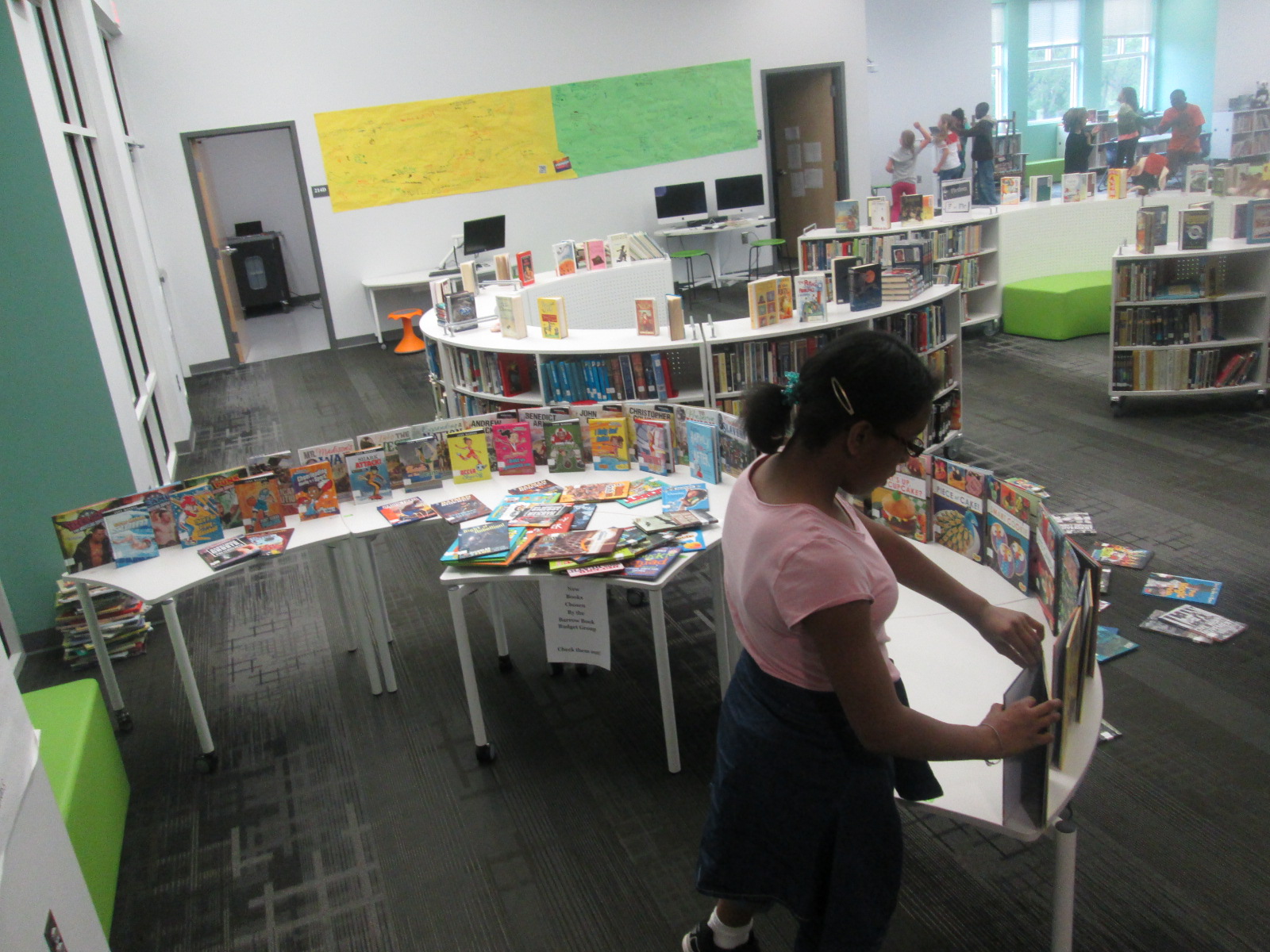
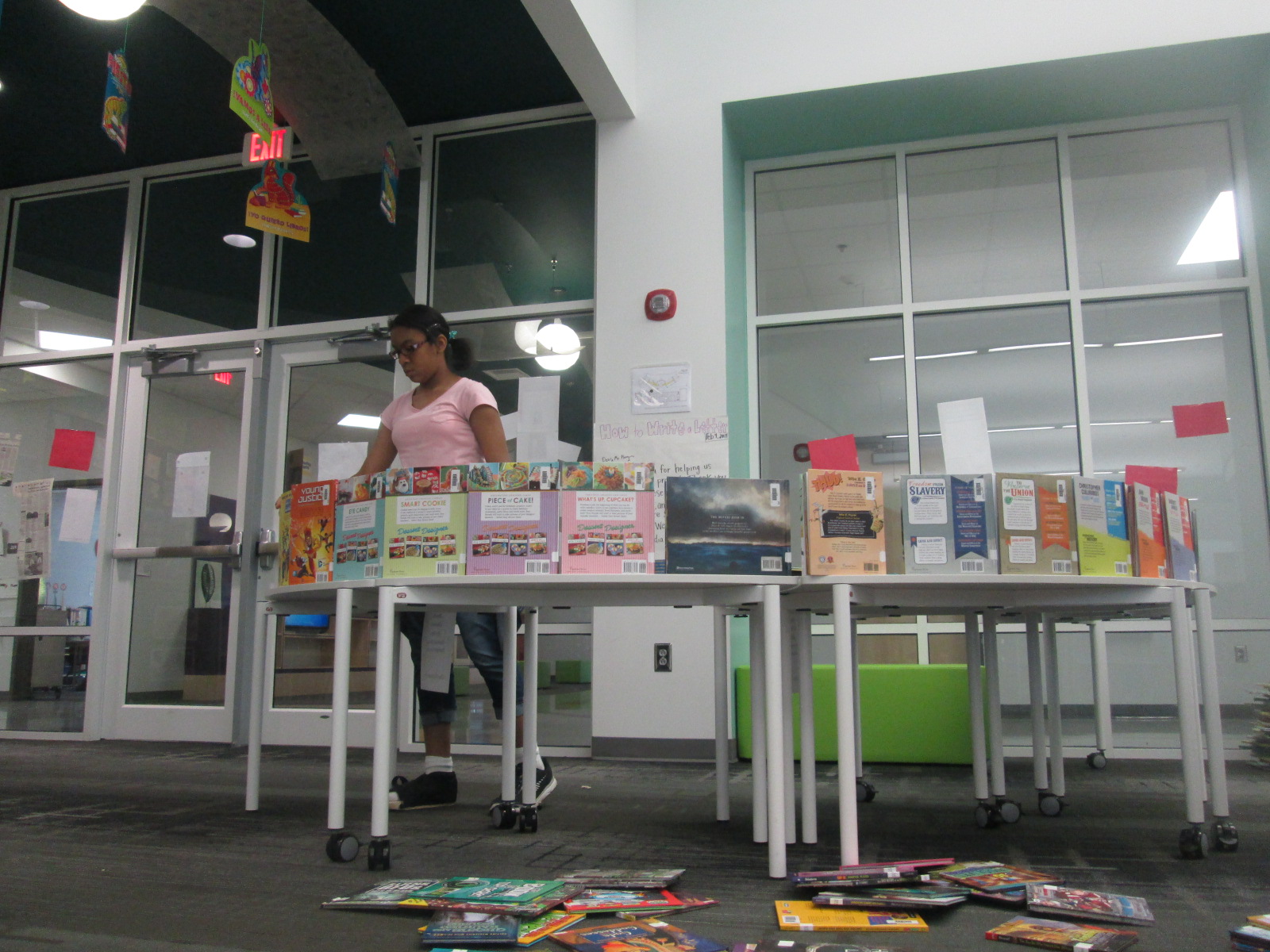
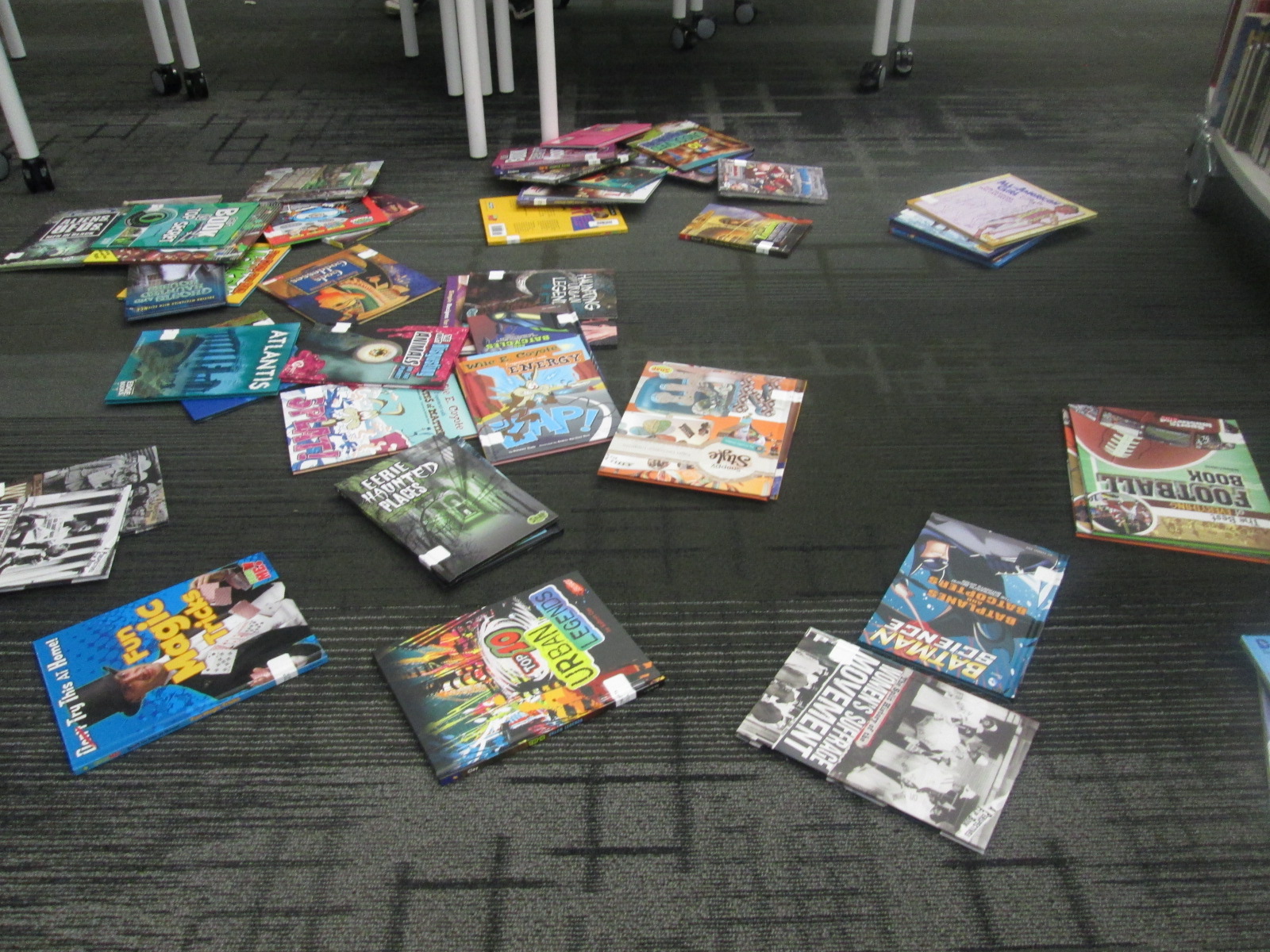
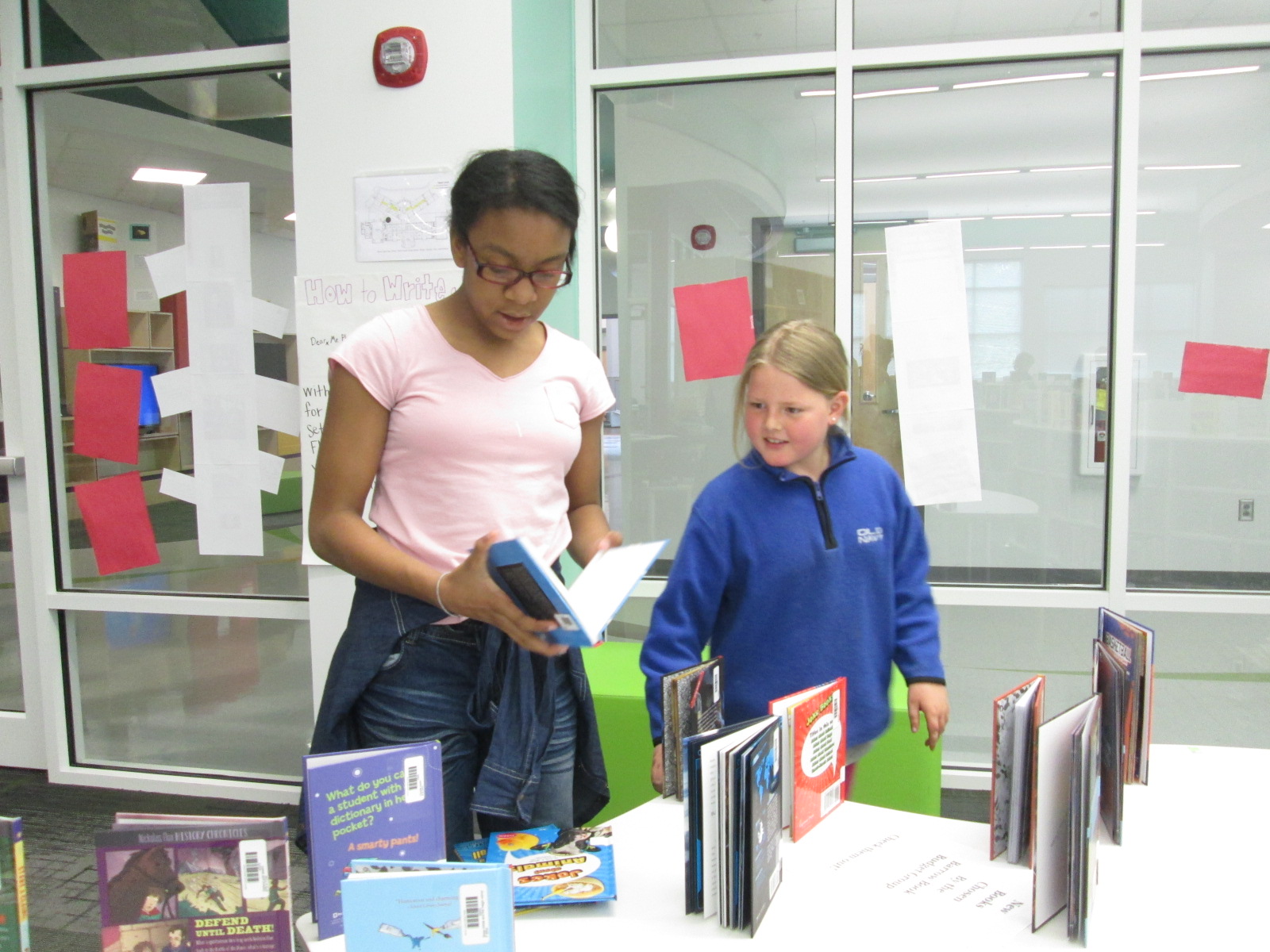
Then, all of the students work on setting up a display at the front of the library.

IMG_3005 IMG_3004 IMG_2999 IMG_2998 IMG_2997 IMG_2946

The students all got to check out one of the books before they were really revealed to the rest of the school.

IMG_3000 IMG_3001

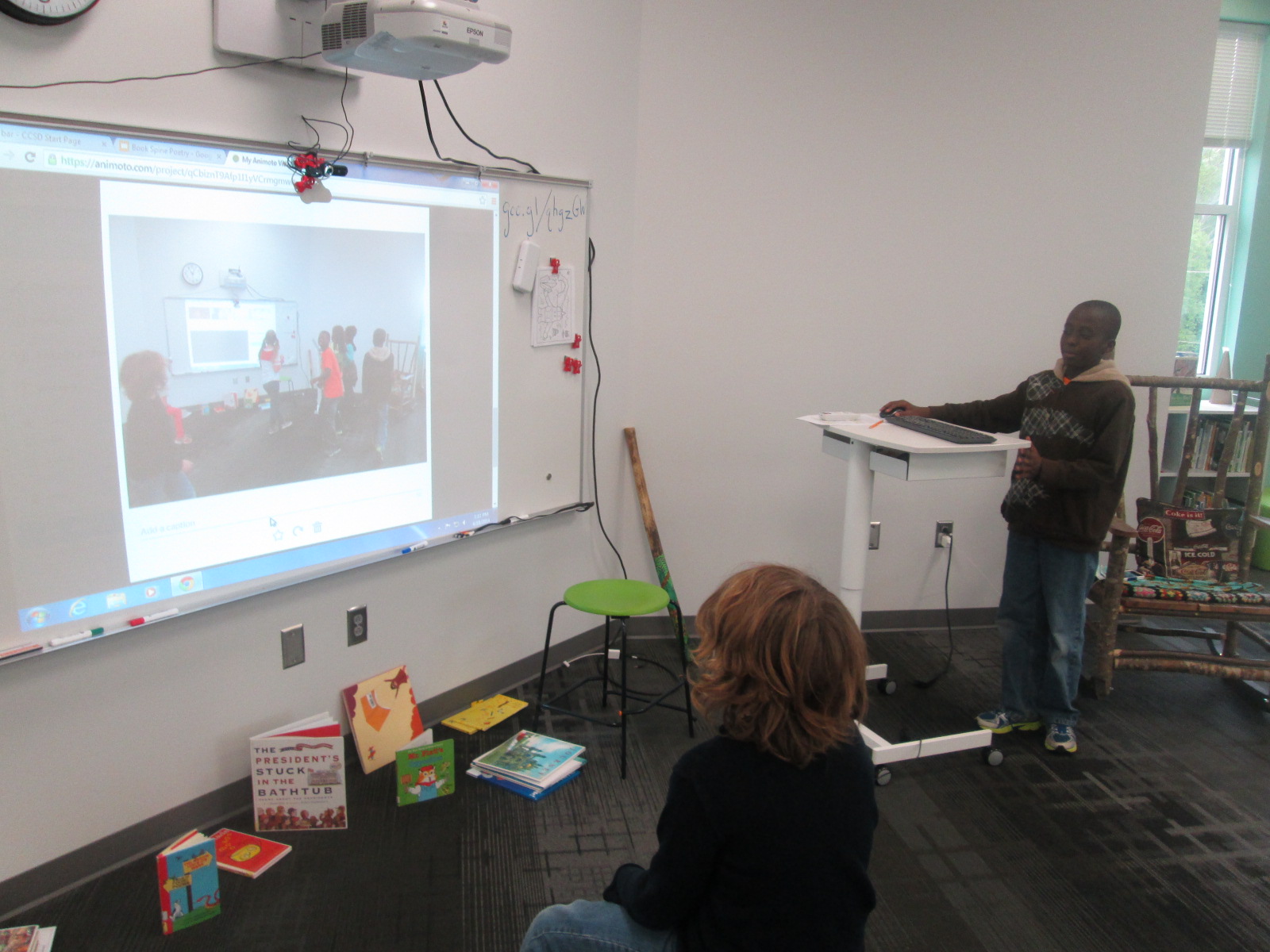
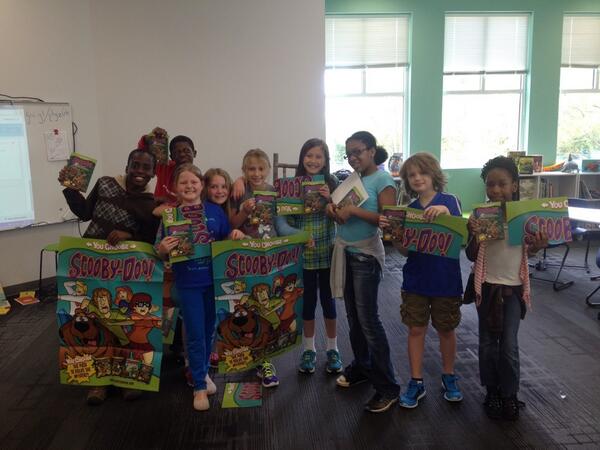
Then they watched their Animoto and had a little dance party to celebrate new books.

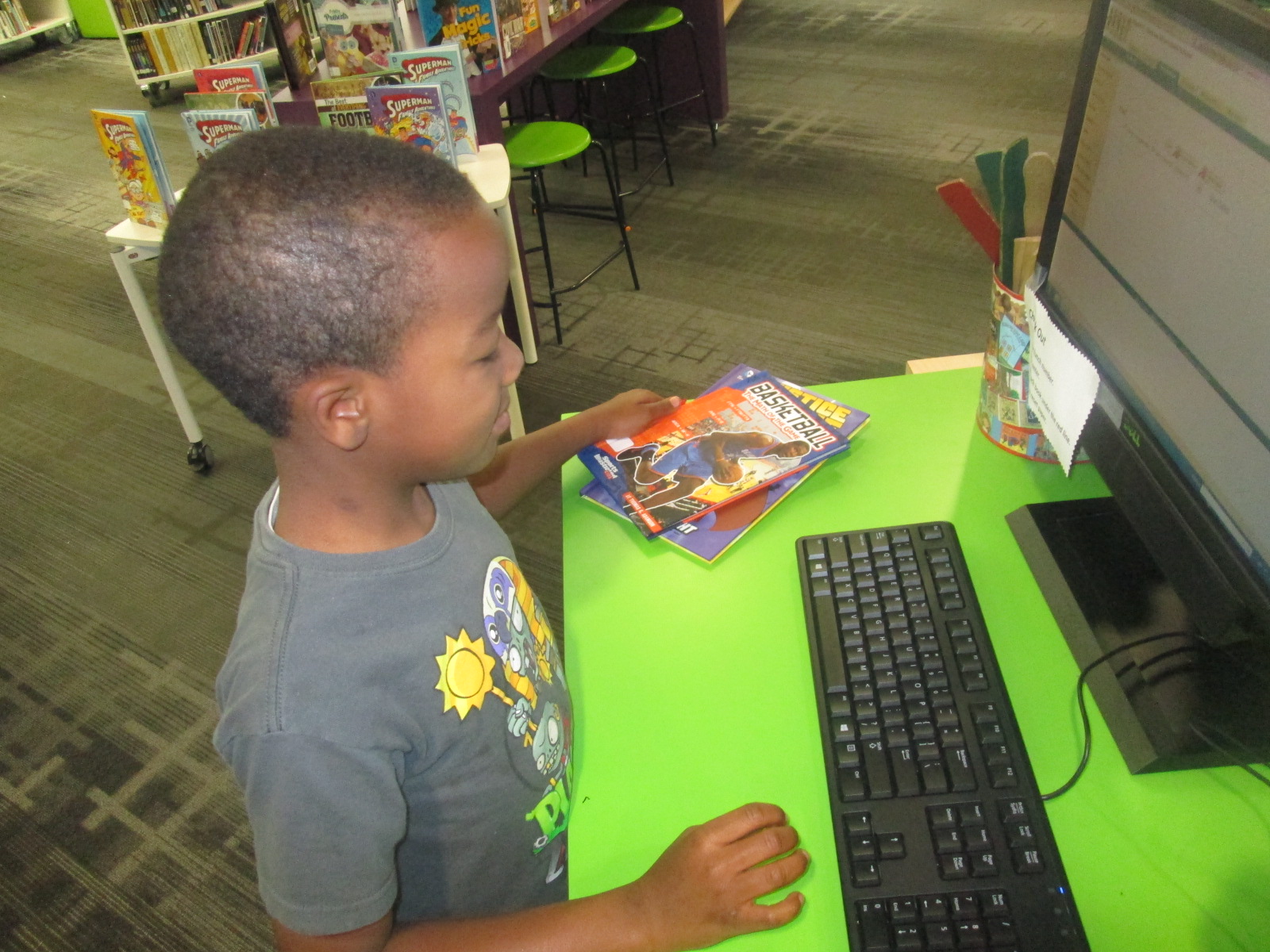
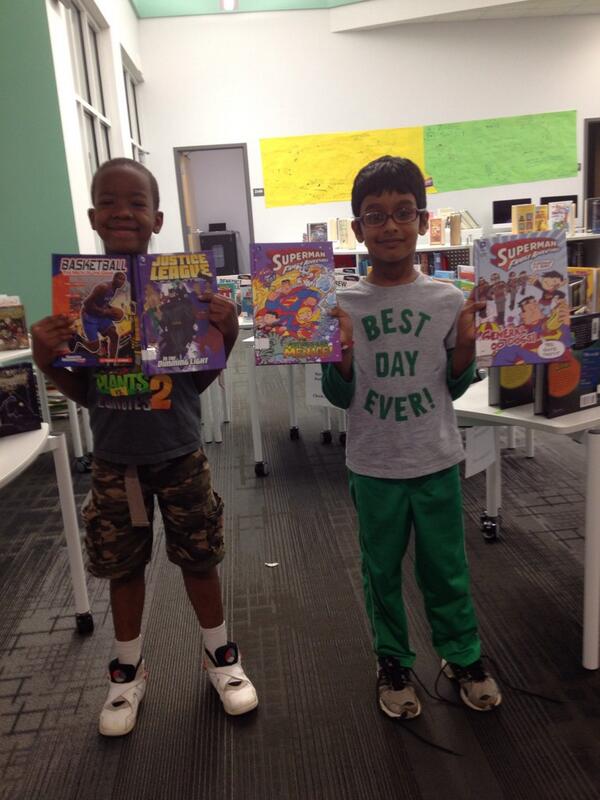
Usually, students start coming in to check out the books before we even get them all setup.  Today was no different.  Some of the DC comics and sports immediately got checked out by 2 eager boys.  I love how one student’s shirt says, “best day ever”.  It sure feels like a great day when we see so many smiling faces for books.

IMG_3012

It was also a little sad to see our project for the year come to an end.  These students have been so dedicated by coming in during their recess time to work.  I smiled when one of them said, “I think I want to grow up to become a library media specialist”.  Other students said, “Please let us do this again next year.”

When I asked them why they like being in the student book budget group, they said things like:

  • who wouldn’t want to buy books for the library
  • we loved making decisions
  • it was fun to spend money for the library
  • people are reading the books that we chose

This process is so empowering for students.  The project has proven again and again that students know how to buy books for other students.  Their books are checked out rapidly and stay among the most popular books in the library.

Thank you Capstone for supporting our project each year.  Your promotions, great selection of high interest books, and book swag gifts, made the students feel like rock stars.

capstone

Unpacking Our Student Book Budget Order from Gumdrop

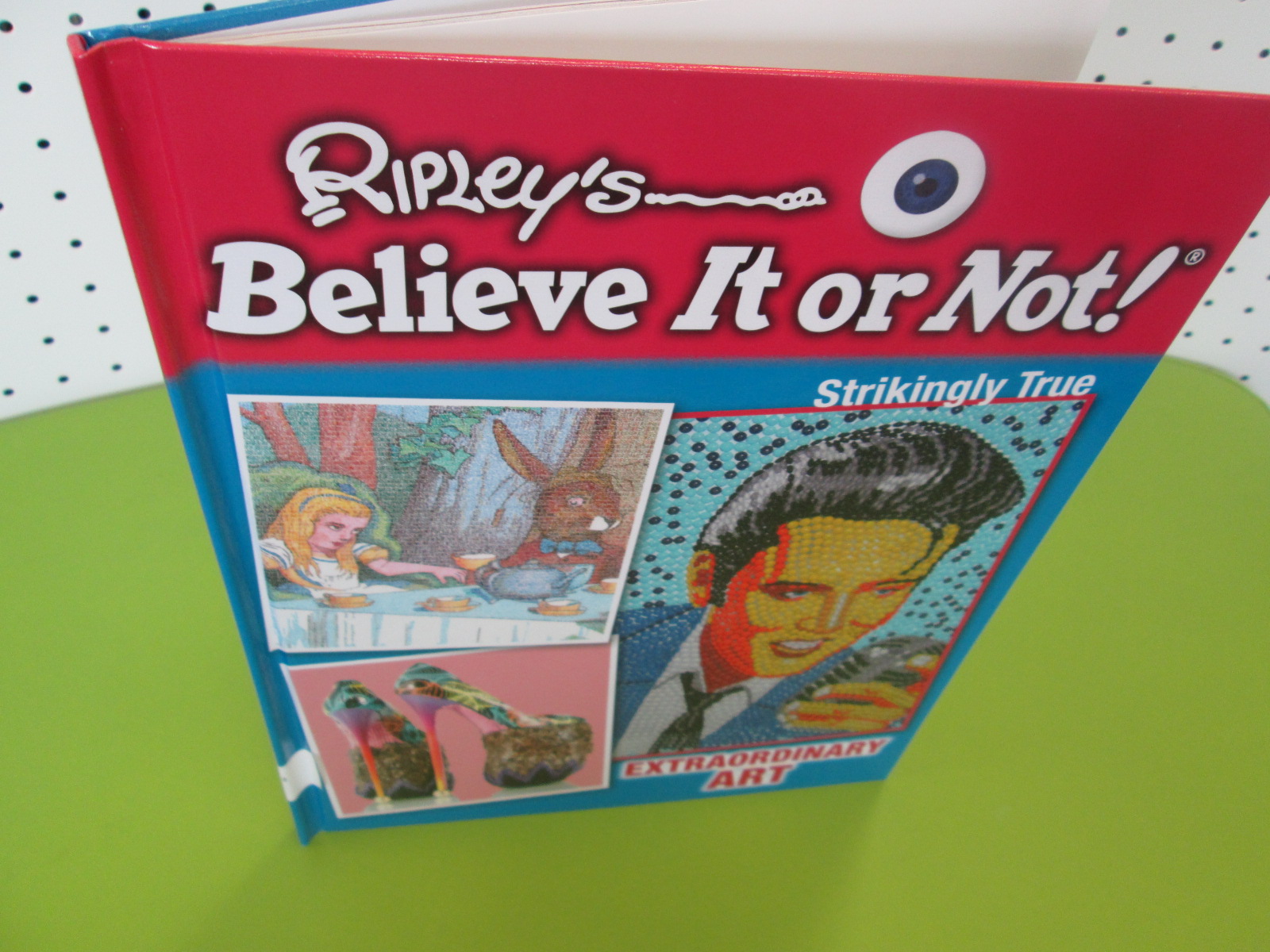
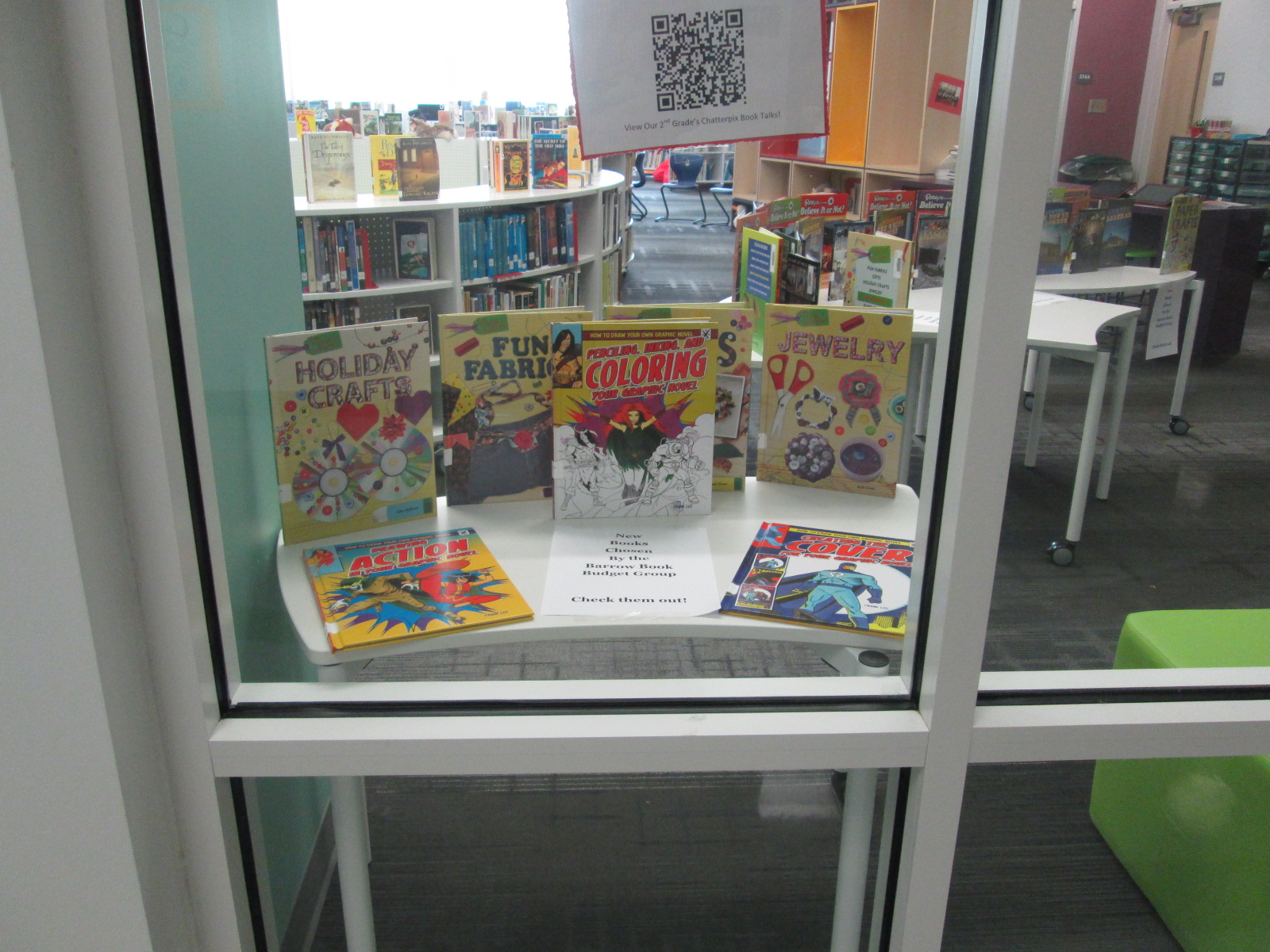
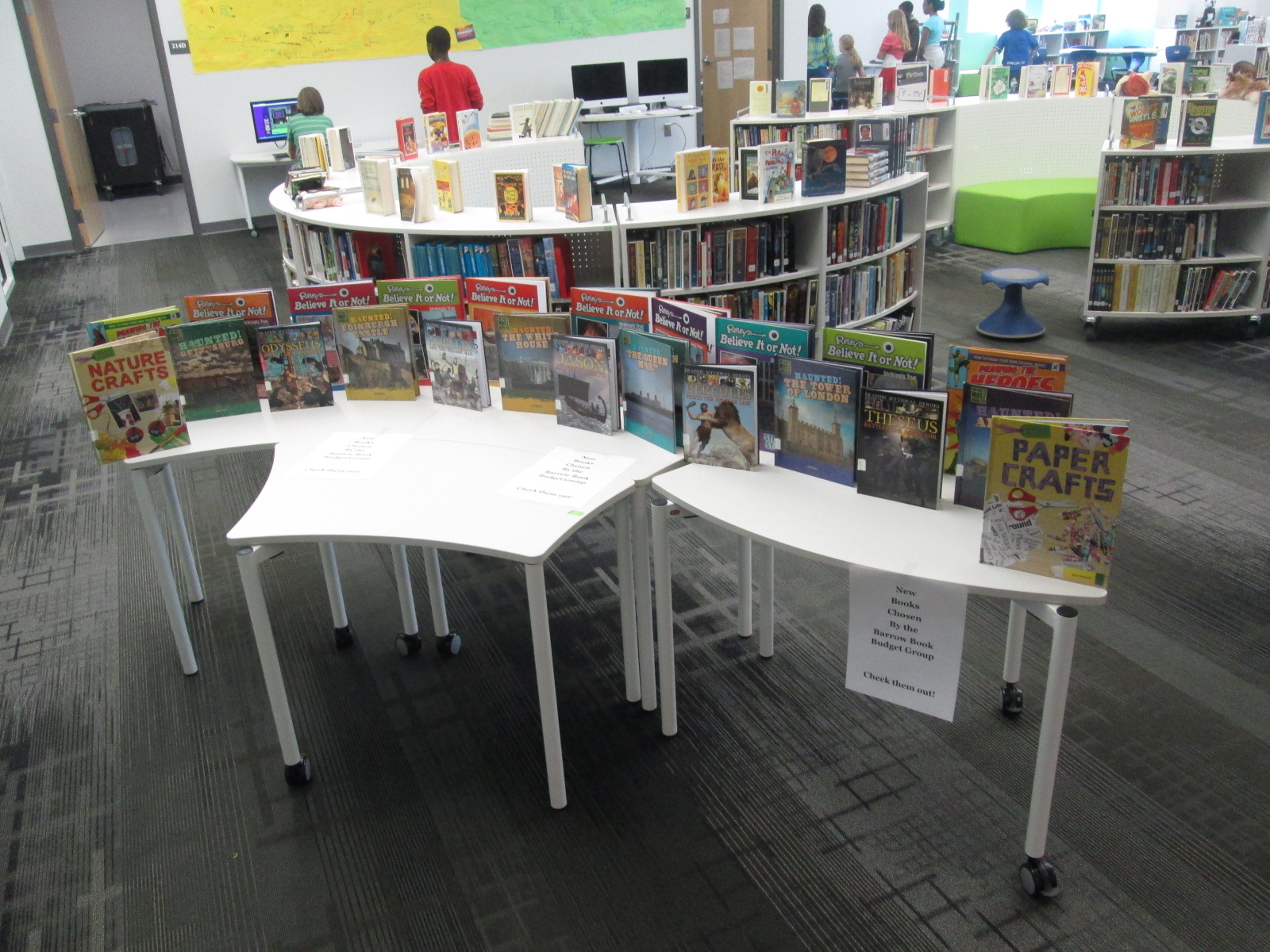
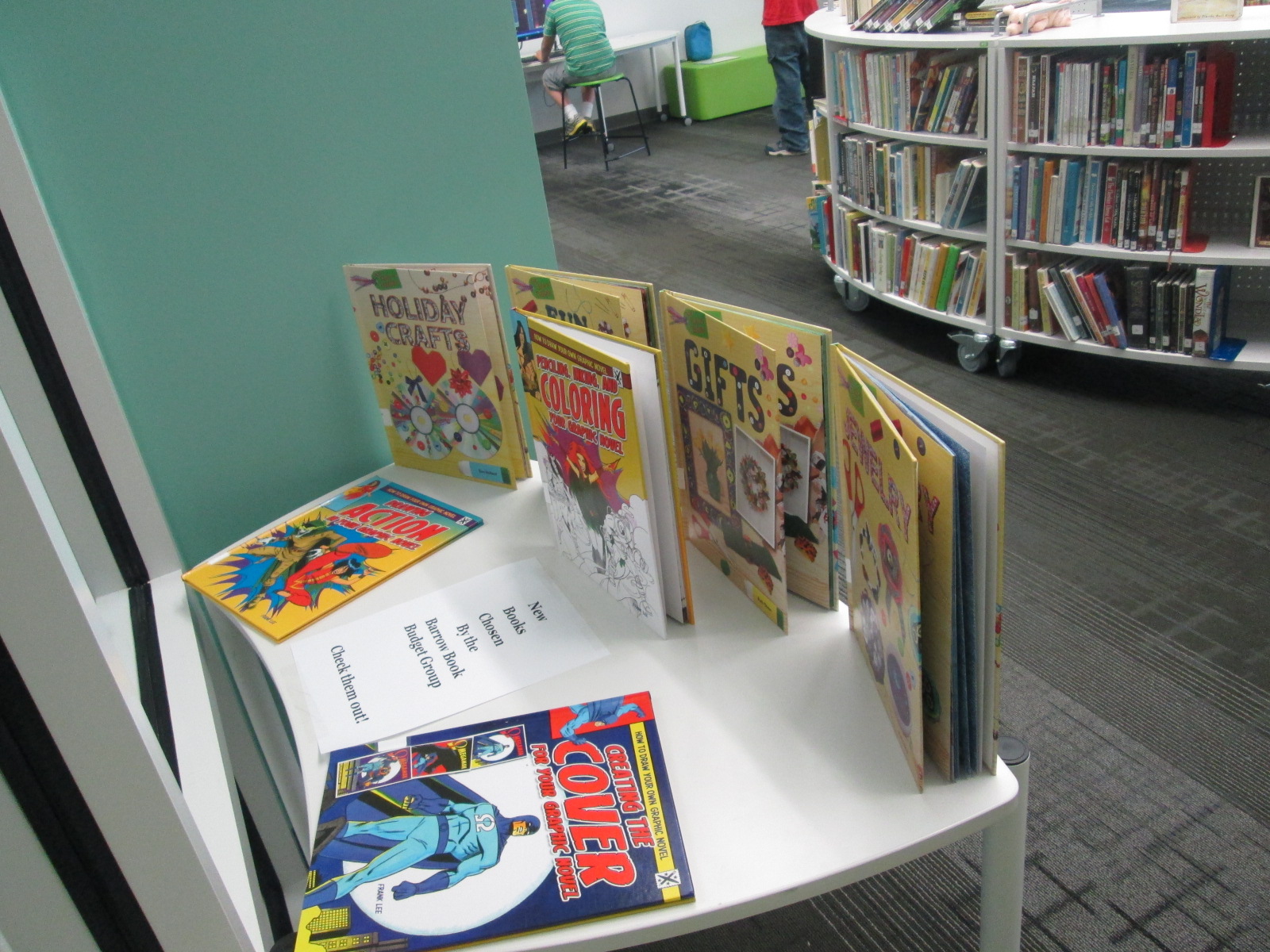
IMG_2827Today, the student book budget group came to the library to unpack our first order.  Most of our books that we ordered will come from Capstone, but there were a few books that they found from Gumdrop.  Gret Hechenbleikner is our Gumdrop rep who brought in several book samples for students to look at.  One of our goals for purchasing books was World Records.  We have several Guinness World Record books, but Gumdrop had some Ripley’s books that were much smaller in size that the students loved.  They also found some haunted history books that I’m sure will be extremely popular.  We are trying to increase the number of books we have about making things, so they found a series of books about making graphic novels as well as making crafts out of various materials.

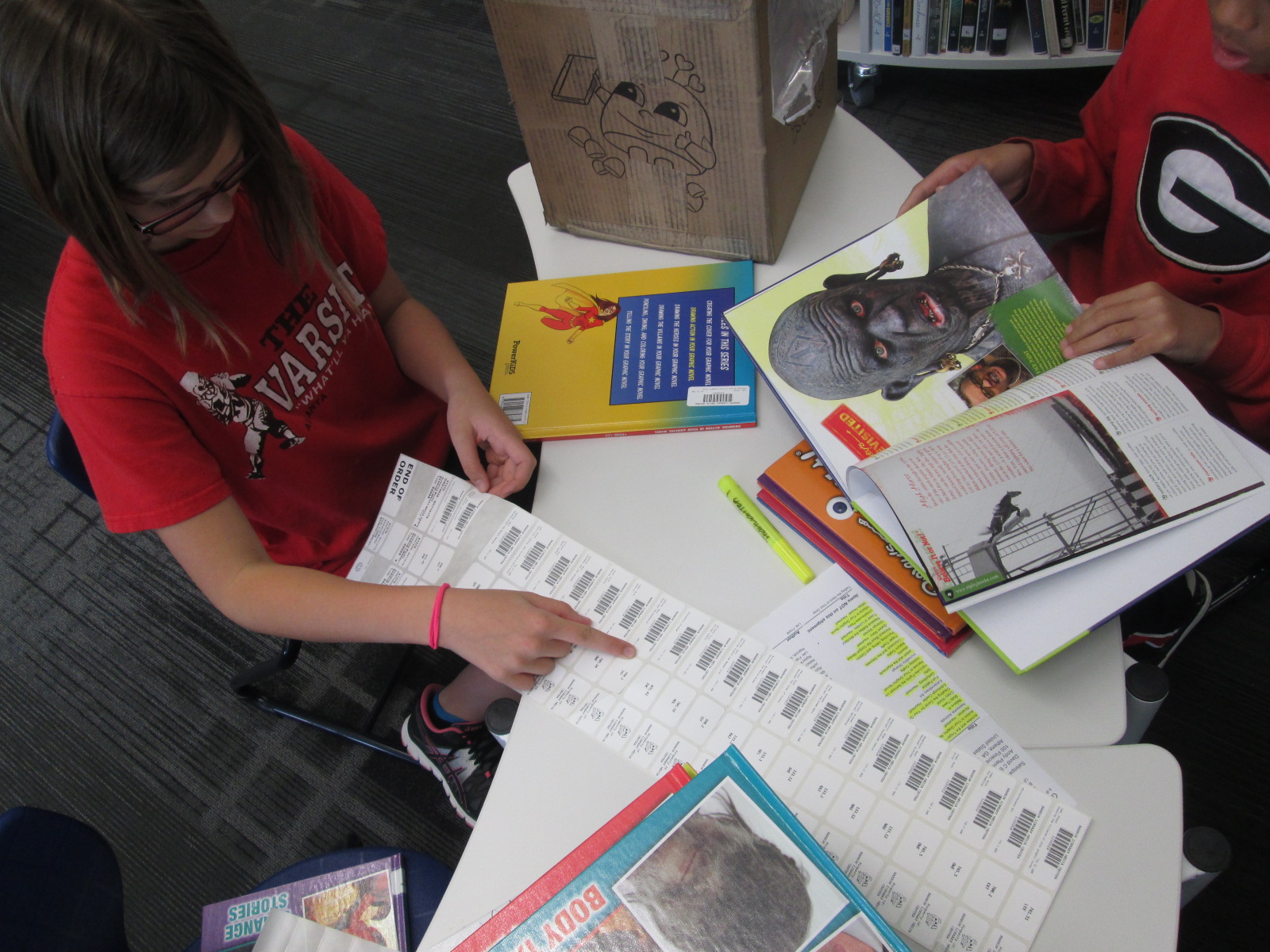
To save a bit of money, we did not purchase shelf ready books.  We did order the barcodes and protectors, though.  Students came in during their recess and worked through several steps.

Step 1 was to unpack the box, check off the packing slip, and check the books for damage.

IMG_2807

IMG_2809

Step 2 was to put the labels and label protectors on each book.

IMG_2810

Step 3 was stamping each book with our library stamp.

IMG_2813

Step 4 was to download the MARC records into Destiny.

IMG_2848

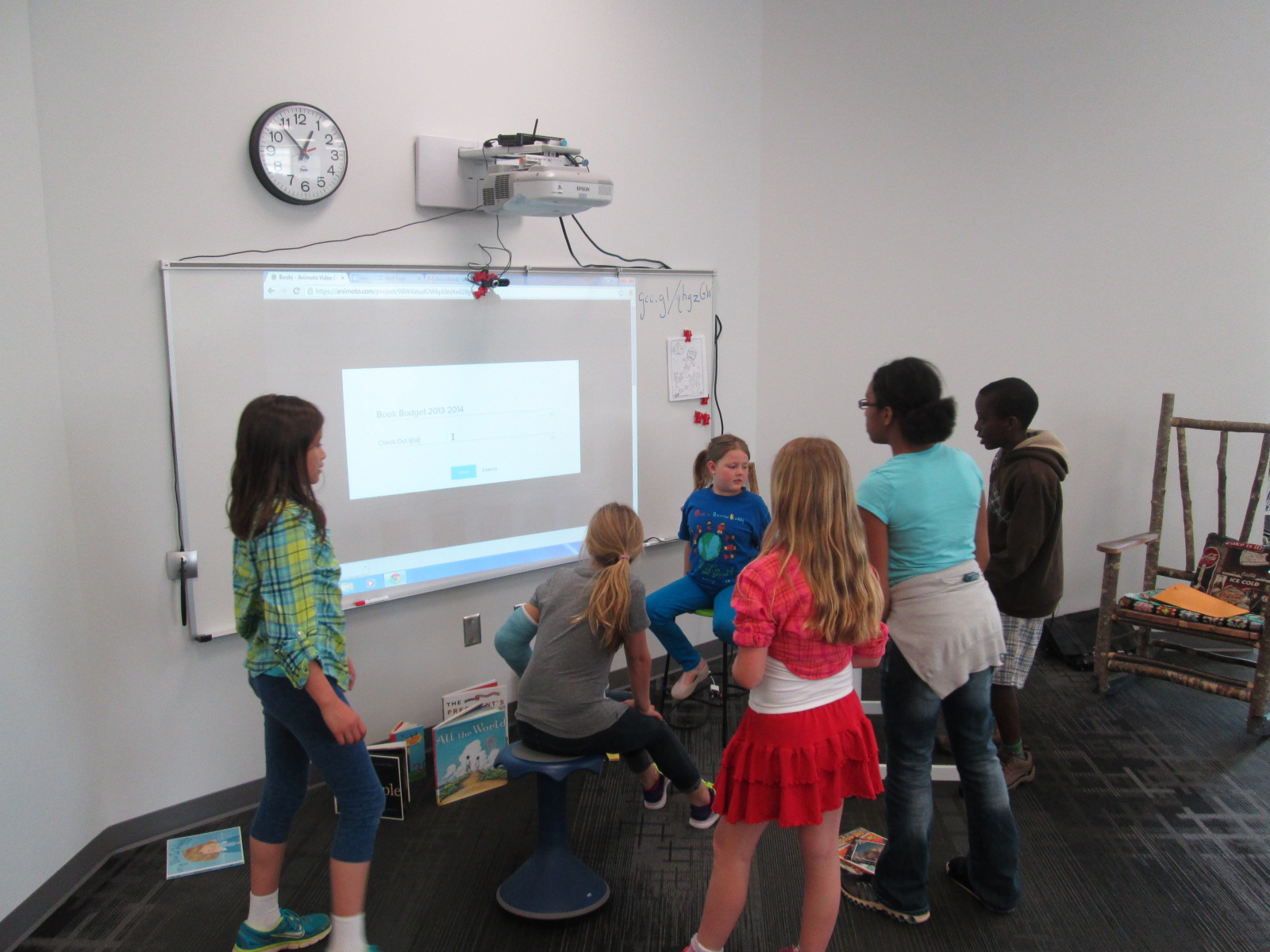
Step 5 was to think of how to advertise the books to the school.  Students decided on 2 things.  They wanted an Animoto of all of the books and the unpacking process on our morning news show for Monday.  They also wanted to create a display at the front of the library.  One group of students worked on taking pictures.  Another group worked on making the Animoto.  A final group worked on creating the display.

IMG_2851 IMG_2849 IMG_2850


It was fun to watch them celebrate when their Animoto was made.

The books haven’t even been officially advertised to the school yet, and already several of the books have been checked out.  I won’t be surprised on Monday when there is a stampede to the library to check out what is left.

https://www.youtube.com/watch?v=AY56QRBi8kU

These students will meet again next Friday, when they will unpack a large order from Capstone and repeat the same process.

2014 Student Book Budgets: Real-World Math Lessons from Capstone Press

decisions (1)Each year, I dedicate a portion of library funding for students to control.  Since the library is for all of our school community, I feel strongly that students should have a voice in what goes into the collection.  Here’s what has happened so far:

  • Students developed a Google form survey and surveyed most of the school on their reading interests
  • Students analyzed the results and developed a list of goals to focus on which included sports, graphic novels, humor, scary, world records, and action/adventure.
  • Students met with Jim Boon from Capstone Press and Gret Hechenbleikner from Gumdrop books to look at book samples and catalogs.

decisions (8)Since the visit with the vendors, the student book budget group has been coming into the library on Mondays and Wednesdays during their recess to continue looking at catalogs.  Much of what they wanted was in Capstone’s catalog, so their first step was to finalize what they wanted to order from Gumdrop.  They decided on a Ripley’s Believe It or Not series, a how to draw graphic novel series, a graphic mythical heroes series, and a history’s most haunted series.

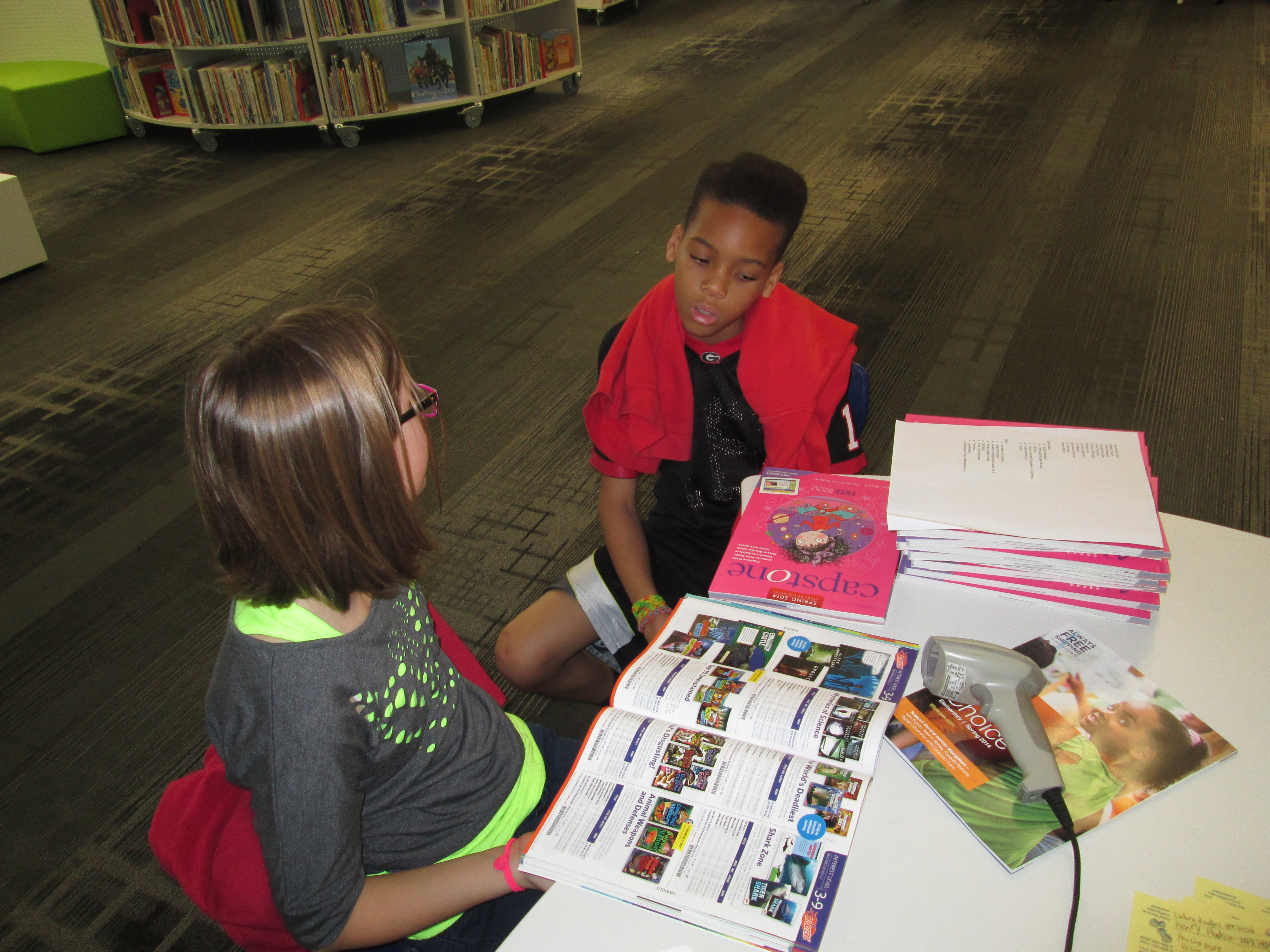
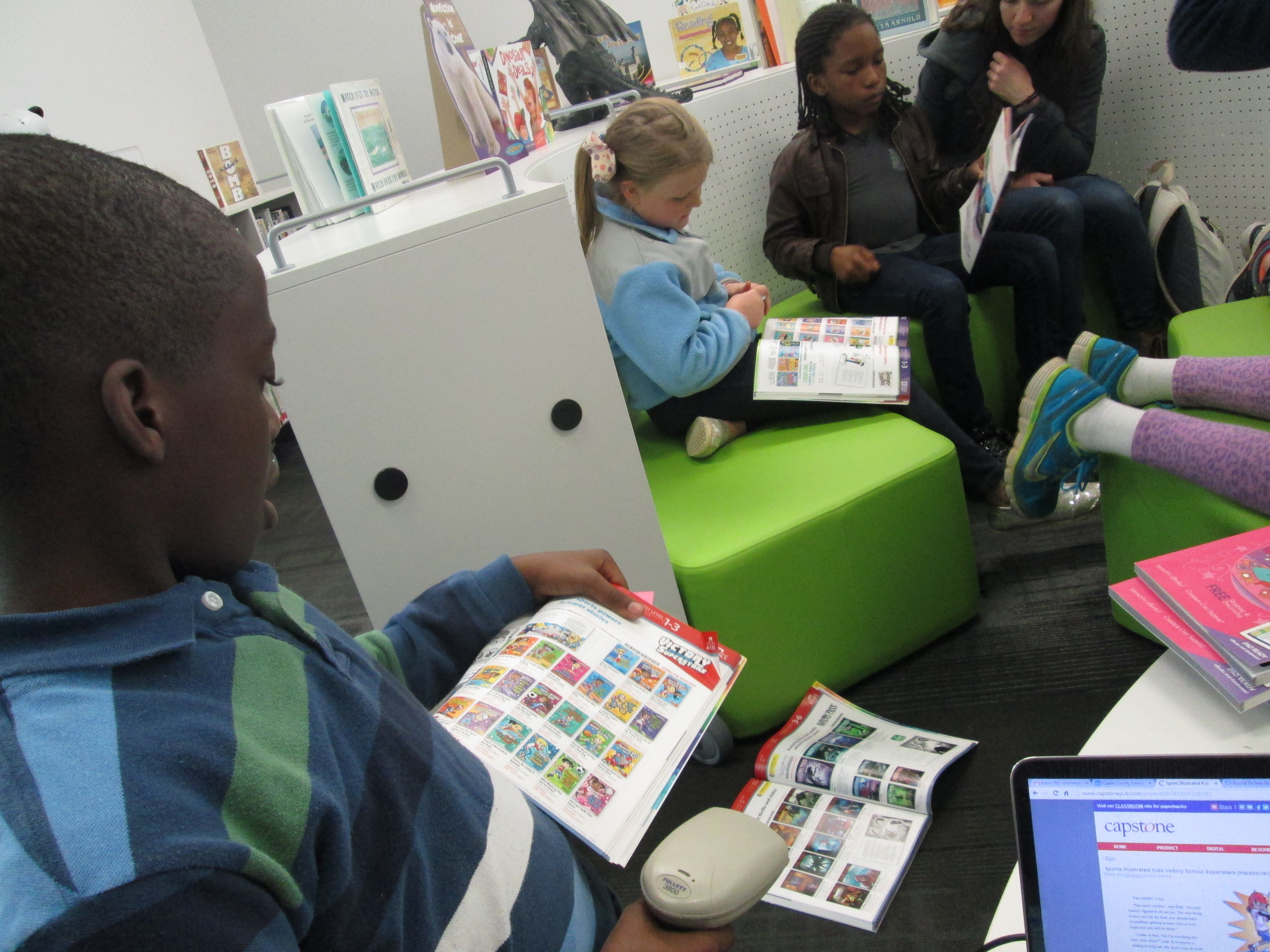
decisions (2)When that was done, I hooked up the scanner to my computer and gave all of the students a Capstone catalog.  Capstone has a great feature where there is a barcode next to each set of books in the catalog.  You can scan the set straight into your cart, or you can scan the set and select the books that you want.  As students found books that matched our goals, they scanned the barcode and told me which books to add.  At that point, we didn’t worry about cost.  We wanted to add all of the books that we were interested in and then start narrowing.  This adding process was so smooth thanks to this scanning feature.  In the past, students have circled items in catalogs, written on pieces of paper, etc. and it took a lot of time to compile everything.  I loved that we were all adding to the same list as we worked.

decisions (6)Right now, Capstone is offering an incentive like they often do.  If you spend at least $1750, you get 30% back in Capstone Rewards.  If you spend less that $1750, you only get 10%.  This was a great math discussion.  Our original budget was $1500 for all of the book budgets.  However, if we spend just $250 more with Capstone, then we get $525 in free books.  I’ve really pushed the group to think about budget, but this was a great real-world example where you sometimes have to spend beyond your budget if it helps you in the long run.  The students unanimously agreed that we needed to spend the $1750 since we already had well beyond that amount in our wish list cart.  I pulled out all of the numbers that I had to think about in order to make this happen.  We looked at the remaining dollar amount in our district budget which was about $375.  Then, we looked at the remaining balance in our local account, which holds profits from our book fairs along with any donations we receive.  I told them about remaining expenses that I knew about for the year such as battle of the books.  We agreed that there was enough money to purchase our list from Gum Drop and extend our Capstone Budget to $1750.

decisions (3)The final task, which we are still working on, is to narrow our cart.  We started with a cart totaling almost $3000.  We knew that we needed to reduce the cart to about $2200 in order to spend $1750 in cash and use $525 in rewards dollars.  By the time we stopped talking about the math, students were all commenting on how hard this is.  One of them said, “You mean this is just a small part of what you do?”  I love that they keep bringing this up.  I love buying new materials, but I’ve been very honest with them about what a small fraction of my time this actually is.  As always, it was interesting to hear them wrestle with decisions about which books to cut from the list:

  • We have 3 books about drawing horses.  Let’s pick the one with the most horses that people are probably interested in.
  • Three of our war books cost $27.  Let’s pick something that doesn’t cost that much.
  • That book looks like it would only be for 5th graders.  It might scare other kids.  Let’s take it off the list.
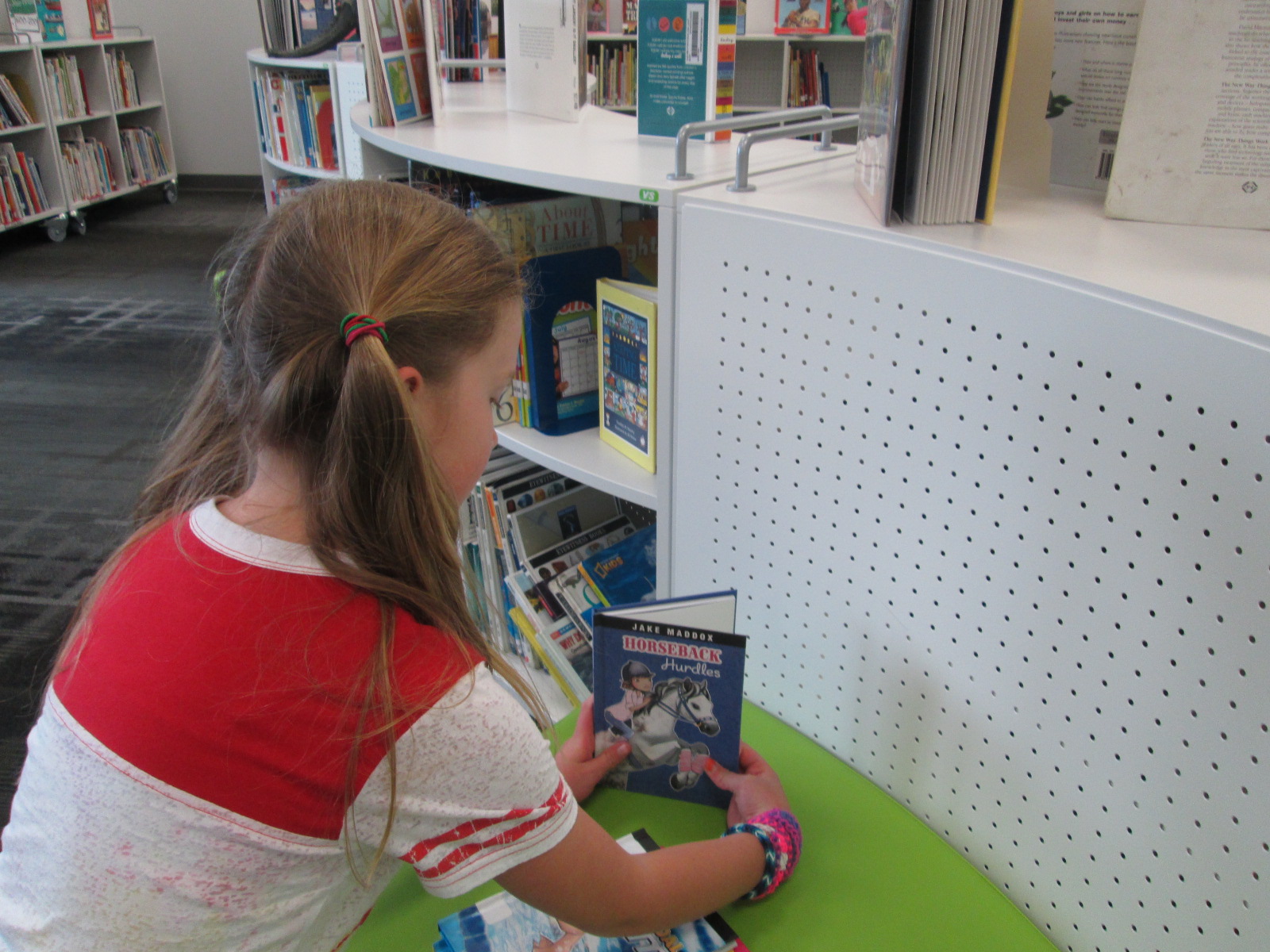
  • We can’t buy every Jake Maddox book this time.  Let’s choose a few of them.

decisions (5)Every struggle they were having is the same struggles that I go through alone.  I loved being able to share this frustration with them, and they had a much better understanding of how I use math and decision making in my job.  My only wish is that more students could walk through this process with me.  Each year, I find new ways to involve different groups of students, but I would love to have larger groups of students involved in the math aspect.

decisions (6)Once we get our carts narrowed down, we will place our order and wait for the books to arrive.  Since I have extra Capstone Rewards dollars, I’ll also be able to add in some historical perspective books that I’ve been wanting to get for our many social studies projects.  While we wait, students will think about how to advertise the books to the school.decisions (7)

Honoring Student Voices through Student Book Budgets with Capstone Press

Student Book Survey 2013 2014For the past several years, I have reserved a portion of our library funding to be completely controlled by students.  Over time, I’ve seen student-selected books be among some of the most popular books in the collection.  The library collection is mainly for our students, so why not let their voice be heard in the collection development process.  Part of our library funding comes from the state, and another part comes from fundraisers such as our fall and spring book fair.  Since students and their families shop at our book fairs to build their home libraries while supporting our school library, I see student book budgets as being one small way of giving back to our community.

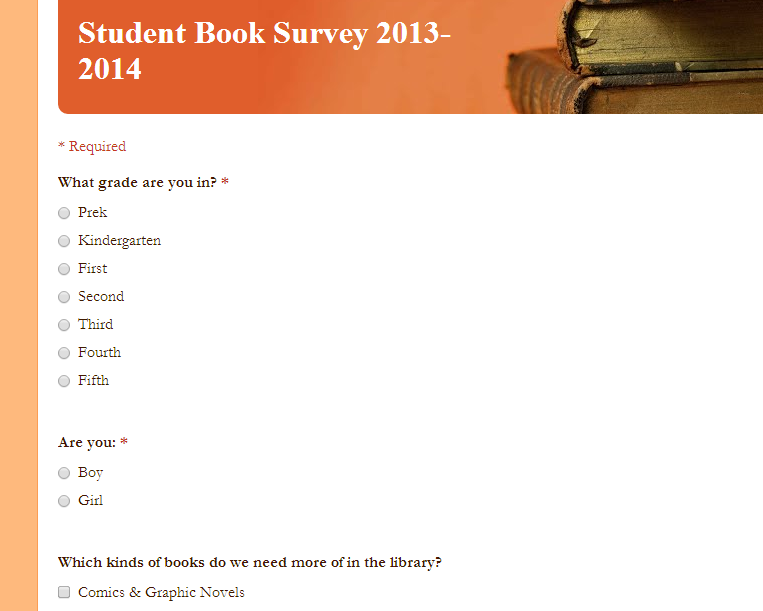
This year, our book budget process has gone through some changes.  In order to involve a few more students at various stages, I broke the process into parts.  Part 1 was to gather data from the school.  Every Tuesday and Thursday I have a group of five 5th grade boys who work in the library as a service project.  Together, we developed a Google form to gather information from the school.  We wanted to track the number of students we surveyed at each grade level, the number of boys and girls, specific reading interests, and specific requests.

Once the survey was created, we generated a QR code so that they could quickly scan the code and go out into the school to survey students with iPads.  This was mainly needed with our youngest students.  For older students, I emailed the survey to them to fill out.

Each year, we tend to see similar results with our data, but I told the students that we can’t assume that we know what people are wanting in the library because it can change.  Here’s a look at the main data they collected.

Student Book Survey 2013 2014   Google Drive

Next, I blocked off some library time during 4th and 5th grade’s recess time and asked for students who would like to participate in an alternative recess for a few days to spend money on books.  I’ve tried doing this during lunch and it is just too complicated to juggle food, catalogs, vendor websites, etc.  I didn’t get as big of a response from students this year, so we’ll see if we return to this model next year.

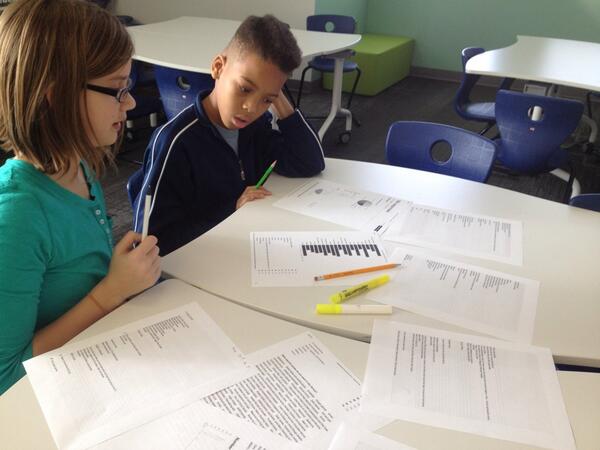
On day 1, the 4th and 5th grade book budget students came to look at the survey results.  They made some decisions to inform how much money should be dedicated to various categories.  I printed the specific requests of students and Savannah and Isaiah spent time highlighting some specific titles that students were asking for.  It was a tedious process for them!  The even got down to searching the library catalog to see how many copies of books we had like Diary of a Wimpy Kid and discussing if there was justification to order even more copies of existing titles.  We finally all agreed on some overall categories of:  Comics/Graphic novels, sports, humor, scary, world records, and action/adventure.

tough decisions

Even on this 1st day, they started having some tough conversation.  For example, they saw that World Records was a highly requested category, but from experience, they know that students are mostly talking about Guinness World Records.  They decided that instead of dividing the budget and giving this category several hundred dollars, they would just buy 2 new copies of the 2014 World Records for about $60.  It’s always fascinating to see how quickly students realize how a budget works and how hard it is to make decisions for the library.  One of them said, “Mr. Plemmons, I know this is only a small part of your job, but it sure is hard!”

jim boon capstone (2)

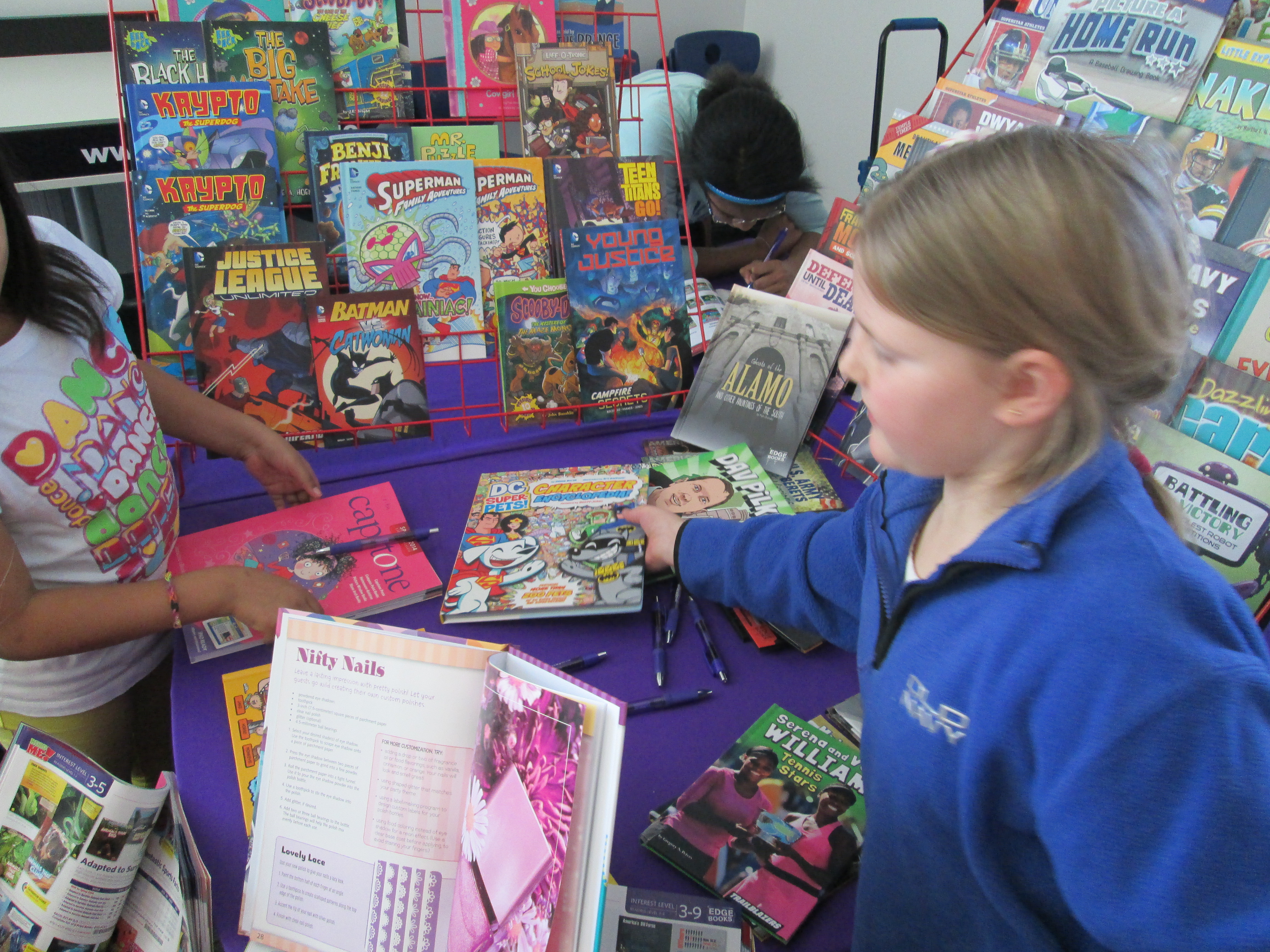
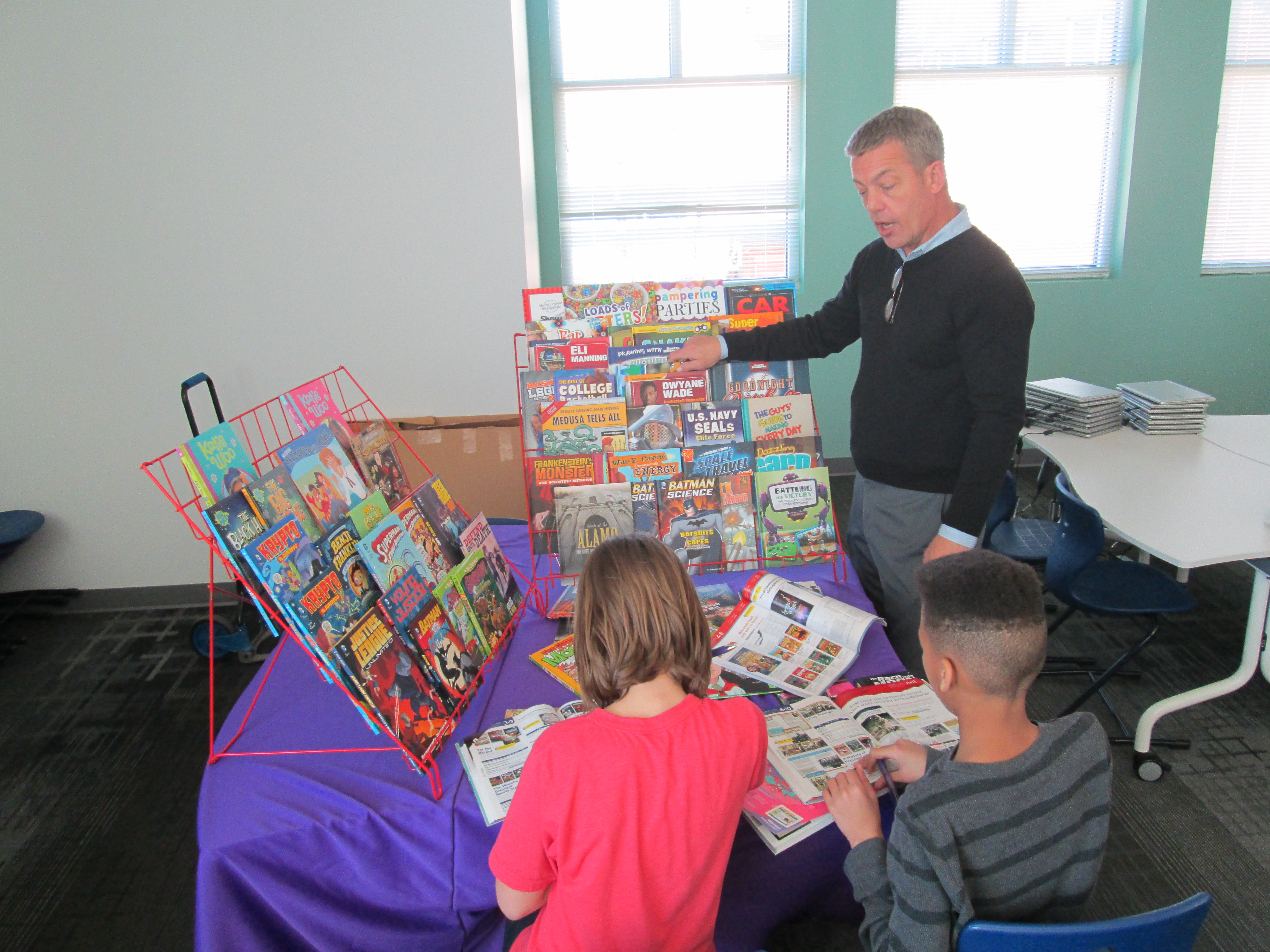
On day 2, we welcomed Jim Boon, Capstone Press Sales Rep.  I love working with Jim because he treats the students like young professionals.  I also love that Jim listens to what students are asking for and tailors his talk and display to the goals that they have.  He setup displays of books that matched their goal categories with a few books that connected to their themes in different ways.  He gave every student a new Capstone catalog and a pen.  As he proceeded to show students various books, he invited students to turn through the catalog, circle books of interest, and fold down the corners of pages.  After he shared some specific books, students came up and started browsing through the books on display.  Jim and I proceeded to have individual conversations with students about the books in the catalogs and help them see where prices could be found.  We also mentioned to students that Capstone offers Capstone Rewards and various incentives.  For example, if we spend $1750 on our order, we get 30% back in Capstone Rewards, but if we spend less than that we get 10% back.  I love the math that comes into this project each year because it is real world application of an important life skill.

I also love that in our individual conversations there are stories that emerge.  Jim had a great conversation with one of our students, Ember.  She consistently asked Jim about the prices of every book.  The budget was weighing heavy on her mind and she was thinking hard about how to get the most books for our money.  In their conversations, there were a few books that Ember desperately wanted in our collection, and I loved that Jim made sure to leave one of those books that she requested for us to add to our collection!  I know Ember will greatly appreciate it.

jim boon capstone (11)

Students were having so much fun that they decided to take their catalogs with them to continue marking titles of interest.  I’m a little scared of seeing what they come back with!  It’s such a hard process to cross books off of the wish list, but it is an important process to choose the very best books for our collection at the current time with the funds that we have.

jim boon capstone (13)

This process is beneficial to me as the librarian too because I get to see books that students are getting excited about.  For the purposes of the project, I remind students to focus on their goals and only purchase what matches the requests.  However, I’m over to the side writing down titles to put on my own ordering list for this year or the beginning of next year knowing that the titles already have a group of readers waiting on them.

Thank you to Capstone Press for your tremendous customer service, your professional relationship with all of your users including students, and for giving our students a voice in collection development.  You are superstars!

Our next step will be to look at one more vendor to fill in some holes in our wish list, and the we will start the tedious process of cutting books from our list until we have our final order.


Kicking Off Our #Geniuscon Project with Peter Reynolds

IMG_1849A few months ago, Matthew Winner and Sherry Gick, superhero librarians, put out a call for schools to join them in a project called #Geniuscon.

In the words of Matthew and Sherry:

“Kids are genius. They don’t perceive limits or boundaries in the ways that hinder most adults. Their solutions to life’s problems can seem convoluted, indirect, and unnecessary, but often the ideas of kids can be the most profound.”

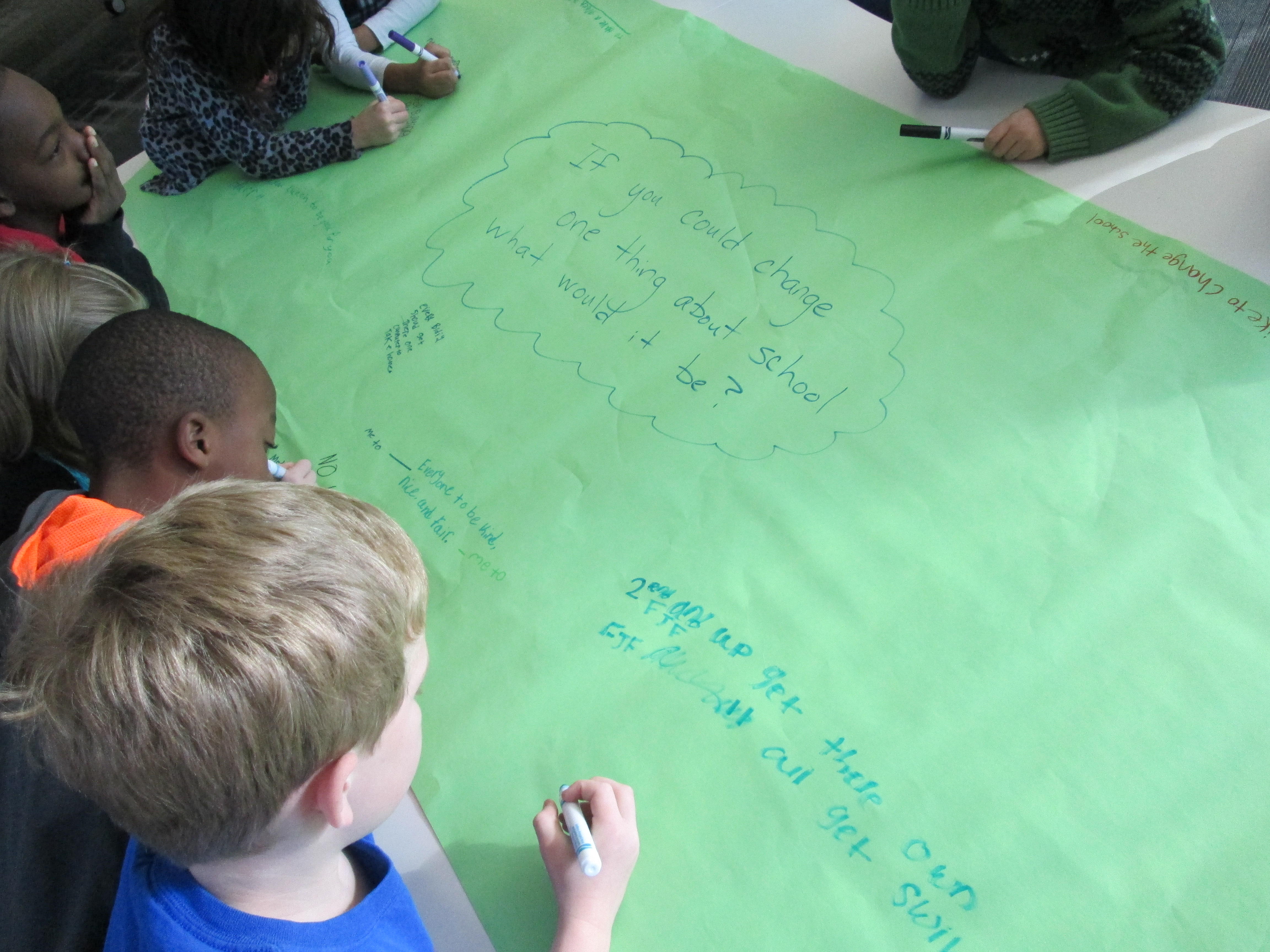
#Geniuscon gives kids the freedom to explore one question:  If you could change one thing about your school, what would you do?

Mrs. Ramseyer’s 2nd grade classroom has teamed up with me in the library to explore this question.  Mrs. Ramseyer and I sat down and mapped out some times, topics, and standards on the media center calendar.  We wanted time for:  brainstorming, question development, research, product development, and sharing.  Our timeline spans from now until May.  We devoted most of our time to research and product development.

I also met with Gretchen Thomas, who teaches at the University of Georgia.  She has several of her students who are interested in partnering with us throughout this project.  Their main role will be to facilitate students during the research process to help them think of all of the possibilities of where to find the answers to their burning questions.  They aren’t there to give answers but rather to build bridges over barriers that students might face.

IMG_1849

Today was our official kickoff.  To start, we watched this video:

The kids immediately began yelling “Why don’t you just walk up the stairs?”  It was hilarious.  The whole point of watching the video was to bring up the idea that we often hold the solutions to our problems if we take the time to look inside ourselves rather than immediately yelling for help.  We spent some time talking about the word “genius” and how we all have genius ideas within us.

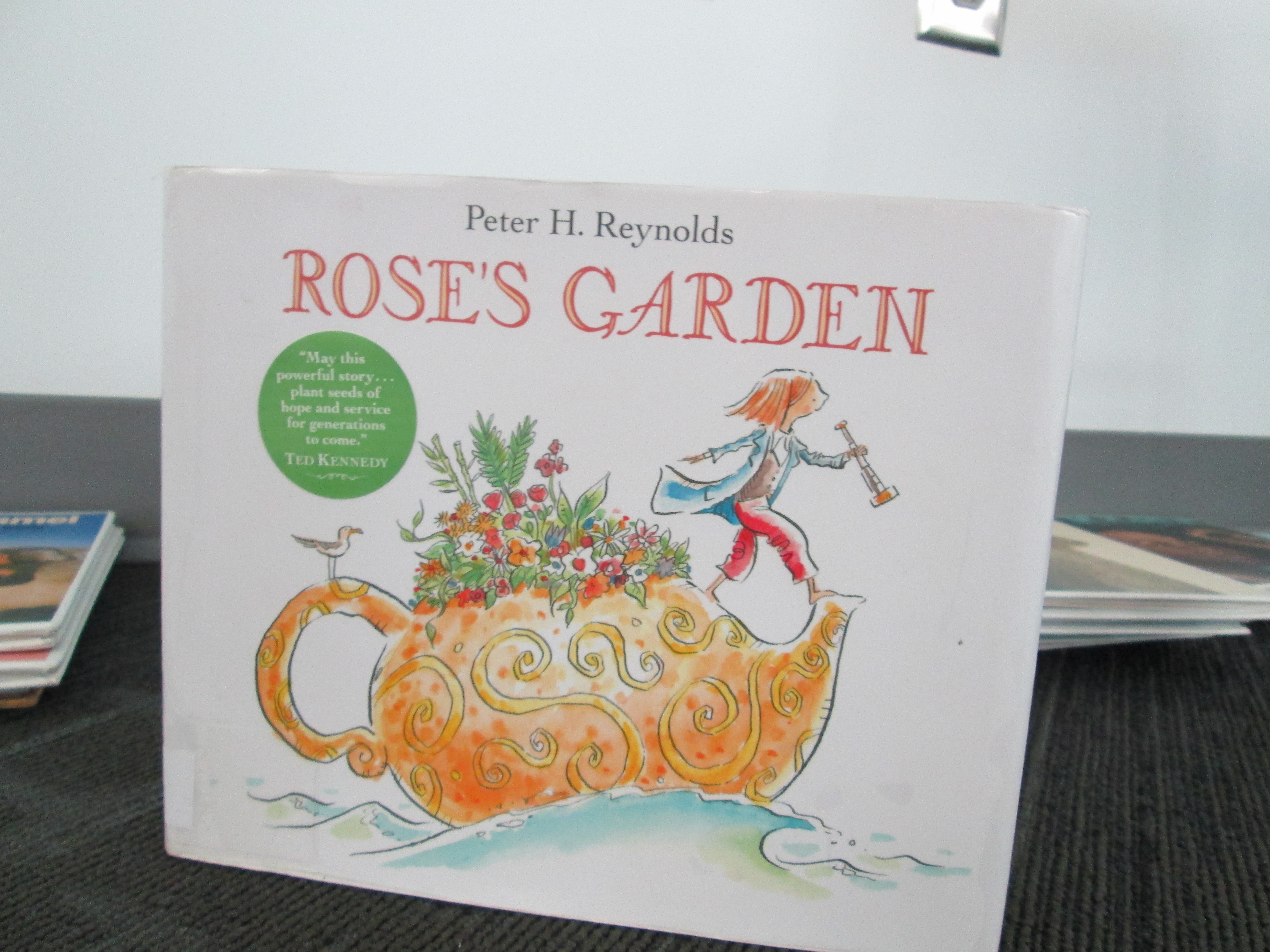
Next, we read Rose’s Garden by Peter H. Reynolds.  In this story, Rose travels the world collecting seeds.  She finally decides to stop and explore a city where she discovers a patch of land in need of color.  This is where she decides to start making her mark on the world by planting her seeds.  Without giving too much away, her efforts inspire a community with her genius idea.

IMG_1855 IMG_1857

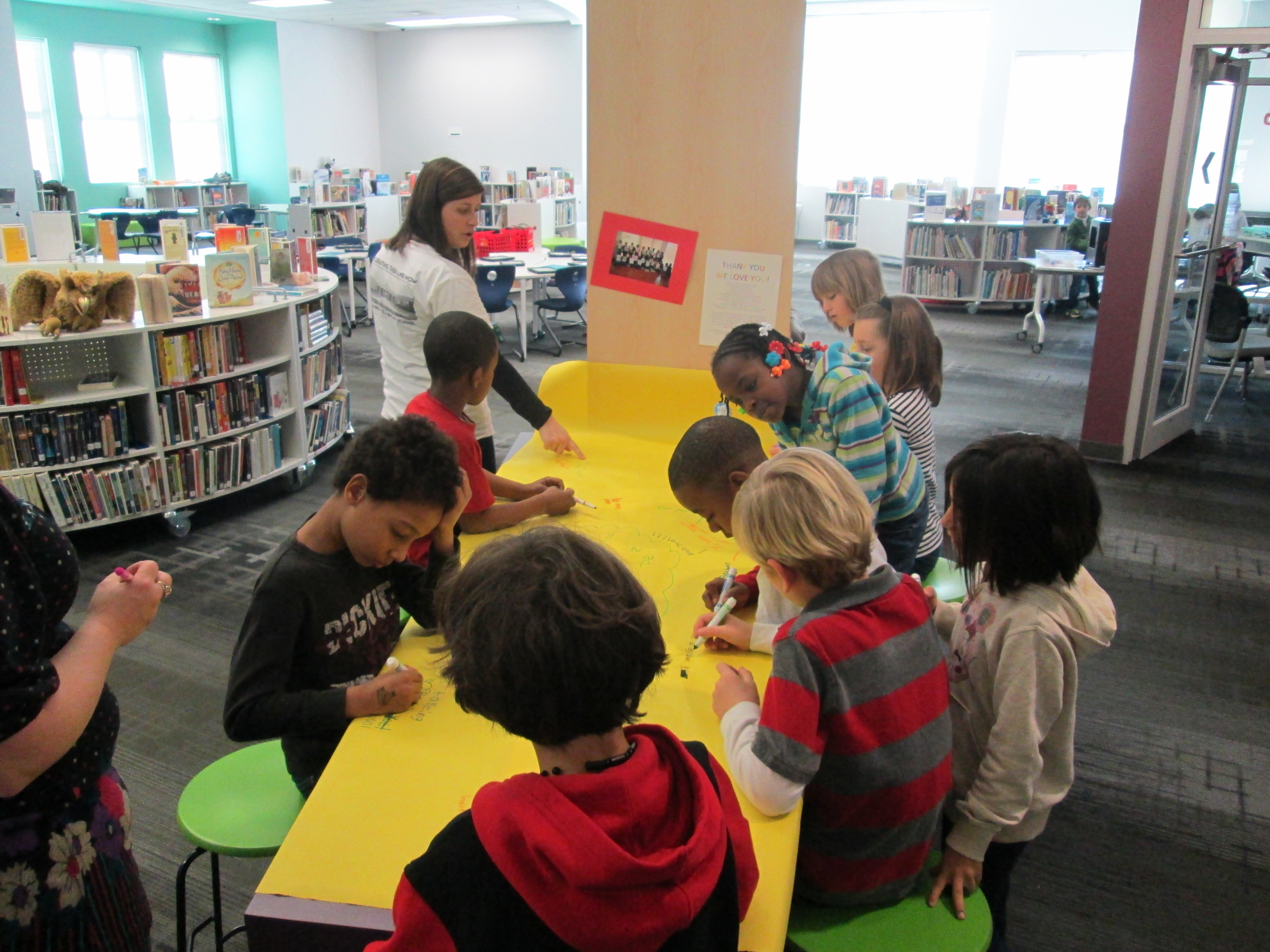
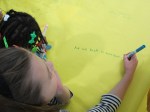
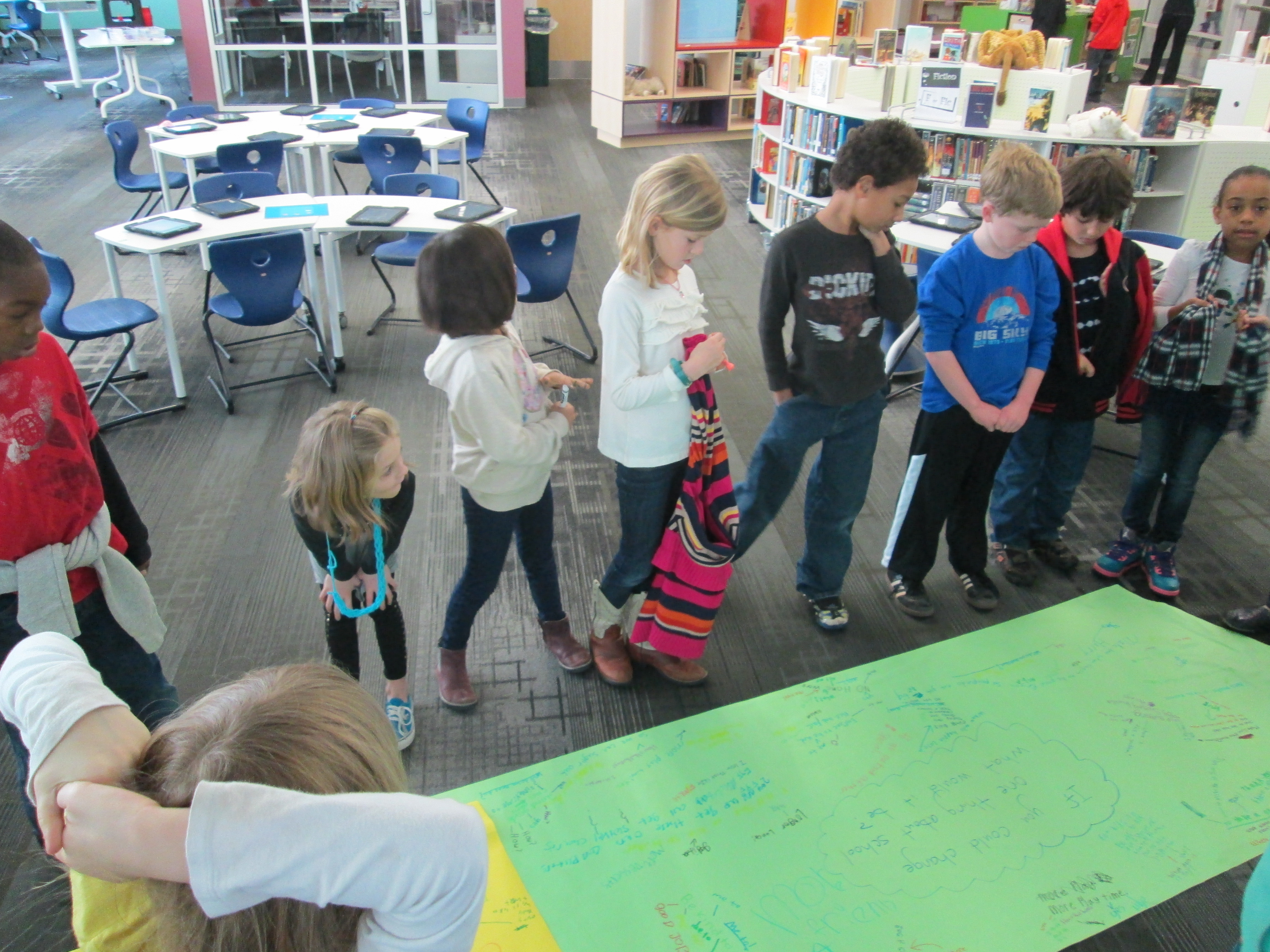
I loved how this book fit into our discussion of what it means to be genius.  It moved us straight into our #Geniuscon question.  Mrs. Ramseyer and I had already talked about how we didn’t want to influence how the kids answered the question, but we did want to give them an opportunity to brainstorm before they chose their focus topic.  We put the question on 2 big pieces of paper and split the class in half.  Each student had a marker to participate in a Chalk Talk, a silent conversation.  All students began writing their responses to the questions as well as asked one another questions about their ideas.  All of this was done in writing.  Mrs. Ramseyer, Mrs. Vaughn (EIP teacher), and I all added to the conversation too.

After about 10 minutes, students mingled between the two chalk talks to cross pollinate their ideas.

IMG_1862

We moved our 2 chalk talks to the floor and all stood around them.  As we looked at or responses, I asked students to look for ideas that stood out to them or topics that seemed to be coming up.  We identified ideas such as:

  • Additions to our school:  adding more playground equipment, building a garden, expanding our school
  • Changes to rules:  additional books on the max checkout in the library, additional “be’s” to our 5 be’s,
  • Technology:  taking home iPads and netbooks, being able to bring technology from home, using our 3D printer
  • Behavior:  addressing the bullying in our school, being kind
  • And more!

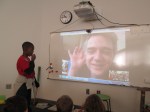
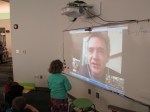
The pages were so filled with ideas that we couldn’t really talk about them all.  After this discussion, we sat down for a big surprise:  a Skype with Peter H. Reynolds!  Peter was in Florida doing some work, and he took time out of his busy day to join us.  After saying a quick hello, students took turns stepping up to the webcam and saying what they wanted to change about our school.  Peter validated each student’s idea and even expanded upon the idea with his own thoughts.  He encouraged students to think about how they could illustrate each of their ideas and turn it into a book, which the students are very interested in doing now.  We will probably make this an additional piece to our project:  possibly even an extension into the art room!

We closed out our time with Peter Reynolds with a friendly goodbye and the encouraging words of “connecting the dots” and “making our mark on the world”.  We can’t think him enough for taking time to visit with us.  He is such an advocate for allowing students to show off their genius and let their creative energy flow.

In class, students will begin to finalize their topics and next week they will return to the library to develop questions to prompt their research.  What an exciting start!

If you want to learn more about #Geniuscon, I encourage you to attend the TL Cafe Webinar on Monday February 3 at 8PM EST.  


Painting our Little Free Libraries

Paint generously donated by the Athens Oconee Home Depot

Paint generously donated by the Athens Oconee Home Depot

It’s been awhile since I’ve done an update on our 2 Little Free Libraries.  We’ve had so many end-of-the-year events that it has slowed us down a bit.  Mrs. Foretich, our art teacher, and I sat down and looked at the designs that student groups submitted and narrowed it down to the 2 designs.  One will feature things that show “where I am in the world”.  It will include GA & US symbols as well as some Athens symbols.  The other design features a sun shine with a red color that resembles the bricks of Barrow school.  Ms. Foretich worked with Kenneth Sims and other employees at the Athens-Oconee Home Depot to select paints, and once again Home Depot generously donated these items.  I can’t say “Thank You” enough to this business.  They have been a huge supporter of this project.

While the 5th grade is practicing for the Moving On Ceremony and making music videos in music class, Mrs. Foretich is pulling small groups to paint.  Students primed both libraries first.  Then, designs were drawn on in pencil before beginning the painting process.  Students repeatedly went back to the paper designs and also talked with the designers to make sure the design was staying true to the vision.  Students even worked on mixing paints to get various shades of colors that were needed on the libraries.IMG_0715

Next week, Mrs. Foretich and I will travel to Lay Park and meet with Randy Haygood to discuss the exact location of our second library.  KenDarius, a Barrow 5th grader, is working on a plan for some rising 4th & 5th graders to deliver books to this library throughout next year as it needs to be filled.  He will join us next week when we meet with Randy.

Throughout this project, we’ve tried to keep students at the center.  They have been a part of almost every decision in the project and were instrumental in getting us the supplies that we needed through their carefully written letters.  Of course, this student involvement has stretched this project to a year-long project, but I think it just shows how when you take time to allow students to participate in the process, rich and rewarding experiences and learning occur.

Little Free Library Progress Update

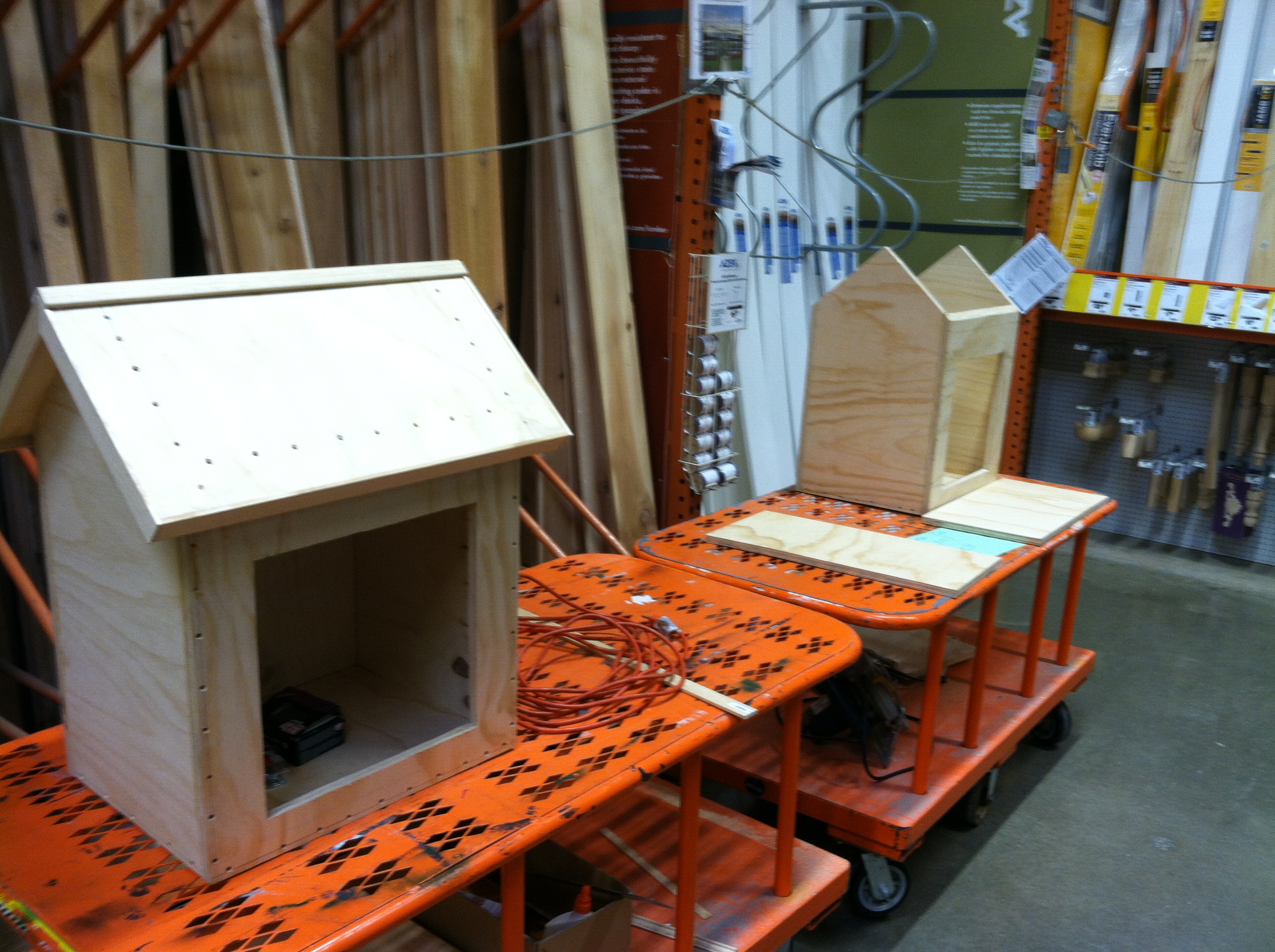
Athens Home Depot is building and donating 2 Little Free Libraries for us to decorate

Athens Home Depot is building and donating 2 Little Free Libraries for us to decorate

Very exciting news! We just heard from Home Depot in Athens that our 2 Little Free Libraries are almost ready for delivery to the school. Kenneth Simms, Operations Manager, sent us a photo of the progress late last night. We can’t wait to get these libraries to our school to begin decorating them in art!  We can’t thank Home Depot enough for all they are doing!

Skyping with Little Free Library

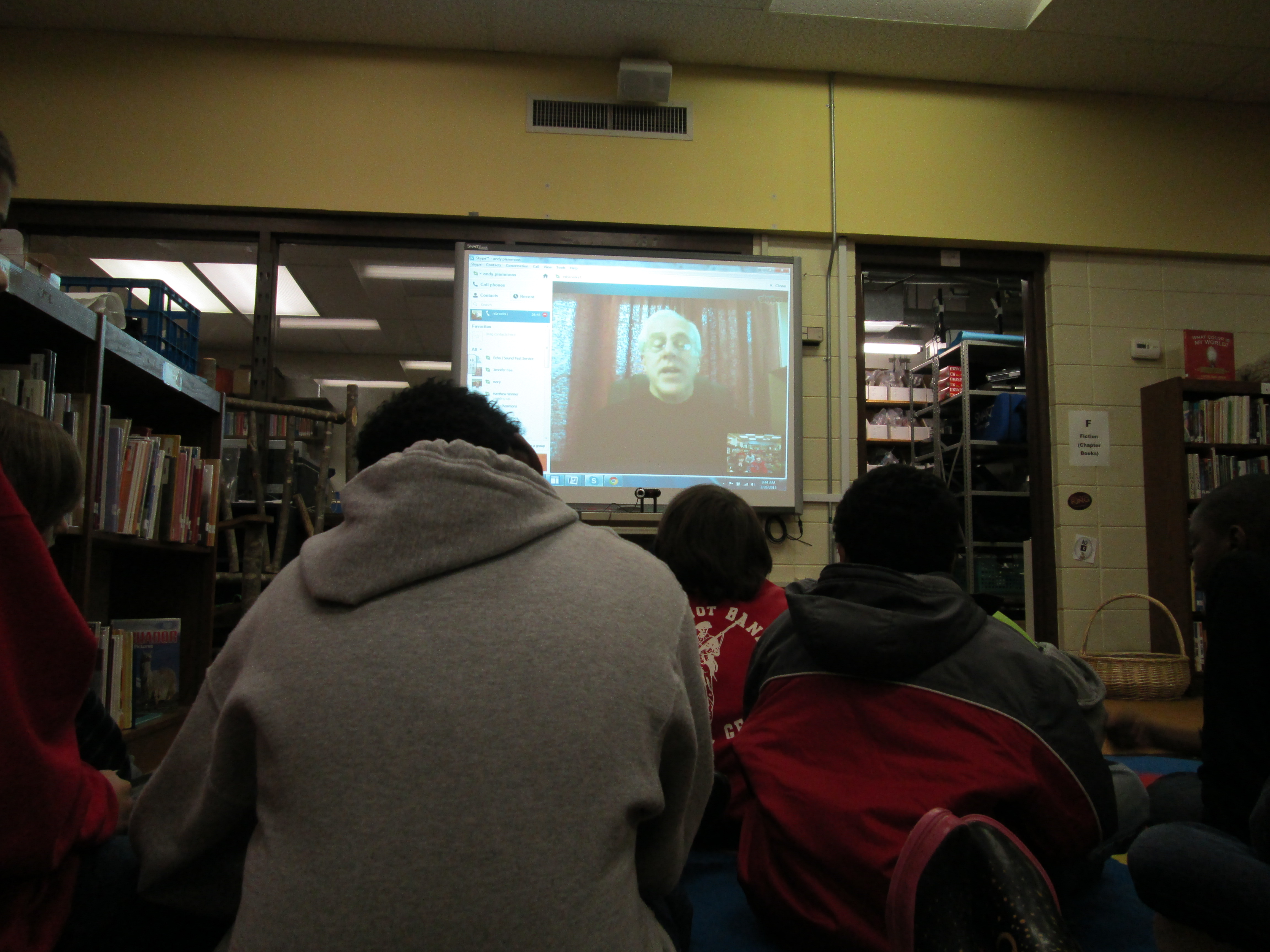
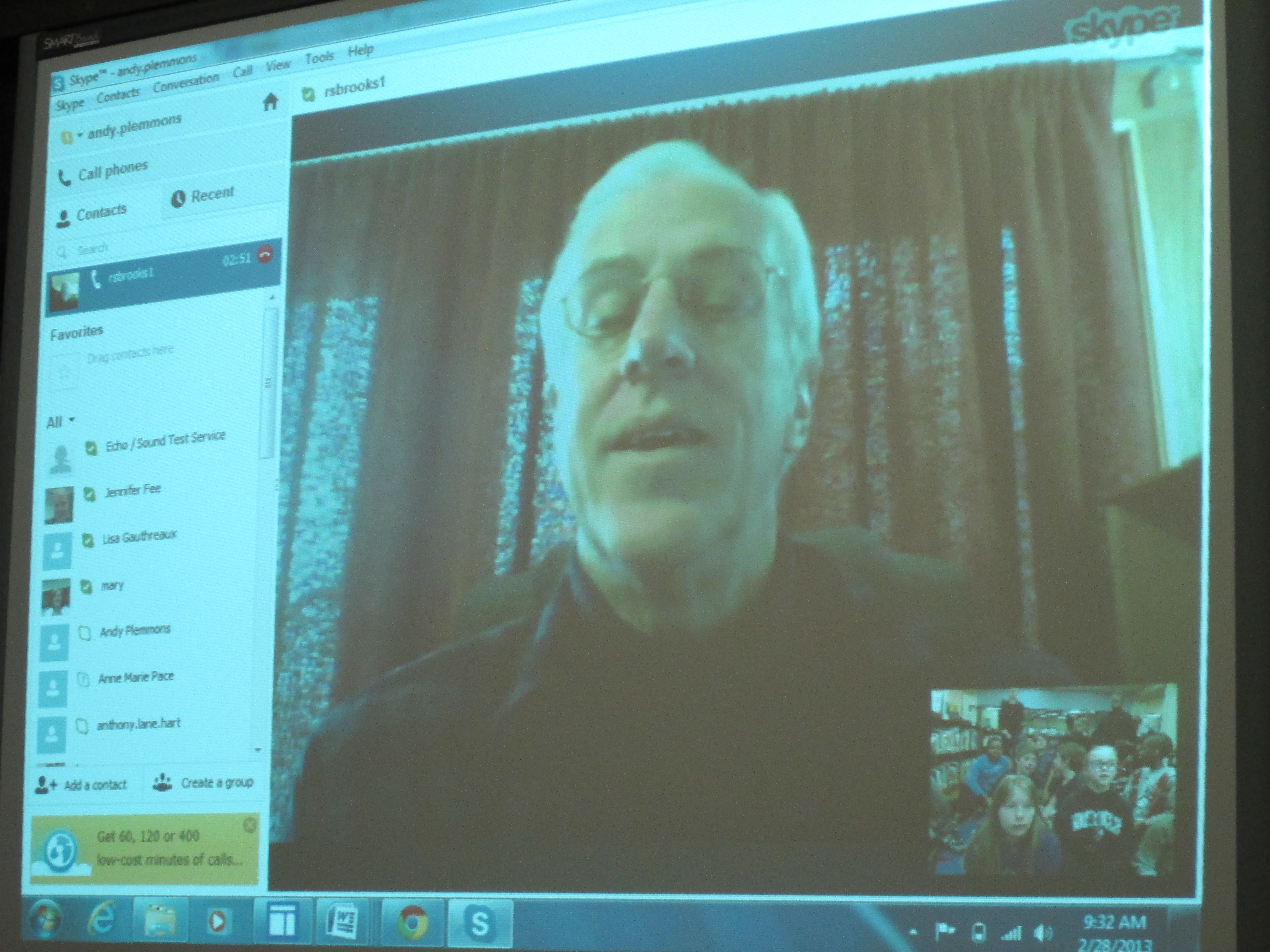
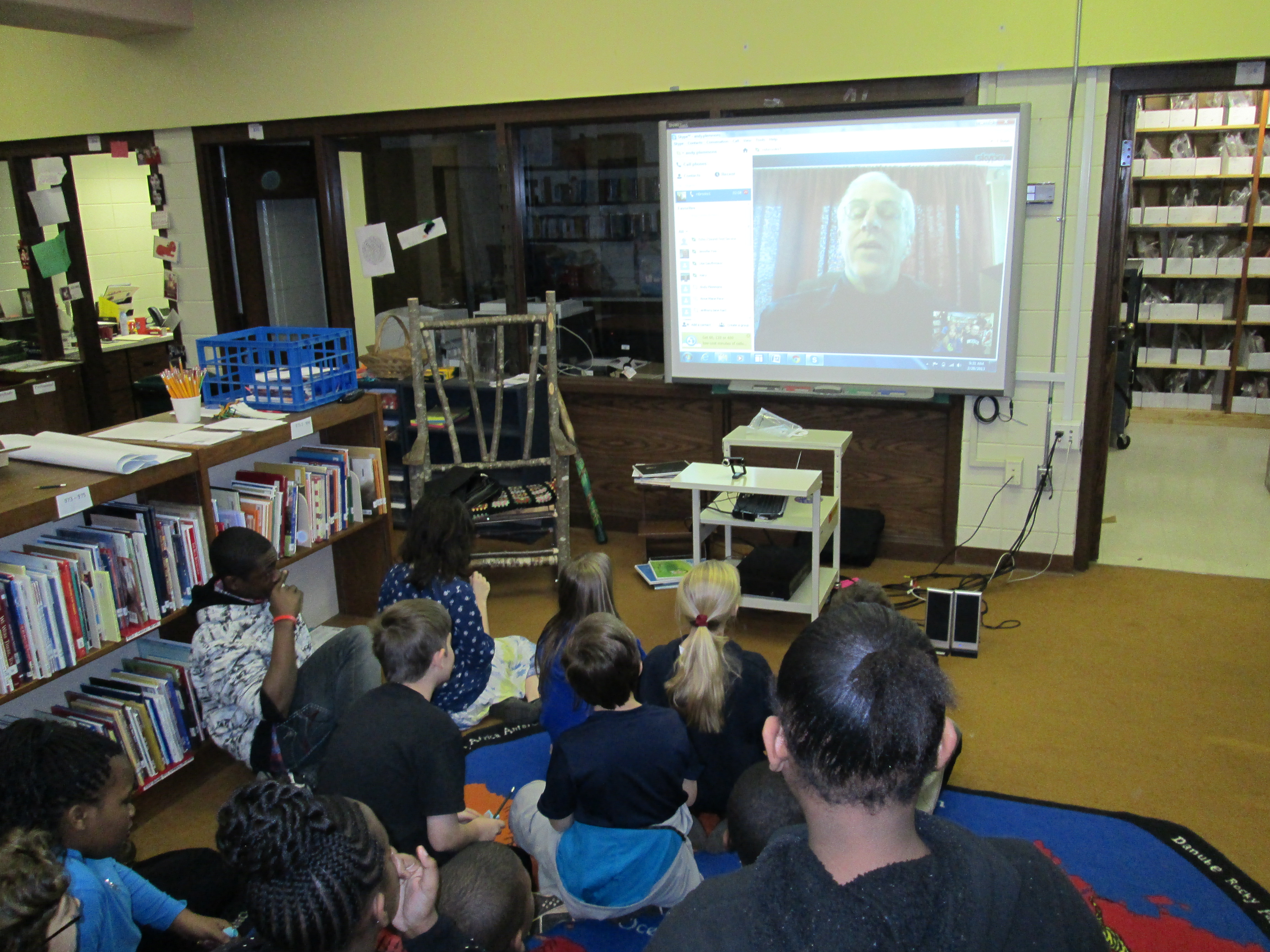
IMG_0082Our 5th grade Little Free Library Project is moving ahead.  You can read about our progress here and here.  A few weeks ago, I talked with Rick Brooks, co-founder of the Little Free Library movement, on the phone.  He contacted me after seeing my Youtube video introducing the project to our 5th graders.  After a few emails and facebook posts back and forth, we finally had a long phone conversation where we discussed other Little Free Library projects in schools as well as some potential ways that technology could be incorporated into our Barrow project.  I shared with him how our students were working in teams where each student had a specific job to do such as researching, writing, designing, and presenting.  During our call, he offered to help us in any way he was able to, so I suggested a Skype session with our students.  He was happy to do this.IMG_0080

On Tuesday and Thursday, Rick skyped with researchers, writers, and task managers from Ms. Cross and Ms. Slongo’s Class.  He told them a bit about the mission and vision of Little Free Libraries, shared specific parts of the website students might visit, and suggested some videos for them to watch.  The kids were able to ask Rick questions about things like green building techniques, location of little free libraries, and which libraries seemed to be more popular than others.  We even had a student have a conversation with Rick in Spanish.IMG_0084

IMG_0081More than anything, this Skype session made the project more “real” for the students.  They left the session with a new energy for the project.  Rick is following what we do, and we appreciate the time and energy that he has put into this worldwide movement and especially for taking time out of his busy schedule to support our small project here in Athens!

http://www.youtube.com/watch?v=_fSwT_kEU9s


http://www.youtube.com/watch?v=JokmwJiPfoE

5th Grade Little Free Library Project Part 2

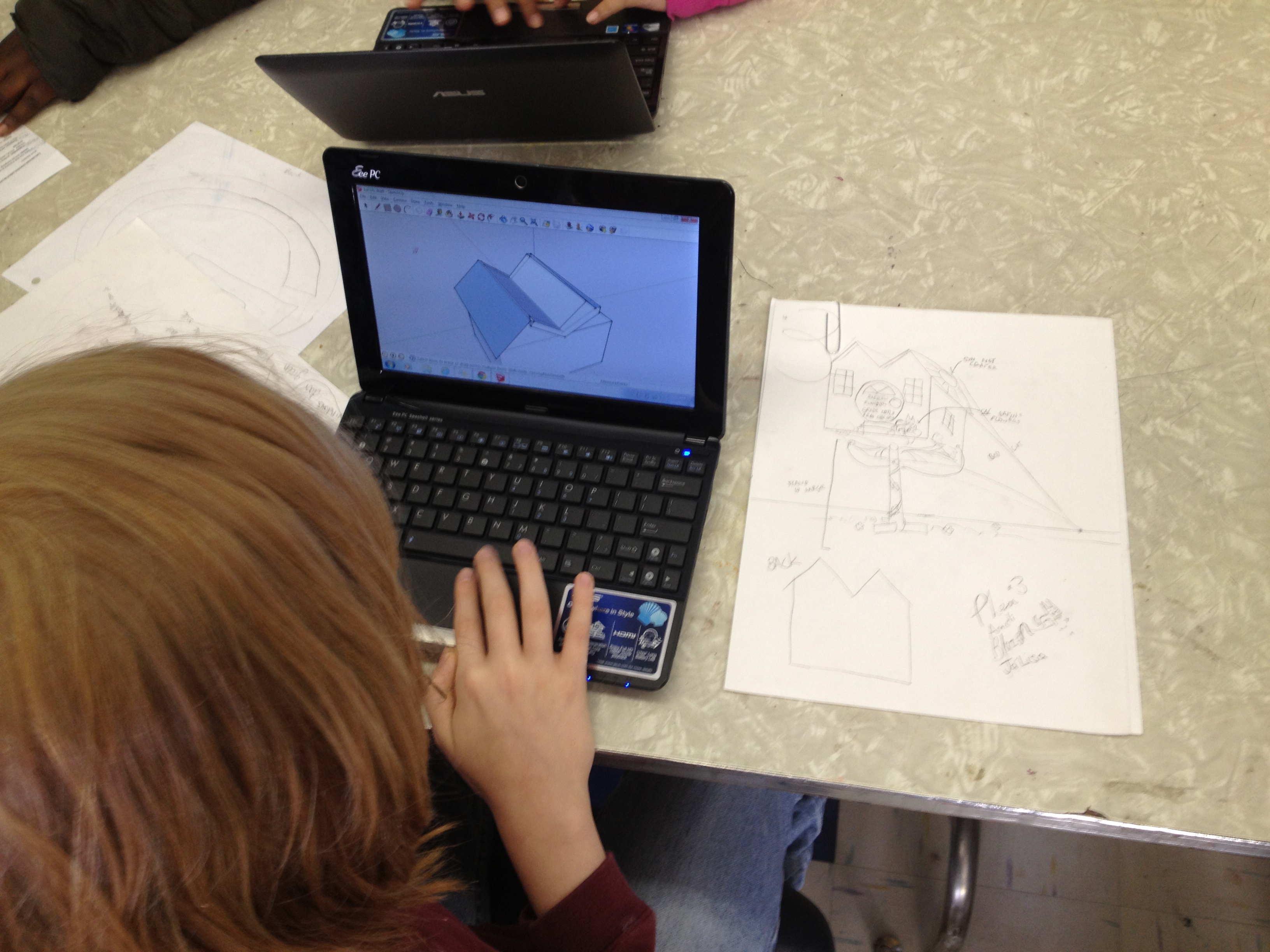
Students designed on paper before using Google Sketchup

Students designed on paper before using Google Sketchup

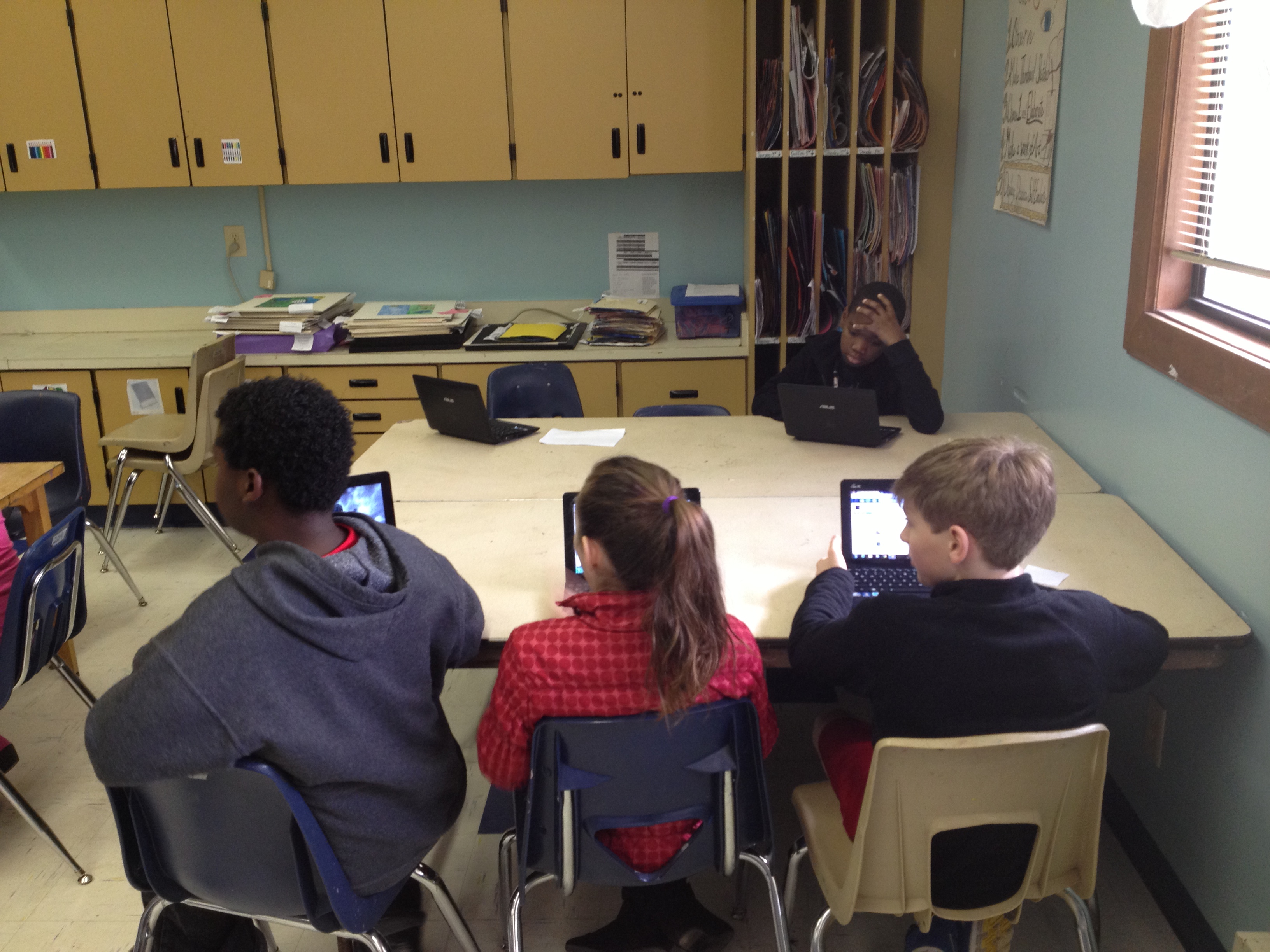
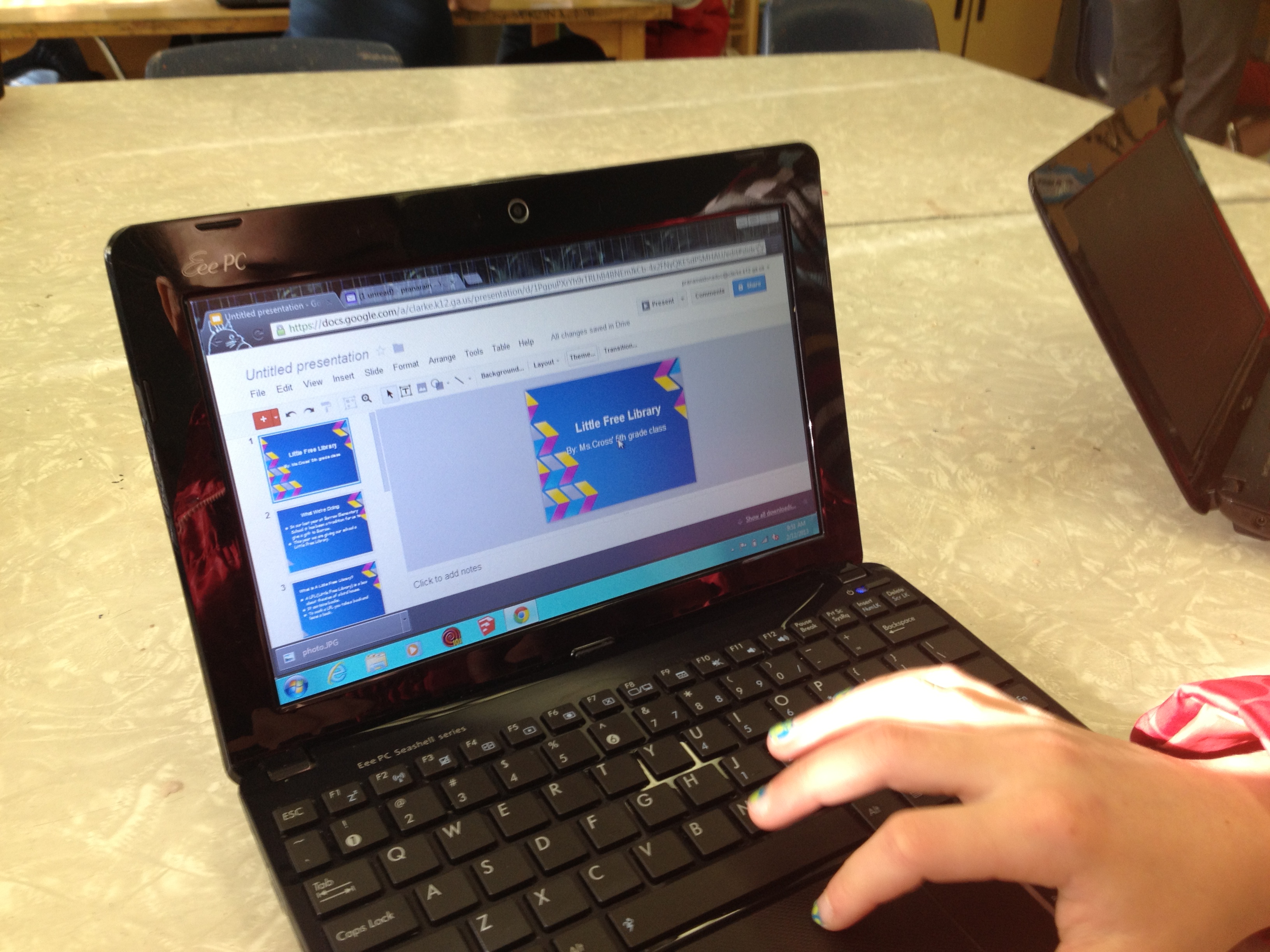
Our 5th grade Little Free Library Project is picking up speed.  Thanks to the amazing collaboration of Rita Foretich and her student teacher, this project is really getting off the ground.  In art, students from both 5th grade classes have been split into teams of 4-5 students.  Each team has a lead designer, a task manager, a researcher, a writer, and a presenter.  Each job has specific responsibilities which Ms. Foretich and her student teacher constantly check in on.  They also give the task managers checklists to help them check in with each person on the team.
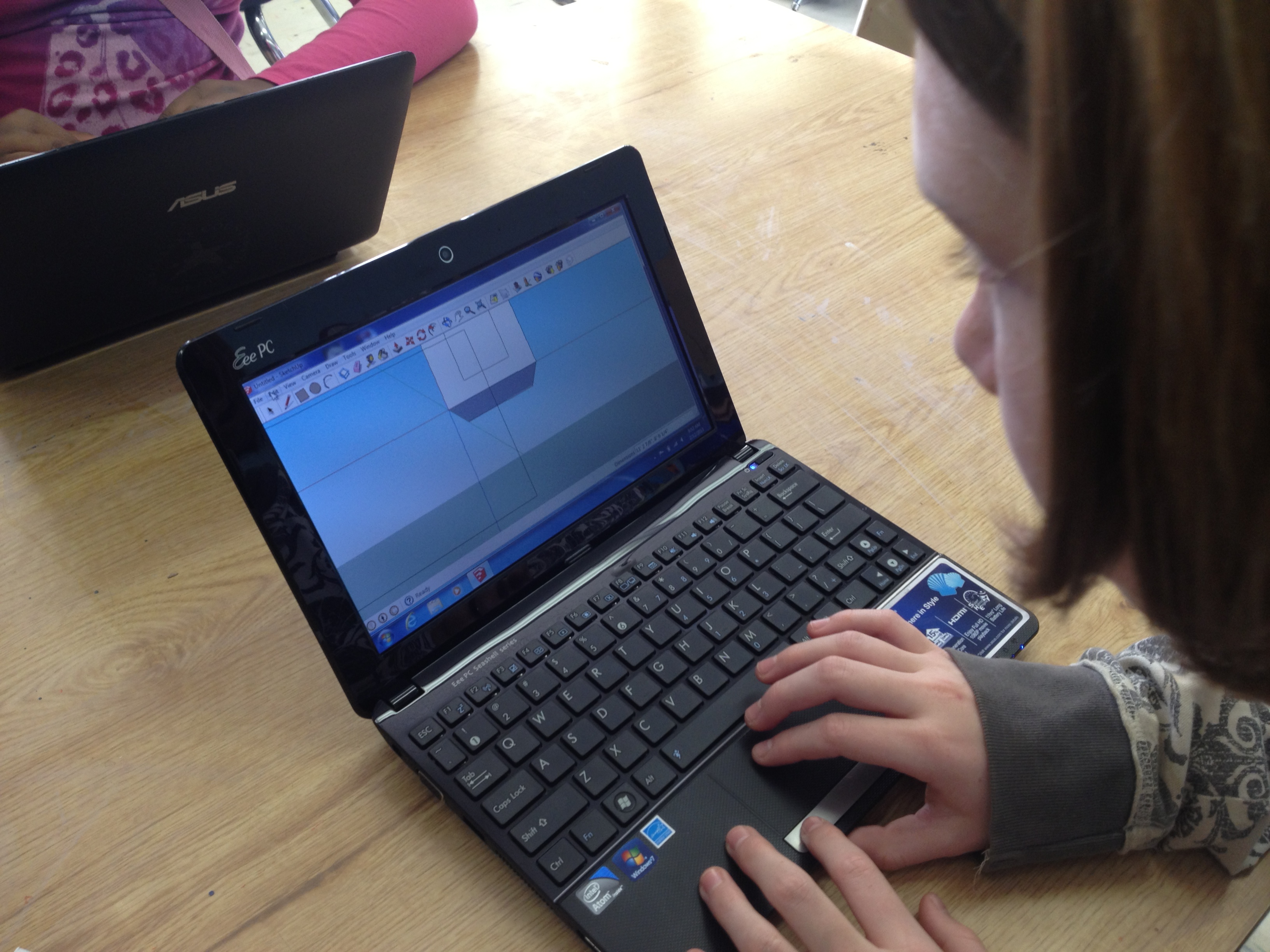
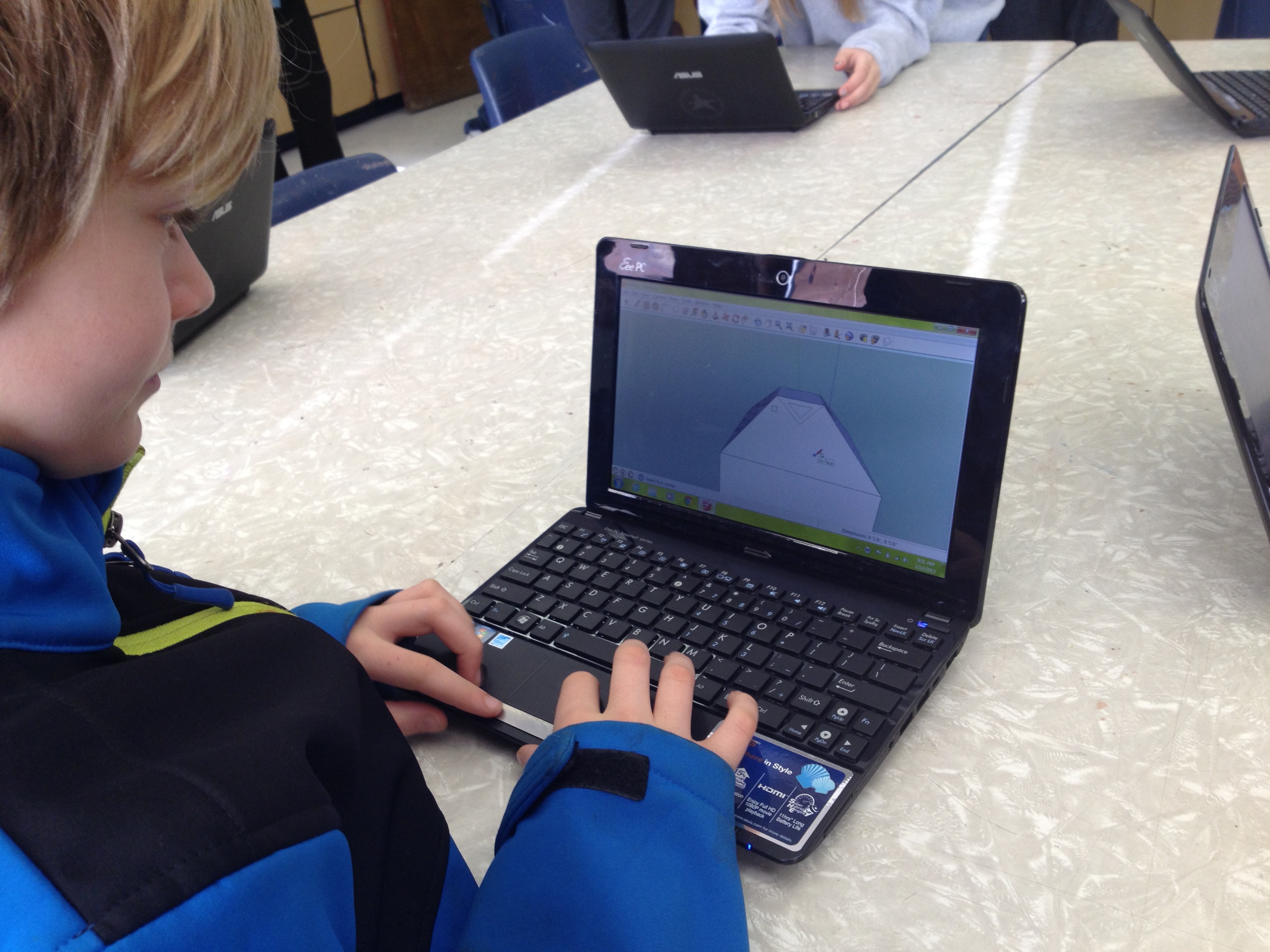
The student teacher is a Google Sketchup expert, so she has the lead designers using this tool to design a potential Little Free Library.  Students have made sketches on paper and moved to Google Sketchup to create a model of their library.  Presenters are putting together a presentation to inform our audience about each library design.  We may end up having the principal choose 2 designs or we may move forward with a student vote. LFL 4

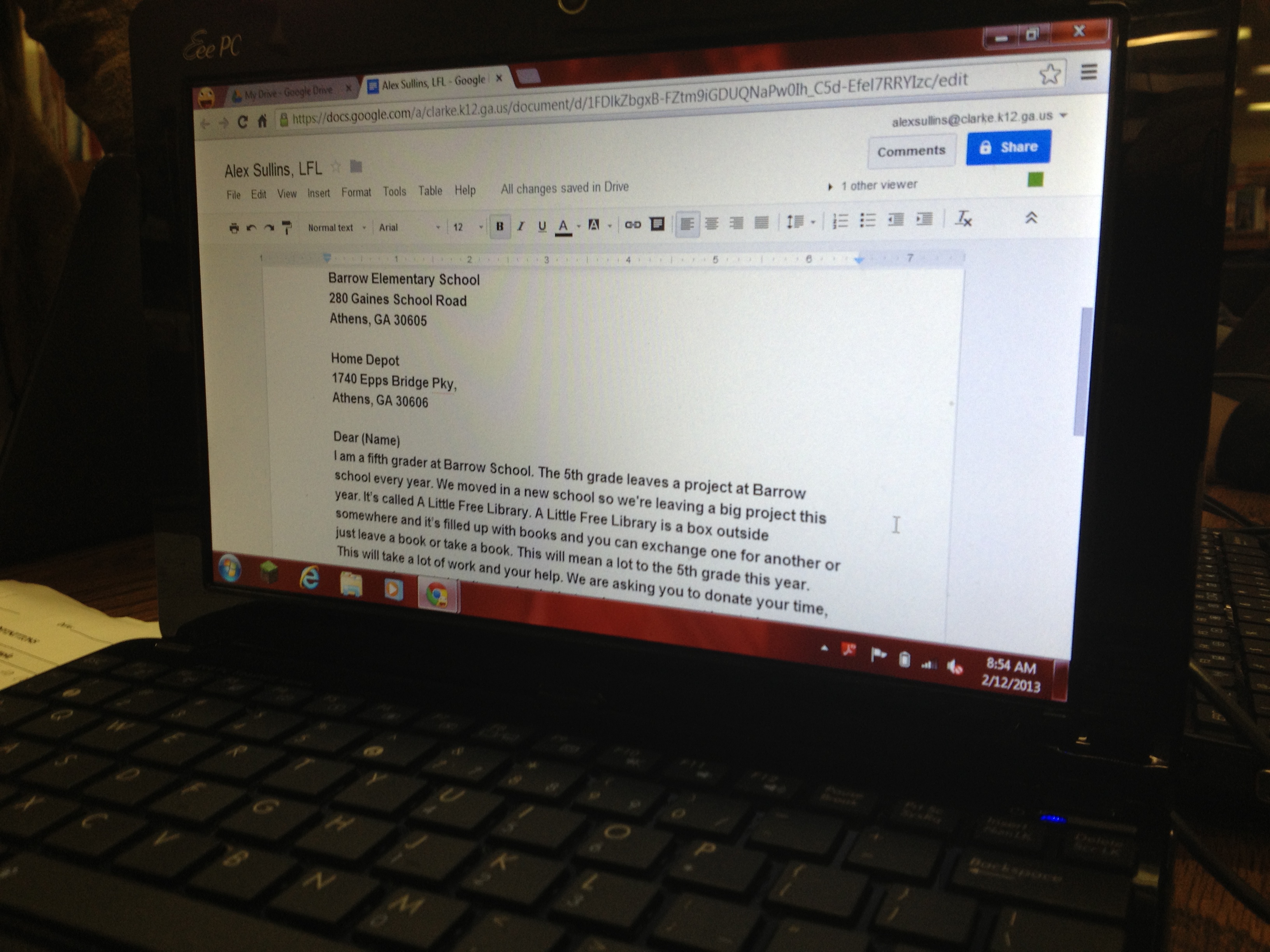
The researchers and writers are working with me in the library to research the Little Free Library site for information about building the actual structure.  As we research the many tips on the site, we are considering other topics that we may need to research such as reusing materials and green building techniques.  We’re thinking of careers that we may need to research in order to identify experts to connect with or people to target for persuasive writing.  The writers are writing persuasive letters to send to potential donors, builders, or collaborators on this project.  They are also considering persuasive tweets they may need to craft for me to tweet out to target audiences for support.

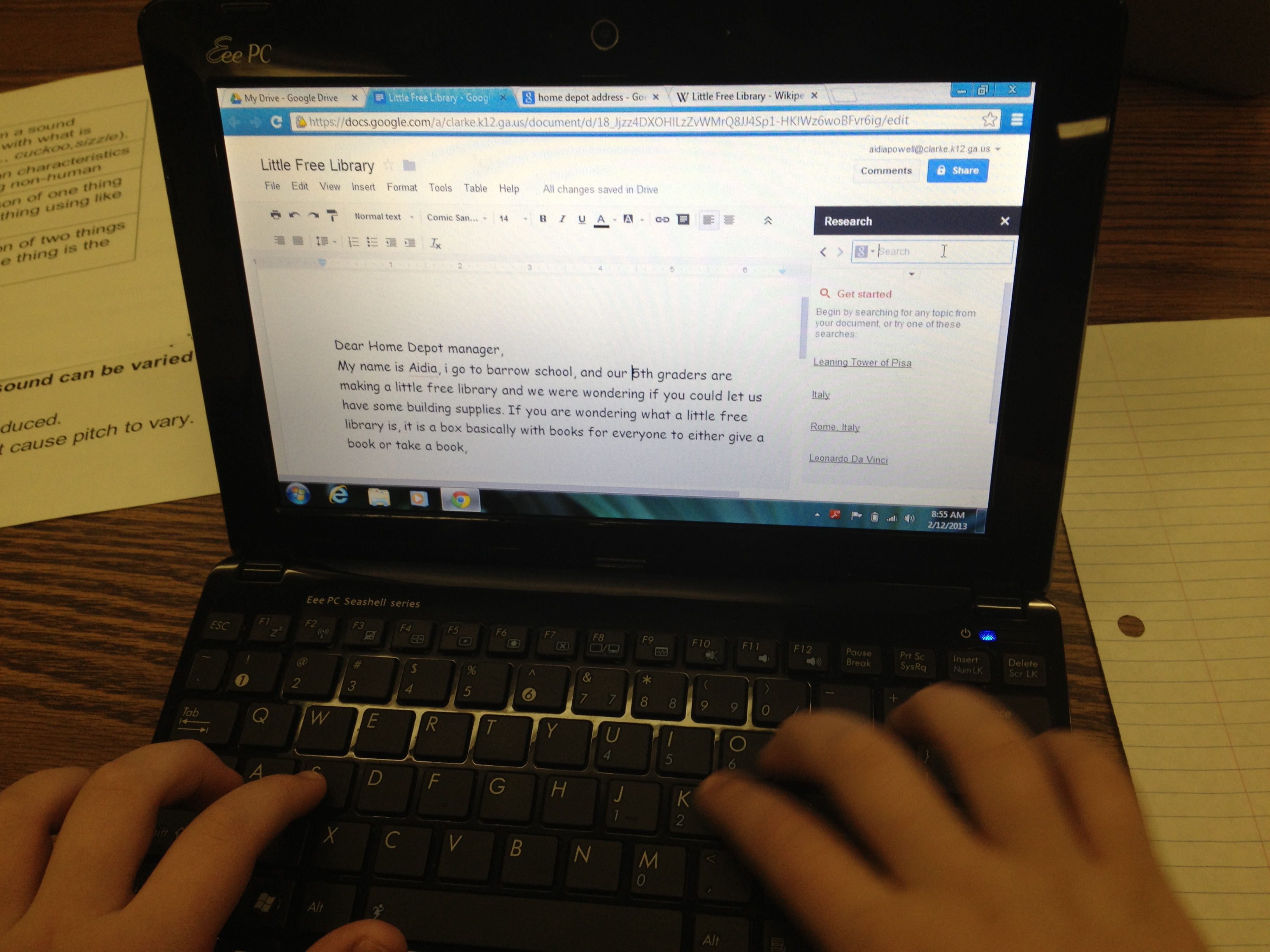
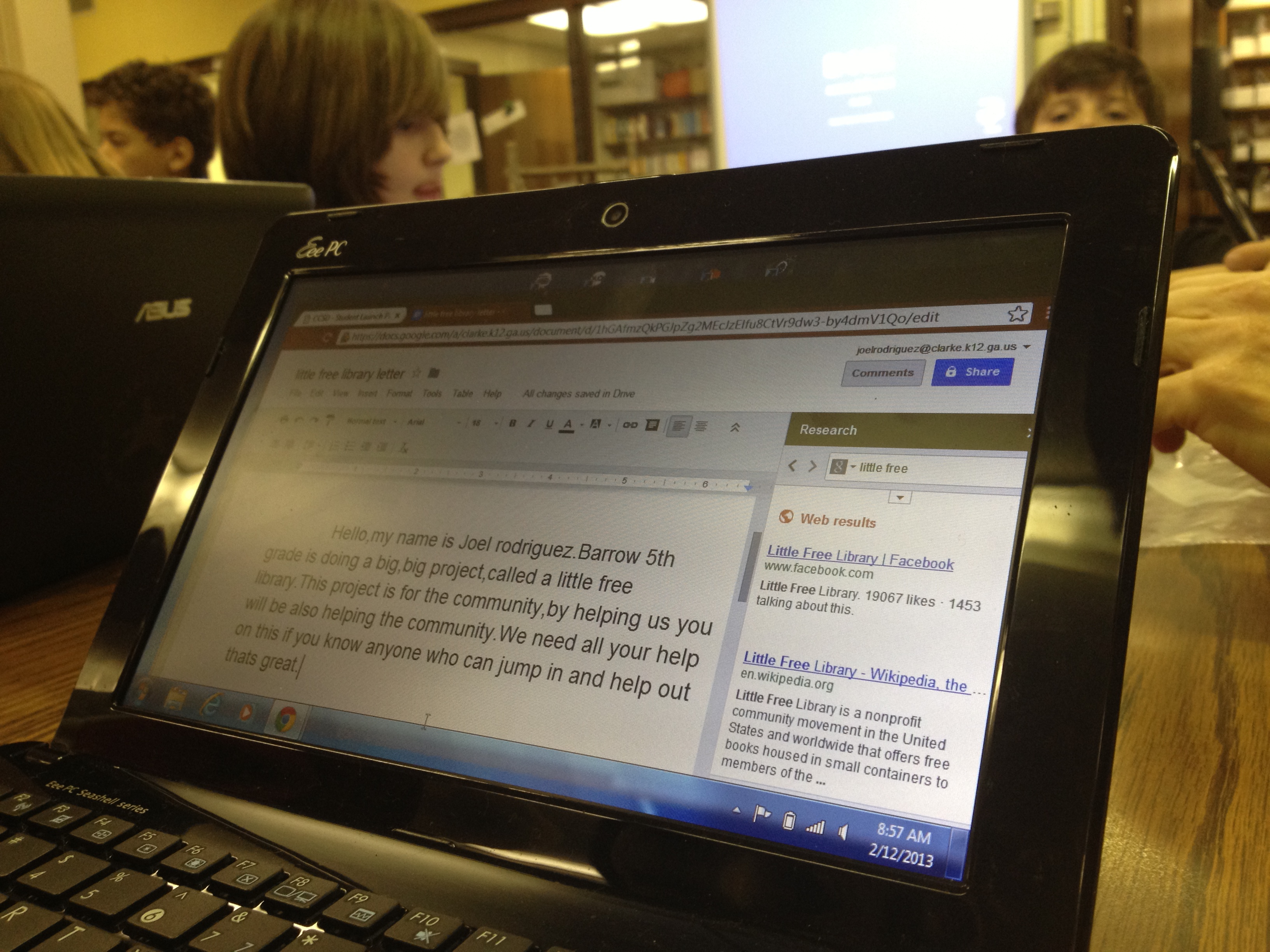
5th graders used the Google Research tool in Google Docs to look for reading statistics

5th graders used the Google Research tool in Google Docs to look for reading statistics

I’m also working with the 5th grade classes on persuasive writing techniques.  We used the Read Write Think powerpoint of strategies and thought about what information we might include underneath each strategy.  I also showed them the research tool within Google Docs.  The students (and teachers) were excited that you could search for a topic such as “reading statistics” to find quotes about reading in the United States and automatically cite the source within your Google Doc.  I think this tool alone will spill over into many other projects now that the students know how to use it!  All 5th graders are writing letters to businesses, builders, parents, students, and other groups in order to ask for money, labor, supplies, books, and a location for our 2nd library.  The teachers are continuing this writing in the regular classroom as well as exploring the Little Free Library site for additional information.  One student was even able to locate a Little Free Library from his hometown in India!

Google Sketchup is proving to be a helpful tool in design

Google Sketchup is proving to be a helpful tool in design

I can’t wait to see where this project goes because it is certainly exploring many of the standards that our 5th graders work on in a variety of areas.


lfl8

A team checks in with one another before starting individual work

A team checks in with one another before starting individual work

LFL7 LFL 8 LFL 6 LFL 5