Each week leading up to World Read Aloud Day (February 24th) we want to join our voices around the world to celebrate one of the strengths of reading aloud. During the week of January 24-31, we celebrate how reading shows us examples of kindness in the world.
We have created a Flipgrid for you to share your responses to the following question:
What kindness role models have you met through reading?
We hope you will share this Flipgrid with other educators, students, and families around the world and record your responses which can last up to 90 seconds. Wouldn’t this be a great way to practice some informational writing in classrooms? Wouldn’t you love to hear stories from the families that you serve? Aren’t you curious about the perspectives on this question from around the world? Let’s join our voices and contribute responses all week long. Can we show our own kindness by contributing our voice?
In addition, you might also consider coming up with your own posts in response to this week’s theme on your own blog or site. You might write a post about a fictional character who has been a model of kindness and post on your blog or other social media. Better yet, have your students write these reflections and share them with you. You and your students might perform random acts of kindness during the week and take photographs to post to Instagram or other social media. You might create a special display of kindness related books in your classroom or library.. Whatever additional ways you choose to celebrate “Kindness Week”, please tag your posts with #wrad16 and #kindnessweek as well as mention @litworldsays (Twitter) and @litworld (Instagram, Facebook).
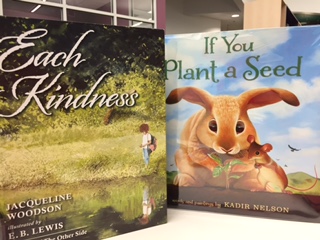
I know two of the stories we will read during Friendship Week are If You Plant a Seed by Kadir Nelson and Each Kindness by Jacqueline Woodson, but we will read many other kindness stories during the week as well.
Each week leading up to World Read Aloud Day (February 24th) we want to join our voices around the world to celebrate one of the strengths of reading aloud. During the week of January 17-24, we celebrate how reading connects us and makes the world a friendlier place
We have created a Flipgrid for you to share your responses to the following question:
How does reading help us connect and make the world friendlier?
We hope you will share this Flipgrid with other educators, students, and families around the world and record your responses which can last up to 90 seconds. Wouldn’t this be a great way to practice some informational writing in classrooms? Wouldn’t you love to hear stories from the families that you serve? Aren’t you curious about the perspectives on this question from around the world? Let’s join our voices and contribute responses all week long. Can we find a new friend by contributing our voice?
In addition, you might also consider coming up with your own posts in response to this week’s theme on your own blog or site. You might read aloud a book with a friend and post about it on your blog or other social media. You might post a book of your best book friends which might be actual people or covers of books. Whatever additional ways you choose to celebrate “Friendship Week”, please tag your posts with #wrad16 and #friendshipweek as well as mention @litworldsays (Twitter) and @litworld (Instagram, Facebook).
I know one of the stories we will read during Friendship Week is Leo: A Ghost Story by Mac Barnett, but we will read many other friendship stories during the week as well.
Each week leading up to World Read Aloud Day (February 24th) we want to join our voices around the world to celebrate one of the strengths of reading aloud. During the week of January 10-17, we celebrate how reading makes us curious about our world.
We have created a Flipgrid for you to share your responses to the following question:
What kind of reading makes you feel curious and fills you with wonder?
We hope you will share this Flipgrid with other educators, students, and families around the world and record your responses which can last up to 90 seconds. Wouldn’t this be a great way to practice some informational writing in classrooms? Wouldn’t you love to hear stories from the families that you serve? Aren’t you curious about the perspectives on this question from around the world? Let’s join our voices and contribute responses all week long.
One of the things we plan to do at Barrow Elementary is weave the theme of curiosity into the 4th grade PACT time (Parent And Child Together). We will use a book such as Rosie Revere Engineer that embodies curiosity, have the families explore something together inspired by the book, and then have families reflect together on the Flipgrid question this week.
In addition, you might also consider coming up with your own posts in response to this week’s theme on your own blog or site. You might write about 3 things you are currently curious about and invite your friends and followers to do the same in order to expand your list of wonderings. You might share pictures of books that embody the theme of curiosity. Whatever additional ways you choose to celebrate “Curiosity Week”, please tag your posts with #wrad16 and #curiosityweek as well as mention @litworldsays (Twitter) and @litworld (Instagram, Facebook).
Ms. Tesler’s 4th grade class has been exploring how they can be leaders within our school community. Back in the fall, they started writing shelf talkers and displaying them on shelves at the front of our library. After all of their suggested books were quickly checked out, they are looking for ways to expand their leadership. They have decided to take the “7 Strengths of Reading” challenge leading up to World Read Aloud Day and explore each week’s question. They have also decided to take their shelf talkers and make them digital.
Across 2 days, the class came to the library to work on their next steps of this project. We began by talking about our memories of being read aloud to. I shared about my 2nd grade teacher, Ms. Deloache, and how she read Brer Rabbit stories to us with so many voices that I can still hear in my head today. Ms. Tesler shared an experience of being read aloud to in college and how that stuck with her even as an adult. Many other students began to share their own memories of being read aloud to.
We used this to launch into a new purpose of exploring the read aloud. We are thinking about books that others might enjoy reading aloud. We are also thinking about books we might read aloud to our buddies in other classrooms. Along with this, we started discussing how reading aloud builds community and how certain books help us feel connected with a community. To close, I shared my own example of a book talk and a reflection on the #belongingweek #wrad16 question on Flipgrid.
The first task was for students to select a book or books to read. We wanted them to choose a picture book for this first book talk and question. I pre-selected some books that had a theme of belonging, but students were welcome to choose any picture book. Once students chose a book, they sat down to read it. If they finished, they could start writing their shelf talker or their reflection on this week’s #WRAD16 question: “When has reading helped you feel like you belong to a community?”
In class, students continued to work on their reflections and they returned to the library with their completed writing. I’ve been sharing the belonging week Flipgrid a lot on social media in the hopes that other schools would contribute. When the students arrived to record their own, I was happy to share with them that Donna MacDonald in Vermont and Kathy Schmidt in Georgia had students who contributed to the Flipgrid. We started by taking time to listen to them.
We used these contributions to consider pieces that were included as well as what we needed to do when we recorded our own. Students pointed out things like speaking clearly and loud enough to hear. They pointed out how there wasn’t a lot of movement behind the students who were recording, and that they introduced themselves.
Students spread out all over our library and recorded two Flipgrids. One Flipgrid was a digital book talk sharing a new book. This set of answers will be displayed on a monitor in the library and put in slideshow mode. This will cause the videos to constantly scroll through and advertise books in our library. We also hope that other schools will contribute their own book talks. Renee Cunningham in North Carolina is already planning to do this with her students.
Finally, our students reflected on the belonging week question for World Read Aloud Day. I loved hearing students make connections to their own lives and the sense of belonging. I also loved hearing students pick out parts of a book and how a character felt like he belonged to a community. It was a natural way to collect some analysis of text from students.
I hope you will take a moment to listen to some of their thoughts.
We are just getting started, but I hope to see many more schools contribute to both our book talk Flipgrid as well as our weekly 7 Strengths of Reading grids. If you are interested, feel free to add your students’ voices!
Each week leading up to World Read Aloud Day (February 24th) we want to join our voices around the world to celebrate one of the strengths of reading aloud. During the week of January 3-9, we celebrate the sense of belonging that reading aloud gives us.
We have created a Flipgrid for you to share your responses to the following question:
When has reading helped you feel like you belong to a community?
We hope you will share this Flipgrid with other educators, students, and families around the world and record your responses which can last up to 90 seconds. Wouldn’t this be a great way to practice some informational writing in classrooms? Wouldn’t you love to hear stories from the families that you serve? Aren’t you curious about the perspectives on this question from around the world? Let’s join our voices and contribute responses all week long.
In addition, you might also consider coming up with your own posts in response to this week’s theme on your own blog or site. You might post a photo of you or a loved one with a book that helps you feel connected to the world. You might tag or mention friends who inspire you as a reader to let them know how they are a part of your own reading community. Whatever additional ways you choose to celebrate “Belonging Week”, please tag your posts with #wrad16 and #belongingweek as well as mention @litworldsays (Twitter) and @litworld (Instagram, Facebook).
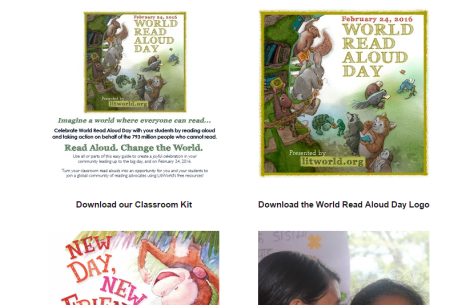
It’s time for us all to start making plans and building excitement for Litworld‘s World Read Aloud Day 2016. This year, World Read Aloud Day takes place on February 24, 2016, but many of us will celebrate the entire week of February 22-26 and into the next week for Read Across America. We also have an exciting addition this year called the “7 strengths” of reading aloud, which will give us an opportunity to connect our voices leading up to the official World Read Aloud Day.
World Read Aloud Day “calls global attention to the importance of reading aloud and sharing stories.” When we connect our students through Skype, Google Hangouts, or other web tools, they experience the power of the read aloud and realize that they are connected with a bigger world that is both the same and different from them.
Shannon McClintock Miller and I invite you to start posting your schedules on our shared Google Doc.
Your contact info such as social media, Skype, and/or email
Your role
Your school and grade levels
Your location
List your time zone when posting your available dates and times
After you post your own schedule, take a look at the other schedules and sign up on someone’s schedule to connect your students. We’ve found that it doesn’t matter if same grade levels connect with one another. Often times, an older grade can read aloud to a younger grade or younger grades can find parts of a books that they can read aloud to an older grade. There’s not just one way to connect. Part of the fun is meeting new friends, planning your read alouds, and seeing what magical things happen during your connection that you weren’t even expecting.
We have many ideas from previous years on our blogs. You can read more about World Read Aloud Day 2015 on Expect the Miraculous and The Library Voice. Litworld also has several resources for you to use in your planning and connections including:
Each week leading up to World Read Aloud Day, we will be focusing on one of the 7 strengths of reading aloud. Wouldn’t it be fun to hear voices from around the world reflecting on these strengths as we await our real-time connections? We’ve made a series of Flipgrids that anyone can add to. We hope you will all will reflect on these questions with your students, teachers, and families and have them all respond on a Flipgrid. All you need is a computer with a webcam or a free app on a tablet. We’ll be sharing more posts about these strengths and questions later, but for now, here is a list of the strengths and the links to the Flipgrids.
We have an opportunity now more than ever before to connect our voices around the world leading up to World Read Aloud Day and throughout WRAD week. We hope you will take advantage of all of these tools to show our students and the world that reading aloud makes us strong and connected. Please let us know if you have any questions along the way. Happy connecting!
Wow! We had the most students ever participate in our 3rd annual picture book smackdown. Even sickness and technical difficulties didn’t stop our students in 5 states sharing favorite books along with author, Laurie Thompson.
Here are a few behind the scenes notes:
There were multiple emails and tweets sent between the participating schools in this smackdown. We established etiquette for the hangout such as keeping things moving, muting microphones when we weren’t speaking, and only having about 5 students at a time share
We all prepared our students in advance of the smackdown but we each did it in our own way. My own students had a basic script that they filled out.
The amazing Cathy Potter helped organize Laurie Thompson to join us. Unfortunately, Picture Book Month founder, Dianne de Las Casas wasn’t feeling well and couldn’t join us. She was with us in spirit, though!
I had a group of 50 students! Luckily 2 volunteers and a teacher helped me keep them organized in chairs and a parent frantically wrote down as many titles of shared picture books as she could.
We all came into the Google Hangout early to test our cameras and microphones. We communicated with one another through the chat in Hangouts as well as through text messaging if needed.
All of our Picture Book Smackdown content can be found on our Smore.
I would like to thank all of the schools who participated, Laurie Thompson, our volunteers, and all of the people who viewed and sent out tweets. Thanks for celebrating Picture Book Month with us!
For the past few weeks, 2 classes have been involved in exploring winter right here in Athens, Georgia. Even though we might associate cold and snow with winter, it isn’t always like that where we live. Ms. Kelly’s Kindergarten class and Ms. Ramseyer’s 2nd grade class both participated. You can read about the beginnings of their projects here. Our work is all coming together with classrooms from around the world on a collaborative Google slide presentation.
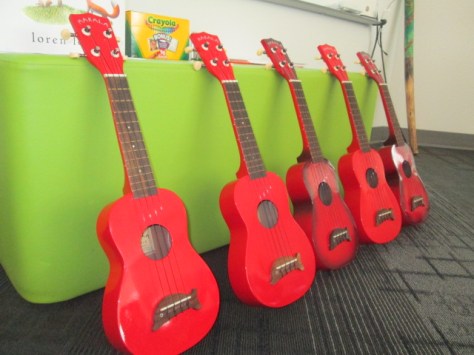
Ms. Kelly’s class has been busy in their classroom dividing into groups and building a song about winter. As a class, they worked on the base beat using beatlab. Then different groups worked on parts of the song. Singers created the words and sang them. Clappers used their hands to add rhythm. Ukuleles strummed chords for another layer. Instruments such as coffee can drums added even another layer of rhythm.
Ms. Kelly wrote the words up onto a big chart paper with plenty of visuals for students to follow. She saved their class beat in beatlab and pulled it up on the library projector. I used Screencastomatic to record the beat along with our webcam recording the student performers. Ms. Kelly used dry erase markers to make notes on the beatlab beat for specific groups of students. She also used a cowbell and her voice to help students know when to come in.
We gave ourselves plenty of time to record multiple times, but we just loved our first take!
Even though we were in love with that version, we decided to try one more time with just an iPad so that we could get some closeup shots of students performing. We love this version too, but we are including the 1st one in our global winter project with classrooms around the world.
We had some fun shout outs while we were working on our song, including some retweets from Kishi Bashi who was one of our inspirations for our song.
Ms. Ramseyer’s 2nd grade class split into groups of 4. Two students were author and two were illustrators. After starting their work in the library, they continued to write and draw in class to tell about personal experience with winter in Athens. They featured things like food, clothing, school, and events in winter.
Each group came to the library with their finished work. We spread their pages out on tables and took digital pictures of each page. We then took these and added them to the collaborative Google presentation.
In Youtube, we pulled up the feature where you can record straight into Youtube with your webcam. We placed each page in front of the webcam and students read their winter personal narratives and facts. These videos were also embedded on the Google slides.
We look forward to seeing how the rest of the slides turn out as we learn about winter around the world!
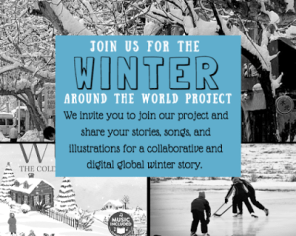
I’m so excited about a current opportunity we have with classes around the world to think about winter where we live. Shannon Miller and Cantata Learning recently invited schools to research winter in their areas and for students to work together around the globe to create a collaborative e-book filled with information, personal narratives, poems, illustrations, and songs.
All classes participating in the project started by reading and listening to the Cantata Learning book Winter the Coldest Season of All.
From there, different classes branched off to do different types of projects. In Ms. Ramseyer’s 2nd grade class, we focused on winter in Athens, GA using notes from her husband Craig, who is studying to be a meteorologist.
He gave us facts about the average temperatures and snowfall in Athens each winter. I think we all think of snow for winter, but in reality, we really don’t get much snow or even cold here in Georgia. We were trying to get students to think about that.
After gathering our facts, we had students reflect on their own experience since that is a big part of the research process, especially about your own community. I had students turn and talk to a partner about a variety of winter topics: clothes, events, food, school, sounds. Each time they talked, I ran around with the keyboard and typed the ideas into a shared doc that could be used for our project.
Ms. Ramseyer let students group themselves into groups of 4. Each group needed 2 authors and 2 illustrators. They could decide what kind of text they wanted to write such as personal narrative, poetry, or informational. They had to make a plan before they could start working. I spread out materials for them to use such as white paper, pencils, and crayons. It was a lot of fun to walk around to tables and talk with them about their decisions while they worked. I often found myself asking the illustrators to check the text that the authors were creating so that their illustrations were matching or extending the text. There were a few arguments along the way, but each quarrel was an opportunity for a connection back to how books are created. As usual, there were unexpected moments that were priceless, such as when a student noticed that the illustrators were only drawing boys into the illustrations. She called him out and said he needed to add some girls. We talked about diversity in illustration and what that might mean and why that might be important. It was fascinating. The priceless moment came when the second grader said:
Overheard in a collab writing project: "could we please add some girls in the illustration b/c we don't want our book to be sexist" #tlchat
Students will continue working on this project in writing workshop in the classroom before they come back to me to digitize the work and add it to the collaborative Google slide ebook.
Kelly Hocking’s Kindergarten class is planning to write a song about winter in Athens. She often uses ukuleles in her class and incorporates song writing. After listening to the book, students explored a tool called Beatlab to tinker with creating a beat. They will use this tool to establish a beat for their song about winter.
In the library, we also explored the book Hip Hop Speaks to Children collected by Nikki Giovanni. I selected a few poems from this book that had an established beat such as Things by Eloise Greenfield as well as poems that had actual music with them on the accompanying CD such as Ham N Eggs by A Tribe Called Quest. For poems without music, we clapped or snapped along with the rhythm of the poem to see that there was in fact a beat there. For the poems with music, we listened once and then closed our eyes and tried to focus on the various instruments we could hear layered over one another in the background and how they repeated.
We even looked at a video by the famous Kishi Bashi, who is also a parent at our school. He accompanies himself by recording a layer of beats live onstage and looping them with pedals. He performed at our school last year, and the Clarke Central Odyssey crew filmed this song that we used for inspiration.
After the library visit, Ms. Kelly’s class used a Capstone Library book called Winter: Signs of the Season Around North America. They gathered various winter words that might inspire their song. Once the song is written, we will record in the library as well as perform at a school assembly.
I love how student voices from around the world are coming together around a common topic, and I can’t wait to learn about winter through the eyes of students.
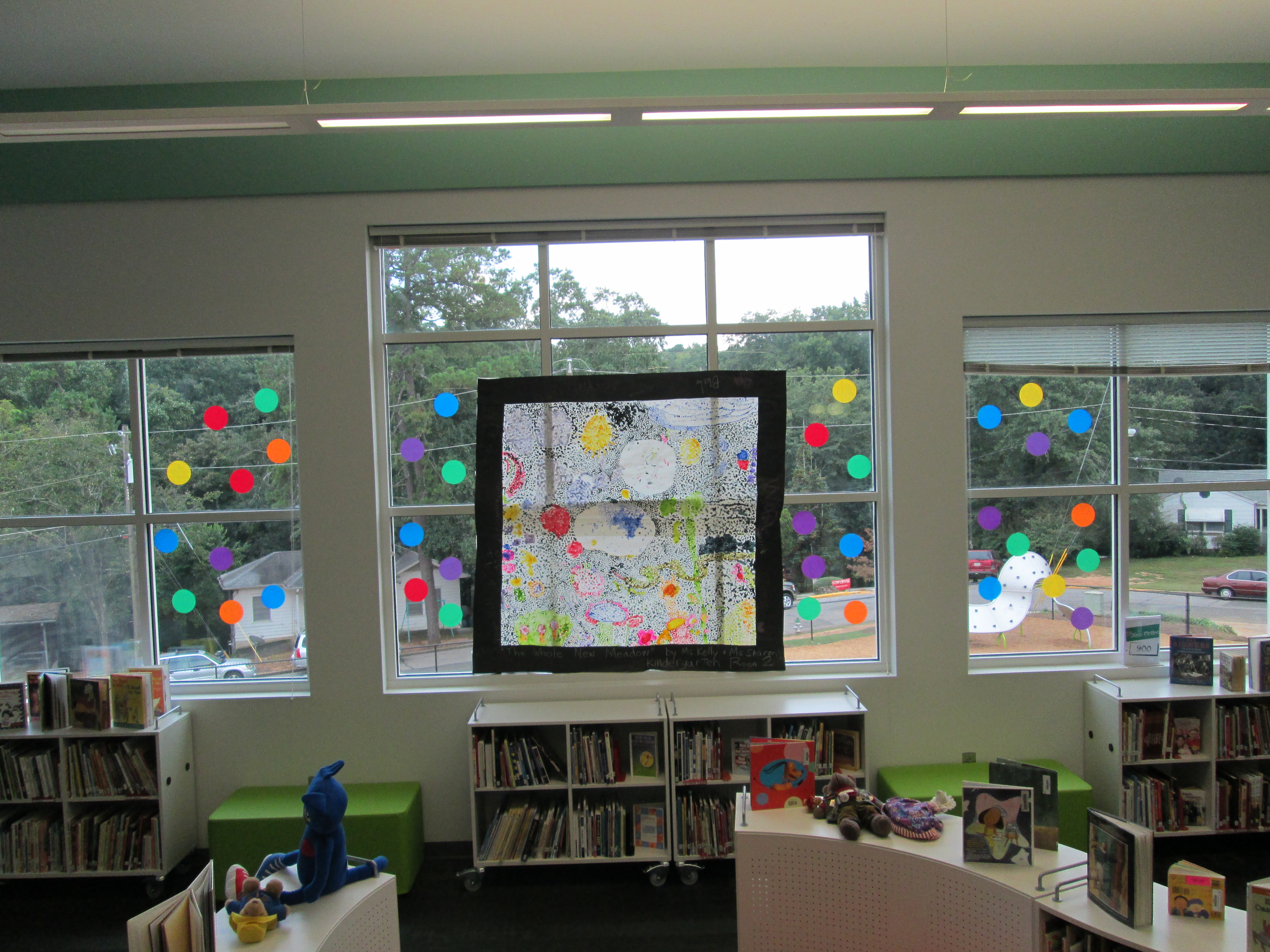
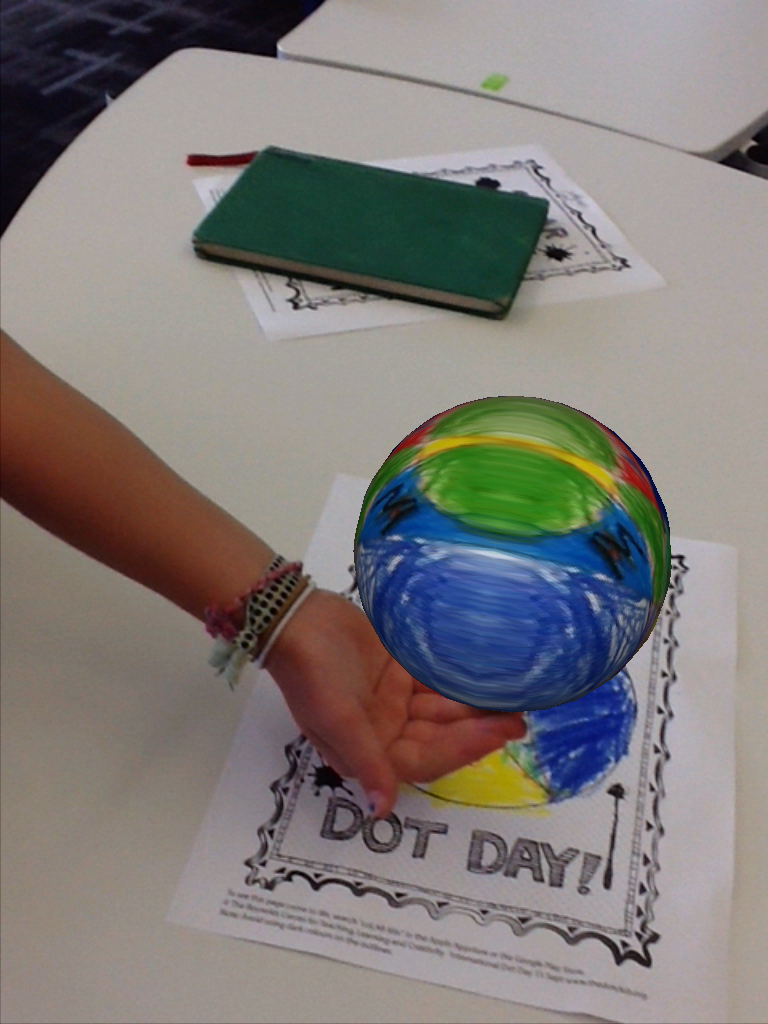
How do you and your students want to make your mark on the world this school year? International Dot Day, which is September 15ish, is the perfect time to make connections with other schools, spark creativity and collaboration, and see where it takes you for the rest of the year. Whether you’ve celebrated Dot Day from its beginnings or you are just getting started, we invite you to get creative with your students and share that creativity with the world.
From the official page:
“International Dot Day, a global celebration of creativity, courage and collaboration, began when teacher Terry Shay introduced his classroom to Peter H. Reynolds’ book The Dot on September 15, 2009.The Dot is the story of a caring teacher who dares a doubting student to trust in her own abilities by being brave enough to “make her mark”. What begins with a small dot on a piece of paper becomes a breakthrough in confidence and courage, igniting a journey of self-discovery and sharing, which has gone on to inspire countless children and adults around the globe.”
There’s no “right” way to celebrate Dot Day. In fact, every year people around the globe come up with new and creative ways to make dots and connect with others. That’s the magic of this special day.
What happens during a Dot Day connection?
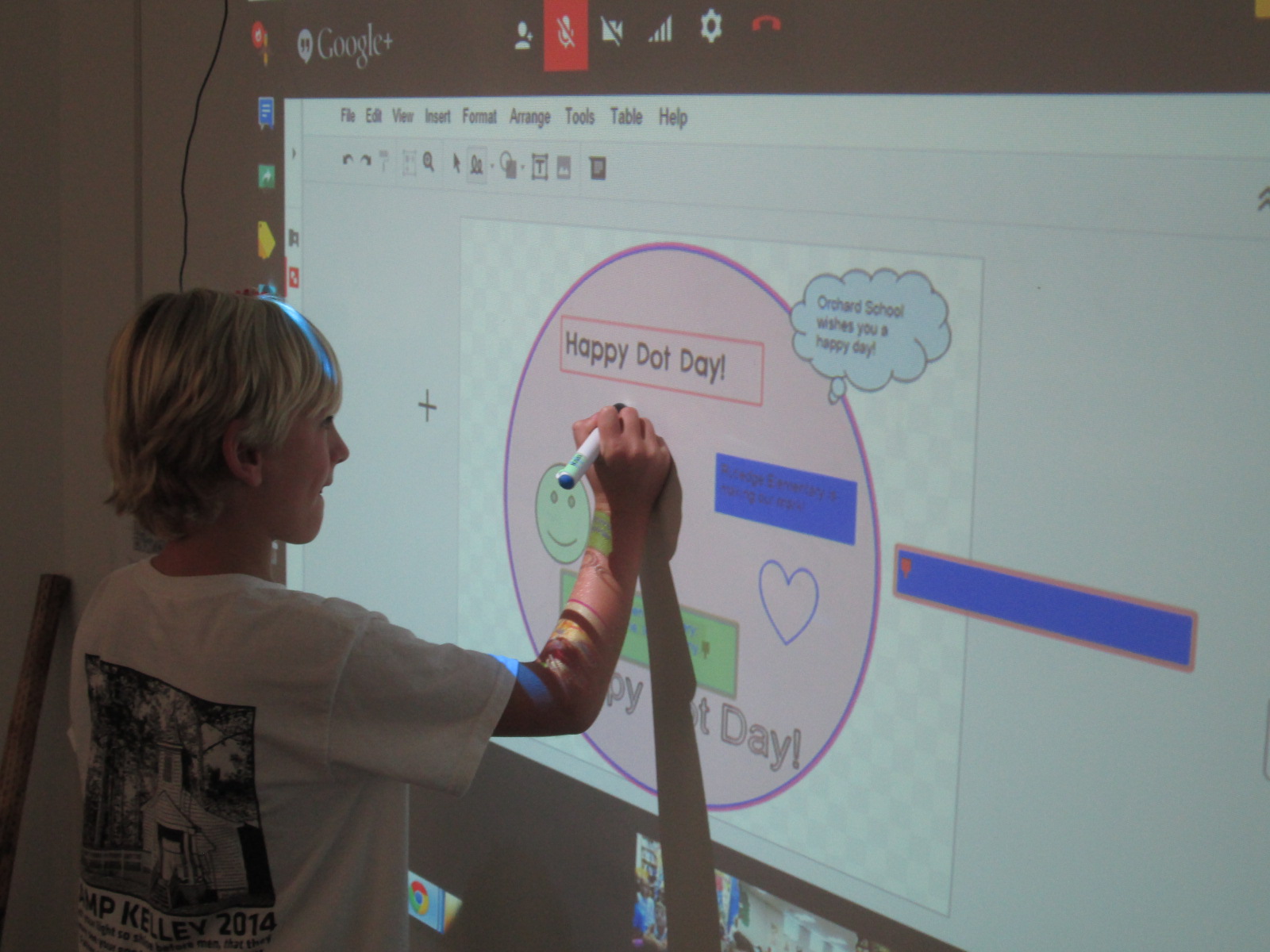
Often, we start by reading The Dot by Peter Reynolds or other dot-inspired books such as Press Here by Herve Tullet. This is done via Skype or Google Hangouts with a connecting class. We begin to connect the dots with one another by learning a bit about one another. Sometimes we create something together. For example, last year students in Barrow Elementary made collaborative digital dots with connecting schools via Google Drawing.
Shannon Miller and John Schu’s Dot Day video is always an inspiration.
Also, check out the Celebridots page for dots created by some of your favorite authors and illustrators.
Many times connecting schools send some of their creations to one another through traditional mail.
How to get started
Register your school on the official Dot Day page. You’ll be added to the global map as well as gain access to the educator guide which is packed with information
Start collaborating with your connecting schools and get ready to make your mark with your students.
Part of making your mark on the world is getting your students’ voices and creations out into the world. As you connect, share your creations on Twitter using #DotDay and #Makeyourmark Consider creating a blog post to show your students’ work to the world.
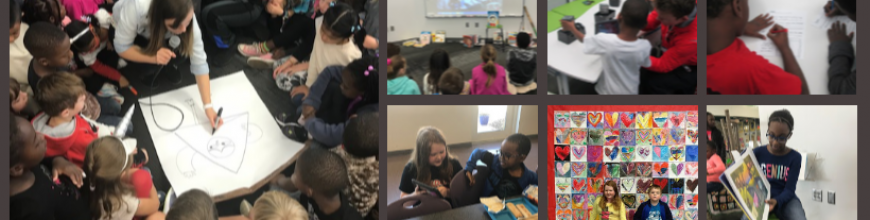


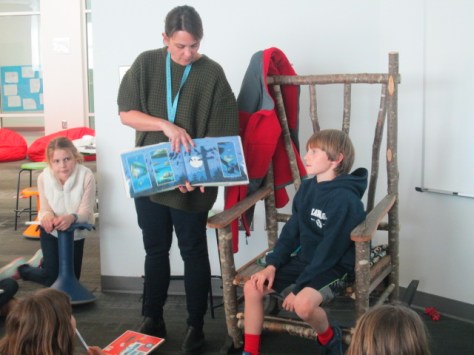 Ms. Tesler’s 4th grade class has been exploring how they can be leaders within our school community. Back in the fall, they started writing shelf talkers and displaying them on shelves at the front of our library. After all of their suggested books were quickly checked out, they are looking for ways to expand their leadership. They have decided to take the “7 Strengths of Reading” challenge leading up to World Read Aloud Day and explore each week’s question. They have also decided to take their shelf talkers and make them digital.




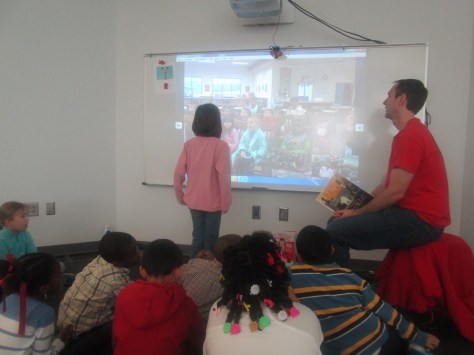
 Wow! We had the most students ever participate in our 3rd annual picture book smackdown. Even sickness and technical difficulties didn’t stop our students in 5 states sharing favorite books along with author, Laurie Thompson.








 Expect the Miraculous