Student Book Budgets 2012-2013 (Part 2)

The lists are done and the orders are placed!  Twenty-seven 3rd-5th graders have worked very hard during their lunch time for the past week to create lists of books that are grounded in the results of their school-wide reading interest survey data.  Rather than type everything out here, I’ve made a screencast that shows you the survey, the data, the focus categories, and the final lists.  I invite you to listen:

I’m very proud of these students.  Although, doing this during lunch across multiple times and groups of students was literally and figuratively very messy, I liked the overall results.  As always, some amazing moments happened along the way like:

  •  A student standing up and telling the whole group not to think of themselves.  That they needed to keep in mind all of the students of the school.
  • A male student taking a stand for princess books being on the list because he personally heard from multiple students who desperately wanted more of those books in the library.
  • A group of 3 fifth graders debating whether or not to cut a graphic novel off of the list because it cost $26.00.  They talked for 15 minutes just about that one book.  They read reviews, considered popularity, examined quality, and checked circulation statistics for other books in that series.  (They decided to keep it on the list!)
  • Several students repeatedly went into Destiny to search for how many books we had in particular categories, which books were lost in a particular series, and how many copies we had of certain books like Wimpy Kid.

I’m thankful for Capstone Rewards, too, because I helped out some of our tough decisions by using $500 of free book credit to bump up our budget from $1200 to $1700.  Even with that bump, some very tough decisions were made to cut books that would have been equally as popular.  I look forward to seeing what this group comes up with to market these books to the school and how fast they get checked out!

Student Book Budgets 2012-13 (Part 1)

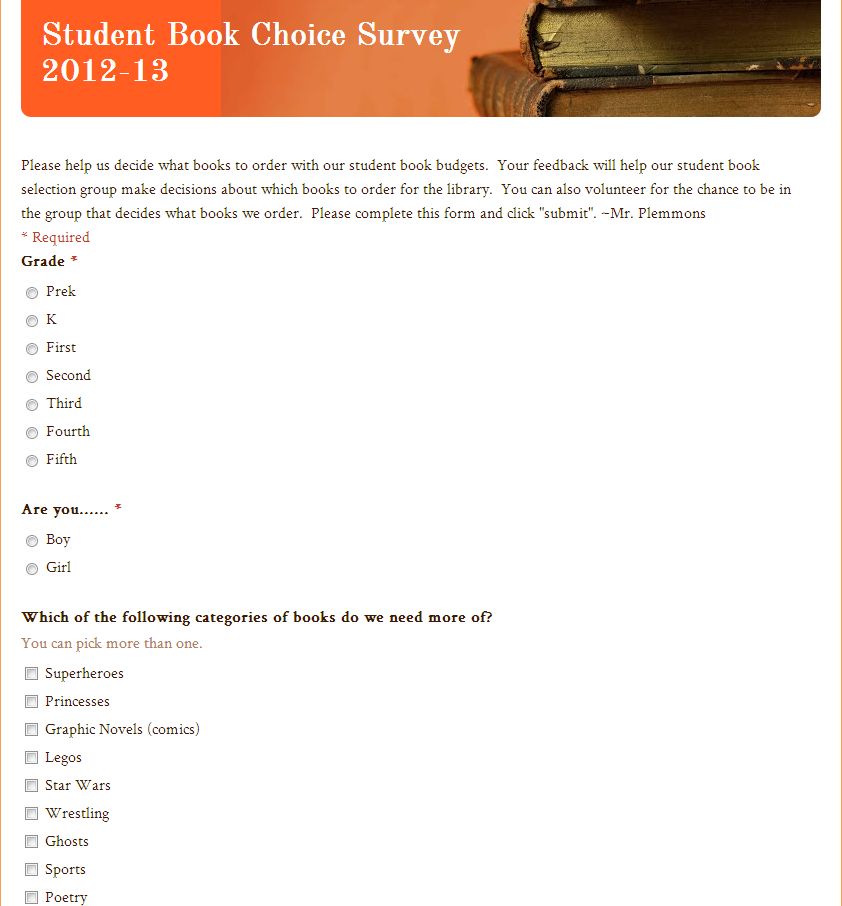
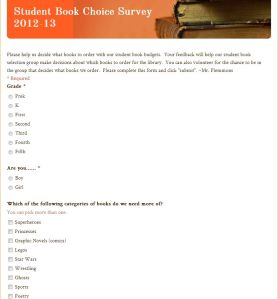
A snapshot of the form that students used to survey other students

A snapshot of the form that students used to survey other students

Once again, I have reserved a portion of our library budget for complete student control.  I have done this over the past three years and have come to value it so much that I plan to continue and improve upon the process.  So far, this year is proving to be one of the most interesting so far.  In the past, I’ve worked with groups of students as large as 40 and as small as 12.  This year, we have 27 students in grades 3-5 who have agreed to participate in this process.

This year, I created a Google form asking about some reading interests and gauging student interest in being a part of the book budget group.  I emailed the form to all students in the school.  In general, our 3rd-5th graders are the main students who check their email, so those were the students who responded.  Out of about 60 responses, I had about 40 students who were interested in being in the group.  I went through the list and tried to select a mix of boys, girls, grade levels, classrooms, backgrounds, and reading interests.  This narrowed the list to the 27 students.

I then got permission from the students’ teachers to allow them to be in the group.  Next, I blocked out some times on the library calendar.  Here’s the rough outline of what I did/planned to do:

  • 1/25:  Initial meeting with the whole group to lay the foundation of our work and edit the Google form that I started. We also claimed which grade levels we would each survey. This was done at the very beginning of the day when students would have been doing their morning meeting in the classroom.
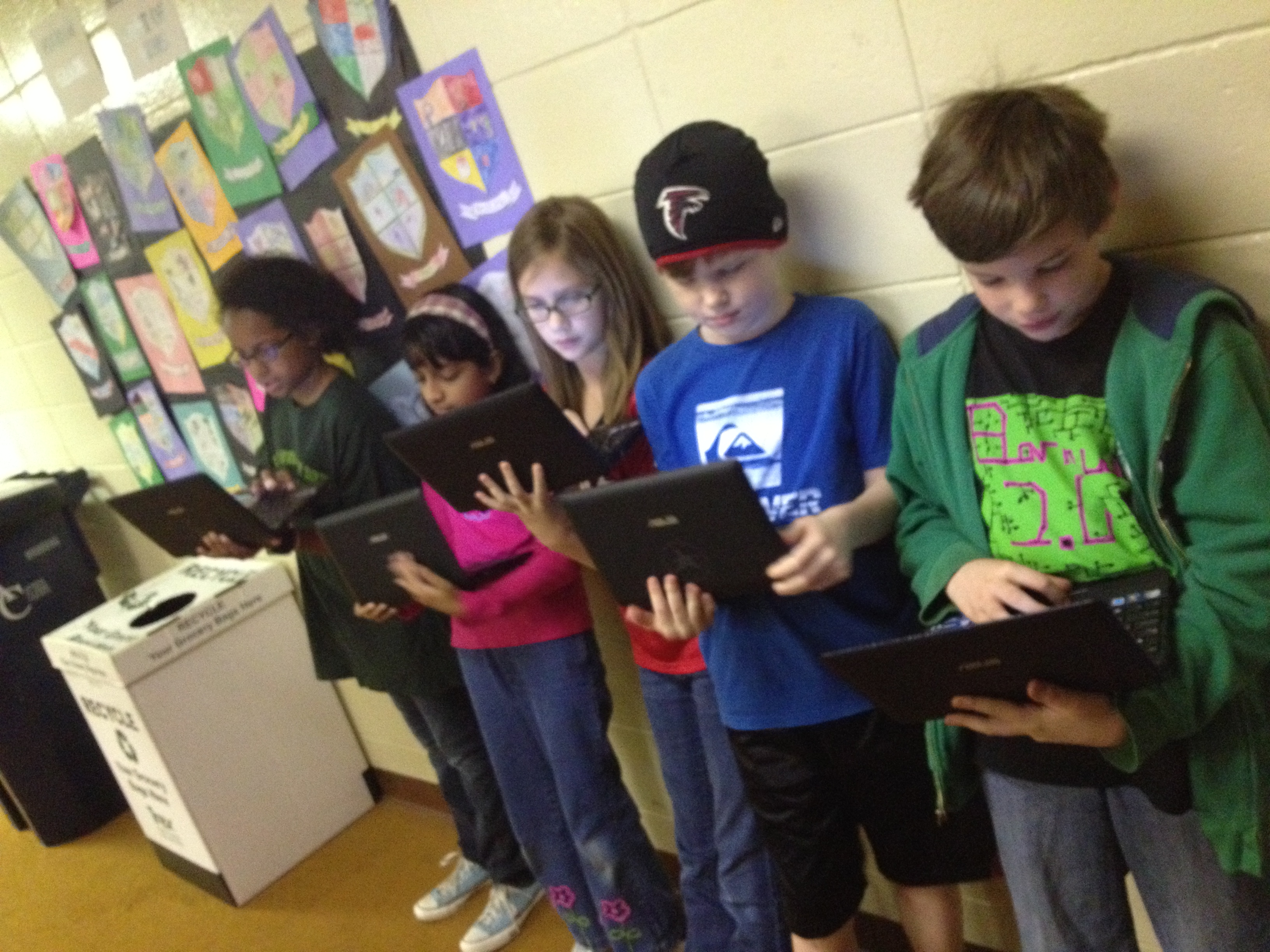
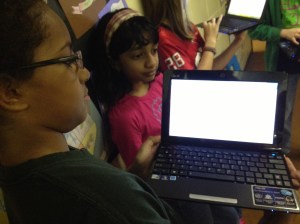
  • 1/28-2/1:  As soon as students arrived at school, they got their netbooks out and pulled up our Google form.  Then, they surveyed their own class as well as one other grade level that they had chosen.
  • 2/1:  After surveying is done, email the results to all of the students so that they can begin looking at patterns.
  • 2/4, 2/8, & 2/11:  Students will meet in the library during their lunch.  We will narrow down the survey results and determine which specific books and categories of books we want to focus on.  Then, students will begin creating lists of books with our favorite vendors including:  Bound to Stay Bound, Capstone Press, and Follett
  • 2/12:  Finalize the lists and order the books.
  • While we wait on the books to arrive, some students might choose to work on some marketing strategies, but I won’t do this with every student in the group.
  • When the books arrive, schedule a meeting to unpack, stamp the books, and double check the packing slips.
  • Advertise the books on BTV and put them into circulation.
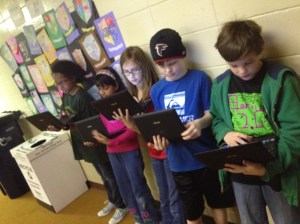
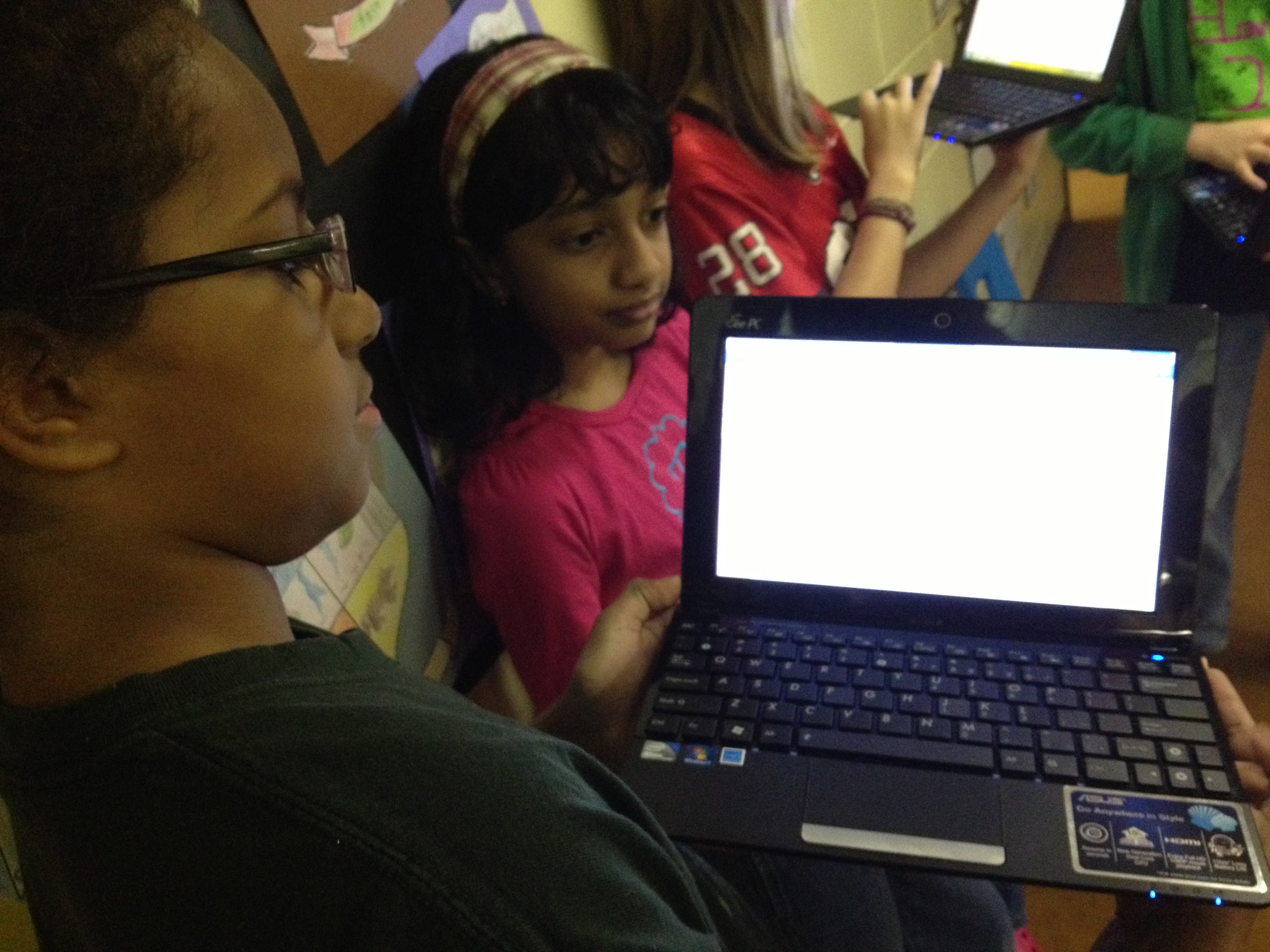
Students pulling up their Google Form to begin roaming the school.

Students pulling up their Google Form to begin roaming the school.

At our initial meeting, students did a great job adding to the form I had already started.  In the form, I asked about specific series of books, genres of books, and created a space for students to list specific books.  This was all based on what students are constantly asking for in the library so there were things like:  The Hunger Games, Diary of a Wimpy Kid, World Records, Rainbow Fairies, Ninjago, Lego, Princesses, etc.  The students decided to add a question about grade level and gender so that we could balance how many boys, girls, and students from different grade levels we surveyed.  They also added their own series and genres that I completely missed.  This is what I love about this participatory aspect.  It’s impossible for one person to know the reading needs of the entire school.  It has to be a collaborative effort.

During the week of 1/28-2/1, students surveyed as many students as possible.  I was amazed that by the end of the week they had surveyed over 400 students, which is almost every student in the school!  This is highest amount of students we have ever been able to survey in this project.  Almost every day, I emailed the students an update on how many students in each grade level we had surveyed.  This helped them focus their time.  I was also amazed by the decision making of many of the students.  They were careful not to disturb a classroom if the teacher had already started a morning meeting or a lesson.  They also came to the library to ask me my thoughts about where they might go next.  In the library, I watched the number of surveys steadily climb in the spreadsheet that Google Forms automatically creates.IMG_1689
On 2/1, I emailed the students the final results so that they can hopefully look over it before we  begin the messy process of making decisions this week.  I’ll do another post about the decision making process and book ordering, but for now here’s what we have to work with.  How would YOU narrow this down?

Prek 42 10%
K 58 14%
First 69 16%
Second 73 17%
Third 46 11%
Fourth 45 11%
Fifth 33 8%


Boy 207 49%
Girl 159 37%


Superheroes 129 31%
Princesses 92 22%
Graphic Novels (comics) 170 40%
Legos 172 41%
Star Wars 141 34%
Wrestling 96 23%
Ghosts 165 39%
Sports 206 49%
Poetry 124 30%
History 145 35%
Animals 232 55%
Paper airplanes 149 35%
Cars 144 34%
World Records 201 48%
Drawing 197 47%
Mystery 167 40%
TV shows 149 35%
How to 126 30%
Action 159 38%
Scary 177 42%
Myths & Legends 159 38%
Picture books 187 45%
Movies 185 44%


Hunger Games 161 39%
Rainbow Fairies 113 27%
Diary of a Wimpy Kid 211 51%
Guinness World Records 168 40%
Ninjago 174 42%
Disney Princesses 87 21%
Sisters Grimm 59 14%
Mo Willems books 90 22%
Captain Underpants 145 35%
Geronimo Stilton 104 25%
Magic Tree House 191 46%
Junie B. Jones 168 40%
Lunch Lady 141 34%
Babymouse 139 33%
Goosebumps 100 24%
Dr. Seuss 190 46%
Fashion Kitty 114 27%
Bad Kitty 142 34%
39 Clues 109 26%
Eragon 73 18%
Bone 111 27%
Genius Files 75 18%
Nancy Drew 95 23%
Corduroy 89 21%
Hardy Boys 114 27%
Percy Jackson 100 24%
Archie Comics 92 22%


More Kindergarten Storybirds

These cards were used prior to moving into Storybird.

These cards were used prior to moving into Storybird.

You may remember from earlier in the year that Ms. Hocking’s Kindergarten class worked on a sequence of lessons in the library and in their classroom to eventually produce their own story inspired by art using Storybird.  Now, even more of the Kindergarten classes are working on a similar sequence of lessons.  We have spent time on the common core standard:

ELACCKRL7:  With prompting and support, describe the relationship between illustrations and the story in which they appear (e.g., what moment in a story an illustration depicts).

This has been done through wordless picture books, picture books where part of the story is told in text and part in pictures, and picture books where the pictures support the text.  Students read these books in class lessons as well as in the library.

To prepare for Storybird, we started by using storytelling cards from a set of cards called “Tell Me a Story“.  I chose a sequence of cards and then had the kids begin telling the story and linking the story from one card to another.  As we transitioned to Storybird, I told them that it was like pulling illustrations from a big deck of cards and figuring out how the story connected together across cards.  We wrote a Storybird together as a class to model the thinking it takes to select a sequence of pictures as well as create text that ties together the pictures.

Finally, in small groups with an adult, students wrote their own storybird. The role of the adult was to lower the barriers to artistic expression by helping students with things like typing, taking turns, etc.   Today, Ms. Seeling’s class (Mrs. Boyle’s Class), created their stories in small groups.  We had 5 groups led by me, Ms. Seeling, the parapro, a student teacher, and a parent volunteer.  Here are their final stories:

They Are Friends

The Rabbit and His Friends

A Porcupine Babysitter

The Mean Gorilla

The Porcupine Dream

Ms. Seeling also hopes to have some students make individual stories and then use Screencast-o-matic to record the students reading their stories.  I love how each teacher and class is learning from what previous classes did and building onto what was accomplished.


Barrow’s Knot

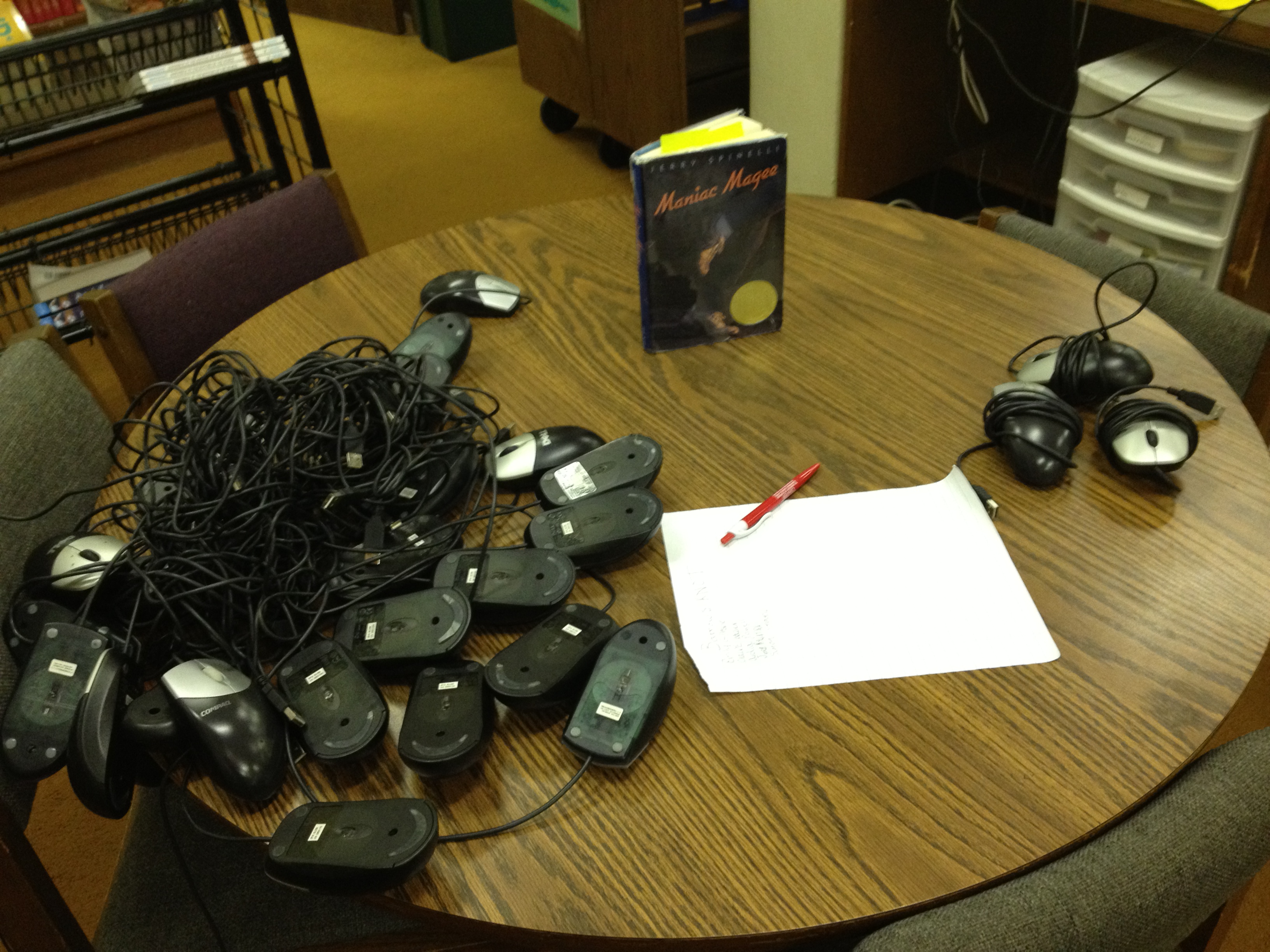
KNOT 5Now that we have a mobile computer lab for the library, we no longer have a wired lab full of mice, headphones, and power cords.  However, people still need headphones, mice, etc, so we put these in boxes for people to grab as they need it.  Since our students are usually in a rush to clean up and get back to class, they often just toss the mice back into the box rather than wind them up correctly.  This resulted in a very tangled problem.  The cords of the mice became so tangled that you could not get even 1 mouse out of the box to use.  I definitely did not have time to sit down and untangle these, and I felt bad asking a volunteer to do it.  I wasn’t sure how the mice were going to be usable again.

This morning on the way to school I had an idea.  The knot reminded me of Cobble’s Knot in the book Maniac Magee by Jerry Spinelli.  I found that part of the book and prepared an announcement for BTV.  I read an excerpt from the book and then talked about making a connection to our own library (which is a standard we teach).  I introduced Barrow’s Knot by holding up the tangled mess of mice.  I issued a challenge to see who could brave the knot and untangle the mice.  After BTV, I put the knot on a table with the Maniac Magee book.  I also put a sign up sheet for students to sign their name as they attempted the challenge.  If they were successful in getting a mouse untangled, they could highlight their name to earn a prize.  KNOT 3

If you want to see the announcement of Barrow’s Knot, watch our morning broadcast.  Fast forward to 1:23.

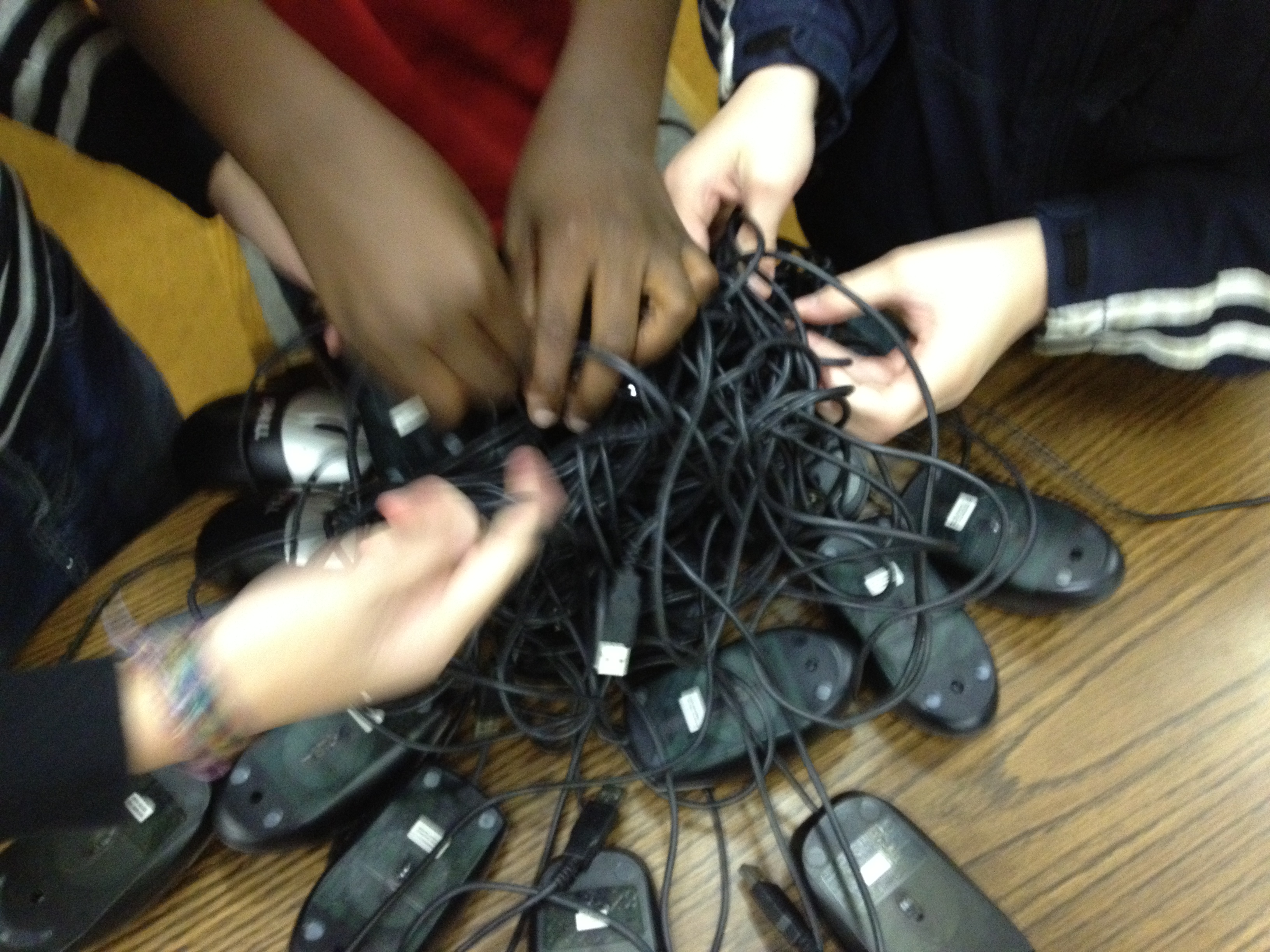
I barely got the knot on the table before students were in the library to attempt the challenge.  Our library has been buzzing all day long with kids coming to see the knot, try to untangle it, and asking who was successful.  This is what the knot looked like as people were trying to defeat it.

Only 14 students attempted the challenge before Barrow’s Knot was defeated.  I never imagined it would be done so quickly.  These students put each untangled mouse into an individual ziploc bag to prevent this from happening again.  For the rest of the day, kids came to take the challenge and hear the stories of the students who were successful.  It was so much fun.  I was amazed by how something that was so frustrating to me was suddenly fun when it was turned into a game.  Students were so willing to take on the knot rather than look at it as an impossible time-consuming task.  I was also amazed at how something fun and mysterious brought so many kids to the library.  It makes me wonder about the missed opportunities I may have had with other dilemmas the

I’m taking away so much from this one simple act such as:

  • Gamification is a natural part of us.  Chores are more fun when they are turned into a game.
  • When we work together on a dilemma that frustrates us, great things can happen.
  • Combining expertise and talents can accomplish what seems impossible.
  • Our students hold the answers to many of our dilemmas and frustrations if we just open up the space for them to contribute.
  • The library should be more than a place to come and get books.  It is a place to work together, solve problems, be creative, make connections.
  • We must model what it means to connect to a book through bringing books to life and intentionally connecting them to the real world.  I imagine many students will remember Maniac now that they have participated in a dilemma much like his own.

What do you take away from this?

KNOT 1KNOT 4KNOT 2

Little Free Library 5th Grade Project

I’ve known about Little Free Libraries for awhile now, and since I learned about them I wanted to help establish one at our school.  I was waiting for just the right moment.  This summer I attended the Decatur Book Festival and saw several creative Little Free Libraries that were being auctioned off and it made me want to establish one even more.  I posted a picture of the libraries on our media center facebook page and immediately Ms. Cross, a 5th grade teacher, said she wanted to help make this happen at our school.  Her comment made me think about the gift that our 5th grade gives to the school at Moving On Ceremony at the end of each year as a way for the 5th graders to make their mark on the school before they leave.  Since our 5th graders won’t get the opportunity to go to school in our brand new building next year, I thought this year’s gift needed to be extra special.  I had found the perfect fit for the idea.

I began talking with people at our school about the project.  As always, our art teacher, Rita Foretich, was on board to help weave this project into an interdisciplinary experience.  Other teachers in the school that don’t even work with our 5th graders began offering ideas too and within a few days our spark of idea was really starting to grow.

I sat down with Mrs. Foretich and we did an initial brainstorming of what our project might look like.  We thought of materials, resources, locations, and also a sequence of events that would need to happen in order for the project to be done by the end of the year.  Our plan consisted of:  an intro to Little Free Libraries for the whole 5th grade, persuasive writing in 5th grade classroom, continued research and conversation in the media center, and little free library designs and artwork in art.  I took our plan to the 5th grade team for feedback and additions.  The teachers brainstormed ways for the students to really take ownership of the project such as donating their own books to stock the libraries and bringing in $1 each to cover the registration for the 2 libraries.

We launched into the first phase right after this session.  I made a short introduction video using screencast-o-matic and uploaded it to Youtube.  Mrs. Foretich showed the video at the beginning of an art class.

As she showed it, the kids immediately began having ideas and wanting to contribute them.  She developed a Google form to share with the students so that they could all submit their feedback without taking up too much of the class time to hold a discussion.  Mrs. Foretich’s student teacher also began contributing her knowledge and connections to UGA.

The next step will be for the student to brainstorm more about the materials, labor, and location so that they can begin writing persuasive letters to individuals and organizations for support.

Our goal is to create 2 Little Free Libraries by the end of the year.  One will be installed at the new Barrow and one will be installed somewhere near downtown so it is accessible to our students and the community on that end of town.  Who knows what this project will develop into, but it is already full of participatory culture as more and more people contribute their ideas, their expertise, and their creativity.

If you have ideas or resources for this project, feel free to leave them in the comments or contact our library.

Skyping with Steve Milone @ Fox5 Atlanta

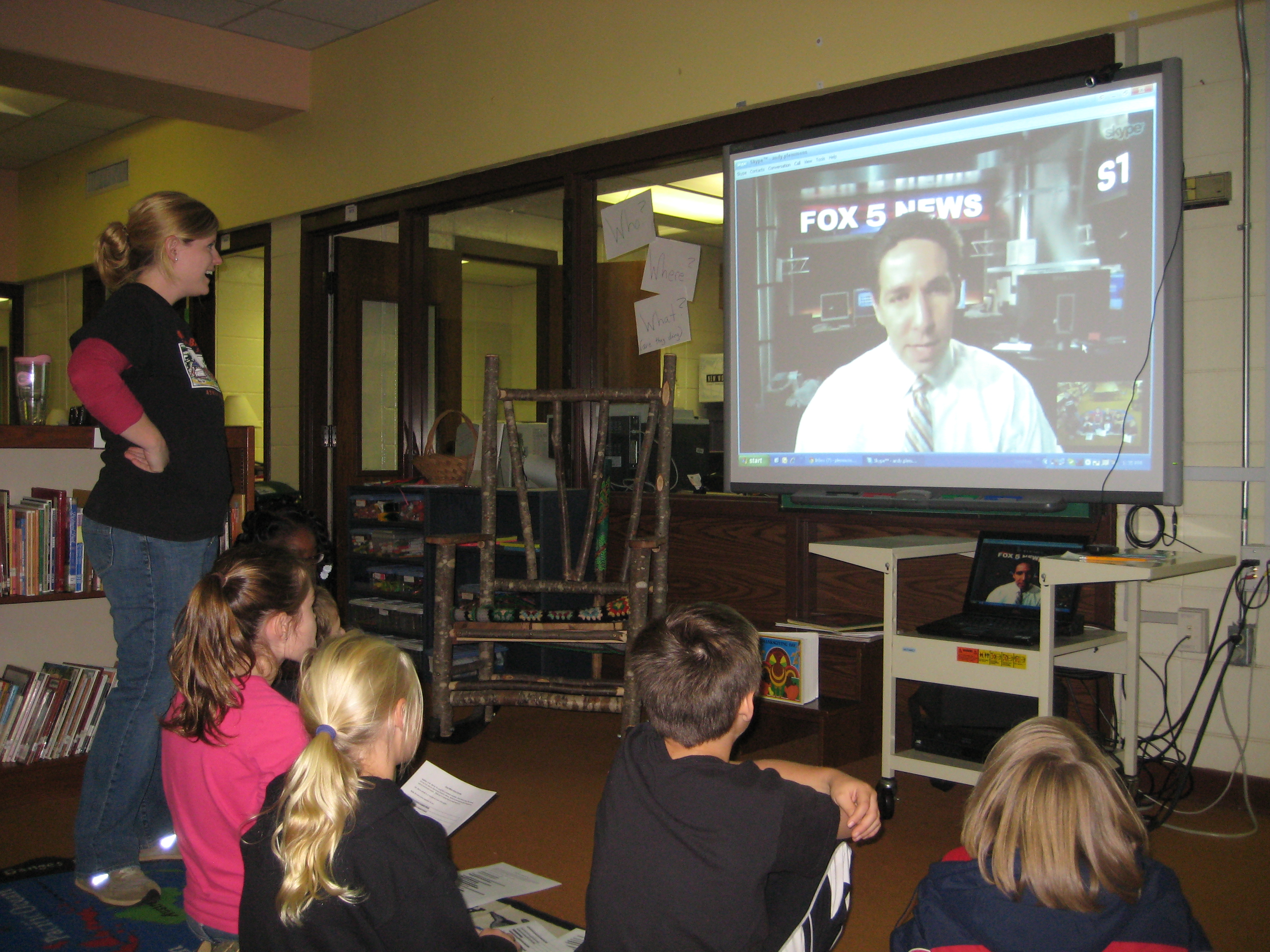
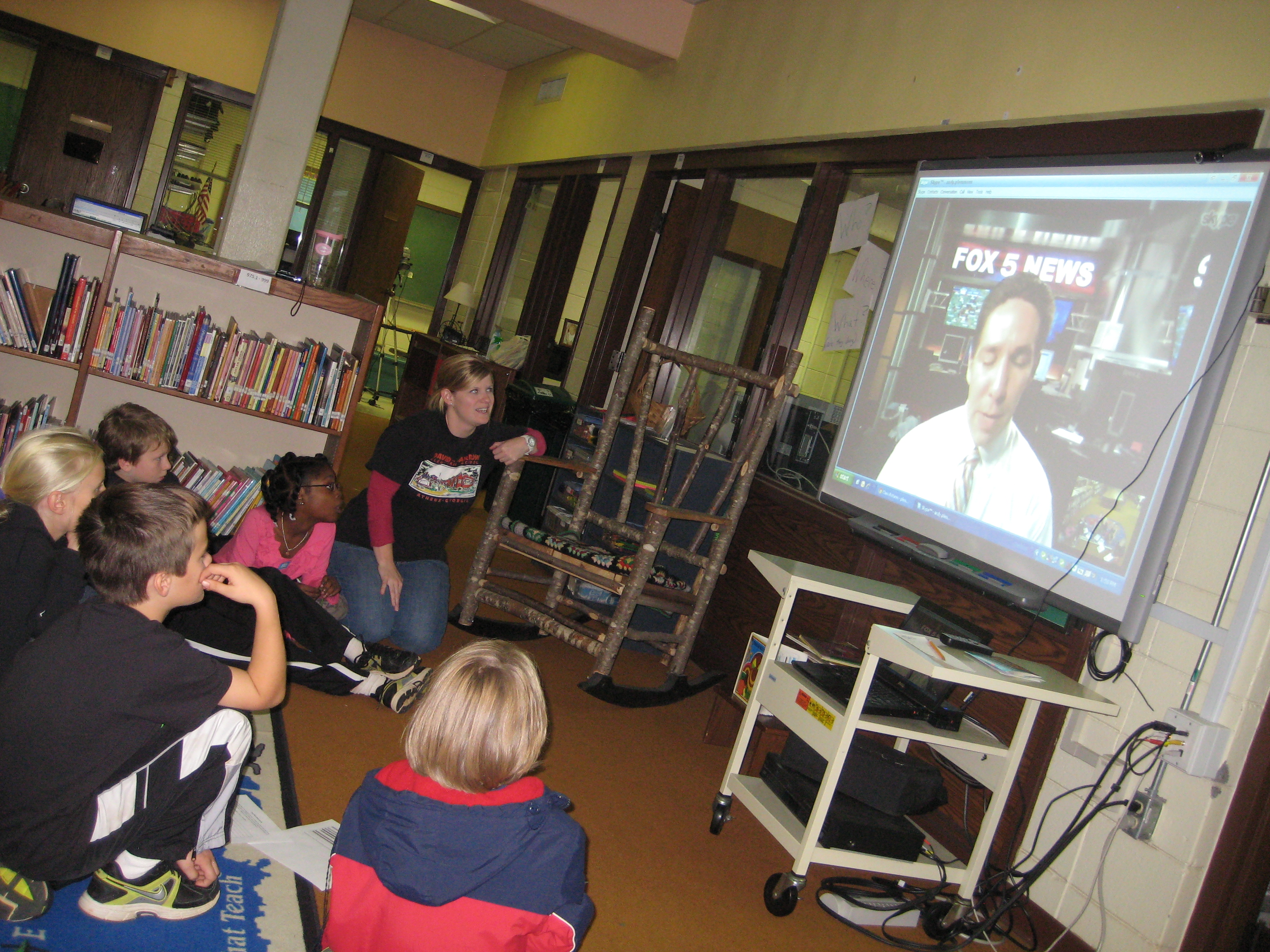
Mrs. Yawn’s enrichment cluster came to the library today to Skype with Steve Milone, meteorologist at Fox5 Atlanta.  The session was excellent.  The students have been studying weather for the past 4 enrichment cluster sessions and prepared questions to ask Steve.

Before the students came to Skype, Steve and I did a test call to check our sound and video quality.  This doesn’t always mean the session is going to go smoothly, but it does prevent those initial Skype setup mistakes that often happen.  Steve planned to switch from a stationary computer to an iPad, so we practiced doing that before the students arrived.

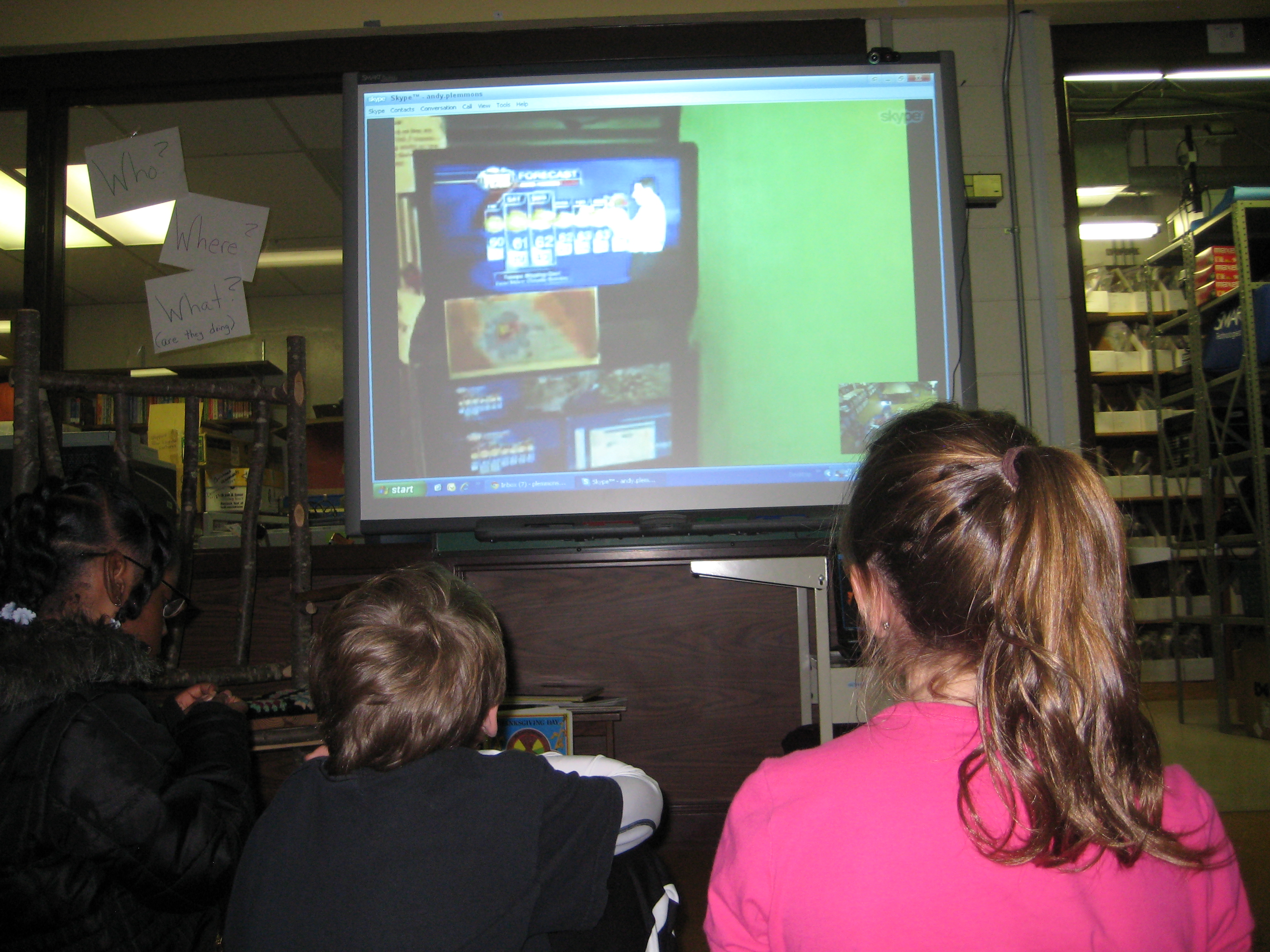
During the session, the students sat on the carpet in front of the Smart Board.  A student introduced the cluster and welcomed Steve.  Then, he launched into his introduction.  We disconnected and he called us again on the iPad in order to give a studio tour.  He walked all over the Fox5 Studio to show us the green screen, numerous computers, anchor desk, interview area, and more.  I was amazed at how close all of the areas are together.  It seems so much bigger on tv!

After the tour, Steve returned to his stationary computer and the students asked questions that they had prepared.  You can hear 2 of the questions here:

Many thanks to Fox5, Steve Milone, and Mrs. Yawn’s enrichment cluster for this great experience!  Look for this cluster to be on Fox5 Atlanta Sunday @ 8:15AM.

Our Staff Recommends: A Participatory Idea for Picture Book Month

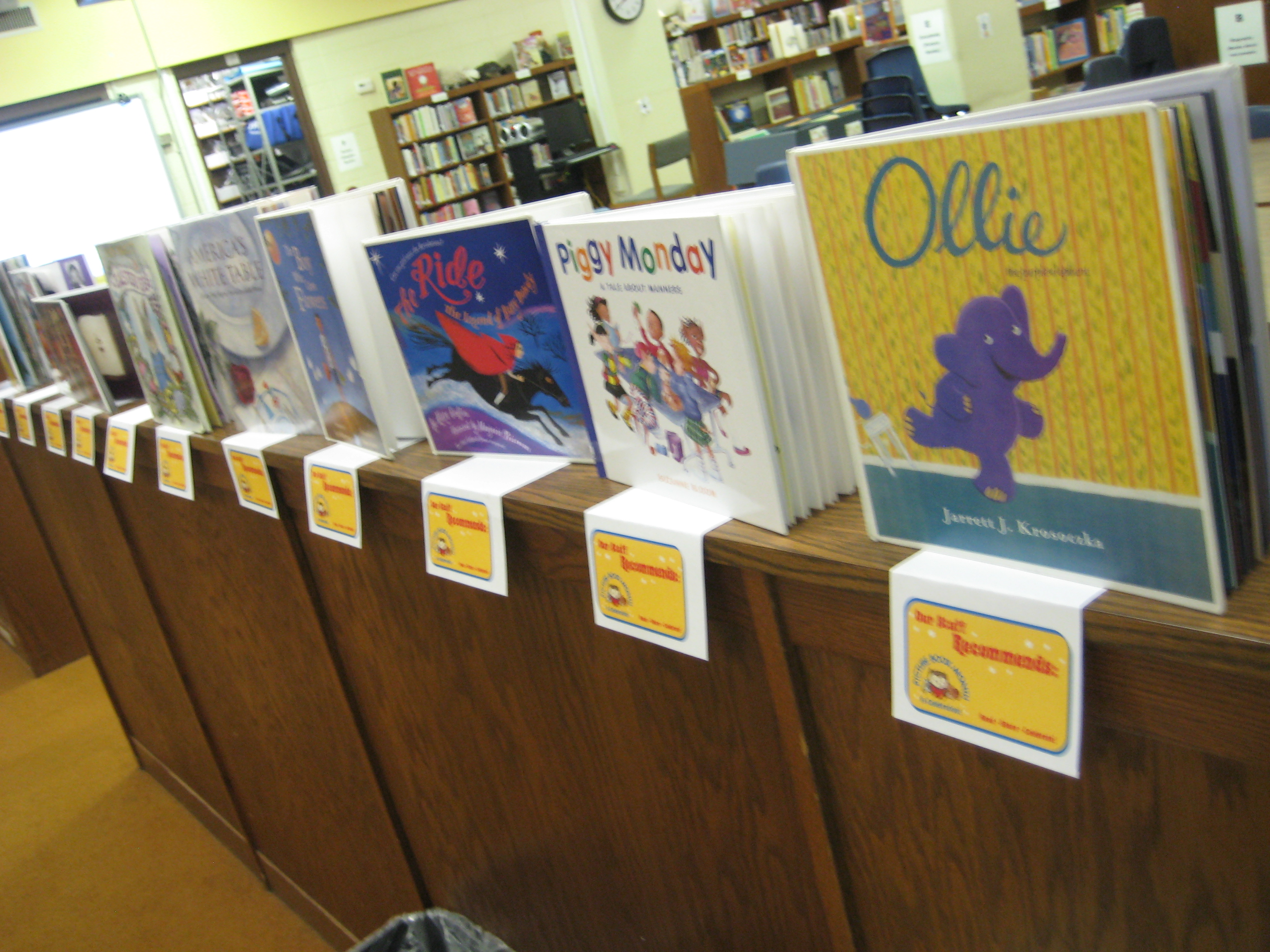
November is Picture Book Month.  This is the 2nd year of the event, and we kicked things off on day one by starting a reading incentive.  Students & teachers are trying to see how many picture books they can read during the month of November.  To encourage their participation, each student and teacher received a sheet explaining the incentive with blanks for writing down each picture book read this month.  Each grade level had their own number of books with smaller numbers for lower grades and 25 picture books for upper grades.  All students who finish their sheet will receive a cool bookmark:  Scaredy Squirrel, Ladybug Girl, Elephant & Pigge, Babymouse, or Duck for President.  Students will also receive a certificate and be entered into a drawing to win autographed books by:  Kevin Henkes, Suzanne Bloom, Eric Litwin & James Dean, and Meghan McCarthy.  These incentives really inspired students because we have several sheets already turned in on this mid-way point of November.

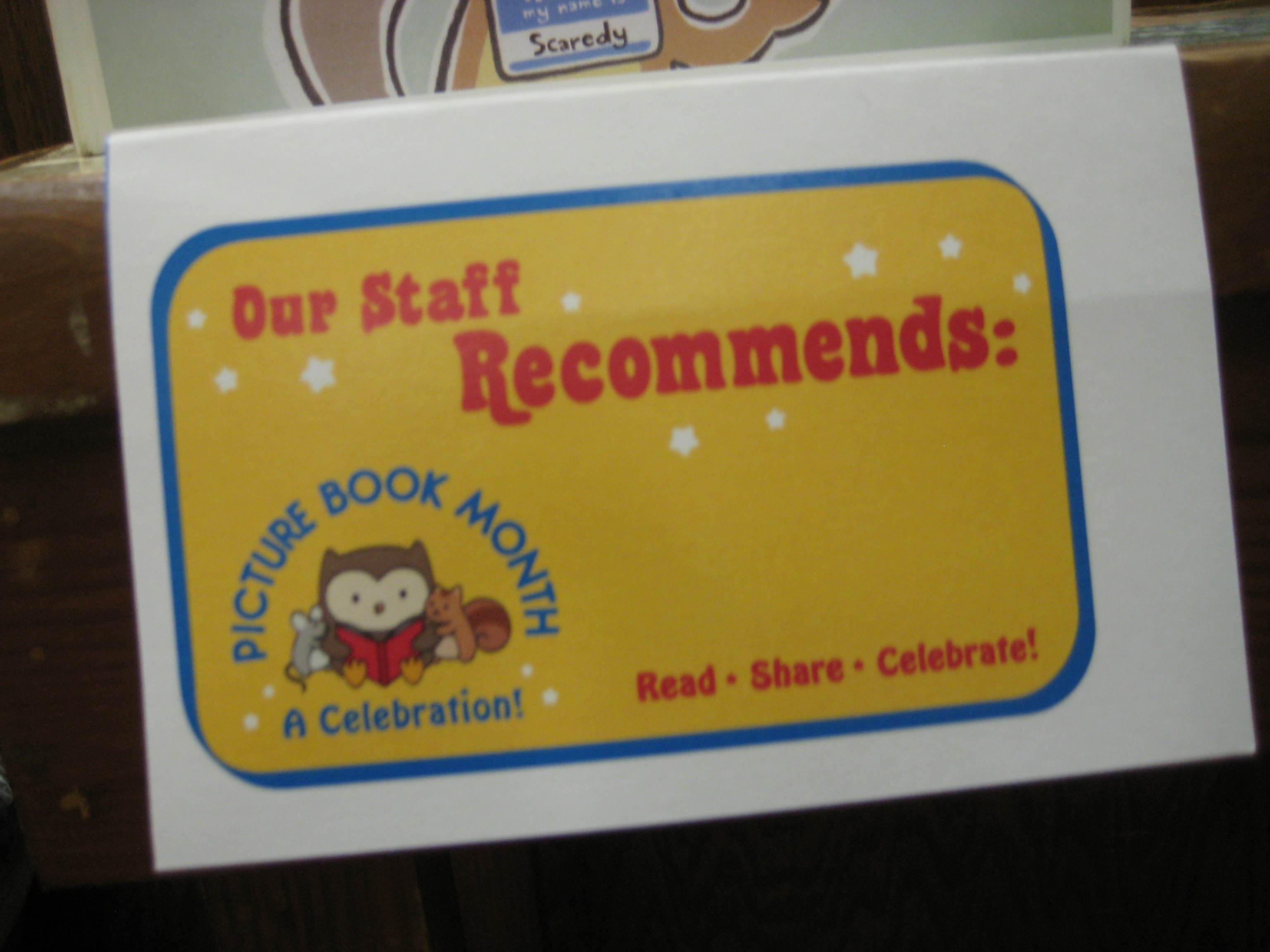
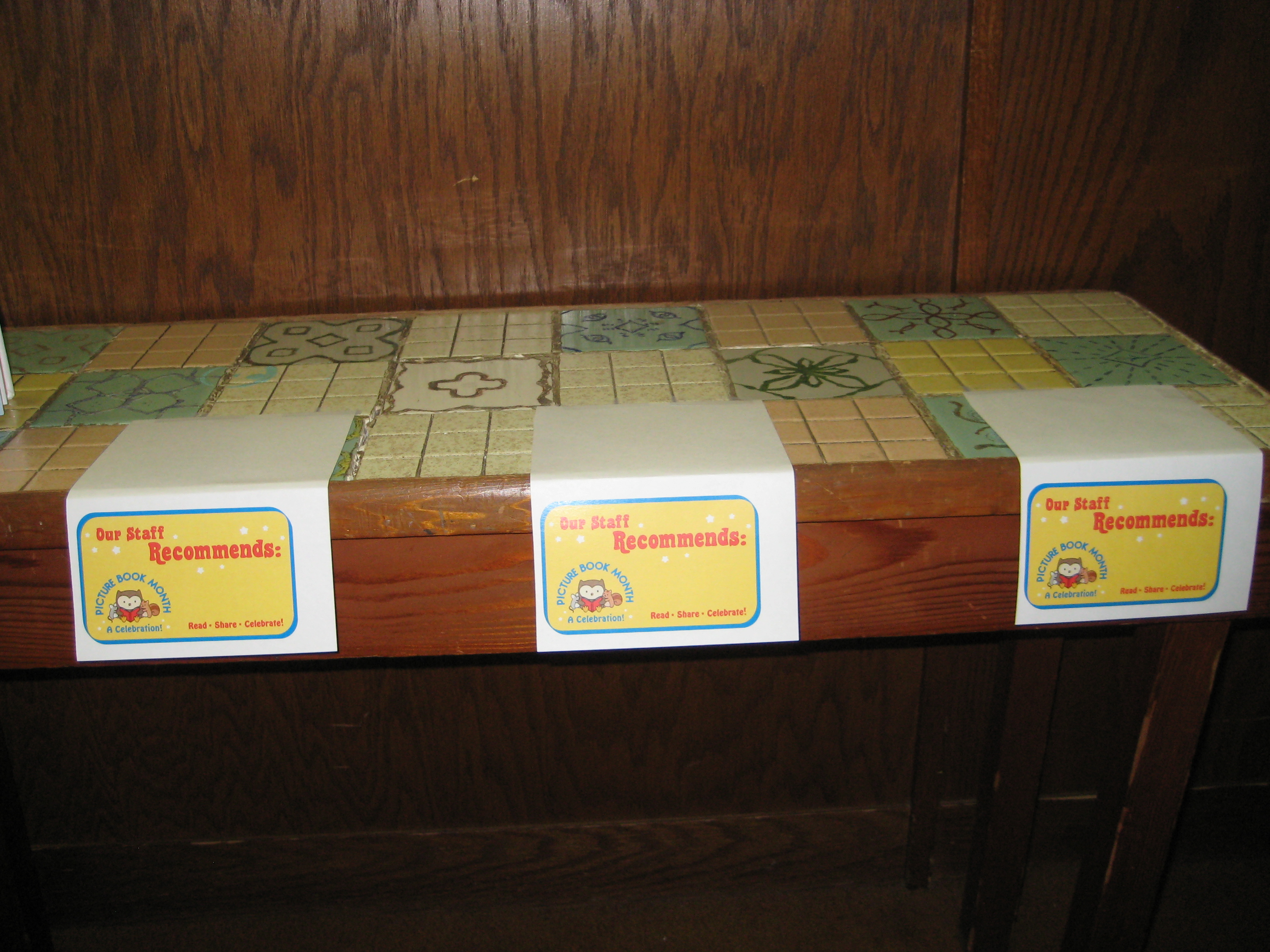
On the Picture Book Month website, there are multiple resources for celebrating picture book month.  One of the tools is a shelf talker that says, “Our Staff Recommends”.  These can be displayed along a shelf for library staff to place books that they recommend to students.  At first, I wanted the shelf talkers to say something besides “library staff”, but the more I thought about it the more I realized that as part of the participatory culture of our library, I really consider every person who enters our library a part of our staff.  I ask students to be accountable for checking books in and out, placing books in the reshelving area, teaching other students how to use technology, etc, so why not consider everyone staff?

So….I made a quick video with iMovie and advertised to the school that anyone could put books on the shelf talkers just inside the library doors.

The shelf sat empty the first day, but it didn’t take long for people to start recommending picture books to one another.  Several students have checked out books from this area and several have replaced the books that they have selected.  It’s a small thing, but it gives one more opportunity for our school community to participate in our library.

Happy Picture Book Month!

Student Co-teaching: A Participatory Experience!

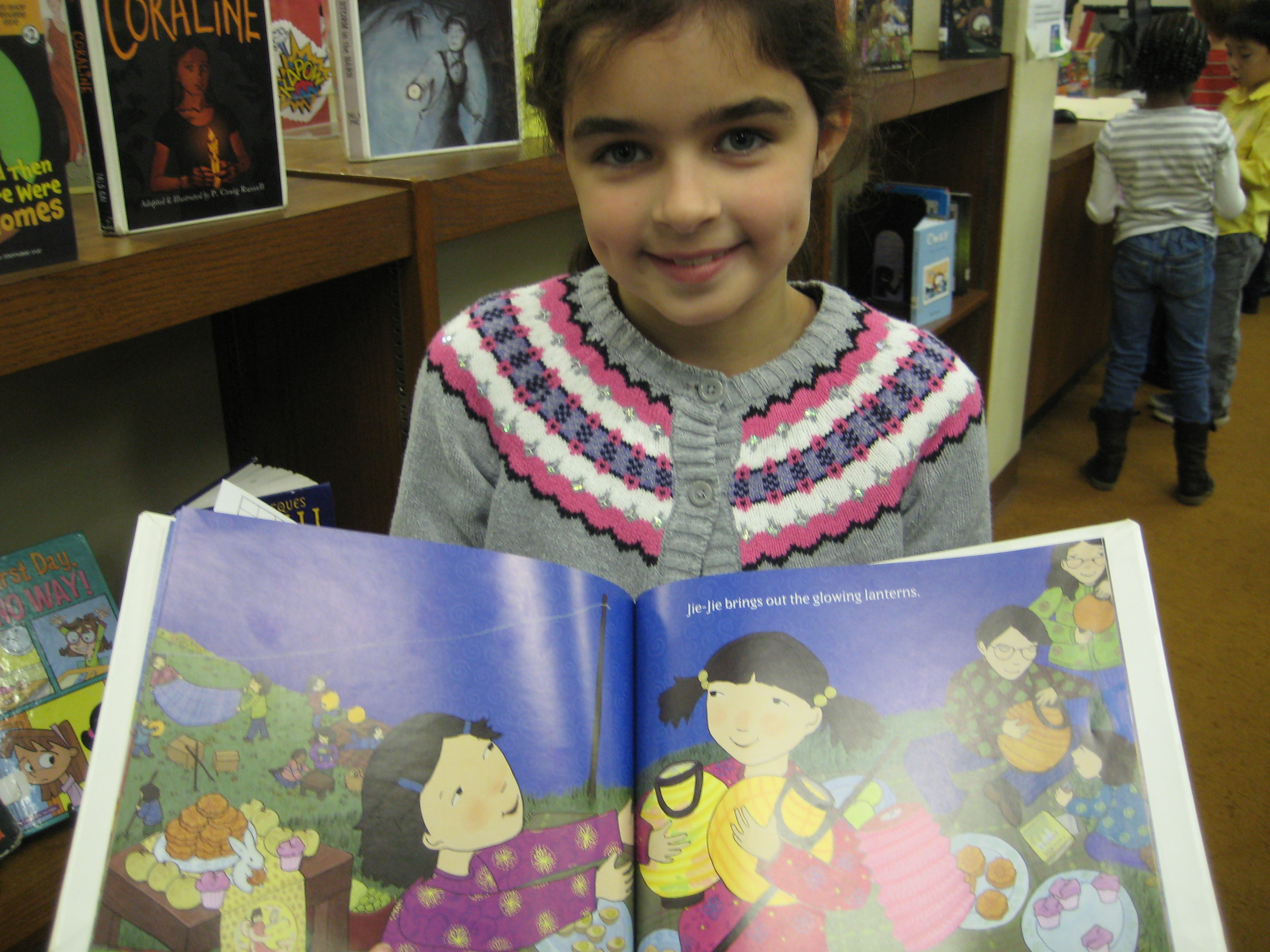
Lucy shows off the page in Thanking the Moon where she helped me pronounce the word correctly based on her knowledge of Chinese.

Today something wonderful happened.  I was doing a lesson with Kindergarten comparing and contrasting the Mid-Autumn Moon Festival with Thanksgiving.  We used PebbleGo to read informational text about Thanksgiving and fact check with what we knew about Thanksgiving.  Then, we read Thanking the Moon by Grace Lin to learn about the Moon Festival.  At the end, we used an interactive Venn diagram from Read, Write, Think to compare and contrast.  During the story, I was first thrilled when a student was so excited that he recognized some of the names for sister, father, etc. in the story.  It made me remember the importance of students being able to see themselves and their cultures in the books on the library shelves and in the selections that are chosen for whole class lessons.

The second amazing thing that happened was when I came to a word in the story for older sister, Jei Jei.  I of course did not know the correct pronunciation, and I immediately knew I was wrong when the student who was so excited about the book did not recognize the word that I read.  Amazingly, Lucy, a student, was in the library working on a project and checking out a book.  She just happens to take a Chinese class after school, so she graciously shared the correct pronunciation and got us back on track.  She did this without any prompting.  I was so excited that she chose to participate and that she felt comfortable enough to interrupt my lesson in order to share that information.  These small moments really inform my bigger vision of the library as a site of participatory culture.  I hope that by sharing this, students will continue to find ways to get involved in any way they can in our library program.

A Lunch Lady Connection

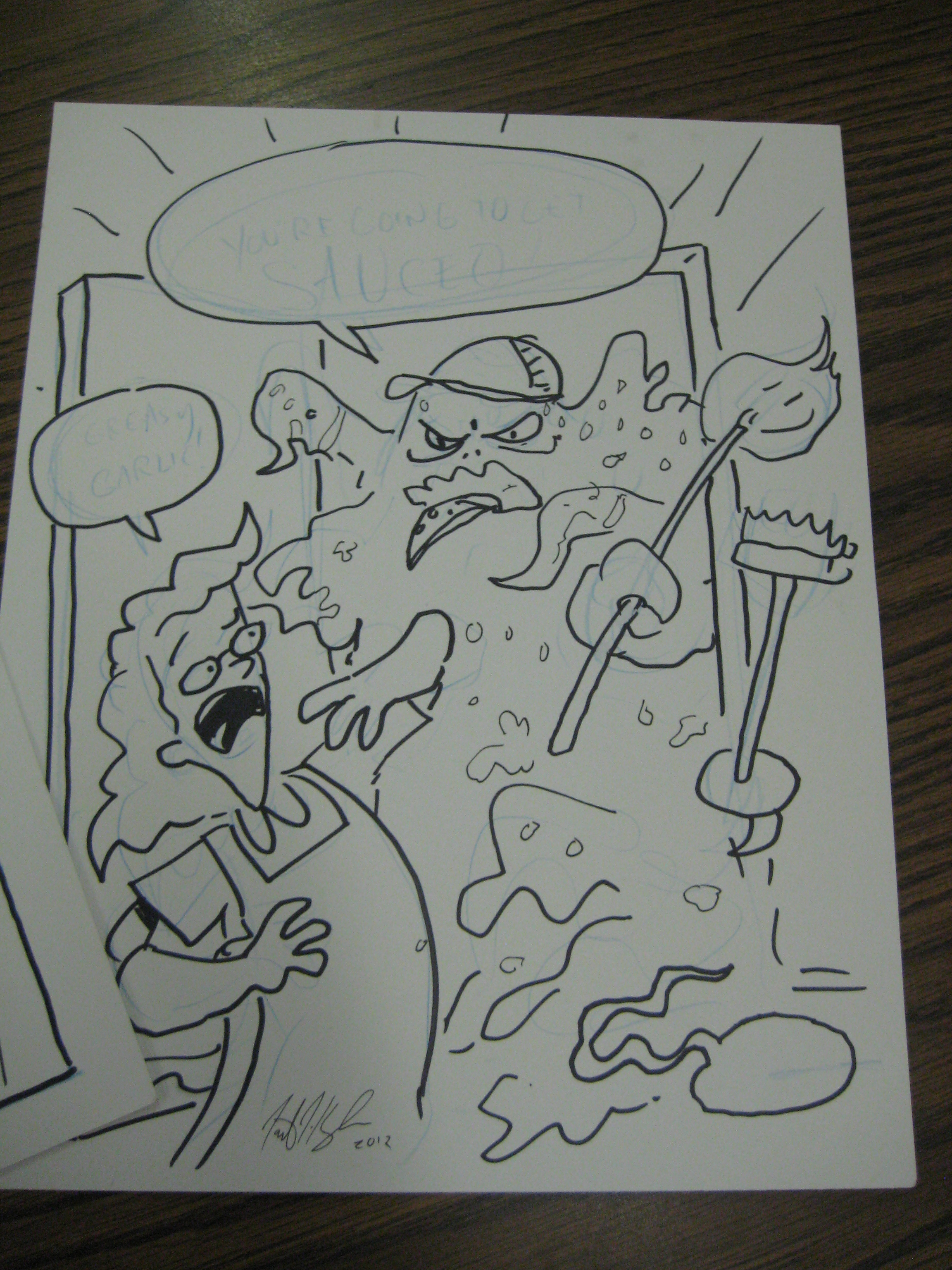
Remember this post about our virtual comic workshop with Jarrett Krosoczka?  After the workshop, Jarrett read my blog post about how many students created comics as a result of the workshop.  He and I chatted via twitter and email about the event and how inspiring it was to my students (and students around the world who watched).

One of the neat stories from within our school related to this workshop involves Marquavious, a 5th grader.  He is a huge Lunch Lady fan and has read all of the books multiple times.  When I announced that teachers could send students to the library to view the virtual comic workshop, his teacher immediately signed him up.  Marquavious took it a step further, though.  He found other 5th graders who were also interested in comics, graphic novels, and lunch lady and worked with his teacher to arrange for all of them to attend the workshop during lunch.  

Now that I know about just how much Jarrett Krosoczka (and lunch lady) mean to Marquavious, I often share with him tweets and blog posts that I read from Jarrett.

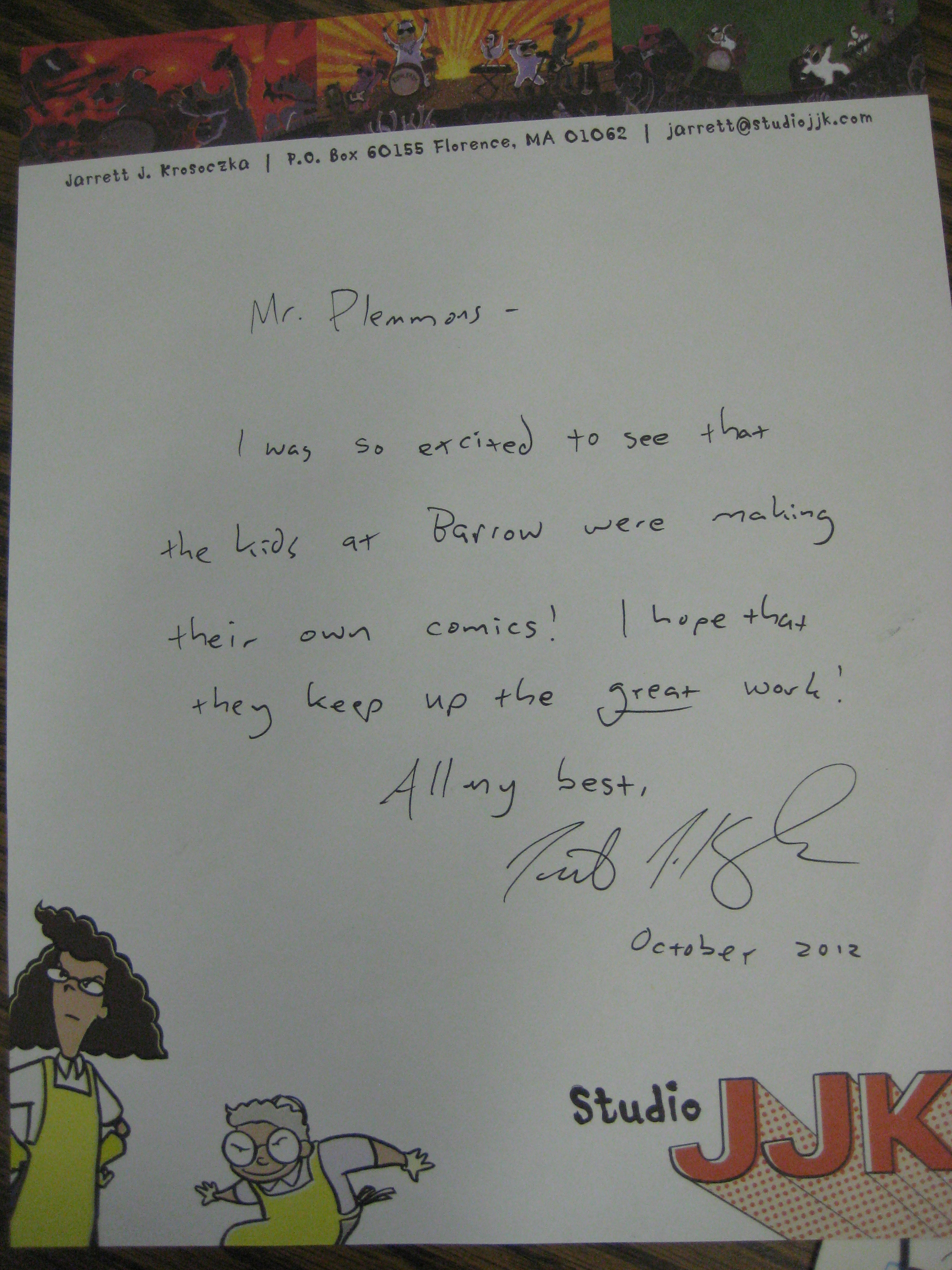
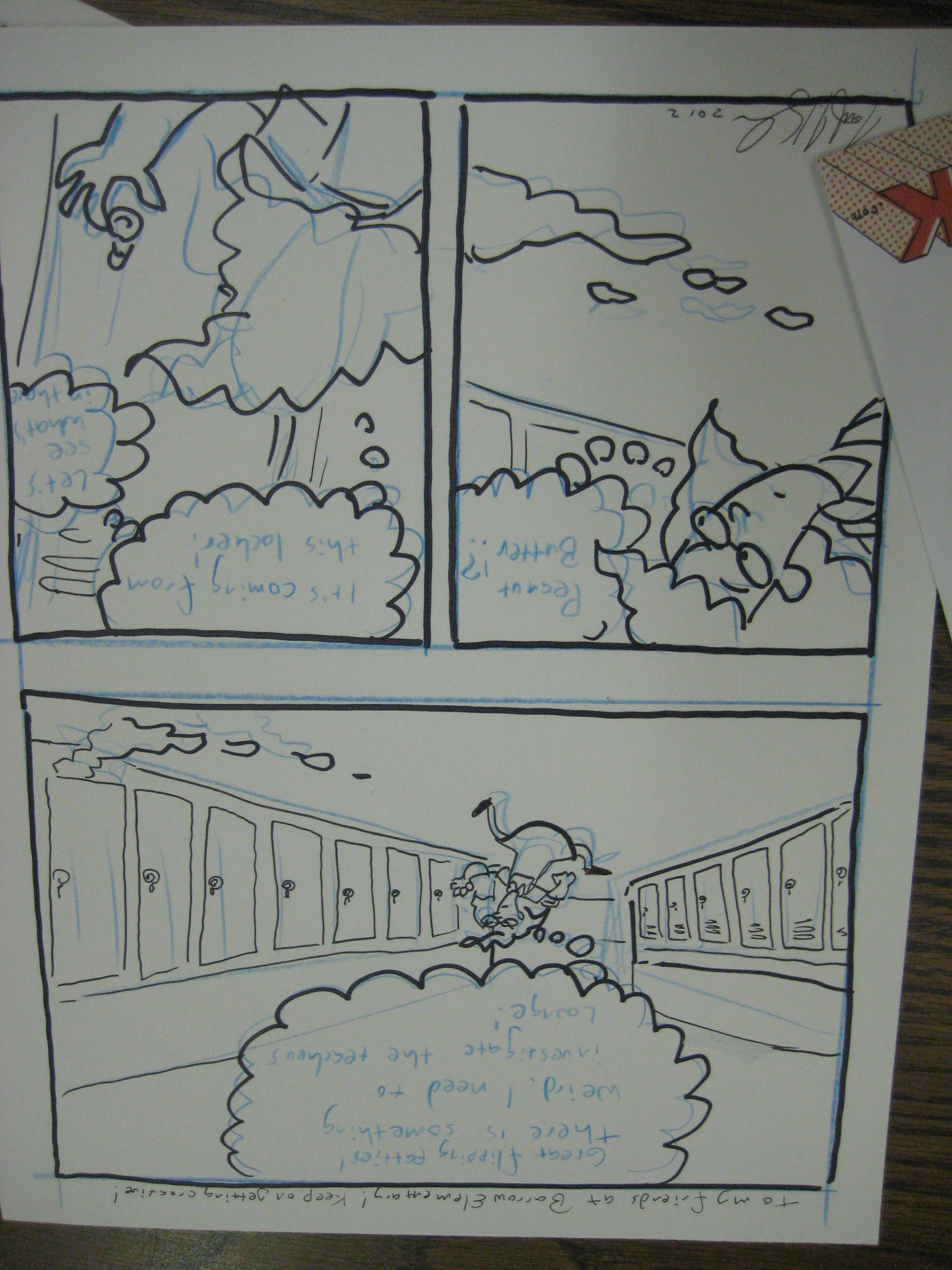
Another amazing thing happened as a result of my blog post and the work students did during the virtual workshop.  Jarrett Krosoczka mailed us some of the original artwork that he created during the workshop, and he autographed it to our school!

Today, that artwork arrived in the mail.  As soon as I opened it, I went to get Marquavious.  He was beaming when he saw the art.  I let him take a look, and of course, took his picture with the pieces.  I told him we would frame them and hang them up in the library.  He asked if he could help me when I was ready to hang them up, and I of course said yes.

Making connections and opportunities like this for individual students is a huge part of the participatory culture of our library.  I push myself to look closer for these kinds of opportunities.  They are hard to catch, but when I notice them, they result in powerful learning and contributions that truly matter to the members of our library.

LL8 Virtual Comic Workshop with Jarrett Krosoczka

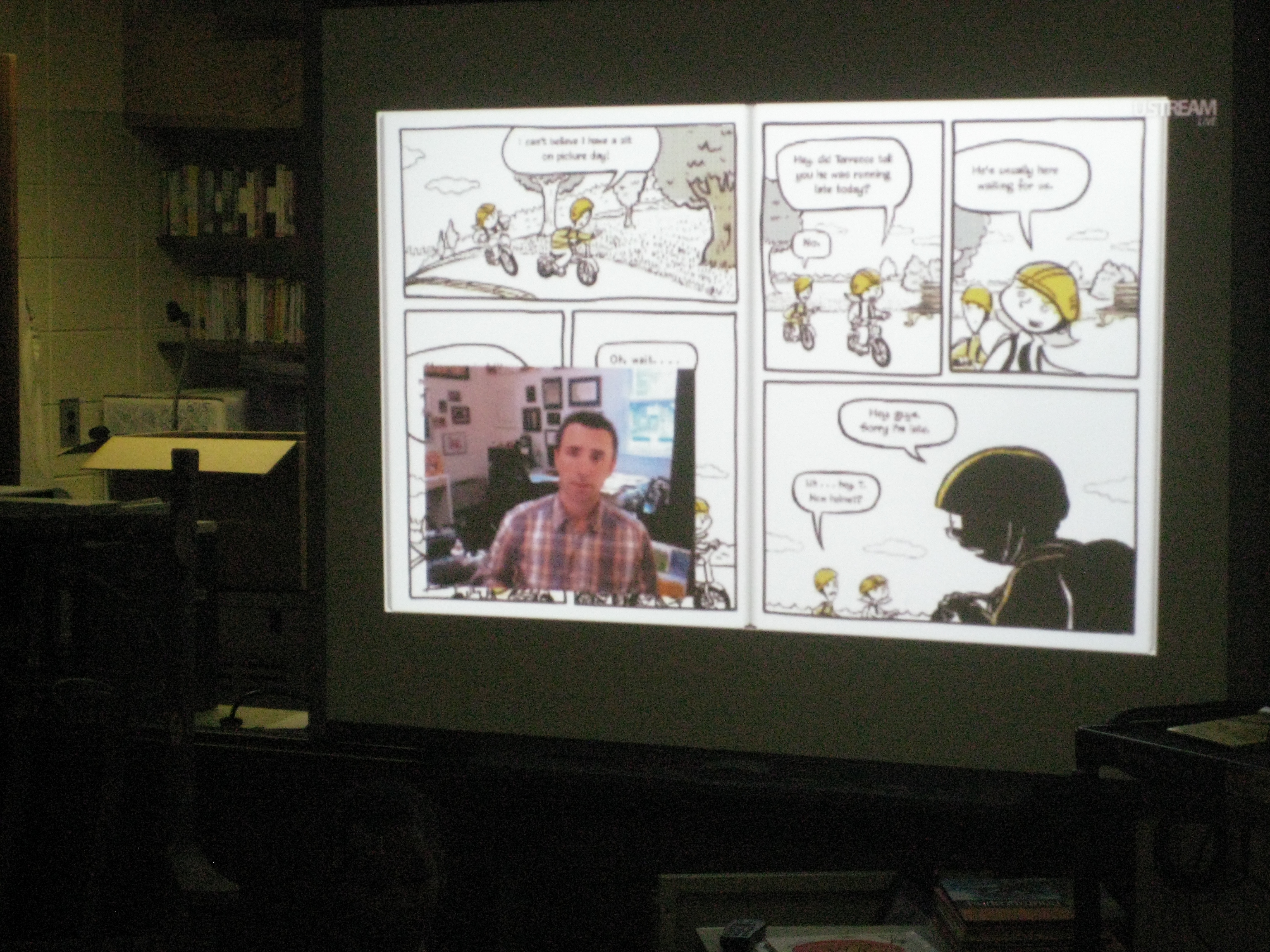
I have long been a fan of Jarrett Krosoczka’s illustrations and writing.  His Lunch Lady comics are among the most popular comics in our library.  I was thrilled to learn that he was doing a virtual comic workshop today via Ustream for free!  I advertised this to teachers a few weeks ago so that they could watch in their classroom or in the media center.

Today a small group of 3 students and their teacher came for the 10:00 session.

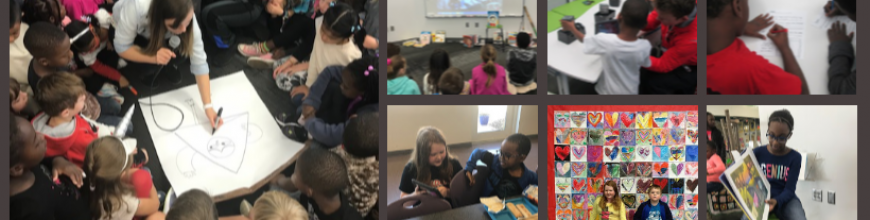
My largest group came for the 12:00 session.  In this group, I had 2nd grade Spectrum students who will be studying graphic novels very soon.  Last week, I did an exploration lesson with their class to identify some of the elements of graphic novels.  They began constructing some of their questions for Jarrett.  Later, they will read multiple graphic novels before constructing their own.  Another group that came at 12:00 came by choice.  One of Jarrett’s biggest fans, Marquavious, is a 5th grader at our school.  Marquavious re-read all of the Lunch Lady books to gear up for today’s webcast.  His teacher gave him permission to leave class to come, but he did some detective work and found several other 5th graders who wanted to participate in the workshop, too.  All of these students brought their lunch to the library and ate while they watched.  I also put drawing materials out on tables for them to draw their own comics along with Jarrett.  

All of this setup really helped us when Jarrett had technical difficulties at the 12:00 session.  Since the session was delayed until 12:30PM, I had time to have the students eat lunch, create mini-comics, and read some of Lunch Lady and the Author Visit Vendetta.  Even though the food ended up all over the tables and carpet, it just seemed appropriate to have lunchroom food during our virtual comic workshop.

Jarrett showed the kids some pages from his newest book, a sneak peak of the cover of his book coming out in April, and ended by creating a comic using ideas from all of the viewers tuning in.  The kids had a great time, and they were thrilled when they heard their suggestions read aloud by Jarrett and were even more over-the-top with excitement when he used one of their ideas in his comic.  Thanks for a great FREE event, Jarrett Krosoczka!

This slideshow requires JavaScript.