Izzy Gizmo: The Perfect Book for Library Makerspaces (and a giveaway)

I’m so excited to be part of the blog tour for the new book Izzy Gizmo written by Pip Jones, illustrated by Sara Ogilvie, and published by Peachtree Publishers.  The very first time I read this book, I knew it was a perfect match for makerspaces.

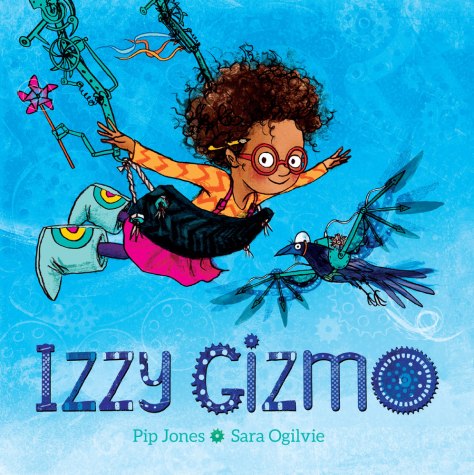
Izzy Gizmo tells the story of a young inventor whose wheels are always turning to create the next great contraption. From her hair-taming Beard-Tastic to her hostess Tea-Mendous, Izzy is always looking for ways to make life a little bit more convenient.  Of course, her inventions don’t always go as planned and she must work through the frustration and thoughts of giving up.  When she discovers a hurt crow, Izzy must use her creative energy to tackle a real-world problem.  Will the injured crow ever be able to fly again? Read this colorful, thought-provoking book to find out.

In library makerspace, we talk a lot about the mindset it takes to be a maker.  Creativity, problem-solving, perseverance, growth mindset, and risk-taking are just a few of the pieces of the maker mindset puzzle.  Izzy Gizmo features all of those mindsets. Every page is filled with illustrations showing Izzy’s many complex inventions, and I could imagine readers staring at the pages and sparking their own creative ideas.

I love that as Izzy invents things don’t always go the way she planned them.  That’s the realistic world of being a maker.  Things rarely go right, and I really appreciate that she is a character who is honest about her feelings.  She lets her emotions out and shows us that making can be frustrating. There are moments that you want to quit, but even though she may come close to quitting, Izzy is not one to give up.  It’s important for our readers to see her persevere and that it’s ok to get frustrated.

We have a lot of fun in our library makerspace, but I always encourage students to think about purpose. All around us there are real problems and issues that we could possibly tackle during makerspace time. I love that Izzy finds the crow and goes through a whole range of inventions to make the crow’s life better.  It reminds our readers and makers that even kids can find solutions to real world problems.

As we study the invention cycle, we explore the idea of remixing. You may have parts of an invention that work and parts that don’t, but the learning that you took from that experience can be remixed into something new. Izzy does this often. She pulls parts of other inventions in order to create her next solution.  This of course leads to a bit of a surprise ending in the book, but I think Izzy is a character who will be up to the new challenge she faces.

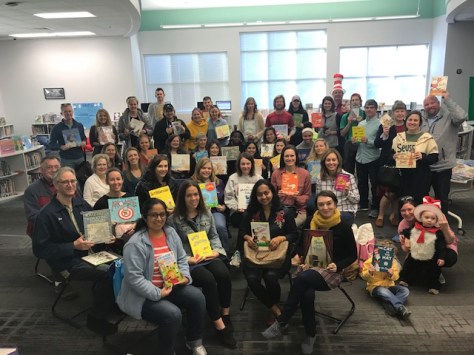
I’ve shared this book with elementary students and I’ve also read it to a class of college students at the University of Georgia who work with my young makers. It’s a great read for all ages.

Congratulations to our winner: Lisa Seymour!

I’m giving away one copy of the book. Click the Google form below or follow this link to enter.  Please read all the rules and enter by 12PM EST on March 9th. Good luck!


The 2018 Barrow Storybook Celebration

This year, I shook things up by moving our annual storybook parade and celebration to the week of Read Across America.  Traditions are hard to change, but it’s fun to try something new every now and then to see what we can learn from it.

The storybook parade has always been a favorite activity at our school.  It’s a day to dress up as a favorite book character and celebrate that book for all to see.

We begin our day with 2 guest readers in every classroom.  These are organized by amazing parent volunteer, Kim Ness.  I pull a variety of books for them to choose from or they are welcome to bring their own. Students escort the readers to classrooms.  We love having these community readers in our school.  Many are parents, athletes, and leaders in our community.

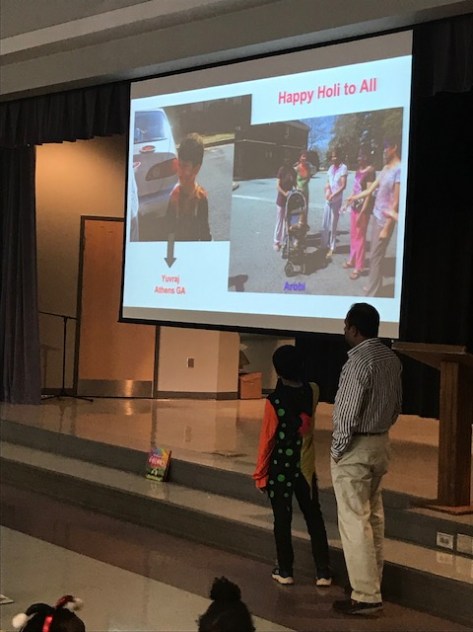
Next, we have our storybook assembly. I try to keep this brief but meaningful.  Sometimes we have a storyteller, skit, or shared reading. This year, I was listening to Matthew Winner’s Children’s Book Podcast, and heard the authors of the book Festival of Colors talk about the Indian celebration of Holi.

I loved the themes of this celebration where hate goes out and love comes in. This year Holi was on the same day as our storybook celebration, so I knew it was the perfect fit for our assembly.  Our ESOL teacher, Ms. Childs, helped me reach out to families in our school who celebrate Holi to see if they would be part of our celebration.  Two families agreed to help.

One family read the book and shared examples of the powders used in Holi. Another family, including a Barrow student, spoke about how they celebrate Holi here in Athens and the many meanings behind the festival.

I loved that we were able to learn from families right here in our school and discover a festival that many of us don’t celebrate or know about.

Following this, we formed into a line and marched down the sidewalk, around the school, and around the UGA practice facilities chanting “Read more books” while we showed off our costumes and books. Our 5th graders enjoyed some lemonade in the Dooley Garden across the street.

Many teachers in the school including gifted, early intervention, and specials all offered literacy-focused sessions for teachers to sign up.

I can’t wait to hear feedback from students, teachers, and families about the new time of year for storybook celebration. We’ll use this feedback to make decisions about next year.

What remained the same was that it was a day filled with celebrating stories in their many forms.  Hooray for books.

The 2018 Barrow Peace Prize Goes To…

Our 2nd graders have been working on our annual Barrow Peace Prize project since January, and for the past few weeks you have been voting on which person from history will win the award.

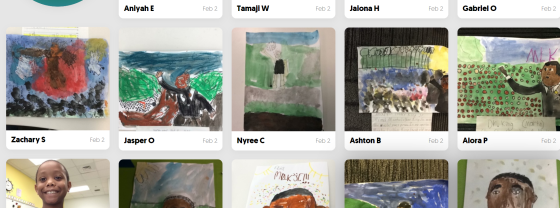
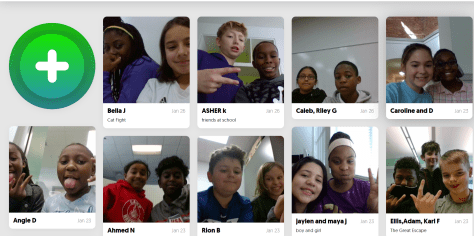
On February 28, we all gathered in the library for the big announcement.  Prior to this day, students researched a civil rights leader, wrote a persuasive piece of writing, created artwork to accompany their writing, and recorded themselves in Flipgrid. We asked people around the world to view and vote on which civil rights leader should win.

People in 160 different locations around the world cast their votes.

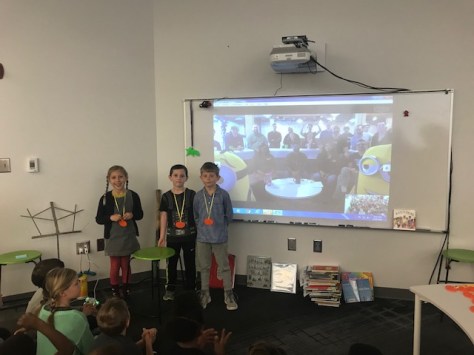
During the Barrow Peace Prize Ceremony, we connected with Flipgrid via Skype. Brad Hosack set the stage for our ceremony by reminding us of the history of this project that has gone on for many years since Flipgrid was an emerging edtech tool.

Then, we launched into student recognitions. Each teacher selected 3 students to recognize for Prolific Persuader, Outstanding Opener, and Dynamic Designer.

A member of the Flipgrid team announced the winners in each category and I handed out certificates to rounds of applause.

Next, we recognized our Barrow Peace Prize designers. A few years ago, a student said that we needed an actual prize for the peace prize. Since then, a group of students designs the peace prize using Tinkercad and we 3D print it.  Every student who researches the winning civil rights leader receives a medal.

Finally, it was the moment we had been waiting for. Nate from Flipgrid announced the 2018 Barrow Peace Prize winner………………Martin Luther King Jr. The votes were super close and this was the first year that MLK was one of our finalists for the peace prize.  Every student who researched him received their peace prize medal and we also gave a medal to each classroom to share with all students in 2nd grade.

This ceremony really is a celebration of the collective work of 2nd grade. Yes, several students hear their names called, but we all celebrate knowing that our work has reached well beyond the walls of our school to inspire others.

Thank you to every person who watched the student videos, voted, and shared this project. It means the world to the students to know that their videos have been seen.


It’s Time to Vote for the 2018 Barrow Peace Prize: Who Will Win?

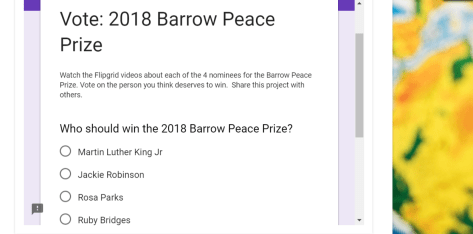
Our 2nd graders have been hard at work learning about 4 civil rights leaders and preparing a project that has become known as the Barrow Peace Prize.

A few details about what has happened before the final products you now see:

  • After learning about people who have won the Nobel Peace Prize, students brainstormed a list of character traits that are needed in order to win the Barrow Peace Prize.
  • Students researched 1 of 4 civil rights leaders using a Google doc from Google Classroom, Pebble Go, Encyclopedia Britannica, Destiny Discover, and books.  All research was done in the library.
  • In art, students created a watercolor image of their civil rights leader.
  • In writing, students crafted a persuasive essay about why their civil rights leaders should win the Barrow Peace Prize (named after our school).
  • Using Flipgrid, students recorded their essays and art.

Now, the students are ready for you!  They need you to visit their videos, listen to & like their work, and most importantly vote on which of the 4 civil rights leaders should win the 2018 Barrow Peace Prize.  In late February, we will connect with Flipgrid via Skype and announce the winner.

Please share this project far and wide so that we can get as many votes as possible.  All videos and the voting form are linked together on this Smore:

https://www.smore.com/dk4z8-2018-barrow-peace-prize

Voting ends on February 23, 2018 at 12PM EST!


World Read Aloud Week 2018: Author Visits, Skypes, and More

What an amazing week for celebrating the power of reading in our school!  For the past few years, we have celebrated World Read Aloud Day and stretched it into a whole week.  This celebration was created by an organization called LitWorld for a very important reason.

We think everyone in the world should get to read and write. Every year, on World Read Aloud Day, people all around the globe read aloud together and share stories to advocate for literacy as a human right that belongs to all people. ~Litworld

In fact, there are some pretty mindblowing facts about reading around the world.

and

This week in the library, we’ve hosted skypes and Google Hangouts with classes, libraries, authors, and illustrators as well as hosting an in-person visit with Matt de la Pena & Loren Long.

We’ve stressed many things in these connections.  One of those is that we all should read as much as possible and celebrate our freedom and right to read.

Author & Illustrator Visit

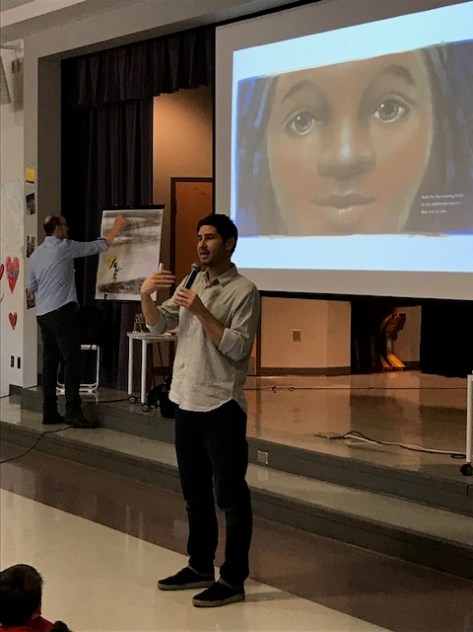
On Tuesday, Matt de la Pena & Loren Long visited our 1st-5th grade to share their new book Love.  This was one of the many stops on their national tour.  Our amazing art teacher, Ms. Rita Foretich collaborated with me in the library to create art projects with every grade level in the school.  We wanted them to know how much their book impacted us by showing them an art exhibit throughout the front halls of the school.

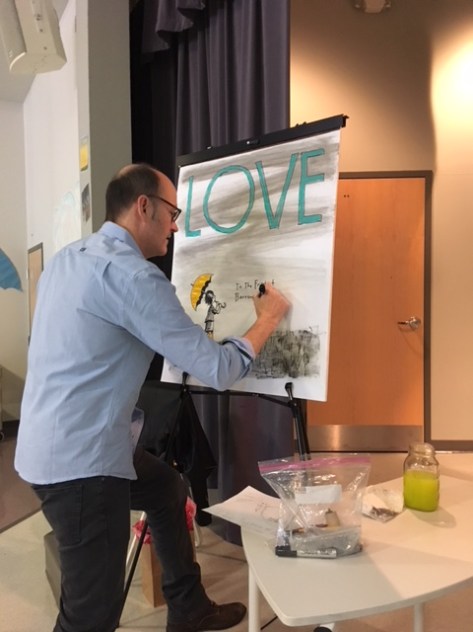
Matt & Loren started their visit with a reading of the book.  Matt read the book from memory while Loren  painted the front cover of the book on chart paper.

Then, they both took time to tell us their own personal journeys of how they came to work together on the book, Love.  From Matt’s basketball scholarship to college to Loren’s mom encouraging him to continue his art pursuit even with the barrier of being colorblind, we learned of the many examples of love that filled these two guys lives.  They brought messages to students about taking risks, loving and respecting your family, working hard even when things are hard, having empathy for people going through tough bumps in the road of life, and more. I hope that their messages will connect with students for years to come.

The power of their spoken word had our audience of 450 1st-5th graders captivated for an entire hour.  We can’t thank Penguin, Avid Bookshop, and Matt & Loren enough for taking time to visit our school.

Class & Library Skypes

On Monday, Wednesday, and Friday, several of our classes connected with other classes around the country via Skype and Google Hangout to read aloud books.  This year, I tried to select books that had an element of discussion around doing good in the world.  Selections included books like Love by Matt de la Pena, Be a Friend by Salina Yoon, We’re All Wonders by R J Palacio, Yo Yes by Chris Raschka, A Hat for Mrs. Goldman by Michelle Edwards, and Maybe Something Beautiful by Isabel Campoy & Theresa Howell.

Each connection had its own variation.  Sometimes students helped me read the text to the other class.  Sometimes the two librarians alternated reading the text.  Other times we read one book to our connecting class and they read a book back to us.  We always spent time making connections with one another through sharing and questions.  We talked about things like making things beautiful in our school, creating gifts to give to others in need, identifying wonders of our classmates, and what it takes to be a good friend.  So many of our conversations were filled with meaningful ways to make sure the world is a great place to live, and we learned that we aren’t alone in our interests and routines.

Authors & Illustrator Skypes

On the official World Read Aloud Day, we had several skypes with authors and illustrators.  Anne Marie Pace, Brian Lies, Carter Higgins, Donna Gephart, Jody Feldman, and Loree Griffin Burns all connected with students.  I loved that they showed many of their books and then read aloud from one of them.  Any time an author/illustrator connects with us in person or in Skype, they immediately become a favorite author/illustrator in our library.  Their books fly off the shelves and stay checked out.  This time was no different.

Brian Lies read from Bats at the Beach and then got kids to brainstorm a new bat drawing that he illustrated on Skype.

Donna Gephart read to us from a book that she had just gotten the ARCs for.  We couldn’t take pictures or record anything, but it was so exciting to get an early preview. Loree Burns went in depth with students about her research process and writing about what matters in the world. A group of writers met with her and got lots of inspiration for their own writing.  Anne Marie Pace and Carter Higgins both read from brand new books with a timely topics of love and Groundhog Day.

We are so appreciative of these professionals who take time out of their busy schedules to connect with readers.

Mapping

As usual, we used Google Tour Builder to keep track of our connections and the books that we shared. It’s always fun at the end of the week to see all of the stories that have been shared and the connections we’ve made. Technology flattens our world and reminds us that stories can connect us across the miles.

Happy World Read Aloud Week.


Love Projects: Kindergarten & 1st Grade Hearts

When, Kindergarten finished reading Love by Matt de la Pena & Loren Long, they took time to design heart symbols of love. Ms. Foretich gave them several options for drawing a heart.  They could freehand their drawing or they could use one of many heart stencils. She modeled how to trace as well as how to use crayons to fill in all of the space with color.  She also gave them examples of how to design their hearts. They could fill the heart with patters or draw things that they love inside.

Students began these hearts in the library. Ms. Foretich and I walked around and talked with students about their designs and helped students think about designs, drawings, or colors.

They continued this process in the art room until the hearts were complete.

We displayed the hearts in 3 x 3 blocks on the windows of the library.

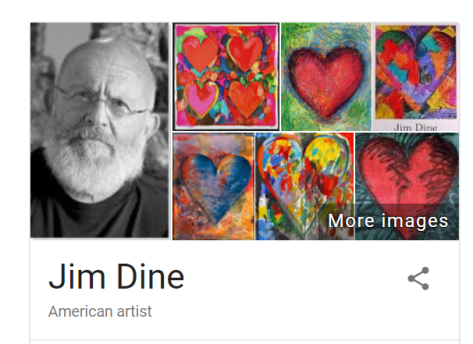
In first grade, students studied the work of pop artist Jim Dine after reading Love.  I was unfamiliar with this artist, so it was fun for me to go online and see some of his work. 

First graders created hearts inspired by the work of Jim Dine in the art room.  We took all of these hearts and pieced them together into a backdrop to hang in the library.  This space will be a photo booth for students, teachers, families, and guests to take their picture.  I posted photo booth instructions along with an iPad so that photos can be taken over the next few weeks.

One of the things I love about these 2 grade levels is how their work is created individually but it comes together to create larger collaborative pieces that make an eye-catching impact on each person that sees them.

Stop by and take your picture sometime soon!

Love Projects: 3rd Grade Selfies

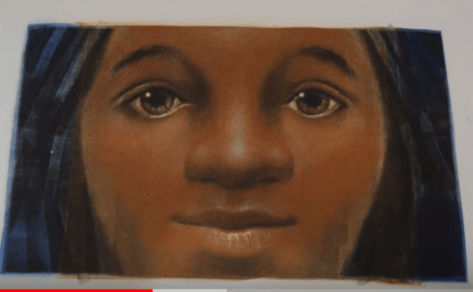
When Ms. Foretich (art teacher) and I finished sharing Love by Matt de la Pena & Loren Long with our 3rd graders, we flipped back to one image in the book.

This image always surprised students when I read the book aloud.  It’s the only image in the book that is zoomed in so close.  There was always a collective gasp or audible reaction, and we often had to stop and talk about what this image was all about. I was so glad that Ms. Foretich chose to focus on this image with a whole grade level.

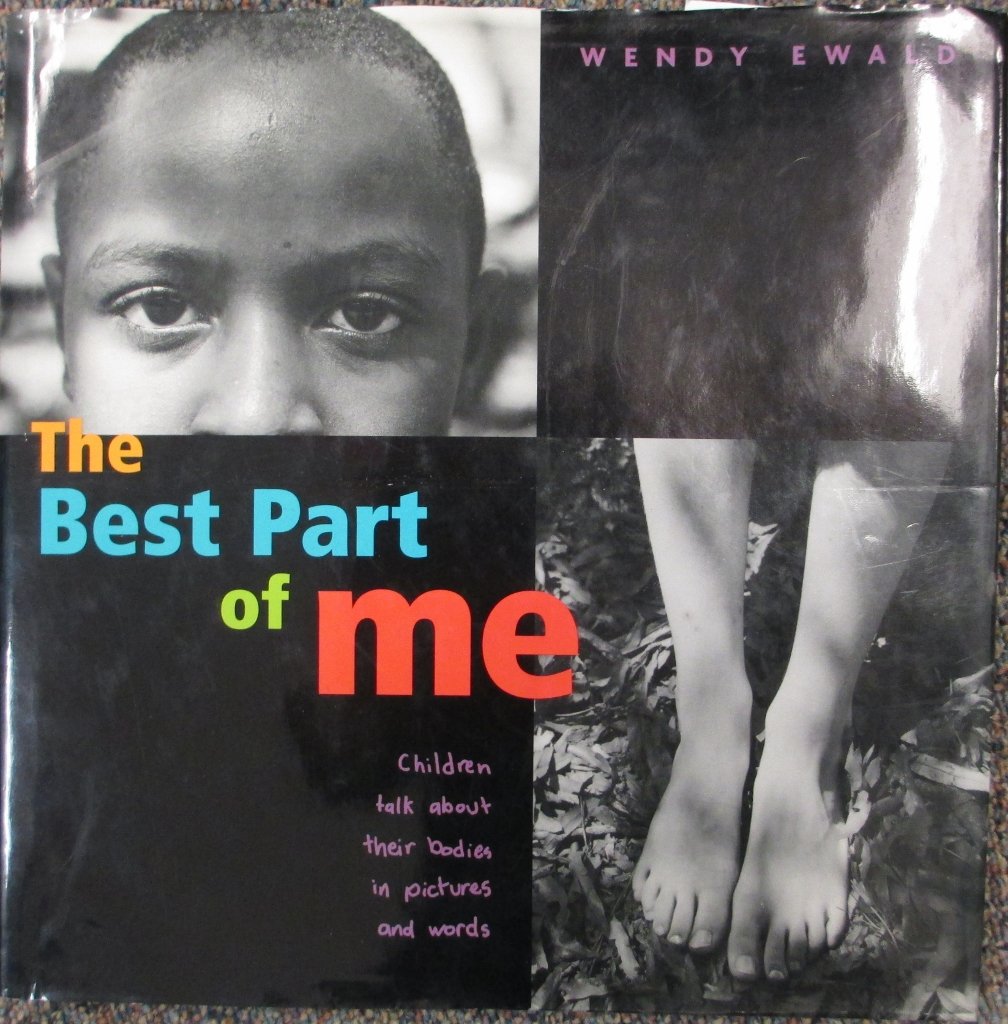
We paired this image with another book called The Best Part of Me.

This book features voices of children as they talk about the favorite parts of their body and why. Each poem/prose is accompanied by a black & white image.

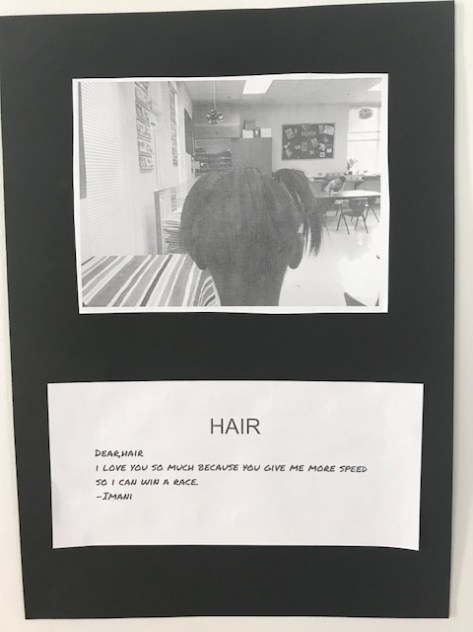
In response to Love and The Best Part of Me, students brainstormed about their own bodies and what they love.  We encouraged students to think about body parts, favorite activities, and personality as they brainstormed.   By the end of class, we wanted students to focus in on a particular aspect of themselves that they could photograph and write about.

Ms. Foretich continued this project in class by having students use iPads to take selfies of the favorite parts of themselves.  Students also finished the writing and typed up their words.  Ms. Foretich printed all of these to mount on black paper.

They are now displayed in the rotunda of our school.  I love standing in the center of the rotunda and looking around at all of the student images and voices staring back at me.  To see what each student loves about himself/herself is reassuring in a world that can sometimes seem mean and chaotic.

If you find yourself in our school, I hope you’ll take time to see (and be inspired by) their work too.

Love Projects: 4th Grade Family

After 4th graders finished reading the book Love by Matt de la Pena & Loren Long, Ms. Foretich (art teacher) and I asked them to think about the love that exists in their families outside of school. The book shows many ways that families show love to one another.  We had several powerful conversations about images in the book such as the dad and daughter dancing on the trailer, the mom & dad fighting, the older sibling taking care of the younger sibling, and the new parents huddled over the crib.  Each student had a different reason that a particular image resonated with him or her.

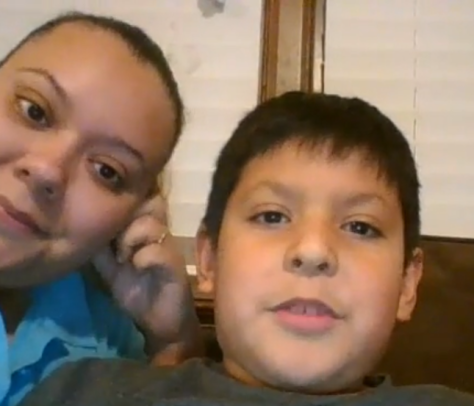
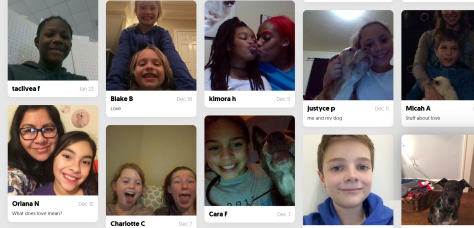
In the library, we gave students a chance to list out family members that they might be able to have a conversation with at home and what they might talk about in regards to how they show love to one another. Ms. Foretich setup a Flipgrid for families to record this conversation.  The link was shared in Class Dojo by classroom teachers and Ms. Foretich also sent a printed set of instructions home with students.  

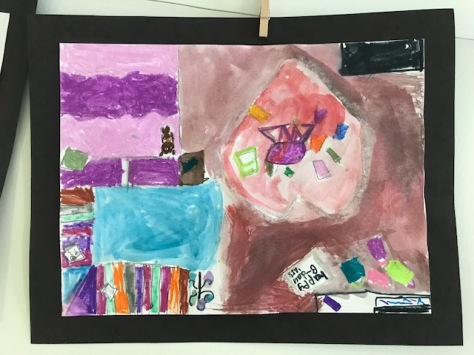
A second piece of the 4th grade project was to also create an image of love.  This was very open to student interpretation. They could create symbols, scenes, words, or any combination that spoke to them.  These images were started in the 2nd session with 4th graders, and Ms. Foretich and I used this time to conference with each student about his/her plans for creating a recording with family members at home.  We were trying to make sure each student had a plan and also had access to the tools they needed to record. I always offered the library as an option for students and families to come in and record.

After this 2nd session, Ms. Foretich continued having students create their images, and we waited on students to film. We had some other teachers check in with specific students in order to encourage them to record at home.  In the final week before our author/illustrator visit, I noticed that many students had still not recorded, so I scheduled a session with each 4th grade class to come to the library and record their Flipgrid.  This option left out the “record with your family” aspect but at least it allowed each student’s voice to still be included in the project.  Students were able to talk about how their family shows love even if they weren’t with their family in the video.

Now, the 4th grade symbols of love are hanging at the entrance to our school, and our Flipgrid is continuing to come together.

Even as I write this post, I’m getting messages from parents asking if it’s too late to add their voice. I’m hopeful we’ll have more families add their voice even after our author visit occurs.

Please take a moment to listen to each family and student on this Flipgrid. You are welcome to leave comments for them on this post or react to their videos with the emoji reactions. If you find yourself at our school, take a look at 4th grades work as soon as you enter the building.

Two-Voice Poetry

5th grade spent two days reading and creating two voice poetry. This project came about after I met with Mrs. Freeman to brainstorm ideas for her ELA classes.  We were looking at this standard:

ELAGSE5RL6  Describe how a narrator’s or speaker’s point of view influences how events are described.

During our planning, we looked at books and poetry that featured multiple perspectives and decided that we would focus on poetry.  I found several books to serve as mentor texts.

  • Messing Around the Monkey Bars by Betsy Franco
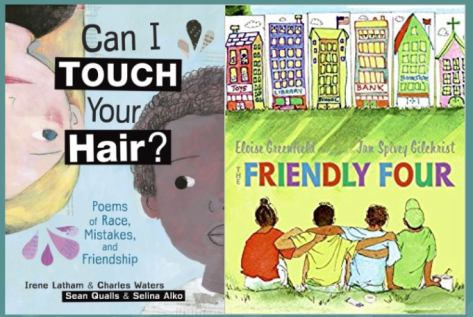
  • Can I Touch Your Hair? Poems of Race, Mistakes, and Friendship by Irene Lathan & Charles Waters
  • Seeds, Bees, Butterflies, & More by Carole Gerber
  • Joyful Noise by Paul Fleischman
  • The Friendly Four by Eloise Greenfield
  • This is Just to Say by Joyce Sidman

During the 2-day project, the students, Mrs. Freeman, and I read aloud examples of poems from each book and talked about the perspectives and style of the poem.  Some were funny.  Some were serious or about historical events. Some were sarcastic. We tried to showcase examples that would appeal to many different interests.  Then, we set students up for their work session.

In pairs, students continued to read mentor poems from the featured books to get more familiar with how two voices could work together from two different perspectives.

When they felt ready, they moved to a brainstorming sheet. On the sheet, they thought of possible topics along with what two perspectives could talk about that topic in the poem.  We encouraged students to choose two perspectives that would offer a different take on the chosen topic.  We tried not to give too many examples, but if students were stuck, we made suggestions that might spark their own ideas: hot cheetos/hot takis, cell phone/landline, nintendo/xbox, school/home, twitter/instagram, etc.

Once they decided on the topic and perspectives they liked, they started trying out some lines of their poem.  Many students looked back to the mentor poems for a structure or style of writing.  Others picked topics like politics, where they needed to do some additional research in order to truly take on the perspective they were attempting.

Mrs. Freeman, Mr. Kinnaird (student teacher), Mrs. Mullins (collaborative spectrum teacher), Mrs. Kelley (special education teacher) and I all walked around and conferenced with writing pairs.  We nudged them to expand their voice, use descriptive language, and practice their poem before publishing.

The work session spanned both days.  Once students were ready to publish, they used their computers to record their poem on Flipgrid.  This is a piece of the project that will continue in the coming days as students finish their poetry.

There were several moments where I paused and looked around at the whole group of students working. What amazed me was how engaged each pair of students was.  Yes, students worked at different paces and some needed more support than others, but no student sat back and did nothing. They were focused on the task, and it made me wonder about this particular experience and what made all students engaged.  Was it the choice? Was it the partnership? Was it the freedom of poetry? Was it interest? Was it the authentic audience on Flipgrid?  I don’t have the answer, but what I do know is that I loved this experience and I hope I can continue to create these kinds of projects with teachers and students in the future.

Please take time to listen to the many student voices on this Flipgrid.  You can leave students comments on this post or use the emoji reactions on each video to let them know how their poetry made you feel.

Love Projects: 5th grade Symbols of Love

After 5th grade spent time, reading the book Love by Matt de la Pena & Loren Long, I silently turned back through each image in the book.  We had spent time talking about some of the images as well as listening to Matt’s powerful words, but Ms. Foretich (art teacher) and I wanted them to have one more slow look at the images. Their goal in looking at the images for a 2nd time was to pick out an image that spoke to them in some way.
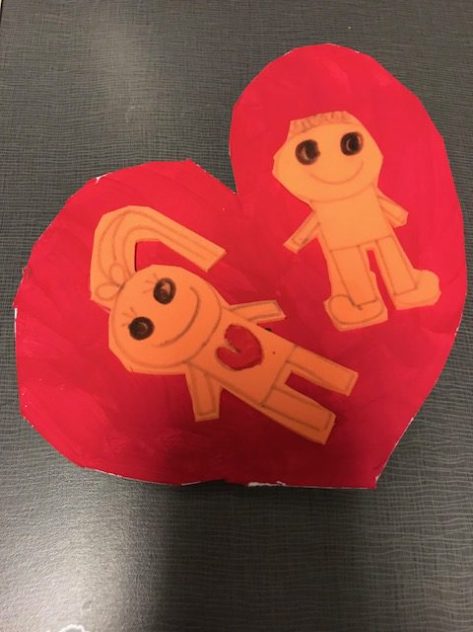
At tables, each 5th grader took a brainstorming sheet to reflect on some questions through writing or through sketching.  The purpose of this sheet was to help them think more about an image from the book and to imagine a new symbol of love. We wanted students to think beyond just a universal symbol of love like a heart, but we didn’t exclude hearts if that was what students were most connected with.

At the end of the brainstorm, students had to think of what materials they might need in order to make a 3D sculpture of their symbol. Ms. Foretich went through these and helped group students with the materials that they might need.

During the 2nd class, some students worked in the art classroom and others came to the library.  Students in the library worked on 3D design in tinkercad to prepare for 3d printing or they used materials from our makerspace such as duct tape and other crafting supplies.

In the art room, students used clay, paint, and other materials from Ms. Foretich’s supplies.

I took student Tinkercad files and put them into Makerware software for 3d printing. Over the course of a week, all files were printed.

All of the sculptures will be displayed in the collaborative space just outside the library.

We hope they will inspire people to think about the many forms that love takes and the many symbols of love that exist in the world.