4th Grade Blogging

IMG_1341All of our 4th grade classes are starting blogs.  After meeting with the teachers and discussing their goals for blogging, we chose to use Kid Blog as our tool of choice.  We chose this tool because it gives teachers the options to set several privacy settings, monitor posts & comments, and also simultaneously creates a class blog as well as individual blogs for all students.  I showed the teachers how to quickly import their students into KidBlog and setup accounts.  They each setup their own class.

Our 4th grade classrooms are all trying out a special time in their day called Heart Time.  During this time, each student has a specified amount of time to work on something that truly matters to them.  Some construct masks.  Others explore drum making.  Some spend time writing.  The possibilities for this time are endless.  There are many pieces to this time.  One piece is for students to begin to learn about what matters to one another and spend time sharing and connecting with one another.  The teachers’ hope is that these classroom discussions can be documented through blogging so that they document the process but also impact a larger audience than just the classroom.  Other classrooms could learn from what these students are exploring.  Also, members of the community might make a connection with a student and be able to share their own expertise with a student if they know what that student is exploring.
IMG_1340

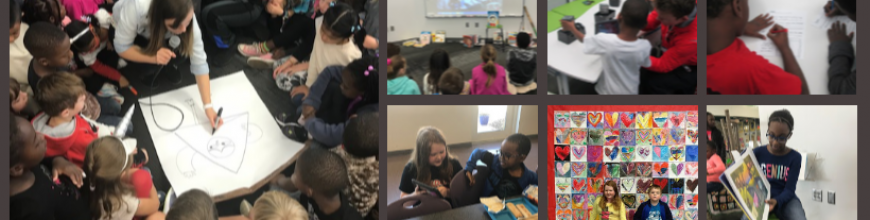
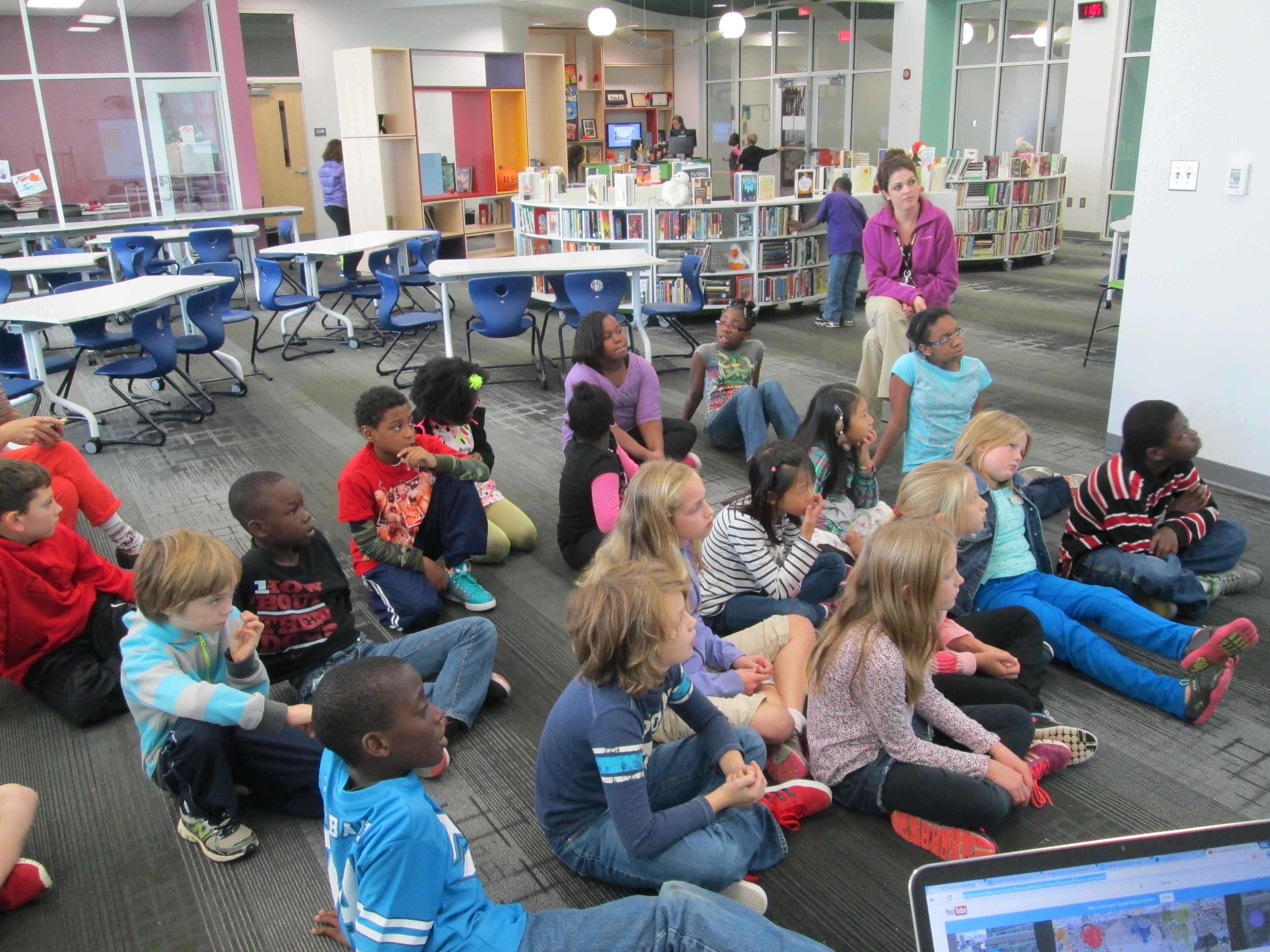
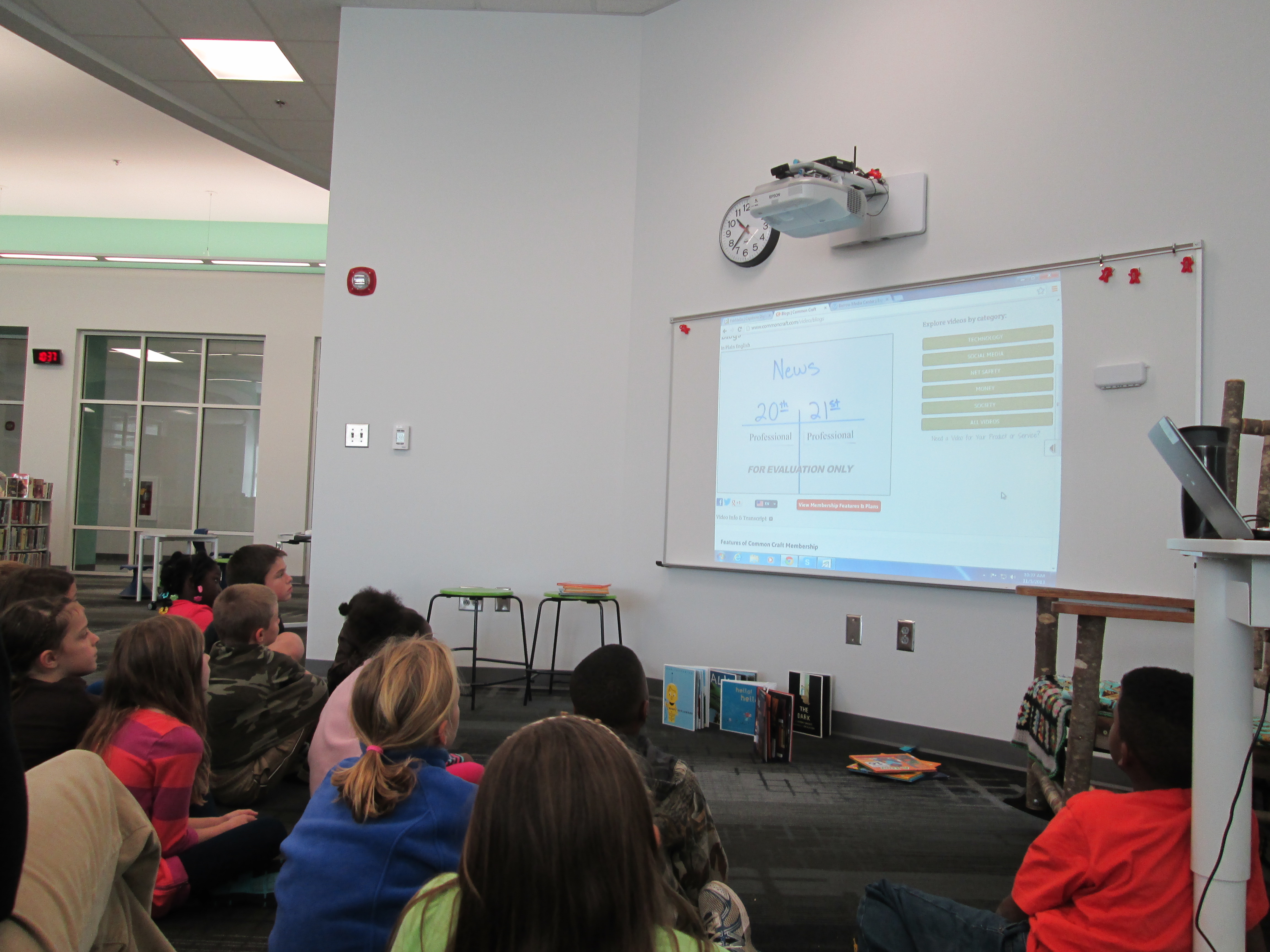
We held a kickoff to the blogging project.  During the kickoff, all of the 4th grade classes rotated through 3 centers.  With me, students learned a bit of history about blogging.  We learned that in 1999 there was less than 100 blogs and today there’s well over 100 million blogs.  We looked at this blog, and I explained how blogging has a purpose.  Students were wowed when they saw the map of where people are reading the media center blog.
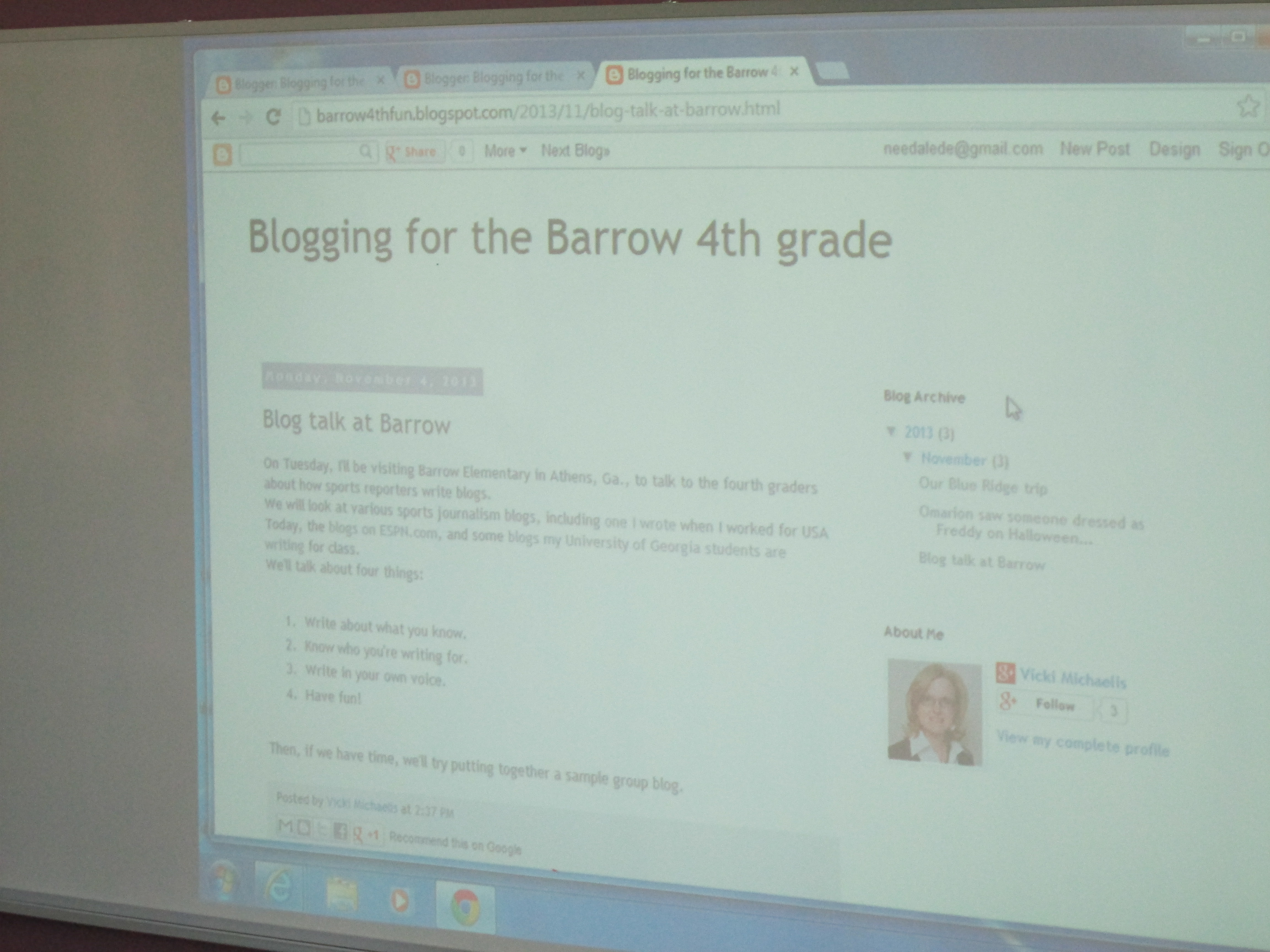
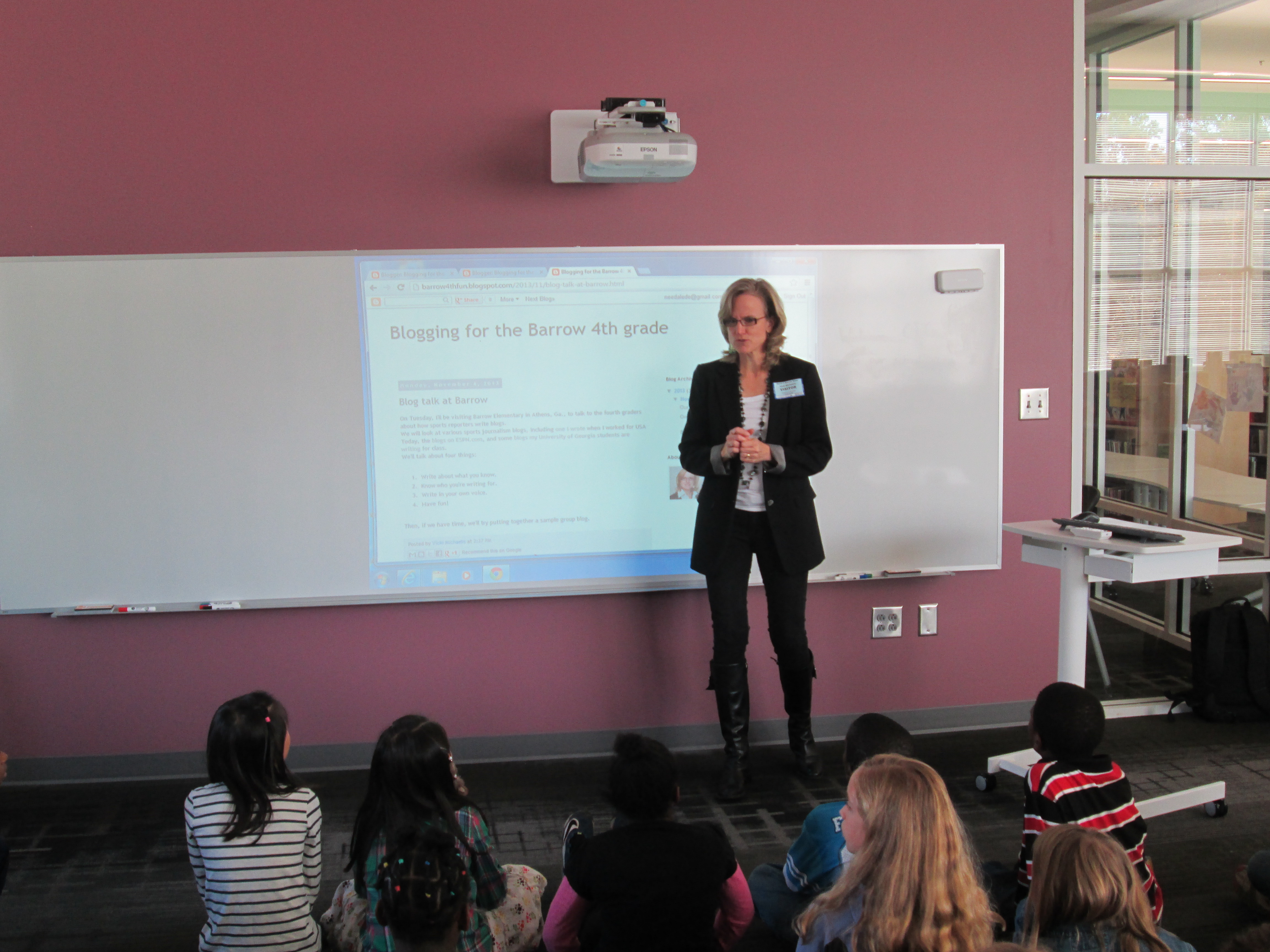
IMG_1343With Vicki Michaelis, a parent, students learned about how blogging is used in careers.  Vicki does sports blogging through her career at UGA, so she was able to show students how she uses blogs to reach her audience.IMG_1345
With Heather Carlson, 4th grade gifted teacher, students explored blogging ethics and the importance of proofreading and deciding what to post or not post online.

Next, students will begin exploring their blogs in class and using this new tool to document their learning throughout the year.  I can’t wait to read what they write!

2nd Grade Monster Stories

Brink Every year our 2nd graders write monster stories leading up to the end of October and a PACT time called Monster Mash where families come into the classrooms to engage in what students are learning.

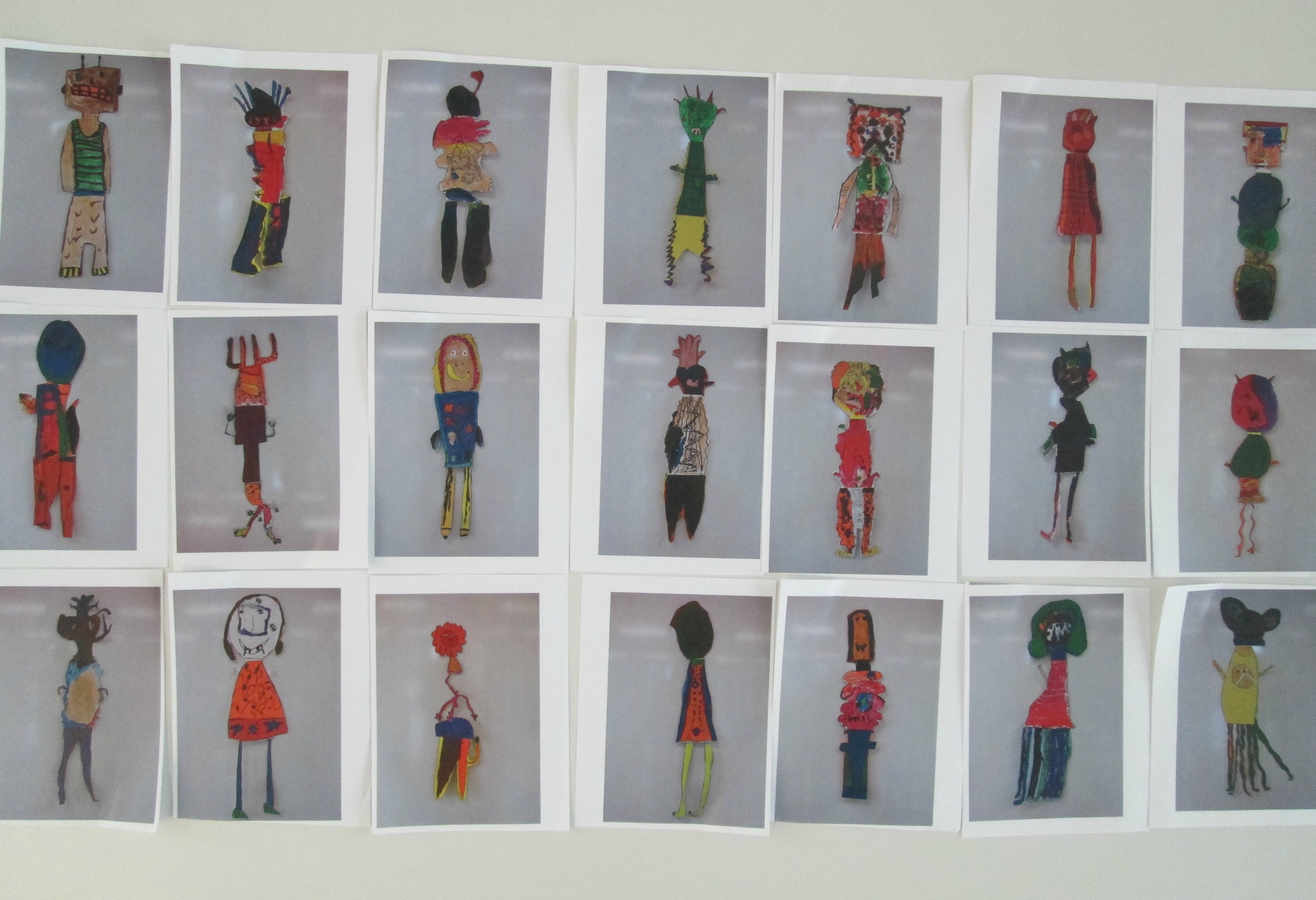
The project has many hands involved.  In art, Ms. Foretich works with the students to create their own monsters.  She then takes digital photographs or scans of those monsters and prints out mini versions of each student’s monster.

In class, students create scenes where their monster might live, where they might terrorize, or where they might go on an adventure.  They use their monster and scene to write a story.  Through several writing workshops, students develop their pieces, revise/edit, and publish.

IMG_1251In the media center, students come to me to film their monster story with our iPads.  Some students come with one scene and one monster, while others come with multiple scenes, multiple monsters, and pages and pages of story.  This year, we created a huge recording schedule that was quite ambitious.  Over almost 2 weeks, I would have 3 students every 15 minutes during a 90 minute time frame.  During this 15 minute window, we had to film the movie, upload it to an iMac, check the volume, add a title slide, and export the movie to a flash drive for Youtube uploading at a later time.  It took quite a while to get a flow going, but by the final few days, we were getting really efficient in our 15 minute window.  With a few students at the beginning, we made an opening slide with footsteps and a creaking door.  This same slide was used for every student, so we just had to change the title and author each time.  I set this up on 2 iMacs so that we could double up on uploads.  Some students filmed by themselves by using the iPad on a tripod.  Other students were filmed by Ms. Maher, a gifted teacher, or Mrs. McGee, a grad assistant.  If enough students were available and ready, students filmed for each other.  My role was to walk students through the steps of creating the video.  With every student, I talked through what we were doing on the screen.  Students approved the volume on their videos, added their title, and stayed with me through the export process.  I uploaded the video to Youtube after they left.

Teachers showed the videos during the Monster Mash PACT time.  To make sharing and viewing the videos easy, the teachers took all of the links to student videos and put them on a Thinglink.  To make these, we put all of the student monsters on a table, took a picture of them, uploaded the picture to thinglink, and attached each student video to his/her monster.  Now, when parents ask how to get to the videos, it is very easy to just share the thinglink with them.

RamseyerNext year, I want to think about how to give students even more ownership in the process.  Because of the tight time frame, it was hard to let students do all of the work of filming and uploading, but I know there has to be another way.  I’m going to reflect on that and suggest some improvement for next year.  For now, we can enjoy the amazing creations of these students in art, the classroom, and the media center.

Brink

Ramseyer

Wright

Yawn 

Studying Illustrations with Jerry Pinkey

Pinkey art (8)Third grade is beginning a folktale project that is a collaboration between classroom teachers, the art teacher, and the media center.  This week, we kicked the project off with a lesson in the media center to explore the artwork of Jerry Pinkney, who writes and illustrates many folktales.

Students came to the library during art.  The purpose of this time was to get familiar with Pinkney’s illustrations before students take a field trip to the High Museum of Art  in Atlanta to see an exhibit of Jerry Pinkney’s art.  We wanted students to think about 2 questions.

  • What clues does the illustrator give us about the setting of the story?
  • What clues does the illustrator give us about what the characters are doing in the story?

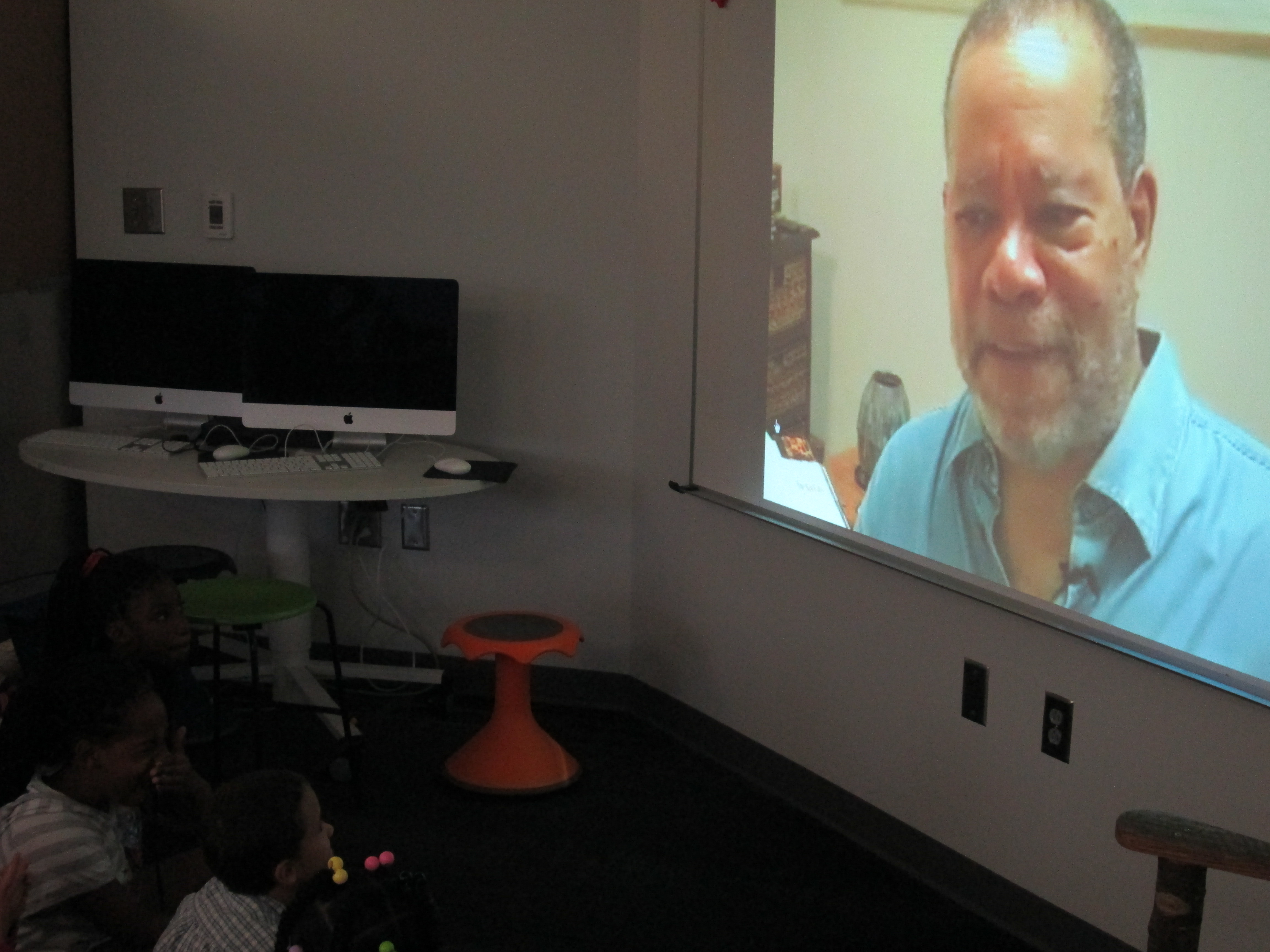
We started with this video of Jerry Pinkney discussing The Lion and the Mouse.

After the video, I asked the students how Jerry Pinkney started working on the book and what he realized once he made those first steps.  This took our conversation to focus on the importance of illustrations and how they can tell the whole story or how they can work with the text to tell the story.

Next, we looked at this slideshare that showed Caldecott honor and medal winners along with the criteria used to decide the winners.

The purpose of this part was to highlight the many ways you can look at an illustration and how it interacts with the text or tells the story.  Jerry Pinkney has received several Caldecott Honor Awards along with the Caldecott Medal.

Pinkey art (10)Finally, we modeled how someone might study one illustration in a book very carefully and consider our 2 focusing questions.  I used We Give Books to display the book Big Red Lollipop.  Students in each class noticed things such as the red cross as a symbol for a hospital, an envelope on the side of a building to show a post office, the number of buildings close together to show a town, etc.  They also noticed how the character’s hair was blowing in the wind and how her leg was lifted high to show that she was running.  They noticed how she was carrying a letter and smiling to indicate that she was probably going home to show her family something she was excited about.

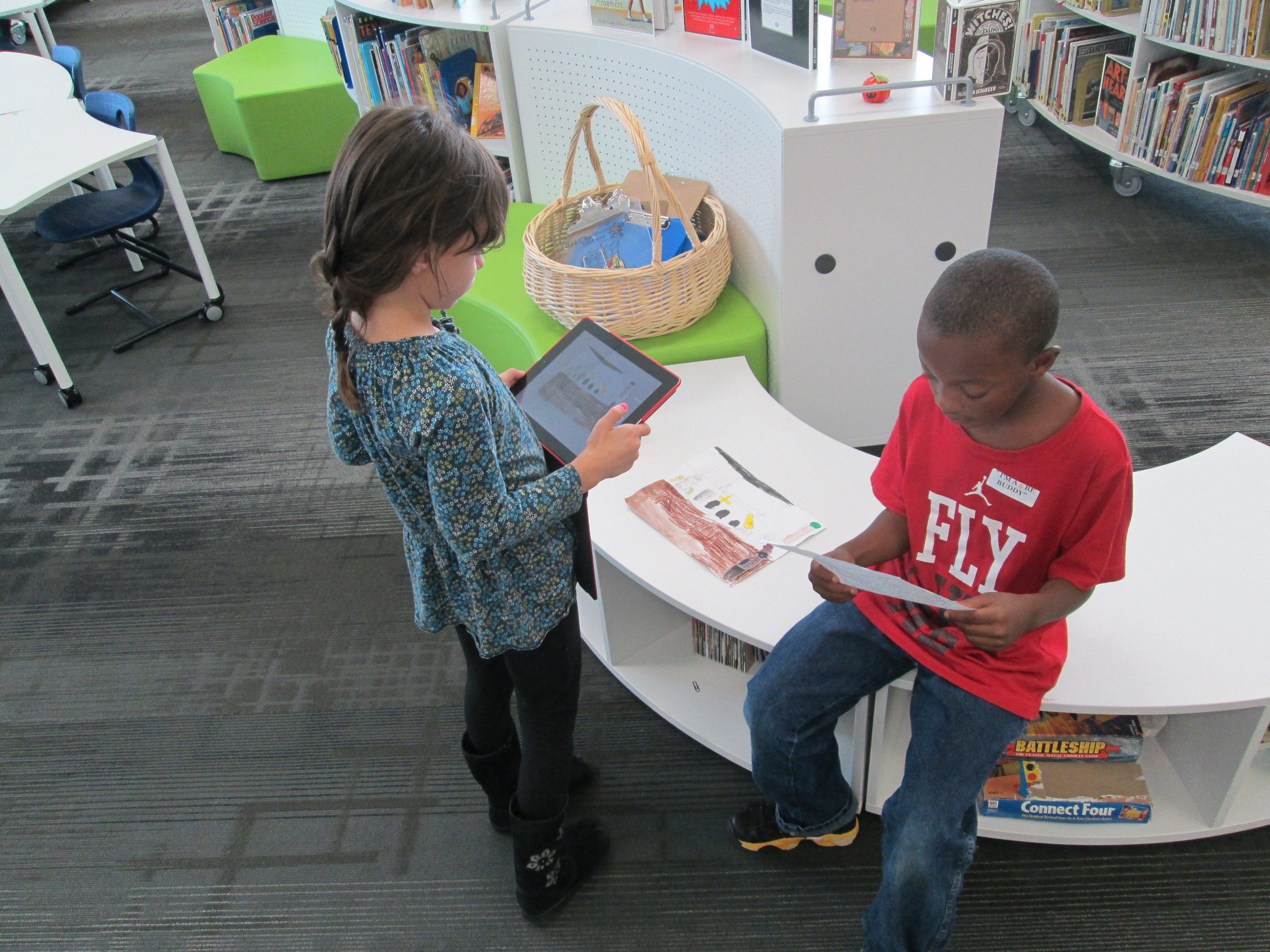
For the last part of the lesson, students split into groups of 4-5 students.  Each group received 4-5 books by Jerry Pinkney to examine.  Their job was to study the illustrations using the 2 questions just like we did in our model illustration.  As groups talked, the art teacher, art student teacher, and I walked around and chatted with students about what they saw in the illustrations.  We then asked groups to choose one illustration that they wanted to show to another group and discuss.  They used iPads to take a photograph of the illustration.  When they shared with another group, they could zoom in and out of the illustration on the iPads to show the fine details.

In art, students will now have a lesson on museum etiquette  where they will practice the skills it will take to visit a fine art museum.

On the trip to the High on October 23, we will tweet our observations using the hashtag #barrowbuddies.

Next steps will include:

  • Learning elements of folktales.
  • Reading multiple folktales and using a Google form to track the most common elements.
  • Choosing a folktale to read in class without seeing the illustrations.
  • In Art, developing illustrations for that folktale.
  • In the media center, put the illustrations and folktale version together with technology.
  • Share the new creation with the world

We can’t wait to see how this project develops and how Jerry Pinkney’s art inspires what the students create.

Rhyming Words and Storybird

Our Kindergarten students have been learning about rhyming words.  For our library lesson, we read two different stories.

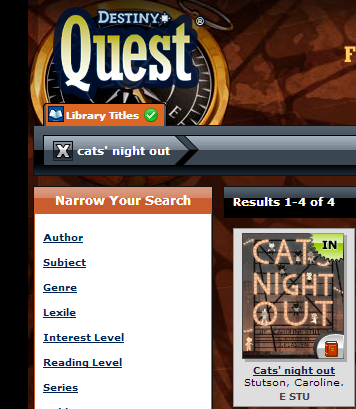
Storybird - Say What-! (Our Version)For our first story, we read Cats’ Night Out by Caroline Stutson.  Students gave me a thumbs up when they heard rhyming words.  Sometimes we paused and they told a partner the rhyming words they heard.  Other times we shared them aloud to the whole group.  We also took time to notice that there was a counting pattern in this book, counting by twos.

For our second story, we read Say What? by Angela DiTerlizzi.  This book explores the sounds that animals make and thinks about what animals might really be saying when they make their sounds.  This book sets up a great pattern that students can model in their own writing.cats' night out

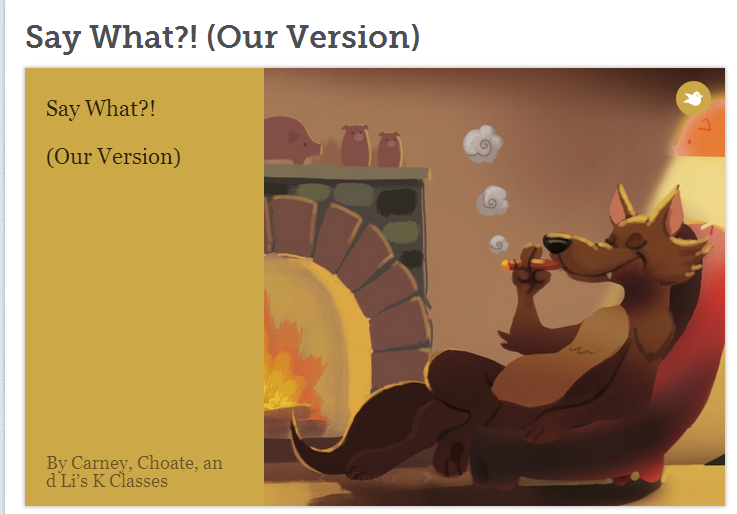
For our work time, I put together a Storybird to use with all of the classes that participated in this lesson.  I searched for animal pictures within Storybird and pulled a few onto each page of the book.  Then, I typed the sentence starters for each animal.  “When a _______________ says _______________ does she really mean _________________________?”  Each class brainstormed rhyming word pairs for each animal picture.  It was about 2-3 pictures per class.  After the final class, we had written a collaborative ebook.  I emailed the link to all of the teachers so that students could see how the book turned out.

This lesson also served another purpose.  It was an authentic way to show a web tool that students would be using in the future.  Rather than teach about making a Storybird, students saw a Storybird in action.  Now, when we actually look at some of the steps, they’ll have a concrete example of a finished product to reference.  This was the first time that I have tried this, and I’m curious to see how it will impact future Storybird projects.

Read their final version of the story here.

September 11th: Reflecting and Connecting with Barrow and Van Meter

IMG_1016Each year as a part of their social studies standards, our 5th graders learn about September 11th.  We try to take an entire day and explore September 11th from multiple perspectives and angles so that our students understand the tragedy but also how tragedy can lead us to take action in the world.  This year, we were excited to collaborate with Shannon Miller and her students in Van Meter, Iowa on this project.

Today at Barrow, students began their day in their classrooms.  They discussed heroes and set a tone of seriousness and reflection for the day.  Then students launched into four 30-minute rotations.

1.  With Ms. Olin, students read the book Fireboat, discussed the many heroes that responded on 9/11, and learned about ways that heroes are honored.  Students designed a postage stamp for heroes.

2.  With Mrs. Selleck, students read some reflections that were written by New York students after the tragedy happened.  Students learned about how people respond to tragedy in many ways.  They also read 14 Cows for America by Carmen Deedy to see that even people in far away countries wanted to support America in any way that they could because of this tragedy.

3.  With Mrs. Mullins, students looked at other heroes of 9/11 from the rescue dogs to the everyday citizens aboard the United 93 that took over the hijackers and saved the US from another potential large scale disaster.  Students also learned about the poetry form haiku and how it can be a way to reflect upon a tragedy or honor someone.  Students wrote haikus for heroes.  Mrs. Freeman recorded several students reading their poems.

4.  With me in the media center, students viewed a video about remembering the tragedy and taking a stand on 9/11 to do something positive for the world.IMG_0999

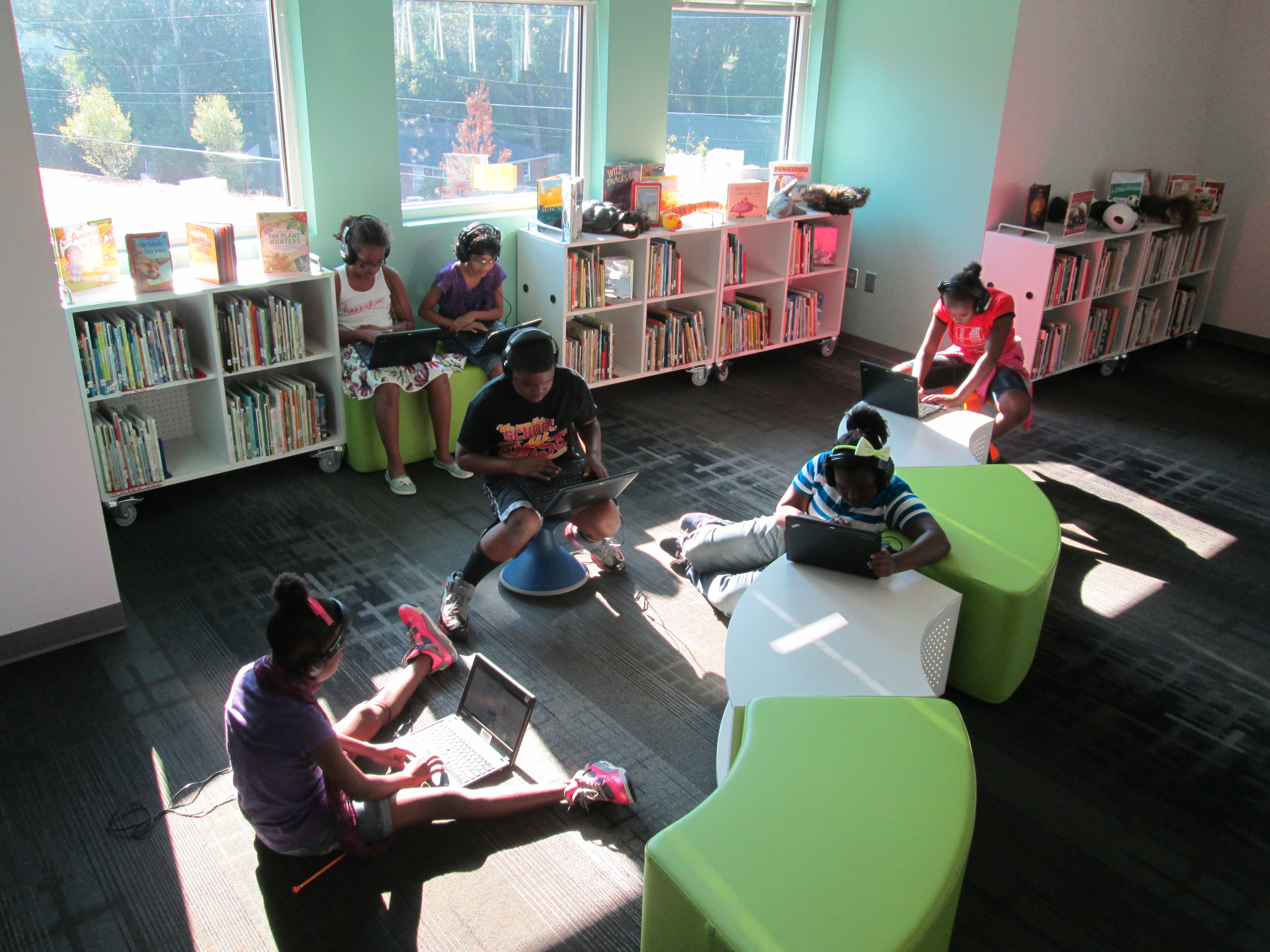
Students then went to a pathfinder on computers and sat all over our media center in complete silence as they viewed multiple websites about 9/11.  The sites ranged from video footage of the tragedy to interactive timelines to audio recordings of memories from victims’ family members.  At the close, students thought about what they might do to honor 9/11.  Along with students from Van Meter, we created a padlet where each student wrote an “I will” statement.

At the close of the day, students wrote reflections using 2 prompts:  1.  September 11th makes me think about…. and 2.  My hope for the future is…  We filmed these students and added their reflections to a collaborative video between Barrow and Van Meter.


September 11th is a tough subject with disturbing content.  We made sure that every student had multiple options for how they might learn about the day.  Students also had permission to no watch anything that disturbed them and could take a break at any time to do something else or to read books or write.  After doing this each year, I feel like this format really explores more than the tragedy and helps students see that in tragedy heroes emerge and any person can make a positive difference in the world.

Our students will continue to talk about this with families, explore the pathfinder sites in their classrooms, and contribute to our padlet wall.  We invite anyone reading this to contribute to the “I will” wall too.  http://padlet.com/wall/wewill

Painting our Little Free Libraries

Paint generously donated by the Athens Oconee Home Depot

Paint generously donated by the Athens Oconee Home Depot

It’s been awhile since I’ve done an update on our 2 Little Free Libraries.  We’ve had so many end-of-the-year events that it has slowed us down a bit.  Mrs. Foretich, our art teacher, and I sat down and looked at the designs that student groups submitted and narrowed it down to the 2 designs.  One will feature things that show “where I am in the world”.  It will include GA & US symbols as well as some Athens symbols.  The other design features a sun shine with a red color that resembles the bricks of Barrow school.  Ms. Foretich worked with Kenneth Sims and other employees at the Athens-Oconee Home Depot to select paints, and once again Home Depot generously donated these items.  I can’t say “Thank You” enough to this business.  They have been a huge supporter of this project.

While the 5th grade is practicing for the Moving On Ceremony and making music videos in music class, Mrs. Foretich is pulling small groups to paint.  Students primed both libraries first.  Then, designs were drawn on in pencil before beginning the painting process.  Students repeatedly went back to the paper designs and also talked with the designers to make sure the design was staying true to the vision.  Students even worked on mixing paints to get various shades of colors that were needed on the libraries.IMG_0715

Next week, Mrs. Foretich and I will travel to Lay Park and meet with Randy Haygood to discuss the exact location of our second library.  KenDarius, a Barrow 5th grader, is working on a plan for some rising 4th & 5th graders to deliver books to this library throughout next year as it needs to be filled.  He will join us next week when we meet with Randy.

Throughout this project, we’ve tried to keep students at the center.  They have been a part of almost every decision in the project and were instrumental in getting us the supplies that we needed through their carefully written letters.  Of course, this student involvement has stretched this project to a year-long project, but I think it just shows how when you take time to allow students to participate in the process, rich and rewarding experiences and learning occur.

In Our Desks: A Collaborative List Poem Across the Miles

IMG_0427Shannon Miller and I have been trying to connect our 2nd graders again, but it has been such a challenge to find a time.  Today I had a window of time that might work, and Shannon did her very best to make that time work for her students.  With just an hour to spare, she got confirmation that the time would work.  I quickly called my teachers who were on standby to come.  I love the flexibility that  these two 2nd grade teachers have with their students when it comes to unique, meaningful learning opportunities.  Then, Shannon and I got to work fine tuning what we would do.  We emailed, made a Google doc, and ended by Skyping with one another to fine tune the plan and plan other connections too.

Our planning sounded and looked something like this:

Shannon (at 11:00):  My teachers can connect today at 12:00.  Can yours?

Me (after a quick phone call to 2nd grade):  Sure.  This will be fun.

Shannon:  What should we do during our connection?

Me (after roaming the shelves and thinking):  How about doing a list poem?  We could use “In My Desk” and write a collaborative poem. I’ll make a Google doc for us to type into.

Shannon:  Sounds great.  (Opens Google Doc and makes a colorful title for our poem using spell in Flickr)

10 minute Skype session to confirm plan, plan a K connection, and a future 2nd grade connection.  (Walking to our next class, carrying our laptops, finishing our chat, and disconnecting)

During our Skype, I read the poem “In My Desk” by Jane Yolen, which can be found in the book Falling Down the Page: A Book of List Poems edited by Georgia Heard.  I talked with students in both states about how we’ve probably all cleaned out a backpack, desk, or something else and found something unusual.  We each pulled up the Google doc to show students.

Each of us turned down our sound and started getting ideas from our students and adding them to the doc.  The room at Barrow was filled with energy as numerous hands shot up to give lines for the poem.  The teachers and I helped students think about being more descriptive by adding adjectives and also really thinking about things that might actually make their way into their desks.  As we typed, we also saw Shannon typing.  This proved to be a great way for students to see how a Google doc could be used effectively.  We even stopped to talk about how Shannon and I were not typing in the exact same space and how I did not delete or change any of Shannon’s work (a common problem we’ve seen with students collaborating at our school).  This one skill will carry directly back to a Social Studies project our 2nd graders are working on.

FireShot Screen Capture #019 - 'Shannon Miller (shannonmmiller) on Twitter' - twitter_com_shannonmmillerWhile we were typing, Shannon tweeted the link to our doc so that people could begin seeing our poem as it was written.  In seconds, we had 48 people viewing the doc, and the kids were beyond ecstatic.  Knowing that they were immediately made into published authors with a real audience made them want to keep going.  I think they could have made this the longest list poem ever, but we had to stop.

We ended our time by reading our final poem and laughing together at our shared words.  This was so much fun.  It may have been a lightning-fast collaboration, but it was filled with meaningful, authentic learning experiences for our students that will carry into many other kinds of learning this year and beyond.

By 2nd Grade Students at Barrow Elementary in Athens, GA

and Van Meter Elementary in Van Meter, IA


In our desks you will find…

one big folder

three dirty notebooks

my stuffed puppy

tiny crumbs

unfinished work

an old crumby lunchbox

two broken pencils

one moldy sock

a tree with a happy family

scraps of paper

one bright striped pencil case

two green and red notebooks

a ripped up paper

my art shirt that has a picture of a puppy on it

old, rotten, bruised banana

a piece of crusty meat

an old broken iPod

a rotten, smooshed up goldfish

a dusty box of crayons

a ripped up dictionary

some broken crayons

a sticky, green, watermelon lollipop

an old tooth that never got taken by the tooth fairy

a chewed up yellow pencil

one pair of blue broken glasses

four wiggly worms that eat rotten apples

an old broken math journal

Godzilla finger puppets

a rusty old necklace

a teared up eraser

an old bag of McDonald’s apples

my football I got for Christmas

a couple of old, smelly shoes

a slimy stuffed animal

a stale chocolate bunny

little dots of paper from my paper punch

an old bouquet of flowers from the playground

mom’s old wig.

Connecting Libraries with Extra Yarn (Part 2)

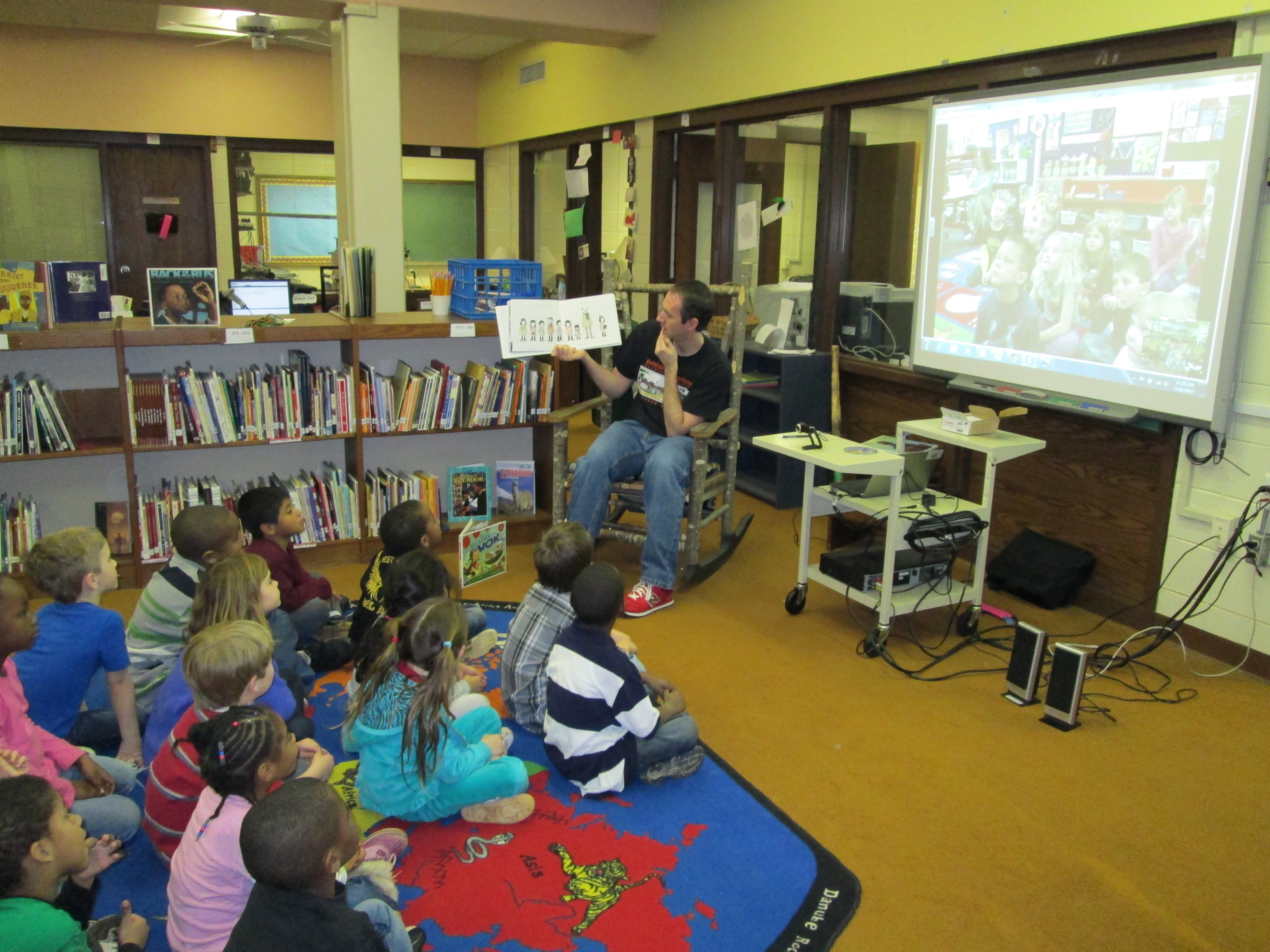
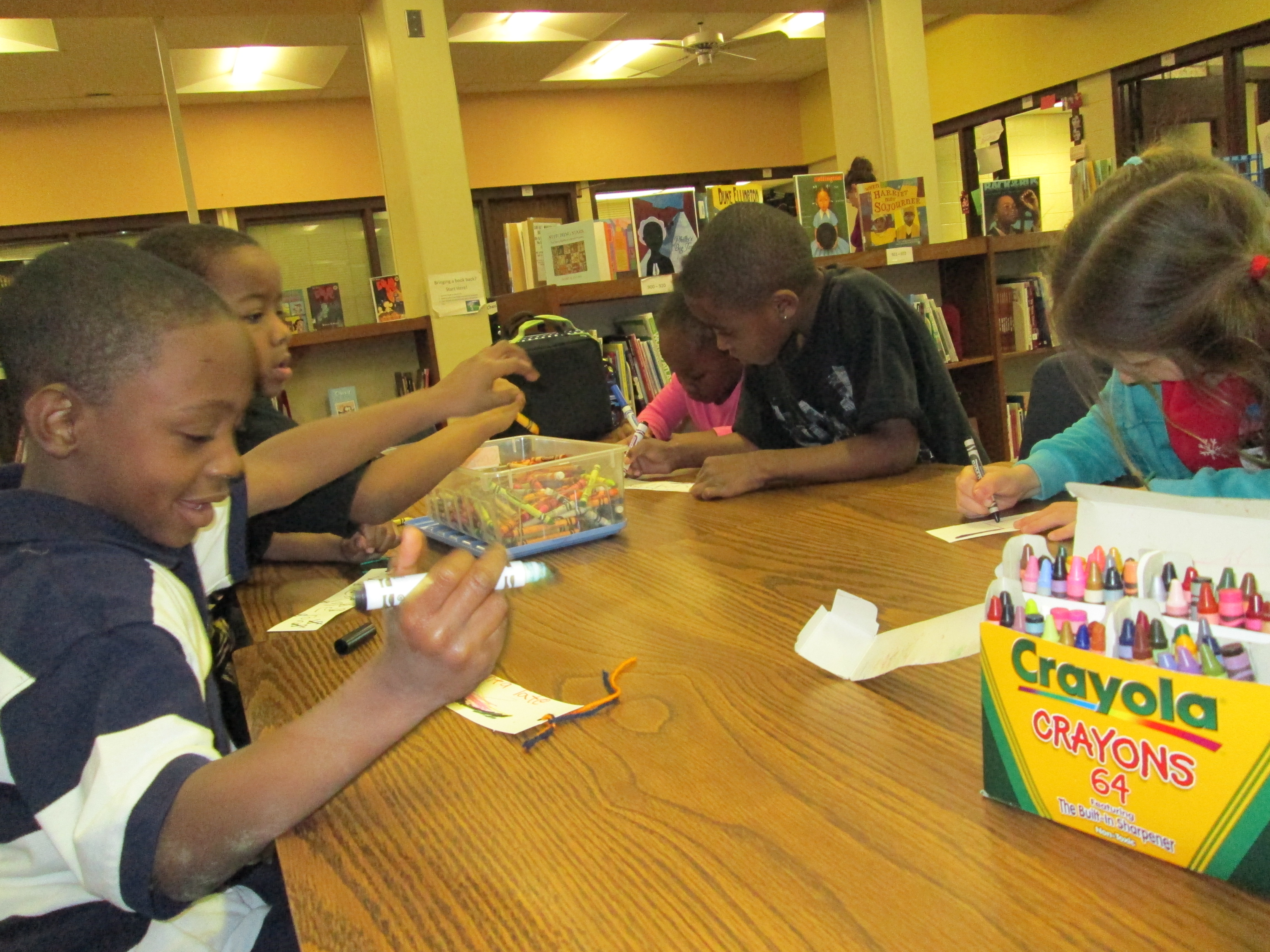
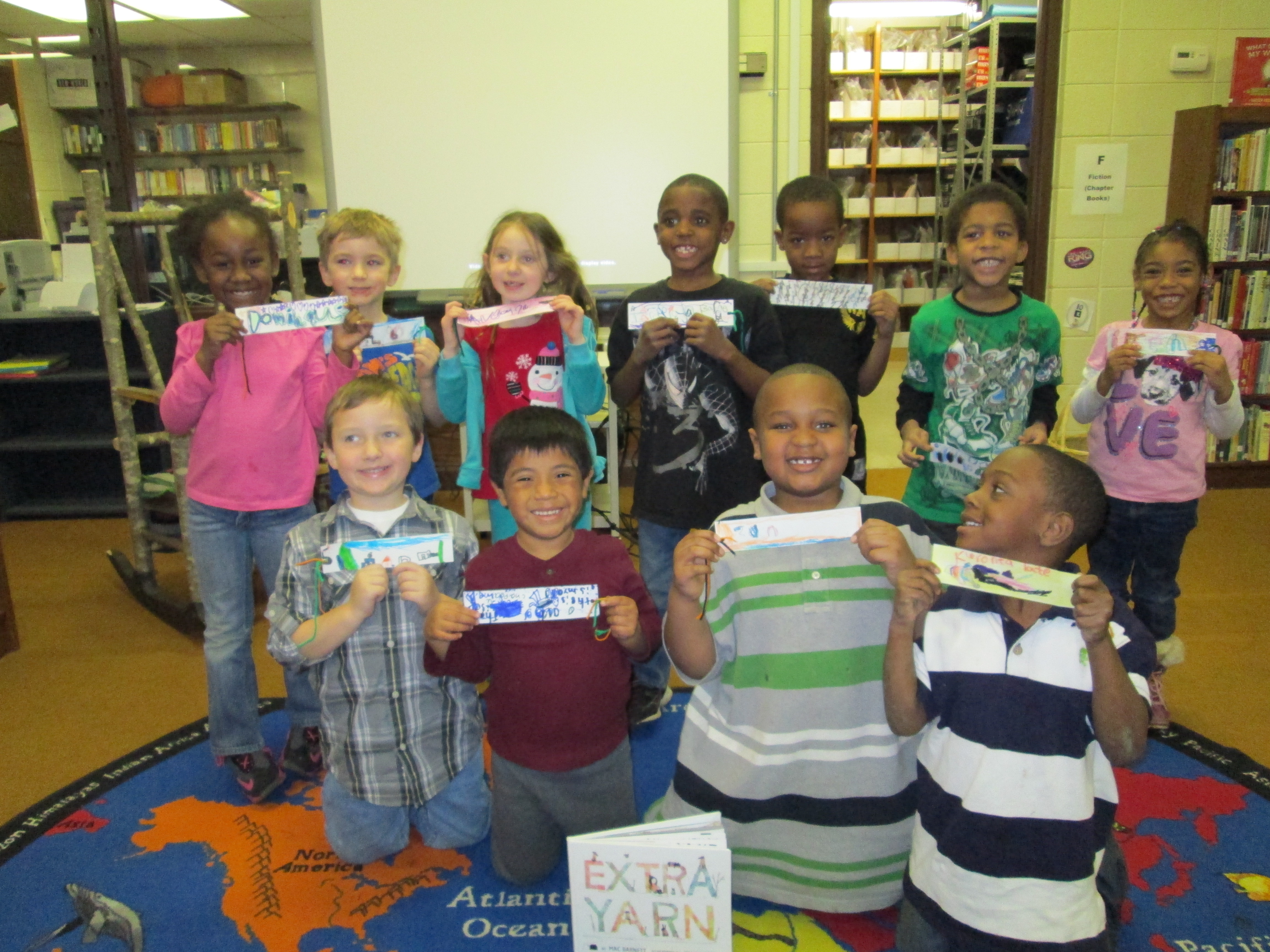
IMG_0001Today, Ms. Seeling’s students had the chance to connect with another Kindergarten class in Van Meter, Iowa.  Librarian Shannon Miller and I read the book Extra Yarn once again and students made bookmarks to send to one another.  It was another magical time.

I made some fun observations this time:

  • Students wondered if Shannon’s students could read the same letters that they do.
  • Students wondered if they would get their bookmarks in the mail by this afternoon.
  • Students wondered if Shannon’s students were in another country.
  • Students had personal stories for each of their bookmarks.IMG_0010

Any of these wonderings would have been great next steps of investigation in the library or in the classroom.  The personal stories really made me curious, so I grabbed my phone and tried to capture a few of the stories.  Each student had a reason they were using particular color and shapes.  Many were trying to tell the Van Meter students something about themselves through their artwork.  It really made me wonder how many stories we miss from students about the work that they create when we don’t stop to listen.  I want to do better capturing these kinds of stories.


Bookmarks are almost ready to mail to Iowa.

Bookmarks are almost ready to mail to Iowa.

Since Shannon and I connected our 2 classes, I’ve had some brainstorming going on with teachers and other librarians about other activities to do with the book Extra Yarn.  Today, Ms. Seeling talked about doing a compliment web using yarn.  A student gives another student a compliment and then tosses the yarn to that student.  This continues until students have made a big web of yarn.  Kathy Schmidt in Gwinnett County brainstormed with me on twitter.  Now I really want to read the book again and try some of these new activities.  There’s always next year.  Who wants to connect?  It’s not too early to start planning 🙂


Kathy and I brainstormed on Twitter.

Kathy and I brainstormed on Twitter.

After our brainstorm, Kathy extended the lesson Shannon and I did and shared on Twitter.

After our brainstorm, Kathy extended the lesson Shannon and I did and shared on Twitter.


Student Book Budgets 2012-2013 (Part 2)

The lists are done and the orders are placed!  Twenty-seven 3rd-5th graders have worked very hard during their lunch time for the past week to create lists of books that are grounded in the results of their school-wide reading interest survey data.  Rather than type everything out here, I’ve made a screencast that shows you the survey, the data, the focus categories, and the final lists.  I invite you to listen:

I’m very proud of these students.  Although, doing this during lunch across multiple times and groups of students was literally and figuratively very messy, I liked the overall results.  As always, some amazing moments happened along the way like:

  •  A student standing up and telling the whole group not to think of themselves.  That they needed to keep in mind all of the students of the school.
  • A male student taking a stand for princess books being on the list because he personally heard from multiple students who desperately wanted more of those books in the library.
  • A group of 3 fifth graders debating whether or not to cut a graphic novel off of the list because it cost $26.00.  They talked for 15 minutes just about that one book.  They read reviews, considered popularity, examined quality, and checked circulation statistics for other books in that series.  (They decided to keep it on the list!)
  • Several students repeatedly went into Destiny to search for how many books we had in particular categories, which books were lost in a particular series, and how many copies we had of certain books like Wimpy Kid.

I’m thankful for Capstone Rewards, too, because I helped out some of our tough decisions by using $500 of free book credit to bump up our budget from $1200 to $1700.  Even with that bump, some very tough decisions were made to cut books that would have been equally as popular.  I look forward to seeing what this group comes up with to market these books to the school and how fast they get checked out!

5th Grade Little Free Library Project Part 2

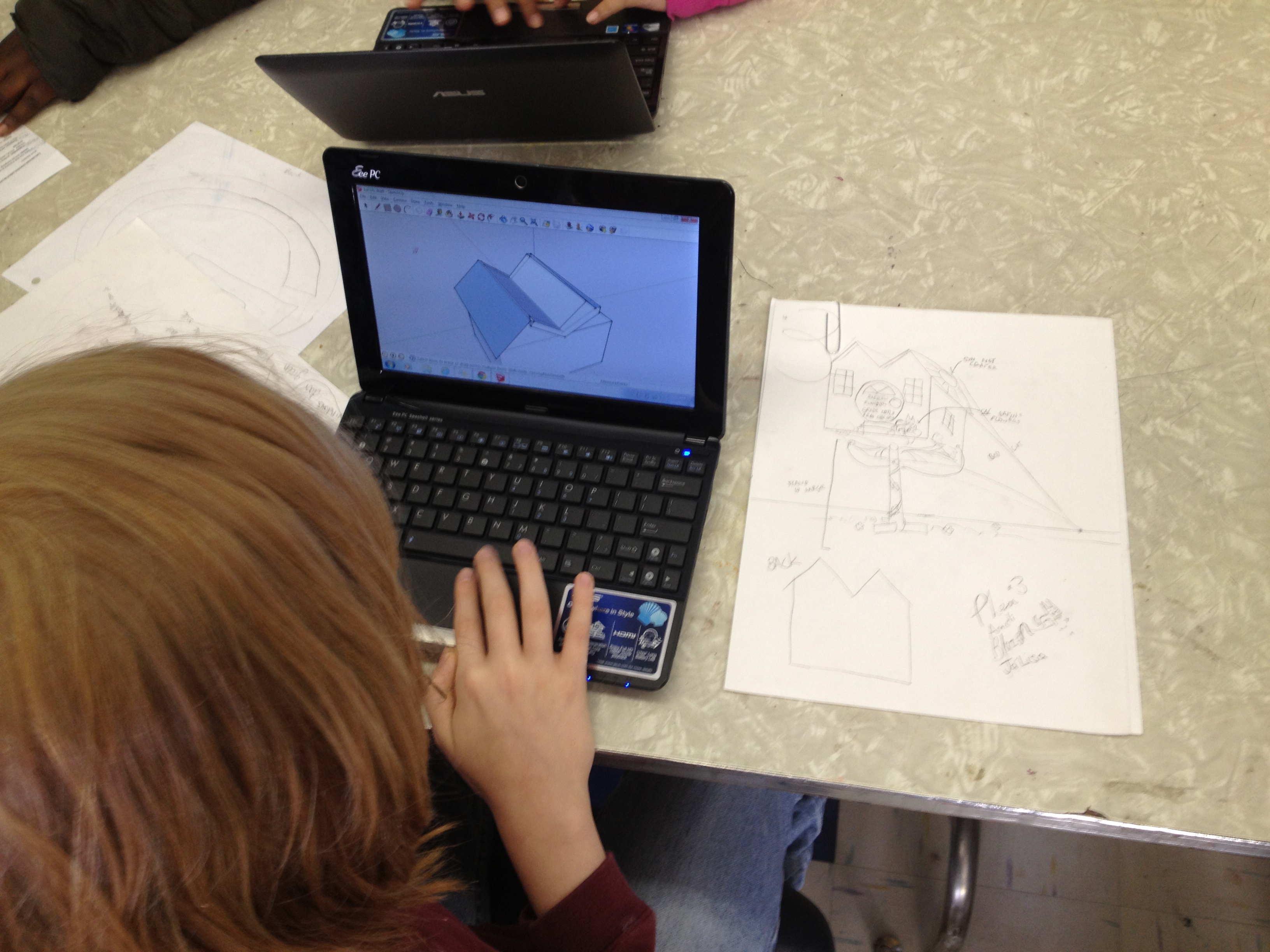
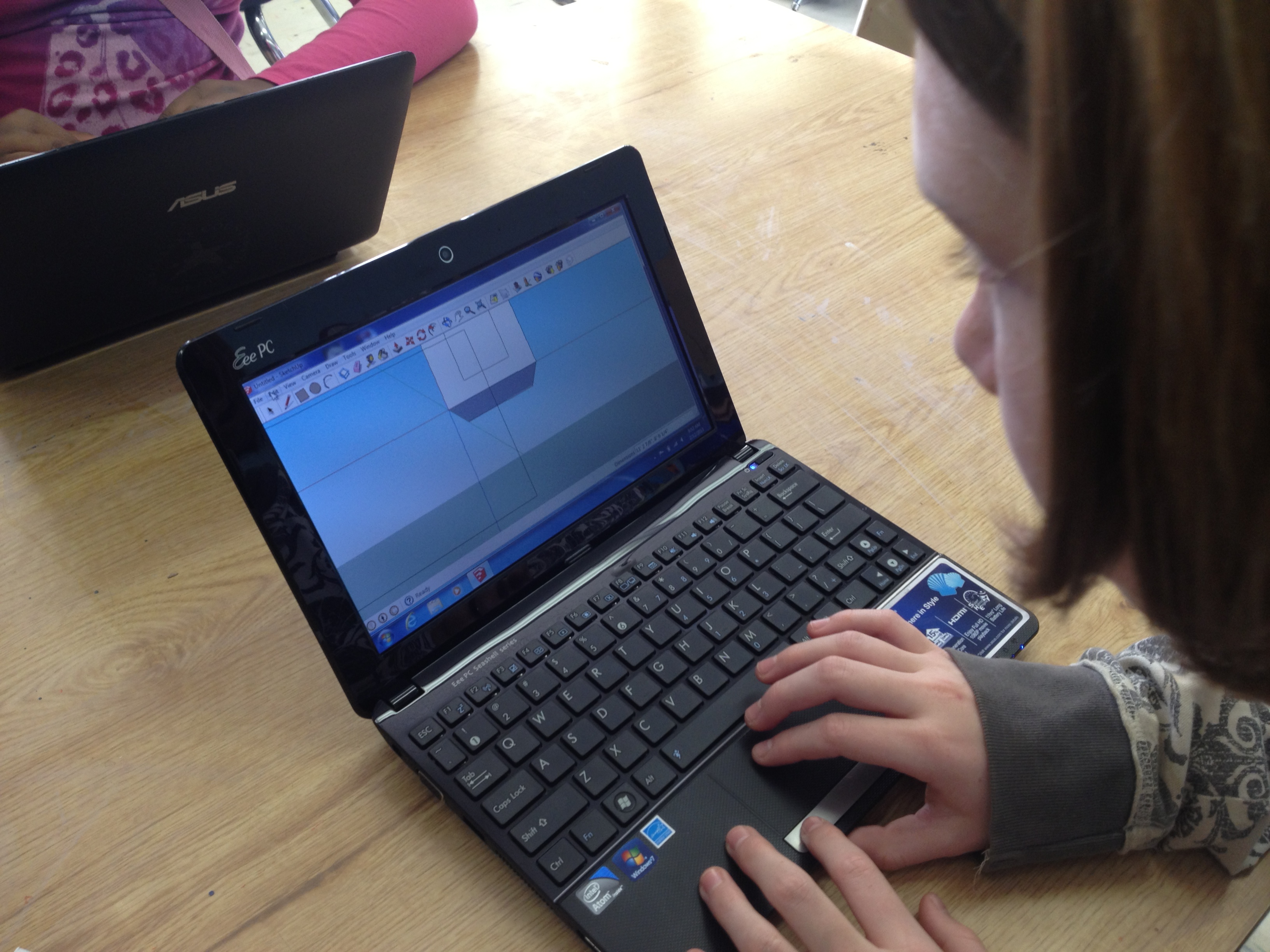
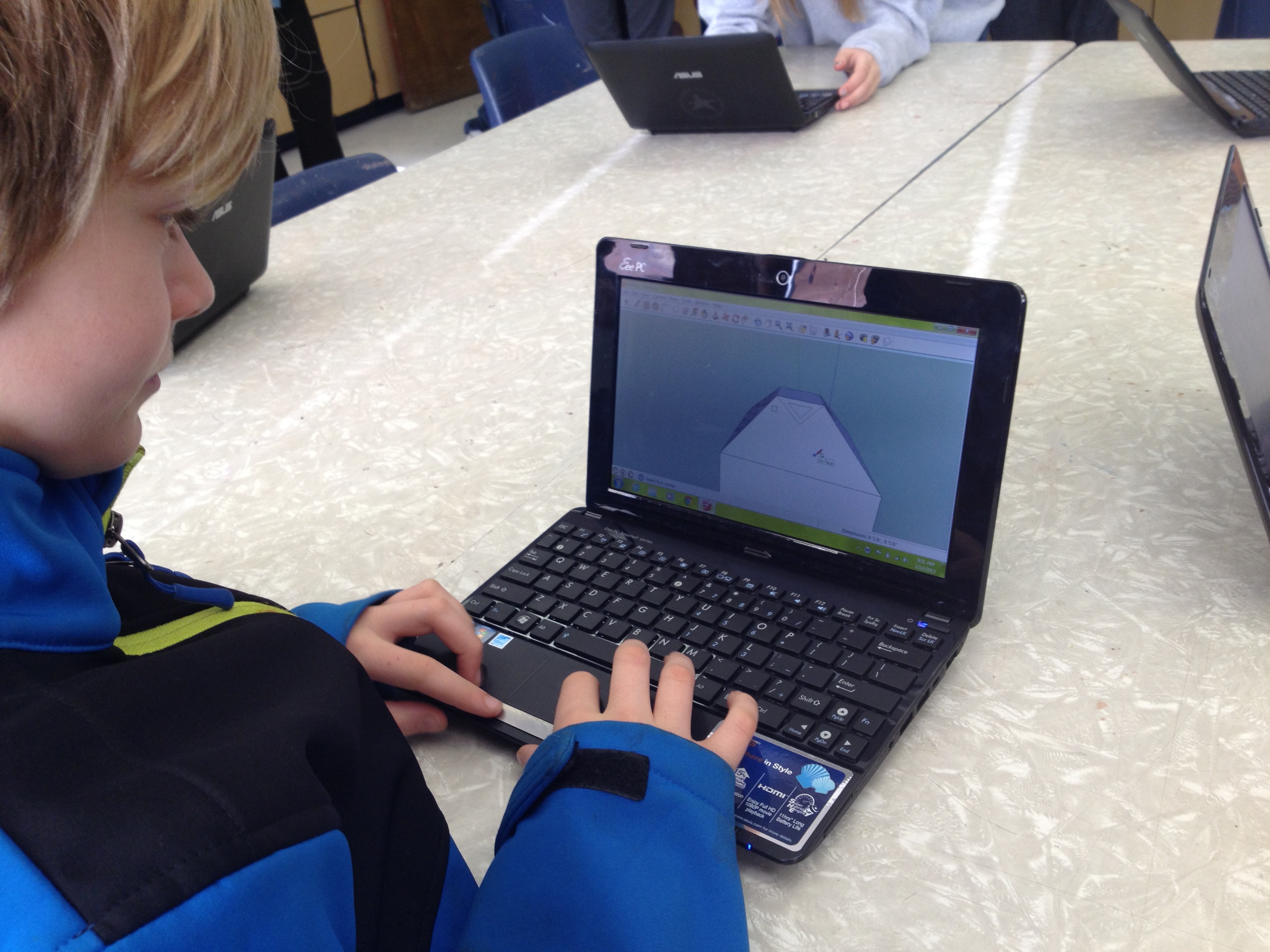
Students designed on paper before using Google Sketchup

Students designed on paper before using Google Sketchup

Our 5th grade Little Free Library Project is picking up speed.  Thanks to the amazing collaboration of Rita Foretich and her student teacher, this project is really getting off the ground.  In art, students from both 5th grade classes have been split into teams of 4-5 students.  Each team has a lead designer, a task manager, a researcher, a writer, and a presenter.  Each job has specific responsibilities which Ms. Foretich and her student teacher constantly check in on.  They also give the task managers checklists to help them check in with each person on the team.

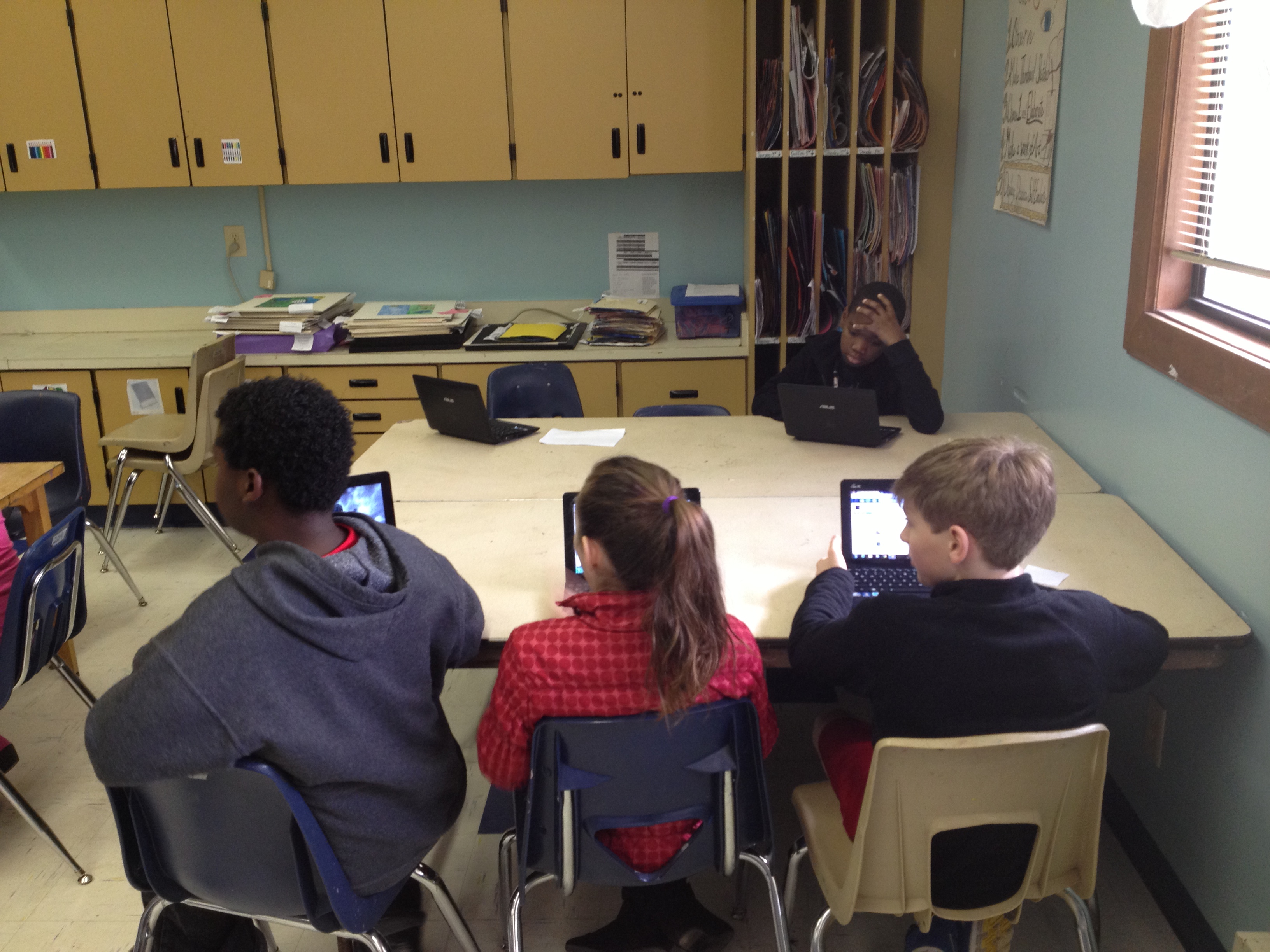
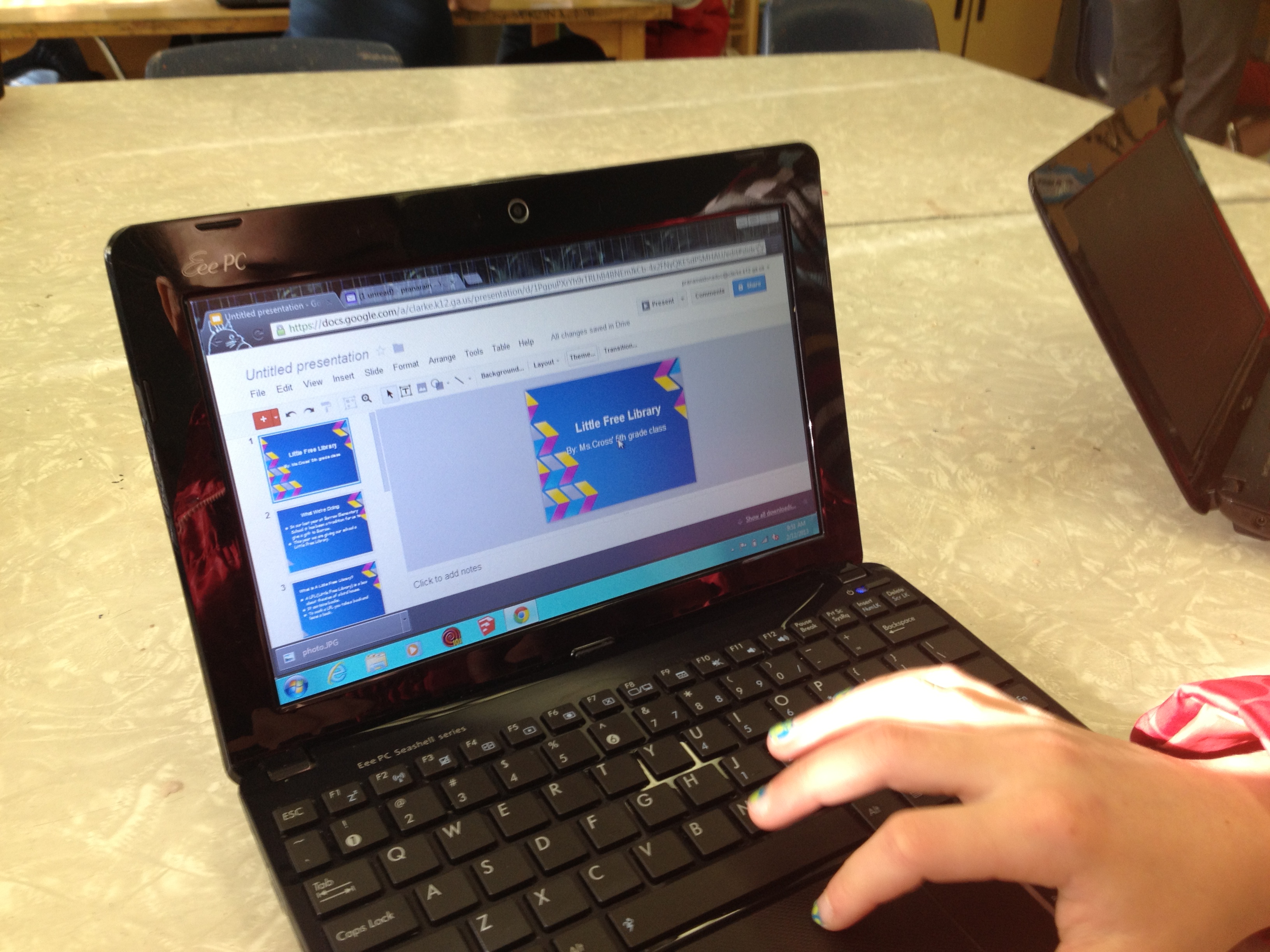
The student teacher is a Google Sketchup expert, so she has the lead designers using this tool to design a potential Little Free Library.  Students have made sketches on paper and moved to Google Sketchup to create a model of their library.  Presenters are putting together a presentation to inform our audience about each library design.  We may end up having the principal choose 2 designs or we may move forward with a student vote. LFL 4

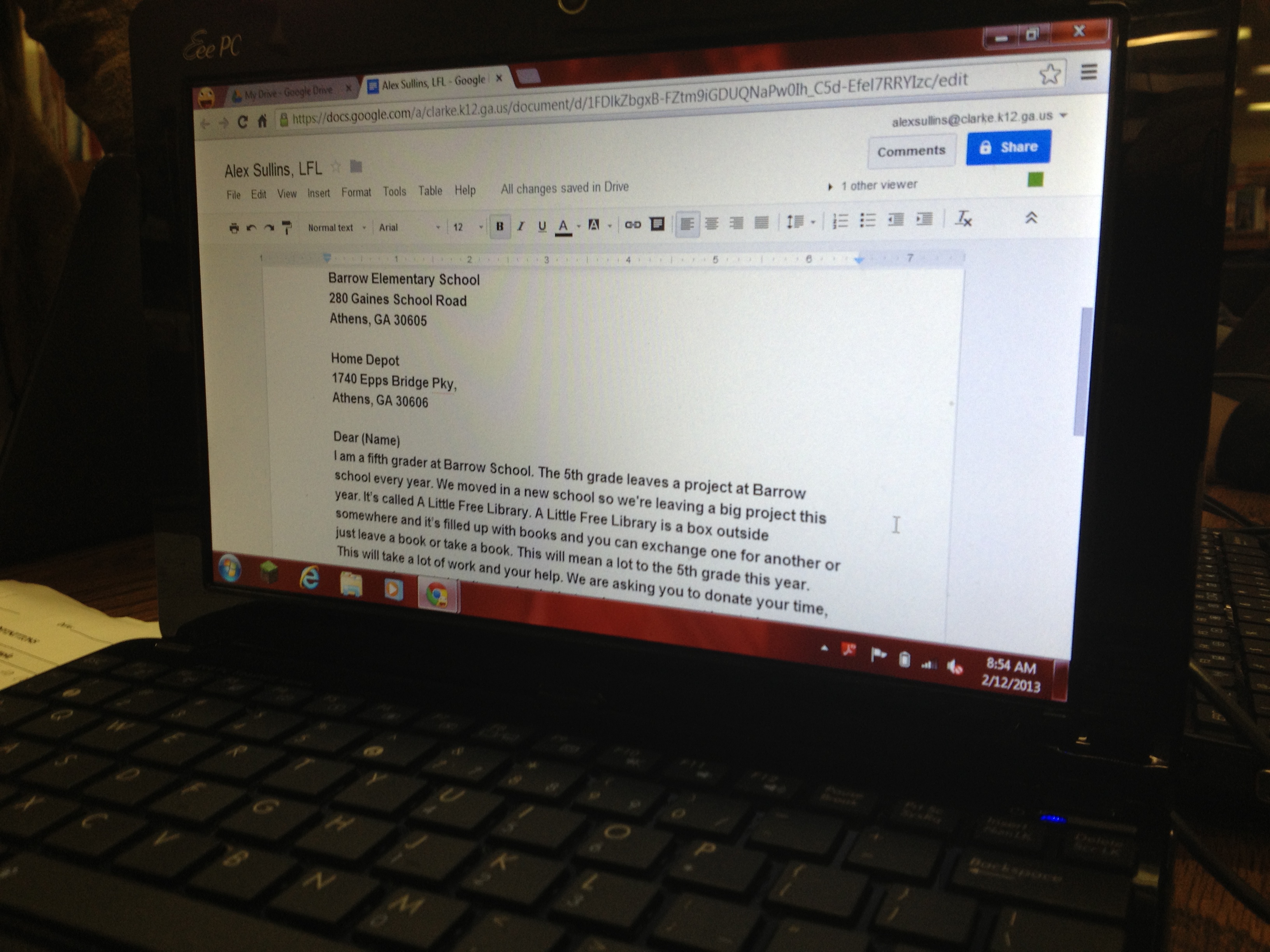
The researchers and writers are working with me in the library to research the Little Free Library site for information about building the actual structure.  As we research the many tips on the site, we are considering other topics that we may need to research such as reusing materials and green building techniques.  We’re thinking of careers that we may need to research in order to identify experts to connect with or people to target for persuasive writing.  The writers are writing persuasive letters to send to potential donors, builders, or collaborators on this project.  They are also considering persuasive tweets they may need to craft for me to tweet out to target audiences for support.

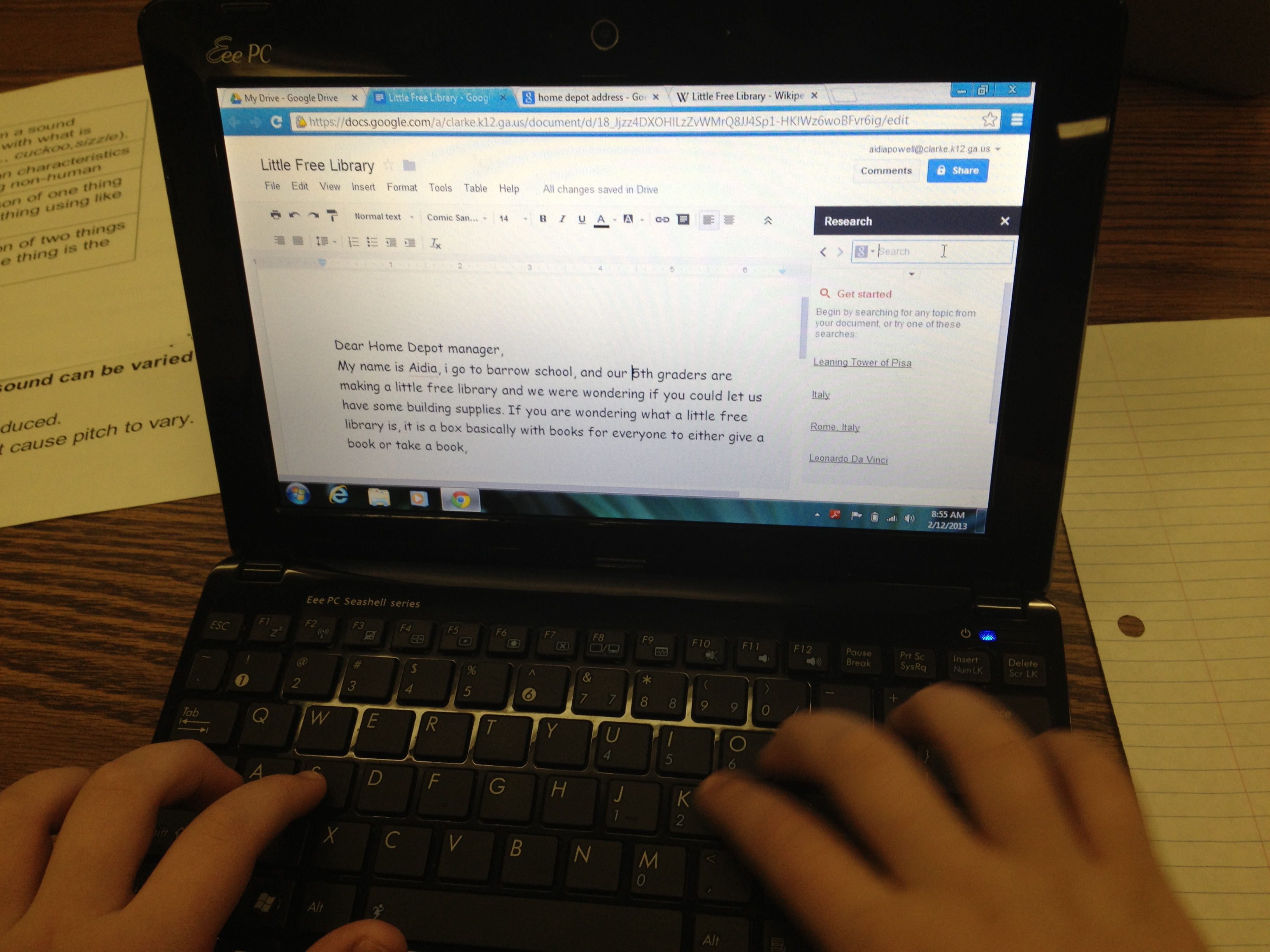
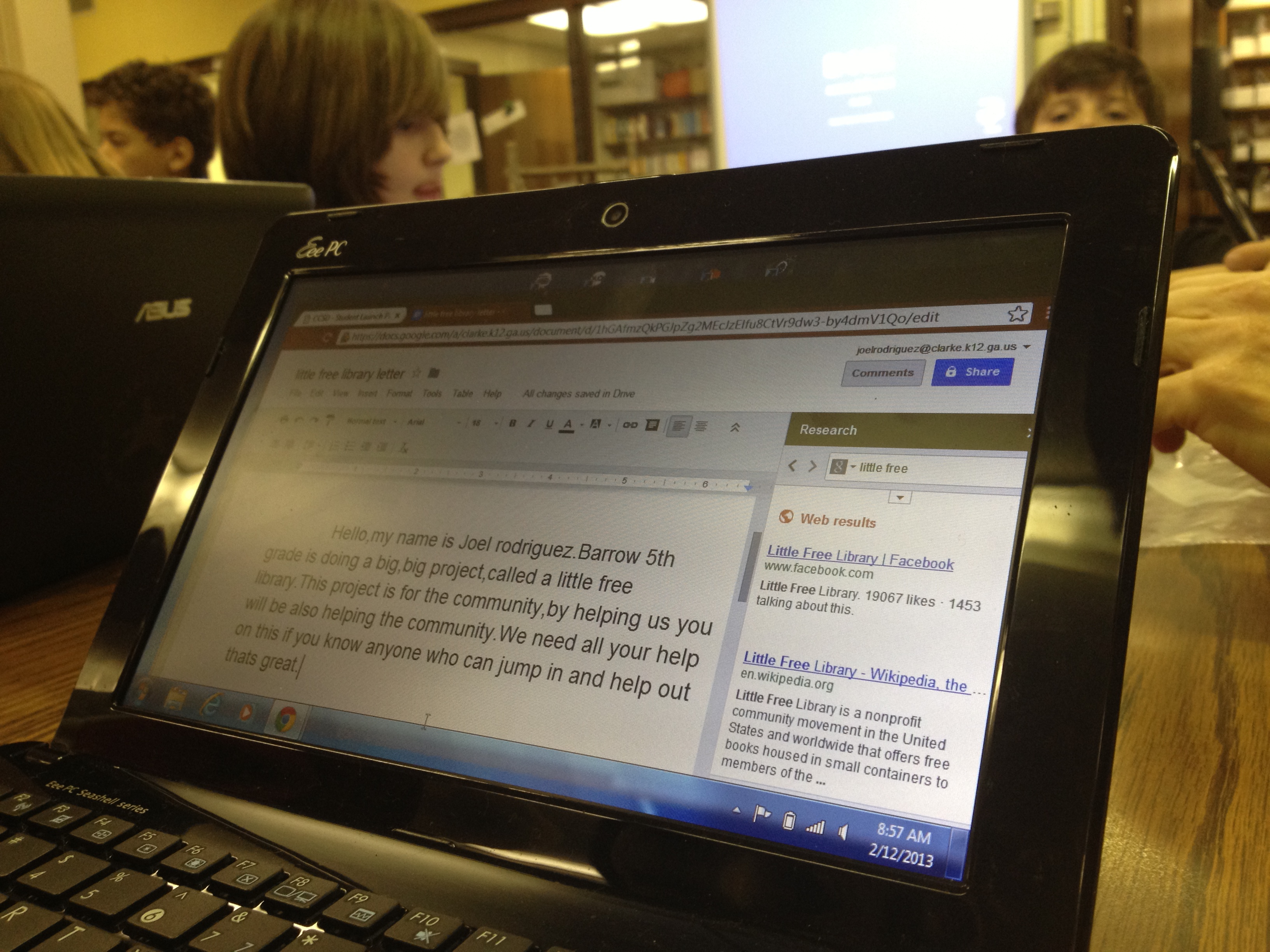
5th graders used the Google Research tool in Google Docs to look for reading statistics

5th graders used the Google Research tool in Google Docs to look for reading statistics

I’m also working with the 5th grade classes on persuasive writing techniques.  We used the Read Write Think powerpoint of strategies and thought about what information we might include underneath each strategy.  I also showed them the research tool within Google Docs.  The students (and teachers) were excited that you could search for a topic such as “reading statistics” to find quotes about reading in the United States and automatically cite the source within your Google Doc.  I think this tool alone will spill over into many other projects now that the students know how to use it!  All 5th graders are writing letters to businesses, builders, parents, students, and other groups in order to ask for money, labor, supplies, books, and a location for our 2nd library.  The teachers are continuing this writing in the regular classroom as well as exploring the Little Free Library site for additional information.  One student was even able to locate a Little Free Library from his hometown in India!

Google Sketchup is proving to be a helpful tool in design

Google Sketchup is proving to be a helpful tool in design

I can’t wait to see where this project goes because it is certainly exploring many of the standards that our 5th graders work on in a variety of areas.


lfl8

A team checks in with one another before starting individual work

A team checks in with one another before starting individual work

LFL7 LFL 8 LFL 6 LFL 5