Flipgrid Rolled Out the Red Carpet for the Barrow Peace Prize

flipgrid peace prize celebration (1)

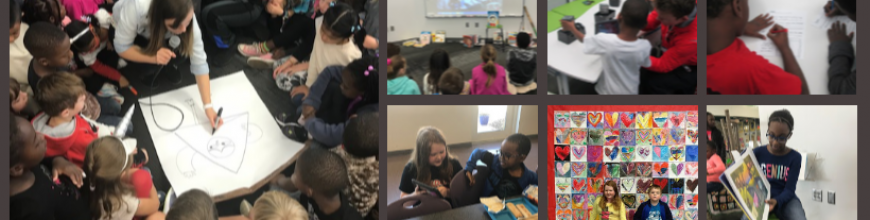
For the past 2 weeks, people from around the world have been viewing and voting on our 2nd graders’ Barrow Peace Prize project. Across the course of the project, students have:

  • researched one of 6 people from history using PebbleGo, Encyclopedia Britannica, books, and other resources
  • developed criteria for a peace prize
  • written a persuasive piece about why someone should vote for their person from history
  • created a piece of art to accompany their writing
  • recorded their writing using Flipgrid
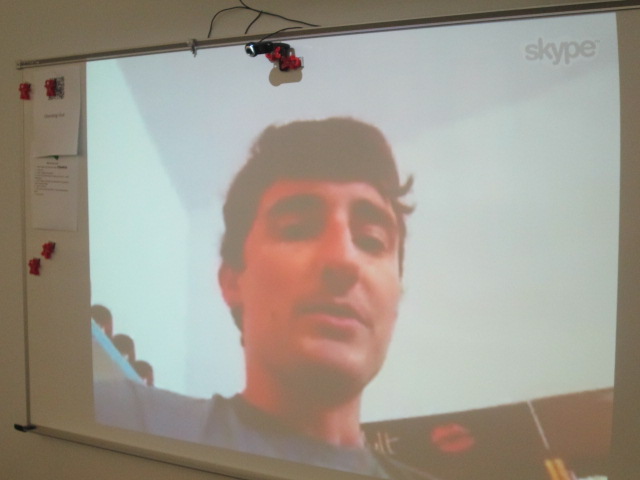
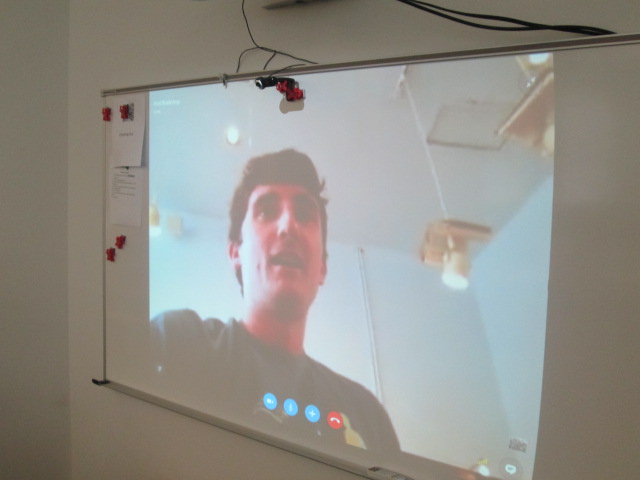
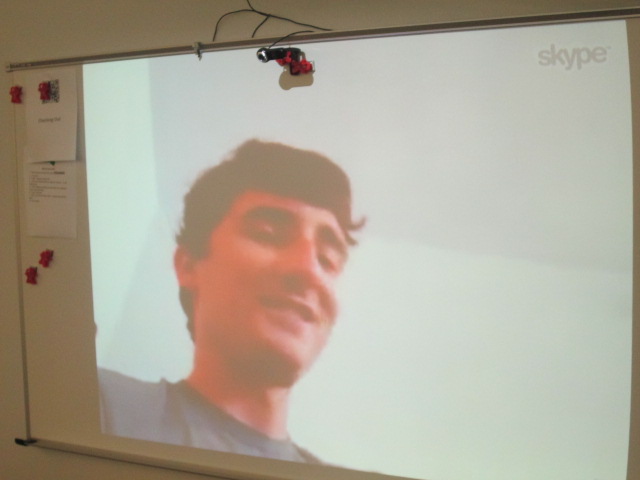
  • skyped with the creators of PebbleGo to learn about how this important research tool was made

flipgrid peace prize celebration (4)

All of the student work was pulled together onto a Smore so that it could easily be shared with the world, and people voted for the Barrow Peace Prize via a Google form.  Across 2 weeks, the student videos had 3,413 views, 1,161 likes, and visits from over 165 different locations around the world.

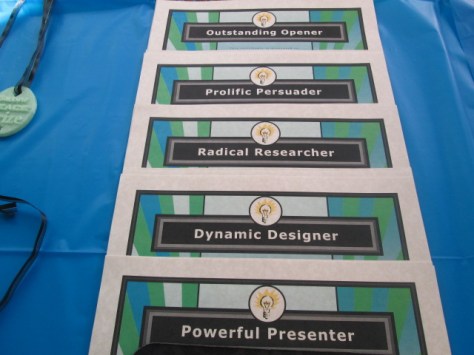
A very special ceremony was held at our school to announce the 2016 Barrow Peace Prize winner. We typically Skype with the Flipgrid team to announce he winners, but this year when I called to plan our Skype, I was surprised to learn that the Flipgrid team had much bigger plans for this year’s ceremony.  Charlie Miller and Brad Hosack, the creators of Flipgrid, flew down from Minnesota to join the celebration. They wanted the celebration to be like a mini Academy Awards. They rented a red carpet to roll out at the entrance to the library. They also bought enough pizza and drinks for all the kids, teachers, and families. In addition to the Barrow Peace Prize, we handed out special certificates to students which were chosen by teachers. The Flipgrid team also designed their own 3D printed award and gave it to 5 students chose by the entire Flipgrid team.
flipgrid peace prize celebration (2) flipgrid peace prize celebration (7)

Ahead of the event, the teachers sent out an RSVP invite to families so that we could get an estimate for chairs and pizza. We didn’t tell the kids very much about the ceremony except that they might want to dress up. The teachers all decided that they would dress for the Academy Awards, so I of course had to pull out my tux and red vest for the event.  I printed out all of the certificates to hand to students and shared the doc with the Flipgrid team so that they could announce the winners. The day before the event, Charlie and Brad flew down. They took care of the red carpet, balloons, pizza, and drinks.  Mr. Jordan, our student support technician, and I prepped the library.  When Charlie and Brad arrived, we setup the red carpet with some spotlights and put out the balloons.

The ceremony was the most special ceremony I’ve ever been a part of. The teachers, students, and families entered the library with movie theme music playing and took time to strike a pose on the red carpet for pictures. We also had many other special guests including Carol Williams for the CCSD Board of Education and Gretchen Thomas from UGA.

We connected with the Flipgrid team in Minnesota via Skype so that they could be a part of the entire ceremony. I gave a quick overview of the project for families to hear, and then we launched into awards.  Our awards were presented by two very special Minion guests, since Charlie and Brad weren’t quite ready 🙂

The Flipgrid team gave students all of the statistics of their videos so that they heard the impact that their work was having around the world. Team members took turns announcing student winners in 5 categories, and students came up to receive their awards from the Minions with the help of my wife, Denise Plemmons.

  • Outstanding Opener: For creating an opening statement that hooks your audience into your writing. Congratulations to Daly, Makenzie, Penn, Martavius, and Morgan
  • Prolific Persuader: For using multiple strategies to persuade your audience to vote for your person from history. Congratulations to Joshua, Ben, Kate, Copeland, and Cara.
  • Radical Researcher: For combing through multiple resources to find the most accurate facts to include in your writing. Congratulations to Isobel, KP, Kenderrious, Josie, and Terry
  • Dynamic  Designer: For creating a dynamic image to represent your person from history and engage your audience. Congratulations to Janae, Julian, Tad, Katherine, and Jeffrey
  • Powerful Presenter: For speaking confidently and powerfully as you shared your person from history with the world. Congratulations to Oriana, Ava, JD, Huda, and Blake

The Flipgrid Team handed out their unique 3D printed awards to Eli, Maggie, Iayah, and Zykurea.

The thing that I loved the most is how excited kids were for one another as they received an award. Each winning name brought on a round of cheers and applause almost to the point that we couldn’t hear the next name being read. I love that this project brings students from multiple classrooms together through the common goal of celebrating a person from history. That teamwork that was a part of the entire project, we still evident as we celebrated one another at the ceremony.

Students had a chance to ask the Flipgrid team questions. I always cherish this chance for students to step up to the camera and speak directly to the people who created the tools that they use. Students had such awesome questions such as “How do the videos we record get onto Flipgrid?” and “What are all of the jobs at Flipgrid?” The team took time to fully answer each question in the most personal and age-appropriate way.

Jim Leslie, co-founder of Vidku, talked to the kids about how they were all as much a part of Flipgrid as the people who created it. He stressed the importance of student voice and how much of an impact these students have had on the people who work at Vidku and Flipgrid.

Charlie Miller and Brad Hosack were able to arrive after the Minions left the building. Charlie talked to the kids about how tools like Flipgrid give every person an equal voice. He emphasized to students how many thousands of people had viewed their videos and they are only 7 or 8 years old. He stressed that if you can have that kind of impact at such an early age, then imagine the impact you can have as you grow. The messages shared by Charlie, Brad, Jim, and the whole team are something that I stress to our kids every single day, but it was so powerful for students, teachers, families, board members, and other special guests to be in the same room together hearing this message from a company who truly cares about its users.

flipgrid peace prize celebration (24) flipgrid peace prize celebration (29)

At the very end of our ceremony, we announced the 2016 Barrow Peace Prize. We would like to give a big congratulations to Ruby Bridges for winning the 2016 Barrow Peace Prize. The 18 students who researched her received a copy of a 3D printed medal that was designed by 3 second grade students. Each classroom also received a copy of the medal along with Charlie and Brad of Flipgrid.

Afterward, I had several families come up to me and say that they had no idea what to expect at this ceremony, but they were blown away by the generosity of Flipgrid and the work of the students. So many students were celebrated, and families and students couldn’t help but smile and get excited. We enjoyed celebrating the winning videos by eating pizza. Students returned to their classrooms to watch more of the winning videos, which Brad pulled onto one grid for us.

We can’t thank Charlie, Brad, and all of the Flipgrid and Vidku team for making our 2016 Barrow Peace Prize project the most memorable one so far. You are a company who listens to your users, celebrates their stories, and amplifies the impact students have on the world. Thank you.


Preparing and Reflecting on Our Immigration Simulation Via Flipgrid

immigration simulation (1)

Each year, our 5th grade studies immigration and Ellis Island as a part of their social studies standards. For these standards, the teachers work together to prepare students for an Ellis Island simulation experience that takes place across the first half of a school day. A lot of preparation goes into this event, and I’m excited that the library was able to be a part of the project.

immigration simulation (5) immigration simulation (4)

Before the actual simulation, each student was assigned an immigrant to become for the day. They received a folder with a short description of where their person was coming from, what he/she was bringing, and possibly a bit about why this person was traveling to America. This was all prepared by the Social Studies teacher, Ms. Olin.

immigration simulation (10) immigration simulation (8)

The teachers and I shared a Google Doc where we started putting links to sites that we thought would be helpful for students as they researched the immigrant experience for immigrants coming to America from their assigned country. I took these links and made a research Symbaloo for students to use.

In the library, I introduced students to this Symbaloo and they each received their folder from Ms. Olin. The Symbaloo link was shared with all students in Google Classroom so that they could easily find it again. In addition to a few details about the immigrant, the folder contained a graphic organizer with some details that students needed to gather in order to construct a letter of introduction for Ellis Island. Students used the organizer and Symbaloo for an hour in the library and then continued their research in social studies and language arts.

immigration simulation (15) immigration simulation (4)

In writing, students constructed their letters of introduction and Ms. Olin printed a copy of each letter to put in student folders. Students returned to the library a couple of days before the simulation. They had time to finish letters, and when they were ready, they  used Flipgrid to practice reading their letters. In the past, we’ve found that some students were a bit nervous on the day of the simulation or took some time to get into their character. Our hope was that the Flipgrid would give students a chance to get comfortable with their character and practice speaking from that perspective before being thrown into the simulation. The Flipgrid also gave them a chance to listen to one another’s stories and research since they don’t have a lot of time to do that on the simulation day.

Here’s a look at how their practice turned out:

On the day of the simulation students rotated through many experiences to take on the role of an immigrant coming to America. Many dressed in costume, carried props, and practiced talking in an accent. They carried their folders that we had worked on throughout the project. Parent and community volunteers came in to help lead the stations so that students were able to go through health inspections, written tests, and legal inspections. Many were questioned multiple times about their health or documents. Many students were sent away to search for missing pieces of their documentation or were held in quarantine for various reasons.

When students finally passed through all of the experiences, they took an oath and had a meager celebration of bread and cheese. During this time of eating, students once again used Flipgrid. We brought them back into this century and asked them to think about their experience. They didn’t have a script for this. We just wanted their initial reaction after completing the simulation. There are some interesting stories of how it felt to be questioned so much or be detained.  You can see their reactions here.

The addition of Flipgrid this  year really helped to prepare students for the simulation, to learn from one another’s stories, and also for us to hear a student perspective of going through the simulation that we might not normally here. Each student had a chance to share his/her voice and many spoke up when they might not have spoken up in front of the whole class.  I keep thinking of new ways to use Flipgrid in my teaching. I love how versatile it is and want to continue to push the limits of how the tool is used.

Share Your Stories for #WRAD16 Belonging Week

WRAD16

Each week leading up to World Read Aloud Day (February 24th) we want to join our voices around the world to celebrate one of the strengths of reading aloud.  During the week of January 3-9, we celebrate the sense of belonging that reading aloud gives us.  

LitWorld 7 Strengths

We have created a Flipgrid for you to share your responses to the following question:

When has reading helped you feel like you belong to a community?

We hope you will share this Flipgrid with other educators, students, and families around the world and record your responses which can last up to 90 seconds.  Wouldn’t this be a great way to practice some informational writing in classrooms?  Wouldn’t you love to hear stories from the families that you serve?  Aren’t you curious about the perspectives on this question from around the world?  Let’s join our voices and contribute responses all week long.

http://flipgrid.com/#8e21e4e6

In addition, you might also consider coming up with your own posts in response to this week’s theme on your own blog or site.  You might post a photo of you or a loved one with a book that helps you feel connected to the world.  You might tag or mention friends who inspire you as a reader to let them know how they are a part of your own reading community.  Whatever additional ways you choose to celebrate “Belonging Week”, please tag your posts with #wrad16 and #belongingweek as well as mention @litworldsays (Twitter) and @litworld (Instagram, Facebook).

It’s not too late to share your schedule for World Read Aloud Week on our shared Google Doc and find someone to connect with around the world.

Let’s share how we all belong to a global community of readers.

Let’s All Connect for LitWorld’s World Read Aloud Day 2016

It’s time for us all to start making plans and building excitement for Litworld‘s World Read Aloud Day 2016.  This year, World Read Aloud Day takes place on February 24, 2016, but many of us will celebrate the entire week of February 22-26 and into the next week for Read Across America.  We also have an exciting addition this year called the “7 strengths” of reading aloud, which will give us an opportunity to connect our voices leading up to the official World Read Aloud Day.

WRAD map

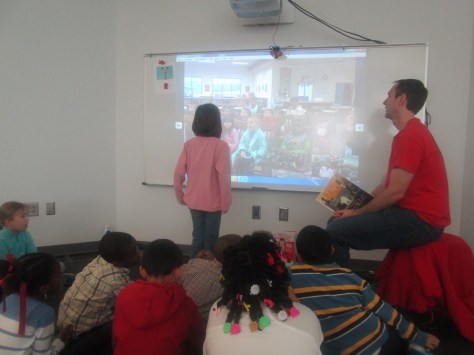
World Read Aloud Day “calls global attention to the importance of reading aloud and sharing stories.”  When we connect our students through Skype, Google Hangouts, or other web tools, they experience the power of the read aloud and realize that they are connected with a bigger world that is both the same and different from them.

IMG_5339

Shannon McClintock Miller and I invite you to start posting your schedules on our shared Google Doc.

WRAD 16 Doc

http://tinyurl.com/wrad16

When you share your schedule, be sure to include:

  • Your name
  • Your contact info such as social media, Skype, and/or email
  • Your role
  • Your school and grade levels
  • Your location
  • List your time zone when posting your available dates and times

After you post your own schedule, take a look at the other schedules and sign up on someone’s schedule to connect your students.  We’ve found that it doesn’t matter if same grade levels connect with one another. Often times, an older grade can read aloud to a younger grade or younger grades can find parts of a books that they can read aloud to an older grade.  There’s not just one way to connect.  Part of the fun is meeting new friends, planning your read alouds, and seeing what magical things happen during your connection that you weren’t even expecting.

IMG_5337

We have many ideas from previous years on our blogs.  You can read more about World Read Aloud Day 2015 on Expect the Miraculous and The Library Voice.  Litworld also has several resources for you to use in your planning and connections including:

Litworld WRAD16

Each week leading up to World Read Aloud Day, we will be focusing on one of the 7 strengths of reading aloud.  Wouldn’t it be fun to hear voices from around the world reflecting on these strengths as we await our real-time connections?  We’ve made a series of Flipgrids that anyone can add to.  We hope you will all will reflect on these questions with your students, teachers, and families and have them all respond on a Flipgrid.  All you need is a computer with a webcam or a free app on a tablet.  We’ll be sharing more posts about these strengths and questions later, but for now, here is a list of the strengths and the links to the Flipgrids.

LitWorld 7 StrengthsWe have an opportunity now more than ever before to connect our voices around the world leading up to World Read Aloud Day and throughout WRAD week.  We hope you will take advantage of all of these tools to show our students and the world that reading aloud makes us strong and connected.  Please let us know if you have any questions along the way.  Happy connecting!

Andy Plemmons @plemmonsa

Shannon McClintock Miller @shannonmmiller 

Seriously Silly: A Visit to the High Museum to See the Mo Willems Exhibit

High Museum (52)

Third grade has been hard at work on a Mo Willems art and writing project.  Since there is a Mo Willems exhibit at the High Museum of Art, we decided to use Mo Willems as an author/illustrator study to take a close look at how illustrators show emotion through their characters as well as how authors many times have a moral or lesson that we learn from their stories.

In the library in collaboration with Rita Foretich (art teacher), we took a close look at the whole Mo Willems collection of books.  We wanted students to spend time looking at the illustration and noticing similarities and differences across series as well as how he creates simple illustrations that show a range of emotions.  I pulled all of our library books for this as well as brought my whole collection from home.

In art, students have been working on characters and settings for their own stories which will include a moral of some kind.  In writing workshop, students are working on the text of their stories.  They will eventually come back to the library to use all of these pieces with the Puppet Pals app on the iPad to tell their stories.

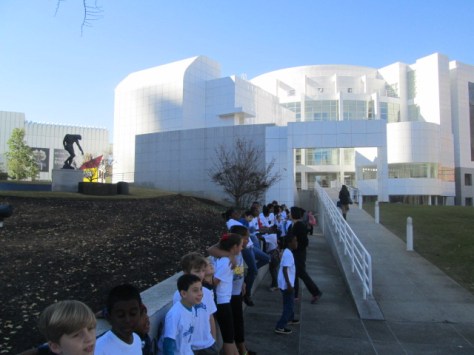
Our art teacher wrote a grant to fund a field trip for the entire 3rd grade to visit the High Museum in Atlanta.  Across 2 days, every student had a chance to visit the museum, tour the Mo Willems exhibit, see some additional pieces of art, and participate in an art workshop.  The grant funded tickets for all students as well as transportation.  We are so fortunate to have an art teacher who works tirelessly to increase access to art for our students.  For several students, it was their first time visiting Atlanta and seeing the massive skyscrapers.

High Museum (3)

At the museum, we split up into two groups.  One group went to an art workshop and the other group split in half for a tour with a docent.  Our docent tour took us into the main exhibits to stop at key art pieces and consider materials the artist used, the story the piece was trying to tell, and to learn more about how to examine a piece of art in a safe and meaningful way.

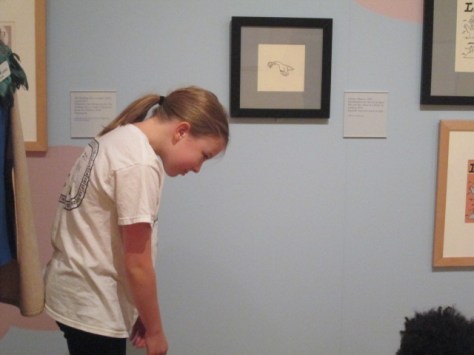
We eventually made our way into the Mo Willems exhibit, and the docent took us to each collection of art and had students sit on the floor.  At the pigeon illustrations, we looked at the many expressions of the pigeon and how Mo Willems shows emotion through eye position, movement, and facial expressions.

Students took turns standing and acting out the emotions of the pigeon to see if they agreed with the choices that Mo Willems made.  She also pointed out how Mo Willems draws an illustration multiple times before doing the final illustration.  Some of the pieces on exhibit showed blue, red, and black lines to show he changes Mo Willems had made along the way.  Students loved looking at the final piece and seeing what changed from the original sketch.

High Museum (8)

We continued to each collection of art doing similar activities to consider emotion and movement.  Students had a chance to share their favorite Mo Willems book or tell about the book that various pieces of art came from.  Along the way, we learned a bit more about Mo Willems and his work with Sesame Street.  Students also loved looking for the pigeons hidden throughout the museum.

In the workshop, students listened to the story Leonardo the Terrible Monster.  As they listened, the museum reader pointed out the expressions of the various monsters in the story and continued the theme of having students think about movement and emotion in illustration.

Following the story, students made their own monster out of construct paper, textured rubbings, and various craft supplies.  They were once again asked to think about emotion and how they were showing that through their monster.  I liked walking around and seeing students and teachers positioning their eyes, mouths, and other body parts to see how it changed the look and feel of the monster.  Students continued to add to their monsters right up until we packed up to leave.

It was a fabulous day at the museum and I can’t wait to see how this experience translates into the stories, characters, and settings that they are continuing to work on.

Polar Express 2015

Polar Express (33)

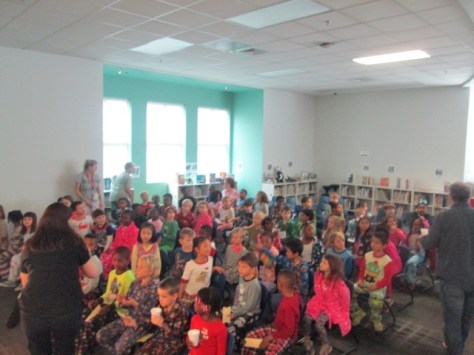
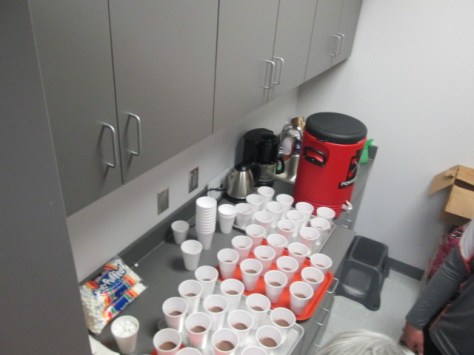
Our school is filled with tradition, and one of the favorite ones every single year is Polar Express Day.  It takes a huge team of volunteers to pull off this schoolwide event, but it is always a magical day for our students.  Every student hears The Polar Express read aloud while sipping hot chocolate in their pajamas.  Every child receives a bell with the message of “always believe” whispered in their ears.  Each child also receives a candy cane on the way back to class.

Ahead of the event, volunteers purchase supplies to make bells for 600 students.  They spend a morning stringing the bells and prepping them for quick delivery to students on event day.  Another volunteer list is created to help on the day of the event as we have every class in the school come through the library.  A schedule is created and approved by the teachers.  This year, that schedule was very tight due to our increasing size.  Some sessions had 3 classes in them.

The day before the event, the lunchroom gets the hot chocolate so that it is prepped and ready to go.  A special spirit committee meets late at night and transforms the school into the north pole with train tracks, crackling fires, ornaments, and lights.  It is a magical arrival to school.

The first team of volunteers pick up the hot chocolate and start getting it ready for the first group.  At that point, things repeat every 30 minutes.  Music is played as students enter. Hot chocolate is passed out during the hot chocolate song by a team of 3-6 volunteers.

Polar Express (59) Polar Express (60)

We listen to the story while a teacher holds the book.  Then, the same team of volunteers put the bells around all the students’ necks.  Immediately, there is a chorus of bells ringing around the room as students check to see if their bells actually ring.  As always, there were special moments such as a former Barrow buddy returning to hold the book for a grade level.

https://www.instagram.com/p/_ZzZ_FxSh8/?taken-by=fourthgradebarrow

This year, we even had a spontaneous sing along of Jingle Bells.

Thank you to each and every person who made the 2015 Polar Express day another great success.


Students and Vendors: Meeting with Avid Bookshop

avid book budget (5)

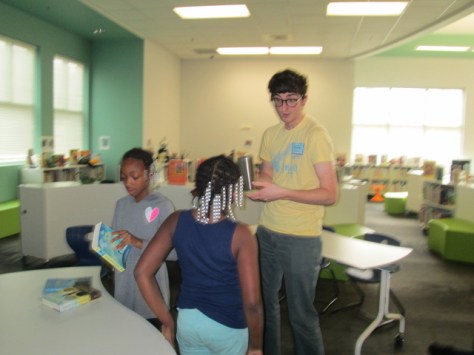
Our book budget students have continued to meet with vendors to spend our $5,000 James Patterson Partnership grant.  They have gone through a long process to create a survey, survey students, analyze data, set goals, and meet with vendors to create consideration lists.  They met with Jim Boon of Capstone Press and Gret Hechenbleikner of Gumdrop books.  Students have just finished meeting with their final vendor, Avid Bookshop.

avid book budget (9)

We love working with our local independent bookshop.  They are always willing to come into the school or Skype in to share books with us for projects.  Will Walton, author and bookseller, came in to do book talks with our 3 small groups of book budget students.  Each grade comes in separately for 30 minutes, and each group picks up where the previous group left off.

avid book budget (12)

We pulled up our goals on the screen so that Will could use them as a talking point with students.  He brought some Advance Reader Copies of books that might meet our goals but also offered his own knowledge of books that matched many of our goals such as graphic novels, scary, and humorous stories.  As Will talked, I was in charge of creating a Google doc of the books so that students could look back at them later.

One of the things that I absolutely loved as Will was talking was how our students were getting hooked on the books he was talking about.  There was an immediate trust of Will, and several students found a book that they personally wanted to read.  He graciously handed out some the ARCs and told students to read them and pass them on to someone else.  He also encouraged students to come in and visit Avid Bookshop.  Several requested that he write down the address of the shop since they had never actually been inside.

avid book budget (8)

Will also started thinking of certain authors and series and going onto the shelves of our library to find them.  He handed out several of our own books and students checked them out to read.  He really reminded me of the importance of book talks and how I really need to be doing this more than I am!

After Will left, we continued to work on our Avid list.  I email it to Janet Geddis and the Avid team.  They will now check the list to make sure all of the titles are available, and they will send us a quote to help us narrow down our list to what we will actually purchase.  Students have two more meetings before the holidays, so we  hope we can fine tune all 3 of our lists to match our $5,000 budget.

Celebrating Stories with Our Annual Storybook Parade

storybook parade (6)

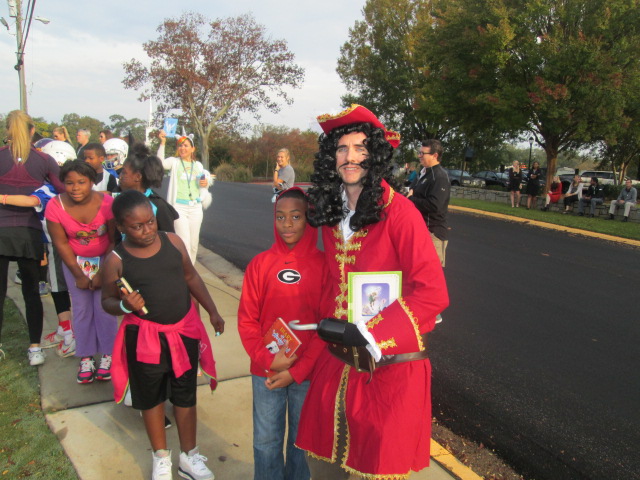
The day before fall break is always a special day at our school.  It is our annual Storybook Celebration.  Organizing this day takes a tremendous amount of work, but the students have such a great day. Students and teachers are encouraged to dress as any storybook character.

storybook parade (62)

We spent about 2 weeks ahead of the event advertising various costume ideas on our morning broadcast.  I wanted to encourage students to think about how they could use things they already had around their house or things they could make in order to create an awesome costume.  Some of my BTV crew chose books and shared some simple ideas for creating an awesome costume.  An example was Max from Max the Brave where you could just dress in black and tie a red cape, blanket, sheet, or towel around your neck.

Students poured into the library for the past 2 weeks to ask for assistance finding a book for the parade and costume ideas.  We had students coming in right up until the parade actually started, which was definitely a little crazy without much help.

Also ahead of the event, I sent out a Google spreadsheet to all of our resource and specials teachers to offer special opportunities during the day for classes to have literature-focused activities and a chance for teachers to have a planning time.  Resource and specials teachers blacked out times that they weren’t available and teachers signed up for the rest.

My volunteer coordinator, Courtney Tobin, created a Signup Genius to recruit 2 guest readers for every classroom to kickoff the day. This was sent out to grade level parent representatives who encouraged people to sign up.  I also shared the link with my own list of past guest readers as well as CCSD board members and district leaders.  I also published it on our library Facebook page.  We didn’t quite reach our goal of 2 readers per class, but every class had someone to share a great story with them at the start of the day.  These readers gathered in the library, chose from a selection of books, took a photo, and were off to classes to read.

After guest readers, we gathered in the cafeteria for an assembly.  We broadcast students onto the big screen as they entered using Google Hangouts.

Evan Bush from the Athens Clarke County Public Library came and told several interactive fall stories to almost 600 students.  I loved how he took the energy of the crowd and got them all snapping, clapping, and sharing parts of the stories.  It kept them focused.  I reached out to Evan about 2 weeks before our event, and he graciously agreed to come.  I love that he gave our students a great storytelling experience and also one more connection to the public library and what it can offer.

After Evan, each class stood up twirled around to show off costumes, and sat facing the back of the cafeteria.  This prepared us to go out on our actual parade as well as gave students a chance to show one another their costumes.

It was during this time that I found out all my preparation for the parade route suddenly had to be changed.  I was so organized this year and provided maps of the parade route to families and community ahead of time.  However, Georgia Power had to do some work and closed part of the sidewalk on our route.  I had to make a last minute change, but it all worked out.

We took off into the community shouting “Read More Books!” and showing off our costumes.  It was fun to see community members, families, UGA students, construction workers, and more cheering us on along the way.  Our 1st-5th grade took a longer route and our Prek/K took a shorter route around the school.

Our 5th graders have a tradition of stopping along the parade route for a special treat, and for the past few years we have stopped at the Georgia Center for Continuing Education for hot chocolate.  Mimi, our family engagement specialist, organizes this piece for us by having the cafeteria prep the hot chocolate and taking the hot chocolate to setup.  Students have some time to just hangout, talk, and enjoy their treats before heading back to school.

Finally, back at school we go to our special classes as well as do more literature activities in class.  In the library, we focused on pirate stories since I was dressed as Captain Hook.  I also used the great pirate video from All the Wonders.

Students moved to tables and colored a pirate sheet or designed their own pirate using Chromville augmented reality.

Somehow in all the craziness, we also organized a big book giveaway.  In the back corner of the library, there were tables of books that had been donated or weeded out of various collections and needed a good home. Courtney Tobin and other volunteers helped get the books put out, and teachers brought classes or small groups of students to pick out new books.  It was fun to glance over and see so many students excited to add books to their home libraries.  We will keep these tables going next week since there are still books left.

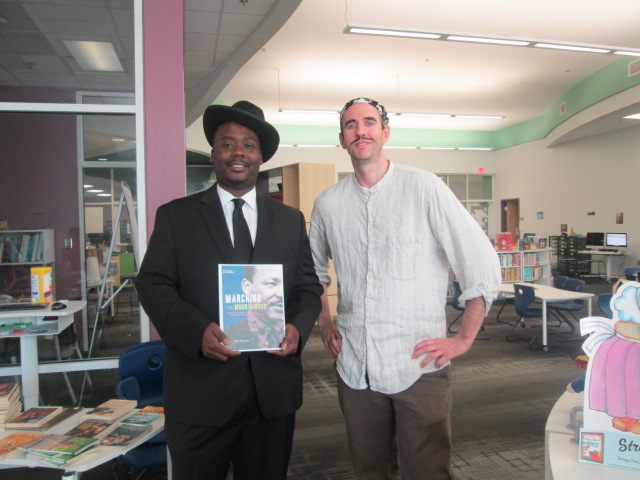
It seems that each year something new comes along for storybook celebration that makes it a little more special.  This year I loved seeing so many creative costumes: Little Elliot, the Bird Woman from Circus Mirandus, Minecraft creepers, Martin Luther King, the Very Hungry Caterpillar, and more.

I loved seeing our reflection in the glass of the UGA coliseum.

storybook parade (67)

I also loved that our public library was involved in the day and I want to think even more about how community is represented on this day.

Until next year…

storybook parade (120)


Little Elliot Big Family: A Visit with Mike Curato

Mike Curato (20)

We have been excited since the very beginning of this year about author/illustrator Mike Curato visiting our school.  Thanks to Henry Holt, a division of Macmillan, and Avid Bookshop, our local independent bookshop, Mike visited all of our Prek-2nd grade classes.  We all read Little Elliot, Big City during library orientation this year, so we were super excited to meet the person who created it.

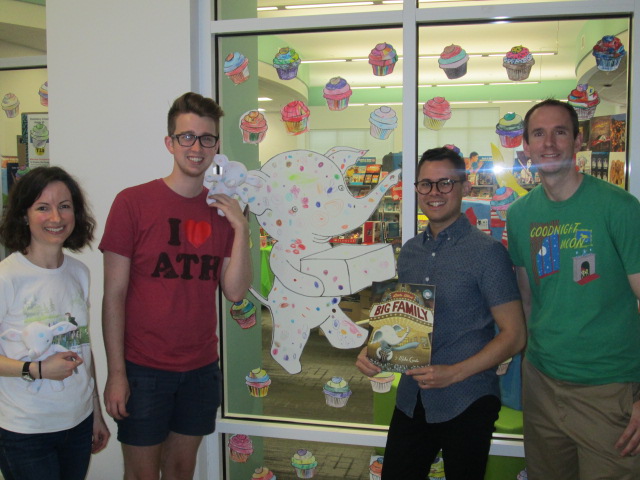
On field day, students created a massive window display of Little Elliot and cupcakes.  They worked for 30 minutes designing their own special cupcake.  They also added dots to a collaborate Little Elliot.  Many volunteers worked to get all of the cupcakes and elephants onto our windows to celebrate the author visit.

The display has been so much fun to look at and watch students searching for their dots and cupcakes.

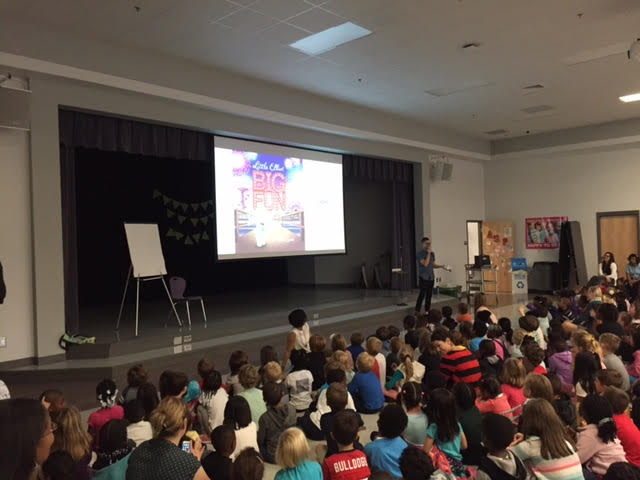
It was a busy time at our school during the visit because it is also our fall book fair.  Instead of having our visit in the library, we moved everything to the cafeteria stage.

Students enjoyed a reading of Mike Curato’s new book Little Elliot, Big Family.

Mike had the book’s pages displayed on the large screen so that students could easily see what he was reading from the book.  They were mesmerized by the story and were such careful listeners.

After his story, Mike shared some slides and stories about how he works as an author and illustrator.  Students saw sketches beside finished artwork as well as a time lapse of a drawing being created.  He also showed students pictures of how Little Elliot has changed through the years.  He has been drawing him for several years, and he has gone through some changes along the way.  We also saw sketches of some of Mike’s early artwork, which was a wonderful connection for our young learners to see how work they are doing right now could inspire a future career or hobby.

Students even got to see the cover of next year’s Elliot book Little Elliot, Big Fun.

big fun

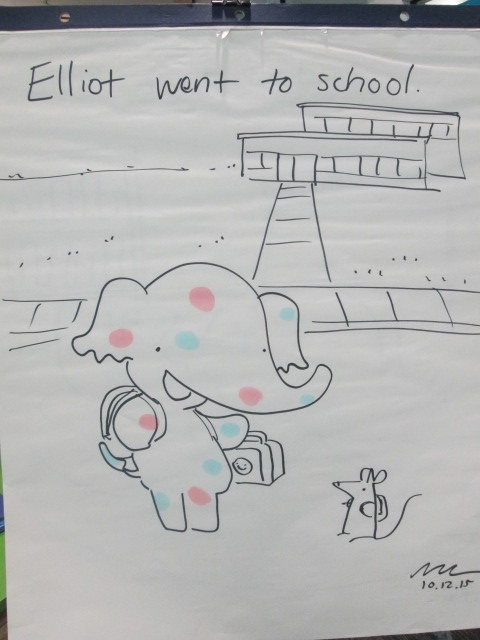
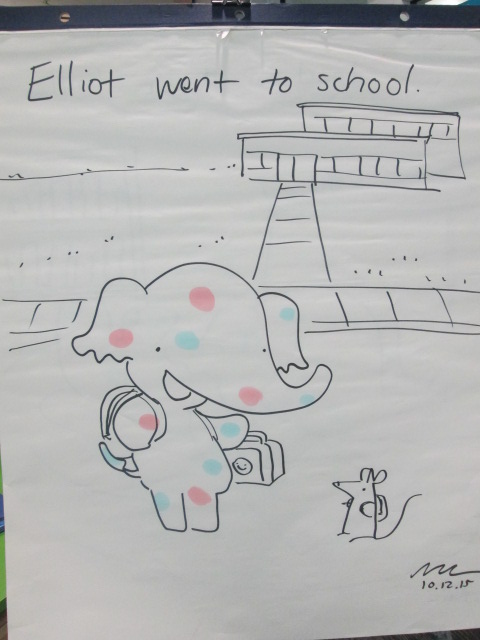
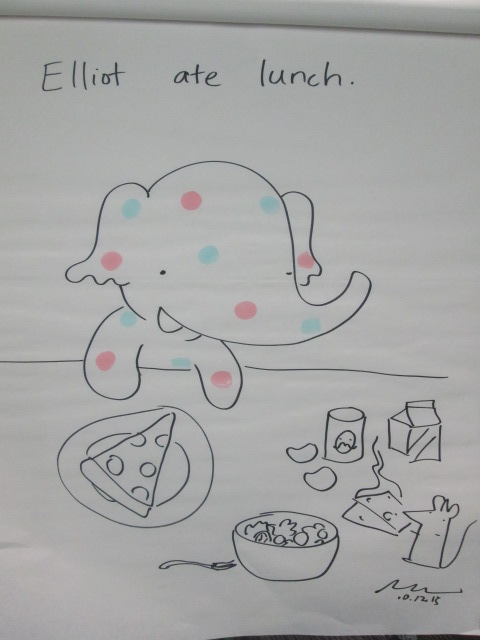
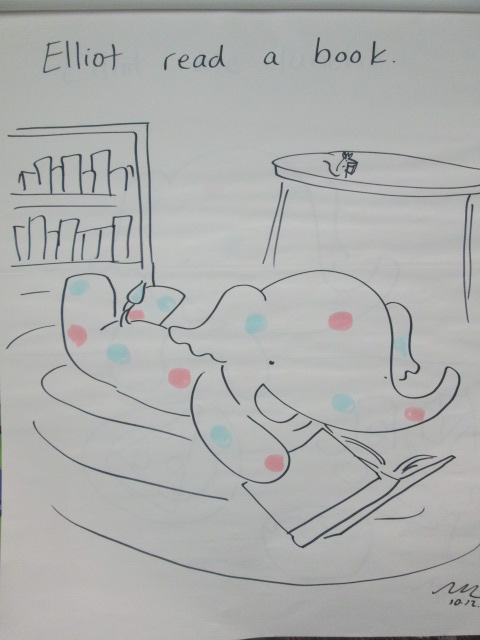
Next, Mike worked with the entire room to create 3 pages of a new story.  He wrote a sentence to start the story: “Elliot went to school”.  Then, he drew Elliot on the page and let the students take it from there.  They suggested things to add to the picture and Mike added them in.  For the next 2 pages, Mike took suggestions from the audience about what Elliot should do.  Students decided he would read a book and go to lunch.  Once again, Mike added details to the drawing that were suggestions straight from the audience.  The best part was that we got to keep the 3 drawings to enjoy in our library!

Mike Curato (47) Mike Curato (46) Mike Curato (45)

Finally, students got to ask questions.  Mike jumped right out into the audience with the students to take their questions and give thoughtful answers.  The kids were so attentive during the whole process.

Before Mike left, he took time to sign all of the books purchased by students.  Our incredible PTA bought a copy of each book for every PreK-2nd grade classroom, so he signed those as well.

He also took time to look at the big window display and marvel at the students’ creativity.  If you ever get the chance to have Mike Curato at your school, don’t hesitate.  He was wonderful and the kids and teachers have talked about it all day.  Be sure to check out both of his Elliot books, add them to your home and school collections, and enjoy the many positive messages that your sure to take after reading the books with kids.

Mike Curato (19)

Thank you Mike Curato and Avid Bookshop for a wonderful day!  We can’t wait to reconnect once the Polka Dot Express arrives at our school soon!

Helping Students Own the Space Through Shelf Talkers

Avid Shelf Talker (2)

A few weeks ago Ms. Tesler, a fourth grade teacher, dropped by the library and started talking about a wish for her students to have ways to share the books that they are reading.  I love impromptu brainstorming sessions because I never know where they will lead.  So often, they lead to miraculous things.

Before she left, we had decided to assign her class an area of the library to be their recommendation space.  As a part of their leadership in the school, they would find ways to share with others about the books that they were reading.  We didn’t want to decide too much for them, so we just got some initial ideas to begin sharing with the class.

We held a book tasting where students started selecting books for independent reading and we planted the seed that students would have an area in the library to share their book recommendations.  During that session, the students and I talked about ideas such as a digital display using Flipgrid to share book talks.  We talked about space to create art projects to spark interest in a book.  We also briefly talked about shelf talkers.  At the time, we just talked about putting “signs” on the shelf to tell about the book, but I knew that students were really talking about shelf talkers.

Avid Shelf Talker (6)

I immediately thought of Avid Bookshop and the wonderful shelf talkers that their book sellers put on the shelves of the shop to connect readers with books, so I emailed Janet Geddis at Avid to see about the possibility of Skyping into the shop to see the shelf talkers, hear a few, and get some tips on writing them.

Avid Shelf Talker (7)

Will Walton, bookseller and author extraordinaire, agreed to Skype with us.  Students came to the library and we connected with Will.  He walked us around the shop to actually see the shelf talkers on the shelves.  The first one he showed us was for Anne of Green Gables.  He pointed out that the text was written in green to go along with the book. We saw that the handwriting was inviting and legible and the shelf talker gave a lot of description about the book.

Avid Shelf Talker (3)

Will pointed out to us that it’s important to include the title and author on the shelf talker because sometimes the books get moved down the shelf or even the shelf talker gets moved.  Having the title an author helps customers still learn about the book even if it gets moved.  We connected this to the idea that books in our library will most likely get checked out, but the shelf talker will remain to inform readers about a book they might consider in the future.

Avid Shelf Talker (1)

I also loved that Will pointed out the language that was used in the shelf talker.  He specifically said that they don’t say that a book would be good for boys or girls.  Instead, they connect the book to the kinds of things readers might enjoy reading about.  For example, this book would be a good choice for middle grade readers who like magic and horses.

Will was sure to show us many shelf talker and how each was in the handwriting of the person who created it.  They were fun, inviting, and even had personal touches like sketches.

I loved that Avid customers were just as interested in what was going on during our Skype with Will.

Students also got to meet Janet, bookshop owner, as well as hear the names of several other booksellers at the store.

Before students disconnected, they shared some things they were taking away from Will’s Skype.  After we disconnected, students continued to talk and even started talking about the book they wanted to write a shelf talker for.

We are already planning a time for them to return and create the shelf talkers and begin constructing their space in the library to be leaders in our school for recommending books for others.

I hope many of these students will visit Avid and see the shelf talkers in person and continue to ask Will and Janet questions about the shop. Some of them were asking how close it was to the school, so I know there is curiosity brewing. I’m so thankful to have a bookshop in our community that reaches out and supports our schools.