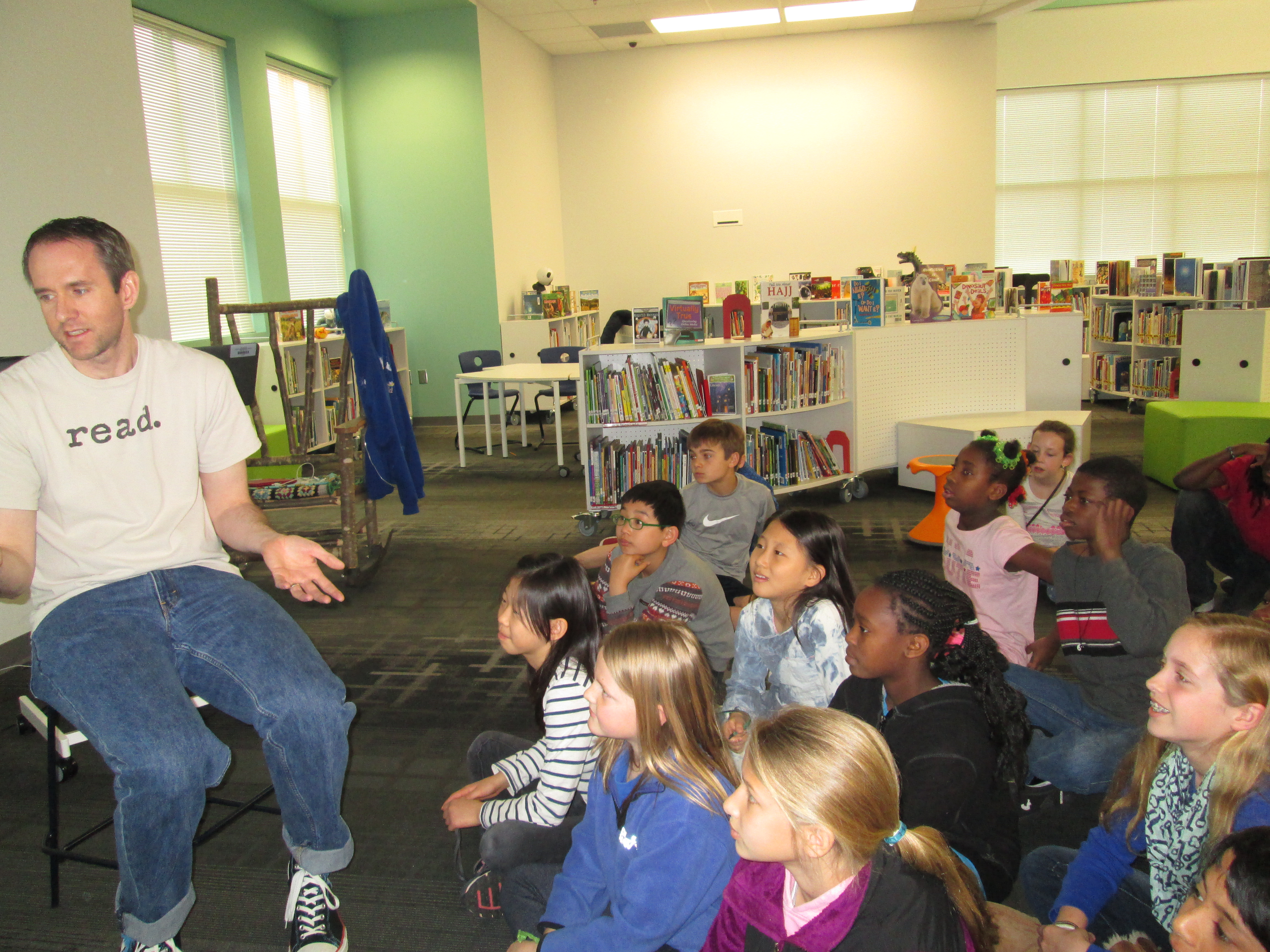
Reflections on Google Teacher Academy #GTAATL


google-certified-teacherOn June 25 and 26, 2014 I had the honor of attending the Google Teacher Academy in Atlanta.  It was a long road to get to GTA.  The application process is a test in how well you can boil down your practice into the most concise wording and video that represents your innovation and reach.  The application is short with only a handful of questions that limit your response to 800 characters.  One of the most challenging parts of the application process is the video.  In one minute, you have to introduce yourself and show how you foster innovation in education as well as how you have a global impact.  I don’t even know how many hours it took me to craft a one-minute video, but I do know that the process forced me to really think about my practice.  I made multiple versions of the video and got feedback from multiple including Cat Flippen, #GTACHI.  Here’s how it turned out:

http://www.youtube.com/watch?v=b1x-Sr73iL0

The wait to find out if I got into GTA was agonizing.  I won’t lie about that.  Even though I had IFTTT recipes setup to notify when the email came, I still stayed glued to my phone and computer because I was in a professional learning session on announcement day. Once the email came, things started happening fast.  The 35 were invited to a Google Plus community where we could begin connecting.  It didn’t take long for the collaboration to begin.  Here are just a few things that happened:

  • Jennifer Armstrong began making a Youtube playlist of our GTA videos
  • Jerry Swiatek made a Twitter list
  • I created a Google doc where we could begin crafting a shared blog post that we each could share in our own networks to introduce the 35 #GTAATL participants
  • Linda Humes and Corey Holmer started designing a t-shirt for us.  Corey’s design was ultimately chosen, but many people in the group contributed ideas.  Frank LaBanca ordered our shirts and had them all shipped to me in GA so that I could easily drive them to GTA rather than someone having to bring them on the plane
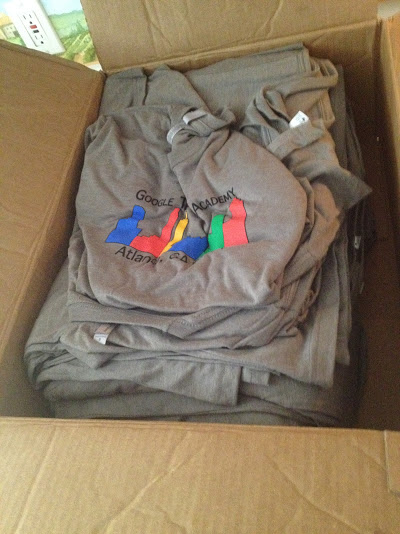
shirt

  • Renee Nolan organized a meetup for most of us on the night before GTA began to get to hangout together before GTA consumed our brains
  • Janna Gibson made a guide to Atlanta to introduce everyone to the food and sights to check out in Atlanta
  • And the list goes on

I loved this because it brought out one of the things that inspires me about collaborating.  We all have talents and expertise, and so many people stepped up to share their talents and passions with the group.

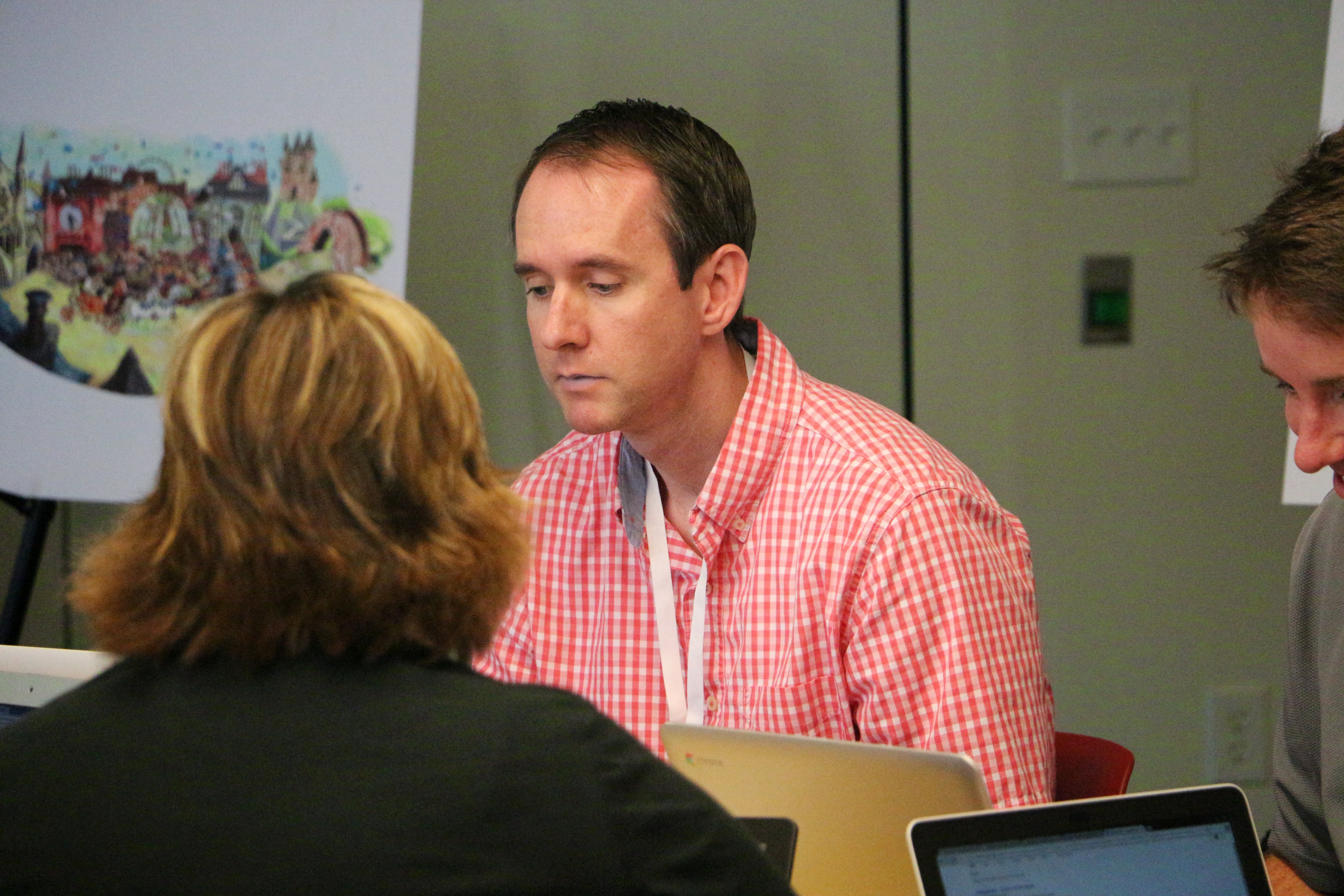
Finally meeting everyone face to face was so much fun.  We only knew one another from our profile pics, social media posts, and blog stories.  We all met at Marlow’s for dinner the night before GTA and spent time just having conversation and sharing the anticipation of what the next two days would bring.
IMG_8713

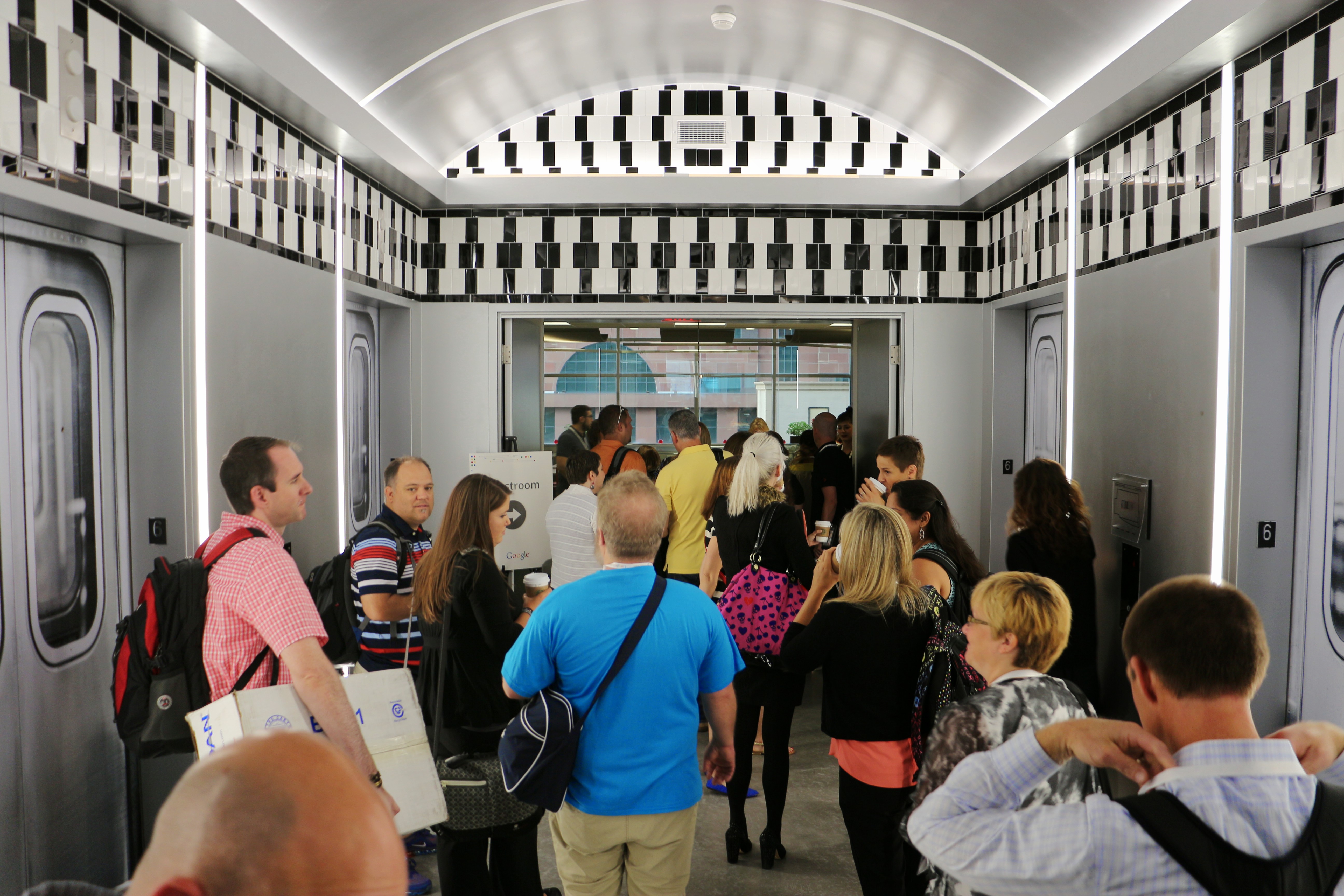
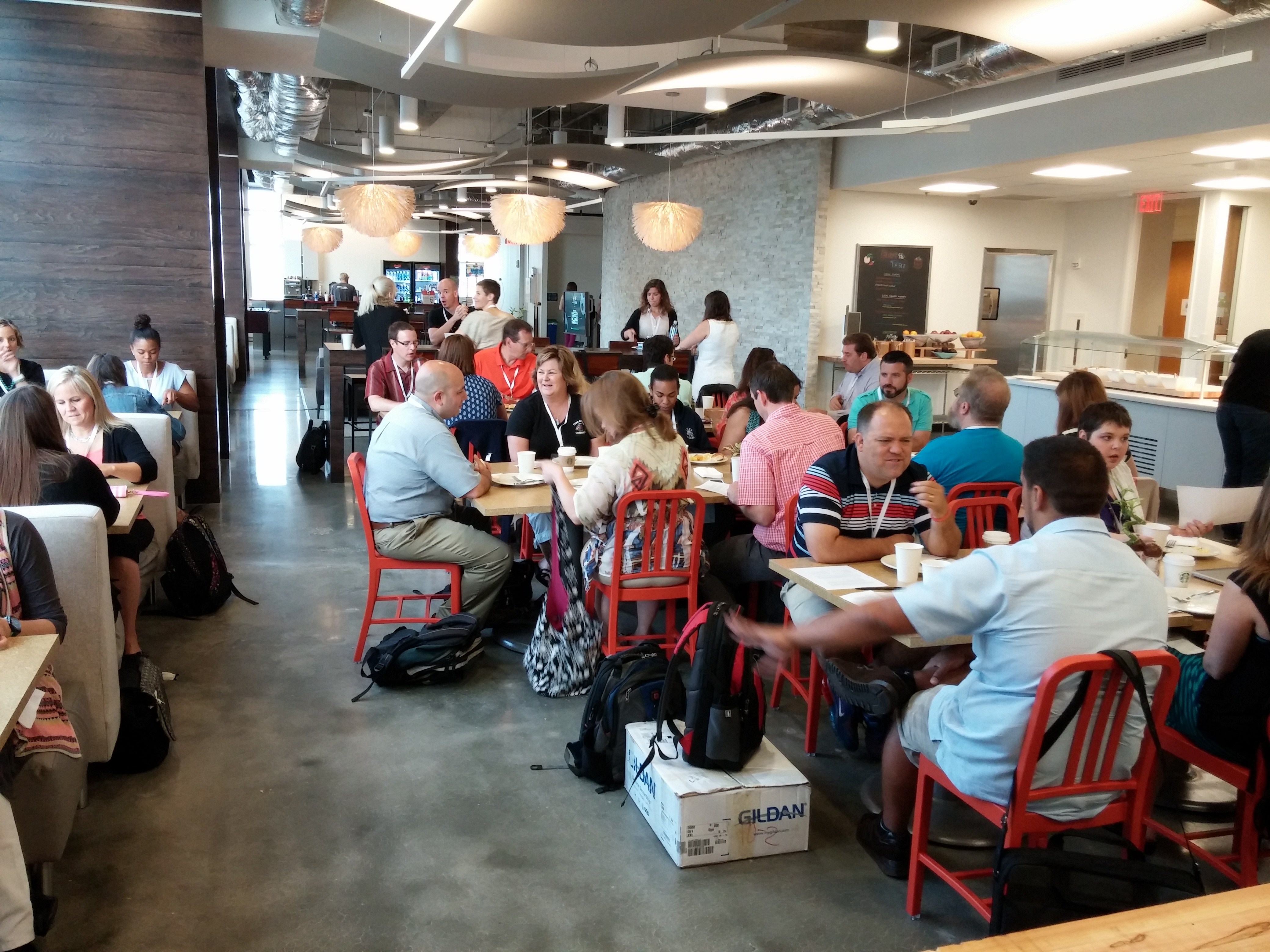
We arrived at the Google office and waited until the exact time to enter.  After checking in, we were immediately launched into the Google culture, which of course started with food.  We had a great breakfast before moving into our agenda.
IMG_20140625_082216

I won’t detail the entire agenda, but share some of the things that stood out to me along the way.

First, the planning team revamped the entire agenda, and we were the first GTA cohort to try out this new agenda.  This was exciting but also a little risky since it meant that we might not experience what we thought we were going to experience.  What I saw was that the agenda focused a lot more  on philosophy than on specific tools.  The idea behind this is that tools come and go and tools change, but if you have an innovative, risk-taking philosophy of teaching, then you adapt to new tools and environments as well as create entirely new environments for you and your students.

We watched the Moonshot Thinking video, which I had seen at a GAFE Summit.  It is always powerful no matter how many times I watch it.

https://www.youtube.com/watch?v=0uaquGZKx_0

I loved how this framed our entire GTA experience because it set the tone that we as innovators in education we need to be trying things that have never been tried and creating new tools and experiences for our students that stretch far beyond a “next step”.  I loved how this moonshot thinking and “solving for x” brought us into our first experience at GTA.
IMG_8721 IMG_8787 IMG_8755

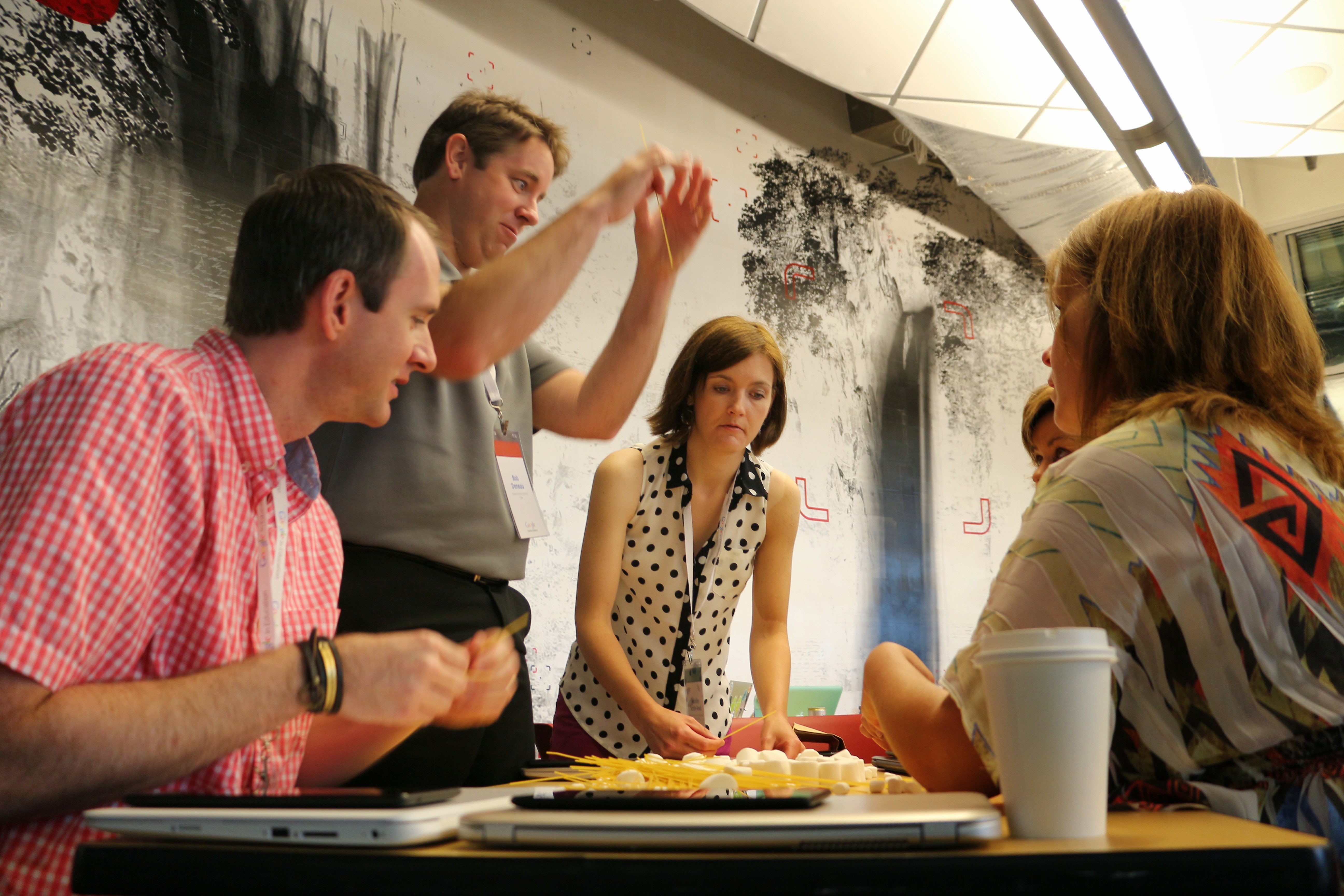
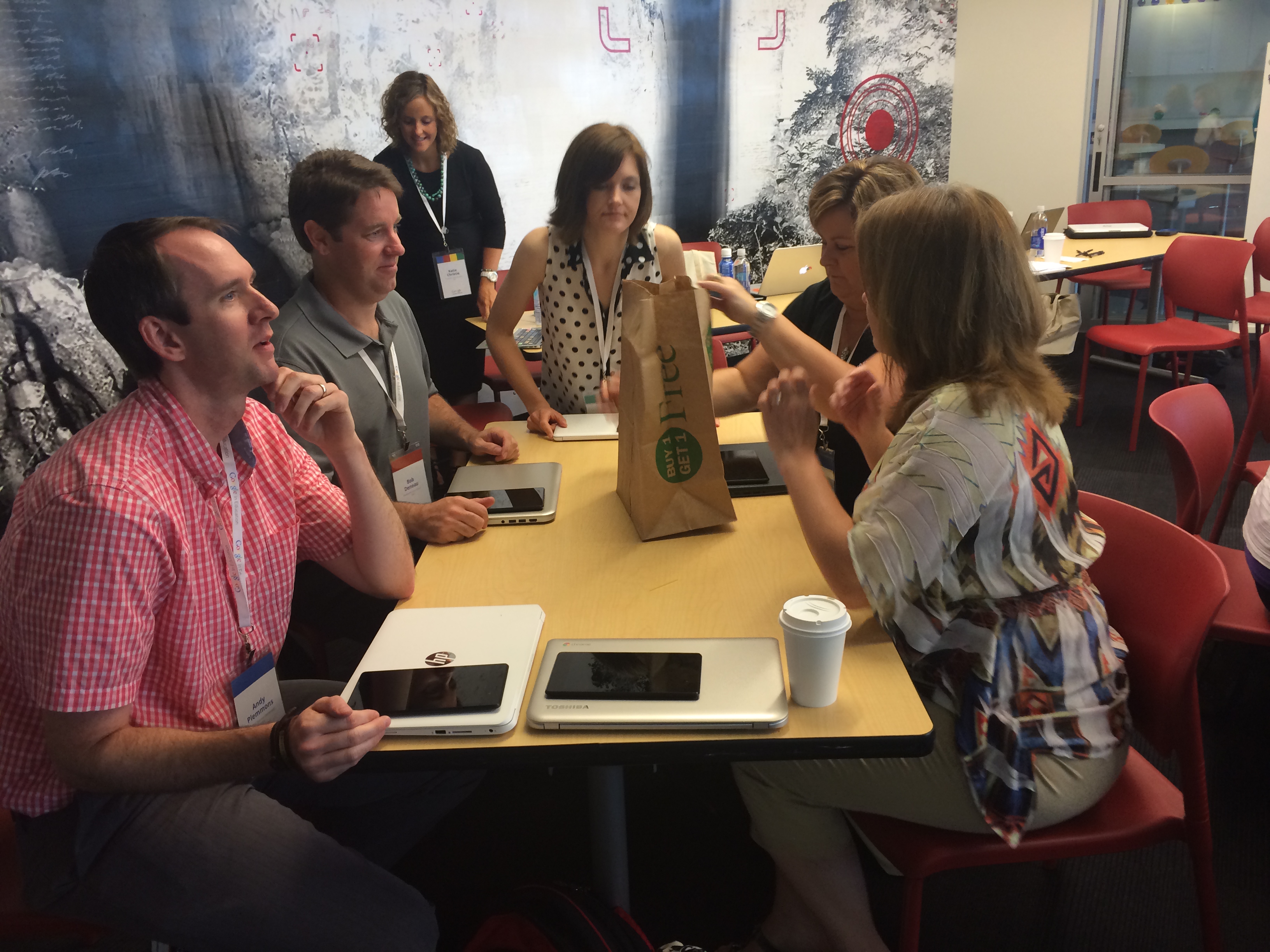
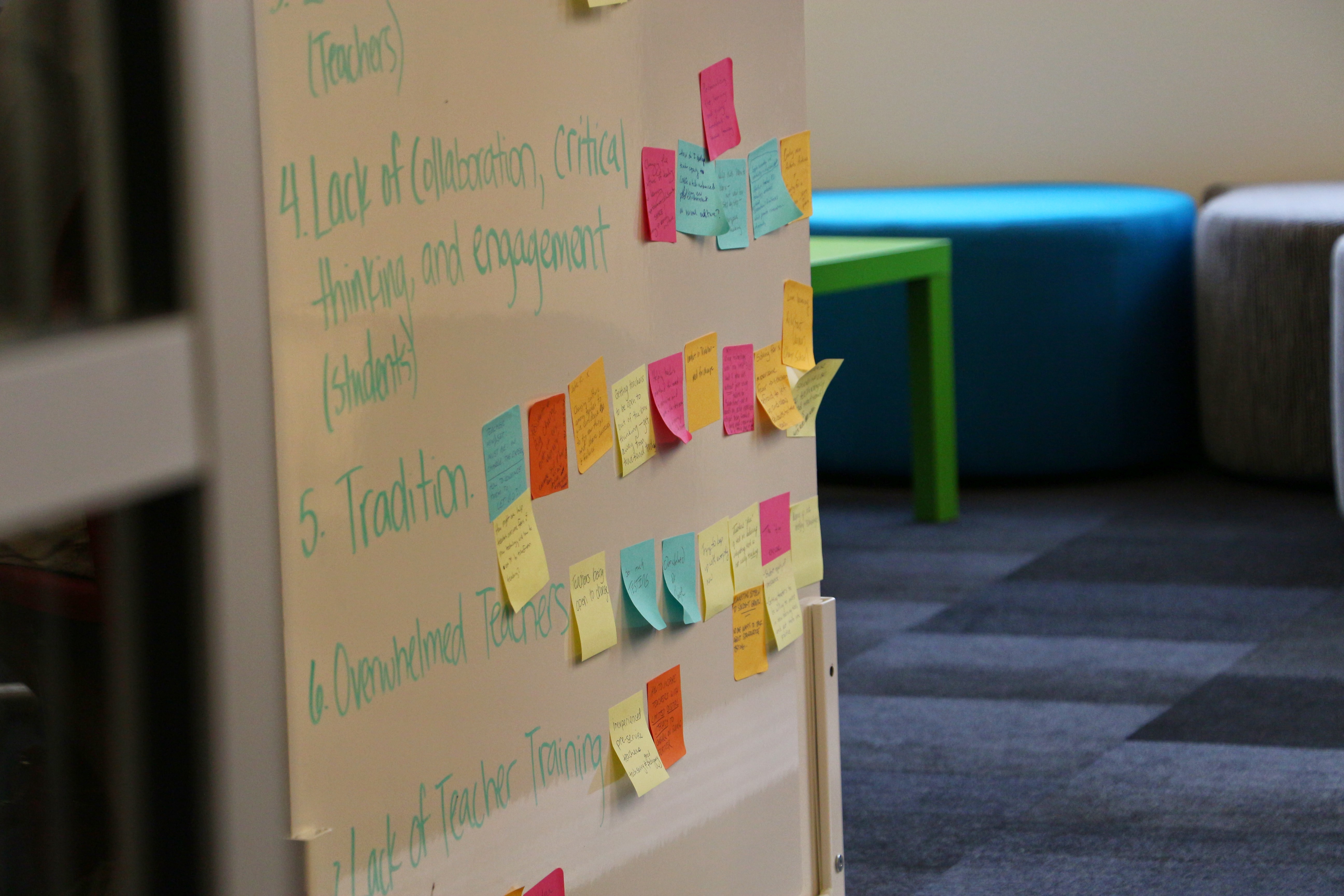
This was probably my favorite “activity” that we did over the 2 days.  Prior to GTA, each of us submitted what we felt were our biggest challenges in education.  Those challenges were compiled into themes.  At our tables, we were randomly assigned one of the challenges.  Then, one of our team members had to spin a wheel filled with tech tools.  Our goal was to use this tech tool to address the specified challenge, and to make things interesting, we only had 5 minutes to make a decision.
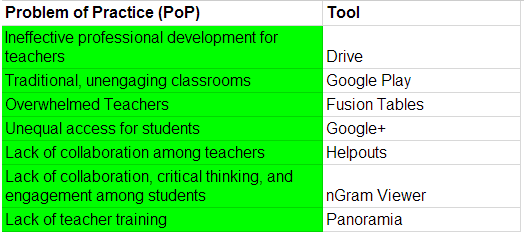
Problems of Practice  PoP    Google Teacher Academy Resources

My group ended up with “lack of teacher training” paired with “Panoramio“.  Most of us in the group had never used Panoramio, which was perfect!  I felt like it put us in the shoes of our teachers who feel insecure when facing a new technology tool.  I was reminded of teachers who feel frozen when they face the unknown and want someone to just tell them exactly how a tool works before they will try it.  With the clock ticking, we didn’t have that luxury.  Instead, those of us that had used the tool began brainstorming how Panoramio could address teacher training.  Others, like me, frantically researched the tool to see what it was capable of.  At a glance, Panoramio is a collection of photographs uploaded by the community of users and embedded onto Google Maps by location.  You can browse the photographs by location or you can specifically search for topics of pictures.  For me, I was trying to figure out if you could tag images and search by tag.  From my own experience, I’ve seen the lightbulb go on so many times for a teacher when they see something put into practice in a classroom.  Sometimes all it takes to help a teacher feel “trained” enough to try something is just seeing what it looks like in a classroom.  I thought that if we could create a massive social media campaign for educators to upload images of their classrooms into Panormaio and tag those images by the topics that they showcased, then we could support teachers in “seeing” what that specific topic looked like in a classroom.  If we needed specific kinds of pictures uploaded to Panoramio, then we could be specific like pictures of students using social media in the classroom.  I added this thinking to my group, but I loved that others in my group had completely different ideas for how this tool could be used.  This exercise also reminded me that our focus can’t be on the tools.  Our focus should be on our students, teacher, families, and community along with the needs that they have.  There’s a whole range of tools that can support those needs.  If we push our thinking and try something radical, sometimes a tool that seemed like the most absurd idea for solving the challenge actually leads to something innovative.
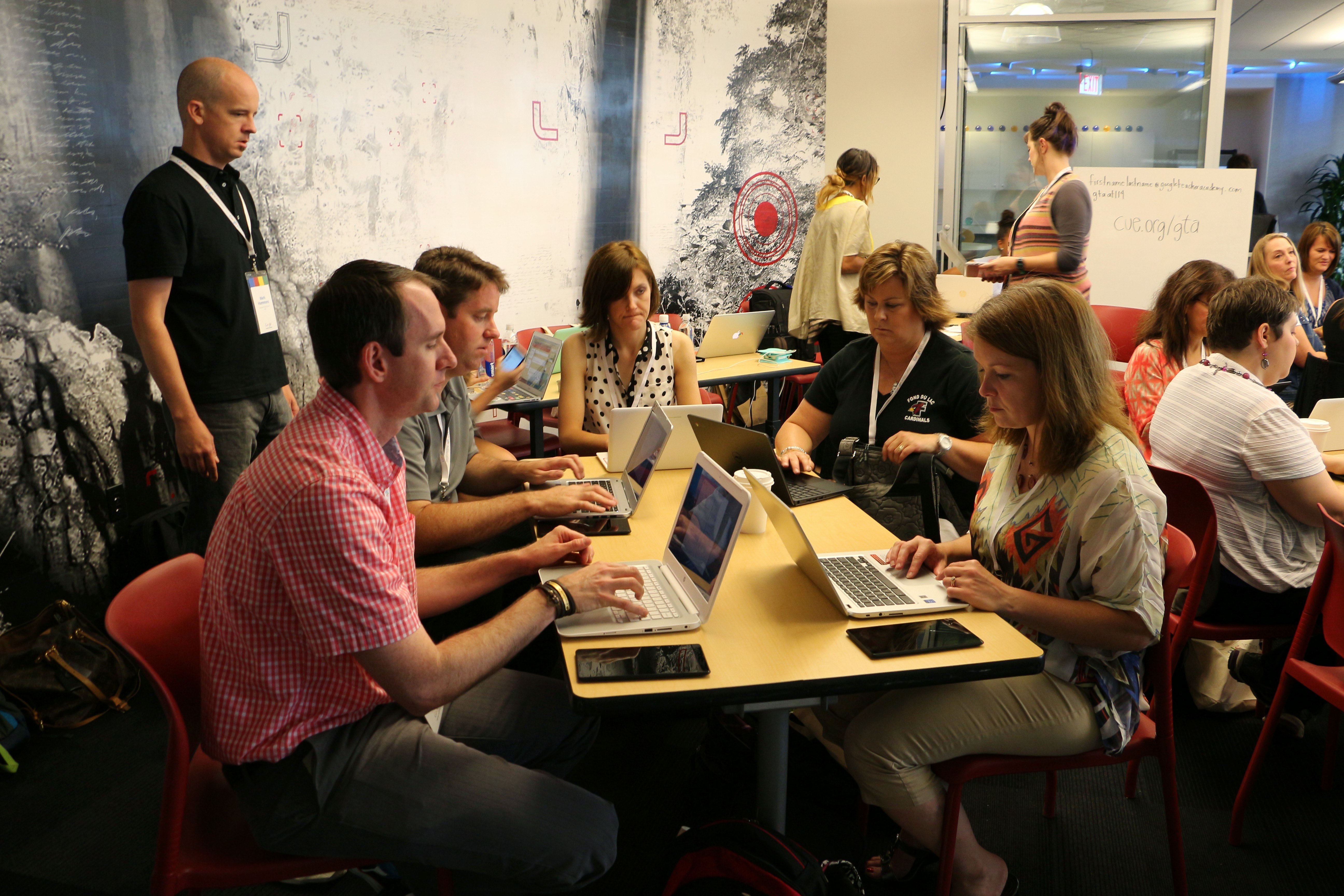
IMG_8742


Our day was of course surrounded by snacks.  We had official breaks, but drinks and snacks were always within reach.
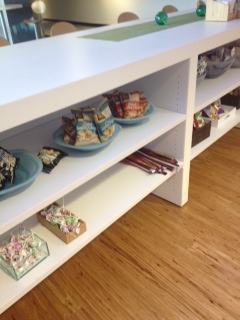
photo 4 photo 5

Even breaks to the bathroom kept you learning and surrounded by Google culture.
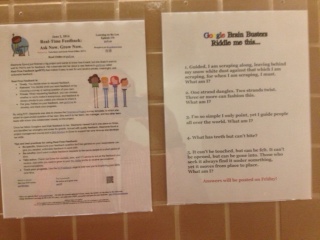
photo 3


Throughout the 2 days of GTA, there was time for “inspiring ideas”.  These were short presentations from various members of GTAATL.  We submitted ideas before GTA and were selected by the planning committee to present.  I was the very first one to share, which was a bit intimidating.  I shared various ways that I empower student voice through Google forms as well as how Google forms can help you crowdsource information.
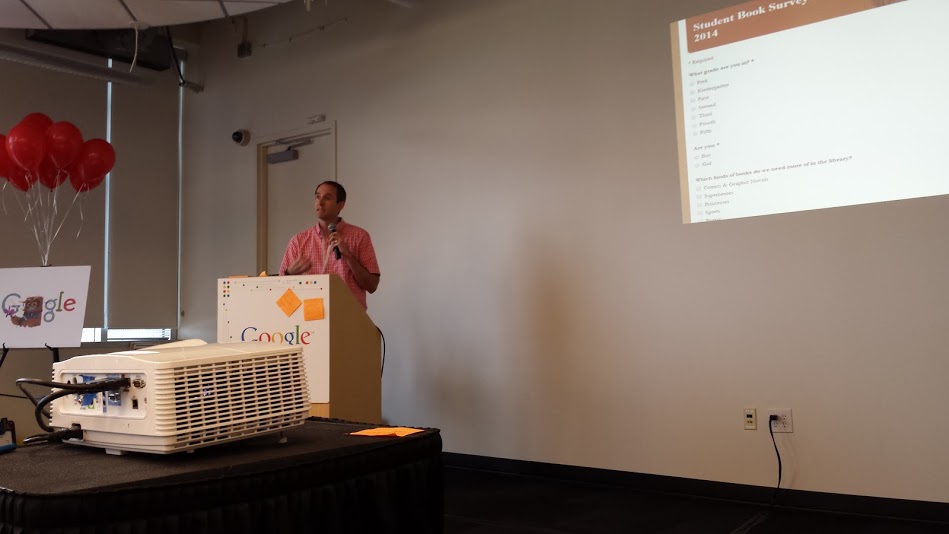
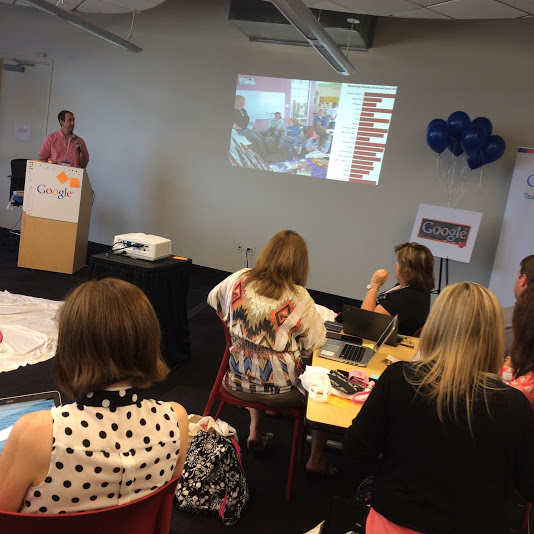
20140625_135612 14 - 8

Other rockstars included Chris Aviles, who shared how he gamifies his classroom.  He has created an entire story line that plays out with his students which even includes getting phone calls from game characters using Google Voice.  Amy Burvall shared how she used Google Plus to give her students a space to contribute to the classroom and crowdsource information.  She also uses this tool to connect people in her professional development sessions.  By doing this, people aren’t sitting passively in her sessions, but are instead, actively contributing during her session and beyond.  Genius!  Hearing from all of these amazing educators during this session was an energy boost during an exhausting day.  I was proud to be a part of this group.

One of the things that I hoped would happen was a preview of Google Classroom.  We heard about the process it took to develop Google Classroom.  I loved seeing a picture from an elementary teacher’s classroom where she had posted about 7 or 8 steps it took to turn in an assignment to the teacher.  This was one of the inspirations for Google Classrooms.  We had a chance to try out the interface and were all excited and blown away by the usefulness and simplicity.  With 35 innovative educators in one room, it didn’t take long for a range of questions to surface.  We definitely surfaced some barriers that people may face in using Classroom, but overall the buzz was one of excitement and eagerness to get this tool in our teachers’ hands.
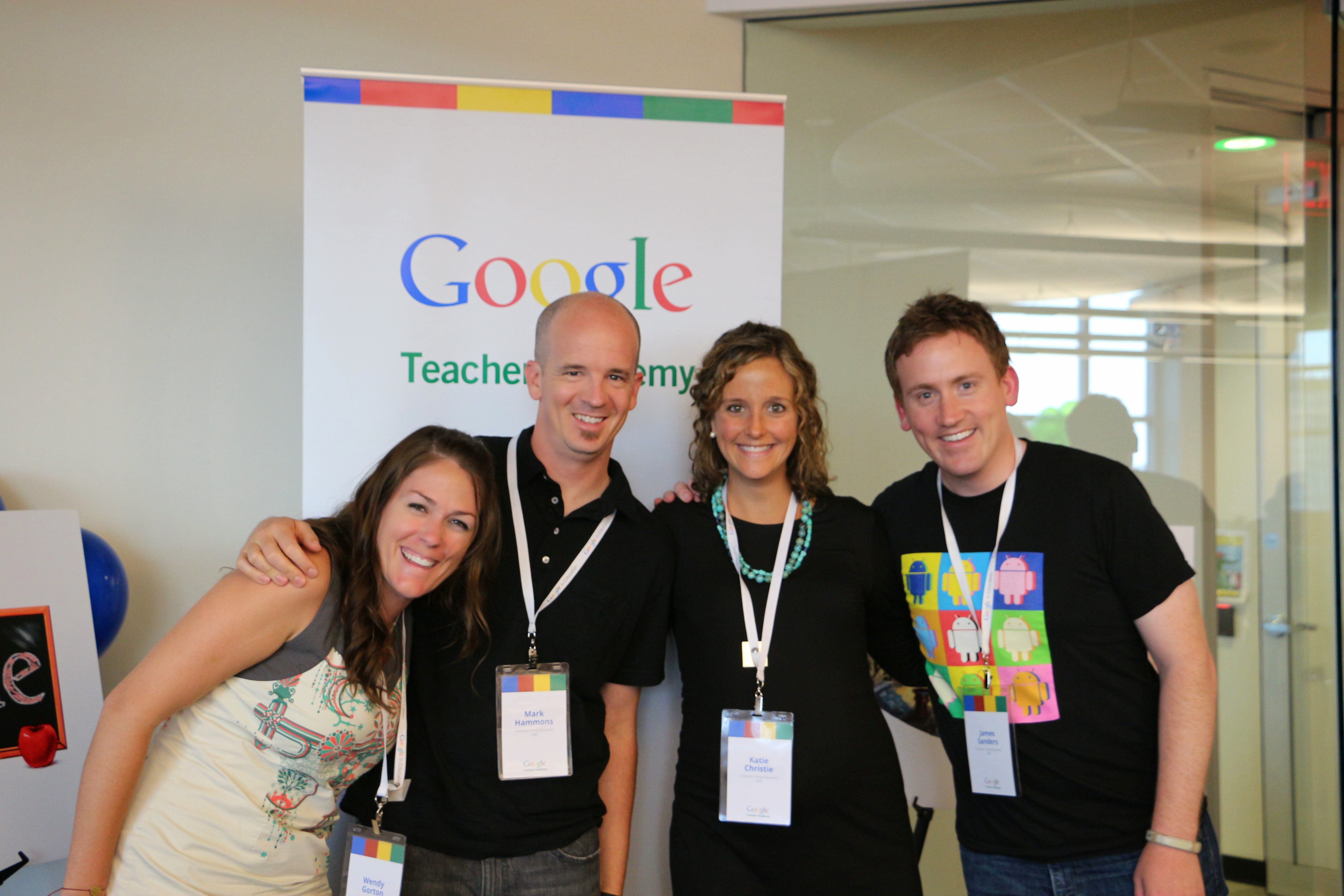
Our lead learners

Our lead learners

The rest of GTA involved 4 rounds of explorations of various Google tools and themes.  We grouped ourselves into these rounds by common interests in the kinds of challenges we wanted to tackle in our action plans.
IMG_8770

We saw a lot of tools, but didn’t have time to use them very much.  Now that I’m away from GTA, I’m starting to look at what I saw and consider how these tools fit into what I may try in the library this year.  I’m already thinking about how Google Draw can be used as we connect with other schools via Skype and Google Hangout.  I wish that we had spent more time with the various map tools from Google because I think there is a lot of potential with those as well for global collaborations.  I’ll have to take time to do this for myself.

At the end of day one, we all became Google Certified Teachers.  We had a pinning ceremony and a celebration dinner.  It was a great sense of accomplishment, but it was only the beginning of the work and opportunities ahead.
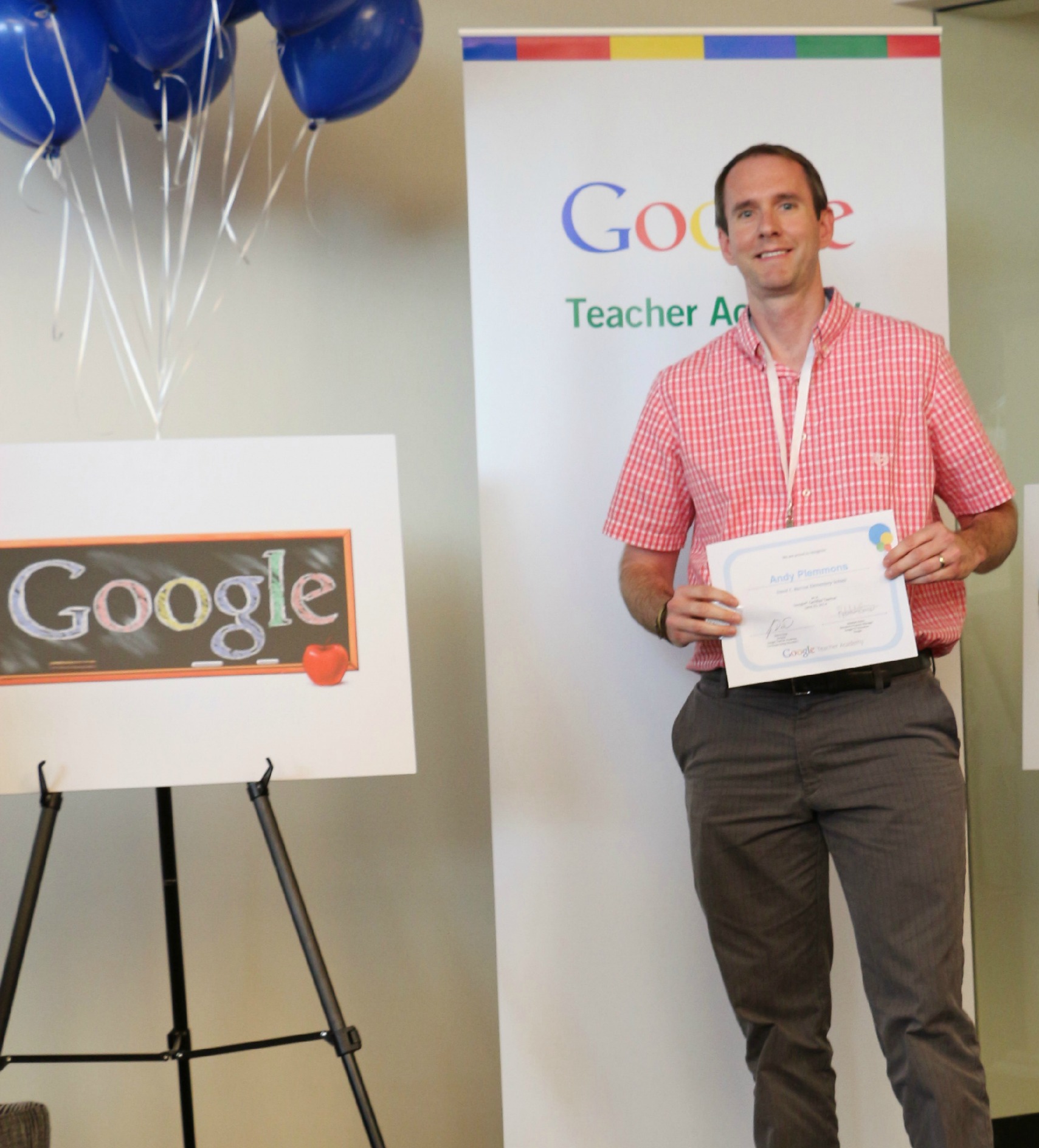
graduation

Day two was time for us to explore our own interests through an unconference as well as work on our action plans.  After GTA, it is an expectation that you create an action plan to facilitate change in education during the coming school year.  My focus is on global collaboration.  Seeing what students gain from connecting with authors, experts, libraries, and classrooms beyond our walls has convinced me that I need to develop even more opportunities for students to have these connections.  This year, I want connecting to be more than a one time thing.  I want to create content with students in other states and countries.  I want students to offer one another feedback and ask one another questions.  I want students to have an opportunity to create projects that matter to them and share those with a global audience.
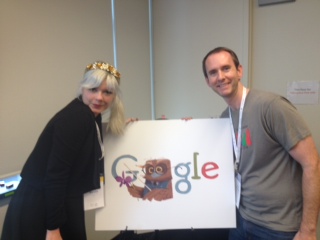
photo 3 (2)

Amy Burvall inspired many conversations about hashtags and “showing your work”.

I had many important conversations during GTA about this project.  Amy Burvall and I talked a lot about hashtags and how tags are the “soul of the Internet”.  She helped me to think about how we track our work so that it continues to inform our next work.  We talked about the importance of sharing the whole process of a project and not just the final project.  This is the kind of thing that GTA does.  You may not get to know every single person at GTA, but you make connections with people that you know are going to continue to push your thinking well beyond the 2 days that you spend together.

Global TL logo

Now my attention turns to GlobalTL, a Google Plus community that was started by Joyce Valenza.  Now, I’m working along with Joyce and many other librarians to develop this community that will facilitate global connections.  I know that by connecting and collaborating with librarians, I am connecting my students and teachers with students and teachers around the world.  Librarians work with every student, teacher, and family member in the school.  I think it makes sense to think about how to create a community that connects people.  We don’t know exactly what will happen in the group, but we are going to shoot for the moon to foster global collaboration.

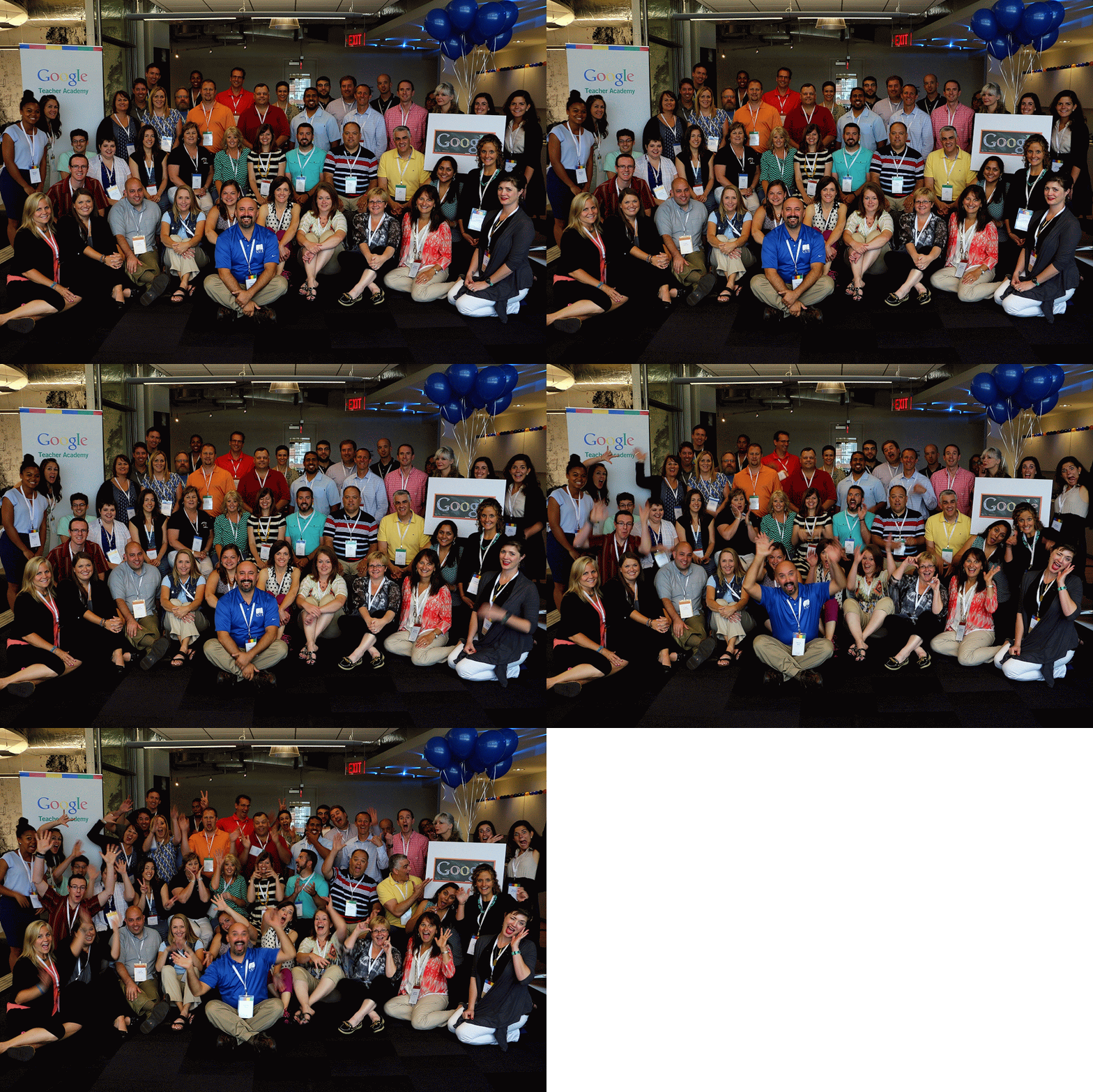
Google Teacher Academy has connected me with 34 other amazing educators, and I know I can call on them for any questions or roadblocks I face.  I’m also now connected to a global community of Google Certified Teachers who are actively supporting one another in their educational spaces.  I’m sure that GTA is only the beginning of a long collaborative relationship with some amazing global educators.
IMG_8860-MOTION


Photo Credits: Danny Silva (@iteachag)
List Poetry Google Hangout with 2nd Grade

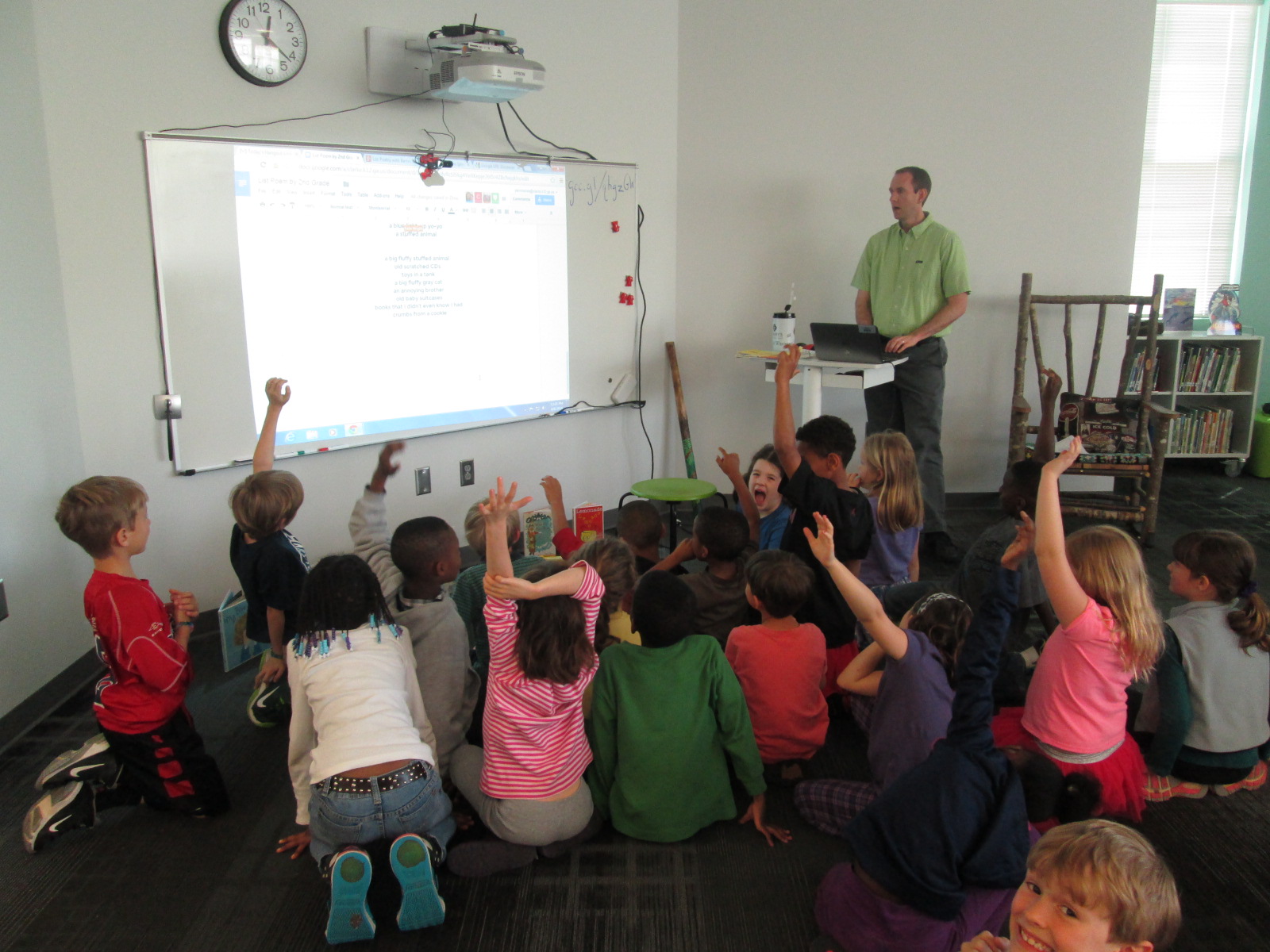
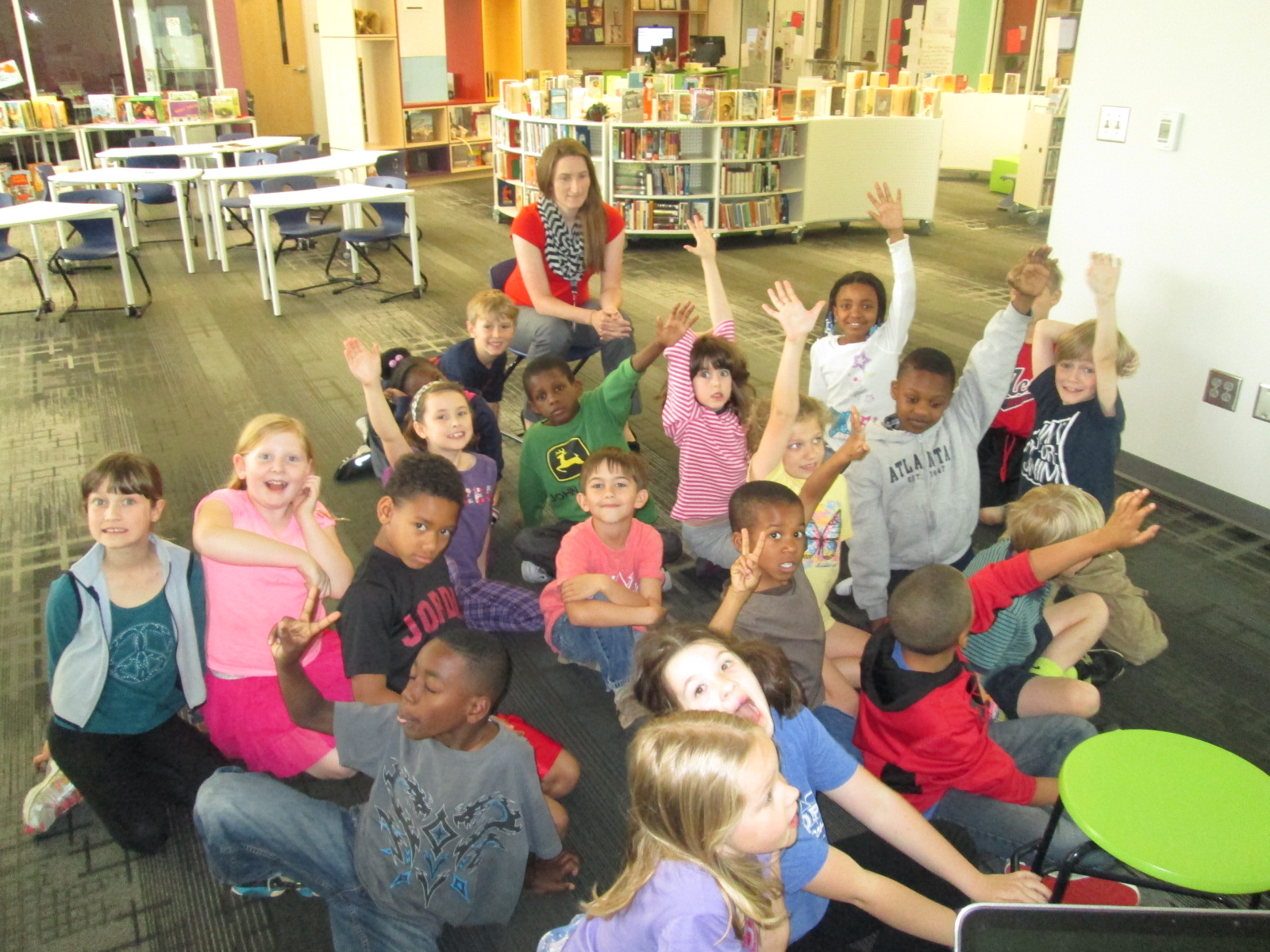
list poems (1)During a collaborative planning meeting at the beginning of the quarter, 2nd grade all wanted to come to the library to learn about list poetry.  We love to use the book Falling Down the Page: A Book of List Poems edited by Georgia Heard.  We had a problem, though.  It was hard to find a time on the calendar for each of the 4 classes to come.  Rather than only serve a few of the classes or abandoning the project all together, I suggested that we use a Google Hangout to bring us all together for the same lesson and that we collaborate with one another on a Google Doc.

This was a perfect solution because it really served multiple purposes.  All of these teachers were able to experience a Google Hangout for the first time.  The students all heard the same information from me.  All of the students saw how multiple people can collaborate on a Google doc without erasing one another’s work.  It created more time on the library calendar for more classes to come for other projects rather than one project taking up 4 hour-long slots.

Yesterday, the teachers and I practiced after school for about 10 minutes.  I’m glad we did this because it allowed me to work on some issues with sharing the hangout with them.  I found that emailing teachers the link to join the hangout was much easier than inviting them via their Google Plus.  We also had to install the Google Hangout plugin on all of their projectors.  This didn’t take long, but it was much better to do without a group of students waiting.

list poems (6)
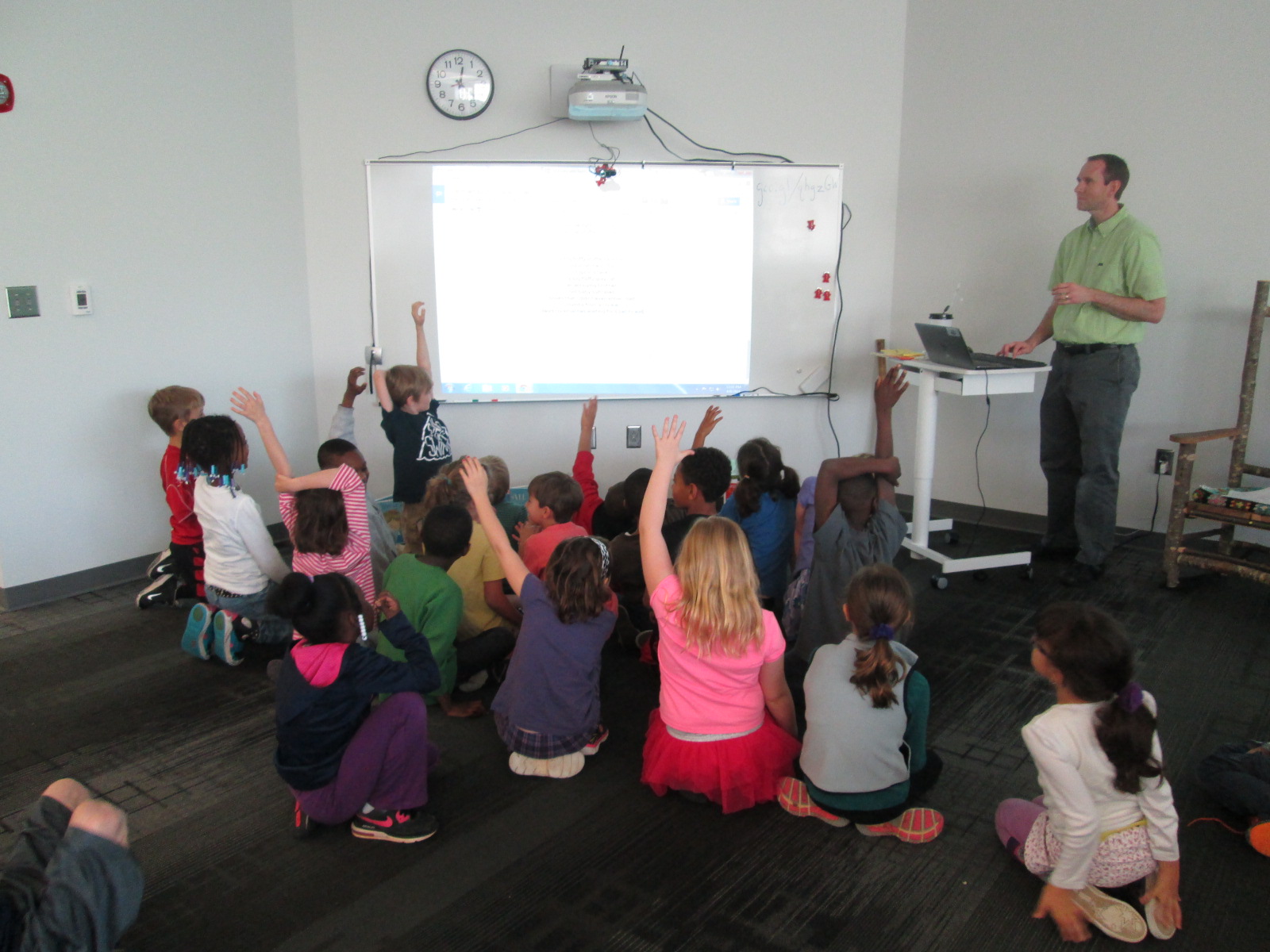
Today, I sent out the link to the hangout.  I also emailed the link to the shared Google doc so that teachers could have it pulled up on their screens.  Mrs. Yawn’s class came to the library since they have a longterm sub.  The other 3 classes tuned in from their own rooms.  As the creator of the hangout, I had the hangout controls pulled up so that I could mute all microphones.  This eliminates feedback from the projector speakers.  If a class needs to speak, I (or even the teacher) can unmute the microphone.  We could also communicate with one another via the chat.

https://www.youtube.com/watch?v=7brDc27haO8

I did a short mini lesson for all of the classrooms.  I talked about the kinds of lists that we all make and how those can turn into poems with just a few added adjectives.  I read Jane Yolen’s “In My Desk”.  Then, I muted my microphone, shared my screen, and we all started writing lines to a new list poem called “Under My Bed”.

List Poem by 2nd Grade   Google Drive

I shared the link to the document on Twitter, and we instantly had viewers watching our poem develop.  This created a great discussion about how quickly something that is posted on the Internet can be seen because we literally had 8 viewers the second that I pressed “tweet”.  Many more viewers came in and out of the document while we worked.  The kids really liked knowing that they had an audience watching their poem come to life.

list poems (5) list poems (4) list poems (3)

The students also loved watching the lines magically appear on the screen from all of the classrooms.

list poems (2)

At the end, I called us all back together and read the poem aloud.  It was amazing to hear how creative their lines were!  To close, I invited students to spend some time in their classrooms revising the poem.  There were several lines that were very similar so it was a natural follow-up to spend time deleting or combining lines.

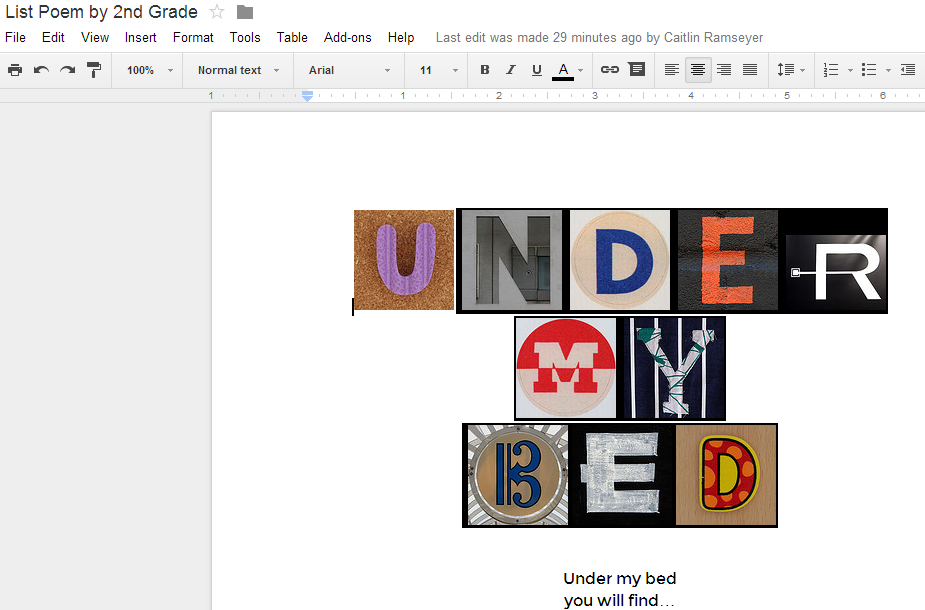
Many students seemed interested in writing this kind of poetry in for our media center poetry contest.  Students have 2 more weeks to submit a poem.  I’m sure I’ll be reading several more list poems in the future.  Here is our poem as it looked at the end of our hangout:


Foam Letter U letter N Vintage Sticker Letter D letter E R

 Vintage Sticker Letter M letter Y

Britten Shopping Centreletter EFret Saw Letter D

Under my bed

you will find…


Three old pacifiers from when we were babies.

Two pairs of stinky, dirty socks from my last soccer game.

A box of last years Christmas wrapping paper.

Last night’s dinner that I didn’t like.

My little brother.

A pair of destroyed Jordan’s.

My shiny diamond.

A toy skeleton that I bought last year for school.

Old, yucky trash.

A little brown shoebox with really old seashells.

My tiny puppy.

A Kidz Bop 25 CD.

Motorcycles, cars, crayons, American Girl Dolls, and stuffed animals.

A peach, toy train track,

Hidden laundry like dirty jeans and shirts.

New, blue jewelry I just bought.

Cheetah printed sneakers.

A very old picture of a dog I drew.

Old chewing gum.

Brown Pokemon cards covered in dust.

moldy, blue  roller skates that don’t fit anymore

thousands of stuffed animals that belong to my dog

three feathery pillows that my dog chewed up

a beach ball that popped on a pointy shell at the beach

old shark teeth that are at least 500 years old

nasty, dead cockroaches smooched onto the floor

old baseball cards

five old socks, moldy carrots and clementines, and an old water bottle

muddy shoes from playing outside on the last rainy day

a scratched torn up bookbag that my cat ripped apart

a wrinkly gum wrapper

the teeth that I lost in kindergarten

some thank you cards I was supposed to send to my relatives last year

lots of old baby toys

big mushy bags of clothes I don’t wear anymore

crumply old pieces of paper

red and white basketballs

a black old tissue box

a humongous collection of cars

posters of basketball and soccer players

a nerf gun

the toon collection of children’s comics

a blue light-up yo-yo

a cow stuffed animal

pizza leftover from my sleepover

a huge broken clock

two bags of books

canvas travel bags

two huge blood shot eyes

old notebooks

a big fluffy stuffed animal

old scratched CDs

toys in a tank

a big fluffy gray cat

an annoying brother

old baby suitcases

books that I didn’t even know I had

crumbs from a cookie

dead cockroaches waiting for a pet to eat

an old collection of cricket heads


It’s amazing to discover

what’s under my bed


Poem In Your Pocket: Live Poetry Cafe 2014 Day 2

Poem In Pocket Day 2 (6)Yesterday, I posted about our annual Poem In Your Pocket Day Cafe.  Today, 13 more classes came to share poetry into our open microphone.  It was a non-stop day filled with wonderful words.  As usual, there were many special moments like a student sharing a poem in Chinese and having his class give him the biggest round of snaps I’ve ever heard.  Listen to their poetry sessions at the links below.

Poem In Pocket Day 2 (33)

Boyle Kindergarten

Li Kindergarten

Olin 5th Grade

Watson 1st Grade

Freeman 5th Grade

Brink 2nd Grade

Shealey 4th Grade

Hocking Kindergarten

Ramseyer 2nd Grade

Doneda PreK

Selleck 5th grade

Seeling 4th grade

Stuckey 1st Grade

Poem In Pocket Day 2 (105)


We loved having special guests join us online today:

Jovette Francoeur, educational consultant in Montreal, Quebec.

Grandparents in Goshen, CT

Mary Morgan Ryan, librarian in  Illinois

Grandparents from Illinois

Kevin & Diane Fuchs, uncle & aunt from Indiana

Grandparents in Florida

Friends in Boston

Mrs. Hinger, librarian at Clarke Middle School in Athens

And so many more.

Each year, this day holds many special memories for it.  Each year we add something new.  I would love to hear your ideas for how this  event could grow and change next year.


Poem In Your Pocket: Live Poetry Cafe 2014 Day 1

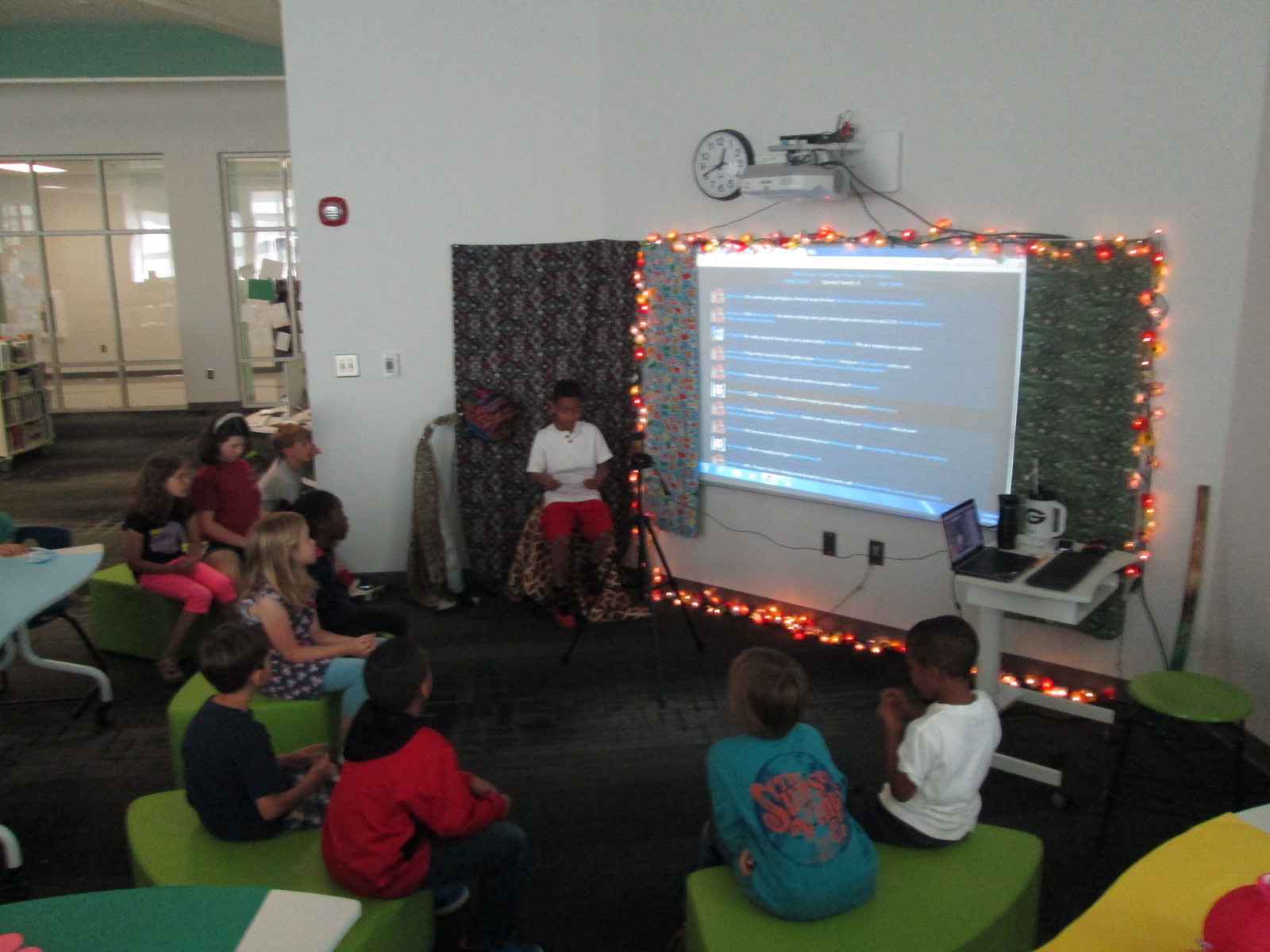
Poem In Pocket 2014 Day 1 (55)Each year during national poetry month, we host a live poetry cafe in the library.  This event has grown from 1 day to 2 days.  It is our way of celebrating National Poem in Your Pocket Day, even though it usually falls on a day other than the national celebration.  Across the 2 days, every student in the school comes to the library to read poetry into our open microphone.

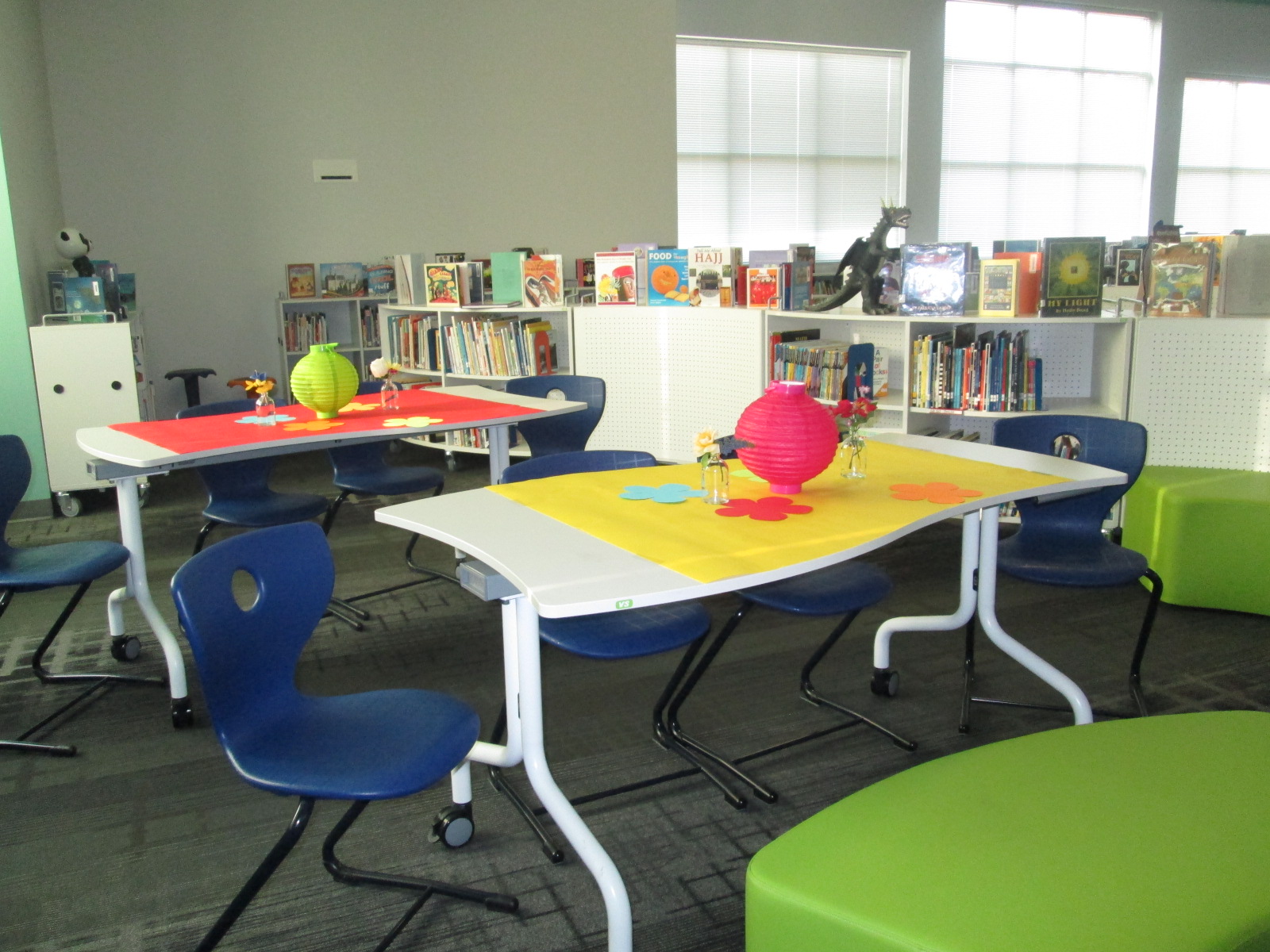
The tables are set with tablecloths, lanterns, flowers, and some paper flowers, too.

Poem In Pocket 2014 Day 1 (4) Poem In Pocket 2014 Day 1 (5) Poem In Pocket 2014 Day 1 (3)

Each year, we try to add something new.  This year, we added some cozy seating among the tables so that students could feel a bit closer to the student reading his or her poem.

Poem in Your Pocket Poetry Cafe   Smore

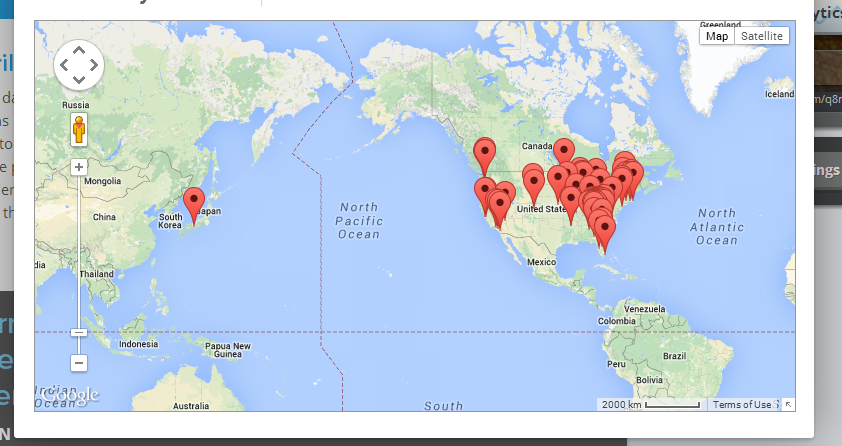
This year, we also used a Smore to promote the event and keep everything collected in one spot.  The Smore held our schedule, link for logging in to watch the poems, pictures from the event, and links to the videos once they were recorded.  I also loved that the analytics in the Smore allowed us to see all of the places that our event was being glanced at.

Poem in Your Pocket Poetry Cafe   Smore stats

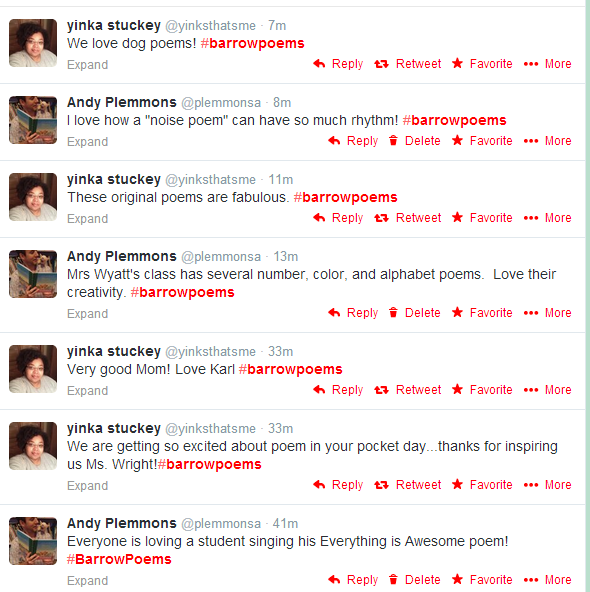
This year, we also added Twitter to the mix by generating our own hashtag #BarrowPoems

Twitter   Search    barrowpoems 2 barrowpoems tweets

I used Twitterfall to display the tweets coming through, and the students loved seeing each and every one.  Sometimes I would take a comment out of the chat and tweet it for visitors who didn’t use Twitter themselves.  It was so much fun for the students to know that some of our familiar friends from World Read Aloud Day were watching at times during the day.  Okle Miller (Florida) and Donna MacDonald (Vermont) tuned in to listen.  We also had a library from Rhode Island join us too.

Poem In Pocket 2014 Day 1 (1)

It was a lot to manage all by myself, but it was fun.  It is truly amazing to watch almost every student in the school get up in front of their peers and share poetry.  It was also inspiring to watch as students stood with their peers who were nervous about sharing.

I hope that you have a few moments to listen to some of the poetry sessions below and share them with friends, families, and students around the world.

Ramsey 3rd Grade

Choate Kindergarten

Em 1st Grade

Carney Kindergarten

Clarke PreK

Slongo 4th Grade

Spurgeon 3rd Grade

Yawn 2nd Grade 

Wright 2nd Grade

Wyatt 1st Grade

Cloutier/Jarvis 3rd Grade


We have another packed day tomorrow with poetry readings every 30 minutes from 8-2:30 EST.  Join us!


2014 Barrow Poem In Your Pocket Days are Coming April 3 & 4

The official National Poem In Your Pocket Day is April 24 this year.  Since this date is mixed into our state testing days, we celebrate a bit earlier at Barrow.  Over the past few years, Poem In Your Pocket Day has grown into a 2-day event in our library.  Every class comes to the library across 2 days.  I setup the library like a coffee shop or cafe with a poetic atmosphere:  tables with colorful tablecloths, lanterns, lighting, and a microphone.  Each student steps up to the microphone to share an original or a favorite poem and we celebrate each poem with lots of finger snaps.

Also each year, we have been broadcasting our poetry reading live via Adobe Connect.  This year we will continue this tradition.  I’ve created a Smore to show our schedule and to have access to the login link.

Poem in Your Pocket Poetry Cafe   Smore

To view our poetry readings, you simply visit the Adobe Connect link and sign in as a guest.  You will see students reading their poetry and also have a chat window to leave comments for them. To spread the love of Barrow poems to the world, we also encourage you to tweet about our poetry using the hashtag #BarrowPoems  We invite you to tune in to some or all of our readings.  The schedule is packed for 2 whole days.  Our students love knowing that they have a global audience listening and celebrating their poetry.  We will see you next week!

Thursday April 3, 2014

Time

Class

8:30

Ramsey

9:00

Choate

9:30

Em

10:00

Carney

10:30

Clarke

11:00

Slongo

11:30

12:00

Spurgeon

12:30

Yawn

1:00

Wright

1:30

Wyatt

2:00

Jarvis

Friday April 4, 2014

Time

Class

8:00

Boyle

8:30

Li

9:00

Olin

9:30

Watson

10:00

Freeman

10:30

Brink

11:00

Shealey

11:30

12:00

Ramseyer

12:30

Doneda

1:00

Selleck

1:30

Seeling

2:00

Stuckey


Banding Together with Rainbow Loom, Makerbot, and Libraries

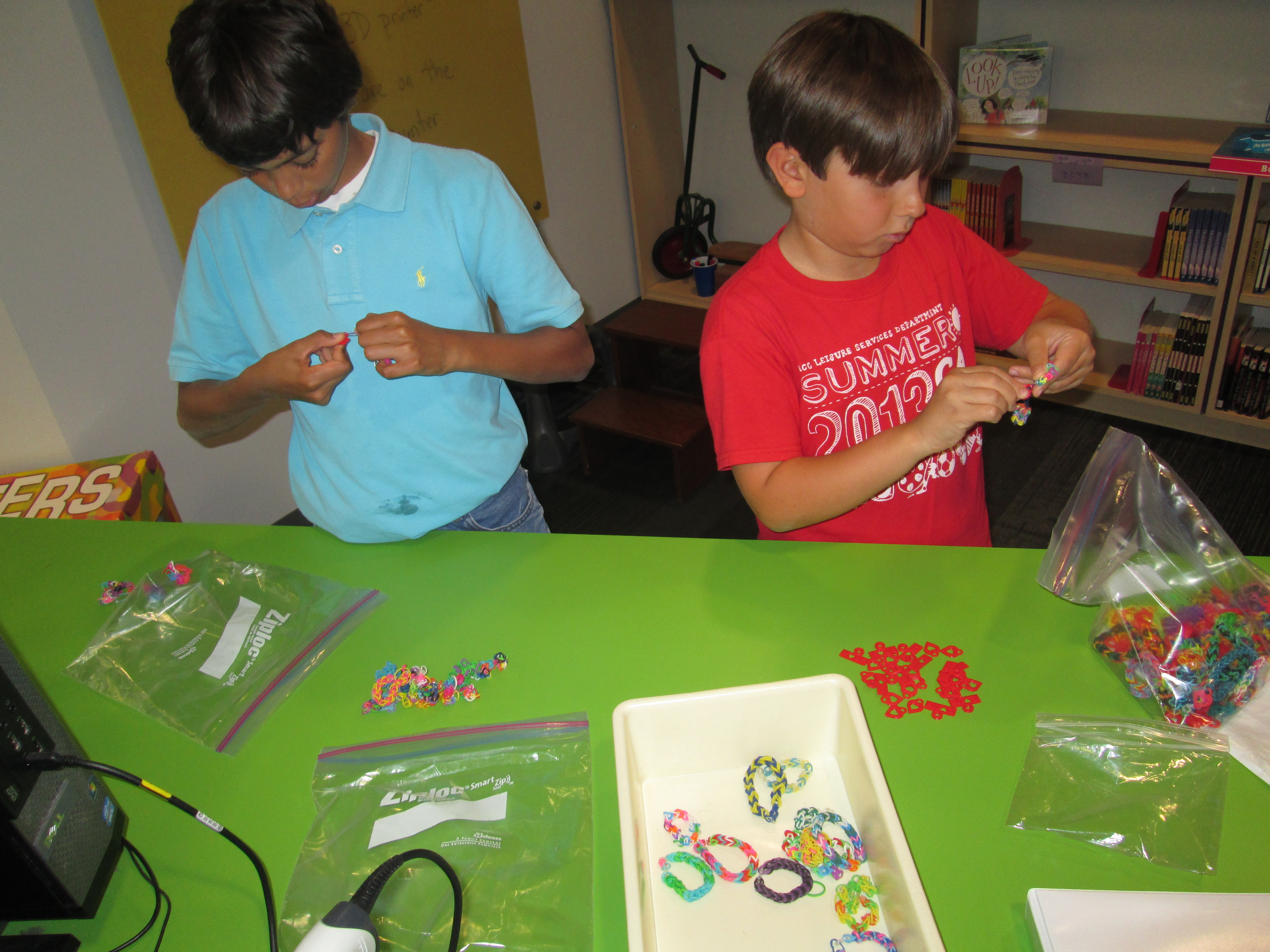
Back at the beginning of the new year, my friend Shannon Miller in Van Meter, IA told me she was planning to do a research project that involved Rainbow Loom bracelets.  When she started implementing the project in her library, it organically grew into something much larger.  Through connections with In This Together Media , the project developed into “Banding Together”.  You can read the full details of the project here:  https://www.smore.com/n65m

Here are the basics:

  • Students at Van Meter, Barrow, and multiple schools around the country are making Rainbow Loom bracelets.
  • The bracelets will be sent to a school in Mangalore, India
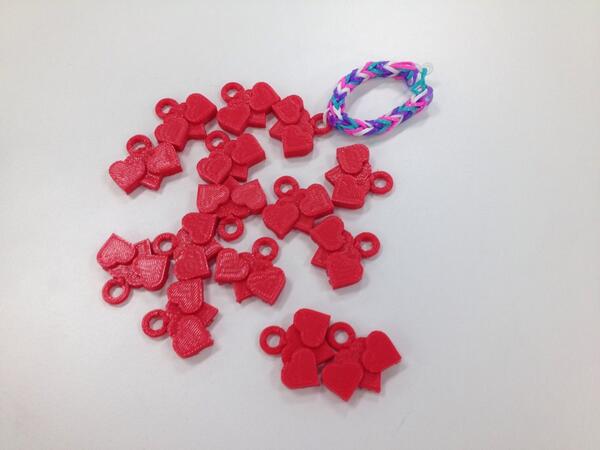
  • Along with the bracelets, we will send poetry written by students, 3D printed charms designed by students, and a disposable camera to take pictures to send back

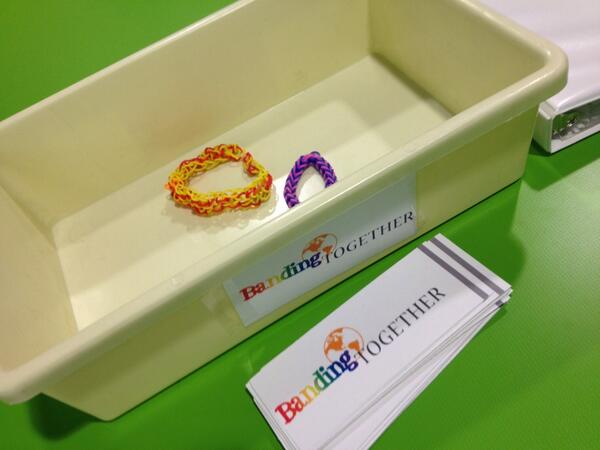
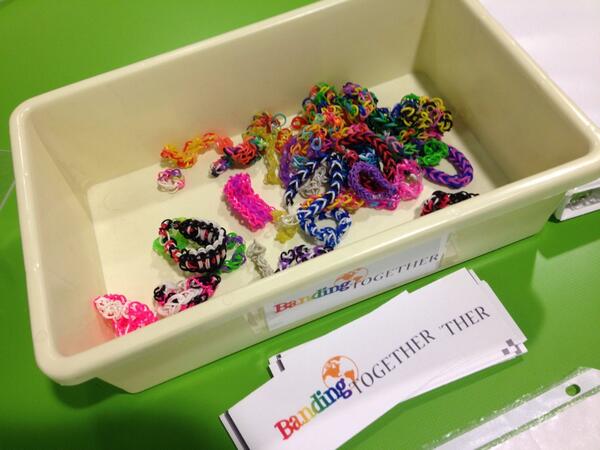
I announced the project this week on our morning BTV.  I placed a collection box for Rainbow Loom bracelets on our circulation island, and by the end of the day, a few bracelets had already been donated.  Students asked me about the project all day.  By the next day, several kids were bringing bracelets in.  I was so surprised by the generosity and enthusiasm from the students to send their bracelets across the miles.

First Day

Second Day


Next, we started designing charms for 3D printing.  I had already experimented some on my own, and I sent Shannon Miller a file that I made so that her students could print it and learn from the file too.  Her students took my file and modified it or examined it in order to design their own.

Shannon’s students in Iowa being inspired by the file I sent them

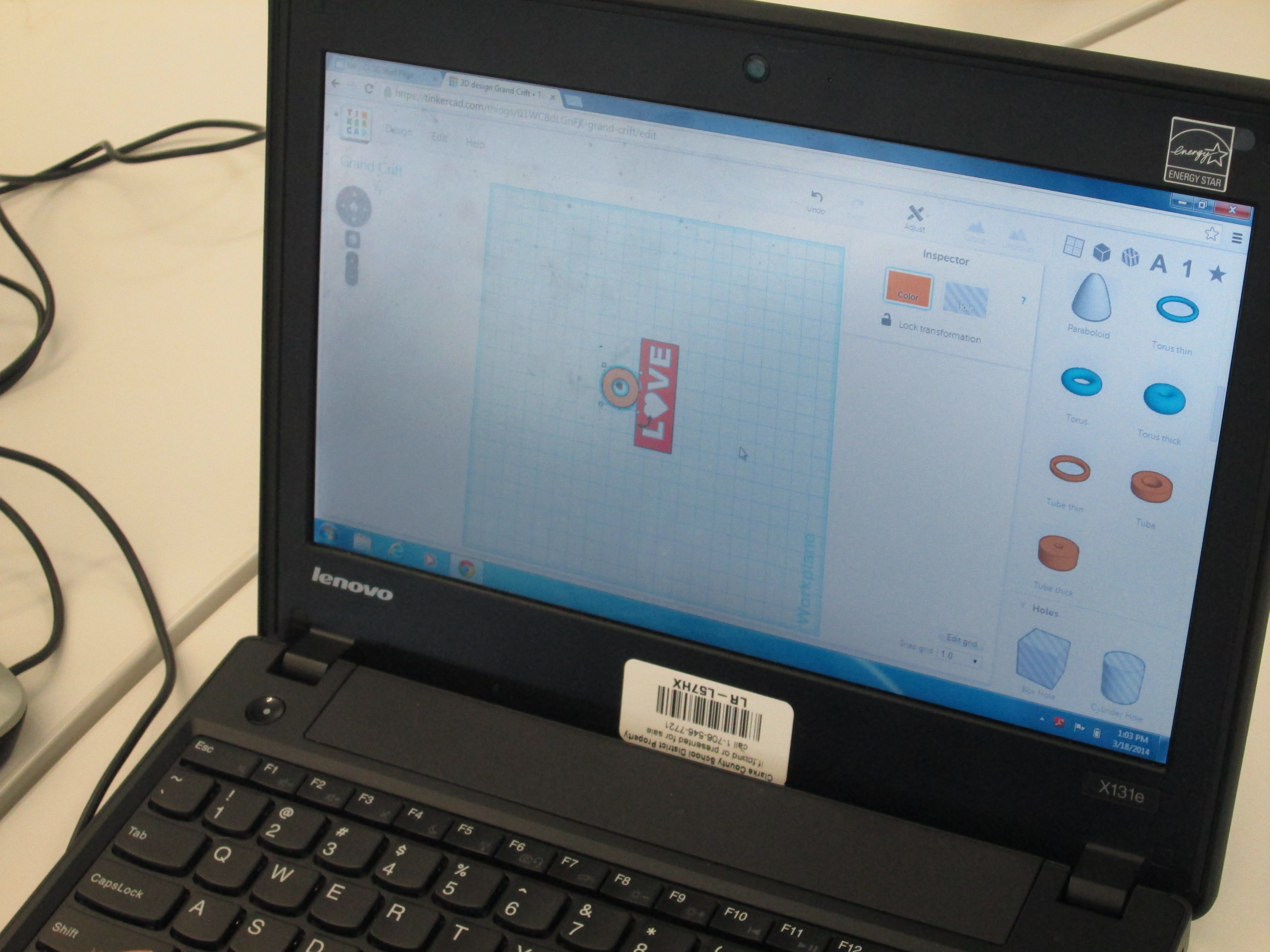
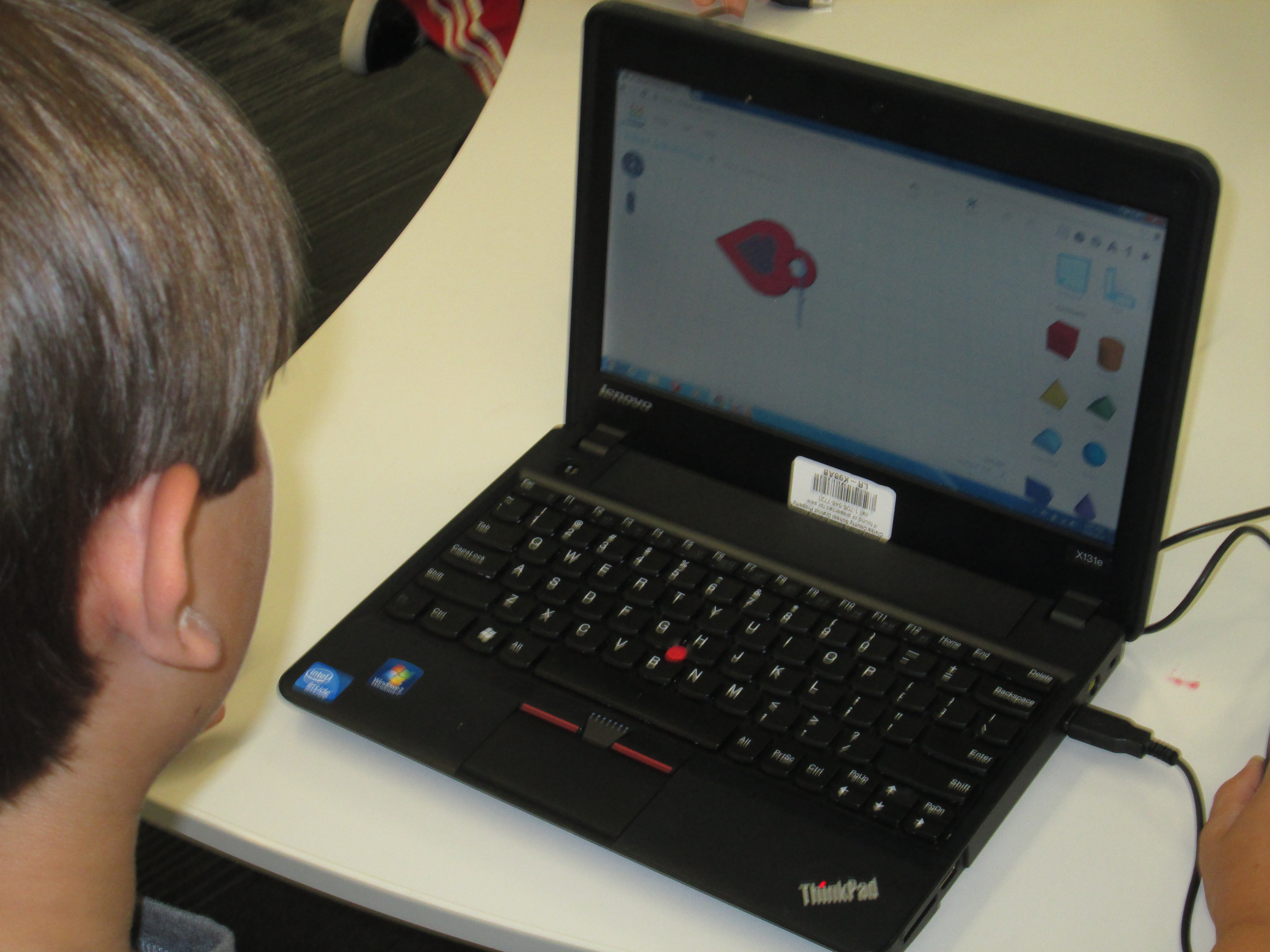
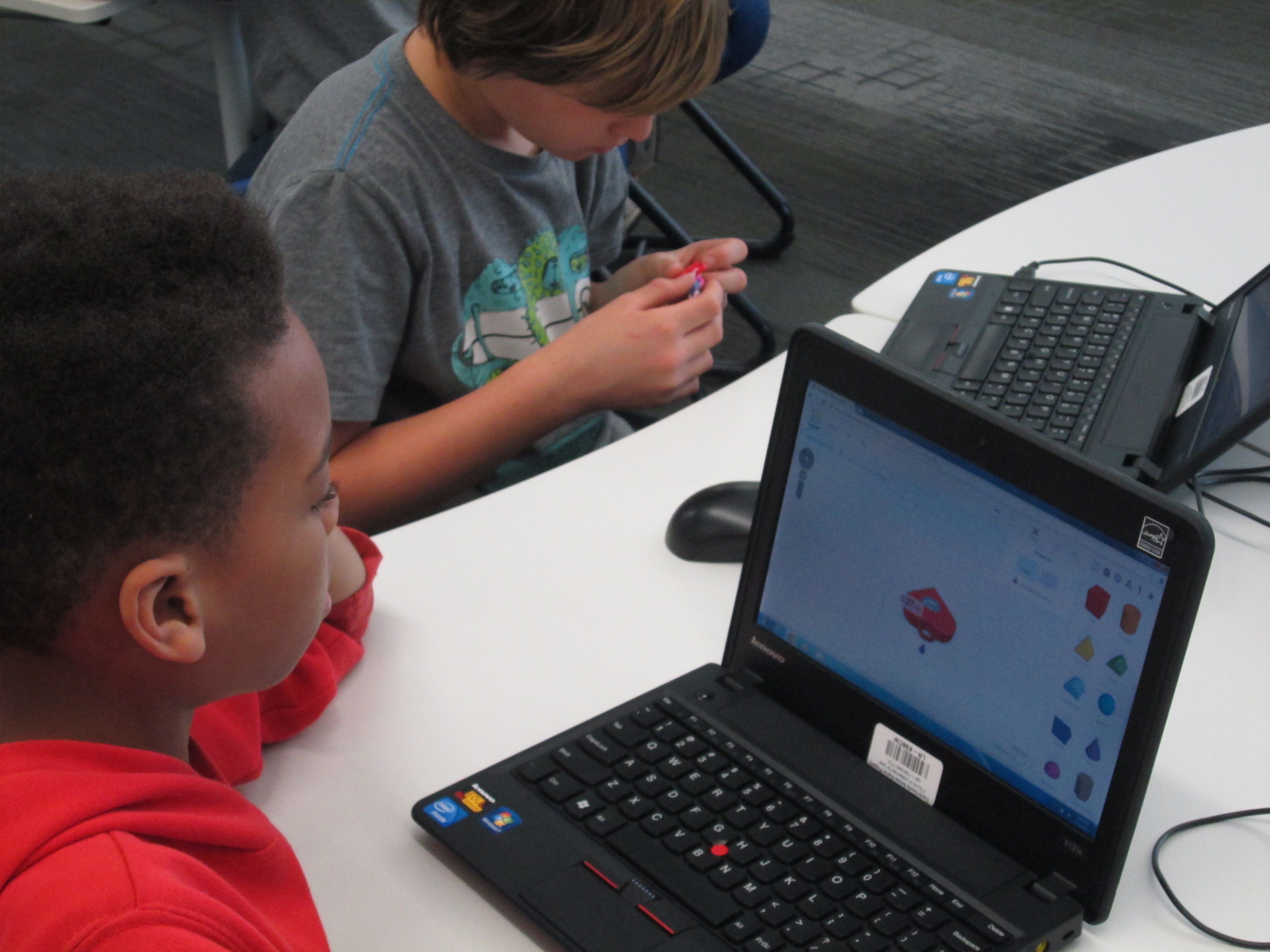
I have a group of 5th graders who have been exploring different technology and how they might support other classes trying to use that technology.  They have already been exploring Tinkercad to design objects for 3D printing, so I knew they would catch on fast to the idea of making charms.

charm design (2) charm design (3) charm design (4)

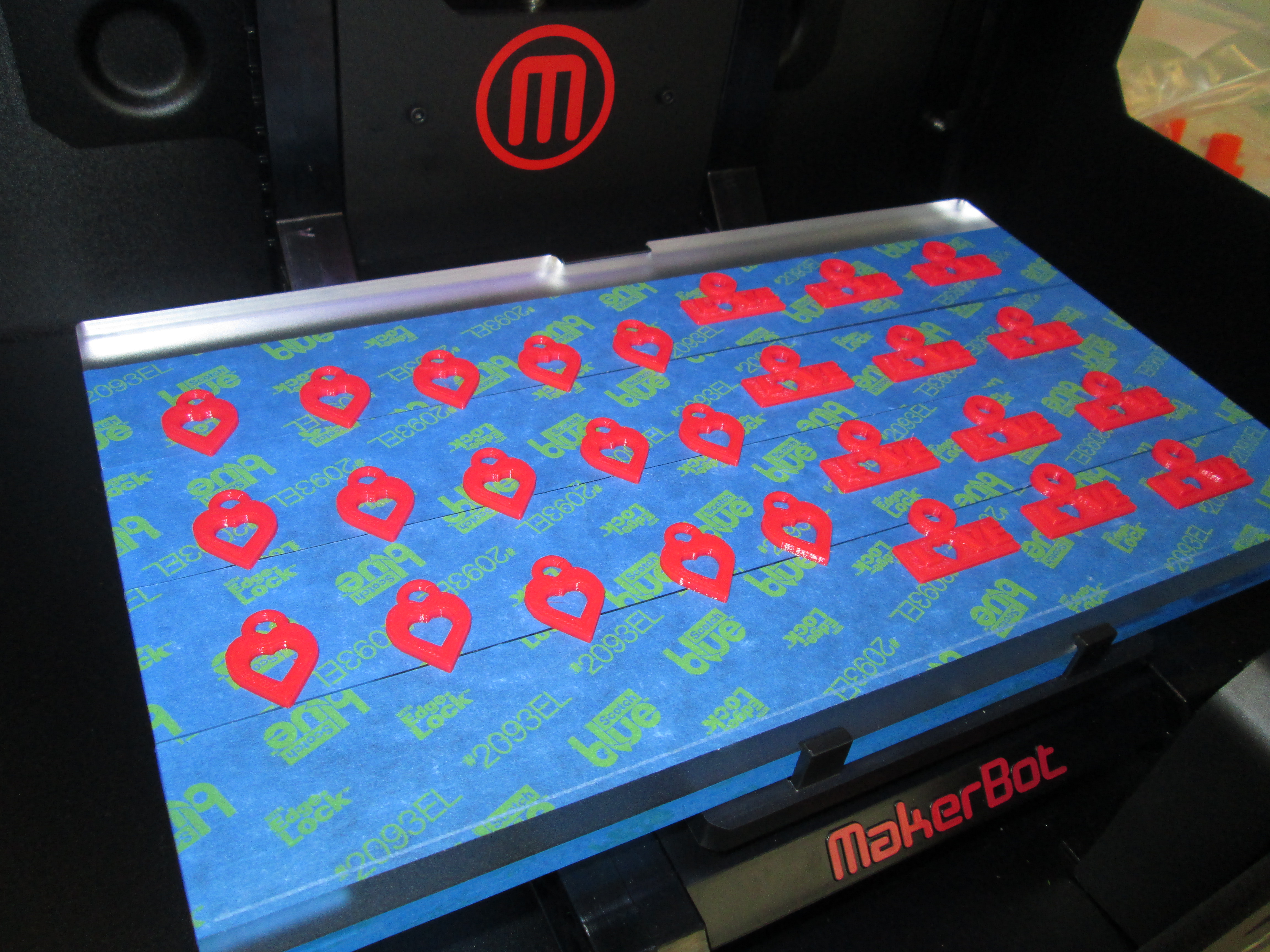
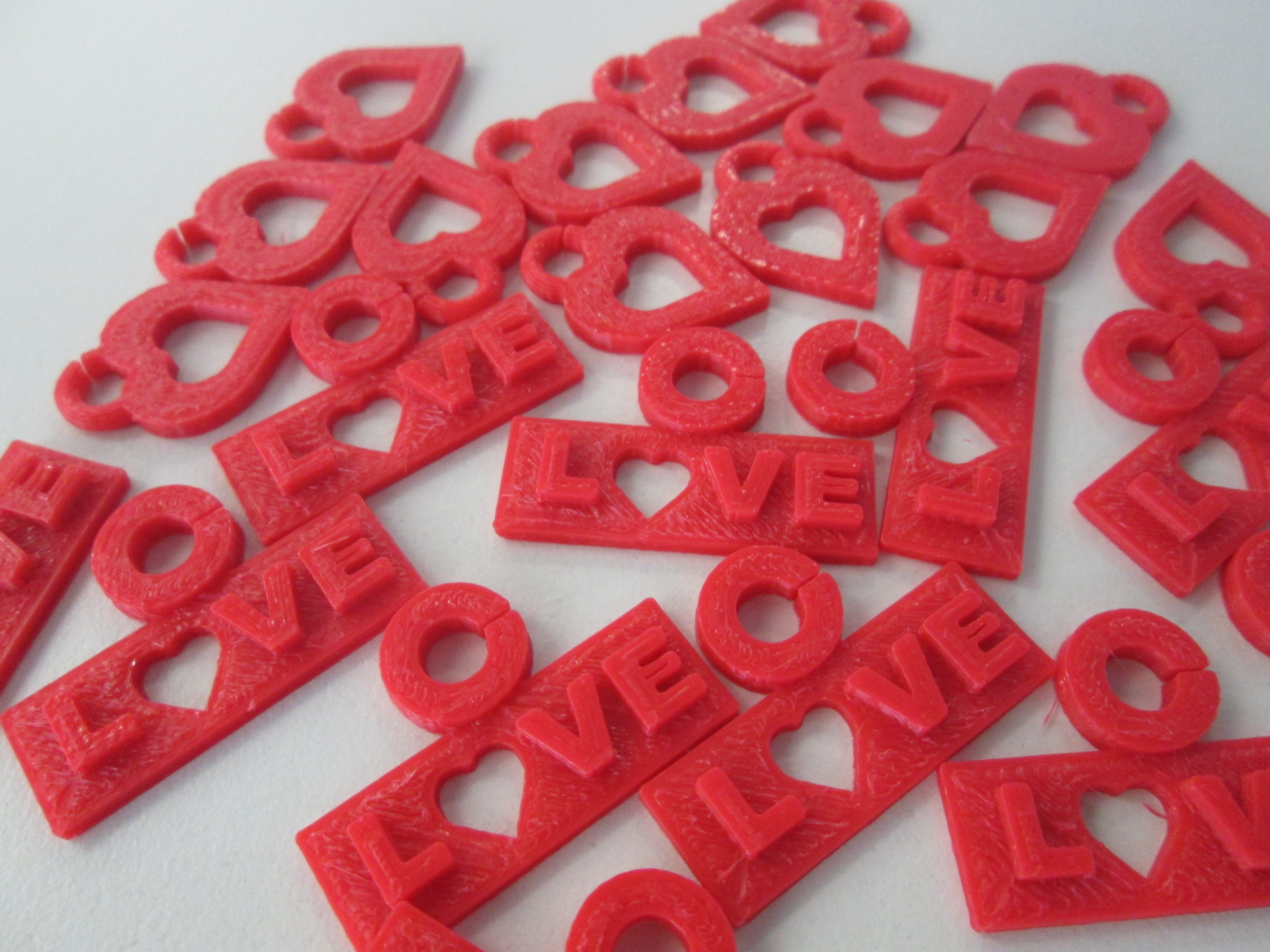
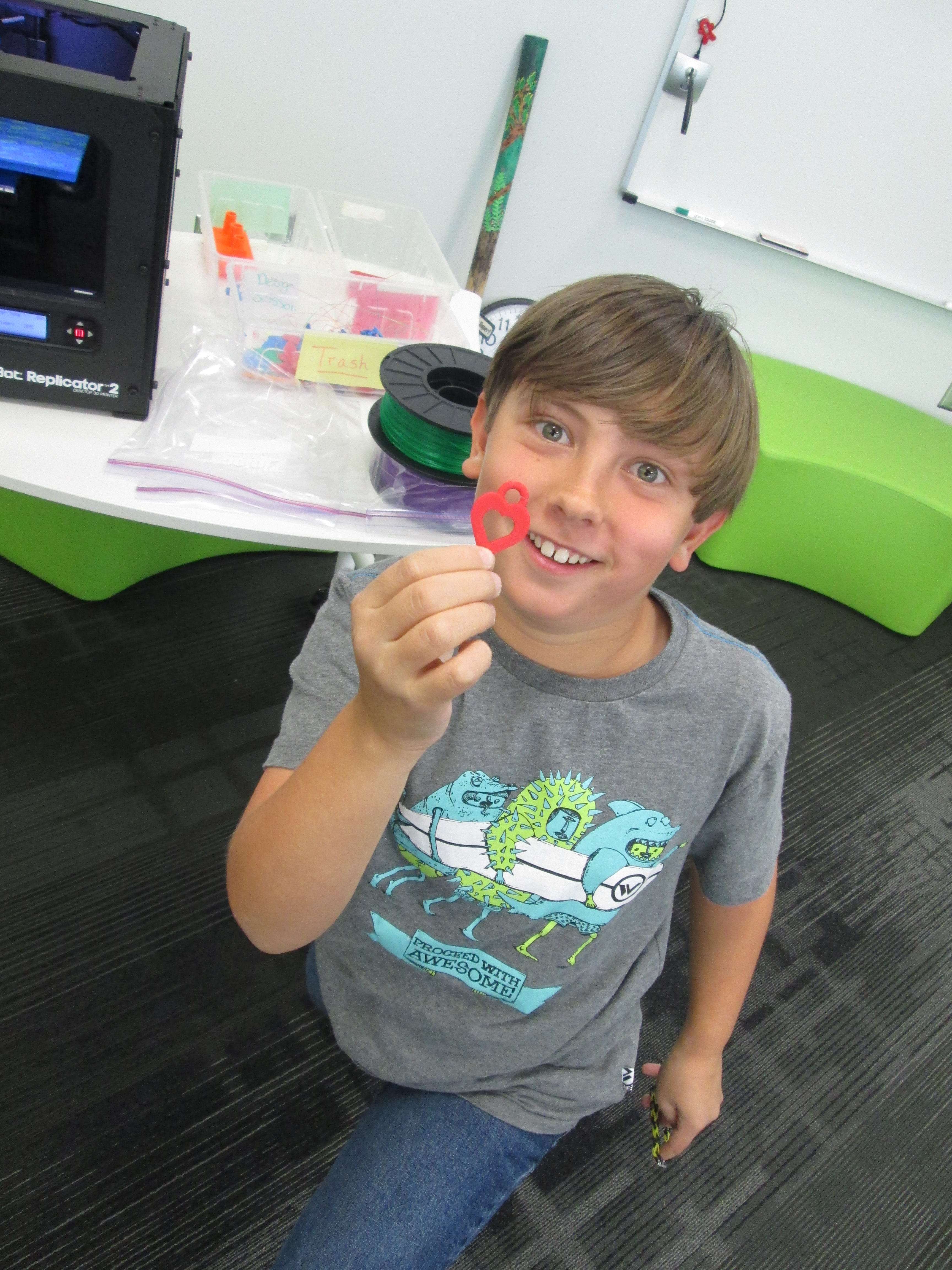
Since the Banding Together project has a lot to do with spreading the joy in our hearts, we have focused our charm design on that theme.  We decided that each charm should have some kind of heart.  Dmitri designed a heart with a heart hole in the center.  Walker designed a charm with the word “love”.  Instead of an “o” he used a heart.  I designed a triple heart to symbolize India and the US uniting together with our shared joy.  We took these first 3 designs and made sure that they printed correctly.  Once we saw how they worked, we started mass production.

charm design (5) charm design (7)

As charms were ready, parent volunteers helped put them on bracelets.  Dmitri and Walker also became quality control and made sure that all of the Rainbow Loom bracelets we were sending had joy-filled quality.  They continued attaching charms.

quality

We are waiting on a few more designs to be completed and we will ship our first batch of bracelets and charms.

Next week, we are adding a new layer onto the project with poetry, so look for an update soon about this exciting development that our 2nd graders will be involved in.

I love how this is a project that students in all grades can be a part of whether they made bracelets, wrote poetry, designed charms, or helped with packaging and quality.  We truly are banding together in more ways than one.

charm design (1)


World Read Aloud Day 2014 (Day 5): Final Thoughts

Our final day of Read Across America and World Read Aloud Day was once again filled with special memories.

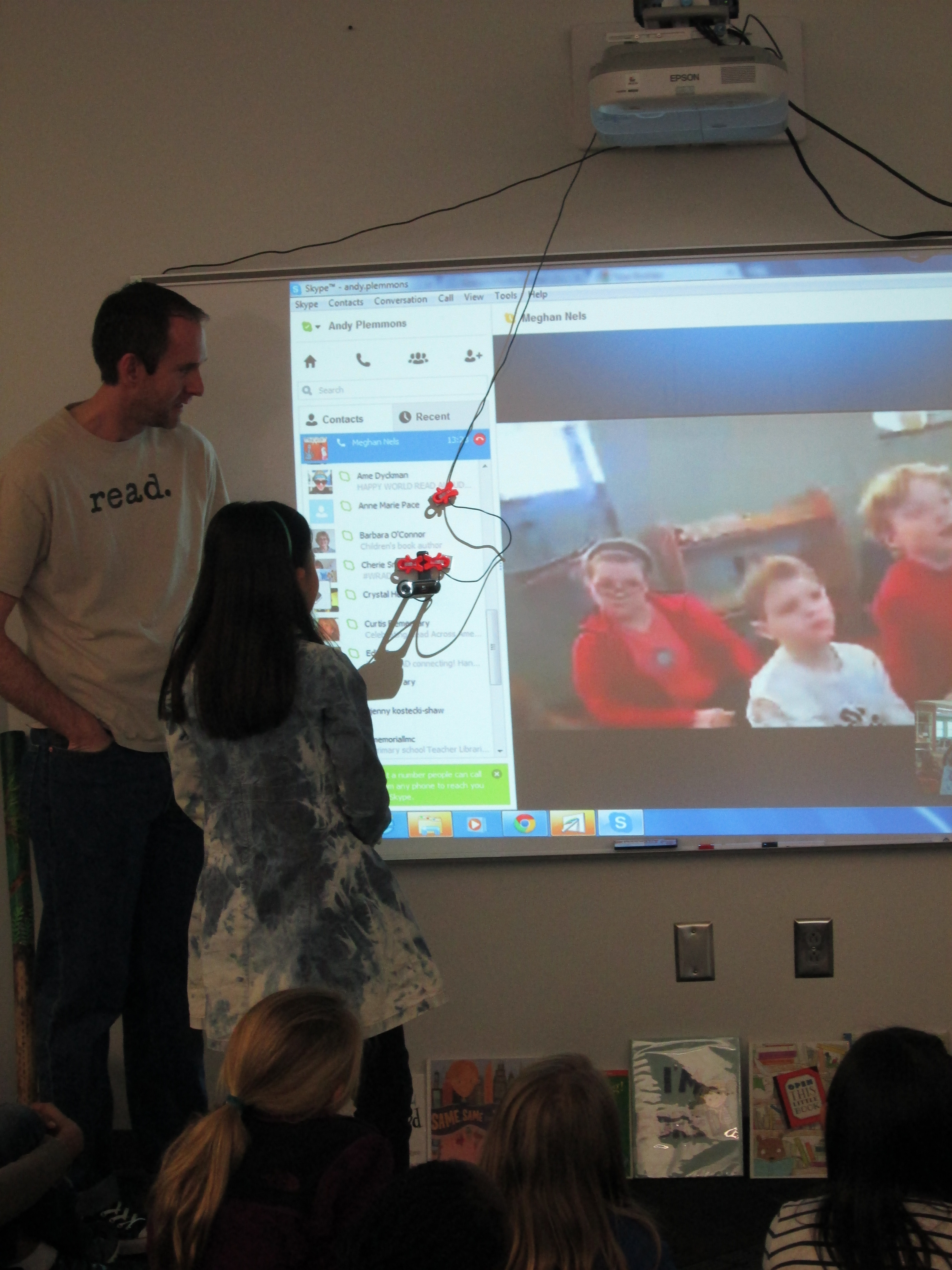
We read Crankee Doodle with Meghan Nels and her students.

Meghan Nels (19) Meghan Nels (4)

Matthew Winner and I got creative about how to read Open This Little Book with our students.

Matthew Winner (6) Matthew Winner (2)

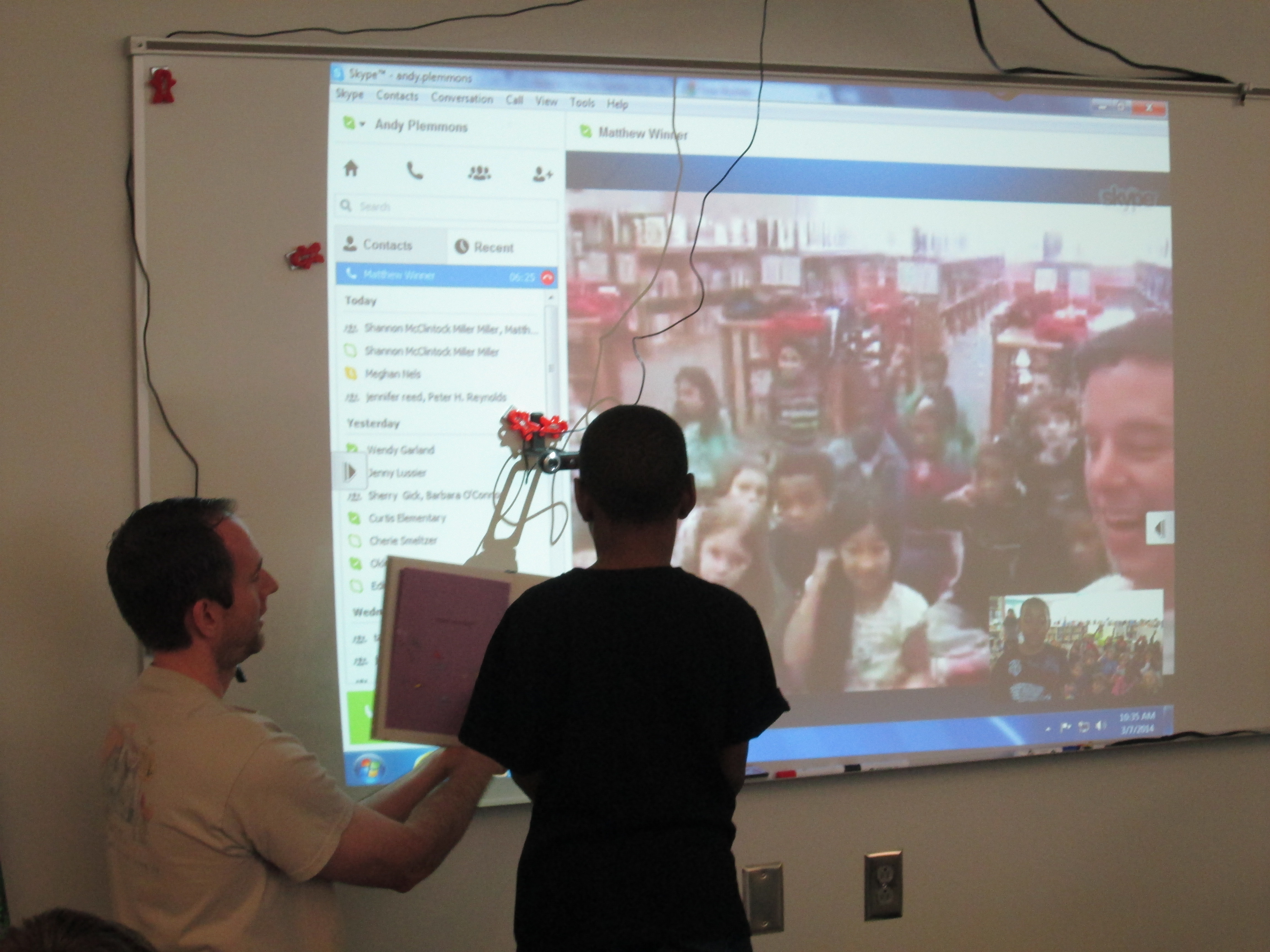
Cathy Potter and I had fun reading I’m Bored and letting our students show the many ways you can say “boring”.

Cathy Potter (3) Cathy Potter (2)

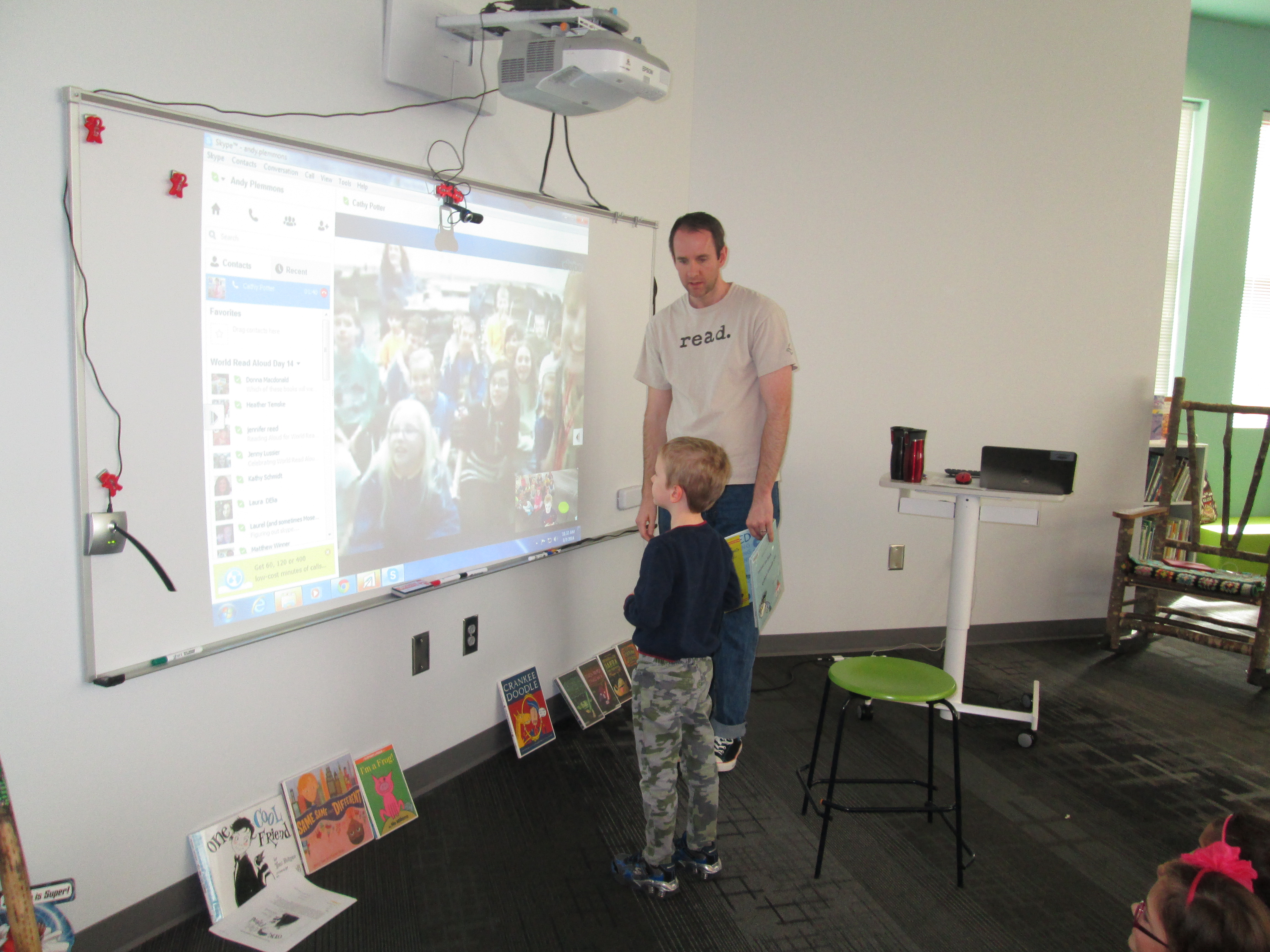
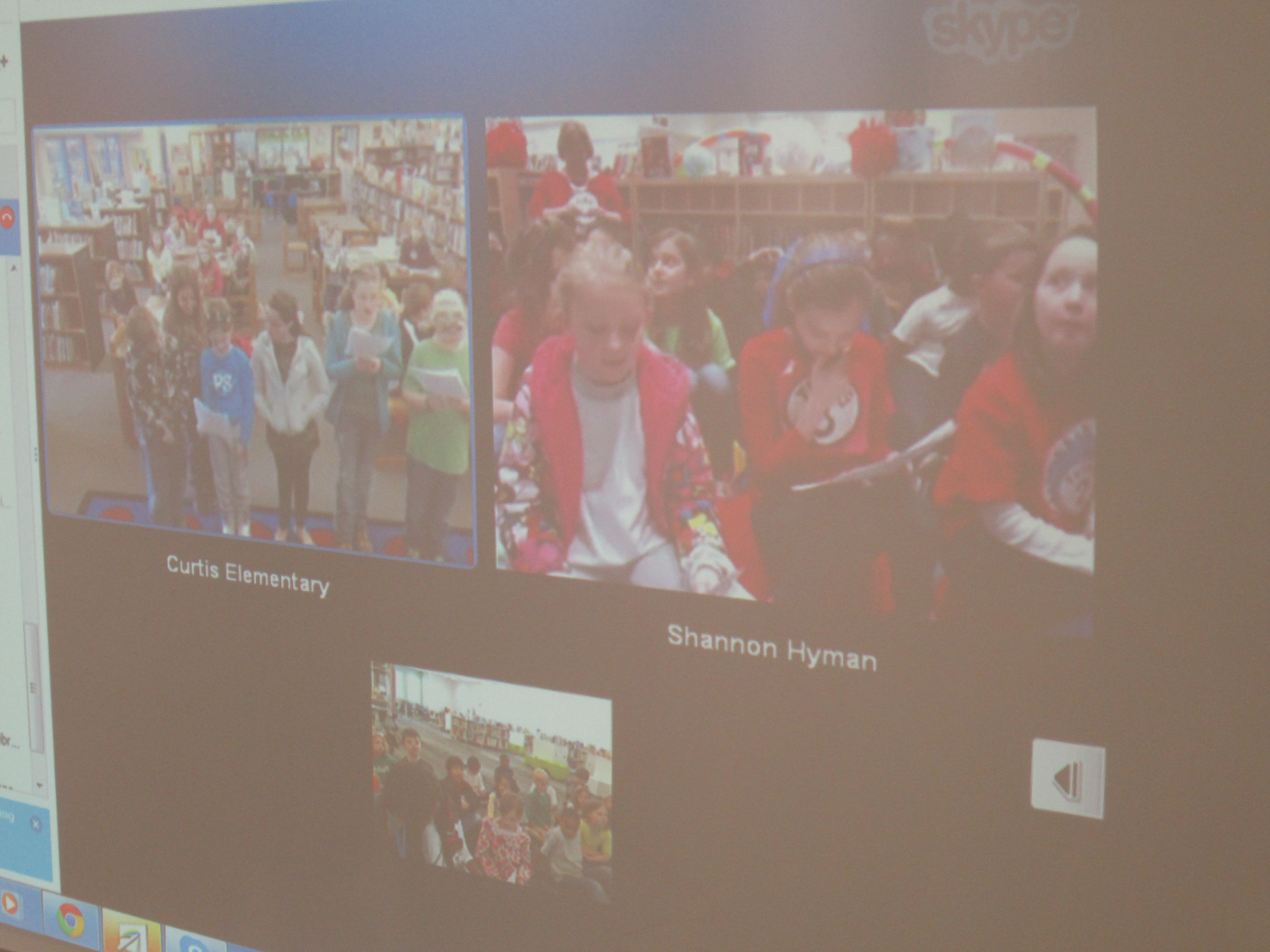
Shawna Ford, Shannon Hyman, and I all found students to read parts of a reader’s theater of One Cool Friend.  We loved hearing voices in 3 states reading the story.

https://www.youtube.com/watch?v=obgJE25jgy0

Shawna & Shannon (5) Shawna & Shannon (1)

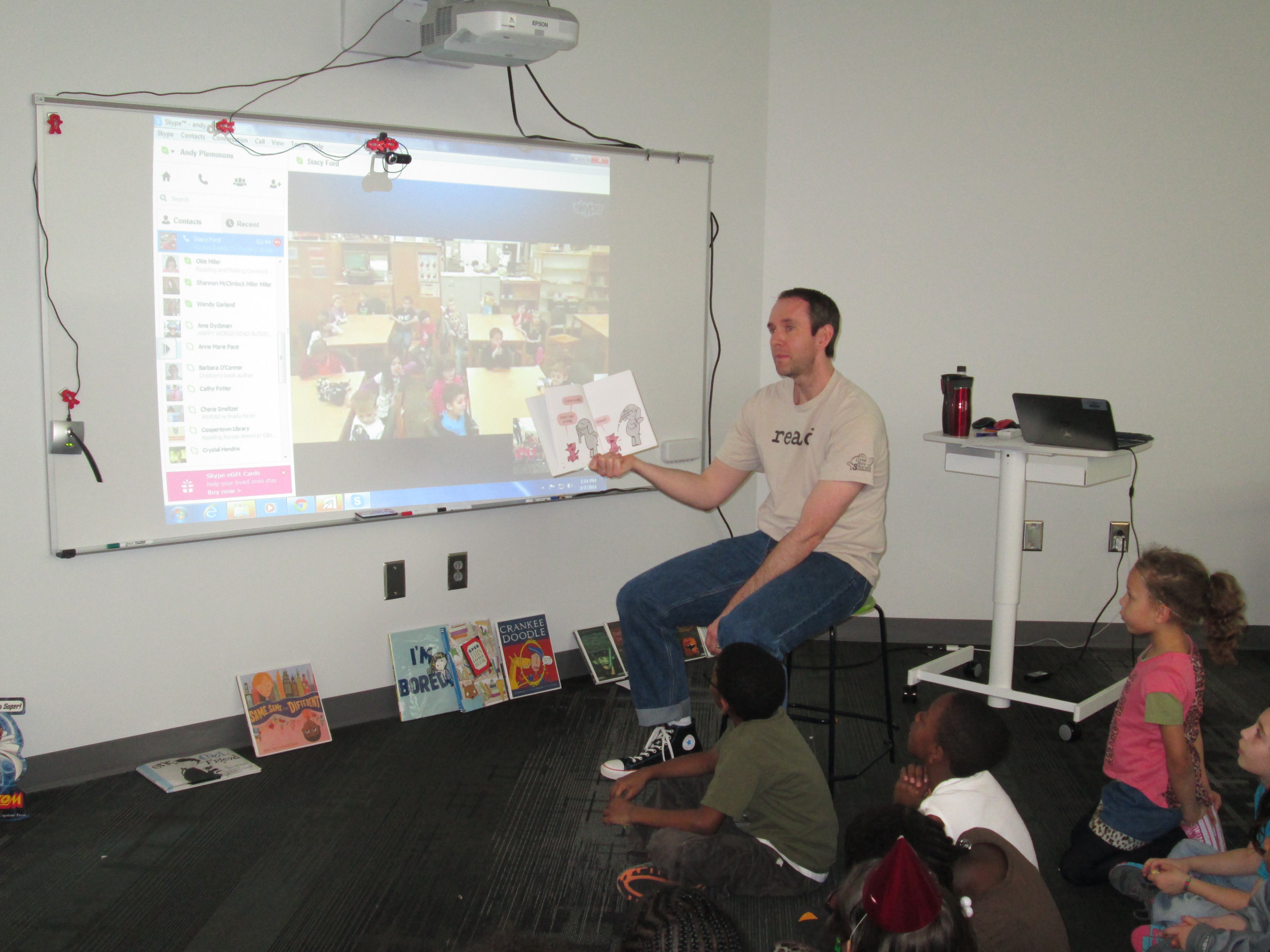
Stacy Ford and I had a great time being Elephant and Piggie with our students as we read I’m a Frog.

Stacy Ford (5)

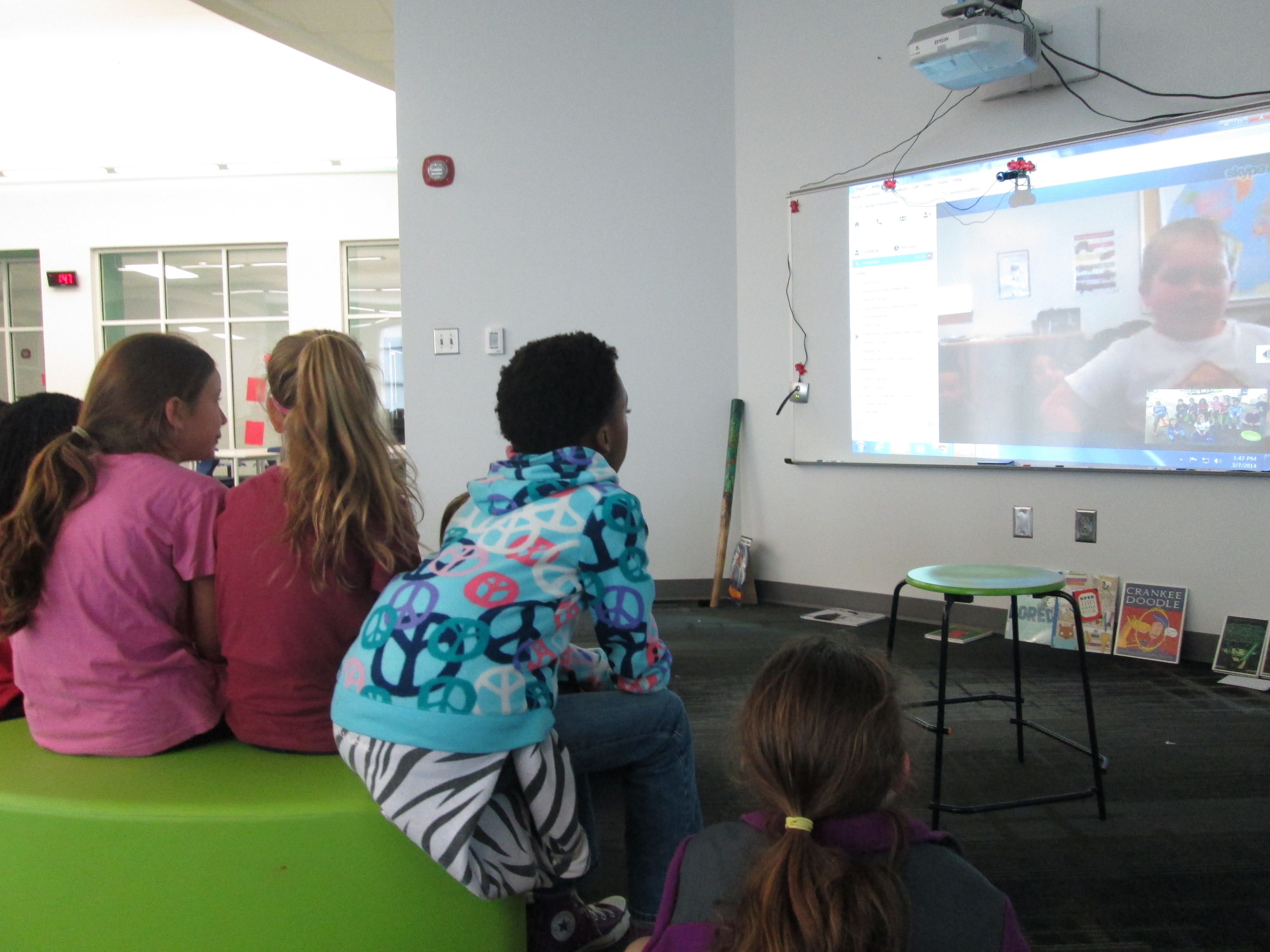
Randie Groden and I had some impromptu skyping as I had a class cancel!  Several 5th graders who were checking out books gathered around the projection area to meet her first graders and read Same, Same but Different.  Sometimes the unexpected is fun!

Randie Groden (4) Randie Groden (2) Randie Groden (1)

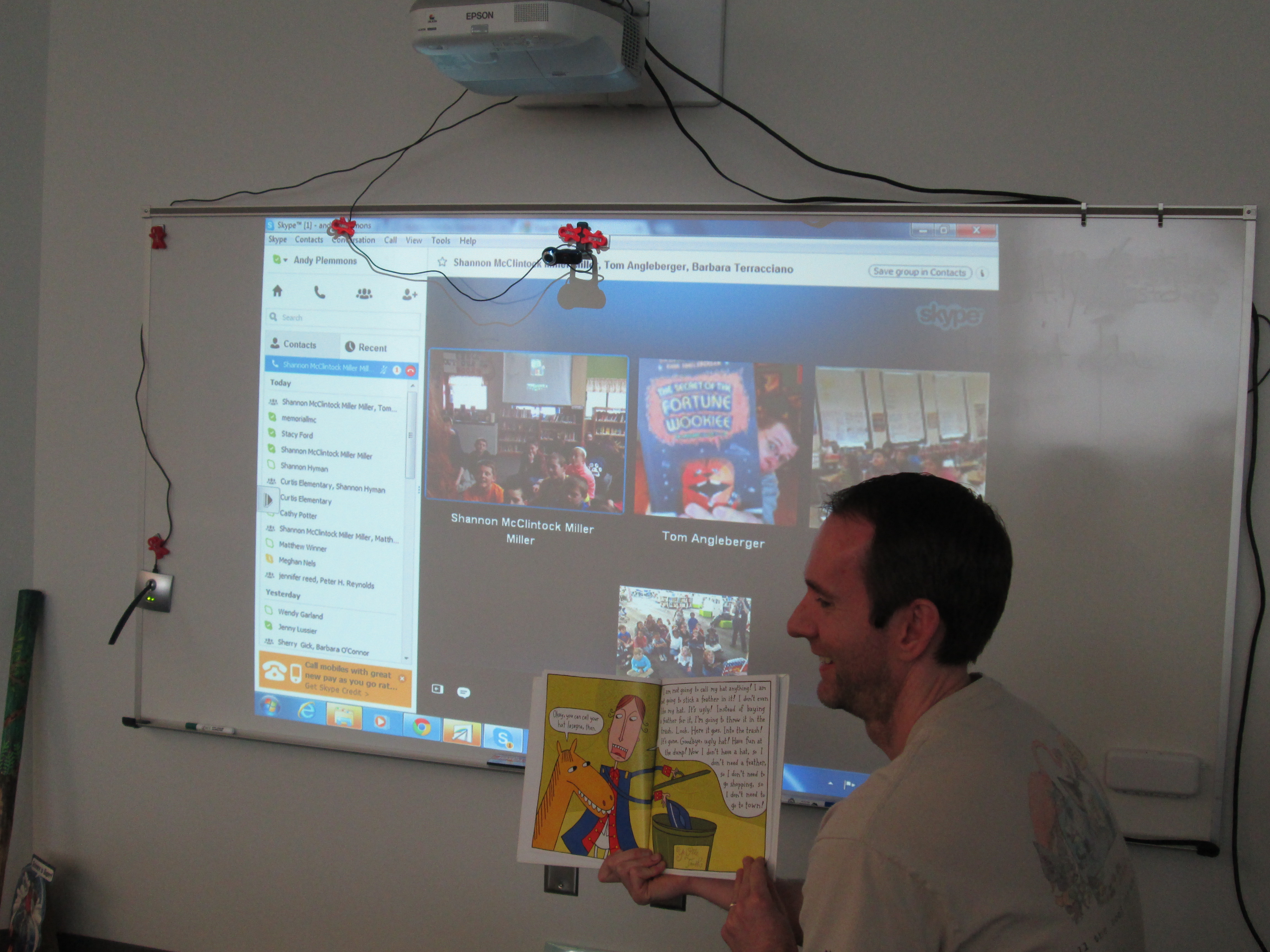
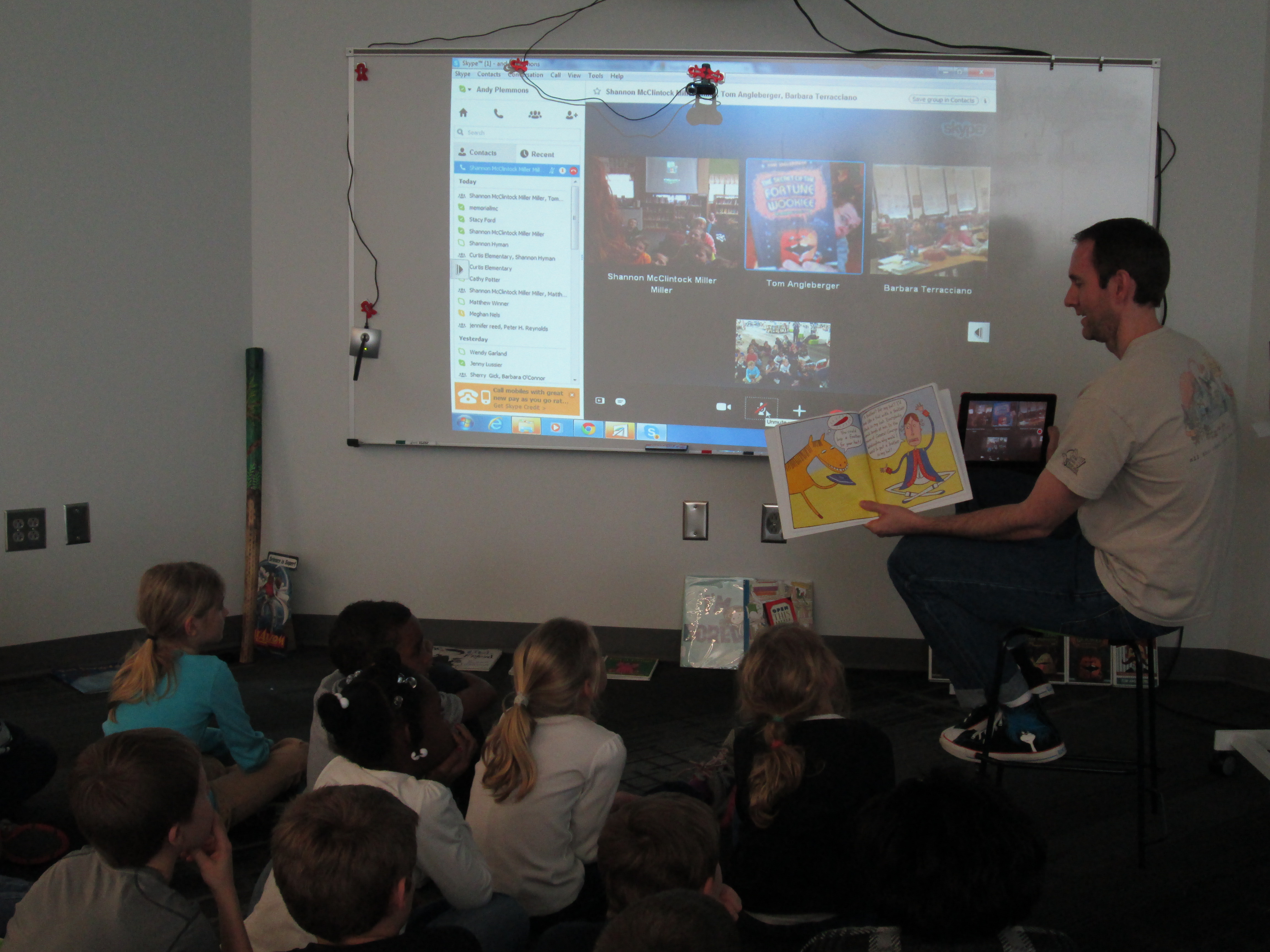
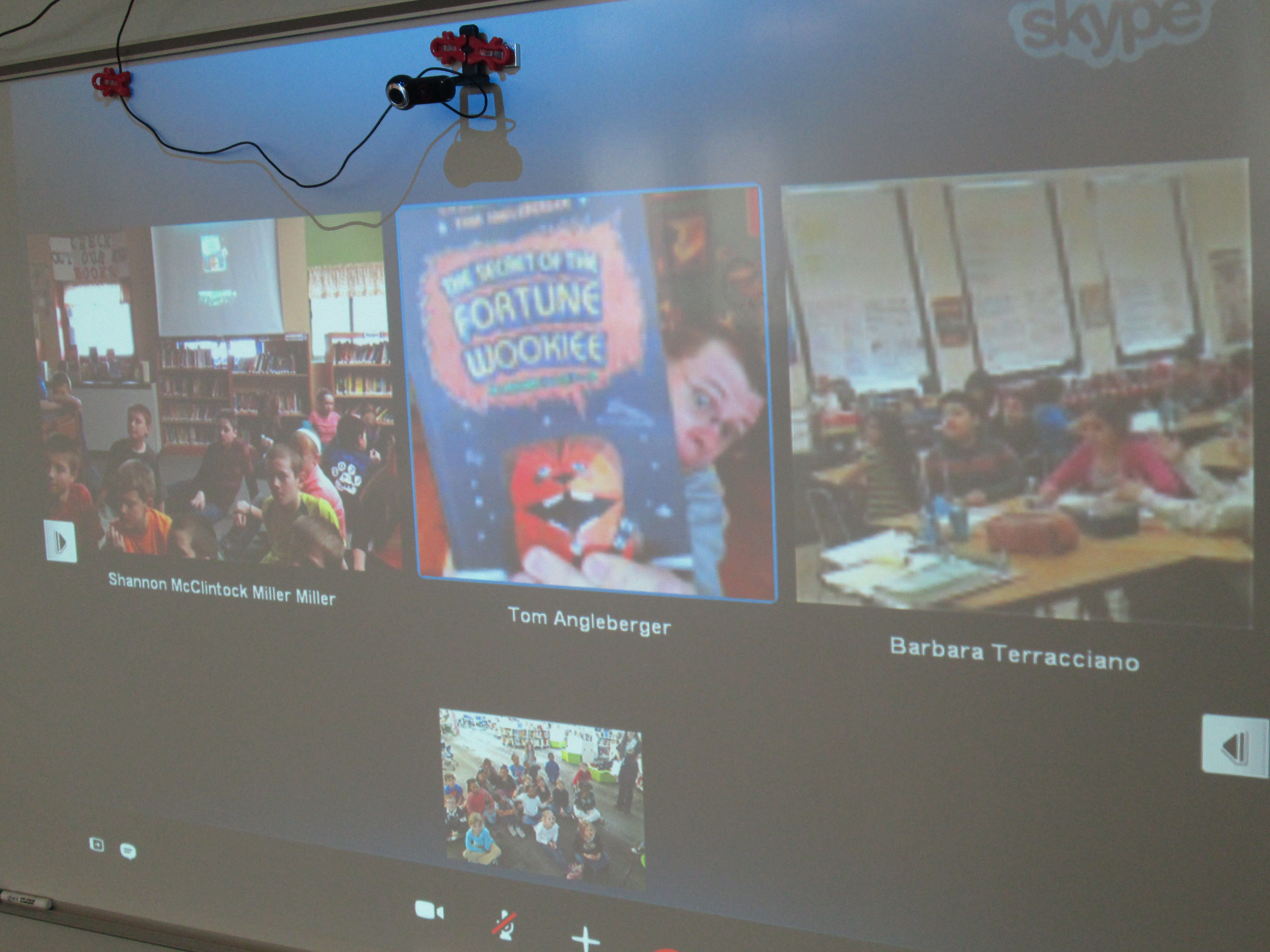
We ended our WRAD week with a connections between Shannon Miller and Barbara Terracciano along with author, Tom Angleberger.  He read aloud the part of Crankee in Crankee Doodle, and it was the perfect ending to our week.

https://www.youtube.com/watch?v=8THyuqTDj9o

Tom Angelberger (7) Tom Angelberger (2) Tom Angelberger (1)

There is not a day that goes by that I don’t read aloud.  Every day is read aloud day.

When I think of World Read Aloud Day, I think of connections.

Kate DiCamillo, National Ambassador for Young People’s Literature and 2-time Newbery winner, says “Stories Connect Us”.  In Extra Yarn by Mac Barnett and illustrated by Jon Klassen, all of the characters are connected to one another through strands of yarn as the main character knits sweaters for everything and everyone in sight.  In Same, Same but Different by Jenny Sue Kostecki-Shaw, we learn that we really are all connected in the world by common strands of life even if those strands might look a bit different based on our cultures, locations, and beliefs.
World Read Aloud Day is about all of these things.  Even though we should read aloud every day, World Read Aloud Day raises our awareness of the importance of reading aloud.  It reminds us that when we read aloud, we connect.  When we read aloud, we expand our world.  When we read aloud, we learn that the world really isn’t as big as it seems.  We are all united through power of story and spoken word.

This year, our planning for World Read Aloud Day/Week began in December.  My wonderful friend and collaborator, Shannon Miller, created a Google Doc for educators around the world to use as a space to share their schedules and ideas.  The two of us shared the doc through blog posts, twitter, facebook, and conversations.  Over 3 months later, the doc is filled with conversations that each tell a story of a connection between multiple groups of students.  When you look at this single document, you know that students, teachers, teacher librarians, and families around the world are being impacted by powerful experiences of hearing stories read aloud, participating in conversations about books, and building connections to new friends around the world.

Our school:

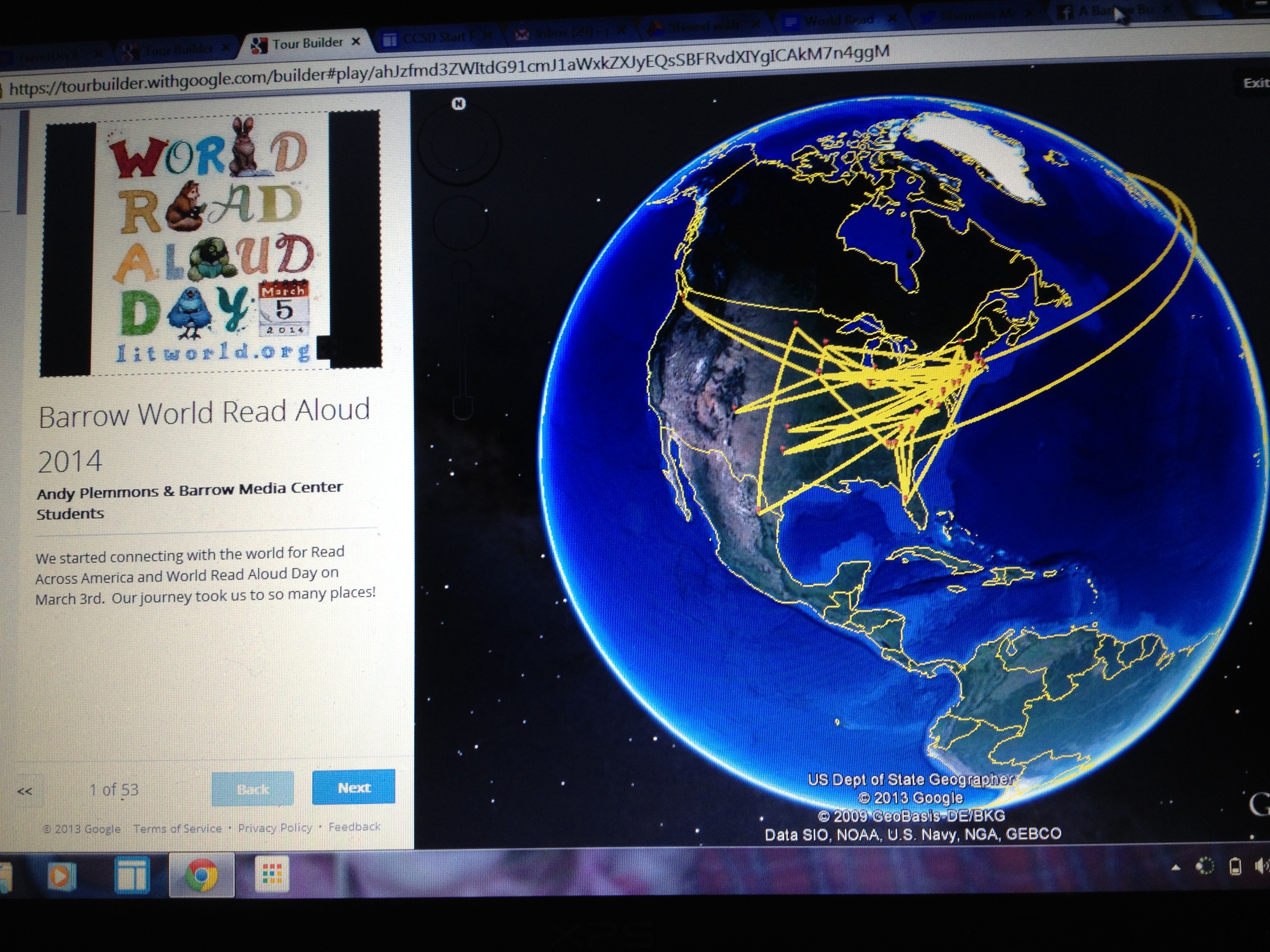
  • engaged in 36 skype sessions
  • made 50 connections in these sessions
  • met new friends in 22 states and 2 other countries

Along the way, we built a Google Earth Tour using Google’s tour builder.  This tool allowed us to quickly add pins to a world map, add photographs and videos, and write a summary of each skype session and what we loved and learned.  I love how at the end of the week, we instantly have documentation that allows us to remember, reflect, and celebrate the fun that we have had during this week.

Google Tour

View our Google Tour Here!

Today, I received several thank you letters from students.  Organizing this many Skype sessions is exhausting.  I won’t lie about that, but the rewards that come from the hard work make up for all of the time I spent organizing this week.  Receiving these letters reminded me why I advocate for World Read Aloud Day and why I believe in the power of connecting with one another through story.  Thank you Litworld for creating such an amazing world-wide event.

Kicking Off Our #Geniuscon Project with Peter Reynolds

IMG_1849A few months ago, Matthew Winner and Sherry Gick, superhero librarians, put out a call for schools to join them in a project called #Geniuscon.

In the words of Matthew and Sherry:

“Kids are genius. They don’t perceive limits or boundaries in the ways that hinder most adults. Their solutions to life’s problems can seem convoluted, indirect, and unnecessary, but often the ideas of kids can be the most profound.”

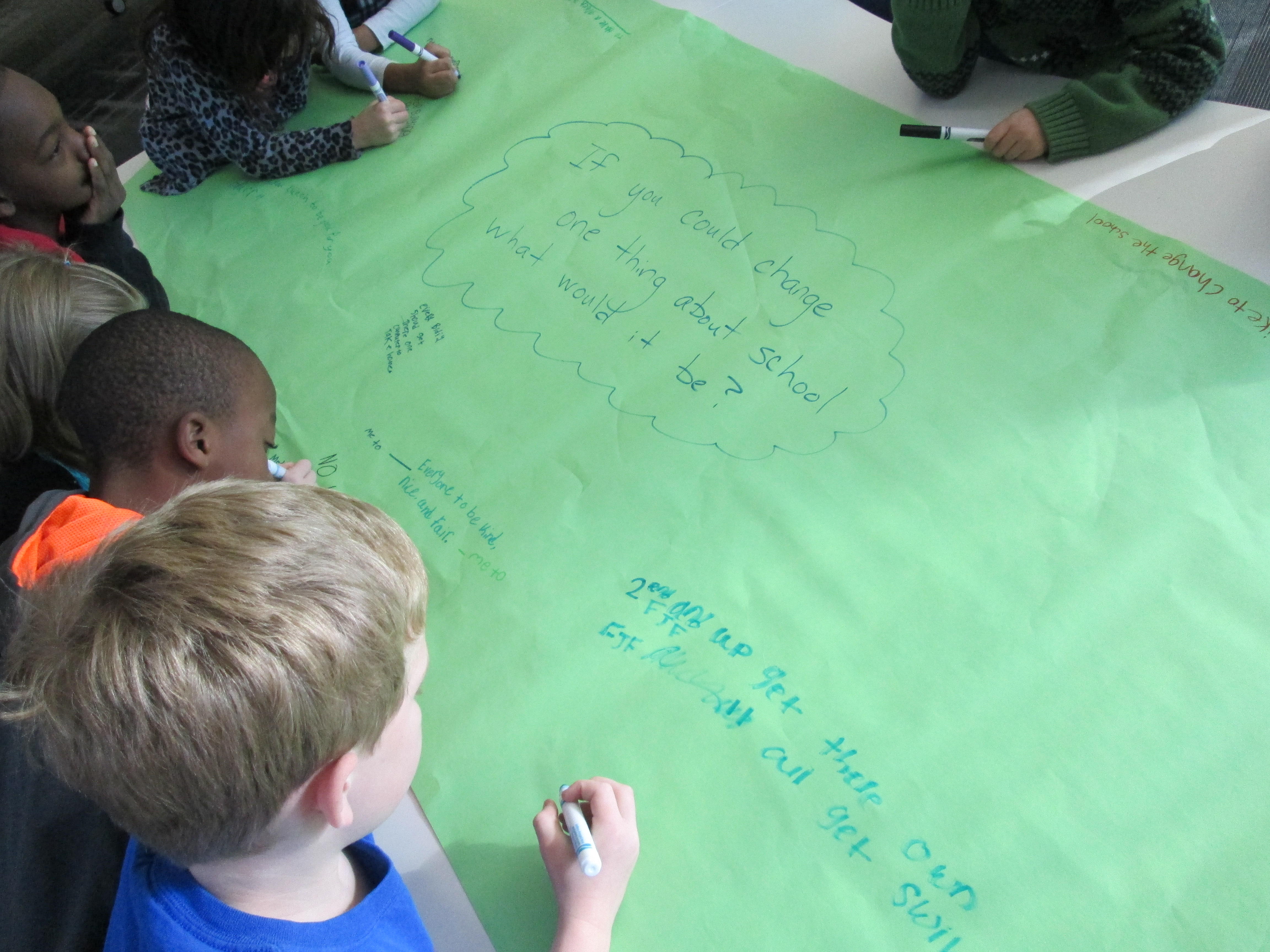
#Geniuscon gives kids the freedom to explore one question:  If you could change one thing about your school, what would you do?

Mrs. Ramseyer’s 2nd grade classroom has teamed up with me in the library to explore this question.  Mrs. Ramseyer and I sat down and mapped out some times, topics, and standards on the media center calendar.  We wanted time for:  brainstorming, question development, research, product development, and sharing.  Our timeline spans from now until May.  We devoted most of our time to research and product development.

I also met with Gretchen Thomas, who teaches at the University of Georgia.  She has several of her students who are interested in partnering with us throughout this project.  Their main role will be to facilitate students during the research process to help them think of all of the possibilities of where to find the answers to their burning questions.  They aren’t there to give answers but rather to build bridges over barriers that students might face.

IMG_1849

Today was our official kickoff.  To start, we watched this video:

The kids immediately began yelling “Why don’t you just walk up the stairs?”  It was hilarious.  The whole point of watching the video was to bring up the idea that we often hold the solutions to our problems if we take the time to look inside ourselves rather than immediately yelling for help.  We spent some time talking about the word “genius” and how we all have genius ideas within us.

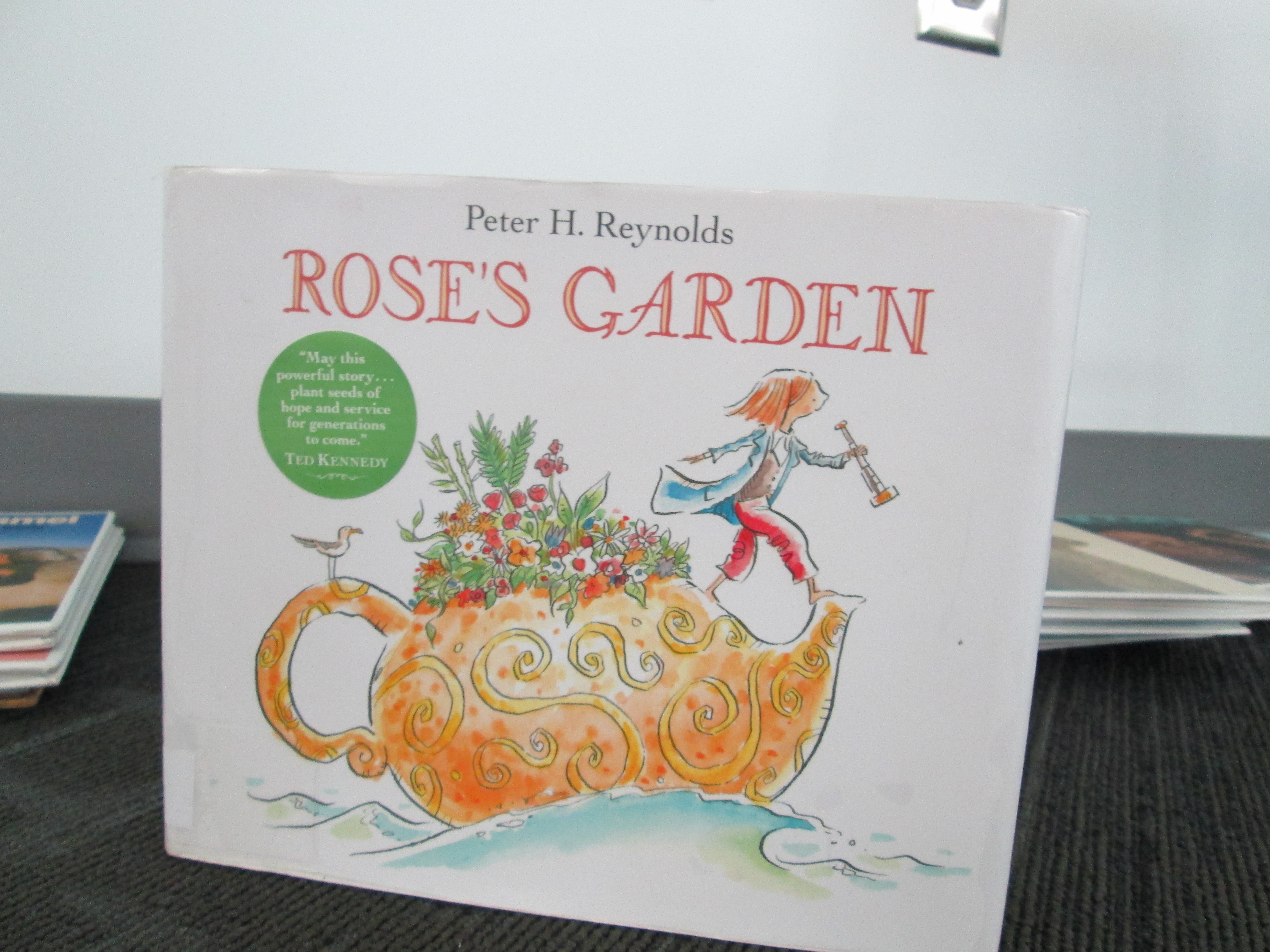
Next, we read Rose’s Garden by Peter H. Reynolds.  In this story, Rose travels the world collecting seeds.  She finally decides to stop and explore a city where she discovers a patch of land in need of color.  This is where she decides to start making her mark on the world by planting her seeds.  Without giving too much away, her efforts inspire a community with her genius idea.

IMG_1855 IMG_1857

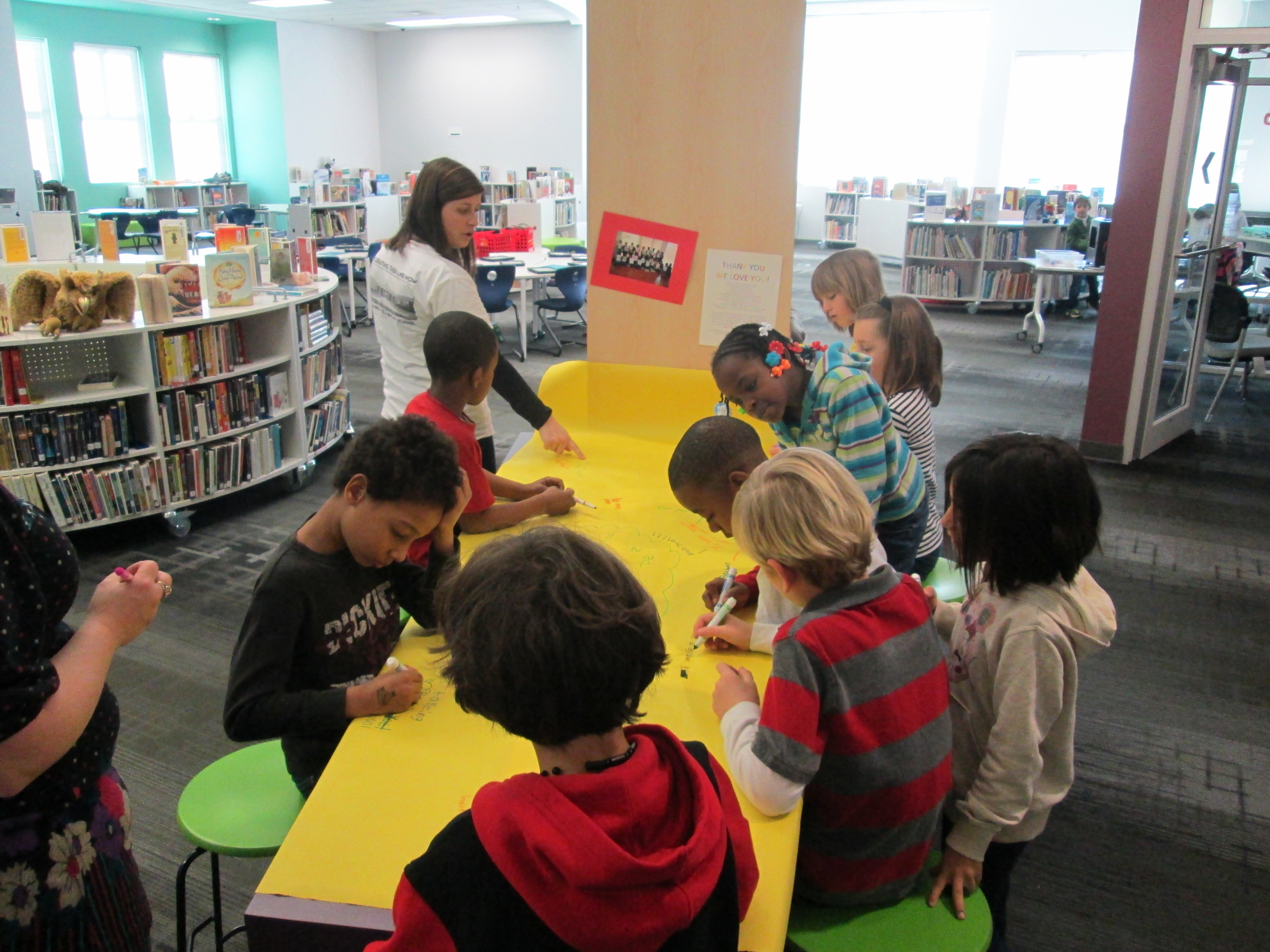
I loved how this book fit into our discussion of what it means to be genius.  It moved us straight into our #Geniuscon question.  Mrs. Ramseyer and I had already talked about how we didn’t want to influence how the kids answered the question, but we did want to give them an opportunity to brainstorm before they chose their focus topic.  We put the question on 2 big pieces of paper and split the class in half.  Each student had a marker to participate in a Chalk Talk, a silent conversation.  All students began writing their responses to the questions as well as asked one another questions about their ideas.  All of this was done in writing.  Mrs. Ramseyer, Mrs. Vaughn (EIP teacher), and I all added to the conversation too.

After about 10 minutes, students mingled between the two chalk talks to cross pollinate their ideas.

IMG_1862

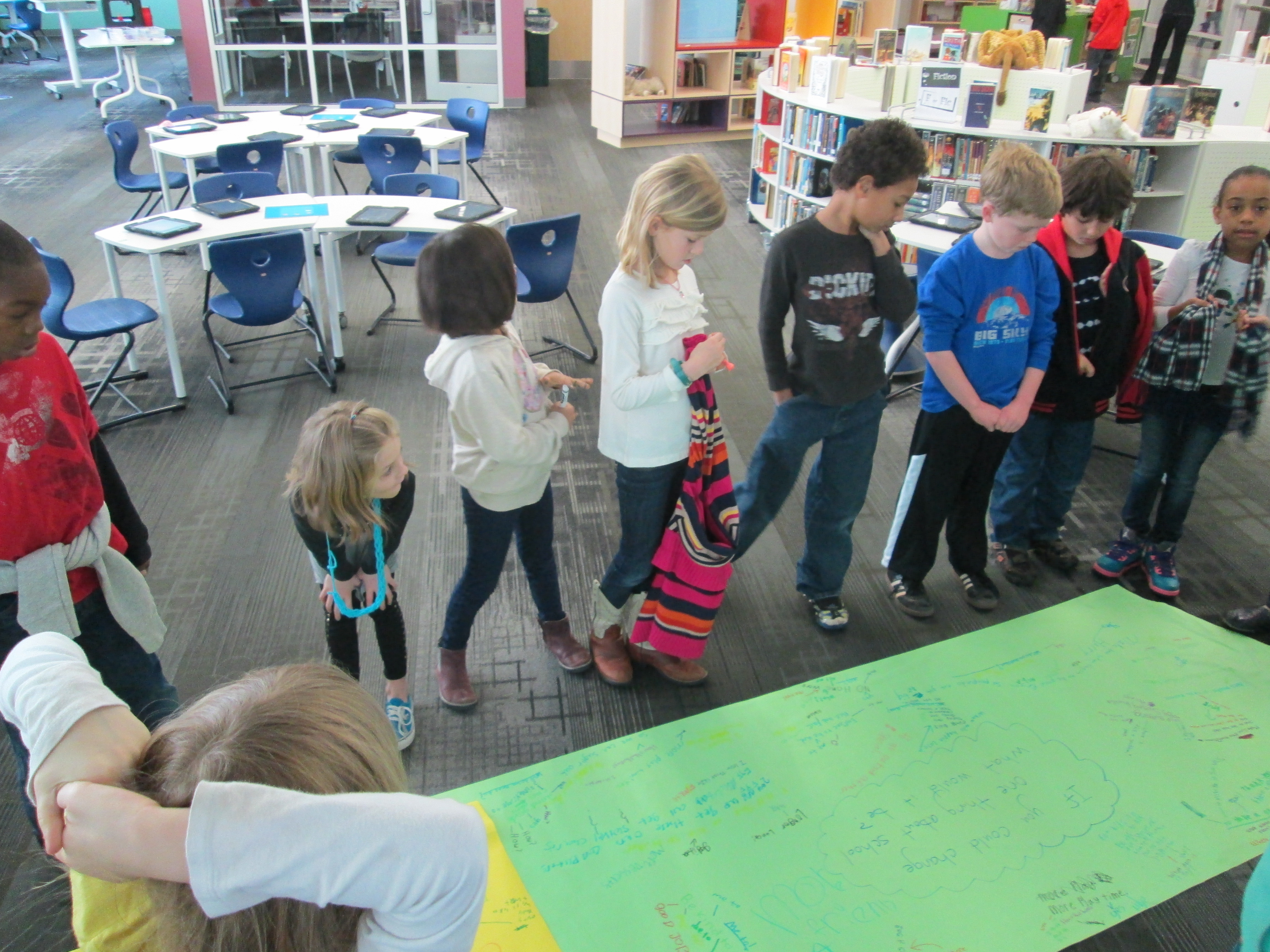
We moved our 2 chalk talks to the floor and all stood around them.  As we looked at or responses, I asked students to look for ideas that stood out to them or topics that seemed to be coming up.  We identified ideas such as:

  • Additions to our school:  adding more playground equipment, building a garden, expanding our school
  • Changes to rules:  additional books on the max checkout in the library, additional “be’s” to our 5 be’s,
  • Technology:  taking home iPads and netbooks, being able to bring technology from home, using our 3D printer
  • Behavior:  addressing the bullying in our school, being kind
  • And more!

The pages were so filled with ideas that we couldn’t really talk about them all.  After this discussion, we sat down for a big surprise:  a Skype with Peter H. Reynolds!  Peter was in Florida doing some work, and he took time out of his busy day to join us.  After saying a quick hello, students took turns stepping up to the webcam and saying what they wanted to change about our school.  Peter validated each student’s idea and even expanded upon the idea with his own thoughts.  He encouraged students to think about how they could illustrate each of their ideas and turn it into a book, which the students are very interested in doing now.  We will probably make this an additional piece to our project:  possibly even an extension into the art room!

We closed out our time with Peter Reynolds with a friendly goodbye and the encouraging words of “connecting the dots” and “making our mark on the world”.  We can’t think him enough for taking time to visit with us.  He is such an advocate for allowing students to show off their genius and let their creative energy flow.

In class, students will begin to finalize their topics and next week they will return to the library to develop questions to prompt their research.  What an exciting start!

If you want to learn more about #Geniuscon, I encourage you to attend the TL Cafe Webinar on Monday February 3 at 8PM EST.  


Hour of Code is Coming This Week!

We are very excited about the opportunities planned for our students in the library this week.  It’s Computer Science Education Week and to celebrate several classes in grades K-5 will participate in Hour of Code, which gives kids hour-long experiences in a variety of kid-friendly coding tools.  The hour of code site has multiple step by step tutorials to help kids learn some basics of each coding tool, while allowing them the freedom to be creative.  Theres’s something for every age from 5-106 🙂

Computer Science Education Week (CSEdWeek) is an annual program dedicated to showing K-12 students the importance of computer science education.

Organized by the Computing in the Core coalition and Code.org, CSEdWeek is held in recognition of the birthday of computing pioneer Admiral Grace Murray Hopper (December 9, 1906).

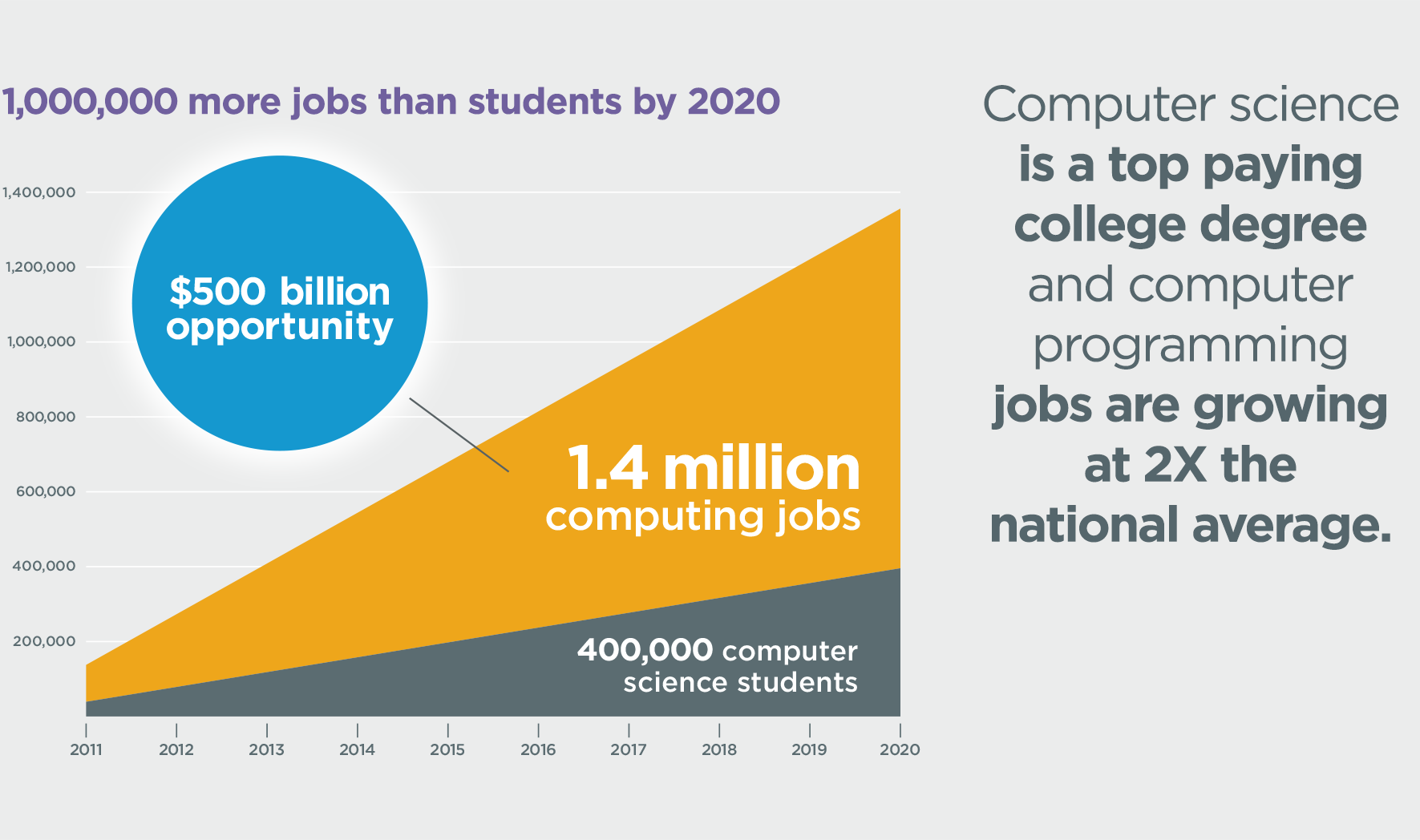
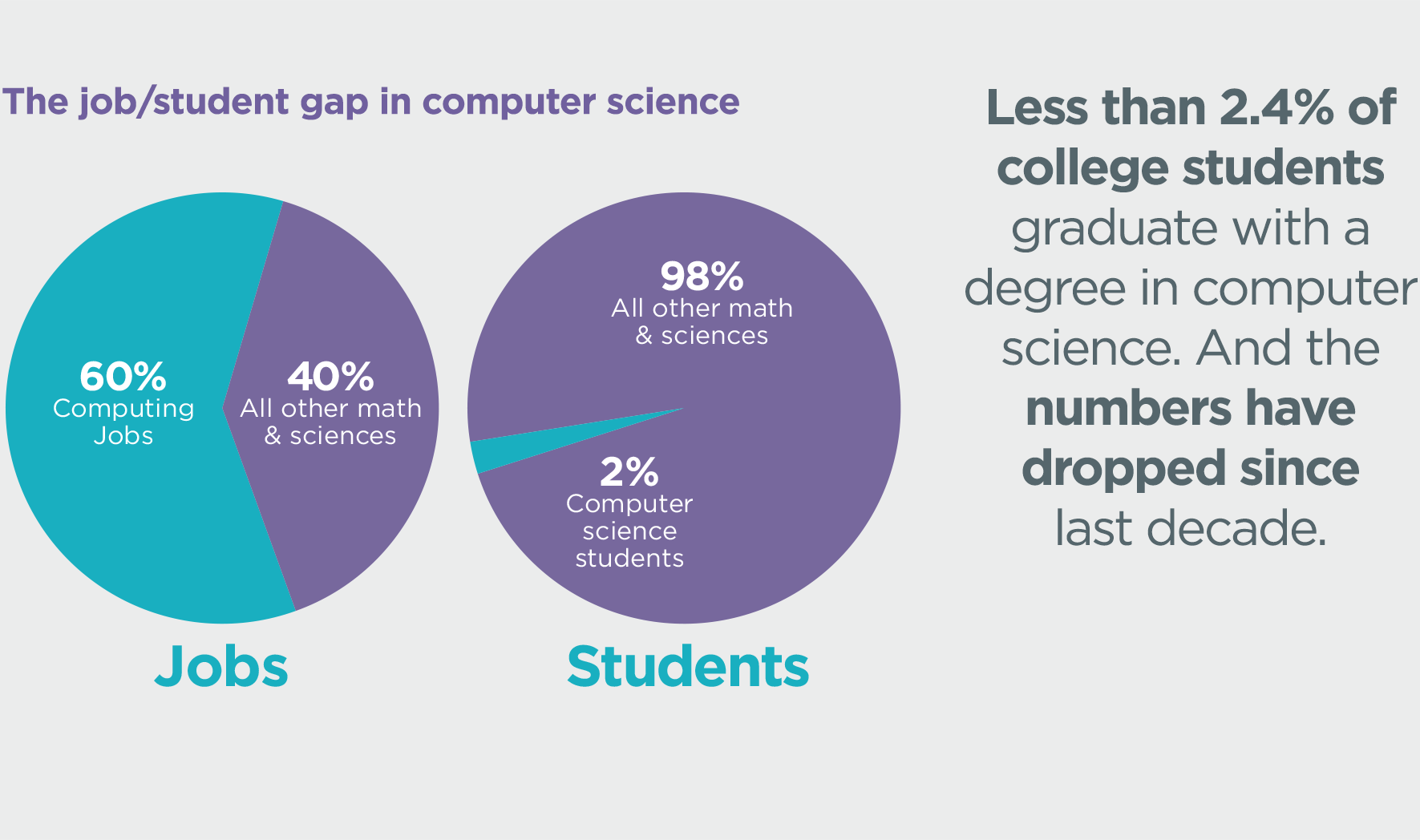
Why would we want our students to learn computer coding?  Take a look at some of these statistics.

more-jobs-than-students

job-student-gap

2012-hs-ap-enrollment

Some of our Kindergarten and first grade students will use an iPad app called Kodable.

kodable

Second and Third grades will be exploring both Blockly and Tynker.  Some first graders will also try Tynker.

https://i0.wp.com/www.tynker.com/image/hp/course-intro-to-programming-videotutorial.jpg

Tynker Intro

Fourth and Fifth graders (and perhaps a few other students too) will make holiday cards with Scratch.

During the week, we plan to make connections with other schools around the country who are also participating in Hour of Code in order to allow our students to share, brainstorm, and problem solve across the miles through Skype and Google Hangouts.  On December 17, we will participate in a live Google Hangout On Air where students will share their coding creations and learning with students in multiple states simultaneously.

The intention of Hour of Code is to give as many students as possible experience with coding, which will hopefully lead to both individual exploration or class projects in the future.  I’m prepared to be amazed this week by what students discover.  Look for posts throughout this week to share our progress.


Picture Book Smackdown: Celebrating and Learning

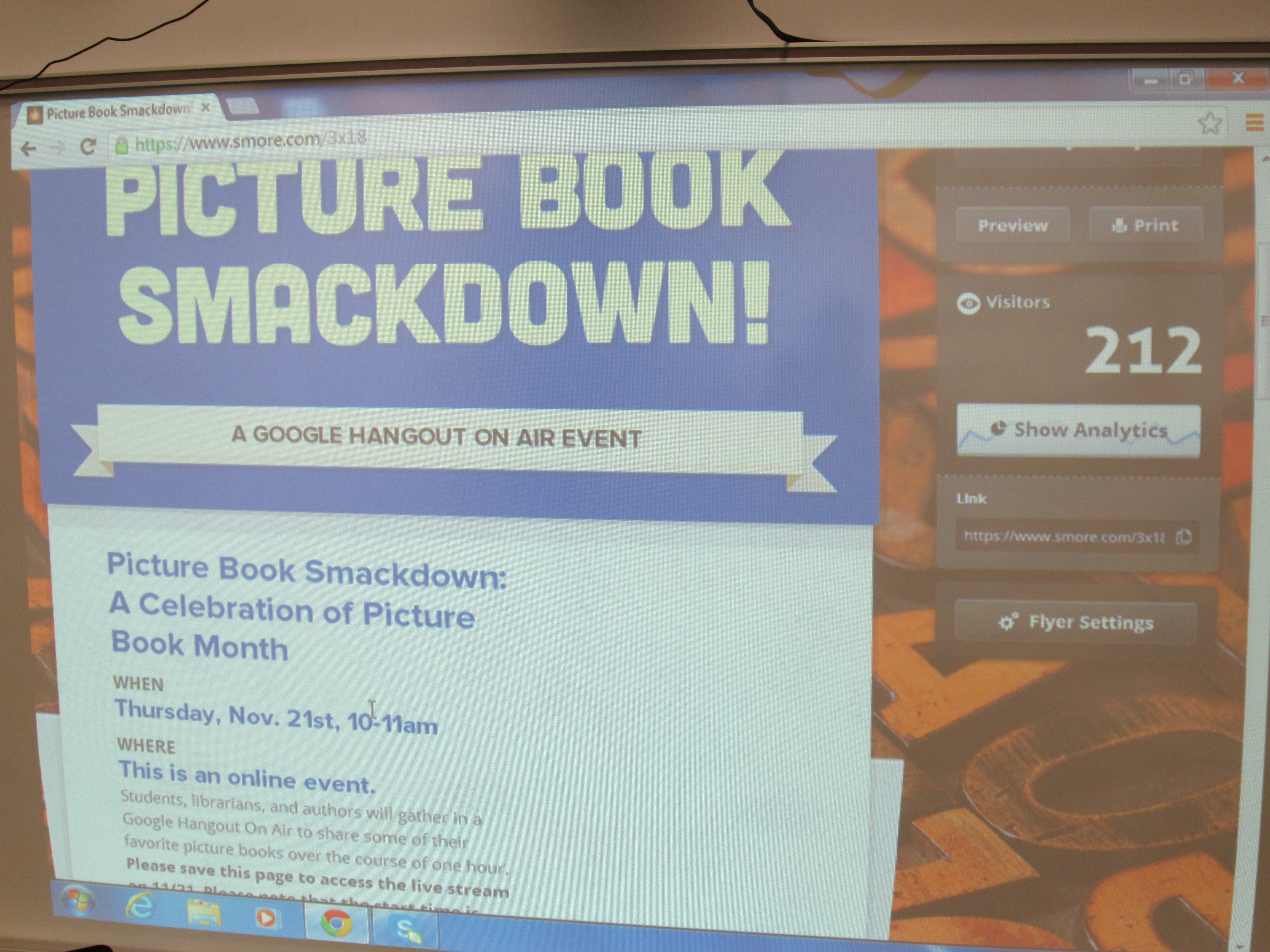
Before the hangout started, over 200 people had viewed our Smore page.

Before the hangout started, over 200 people had viewed our Smore page.

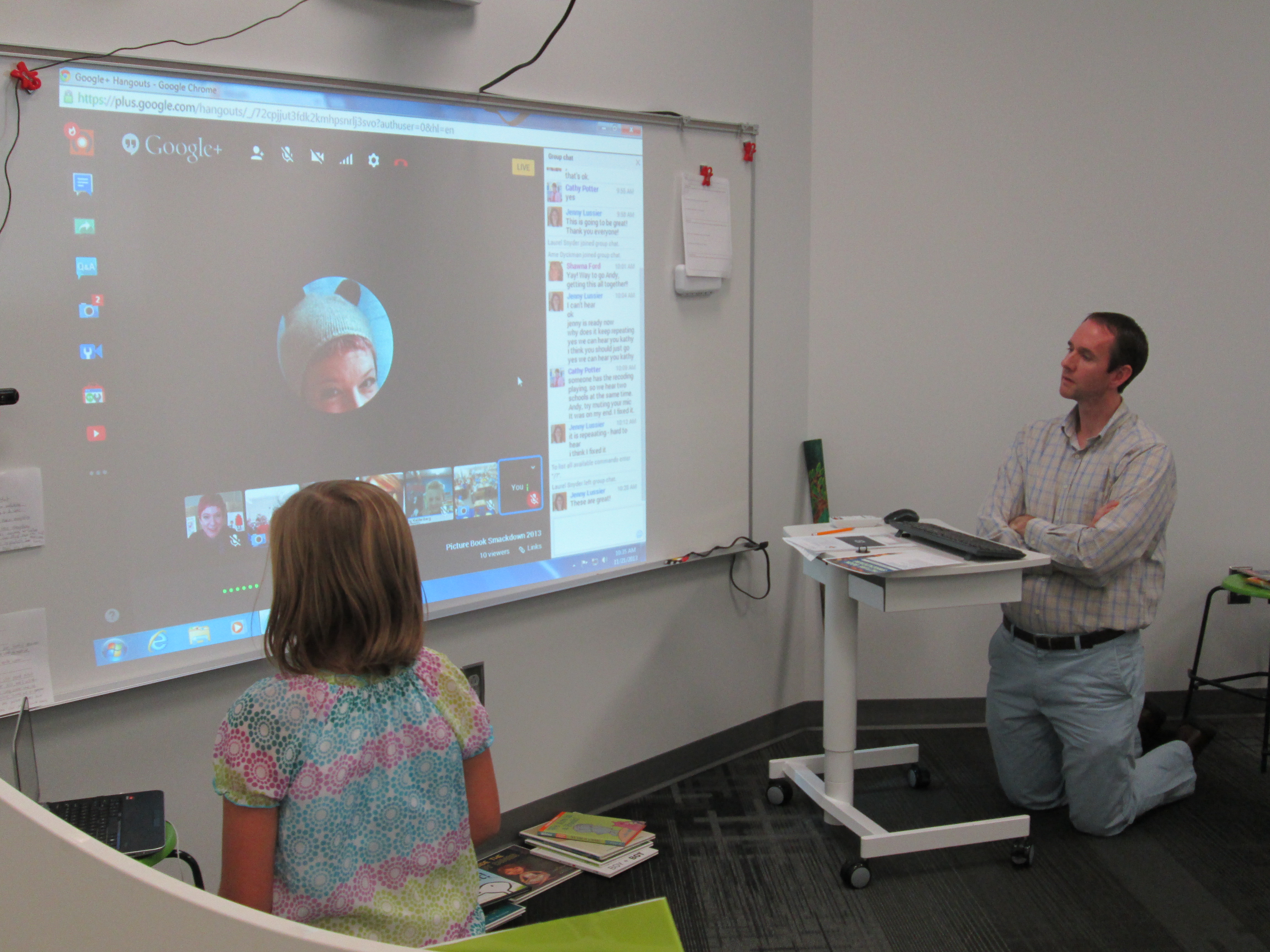
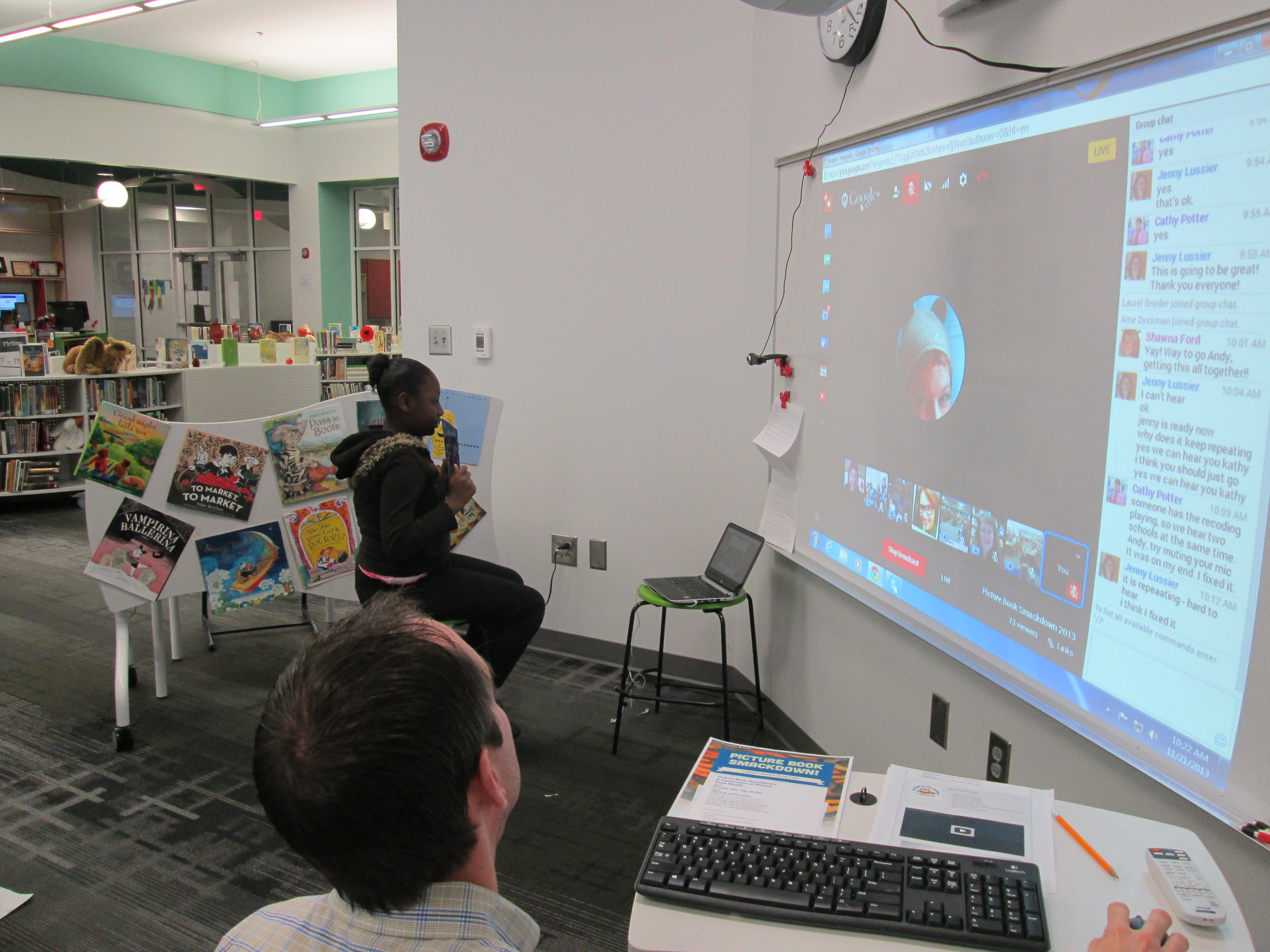
Today was our Picture Book Smackdown Google Hangout On Air.  We had an amazing lineup of schools and authors to share their favorite picture books and talk about why picture books matter in our world.  This event grew from a seed of an idea on a Google Doc into a collaborative event.  Each participant and school brought their own talents, expertise, and connections to the table to make this event successful.  This was my first leap into Google Hangouts to do an event such as this.  I always tell students, teachers, and families that we have to be willing to take risks.  If we don’t put ourselves in a place of risk, then we’ll never learn.  We don’t do our best learning in places of comfort.  I certainly learned a lot today by taking that risk.  I want to thank each of these schools for preparing their students and taking time out of their day to connect and share with the world a love of reading and picture books.

  • Jenny Lussier, school librarian in Durham, Connecticut
  • Cathy Potter, school librarian in Falmouth, Maine
  • Kathy Kaldenberg, school librarian in Solon, Iowa
  • Shawna Ford, school librarian in Weatherford, Texas

I also want to thank authors Laurel Snyder and Ame Dyckman for joining us and sharing their own favorite picture books and why picture books matter.  They both have busy schedules and it meant so much to have them take the time to join us.  My adrenaline is finally coming down from the morning and I’m pausing to reflect on the experience.

smackdown (6)

What I loved:

  • Student voices from 5 different states were united.
  • Students were passionate about the picture books they were talking about.
  • Students had an opportunity to take a stance on talking about something that mattered to them.
  • Students were able to create an archived video that can be referenced for many purposes like inspiring readers of picture books or even showing a district’s technology department the power of Google Hangouts.
  • Authors and students had the chance to speak together on a level playing field discussing a common interest.
  • Students from multiple grade levels, backgrounds, and experiences made a connection to one another.
  • Students were engaged.  Each student had a role and purpose and were so eager to share even when technical difficulties happened.  My students stayed for a whole hour and were happy to wait and watch.
  • Even though only 10 people can participate in the hangout, we knew that many others were tuning in live or watching later, which connected us all with a very large authentic audience.

smackdown (13)

What I learned as the host:

  • Using a Smore page to advertise the event was a great choice.  We could all advertise the Smore, and then the actual hangout could be embedded right before we went live.  The page also gave analytics after a certain amount of views which allowed us to see where people were viewing the Smore and how they were sharing it.
  • In advance, communicate with all participants about what is expected during the hangout:  order of speaking, microphone rules, etc.  Make sure that all participants are added to your circles in Google Plus.
  • Prepare students in advance and practice.  As the host, there was no time to check-in with students today to see how they were.  They had to be ready to walk in the door and go live.
  • Have someone available to either facilitate students sharing or running the keyboard.  It was hard to do both.  Someone needs to click on each person in the hangout when it is their turn to speak if you are the host.
  • If you are broadcasting your hangout over speakers, then you should mute your microphone when you aren’t speaking.  If people are unmuted, there is feedback.
  • I’m considering having my control center be in a separate space so that I can click on who is next in the hangout and have students speak in a less noisy environment.  Then, I can have viewing of the hangout in another space.
  • If you have multiple modes of communication with your participants:  twitter, email, hangout chat, etc., it is difficult to manage and host.  Perhaps over time I might be able to juggle all of those roles, but I just ignored email and twitter during the hangout today.

smackdown (4)

What stressed me out!:

  • Feeling like everything had to be perfect and forgetting my own mantra that we have to be willing to fail in order to learn.
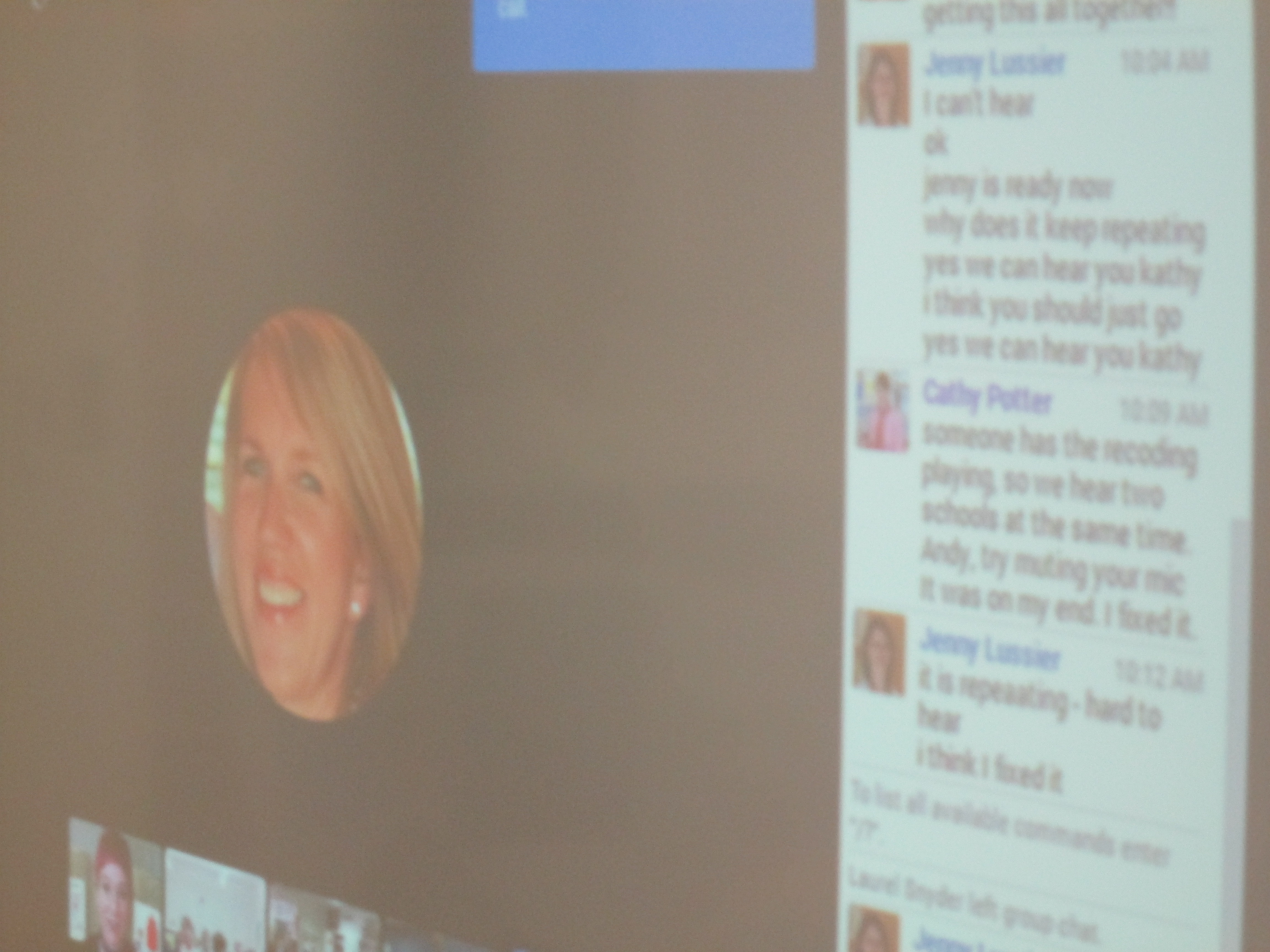
  • Having moments of panic when the connection was slow, the microphone wouldn’t mute, the main video wouldn’t switch to the right person, or when the audio had a lot of feedback.
  • Trying to host the event on air by verbally calling on each school.  Sometimes my microphone wouldn’t mute/unmute in time.  It was great when we got in a rhythm of our order and self-facilitated our speakers.


Take a look at how our event turned out, and please share your own learning about using Google Hangouts On Air in the comments below.