What Are Your Stories of Hope? Add Your Voice to Our #WRAD16 Flipgrid

04fcd-litworldlogothumbnail

Each week leading up to World Read Aloud Day (February 24th) we want to join our voices around the world to celebrate one of the strengths of reading aloud.  During the week of February 14-21, we celebrate how reading helps us foster hope for our world. Many students have already contributed their voices to talk about Belonging, Curiosity, Friendship, Kindness, Confidence, and Courage.

LitWorld 7 Strengths

We have created a Flipgrid for you to share your responses to the following question:

If you could share a message of hope, what would you read aloud to the whole world?

We hope you will share this Flipgrid with other educators, students, and families around the world and record your responses which can last up to 90 seconds.  Wouldn’t this be a great way to practice some informational writing in classrooms?  Wouldn’t you love to hear stories from the families that you serve?  Aren’t you curious about the perspectives on this question from around the world?  Let’s join our voices and contribute responses all week long.  By sharing our stories of hope, we are inspiring one another to find inspiration in the pages of books and share those pages with the world.

http://flipgrid.com/#2177f37e

In addition, you might also consider coming up with your own posts in response to this week’s theme on your own blog or site.  You might post about books you hope for this year or characters you would love to meet.  You might post a picture of yourself with a book that gives you hope and encourage others to do the same. Whatever additional ways you choose to celebrate “Hope Week”, please tag your posts with #wrad16 and #hopeweek as well as mention @litworldsays (Twitter) and @litworld (Instagram, Facebook).
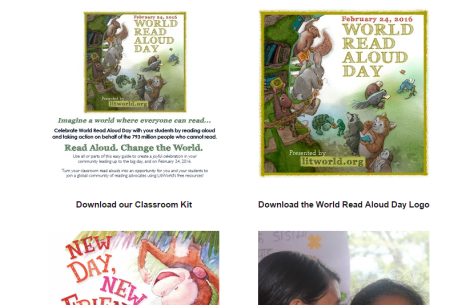
Litworld WRAD16

At our school, we’ll be sharing many stories of hope. A few of our picks will be Harvesting Hope: The Story of Cesar Chavez by Kathleen Krull, Barack Obama: Son of Promise, Child of Hope by Nikki Grimes, The Miraculous Journey of Edward Tulane by Kate DiCamillo, and many more.  What books will you share?

It’s not too late to share your schedule for World Read Aloud Week on our shared Google Doc and find someone to connect with around the world.

WRAD 16 Doc

Let’s encourage one another this week with stories of hope throughout our global community.
Be Courageous and Share Your Voice on our Courage Week Flipgrid

courage

Each week leading up to World Read Aloud Day (February 24th) we want to join our voices around the world to celebrate one of the strengths of reading aloud.  During the week of February 7-13, we celebrate how reading helps us have the courage to stand up for our beliefs. Many students have already contributed their voices to talk about Belonging, Curiosity, Friendship, Kindness, and Confidence.

LitWorld 7 Strengths

We have created a Flipgrid for you to share your responses to the following question:

When did reading give you the courage to stand up for something you believe in?

We hope you will share this Flipgrid with other educators, students, and families around the world and record your responses which can last up to 90 seconds.  Wouldn’t this be a great way to practice some informational writing in classrooms?  Wouldn’t you love to hear stories from the families that you serve?  Aren’t you curious about the perspectives on this question from around the world?  Let’s join our voices and contribute responses all week long.  By sharing our stories of courage, we are supporting one another’s courage to read aloud the books we love all around the world

http://flipgrid.com/#d0034566

In addition, you might also consider coming up with your own posts in response to this week’s theme on your own blog or site.  You might have the courage to speak up this week and share something that you believe in with your followers and ask them to do the same. You might post a video of yourself talking about a character who gives you courage. You might be courageous enough to dress as a character for a day and share the experience through social media.  Whatever additional ways you choose to celebrate “Courage Week”, please tag your posts with #wrad16 and #courageweek as well as mention @litworldsays (Twitter) and @litworld (Instagram, Facebook).

04fcd-litworldlogothumbnail

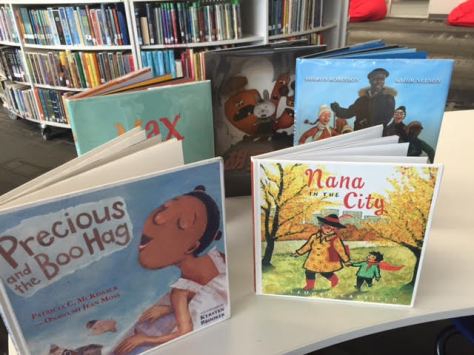
At our school, we’ll be sharing many stories that demonstrate courage. A few of our picks will be Testing the Ice by Sharon Robinson, Creepy Carrots by Aaron Reynolds, Max the Brave by Ed Vere, Precious and the Boo Hag by Patricia McKissak, and Nana in the City by Laura Castillo.

It’s not too late to share your schedule for World Read Aloud Week on our shared Google Doc and find someone to connect with around the world.

Let’s empower one another this week by having the courage to stand up for our reading beliefs throughout our global community.
The 2016 Barrow Peace Prize is Ready for Your Votes!

flipgrid peace prize recording (29)

Our Barrow 2nd graders have been hard at work researching 6 people from history to nominate for the Barrow Peace Prize. As part of this process, the students developed a list of criteria for what character traits should be represented by the winner of the peace prize. They wrote persuasive essays and created pieces of art work with Ms. Foretich, our art teacher.  You can read more about what the students have done in the post, Beginning the Barrow Peace Prize.

flipgrid peace prize recording (15) flipgrid peace prize recording (8) flipgrid peace prize recording (2)

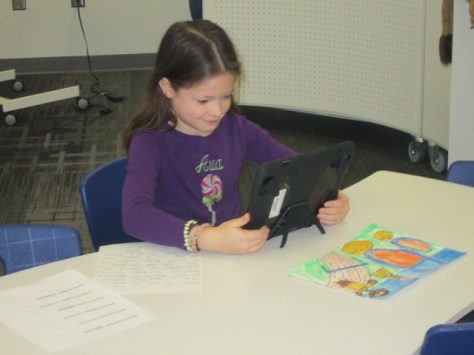
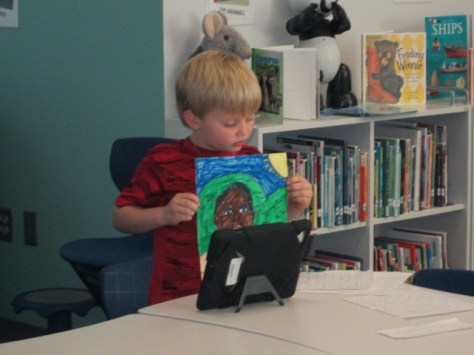
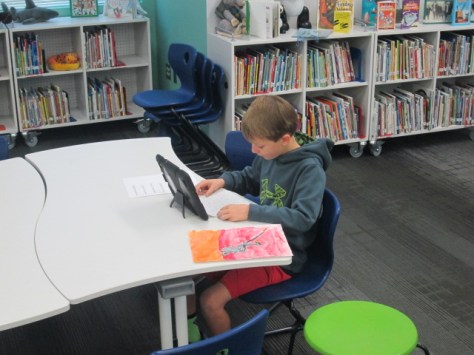
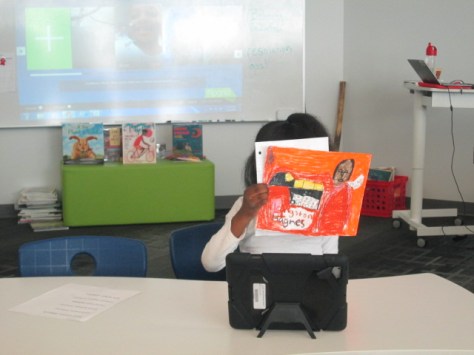
This week, students have been coming in to the library in groups of 4 for 15 minutes to record their persuasive essays. When they come, I give them a quick overview of Flipgrid and remind them that there work will be seen by lots of people. Then, they split up around the library and we make sure that the space is relatively quiet for recording. I setup a question for each person from history so that all of the Ruby Bridges videos are together, all the Langston Hughes videos, etc. During the process, students take a picture of their artwork for the Flipgrid and then record themselves reading. Some chose to show their artwork while recording, and other chose to have their face on the video.

flipgrid peace prize recording (16) flipgrid peace prize recording (7) flipgrid peace prize recording (4)

One of the things I love the most about Flipgrid is that the videos are instantly uploaded in one central place. I don’t have to spend hours uploading and naming 100 videos after students have recorded.

Now that the videos are recorded, we need you and everyone you know to watch the videos and help us decide which person from history should be the 2016 Barrow Peace Prize winner.  I’ve created a Smore page to pull everything together.

Here’s what you need to do:

  • Visit https://www.smore.com/dfmsd-2016-barrow-peace-prize 
  • Click on the link to each grid an watch as many videos as you can.
  • Click the heart icon on any video that you “like”.
  • At the bottom of the Smore, you will find a link to the Google form to vote on the person you think should win.  Or…you can click here.
  • Finally, please share our project with your students and networks so that we can have a record-breaking number of votes this year!

On February 18th, we have big plans for how we will announce the winner.  We can’t reveal exactly what is going to happen just yet, but we promise it’s big!  Happy voting!


Preparing and Reflecting on Our Immigration Simulation Via Flipgrid

immigration simulation (1)

Each year, our 5th grade studies immigration and Ellis Island as a part of their social studies standards. For these standards, the teachers work together to prepare students for an Ellis Island simulation experience that takes place across the first half of a school day. A lot of preparation goes into this event, and I’m excited that the library was able to be a part of the project.

immigration simulation (5) immigration simulation (4)

Before the actual simulation, each student was assigned an immigrant to become for the day. They received a folder with a short description of where their person was coming from, what he/she was bringing, and possibly a bit about why this person was traveling to America. This was all prepared by the Social Studies teacher, Ms. Olin.

immigration simulation (10) immigration simulation (8)

The teachers and I shared a Google Doc where we started putting links to sites that we thought would be helpful for students as they researched the immigrant experience for immigrants coming to America from their assigned country. I took these links and made a research Symbaloo for students to use.

In the library, I introduced students to this Symbaloo and they each received their folder from Ms. Olin. The Symbaloo link was shared with all students in Google Classroom so that they could easily find it again. In addition to a few details about the immigrant, the folder contained a graphic organizer with some details that students needed to gather in order to construct a letter of introduction for Ellis Island. Students used the organizer and Symbaloo for an hour in the library and then continued their research in social studies and language arts.

immigration simulation (15) immigration simulation (4)

In writing, students constructed their letters of introduction and Ms. Olin printed a copy of each letter to put in student folders. Students returned to the library a couple of days before the simulation. They had time to finish letters, and when they were ready, they  used Flipgrid to practice reading their letters. In the past, we’ve found that some students were a bit nervous on the day of the simulation or took some time to get into their character. Our hope was that the Flipgrid would give students a chance to get comfortable with their character and practice speaking from that perspective before being thrown into the simulation. The Flipgrid also gave them a chance to listen to one another’s stories and research since they don’t have a lot of time to do that on the simulation day.

Here’s a look at how their practice turned out:

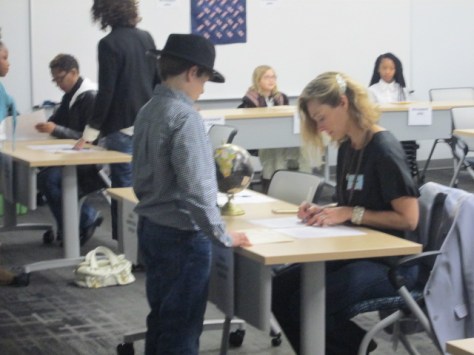
On the day of the simulation students rotated through many experiences to take on the role of an immigrant coming to America. Many dressed in costume, carried props, and practiced talking in an accent. They carried their folders that we had worked on throughout the project. Parent and community volunteers came in to help lead the stations so that students were able to go through health inspections, written tests, and legal inspections. Many were questioned multiple times about their health or documents. Many students were sent away to search for missing pieces of their documentation or were held in quarantine for various reasons.

When students finally passed through all of the experiences, they took an oath and had a meager celebration of bread and cheese. During this time of eating, students once again used Flipgrid. We brought them back into this century and asked them to think about their experience. They didn’t have a script for this. We just wanted their initial reaction after completing the simulation. There are some interesting stories of how it felt to be questioned so much or be detained.  You can see their reactions here.

The addition of Flipgrid this  year really helped to prepare students for the simulation, to learn from one another’s stories, and also for us to hear a student perspective of going through the simulation that we might not normally here. Each student had a chance to share his/her voice and many spoke up when they might not have spoken up in front of the whole class.  I keep thinking of new ways to use Flipgrid in my teaching. I love how versatile it is and want to continue to push the limits of how the tool is used.

Join Your Voices for Confidence Week Leading Up to #WRAD16

Each week leading up to World Read Aloud Day (February 24th) we want to join our voices around the world to celebrate one of the strengths of reading aloud.  Many students have already contributed their voices to talk about Belonging, Curiosity, Friendship, and Kindness.

LitWorld 7 Strengths

During the week of January 31-February 6, we celebrate how reading helps us be confident and proud to be who we are. Reading the world empowers us to own our strengths.

We have created a Flipgrid for you to share your responses to the following question:

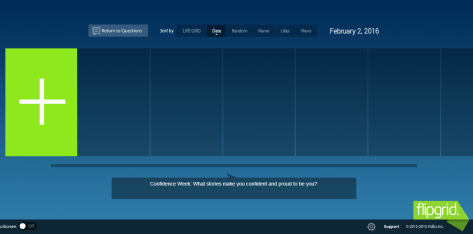
What stories make you confident and proud to be you?

FireShot Capture 10 - Flipgrid. Relax and discuss. - http___flipgrid.com_#d6716a6b

We hope you will share this Flipgrid with other educators, students, and families around the world and record your responses which can last up to 90 seconds.  Wouldn’t this be a great way to practice some informational writing in classrooms?  Wouldn’t you love to hear stories from the families that you serve?  Aren’t you curious about the perspectives on this question from around the world?  Let’s join our voices and contribute responses all week long.  By sharing our stories of confidence, we are supporting one another’s confidence in the power to read aloud.

http://flipgrid.com/#d6716a6b

In addition, you might also consider coming up with your own posts in response to this week’s theme on your own blog or site.  You might write or record about a book or character that feels personal to you.  You might strike a confident pose with a book that gives you strength and post that picture to social media. You might read in a place that you normally wouldn’t and take a picture to share.  You could dare others to do the same.  Whatever additional ways you choose to celebrate “Confidence Week”, please tag your posts with #wrad16 and #confidenceweek as well as mention @litworldsays (Twitter) and @litworld (Instagram, Facebook).

04fcd-litworldlogothumbnail

At our school, we’ll be sharing many stories that demonstrate confidence. A few of our picks will be One Green Apple by Eve Bunting, Ish by Peter Reynolds, Star of the Week by Barney Saltzberg, Dancing in the Wings by Debbie Allen, Firebird by Misty Copeland, and Bridget’s Beret by Tom Lichtenheld.

It’s not too late to share your schedule for World Read Aloud Week on our shared Google Doc and find someone to connect with around the world.

Let’s empower one another’s confidence this week throughout our global community.
Beginning the Barrow Peace Prize: A Flipgrid Project

peace prize research (5)

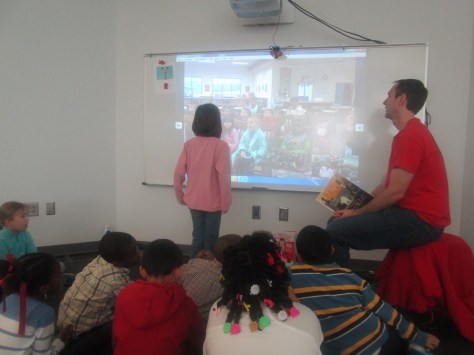
Each year, our 2nd grade takes on a big research project that has evolved into a project called the Barrow Peace Prize. Students research one of six people from black history, write a persuasive piece convincing people to vote for their person to win, and record their writing using Flipgrid. These videos are shared with the world along with a Google forms voting ballot. We celebrate the winner with the Flipgrid team via Skype.

peace prize research (9)

This year’s project is off to a great start, and I’m amazed by what these 2nd graders are doing with their technology, especially since they aren’t 1:1 in their classes.  With fewer devices to practice on, it takes these students a bit longer to navigate tools on the computer.

peace prize research (8)

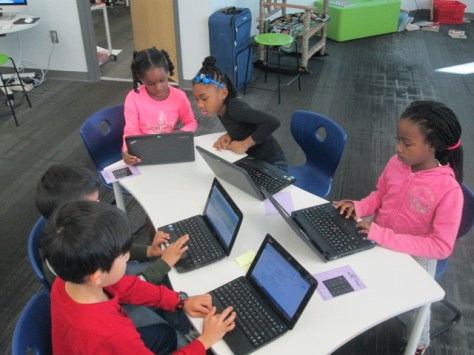
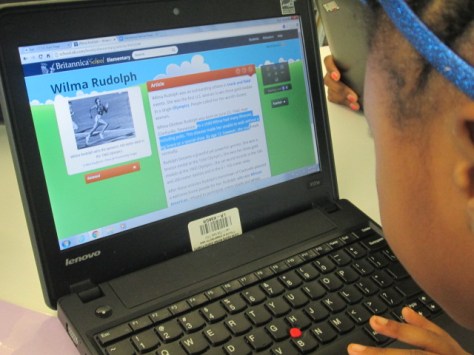
To start, each student chose one of six people: Langston Hughes, Wilma Rudolph, Bessie Coleman, Jesse Owens, Charles Drew, and Ruby Bridges. Using Google Classroom, each teacher shared a Google doc graphic organizer with students. In the library, students brought class computers and I provided additional computers so each student had one. We did a review of how to login to Google and navigate to Classroom to get the doc. I also showed students how to click between tabs in Chrome, how to copy and paste facts, and where to look for information.

peace prize research (7)

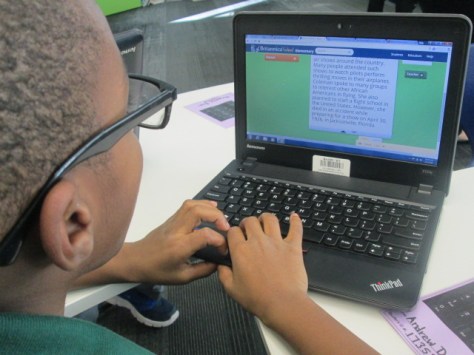
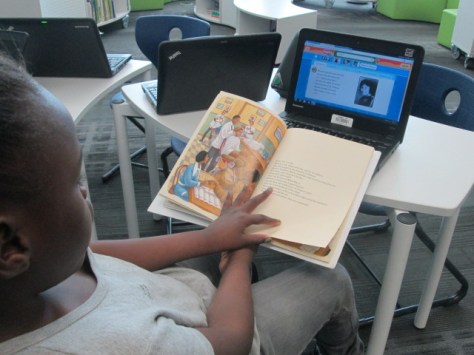
Students started in 2 resources: PebbleGo and Encyclopedia Britannica. I love these sites because they have great information and both will read the content to students who need that extra support. I debated about teaching students how to copy and paste because I don’t want to set students up for just copying. However, we wanted students to have access to a collection of the best facts when they prepared to do their writing without having to weed through all of the articles. The writing workshop time would be the time to focus on taking those copied facts and put them into students’ own words.

peace prize research (6)

We did 3 hour-long sessions of research. Each session we saw students get more proficient at navigating the technology, and even in the frustration we faced, I reminded myself and the teachers to step back and really look at what 7-year olds were doing. Students were logging into email, accessing Google Classroom, finding a Google doc, visiting multiple resources, using ctrl C and ctrl V, keeping track of where facts came from, and leaning to use the research tool in a Google Doc. This list could definitely be added to because there was a lot more.

Once facts were gathered, teachers began writing workshops in their classrooms for students to start writing scripts for their videos. Prior to this, we held a Google Hangout where all classes tuned in from classrooms. The purpose of this was to establish a list of character traits that someone who is deserving of the Barrow Peace Prize might represent. We read about Alfred Nobel and looked at Malala and why she represented peace. Then, classes added to a Google Doc to create a list of these character traits. This list was displayed during writing times for all students to consider in their writing.

Now, students are continuing to fine tune their writing before recording takes place.  We can’t wait to share the videos with our school, families, and classrooms around the world.  Be on the lookout for a post in the next couple of weeks inviting you to view and vote for the 2016 Barrow Peace Prize.

peace prize research (2)

Digital Book Talks and Exploring How We Belong for #WRAD16

Belonging Week (8)Ms. Tesler’s 4th grade class has been exploring how they can be leaders within our school community.  Back in the fall, they started writing shelf talkers and displaying them on shelves at the front of our library. After all of their suggested books were quickly checked out, they are looking for ways to expand their leadership.  They have decided to take the “7 Strengths of Reading” challenge leading up to World Read Aloud Day and explore each week’s question.  They have also decided to take their shelf talkers and make them digital.

Belonging Week (7)

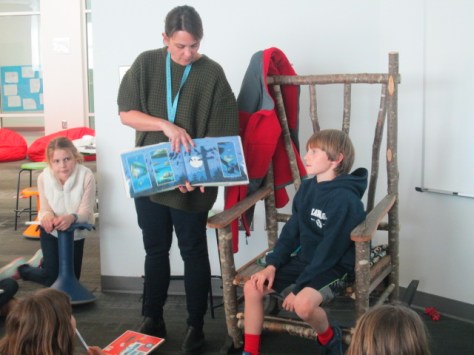
Across 2 days, the class came to the library to work on their next steps of this project.  We began by talking about our memories of being read aloud to.  I shared about my 2nd grade teacher, Ms. Deloache, and how she read Brer Rabbit stories to us with so many voices that I can still hear in my head today.  Ms. Tesler shared an experience of being read aloud to in college and how that stuck with her even as an adult.  Many other students began to share their own memories of being read aloud to.

We used this to launch into a new purpose of exploring the read aloud.  We are thinking about books that others might enjoy reading aloud.  We are also thinking about books we might read aloud to our buddies in other classrooms. Along with this, we started discussing how reading aloud builds community and how certain books help us feel connected with a community. To close, I shared my own example of a book talk and a reflection on the #belongingweek #wrad16 question on Flipgrid.

Belonging Week (15)

The first task was for students to select a book or books to read.  We wanted them to choose a picture book for this first book talk and question.  I pre-selected some books that had a theme of belonging, but students were welcome to choose any picture book.  Once students chose a book, they sat down to read it.  If they finished, they could start writing their shelf talker or their reflection on this week’s #WRAD16 question: “When has reading helped you feel like you belong to a community?”

Belonging Week (13)

In class, students continued to work on their reflections and they returned to the library with their completed writing.  I’ve been sharing the belonging week Flipgrid a lot on social media in the hopes that other schools would contribute.  When the students arrived to record their own, I was happy to share with them that Donna MacDonald in Vermont and Kathy Schmidt in Georgia had students who contributed to the Flipgrid.  We started by taking time to listen to them.

We used these contributions to consider pieces that were included as well as what we needed to do when we recorded our own.  Students pointed out things like speaking clearly and loud enough to hear.  They pointed out how there wasn’t a lot of movement behind the students who were recording, and that they introduced themselves.

Students spread out all over our library and recorded two Flipgrids.  One Flipgrid was a digital book talk sharing a new book.  This set of answers will be displayed on a monitor in the library and put in slideshow mode.  This will cause the videos to constantly scroll through and advertise books in our library.  We also hope that other schools will contribute their own book talks.  Renee Cunningham in North Carolina is already planning to do this with her students.

http://flipgrid.com/#b9bd04f0 

Finally, our students reflected on the belonging week question for World Read Aloud Day.  I loved hearing students make connections to their own lives and the sense of belonging.  I also loved hearing students pick out parts of a book and how a character felt like he belonged to a community.  It was a natural way to collect some analysis of text from students.

I hope you will take a moment to listen to some of their thoughts.

http://flipgrid.com/#8e21e4e6

We are just getting started, but I hope to see many more schools contribute to both our book talk Flipgrid as well as our weekly 7 Strengths of Reading grids.  If you are interested, feel free to add your students’ voices!

Let’s All Connect for LitWorld’s World Read Aloud Day 2016

It’s time for us all to start making plans and building excitement for Litworld‘s World Read Aloud Day 2016.  This year, World Read Aloud Day takes place on February 24, 2016, but many of us will celebrate the entire week of February 22-26 and into the next week for Read Across America.  We also have an exciting addition this year called the “7 strengths” of reading aloud, which will give us an opportunity to connect our voices leading up to the official World Read Aloud Day.

WRAD map

World Read Aloud Day “calls global attention to the importance of reading aloud and sharing stories.”  When we connect our students through Skype, Google Hangouts, or other web tools, they experience the power of the read aloud and realize that they are connected with a bigger world that is both the same and different from them.

IMG_5339

Shannon McClintock Miller and I invite you to start posting your schedules on our shared Google Doc.

WRAD 16 Doc

http://tinyurl.com/wrad16

When you share your schedule, be sure to include:

  • Your name
  • Your contact info such as social media, Skype, and/or email
  • Your role
  • Your school and grade levels
  • Your location
  • List your time zone when posting your available dates and times

After you post your own schedule, take a look at the other schedules and sign up on someone’s schedule to connect your students.  We’ve found that it doesn’t matter if same grade levels connect with one another. Often times, an older grade can read aloud to a younger grade or younger grades can find parts of a books that they can read aloud to an older grade.  There’s not just one way to connect.  Part of the fun is meeting new friends, planning your read alouds, and seeing what magical things happen during your connection that you weren’t even expecting.

IMG_5337

We have many ideas from previous years on our blogs.  You can read more about World Read Aloud Day 2015 on Expect the Miraculous and The Library Voice.  Litworld also has several resources for you to use in your planning and connections including:

Litworld WRAD16

Each week leading up to World Read Aloud Day, we will be focusing on one of the 7 strengths of reading aloud.  Wouldn’t it be fun to hear voices from around the world reflecting on these strengths as we await our real-time connections?  We’ve made a series of Flipgrids that anyone can add to.  We hope you will all will reflect on these questions with your students, teachers, and families and have them all respond on a Flipgrid.  All you need is a computer with a webcam or a free app on a tablet.  We’ll be sharing more posts about these strengths and questions later, but for now, here is a list of the strengths and the links to the Flipgrids.

LitWorld 7 StrengthsWe have an opportunity now more than ever before to connect our voices around the world leading up to World Read Aloud Day and throughout WRAD week.  We hope you will take advantage of all of these tools to show our students and the world that reading aloud makes us strong and connected.  Please let us know if you have any questions along the way.  Happy connecting!

Andy Plemmons @plemmonsa

Shannon McClintock Miller @shannonmmiller 

Remembering September 11th and Moving Forward

September 11 (56)

Each year, our 5th graders learn about September 11th as a part of their social studies standards.  They have to know about the events of the day as well as how that act of terrorism has impacted our lives today.  It’s a scary topic for an elementary student who has no memories of this event.  For them, it’s really just a part of history that doesn’t resonate in the same way as it does for adults.  That doesn’t mean that we can’t explore this tough subject.

We look at the day from multiple angles and see what we can discover about terrorism but also the heroism of the day.  We’ve used this tragedy to think about how we respond to sadness, how we memorialize those who mean so much to us, and how we create good in the world.

We spread our learning across an entire day.  Each teacher leads a different part of the day and students rotate through several experiences.

With me, students use a Symbaloo to explore online content.  I love Symbaloo because I can group the links together in a meaningful way.  I split the links into 4 areas: looking back & reflecting, the events of the day, rebuilding, and remembering.  When students came in, I used our Flipgrid responses from last year to talk about how we have to rely on people’s memories and what has been left behind in order to learn about and learn from history.

Last year’s Flipgrid

We also talked about how different the documentation of 9/11 would be if it happened today.  It happened at a time when smart phones, instagram, Twitter, and Facebook didn’t exist.  We also talked about our comfort level with tragedy.  I labeled several of the links “graphic” so that students could decide if they really wanted to click on that area.  Students could stop at any point and take a break in the hallway or with the counselor.

Our 9/11 pathfinder

At the close of my session, students had a chance to talk about what they heard and saw.

With Ms. Mullins, students looked at the first responders of 9/11, including the rescue dogs.  They used the information they learned to write haikus in response to the heroism.

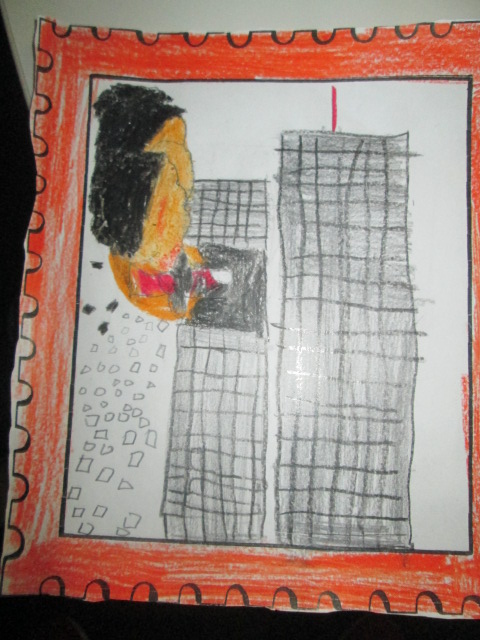
With Ms. Selleck, students read 14 Cows for America and talked about how other countries responded to our tragedy.  We saw September 11 as a time when other countries felt our pain and reached out to help us.  Students responded by creating artwork to symbolize a response to tragedy.

With Ms. Olin, students read Fireboat and talked about how everyone pulled together on September 11 to help one another regardless of jobs or beliefs.  We were all Americans.

September 11 (4)

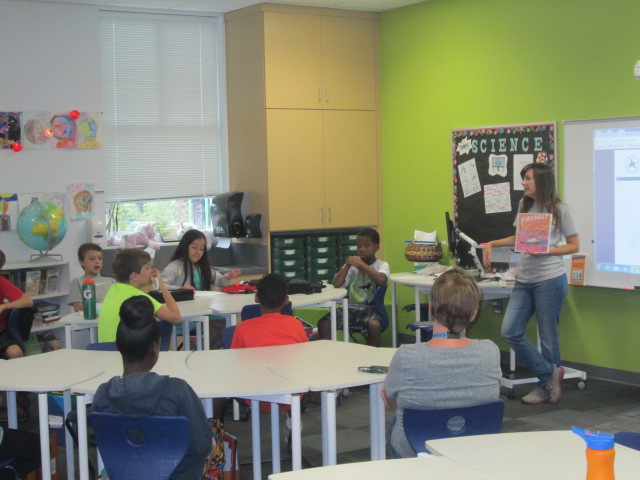
After lunch, we had a guest speaker.  Bob Hart has created a 9/11 memorial trail right here in Athens, and he came to tell the students about how he got the idea, what each part of the trail represents, and answer questions from the students

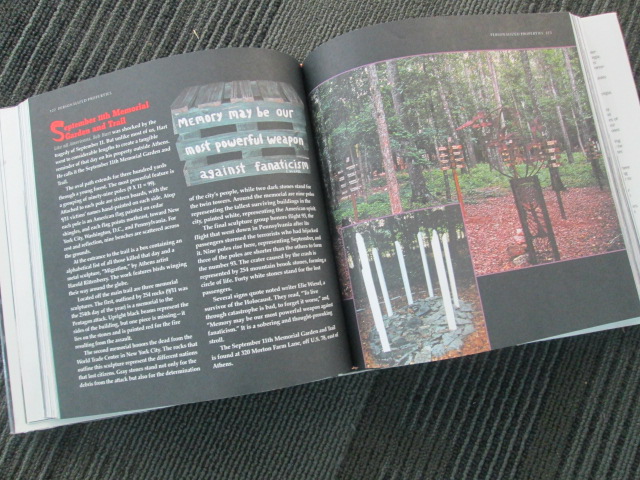
Bob Hart’s 9/11 Memorial Trail in Athens, GA

This was a new piece to our 9/11 remembrance day and it was powerful.  Bob had so many touching tributes to the victims, and each part of  his memorial was thoughtful and created with love and respect.  His trail is open to the public, so I’m sure many students will want to visit.

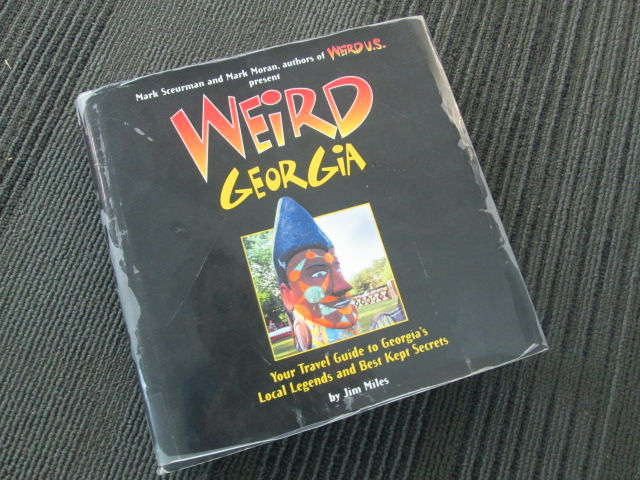
We even found out that his trail is featured in a Weird Georgia book which we have in the library!

September 11 (61) September 11 (60)

At the close of our day, students used Flipgrid to record their haikus, artwork, and reflections.  Three volunteers came in to help me facilitate the recording so that students had a quiet space.  You simply have to listen to their voices!

Students shared art, poetry, and reflections about 9/11 on a Flipgrid

While this day is tragic, it is a day that I cherish each year because our kids take so much away from the day about heroism, response to tragedy, and the pride of being an American.

Congratulations to the Flipgrid 2015 Graduation Voices Winners, Top Voices, and More

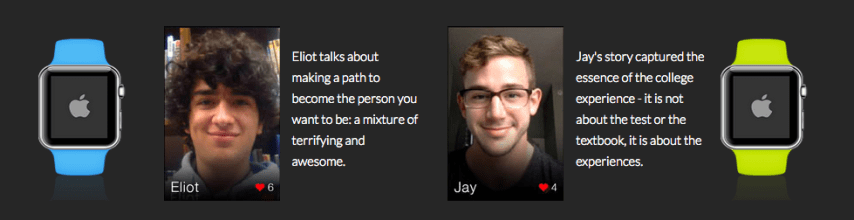
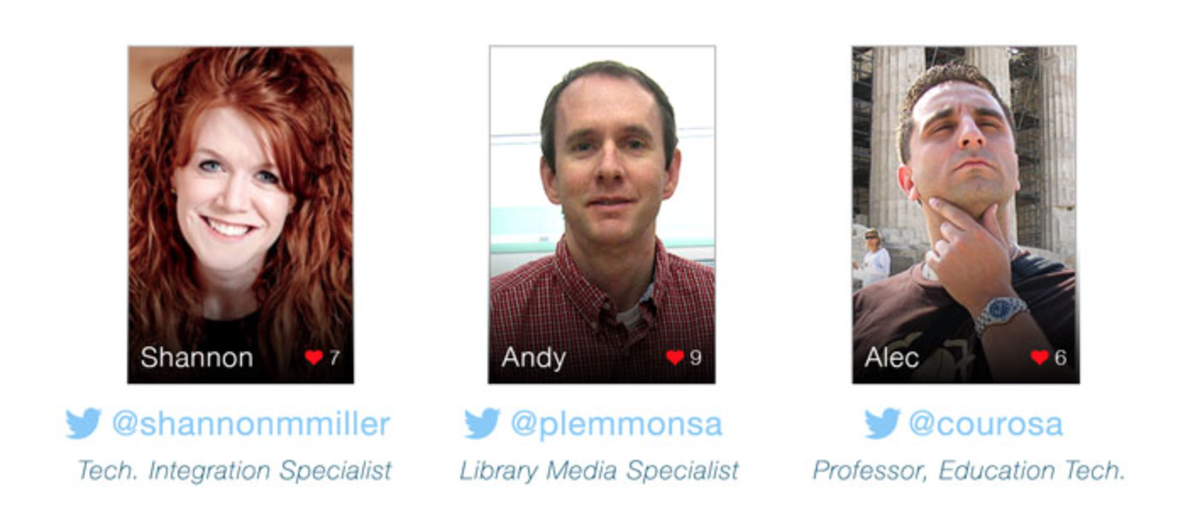
I was honored to be one of the judges in Flipgrid’s inaugural Graduation Voices contest.  Graduates of high school and college contributed their voices to two grids to complete the sentence, “To me, graduation means…”  Almost 200 graduates added their voices between the two grids, and I enjoyed watching all of them along with fellow judges Shannon Miller and Alec Couros. Congratulations to the two winners, Eliot and Jay.  They will each receive a new Apple watch.  You can read the full post on Flipgrid’s blog. I also send a huge congratulations to the other top voices on the grids.

Judges’ top choices for Graduation Voices 2015

High School

Watch Ami’s video here. Watch Anthony’s video here. Watch Ben’s video here. Watch Guillermo’s video here.  Watch Kyle’s video here.

College

Watch Abbie’s video here. Watch Alyson’s video here. Watch Jamie’s video here. Watch Liz’s video here.  To view all entries to the #grad15 grid, click here. Since I had the pleasure of watching every single video, I heard many standout voices.  Every video was special in some way, and some had me laughing out loud.  Graduation means so many things to so many people.  We all might think of it as closing one chapter and starting another, but most of us have other reasons we love graduation.  High school and college are a time to find yourself and further develop yourself as an individual.  Bravo to these students for letting their personalities shine through.  I want to recognize a few of the voices that made me smile in their own way.

Neil’s: I’m done with school!

You know you all want to binge watch Netflix and eat some junk food at 3AM.

How about the freedom to buy baked goods?

The end to regulated lunches?

Here’s to sleeping in!

Spread your wings and prepare to fly from sea to shining sea

Time to do whatever you want

The end to pointless homework

Getting to go home!

Get on board that train

I wish all of these graduates the best as they continue on in what life has in store for them next.  Go out and change the world!