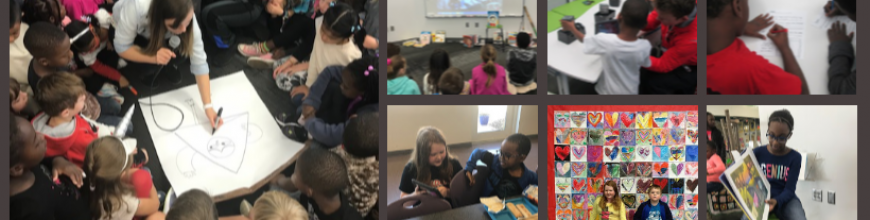
Using the I-PICK Strategy in the Library

Our teachers LOVE the I-PICK strategy for finding good fit books.  I must say that it is a strategy that just makes sense.  It doesn’t focus on one aspect of locating a book that matches a reader and it adjusts to whatever the purpose is for finding a book whether it’s independent reading or reading with a partner.

The I-PICK strategy stands for:

  • I choose my book
  • Purpose: Why am a I choosing a book today?
  • Interest:  What are the things that I like or want to learn about?  What holds my attention?
  • Comprehend:  Do I understand what’s going on by reading the words and pictures?
  • Know:  Do I know enough of the words to understand what’s going on?

Students often learn this strategy in their classrooms, and I typically do a follow-up lesson in the library to build a connection that this is a strategy that goes beyond the classroom.  This year, it seems I’m doing this lesson with almost every grade.  I’m trying to build connection even beyond the school during our time together.

We start with a quick brainstorm of all of the places where we can find books.  Students have named places such as school library, public library, bookstores (Barnes & Noble and Avid Bookshop), yard sales, thrift shops, and online.  Then, I shared a story about my own visit to the bookstore this summer to choose a book.  I wove in several things that I see students do, but honestly, that I also do.  After each bullet point that I shared, we paused and asked: “Does that make this a good fit book for me?”  The answer was usually “no, not completely” because each of these bullets is a piece of the puzzle of finding a good fit book and they all work together in order to make the puzzle complete.
mirandus

  • I went to Avid Bookshop to choose a chapter book, so I focused on that section of the store
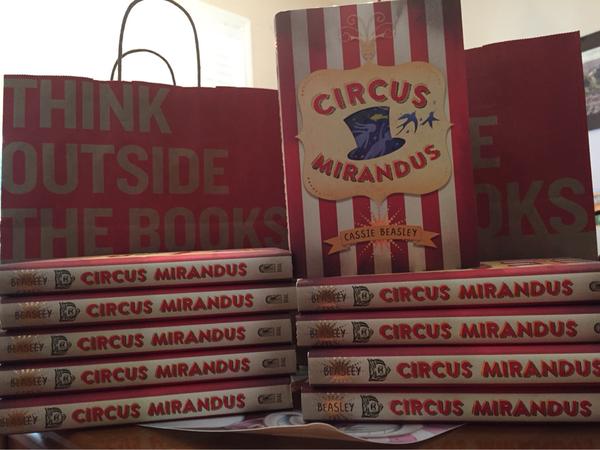
  • I pulled a book off of the shelf that had a red cover because that’s my favorite color.  (The book happened to be Circus Mirandus)
  • I took the jacket off because there was a picture hiding underneath and I started to notice things like the flying girl, the mysterious man in a jacket and hat, the tent with a sun on it, etc.
  • I read the inside jacket flap about the book
  • I read the first three chapters of the book because they were short
  • All along the way, I stayed interested in the book.  I felt connected to what it was about.  I understood what was going on.
  • I bought the book and loved it!

I don’t want to pretend that the I-PICK strategy is a linear process because it’s not.  I don’t go from beginning to end of this strategy every time I choose a book.  I often bounce around in the process.  However, most of these pieces are usually there when I pick a book.  I don’t pick a book because it’s on my Lexile level.  I don’t choose a book because of how many points I get for the book.  I don’t choose a book because someone puts it on a list and tells me that I have to read it.  I choose my book because I’m genuinely interested in it and it speaks to my personality as a reader.  I think the I-PICK strategy surfaces some of the steps that readers often do and puts them into an easy to remember formula for readers to think about as they select books.

The purpose can always change.  Sometimes a reader may be looking for a book to read with a family member, so the independent comprehension or “knowing the words” doesn’t matter as much.  The interest step is always there no matter the purpose.  I want student to always seek books that interest them or spark their curiosity.

After our quick brainstorm and bookshop story on the carpet.  I moved students to tables.  On the tables are stacks of books pulled from all areas of the library.  The idea is for students to practice the IPICK strategy in a small setting first.  I know that not every student is going to find a book that interests them on the tables and that is totally ok.  I do let them move from table to table if they aren’t finding an interest.  Most students do find something because I choose such a variety, but some just don’t connect to what they see.  The teachers and I roam around and ask students about what is catching their eye and what they’ve done to see if it’s a good fit.  We might listen to them read a bit, talk about their interests, or share something they’ve learned from the book.

The next part is my favorite.  I ask students about what else interests them or what else they hope to take with them from the library today.  This is where I really get to focus the library on their individual interests.  Sometimes it’s very broad such as “a picture book” but sometimes it is extremely specific like “Pete the Cat”.  No matter what they say I direct them to a part of the library with their shelf marker to start searching for that good fit book using the IPICK strategy.

In the end, many students do in fact find books that fit their “reading level”, but more importantly find a book that they are excited about as they leave the library.  Some students still leave the library with a 300 page book even though they are reading on a lower level, but to me, it’s part of the process.  I can continue to share strategies for choosing books, talk about purpose, and most importantly help readers make a connection to the books that truly interest them.  It’s not perfect, but it’s a big step in how we each choose the books that we read.


Continuing Our Battle of the Books with Even More Student Voices

IMG_5936

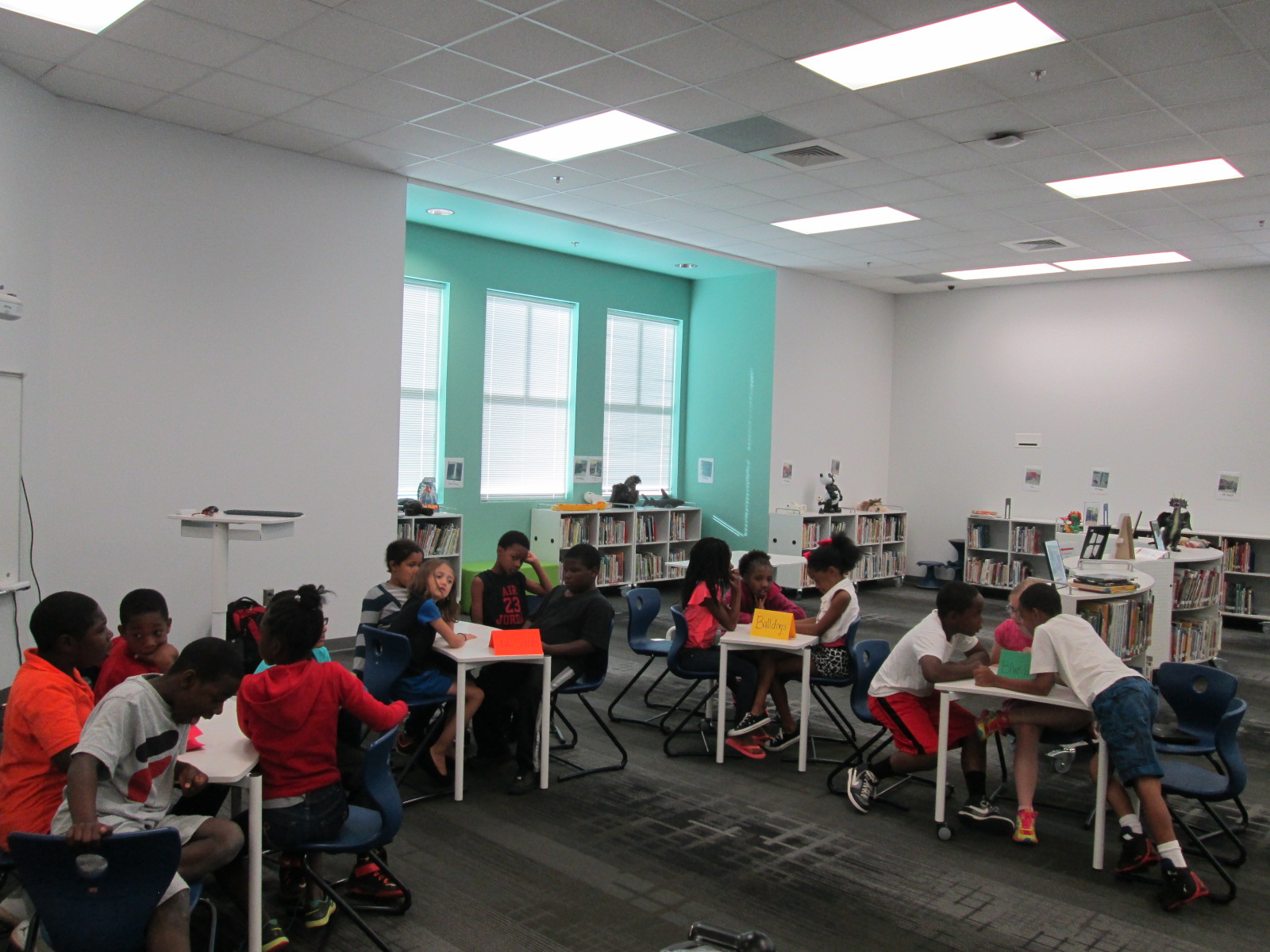
Each year we have a program called Battle of the Books in 3rd-5th grade.  This is a reading competition where teams of 5 students read a list of 10 books.  They work together to answer questions about the books in several rounds of competition in order to be crowned the Battle of the Books Champion.  Each year there are students who don’t participate in battle of the books for many reasons.  Sometimes they are unsure if they want to do it and by the time they decide it’s too late.  Sometimes they have too many other things going on that they can’t fit it in.  Whatever the reason, there are students who are left out. This year, one of our teachers, Ms. Mills, recognized that in 3rd grade and wanted to give these students a 2nd chance to participate.

IMG_5943


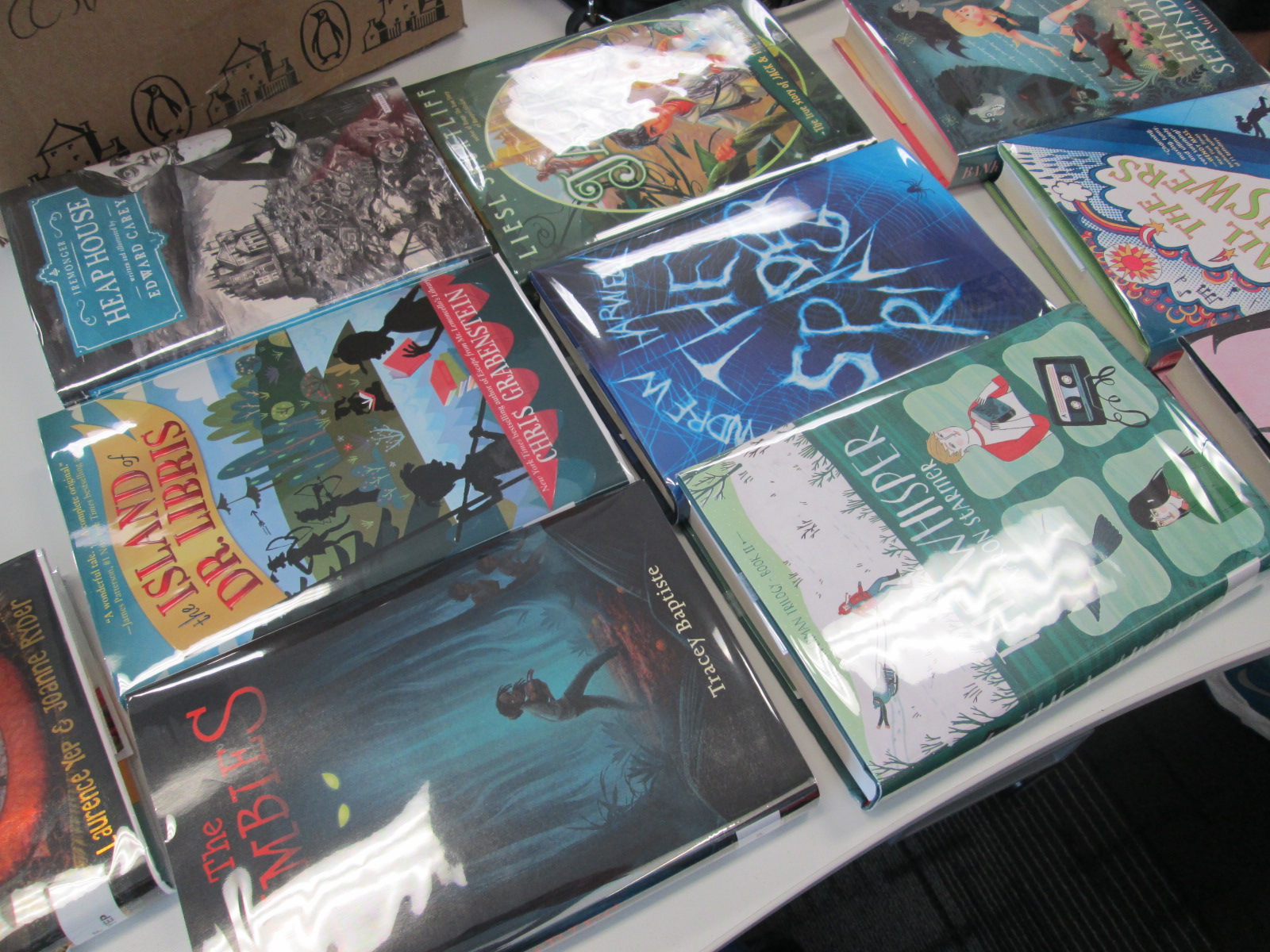
Since we are near the end of the year, reading the long chapter books that are on the regular list weren’t reasonable to consider, so she pulled several books that students could realistically finish, understand, and compete with.  Students read these books in small groups as well as during state testing when they finished their test.

Deciding to choose new books  meant that there weren’t questions written for these books, so she knew she would have to come up with every question asked.  I love what she decided to do.  She took the books to a 5th grade class and asked them if they would read the books and come up with questions to ask the 3rd graders.  The 5th grade students worked with their teacher to craft questions and they put their names on each question written.  During the competition, Ms. Mills or Ms. Garrett would say who a question was written by.

IMG_5937

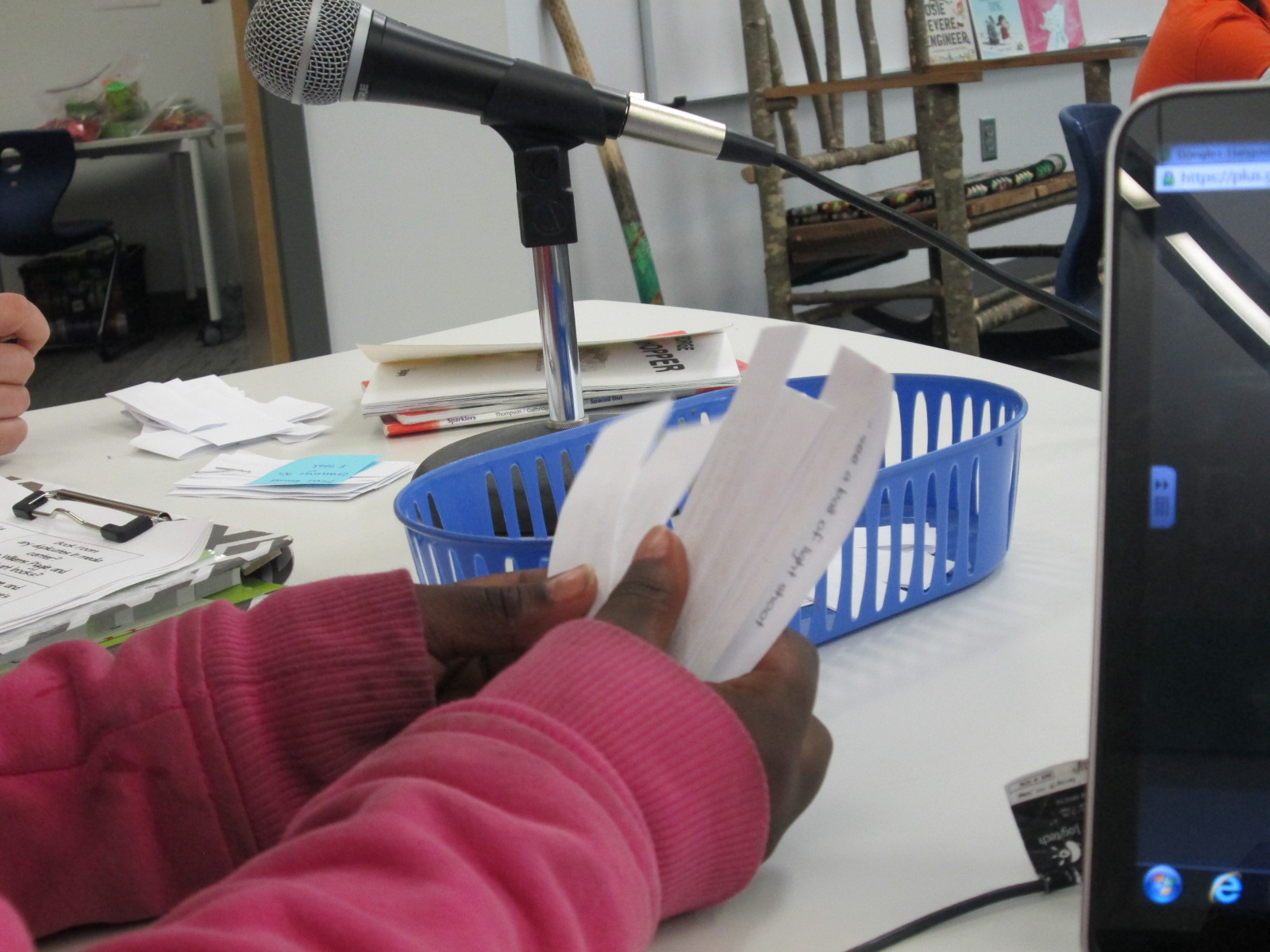
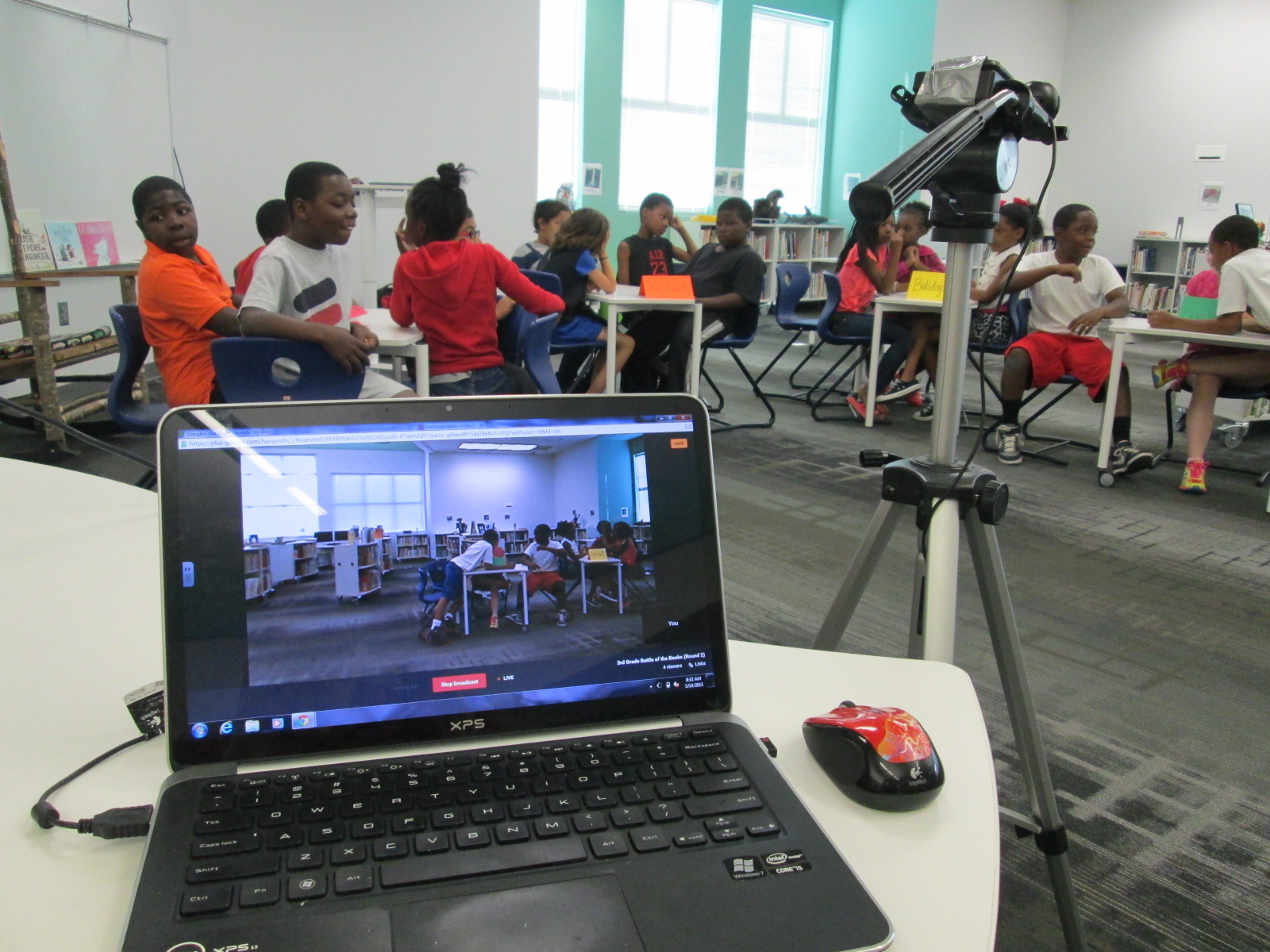
We decided to broadcast the competition through Google Hangouts on Air so that all 3rd grade classes could watch and support their friends.  I setup the hangout and emailed the link to all of the teachers, and of course, we now have an archive of our competition for anyone else who wants to watch.  Students helped pull the questions from a basket of questions and the teachers asked them. Each team received 8 questions and the teachers kept track of which team got the most questions correct.  It was a tight competition because the students knew the books so well.

IMG_5944

I take no credit for any of this competition, but I just had to highlight what these teachers and students did.  Bravo to Ms. Mills and Ms. Garrett for giving even more of our students a voice in this fun competition during the busy end-of-the-year rush.  They all did an awesome job, represented our school well, and showed that they knew their books well!

Unpacking Our Student Book Budget Books: Part 1

Unpacking (9)

Two parts of our 2015 student book budget arrived!  It’s always exciting when I can email the students and tell them that the books are here.  They’ve been asking me almost daily since we placed the order.

All of our books from Avid Bookshop arrived during our author visit with Sarah Weeks.  The first box of Capstone books arrived while our 5th graders were at Skidaway Island.  I emailed the whole book budget group and told them to come today at noon to unpack books.

Our timeline has been a bit crunched this year.  We are almost out of school days and book check out is already coming to an end for the school year.  I need to do a better job next year of making sure this project doesn’t slip too far into the year.  Usually, we put all of the books out when they arrive and let the students start checking them out.  However, with only 8 days of school remaining, I handed this dilemma to the group.  There was a lot of debate about whether or not to have a special checkout of just book budget books or to wait until the opening of the library in the fall.  After a lot of discussion, the students decided that they wanted to wait and have these books be the first new books available to students in the fall.  It’s always nice to start the new school year with some exciting new books.

As we unpacked the books, we checked them off of our packing slips.  I had already cataloged the Avid books and uploaded the MARC records for Capstone, so the books were ready to go into circulation.  Once they were checked off the list.  Capstone sent us some special labels to put inside our books so that students could indicate books that they chose for the order.

Unpacking (3)

Each student chose a label, wrote his or her name on the label, and added it to the inside cover.  Students also stamped the books with our library stamp.

The excitement was high and it was so much fun to see the students immediately diving into the books.  They all tucked away around the library to read by themselves or with a partner.  Before they left, the book budget students did get to checkout a few of the books to read over the next few days.  They will return these books to the boxes so that they are ready for the next school year.

We are eagerly awaiting our final order from Capstone which should be arriving in the next few days.

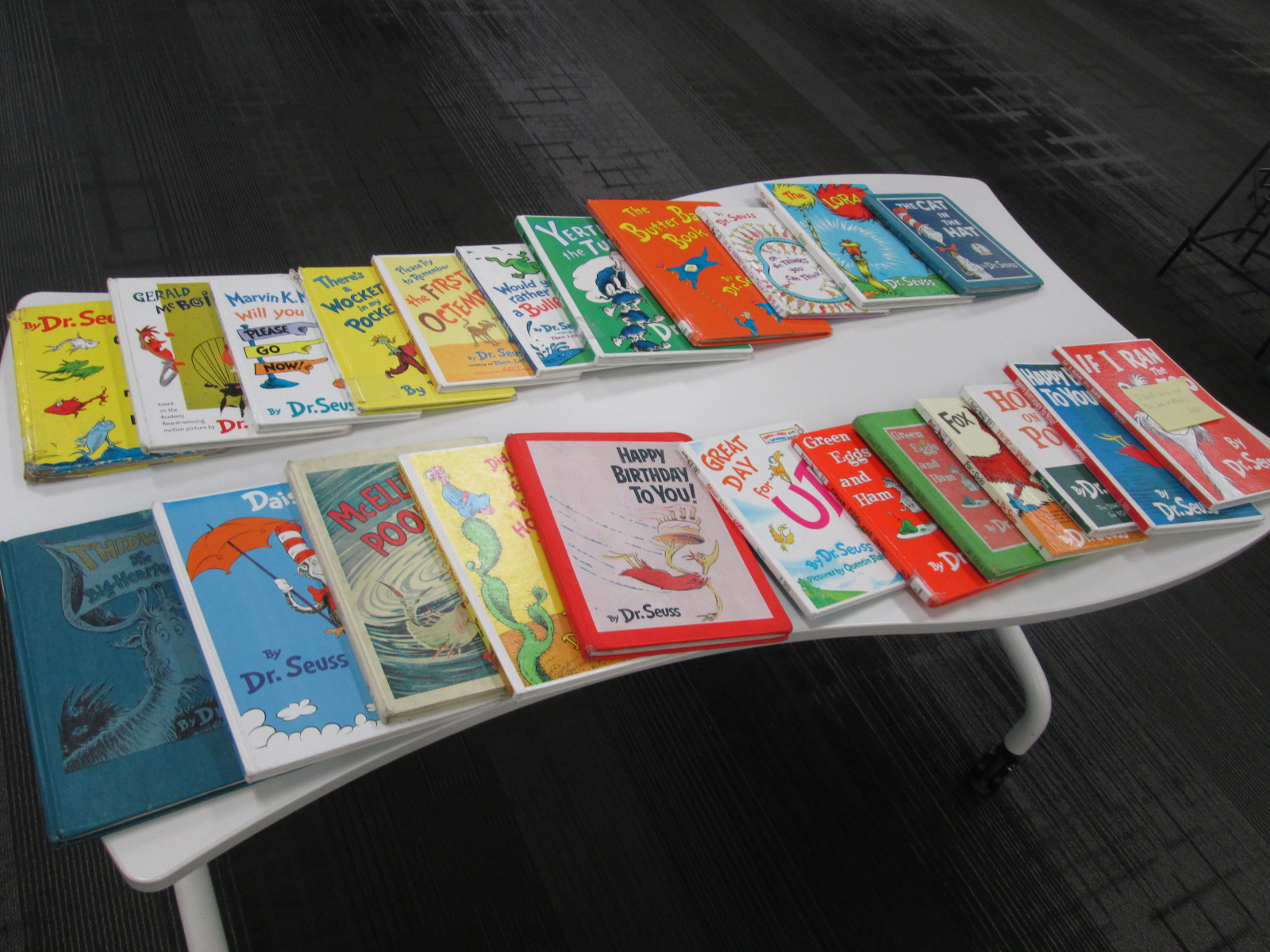
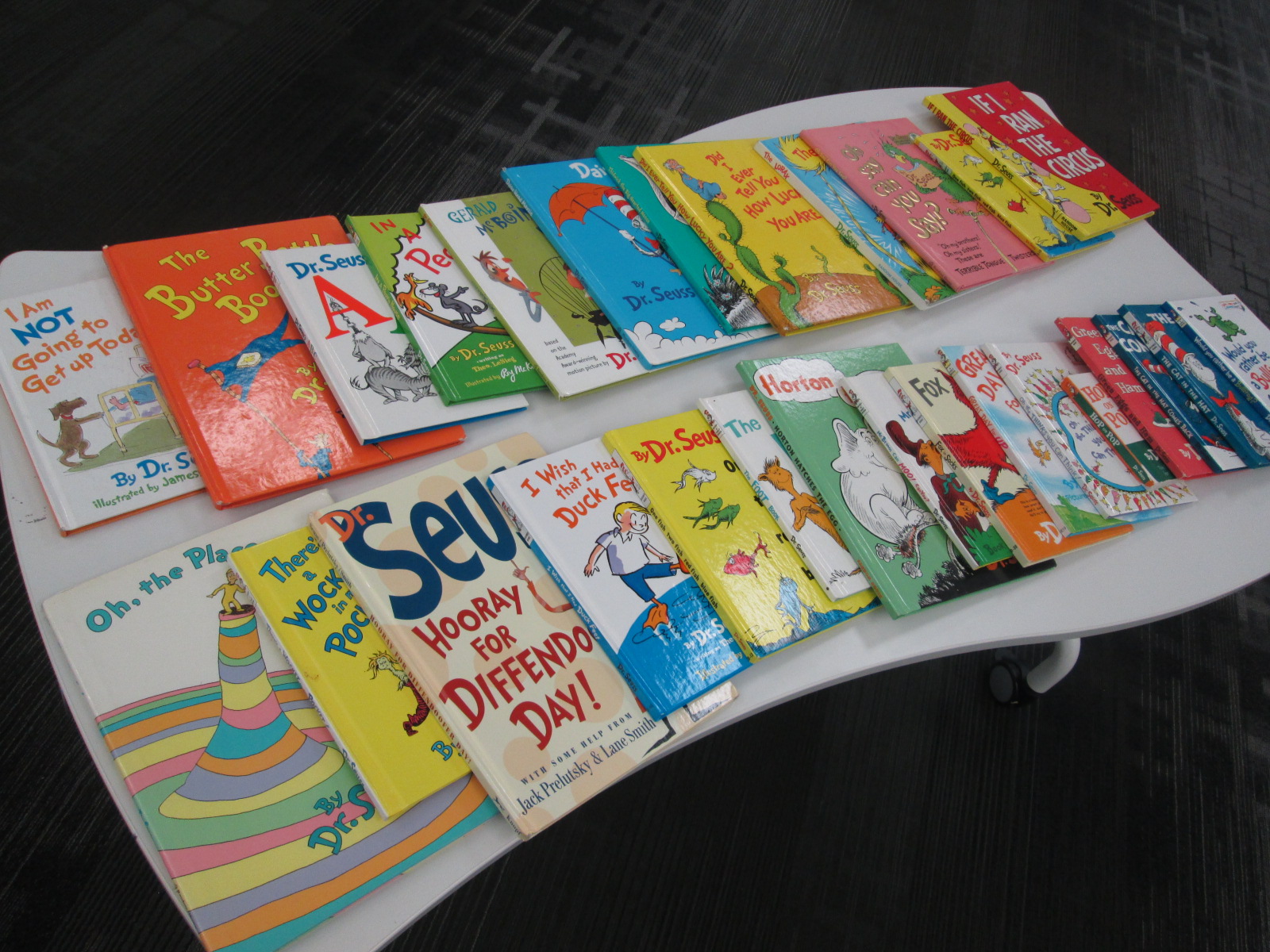
Dr. Seuss Author Study Centers

Seuss (2)

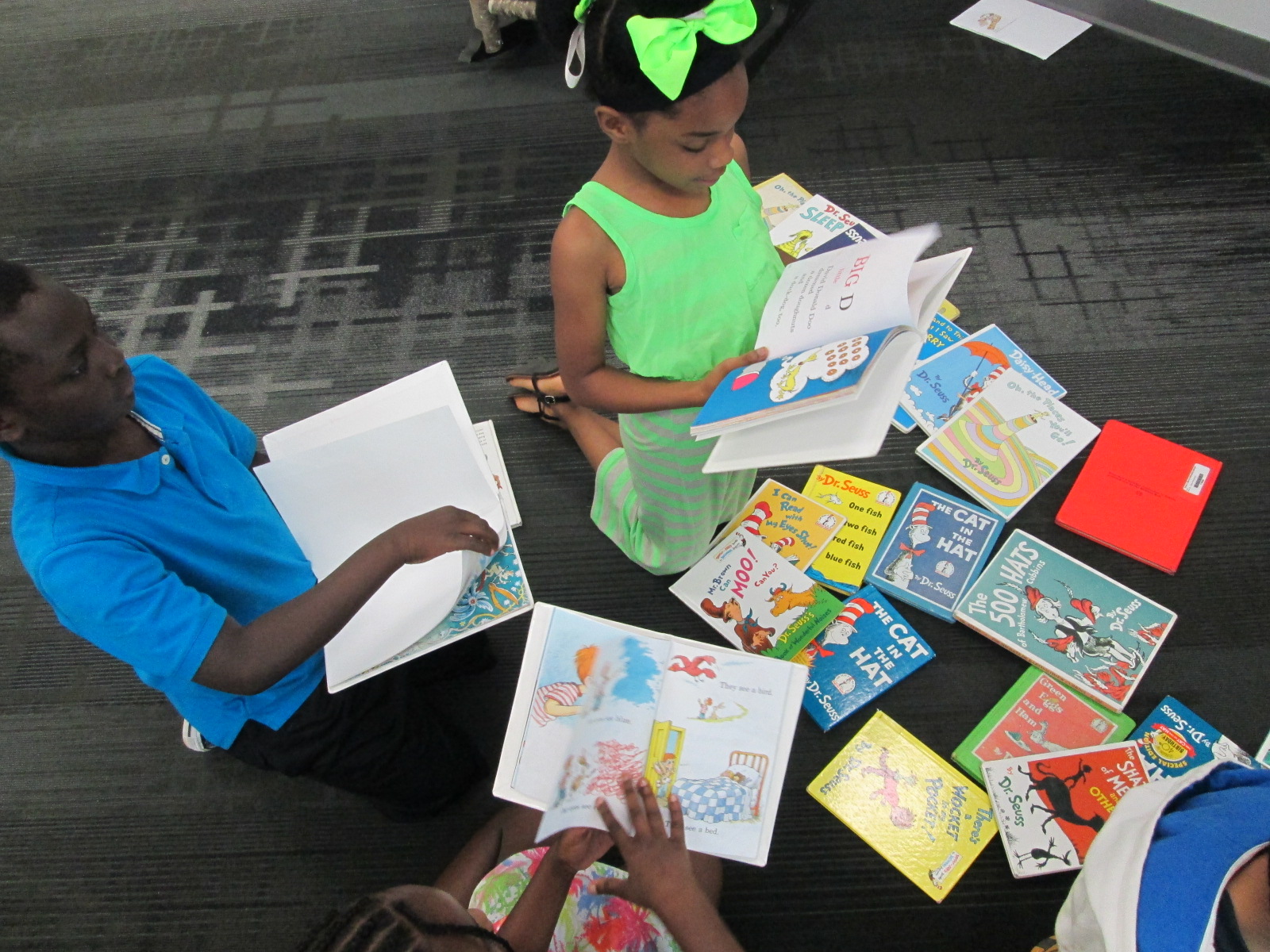
It has been some time since I did traditional types of centers that student rotate through.  Third grade is currently working on a Dr. Seuss author study as they close out the year, and they wondered what students might do in the library related to Dr. Seuss.  We looked at the days on the calendar along with everything that has to be done and decided that there wasn’t time to pull off a project around Dr. Seuss and really give it the time it needed.  Instead, we decided that I would give students some experiences to connect with Dr. Seuss as enrichment.

Before student arrived, I setup the 5 centers around the library so that they were somewhat in a circular arrangement.  I wrote the 5 centers on the whiteboard so that students could check the order as needed.

When students arrived, I explained each center very briefly and then we numbered off 1-5 to begin centers.  Each center lasted about 10 minutes before rotating to the next center.

Center 1: Tongue Twisters

Listen to our tongue twisters here!

I found a variety of tongue twister online as well as some Dr. Seuss books that had more tongue twisting lines than others.  At this center, students practiced reading tongue twisters from the table, recited ones they already knew, or even made up their own.  When they found one they were happy with, they recorded the tongue twister on Flipgrid.  They loved listening to how other students sounded and many students “liked” other student videos.  Most students recorded more than one tongue twister while at this station.  I had fun with one student writing a variation of Peter Piper picked a peck of pickled peppers.  Her family own a pickle business, so we were trying to change the words to match her family business.  We came up with “The Phickle Chickle picked a peck of Phickles Pickles.”  I encouraged her to continue writing her version and we would record it sometime.

Center 2: Checkout

Rather than waiting until the end to have students check out books, I made it a center.  Students could check out up to 5 books or just browse the library if they had enough books out already.

Center 3: Seussville on computers

I setup 5 Lenovo computers with the Seussville website pulled up.  Most of the students had never visited this site, so this gave them some time to explore the videos, games, and activities that fill this site.  Many found things that they wanted to print out and do later, so I hope some students discovered some summer activities.

Center 4: iPad apps

I downloaded 2 free iPad apps related to Dr. Seuss.  One is the Happy Birthday to You camera.  This was definitely the most popular app of the two.  Students enjoyed taking selfies or pictures of friends and then using the stickers to develop their own Seuss personality.  This would have been a great lead in to creative writing.  Students could have created their picture and then developed an accompanying story to match the picture.  The other app was the Dr. Seuss Fun Machine, but students moved away from it fairly quickly due to its simplicity and lack of clear instructions.

Center 5: Seuss books

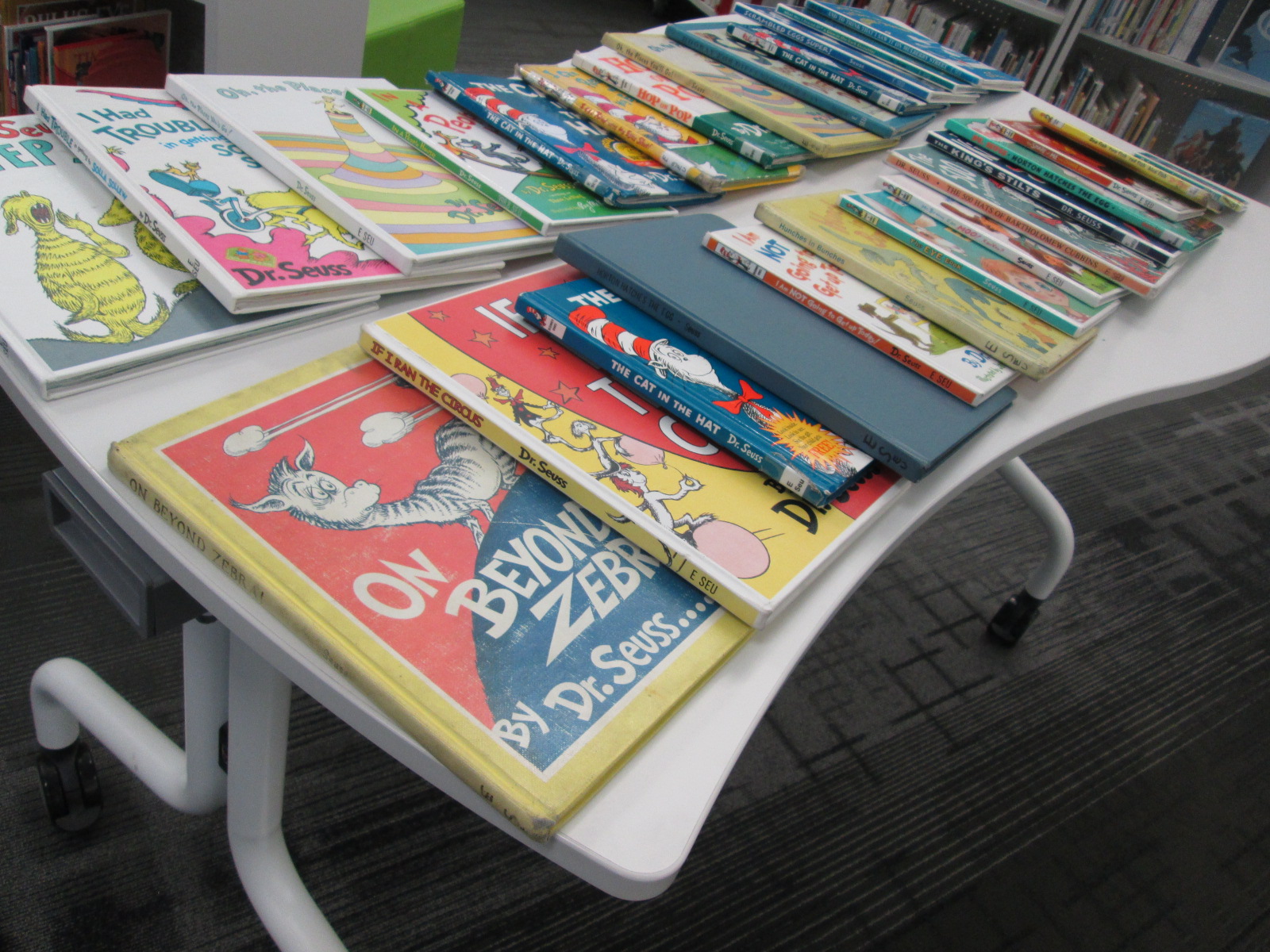
We have SO MANY Dr. Seuss books in the library, but it’s amazing how many of them students have never seen or read.  I loved having a station built in where students could just spend time browsing Seuss books, reading along, or buddy reading.  This was a center that most of the teachers visited along with students to read with them or listen to them read.

This was a wonderful end of the year activity, but I saw several potential opportunities that could have taken us into a larger project or even just a follow-up lesson.  It reminded me that centers can serve many purposes and are still a great way to split students up into a variety of experiences.

Kindergarten Mission to Mars: A Makerspace Tinkering Lesson

hocking makerspace exploration (15)

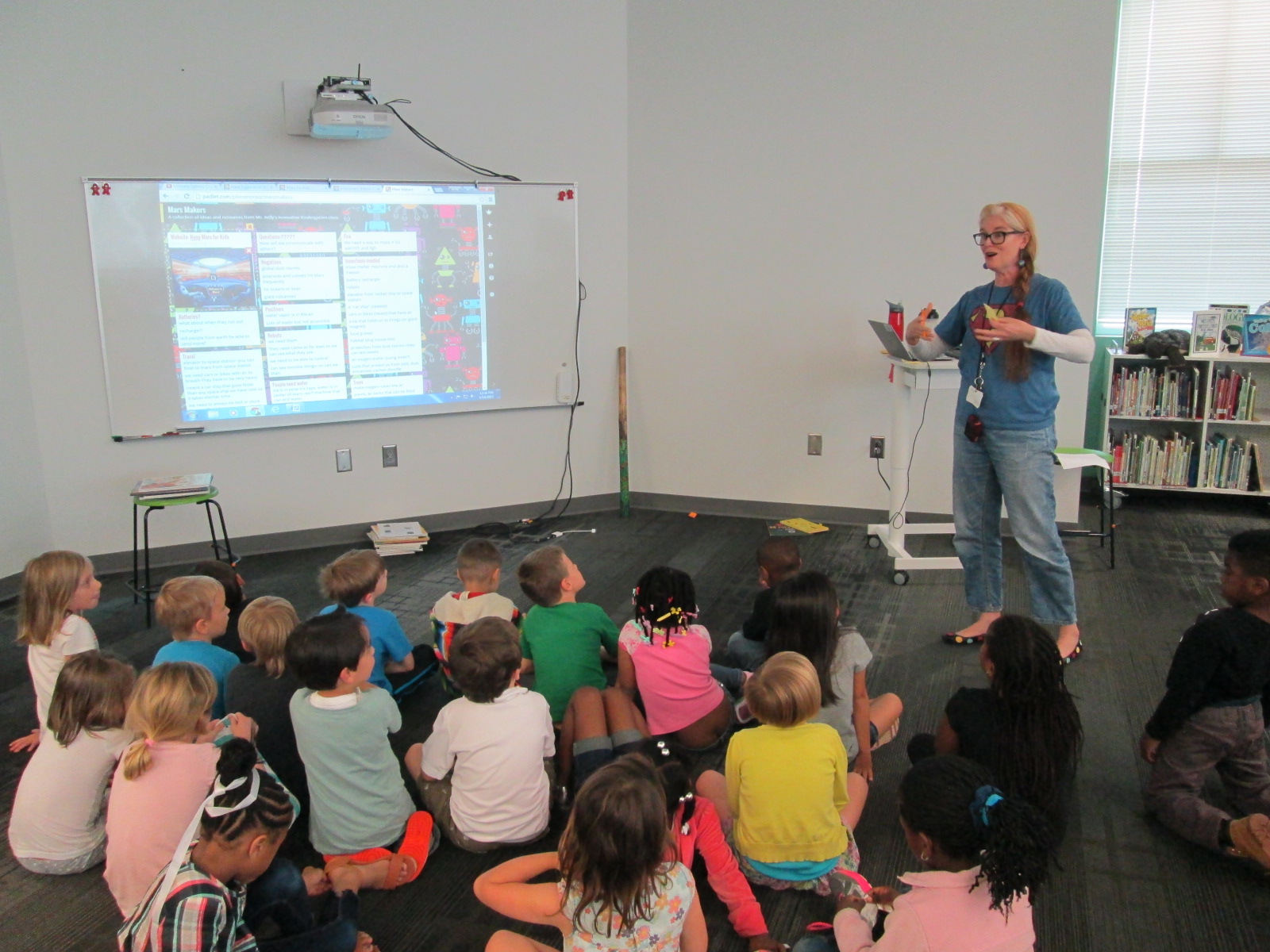
Ms. Kelly’s Kindergarten class has turned a curiosity into a year-long project.  They became interested in space, and it has turned into a research project about planets, creating planet ebooks, writing original songs about the planets using ukuleles, and having a Fat Tuesday parade dressed as the planets.

Now, these students are on a mission to figure out how to support human travel to Mars.  They don’t actually want to go to Mars themselves, but they want to think about what might need to be invented in order to support human travel to Mars in the future.  Wow!  Some might look at a Kindergarten class and think this is silly.  How could students as young as Kindergarten come up with ideas for traveling to Mars?  I think Ms. Kelly’s class proves that even our youngest voices should not only be listened to but empowered as well.

Mars Makers

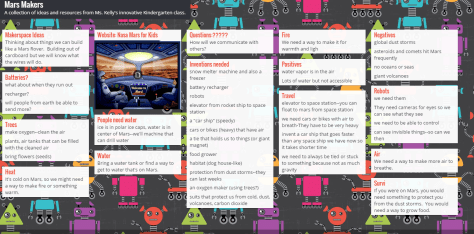
These students have spent extensive time researching Mars.  They know about the land, the weather, the atmosphere, and ways that Mars has already been explored.  They have brainstormed things that they might need to think about when traveling to Mars such as water, food, oxygen, and how to survive the dust storms.

They recently came to the library to read the book  You Are the First Kid on Mars by Patrick O’Brien.

She and I brainstorm a lot over email.  When working with her, nothing is impossible and our biggest limit is time.  She wanted a way to capture all of her students’ brainstorming, so I suggested a Padlet since they could post ideas, websites, pictures, and files.  I set one up for her and they got to work adding to it.

Within their brainstorming, they talked about creating robots that could help them explore Mars as well as several other technology-heavy ideas.  This brainstorm naturally brought us to our library makerspace.  We wanted students to have a time to explore some facts about robots, technology, electricity, circuitry, energy, and space exploration.  Ms. Kelly books an hour of time for student to explore, and I created some experiences for them to move through.

Experience 1:

I pulled as many books as I could find on all of our major maker concepts from 3d printing to robotics to circuitry.  I also pulled books about space.  This experience was a time for them to look at lots of pictures, read captions, and skim text with one another and an adult to get ideas that they hadn’t even thought of in their brainstorm.

Experience 2:

We have several robotics options in our makerspace.  Since robotics was part of their brainstorm, I wanted them to tinker with a robot that was manageable by a Kindergarten student.  I chose Sphero.  Since Sphero alone couldn’t do some of the things they were thinking of robots doing, I showed them a Youtube video of how Sphero can be combined with other things like a chariot to pull a camera or add an attachment.

Then, students used the Drive app to practice driving Sphero and brainstorming how this might help them explore Mars.

Experience 3:

Students have talked a lot about wiring and circuits during their brainstorming.  They really want to wire something that could actually work. I have 2 littleBits space kits which have instructions for creating things like Mars Rovers, Grapplers, and Data Collection Tools.  The age range is high for these kits, but age range never stops us from trying something.  We just look at what barriers are in place and then figure out how to build a bridge.  For this experience, I started students with the instruction booklets.  They got into 2 smaller groups and looked at the diagrams, instructions, and functions.  They started to think about their brainstorm and how these littleBits inventions might work with their ideas.  Then, they moved to a table of littleBits.  In pairs, they used a battery, power cord, and blue power switch to connect to one input (pink) and one output (green).  The idea was just to start tinkering a bit with littleBits to see how they work.  They weren’t necessarily making a space invention yet.

Here’s a quick look at what it all looked and sounded like:

Next, our students will go back into their classroom and continue working on their padlet using the ideas from the makerspace exploration and the books.  They also checked out some of the books to take back.  Then, students will begin constructing prototypes of tools that they might actually invent for space.


Connecting Through Stories: World Read Aloud Day Part 4

WRAD15 Day 4 (19)

It’s snowing in the northeast, so today’s WRAD15 connections were a bit tricky.  I had 4 cancellations today, but that did not stop classes from coming to the library to still hear some good stories read aloud.

Ms. Wright’s class read I’m Bored.  Ms. Yawn’s class read Goodnight Already and Wolfie the Bunny.  Ms. Li’s class read The Story of Fish and Snail.  Great conversation filled the air even though we were disconnected from our friends through Skype.

Ms. Spurgeon’s class also had a cancellation, so we used this time to hear some oral stories about Harriet Powers, a former slave from Athens who made a famous Bible story quilt.  I have a replica of the quilt, so we sat around the quilt and heard stories about Harriet Powers and the various symbols she put on her quilt.

The day still had connections.

Ms. Hocking’s Kindergarten class connected with Sherrell Stepp’s 1st grade in Gilbert, South Carolina.  We read Same, Same but Different.  Students asked questions about their schools to hear things that were the same but different.  We both have a college in our towns but they of course have different mascots.  We both have recess but our school has recess before lunch and their school has recess after lunch.  It’s always fun to see how same but different we are even if we are just a few hours away from each other.

Ms. Lauren’s PreK students connected with Catherine Word’s 4th graders in Baton Rouge, LA.  We shared Elephants Cannot Dance.  I was elephant and Catherine was Piggie.  Catherine’s students were the squirrels.  We took time to share our favorite Mo Willems books as well as other favorite books.

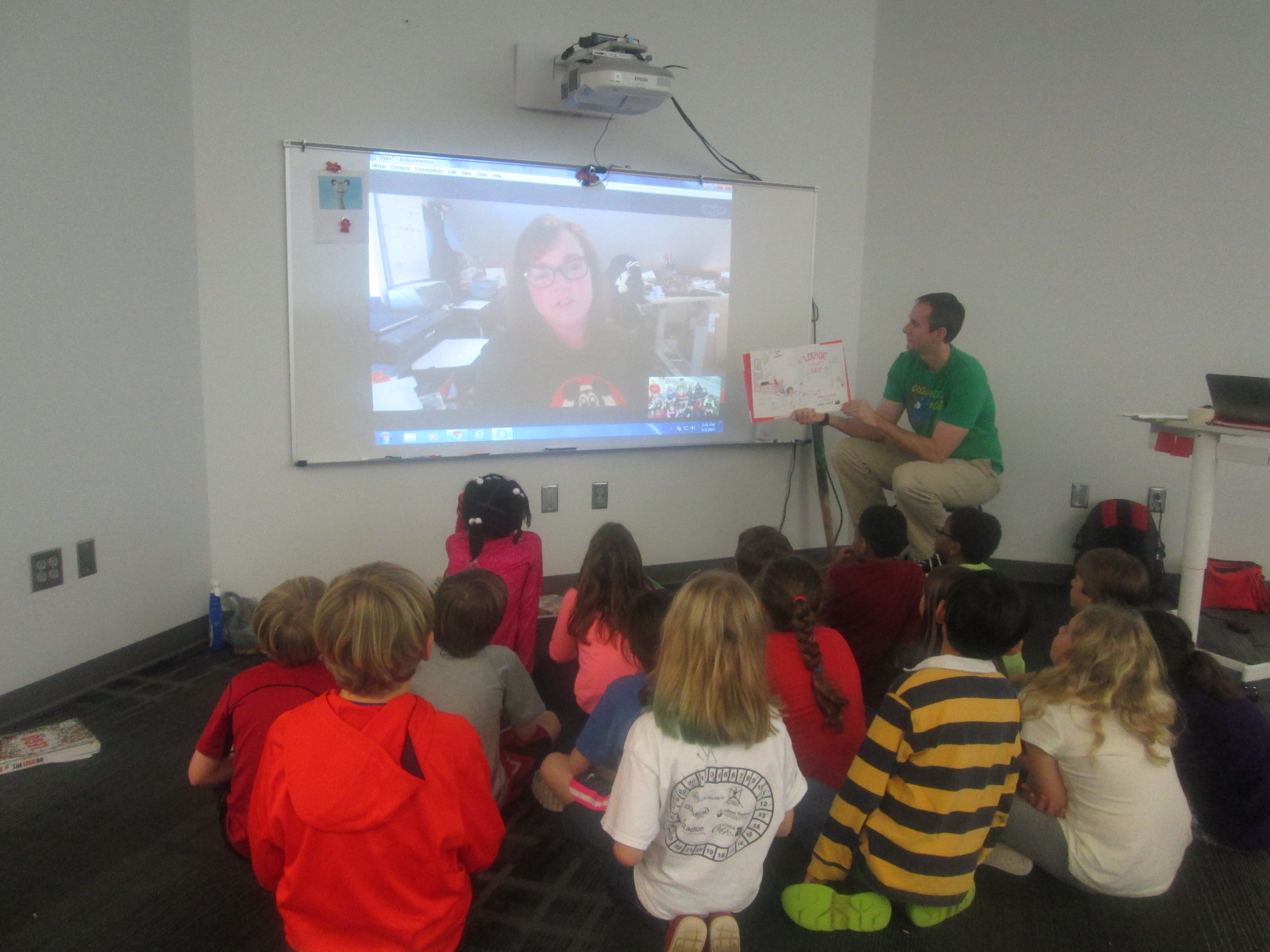
Ms. Ramsey’s class connected with Kelly Light, author of Louise Loves Art.  She read the book to us, but what we loved was how she pointed out so many details in the pictures that you can miss if you go too fast.  Kelly reminded us all of how important it is to slow down when we share a story aloud and spend time examining and talking about what we see in the pictures.  I know I need to do more of this as an adult.  I’m often rushing too fast to just get to the words.  I loved how Kelly told us that she chose red because it is a “strong color”.

Ms. Ramseyer’s 2nd grade class closed our Day 4 by connecting with author, Peter H. Reynolds.  Peter showed us all around his studio, let us asked questions, and just had a hangout session.  It was a blast.  We saw some examples of how he puts together a book idea such as putting ideas and sketches on index cards and then putting them in order.  Peter closed with Susan Verde’s You and Me and gave our students some encouraging words to go out and change the world.

Once again, we learned how much stories connect us!

Connecting through Stories: 2015 World Read Aloud Day Part 1

FullSizeRender

Our first day of Read Across America and World Read Aloud was filled with wonderful stories and plenty of technical difficulties, but we didn’t let the technical difficulties prevent us from connecting through stories.

The day began with my first cancellation emails.  Since World Read Aloud Day is right at the beginning of March, many states are still experiencing winter weather.  Two connections were cancelled before we could even begin due to snow.  Did this stop us? No.  Ms. Wyatt’s 1st grade class still came, and we read aloud Goodnight Already and Waiting Is Not Easy and noticed many similarities between the two books.  We just didn’t have a Skype connection to go with it.

Ms. Freeman’s 5th grade students came to connect with Cassandra Ogletree and her students in Forsyth, GA.  Before we connected, our students made predictions about where they thought Forsyth, GA was located.  Then, we used Google Maps to take a look.  During our connection, we read Goodnight Already with Cassandra and her students.  I was Bear and Cassandra was Duck.  Since our 5th graders are studying perspective, they noticed how the book showed the different perspectives of bear and duck.  As usual, students had time to ask one another questions about where they live.  We often take for granted that students realize how connected we are around the world, but these Skypes surface that our students have lots of wonderings about the day to day lives of others around the world.  When we disconnected, we took time to look at a street view in Google Maps to see the school that we had just Skyped with.  Student were amazed by the lack of buildings around the school.  It seemed to be way out in the country surrounded by pastures and trees.  This is very different from our school that is right next to UGA.

Ms. Boyle’s class skyped with Colleen Friel and her 1st grade in Long Island, NY.  We shared The Story of Fish and Snail.  Our Skype calls kept freezing or dropping, so we reached a point where we just had to stop the call and finish the story on our own.  Once again, the students were so patient during the technical difficulties and we didn’t let it stand in the way of the story.

Ms. Haley’s class had an opportunity to connect with Elizabeth Garton Scanlon, author of wonderful treasures such as All the World and The Good Pie Party.  The downside was that we couldn’t get Skype to work at all in order to connect with her.  I tried every trick I could think of to make the connection better and faster and nothing worked.  Finally, I took out my phone and we huddled around my phone for over 30 minutes listening to her share about her books, her ideas, her dog, and her upcoming work.  We had the treat of hearing the first few pagers of her upcoming book The Great Good Summer.  Within just a few pages, several of our students started opening up about connections they had to the book.  One student shared about losing her dad.  Another talked about her dad being gone on tour.  I love how stories help us make connections to the emotions we wrestle with and give us a pathway to conversation with one another.  It must be amazing as an author to hear how your words open up conversations for readers.

Ms. Freeman’s 5th grade returned at the end of the day to connect again with Colleen Friel in Long Island, NY.  This time, our Skype connection was much better since the district worked on the network.  We read the book The Day the Crayons Quit.  Students loved finding out that even though there were 7 inches of snow on the ground, the New York students were still in school.

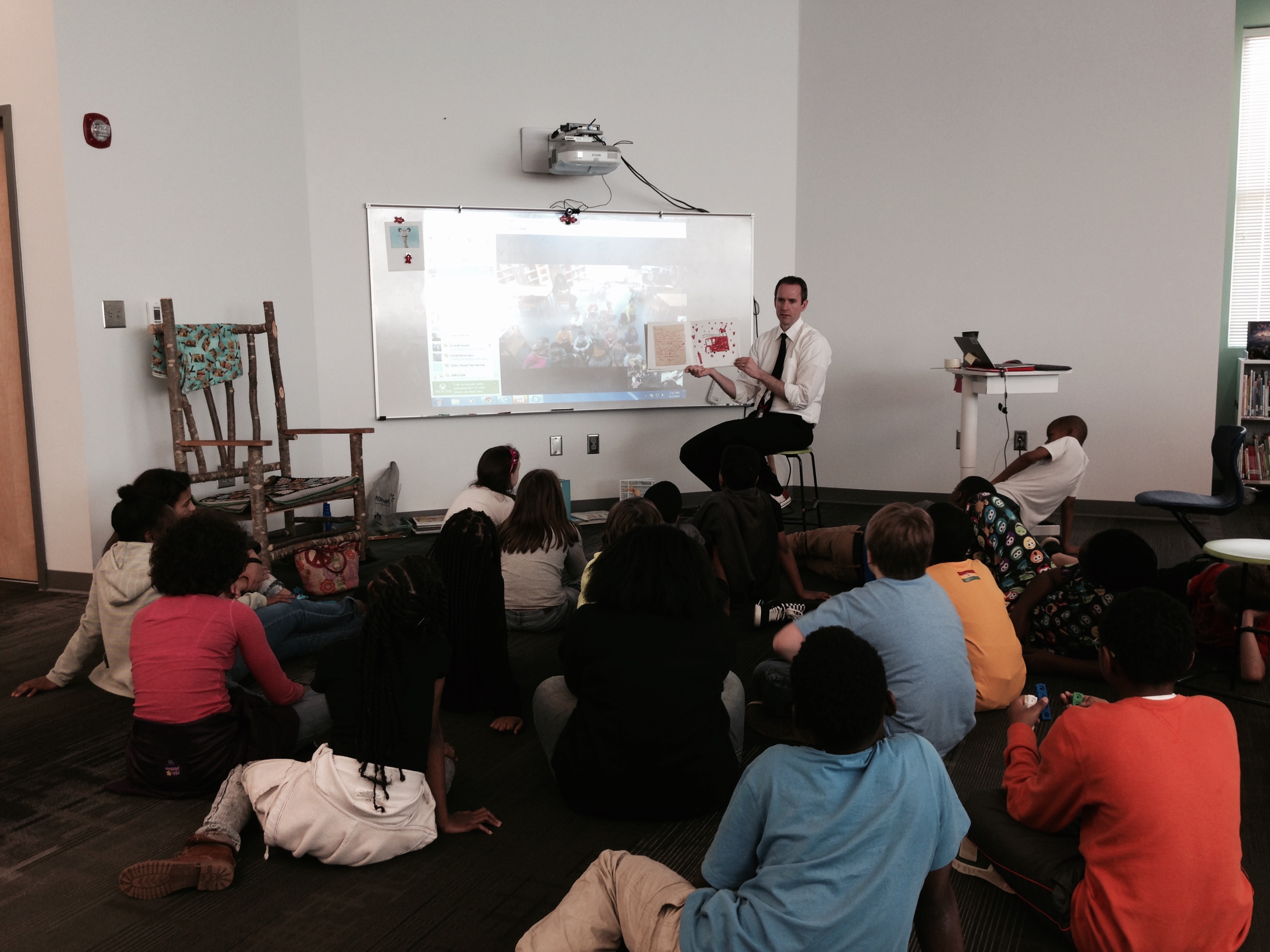
Finally, we closed our day by doing a triple Google Hangout with Donna MacDonald in South Burlington, VT and Craig Seasholes in Seattle, WA.  Ms. Carney’s Kindergarten class joined their Kindergarten classes in reading 3 Elephant and Piggie stories.  It was fun to connect across the country and hear words being spoken between thousands of miles of the United States.  We had fun, engaged in some silliness while we read, and made some new friends.  Even though Donna had some technical difficulties, we still made it work.  We could hear her, but not see her.

I won’t lie that I was a bit flustered today with all of the problems, but I have to say how important it is to persevere.  I could have easily given up and called it all off, but we made things work with what we had.  Because of that, our students had an amazing first day of connections through stories.

Dr. Seuss Day: Our Read Across America Celebration

Barrow Seuss 2015 crop

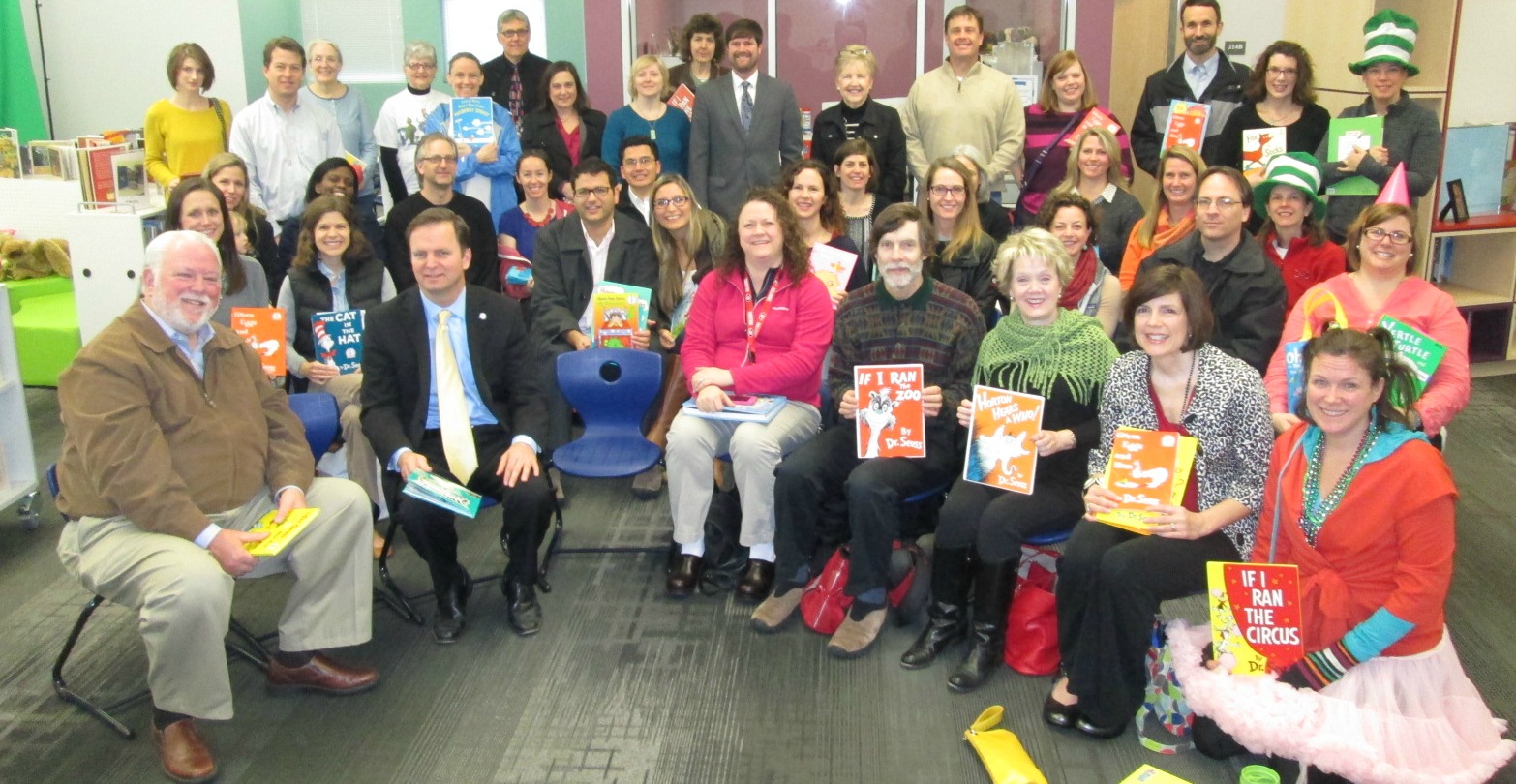
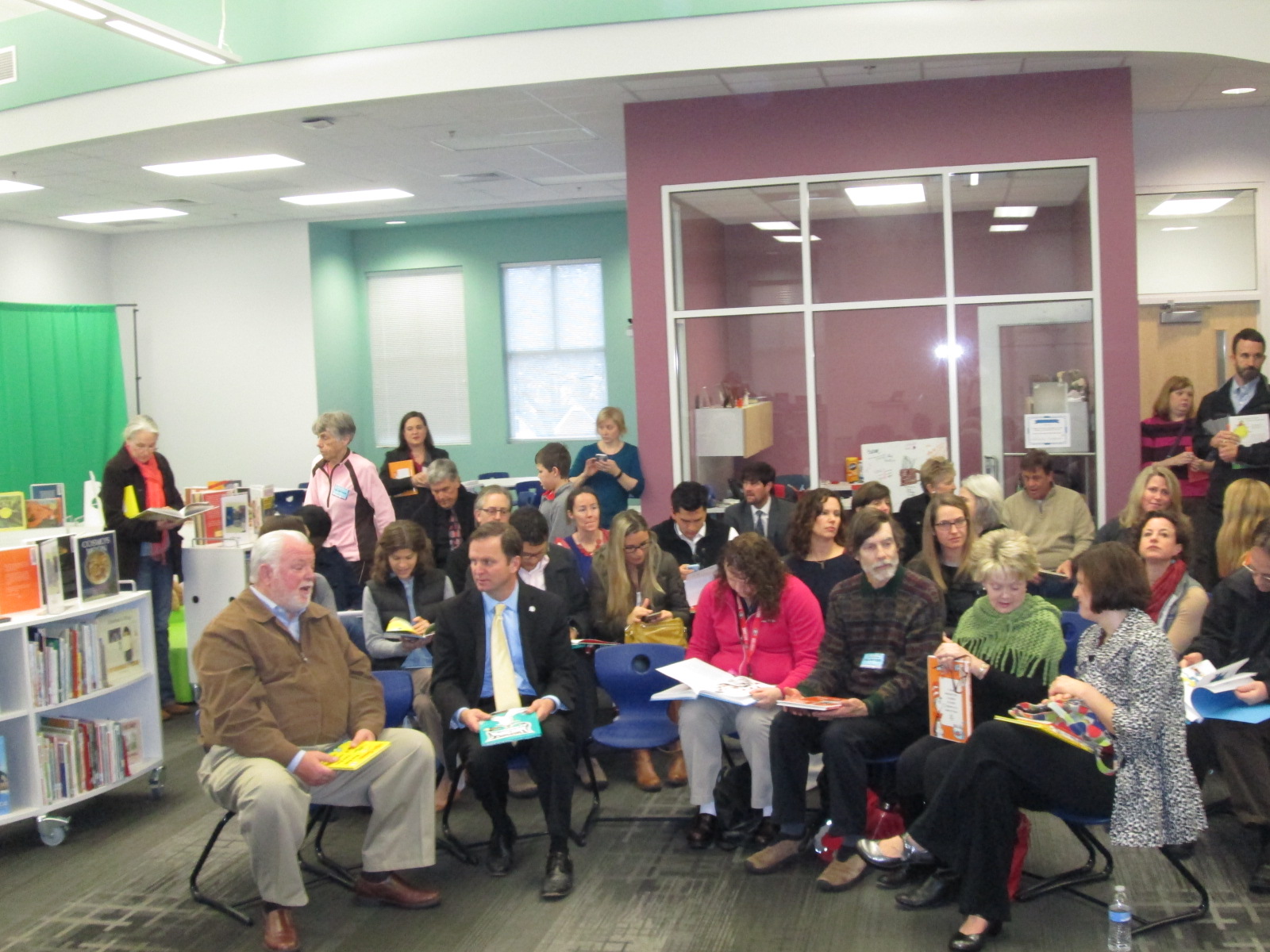
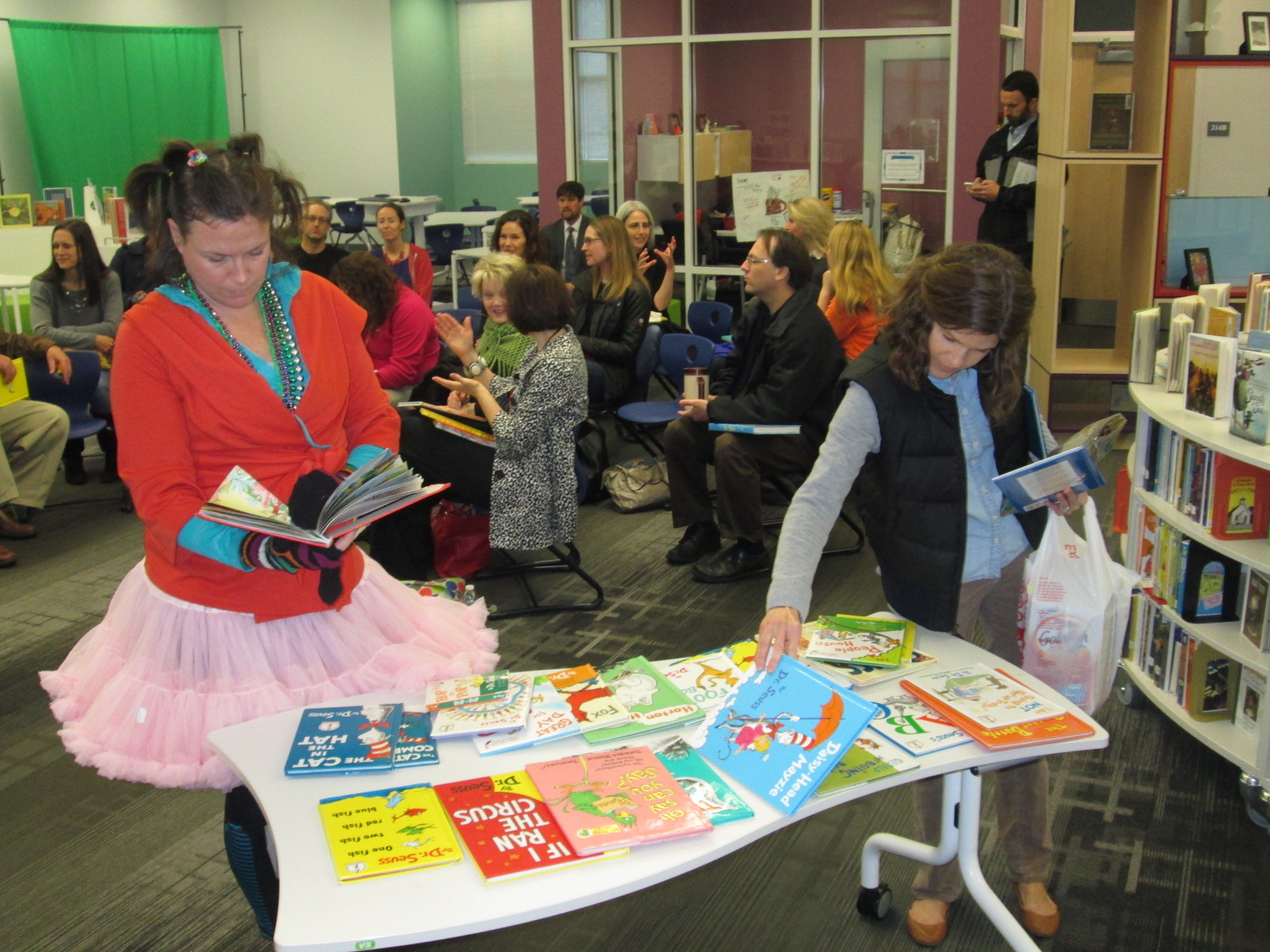
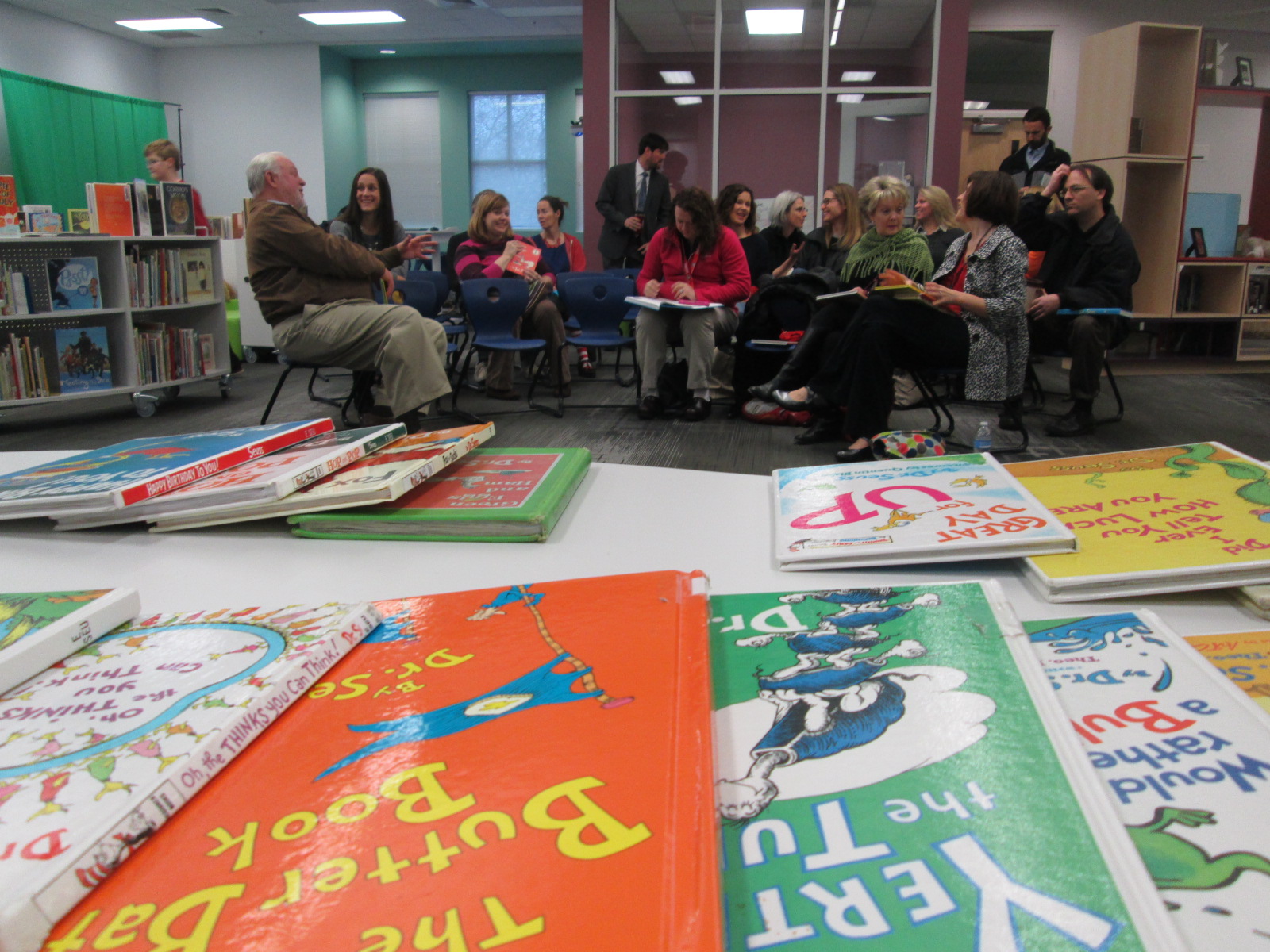
Today was the beginning of a very exciting week in the Barrow Media Center.  Each year on March 2nd, we schedule guest readers for every classroom in the school.  These readers select favorite Dr. Seuss books to share with our students.  It is amazing to see our community come together for this event.  Each time we celebrate, there are new faces that join our readers.

Barrow Seuss 2015 (4)

Courtney Tobin helped me this year to organize readers.  She created a Signup Genius and parent leaders in each grade level began sharing the signup.  It was also shared with our regular library volunteers and on our library and PTA Facebook pages.  By this morning, we had almost 2 readers for every classroom.

Barrow Seuss 2015 (3) Barrow Seuss 2015 (2) Barrow Seuss 2015 (1)

Readers gathered in the library, chose their books, and socialized before we took a group picture.

Barrow Seuss 2015 (7) Barrow Seuss 2015 (6) Barrow Seuss 2015 (5)

Then, students escorted them to their classrooms to read.  I quickly ran around to as many classrooms as I could snapping pictures.  It was so special to see students circled up on the floor listening to the words of Seuss spoken into the air.  There were also special memories shared as readers brought in their own copies of books that they had read to their children or had even owned as a child.  My wife, Denise Plemmons, shared a copy of Green Eggs and Ham with my daughter’s PreK class and she was able to show them where she had written her name in the book when she was a child.

These are the kinds of things that can’t be replaced by technology.  While I’m a huge advocate of using technology to share our voice, it doesn’t replace the shared experience of sitting around a book, hearing the pages turn, and losing yourself in the illustrations.  Thank you to all of the readers who took time to share stories with our Barrow readers.

Barrow Seuss 2015 (32)

This was just a warm-up to the 38 skype and Google hangout sessions that we have schedule this week for Read Across America and World Read Aloud week!

2015 World Read Aloud Day Blogging Challenge Week 2

It’s time once again for the World Read Aloud Day blogging challenge as we count down the days to this special week-long event of sharing stories with one another across the miles.  My friend and super librarian, Matthew Winner, has outlined the challenge on his blog.

The World Read Aloud Day “Speak Your Story” Blogging Challenge begins February 9 and runs through March 8. If you choose to take the challenge, each week you will be asked to write a post in response to a prompt or question (outlined below), for a total of 4 posts counting down to World Read Aloud Day.

Each of the prompts addresses the WRAD theme “Speak Your Story.” Speak Your Story encapsulates that simple yet effective way that we connect with others by sharing our stories aloud. Your voice is powerful and when a story is shared a bond is made.

For week 2, we have been exploring these stems:

Pick a question to answer with a partner. 1. If I could listen to anyone in the world read aloud to me it would be…2. I think everyone should read… 3. My favorite part about reading aloud or being read to is…

Barrow students used Flipgrid to respond to this question:

Week 2 WRAD Challenge

For this week’s challenge, I interviewed my Facebook friends to see what they would say about these stems.  I love the idea of crowdsourcing content and how technology can pull together so many voices. This has been especially helpful since I’ve been sick most of this week and losing my voice by the end of the week.  It was so interesting to see various friends take time to respond to these stems and learn something new about them that I didn’t know before.  Thank you to all who responded or paused to reflect!

I think everyone in the world should read…

Me:  Because of Winn Dixie by Kate DiCamillo.  I love that this story is about making connections in your community, listening to each person’s story, and finding the magic in your everday life.  Each time I read this book, it makes me feel good and makes me want to go out and explore my community.

Facebook:

  • El Deafo by CeCe Bell (Matthew Winner)
  • The Miraculous Journey of Edward Tulane by Kate DiCamillo (Kaycie Rogers)
  • Wonder by R J Palacio (Julie Moon)
  • Because of Winn Dixie by Kate DiCamillo (Shannon Thompson)
  • Austin Kleon (Carolyn Foote)
  • Anything that sets your imagination on fire! (Amy Fowler James)
  • Whatever, whenever, and wherever they can! (Diane Cordell & Judy Serritella)
  • As many books as you can (Lee Rogers)
  • Anything, everything! (Frances Hensley)
  • Everyday (Em Tendo)

If I could listen to anyone in the world read aloud to me, it would be:

Me:  My daughter.  She is just now learning how to read, so it is truly amazing to see how she has gone from a baby staring up at my face reading aloud to her to a reader who is working hard to figure out those letter and picture combinations on the page.

On a celebrity note though, it would have to be Jessica Tandy.  There is something about her voice that is calming and peaceful to me.  Listening to her characters in Driving Miss Daisy and Fried Green Tomatoes makes me want to hang out with her all day and just listen to stories.  Her voice and her way of bringing stories to life through spoken word exemplify what it means for me to get lost in a story and suspend time.

Facebook:

  • Alec Baldwin (Lizzie Faville Payne)
  • Morgan Freeman (Jennifer Biddle)
  • My Grandmother (Ashlee Hembree)
  • My Grandchildren (Sherry Horton Jones)
  • Christopher Walken (Matthew Winner)  Read Matthew’s post on the Busy Librarian
  • Anthony Hopkins (Dera Weaver)
  • Shelby Foote (Amber Dawn Suman)
  • Andy Plemmons (my mom!)  She says that I make the story come to life 🙂
  • Hemingway (Beverly Hembree)
  • Sarah Koenig (Amy Fowler James)
  • Maya Angelou, Lauren Bacall, William Hurt, Antonio Banderas…(Deborah Bambino)
  • The struggling reader with a good fit book. (Em Tendo)
  • Morgan Freeman, Meryl Streep, Billy Collins (Frances Hensley)
  • James Earl Jones and Mel Blanc together (George Webber)

When I read aloud my favorite character to impersonate is:

Me:  I absolutely love to read aloud Epposumondas.  I love making the southern voices in the story and watching kids’ reactions to the voice changes.  Sometimes I struggle to find the right voice for certain characters, but the characters in that book just come to life for me.

Facebook:

  • Skippyjon Jones and Pigeon (Frannie McClester)
  • Eeyore (Lizze Faville Payne
  • The Giant from Jack and the Beanstalk and the Big Bad Wolf from Three Little Pigs (Amy Fowler James)
  • Emma from a made up story (Cindy Plemmons)
  • The Dump Truck from Little Blue Truck (Amber Dawn Suman)
  • Junie B. Jones (Amber Pace)
  • Pruella the Boo Hag (Dera Weaver)
  • Violet Beauregard (Laura Smith)
  • Veruca Salt (Holly Wolfe)
  • Pigeon (Donna Carney)
  • Any villain (Em Tendo)

The genre or author that takes up most of my bookshelf is:

Me:  It’s no surprise to people who know me that it’s Kate DiCamillo.  I have every book she has written and most of them are autographed.

Facebook:

  • Stephen King (Lizzie Faville Payne)
  • Poetry (Dera Weaver)
  • Harry Potter and Kathy Reichs (Frannie McClester)
  • Female authors Toni Morrison & Anne Pachett (Frances Hensley)
  • Cookbooks & Crafts (Em Tendo)
  • mo willems and michel foucault (Sarah Bridges-Rhoads)

My favorite part about reading aloud or being read to is:

Me:  I love reading aloud because it brings the story to life in a different way.  When a story is spoken into the air and heard by an audience, we all experience it together in many different ways.  We laugh.  We gasp, We question. We discuss.  Reading alone is fun, but when you read aloud, the story comes to life.

Facebook:

  • Listening to how my daughter’s R sound evolves and becomes more developed. I can listen to her mature, and it’s amazing! (Dawn Jameson)
  • Getting to share the private experience of a story with someone else. (Lizzie Faville Payne)
  • Watching the faces of my first graders as I read to them, and then watching THEIR faces as they read to me! (Laura Smith)
  • I loved working with first graders @ the beginning they could not read then by the end they were reading a book! I miss those days! I love for Jacob to read to us! Read the Christmas story out of his bible Christmas Eve (Sandra Williams)
  • Seeing the expressions on the faces of my students when they get lost in a story…all kids deserve to be read to…even the older ones! (Tiffany Whitehead)
  • moving all around and acting out the characters! (Sarah Bridges-Rhoads)
  • My favorite part of reading aloud is doing funny voices. (Shannon Thompson)
  • The students’ interactions with the story and disappointment when the story is over that can be replaced with excitement when another is read. (Frannie McClester)
  • Becoming part of the story and “reeling” the kids in. I believe reading to children is the first step to helping them love to read. (Amber Pace)
  • Getting lost in a story, whether I’m reader or listener. (Dera Weaver)

Join me and countless others as we celebrate LitWorld’s World Read Aloud Day on March 4th, 2015 and throughout that entire week.  Check out the shared Google Doc to find a connecting class or post your own schedule.

2015 World Read Aloud Day Blogging Challenge Week 1

It’s time once again for the World Read Aloud Day blogging challenge as we count down the days to this special week-long event of sharing stories with one another across the miles.  My friend and super librarian, Matthew Winner, has outlined the challenge on his blog.

The World Read Aloud Day “Speak Your Story” Blogging Challenge begins February 9 and runs through March 8. If you choose to take the challenge, each week you will be asked to write a post in response to a prompt or question (outlined below), for a total of 4 posts counting down to World Read Aloud Day.

Each of the prompts addresses the WRAD theme “Speak Your Story.” Speak Your Story encapsulates that simple yet effective way that we connect with others by sharing our stories aloud. Your voice is powerful and when a story is shared a bond is made.

For week 1, we have been exploring the question:

What is your favorite book to read aloud or to hear read aloud and why?

My Answer:

I have so many favorites, but right now one of my absolute favorite stories to read aloud is Sam and Dave Dig a Hole by Mac Barnett and Jon Klassen.  Reading this story alone is fun, but when you read it aloud to a class of students, it is pure magic.  With each turn of the page, the students get more and more vocal about Sam and Dave’s decision to change directions in their digging.  The students can of course see the massive treasures that Sam and Dave are missing, and they get so frustrated that they miss every single one.  What I love most about reading this book aloud is the many conversations that are sparked by the mystery and the frustration in the story.  I honestly think that students could talk about this book all day long and still come up with some off-the-wall idea that we haven’t thought of yet.  I’m so happy that this book just won a Caldecott honor award.  I know magic isn’t one of the criteria for winning, but this book is filled with read aloud magic.

For the past week, my students and other friends have shared their own favorite read alouds via a Flipgrid.  I invite you to listen in to what we all have to say about our favorite read alouds, and feel free to add your voice too!

WRAD Week 1 (2)