West Georgia RESA Summer Camp for Library Media Specialists

west ga resa camp

It’s summer. Educators have the summer off, right? While on paper it may seem that educators have two months off, most of us continue to develop our professional lives and dream and plan for the upcoming school year. I’m excited to join media specialists from around Georgia and neighboring states at West Georgia RESA on June 20 from 8:30-3:30 for a summer camp for media specialists.  I’m so thankful to West Georgia RESA for providing this opportunity to librarians around the state who often don’t have professional learning targeted directly at them. Registration is still open and costs $65 for RESA members and $85 for non-members.

What will we do together? Here’s a look at our approximate schedule for the day.

8:30-9:30 Opening presentation/Q&A Empowering Student Voice.  We will set the stage for what it means to empower the voices of our students as well as think beyond the walls of our own schools.

9:30-9:45Break

9:45-11:00 Tools for collaborating, crowdsourcing and sharing. Disruptus game. sharing tools crowdsourced by us all and thinking about how to disrupt their uses.  There are so many amazing tools out there, but we will use this time to think about tools that will allow us to crowdsource information and collaborate both synchronously and asynchronously to create classrooms that are part of a global community.

11:00-11:30 Harness social media and develop your own PLN.  We’ll answer any questions about social media and look at how social media allows us to show our work, connect to opportunities, and empower all the voices in our library community.

11:30-12:30 Lunch

12:30-2:00 Makerspace Exploration. Hands-on exploration and a look at my own makerspace, how it’s funded, and how it functions

2:00-2:15 Break

2:15-3:15 Goals that Matter. Time to talk about goals and set some short and long-term goals

3:15 Final Q&A

We will of course be flexible and take into consideration the needs and requests of the group as we spend time together. Join us in Grantville, GA and bring your wisdom to share with the room. See you there!

Starting the Genrefication Process: Ditching Dewey

IMG_1393

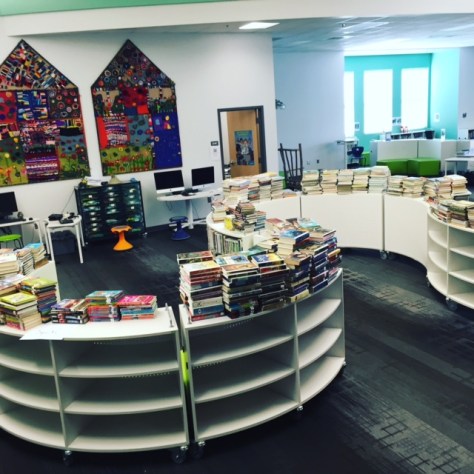
I have a confession to make. I’ve wanted to organize our library by genre for a really long time, but I honestly had no idea how I would find the time to do it. I don’t have an assistant in the library and I have about 1-2 volunteers for an hour each day. I teach tons of classes, collaborate with teachers, lead professional learning….the list goes on and on. However, because I’m doing all of these things, I watch students come into the library, find a book on the computer, and then have no idea where to get it because they don’t know how to use the Dewey system.  Sure, I could spend hours teaching them how the secret code of the Dewey decimal system works, but when I’m trying to also teach the standards of every grade level, it’s hard to figure out how learning the Dewey Decimal system fits in. I’ve watched numerous of my inspiring professional learning network genrefy their collections: Tiffany Whitehead, Shannon Thompson, Sherry Gick, Donna MacDonald, Nikki Robertson,…  I’ve sat in Jennifer LaGarde’s Zombie Librarian keynote numerous times and slouched down in my seat when she got to the part about how kids shouldn’t have to have a secret code to use the library. Every time I heard her, I knew reorganizing was what was best for students but I just didn’t know how to pull it off.

IMG_1391

At the end of this school year, I decided that next year, I’m going to put a bigger emphasis on reading than I have the past few years. A big part of this is to get kids reading the kinds of books they want to read and helping them find those books quickly in the library. Most students come to the library and ask for sports books, scary books, princess books, superhero books, graphic novels,…..all genres. I’m at the point where I’ve attended enough sessions, read enough blogs, and listened to enough podcasts that I just have to jump in and start.

IMG_1397

During my end of year evaluation, I told my principal what I was thinking about reorganizing the library, and I was so relieved to hear her say that it was exciting and she was all for it. She even told me she would support me in figuring out how to make it happen whether it’s delaying the opening of checkout at the beginning of the year or even having some workers help me in the evenings, weekends, or summer. I originally thought I would wait until the new school year, but every moment I had some time during post-planning, I couldn’t help myself. I jumped in.

IMG_1396

First, I decided to begin in the fiction section, which I’ve heard is the easiest section to start in. Based on my own observations and what I’ve read on other blogs, I decided on the categories of:

  • mystery
  • fantasy
  • historical fiction
  • sports
  • humor
  • realistic fiction
  • scary
  • adventure
  • science fiction

IMG_1392

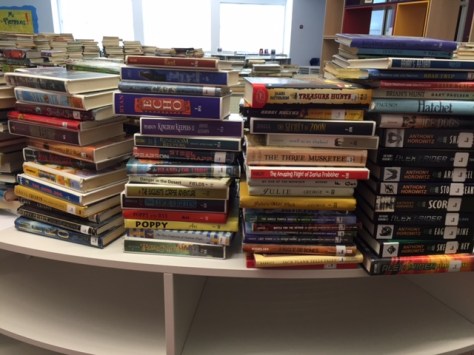
I put a sign on the top of each bookshelf for these genres and started pulling off a book at a time. I used multiple sources to help me decide on which genre to put them in:

  • The book summary
  • My own knowledge of the book
  • The Library of Congress subjects in the front of the book
  • Novelist K-8 in our Galileo database

Of course, there were books that fit into more than one category, so for those, I just picked a category. I believe it was Tiffany Whitehead who said that you should just think about what kind of reader would most likely choose that kind of book and let that guide the final category.

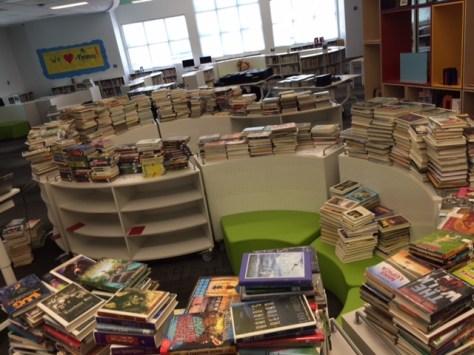
When I was stuck on a book and had no idea where to put it, I put it aside in a separate stack to come back to later.  Those books might become another genre or they might vaguely fit into one of the genres I already had.

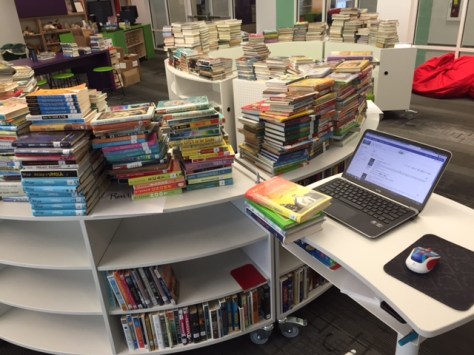
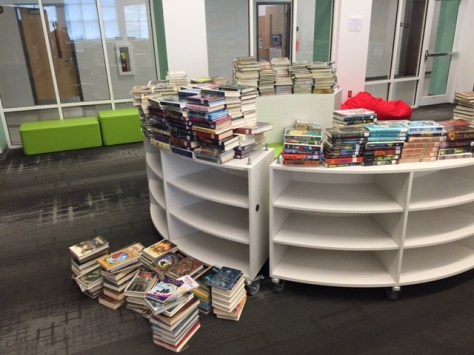
I worked on the fiction section just a little bit on day 1 and 2 of post planning, but day 3 was completely devoted to this project.  I worked for about 5 hours on the final day to sort the books and push myself to get to the end.

IMG_1395

There were moments where I thought that I had made a big mistake, but the more I pushed on, the more I felt like I was doing the right thing.

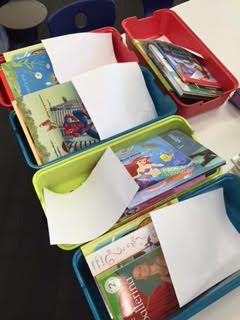
Once all the books were sorted, I put them back onto the shelves by genre and labeled the carts because there are a few more steps to go. This will include scanning books into sublocations and adding a genre sticker to the spines.

I did weed the collection before I started, but touching every single book made me realize a few more needed to be weeded. Once books were sorted, I also could easily see which genres we had lots of books in and which we needed more. One of the obvious ones was sports. We have so many students who ask for sports books. We have a lot of nonfiction, but this made me realize how few sports fiction books we have.

If you are thinking about doing a project like this, definitely do your homework, but at some point, you just have to dive in. I’m thankful to all of the librarians who have done this before and left behind such careful instructions of what they did!

Gaming and Math with Xbox

game 4

I’ll admit that it has been awhile since I’ve used the Xbox in the library.  When you are juggling so many things, it’s hard to keep everything up in the air at the same time. I was so excited when one of our resource teachers emailed me recently to ask if I could do an Xbox lesson with her class. She had heard that we could weave some math into our gaming time, but she wasn’t sure what to do. The request also came from her students, which I loved. We put a time on the calendar and she brought her group of 7 students to the library for some gaming fun.

game 3

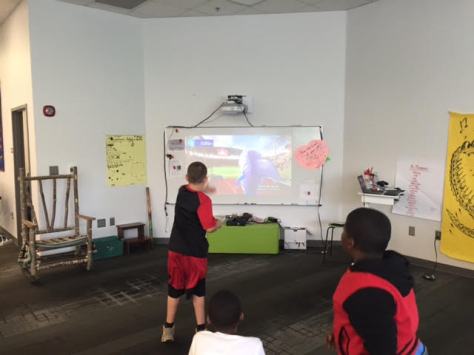
For this lesson, I chose to use the Kinect Sports game and put it in “party mode”. This mode allows you to split a group into two teams. Each team chooses a mascot and players take turns competing in six rounds. I really liked this mode because it gave a very dependable structure for taking turns. It alternated between the red team and blue team and students kept track of the lineup within their own team and consistently rotated through that same lineup. The Xbox chose which game would be played in each round.

game 2

We didn’t do math every time a student came up to play, but we did pause throughout the game to do some mental math as well as work out more challenging problems on paper. The team scores increased by hundreds and fifties so it was easy to do a mental comparison of how many more points one team had than another. We did this in between rounds.

game 1

For the discus game, it measured distance in meters. We took the two distances and saw how many more feet one student threw the discus than another. This was a perfect tie in to what students are currently working on in math because it gave them practice adding or subtracting decimals as well as reading decimals with tenths and hundredths.

In bowling, sometimes we did a comparison of the two totals of pins knocked down and other times we had students see how many pins both teams knocked down together. This gave them some practice with 2-digit addition.

Each student used his or her own strategy to solve the problem. The teacher and I walked around and checked in with students while they worked, and I muted the screen so that the game was paused and not distracting them. If students reached a frustration point with the math, I started writing beginning steps onto the board to nudge them forward.

Since this was the group’s first time trying this out, I didn’t want to push too much math at once, so we were careful to balance play with work time. There’s certainly many more math problems that could be done using the scores, distances, and times in a game.

There was also a lot of other things going on during this time that I was reminded of. First, I was reminded of the amount of energy that is released during gaming. With the Kinect, students are actively jumping, kicking, running, and swinging throughout their turn. Even the students who aren’t playing are being active because they are jumping up and down in the background to cheer on their teammates.

I was also reminded of how much cooperation it takes to pull off this type of gaming.  Students had to take turns, deal with messing up on their turn, handle “losing”, and working through frustrations. We talked about these things before we played, but we saw the students really working through all of these potentially frustrating parts of gaming. It’s interesting to see students handle stress in gaming differently than they might handle stress in another environment or situation. It caused me to really ponder how we can make those connections or create similar environments in the situations where students have more difficulty responding to stress. I, of course, don’t have any answers at the moment, but I’m thinking.

I told these students that I hoped they would spread the news of their gaming experience back to their classrooms so that other teachers might try this with their class. I definitely need to throw the gaming ball back into the air and nudge classes to try this again next year.


Making Something New: A Makerspace Activity

coconut makerspace (13)

Recently, the Children’s Theatre Troup directed by Kelsey Brown presented “Another Kid’s Treasure Island” at the State Botanical Garden of Georgia. This play also featured a makerspace activity for attendees to use a variety of objects to make something new.

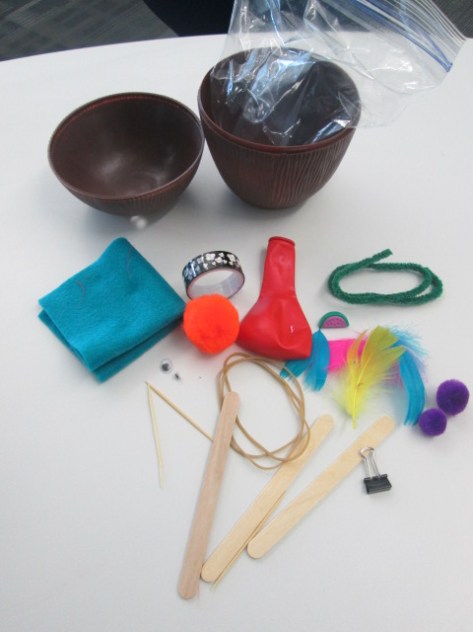
Gretchen Thomas and her UGA students helped pack hundreds of plastic coconuts with craft supplies to support the play, but several coconuts were left over. Our makerspace was fortunate enough to acquire these leftover coconuts for students to explore.

coconut makerspace (14)

This week, we’ve been reading The Most Magnificent Thing by Ashley Spires. I love the message that this book shares about perseverance and creativity. The character in the book tries multiple ways to make the thing she has in her head, but she just can’t get it quite right. At first, she easily starts over, but as time goes on, she gets pretty frustrated. However, even then, she goes on a walk to clear her mind. While reading the story, we paused along the way to setup some steps for “making”.

  • Have an initial plan after you gather your supplies
  • Try to make something
  • Take a look at what you’ve made and try again if needed
  • If something isn’t working, try to do it in a different way
  • If you start to feel frustrated, take a break or a walk, and come back
  • Don’t quit

We could keep adding to this list, but those were the basic principles we followed.

coconut makerspace (12)


I showed students one of the plastic coconuts filled with supplies and told them that their goal was to take the materials and make something new. We talked about how the girl in the story made something she could actually use, so they certainly could try to make something like a piece of jewelry, a hat, a container for rocks, or whatever else they wanted.

coconut makerspace (6) coconut makerspace (1)

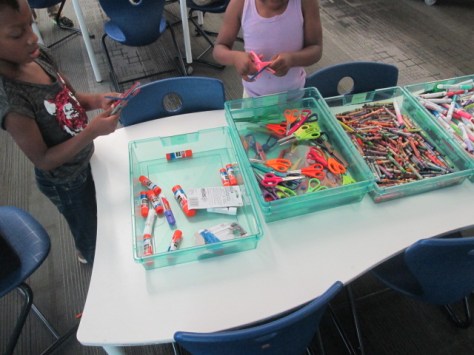
I also put out some scissors, glue, crayons, and markers. Then, students got to work. Each student had a different strategy for how to work. Some got very frustrated and did indeed take a walk around the library. Some students collaborated with people at their table or traded supplies with a friend.  It was loud and messy, but I heard things from students like:

  • Is makerspace always this fun?
  • Do we really get to keep the things that we made?
  • When can I come back?
  • From a teacher: My students talked about what they did with you the whole next day.

coconut makerspace (2) coconut makerspace (4)

You could look at this and say….sure….this is just making a craft, but there’s really so much more there.

Perseverance, problem solving, creativity, inventing, collaboration, and more were all there. Thank you to Gretchen Thomas for giving us an opportunity to bring makerspace to some of our grades who haven’t had a chance to use our makerspace quite as much. We have a lot of new students excited about finding more opportunities to use the tools in our makerspace because of this opportunity.

Home Libraries and Summer Reading

home library 7

We are quickly approaching summer at our school, so we have been winding down activities in the library and looking ahead to what we might read this summer. There are many pieces that go into encouraging students to read over the summer, and I love that we are always trying new ideas to encourage our students to read.

Our family engagement specialist, some teachers, and the Junior League of Athens went into the community center of one of the communities we serve to host a family literacy workshop. Families decorated book boxes, learned some reading strategies, and talked about the importance of a home library. The Junior League will be putting 6 books in each of those boxes to go to families who participated.

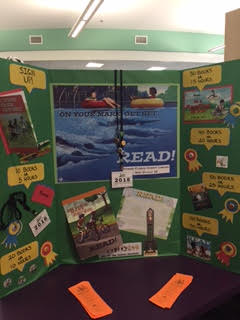
Our Athens Clarke County Public Library came into the school and met with Kindergarten, 1st grade, and 2nd grade to talk about the summer reading program. Evan Bush, head children’s librarian, sang songs, told stories, and highlighted the numerous events happening at the public library this summer.

library summer reading

Those include puppet shows, Minecraft crafts, live animals, a real life mermaid and pirate, and more. For the summer reading incentive, students earn a button for every 10 books or 5 hours that they read. Each button corresponds with a different land that students imagine traveling to over the summer such as the Hundred Acre Wood, Wonderland, and Hogwarts.


Those buttons will go onto a lanyard as students earn them.  Also, the elementary school with the most students to complete the summer reading challenge will earn a trophy to keep at the school for the year.

Another project I’ve been working on is proving books to an additional community within our school to build up home libraries. This project was funded through a grant from First Book UGA and donations from a GoFundMe campaign I created.  Approximately 78 students are a part of this project, I surveyed the students to learn more about their reading interests and then ordered books through First Book to give them for summer reading.

home library 1

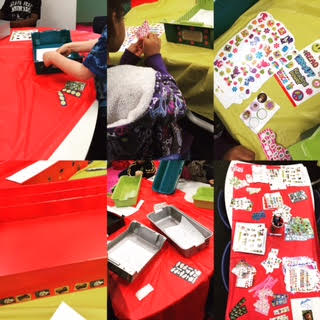
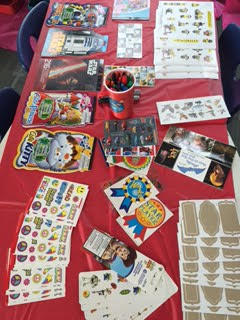
The students came to the library in small groups to decorate a box to put their books in. The boxes were reused boxes that I found at our local recycling facility and spray painted. Students chose from a variety of stickers to personalize their boxes.

home library 5

It was great to see that students of every age got excited about using stickers to personalize their box. My hope is that a personal touch will create a connection to the box and encourage them to use it to store books.

home library 2


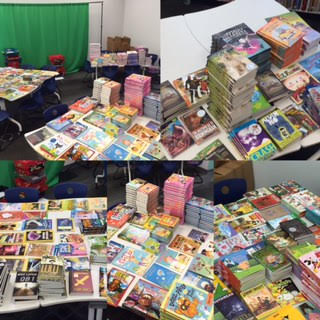
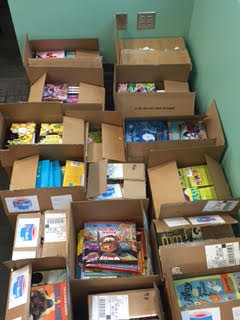
When the books arrived, Camilla Bracewell, volunteer extraordinaire, came and helped me unbox them all onto tables. I printed out the spreadsheets I had created with each student’s personal order.

home library 3

Since I was more familiar with what the books looked liked, Camilla helped read off names of students and filled the boxes as I pointed out the books or handed them to her. Because of the wonderful prices through First Book, I was able to give each student 7 books for summer reading. I even have a few books left over that teachers will use to give to additional students who might need some books for the summer.

home library 6 home library 7


Next week, I’m hosting two sessions for families to stop by and pick up the book boxes, but any remaining boxes will go home with students throughout the week.

home library 8

Thanks to Get Georgia Reading, all students in Georgia also have access to MyOn from Capstone for the summer. I’m taking time to show this to families, individual students, small groups, and whole classes. This is a great way to have unlimited access to thousands of books for summer reading and they are never checked out.

Summer reading is a special time because it’s a chance for students to read things that really interest them. It’s a chance to take a break from the “requirements” of school and just read for the fun of it. I hope that we have shown students and families enough options as well as provided some tangible materials that all readers in our school have an idea of the reading they will do over the summer.

Happy reading!


How about a Popup Makerspace at Recess?

popup makerspace (5)

The University of Georgia is winding down its spring semester, so that means our support for weekly makerspace is also winding down.  We only have 3 more weeks of school ourselves. Last year, Gretchen Thomas and I took our makerspace on the road to UGA to introduce random UGA students and visitors to the fun of making and tinkering. We really want to try that idea again, but this year we wondered, “How about a popup makerspace at recess?”.

popup makerspace (3)

Many of our students come to makerspace during recess anyway, but some struggle with leaving their friends on the playground. We wondered if having the makerspace on the playground would bring in more students since they could easily run back and play if they wanted to. We also wonder if some students don’t come to makerspace because they are unsure of what happens at it. We thought putting it on the playground would make it much more visible and inviting.

Gretchen and her students planned several stations for students to explore. I also had some students prepare stations. Ahead of the recess makerspace, I advertised to teachers that we would be having the makerspace on the playground from 11AM-12PM. We also mentioned it on our morning broadcast on the day of the event.

Before 11:00 rolled around, we setup tables under the awning and sunshade on the playground and got the stations ready. My students and Gretchen’s students helped make this happen. Before we could even get setup, we already had students coming up from the playground asking if they could try something.

It was wildly popular! There were moments when 2-3 entire classes were descending on the makerspace, but being outside allowed us to spread out and really not worry about the noise. It also helped that Gretchen’s entire UGA class was here o

Here’s a look at what we offered:

Station 1:

Students constructed their own bubble wands and then tested them out. Some students chose to make a basic wand with a circle and stem, but as the station went on, we saw students really get creative in trying out different designs from very large shapes to tiny circles. This was also a great station to have outside because we didn’t have to worry about bubble spills. Next time, we will add beading to this center to allow students to personalize their wands. However, I loved that the focus this time was on trying different shapes to see what made the best bubbles.

Station 2:

We marked off an area and put a bucket of sidewalk chalk for students to create their own chalk art on the sidewalk.

popup makerspace (4)

Station 3:

Students used marbles, orange cones, duct tape, and pipe insulation to create a marble roller coaster. This station really evolved as time moved on. Students began working in teams to try to make small changes to the pipe insulation to make the marble travel a longer distance. They even started gathering materials from other stations to add to their design, which is just what we want to see makers doing. I was amazed by the teamwork from students in different classes and grades. There’s something about the maker environment that cultivates teamwork.

Station 4:

Students used aluminum foil to build boats and test their floating capability in pans of water. Some students chose very simple designs just because they knew they would float, but other students really pushed their designs to the limit to see how much detail they could add to their boat or how big they could make it before it would sink.

Station 5:

Outside was the perfect place to test paper airplanes. This station allowed students to share their paper airplane building skills and test out to see who could make a plane that could really travel in the wind. We didn’t have any specific instructions or books at this center, so it really did take tinkering or sharing expertise to build the planes.


https://twitter.com/actinginthelib/status/725000807775612928

Station 6:

A group of 5th grade girls setup an art station filled with coloring sheets with dogs and cats. They are leading a changemaker project to encourage people to donate food to a local shelter, and the coloring sheets will eventually be used to help bring awareness to their campaign. Along with this center, students could learn how to draw a dog or cat using a series of circles or go on an observation walk with a 5th grade girl to sketch objects in nature. I think we forget the importance of coloring. Many of us know that adult coloring books are all the rage right now, so it only makes sense that kids are still into coloring too! there’s something soothing about sitting around with friends, pulling out the crayons and color pencils, and focusing on filling in the lines. This proved to be one of the most popular stations at makerspace, so it really made me curious about where we could go with this. My mind was racing about student-designed coloring pages, coloring tablecloths, and more.

Station 7:

A 4th grader and a 2nd grader assisted students in exploring Finch robots. They setup 5 computers, connected the Finch, and introduced students to the Snap program to code the robots. Then, they let students explore coding on their own. The 2 students only jumped in if someone was stuck or had a question about how to start. I loved seeing how 2 students who had spent 10 weeks learning about the Finch could allow people to start from the very beginning without telling them every step to make. They really understood the importance of tinkering and figuring things out for yourself.


popup makerspace (18)

As the hour came to a close, we still had a circle of students coloring, and we sadly had to dismantle the roller coaster. The UGA students didn’t want to leave and students were asking if they could miss lunch. Moments like those make it a great day. Now, Gretchen and I have some thinking to do about next year. We have lots of ideas in the works, but I think one of the big things we will think about is how we can take the makerspace on the road around our school. I love having the space and opportunities in the library, but changes in venue bring in new voices. Changes in location also allow us to try things that maybe we wouldn’t try if we were inside. I think we will see a few more popup makerspaces next year. Who knows where we will popup next!


Celebrating Poetry Through Book Spine Poems

book spine poem

One of our favorite kinds of poetry to create each year is book spine poetry. It is a kind of found poetry where the words found on the spines of books create the lines of a poem. Every 2nd grade class came to the library for a one-hour session to create book spine poems individually or in pairs.

To begin our time, I briefly explained found poetry and then told a story about how I created my own book spine poem. The story was meant to serve as a model for how students might craft their own poem, but they certainly didn’t have to go about the process the exact same way as me.

I started in the everybody section of the library and started reading the spines of all the books on the shelf from the beginning. I was looking for a title that jumped out at me as a starting place. I happened upon Quest and Journey by Aaron Becker. I loved how those two words sounded together and I decided to start looking for titles that seemed to go with those two words, which meant looking for titles that were about traveling in some way. I passed by many titles that didn’t fit, so I left them on the shelf without pulling them off. I continued this process until I had found I Took a Walk, In My Dreams I Can Fly, and Goin’ Someplace Special. I also had the book The Ride but I decided that I didn’t like the sound of those words with the others in my stack so I put that book back on the return cart. Next, I tried several ways of arranging the books until I had a sequence I was happy with. After practicing a few times, I recorded my poem with my phone and uploaded it online to share with the world.

After my short story, we went back through the steps and put them into a concise list on the board for students to reference. Then, students got to work. They wandered the shelves looking for that first book and then went from there. As was expected, some of them found their own strategies for creating the poems. Some struggled with finding that first book. Some wanted the support of someone walking with them to look for books. The teacher and I wandered around too and talked with individual students until they started reaching the recording phase.

Once students recorded using an iPad, they brought the iPad to me and we immediately plugged the iPad into my computer and uploaded to Youtube. They also went to the teacher to take a photograph of their book stack that could be printed and put into their poetry books they are creating in class. All books that were used went onto a cart parked in the middle of the library, and students were welcome to read those books while they waited on classmates to finish.

When students finished, I pulled all of their work into Youtube playlists which I emailed to teachers to share with families. We concluded our time by sitting together and snapping for each poem on our playlist. I hope you’ll take a moment to listen to, enjoy, and snap for the poems from each 2nd grade class.

Earth Day Environmental Centers

IMG_0771

Our school is a green school, so we do a lot as a whole school to learn about caring for our Earth throughout the year. Our third grade has some specific science standards that explore pollution and effects of humans on the environment. They are beginning a unit on this during science, and the opportunity aligned to allow us to explore the topic during the week of Earth Day. Each class came to the library for a 45-minute exploration of 5 centers. Students began on the carpet for a quick intro to the 5 centers. Students did not have to make it to all of the centers. Instead, I told them to prioritize which ones interested them the most and do their best to make it to those and save the others in case centers were full or they had extra time.

The classroom teacher, gifted teacher, and I all walked around and talked with individual students as they worked to see what they were discovering and assisting them if they had a question. Here’s a look at the 5 centers they explored:


Center 1: Books

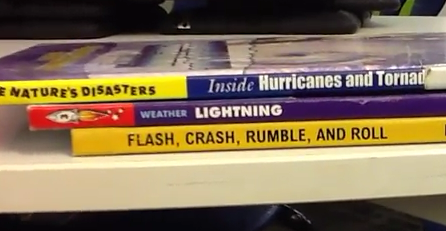
I pulled multiple books from our collection about the environment, energy, recycling, water conservation, and more. Students were encouraged to find a book that caught their eye and spend a few minutes reading parts of that book or parts of several books.

IMG_0766


Center 2: Flipgrid

I created a list of authentic environmental problems that exist in our school. These included things like printing to copiers and never picking up the copies, throwing away recyclables, and trash in our parking lot after a UGA football game. Students were encouraged to pick an issue from my list or come up with their own observation. Using Flipgrid, they recorded a brief video identifying the problem and naming possible solutions.


Center 3: Observation and Poetry

IMG_0768

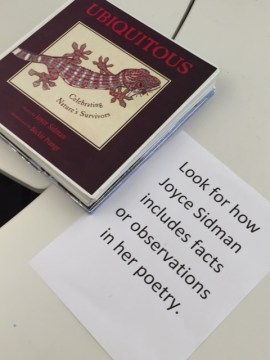
This center included multiple books by Joyce Sidman. She is a master of making observations in the natural world, researching those observations, and then turning them into poetry. Many of her books feature side-by-side poetry and the information that inspired the poem. Students were encouraged pick a book, find a poem, and see how the factual information that Sidman researched made its way into her poetry.


Center 4: Environmental Blackout Poetry

This center was modeled after the blackout poetry of Austin Kleon. It is  kind of found poetry where you find words in magazines, newspaper, websites, or books to arrange into a poem and you blackout the rest of the words on the page. I copied multiple selections from books about the environment and students chose one of those pages to create a blackout poem. It’s always interesting to see how students boil the words down to the ones that stand out the most in the article or page. This year, I made sure that we did our blackout poetry on top of a table cover so that they black crayon and marker didn’t make its way onto our tables.


Center 5: Environmental Online Resources

Using Symbaloo, I pulled together ebooks, websites, interactive sites, and videos about the environment. Students spent time on a few of the sites before moving on to other centers.

Now the students will use the topics and ideas that they discovered in this exploration as they continue to study these topics back in the classroom.


Building Home Libraries: A Community Collaboration

4reading

One of the goals of the Barrow Elementary Media Center is to support the reading habits and curiosities of students, teachers, and families.  During the school year, our library is a huge source of reading, but I often wonder what I can do to continue to support reading during the summer months when students are at home.  What do their home libraries look like? What can we do as a school to support the idea of building a home library?

Many schools in Clarke County are supported by an incredible program called Books for Keeps where every student in the school receives 12 books for summer reading. Our school will eventually be served by this organization, but at the moment, we are not. Since we can’t really raise enough money to buy books for every child in the school, I decided to start with 2 communities of students in our school.

This year, I am working with our community, writing grants, and raising funds to support families in building home libraries in their communities. The Junior League of Athens is purchasing 6 books for each student from the Bethel Homes community who attends our school.   These books are for the students to keep and share with their family. There will be a family day of learning about home libraries, creating a plan for a home library, and adding these 6 books to the home library.  We hope by taking this step, we are supporting a culture in each home of having a dedicated place to keep books that are purchased, borrowed, or donated.

Through First Book UGA, we have a $750 grant to replicate the Junior League’s program in the Parkview community. This will provide approximately 3 books per student through First Book.  In order to replicate the same program we are offering at Bethel, we needed to raise some additional funds.  After getting approval from our superintendent, I created a GoFundMe campaign to raise an additional $1,000. I began sharing the campaign through many avenues of social media as well as personal emails. Camilla Bracewell, a Barrow grandparent and huge library supporter, also shared the project through her own networks. In just over 24 hours, we raised the funds needed.

I’m notorious for jumping into a project before I really know exactly what it’s going to look like, but I always leap in with the faith of expecting the miraculous and knowing that things will work out. Now that the funds are in place, some logistics must be worked out.

Logistic 1:  If students are going to create home libraries, what will I actually use for the home library container?

I didn’t want to assume that every student had a home library at home or that they knew that a home library could be any place you keep books, so I wanted them to have a container to take home with their books. I started pricing containers at Walmart and Target and seeing what Dollar Tree had. Along the way, I posted Instagram pictures of my journey and invited people to chime in with suggestions.

People chimed in with ideas:

Then, my wife suggested that I contact Suki Janssen with the Athens Clarke County Recycling Division, so I did.  She invited me to come and check out the warehouse where the Teacher Reuse Store items are kept. This CHARM facility houses items that are difficult to recycle.  I met with Chris Griffin and he let me browse the building and see what I could find.
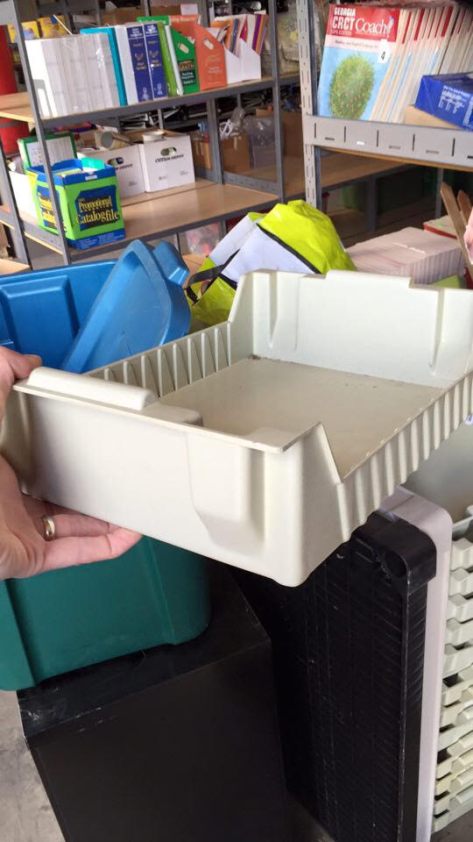
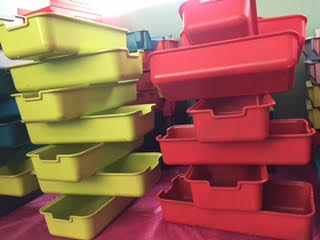
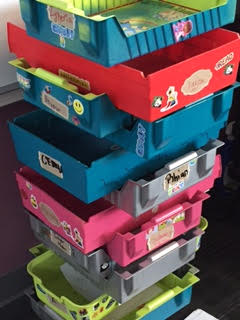
bins at recycling

Miraculously, I found  3 different stacks of trays in varying shapes, sizes, and conditions and was fortunate enough to take them all home with me.

Logistic #2: Getting all of these trays ready to become home libraries.

I took all of the trays home and started cleaning a few of them and brainstorming exactly what to do to the trays to decorate them.

Again, I reached out to the community for ideas. Gretchen Thomas, my collaborative partner from UGA, suggested lots and lots of spray paint.

I went out and bought some cans to do a paint test.

It was a time consuming process to clean and paint the trays and I quickly realized I couldn’t do it alone.

Logistic #3: Who can clean and paint all of these trays?

I brought all of the trays to school.

I called upon my wonderful volunteer coordinator Courtney Tobin as well as Gretchen Thomas to send out emails and ask for volunteers. Once again, the community didn’t disappoint. Camilla Bracewell came in along with Margaret Christ and her librarian mom came in to clean trays.

I also have volunteers scheduled to come in and start spray painting the trays outside.

Logistic #4: How will I order the right books for students?

Since we have a First Book account and grant, I can order books directly from First Book for a great price. I really wanted to go back to my student book budget model and give each student a certain amount of money to spend in the First Book marketplace.

However, I don’t think I have enough time to pull that off.  Instead, I created a short reading interest survey so that I can do interviews with each student and find out some of their interests in order to get the books they really want to read. Again, this isn’t something I can do alone since there’s 75 kids in this project, so volunteers are helping me interview students with printed copies of the survey.

Logistic #5: How will I get the order done?

As we interview students, I’m searching the First Book Marketplace for books that match what students are asking for. I’m adding these to a wish list that I can pull from when it’s time to order.  I’ve blocked off times on the library calendar next week to work on the actual order.  I plan to take each student survey sheet and personally search for books to meet the needs of the student request and age.  Then, I’ll use the donated funds and grant to pay the bill.

Logistic #6: How will students take ownership of the libraries?

Rather than just hand over the books and trays to students, I want them to have some investment in the project. In two weeks, we are going to hold some decorating sessions where students can come and decorate their libraries with personal touches. During that time, we’ll talk about what it means to have a home library as well as talk about sharing books between home libraries. Since these students are in the same community, there is an opportunity for students to be able to exchange books with one another if they want to.

I know that I have many more logistics to work out in this project, but it is amazing to look at where this seed of an idea has grown into a blossoming project.  I can’t wait to see where the project takes us, how it impacts students, and what we all learn about one another along the way. Having a community that pulls together around a common project makes such a difference.


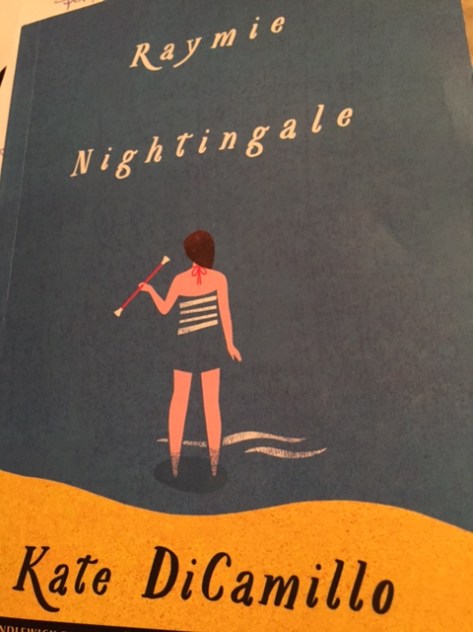
The Power of Words: Personal Connections to Kate DiCamillo’s Raymie Nightingale

IMG_0602

When I was in high school, my great grandmother was placed into a nursing home. Almost weekly, my mom and I went to visit her.  She had Alzheimer’s so our visits weren’t filled with conversations. I paced the halls of the LifeCare Center holding my great grandmother’s hand, even though she seemed to have no idea who I was or why I was walking with her. Over those many visits, I came to know many of the residents at LifeCare and their many quirks. It was strange how even as an introvert I was drawn to certain people who maybe were some of the most risky of residents. One of those residents was Florence.  She was from New York, and you heard her before you ever saw her. She shouted out, “Hey!” over and over.  The workers at LifeCare seemed to have reached a point where her repeated shouting of the same word was tuned out, but I always heard it. While it scared me, I was also intrigued by her, and I remember many instances where despite my fear of being hit, grabbed, or pushed, I chatted with Florence. I think more than anything she just wanted someone to listen to her, to acknowledge that she existed in the world.
As I read Raymie Nightengale, I came to the scene in the Golden Glen retirement home where Raymie encounters a resident who repeatedly says, “Take my hand”, and I was thrust back in time to my own fears, curiosities, and empathy from my many days in the LifeCare Center. I don’t know how she does it, but Kate DiCamillo seems to always write words that speak to my soul. Her words are powerful and link to personal connections or goals in my own life.  As I read Raymie, I closed the book at the end of every chapter, hugged the book to my chest, and said, “How does she do it?”.

IMG_0603

I know what we hold in our hands is the final version of a story that has grown and morphed many times. I know there are probably many moments of intense thought, hair pulling, tears, joy, and time spent in the writing chair. Many eyes have looked at these words before they reach the reader, but the final words on the page are powerful. They are concise, yet they bring out the complexities of 3 girls and many unforgettable characters who are very different yet are connected to one another at the same time.

I love Ida Nee and her tell-it-like-it is attitude of not putting up with any nonsense

I love Beverly who is rough around the edges but has a kind heart inside.

I love Louisiana who is innocent and naive as she wrestles with the challenges of poverty.

I love Mrs. Borkowski and her ability to brush off just about anything with a “Phhhhtttt.”

I love Raymie and her strength in making a plan to bring her family back together yet recognizing when she needs to help others along the way.

As I read Raymie, I took a pen and underlined words that spoke to my heart. It seems that no matter which Kate DiCamillo book I read, there’s a line that resonates with me that I tend to carry with me wherever I go. In Flora and Ulysses, it ended up being a line that inspired our library motto and blog title of expecting the miraculous.

There are many lines in Raymie.  I’ll leave them here without any interpretation for now.  These lines are still sitting with me, speaking to me, and finding their place in my life.

“She herself often felt to terrified to go on, but she had never admitted it out loud.” p. 2

“…this made everything she said seem ridiculous, but also possible–both things at the same time.” p. 10

“The sun is nothing but a dying star. Someday it will go out. Phhhhtttt.” p. 22

“Fear is a big waste of time. I’m not afraid of anything.” p. 79

“…stand as if you value yourself and your place in the world.” p. 82

“And I wanted to tell you that no matter what, I’m here and you’re here and we’re here together.” p. 154

I invite you to find your own lines that speak to your heart by picking up a copy of Raymie Nightingale starting Tuesday April 12th at your local bookstore.  My copy will be waiting for me at Avid Bookshop, and I can’t wait to hold it in my hands.  Even if this book isn’t the one that creates a personal connection for you, I hope you’ll keep searching for an author and a book that has lines that speak to your soul.

https://twitter.com/HMX_MsE/status/714925392147169280