Home Libraries and Summer Reading

home library 7

We are quickly approaching summer at our school, so we have been winding down activities in the library and looking ahead to what we might read this summer. There are many pieces that go into encouraging students to read over the summer, and I love that we are always trying new ideas to encourage our students to read.

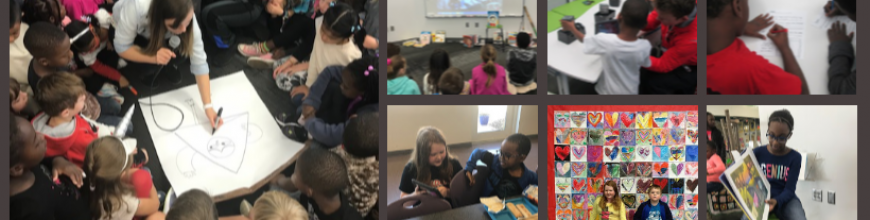
Our family engagement specialist, some teachers, and the Junior League of Athens went into the community center of one of the communities we serve to host a family literacy workshop. Families decorated book boxes, learned some reading strategies, and talked about the importance of a home library. The Junior League will be putting 6 books in each of those boxes to go to families who participated.

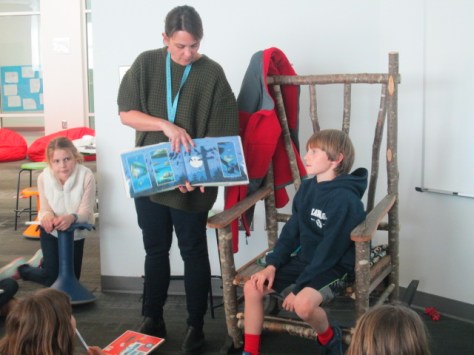
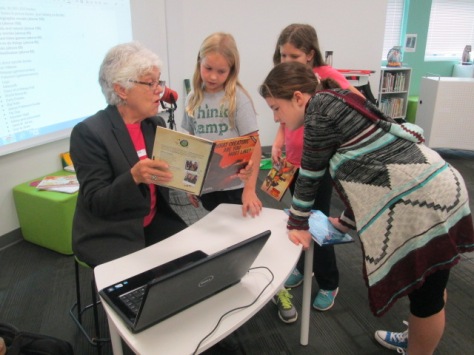
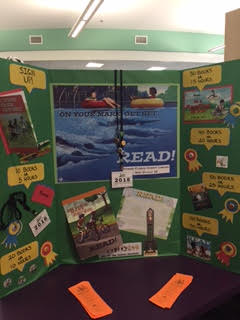
Our Athens Clarke County Public Library came into the school and met with Kindergarten, 1st grade, and 2nd grade to talk about the summer reading program. Evan Bush, head children’s librarian, sang songs, told stories, and highlighted the numerous events happening at the public library this summer.
library summer reading

Those include puppet shows, Minecraft crafts, live animals, a real life mermaid and pirate, and more. For the summer reading incentive, students earn a button for every 10 books or 5 hours that they read. Each button corresponds with a different land that students imagine traveling to over the summer such as the Hundred Acre Wood, Wonderland, and Hogwarts.


Those buttons will go onto a lanyard as students earn them.  Also, the elementary school with the most students to complete the summer reading challenge will earn a trophy to keep at the school for the year.

Another project I’ve been working on is proving books to an additional community within our school to build up home libraries. This project was funded through a grant from First Book UGA and donations from a GoFundMe campaign I created.  Approximately 78 students are a part of this project, I surveyed the students to learn more about their reading interests and then ordered books through First Book to give them for summer reading.
home library 1

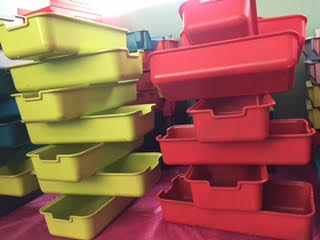
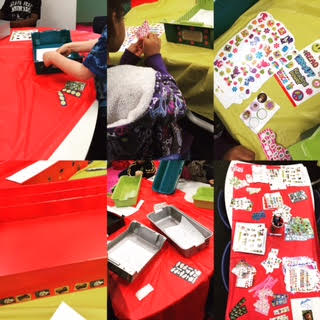
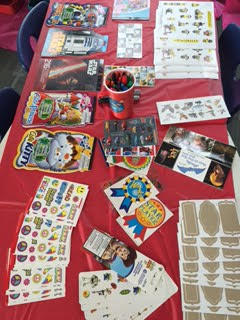
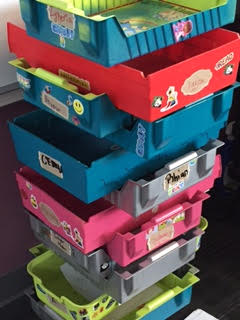
The students came to the library in small groups to decorate a box to put their books in. The boxes were reused boxes that I found at our local recycling facility and spray painted. Students chose from a variety of stickers to personalize their boxes.
home library 5

It was great to see that students of every age got excited about using stickers to personalize their box. My hope is that a personal touch will create a connection to the box and encourage them to use it to store books.
home library 2


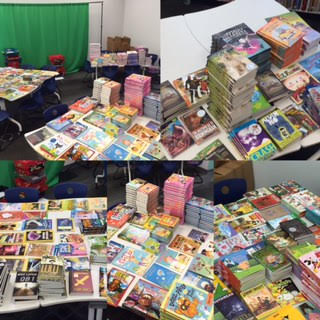
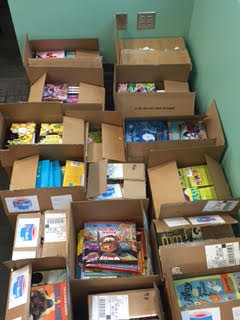
When the books arrived, Camilla Bracewell, volunteer extraordinaire, came and helped me unbox them all onto tables. I printed out the spreadsheets I had created with each student’s personal order.
home library 3

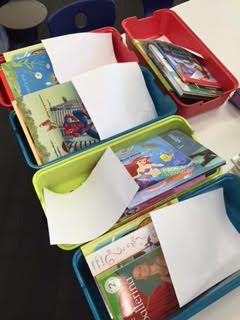
Since I was more familiar with what the books looked liked, Camilla helped read off names of students and filled the boxes as I pointed out the books or handed them to her. Because of the wonderful prices through First Book, I was able to give each student 7 books for summer reading. I even have a few books left over that teachers will use to give to additional students who might need some books for the summer.
home library 6 home library 7


Next week, I’m hosting two sessions for families to stop by and pick up the book boxes, but any remaining boxes will go home with students throughout the week.
home library 8

Thanks to Get Georgia Reading, all students in Georgia also have access to MyOn from Capstone for the summer. I’m taking time to show this to families, individual students, small groups, and whole classes. This is a great way to have unlimited access to thousands of books for summer reading and they are never checked out.

Summer reading is a special time because it’s a chance for students to read things that really interest them. It’s a chance to take a break from the “requirements” of school and just read for the fun of it. I hope that we have shown students and families enough options as well as provided some tangible materials that all readers in our school have an idea of the reading they will do over the summer.

Happy reading!
 

The Power of Words: Personal Connections to Kate DiCamillo’s Raymie Nightingale

IMG_0602

When I was in high school, my great grandmother was placed into a nursing home. Almost weekly, my mom and I went to visit her.  She had Alzheimer’s so our visits weren’t filled with conversations. I paced the halls of the LifeCare Center holding my great grandmother’s hand, even though she seemed to have no idea who I was or why I was walking with her. Over those many visits, I came to know many of the residents at LifeCare and their many quirks. It was strange how even as an introvert I was drawn to certain people who maybe were some of the most risky of residents. One of those residents was Florence.  She was from New York, and you heard her before you ever saw her. She shouted out, “Hey!” over and over.  The workers at LifeCare seemed to have reached a point where her repeated shouting of the same word was tuned out, but I always heard it. While it scared me, I was also intrigued by her, and I remember many instances where despite my fear of being hit, grabbed, or pushed, I chatted with Florence. I think more than anything she just wanted someone to listen to her, to acknowledge that she existed in the world.

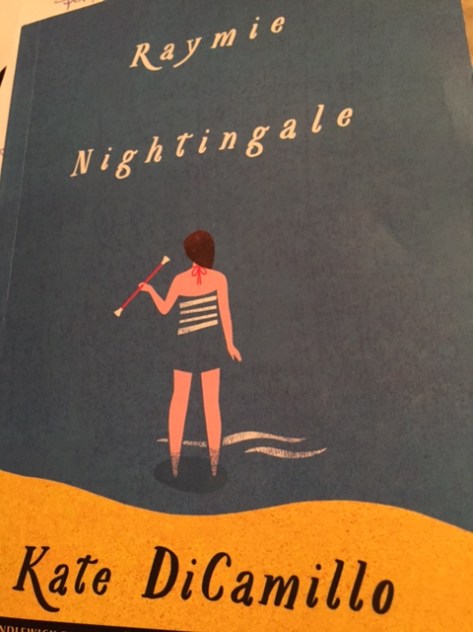
As I read Raymie Nightengale, I came to the scene in the Golden Glen retirement home where Raymie encounters a resident who repeatedly says, “Take my hand”, and I was thrust back in time to my own fears, curiosities, and empathy from my many days in the LifeCare Center. I don’t know how she does it, but Kate DiCamillo seems to always write words that speak to my soul. Her words are powerful and link to personal connections or goals in my own life.  As I read Raymie, I closed the book at the end of every chapter, hugged the book to my chest, and said, “How does she do it?”.

IMG_0603

I know what we hold in our hands is the final version of a story that has grown and morphed many times. I know there are probably many moments of intense thought, hair pulling, tears, joy, and time spent in the writing chair. Many eyes have looked at these words before they reach the reader, but the final words on the page are powerful. They are concise, yet they bring out the complexities of 3 girls and many unforgettable characters who are very different yet are connected to one another at the same time.

I love Ida Nee and her tell-it-like-it is attitude of not putting up with any nonsense

I love Beverly who is rough around the edges but has a kind heart inside.

I love Louisiana who is innocent and naive as she wrestles with the challenges of poverty.

I love Mrs. Borkowski and her ability to brush off just about anything with a “Phhhhtttt.”

I love Raymie and her strength in making a plan to bring her family back together yet recognizing when she needs to help others along the way.

As I read Raymie, I took a pen and underlined words that spoke to my heart. It seems that no matter which Kate DiCamillo book I read, there’s a line that resonates with me that I tend to carry with me wherever I go. In Flora and Ulysses, it ended up being a line that inspired our library motto and blog title of expecting the miraculous.

There are many lines in Raymie.  I’ll leave them here without any interpretation for now.  These lines are still sitting with me, speaking to me, and finding their place in my life.

“She herself often felt to terrified to go on, but she had never admitted it out loud.” p. 2

“…this made everything she said seem ridiculous, but also possible–both things at the same time.” p. 10

“The sun is nothing but a dying star. Someday it will go out. Phhhhtttt.” p. 22

“Fear is a big waste of time. I’m not afraid of anything.” p. 79

“…stand as if you value yourself and your place in the world.” p. 82

“And I wanted to tell you that no matter what, I’m here and you’re here and we’re here together.” p. 154

I invite you to find your own lines that speak to your heart by picking up a copy of Raymie Nightingale starting Tuesday April 12th at your local bookstore.  My copy will be waiting for me at Avid Bookshop, and I can’t wait to hold it in my hands.  Even if this book isn’t the one that creates a personal connection for you, I hope you’ll keep searching for an author and a book that has lines that speak to your soul.

https://twitter.com/HMX_MsE/status/714925392147169280


The Student Book Budget Books Have Arrived!

book budget unpacking (41)

After almost two months of working on the 2015-2016 student book budget project, the books are rolling in to the library, and the excitement is brewing. This year’s budget was made possible thanks to a grant from James Patterson. Students had $5,000 to spend on books. They created a survey, surveyed the school, analyzed the results, set goals, met with vendors, compiled wish lists, cut lists to match our budget, and helped order the books.

Now the books are arriving, so students are meeting once again to go through the process of unpacking, inspecting, and marketing the books.

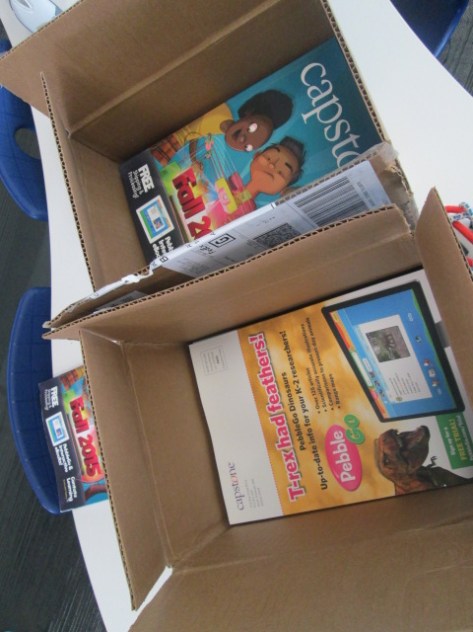
We have many more books than usual, so it is taking a bit longer to unpack the books. So far, we have books from Capstone and Gumdrop. Students came in by grade level for 30-minute shifts. Each company required a different process. This was mainly because we opted to not have full processing on Gumdrop books so that they would ship faster. I’m sort of regretting that decision, but it’s giving students an additional experience.

For Gumdrop, students had to apply the barcode, spine labels, and label protectors. This was tedious work for them to locate the correct labels for the correct books, and they passed this job off as often as they could since it was so time consuming. This process is still not complete, so no Gumdrop books have gone out to readers yet. We need to finish labels and check books off of the packing slip.

For Capstone, our books were already processed and ready to go. All students needed to do was unpack them, check them off the packing slip, and stamp them with the library stamp.

Additionally, Capstone let each book budget member choose one book that was their personal pick. They also sent us labels that could be put into the front of these books so that students could write their names to remind readers who selected those books.

The crew loved locating their books and applying the labels. As an added treat, they were the first to check out these books.

One student took it upon herself to start displaying the books while everyone else worked on all of the other tasks. Ajacea cleared out spaces in  the front of the library and started standing up books. If she didn’t like the way it looked, she took it all down and started over. I saw her do this more than once.

Finally, she had the idea of maximizing display space by putting books in the windows of the library facing out to the hall. There was room to put a top level and bottom level of books. She also used some of our library cushions, tables, and counter space.

It was a prime time for setting up a display because many classes were leaving lunch and walking right by the library. I saw many conversations happening in the hall about the books, and it wasn’t long before those same students were rushing back to the library to checkout what they saw.

There were moments of frantic grabbing when a whole class ended up coming to check out. The books were only on display for a little more than an hour and I would say at least half of the displayed books were checked out.

Students will come once again tomorrow to finish the books we have, and then they will reconvene when our order from Avid Bookshop arrives. I’m always inspired by how proud students are when they see their hard work pay off on unpacking day. They realize that the time they sacrificed was worth it to add more books to the library. They love getting the first look at the books, and they are amazed when the books fly off the shelves.

Ajacea stopped by at the end of the day to see what happened to her display. She had told me earlier in the day that her job would be ongoing because she would need to refill the empty spots. Her mouth dropped when she saw just how empty the windows were at the end of the day.

Our friend Amy Cox with Capstone Press followed along with our day on Twitter, and Ajacea was so proud when Amy said that she would be a great marketing intern.

https://twitter.com/capstonepress/status/686960767296393216

Ajacea’s response? “Tell her to call me.” I love the real world implications of this project and how many times it has given an opportunity to students to explore their interests and realize that their voice is heard and matters. Bravo student book budget team!


Digital Book Talks and Exploring How We Belong for #WRAD16

Belonging Week (8)Ms. Tesler’s 4th grade class has been exploring how they can be leaders within our school community.  Back in the fall, they started writing shelf talkers and displaying them on shelves at the front of our library. After all of their suggested books were quickly checked out, they are looking for ways to expand their leadership.  They have decided to take the “7 Strengths of Reading” challenge leading up to World Read Aloud Day and explore each week’s question.  They have also decided to take their shelf talkers and make them digital.

Belonging Week (7)

Across 2 days, the class came to the library to work on their next steps of this project.  We began by talking about our memories of being read aloud to.  I shared about my 2nd grade teacher, Ms. Deloache, and how she read Brer Rabbit stories to us with so many voices that I can still hear in my head today.  Ms. Tesler shared an experience of being read aloud to in college and how that stuck with her even as an adult.  Many other students began to share their own memories of being read aloud to.

We used this to launch into a new purpose of exploring the read aloud.  We are thinking about books that others might enjoy reading aloud.  We are also thinking about books we might read aloud to our buddies in other classrooms. Along with this, we started discussing how reading aloud builds community and how certain books help us feel connected with a community. To close, I shared my own example of a book talk and a reflection on the #belongingweek #wrad16 question on Flipgrid.

Belonging Week (15)

The first task was for students to select a book or books to read.  We wanted them to choose a picture book for this first book talk and question.  I pre-selected some books that had a theme of belonging, but students were welcome to choose any picture book.  Once students chose a book, they sat down to read it.  If they finished, they could start writing their shelf talker or their reflection on this week’s #WRAD16 question: “When has reading helped you feel like you belong to a community?”

Belonging Week (13)

In class, students continued to work on their reflections and they returned to the library with their completed writing.  I’ve been sharing the belonging week Flipgrid a lot on social media in the hopes that other schools would contribute.  When the students arrived to record their own, I was happy to share with them that Donna MacDonald in Vermont and Kathy Schmidt in Georgia had students who contributed to the Flipgrid.  We started by taking time to listen to them.

We used these contributions to consider pieces that were included as well as what we needed to do when we recorded our own.  Students pointed out things like speaking clearly and loud enough to hear.  They pointed out how there wasn’t a lot of movement behind the students who were recording, and that they introduced themselves.

Students spread out all over our library and recorded two Flipgrids.  One Flipgrid was a digital book talk sharing a new book.  This set of answers will be displayed on a monitor in the library and put in slideshow mode.  This will cause the videos to constantly scroll through and advertise books in our library.  We also hope that other schools will contribute their own book talks.  Renee Cunningham in North Carolina is already planning to do this with her students.

http://flipgrid.com/#b9bd04f0 

Finally, our students reflected on the belonging week question for World Read Aloud Day.  I loved hearing students make connections to their own lives and the sense of belonging.  I also loved hearing students pick out parts of a book and how a character felt like he belonged to a community.  It was a natural way to collect some analysis of text from students.

I hope you will take a moment to listen to some of their thoughts.

http://flipgrid.com/#8e21e4e6

We are just getting started, but I hope to see many more schools contribute to both our book talk Flipgrid as well as our weekly 7 Strengths of Reading grids.  If you are interested, feel free to add your students’ voices!

Students and Vendors: Meeting with Avid Bookshop

avid book budget (5)

Our book budget students have continued to meet with vendors to spend our $5,000 James Patterson Partnership grant.  They have gone through a long process to create a survey, survey students, analyze data, set goals, and meet with vendors to create consideration lists.  They met with Jim Boon of Capstone Press and Gret Hechenbleikner of Gumdrop books.  Students have just finished meeting with their final vendor, Avid Bookshop.

avid book budget (9)

We love working with our local independent bookshop.  They are always willing to come into the school or Skype in to share books with us for projects.  Will Walton, author and bookseller, came in to do book talks with our 3 small groups of book budget students.  Each grade comes in separately for 30 minutes, and each group picks up where the previous group left off.

avid book budget (12)

We pulled up our goals on the screen so that Will could use them as a talking point with students.  He brought some Advance Reader Copies of books that might meet our goals but also offered his own knowledge of books that matched many of our goals such as graphic novels, scary, and humorous stories.  As Will talked, I was in charge of creating a Google doc of the books so that students could look back at them later.

One of the things that I absolutely loved as Will was talking was how our students were getting hooked on the books he was talking about.  There was an immediate trust of Will, and several students found a book that they personally wanted to read.  He graciously handed out some the ARCs and told students to read them and pass them on to someone else.  He also encouraged students to come in and visit Avid Bookshop.  Several requested that he write down the address of the shop since they had never actually been inside.

avid book budget (8)

Will also started thinking of certain authors and series and going onto the shelves of our library to find them.  He handed out several of our own books and students checked them out to read.  He really reminded me of the importance of book talks and how I really need to be doing this more than I am!

After Will left, we continued to work on our Avid list.  I email it to Janet Geddis and the Avid team.  They will now check the list to make sure all of the titles are available, and they will send us a quote to help us narrow down our list to what we will actually purchase.  Students have two more meetings before the holidays, so we  hope we can fine tune all 3 of our lists to match our $5,000 budget.

Students and Vendors: Meeting with Gumdrop Books

gumdrop  (12)

Our student book budget team is still hard at work compiling consideration lists to match their goals.  Today, they met as grade levels with Gret Hechenbleikner from Gumdrop Books.  This year, we are using 3 vendors for our purchasing.  Students already met with Jim Boon from Capstone Press, and they will meet with Will Walton from Avid Bookshop later this week.

Our process with Gumdrop was slightly different than Capstone since Gumdrop doesn’t have a scan to cart feature or a catalog.  Instead, Gret brings a selection of books for students to look at.  Inside each book, she has list of the other books that are found in that same series.  Students can get a taste for what the book looks and feels like and consider whether they might like other books in that same series.  Gret brought multiple books that matched the goals that students had set based on our survey data.  I sent these goals to her a couple of weeks in advance.

Gret did a quick intro of what she had brought and told students about the lists inside each book.  She setup her computer and printer at a table and students started looking at all of the books.  She and I both walked around and talked with students about what they were looking at and asked them to consider whether or not students at our school would enjoy the book they were looking at.  When students found a book or set of books they wanted to add to our consideration list, they took it to Gret at her computer.  She was able to pull up the complete series on her computer, check to see if we already had the book in our collection, and add it or a set of books to our consideration list.  When books came up that we already had, Gret and I asked them to think about whether we might need an additional copy.  Most of the time students said no, but they did decide to add another Frozen drawing book to our list.

Every 30 minutes a new group of students came to meet with Gret.  We even had a few random students who dropped by the library to check out books who offered their own feedback.  When all students were done, Gret printed a master list for us to talk about when we meet our budget.  She will also email me a PDF of the list that I can manipulate.

I always love this process of meeting with vendors because I put all of my trust in the students.  Even when a vendor may ask me about things I want to add to the collection, I remind them that this is completely up to the students.  I’ll do my purchasing with other money and other lists.

Students have quite a job to do next week.  We currently have 2 different lists which total more than $3,000 each and we have one more vendor to meet with.  Our $5,000 budget, which is a grant through the James Patterson Partnership, will definitely not be enough to purchase all that they want, so some tough decisions will have to be made.  This is all an important part of the process.


Students and Vendors: A Student Book Budget Project with Capstone Press

Jim Boon Capstone (18)

We just finished week 2 of student book budgets.  During this week, students have analyzed the data from over 300 students who answered our reading interest survey.  They used the summary of results in Google forms and also printed out a list of specific books that students requested.  They used both of these tools to create a list of goals for purchasing as well as a list of things to consider while selecting books.

This year we will focus primarily on comics/graphic novels, sports, animals, scary stories, games, and how to do things. We will also focus some on music and humor/jokes.

Goal-setting based on our survey data

We haven’t specifically decided how to split up our $5,000 James Patterson grant, but the discussion has started.  It seems like more money is going to go to our top 3 goals and the remaining money will be split to the other goals.  However, that is still being decided.

Once our goals were established, I started sending out invites to vendors to come and meet with students.  We have 3 vendors we will be working with this year: Capstone Press, Gumdrop, and Avid Bookshop (our local independent bookstore).

Jim Boon Capstone (44) Jim Boon Capstone (36)

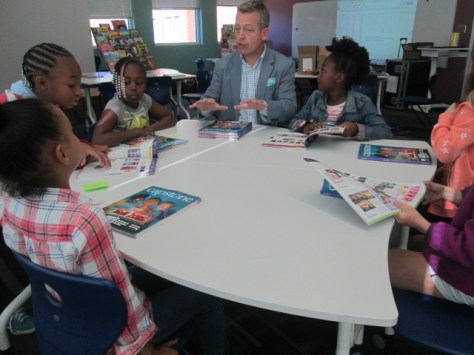
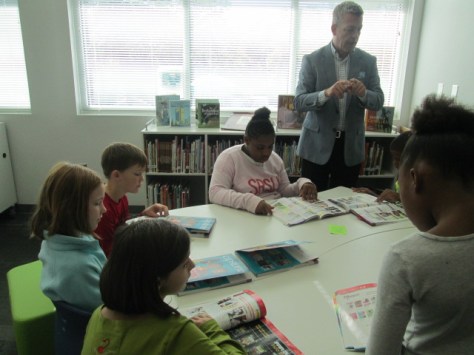
This week, students met with Jim Boon of Capstone Press.  Jim and Capstone have been longtime supporters of this project.  Jim ships in catalogs ahead of time so that each student gets a catalog.

Jim Boon Capstone (41)

He also brings in a selection of books and divides them into fiction and nonfiction.  Most of these books meet the needs of our goals, but there’s of course a few tossed in just for fun for students to look at.  Jim usually brings in some fun posters and things for the students as well, which makes them feel very special.  This year, students are adding books to our Capstone consideration list that match our goals, but students are also able to pick one book of their personal choice to add to the library.  These books will get a special sticker with each student’s name designating who chose the book for the library.

Each grade level group came in for 30 minutes.  Jim met with them at a table first to go over things like Capstone rewards, how to use the catalog, and how to scan books from the catalog straight into a consideration list.

I love how Jim talks directly to the students instead of me.  They are the customers for this project, and he is meeting their needs and expectations.

After orienting at the tables, students start looking at all of the books that Jim brought in as well as using their catalogs to locate the books.

When students find books in the catalog that are for consideration, they fold down the corners of the pages until they can come to the computer to scan the books into our list.

Once we scan the barcode in the Capstone catalog, that entire series is added to our list.  We then take a look to see which of the books on the list we already own.  Students decide if they think we need an extra copy or if we should uncheck books we already own.  Then, we save the cart.

After one pass through the books and catalogs, our students have added 116 titles to our Capstone consideration list for a total of $2,267 .

This number will of course grow and will be added to our other 2 vendors.  Then, we’ll work to narrow our lists to meet our goals and our budget.

As always, thanks to Capstone, Jim Boon, Amy Cox, and Eric Fitzgerald for their support with this project each year. I can’t wait for the many conversations we will have about these books in the coming weeks.

Picture Book Smackdown 2015 is a Wrap!

smackdown (8)Wow!  We had the most students ever participate in our 3rd annual picture book smackdown.  Even sickness and technical difficulties didn’t stop our students in 5 states sharing favorite books along with author, Laurie Thompson.

Here are a few behind the scenes notes:

  • There were multiple emails and tweets sent between the participating schools in this smackdown. We established etiquette for the hangout such as keeping things moving, muting microphones when we weren’t speaking, and only having about 5 students at a time share
  • We all prepared our students in advance of the smackdown but we each did it in our own way.  My own students had a basic script that they filled out.

  • The amazing Cathy Potter helped organize Laurie Thompson to join us. Unfortunately, Picture Book Month founder, Dianne de Las Casas wasn’t feeling well and couldn’t join us.  She was with us in spirit, though!
  • I had a group of 50 students!  Luckily 2 volunteers and a teacher helped me keep them organized in chairs and a parent frantically wrote down as many titles of shared picture books as she could.

smackdown (9) smackdown (15)

  • We all came into the Google Hangout early to test our cameras and microphones.  We communicated with one another through the chat in Hangouts as well as through text messaging if needed.

All of our Picture Book Smackdown content can be found on our Smore.

I would like to thank all of the schools who participated, Laurie Thompson, our volunteers, and all of the people who viewed and sent out tweets.  Thanks for celebrating Picture Book Month with us!

https://twitter.com/JuleeMurphy/status/667335363262742528

We’ll see you next year for our 4th annual smackdown!

Student Book Budgets 2015-16: Getting Started

surveying (1)

For several years, I have dedicated a portion of our library budget to be completely controlled by students.  This project has come to be one of my favorite ways of empowering the voices of the students in our school.  It’s so much more than just asking students what they think I should buy for the library.  It gives students a voice in every aspect of the decision making and purchasing process.  Each year is a bit different, so here’s a look at how we started the project this year.

Where did we get the money?

Some years our budget comes straight from my state budget.  Some years it’s part of book fair profits.  Some years it’s a grant. This past spring, I applied for the James Patterson Partnership grant where he gave $1.75 million dollars to school libraries.  I was one of the lucky libraries to receive this grant in the amount of $5,000.  This will be our budget this year along with rewards dollars that I have collected through Capstone Rewards.

How did I choose students?

This year I created a Google form and emailed it to students.  I primarily pull students from 3rd-5th grade for this project and these students regularly check their email.  I kept the form open for 5 days for students to apply.  The beginning of the form included some details about book budgets followed by a video intro.

https://youtu.be/lrdvrGViO4A

For students who marked that they might be willing to give up some recess time to participate, I followed up with individual emails and conversations.  I accepted every student into the group unless they decided they didn’t want to do it.  I created a group of all of the students in my email contacts so that I could easily send messages to them all.  On my initial emails to the group, I included the teachers so that they were in the loop with what they were doing and why they were coming to the library instead of recess.

First Week

On Monday, students came to the library at 11, 11:30, and 12:00 depending on their grade level.  I did a quick overview of the purpose of the book budget group and the steps that we would most likely go through across the course of the project.  They also had a chance to ask questions.  Then, we jumped into the work.

Our first goal was to gather reading interests from every grade level in the school.  We made a copy of last year’s Google form.

Then, students talked about each question and whether or not they wanted to make changes to the wording from last year.  Each grade level added to and revised the form until it was ready.

They made several changes, including asking students about their preferences in types of books such as picture book, chapter book, and informational books.  They added some new categories of books and revised the language to be more clear.

During the 5th grade group, we went ahead and emailed the form out to students to begin collecting responses.  We also created a QR code so that students who were surveying younger grades with iPads could easily pull up the form.

I emailed an update to the entire group to let them know that surveying needed to begin, and they started coming in before school, during lunch, during recess, and during any extra moments of the day to start surveying.  All along the way, we could check our progress.


Throughout the week, I emailed updates to the group as well as sent reminders to teachers to let students fill out the survey.  We will meet one more time this week to examine our results so far and decide if we have enough data to set goals or if we need to survey more people.

I’m very proud of this year’s group already and I know they are going to do miraculous things this year!

Celebrating Stories with Our Annual Storybook Parade

storybook parade (6)

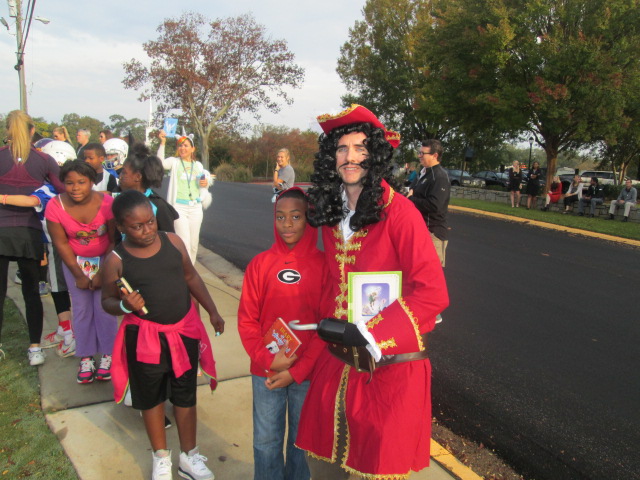
The day before fall break is always a special day at our school.  It is our annual Storybook Celebration.  Organizing this day takes a tremendous amount of work, but the students have such a great day. Students and teachers are encouraged to dress as any storybook character.

storybook parade (62)

We spent about 2 weeks ahead of the event advertising various costume ideas on our morning broadcast.  I wanted to encourage students to think about how they could use things they already had around their house or things they could make in order to create an awesome costume.  Some of my BTV crew chose books and shared some simple ideas for creating an awesome costume.  An example was Max from Max the Brave where you could just dress in black and tie a red cape, blanket, sheet, or towel around your neck.

Students poured into the library for the past 2 weeks to ask for assistance finding a book for the parade and costume ideas.  We had students coming in right up until the parade actually started, which was definitely a little crazy without much help.

Also ahead of the event, I sent out a Google spreadsheet to all of our resource and specials teachers to offer special opportunities during the day for classes to have literature-focused activities and a chance for teachers to have a planning time.  Resource and specials teachers blacked out times that they weren’t available and teachers signed up for the rest.

My volunteer coordinator, Courtney Tobin, created a Signup Genius to recruit 2 guest readers for every classroom to kickoff the day. This was sent out to grade level parent representatives who encouraged people to sign up.  I also shared the link with my own list of past guest readers as well as CCSD board members and district leaders.  I also published it on our library Facebook page.  We didn’t quite reach our goal of 2 readers per class, but every class had someone to share a great story with them at the start of the day.  These readers gathered in the library, chose from a selection of books, took a photo, and were off to classes to read.

After guest readers, we gathered in the cafeteria for an assembly.  We broadcast students onto the big screen as they entered using Google Hangouts.

Evan Bush from the Athens Clarke County Public Library came and told several interactive fall stories to almost 600 students.  I loved how he took the energy of the crowd and got them all snapping, clapping, and sharing parts of the stories.  It kept them focused.  I reached out to Evan about 2 weeks before our event, and he graciously agreed to come.  I love that he gave our students a great storytelling experience and also one more connection to the public library and what it can offer.

After Evan, each class stood up twirled around to show off costumes, and sat facing the back of the cafeteria.  This prepared us to go out on our actual parade as well as gave students a chance to show one another their costumes.

It was during this time that I found out all my preparation for the parade route suddenly had to be changed.  I was so organized this year and provided maps of the parade route to families and community ahead of time.  However, Georgia Power had to do some work and closed part of the sidewalk on our route.  I had to make a last minute change, but it all worked out.

We took off into the community shouting “Read More Books!” and showing off our costumes.  It was fun to see community members, families, UGA students, construction workers, and more cheering us on along the way.  Our 1st-5th grade took a longer route and our Prek/K took a shorter route around the school.

Our 5th graders have a tradition of stopping along the parade route for a special treat, and for the past few years we have stopped at the Georgia Center for Continuing Education for hot chocolate.  Mimi, our family engagement specialist, organizes this piece for us by having the cafeteria prep the hot chocolate and taking the hot chocolate to setup.  Students have some time to just hangout, talk, and enjoy their treats before heading back to school.

Finally, back at school we go to our special classes as well as do more literature activities in class.  In the library, we focused on pirate stories since I was dressed as Captain Hook.  I also used the great pirate video from All the Wonders.

Students moved to tables and colored a pirate sheet or designed their own pirate using Chromville augmented reality.

Somehow in all the craziness, we also organized a big book giveaway.  In the back corner of the library, there were tables of books that had been donated or weeded out of various collections and needed a good home. Courtney Tobin and other volunteers helped get the books put out, and teachers brought classes or small groups of students to pick out new books.  It was fun to glance over and see so many students excited to add books to their home libraries.  We will keep these tables going next week since there are still books left.

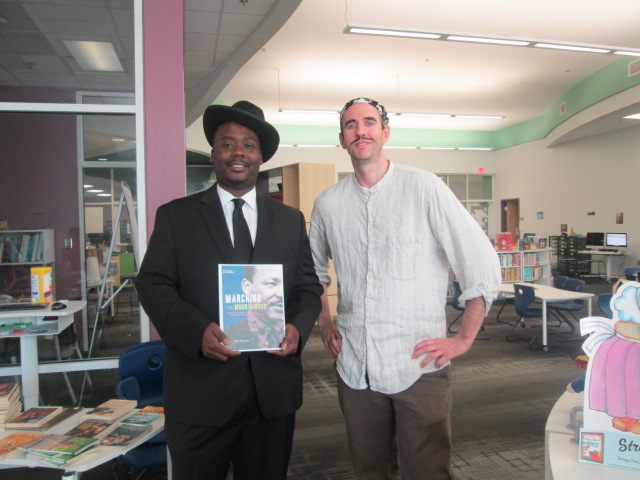
It seems that each year something new comes along for storybook celebration that makes it a little more special.  This year I loved seeing so many creative costumes: Little Elliot, the Bird Woman from Circus Mirandus, Minecraft creepers, Martin Luther King, the Very Hungry Caterpillar, and more.

I loved seeing our reflection in the glass of the UGA coliseum.

storybook parade (67)

I also loved that our public library was involved in the day and I want to think even more about how community is represented on this day.

Until next year…

storybook parade (120)