Flipgrid Global Connections & the Epic 30-second Book Talk

book-talk-10

Flipgrid continues to be one of my favorite tools for getting student voice out into the world.  They are constantly listening to users and working to improve the functionality of this tool.  Now, in the paid version of Flipgrid Classroom, there is a section called “Global Grid Connections”.  You can establish any of your grids to be accessible to other members of the Flipgrid Classroom community. As an administrator, I can browse the available grids and look for opportunities for my students to connect and collaborate with other students around the world as well as offer my grids for students around the world to contribute to.


Prior to this release, I would use social media and online communities to seek out collaborating classrooms.  I’ll of course still do this, but I love that Flipgrid is taking one of the big barriers to global collaboration and trying out a solution. They are helping me push my grid out to more users so that my students have a chance to have a larger audience as well as hear from other perspectives around the world.  They’ve made it so simple to reach out and communicate with classrooms around the world.

Right as all of this update was being announced, Jennifer LaGarde and Brad Gustafson launched the 30-second book talk challenge.  Lead Learners and Literacy Legends submitted their 30-second book talks and a competition brackets was setup for voting.
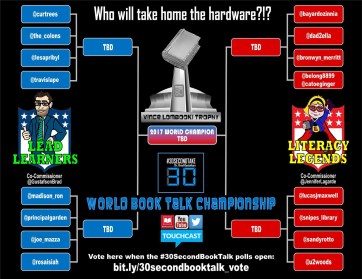
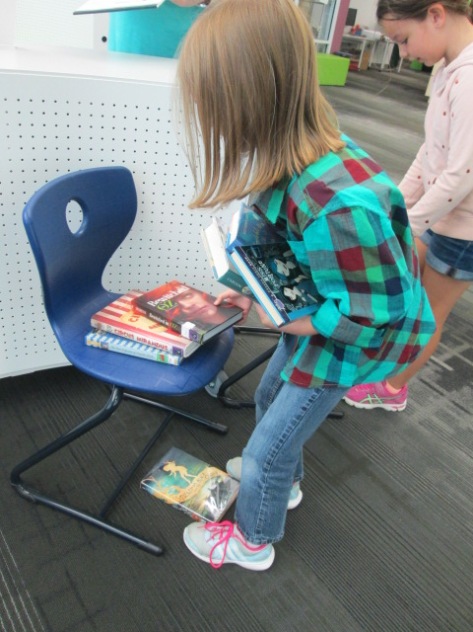
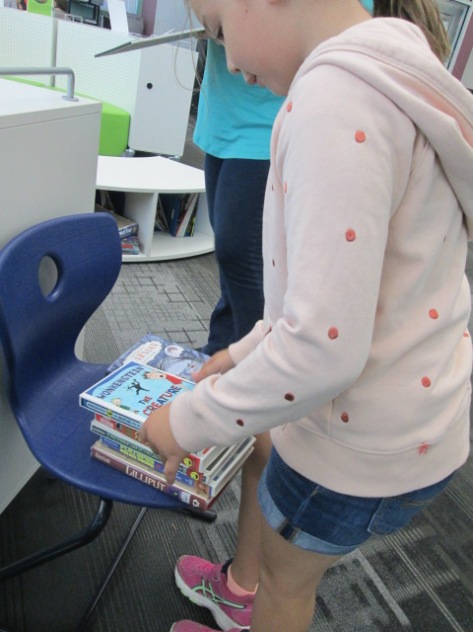
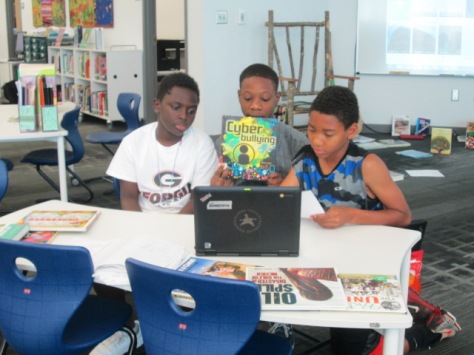
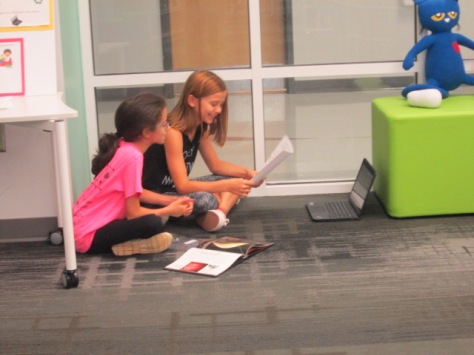
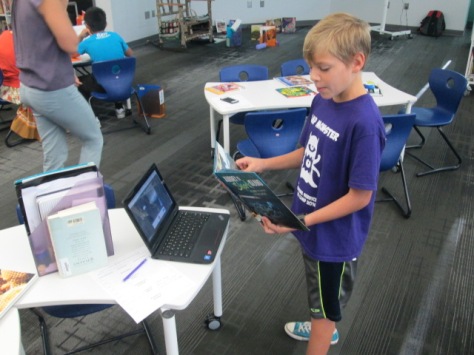
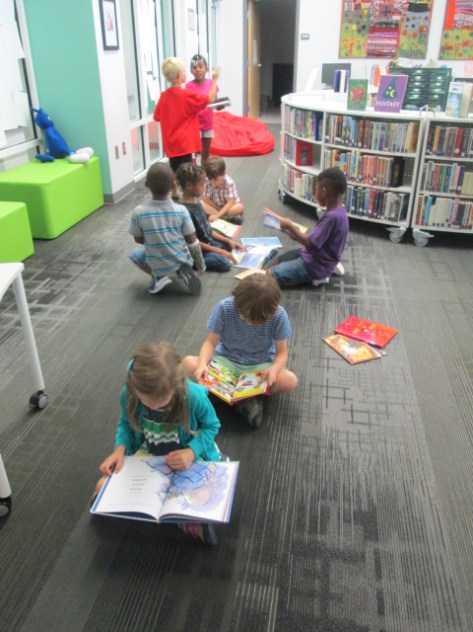
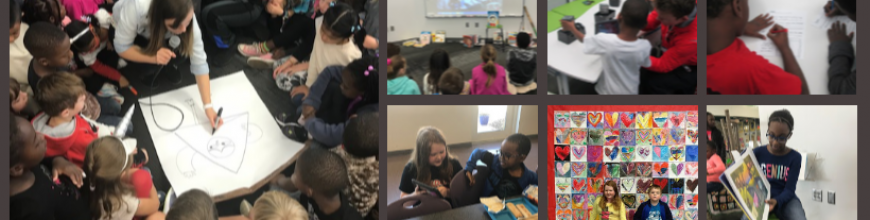
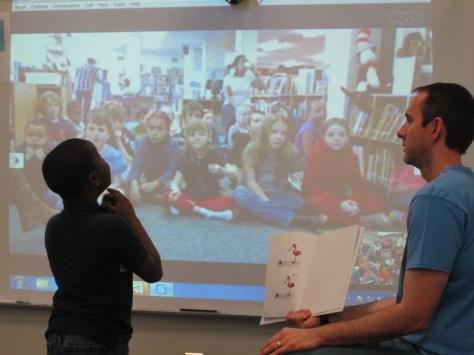
At the bottom of the post, they offered resources for creating your own 30-second book talk challenge.  I thought this would make a perfect global connection question on my grid.  I started collaborating with Melissa Freeman in 5th grade, and all of her language arts classes came to the library to select books, read, and create 30-second epic book talks.

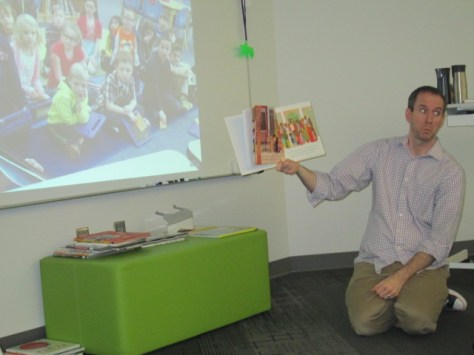
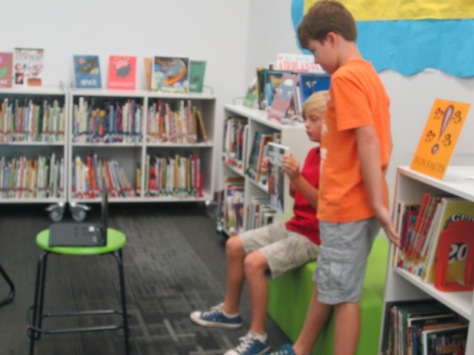
We started by listening to some book talks, including some vintage Reading Rainbow!

We looked at Jennifer & Brad’s tips for book talks.

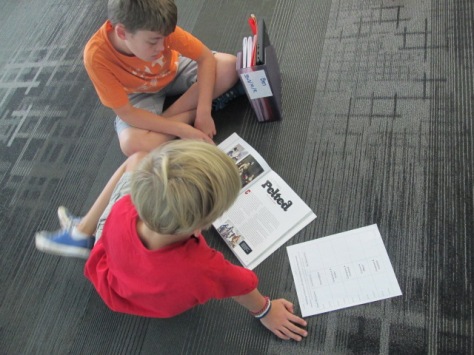
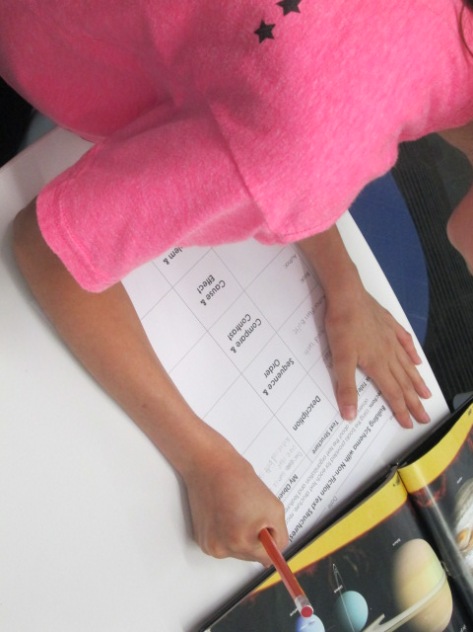
Then students identified some important pieces of an epic book talk.  We constructed this sheet as a framework for our talks.

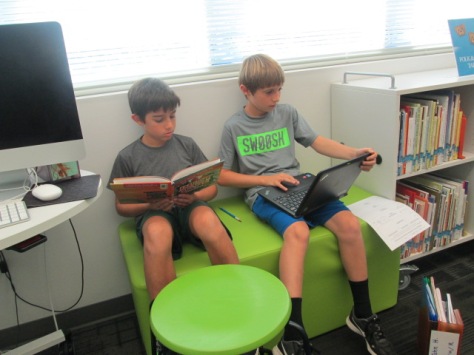
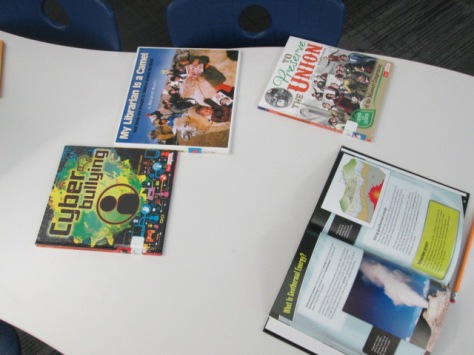
Next students chose a book that they recently finished or selected a book from the library to read.  I pulled a diverse collection of picture books, especially ones that our 5th graders might overlook because so many feel the pull to read only chapter books.  They spent the first day reading and writing their script.  Ms. Freeman, Ms. Mullins, and I all walked around and read with students as well as conferenced with them on book talks.

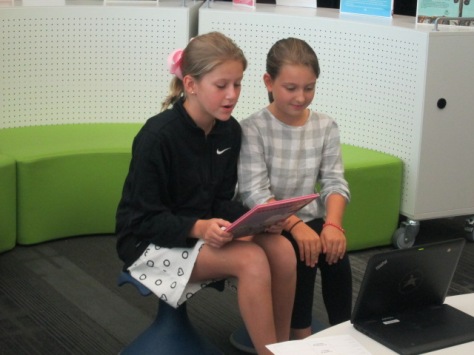
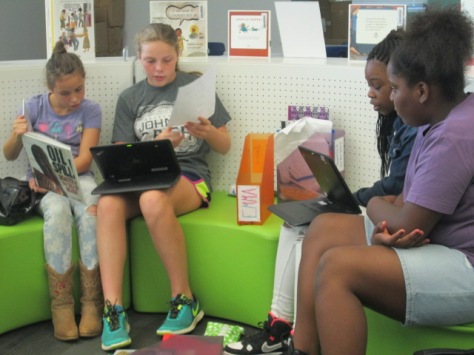
On day 2, students continued working on their scripts, practiced, and recorded.  We reminded them that Flipgrid has a feature to pause the recording along the way so that they could pick up a prop, turn to a page in the book, etc.  We didn’t want them to waste any of their 30 seconds with transitions.  As they submitted their videos, they began watching other people’s videos.

Now, it’s your turn!  We hope you will join us on our 30-second book talk grid.

You are welcome to add your own student voices alongside our students sharing favorite books in 30 seconds or less.  Let’s unite our student voices through Flipgrid and inspire a global community of readers.

Weaving Together Social Studies and Makerspace

inventors-24Our 5th grade is currently studying the impact on American life that several famous inventors had. When I was brainstorming with Shelley Olin, 5th grade social studies teacher, we began to wonder about connections these standards had to makerspace.  It started as an idea seed and grew into a set of experiences for all 5th graders to engage in.

I wanted students to put themselves into the shoes of an inventor so that they could begin to understand the perseverance and curiosity that inventors have. We focused on 3 of the inventors: Thomas Edison (electricity), Alexander Graham Bell (communication), and the Wright Brothers (flight).

I prepared 3 centers on electricity, communication, and flight.  Each center included a biography about the inventors, instructions for an activity, and a clipboard to leave wisdom for the next group to learn from.

For flight, I selected some paper airplanes that could be made from a full sheet of paper.  I also included books about other paper airplanes.

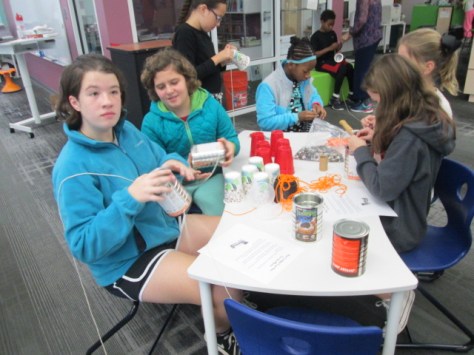
For communication, I created 2 choices.  One was to use littlebits to create a tool for communicating using Morse code. I included a buzzer and LED bit as well as button, pulse sensor, and slide dimmer bits.  The other experience was to create a tin can phone.  I provided coffee cans and cups and various kinds of string.

For electricity, I copied instructions for making a simple paper circuit using a coin battery, led light, and copper tape.  I put materials in Ziploc bags so each group would have what they needed to create a circuit.  I added extra led lights for tinkering beyond an simple circuit.

It took a long time to prepare all of the materials for 3 back-to-back 5th grade classes.  I had to have everything ready for an immediate turn round between classes.

Before coming to the library to engage in some makerspace activities related to these themes, students read about each inventor in textbooks and on PebbleGo.  They gave Ms. Olin their top 2 interests out of the 3 themes so that she could put them in groups.

inventors-22

In the library, we started by looking at the littlebits invention cycle.  There’s not just one place to start in the cycle and it doesn’t necessarily follow a linear sequence.  We talked about how students could start with “create” by following the directions that I had given. Then they could play with their creation and begin to remix ideas to create an improved version or an alternative invention.  By the end, I hoped that they would have something to share with the rest of their class or group.  It really seemed like it could be linear in talking about it, but I quickly saw that it is very fluid.

After our quick intro, students sorted into their chosen task and got to work. Luckily, Ms. Olin and other collaborative teachers joined the class during this session. At times, we had me and 3 teachers supporting students around the library.  It was 3 very different activities, so having the extra support was beneficial.

What I quickly saw was how much students wanted to just jump in and put things together without reading directions.  At paper airplanes, students started folding paper in all sorts of folds and testing them out.

inventors-25

At paper circuits, students were sticking down tape and connecting the led to the battery without reading  the instructions or even formulating a plan.

inventors-1

At tin can phones, students immediately started connecting cans.

inventors-3

But…as I stepped back and thought about it, isn’t that really what inventors do?  They don’t necessarily have a set of instructions to follow. They just try things out to see what happens.

After some initial tinkering, several students did in fact try to read the instructions and many said that they wished they had read them at the beginning. It was an important lesson that we talked about and learned from. It’s hard to read all the instructions before putting something together when all you want is to see the finished product.  I do that myself as an adult.

inventors-17

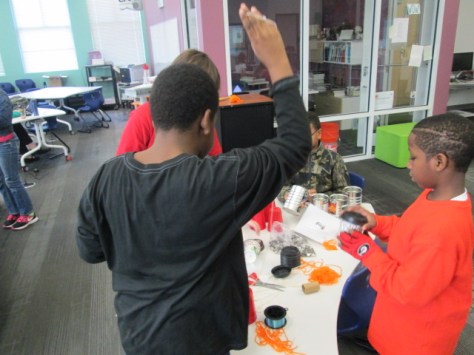
One thing that was really interesting was when students finished their first prototype and they started remixing. One example at the tin can phone center was when 2 groups decided to combine their two phones and see if they could make a four-way call.

inventors-26

At the paper airplane center, students started combining their planes together to see if a combination would create a better flying plane.  They were truly embracing the idea of remixing.

inventors-20

When we came back together at the end, I asked students to think about what it was like to be an inventor.  We had some great conversation about perseverance, staying calm through frustration, trying again, problem solving, and taking plenty of time to invent. We circled back to our inventors and considered how much time, frustration, and perseverance they each put into their inventions.  I think the experience gave the students a greater appreciation for the inventors they were learning about rather than just passively reading about them.

inventors-14

We even had a moment to talk about continuing inventions in our makerspace or at home and entering them into our school maker faire coming soon.  I loved how a simple idea from a social studies standard was able to weave together growth mindset, literature, social studies, and makerspace all into one experience.


Holiday Makerspace

ornament-makerspace-13

Our regular makerspace time is on break since UGA is out until spring semester.  However, our students are still eager to come. This week I hosted a special holiday makerspace at a different time than our typical makerspace time.  I created a Google doc and offered two 30-minute sessions for students in any grade to sign up to make holiday-inspired crafts using books weeded from our library collection.

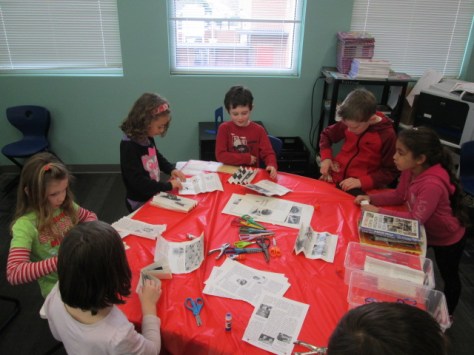
Prior to the makerspace, I took several weeded books and ripped out pages.  Volunteers and people walking into the library thought I had gone crazy, but I loved finding a new use for books that would likely go to recycling or sit unused in a box.  Some pages I put in stacks and other pages I cut into strips.

ornament-makerspace-12

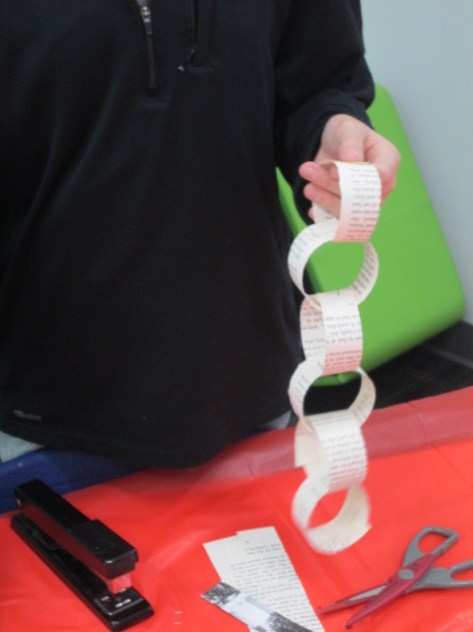
The two crafts offered were paper chains and snowflake ornaments. The paper chains were pretty self explanatory.  I just cut pages into strips so that students could create chains to use for Christmas trees or countdowns to whatever they hoped to countdown toward like Christmas, Hanukkah, a birthday, or something else.

ornament-makerspace-7

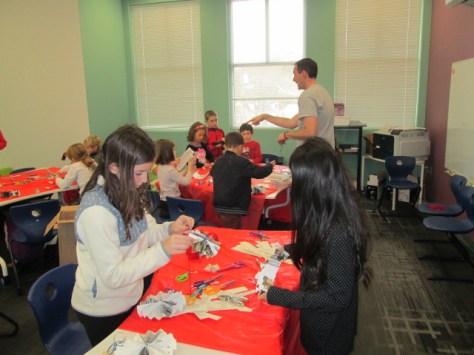
The snowflake ornaments took a bit more instruction.

  1.  Students took two pages from books that were close to the same size.
  2. They folded them like you would fold a paper fan.
  3. They tied the middle of the fan fold with string so that it would unfold.
  4. They glued the ends of the folded fan so that it could unfold into the shape of a snowflake half.
  5. They took the two fanned out halves and glued them together
  6. They added a string for hanging on a tree or other special place

ornament-makerspace-1

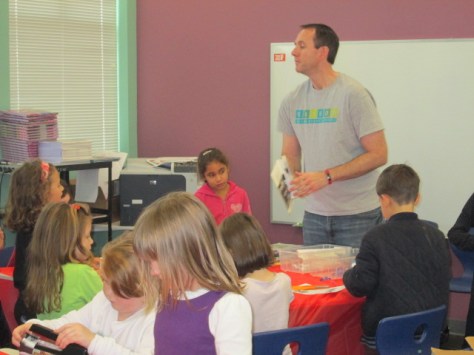
During the two sessions, I had a mix of 1st, 2nd, 4th, and 5th graders.  The all arrived at different times, so we found ourselves constantly restarting instructions.  The great thing was that in typical makerspace form, the students started to help one another.  I gave instructions as I could, but then the students passed on knowledge to one another.  The 1st graders needed the most support in tying string and folding paper, but other grades were very independent.

ornament-makerspace-5 ornament-makerspace-2

I was really glad that paper chains was a choice because it was easy for students to take on with little explanation.  It was surprising to see how many students had never made a paper chain.  The pages from books made some of the most beautiful chains I’ve seen.  The ones I’ve made have always been from solid construction paper, and these had a bit of fashion and artistic vibes.

Our time was of course noisy, messy, and fun.  We could have done this project for much longer than 30 minutes.  If we hadn’t run out of time, we could have started exploring variations of the designs. Some students naturally started doing this but they just ran out of time.  We also could have individualized the chains and ornaments even more with craft scissors, possibly glitter (if we were that adventurous, or combined some other materials from our maker cart.

ornament-makerspace-3

I’m going to hold onto this idea and see where it takes us in the second half of the year or even next school year.


Let’s All Connect for World Read Aloud Day 2017

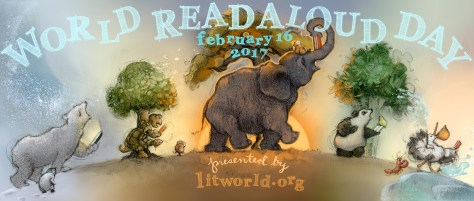
It’s time for us all to start making plans and building excitement for World Read Aloud Day 2017 with Litworld.  This year, World Read Aloud Day takes place on February 16, 2017, but many of us will celebrate the entire week of February 13-17, 2017.

wrad15-day-3-15

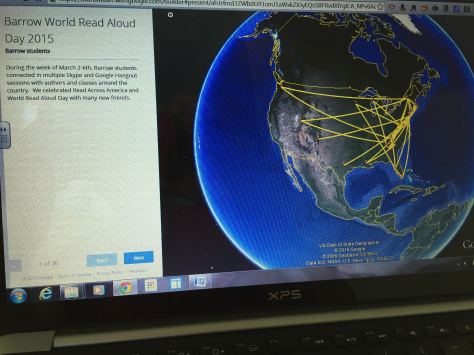
World Read Aloud Day “calls global attention to the importance of reading aloud and sharing stories.”  When we connect our students through Skype, Google Hangouts, or other web tools, they experience the power of the read aloud and realize that they are connected with a bigger world that is both the same and different from them.  By connecting our voices through reading aloud, we are reading on behalf of the 758 million people who cannot read.

wrad16-8

Shannon McClintock Miller and I invite you to start posting your schedules on our shared Google Doc.


http://tinyurl.com/wrad17


When you share your schedule, be sure to include:

  • Your name
  • Your contact info such as social media, Skype, and/or email
  • Your role
  • Your school and grade levels
  • Your location
  • List your time zone when posting your available dates and times

wrad-map

After you post your own schedule, take a look at the other schedules and sign up on someone’s schedule to connect your students.  We’ve found that it doesn’t matter if same grade levels connect with one another. Often times, an older grade can read aloud to a younger grade or younger grades can find parts of a books that they can read aloud to an older grade.  There’s not just one way to connect.  Part of the fun is meeting new friends, planning your read alouds, and seeing what magical things happen during your connection that you weren’t even expecting.

We have many ideas from previous years on our blogs.  You can read more about previous World Read Aloud Day connections on Expect the Miraculous and The Library Voice.  Litworld also has several resources for you to use in your planning and connections including:

wrad16-5

Please let us know if you have any questions.  Happy connecting!

Shannon McClintock Miller @shannonmmiller & Andy Plemmons @plemmonsa

Storybook Celebration 2016

storybook-parade-48

Traditions. We have many. The annual storybook parade is one that has been around for a long time. Each year we try a few new things, but the hear of the storybook parade is celebrating books by dressing as our favorite characters, carrying the book, and showing off our costume and book to the community.

Trying to document the day. (Photo Credit: Paul Lee)

Trying to document the day. (Photo Credit: Paul Lee)

The day begins with guest readers in every classroom. Janice Flory, our volunteer coordinator, sets up a Signup Genius to recruit 2 readers for each classroom. They gather in the library, select a book, take a group picture, and then get escorted to a classroom by a 5th grade BTV crew member.

I was really excited about the selection of books they had to choose from this year.

Next, the whole school gathered in the lunchroom for an assembly.  Since October 27 was Jumpstart’s Read for the Record, I read aloud The Bear Ate Your Sandwich and recorded approximately 675 listeners to the story.

read-for-the-record

When we were a smaller school, we took time to walk across the stage and show off our costumes, but it is a challenge as we have grown. Now, we simply stand by row, do a little twirl, and then sit down facing the back of the cafeteria.  The costumes this year were amazing. I really pushed for students to think about characters they connected with and dress as that character.

At this point, we head out on our parade. Our route this year was the entire block of our school.

Students chant “read more books” as they walk down the sidewalk and parents and community members watch and blow their horns as they pass by.

Our Prek-4th grade classes return to school and begin literacy activities in their classrooms. Our 5th grade walks to the nearby Georgia Center to have hot chocolate and spend some time together.

Upon returning to school, our specials teachers, resource teachers, and media center offer special 30-minute sessions that classrooms can sign up to attend.

In the library, I offered a couple of experiences. Lower grades designed their own Halloween pumpkins using the Quiver augmented reality app.

Upper grades used littlebits to make something spooky.  Both of these activities were connected to spooky stories we have in the library.


I loved seeing the designs that students came up with in both experiences.  It was a fast-paced session that pushed students to be creative, work together, problem solve, and innovate.  I hope that many will continue to explore littlebits beyond this fast session.


As always, this day was tons of fun but exhausting. It takes the whole community to make the event successful. Thank you to every student, teacher, family member, and community member who helped us make this day a success.

Reader’s Advisory: Quirky Questions and Crowdsourcing Ideas

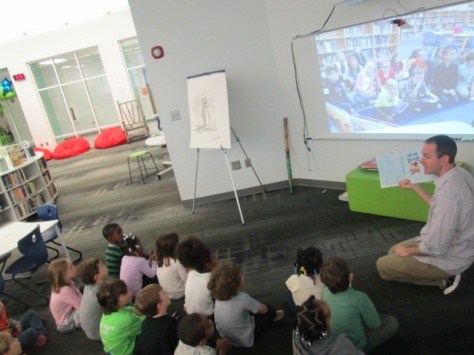
readers-advisory-4This year, I’m really trying to think of ways to support students’ reading lives.  Recently, Ms. Hicks, 3rd grade collaborator, came to me with an idea. She wondered if I would meet with small groups of students in 3rd grade who needed some suggestions of books to read.  These students are all readers but some might be stuck in their reading, abandon many of the books they choose, need a nudge to try something new, etc.

readers-advisory-5

When I recommend books in the library, it’s always a very informal process.  I ask what students like, what they’ve read, what they are hoping to find, etc, but I’ve never formally made a list of questions to pull from.  I started thinking about Will Walton at Avid Bookshop and how he manages the Avid book subscription program.  In this program, someone buys a 6 or 12-month subscription and the recipient gets a new book in the mail specifically tailored to the recipient’s interests. I sent Will a message to see if he had a formal process and learned that he just loves to talk and chats with the person all about things they love. His questions aren’t always specific to reading, so it really got me thinking about quirky questions that I might ask to students that would help me connect them to a book.

readers-advisory-3

I initially started making a list on my own, but then I sent the Google doc to all of the media specialists in our district as well as posted to Facebook, Instagram, and Twitter.

There were many suggestions about book related questions but some interesting thoughts started to emerge.  Our list started to grow.  (Feel free to add to this document!)

  • What do you like to do after school?
  • What are some of your favorite movies or television shows?
  • What are some of your hobbies?
  • What is a book that you couldn’t stand to read?  What was it about that book that you didn’t like?
  • What kind of music do you listen to?
  • Where do you like to eat?
  • What kind of games do you enjoy playing?
  • Would you rather fly a kite (sit by a river, etc.) on a nice day or go to a big party?
  • Who is your favorite superhero?
  • Do you have a favorite series?  Genre?
  • Do you like “just the facts” or “a far out story”?
  • What are 3 books you’ve read that you loved?
  • Do you like realistic stuff or imaginary stuff?
  • Why do you read (to escape, entertainment, learn new things)?
  • What is your preferred length of book? (short & sweet, long & detailed, depends on the book)
  • If you could visit any place or time in history, where would you go?
  • Is there anything you would avoid when choosing a book? (bad language, violence, ghosts, death, etc)
  • When you come to the library, where you usually go first when looking for your next book?
  • If you could be someone else for a day, who would it be and why?
  • Who are some of your favorite celebrities?
  • What is your favorite subject in school?

Then, I took those questions and turned them into a Google form to use with students.

I decided that if 6-8 students came at a time, I could have them start filling out the form while I started having 1-on-1 conversations with them.  We settled on a 30 minute session for this survey process.  I took over the typing as I talked with them and added to what they had already written or finished the questions they hadn’t gotten to.

readers-advisory-2

I was actually amazed by some of the responses that I got from students and the insight it gave me into ways I might connect them to a book.  Some snippets of responses included:

If you could be someone else for a day, who would it be and why?

  • Mal from Descendants because she’s pretty and has purple hair. I like what she wears.
  • a wolf to howl at the moon
  • a cheetah because I want to run fast

Is there anything you would avoid when choosing a book? (bad language, violence, ghosts, death, etc)

  • kissing….love story
  • princesses
  • main character dies


I looked at all of the results for each student and wrote key words from the answers onto a post-it note for each student.

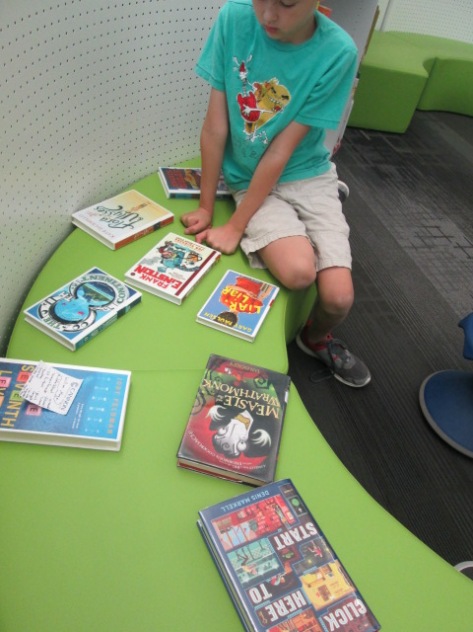
This helped me walk around the library and pull books into stacks for each student for a second trip to the library.  The purpose of the second 30-minute segment was to look at the stack of books that were chosen specifically for each student and really spend some time with them. Students were so eager to get their hands on their stacks that they started asking me for a sneak peek before it was even time.  My fear was that students wouldn’t connect with any book, but once again the miraculous happened.

https://twitter.com/plemmonsa/status/783301979372130304

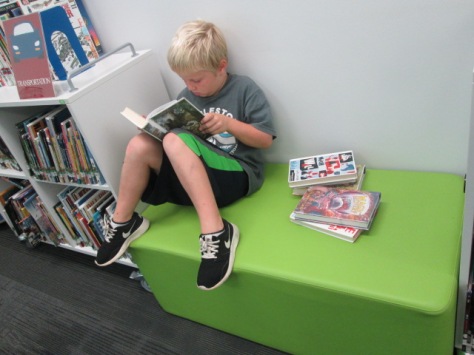
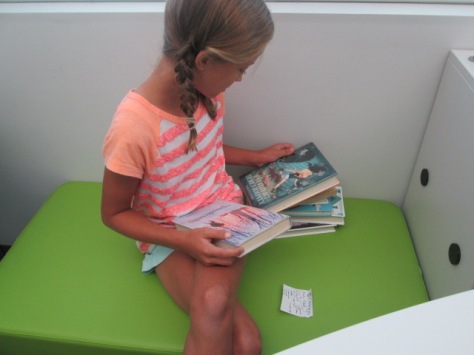
Each student had a strategy.  Some spread all the books out and looked at the covers.  Some started reading one book and didn’t want to move to another book in the stack.  Some flipped over and read the back of each book.  Some read the beginning page of each book. What happened is that every student found more than one book in their stack of 7-8 books that they wanted to read and they were genuinely excited about their choices.

readers-advisory-1

We decided that each student would choose the “first read” from the pile and we would create a list of all of the other titles so that we didn’t forget about the “future reads”.  For all of the books that weren’t chosen, we just pushed them aside in a big stack. Something else miraculous happened.  Students who were coming into the library to check out books saw all of my small group looking at that pile of books and they wanted to check something out from the pile. Several students who always have trouble finding something actually picked something from the pile of leftover books from the small group.

This gave me a lot to think about in terms of how to support various readers.  This was a very personalized experience.  It was time consuming on my part, but it was a way that I connected with students that’s hard to do when they are rushing in and out to get a book while I’m teaching a class.  I won’t to continue to explore this and see how it can be fine tuned.

Our next step is for students to read their books during “read to self” time in the classroom and we will meet again to chat about the books.  It will be like a book club. We won’t focus on naming the characters, setting, problem, solution, etc.  Instead we’ll talk about connections we had to the characters, what surprised us, what made us laugh, what we think will happen next. It will be “real talk” about books rather than just academic talk.  I can’t wait to see how this evolves.

If you have a favorite reader’s advisory question, add it to our doc or leave it in the comments.

Students as Teachers: Exploring Text Structure with Flipgrid

text-structure-17

At the beginning of the year, I started talking with Melissa Freeman, 5th grade teacher, about exploring text structure in the library.  The very 1st unit in 5th grade language arts starts with text structure which explores the following standard.

ELAGSE5RI5  Compare and contrast the overall structure (e.g., chronology, comparison, cause/effect, problem/solution) of events,ideas, concepts, or information in two or more texts.

Melissa was wondering how to make the topic more engaging and wondered about the possibility of a library scavenger hunt.  We really weren’t sure where to go with the idea so we kept bouncing around possibilities over email and in person. She even came to the library and worked with me to pull books out of the nonfiction section and start sorting them into stacks.

text-structure-16 text-structure-15

I continued this process so that we knew we had examples of compare/contrast, description, sequence/order, cause/effect, and problem/solution.  Then, I mixed them all up.  We knew that even though we personally picked a book for a specific structure that students might find other examples of text structure within the book.  We were also excited that students would have some one-on-one time looking through some nonfiction books that they might not know that the library has.

text-structure-14 text-structure-13

In one of our brainstorms, I thought about the possibility of students recording their findings in a digital way that could be shared with one another and also other grade levels. I originally thought it would be a good way for them to agree or disagree with examples that were discovered, but we expanded the idea to be a way that students could teach other students in our school and other schools about ways text can be organized.

We decided to use Flipgrid for this task.  I created 5 separate questions: one for each type of text structure.  Then, I linked them all on a Symbaloo that Ms. Freeman could share with her students via Google Classroom.

In class, Ms. Freeman introduced each kind of text structure and students started exploring books on Tumblebooks for each structure.

text-structure-12 text-structure-10

Each class came to the library for a 50-minute session.  We did a quick mini-lesson to review the structures, show how to use Flipgrid, and share what we hoped students would include in their video. This included things like the book title, author, text structure, and a concrete example from the text to justify the structure chosen.  We also setup the idea that these videos could be a teaching tool for the rest of 5th grade, the school, and other schools.

text-structure-8 text-structure-7

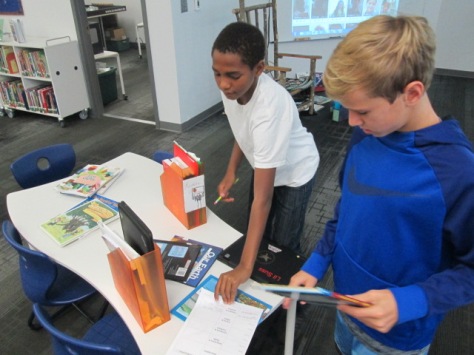
I spread the books out at tables and students worked in partners to browse the tables for a book to start with. As they discovered one of the 5 text structures, they prepared to make a video.  Students used their own computers to record a Flipgrid, and then continued exploring for their next book example.

Ms. Freeman, Ms. Mullins (gifted teacher), and I all walked around and chatted with students as they searched through books.  One of our immediate noticings was that students were guessing the structure simply based on the title, topic, or cover of the book.

They weren’t even opening the book to read the text.  While this was a great predictor of what kind of structure might be inside, students were missing the point about looking at the organization. We clarified this in conferences and adjusted our mini-lesson with each class to put a stronger emphasis on explaining.

To close each class, we showed a few of the videos and had student offer noticings about what they heard. I love that in the new Flipgrid, you can actually respond to each video response.  I showed students how the comments they were making could actually be added right onto our Flipgrid.  I also encouraged each person who made a video to think about how they might add to their original video by posting a new video as a response.

The plan is for students to continue using these Flipgrids in class to post additional examples and respond to one another. We hope that eventually there will be some strong examples that can be shared with other classes in our school as well as with schools we collaborate with.

In the meantime, it’s a work in progress.

text-structure-4 text-structure-3


Athens, GA & Seodaemun, South Korea: A Global Art Collaboration

korea-flipgrid-6

In June 2015, the mayors of Athens, GA and Seodaemun, South Korea signed a Memorandum of Understanding.  This MOU calls for both cities to exchange leadership programs in private and public sectors that promote economic development.  That basically means that our cities have a friendship to exchange ideas.


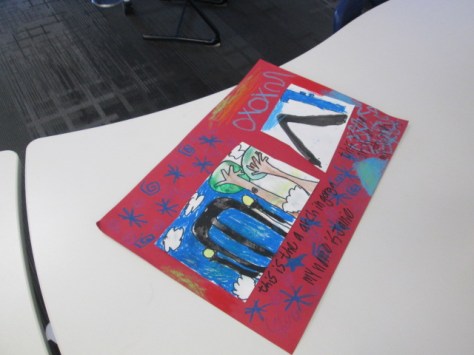
As a part of this collaboration, the 2nd graders at our school are engaging in a collaborative art project with students in Seodaemun.  This has been an exciting and challenging undertaking for our students and teachers, but it has been full of rewarding experiences.  The classroom teachers, art teacher, and media center all supported the students at Barrow in carrying out the project.

korea-research-4 korea-research-1 korea-research-3

In class, students read the book Same, Same but Different by Jenny Sue Kostecki Shaw.  This set the stage for students thinking about how our city of Athens is the same as Seodaemun and how it’s different.  My wife, Denise Plemmons, in the Athens-Clarke County Economic Development Department, shared several websites with us to learn more about Seodaemun. I added some additional sites for students to visit that included resources from our state-funded Galileo databases. These were all housed on a Symbaloo page for students.

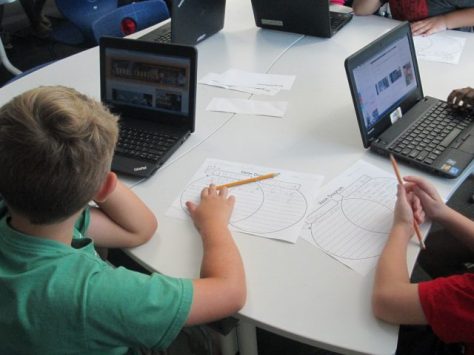
Teachers paired students within their rooms to research and create art together.  Students used a Venn diagram to write brief notes on what was the same and different between our cities. For example, students learned that we have an arch at UGA and Seodaemun has an arch at Independence Park. They saw that we go to school for 7-8 hours per day and Seodaemun may go up to 16 hours per day.  Research was done in the library, and prior to letting students search on their own via the Symbaloo, I provided some tangible examples like these to put into the diagram.

korea-flipgrid-9

The research was a challenge.  One reason was just the lack of resources on a 2nd grade level. The other big challenge was that students are 7 and 8 years old. There are currently studying regions of Georgia, so adding in a country on the other side of the world was hard to grasp within that context. We found that some students thought they had been to South Korea when in fact they were thinking of South Carolina. It may seem humorous, but it was valid conversation that we worked to clarify in the library, art room, and classroom.

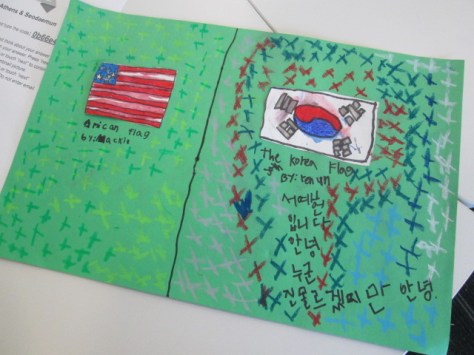
After an hour-long session of research, students took their work to Ms. Foretich in the art room.  They used their Venn diagram to decide what art they would create that would show something that was the same or different between our cities.  One of the partners painted the Athens side of the art, and the other partner painted the Seodaemun side.


In classrooms, teachers continued to share maps and facts about our two cities. Mrs. Yawn, the 2nd grade team leader, worked to plan a morning of rotations for all of the 2nd graders. Some of our students are from South Korea, so she invited the parents of those students along with support from UGA to offer rotation topics on culture, games, and food.

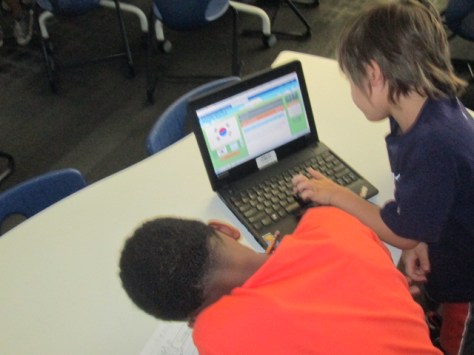
Another part of the rotations was for each class to come to the library and record a Flipgrid video explaining what each pair of students learned about Athens and Seodaemun and what they created in their art.

Our goal is to send these Flipgrid links to Seodaemun so that the Korean students can respond back when they create their own art.

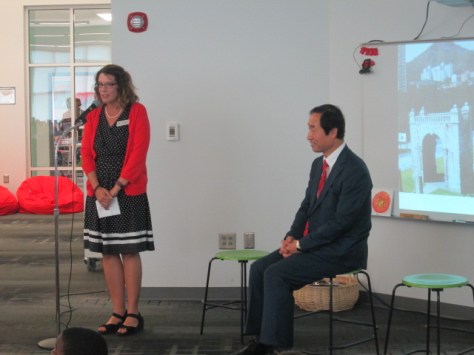
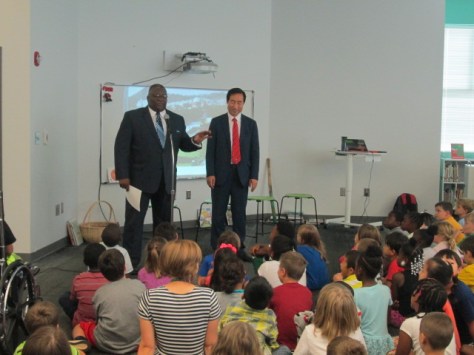
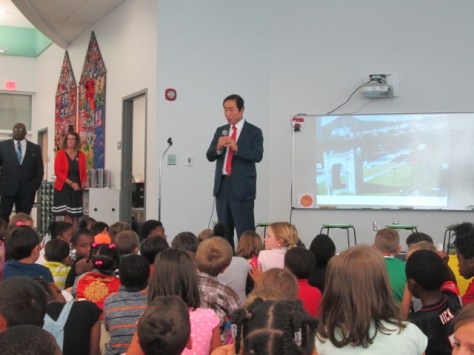
To celebrate the end of our portion of the project, the mayor of Seodaemun visited our whole 2nd grade along with members of the Athens Clarke County government.

Dr. Ellen Sabatini, principal, welcomed everyone.

athens-seodaemun-8

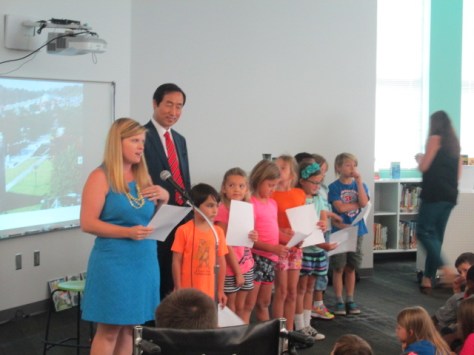
Ms. Yawn, 2nd grade team leader, explained the project to our visitors and families.

athens-seodaemun-9

Students shared pieces of the project that they worked on.

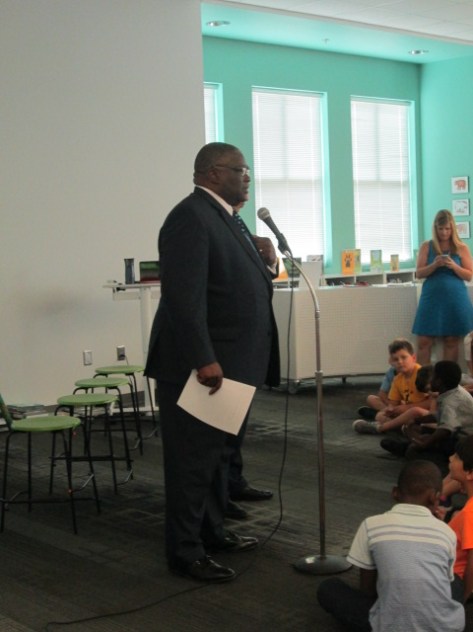
Commissioner Harry Sims spoke about how the students’ art work would now be a world traveler as it goes across the ocean to South Korea.

athens-seodaemun-14 athens-seodaemun-15

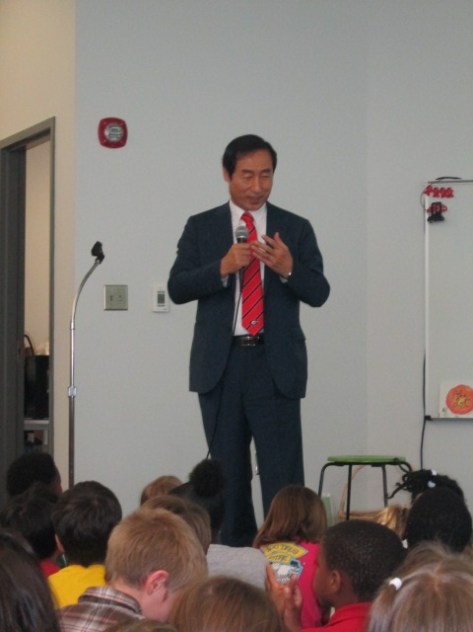
Finally, Seok-Jin Mun, the mayor of Seodaemun, spoke to students about how we are all connected to one another because we are all mankind. Even though we have different beliefs or different skin color, we are all connected.

athens-seodaemun-19 athens-seodaemun-18

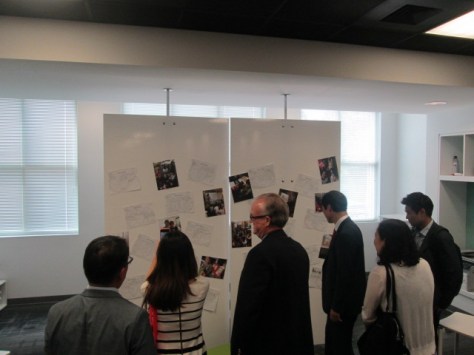
To conclude the visit, Mayor Mun, teachers, and all guests explored the student artwork on display in the 2nd grade collaborative space.

athens-seodaemun-26

Mayor Mun pointed out his observations of what stood out to our students and clarified some facts from our research.

It was inspiring to think with him and the members of our Clarke County government about how we can continue to build upon this friendship between our two communities.

Now, our artwork is preparing to make its journey, and we look forward to seeing what our new friends in South Korea learn and draw about Athens, Georgia.  We thank the Athens Clarke County Economic Development Department for this opportunity to connect our students with our global community.


A Visit with Christian Robinson

Christian Robinson (17)

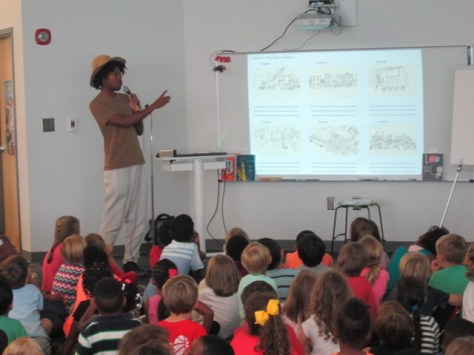
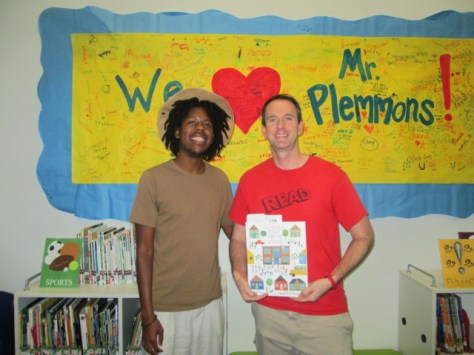
We are one fortunate school. Thanks to Macmillan Children’s Publishing Group and Avid Bookshop we welcomed illustrator Christian Robinson to our school in promotion of his newest book School’s First Day of School by Adam Rex.  Christian has illustrated numerous books including the award-winning Last Stop on Market Street by Matt de la Pena.

Christian Robinson (7)

Prior to Christian’s visit our Kindergarten, 1st, and 2nd grade classes all read the book in the library during library orientation. We loved thinking about our own feelings on the first day of school and relating those feelings to the feelings of the school. We also loved examining the illustrations to see the face of the school and discovering connections to our own lives in the illustrations.  One of those connections came on the spread in the book that shows the children arriving to school. Students loved finding the way that they come to school on this page because they were all represented somewhere.

In classrooms, students created drawings of our school and turned them in to the library. Each student who completed a drawing had his/her drawing displayed in the library windows the week before the visit. Christian Robinson took some time to appreciate them all when he arrived at our school.

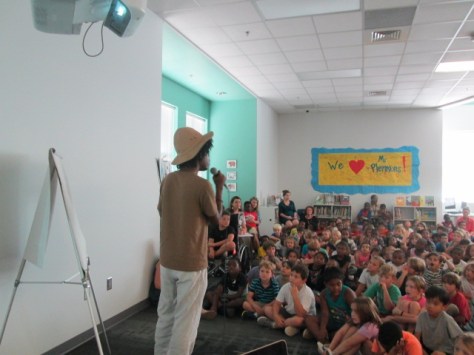
Our visit with Christian was in the library, so I pushed shelves and tables away to make room for over 250 little students.

Christian Robinson (1)

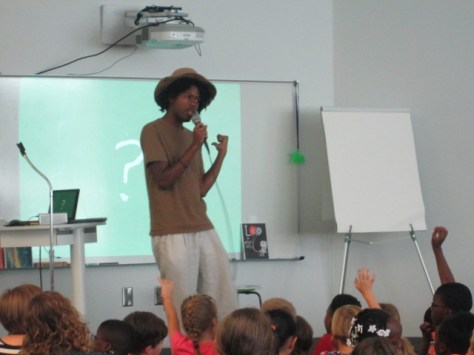
He began his visit with a reading of School’s First Day of School.  It was so fun to hear the book read by one of the collaborators. I hope students discovered something new after hearing the book again.  I know I did!

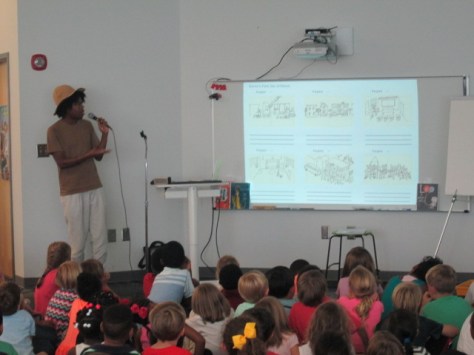
Christian Robinson walked us through his process in creating the book. We learned about starting small by making sketches on tiny post it notes.

Christian Robinson (9) Christian Robinson (10)

We also learned about making mistakes. Christian showed us one picture of a big pile of mistakes, and he stressed with students that mistakes are a part of the process.

He showed us the research that went into the book including visiting actual schools and looking at buildings that seemed to have faces in real life.

Christian also took questions from the audience.

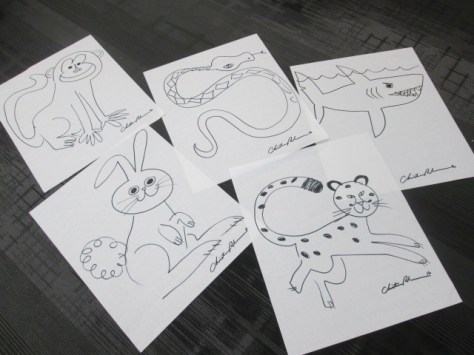
Finally, he created some drawings.  Students imagined an animal and he called on different students to suggest an animal to draw.

Christian Robinson (29)

Thanks to our incredible PTA every classroom got a copy of the book to put into their classroom library, and Christian signed them all.

The impact of these author and illustrator visits is very special. Different students connect in different ways.  Some are inspired to write and illustrate their own books that they proudly show off in their classroom, the library, and at home.  Some realize that being an artist isn’t something that has to wait until you are an adult; the foundation starts now. Some students connect with an author or illustrator as a person and realize that there’s a friendly face behind the writing or art on the library shelves. Some students connect with a story in a way that they didn’t connect before because they know the story behind the story.  Often after a visit, the author or illustrator’s books fly off the shelves and stay consistently checked out.

Christian Robinson (28)

Today as I was walking down the hall, two boys in Kindergarten stopped me to ask, “Where’s Christian Robinson?”. I smiled knowing that they had met someone who they respected and hoped to see again at our school.  Thank you so much for supporting our local bookshop to bring authors and illustrators like Christian Robinson into our schools. It matters to our students.

Genrefication Reactions and FAQs

Library Orientation (2)

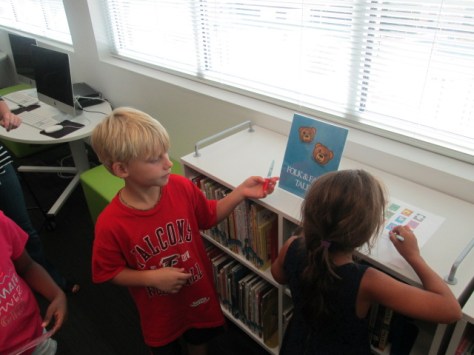
We are almost one week into our newly organized library. Each class has been coming for a library orientation. In the past, I’ve done a high-tech orientation with QR codes and videos, but this year, we went low-tech with a picture scavenger hunt of the library signs and sections in order to give students a chance to explore their new library and its organization by genre.

Our new genres are still sorted out into a picture book area, a chapter book area, and a nonfiction area, so I made 3 separate scavenger hunts and slid them into clear protectors so that students could us a Vis-a-vis pen to mark sections as they found them.  The trickiest part was trying to keep students focused on one section at a time because they wanted to explore it all.

What I have noticed:

  • Students were buzzing with excitement as I talked about the new genre sections and as they wandered around searching for them
  • I spent much less time walking students around to search for all the princess, scary, football, etc.  The conversations about books that I got to have with students were more about recommendations within sections or learning where favorite series of books had been moved to.
  • Since I don’t have a full-time assistant in the library, check out time can be a bit frantic with kids asking about books, asking for help on the computer, and asking for help checking out or in.  With every class regardless of grade level, I didn’t feel the frantic feelings of the past. Students were very independent within the sections they were excited about, which allowed me to focus on students who really needed to have conversation.
  • Almost no students went to the computer to look up books. In the past, many students would sit at the computer during the entire library time and then have no time to actually select a book.  They would just grab something on the way out. I talked with the few students who did go to the computer to ask what they were searching for. In many cases, I directed them to one of the genre sections because they were looking up football or ghosts or something like that. For students that truly needed to look up a title, I showed them how they could see which genre section it was located in.

  • Students who discovered that their favorite book was already checked out tended to choose something else from that genre section. For example, a student was so excited to learn we had Isle of the Lost: A Descendants Novel. It was checked out, but I told her it was in the fantasy section. She went to fantasy and found 2 series that she had never explored before and was genuinely excited about her find. This is what I hope to see more and more, especially from students who have their one or two comfort books in the library. I hope the genre sections continue to support their comforts but also nudge them to try new things.
Reactions

Students, teachers, and families have been extremely positive with the new organization of the library.

I encouraged people to record their thoughts on the new organization using Flipgrid.  Here are a few of the reactions.


Frequently Asked Questions:

Library Orientation (5)

  • Did you put all books into genres or just the fiction section?  Every book is in a new section.  I started with fiction and then moved to picture books followed by nonfiction.  Picture books was the hardest section for me to sort, but so far the categories are supporting our readers.


  • What are your categories?  Here’s a link to my Google doc of categories.  This doc will change if I decide to modify any sections.


  • How did you decide which section to put books in?  I read the summaries, used my own knowledge, looked at the Library of Congress subjects on the copyright page, and used Novelist K-8.  I used the great advice of Tiffany Whitehead to really think about the reader during the process and consider what kind of reader would most enjoy each book. I tried not to get stuck on a book for too long, but I did make a pile of books I was unsure of and came back to them later.


  • What did you do in your catalog to indicate genres?  I created subcategories in Destiny. Once I sorted books into genre sections, I updated each copy by scanning it into its new subcategory. Now, if someone searches for a book, the call number of the book remains unchanged, but the location indicates which genre section the book is located in.  The library can always be put back into Dewey order if needed.


  • How are books arranged on the shelf?  For now, the books are still arranged in order by call number on the shelf within each genre section. In fiction and everybody, that means that books are sorted by author’s last name within each genre.  In nonfiction, that means that the Dewey call number is still used to put books within order in the section.  This may change as we go because the sections are being heavily browsed. It makes it hard to keep things in perfect order.  The graphic novels and sports are already not in any kind of order because of the heavy use of those sections.


  • What labels did you add to each book? Every book still has its same call number and barcode.  My wife designed genre labels using Publisher and these were printed on spine label sheets from Demco. We added the genre label either above or below the call number on the spine in an attempt to not cover up the title.  I also plan to add numbers to the series so that students know which books is 1st, 2nd, 3rd, but we haven’t done that yet.  Fiction Labels      Picture Book Labels      Nonfiction labels


  • How long did it take?  It’s really hard to add up the time. I can say that I’ve thought about it for a long time. This summer I spent some time reading about other libraries and also listening to webinars. I wanted to hit the ground running at the beginning of this year, so many volunteers helped out with the project. The actual work of sorting, labeling, and shelving was done in about 15 days working from 8:00-3:00.

Library Orientation (10)

If you have additional questions, add them in the comment section and I’ll try to update the post with new answers.  I’m very happy with the impact of this project so far, and I know that I will continue to see things that I love as well as things that need to be adjusted. It’s all about the readers.

Library Orientation (4)