Punkin’ Chunkin’: A Halloween Makerspace Event

Our makerspace sessions this year have been following a month-long theme, but for Halloween, we decided to have a one-time special makerspace.  In the past, we’ve done a “design something spooky” challenge where kids designed haunted houses, ghosts, etc and used littlebits to give them lights, sound, and movement.

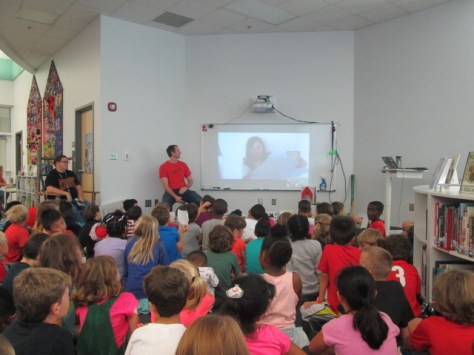
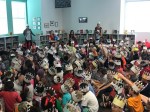
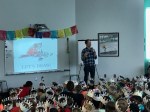
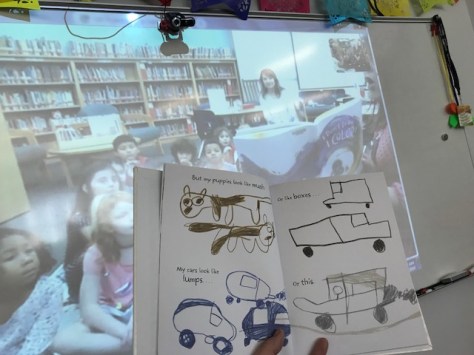
This year, Gretchen Thomas from UGA suggested pumpkin catapults, and it was the perfect suggestion. Ahead of the session, students signed up on a Google doc with their teacher for a 30-minute slot.  As students arrived, they checked in with a UGA student and sat on the carpet in front of the projector.  While we waited on arrivals, they watched a video of the Punkin Chunkin event in Delaware.

We chatted about observations. Many students noticed the different styles of catapults that were made and we wondered about how many times they had to work on their inventions before they worked the way they wanted them to.
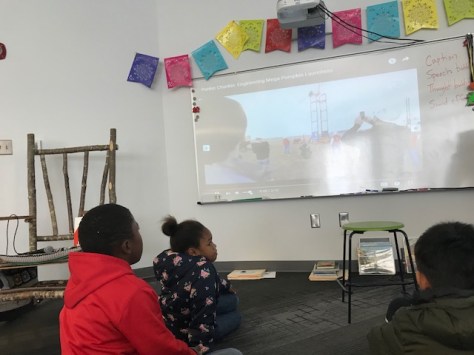
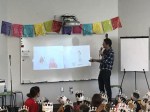
Next, I muted a video showing students working on a smaller scale pumpkin catapult.

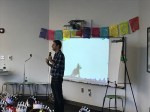
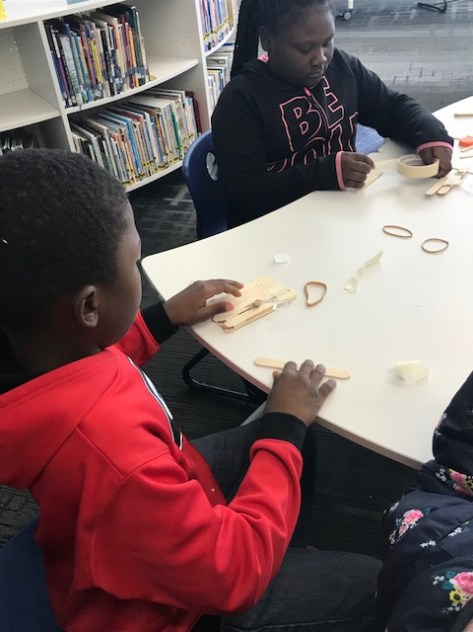
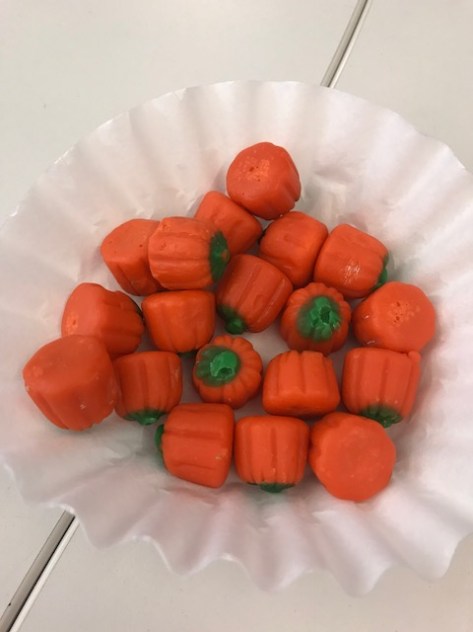
While the video played, we talked about the day’s challenge. Students were challenged to design a catapult that could launch a candy pumpkin across the library. They used the video to name some of the materials they would need: plastic spoon, popsicle sticks, rubber bands, tape, and a pumpkin. Students also saw in the video that there were many designs of catapults and that adjustments were constantly being made to improve the catapults.
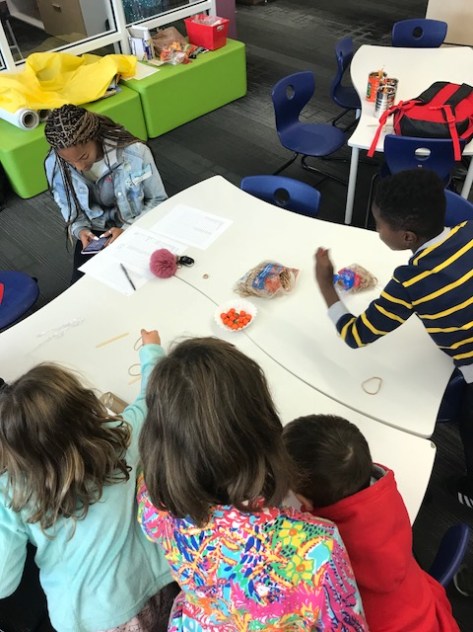
When they were ready to take on the challenge, students gathered their initial materials from a supply table and made their first attempt at a pumpkin catapult. Some jumped right in while others went back to watch the video again. Some chose to work together, while others chose to work alone.

As first attempts were finished, students picked up a candy pumpkin and moved to our launch zone. This was a crucial piece of the experience. I wanted a designated area for launching in order to contain the mess but also to keep students safe from flying projectiles. We launched pumpkins in the back of the library toward our green screen wall.

Most students had mediocre first launches, so we chatted with them about what they thought might improve their design.  Students went back and forth from the launch zone to the building areas.  UGA students spent most of their time at tables assisting students who were stuck or needed an extra hand. Some of them also helped with keeping students safe from flying pumpkins in the launch zone.
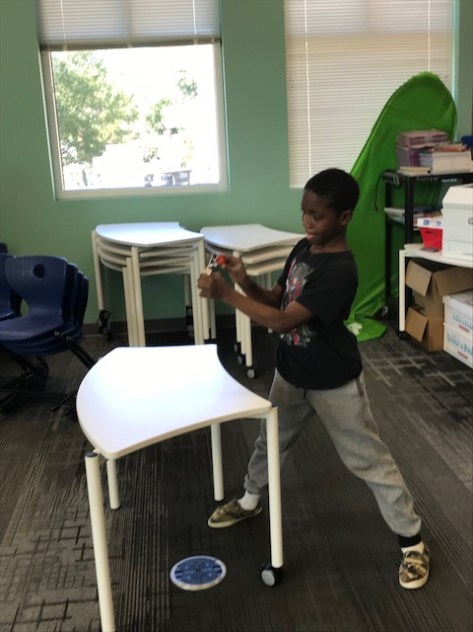
Even with pumpkins flying in the back of the library, this was a surprisingly peaceful makerspace. Students were very focused on their designs, especially as we moved higher in grades. Pairs of students worked well together and students were for the most part safe when launching pumpkins. I loved seeing the many different designs. Some were very simple and some attempted to make very elaborate catapults.
This experience could have many extensions if we had more time. I would love to add a measurement component to see which catapult threw pumpkins the farthest. We kept things very open-ended, but you could also establish some boundaries as to what elements of the catapult were required, how many materials could be used, etc.

With the time we had, this was the perfect setup. Students had plenty of time to make a catapult that had some type of success and they were able to take what they made with them to continue working on or exploring.

Barrow Oral History Project: An Update

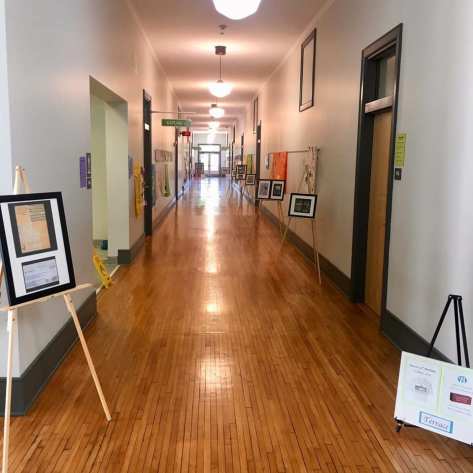
Back in 2009, the 5th grade classes, teachers, and I worked on an oral history project to try to capture some of the stories of Barrow’s history.  Our school was originally built in 1923, so there are many stories through the decades that could be told.

That year, the teachers and I participated in virtual professional learning with the Library of Congress. We engaged students in centers to explore primary documents from Barrow’s past, how to use laptops and microphones to record, interview etiquette, and how to craft the best interview questions to spark conversation.

Each student worked with a partner to interview a guest from Barrow’s past.  Those histories were recorded in Audacity and uploaded to our school website.  Since then, I have transferred those files into Youtube.  They can all be heard at our Barrow Oral History page.

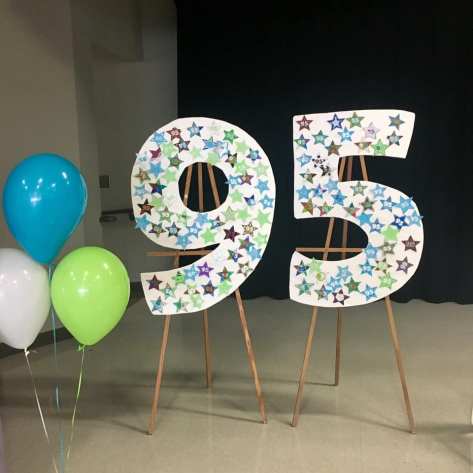
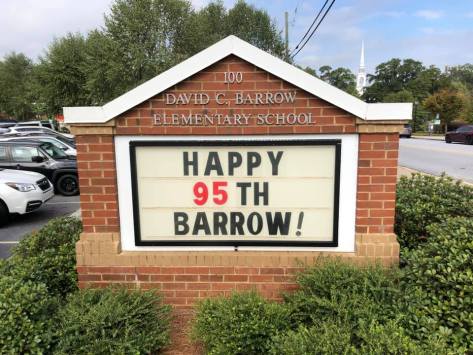
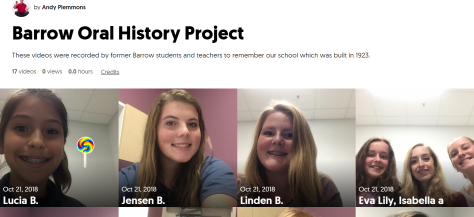
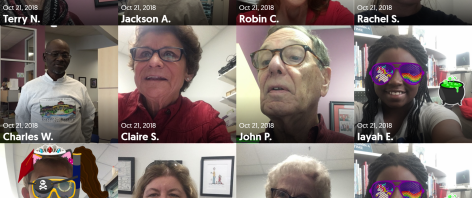
This year, our school celebrated its 95th anniversary and our PTA planned a big celebration.  Since hundreds of guests would be in our building, I thought it was the perfect time to capture a few more Barrow memories.  This time, I used Flipgrid to capture the memories since it automatically uploads the video.  Our past interviews lasted 20-30 minutes, but I knew people wouldn’t have that much time to give during the anniversary.  Flipgrid limited the responses to 5 minutes or less.  Rather than ask a series of questions, I simply asked people to share their name, when they attended Barrow, and a special Barrow memory.

Some of this year’s 5th graders served as hosts in the library.  Some stood in the hall to welcome people in to record. Others went with each storyteller into my office, the makerspace, or other quiet parts of the library to assist with recording.

Flipgrid has gone through several changes that have been frustrating to me when it comes to events like this one.  One of those changes is requiring people to login to their email in order to record.  To bypass this step, I had each storyteller “register” with me.  They simply filled out their first and last name.  I went into the administration side of Flipgrid and added their name to the Oral History grid. Then, I assigned them a unique password. When they went to the iPad, they simply typed in the password, and Flipgrid knew who they were. This allowed them to just focus on recording.  Since this event, Flipgrid has added a “guest mode” feature that allows you  to record without logging in.

The 95th anniversary was jam-packed with activities, so we didn’t record as many videos as I had hoped. However, I do want to try to continue this grid and add additional memories each time we have an opportunity to share some memories. It could even become something that 5th graders do before they leave our school so that we have an ongoing addition of current memories of our school.

In order to make the Flipgrid videos viewable, I added them to what Flipgrid now calls a “mixtape”. You can enjoy all of the 95th anniversary memories by viewing our mixtape of videos: https://flipgrid.com/+barroworalhistory 

If you are a former Barrow student or teacher who would like to record a memory, you can email me at plemmonsa@clarke.k12.ga.us and I can get you info for how to record on your own device.


Making Inferences Through Picture Books

Our 5th grade recently spent some time in the library exploring places in texts where the reader must make an inference in order to know the full story. This is a standard that our 5th graders work on in the first quarter.

ELAGSE5RL1: Quotes accurately from a text when explaining what the text says explicitly and when drawing inferences from the text.

To prepare for this lesson, I spent some time reading several picture books as well as exploring what other educators have done with inferences. This post by Pernille Ripp was especially helpful.  Anytime we work on language arts standards, I want a good portion of our time to be spent actually reading rather than just practicing a specific skill.  With picture book month approaching, I thought this experience would be a good time to reiterate with our older readers that picture books are for all readers and to give them time to read at least 2-3 books during our time together.

Here are the books I decided to pull for this experience:

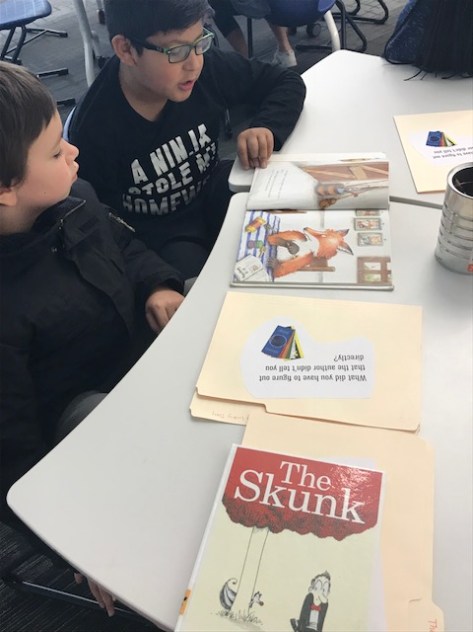
  • The Skunk by Mac Barnett
  • We Found a Hat by Jon Klassen
  • Shhh! We Have a Plan by Chris Haughton
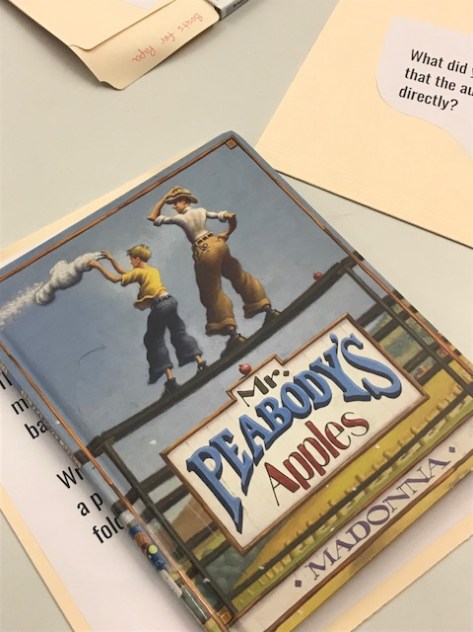
  • Mr. Peabody’s Apples by Madonna
  • The Rough Patch by Brian Lies
  • Julian Is a Mermaid by Jessica Love
  • Rules of Summer by Shaun Tan
  • Voices in the Park by Anthony Browne
  • The Other Side by Jacqueline Woodson
  • After the Fall by Dan Santat
  • Duck! Rabbit! by Amy Krouse Rosenthal
  • My Lucky Day by Keiko Kasza
  • Boats for Papa by Jessixa Bagley
  • Unspoken by Henry Cole

For each book, I made a folder with instructions and a guiding question. Inside the folder, I placed some blank post-it notes.

As students entered the library, we began our time on the carpet. I launched right in to talking about a picture book author, Bethan Woollvin. I let students know about her subversive, fractured fairy tales and also that she leaves some of her story to the reader to figure out.  In each class, there was usually a handful of students who mentioned that this was an inference. If they didn’t then, we talked about how we would need to make inferences when we read her stories.

I read aloud Little Red.  We paused a few places to talk about inferences we must make as the reader:

  • When the wolf makes a plan
  • When the wolf climbs into Grandma’s bed looking completely ridiculous
  • When Little Red makes a plan
  • When Little Red is wearing a wolf costume at the end of the book

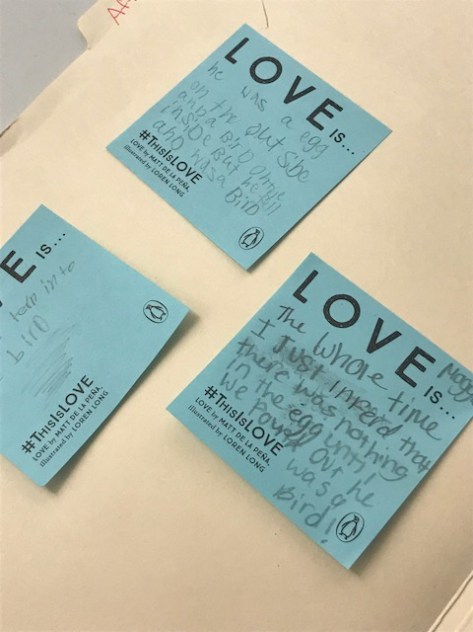
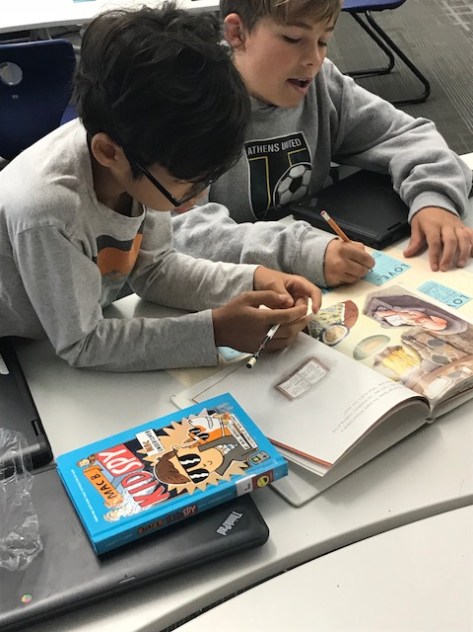
This whole read aloud experience was setting students up for their own task. With a partner, students chose one of the picture books I had pulled.  Their goal was to enjoy the book together. While they were reading, they were invited to think about places in the text and illustrations where the author/illustrator left the story up to the reader to figure out.  Any inferences could be written onto a post-it note to add to the folder for future readers to read and consider.  As more students read each book, more post-it notes appeared in the folders and readers could compare their own thoughts to those of others.

The teacher and I were able to sit with pairs of students and listen to their reading. Sometimes we read aloud with them as well and became a natural part of the conversation on inferences.  What I loved the most was looking around and seeing so many 5th grade readers engaged with a text and having a genuinely good time reading them.  The inference part was low key enough that the enjoyment of the book was the more central part of their time.

We closed our time by having any pairs of students who loved a book do a short book talk for others and highlight where that book could be found in the library.  My hope was that this would be a spark to our picture book month challenge where students are encouraged to read a picture book from each genre section of the library.


Using Two Truths and a Lie to Encourage Thorough Research

We’ve all been there. You’re in the midst of an informational writing project. You ask students to search for information. They do a quick Google search, choose the first thing they find, and say, “I’m done”. It’s frustrating, but in an age where information is so fast to find, it’s understandable that they would want an instant answer and be done.

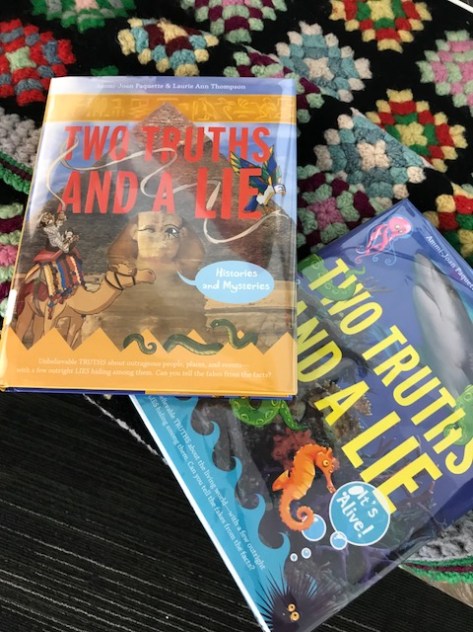
This year, ahead of 5th grade’s informational writing unit, we decided to do an exercise in research by using the book series Two Truths and Lie by Ammi-Joan Paquette and Laurie Ann Thompson.  Each chapter in the book is made up of 3 stories.  Two are truths and one is a lie.  The books have a great opening that explains that all of the stories are pretty unbelievable and that it will be a challenge to figure out which is false. I chose a section out of each book to make a copy of.  I put them in groups of three so that every table would have two truths and a lie on the table.

For the opening of the lesson, I asked students if everything on the Internet was true.  They immediately said no, but I reminded them that even though we say that, so often, we fall victim to something that is actually false.  We looked at Jennifer LaGarde’s infographic about identifying fake news so that we could review the importance of knowing the author, domain, and especially triangulation.

I read the opening of Two Truths and a Lie and explained the task at hand.

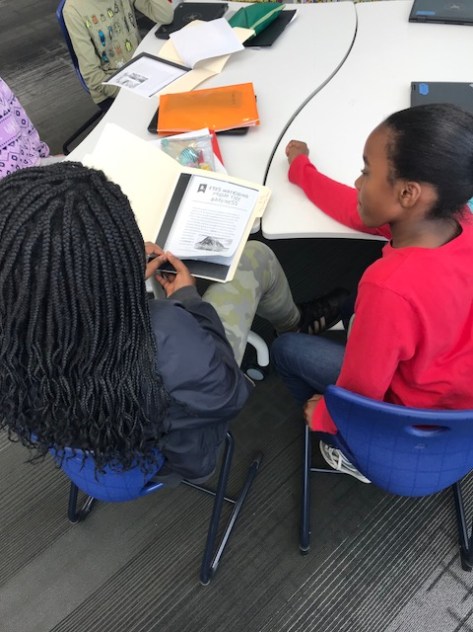
  1. In pairs, students would choose one folder to sit at.
  2. Pairs would read the article in the folder.
  3. Pairs would use our trusted databases in Galileo as well as do an independent Google search to find evidence to prove that the article was a truth or a lie.
  4. When pairs felt like they had enough evidence, they could talk with me about what they found.

Things got off to a great start. Pairs opened up folders and read their article.  However, when computers opened, things went downhill (at first). Hands started going up immediately because students had found an image that matched an image in the book or they found a video that matched their article. Those pieces of evidence alone were enough to prove something true in several students’ eyes.

It was a great teaching moment because I was able to go back to our infographic and repeat the questions about domain, author, and triangulation.  Students often didn’t know who made the video or where the picture came from, so we could dig around and look for that info. It was easier to send students back into our databases or Google because they simply didn’t have enough evidence to prove.  Many of them got serious after the conversations and started matching text in the article to text they found in sources. They began showing me that they weren’t just looking at Wikipedia as their only source and were instead using trusted news sites and museum sites.

By the end of our time, most groups had found enough evidence to make their case, and I revealed the truths and lies, which are found at the back of the book.  This is definitely not a one time lesson that will solve all of our research problems, but I loved that so many students were receptive to the idea of digging through multiple sources to prove something right or wrong. Now, my hope is that the momentum we gained from this experience will lead us into our informational writing.


Celebrating Hansel & Gretel with Bethan Woollvin

I’ve loved Bethan Woollvin’s fractured, humorous, and subversive fairy tales for many years now. My own two kids have read Little Red until it’s falling apart. These books beg to be read aloud. Kids recite the repeating phrases, gasp at unexpected twists, and cheer for the heroines of the story.

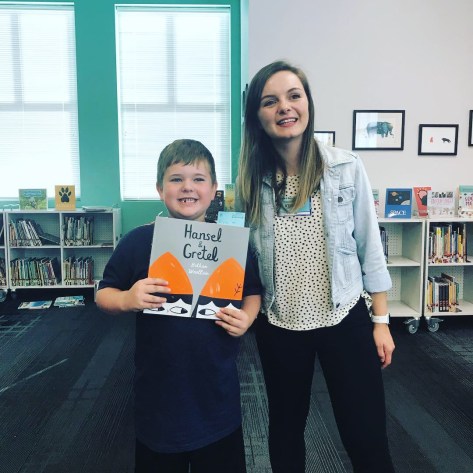
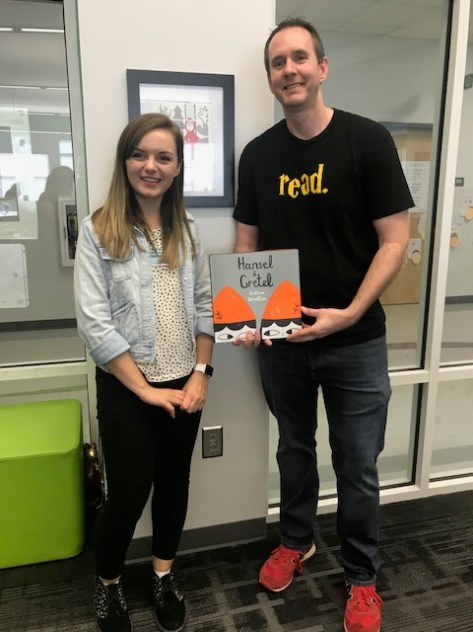
Last year, our 2nd graders Skyped with Bethan to celebrate the release of Rapunzel. This year, we were over-the-moon excited that Peachtree Publishers brought her to our school as part of her US tour for her new book Hansel and Gretel.

In Hansel and Gretel, Willow the witch is a witch who only uses her magic for good. Hansel and Gretel are two mischievous and naughty kids who only think of themselves.  Willow tries her best to be nice to them along the way as they eat her house, gobble up all of her food, and wreak havoc with her magical things.  Can Willow continue to use her magic for good or is it time for Hansel and Gretel to be taught a lesson?  You’ll just have to read this fractured fairy tale to find out.

Ahead of Bethan’s visit, all classes in K-3 read all 3 of her books.  With each reading, students noticed similarities and differences between the tales.  They noticed the bravery of Rapunzel and Red.  They noticed the color scheme of black, white, and gray with a pop of a bright color. They noticed the hidden pictures underneath dust jackets and end papers.  In art, students worked on creating scenes of their own versions of fairy tales.  We hung this art in the hallways of the front of the school.

Our third graders all designed candy for a giant gingerbread house outside the library that I made out of some pumpkin spice tablecloth. My high school intern created Bethan Woollvin’s iconic eyes to go on the door of the library.

In classrooms, students also created their own Hansel & Gretel puppets, which were provided to us by Peachtree Publishers.  Many of them brought their puppets to the visit to hold up as Bethan shared the story.

Bethan presented 2 times: once for K-1 and once for 2-3.  She showed England on a map along with some childhood pictures.  We got a peek at her studio where she creates her illustrations.  One of my favorite parts was seeing how she creates the characters in her books.  She created some time lapse videos to show us how she begins with a pencil and then fills in the details one color at a time.

She also showed students how the illustrations changed over time.  They started as sketches but then went through several versions before reaching the final version found in the books. It was great to see how artists revise too and things aren’t perfect the first time.

Another great surprise was seeing how Bethan’s little sister created a drawing that inspired the ending of Hansel and Gretel.

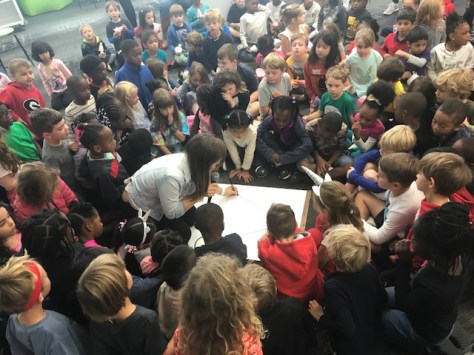
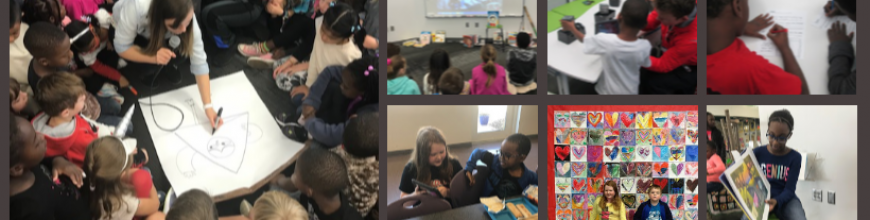
Students loved watching Bethan draw many of her characters.  At one point, she sat in the middle of the floor amongst the students and drew. Students loved having her right in the middle of all of them, even if it did cause a stir of energy.

As always, students went back to class buzzing with excitement about the visit.  Our PTA bought a copy of Hansel & Gretel for all the class libraries and many students also purchased copies that Bethan autographed.  I can’t wait to see what projects, stories, and art spark from this visit.

Thank you, Bethan, for taking time to share your expertise with our school.  Thank you Peachtree Publishers and Avid Bookshop for bringing this opportunity to our students. It was truly a special day for all of us.

King Alice: A Visit with Matthew Cordell

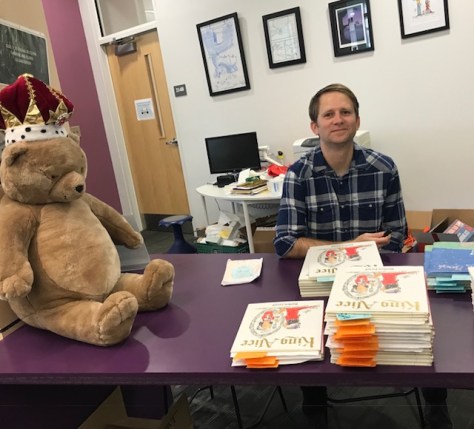
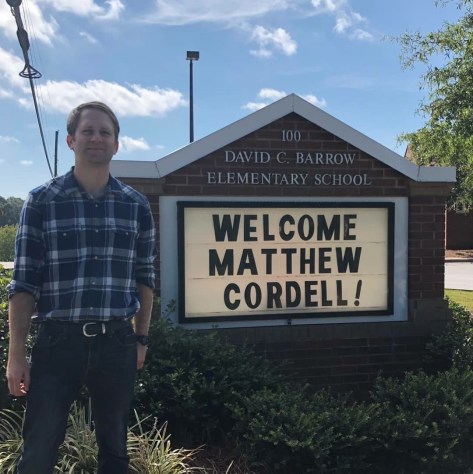
I love collaborating with our local indie bookstore, Avid Bookshop. Each year, we get amazing authors and illustrators who visit our schools and share their expertise with our kids. Our first visit of this year was Caldecott-medalist Matthew Cordell.  He won the Caldecott for his story of bravery and kindness called Wolf in the Snow.  Now, he is touring for his newest book King Alice.  His visit to our school was made possible by his publisher MacMillan Kids and Avid Bookshop.

I’ve followed Matthew’s work for several years. His book,  Hello Hello, is a favorite book that I love to use as we ponder how we balance our digital lives and real lives.  Even though it is a few years old, it continues to be relevant.

When I found out he was coming to our school, I began collaborating with Rita Foretich, our art teacher.  I scheduled read alouds with every class in K-2.  During every class, we read Wolf in the Snow. First grade also read Dream. Second grade also read Hello Hello.

In art, Ms. Foretich focused on 1 book per grade. Kindergarten made art inspired by Wolf in the Snow. They considered a time they were kind or brave and illustrated that moment. First grade made art inspired by Dream. They considered what they dreamed to be and illustrated that dream.  Second grade made art inspired by Hello Hello. They considered what they like to do in their free time and how they balance digital/real life and illustrated those thoughts.

Each piece of art was mounted on black construction paper to create a gallery in the front halls of our school.

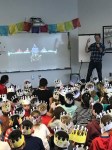
For the visit, we transformed the entrance to the library to look like a castle wall. My talented high school intern, Andrea Aramburo, created a hand-lettered banner that said “Welcome Kings”. Every class received paper crowns from the publisher to wear to the visit. All of this was in honor of King Alice.

During Matthew’s visit, he shared a little of his childhood leading up to where he is now. Then, we got to see inside his messy studio. He talked about how he purposefully took a picture of the studio in action because he wanted students to see that art wasn’t a neat and clean process.  This became one of the favorite moments of the talk for some students.

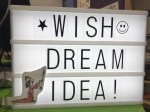
Before Matthew read King Alice, he told some stories from his family. One example was how his daughter suggested things for them to do together like throw a pie in dad’s face or put on dad’s makeup. I loved hearing these real-life examples because it showed all of us that ideas are truly all around us.  King Alice is about a dad and daughter doing things together on a snow day. The dad doesn’t always want to do everything Alice suggests, but when she suggests making a book, the dad is all on board. We loved learning that Matthew’s daughter even got to collaborate on parts of the book.  King Alice has many laugh-out-loud moments that students were still talking about after the visit, and I heard more than one student shout out “Idea!” just like Alice did when she thought of additions to her story.

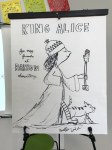
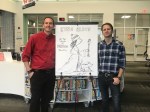
Students always love seeing an illustrator draw. Matthew drew King Alice and narrated every step of the drawing process. Seeing the blank page transform into the stoic King Alice was incredible and inspiring. I always see students go back to class after these moments and try to draw the characters themselves.

Before Matthew left, he chatted with several students including one student who presented him with a book that he wrote just for Matthew.

He also took time to tour the gallery of student art and get to know our many creators throughout K-2.


Thanks to our PTA, every classroom teacher received a copy of King Alice.  I’m sure it will be heavily used as a mentor text in writing workshop. It brings up some many important ideas of storytelling from ideas to revision to illustrating.
If you haven’t picked up a copy yet, I encourage you to go to your local independent bookshop and make a purchase. I’m sure there’s even a few signed copies still left at Avid Bookshop if you want to order one online.

Thank you, Matthew Cordell, for sharing your wisdom with our students, teachers, and families. Thank you MacMillan Publishers for making our city one of the stops on the tour. Thank you Avid Bookshop for collaborating with our school to make this visit possible and for supporting all of our book sales.


Making with a Cause: Cardboard Awards

One thing I’ve been very interested in with our makerspace is “making with a cause”. I see so many posts on social media where someone has done something amazing for someone else by using skills and materials often found in makerspaces. From 3D-printed shells for turtles to scarves for the homeless shelter, there are so many ways we can give back to our community through making.

I love that my friend, Gina Seymour, has created a whole book on “making with a cause” and I look forward to my copy arriving in the mail.  Her book, Makers with a Cause: Creative Service Projects For Library Youth, has a whole section on getting started and another section with examples of projects from animal welfare to health/wellness to community service.

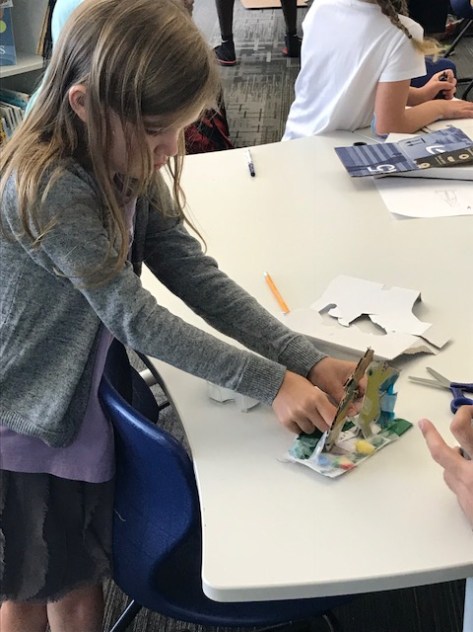
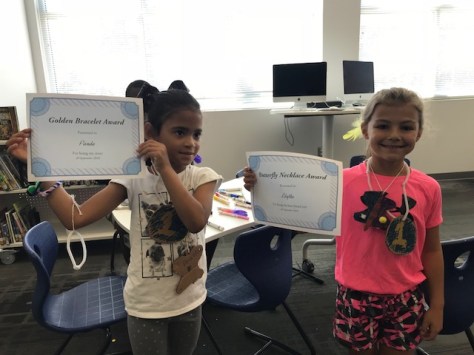
For this month’s theme of cardboard, we asked students to think about someone who deserved an award. What would the award be? What would it look like? Why would the person receive the award?  Students designed their awards out of cardboard.  Some made medals to hang around necks.  Others made trophies or even booklets. The only requirement was to use cardboard.

We asked students to start by brainstorming ideas on paper, and then they transferred those ideas onto cardboard. Using Makedo saws, scissors, and canary cardboard cutters, students worked with UGA mentors to cut out their award designs.  They embellished these with duct tape, string, washi tape, and other supplies from our makerspace supply cart.

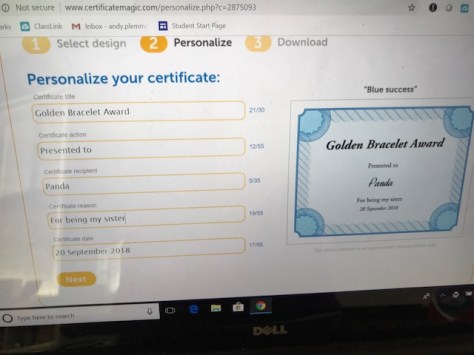
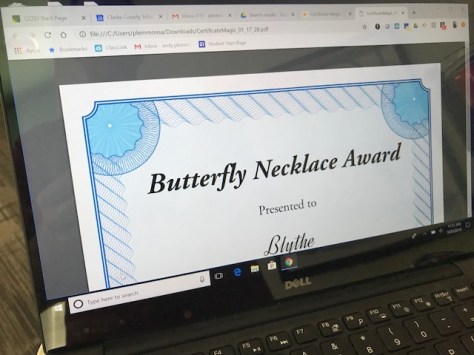
As students completed their cardboard awards, they came to me at the computer to print a certificate to accompany the award. I found an easy certificate generator called Certificate Magic.

It allows you to choose the type of award you want to print and then fill in the details in a very simple form.  Then, you can download your award as a PDF and print. Students named their award, identified who they were giving it to, and chose a reason for the award. I loved hearing who they were giving the awards to and why.

A few examples included:

  • A T-rex award given to someone’s sister for acting like a dinosaur
  • A Golden Bracelet award given to someone’s sister for being a good sister
  • A Golden Butterfly award given to someone’s whole family for supporting her
  • A Football Trophy given to a dad for being a supporter of the Georgia Bulldogs
  • A Butterfly Necklace award given to a friend for being a good friend

There was even a special surprise award for me.  Somehow this student kept his award details a secret until he gave me the award.  He even asked if he could have privacy while he filled in the Certificate Magic form.  My award was called “Read More Books” for being a great librarian.  He even made the cardboard award look like a book with the award details inside.

I’m loving this component of our makerspace so far this year and I look forward to seeing what people end up creating for others in the coming months.


The Story of Our Names: A Grandparent’s Day Experience

Last year, our PTA started hosting a Grandparent’s Day coffee hour at our school. Grandparents gather in the cafeteria for coffee and donuts, chat with their grandchildren, and listen to a short program. Following the program, there are opportunities for photos and school tours.

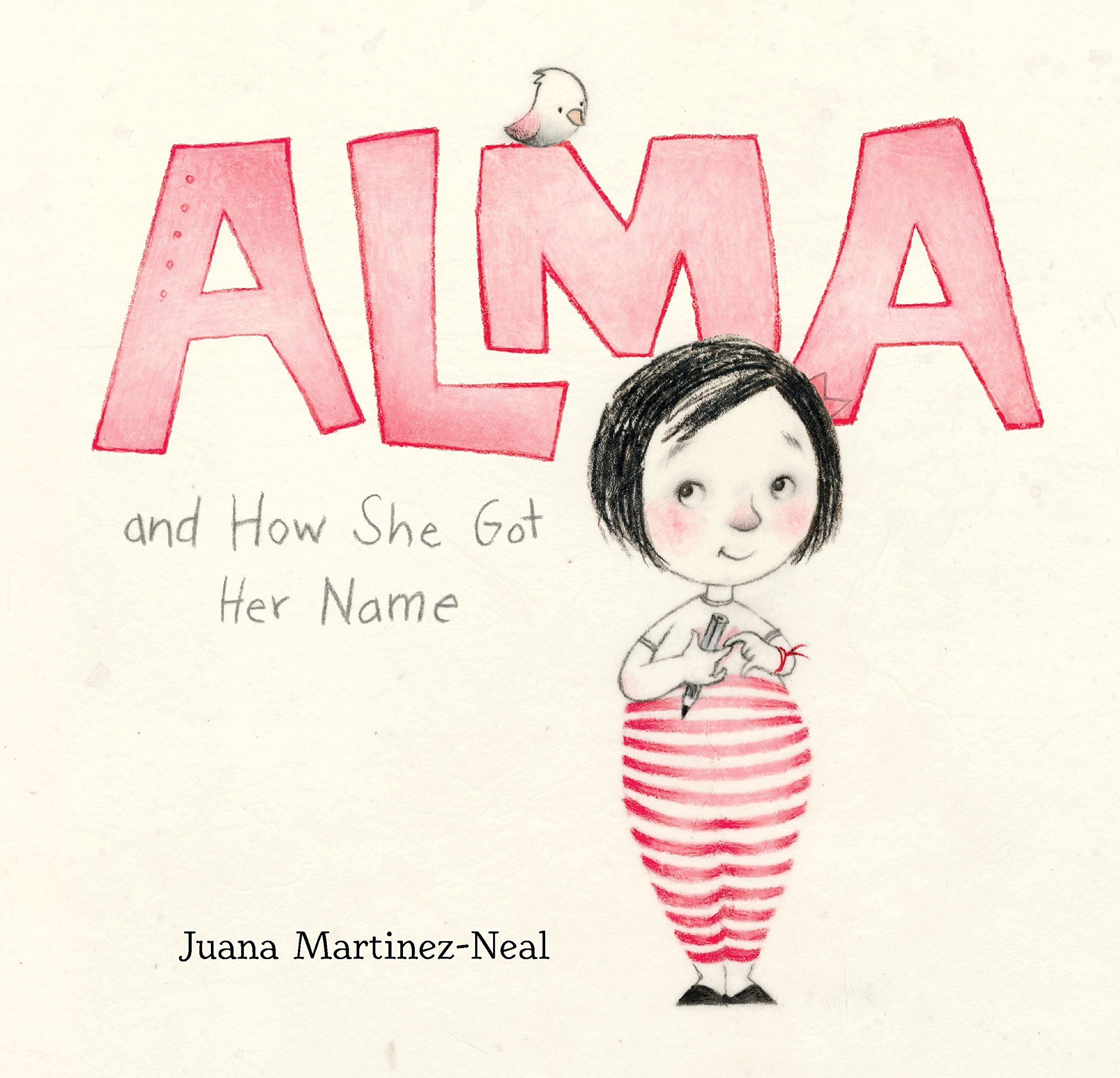
I love being a part of this special event. Both years, I’ve read a grandparent-related story during the program. Last year, it was Last Stop on Market Street. This year, I read Alma and How She Got Her Name by Juana Martinez-Neal. It is a story of a girl who thinks her name is way too long, but then her dad tells her the story of each part of her name. Alma realizes that she has connections to every part of her name and no longer feels like it doesn’t fit. I loved that when I read this special story about where a name comes from that the cafeteria filled with hundreds of grandparents and grandchildren got silent and attentive.

At the close of the book, I shared the author note at the back which ends with a question: “What is the story of your name? What story would you like to tell?” With that question, I invited grandparents to stop by the library to chat with their grandchild about family names and where they came from. We tried to capture a few of these stories on video, but the more important thing was just having the conversation.

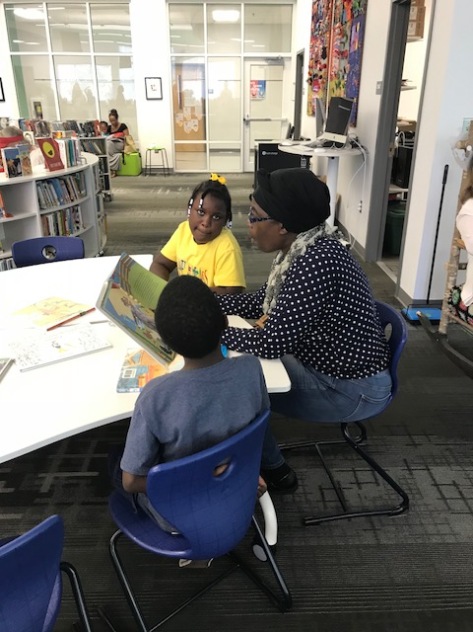
I also selected several books to place on tables for grandparents and grandchildren to read together. It was so special to look around and see families huddled together around books reading. Even though it was crowded an bustling in the library, families were having special moments all around the library.

So many people came up to me to tell me how special the book Alma was to them. I loved that we all made our own connections around this story and the importance of names. I hope this created a spark for many families and they will continue to talk about family traditions and names with even more members of the family.

Celebrating International Dot Day 2018

September 15(ish) is International Dot Day. This day celebrates The Dot by Peter Reynolds and the idea that we are all creative and unique and can all make our mark on the world. Every year, we use this week to make Skype connections with classes around the country, share dot-related stories, and realize that we are all connected to each other.

Some years I try to host many dot-making activities in the library.

This year, we are doing creativity challenges every week as a whole school, so I asked my principal if we could make this week’s challenge dot-related. At the beginning of the week on our morning broadcast, I explained the purpose of Dot Day and challenged all classes to see what they could make out of dots. They could create something as a class, create individual ideas on post-its or index cards, or anything else. Each class was encouraged to hang their work outside their door for all to see. They were also encouraged to bring their creations to Skype sessions to share with our connecting classes.

I really loved this new addition because I feel like more people jumped into celebrating Dot Day. On Friday, we invited everyone to wear dots, and I was surprised to see how many students created their own shirts at home with dots.  One student even hid a Mo Willems pigeon in his dots on his shirt.

For our Skypes we connected with:

  • Donna MacDonald at Orchard School in South Burlington Vermont to read Little Elliot by Mike Curato.
  • Craig Seasholes in Seattle, Washington to read Yo! Yes! and The Dot
  • Shannon Miller at Van Meter Elementary in Van Meter, Iowa to read Ish
  • Mrs. Shekleton at Howard Winneshiek School District in Iowa to read Say Zoop by Herve Tullet
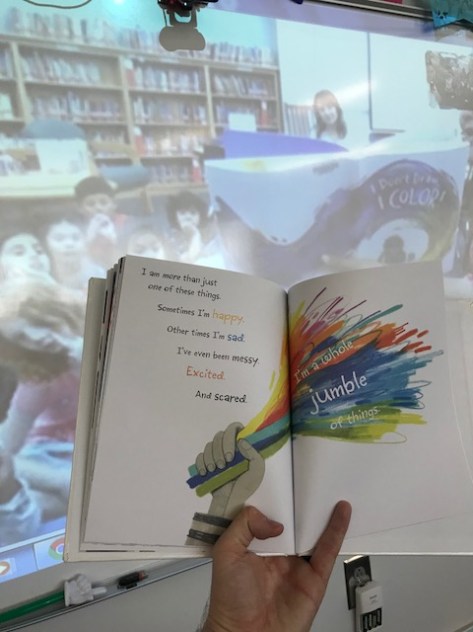
  • Mrs. Guardiola at Caldwell Elementary School in Round Rock, Texas to read I Don’t Draw I Color by Adam Lehrhaupt
  • Mrs. Snead at Central Elementary in Carrollton, Texas to read Say Zoop by Herve Tullet
  • Mrs. Schnurr in Dallas, Texas to read I Don’t Draw I Color by Adam Lehrhaupt

As usual, every connection was filled with special moments. One of my favorites was reading Say Zoop with so many students. It’s a book that puts you a bit out of your comfort zone, but the kids had a blast making all of the noises.

I also loved seeing all of the creativity of dots from place to place and hearing students ask questions and share with one another. These Skype connections always remind us how we are sometimes stuck in our routines and forget that there’s a whole world of people out there doing some of the same things we are. It just takes reaching out and having a conversation to connect yourself to one another.

Thank you to everyone who connected with us and to all educators and students who reached out, tried something new, and connected the dots around the world.

Makerspace Begins: Themes and Options

Our makerspace has once again cranked up for the 2018-19 school year. Once again, I’m collaborating with Gretchen Thomas and her class of over 30 undergraduates from the University of Georgia. Every year, Gretchen and I meet to think about what our open makerspace time might look like, ,and every time we make some changes and try something new.

Our idea for this year is offer specific themes around materials or tools rather than try to squeeze in so many different things in a short amount of time.

For September, we’ve chosen cardboard as our material.  Across 3 weeks, we hope to offer 3 short-term challenges using cardboard.  One of those challenges will be a “making with a cause” challenge.

  • Week 1: Design a hat. This can be interpreted however students want.
  • Week 2: Making with a Cause. Make an award. Students will choose someone who deserves an award. Make the award. Give the award to that person with an explanation of why they deserve the award.
  • Week 3: Make a puppet. Use cardboard tubes to create unique puppets and hopefully begin storytelling with them.

For the second open makerspace, we know that there will be students who aren’t interested in the short-term options and want to branch out to their own projects that take longer than 1 or 2 sessions. For these students, we will offer them a space to plan, design, and create their own inventions that have a purpose.  We wanted to keep this option open ended, but encourage students to develop something using cardboard that actually has some sort of function/purpose.

In each Tuesday/Thursday session, groups of UGA students come to work alongside students. They come in 30-minutes waves so that each round of students has me and UGA students to support them. I’ve put a bit more structure on the front end of makerspace this year. Students check-in with a UGA student and then sit on the carpet. I offer a quick intro to what we are making and connect it to a book. For cardboard, we used Cardboard Kingdom by Chad Sell. Then, students move to tables to do some planning before they start grabbing cardboard and cutting.

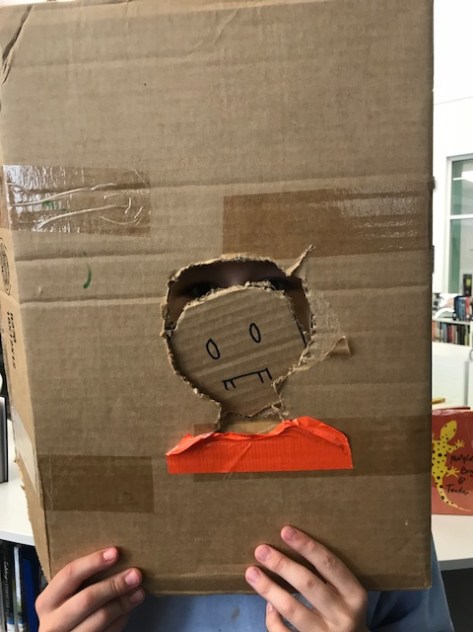
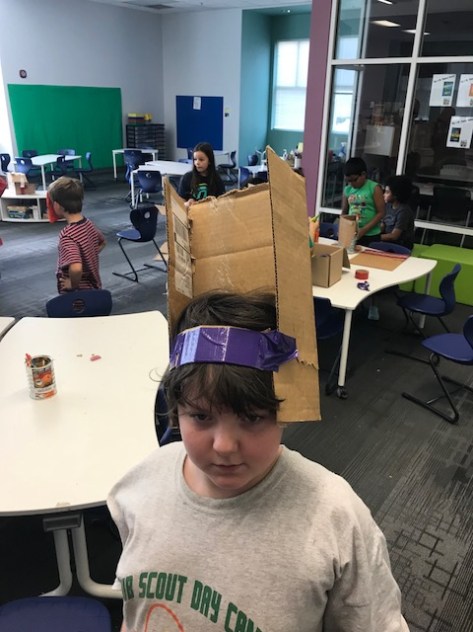
This week, we launched into the first challenge of making a hat. Students had access to cardboard, Makedo safe saws, scissors, duct tape, and coloring supplies. Students sketched hats onto cardboard and started sawing.  There was a learning curve on the best strategies for sawing. Some students were more patient than others with the cutting process. Be warned! It was very loud and very messy. All adults circulated around to support as many students as possible.
At the end of session 1, students labeled all of their pieces of cardboard and we stored them in the makerspace.

For session 2, we spread all of the pieces out so that students could locate their cardboard to start again.

I loved seeing the hats that students came up with in such a short amount of time. At dismissal, I could see the cardboard hats parading down the halls and lots of students were curious about where they came from. Many students needed more than 2 sessions to finish. Some chose to take the materials with them to finish at home. Others left their hats behind to continue working on next week.

I have a lot of questions about how this is all going to work. It’s fast-paced and a challenge to get one group finished and cleaned up before the next group comes in. It’s also a mess of cardboard dust and bits, and I hate leaving that for our custodians. However, we’re pressing forward, expecting the miraculous, and making changes as needed along the way.