We are Honored to Receive a James Patterson Partnership Grant!

Back in March, James Patterson and Scholastic announced an incredible opportunity for school libraries around the country.  From the official press release:

March 9, 2015 — New York, NY — As part of an ongoing effort to keep books and reading a number one priority in the United States, James Patterson has announced that he will donate $1.25 million to school libraries this year. In the first-ever partnership of its kind, Patterson is joining forces with Scholastic Reading Club to administer funding applications to their network of 62,000 schools and 800,000 teachers. Scholastic will match each dollar with “Bonus Points,” which teachers can use to acquire books and other materials for their classrooms, at every school that receives an award. Applications to nominate a school library for a donation can be found here: www.scholastic.com/pattersonpartnership.

James Patterson is donating this money because he believes that fewer children are growing up in a household full of books – and that the effects of this absence could have a profound impact on a child’s future, and on the future of our country. Every child in America should have access to books and a functioning school library, and he believes that improvements in school libraries will foster children’s love of reading and boost their academic achievement overall.
I immediately took advantage of this opportunity by writing a 300 word or less application for our library. My hope was to get a $10,000 grant to support our student book budget project.  Here’s what I wrote:
Each year, I reserve $1000 in the library budget for a project called “Student Book Budgets”. This money is completely controlled by students to purchase books for the library that matches the reading interests of the entire school. Over time, we have developed a dependable process.  A group of students is chosen based on a variety of criteria, including students who have trouble finding books.They create a survey in Google forms and use iPads to survey all grades.  The students analyze the data to see what the top reading interests are. They establish goals and divide the budget among these goals. We send our goals to library vendors who bring in matching book samples and catalogs. Students make wish lists that exceed our budget. Students narrow the list to match our budget. Tough decisions are made about which books to keep and eliminate. I order the finalized lists. While we wait, students come up with a marketing plan. The students unpack the books and get the honors of the first checkouts. Within hours of putting the books out, they are all checked out and remain among the most popular books.I have shared this process on the national level and many libraries have benefited from the idea. The problem with this process is that we obtain an entire school’s reading interests, but our limited budget only allows us to honor a few of them. If we have $10,000, we could expand our reach to include more student interests and not feel that all of our work creating lists of books is whittled away during the budget process. I am confident that we could spend the money in a way that values the reading interests of our entire school.
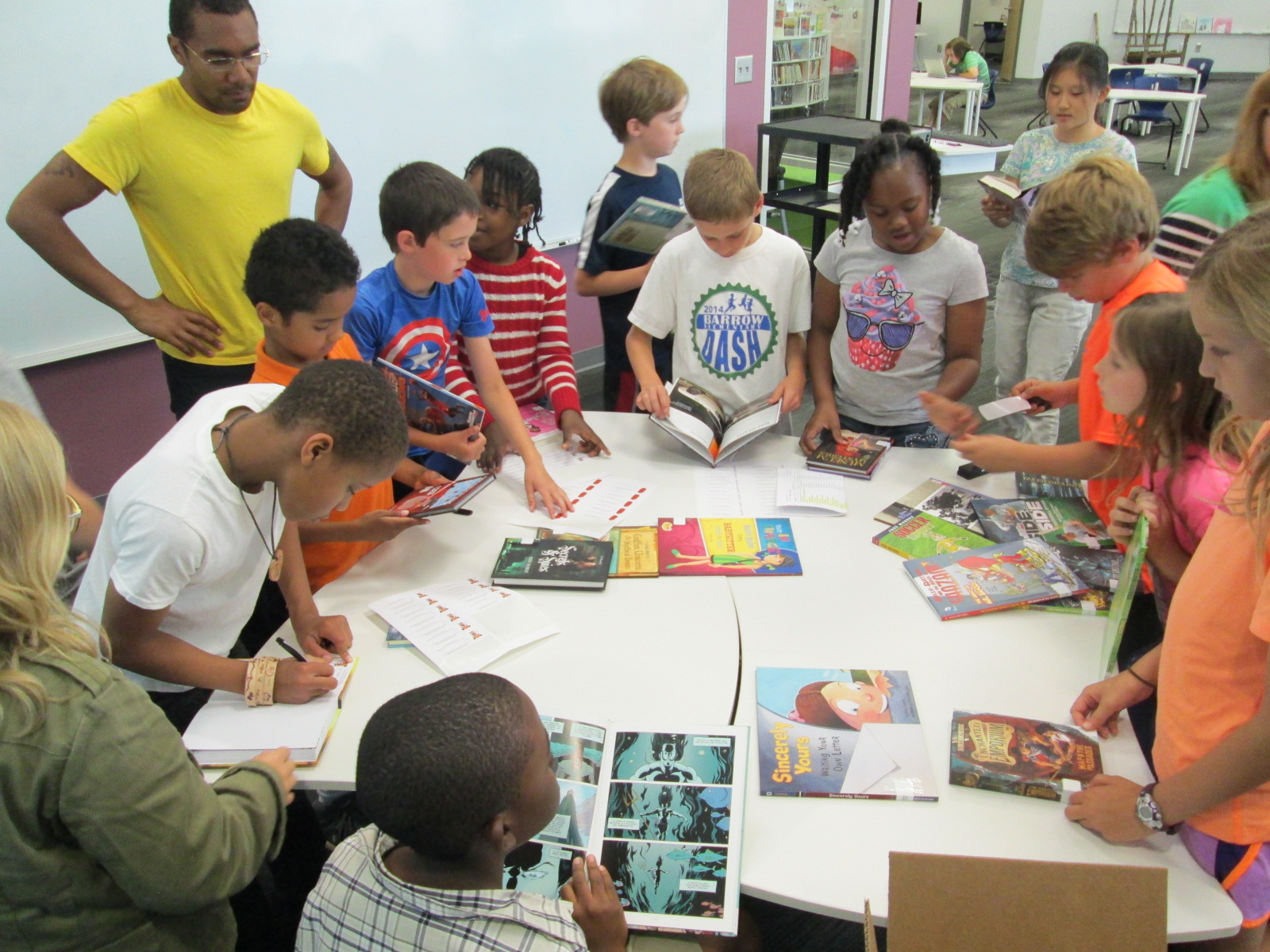
Unpacking (10)
In May, I received an email letting me know that I was a finalist for the grant, but I of course had to keep that a secret, which was very hard to do!  I submitted some additional info and waited some more. Then, in late May, my principal received the call.  Our library was award a $5000 grant from James Patterson with a $5000 matching grant from Scholastic Book Clubs, so we essentially have $10,000 between vendors of our choice and Scholastic Book Club to support our student book budget for the 2015-2016 school year.
Unpacking (9)
I plan to start this project very early in the school year and involve as many students as possible so that students can enjoy the books that we purchase throughout the school year.  Thank you James Patterson for believing in the power of libraries.  Thank you Scholastic for amplifying this opportunity and matching it with your own resources.  Congratulations to all of the libraries who received grants in this first round of announcements!  I can’t wait to share the news with this year’s book budget students and blog about our process in selecting books.
Avid (2)

Congratulations to the Flipgrid 2015 Graduation Voices Winners, Top Voices, and More

I was honored to be one of the judges in Flipgrid’s inaugural Graduation Voices contest.  Graduates of high school and college contributed their voices to two grids to complete the sentence, “To me, graduation means…”  Almost 200 graduates added their voices between the two grids, and I enjoyed watching all of them along with fellow judges Shannon Miller and Alec Couros. Congratulations to the two winners, Eliot and Jay.  They will each receive a new Apple watch.  You can read the full post on Flipgrid’s blog. I also send a huge congratulations to the other top voices on the grids.
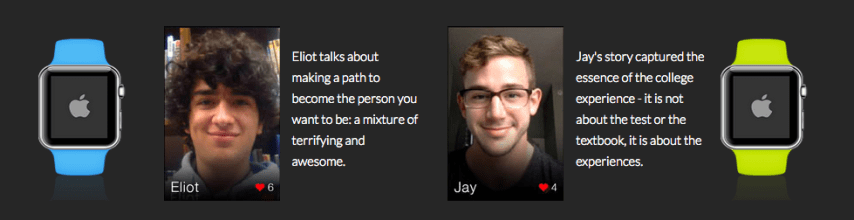
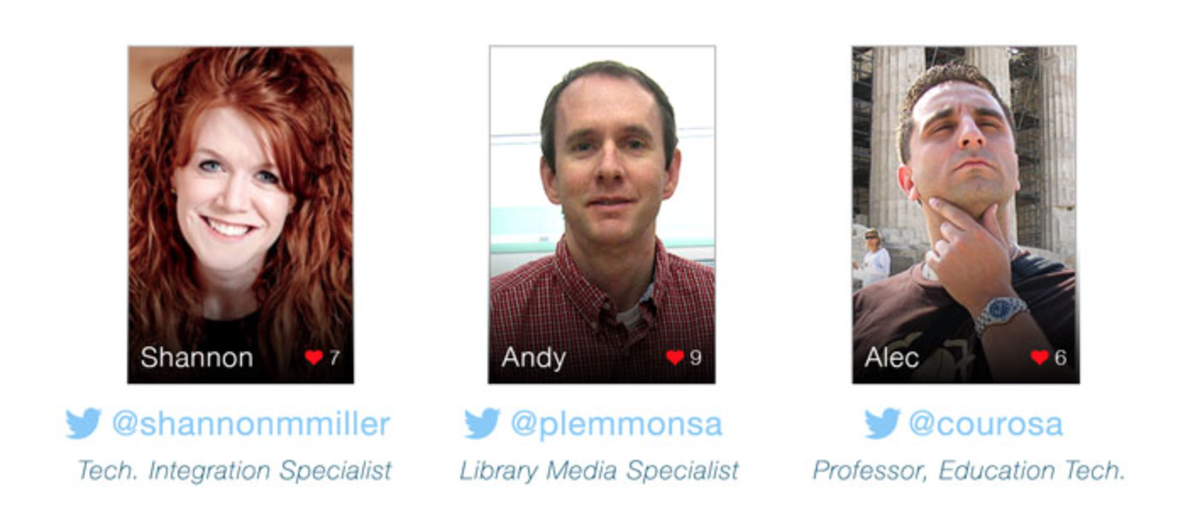
Judges’ top choices for Graduation Voices 2015

High School

Watch Ami’s video here. Watch Anthony’s video here. Watch Ben’s video here. Watch Guillermo’s video here.  Watch Kyle’s video here.

College

Watch Abbie’s video here. Watch Alyson’s video here. Watch Jamie’s video here. Watch Liz’s video here.  To view all entries to the #grad15 grid, click here. Since I had the pleasure of watching every single video, I heard many standout voices.  Every video was special in some way, and some had me laughing out loud.  Graduation means so many things to so many people.  We all might think of it as closing one chapter and starting another, but most of us have other reasons we love graduation.  High school and college are a time to find yourself and further develop yourself as an individual.  Bravo to these students for letting their personalities shine through.  I want to recognize a few of the voices that made me smile in their own way.

Neil’s: I’m done with school!

You know you all want to binge watch Netflix and eat some junk food at 3AM.

How about the freedom to buy baked goods?

The end to regulated lunches?

Here’s to sleeping in!

Spread your wings and prepare to fly from sea to shining sea

Time to do whatever you want

The end to pointless homework

Getting to go home!

Get on board that train

I wish all of these graduates the best as they continue on in what life has in store for them next.  Go out and change the world!

A Year-Long Kindergarten Interdisciplinary Space Project

hocking makerspace exploration (6)

I have to take a moment to brag on another teacher and group of students in our school.  Kelly Hocking is an amazing Kindergarten teacher, and she has a talented group of Kindergarten students who are some of the biggest researchers and creators in our school.  I love how each year she finds something that her class takes an interest in and somehow weaves into every subject area and standard that they study in Kindergarten.  One year it was art.  Another year it was a study of maps and stretching the imagination.  This year it was space.

Kelly never knows at what point in the year something will pop up as an interest in her class, but this year it happened when they were doing a GoNoodle.  It happened to feature space, and it took the class into a series of questions and wonderings about space.

They started reading lots of books about space as well as studying the science standards about the day and night sky.

The more they read, the more they started to notice about space popping up in so many areas of their curriculum and life.

They launched into research mode and asked lots of questions.  In the library and classroom they used print and digital resources to learn about the planets and collect facts about each one.

In February, the class celebrated Fat Tuesday by dressing as planets and parading around the school.  Each costume was space-inspired and they handed out coins and beads to lots of classes.

Research continued in the classroom and the media center.  Students used all of their facts to write a series of notes.  In groups, the students put those notes in an order that made sense and prepared to make their own ebooks about space using the Storykit app.

At this point, we were approaching poetry month, so I suggested that the students think about space poetry.  I connected the class with several poetry books about space, and they started crafting some poems in class.  Ms. Kelly also has ukuleles in her classrooms, so the poems eventually were turned into songs with music composed by the students.

At our annual Poem In Your Pocket day, the groups of students performed their poetry songs for a live audience.  We even had poet, Laura Purdie Salas, listen in to the poetry since students were inspired by her space poems and songs.

At this point in the year, lots of attention turned to Mars and space exploration.  Students really didn’t want to travel to Mars themselves, but they did want to think about helping other people get there some day.  We created a Padlet to collect all of our research in the library and the classroom.

Eventually, the students wanted to start making some inventions to help Mars explorers, so we did a lot of tinkering in our Makerspace.  In class, students constructed elaborate prototypes of their inventions and did informational writing to accompany their creations.

If we had more time in our year, I’m sure Ms. Kelly and her students would have come up with even more miraculous things, but it truly was an amazing year of exploration and I’m glad that our library was a part of it.

hocking makerspace exploration (11)

You can read more about the library parts of this project in these posts:

Why Do We Explore Space: A Virtual Field Trip Opportunity

Can a Foodini 3D Printer Go to Space?

Kindergarten Mission to Mars: A Makerspace Exploration

Kindergarten Researchers in Action

Also, you can view Ms. Kelly’s full deck of slides which includes lyrics to a cumulative song that explores all of the planets and the facts the students learned.  They performed this song at our end of the year assembly.

View the full slidedeck here.

Continuing Our Battle of the Books with Even More Student Voices

IMG_5936

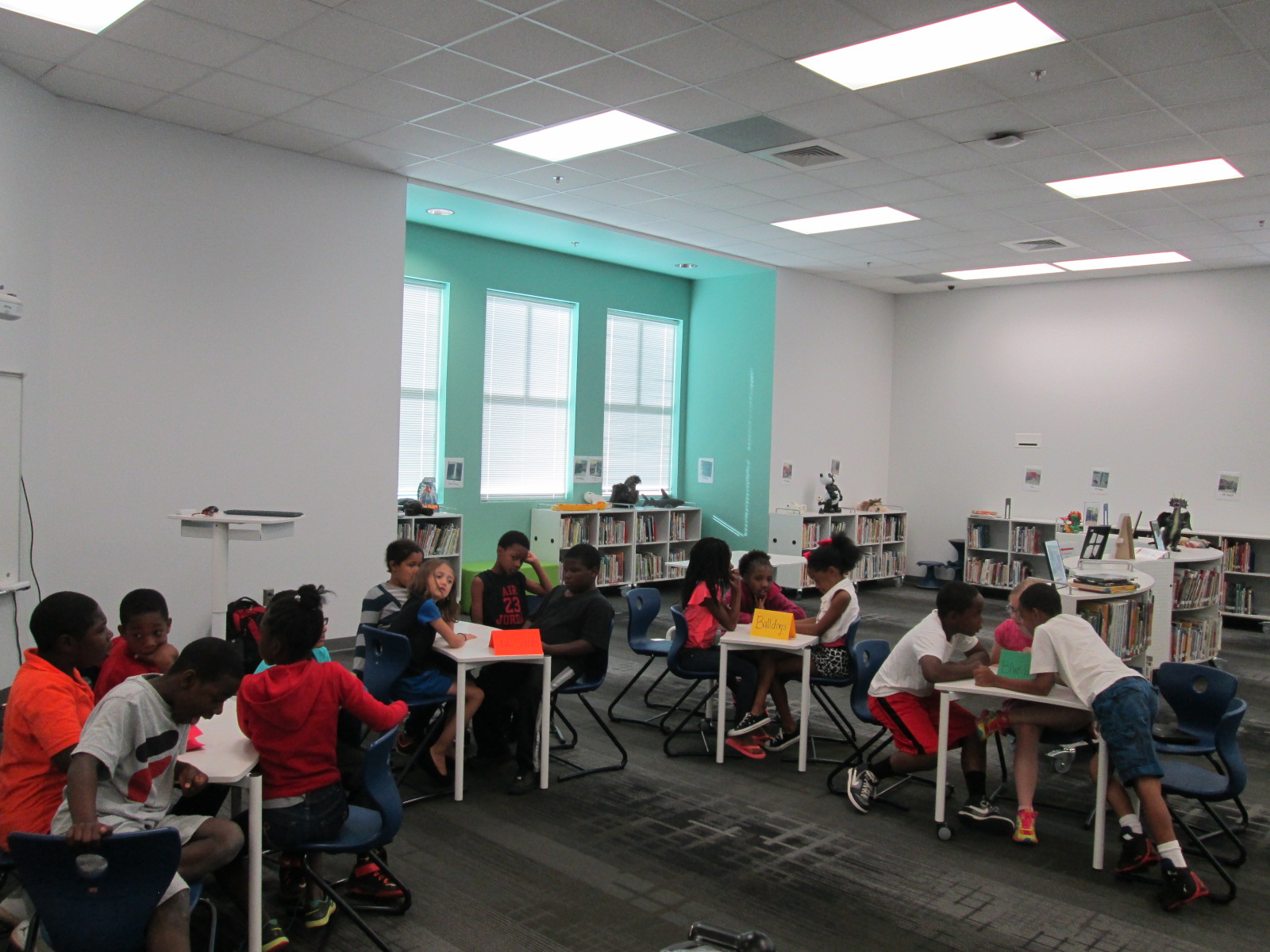
Each year we have a program called Battle of the Books in 3rd-5th grade.  This is a reading competition where teams of 5 students read a list of 10 books.  They work together to answer questions about the books in several rounds of competition in order to be crowned the Battle of the Books Champion.  Each year there are students who don’t participate in battle of the books for many reasons.  Sometimes they are unsure if they want to do it and by the time they decide it’s too late.  Sometimes they have too many other things going on that they can’t fit it in.  Whatever the reason, there are students who are left out. This year, one of our teachers, Ms. Mills, recognized that in 3rd grade and wanted to give these students a 2nd chance to participate.

IMG_5943


Since we are near the end of the year, reading the long chapter books that are on the regular list weren’t reasonable to consider, so she pulled several books that students could realistically finish, understand, and compete with.  Students read these books in small groups as well as during state testing when they finished their test.

Deciding to choose new books  meant that there weren’t questions written for these books, so she knew she would have to come up with every question asked.  I love what she decided to do.  She took the books to a 5th grade class and asked them if they would read the books and come up with questions to ask the 3rd graders.  The 5th grade students worked with their teacher to craft questions and they put their names on each question written.  During the competition, Ms. Mills or Ms. Garrett would say who a question was written by.

IMG_5937

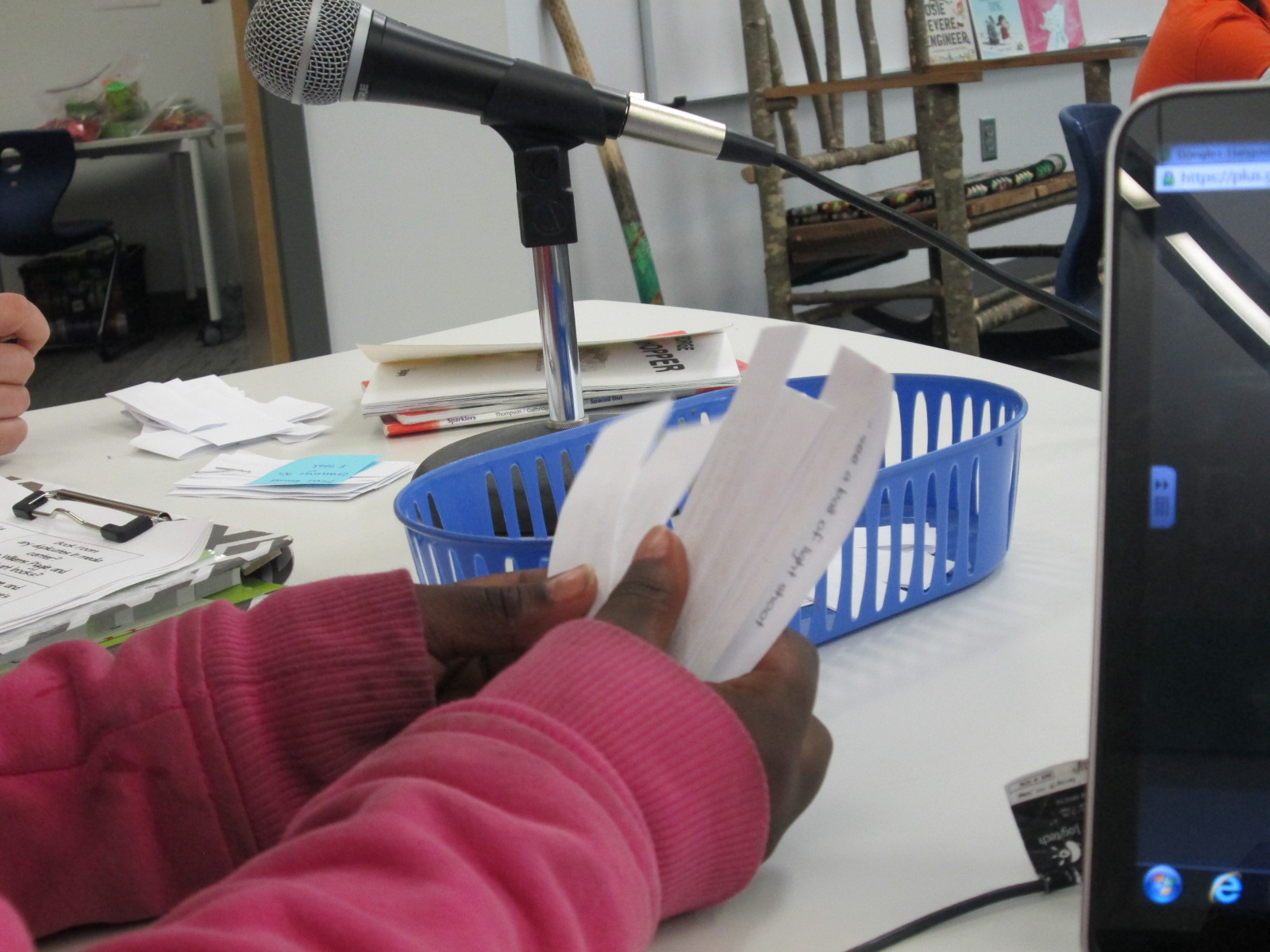
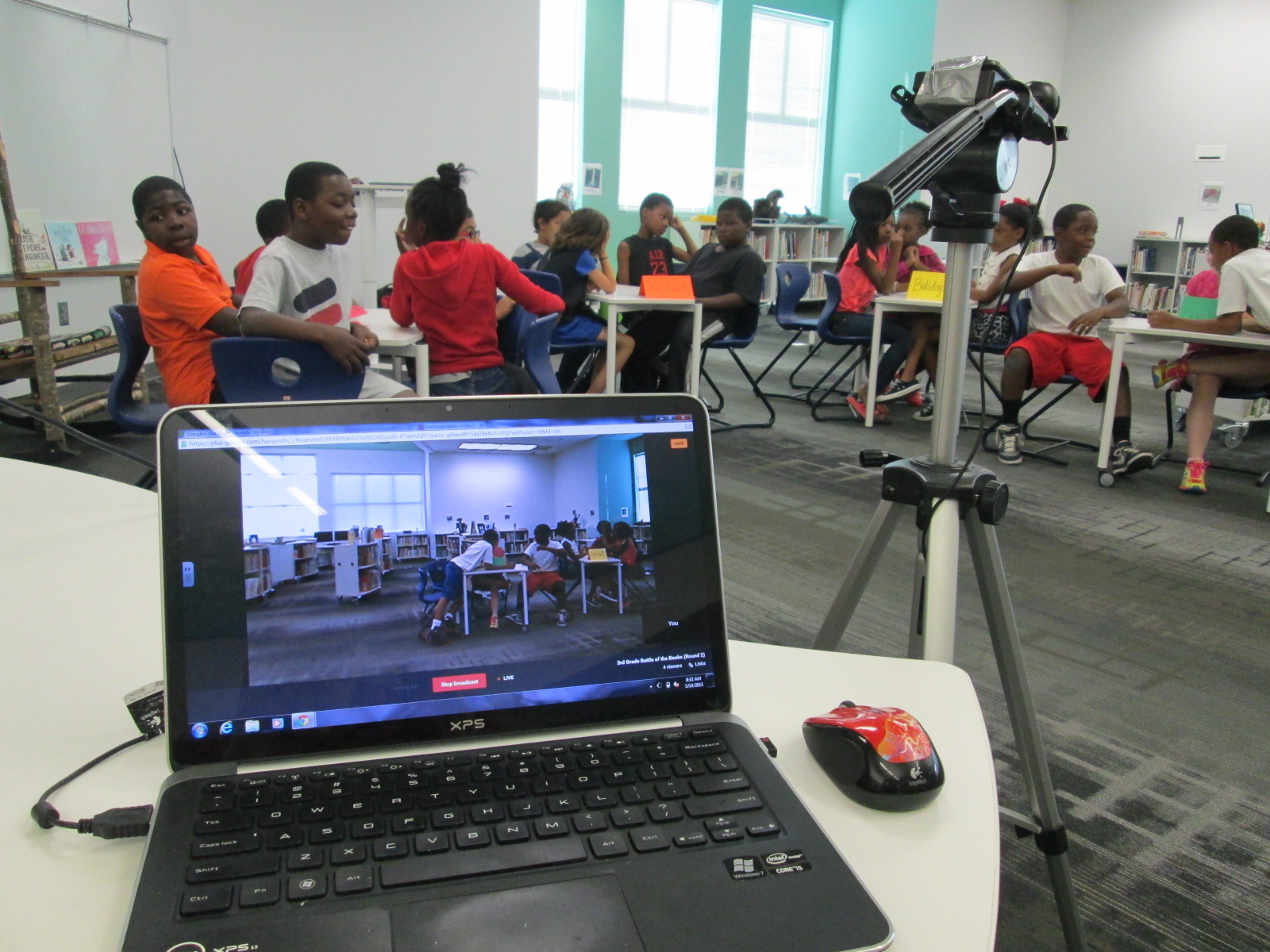
We decided to broadcast the competition through Google Hangouts on Air so that all 3rd grade classes could watch and support their friends.  I setup the hangout and emailed the link to all of the teachers, and of course, we now have an archive of our competition for anyone else who wants to watch.  Students helped pull the questions from a basket of questions and the teachers asked them. Each team received 8 questions and the teachers kept track of which team got the most questions correct.  It was a tight competition because the students knew the books so well.

IMG_5944

I take no credit for any of this competition, but I just had to highlight what these teachers and students did.  Bravo to Ms. Mills and Ms. Garrett for giving even more of our students a voice in this fun competition during the busy end-of-the-year rush.  They all did an awesome job, represented our school well, and showed that they knew their books well!

Unpacking Our Student Book Budget Books: Part 1

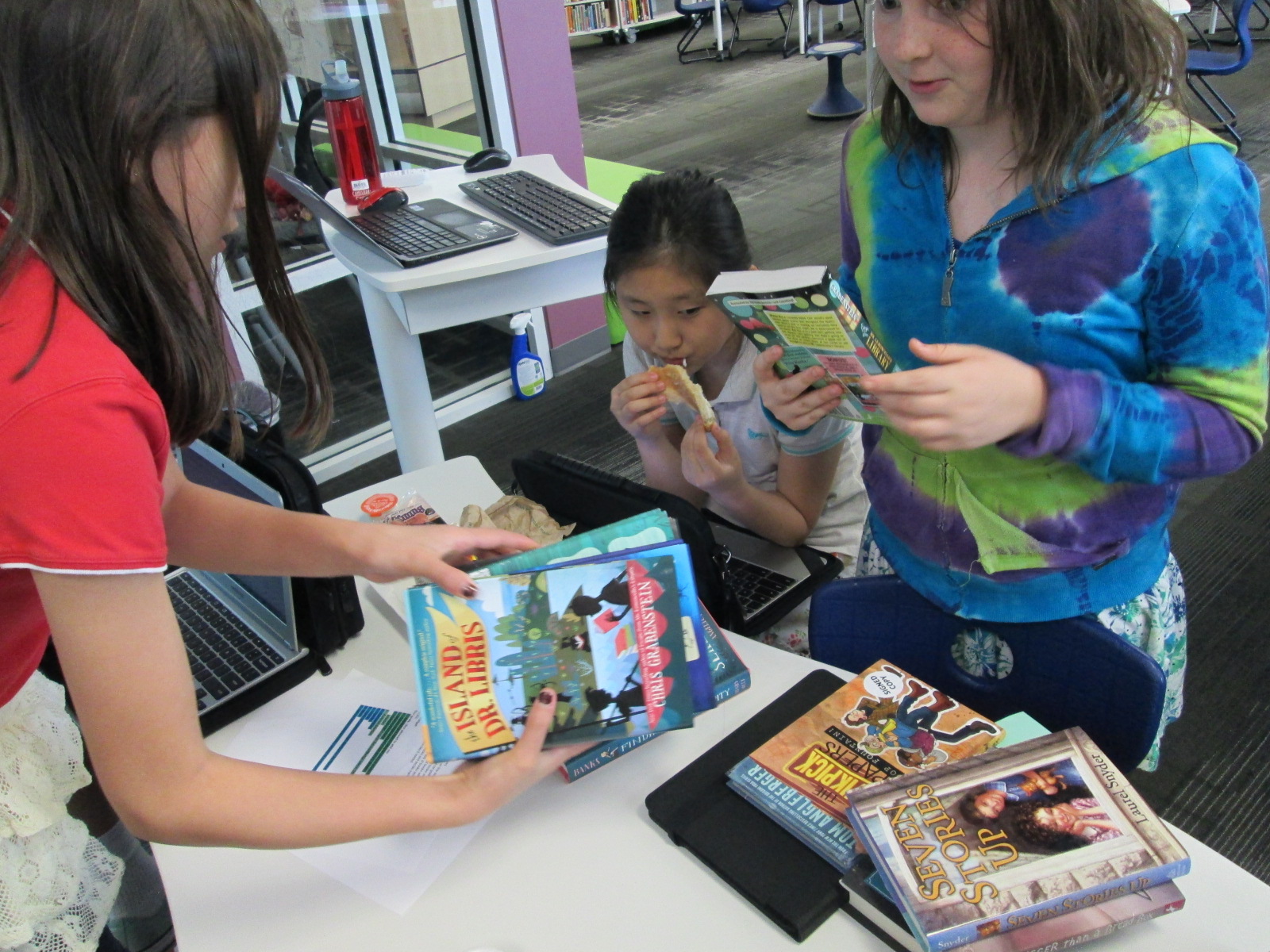
Unpacking (9)

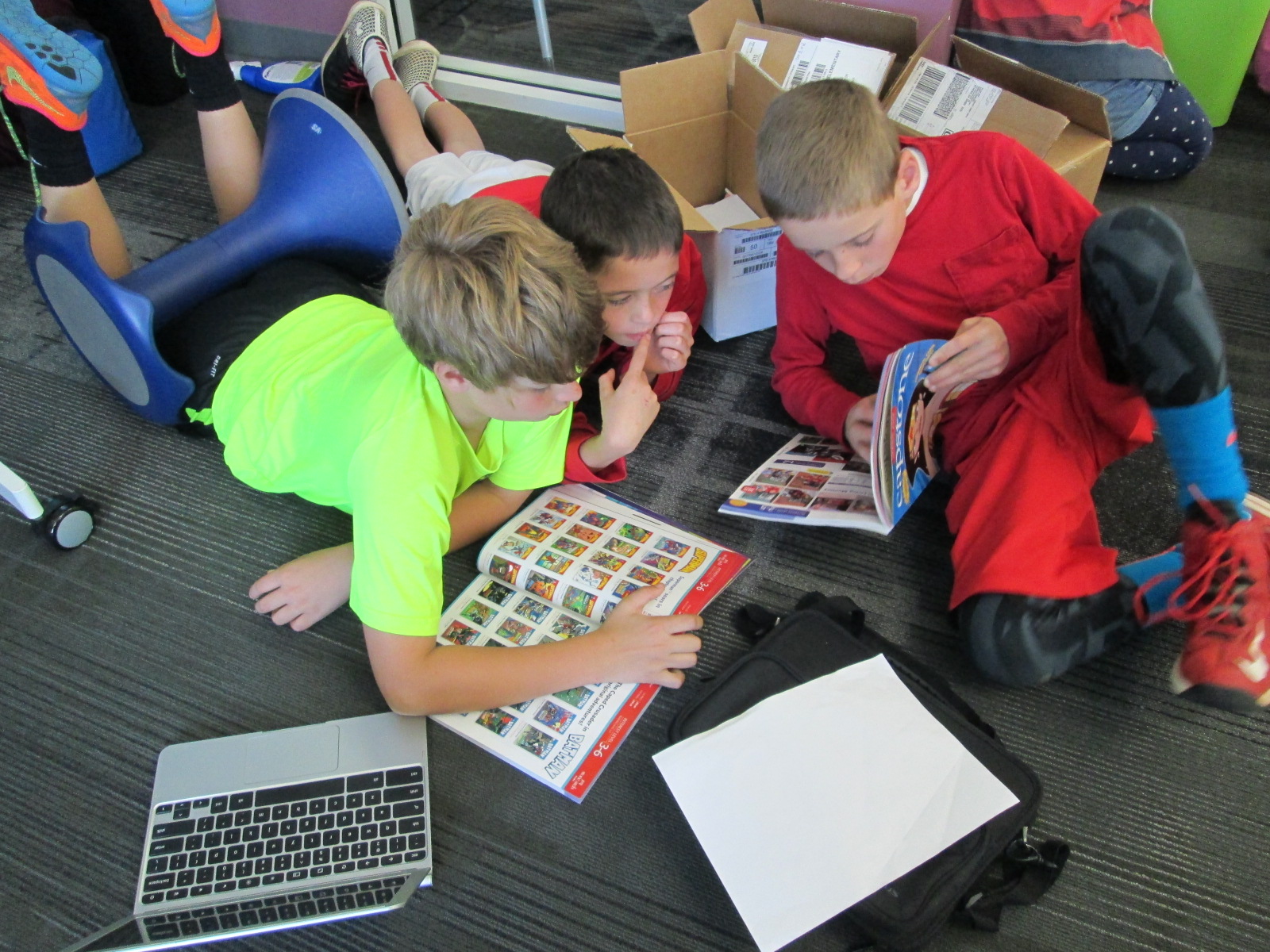
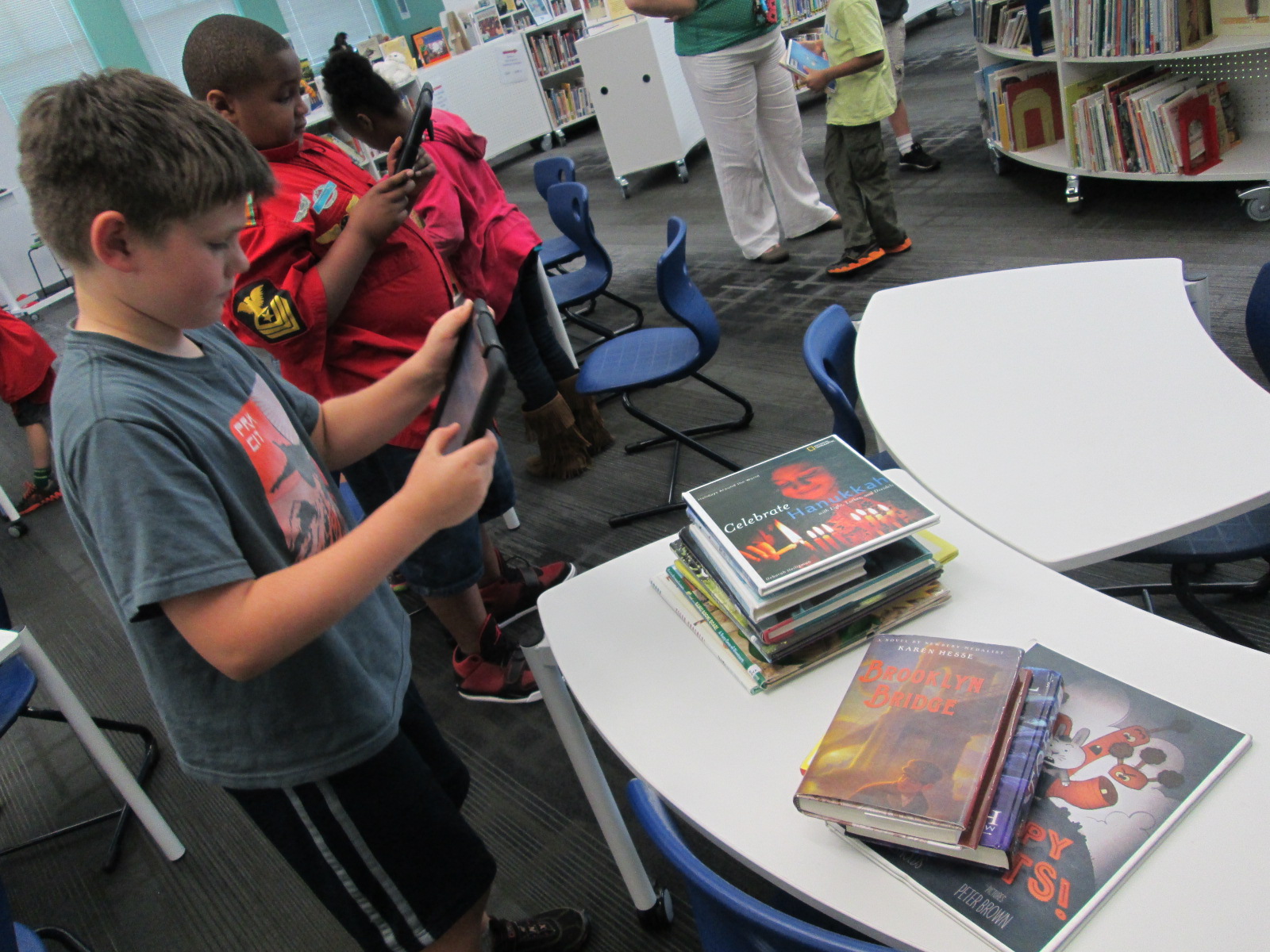
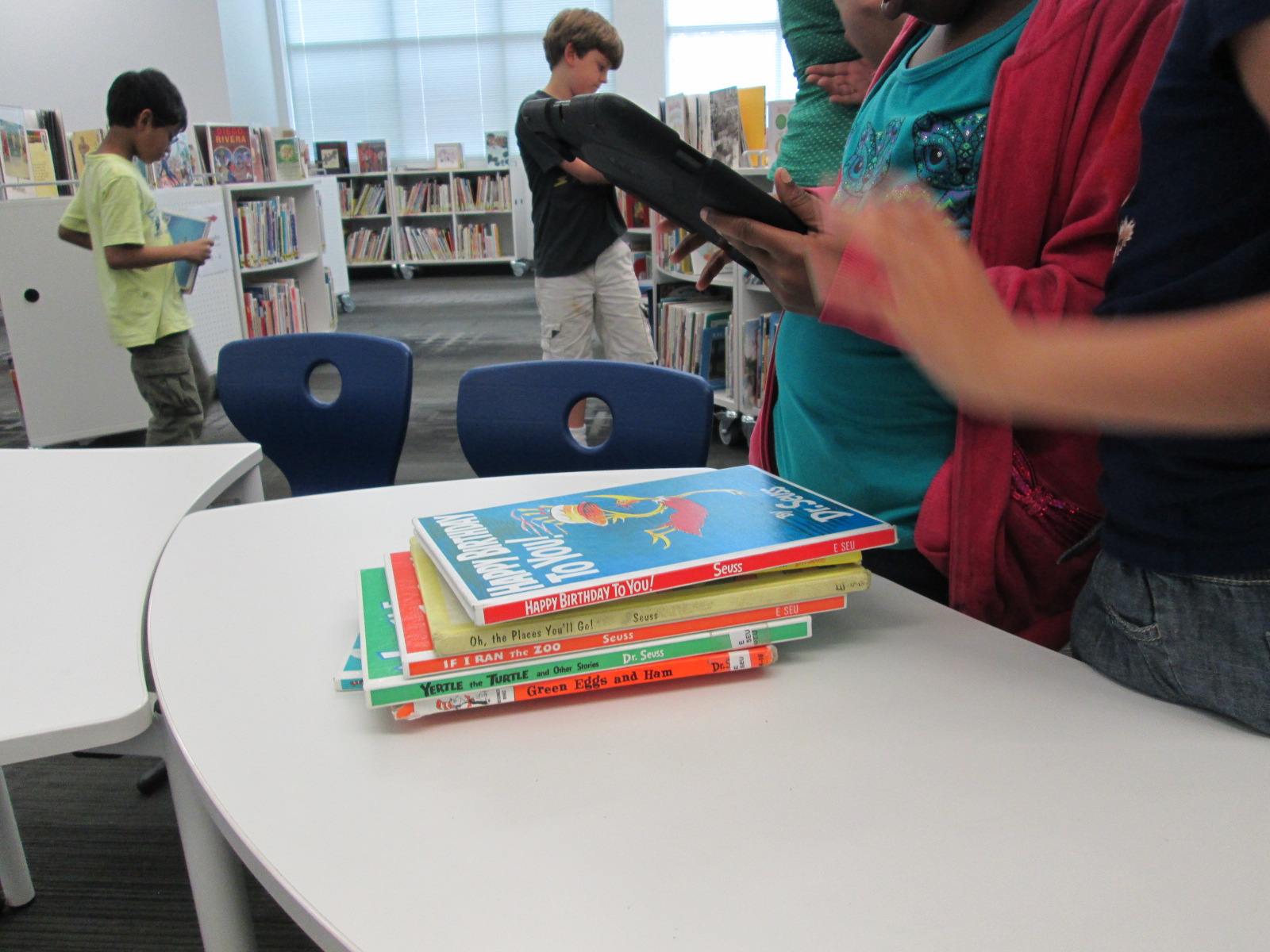
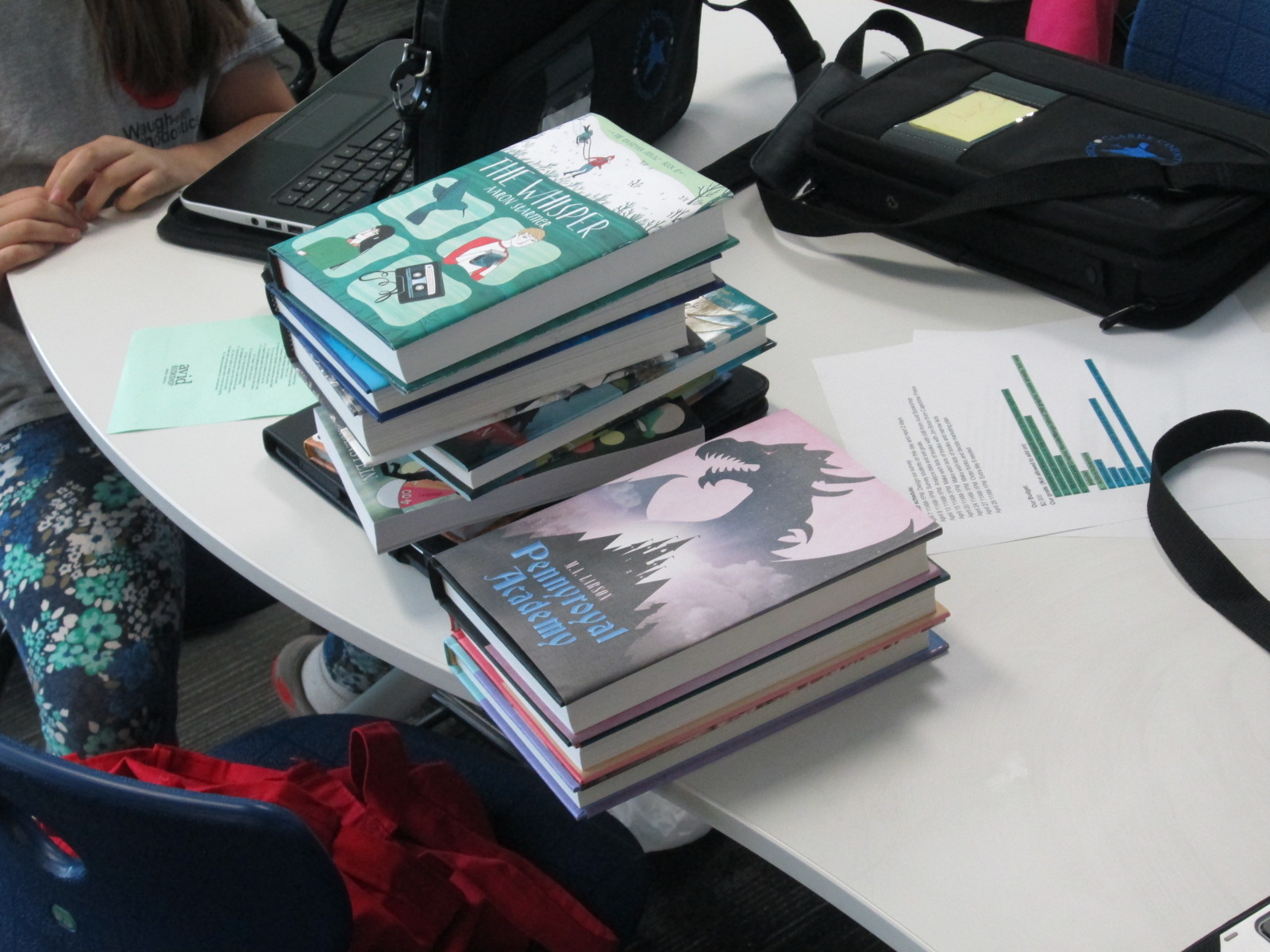
Two parts of our 2015 student book budget arrived!  It’s always exciting when I can email the students and tell them that the books are here.  They’ve been asking me almost daily since we placed the order.

All of our books from Avid Bookshop arrived during our author visit with Sarah Weeks.  The first box of Capstone books arrived while our 5th graders were at Skidaway Island.  I emailed the whole book budget group and told them to come today at noon to unpack books.

Our timeline has been a bit crunched this year.  We are almost out of school days and book check out is already coming to an end for the school year.  I need to do a better job next year of making sure this project doesn’t slip too far into the year.  Usually, we put all of the books out when they arrive and let the students start checking them out.  However, with only 8 days of school remaining, I handed this dilemma to the group.  There was a lot of debate about whether or not to have a special checkout of just book budget books or to wait until the opening of the library in the fall.  After a lot of discussion, the students decided that they wanted to wait and have these books be the first new books available to students in the fall.  It’s always nice to start the new school year with some exciting new books.

As we unpacked the books, we checked them off of our packing slips.  I had already cataloged the Avid books and uploaded the MARC records for Capstone, so the books were ready to go into circulation.  Once they were checked off the list.  Capstone sent us some special labels to put inside our books so that students could indicate books that they chose for the order.

Unpacking (3)

Each student chose a label, wrote his or her name on the label, and added it to the inside cover.  Students also stamped the books with our library stamp.

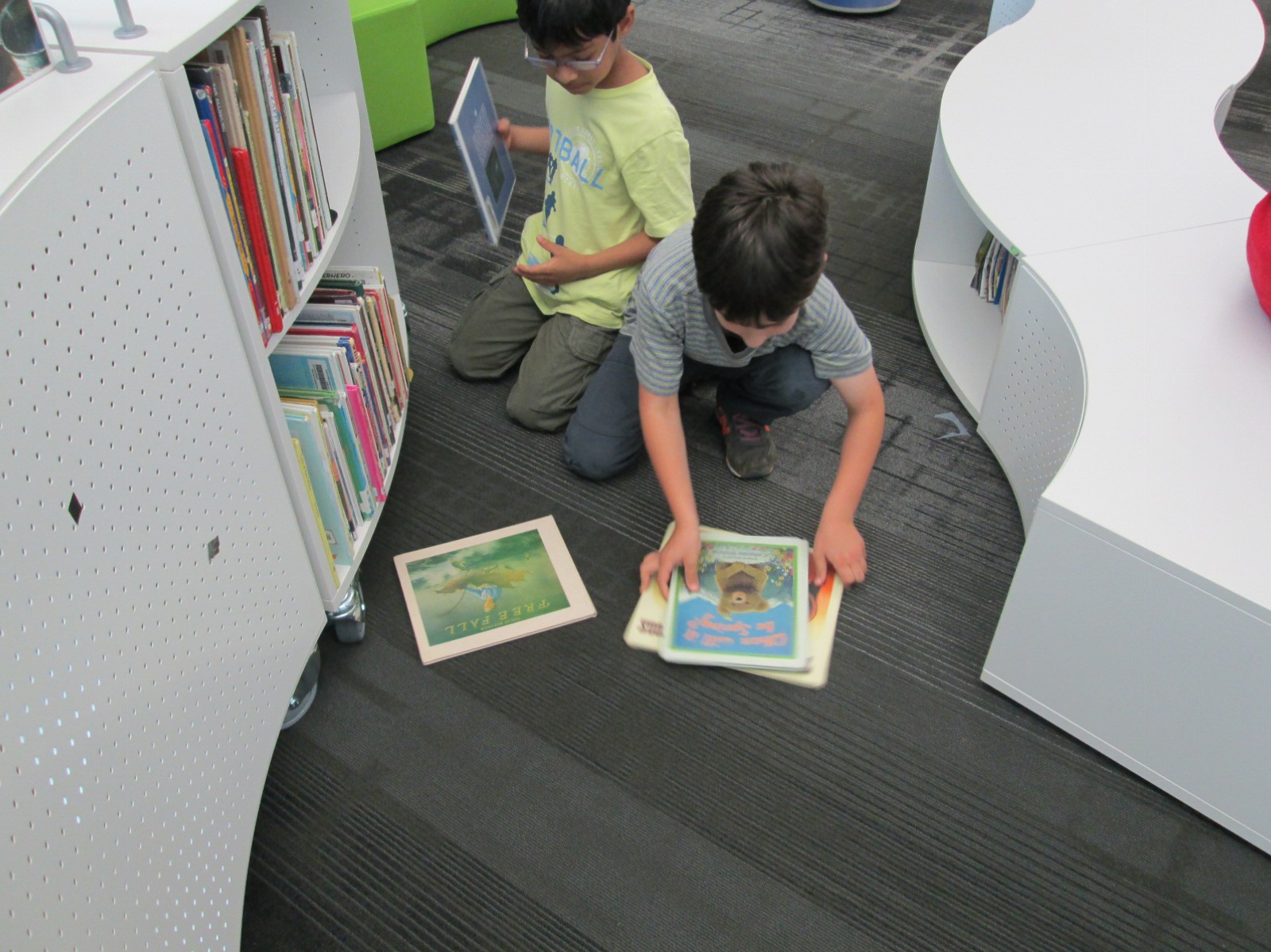
The excitement was high and it was so much fun to see the students immediately diving into the books.  They all tucked away around the library to read by themselves or with a partner.  Before they left, the book budget students did get to checkout a few of the books to read over the next few days.  They will return these books to the boxes so that they are ready for the next school year.

We are eagerly awaiting our final order from Capstone which should be arriving in the next few days.

Student Book Budgets: Building Wish Lists and Making Tough Decisions

narrowing (12)Our student book budget group is hard at work.  So far, they have made lists that total almost $4,000, but our budget is $2,000.  Isn’ t this the struggle that we all face with budgets?  How do you decide what to buy and what not to buy?

During our most recent session, we revisited our goals.  We decided based on our survey data to purchase books about

  1. Animals
  2. Sports
  3. Mystery
  4. Comics and graphic novels
  5. Action Adventure
  6. Horror/Scary
  7. Fantasy
  8. Humor
  9. “How to”
  10. Music
  11. Games/Video games

As we made wish lists, our excitement over so many wonderful books caused us to add several things to our list that really didn’t match our goals so we had to think about this.  Do we stick with our goals or do we give ourselves permission to buy whatever we want?  The general consensus was to stick to our goals but possibly have some extra additions here or there.

Since we are way over budget, we have a lot of work to do.  During the most recent work session, we divided the responsibilities.  We identified 3 things that needed to happen:

  1. Continue searching through the Capstone catalog for books that match our goals and adding them to the list
  2. Examine the current Capstone list to see what does not match our goal or what might need to be cut
  3. Continue searching for books that match our goals that could be purchased from Avid Bookshop

One group of students formed an independent group to work on the Avid list.  They used Avid’s website, Amazon, and Novelist to look for books that might be of interest.

The students in the Avid group accidentally lost part of a title on our list, so we consulted our friend Will Walton at Avid via Twitter.

https://twitter.com/WillWalton8/status/591652594952568832

The author of the book even jumped in on the conversation.

https://twitter.com/AaronStarmer/status/591658670112509952

Another group of students worked with Mr. Coleman, a 4th grade teacher, to examine our existing list.  He was great at facilitating a conversation with this group.  Only one person at a time was in charge of the mouse to delete books from the list, but all students were engaged in conversation about the books.  As usual, it was heated at times and at other times there was quick consensus about a book.  They narrowed the list below $3,000, but they knew that another group was adding more books to the list.

I worked with the third group who each chose one of our goals and looked through the Capstone catalog for books that matched.  They once again used the easy scan feature to scan books into the list.  I had a great conversation with a student who was adding an animal book to the list.  She asked me, “Do you think this is a book that fits the nature category?”  It really seemed like she was just putting the book on the list because it matched instead of putting it on the list because she thought people would read it, so I asked her about that.  I asked, “Do you think this is a book that kids would be excited about reading?” She paused.  “Do you think this is a book that a teacher would assign someone to read?”  She said yes.  It was a good time for me to say that I strongly believe that the book budget group is a time for kids to buy books that they think kids will be excited about reading.  I can buy books that teachers can use or books that fill gaps in our collection at another time.  This budget is all about what students want.  She smiled and continued looking for a books that mattered to students.

At the end of our time, I don’t think we narrowed our cost at all, but we did get closer to finding books that matched our goals.  Our next step will be to look closely at our budget and the promotions that Capstone offers to consider what our budget really is.  With Capstone Rewards, we really have a lot more money because if you spend $1750 you get 30% in rewards.  This might help our decisions during our next meeting.

Why Do We Explore Space?: A Virtual Field Trip Opportunity

Ms. Kelly’s Kindergarten class has just amazed me across this year by how they have used a study of space to flow into so many of their standards.  They have written their own ebooks, composed music, written lyrics, researched multiple questions, and now they are coming up with a plan to help the people who want to go on a one way trip to Mars.  During the course of this study, an interesting question came up.  Why do we explore space in the first place?  It’s something we haven’t even considered during all of our research.

It came about because of an email that Ms. Kelly got about a virtual field trip to NASA’s Goddard Space Flight Center.

30 minute virtual field trip begins at 1:00 PM (ET) and is appropriate for all grades. Get a tour of a NASA facility and learn about the research being carried out into planetary exploration. Learn why it is important to explore the universe and how our knowledge of the universe has expanded due to the space programs. Understand the multitude of scientific practices involved in space travel, and see the application of many of these in the real world.

The virtual field trip is next Friday May 1, 2015 at 1PM EST.  It’s appropriate for all grade levels and it’s free!  All you have to do is register and you can even have students submit questions ahead of time.  http://www.discoveryeducation.com/Live/of-the-people-space-day-2015.cfm

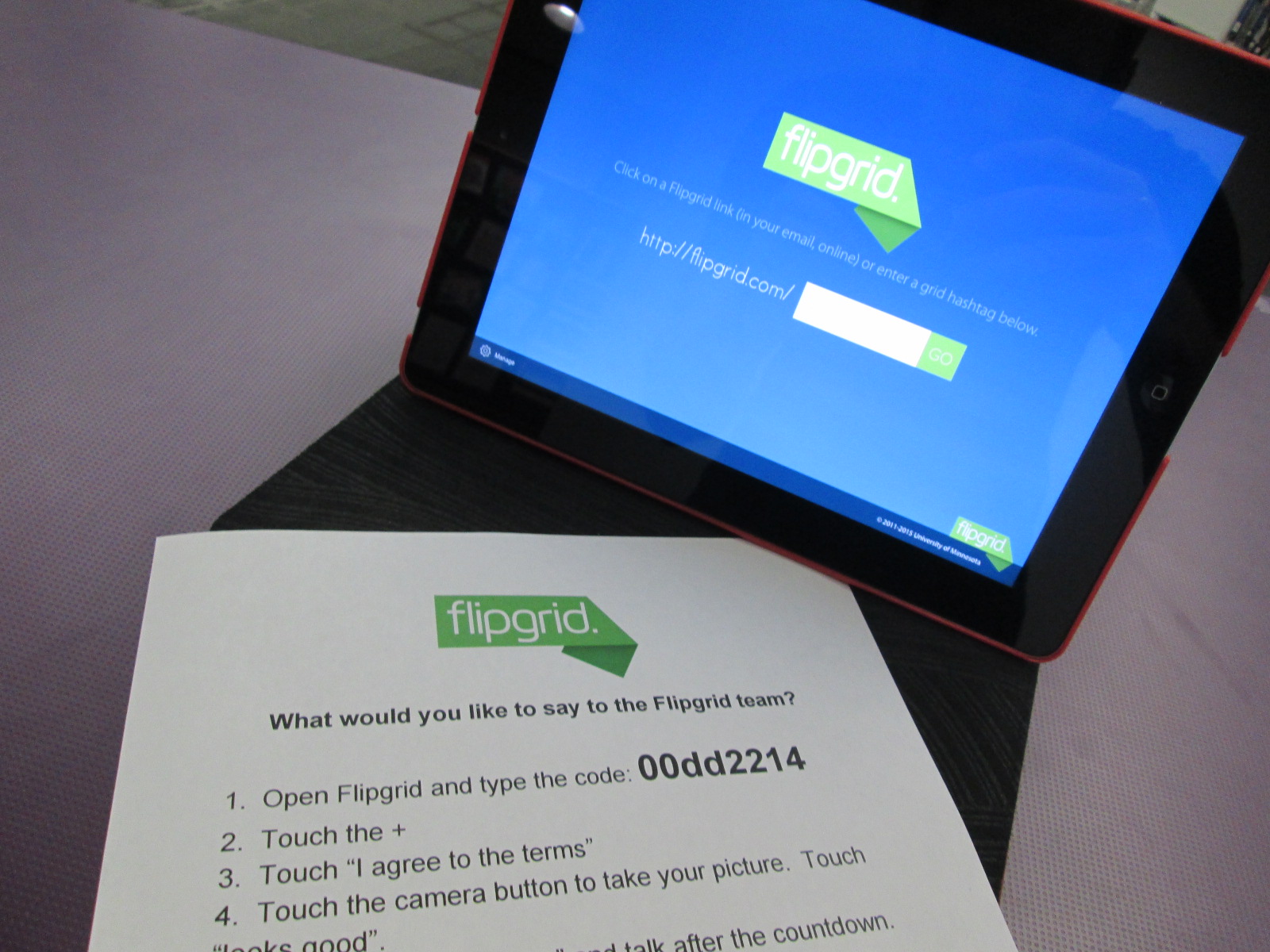
Ms. Kelly wondered if we might explore the idea of space exploration a bit before students engage in the virtual trip.  I’m brainstorming about this right now, but I first wondered about putting the question out to more people.  I wonder what all of us think about why we should explore space or even why we shouldn’t.  I decided to make a Flipgrid.  Anyone can post a 90 second to this grid responding why we should or shouldn’t explore space.  I would love to have kid voices and adult voices from multiple perspectives to share with this Kindergarten class.

If you have a moment, reflect on the question and make a video.  If you have even more time, do this with your own students in the next few days.  If you don’t have time to make a video, consider sharing it with someone who might.

Why should we explore space? (or not explore space)

My thinking at the moment is that I will share these videos with my Kindergarten students as an opener.  We’ll take time to read some books such as The Planet Hunter or Moustronaut and reflect on the question ourselves.  Then, students will have a chance to add their own ideas to the grid along with the other voices.  http://flipgrid.com/#c6c0c1f0

Ms. Kelly and I never know where we are going to end up.  We just keep our minds open, look for opportunities, and give it a shot.  We usually find that our risk-taking leads to some miraculous opportunities for our students.


The Natural Side of Student Voice with Flipgrid

Flipgrid Celebration (5)

Empowering student voice has become one of the goals in the library that I am most passionate about.  I love it when a student’s voice reaches out into the world, finds an authentic audience, and gets a response.  One of the tools that has been the most helpful in getting student voices out into the world has been Flipgrid.  In fact, we use Flipgrid so much that students ask why we aren’t using Flipgrid if we choose to use something else.  It is user-friendly for both the educator and the student.

Flipgrid Celebration (8) Flipgrid Barrow Peace Prize (7)

With your yearly Flipgrid subscription, you get 10 grids.  Think of your grids like your classes or your big topics.  I have a reading grid, math grid, science grid, etc.  Within those grids, you can ask unlimited questions with unlimited video responses from students up to 90 seconds each.  As soon as students press the submit button, there video is uploaded and live for an audience to view which means no extra work on the part of the educator to prep videos for viewing.
You can find multiple uses of Flipgrid within the posts on this blog.  It seems like we are always coming up with new ways to use the tool in our library.

Recently, some of the Flipgrid team visited my school to see what a day in our library is like.  Along the way, they saw ways that our students have a voice as well as ways that we are using Flipgrid.

The first of two videos has been released based on that visit.  I invite you to watch this short video about the natural side of student voice.  Share it with your network and consider how you can give students a voice within your library.


National Poetry Month: Book Spine Poetry Lessons

book spine (7)

I love found poetry.  It is so interesting to think about how words, phrases, and sentences that already exist in the world can be remixed into something new.  We recently spent some time creating blackout poetry, and now students have been coming to the library to create book spine poems.  Each year that we try this type of found poetry, I’m finding that we get a little bit better and add some new strategies for crafting a book spine poem.

This year I decided to do some storytelling to share with students how I crafted my own book spine poem.  Rather than give a list of tasks to do, I told my story and let that guide our instructions for how to make a book spine poem.

“When I made my book spine poem, I just wandered around and picked a shelf in the library.  I spent time at the shelf scanning every title and looking for a title that spoke to me in some way.  The first book that jumped out to me was In My Mothers’ House.  I continued creeping along that same section of the library looking for a title that seemed to go with the one that I had already found.  I didn’t really know if I had found my first line of the poem or just a piece of the poem, but when I came across The Wonderful Happens, it seemed like magic.  Both of those titles just sounded like the beginning of the poem to me.  Now I had a focus.  I needed to find more books that told more about In My Mothers’ House.  I didn’t really worry about order.  I just wanted books that sounded like a good fit.  Once I found 3-4 more, I went to a table and started arranging them and reading them aloud.  I tried many different ways to see what sounded right.  I even had a book that just didn’t seem to fit, so I decided to put that one back on the cart at the front of the library.  When my poem felt just right, I knew I was reading to record myself reading it.”

book spine (9)

By telling this story, I really felt like student had a good sense of what to do, but we did still rephrase the steps together.

1.  Choose a place to start.

2.  Look for books that speak to you and only take the ones that you think you will use.

3.  Continue choosing books that connect to one another

4.  Arrange them in a way that sounds right and put the extras on the cart at the front of the library.

5.  Record yourself reading your poem and return your books to the cart at the front of the library.

book spine (4)

Students got to work.  Most of them jumped right in, but a few had trouble starting.  I found a few students who just wandered around without knowing how to start, so I encouraged them to stop wandering and start reading titles.  Some were very focused on content which made it a bit harder to craft a poem.  They wanted a book about X instead of thinking about a book’s actual title.  I tried to explain that the content of the book really didn’t matter. All that mattered was the title.  It took some time for that to click with some students.  I didn’t want to tell students not to use the computer, but we did nudge students to really try looking at the shelves rather than try to find something on the computer.  Most students who tried the computer strategy ended up abandoning it anyway because it added too much time and frustration to the process.

As students recorded their poems, they came to me at a table.  I had an iPad cord plugged into my computer, so we just connected and uploaded straight to Youtube and put the videos into a class playlist of poetry.

You can enjoy their work in each of these playlists.

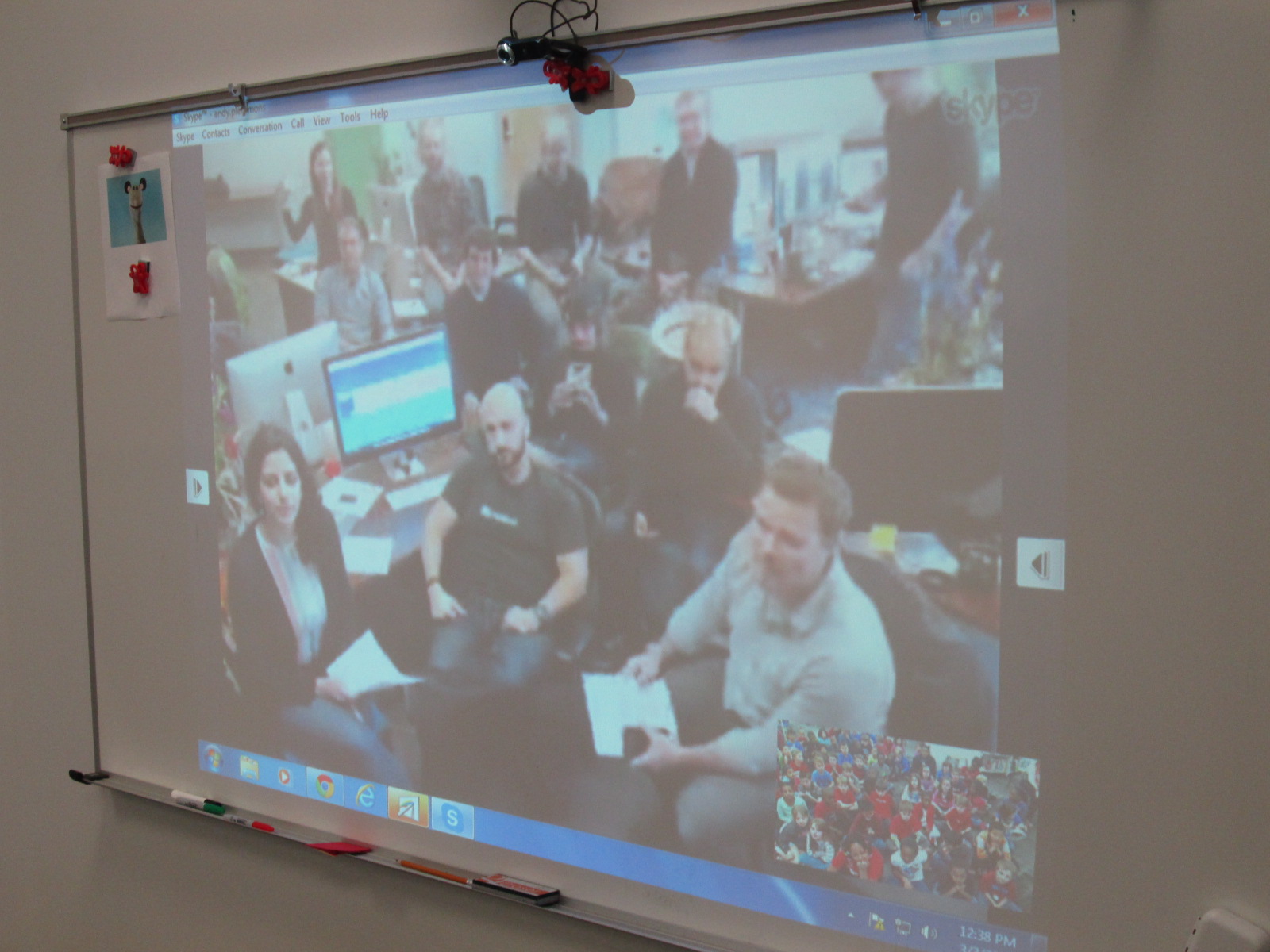
Students Meeting with Vendors: Book Talking with Avid Bookshop

Avid (2)

One of my favorite steps in the student book budget process is when the students get to meet real vendors and talk with them.  This year at the School Library Leadership Summit someone asked me if I ever used an independent bookshop as one of my vendors for student book budgets.  The answer was no, but this year we changed that.

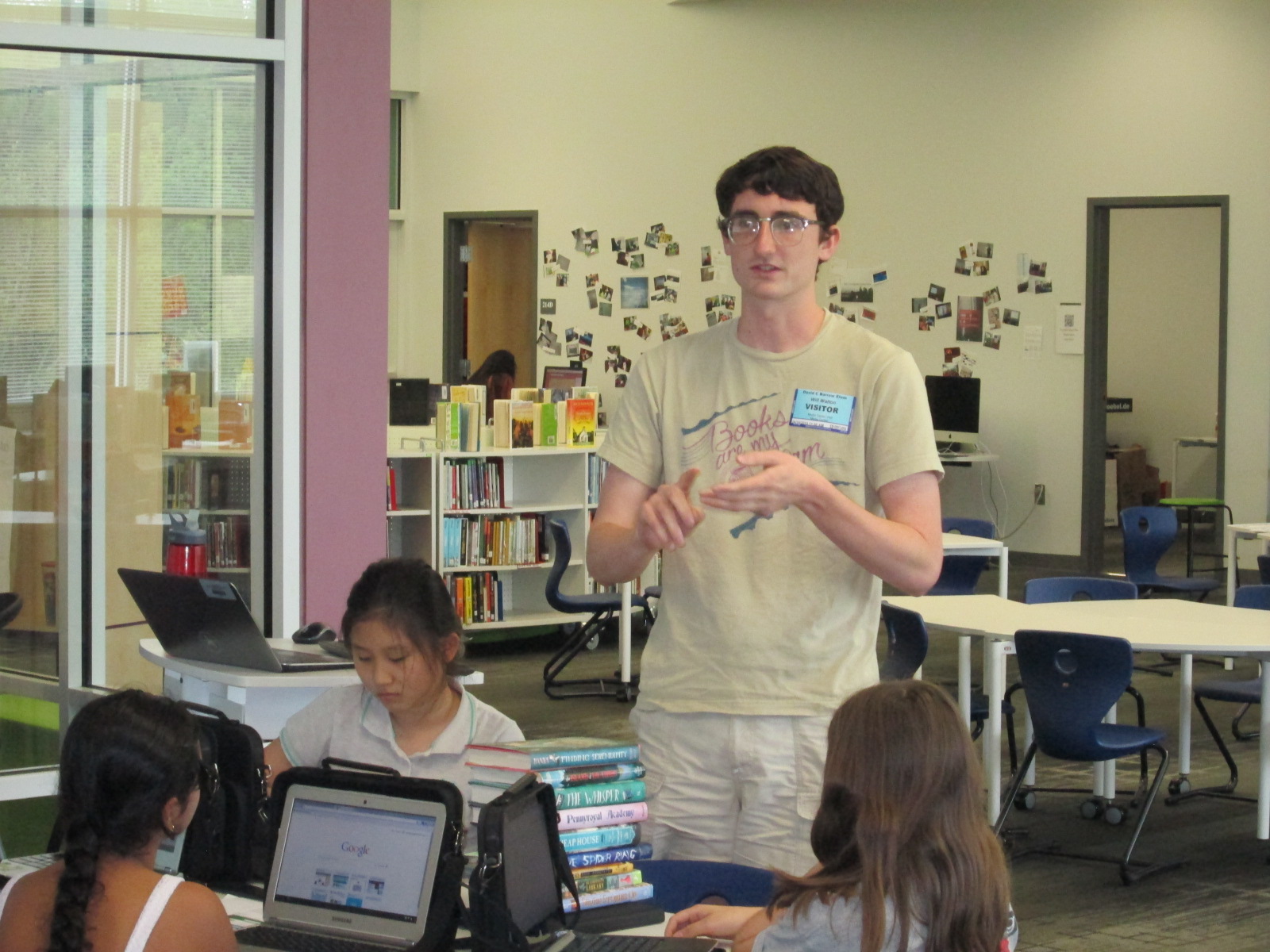
I email Janet Geddis, owner of Avid Bookshop, and asked if she would like to be a part of this year’s project.  It was refreshing to hear that community outreach is actually a big part of her business plan, so she definitely wanted to be a part.  When our students had their purchasing goals created, I sent them to Will Walton at Avid Bookshop.  Will is an awesome bookseller and has his first novel coming out in May called Anything Could Happen.

Avid (6)

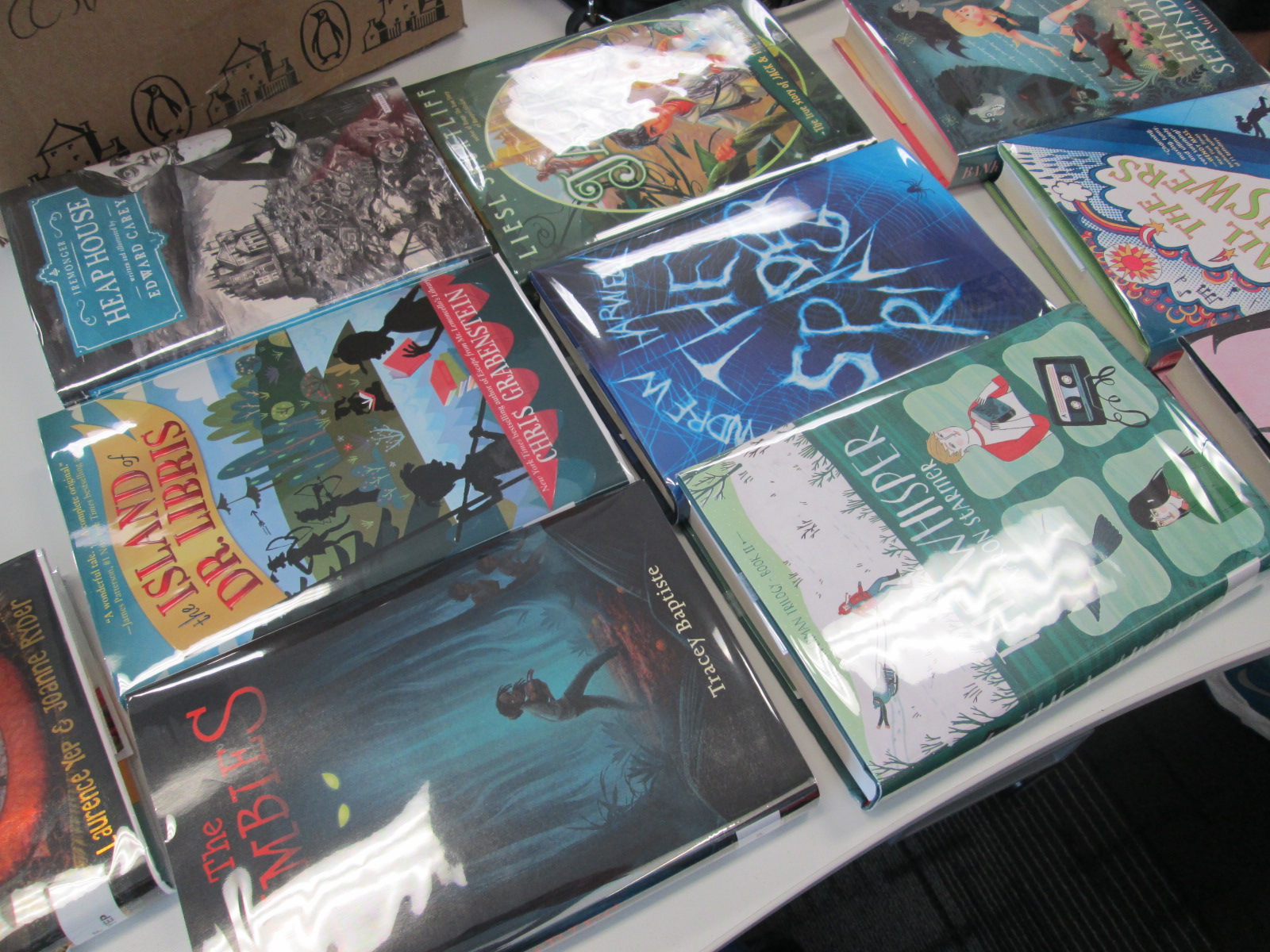
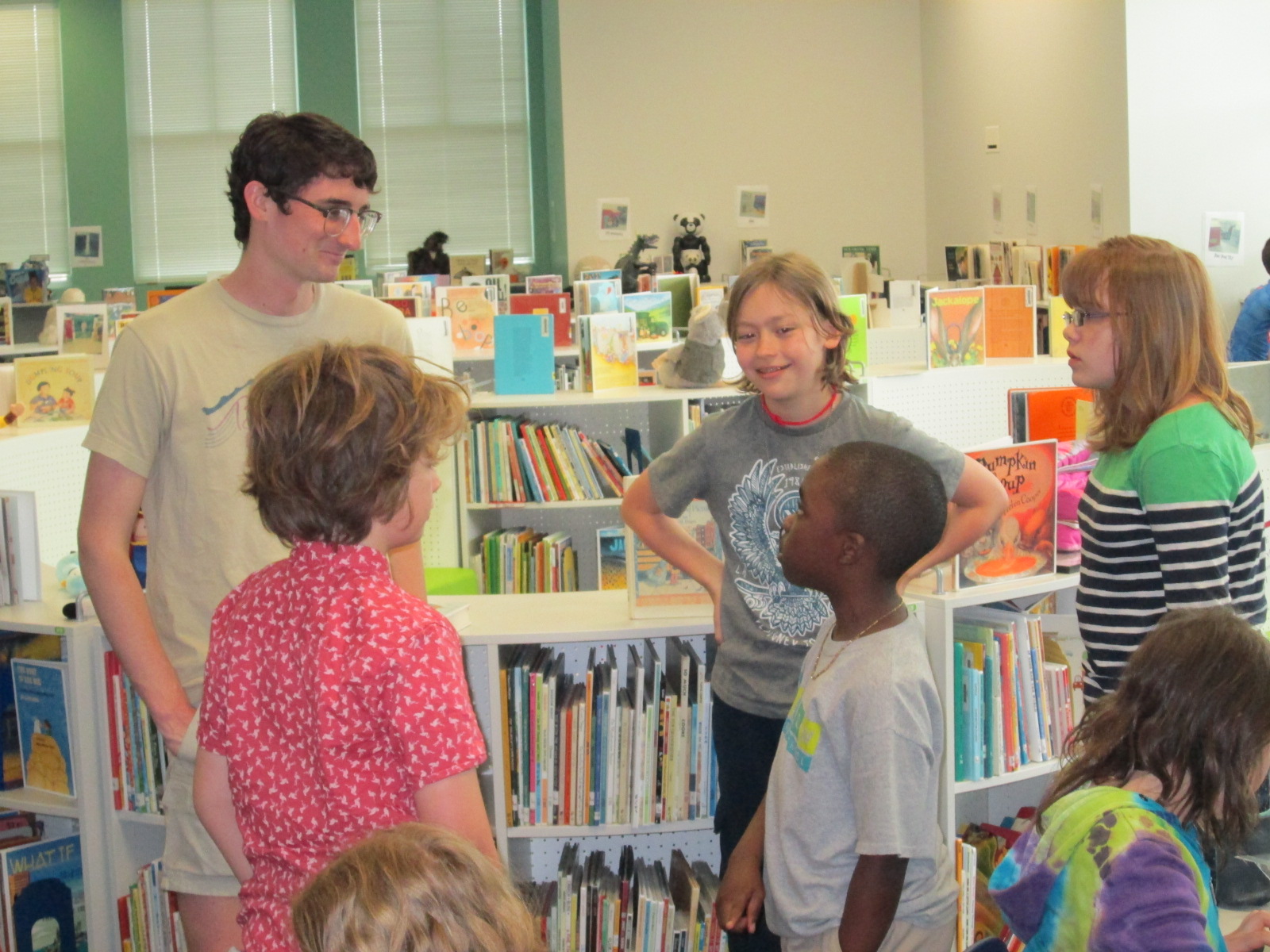
Will pulled several books from the shop and brought them to our book budget meeting.

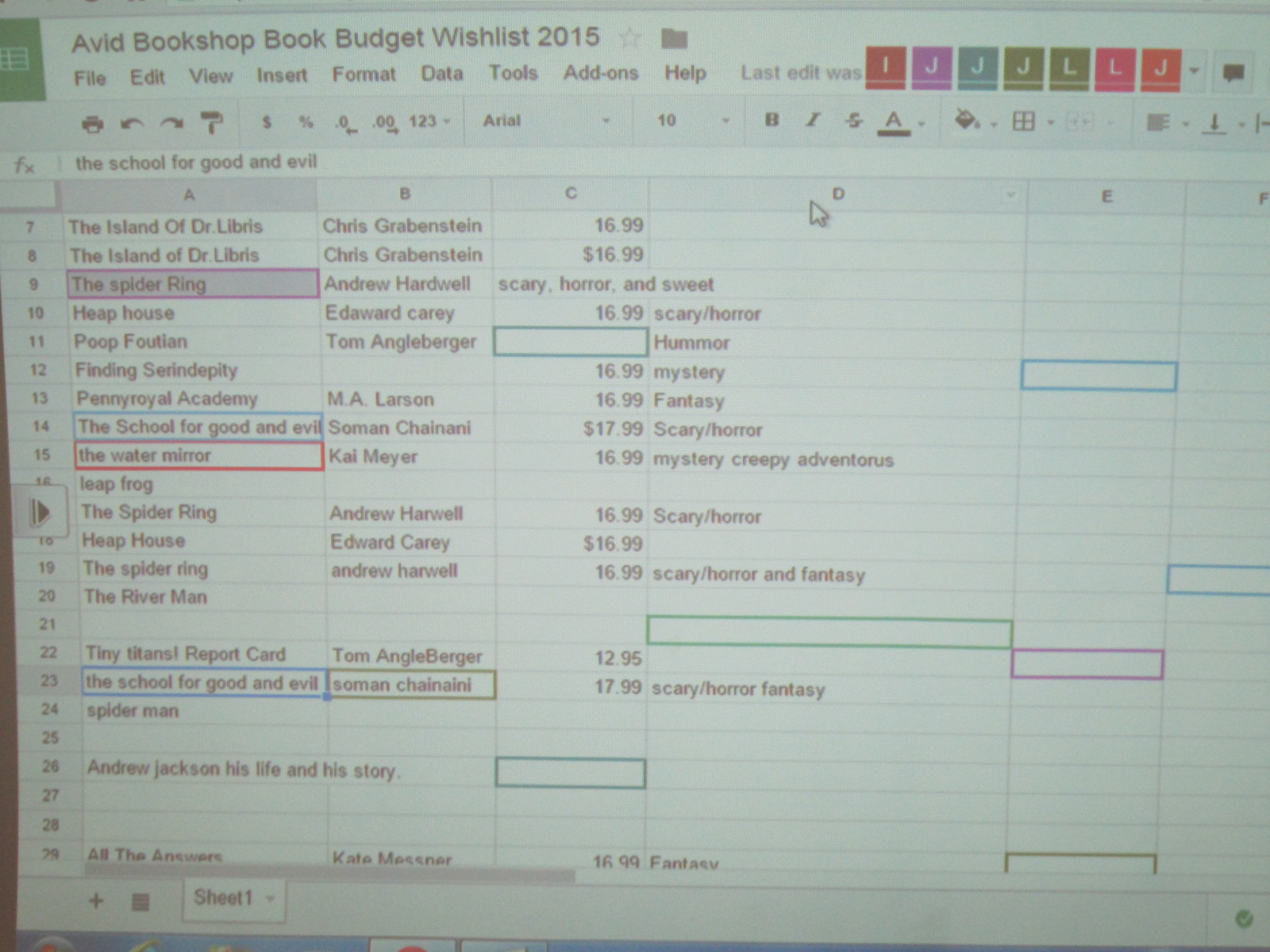
I made a Google spreadsheet and shared it with all of the students.  The spreadsheet included a spot for title, author, price, and which goal the book matched.  Will put the books into various categories and started talking about each one.  If the book sounded interesting, then the students worked together to capture the details in the document.

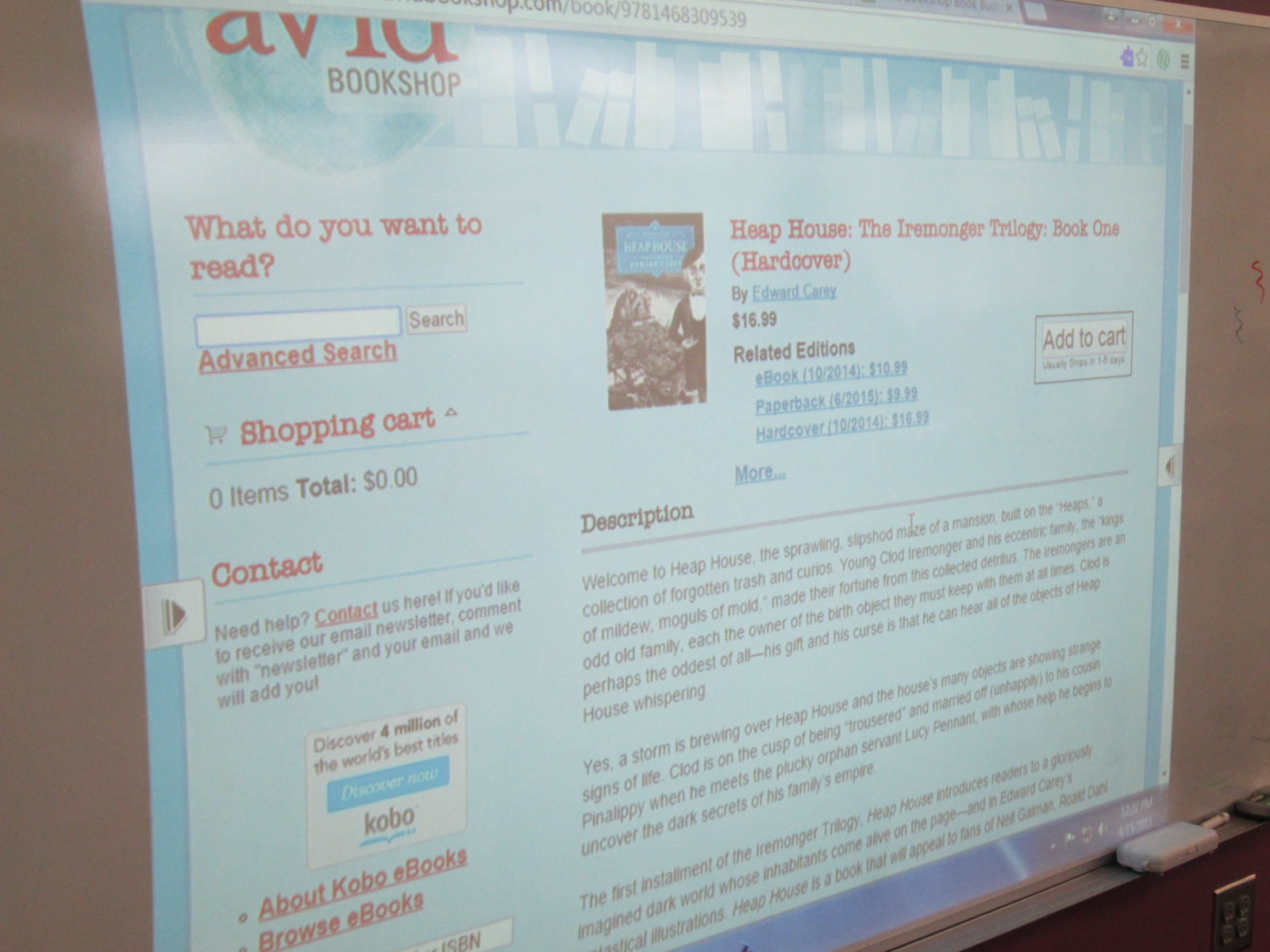
I learned pretty fast that they needed to see the title, author, etc so I pulled Avid’s website up on the board and typed in each book as he talked.  The students could easily copy down the info while he talked.

Avid (5) Avid (9)

After talking through several titles, the students had lots of questions for him.  They had a great time just talking books with Will.  Several students branched off to do their own thing, so I decided to add another layer onto what they could do.

Avid (7)

We used our state database, Galileo, to pull up Novelist K-8 Plus.  I showed students how they could look at books by age range and genre.  Then, Novelist shows books that are similar to books that you have read and liked.  I suggested that they use Novelist to find books that sounded good and matched our goals, and then use Avid’s site to find the price and add to our spreadsheet.

Avid (10)

Mr. Coleman’s ELT group is joining us in this project and they plan to continue this process this week before we meet again on Monday.

Avid (8)

We are very grateful to Avid Bookshop for their support of students.  I loved how Will talked directly to them.  He asked them questions about books but also questions about how they planned to spend their money.  He posed interesting questions such as “Have you thought about paperback versus hardback?  The cost difference can be about $10.”  Students were shocked by the price difference but most agreed that they wanted hardback for durability in the library.  That was without any prepping or pushing from me.  I was amazed.  They said the extra $10 was worth it if the book lasted longer.

Avid (1)

I love how these types of conversations naturally surface.  You can’t force plan each one, but they usually come up at some point.  Soon, the students will meet with another vendor and start the hard process of cutting their wishlist to meet our budget.