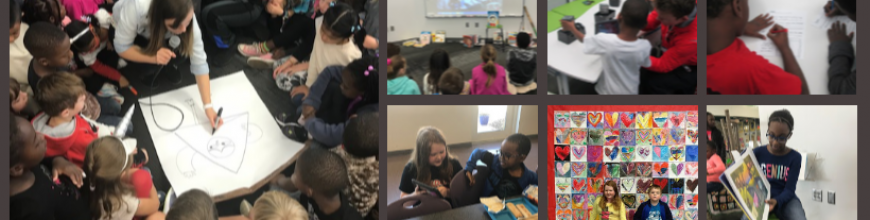
Preparing for An Author Visit with Nathan Hale

One of the biggest blessings of having an award-winning independent bookshop in your community is having authors and illustrators visit our school as they tour to promote new books. Avid Bookshop is our local indie bookstore and even before they opened as a store, they supported the author visits that I arranged at our school. Now, Avid Bookshop pitches to publishers to have authors and illustrators visit their bookshop. Sometimes those visits happen in store and sometimes they happen at our public library. In addition to visiting the store, authors & illustrators usually visit a couple of schools, too.

The Setup

These visits are for one presentation and sometimes have requirements for the minimum or maximum number of students in attendance or are sometimes targeted at specific age groups. We also have a minimum number of books that we need to sell for each visit. Typically this is 40-60 books.  Ahead of the visit, I send home a pre-order form for students to purchase the new book. I have also worked with our PTA to include a line item in the budget for buying books for classroom libraries and students. I use this budget to supplement the number of books to ensure that we meet the minimum number.

We normally have the visits in our library, which requires me to move our shelves, tables, and chairs to accommodate 250ish students on the carpet. I book time on our library calendar to make sure there’s time to setup and clean up.
Introducing the Author

When we know about the visit in enough time, I make sure that all students have been introduced to the author. On January 14th, we will host author Nathan Hale for his new book, Major Impossible. We learned about the visit in November, so that gave me time to work on introductions before winter break. The visit will be for grades 3-5.
Our 5th grade was studying WWII at the time, so I worked with the art teacher and 5th grade teachers to put together a project around their Social Studies curriculum and Nathan Hale.
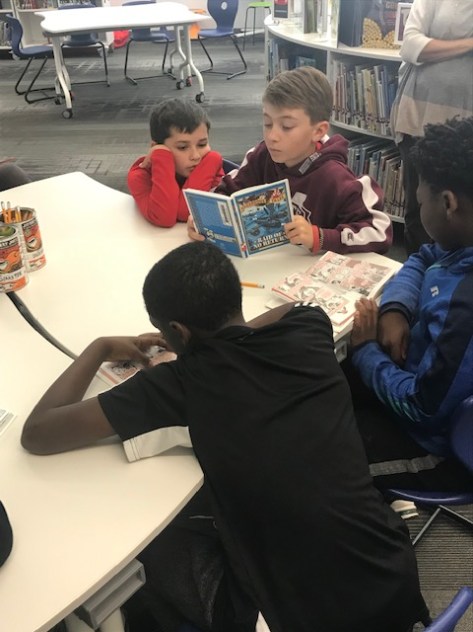
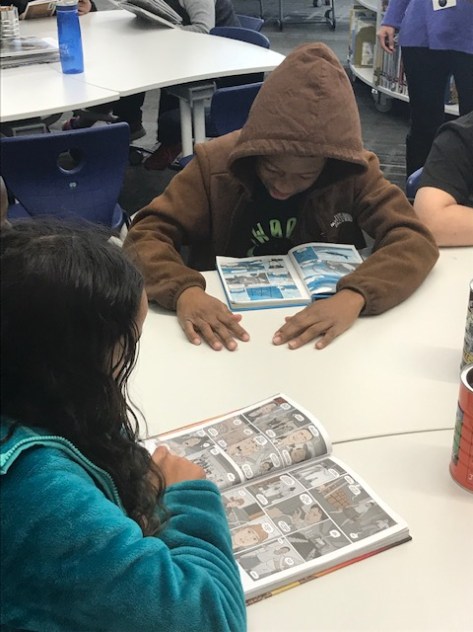
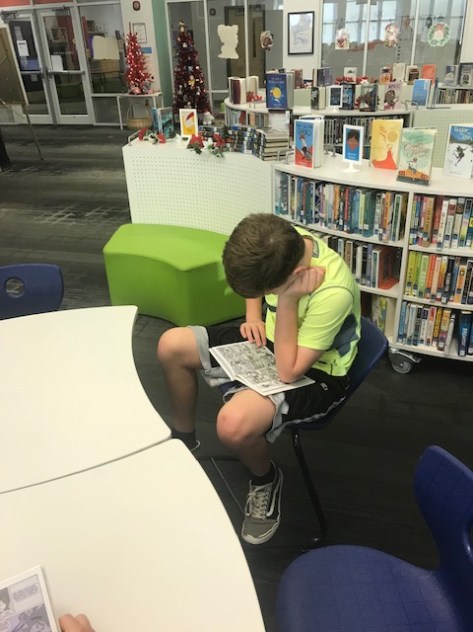
For day 1 of our project, we looked at all of Nathan Hale’s books and read the first chapter of One Dead Spy in order to meet the characters and learn the setup of the Hazardous Tales series.  Next, students had time to browse all of the Hazardous Tales, Rapunzel’s Revenge, Apocalypse Taco, and One Trick Pony. Their job was to enjoy the books but also to notice the style of illustrations, the dialogue, the humor, and anything else that caught their eye. They shared these noticings with partners and the whole group in our closing.

For day 2, students selected a topic from WWII to research. Examples included D-Day, Pearl Harbor, the Holocaust, Rosie the Riveter, VE Day, Iwo Jima, and more. They used resources from our state Galileo database. Students gathered facts onto Google docs in Google Classroom to use in art with Ms. Foretich.
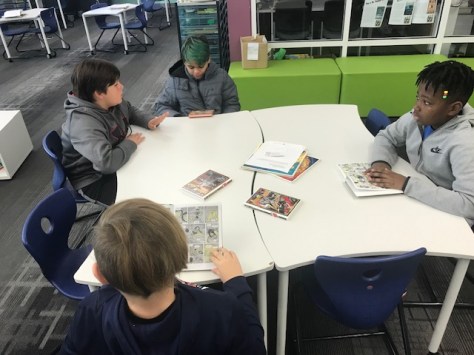
In art, students used their research to create Nathan Hale-inspired one-page comics. These comics would be used to display at the front of our library for Nathan’s visit.
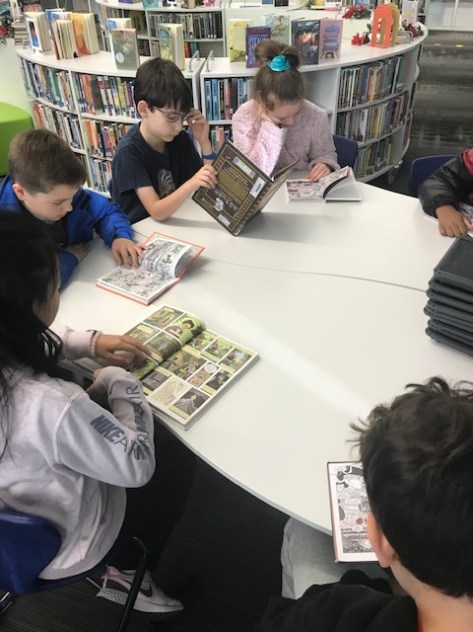
For grades 3-4, I offered an opportunity to come to the library for the same intro that 5th grade had. I also knew that they were overwhelmed with assessments and finishing up units before winter break, so I made a short intro video and uploaded to Youtube for them to watch at their convenience in class.

Contests

Ahead of Nathan’s visit, we held a big reveal on our morning broadcast. I gave one clue each day about the author/illustrator visiting our school and students could make a guess and drop it in a box in the library. I pulled out all the correct answers and held a drawing the give away copies of Major Impossible.

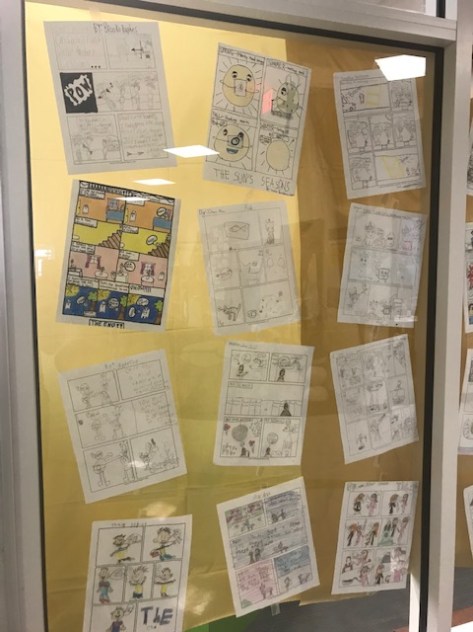
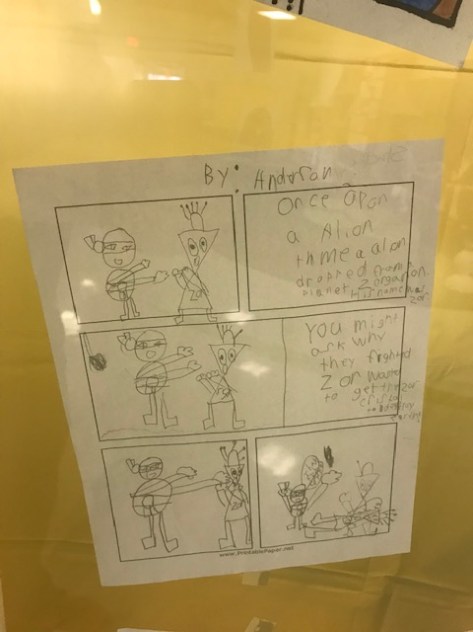
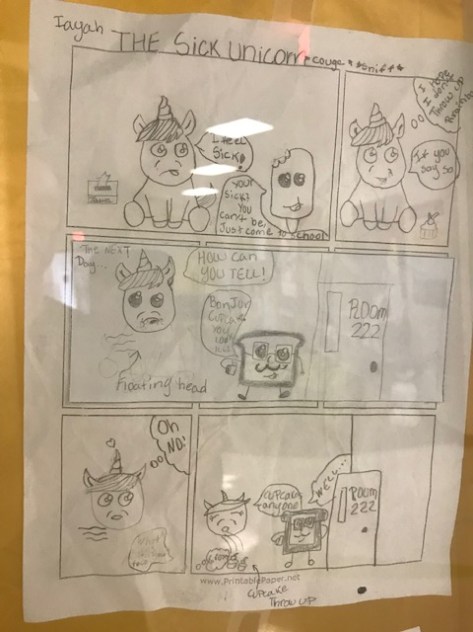
We also held a one-page comic contest for anyone in the school.  5th grade was automatically working on this, but I wanted to extend the opportunity to any students.  The rules were to create a one-page comic in the style of Nathan Hale. Students had to incorporate some event from history.  I provided various blank comic strip pages or students could create their own. Once the deadline came, Ms. Allie, our student support technician, and I went through the entries to select some winners. Again, these students received a copy of Major Impossible.  Every entry was used to add to our window display at the front of the library.

The Visit

Now, we are awaiting the big visit. I made a banner to put above the library door. The window display is created.  Books have been ordered. I’ve created post-it notes to put inside each book for autographing and delivery to students.  Students have been checking out all the Nathan Hale books, so hopefully we will get a few back to have signed at the visit. I love the excitement that an author visit brings. They are a lot of work, but they are so rewarding.

2019-20 Student Book Budget: Visiting Avid Bookshop

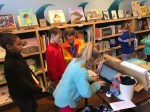
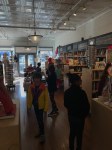
Now that winter break is over, our book budget students are back at work.  This week we took 2 separate trips to our local independent bookstore, Avid Bookshop.  I had almost 40 kids split across the 2 days. Avid Bookshop is located within 1 mile of our school so we can easily take a walking field trip to the store, and most of our students already have a permission slip on file.

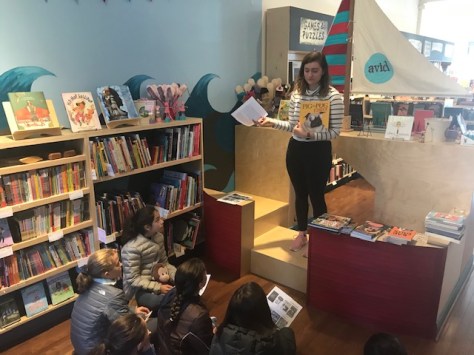
The purpose of this trip was to continue to create a consideration list of books that met our purchasing goals.  We already did this with Jim Boon from Capstone Publishers before the break.  When we arrived at Avid, we met with Hannah DeCamp, who manages the Children’s Department. Students sat on the book boat and in the floor while Hannah book talked several recent books that fit our goals.  She even made a personalized book budget handout with books broken down into our goal categories. Wow!

Next, Hannah gave students an overview of the different sections that they might browse for this project: board books, picture books, early readers, juvenile nonfiction, kids graphic novels, and middle grade. Since Avid Bookshop serves all readers, we had to remind students that some books might fit our goals but not elementary-age readers.

Next, students browsed the store.  As they discovered books that fit our goals or books that were of high interest to Barrow readers, they came to my computer where we scanned the ISBN into a spreadsheet and typed the title/price of the book. Again, students didn’t worry about cost at this point. They simply captured all the titles we were interested in.

We also reminded students that Avid can order pretty much any book we would want so students added some books to our list that were requested by students and we couldn’t get from Capstone Publishers.

Some students also brought money to shop so for the last step students made their purchases. Hannah gave all students an Avid bookmark and she sent us away with several Advance Reader Copies to browse back at school.

Before we returned to school, we met together outside and debriefed our experience. One of the things that I shared with students is how important Avid Bookshop is in our community. I reminded students about all of the authors & illustrators who visit our school. Each time those authors/illustrators visit, it is because of Avid Bookshop and every book that students purchase for those visits comes right from this store. We talked about how Avid gives us a small discount as a school, but they give us so much more because they are part of our community and support our school and community by bringing authors and illustrators for us to learn from.

Back at school, students took time to review the Advance Reader Copies of books and we added a few more books to our list.

Next Steps

We’ve reached a very hard part of our project.  Next week, students will meet to comb through our lists and make difficult decisions about what we purchase and what we cut from our lists. I can’t wait to hear their conversations and see their decisions.

2019-20 Student Book Budget: Meeting with Capstone

After surveying over 300 students in our school about their reading interests, our student book budget team set some purchasing goals for this year. A group of students met to examine the data and see what it was telling us about our library and our readers.  The genres that received the biggest amount of votes was of course noticeable to the students, but they also paid attention to sections of the library that didn’t get many votes and wondered why. We had a great conversation about how those sections might need more books to be more noticeable or maybe we might do something to bring attention to those sections like a reading challenge or BTV announcement.  This was the first year that the student book budget team spent so much time talking about sections that didn’t get many votes on the survey, and I was very proud that they made this noticing and took time to discuss it.

Eventually, they decided to focus their attention on some specific sections for this year’s budget.

  • humor (picture and chapter)
  • graphic novels
  • ghosts and mysterious things (information)
  • animals (picture and information)
  • fun facts (information)
  • scary (chapter)
  • fantasy (chapter)
  • historical fiction (chapter)

I sent these goals to Jim Boon, our sales rep with Capstone. He began curating a collection of books from Capstone that met our needs as well as sent us a Capstone catalog for each student. We scheduled time to meet with him in person.

Before Jim’s Visit

We held one book budget session before we met with Jim. This gave me time to show students the Capstone catalogs and get familiar with them. It also allowed me time to show students how to use the barcode feature in the catalog to help make lists.  I setup a book budget list in my Capstone account and students practiced scanning the barcode in the catalog to add books to our list. I showed students how the website would show if we already had a book and how to deselect books and save the updated changes.

We also used this 1st session to talk about our purchasing goals and the importance of staying focused on those goals as we looked at so many tempting books.

During Jim’s Visit

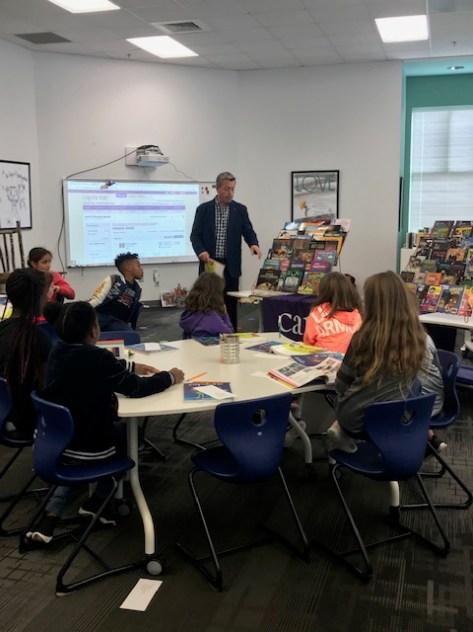
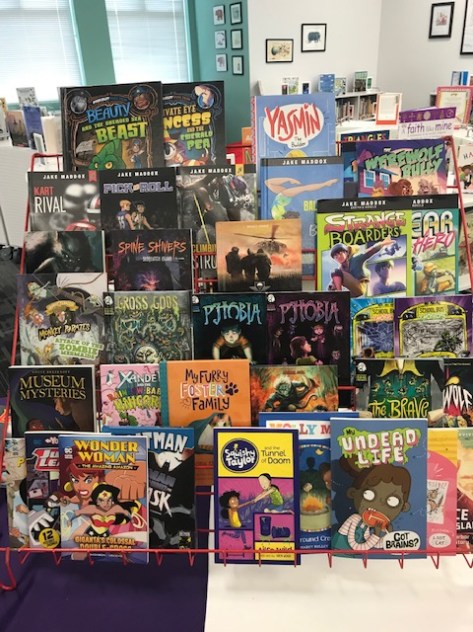
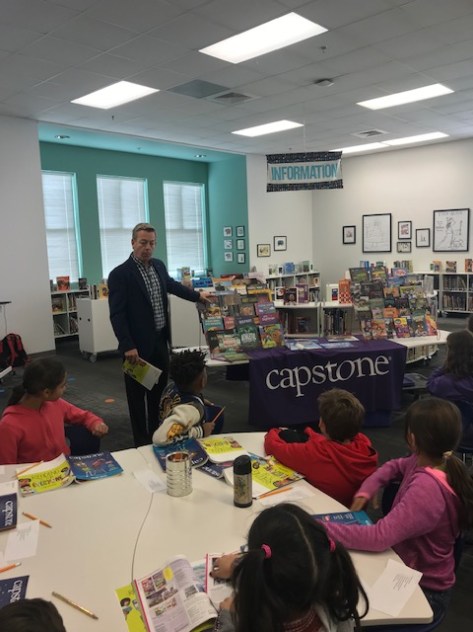
Jim arrived early and setup a display table of books. He divided his books into 2 displays: fiction and nonfiction. I put a catalog and list of goals at each chair. Typically, I meet with grade levels separately, but for Jim’s visit, I got permission from teachers to bring all students together at the same time. About 39 of our book budget students signed up to meet with Jim.

I gave a quick reminder about our goals and turned things over to Jim.  He showed students his displays and some features of the catalog like the index and page headings. He also encouraged students to look at the books in the display and then look for the additional books in the series in the catalog. He had students put their names on their catalogs and encouraged them to circle items and fold pages they were interested in. We didn’t want a massive line of 30 kids waiting to scan barcodes, so folded/marked pages will help us come back to those selections. Students could still scan into the list, but we can also work on this another day. We also reminded students not to worry about our budget at this stage. They should look for books that fit our goals and look interesting for the readers at our school.

I asked for a student volunteer to run our computer and scanner. This student was responsible for managing the small line of students waiting to scan books into the list. They deselected books already in our collection and saved changes along the way. This allowed me to walk around and have conversations with students looking at books and catalogs.

Jim was great about moving from table to table and having one-on-one conversations with students. He helped them find things in the catalog and talked about the books in the display. He was really good at keeping up with who he hadn’t had a chance to chat with yet and tried to make it to as many of the students as possible during our time.

After about 45 minutes, we wrapped up our time and thanked Jim for coming to visit us. I asked for some volunteers to come back for a follow up session.

In the end, there were lots of books students were excited about. Here are a few:

  • the continuation of the Far Out Fairy Tales
  • Michael Dahl’s Phobia series
  • the Ghosts and Hauntings series
  • Hands on Science Fun series which includes a book on making slime
  • the Real Life Ghost Stories series
  • the Mythical Creatures series
  • Graphic History: Warriors
  • Expert Pet Care
  • Michael Dahl’s Screams in Space
  • Boo Books series

Next Steps:

A group of 3 students returned to look through the catalogs for books that were marked. They scanned these books into our consideration list too. I was amazed at how fast this went. They were very focused on our purchasing goals and only added books that were marked AND fit our goals. We also looked through the list for duplicate books that got scanned in twice and clean up the list.

Once we leave for winter break, our Capstone consideration list will be ready for the next step: the budget.  We will visit our local independent bookstore, Avid Bookshop, first, and make a consideration list with them too. Once both lists are made, a group of students will have some negotiations to decide which books make the final list for ordering.


Bringing Books to Life with Flipgrid

What happens after the cover of a library book has been closed? What thoughts and connections does the reader continue to think about? How many people have experienced this story and what would they say to one another?  These are the questions that a group of 3rd and 4th graders asked as we continued to think about how we share books with one another and build a reading community in our school.

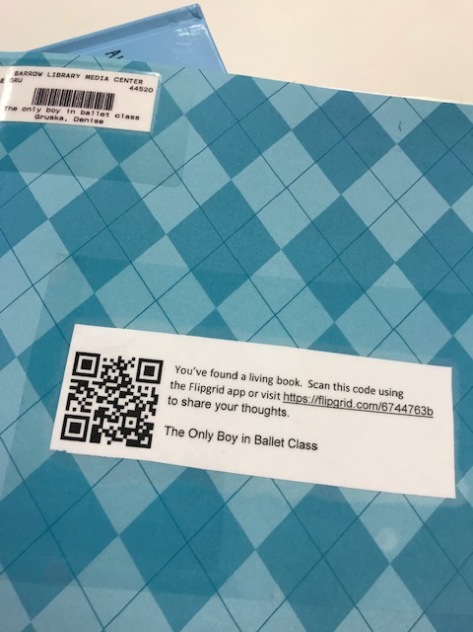
We’ve tried several ways of sharing books this year, and this time we decided to create a digital way for people to continue the story after the pages of the book are closed. Using Flipgrid, we would create a topic for a book and leave the link & QR code in the front cover of the book for other readers to share their thoughts and experiences with the book. Since we were just coming to the end of November and Picture Book Month, we decided that we would focus on picture books for this project.

Session 1

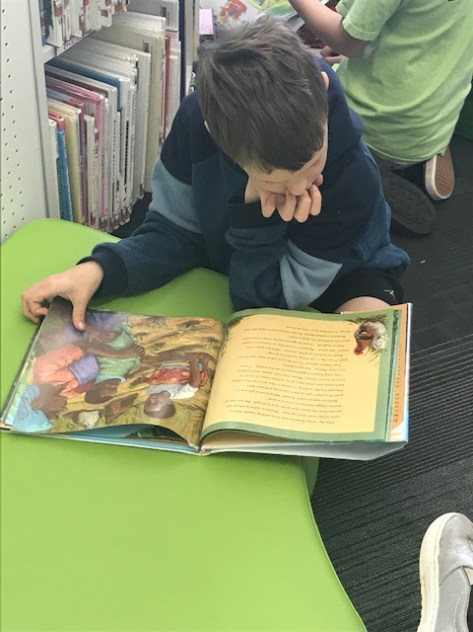
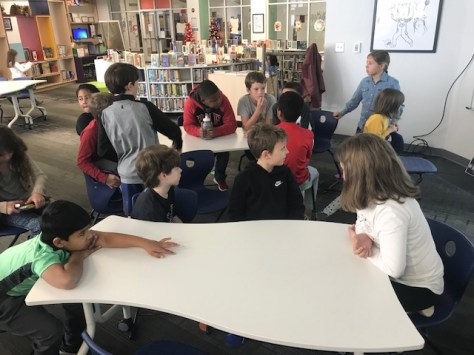
Each 3rd and 4th grader in the group chose one book from our picture book section to read. They spread out around the library and had time to enjoy their book by themselves.  As they finished, they began to think about what they might say to someone about the book beyond just a summary. We talked about how in a book club there would be discussion questions where people would share wonderings about the book, connections to their own lives, and books that this book reminded them of.

Some students began to write out a script of everything they would say while other students decided to just make a list of talking points. I also made an example video for them to watch to see one way they might talk about the book they read.

As students finished their script/talking points, they practiced what they might say.

Session 2

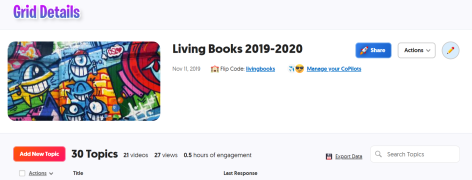
Since we wanted each book to have its own Flipgrid topic, it meant that students had to create the topic within the admin panel of my Flipgrid account. They certainly could have created the video in the camera app on the iPad and then let me upload the video myself, but I wanted them to have ownership of starting the conversation. Ahead of students arriving, I logged into my Flipgrid account on multiple computers and pulled up the “Living Books” grid in the admin panel.

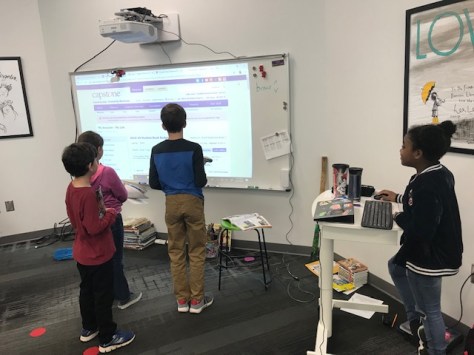
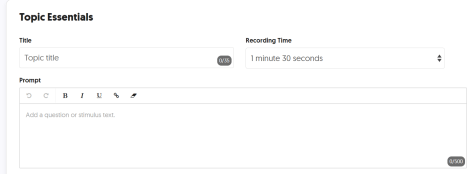
On the big screen, I modeled for students how they would click on “Add new topic”, fill out the details such as title/prompt/recording time, and how they would click “record a video” to make the opening video for their book. I also told them they could not go anywhere else in my account other than this screen.

Students picked up their books and continued where they left off in session 1. When they were ready to record, they got a computer with my Flipgrid account already pulled up, filled out the prompts, and then lined up at various rooms around the library for their turn to record in a quiet space. We used my office, makerspace storage, equipment storage, and a workroom for recording.
As students finished, they finalized their topic. If there was time, I went into the topic and turned on a guest QR code and link that we could paste into Word and print.  Most of this step happened after students left. As each QR code and link were printed, we taped them into the inside cover of the book using book tape.

Session 3

During our final session, students brainstormed how we might advertise this collection of 30 books to the rest of the school so that Flipgrid conversations begin. Our hope is that this space will become a digital conversation about the book between its numerous readers. There were many ideas for advertising the project: BTV announcement, a special display, shelf talkers to show where books were located, posters with pictures of the books, a flyer to send home, and more. When we return from winter break, we will implement some of these ideas.

With the rest of our time, students had an opportunity to test out the QR codes to make sure they were working. They also really wanted to hear about the other books. After they listened to 4-5 different topic videos, they chose one book to read and record a response.

You can listen to a few of the topics here and here and here.

Next Steps

I love watching this group grow as readers. The 4th graders that began this book club community last year have come up with so many ideas and they aren’t done. When we return from winter break, we will get the conversations started with these living books and hopefully encourage other students to create topics for even more books.

They are also very curious about starting a podcast about authors, illustrators, and the books they are reading. I went to a podcasting session at AASL so we have some ideas brewing.
2019-20 Student Book Budget First Steps

It’s that time of year again when I hand over the profits from our book fair to a group of 3rd-5th graders. These students work together through a process to purchase new books for our library that are based on the interests and requests of students in our school. Each year, this project grows and changes and this year brought some of the biggest changes we’ve had in a while.

Application

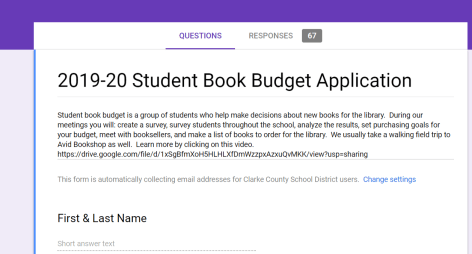
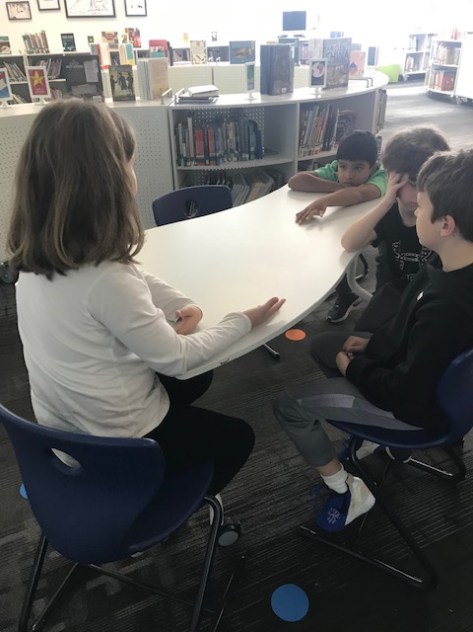
To apply to be in the group, students watch a short introductory video in class and then fill out a Google form that asks for their name, why they want to be in the group, and whether or not they are willing to make the commitment to finishing the project if they start it. I keep the application open for one week and then have responses automatically turn off.

Here’s a look at the application.

This year over 60 students applied to be in the group. This is the most I’ve ever had, and I truly try each year to include every student who applies as long as they are willing to make the commitment to being in the group. Even if I met with groups separately by grade level, there would be moments where I might have 40 students trying to make decisions about books.

I really stressed over what to do because I really didn’t want to choose some students and turn others away. I decided to put the dilemma back to the students by giving them a list of all the tasks that needed to be done across the entire project. I asked them to select which ones they were most interested in. They could certainly check every box but they could also just choose 1 or 2 that interested them.  This decision really helped because it dropped the number of students I would have at one time to a more manageable amount.

Here’s a look at the follow-up application.

The tricky part for me was organizing the students so that I could easily let them know what days to come as well as remind their teachers.  I made a spreadsheet with each task and copied student email addresses and teachers into the sheet. As we approach each task, I can just copy of paste the emails to send a message to students and teachers to remind them when to come to the library. Students come during their recess time on these select days which means 10:45-11:15 for 3rd grade, 11:00-11:30 for 4th grade, and 11:45-12:15 for 5th grade. The overlap of grades 3 & 4 is another tricky piece this year but we are going to do our best to make it work.

Meeting 1: Creating a Survey

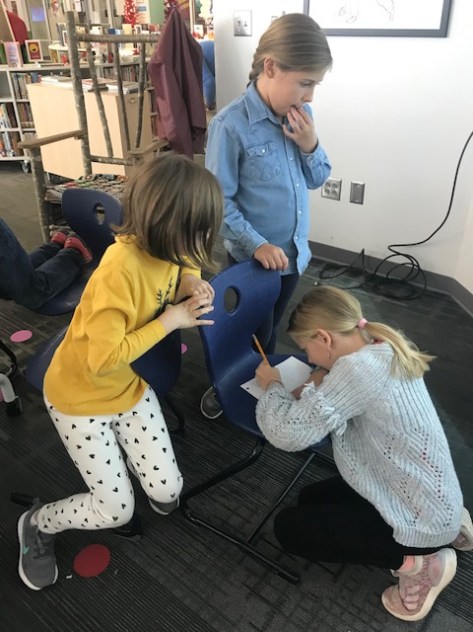
Our 1st group of students agreed to work on a survey to ask students in our school what kinds of books they want to see more of in the library. To begin, students spent some time walking around our library to see what they noticed about the sections.  For example, which sections were packed with books? Which shelves looked empty?

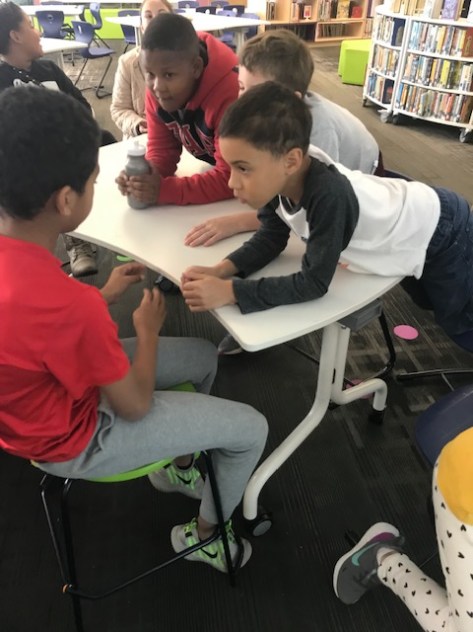
Next, I made a copy of last year’s student interest survey and quickly went through all of the questions asked last year.  In pairs or small groups, students talked about what they liked and didn’t like about the survey as well as what new ideas they had. I tried to listen in to their discussions and then we had a discussion as a whole group.

I was really impressed with their conversations and ideas. They talked about the length of the survey and how they could make it more concise. They asked me questions about how last year’s survey worked out. One of my noticings from previous years was how some of our younger students tend to say that they like every section of the library. The book budget students had a long discussion of how they might limit the responses to get students to focus more on what they really wanted to add to the library. After much debate, they finally agreed to break the survey into our picture book, chapter book, and information sections and select 2 genres in each section that needs more books.  This was a very different take on the survey from what we’ve done in the past and I look forward to seeing how it impacts our final results. The students also wanted better pictures of each genre section so the younger students could see the genre sign and some example books from each section rather than a picture of the whole section from far away.

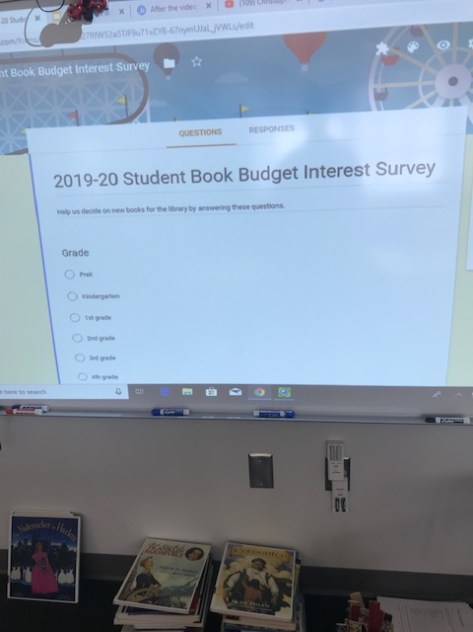
I took all of the student ideas and modified our Google Form survey. I emailed the survey to 3rd-5th grade teachers to share with students in Google Classroom. Then, I created a QR code for our book budget team to scan in order to survey our younger grades with iPads.

Here’s a look at this year’s survey.

Meeting 2 & 3: Surveying

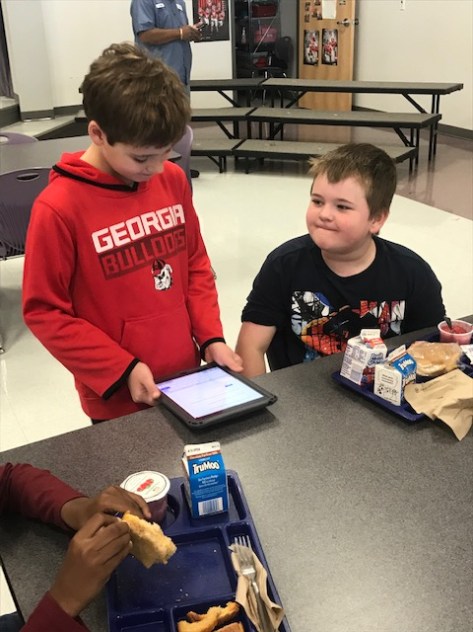
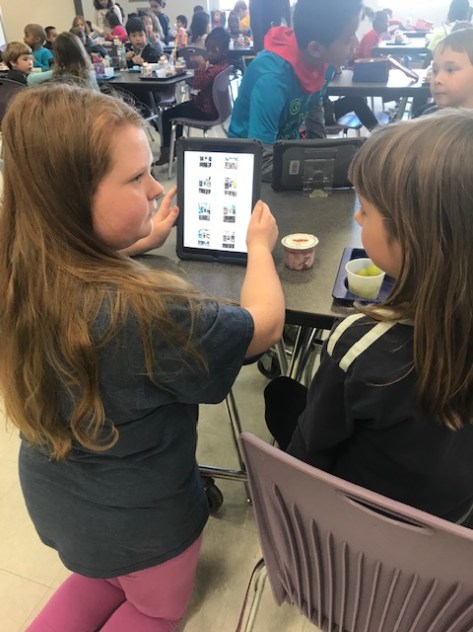
About 30 students signed up to help survey younger students in our school. They came to the library and scanned the QR code using the camera app. Students went to the lunchroom and surveyed K-2 students while they ate lunch. The book budget students asked the questions, showed the genre pictures on the iPad, and typed out any short answers students had for questions. Each survey was submitted and then students pulled up a fresh survey to ask the next student.

On our first day, we had already surpassed 200 students surveyed through email and iPads. We continued this same process on day 2 by making a BTV announcement to remind grades 3-5 to complete the survey and again visiting lunch to survey the lower grades.

I loved watching the professionalism of our book budget students. They asked permission to survey students, focused on listening to and inputting all of their answers, and thanked them for their thoughts. The lunchroom monitors even commented on how much more peaceful the lunchroom was having something for the students to do while they ate.  I was worried we would add a layer of chaos to lunch, so it was great to hear that it actually helped.

It was also fun to see the book budget students interact with our younger learners. Some of our younger students had trouble verbalizing what they wanted more of in the library, and the book budget students naturally altered the questions to try to make them easier to understand. This surprised me. I was worried that I didn’t spend enough time talking about how to be professional and flexible, but students naturally adjusted and rolled with any challenges they faced in surveying.

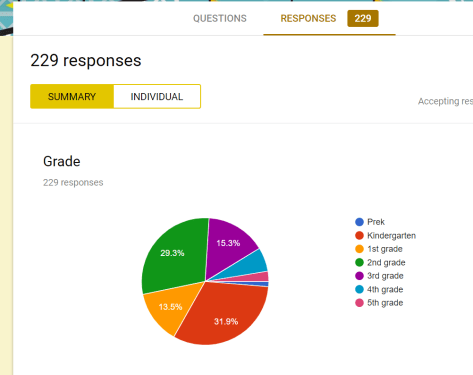
As survey results roll in, we can check our Google charts to see how many of each grade level we have surveyed.  This helps us know if we need to focus more on a specific grade so that there is a relatively equal number of data from each grade level.

Next Week:

Our next steps will involve analyzing the data we have and setting some goals for the kinds of books we want to purchase.  So far we are off to a busy but great start and many more students are adding their voices to the project.

The King of Kindergarten: A Visit with Derrick Barnes & Vanessa Brantley Newton

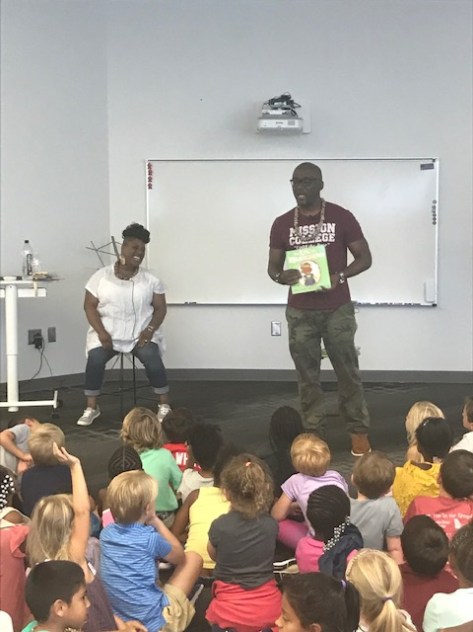
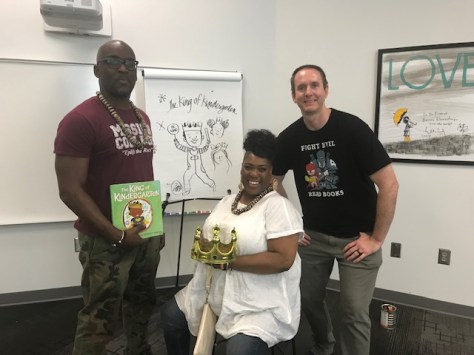
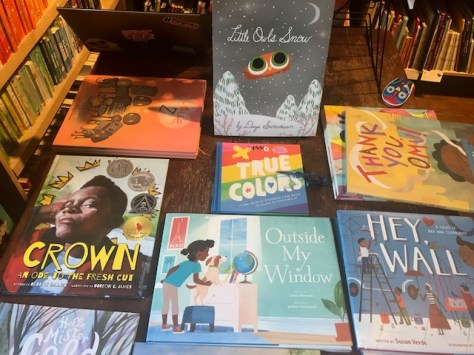
We are 3 weeks into the new school year and we are so thankful that we were able to host an author and illustrator for students in PreK-1st grade. Derrick Barnes, author of the award-winning Crown: An Ode to the Fresh Cut, and Vanessa Brantley Newton, illustrator of numerous, stunning books such as The Youngest Marcher, Mary Had a Little Glam, and Grandma’s Purse came to our school thanks to our local bookshop Avid Bookshop and their publisher Penguin Random House.  They came to celebrate their newest picture book together called The King of Kindergarten, which has received numerous starred reviews.

Getting the students ready for an author visit so early in the year was a challenge, but most K-1 students heard 2-3 stories by Derrick and Vanessa including The King of Kindergarten, Crown: Ode to the Fresh Cut, Mama’s Work Shoes, Early Sunday Morning, and Mary Had a Little Glam. 


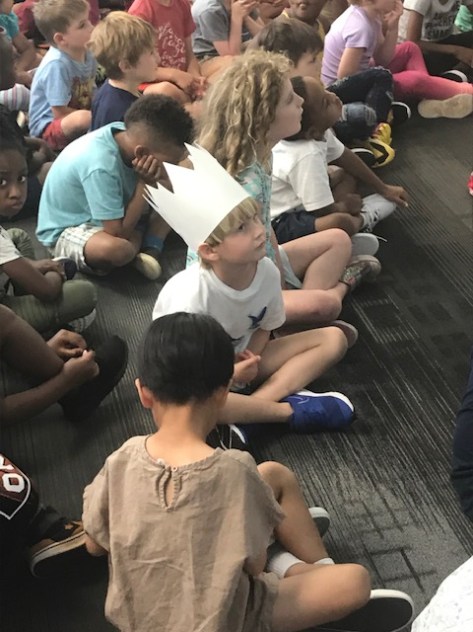
We also took pictures of every student in K-1 and put their pictures on the windows of the library with clip art crowns to welcome Derrick and Vanessa to our school.

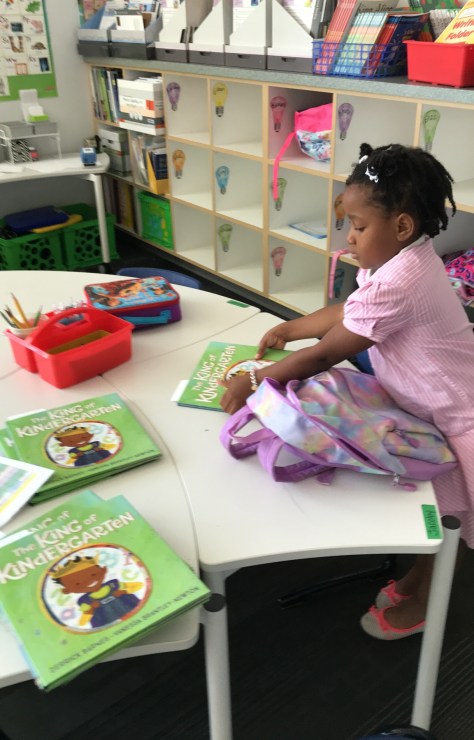
Families had an opportunity to pre-order a copy of The King of Kindergarten for autographing, and thanks to our pre-sales and a generous donation from an anonymous donor, every student in Kindergarten received a copy of the book.

When Derrick and Vanessa arrived at our school, they were greeted by two of our 5th grade Barrow ambassadors. These students welcome visitors to our school, give tours of our school, and make sure special guests are well taken care of.  They took their job very seriously and helped Derrick and Vanessa get settled in the library and helped deliver all of the signed books to classrooms.

As students entered to get seated, their excitement was palpable. Some of them saw Derrick and Vanessa waiting in my office and said, “Mr. Plemmons!  Look behind you! They are here. They’re really here in Georgia!”  It was a celebrity sighting for sure and one of the reasons it is so important to read books and talk about authors and illustrators before a visit.  The kids felt like they knew them and they were able to connect the books we’ve experienced with a real, live person who created them.

Derrick shared a little about himself and his family. He also shared that his own children are the faces of characters on the covers of his books. We looked at Crown and The King of Kindergarten covers to see his sons. During this time, Derrick talked about the importance of every person being able to see themselves on the cover of a book and that he felt his job was to fill in some of the gaps that exist in the publishing world.

Vanessa also shared about herself. We learned that she is dyslexic and she talked with the kids about working with that challenge in her life. She also stutters, so she talked with the kids about how that has impacted her and asked for their help in staying peaceful while she talked so that she could formulate her words. It was so important for kids to hear about these challenges she faced in her life but was still able to do something that she loved.  Vanessa also showed us some of her art books and shared that she loves to leave pieces of art everywhere she goes so that people can find her work and add some art to their lives.

Before Derrick read The King of Kindergarten, he offered our young learners some advice. 1.  Always greet your teachers and classmates each day with a good morning (which they all turned and did right away!) 2.  Be kind.  3. Represent your family name. Make them proud.

As Derrick read the book, Vanessa drew the king of Kindergarten.  I loved hearing students filling in the parts of the text they remembered as Derrick read. They also noticed that Derrick and his wife are in the book too. Vanessa also included a couple of students from our audience in her drawing. She shared that she has a photographic memory and uses people she sees as characters.

As Derrick and Vanessa said goodbye, so many students came up to smile, wave, point out parts of the book, touch Derrick and Vanessa, or give them a hug. I was so thankful that all of our young learners got to hear their message, see their faces in person, and be inspired by their work and stories.

What happens after an author visit is always special. Kids recognize the books in the library and immediately check them all out. Kids get inspired to create their own art and stories.

This time because so many kids received a copy of the book, we saw kids excitedly putting books into their backpacks to go home and read with their family and many brought the books back to school to read here too.

Thank you so much Derrick Barnes and Vanessa Brantley Newton for sharing your talents with our students. Thank you Avid Bookshop for bring author and illustrators to our school.  Thank you Penguin Random House & Nancy Paulsen Books for choosing our community and our school as a stop on the tour.  The impact will last well beyond this 30-minute visit.  Thank you.


Poem In Your Pocket Days 2019

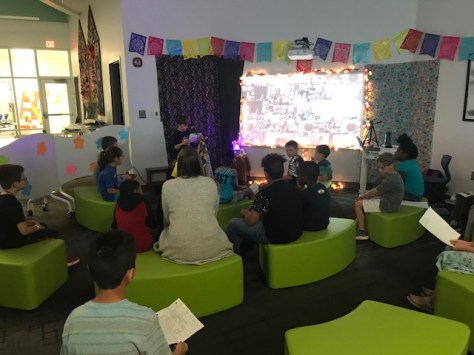
We just wrapped up 2 days filled with poetry readings. For many years, we have been celebrating poetry month and national poem in your pocket day by hosting a poetry cafe in the library. During this 2-day event, every class in the school comes to the library for a 20-minute session. Students sit in a specially decorated area of the library filled with soft cushions, lighting, flowers, and a fancy microphone.

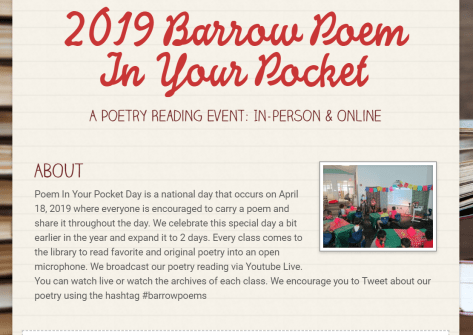
Every student has a chance to come up and share an original or favorite poem into the microphone and we celebrate each poet with snaps and quiet claps. This even is broadcast via Youtube Live so that family and friends can enjoy our poetry from afar. Ahead of the even, I setup each Youtube event and put the links to every class on a Smore page for easy access and sharing. As we broadcast each event, it immediately archives to Youtube and the Smore page.

One of my favorite parts of these days is that it is one time where every single student in our school has an opportunity to be seen and heard. While not every students chooses to get in front of the microphone, they all have the opportunity.

There’s always magical things that happen: kids who are shy have a friend who encourages them and stand with them, a poem is tucked away in a special place like a shoe, a student creates an unexpected poem that stands out in a beautiful way, a student reads a poem in a different language, a parent or teacher shares a favorite or original poem.

I invite you to listen to some of the student poetry by visiting the Youtube links on our Smore page. You can continue to leave comments for the students on Youtube or on Twitter by using the hashtag #barrowpoems

Happy poetry month!

The 2019 Student Book Budget Orders Have Arrived!

After surveying our entire school, analyzing data, setting goals, meeting with vendors, creating consideration lists, and narrowing down orders to meet their budget, the hard work of our student book budget team has paid off.  All books from our 3 vendors have arrived and it’s time to get these books out into the hands of readers.

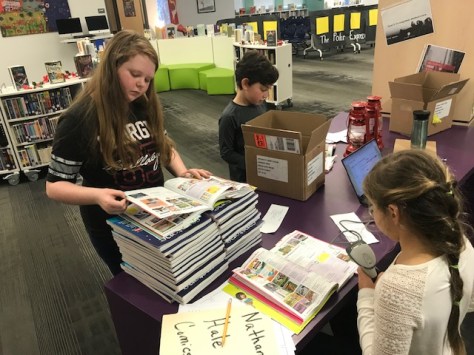
The book budget team met to unpack the books. Across 90 minutes, all of our books from Capstone and Gumdrop were checked on the packing slip, sorted into genres, labeled with genre stickers, and scanned into subcategories in Destiny. Every student on the team took a role in the process and I walked around to assist with questions and tricky genre decisions. I also helped students make sure they were sorting books into the right categories such as chapter book, picture book, or informational book.

Our books from Avid had to be cataloged so I “volunteered” to do this step for the students and some of our library volunteers have helped with getting the barcodes and plastic wrap on the books.

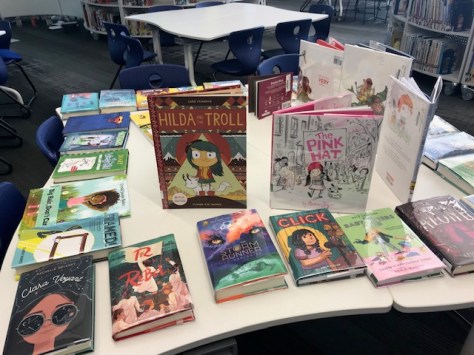
The book budget team met one final time to display the books for readers to see. It was hard for us to find a time to meet to get the books displayed so we all came one morning right after morning broadcast before our school day started. Students worked efficiently to get all of the books displayed in the windows, counters, and tables in the library. It was amazing to see all of the books out together and see all of our hard work pay off.

The real payoff comes when the book budget students get to check out some of the books and then see the rest of the school pour in to the library to check out books. It doesn’t take long for the tables full of books to be reduced down to a couple of tables and then a single table. These books are always popular with readers and I love knowing that our library collection truly is “our collection”. We build it together.

A Walk to Avid Bookshop with the Student Book Budget Team

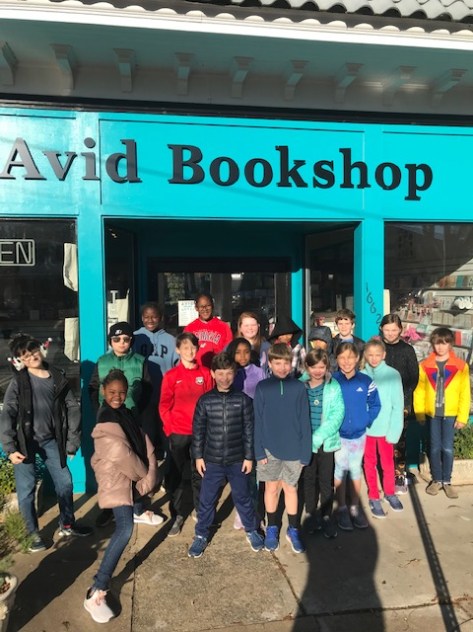
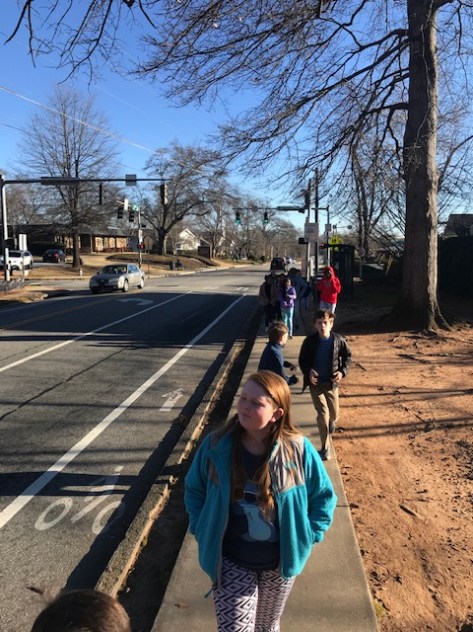
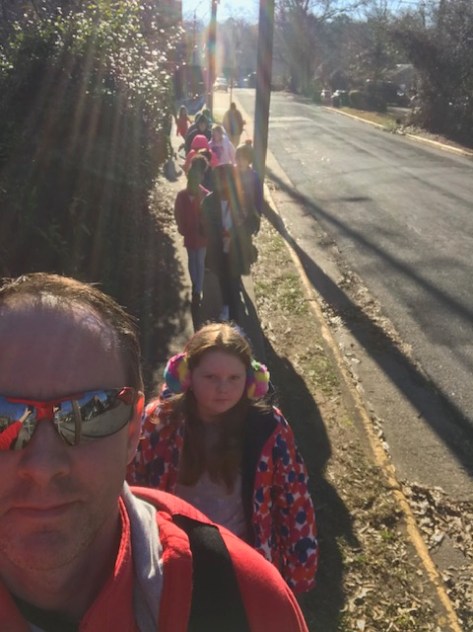
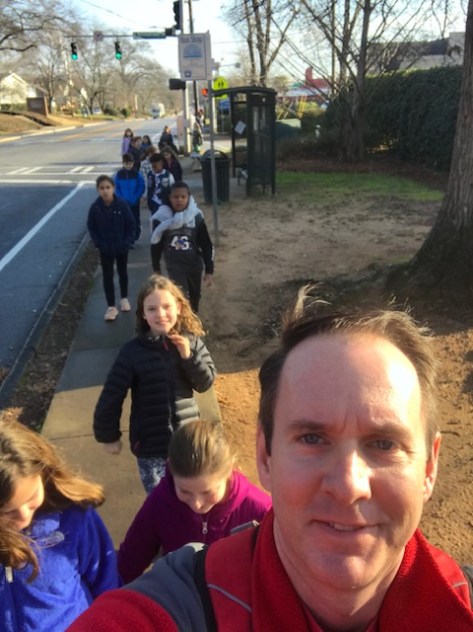
Our student book budget team has made quite a long list of books to consider for this year’s student book budget purchase. So far, they have met with Capstone and Gumdrop Books. Our local independent bookstore is within a mile of our school, so we also take a walking field trip to Avid Bookshop.

I split the group into two days. Third and Fourth grades went one day and Fifth grade went another day. Before we walked, we reminded ourselves about the types of books we were looking for. We also reminded ourselves that we were in a place of business so we needed to be respectful of the space and the other customers.

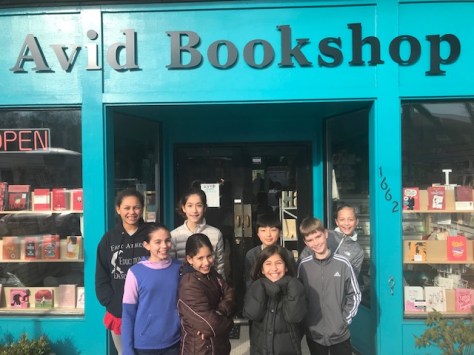
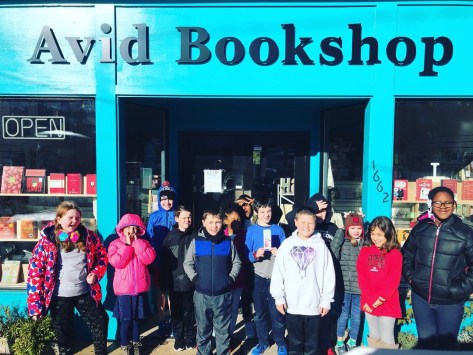
When we arrived, we snapped a quick photo in front of the shop.

Kate Lorraine, bookseller, met us at the back of the bookshop and gave us some book talks on picture books, informational books, graphic novels, and middle grade books that met our purchasing goals. We also showed students where these areas were located in the store so that they didn’t venture into adult sections for our list of books.

We took some shelf markers with us so students could remember where books went on the shelf. Each time a book was found to be of interest, students checked with me to see if we already had it in the library. If we didn’t, they scanned the ISBN into a spreadsheet on my computer and added the title and price. Again, we weren’t worried about cost at this point, we were just adding books of interest.

I loved that students could check with the Avid booksellers for information on prices, age ranges of books, series sequence, and more. They are so used to asking me questions, that sometimes I had to remind them that the Avid booksellers were there to help us and were happy to answer questions.

As usual, it was a challenge to stay focused in a bookshop with so many interesting books and gifts to look at. Students had a chance to look all around, but did need reminders to stay focused on our most important task of finding books. I also noticed that our oldest readers also needed reminders to visit the picture book sections in addition to the areas that they were most attracted to.

I have some more thinking to do around these walking visits. Avid has such a great selection of titles to look at and I feel like students could have spent more time really looking at what was there. Maybe I need to assign certain students to certain sections. Maybe there needs to be more guidance on how many books they should try to evaluate.  I don’t want to take power away from the students, but I do want to equip them with some tools to help them get the most out of their visit to this useful resource in our community.

Now, we are at our most challenging task, which is cutting down our lists to fit our budget. Wish us luck.

One-Page Comic Contest: Prepping for a Visit with Lincoln Peirce

We are still in shock that next week we will be visited by Lincoln Peirce, the author of the bestselling Big Nate series. Lincoln is touring the country to promote his newest illustrated novel, Max and the Midknights. I can’t wait for students to be introduced to this new book. It has a little bit of everything: surprises, humor, medieval fights, mystery, magic, zombies, and more.

When an author/illustrator visits, I love to fill our windows and/or hallways with student work inspired by the author/illustrator. Sometimes there’s just not enough prep time, but luckily for Lincoln we knew a couple of months in advance.

When I read the Advance Reading Copy of Max and the Midknights, I saw that it opens with a one-page comic to setup the story. I thought this would be a great concept to invite students to try out. Instead of hosting class after class in the library, I made this a choice contest. In the contest, I invited students in any grade level to create a one-page comic on any topic. That’s pretty much the rules. They could create the comic on their own paper or use a pre-printed page of comic boxes that I provided in the library.

I introduced the contest on our morning broadcast and also made a video that teachers could share.

Students had a little less than 2 weeks to enter the contest and it didn’t take long to see that this was a high-interest topic. By the deadline date, we had over 100 entries in our contest from almost every grade level. It was impossible to pick winners by myself, so I had the help of Allie Melancon, SST, and my high school intern, Andrea Aramburo. I also had a few students, teachers, and my wife read a some comics too.

In the end, we picked 12 students to receive an autographed copy of Max and the Midknights. Thanks to a local organization called Books for Keeps, I had some other items I could hand out as prizes for about 50 honorable mention students.

These students received their choice of several doodling books, coloring books, magnetic storytelling kits, and comics.

Every student who entered a comic also has his/her work displayed on the windows of the library. As soon as the display went up, students, teachers, and families were stopping in the hall to read comics. We can’t wait for Lincoln Peirce to see them next week too.

I loved having this choice contest. It’s something I would like to try again with other author visits. It gives students one more way to interact with their library, one more way to make their voice heard, and one more way to be creative regardless of grade level, language, or background. I met some students in a new way through their art or writing. I saw some hidden talents that I didn’t realize were there.

We never know what opportunity is going to be the spark that students need in order to connect.