Why Do We Explore Space?: A Virtual Field Trip Opportunity

Ms. Kelly’s Kindergarten class has just amazed me across this year by how they have used a study of space to flow into so many of their standards.  They have written their own ebooks, composed music, written lyrics, researched multiple questions, and now they are coming up with a plan to help the people who want to go on a one way trip to Mars.  During the course of this study, an interesting question came up.  Why do we explore space in the first place?  It’s something we haven’t even considered during all of our research.

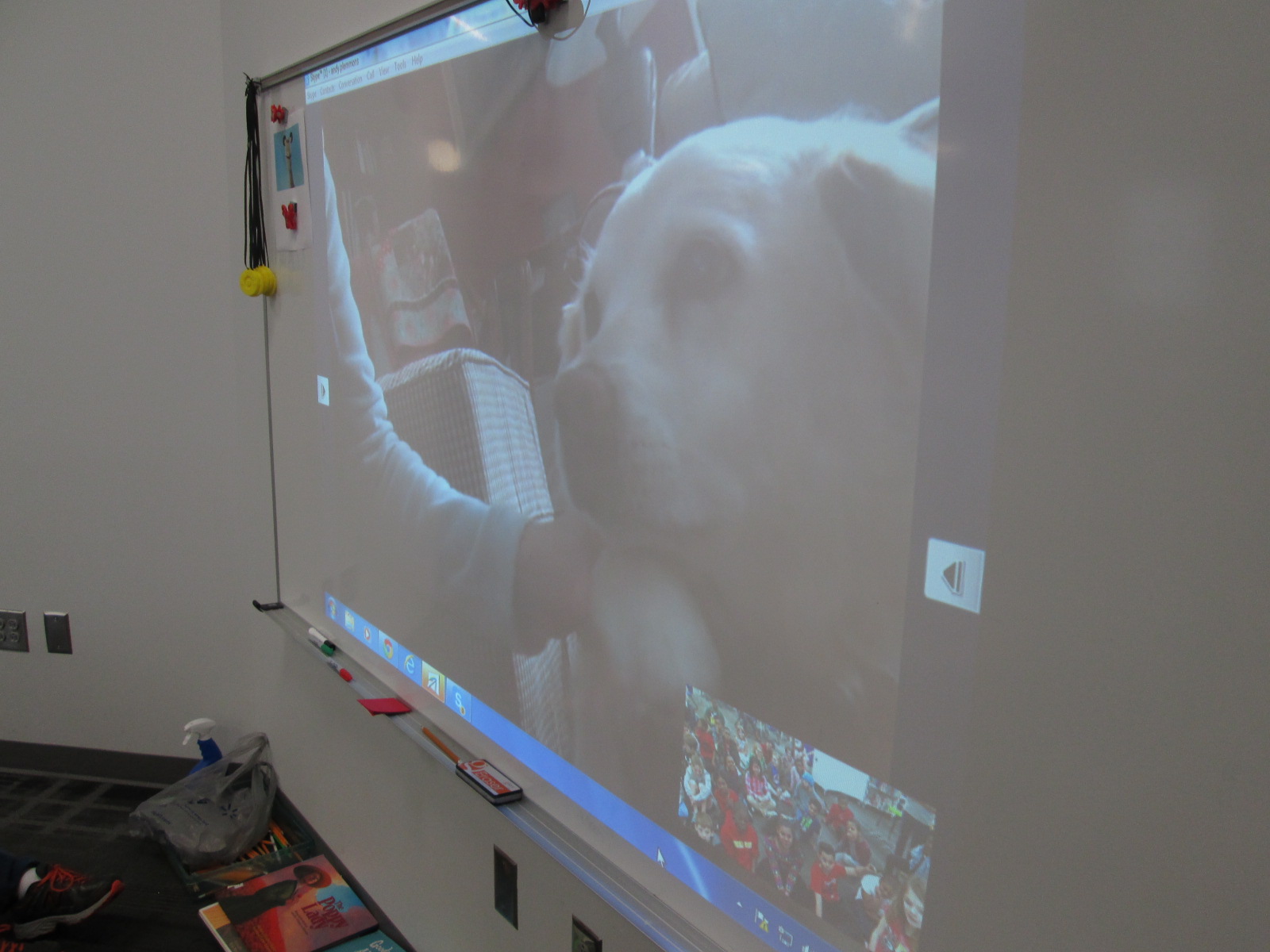
It came about because of an email that Ms. Kelly got about a virtual field trip to NASA’s Goddard Space Flight Center.

30 minute virtual field trip begins at 1:00 PM (ET) and is appropriate for all grades. Get a tour of a NASA facility and learn about the research being carried out into planetary exploration. Learn why it is important to explore the universe and how our knowledge of the universe has expanded due to the space programs. Understand the multitude of scientific practices involved in space travel, and see the application of many of these in the real world.

The virtual field trip is next Friday May 1, 2015 at 1PM EST.  It’s appropriate for all grade levels and it’s free!  All you have to do is register and you can even have students submit questions ahead of time.  http://www.discoveryeducation.com/Live/of-the-people-space-day-2015.cfm

Ms. Kelly wondered if we might explore the idea of space exploration a bit before students engage in the virtual trip.  I’m brainstorming about this right now, but I first wondered about putting the question out to more people.  I wonder what all of us think about why we should explore space or even why we shouldn’t.  I decided to make a Flipgrid.  Anyone can post a 90 second to this grid responding why we should or shouldn’t explore space.  I would love to have kid voices and adult voices from multiple perspectives to share with this Kindergarten class.

If you have a moment, reflect on the question and make a video.  If you have even more time, do this with your own students in the next few days.  If you don’t have time to make a video, consider sharing it with someone who might.

Why should we explore space? (or not explore space)

My thinking at the moment is that I will share these videos with my Kindergarten students as an opener.  We’ll take time to read some books such as The Planet Hunter or Moustronaut and reflect on the question ourselves.  Then, students will have a chance to add their own ideas to the grid along with the other voices.  http://flipgrid.com/#c6c0c1f0

Ms. Kelly and I never know where we are going to end up.  We just keep our minds open, look for opportunities, and give it a shot.  We usually find that our risk-taking leads to some miraculous opportunities for our students.
 

2015 Student Book Budgets: First Steps

survey production (2)

We are a little late this year, but our student book budget group has finally started.  Each year, I reserve a portion of our library funding and allow students to make the decisions about how that money is spent.  This is more than just having a wish list for students to contribute to.  This is giving them complete control in every part of the decision making process.

survey production (6)

Each year, the groups are chosen in different ways.  This year, I made a video to show to our 4th and 5th graders to explain the project.

Then, I created a Google form that was shared with all of our 4th and 5th graders to tell why they would want to be in the student book budget group.

Aziz Coleman, 4th grade teacher, really wanted his ELT group of 12 fourth graders to be a part of the project, so all of them filled out the form along with about 30 other students.  After reading through the responses, it really seemed like everyone who signed up was genuinely interested in being in the project, so I took them all!

I created a schedule for our meetings along with a timeline of where we are going.  Over the years, I’ve fine tuned the steps that we go through, but student voice and student choice always stays at the center of what we do.

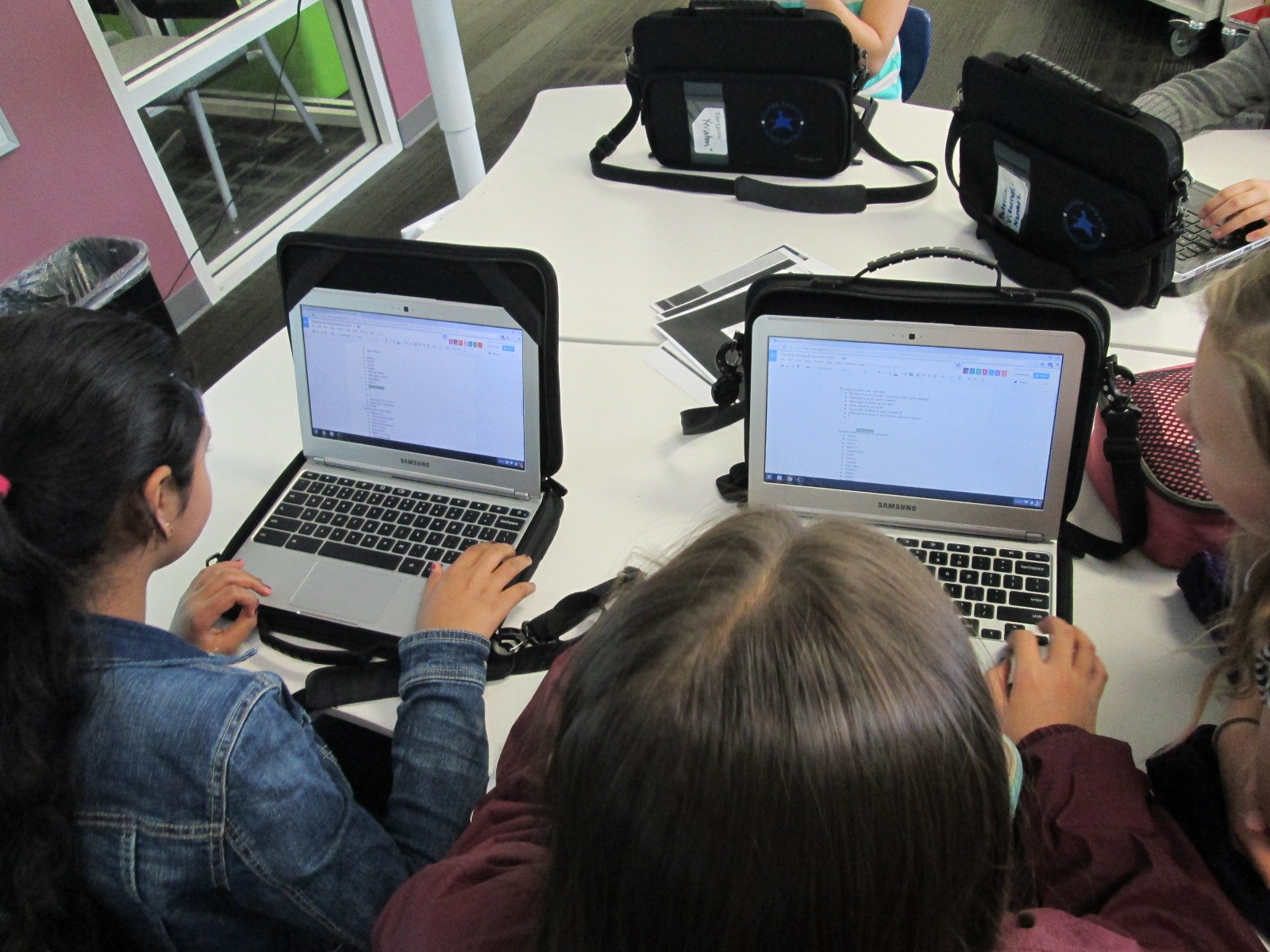
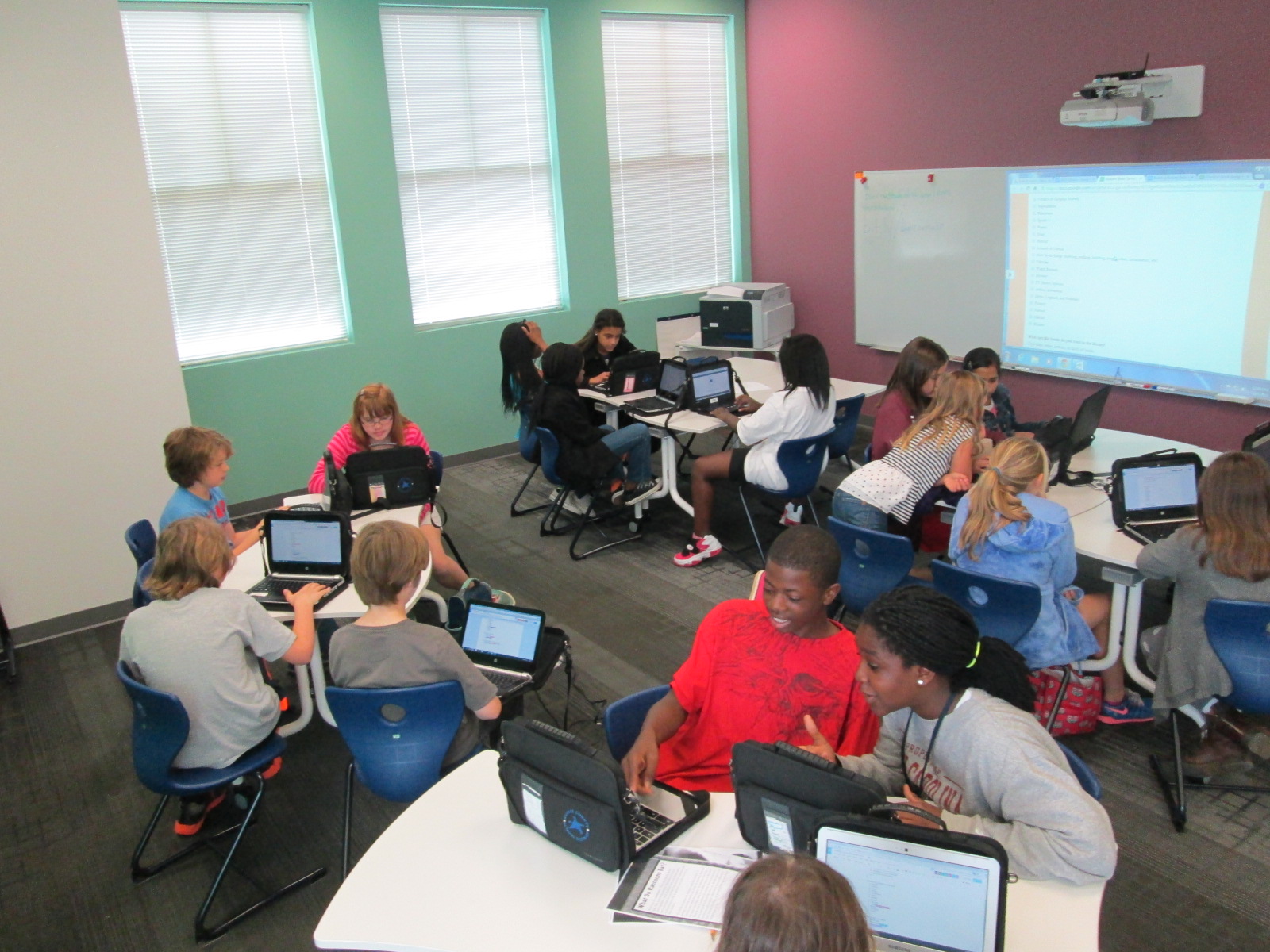
During our 1st two days together, we have focused on creating our survey about reading interests.  I made a contact group with all of the students in my gmail.  That makes it easy for me to invite the entire group as collaborators on docs that we use.  I made 2 docs.  One was a brainstorm doc for us to brainstorm possible things to ask about on the survey.  I thought it would be easier to brainstorm on a doc rather than try to do it all on the Google form.

It was amazing to see so many students working together toward one common cause.

After some brainstorming started, I gave them editing rights to our 2nd doc which was our Google form survey.  We made a copy of last year’s form, and then started using our brainstorming list to make changes.

This was the 1st time I’ve tried collaborating on the Google form.  Usually we just put it up on the board and work together whole group.  I liked seeing every student involved at once, but it was definitely messy.

I checked in with students periodically and gave them some focus.  At times, we broke the tasks up into groups.  For example, one group worked on fine tuning the brainstorm list.  Another group added questions to the survey.  Another group looked carefully at the checklist on the survey to see what needed to be added or changed.

Students worked during their recess, extended learning time, and even left to get lunch and come back.  They were excited and very focused.  There were a few students who started getting off task, so I offered that they might want to go back to recess if they felt like they had contributed their part for the day.  This was totally in their hands, and some of them took me up on the offer.

We are now in the survey process. We want to survey students at every grade level.  We will email the survey to our 3rd-5th graders since they all have a computer and we will use iPads to survey the lower grades.


Click here to view this year’s survey.

Since our meeting time is during a prime lunch time, we have been taking over the lunchroom with iPads to survey students.

Once we have results from the survey we will set goals based on those results and start meeting with our vendors such as Capstone and Avid Bookshop.

Wrapping Up Enrichment Clusters: The Maker Faire Fanatics and The Power of Code

IMG_4467

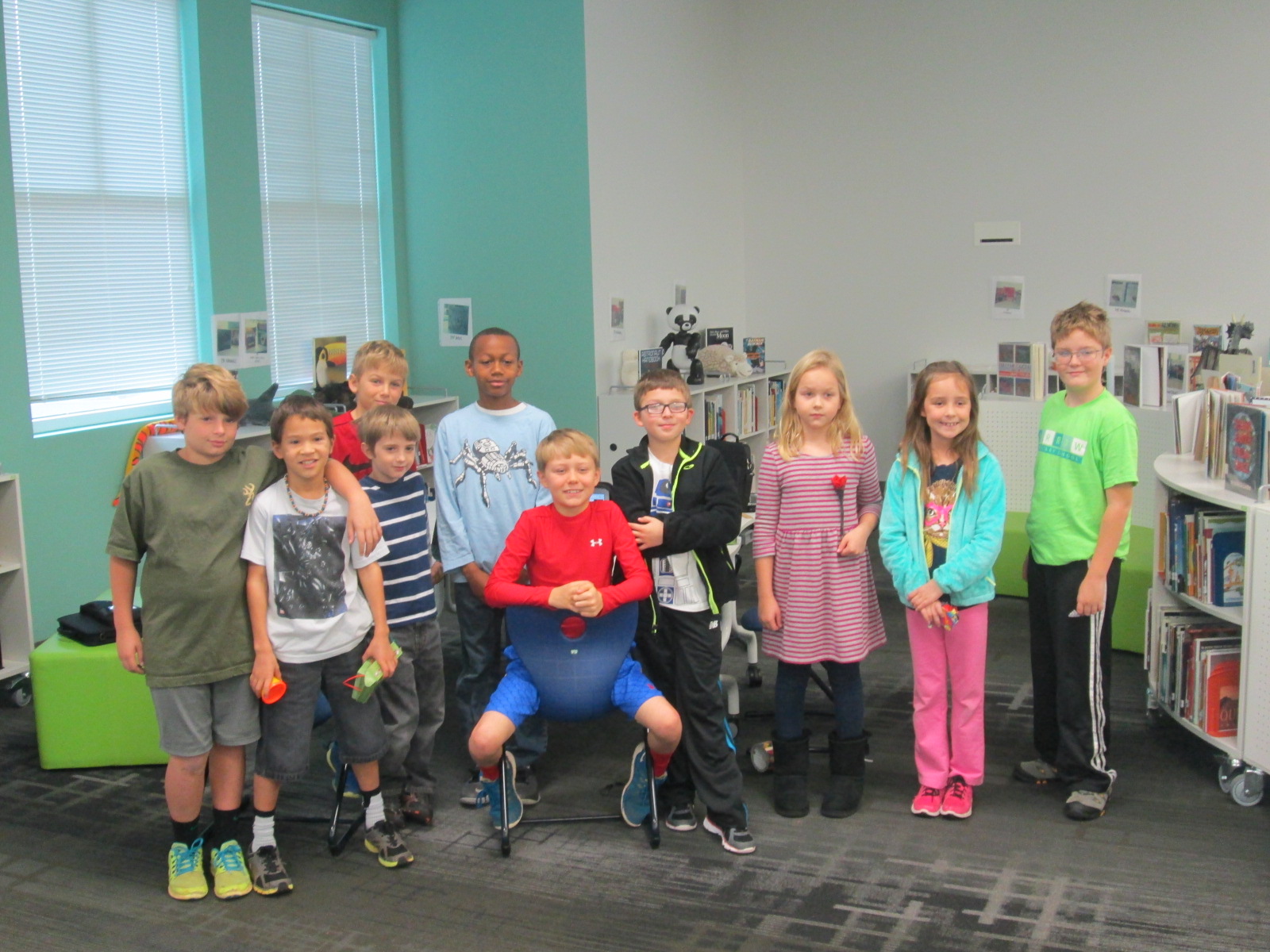
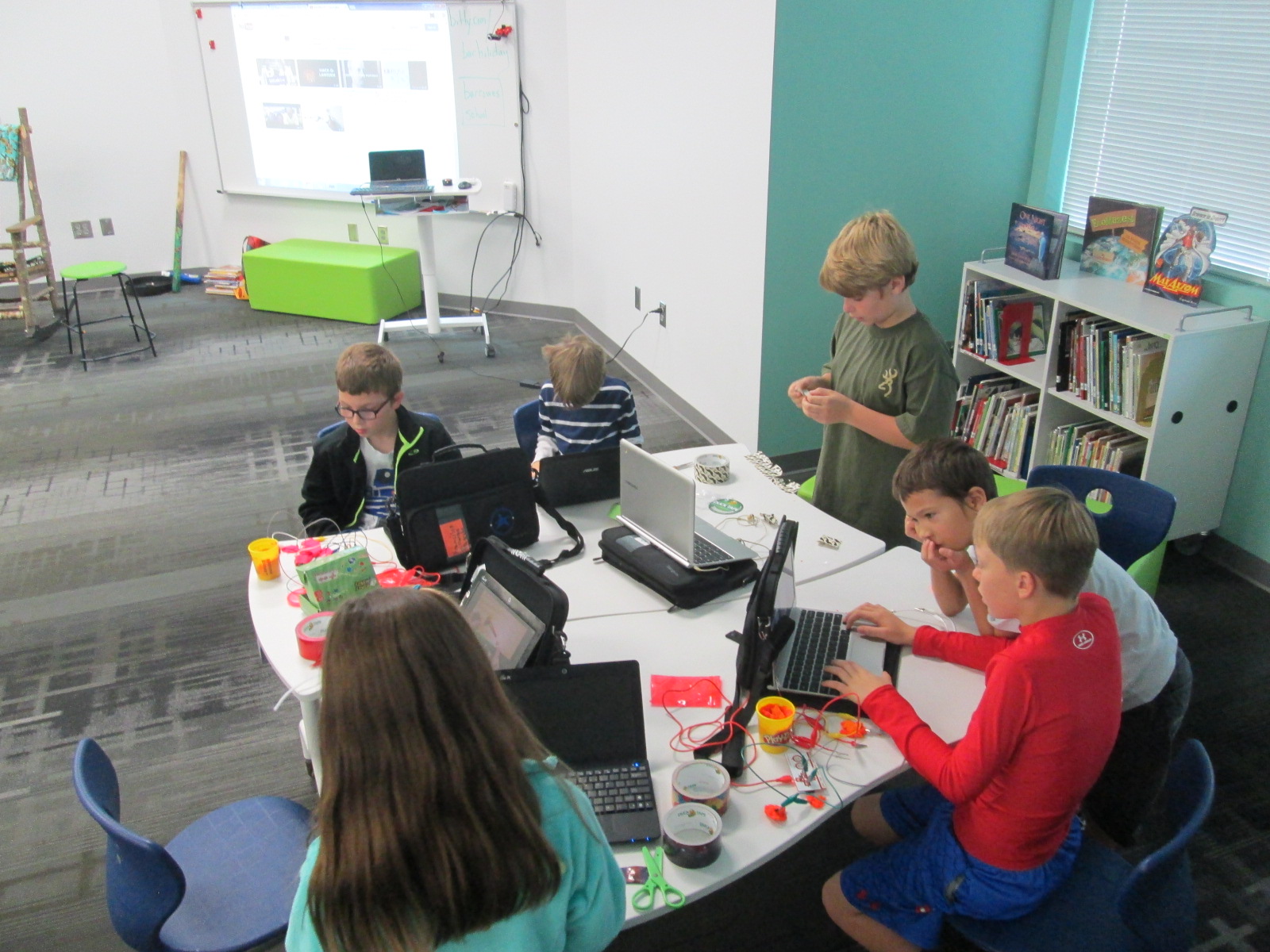
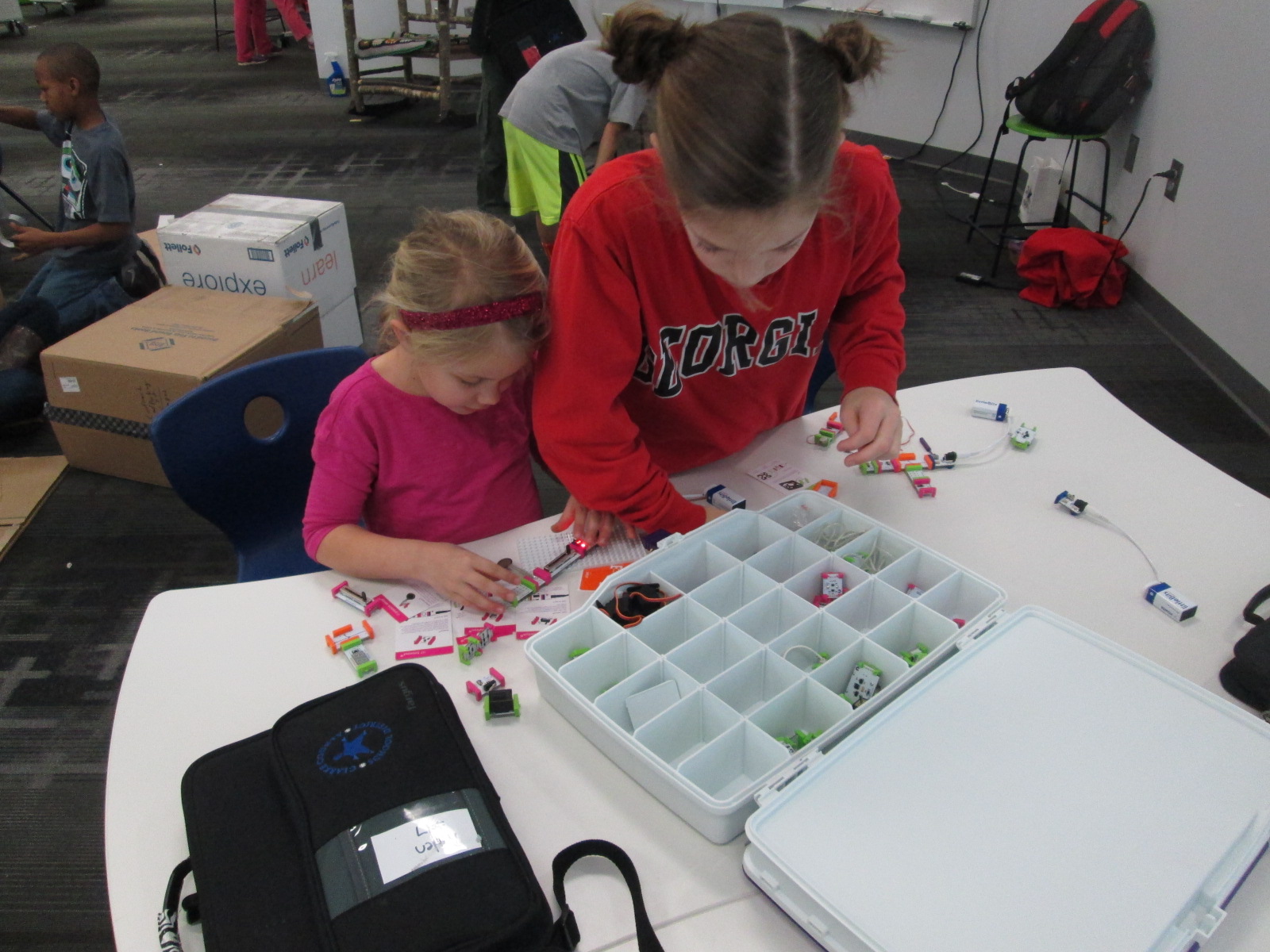
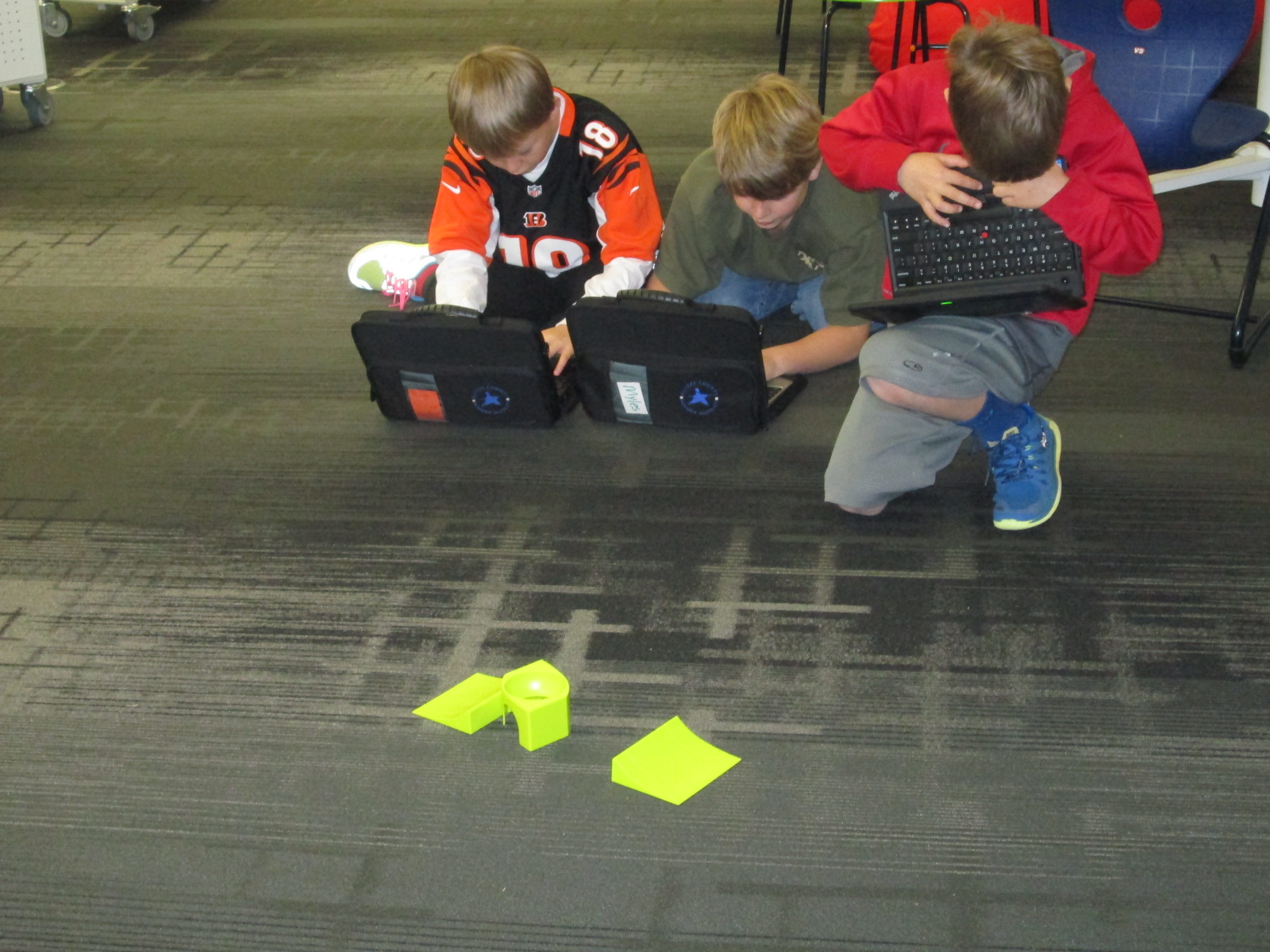
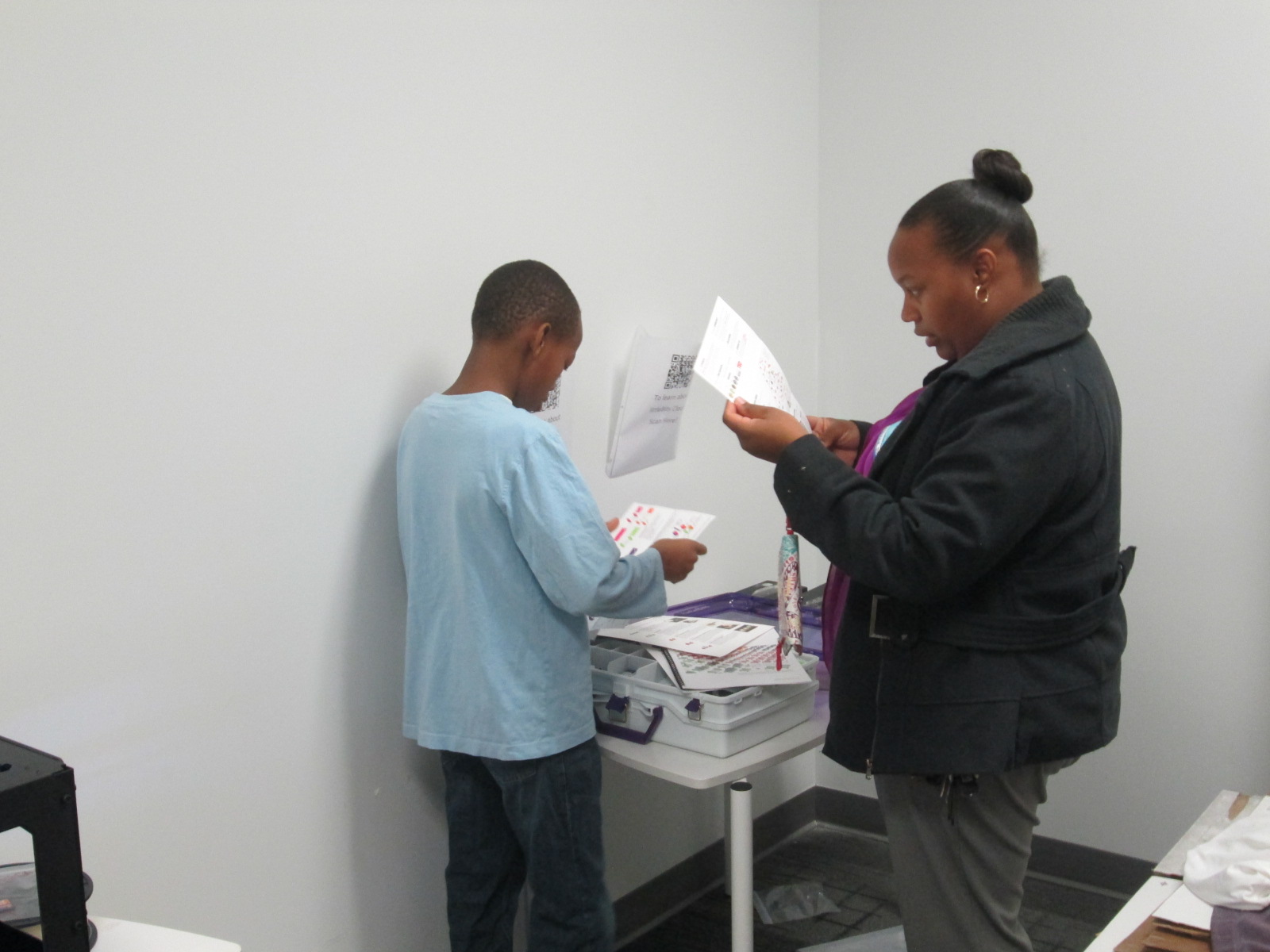
For 14 weeks, I’ve worked with a group of students in 2nd-5th grade to explore the world of making.  We met every Wednesday for one hour.  They used littleBits, MaKey MaKey, 3d printing, duct tape, cardboard, and robotics to dream up all sorts of things.  Ultimately, they were supposed to offer a service to an authentic audience or create a product to show.

IMG_4766 IMG_4459

A few weeks into our clusters, Ms. Freeman, 5th grade teacher, asked if she could combine with our cluster.  Her cluster was The Power of Code and focused on the many tutorials available on Code.org.  What we both found was that each of our clusters had something that the other needed in order to create something truly miraculous.  The coding students knew some things about programming and the maker kids knew some things about putting things together.

IMG_4897 IMG_4770

One example of a project that took off after our combination was a video game.  A few students banded together to design their own video game.  The plan was to create the program in Scratch, build an arcade game out of cardboard, and control the game using MaKey MaKey.  The kids made great progress on their work, but they didn’t quite get finished.  I hope that they sign up for open makerspace time to continue their work.

IMG_4458

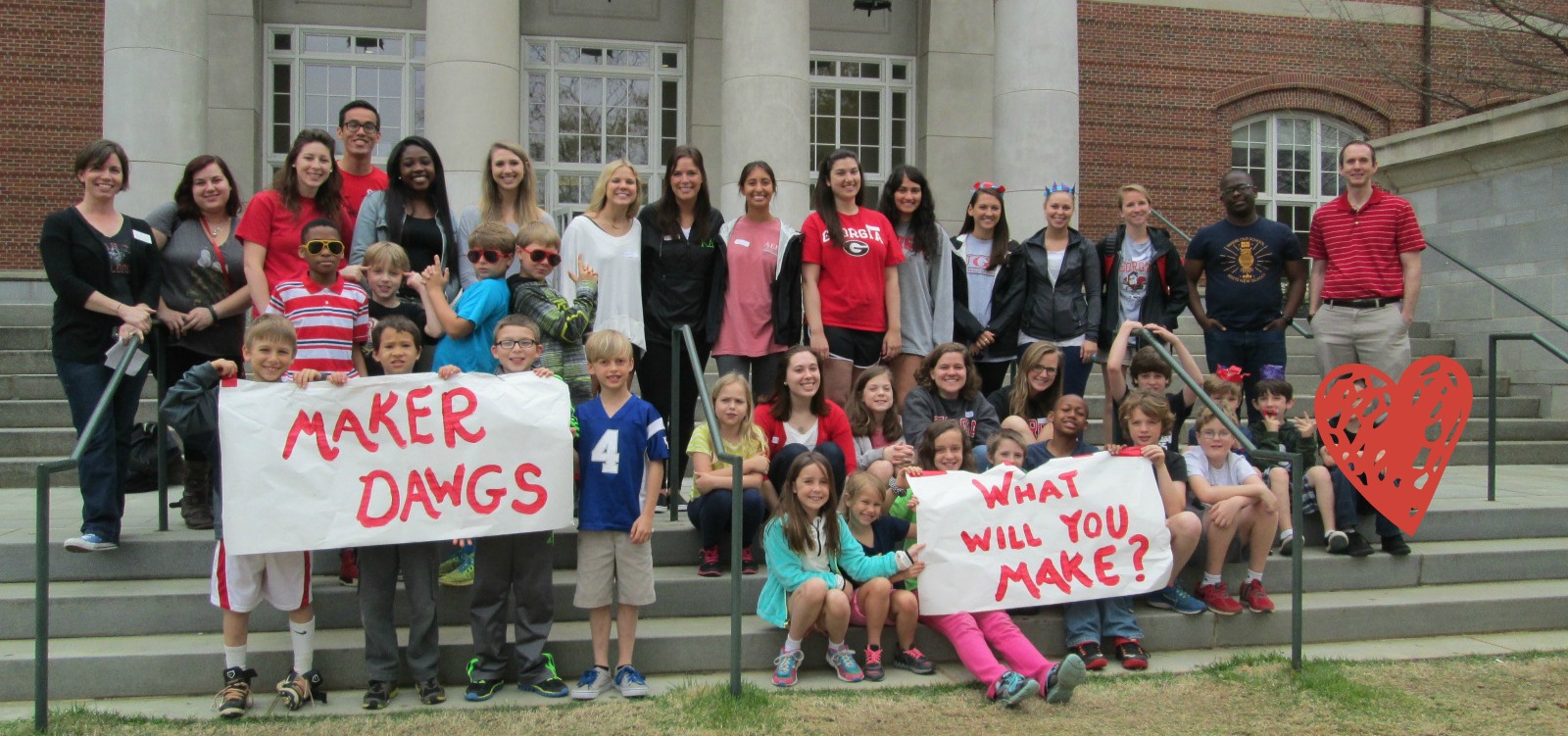
Our cluster time ended with 2 big culminating activities. The biggest was our field trip to UGA to host a popup makerspace and pass on our knowledge to others.

The last was to create a short video of our clusters to share at our school assembly.

This was an bright group of students to work with and I look forward to continuing to make and code with them the rest of this year and beyond.  They have taught me many things.

Popup Makerspace at UGA with the Maker Dawgs and Flipgrid

fixed maker dawg

A few weeks ago, Gretchen Thomas, UGA instructional technology teacher, emailed me about a possible collaboration on the UGA campus. She wanted to bring her Maker Dawgs class to the UGA Tate Center Plaza to host a popup makerspace.  The idea would be to have a variety of maker tools available for UGA students to try on the spot.  She wondered if I had students who might join them.  Without hesitation, I said yes and  we started the logistics.  The more we planned, the bigger the trip got.  The biggest news was that 2 members of the Flipgrid and Vidku team from Minneapolis flew down to do a video in our library.  They wanted to go with us on our trip to see how students were getting their voice into the world and also how we planned to use Flipgrid to reflect on the day.

Our school is about a mile from the UGA Tate Center Plaza and our students have walking field trip forms on file so it was easy for me to create a field trip.  The hard part was working out the logistics for bad weather.  In true fashion, we had plan A, plan B, plan C, and maybe even a plan D.  It was right up to the wire deciding about going to UGA, but the rain held off and we made our trek down to Tate.

Students had a little bit of time to explore the maker tools that Gretchen brought before we prepped all of our supplies for UGA students to explore.

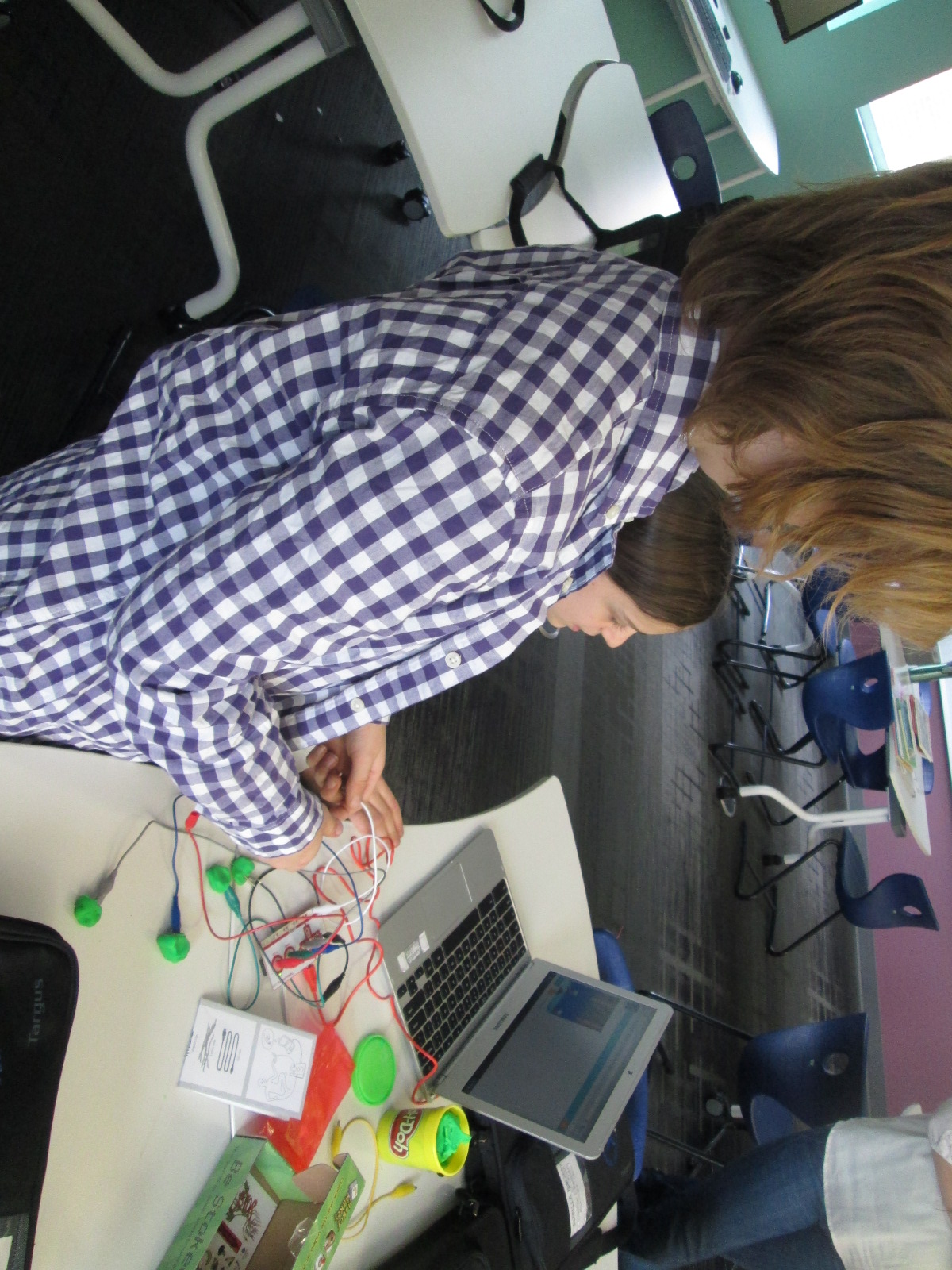
Students connected Spheros to iPads through bluetooth, setup a wireless network with Justin & Greg from Flipgrid, and made a playable piano with Playdoh and MaKey MaKey.

Then, we waited.  Traffic on the UGA campus quickly picked up at around 10:30 when classes changed, but most UGA students had their earbuds in and walked at a fast pace to get to the next class.  The kids were a bit timid at first, but with some encouragement, they began to develop techniques to get UGA students to stop and try out our makerspace stuff.

Several students started driving the Spheros right into the paths of walking college students.  At first, they dodged them, but eventually they started asking questions.  Other students started experimenting with phrases to get the UGA students interested.

IMG_5417

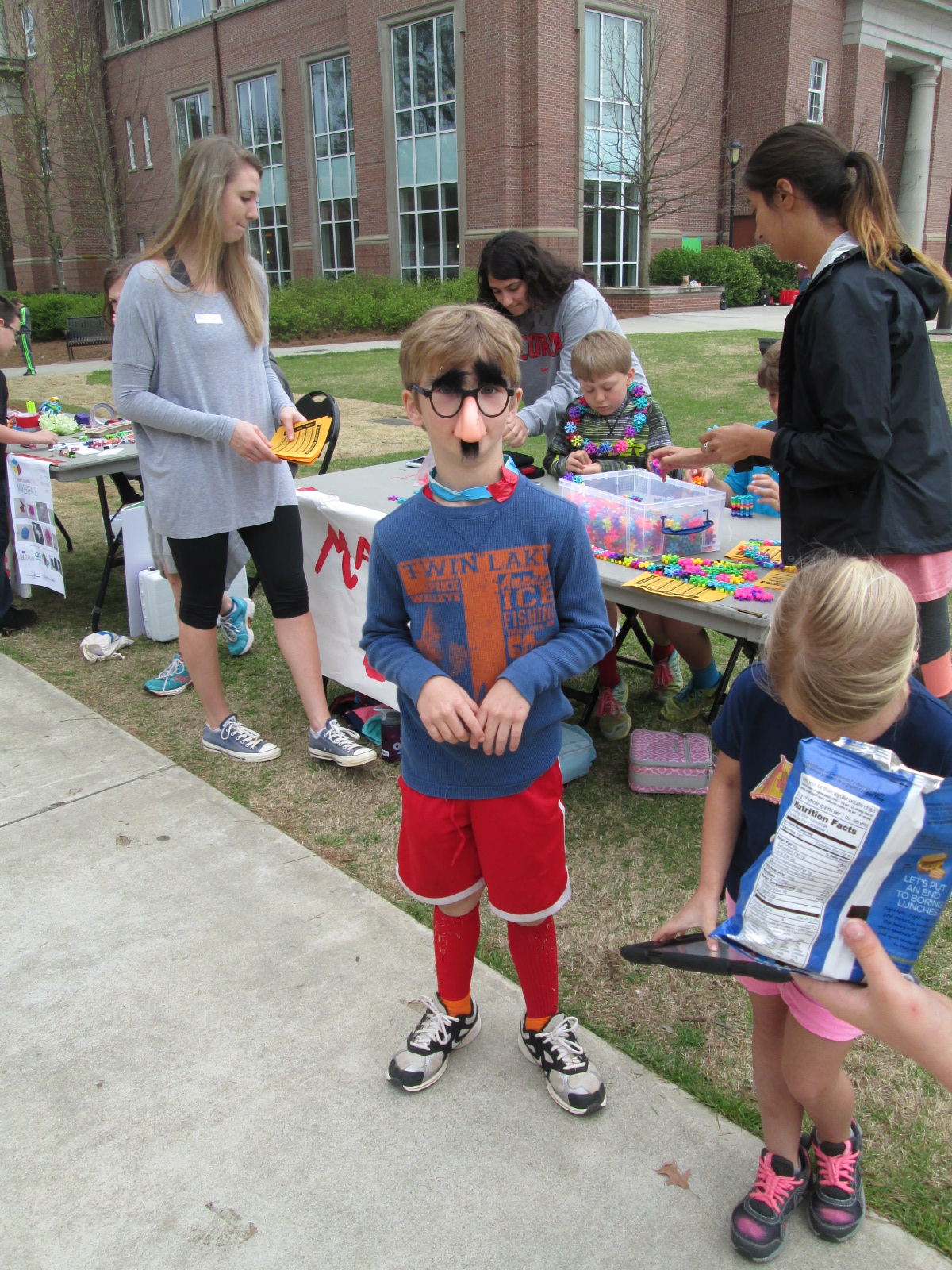
One student even put on silly costumes and made up dances to attract attention to our cause, and so many people loved his techniques!

It was really interesting to see the college students when they stopped.  Most of them wanted the students to demonstrate for them how each piece of technology worked.  They had to be nudged and encouraged to try them.  It made me wonder if there is less of a culture of risk-taking in this age bracket than with our elementary students.

Halfway though our makerspace time, Gretchen’s Maker Dawgs class joined us and helped talk with UGA students, demonstrate tools, and document the day through pictures and Flipgrid.

We used Flipgrid part of the time just to capture some video of what was going on.

Ludwig and Kearn spent a lot of time showing people how MaKey MaKey could control a computer.  They setup a piano and bongos that could be played with Playdoh, and they got several people to stop and try it out.  It was fun to listen them explain the science behind how it works.  When you touch the Playdoh and a piano plays, it seems like magic, but they did an incredible job of talking about circuits as they demonstrated the tool.

Many of our students worked hard to drive the Spheros around and demo them.  I wish that our Sphero students had been able to get some UGA students to try programming the Sphero, but most were just in too big of a hurry.  They mostly showed how you can use the Drive app to control the ball.  Maybe next time, we can be prepared to demo alternate apps.  However, they still had a good many students stop by and actually try out the ball after seeing how it worked.  The kids loved talking about how it worked and being able to teach students who were much older than them.

Another group of our students spent time making some things from duct tape and then teaching UGA students how to make them too.

IMG_5441 IMG_5442

Others had a great time exploring littlebits, connecting blocks, and making friendship bracelets.

As our popup makerspace came to a close, we used Flipgrid to reflect on what we had learned.

Here are links to a few of those responses.

It was truly an amazing day of getting our students out into the world to share their knowledge and pass on their passion for makerspaces.  Gretchen was able to promote her UGA class.  We were able to show what’s happening in K-12 education right now with makerspaces.  Our students were empowered by the chance to be the experts in the room.  Gretchen and I are already brainstorming what this might look like next time.

Many thanks to Greg and Justin from Vidku and Flipgrid for tagging along and helping to document our day.

IMG_5438

Collaborating Within Walls Using Google Hangouts: A List Poetry Lesson

IMG_5399

Last year, I tried something new with the 2nd grade.  My library schedule was packed and it was hard to get all 4 classes on the calendar, so I used Google Hangouts to teach all 4 classes at one time.  It was an experiment, but it proved to be a lot of fun and also showed the students and teachers how to use a Google Hangout and collaborate on a Google doc.

This year, we planned it again and added on a few layers.  One of our favorite kinds of poems to write is list poetry.  You take a list and add descriptive words to each item on the list so that the reader can experience the items on the list.  Our goal in our Google Hangout this time was to learn about list poetry, hear a mentor poem, practice list poetry together, and then create one collaborative list poem.

In advance, I setup a Google Hangout on Air.


I sent the link to the hangout to all of the teachers participating in the hangout.  I also created a blank Google Doc for our collaborative poem and shared editing rights with all 4 teachers.


I gave the blank doc a title and wrote each teacher’s name inside the doc to create a space for each class to add to the collaborative poem without writing on top of one another.

On the morning of the hangout, I emailed teachers a reminder that included the link to the doc as well as the direct link for  joining as a participant in the hangout.

At hangout time, I went in my office and awaited the classes.  As they entered, I did a sound check to make sure microphones were working.  Then I used the control panel in Hangouts to mute all of their microphones to eliminate feedback.

I opened our lesson by reading from Falling Down the Page, list poems collected by Georgia Heard.  We focused on “In my Desk” by Jane Yolen.  I pointed out how she gave describing words for each item found in her desk so that we would be able to picture it or experience it.  I built on the reactions of students to the line about a “great big hunk of rotting cheese” found in a lunch box.  These kinds of words cause us to react which is exactly what we want in a poem.

Next, I opened up a blank doc and started writing a grocery list:  bread, milk, eggs, cereal.  Then I assigned each word to one of the 4 classes and had them brainstorm describing words to add to each item on my list.  Each class had a chance to speak in the hangout as I added our words to the poem.

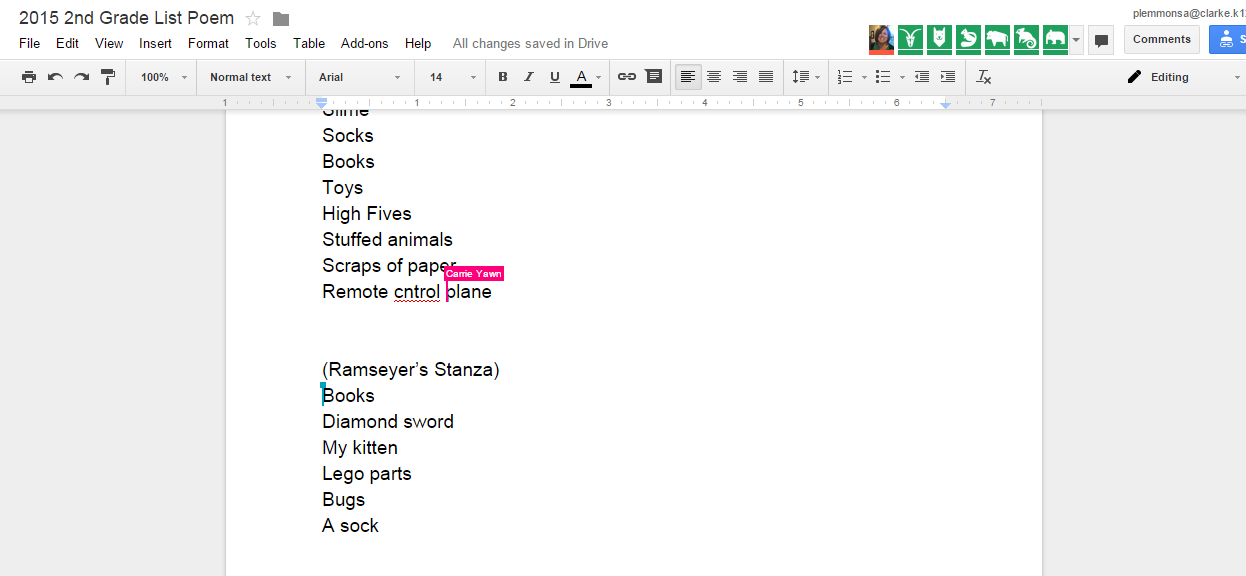
Finally, I invited all of the classes to work on a collaborative poem about things under our beds.  Each teacher facilitated the work in their own classrooms.  I checked in from time to time to give an update on when we would stop working.  Then, each class read their stanza of the poem to close out our time.

While we were writing, I invited people on Twitter to watch the doc in construction.  We had lots of viewers engaged in our work in progress, and students loved being published authors with one tweet.

Viewers

You can watch the whole thing here:

This lesson certainly saved me time in the library to give to other classes who needed a lesson, but it was much more than that.  Rather than having each class in the grade level feel isolated, this lesson allowed them to unite together to create a piece of writing that immediately reached an audience outside of our school.  It allowed us to collaborate within the walls of our school without the disruption of shuffling kids from class to class.  It gave each class a space to think and work with one another and also a space for all classes to work together.  I don’t think that every lesson would work in this type of setup, but it does make me curious to think about when this type of learning is the better choice than scheduling each class individually.

Under My Bed

By Barrow 2nd graders

Under my bed you will find…


(Yawn’s Stanza)

Slimey Socks

Lost High Fives

Stuffed animals, toys, and books

Scraps of paper

Remote control plane

Hairy, mad Tarantula

Dusty Boogers

Junky Legos

Clothes and shoes and jackets

Hairy Monkey Eyes with a big chin

Tv, coke can, and baseball cards

Football cards and a zipline

Dirty underwear, rotten bread, and an old sandwich


(Ramseyer’s Stanza)

Two fat picture books

A fake diamond sword

My playful black kitten

Giant Lego parts

Huge dead bugs in the corner

A stinky, rainbow sock

A blue crate filled with Adidas shoes

A chewed up puppy stuffed animal


(Brink’s Stanza)

Hiding under my bed with my big, hairy monster

you will find

smelly dead cockroaches and dust bunnies

old paper candy wrappers

a big purple three horned monster

basketball shoes

an empty shoebox and an old toy

a skeleton reaching for water

a stinking mummy, rotten eggs, and a stinky sock

cuddly stuffed animals

a golden chair, medals, trophies

smooth rocks I found in the street

lost, overdue library books

a racing track

paper plates


(Wright’s Stanza)

Under my bed, I look and see

Flattened books

moldy food

cute and sleepy puppies

old broken legos I used to play with

misplaced and forgotten toys

and ripped, dirty money


So many things under my bed.


Following this lesson, I did a very similar lesson with one Kindergarten class in person.  We didn’t do the hangout, but we did share our work with the Internet so that students’ voices were already reaching an audience even in their beginning steps of writing.  It was so much fun to get a comment from one of the viewers of the doc.


Student Voice Extended Through 3D Printing

cooper 3d print (5)

At the very beginning of the year, a student raced into the library to tell me about his goal to design and 3D print his own Skylanders figures.  He knew what he wanted to do, but I worried about how his enthusiasm might be lost in the demands of the curriculum standards. His story led me to my goal this year of “empowering student voice”.

cooper 3d print (6)

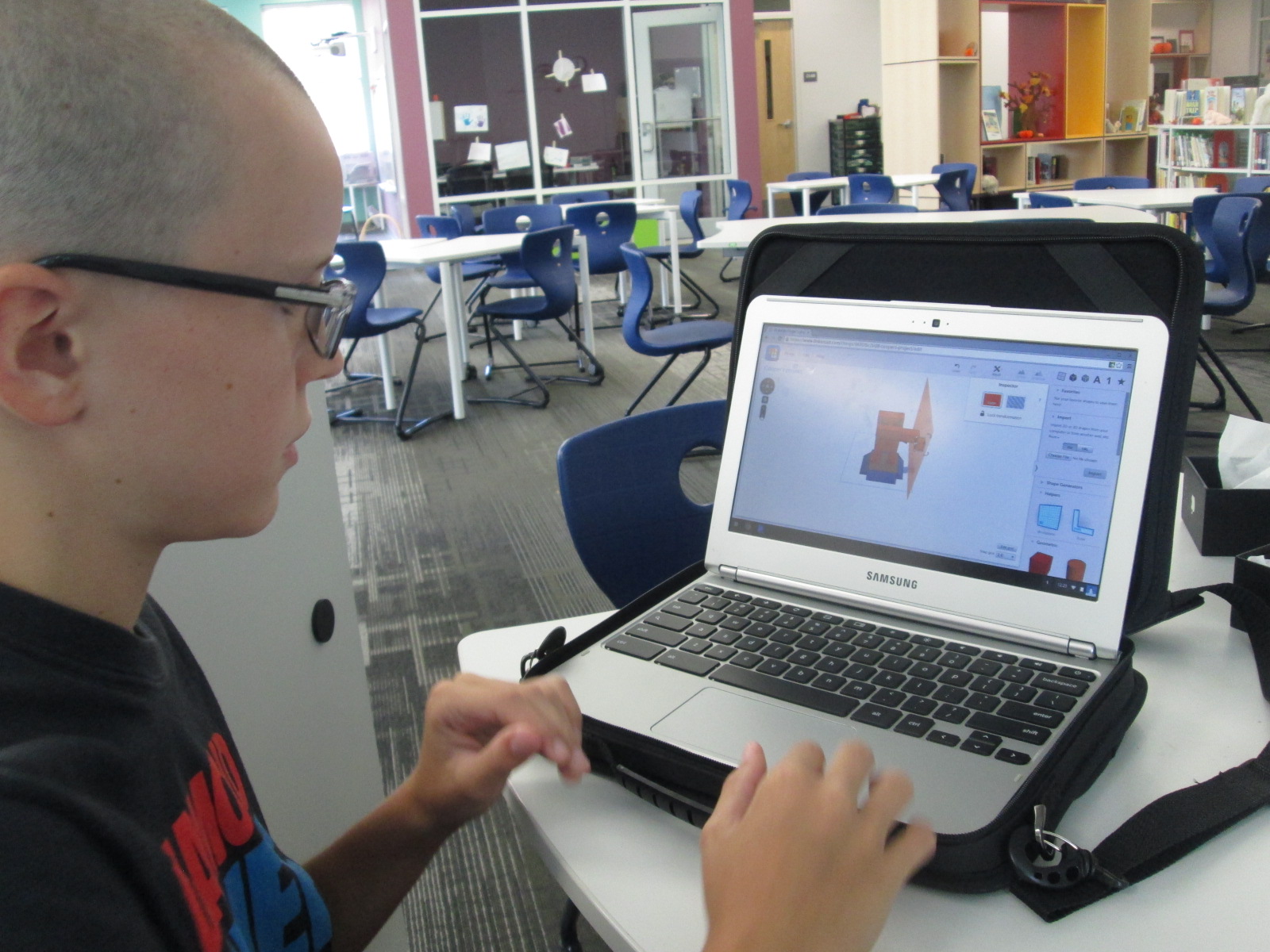
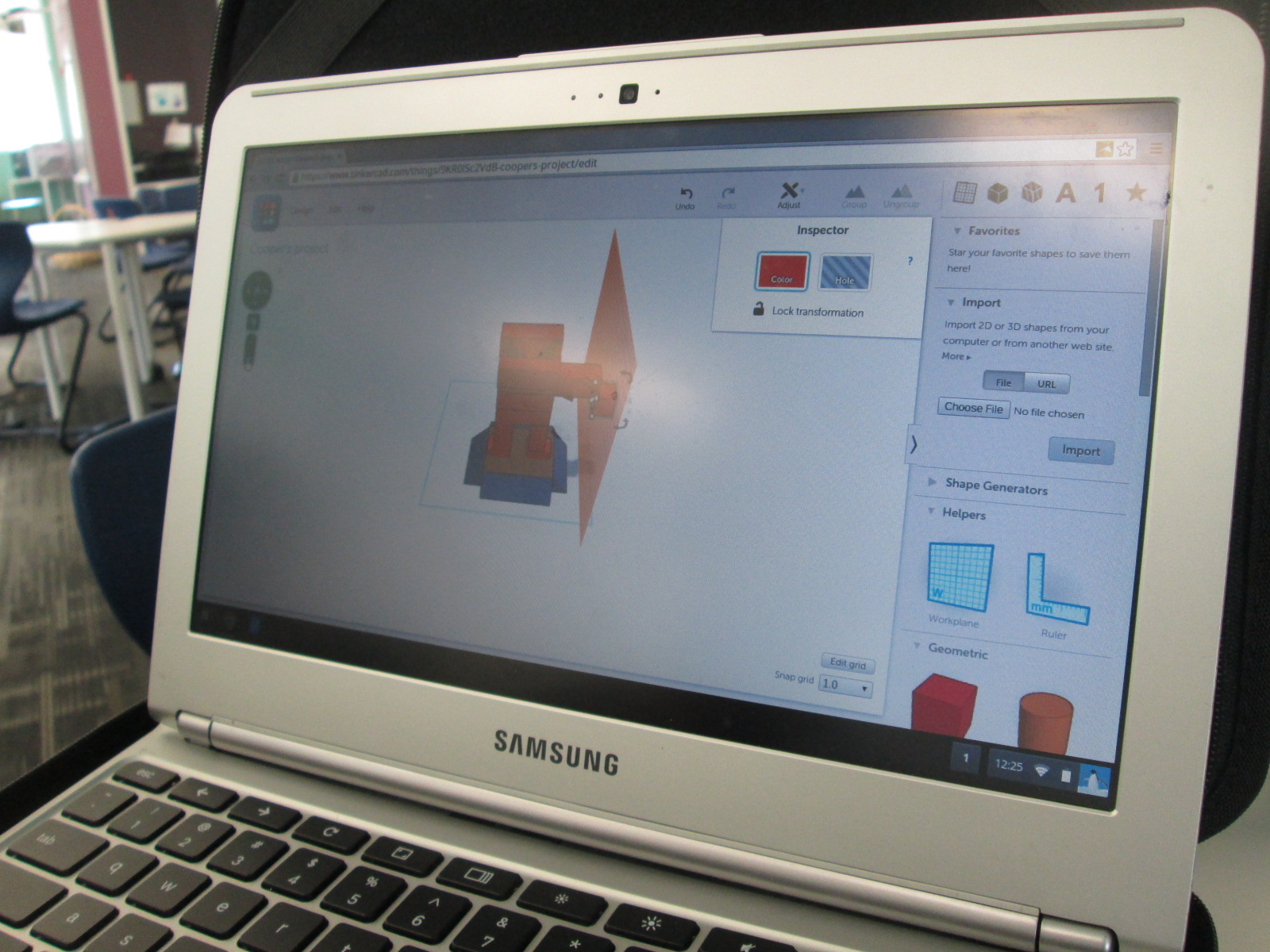
I spent time showing him Tinkercad and he did design his own figure and 3D print it.

When you take time to honor an individual student voice like this, you sometimes wonder if the time with one student in a school of 600 is worth it, but it is!  Recently, this same student decided that he wanted 3D printing to be part of a book project he was working on. His class just finished reading The Westing Game and each group of students is working on a book float to highlight things that they learned about the book.  His group immediately emailed me to see if they could use the 3D printer to design a chess piece for the float.

They worked independently of me and the knowledge of using Tinkercad was passed on to all 4 members of the group.  They even branched off and made their own designs and chose their favorite from the group designs.  They were bubbling with excitement to get their design printed.  Since it had lots of hanging edges, it required supports.  Supports take a long time to remove, but the group took turns coming in and working on removing the supports with my help.

Now this one student voice has empowered 3 more, and my hope is that those 4 voices will continue to empower even more.

Open Makerspace: Take Two

shrinky dinks (10)

Since our library makerspace has been available, I’ve tried as much as possible to have it open for students to use for their own tinkering and making as well as for classes to use in collaboration with me in the library.  This has not been an easy process, but I’ve tried several things and learned a lot.

A couple of months ago, Gretchen Thomas from UGA helped me get an open makerspace time started each day.  It was from 11-12:15 and an independent study student from UGA helped me facilitate students.  The problem with this time was the unpredictable nature.  We didn’t have students sign up ahead of time, so some days there would be an overwhelming number and some days there was just a few.  Also, all the students wanted to do different things which was very hard to manage.  During one of the weeks, we went through $75 worth of duct tape and students weren’t really making anything that they were happy enough to take with them.
shrinky dinks (8)

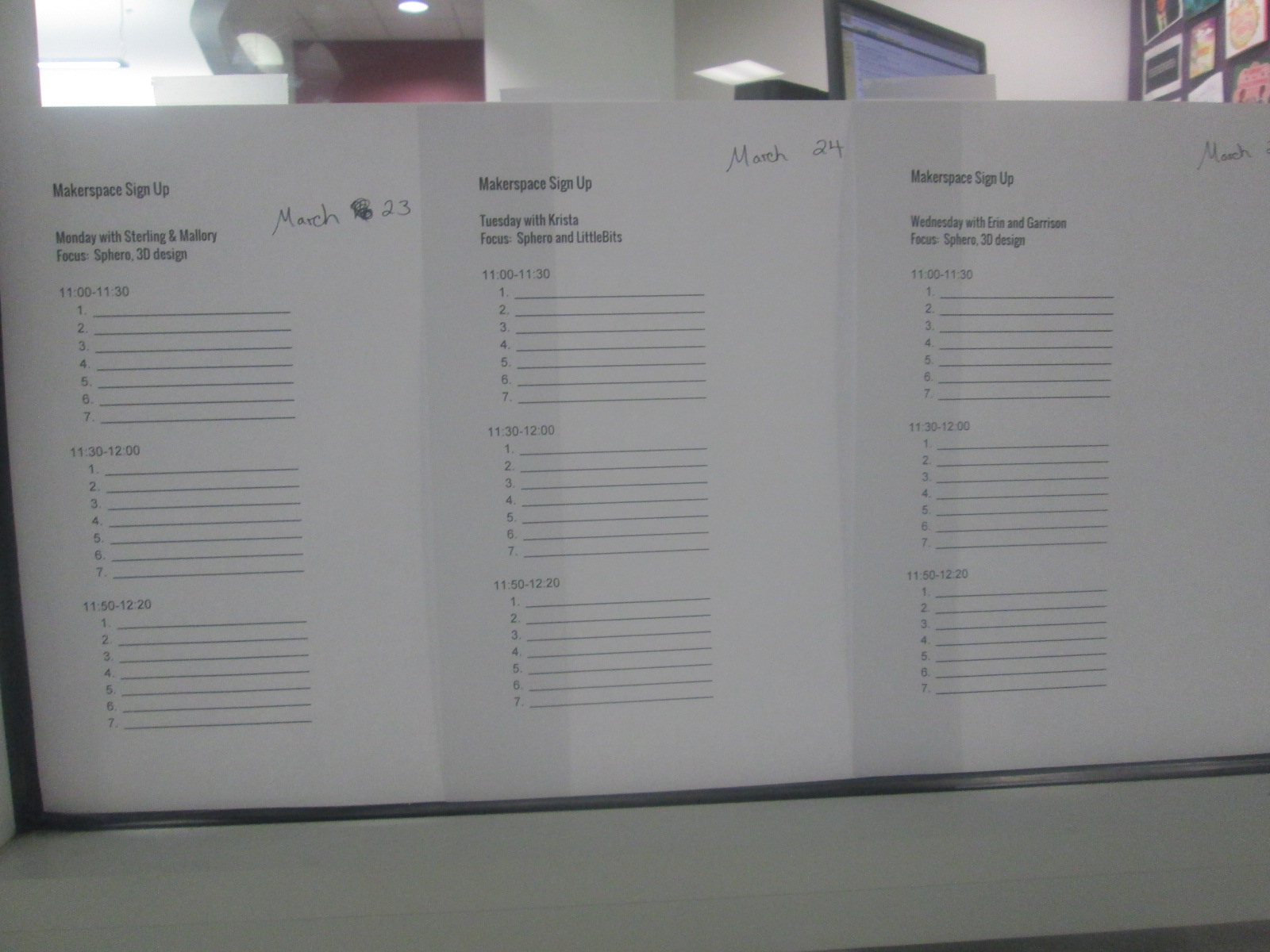
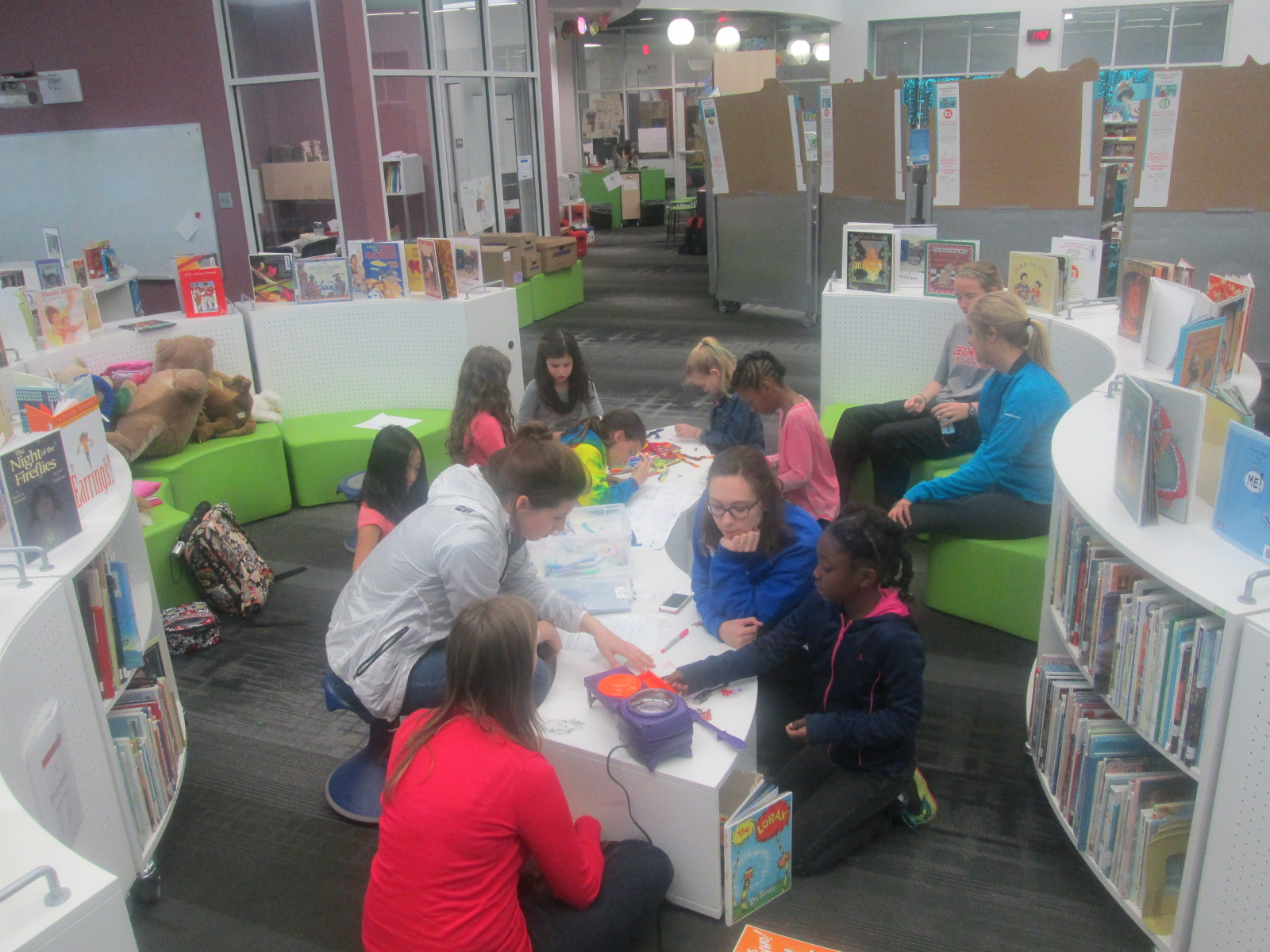
I’m not one to give up, so Gretchen and I did some talking over email and decided to try something new.  We would pull back the makerspace to Monday-Thursday.  Rather than have every day be a free for all, we decided to create a signup sheet.  We also decided that each day would have a focus so that the UGA helpers could begin to develop some expertise in specific areas and students could be more productive by focusing on one or two resources.  Again, this was all an experiment to see how it played out.

shrinky dinks (1) shrinky dinks (2)

So far, it has been working really well.  On Friday of each week, students sign up for the upcoming week.  They can only sign up for one day at the moment because we have only allowed 7-10 people per 30-minute time slot.  This number may increase as we see how manageable larger numbers of students might be.

Our schedule consists of:

  • Monday 3D design and Sphero
  • Tuesday littleBits and Sphero
  • Wednesday 3D design and Sphero
  • Thursday crafts and Sphero
  • There are also some independent projects woven in such as MaKey MaKey and Lego Robotics

We decided to put Sphero on the schedule daily because of the student demand and the fact that we  now have 13 Spheros.  It is easy to setup and cleanup quickly, and students can do it independently while the other pairings such as 3D design take a little more support.

shrinky dinks (9) shrinky dinks (6)

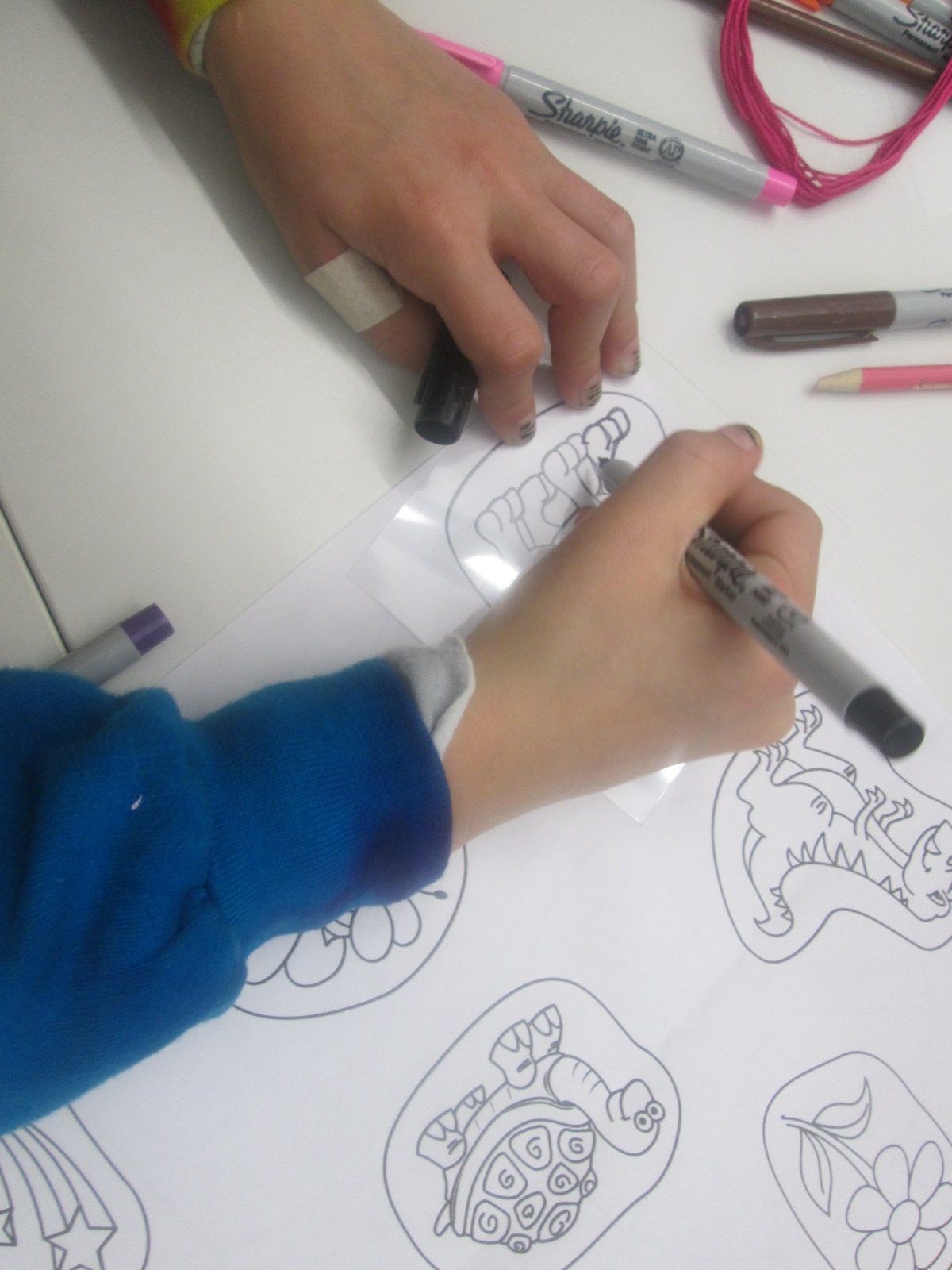
On Thursdays, Gretchen’s Maker Dawgs class sends a few students with a planned craft.  Duct tape was a huge hit, but as I’ve said, we found that students were using lots of duct tape without really getting anywhere.  We decided we would try different kinds of crafts with more of a focus on producing something to take away.  This focus might help students see the kinds of things they might create, which we hope leads to new ideas from students.  One week students created Origami.  This past week, the focus was Shrinky Dinks.  Many students had never experience Shrinky Dinks.  The Maker Dawgs brought in a Shrinky Dink maker, which basically looks like an Easy Bake Oven.

shrinky dinks (7)

Also, Gretchen made Shrinky Dink name tags for all of us.

The Maker Dawgs paired the Shrinky Dinks with friendship bracelet making, so some students combined Shrinky Dinks onto their frindship bracelet.  It was a very popular and productive makerspace time.

shrinky dinks (4) shrinky dinks (9)

Our newest problem is how to print all of the 3D creations that students are making.  That’s the next thing on my list to figure out.  Students want to print right away, and it’s hard for them to understand that designing can take a few minutes but printing can take a few hours.

shrinky dinks (5) shrinky dinks (3)

We take each challenge as it comes.  We expect the miraculous, and we don’t give up.

Providing Space for the Miraculous

WRAD15 Day 3 (4)

I’m a planner.  In my personal life, I like schedules, details, and wouldn’t consider myself very spontaneous.  However, in education, I’ve learned to push this part of me aside and embrace flexibility.  It isn’t always easy, but it is essential.  When I meet with teachers to plan a collaborative project, we definitely put together a strong plan, but nothing makes me happier than hearing teachers say “let’s just see where this goes”.  Phrases like that mean that we are giving ourselves permission to be flexible.  We are providing space to look for miraculous things that are taking place right before our eyes.  If we script every step of a project, then the project gets done, but at what cost?  To me, the cost is student voice.  When we structure lessons and projects too much, we miss the opportunities to listen to individual student voices and interests.  We miss opportunities that might be waiting for us out in the world with experts, other schools, developers, and more just because it doesn’t fit on our timeline.

IMG_4947

Here’s a perfect example of what can happen when space is provided for the miraculous to happen.

During our 2nd grade black history project, we made numerous changes to our plans.  I’ve written several posts about this, but to summarize, we:

  • made the project more authentic by creating our own award called the Barrow Peace Prize
  • established our own criteria for the award, which matched numerous character traits that students study in social studies
  • housed all of the student videos on Flipgrid and linked them on a Google site with our embedded voting tool
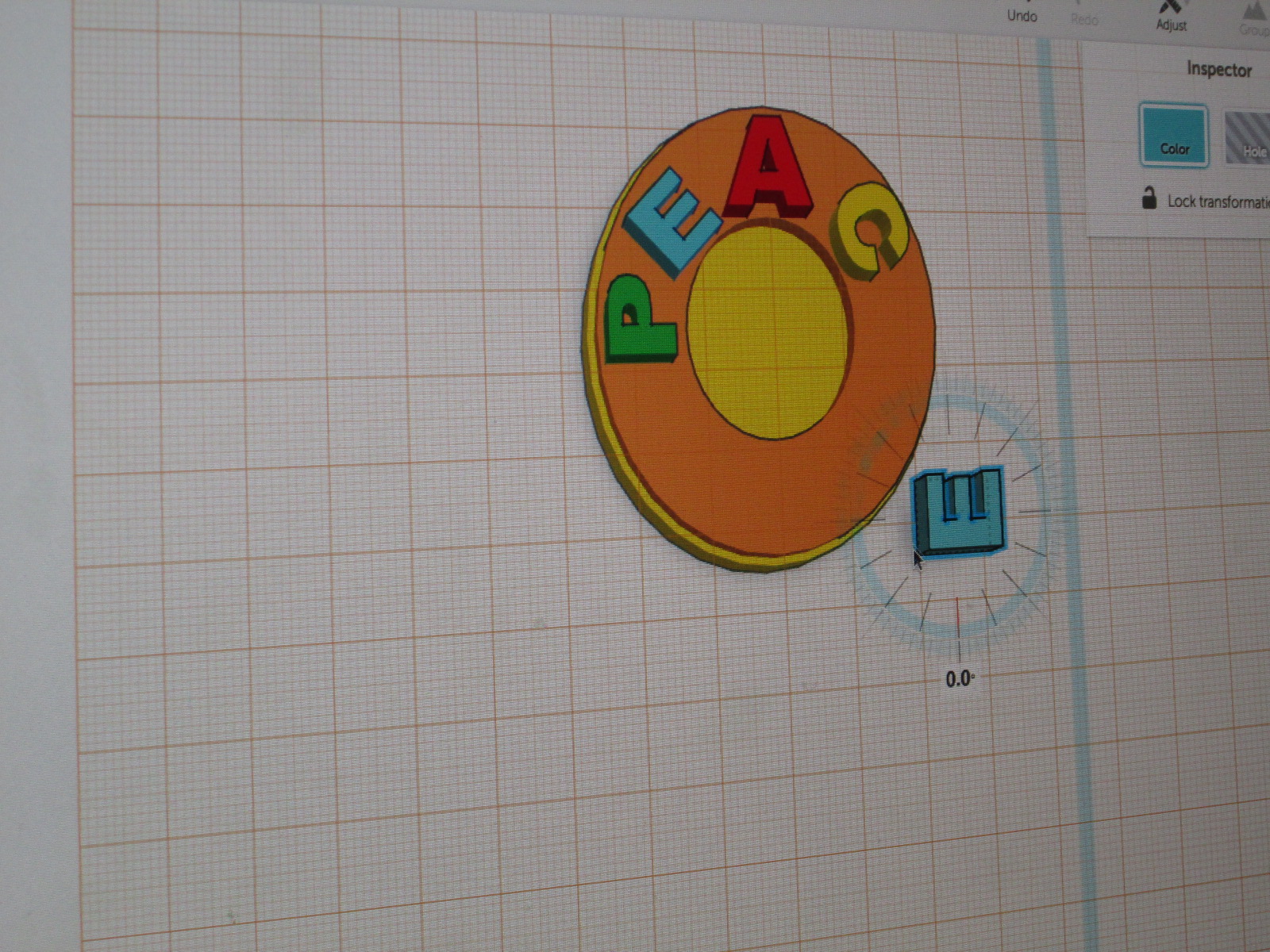
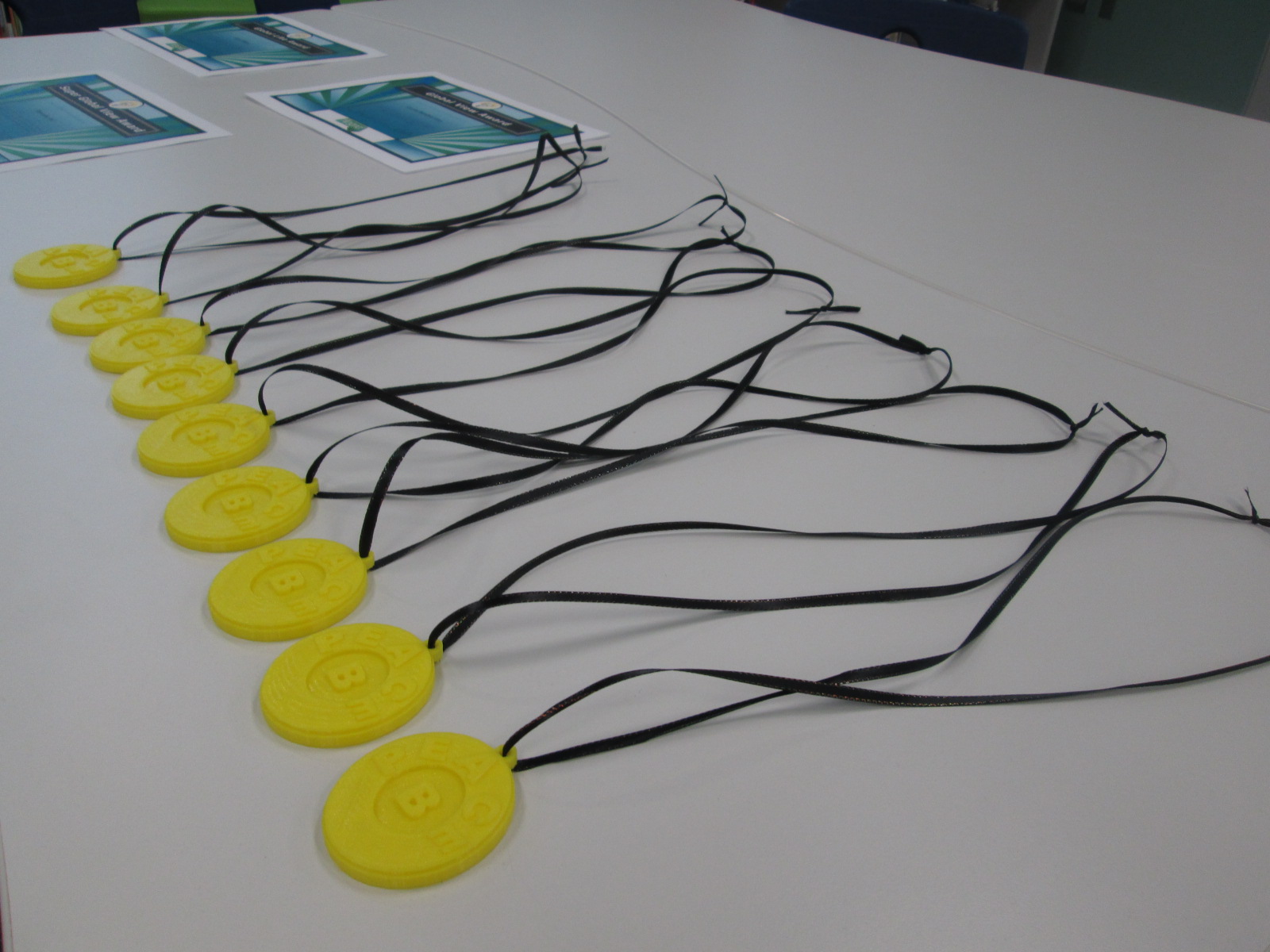
  • created a medal using our 3d printer to honor the person from black history who won the votes

When we planned this project, we knew that certain components would be there such as time to research, time to write persuasive pieces, and time to record videos.  One thing we didn’t know when we started was that we would actually create a medal on the 3D printer.  Because we allowed ourselves to be flexible, to give individual students voice, and to look for the miraculous, an individual student was able to design and create a 3d-printed Barrow Peace Prize.

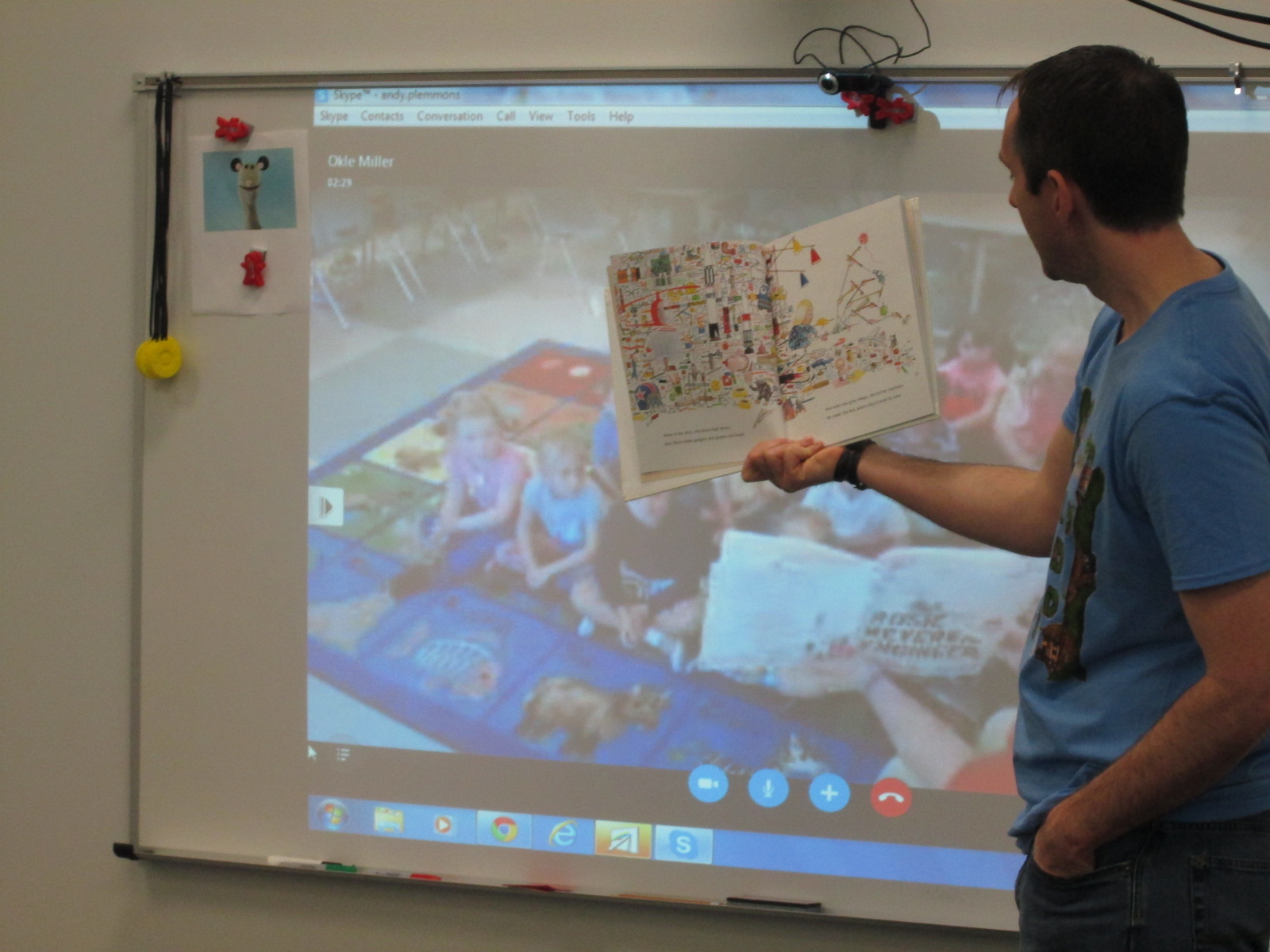
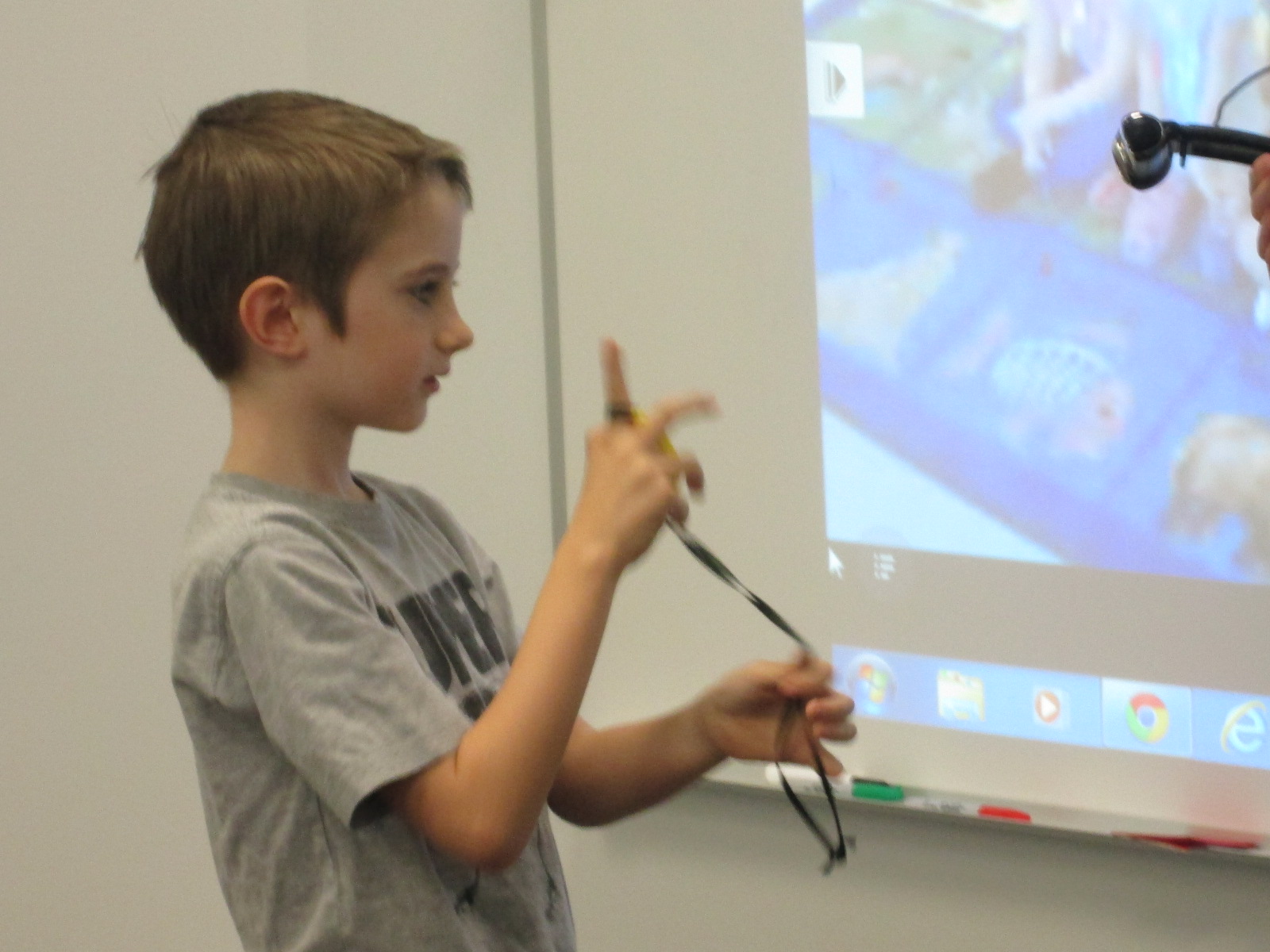
Taylor, our student designer, has been so proud of his work.  This one moment where we provided space for the miraculous has given him and our school some other incredible moments.  Taylor was able to share his work with Okle Miller’s Kindergarten students in Tampa, FL via Skype and inspire them to make their own inventions.  He also shared his work with the Flipgrid team in Minneapolis during our Skype.

While Taylor was designing his work, I was of course sharing it on Twitter.  Brad Hosack, co-founder of Flipgrid, half-jokingly replied:

This one tweet made us think even more.  We originally just planned to print one medal and share it among all of the 2nd grade teachers in honor of the winner of the black history votes, but because we gave ourselves space for flexibility, other miraculous things happened.  We printed enough medals to put one in each 2nd grade class so that now students can take turns in their classroom holding or wearing the medal, and we also sent some to Flipgrid headquarters in Minneapolis, MN.

Flipgrid Barrow Peace Prize (1)

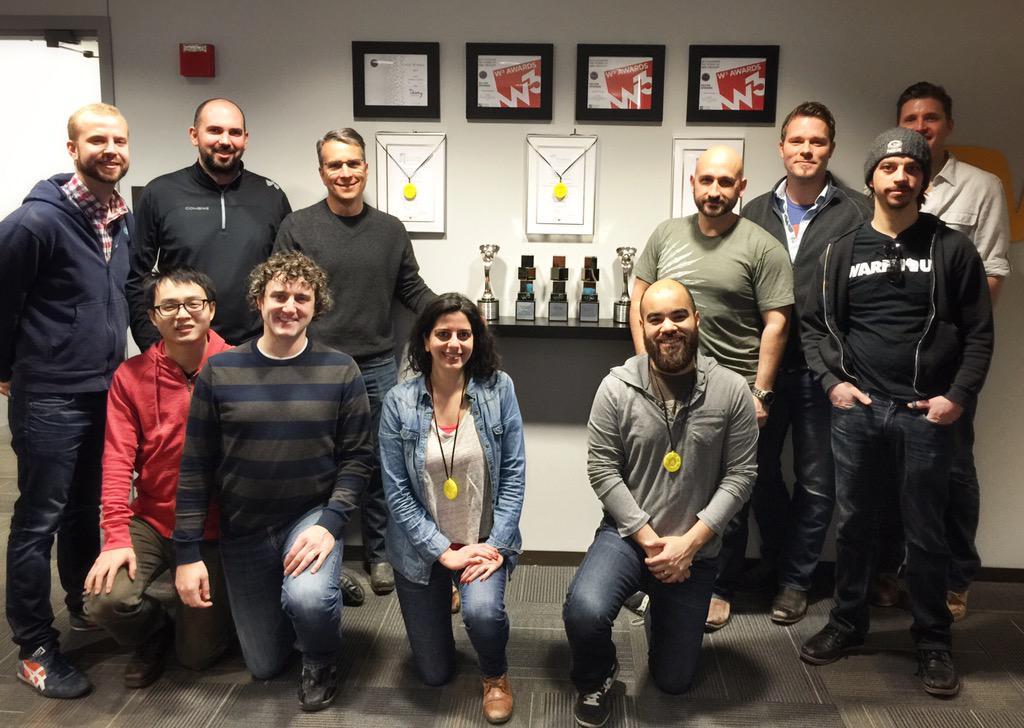
Now, Taylor’s 3D creation is hanging in Minneapolis with Flipgrid’s many other awards.  How miraculous is that?

The Flipgrid team proudly displays their Barrow Peace Prize medals along with their numerous other awards.

It is stories like these that remind me of the importance of slowing down and being flexible.  Planning is still crucial, but I’m reminded that I shouldn’t plan so much that it hinders the amazing things that can happen when we let go of control and see what happens.  I encourage you to give it a try.

https://twitter.com/EMCPublishing/status/575379804901351424

Happy World Read Aloud Day 2015: Connecting Through Stories Part 3

WRAD15 Day 3 (3)

The official World Read Aloud Day 2015 is in the books.  We still have 2 days of connections, but it was fun to have a full day for the actual calendar date.

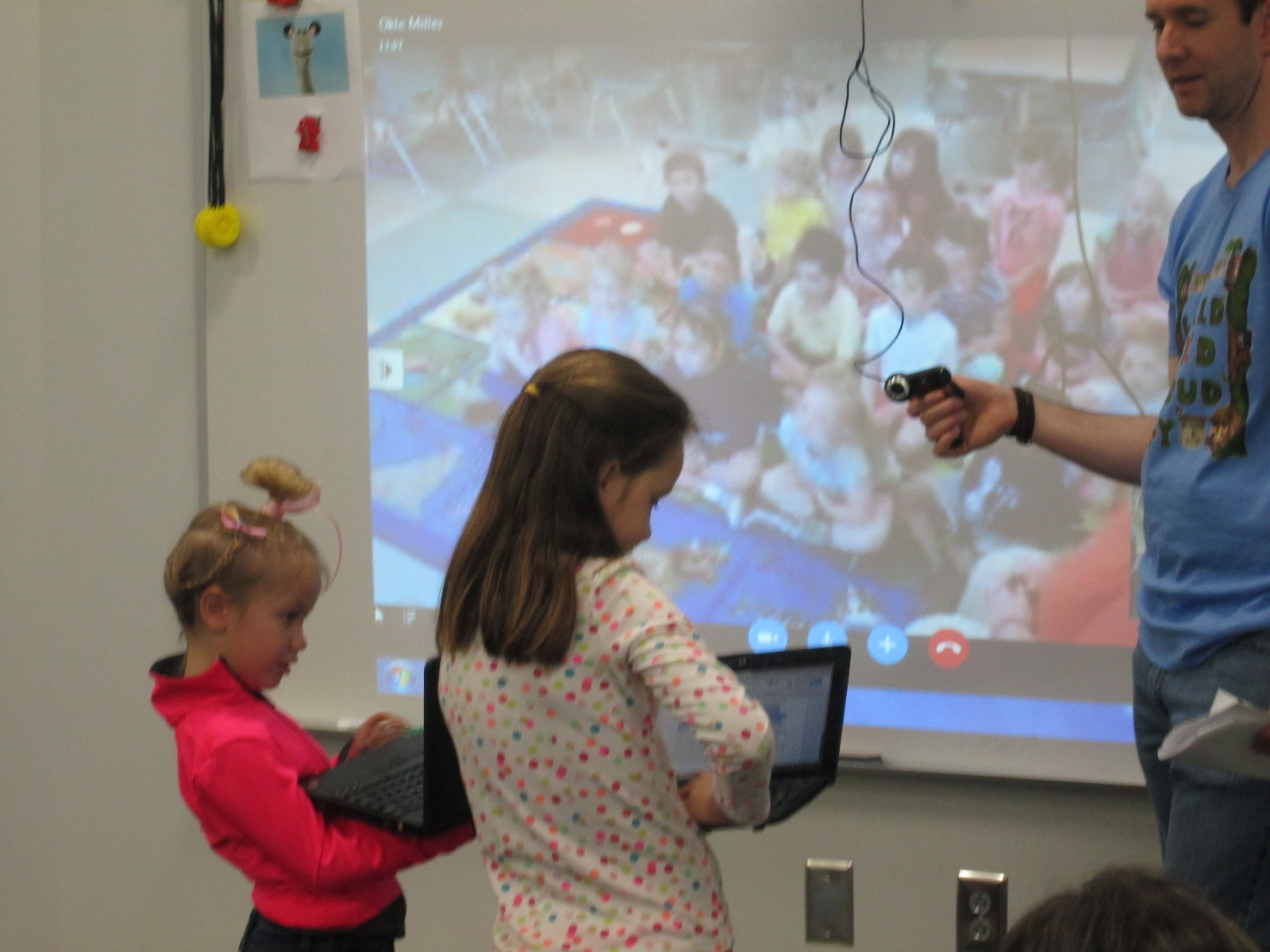
We started our day with enrichment clusters.  I have a group of 2nd-5th graders who are exploring coding and making in a variety of formates.  We connected with Okle Miller and her Kindergarten students in Tampa.  We read Rosie Revere Engineer and then my students had a chance to share some of the inventions that they are creating.  It was fun to see the messages of the book come through in their sharing.  Most students did not have a complete product and most had plenty of failures during the process.

Eli showed a lego mindstorm robot that he put together right before the Skype.  He has designed several robots, and this one was his version of a dog that you could walk since “everyone wants to be able to walk a dog and might not have one”.

Francisco showed his alarm that he made with littleBits that would go off when the sun came up.

WRAD15 Day 3 (6)

Ludwig and Malachi showed off their video game made of cardboard, Scratch, and MaKey MaKey.

WRAD15 Day 3 (11)

Louisa and Ansley showed off their blogs about how to use Tinkercad to 3d design.

WRAD15 Day 3 (8)

Taylor showed off his Barrow Peace Prize medal that he designed and 3d printed.

WRAD15 Day 3 (5) WRAD15 Day 3 (4)


Next, Ms. Ramseyer’s class connected with Crystal Hendrix and her students in Asheville, NC.  We read I’m Bored and once again had fun taking turns being the girl and the potato.  We also had the students talk about what they would write for a second book, and they were very interested in having the potato get eaten.


Ms. Wright’s 2nd grade connected with Jennifer Reed’s students in Newton, MA.  It was very special to get to share Beekle with one another.  We had some great discussions about the little girl in the book as well as dreaming the unimaginable and having courage.  We even continued our conversation after we said goodbye.

Donna MacDonald’s 4th grade students were such great role models for Ms. Heather’s PreK students today.  It was our PreK’s 1st Skype experience, and it was so special.  We read Wolfie the Bunny.  My students read the part of Dot, and Donna’s students were all of the other characters.

Getting to connect with authors is another really amazing part of the World Read Aloud experience.  Barbara O’Connor was our 1st author of the day, and she connected with Mr. Coleman’s 4th grade class and a few of Ms. Tesler’s students.  She read from How to Steal A Dog.

After the story, she took lots of questions from the audience.  We learned the story of the poster that inspired the book and the story of calling Willie’s real owners to give them a copy of the book.  We also heard about the revision process and how a book that is coming out next year is already heavily into this process with the editor.

Barbara even walked us through her house to show us the manuscript with all of its pages and markings.  Our visit wouldn’t be complete without seeing the 2 famous dogs in Barbara’s house.

WRAD15 Day 3 (38)


Ms. Mullins brought several 5th graders to connect with Margo Jantzi in Virginia.  We read Crankee Doodle.  Margo was hilarious with her pony voice, and I played the roll of Crankee.

Ms. Clarke’s students had a unique opportunity to connect with Mrs. P from Mrs. P.’s storytime.   Mrs. P. (AKA actress Kathy Kinney) is an advocate for reading and writing.  She is a master storyteller and encouraged all of our young learners to read and create as much as possible.

She told the students a couple of stories, but also gave them some thoughts to ponder.  We had great fun hearing poems and songs about her cat and even heard the very first thing she wrote when she came out of the womb in the delivery room!

We closed out our official World Read Aloud Day with Laurel Snyder.  She read to Mr. Coleman’s 4th grade from Free to Be You and Me, a favorite childhood book.  It brought up some interesting things to think about in regards to “boy books” and “girl books”.  We loved Laurel’s voices for the babies in the selection from this book.

Another thing that I love about World Read Aloud week is that the books that we share aloud and the books that are by the authors that we connect with are immediately checked out of the library.  I love seeing readers get so excited about finding a book that they have a connection with.

I closed out World Read Aloud Day at my house by reading aloud Some Bugs, Toys Galore, and Pete the Cat and His Four Groovy Buttons with my son, Anderson.

We have 2 more days of connectionthis week, and we can’t wait to see what happens!

Connecting through Stories: 2015 World Read Aloud Day Part 2

WRAD15 Day 2 (79)

Wow!  Day 2 was busy.  We had much smoother Skype connections and plenty of stories.  Here’s a quick look at what happened.

Ms. Hicks’ 3rd grade ELT students connected with Crystal Hendrix in Asheville, NC.  We shared the story I’m Bored.  Then, students had fun asking about life in each other’s communities.  We made several connections between Asheville and Athens including college towns and weather.

Next Ms. Brink and Ms. Wright’s 2nd grade connected with Carol Scrimgeour and her 2nd grade in Essex, VT.  We read the story Mr. Tiger Goes Wild.  We had our students form lines and step up to the camera and take turns reading pages of the book.  It was great fun to hear student voices reading across the miles.

Ms. Yawn’s 2nd grade came and read Elephant and Piggie Waiting is Not Easy.  We had some trouble getting the right Skype accounts connected for our author visit, but we finally got it worked out in time to make our connection with Alison Randall, author of The Wheat Doll.  She told us about her book and then read from Roald Dahl’s The Witches.  It was scary fun.

Ms. Clarke’s 3rd grade class connected with Cathy Potter’s students in Maine.  We were fortunate to be joined by Natalie Lloyd, author of A Snicker of Magic.  We got to meet her camera-shy dog, Biscuit.  Then, we saw some of her favorite books before hearing her read aloud the first chapter of Snicker of Magic.  It truly was magical to hear her words drifting to Georgia and Maine from Tennessee.  We even got to hear just a bit about her book that was just sent off to the editor.

Ms. Clarke plans to read Natalie’s book to her class as their next read aloud, so The Beedle just happened to put a new copy of the book in Ms. Clarke’s box.

Ms. Ramsey’s 3rd grade connected with Shannon Hyman’s Kindergarten in Virginia.  We were joined by author Melissa Guion.  She shared her wonderful penguin stories and illustrations.  Shannon’s students were able to share some facts about penguins that they had just learned.

Ms. Em’s 1st grade connected with Okle Miller’s Kindergarten in Tampa, FL.  We were joined by the amazing poet Laura Purdie Salas.  She had our students chanting poetry about rocks and listening to poems about books and unusual pets.

Ms. Slongo’s 4th grade had a special treat Skyping with Barbara Walsh, author of The Poppy Lady.  Barbara visited our school last year in person and it was her very first school visit.  This time, we were her very first Skype visit.  Our students loved hearing about the Athens connection to Moina, who is responsible for getting the poppy to be a symbol of remembrance.

Finally, we closed out our day with a high-energy Skype with 2 authors, Ame Dyckman and Adam Lehrhaupt.  These two were full of laughs and energy.  They took questions and then shared some stories.  Adam shared a book that isn’t coming out until October (shhhh….don’t tell anyone).  Ame shared Wolfie the Bunny.  Ame even sent some amazing book swag for all of the readers in the class.

It was truly an amazing day.  It was exhausting, but we feel connected to so many readers across our great country.  Thank you to each and every author and class who connected with us for World Read Aloud Day.