Wolf in the Snow Puppets and Storytelling

In just 2 weeks, we will welcome author/illustrator Matthew Cordell to our school. Small groups of our Kindergarten students have been coming to the library to work on a special project. This project came about because our Kindergarten classes are unable to attend our regularly scheduled makerspace times. I wanted to offer them some special opportunities throughout the year because of this. Thankfully, I now have a high school intern, Andrea Arumburo, who is collaborating with me in the library most afternoons. Her focus is art, so I knew she would align perfectly with Kindergarten makerspace opportunities.

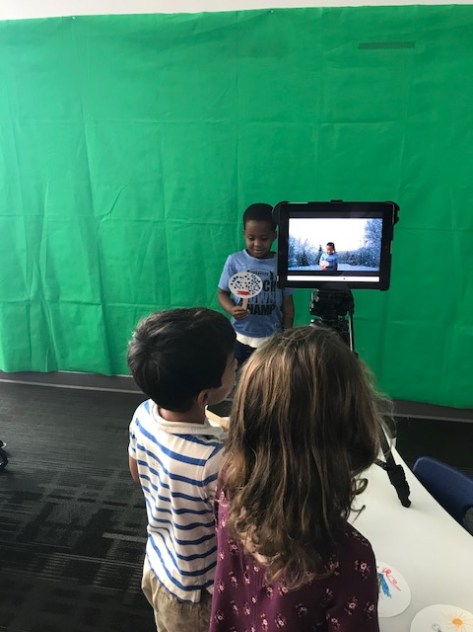
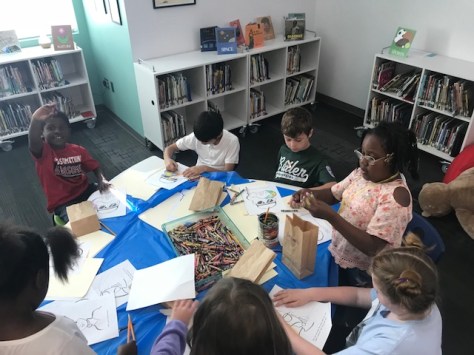
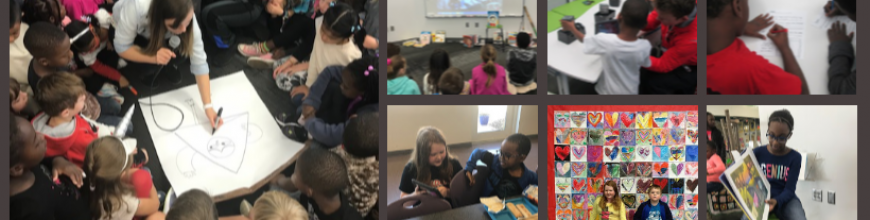
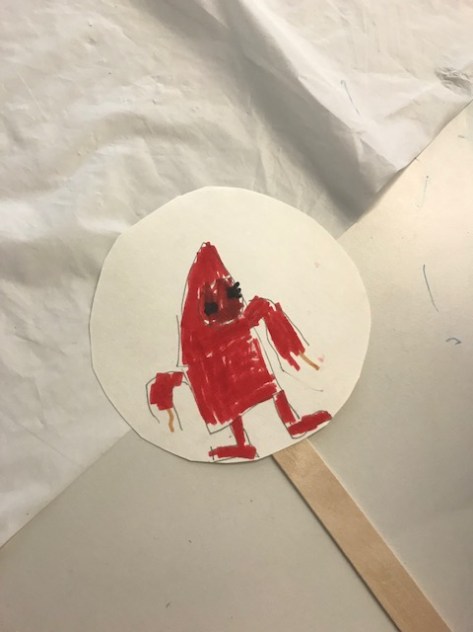
For this first round of classes, groups of 5 students from each Kindergarten class came to the library to create puppets based on Matthew Cordell’s Wolf in the Snow.  We began by refreshing students’ memories on what happened in the story with a quick flip through the book. Then, Andrea talked with the students about creating characters on paper plate circles. She offered that they could replicate the characters in the story, or they could design a character that looked more like themselves.  She had several examples to show them.

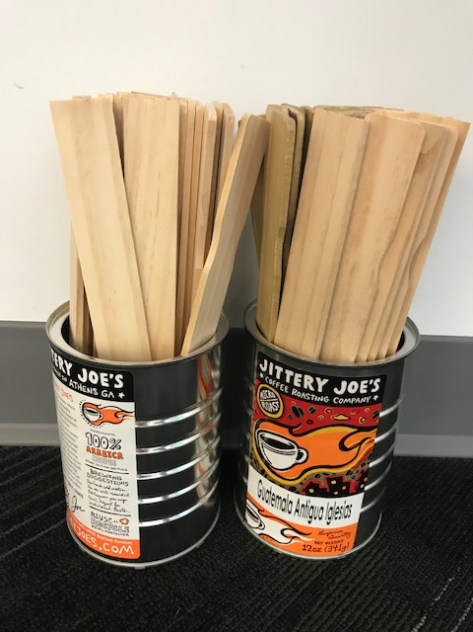
Next, students moved to tables and sketched out their characters on paper plate circles and colored them. We placed examples on each table as well as a copy of the book. As students finished a puppet, they glued a tongue depressor stick onto the circle to create the puppet. Most students chose to make a 2nd character so that they had one human and one wolf.

Once students finished, we sent them to spots around the library to practice retelling the story. Kindergarten talks a lot about 3 ways to read a book: read the words, read the pictures, retell the story. This was a great opportunity to practice retelling.  Some students referred back to the book. Others remembered every detail. Others used their artistic license to completely change the story and make it their own.

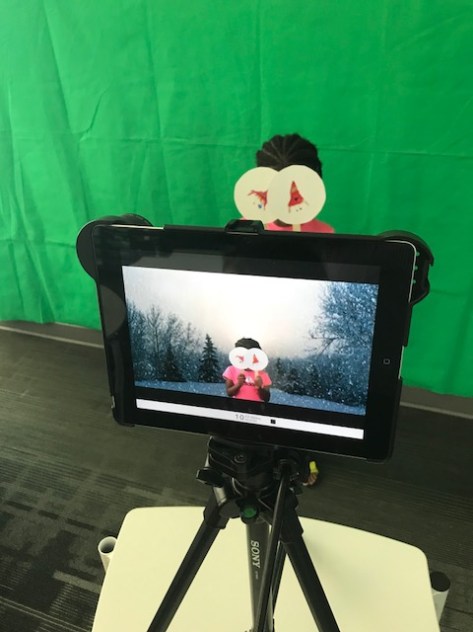
After practicing, they found a partner and shared their puppet show story with a partner.  For many, this was the stopping point in our time limit of 40 minutes.  However, a few students were able to come over to the green screen and practice retelling their story in front of the camera.

In one session, we decided we didn’t have enough time to film anyone so instead, we all sat on the carpet with our puppets and we walked back through the pages of the book together. I told the story and students used their puppets to act out the story.  I loved watching them hide puppets behind their backs when that character wasn’t in a scene.  This unexpected closing was actually something I wish I had done with the other groups because it made a connection between the puppets and the story.  I think it would have helped students in making their own puppet shows.

Our hope is that Andrea and I can continue to offer these opportunities throughout the year. Some will be low-tech, high-tech, or a mix of it all.

Fine Tuning Genrefication with Custom Signs

One of the things I’ve loved the most about organizing our library by genre has been the ability to customize the experience for readers. If a section of books isn’t working for how readers find books, then it can be changed. If kids keep asking for a kind of book that is mixed into lots of sections, they you could pull those books into a new section.  I’m always watching and listening to the words I’m having to repeat over and over as well as the questions that readers are asking about where books are located.

One noticing this past year was how I was always having to explain that the “E” section or “Everybody” section is where picture books live.  The “F” or the “Fiction” section is where chapter books live.  Students would search the library catalog and see that something was located in “Sports Fiction”, but that didn’t really translate to the sports chapter book area to them.  I decided to fine tune this in Destiny to make searching more user-friendly for readers.

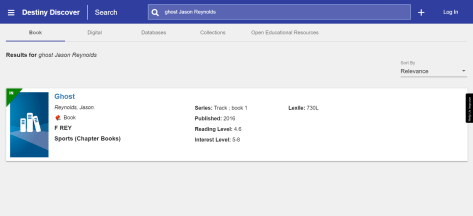
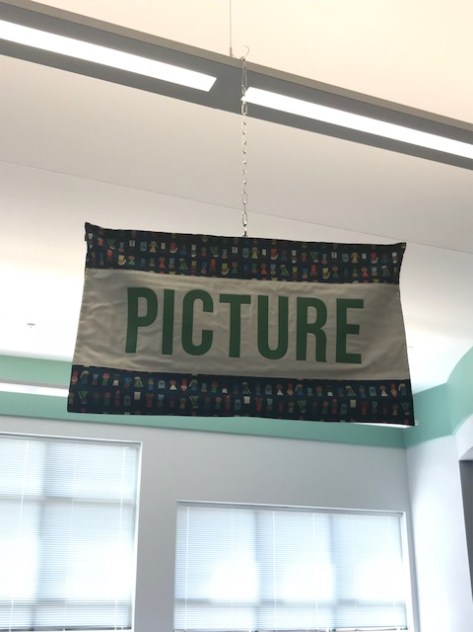
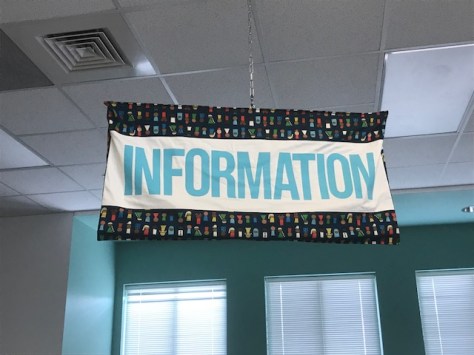
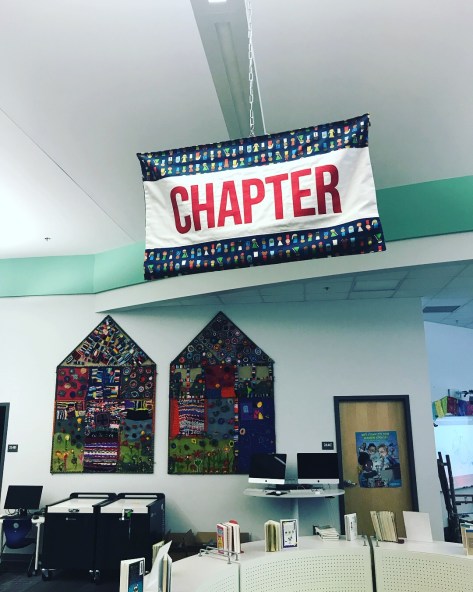
I simply went into each subcategory in Destiny and changed it so that it specifically said “chapter”, “picture”, or “information” next to each genre category. Now, when a student searches, they will see a book like Ghost by Jason Reynolds is in the “Sports Chapter” section.

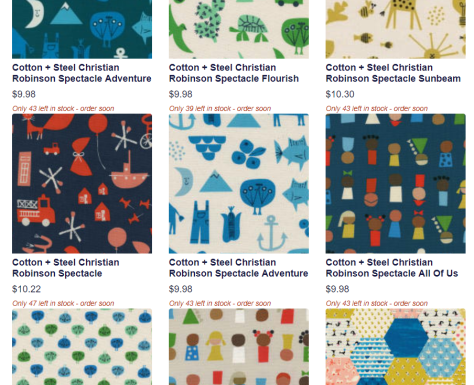
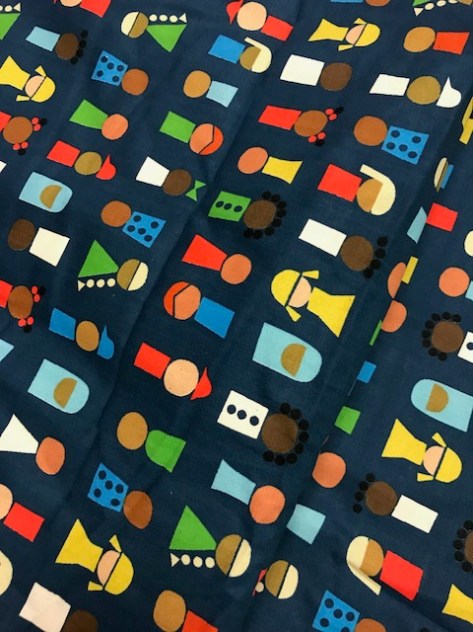
I also wanted to improve the signs in the library to help students see which sections of the library are “chapter”, “picture”, and “information”.  I started browsing around online looking for existing signs or even custom signs that would be helpful and appealing in the library, but I didn’t really see anything I liked. Then, I had the idea that some custom signs could be made using fabric designed by illustrators. I looked at Mo Willems, Eric Carle, and other illustrator fabric, but the fabric that I kept coming back to was the fabric designed by illustrator Christian Robinson.

He visited our school a few years ago to celebrate the release of School’s First Day of School, so we have a special connection with him. His fabric also features a diverse group of individuals which represents both our school, our community, and the books we strive to have in our collection.

I reached out on social media to see if anyone had any connections with someone who would be willing to work on custom signs for our library using Christian Robinson’s fabric. Several people gave helpful information to think about in designing the signs, but then I got a wonderful email from Barrow parent, Amy Norris, offering to help.

This began a string of emails and conversations to design the 3 signs. Amy offered her design expertise as well as her sewing talents to create the signs. We met in person and sketched out what the signs might look like as 3 rectangular hanging quilts. Then, she went home and created a mock up of several options.  I was amazed at her attention to detail and thoughts about maximizing the fabric to cut down on cost. I picked out the design that I thought would work best and ordered the fabric.

Amy jumped right into designing the signs. She was so enthusiastic about this project, and I couldn’t have asked for a better person to create our signs. She sent little progress updates all along the way and even helped me think through how the signs would hang. I originally was going to use a quilt or curtain rod, but we decided that it was light enough to just use a wooden dowel.

As soon as Amy had the signs finished, she delivered them to school and they were absolutely beautiful. Each section’s word was created in a different color and the Christian Robinson fabric stood out beautifully. Now it was my turn to get the signs installed. I went to Lowes and purchased eye screws, wooden dowels, chain, and s hooks. I cut down the dowels to the length of each sign, and put each quilt onto its rod using the sleeve on the back.

Now, each sign is flying high in our library to help kids see where our 3 main areas of the library are. Since they hang by a single chain, they freely rotate with the gentle air currents. It’s a simple change that I really should have done much sooner, but the library is always evolving, and sometimes a small change is just the thing that was needed to make the collection easier to navigate for readers. I’m so thankful for the many talents that exist in our community, and this project once again reminded me that so many people are out there waiting to support the work happening in schools, but many times we have to put our work and requests out there to help them connect to those opportunities. A huge “Thank You” goes out to Amy Norris for taking the time to create these beautiful signs that we will enjoy for years to come.


The Power of First Lines: Another New Library Orientation

School is back in session in Georgia, and I’m once again reorganizing what happens in the first visit to the library. I’ve tried to steer away from a traditional orientation where students hear the do’s and don’ts in the library. It’s not that they aren’t important, but is that really the message I want to send about reading with the first words that come out of my mouth?

The message that I really want students to hear is about the joy of reading. I want them to hear about how readers talk about books to one another. I want them to hear how books can be windows into other worlds and other perspectives. I want them to hear how books can be mirrors that reflect a part of ourselves back to us.

I also wanted to tackle a problem that bothered me last year. I saw so many students continue to come to the library and spend their whole time standing at the computer typing out topics in the library catalog instead of actually looking at books in our various genre sections. I had hoped that genres would eliminate this, but it hasn’t. I decided to start with something that wasn’t intimidating to most readers: the first lines of a book.

So, here’s what a first library visit looked like for 3rd-5th grade this year.

What are you reading?

We started with a question, but instead of asking students to share their own reading, I showed them what I just finished and what I was reading now.

I promised them that all year long I would post what I’m reading on the door of the library so they can always see, even if I’m with a class.  I told them that my hope was that anyone in the school could ask anyone else in the school what they are reading and both of them would have an answer. One of the best ways to find a new book is to see what others are reading, so we are giving ourselves permission to freely ask each other throughout the year about books. I also hope that several teachers will begin to post their reading outside their classrooms too.  In most classes, a few students said what they were reading now, and I loved how it immediately felt like a connection between us.

Next, I showed students some of my summer reading. I did book talks of Amal Unbound by Aisha Saeed, Front Desk by Kelly Yang, and the Track Series by Jason ReynoldsAs soon as I finished book talks, I showed students a picture of a window and a mirror and asked them about their purpose. Then, students brainstormed how a book could be like a window and a mirror. It was a conversation we’ve never had in such an public manner, but so many of them added amazing contributions to the conversation. One standout comment was how a window keeps you safe from things going on outside and a book lets you explore dangerous situations without getting hurt.  I let students know that I intentionally chose books this summer that would most likely be windows for me. I wanted to read about people whose lives were very different from my own.

Power of First Lines

This became our invitation to step into the books in the library and begin to look for windows and mirrors for each of us.  Ahead of time, I put chairs at each section of our chapter book section: scary, realistic fiction, historical fiction, humor, fantasy, sports, mystery, science fiction, and adventure.

I shared with students how one more great way to discover new books is to visit sections you love and try out the very first lines of several books. Some of my favorite books hooked me with the very first line. I shared Barbara O’Connor’s first line from How to Steal a Dog.

“The day I decided to steal a dog was the same day my best friend, Luanne Godfrey, found out I lived in a car.”

That line has so much story packed into it. Why did she steal a dog? What’s her situation that she lives in a car? What does Luanne think about all this?  You can’t help but read on to find out.

I placed students into random chairs in the chapter books and invited them to try as many first lines as possible in about 90 seconds.
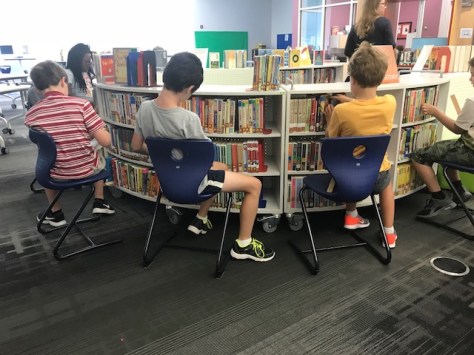
Then, they moved to the right to the next chair and had 90 seconds in that section. We continued this process for as many rounds as we could squeeze in.
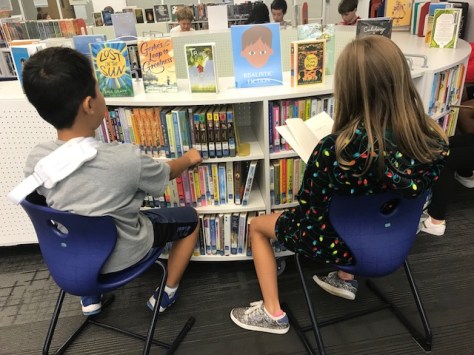
Students did not take any books with them, but I told them to make mental notes of what books caught their attention.  Some students thrived in this experience.  Others weren’t happy that they were in a section that they didn’t usually visit. Still others read first lines in one section but not in another.  The teacher and I circulated and gently encouraged students to keep giving the books a try. Sometimes that even meant jumping in with a student and reading some first lines for them.

Reminders

Back on the carpet, I asked if anyone found a book that grabbed their attention, and it was amazing to see how many people raised their hands. We used this brief moment to go over some reminders before exploring the whole library to checkout books.

  • Enjoy reading as much as you can while you’re here
  • Choose what you love, but push yourself too
  • Spend less time at the computers, and more time at the shelves
  • Respect other learners
  • Borrow what you need (limits are different for every reader)
  • Honor the line at check out

What happened next is what encouraged me the most. Students could hardly contain themselves as they rushed to the shelves to find their first check outs of the year. Almost none of the students went to the computers and instead went straight to shelves and started opening up books. As students have returned for their 2nd rounds of check outs, they have continued to visit the shelves more than the computers.  I can’t wait to see how our momentum builds during the year, and I want to immediately start asking “What are you reading?”

What about K-2?

For the younger grades I did something very similar, but I book talked several picture books including Drawn Together by Minh Li, The Very Last Castle by Travis Jonker, and Hansel & Gretel by Bethan Woolvin. After talking about windows and mirrors, we read aloud All Are Welcome by Alexandra Penfold. I wanted students to see and hear the message that all are welcome at our school and in our library. We used the book to talk about the windows and mirrors we saw within the book and our own school.

This group did the book sampling at the picture book section. Some classes rotated chairs and other classes just stayed in one seat to practice using shelf markers and sampling books.

The Pitfall

Overall, this new orientation experience did everything I hoped it would do, and only time will tell if it got us kicked off in the right way. The one big pitfall of this was that the shelves started to look like a tornado had gone through. Books were pushed back behind other books. Books were on the floor. Books were turned upside down and backwards. I had to pause and take some deep breaths every once in awhile, but when you look at the grand scheme of things, the messy shelves are evidence of excited readers, so it’s hard to complain too much about the mess.

Onward we go to search for the windows and mirrors in our library collection. Onward we go to becoming a school community that shares our reading lives with one another.


Books for Keeps: It’s Time for Summer Reading!

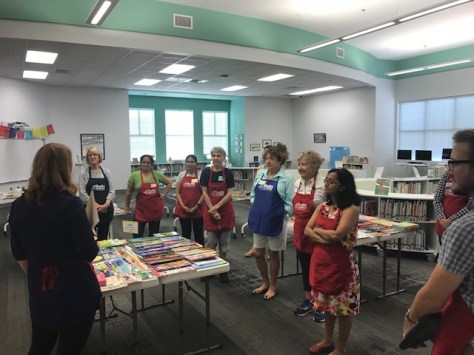
I am so excited to share that this was the very first year our school was served by an amazing program called Books for Keeps. This non-profit group was founded by Melaney Smith and gives 12 new books to every student in 12 of our 14 elementary schools in Clarke County. They also serve schools outside of Athens as well. It takes a massive effort in fundraising, grant writing, and volunteer hours to make this happen in each school.

I’ve had several questions on social media about this program and how it works, so I’ll try to explain it here.

Before the event:

  • Year-round Books for Keeps is fundraising, grant writing, and ordering books to deliver to their warehouse. Volunteers spend many hours sorting and boxing books grouped by grade levels and themes and sorted into stacks for delivery to schools in April & May.
  • I send a master schedule to Books for Keeps which includes the number of kids in each class. They create a draft schedule that I send to teachers for feedback.
  • During the year, Books for Keeps checks in to see if numbers need to be adjusted in each class and the schedule is finalized.
  • Boxes of books are delivered to the school and sorted into areas for quick distribution to tables.
  • Bags and tags arrive for every student. Bags & tags have to be counted out and delivered to each class. Teachers/students write student names on tags.
  • Since this was the first year, I did an introduction to Books for Keeps via Youtube Live.

  • I did a presentation to our whole faculty at a staff meeting so they were comfortable with the process and understood the purpose of BFK. The biggest things to go over were the importance of student choice and the importance of making sure every child got to participate.
  • I also sent home info to families in the my monthly newsletter.
  • A volunteer signup went out from Books for Keeps to help with distribution.
  • Right before distribution day, I arranged tables in the middle of the library.

Distribution Days May 14 & 15

  • Volunteers arrived for a morning shift and an afternoon shift

  • Leslie Hale & Justin Bray from Books for Keeps handed out aprons, clipboards and questionnaires as well as gave volunteers and overview of what to expect during each visit from classes.

  •  Leslie and Justin also unboxed books for each class session and volunteers stocked the tables.
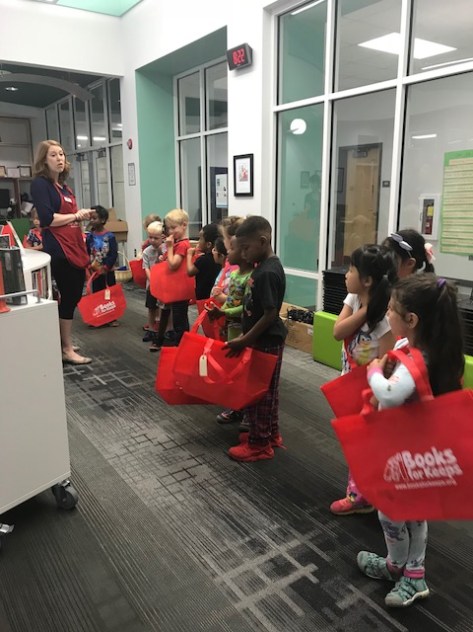
  • As classes arrived, Leslie or Justin gave an intro to each class on choosing 12 books, the importance of summer reading, and the process for checking out with a volunteer.
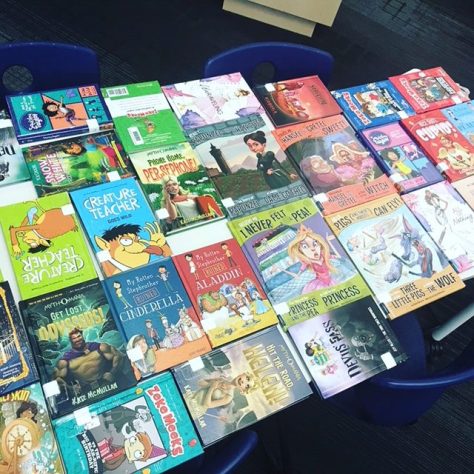
  • Students carried their bags to the tables and self selected 12 new books. Volunteers were encouraged to hold back and let students look. We wanted students to self select books because that’s a huge predictor of whether kids will actually read during the summer.  If a student was having trouble making selections, then volunteers would step in to have conversations and make suggestions.

  • When students had 12 books, they visited a volunteer to count their books. Some students had too many and needed to make decisions. Others didn’t have enough and went back for more. Volunteers also asked students about which book they were most excited about as well as what was missing from the selections. This helps Books for Keeps make purchases for next year.
  • When a class left, new books came out of boxes and onto tables and the process repeated again.
  • Each class had 20-30 minutes depending on the number of students.

I’ve been hoping Books for Keeps would come to our school for several years.  There have been many initiatives where I’ve tried to get some extra books in student hands for the summer, but none as large as this one. A few things I’ve tried include:

  • Giving Middle School the Worst Years of My Life to all of our 5th graders for World Book Night. https://expectmiraculous.com/2013/04/23/world-book-night-2013/
  • Giving all 3rd and 4th graders a copy of Pie. https://expectmiraculous.com/2015/03/26/give-our-students-some-pie-by-sarah-weeks/
  • Creating summer reading buckets (home libraries) for 100 students in multiple grades. https://expectmiraculous.com/2016/05/04/home-libraries-and-summer-reading/ and https://expectmiraculous.com/2016/04/12/building-home-libraries-a-community-collaboration/

Books for Keeps takes approximately $15,000 per school which means about $30 per child. They rely heavily on donations, so if this program speaks you to, check out their site and make a donation. http://booksforkeeps.org/ 

These 2 days were amazing and filled with smiles, squeals, and students jumping straight into a book to read.  I’ve gotten messages from families who said that their child got such a great mix of books that were truly of interest. I’ve also gotten thank you notes to send to Books for Keeps with lots of great feedback from students. I can’t wait to see how this grows across the years and how students’ excitement and expectations develop.

Seeing every student in the school right before summer began also surfaced some dilemmas and questions for me. A handful of students didn’t want books to take home and weren’t afraid to say that they had no plans to read during the summer because it was their time off. Those comments bothered me, but they also gave me information about work that needs to be done ahead.  Just handing books to them isn’t going to resolve that dilemma. I’m diving into some professional reading to help me begin to think more about this.

I can’t thank Books for Keeps enough for continuing to work tirelessly to get books into kids’ hands. Even with some bumps in the road, it’s an amazing program that was overwhelmingly welcomed by teachers, families, and students. Thank you to every donor who made the funding available to purchase books and thank you to the many volunteers who put in countless hours to prepare for these 2 days.

Happy summer reading!


Star Wars Day: May the Fourth Be With You

I’ve wanted to hold a Star Wars Day in the library for a long time, but it seems like every year something comes up that prevents me from doing it. However, this year, I put it on the library calendar early and crossed my fingers. By the time May 4th arrived, I had protected five 45-minute slots on the library calendar to host classes.

The signup was open to any classes. Three 5th grade classes, one Kindergarten, and one 2nd grade class signed up. We opened each session with Star Wars music and a reading of Chewie and the Porgs by Kevin Shinick. As students were seated, they selected one of four cards: porgs, jedi, storm troopers, and wookies. This sorted them into 4 groups to move into centers.

I knew our time would disappear quickly, so I wanted helpers at each rotation. I made a signup genius to send out to families, but I also invited 4th and 5th grade students to sign up.

Origami Yoda

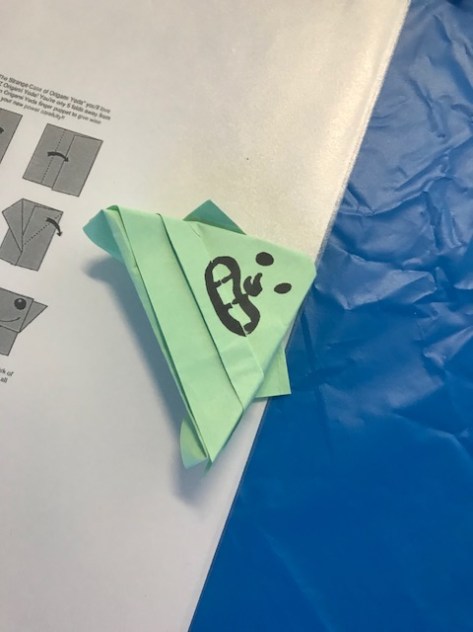
This station was inspired by the Origami Yoda series by Tom Angleberger.  Students saw the book series and then followed either a Youtube video (more difficulty) or printed visual instructions (easier) to create their own origami Yoda. The finishing touch was using black marker to add eyes, mouth, and any other details.

For the Kindergarten class, this station adjusted to making a Yoda headband since their fine motor skills aren’t as great for creating origami. They traced Yoda ears on green paper and added them to paper headbands.

Star Wars Name

This station was combined with origami. Students used a formula to create a new name for themselves. For the first name, they used the first 3 letters of their last name combined with the first 2 letters of their last name.  For the last name, they used the first 2 letters of someone’s last name and the first 3 letters of city where they were born. This name was written onto a “hello my name is…” tag and taped on their shirt. I loved to watch the concentration it took to figure out the correct letters and then the laughs as people tried to read one another’s name. It was a great lesson in spelling and phonics.


Tiny Light Sabers

This station was a hit. We used finger lights that I purchased on Amazon and put straws over the LED light. Students cut the straws to the length they wanted and used washi tape and feathers to jazz them up. We loved watching the tiny light saber battles that ensued. I put book at this station that featured light saber duels on the cover.

Chewbacca Puppets

Students used brown paper lunch bags with white & black construction paper to create a Chewie puppet. I didn’t use stencils for this station. I simply made an example and let them cut out teeth, eyes, and a nose in their own style. We did offer the Kindergarten class a few pre-cut objects to choose from.

Star Wars Doodles

At this station, students finished partial Star Wars drawings by adding their own creative details and coloring. I loved the impromptu storytelling that happened as students created their scenes.

Next year, I want to think about how I can expand this opportunity to more classes. I also want to think about more stations that connect with various areas of the curriculum. Each of these stations connected with a book, writing, or storytelling, but I would love to weave in some space science and some math. I’ll think on that, but overall, I loved seeing the enthusiasm of students especially in the Kindergarten and 2nd grade classes.

May the Fourth be with you!


Using Objects from Nature to Inspire Creativity

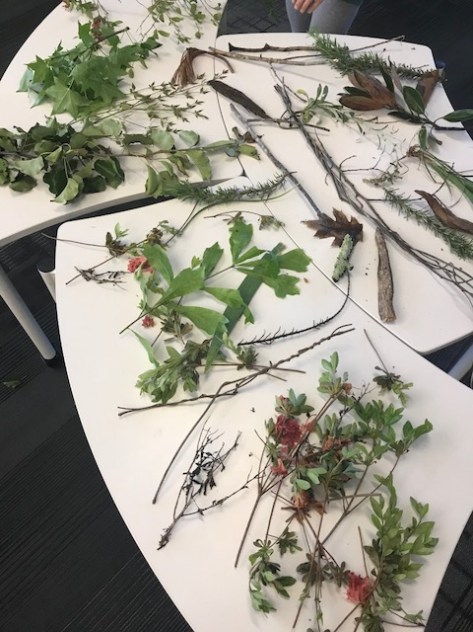
As we near the end of the year, I’m collaborating with Natalie Hicks, one our gifted teachers, to create a project with the entire 3rd grade. In science, 3rd grade studies habitats and human impact on them. Our school is also a “Green School” which offers many opportunities throughout the year for students to explore how we care for our planet.

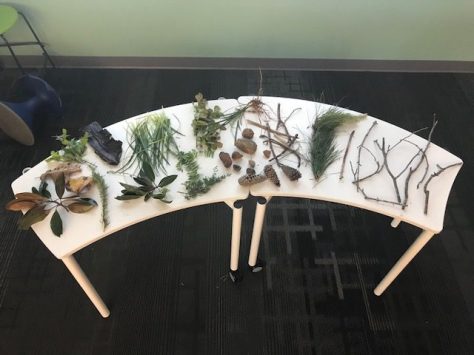
Each 3rd grade class is coming to the library for 2 one-hour sessions. The purpose is to use found objects from nature to create letters. Those letters are photographed so they can be used to spell various words and also inspire writing. Ms. Hicks and I both gathered as many objects as we could from outside the school and our own yards. Our original plan was for students to bring in objects to use for the project, but that piece didn’t happen this time.

Session 1:

As students were seated, they saw a clip from a Rose Bowl Parade video.

The purpose was to get them thinking about real-world examples of people using objects from nature to create. Another purpose was to think about the time and planning that went into the floats. Our students had a connection to the Rose Bowl since UGA played there this year.

Next, I segued into a book called Our World of Food: Discover Magical Lands Made of Things You Can Eat. Each page features a scene made with foods of a similar color and poetry that brings the scene to life. Again, we talked about how each object was intentionally placed into the scene.

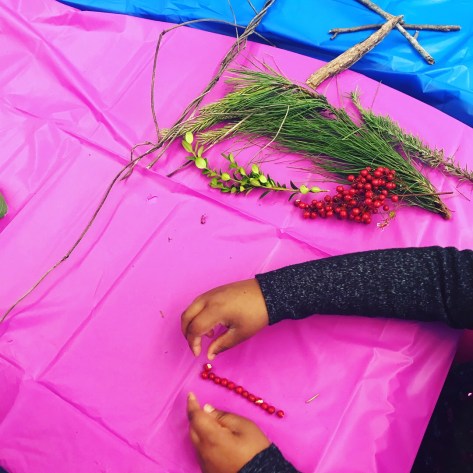
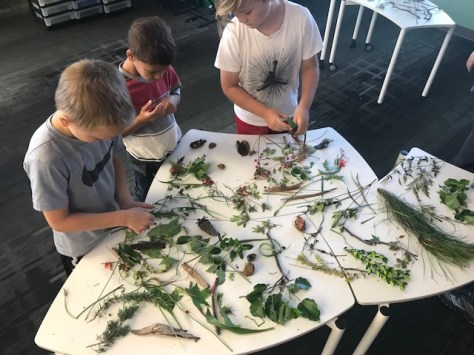
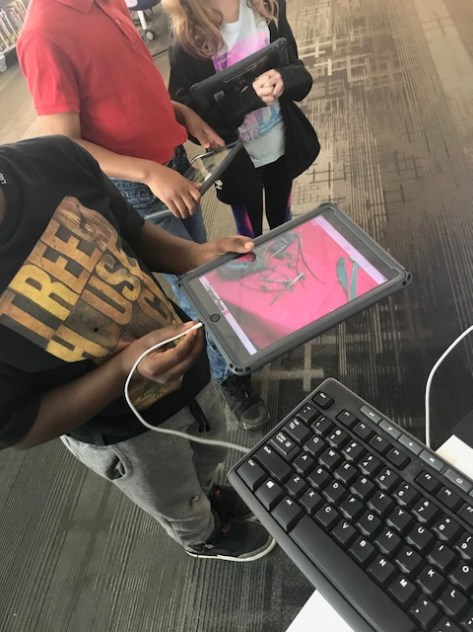
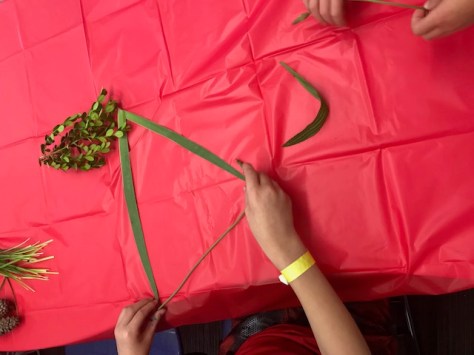
Finally, I gave students their challenge. They could choose up to 5 objects from our nature tables to create one of their initials. I asked them to think about the shape of their letter and which objects might be the best choices to form that shape. We looked at some pictures of fonts as well as some letters found in nature for inspiration.

I covered our library tables with colorful tablecloths to use as backgrounds and building spaces.  Students sat in groups of 5 and waited for their turn to collect objects. It was wonderful to have Ms. Hicks, the classroom teacher, and Ms. Em (EIP teacher) as support during this project. Ms. Hicks had conversations with students about their selections, while the classroom teacher and I supported students with questions about how to build their letters.

When letters were made, students used iPads to take a photograph and then bring the iPad to me to upload the picture in Google Drive.

Then, students returned their nature objects for the next class to use and went to Ms. Em to select nature poetry to read while others finished. My hope was that reading lots of nature poems would serve as a mentor text for the work we will do in session 2.

I was very impressed by how efficient students were. They selected objects, experimented with combining them in different ways, and moved through all the areas of the lesson with the help of adults. Adults were all able to circulate and have conversations with students about their selections, creations, and reading. I wonder how things would have been different if we had time for students to actually collect the objects themselves.

Before session 2, I’ll print the pictures so students can use them in their writing and recording.  We can’t wait to see how all of this comes together.
2018 Barrow Maker Fest

In addition to having regular makerspace sessions every Tuesday and Thursday in the spring, students also have the opportunity to work on an individual project to showcase at our annual maker fest.  To participate, students fill out a Google form sharing their possible project topics and whether they will complete the project at home or in our makerspace during school hours.  They also have the option of working alone or having a UGA mentor to help them.

I collaborate with Gretchen Thomas at UGA College of Education. I love seeing the relationships that my students develop with the UGA students, and they thrive knowing that they have a mentor to visit with and work with while they make their creations.  In the spring, she divides part of her UGA students to support our Tuesday/Thursday makerspace sessions while the other part supports students working on individual projects. My maker students don’t always meet with the same UGA student, but they have someone every Tuesday/Thursday who can support their work.

When students begin preparing for Maker Fest, we meet with them individually to see what type of project they are thinking about.

This year, I offered several categories for them to think about:

  • robots
  • cardboard
  • makey makey
  • littlebits invention
  • duct tape creation
  • 3d design
  • Scratch program
  • finger knitting
  • origami
  • strawbees structure
  • stop motion video
  • magic tricks
  • puppet/puppet show
  • magic tricks
  • something else! (This category meant students might explore our many craft books for ideas on projects to create)

Once students decided, we gathered the materials they needed and stored each project on the shelves in our makerspace storage room. This part is hard to manage and it feels a bit chaotic until we have the materials that each student needs.  Each Tuesday/Thursday they come for a 30-minute work session, gather their materials from the shelves, and work with me or a UGA student.  Some students complete their projects at home.

During the actual Barrow Maker Fest, we created a schedule so that every student who made something had two 30-minute windows to showcase their work.  There was also a schedule for classes to sign up and come to view the projects.  The entire UGA class came as well so that they could view the final projects as well as help students at tables.

In the end, 26 students showcased creations on a variety of topics which included:

  • a cardboard Earth robot
  • mason jar lights
  • a robotic arm
  • a cardboard pirate game with secret codes and a spyglass
  • a Python computer program similar to Google Translate which translated English to Pig Latin
  • a shadow puppet theater
  • a Littlebits throwing arm and car
  • Lego scenes and building station
  • 3D slinkies, Rubik’s cube, and Minecraft swords made with 3D pens
  • 3D action figure designed in Tinkercad
  • a cardboard robot suit
  • a cardboard tower
  • a car made from a mail tube
  • a stackable jewelry holder
  • magic tricks
  • Merge cubes
  • Osmo

They were so excited to share their work, have an authentic audience to entertain and ask questions, and see that their work inspired other makers.  Several students who came said they wanted to make something next year.

You can see many of these projects along with projects from other K-12 schools in the Clarke County School District at our CCSD Maker Fest.  It will be Saturday April 14 2-4PM at Clarke Central High School.  It is free and open to the public.  We hope to see you there.


Join Us for the 2018 Poem In Your Pocket Poetry Readings

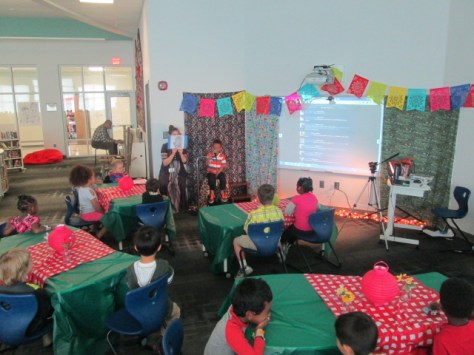
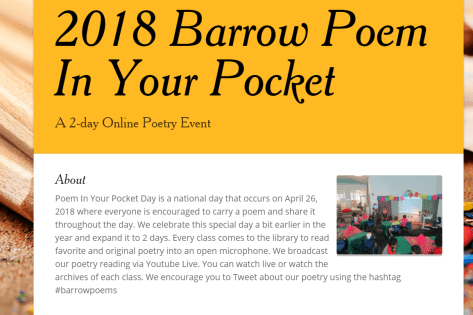
Each year, we celebrate poetry month by hosting Poem In Your Pocket days in the library.  Across 2 days, every class comes to the library to read aloud original and favorite poems into an open microphone.  We broadcast these readings over Youtube Live so that families, community, and beyond can enjoy our poetry too.

Our readings will take place from 8:00AM-2:30PM EST on April 12 and 13, 2018.

All the links to the Youtube events can be found at our 2018 Poem In Your Pocket Smore. https://www.smore.com/p9qbk

You can also view the schedule here:

Thursday April 12

8:00 2nd – VanderWall
8:30 2nd – Woodring
9:00 2nd-  B. Douglas
9:30 3rd-Morman
10:00 1st-Cunningham
10:30 1st Skinner
11:00 PreK-Trina
11:20 PreK-Heather
12:00 Lunch
12:30 1st Stuckey
1:00 K-Clarke
1:30 4th Coleman
2:00 4th Weaver


Friday April 13

8:00 2nd – Brink
8:30 K-Hocking
9:00 2nd-Boyle
9:30 3rd-Thompson
10:00 5th grade class 1 Freeman
10:30 1st Wyatt
11:00 5th grade class 2 Freeman
11:30 3rd-Haley
12:00 3rd-Arnold
12:30 K- Sandifer
1:00 5th grade class 3 Freeman
1:30 K- Lauren
2:00 4th Monroe

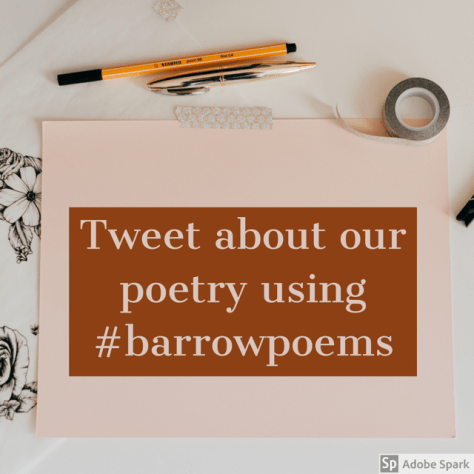
If you choose to watch our videos live or watch the archives, we encourage you to tweet comments to our students using the hashtag #barrowpoems  We’ll share your comments with students as they come in.  Happy Poetry Month!

Student Book Budget: Let the Readers Read

The last group of books from this year’s student book budget group has arrived.  Our spring break slowed us down a bit, but our Capstone books are finally ready.

When the books arrived, students worked together to unpack the boxes and check the packing slip.  Next, students made decisions about what genres each book would go into and added the genre label to the spine. Finally, they scanned the books into each genre subcategory.

The books were put on display in the center tables of the library as well as in the library windows. As the team was setting up the books, students were already checking them out.

This project always amazes me because it allows so many high-interest books to be added to our collection.  I’m to the point now where I reserve much of our book fair profit to use on this project. This is combined with Capstone Rewards dollars which stretch our budget a bit further.
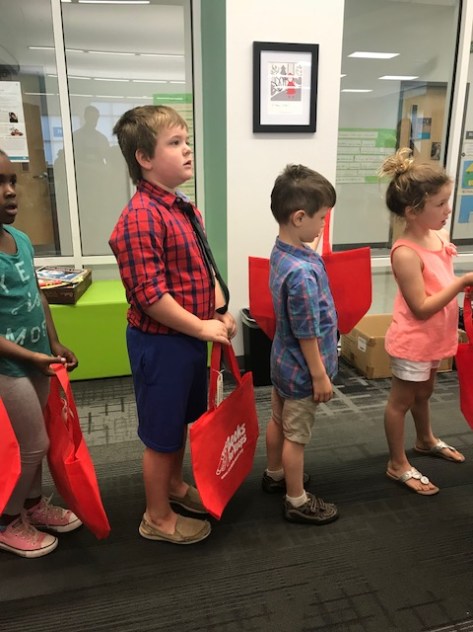
I’m also very grateful to Capstone for letting our book budget team members choose an additional book to add to the collection that is completely their choice.

This spring break, I traveled to Mankato, MN to speak to many of the Capstone employees about the work of students in my school.  The book budget team was a big part of what I shared.  After my talk, they even sent us some additional books to improve our fun facts section of the library since that was a category we focused on this year.

I was also able to go behind the scenes to see all of the steps an order goes through before it arrives at our school.  When the boxes arrived, I could tell the students about the many hands that went into creating the books as well as the people who helped with the order. Each book was gathered from the warehouse shelves by hand. The labels were lovingly placed onto each book by hand. Each book was hand-packed into boxes and prepared for shipping.
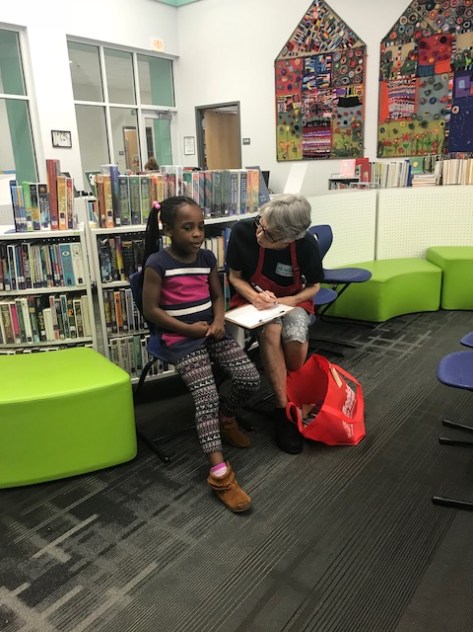
The experience of seeing all of the people behind the company is making me think more about next year’s group and what layers we might add on to our project.

Now, it’s time for the readers of Barrow to read the books that were carefully chosen based on the data we received.  We can’t wait to see readers checking out these books again and again.

Thank you Capstone for your generous support of our project.