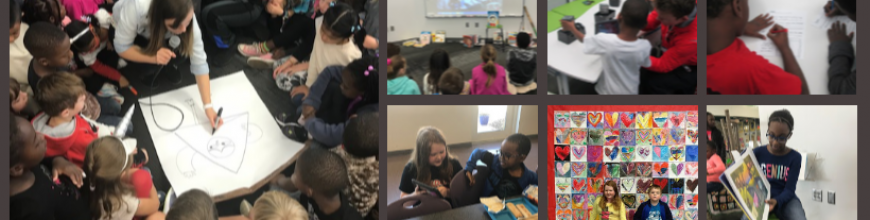
Let’s Make Our Mark and See Where It Goes for Dot Day 2015

How do you and your students want to make your mark on the world this school year?  International Dot Day, which is September 15ish, is the perfect time to make connections with other schools, spark creativity and collaboration, and see where it takes you for the rest of the year.  Whether you’ve celebrated Dot Day from its beginnings or you are just getting started, we invite you to get creative with your students and share that creativity with the world.
hocking mural (3)

From the official page:
International Dot Day, a global celebration of creativity, courage and collaboration, began when teacher Terry Shay introduced his classroom to Peter H. Reynolds’ book The Dot on September 15, 2009.The Dot is the story of a caring teacher who dares a doubting student to trust in her own abilities by being brave enough to “make her mark”. What begins with a small dot on a piece of paper becomes a breakthrough in confidence and courage, igniting a journey of self-discovery and sharing, which has gone on to inspire countless children and adults around the globe.”

There’s no “right” way to celebrate Dot Day.  In fact, every year people around the globe come up with new and creative ways to make dots and connect with others.  That’s the magic of this special day.
colAR (3)

What happens during a Dot Day connection?
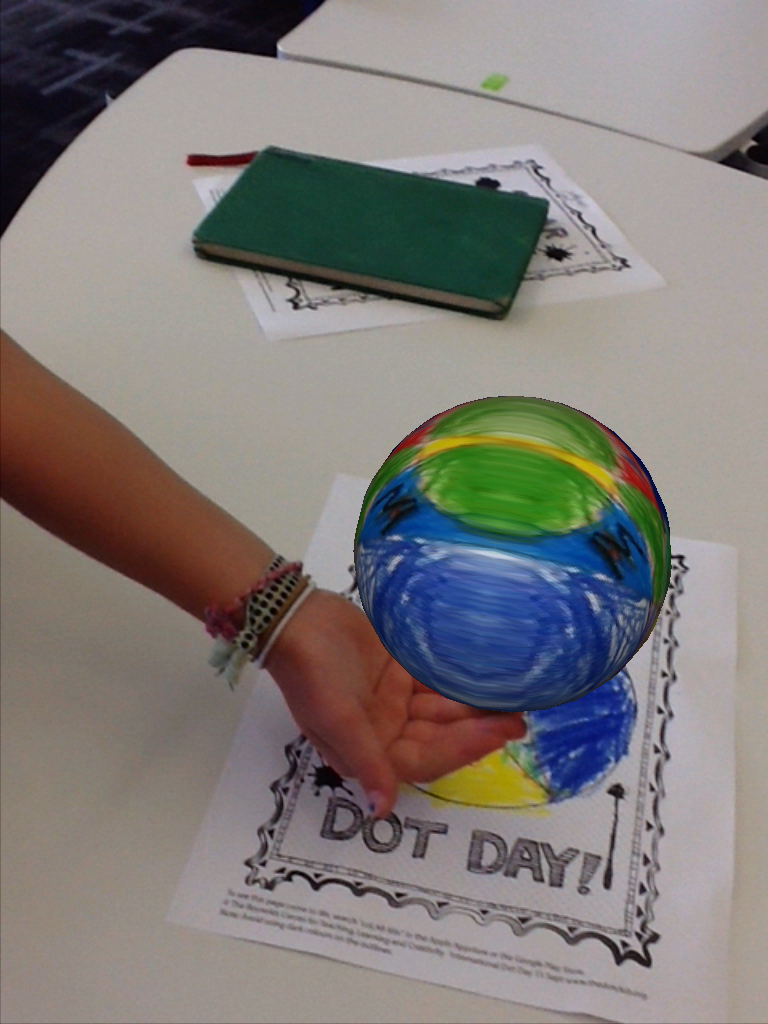
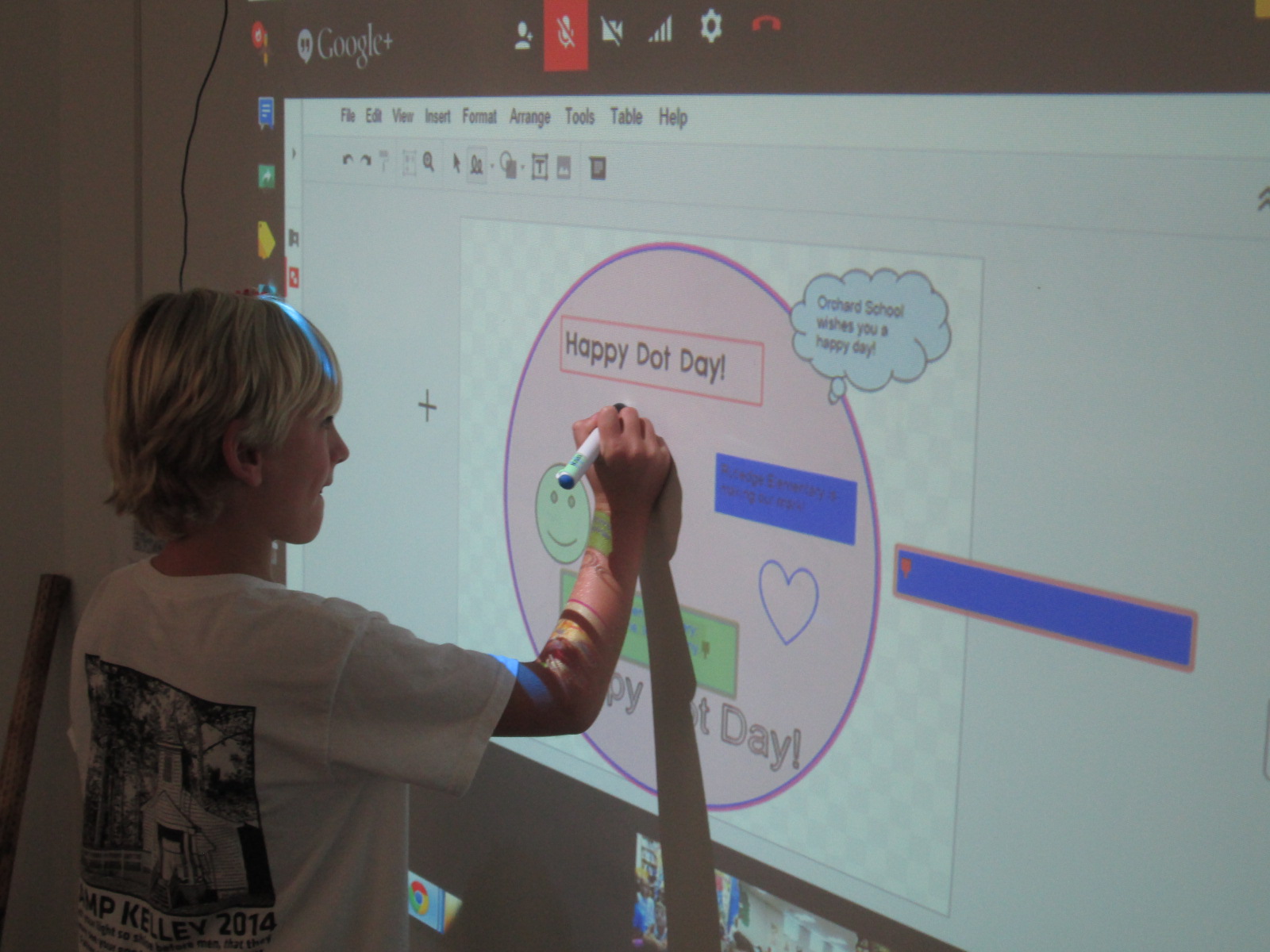
Often, we start by reading The Dot by Peter Reynolds or other dot-inspired books such as Press Here by Herve Tullet.  This is done via Skype or Google Hangouts with a connecting class. We begin to connect the dots with one another by learning a bit about one another.  Sometimes we create something together.  For example, last year students in Barrow Elementary made collaborative digital dots with connecting schools via Google Drawing.
Dot Day (37)

If you need some ideas to get started, consider taking a look at Matthew Winner’s past lessons or check out what others have posted in the Dot Day gallery.

Shannon Miller and John Schu’s Dot Day video is always an inspiration.

Also, check out the Celebridots page for dots created by some of your favorite authors and illustrators.

Many times connecting schools send some of their creations to one another through traditional mail.

How to get started

  1. Register your school on the official Dot Day page.  You’ll be added to the global map as well as gain access to the educator guide which is packed with information
  2.  Visit our shared Google Doc to start making connections with other schools.  We plan to make connections during the whole week of September 14-18.  Simply post your schedule, ideas, and contact information. Then, browse the doc for other schedules that match yours.  Skype in the Classroom is also a great place to make connections.
  3.  Start collaborating with your connecting schools and get ready to make your mark with your students.

Part of making your mark on the world is getting your students’ voices and creations out into the world.  As you connect, share your creations on Twitter using #DotDay and #Makeyourmark  Consider creating a blog post to show your students’ work to the world.

Now, make your mark and see where it takes you.
tinyurl.com/dotday15

Expecting the Miraculous with Cassie Beasley & Circus Mirandus

I’m drawn to powerful words and stories, and over the summer, my eye was caught by the cover of Circus Mirandus by Cassie Beasley.  I had seen the book getting considerable buzz, but even without the buzz, the cover, with its cutout top hat and hidden world beneath the tent, caught my eye.

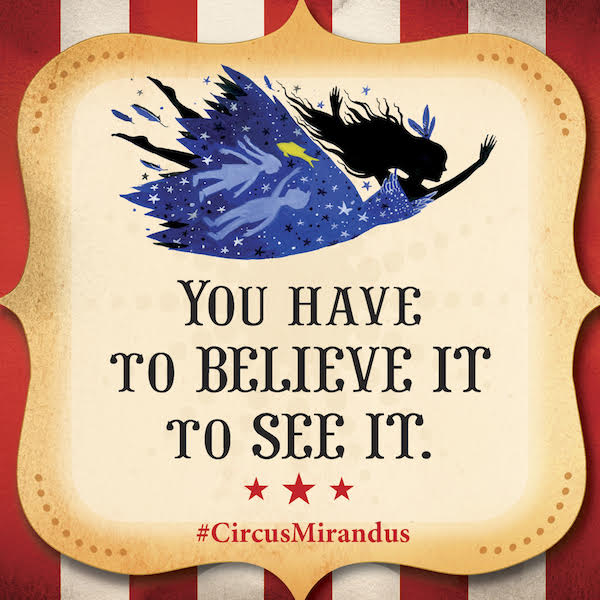
The back cover slogan, “You have to BELIEVE IT to see it”, spoke to me.  In fact, it spoke directly to our motto in the Barrow Media Center to expect the miraculous every day.  In our library, we believe in everything that we attempt.  We don’t always know what is going to happen, but we know that if we believe that we can do something, then miraculous things will happen even if they aren’t exactly what we thought would happen in the first place.

mirandus 3

This summer I visited our local independent bookstore, Avid Bookshop, and picked up my copy.

I only had to read a few words to know that I was holding magic in my hands.  Circus Mirandus is about a magical circus that only is visible to the people who believe in it.  In fact,  you can’t even get into the circus with a regular ticket.  Entry is different for each person who comes because each person has a different purpose for being there.  Micah Tuttle’s grandfather tells him fantastical tales of the Circus Mirandus and Micah first thinks these are only stories.  Granpa Ephraim becomes very sick and says that the magical Lightbender from the circus has promised him a miracle and he is doing his best to make sure the miracle is granted.  Micah realizes the circus is more than stories and makes it his mission to find the circus and bring the Lightbender to his grandfather to grant his miracle.  This book has the magic of Peter Pan, Wizard of Oz, Where the Mountain Meets the Moon, and more.

mirandus 2

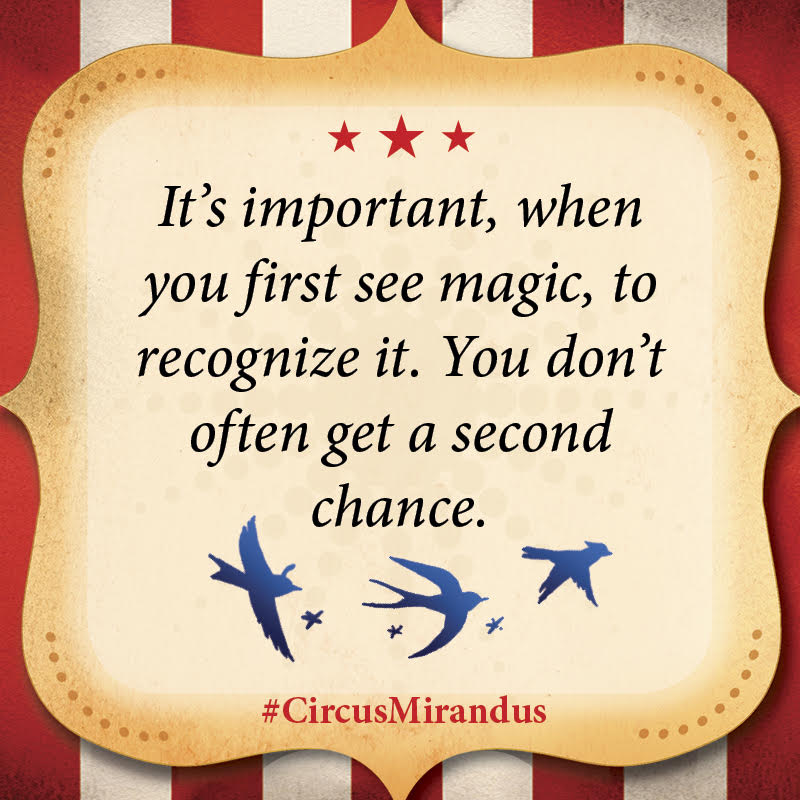
When I read, quotes stand out to me.  Sometimes there is a single quote from an entire book that resonates with me.  I often tweet it out.  It happened this time, too.  One quote stayed with me:

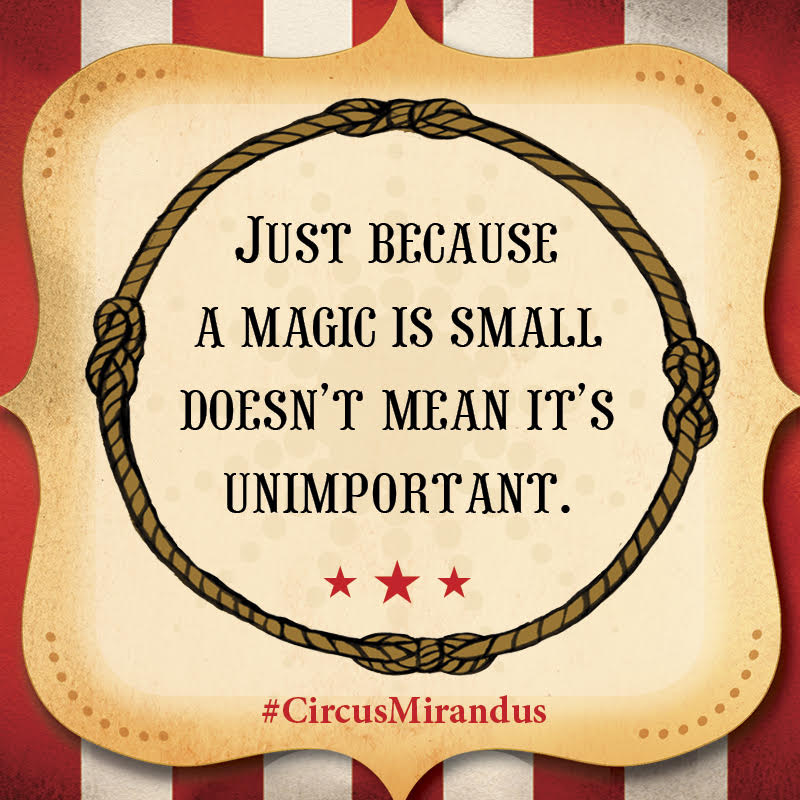
I won’t give away how this quote fits into the plot of the story, but for me, it reminded me of how every day in our library we expect the miraculous.  It reminded me that often times there are very small magical things that happen even though I may pulling my hair out, dwelling on all the things I haven’t accomplished, and thinking about all of the things that went wrong.  However, it’s those small, magical moments that stand out.  It’s those small magical moments that are the most important and remind me why I press on.  It’s those moments that remind me the importance of empowering the voices of our students.

mirandus 4

Even Cassie’s dedication in the book reminds me of the importance of empower our students to believe that they can do anything they set their minds to.  She writes in her dedication:

“For Daddy and Mama.  When I was little, you told me I could do anything.  I’m not so little now, but you keep saying it.  I’m starting to think you really believe it.  I love you for that.”

I didn’t even have to finish Circus Mirandus to know that I wanted my students to experience the book and that I wanted Cassie Beasley to visit our school, but when I did finish, I knew that she had to.  When I read that she lives in “rural Georgia”, I immediately emailed Rachel Watkins at Avid Bookshop to learn more.  Between me, Rachel, and Janet Geddis, we began a conversation about what an author visit would look like and started talks with the publisher and author.  It took some time, but in my heart, I really believed that Cassie Beasley would come to our school at some point this year.

Just a few days ago, we got the confirmation that Cassie will visit our 3rd-5th grade on September 3 at 1:00.  She will also do an in-store visit at Avid Bookshop.  As part of my proposal, I said that I would introduce the book to all 3rd-5th graders and would also get a copy for every 3rd-5th grade classroom to use as a read aloud.  I love Avid Bookshop, because they got us our 10 copies for the classrooms just in time for school to begin.

Students will have an opportunity to pre-order her book for signing.  We are also purchasing additional copies of the book to give to classrooms thanks to our wonderful PTA.  You are probably wishing that you could also get your signed copy.

If you are in the Athens area, visit Avid Bookshop on September 3 from 4:30-5:30PM.  If you can’t make it to Athens, you can still get your autographed copy.  Just visit Avid’s website to order a copy.  Make a note that you would like to get your book signed, and they will ship your book to wherever you are!

We look forward to meeting Cassie Beasley in our school on September 3.  Expect to see lots of tweets and pictures during the event and a full post afterward.  I highly encourage you to read Circus Mirandus.  Your life will be rewarded!

mirandus 1


Mo Willems Seriously Silly Exhibit at the High Museum of Art: Let the Planning Begin

Now through January 10, 2016 you can see an incredible exhibit of artwork by Mo Willems at the High Museum in Atlanta, GA.  As soon as I saw that the exhibit was coming last spring, I shared it with our art teacher, Rita Foretich.  We immediately began talking about a collaborative project and field trip.  She applied for a grant and both of us began thinking about which grade we might target and which standards we could weave in.

On July 11, the High offered an educators day which allowed educators and one guest to get into the museum for free.  This was a perfect time for me to see the exhibit without 100 elementary students and also to start thinking more about our project.  Thank goodness my wife went along so that I could take a moment to see the exhibit without chasing a 3 and 5 year old around.

As soon as we arrived in the parking deck at the High, we began seeing the Pigeon.  He was even in the elevator to the ground level.

And on the revolving doors at the entrance.

Before you even get to the main exhibit, there are some teasers along the way and some great photo opportunities.

You really have to keep your eyes open because there are characters and illustrations hiding everywhere.  Even this aspect could be woven into a field trip.  The museum provides its own scavenger hunt, but I think it would be fun for kids to write down all of the characters that they find along the way or count the number of pigeons they find and write down the locations that they found them in.  Of course, to recognize all of the characters, the kids would need to read all of Mo’s stand alone books and at least one of each of the series books.

The actual exhibit is grouped by series as well as stand alone books.

I loved the wall of ice ream where the Elephant and Piggie illustrations are found.  There’s even a pigeon hiding on this wall just like the end papers of the books.

One of the things that I immediately noticed was the pairs of illustrations that showed a sketch by Mo Willems followed by the final drawing before color was added.  This would be a great process to replicate with students in our project by having them create first, second, ….drafts of their art before drawing the final art.

I also noticed the illustrations from Knuffle Bunny.  The drawings were done without the digital photographs.  I could see this being incorporated into a project on mixed media and layering drawing and digital photographs together.  Having this image to show students can give them an idea of how to imagine the digital photograph in their illustration before adding it.

Of course, the thing that I love most about Mo Willems is how simple his artwork is without being oversimplified.  In Elephant and Piggie, for example, there is very little on the page other than speech bubbles and the characters.  However, each line drawn around the characters, each raised eyebrow, upward looking eye, outstretched arm, etc gives life to the character and reveals the thoughts, emotions, and actions of the characters.  To me, there is great potential in a project around this aspect of Mo Willems.  I could see us studying his artwork very carefully for all of the subtle details that allow us to know a character’s emotions and actions and implement those same ideas into our own characters, stories, or new versions of Mo’s stories.  The exhibit is filled with numerous illustrations to show these details up close.

The exhibit continues in the Greene Family Learning Gallery where you can learn the steps to draw the Pigeon as well as practice drawing him with different emotions.  I snapped a picture of the directions because I plan to incorporate this into either a center in the library or a lesson in our project.

In the learning gallery as well as the exhibit, you can pick up a scavenger hunt to do while you are in the exhibit, but this scavenger hunt could also be used as a way to look closely at the whole body of Mo’s work.

I loved that the gallery included a bus driven by the Pigeon so that you could take a fun picture like this one.

As soon as we get back to school, I’m going to debrief my experience with the art teacher.  We’ll start looking at our own standards as well as the standards of other grade levels and narrow down to which grades, what project, and which standards we will weave together.

Collaborating brings together the expertise of everyone involved.  I love that I can bring my knowledge and observations as a reader and pair it with the art teacher’s expertise in art terminology and technique.  When we put that together with the interests of the kids and the expertise of the grade level teachers, we have a crowdsourced project that is fun, enriching, authentic, supported, and driven.  I can’t wait to see where this project goes this year.

Think about who you could collaborate within your school.  If you’ve never done a project with the art teacher, I recommend it.  I love that a project can flow from the library to the art room to the classroom and back.  Even if you don’t have a big museum exhibit like this near your school, there are endless possibilities when educators work together with students.

What Fairy Gardens Taught Me About Makerspaces, Teaching, and Learning

Entertaining a 5 year old and 3 year old during the summer is a big job.  I love being a parent, and it has made me grow so much as an educator.  Summertime brings many days of opportunities for adventures.  We get out of the house every single day and go somewhere whether it’s the botanical gardens, the local UGA campus, the local zoo,a movie, or the pool.  In between all of the fighting that happens between a brother and sister, there is a lot of curiosity about the world, and I love watching this unfold during the summer.

Recently, Athens held its big summer music festival, Athfest.  A part of this festival is an artist market, and my kids loved seeing what was in each tent.  Their attention was most drawn to a booth of fairy gardens.  These artists had created living pieces of art inside picture frames and jars.  They had made every single item in the gardens.  Building on my kids’ curiosity of this art, I decided we would make fairy gardens one day.  The only instructions we had were the memories of what we had seen at Athfest.  I intentionally did not look up examples on the computer because this was not a copying activity.  I wanted this to be full of investigation, dreaming, tinkering, and creating.  In fact, I really love not planning out every single detail of what we do because I can just see where the curiosity takes us.

We started by looking around our house for fairy homes.  We looked at several pickle and jelly jars as well as empty flower pots.  Alora and Anderson each chose their favorite.

Then, we had an outing to the local hobby and craft store to find trinkets for the fairies.  I didn’t have a specific budget in mind, but I like a good bargain, so I didn’t plan to spend very much.  We got a basket and each child got to put things into the basket as possibilities.  There’s not really a “fairy garden” section in the store so you have to really wander around with a fairy eye and think about what a fairy might like in his or her house.  We spent a good amount of time in the dollhouse section of the store.  Finally we made our way to the clearance section which was a hodge podge of all kinds of stuff.  We really had to dig here.  After the basket had a good amount of stuff, I got out my phone calculator and started looking through the basket.  We sorted piles of “definitely want”, “kind of want”, and “don’t want”.  As Alora and Anderson were making those decisions, we talked about price and also how many items were in each pack.  They knew they would be sharing so they were more interested in packs that had multiple items in them that could be split up.  After agreeing on an amount, we visited the register, chatted with the cashier about fairy gardens, and paid our bill.

Back home, we took to the outdoors with a basket.  We did a nature walk and collected free items for our gardens.  On our walk, we talked about what to touch and what not to touch.  We collected sticks, rocks, pine cones, moss, and leaves.  Finally, we prepped our fairy gardens.  Again, we didn’t specifically look up what we should put, but we talked a bit about the layers in the Earth and decided to make some layers in our gardens.  We filled the bottom with rocks.  We didn’t have any sand, but we noticed that there were some rocks along the sides of the house that had been broken down a lot by the water gushing out of the gutters.  We talked about the rock cycle and erosion while we shoveled up some of this sand and bits of rocks to make another layer.  Finally, we put a layer of dirt.

Back inside, we added some water to pack everything together a bit and then topped our containers off with some moss.  We spread out all of the items from our nature walk as well as all of our trinkets from the store.  They both started placing items into the gardens and making decisions about what the fairies would like the most.

When their construction was complete, we topped off each garden with a metal candle shade from our junk closet and placed all of the remaining items in a ziploc bag so that they could trade out things in the gardens when they wanted to.  The gardens went to each child’s room.  At bedtime, I went in Alora’s room and she was busy once again.  On her own, she had gotten a roll of tape and a ziploc bag.  The ziploc was on top of the metal shade and was securely taped on.  When I asked about it, she told me that if a fairy went inside she didn’t want it to get out.  Nevermind the gaping hole on the front of her flowerpot.  I loved how she was already extending what we had started.

It really wasn’t until that moment that I started reflecting on the whole experience: where we had been, where we could go, and what implications it had for my own teaching.

A Few Topics We Explored:

  • perspective through the eyes of a fairy
  • financial literacy through budgeting and decision making
  • speaking and listening
  • layers of the Earth
  • habitats
  • erosion and rock cycle
  • plant identification
  • problem solving
  • reusing
  • safety
  • art
  • creativity

A Few Potential Extensions:

  • reading fairy stories to learn more about fairy behaviors and needs
  • building upon Alora’s idea of a fairy trap.  We could use littlebits to make an alarm to alert us when a fairy is inside.
  • adding electronics and circuitry to our garden.  To give the appearance of a fairy or even to add some light for an existing fairy, we could use littlebits or leds with coin cell batteries.  This could lead to a whole exploration of circuits and electricity.
  • spending more time learning about terrariums and the types of plants that could live inside a jar.
  • storytelling based on our fairies and fairy gardens.

Some Takeaways

  • Some of the best learning experiences can happen when you don’t have every detail planned out. We had a goal, which was to build a fairy garden, but we didn’t lock ourselves into a series of steps.  While I love to plan, I think we often miss out on some incredible learning opportunities with students when we aren’t observing, pausing, listening, and reflecting.
  • Our library makerspaces are a place where these types of experiences can launch, but the space alone does not create the learning.  I add a few layers to our makerspace each year.  More stuff brings more possibilities.  However, I learned last year that you can’t just turn kids loose in the makerspace and expect that they are going to come out with an amazing project.  There’s a big inquiry piece that is amplified through conversations with an educator like the librarian.  Kids can come into the makerspace to dream, tinker, and create, but it is up to us to be observing, listening, reflecting, and inquiring to take the student learning to the next level.
  • When students are engaged through something that is of their own interests, multiple required standards can be woven in.  They may not happen on the timeline that comes from the district or state, but they can be woven in.  My struggle, just like many educators, is how to replicate this type of individual experience with a class of 25-30 students.  It can be done.  I believe it can, but it is very tricky.
  • I thought back to my experiences with Kelly Hocking, a kindergarten teacher at our school.  She can take just about any topic that most of the class is interested in and create a magical year long project that weaves in multiple standards, experiences, and projects.  The fairy garden could easily be that kind of project, but I’m not telling everyone to go out and make fairy gardens.  I think we need to listen to our students’ voices, find their interests, and somehow find connecting threads that allow us to create projects and experiences that honor those while still upholding the standards we are required to teach.

I know there is more here, but my brain is in summer mode and I’m still trying to entertain a 3 and 5 year old as I write.  I’m going to continue thinking on this.  If you have your own thoughts, ideas, extensions, takeaways, etc, please leave them in the comments.

Coming Soon from Peachtree Publishers: Lilliput by Sam Gayton


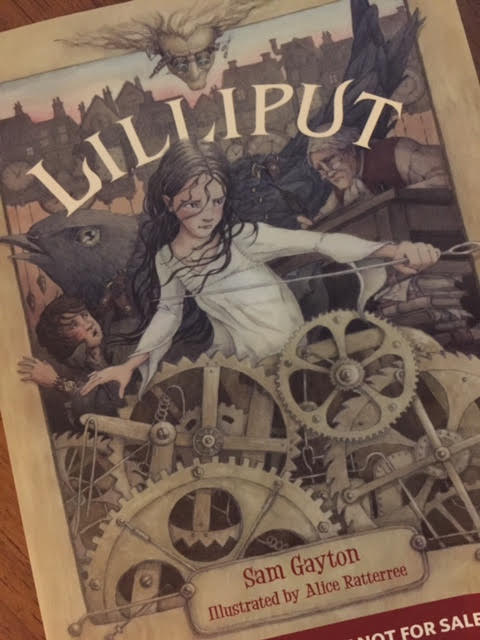
LilliputSummer is a time for recharging, reflecting, and reading! Each summer I find myself with a little extra time to take a look at my stack of books that are in my ever-growing to-be-read pile.  In May, I received a package from Peachtree Publishers. It was wrapped in an aged box with a book, hot chocolate, thimble, and a letter.  I was immediately drawn to the artwork on the cover of Lilliput, written by ‘Sam Gayton and illustrated by Alice Ratterree.

The cover is filled with many details of characters, events, and objects in the book.  This summer, as I found time to read the book, I often looked back at the cover and understood a little more about the illustration that had caught my attention from the very beginning.

Lilliput is the story of Lily, a Lilliputian, who was stolen away from her home by the famous Gulliver of Gulliver’s Travels. Lily is being held captive by Gulliver while he writes his book of his travels.  She is his proof that the land of Lilliput actually exists.  Lily hatches multiple escape plans to get back to her home, but she repeatedly gets caught and punished for her efforts.  Across the course of her escapes, Lily meets a cast of amazing characters:

  • Finn, a clock maker’s apprentice who is being held prisoner himself
  • Mr. Ozinda, a Spaniard with a famed Chocolate House
  • Swift, a bird caged within a clock
  • Mr. Plinker, an evil clock maker who designs clocks that torture or force people to spend most of their time working rather than having fun

There really is a character for everyone whether you love animals, evil villains, giants, spoiled bratty girls, clever boys, or fairies.  Throughout the book, you’ll find several steampunk illustrations by Alice Ratterree.  I love every one of them!

The book is divided into 3 parts: Escaping, Searching, and Leaving. Each chapter is fairly short, which I love.  Short chapters make me read a book so much faster.  I always think, “I can read one more chapter. It’s only a few pages.” Before I know it, I’m done with the book.  I find this a big selling point for reluctant readers as well.

Lilliput is filled with adventure. You’ll be cheering Lily on as she works with other characters in the book to get back to the place where she belongs.  You’ll find yourself clenching your toes as you read faster and faster to see if this plan is the plan that finally works.  You’ll want to get your own revenge on the evil Mr. Plinker and stinky giant Gulliver.

My favorite quote from the entire book was:

It made me think about all of the things in the world that have held me back and all I’ve done to work to get beyond those barriers. Lilliput will inspire readers to keep trying no matter what obstacles are standing in their way.  Just when you are at your point of giving up is the point where you need to keep trying the most.

I highly encourage you to check out Lilliput when it is released on August 1, 2015.  I can’t wait to recommend this title to all of the Barrow readers when we return to school.

You can learn more about Sam Gayton here.

You can learn more about Alice Ratterree here.


We are Honored to Receive a James Patterson Partnership Grant!

Back in March, James Patterson and Scholastic announced an incredible opportunity for school libraries around the country.  From the official press release:

March 9, 2015 — New York, NY — As part of an ongoing effort to keep books and reading a number one priority in the United States, James Patterson has announced that he will donate $1.25 million to school libraries this year. In the first-ever partnership of its kind, Patterson is joining forces with Scholastic Reading Club to administer funding applications to their network of 62,000 schools and 800,000 teachers. Scholastic will match each dollar with “Bonus Points,” which teachers can use to acquire books and other materials for their classrooms, at every school that receives an award. Applications to nominate a school library for a donation can be found here: www.scholastic.com/pattersonpartnership.

James Patterson is donating this money because he believes that fewer children are growing up in a household full of books – and that the effects of this absence could have a profound impact on a child’s future, and on the future of our country. Every child in America should have access to books and a functioning school library, and he believes that improvements in school libraries will foster children’s love of reading and boost their academic achievement overall.
I immediately took advantage of this opportunity by writing a 300 word or less application for our library. My hope was to get a $10,000 grant to support our student book budget project.  Here’s what I wrote:
Each year, I reserve $1000 in the library budget for a project called “Student Book Budgets”. This money is completely controlled by students to purchase books for the library that matches the reading interests of the entire school. Over time, we have developed a dependable process.  A group of students is chosen based on a variety of criteria, including students who have trouble finding books.They create a survey in Google forms and use iPads to survey all grades.  The students analyze the data to see what the top reading interests are. They establish goals and divide the budget among these goals. We send our goals to library vendors who bring in matching book samples and catalogs. Students make wish lists that exceed our budget. Students narrow the list to match our budget. Tough decisions are made about which books to keep and eliminate. I order the finalized lists. While we wait, students come up with a marketing plan. The students unpack the books and get the honors of the first checkouts. Within hours of putting the books out, they are all checked out and remain among the most popular books.I have shared this process on the national level and many libraries have benefited from the idea. The problem with this process is that we obtain an entire school’s reading interests, but our limited budget only allows us to honor a few of them. If we have $10,000, we could expand our reach to include more student interests and not feel that all of our work creating lists of books is whittled away during the budget process. I am confident that we could spend the money in a way that values the reading interests of our entire school.
Unpacking (10)
In May, I received an email letting me know that I was a finalist for the grant, but I of course had to keep that a secret, which was very hard to do!  I submitted some additional info and waited some more. Then, in late May, my principal received the call.  Our library was award a $5000 grant from James Patterson with a $5000 matching grant from Scholastic Book Clubs, so we essentially have $10,000 between vendors of our choice and Scholastic Book Club to support our student book budget for the 2015-2016 school year.
Unpacking (9)
I plan to start this project very early in the school year and involve as many students as possible so that students can enjoy the books that we purchase throughout the school year.  Thank you James Patterson for believing in the power of libraries.  Thank you Scholastic for amplifying this opportunity and matching it with your own resources.  Congratulations to all of the libraries who received grants in this first round of announcements!  I can’t wait to share the news with this year’s book budget students and blog about our process in selecting books.
Avid (2)

Congratulations to the Flipgrid 2015 Graduation Voices Winners, Top Voices, and More

I was honored to be one of the judges in Flipgrid’s inaugural Graduation Voices contest.  Graduates of high school and college contributed their voices to two grids to complete the sentence, “To me, graduation means…”  Almost 200 graduates added their voices between the two grids, and I enjoyed watching all of them along with fellow judges Shannon Miller and Alec Couros. Congratulations to the two winners, Eliot and Jay.  They will each receive a new Apple watch.  You can read the full post on Flipgrid’s blog. I also send a huge congratulations to the other top voices on the grids.
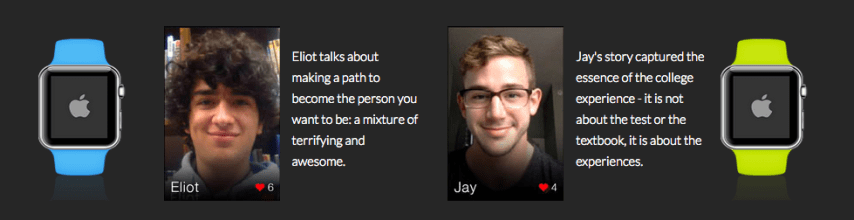

Judges’ top choices for Graduation Voices 2015

High School

Watch Ami’s video here. Watch Anthony’s video here. Watch Ben’s video here. Watch Guillermo’s video here.  Watch Kyle’s video here.

College

Watch Abbie’s video here. Watch Alyson’s video here. Watch Jamie’s video here. Watch Liz’s video here.  To view all entries to the #grad15 grid, click here. Since I had the pleasure of watching every single video, I heard many standout voices.  Every video was special in some way, and some had me laughing out loud.  Graduation means so many things to so many people.  We all might think of it as closing one chapter and starting another, but most of us have other reasons we love graduation.  High school and college are a time to find yourself and further develop yourself as an individual.  Bravo to these students for letting their personalities shine through.  I want to recognize a few of the voices that made me smile in their own way.

Neil’s: I’m done with school!

You know you all want to binge watch Netflix and eat some junk food at 3AM.

How about the freedom to buy baked goods?

The end to regulated lunches?

Here’s to sleeping in!

Spread your wings and prepare to fly from sea to shining sea

Time to do whatever you want

The end to pointless homework

Getting to go home!

Get on board that train

I wish all of these graduates the best as they continue on in what life has in store for them next.  Go out and change the world!

Finch Robots are Coming to Our Library Makerspace in Fall 2015

It is officially summer in the Barrow Media Center, so things will be a bit more quiet here on the blog for a few weeks.  Summer is a time for recharging, reflecting, and dreaming up ideas for the upcoming school year.  I’m excited to announce one of a few summer announcements that will be coming your way.  Our library makerspace will feature 12 Finch Robots by BirdBrain Technologies during the 2015-2016 school year.  The robots are on loan to us for the entire school year, and this loan comes with the possibility of these robots being a permanent donation to our space.

A few months ago BirdBrain Technologies announced an expansion of their Finch Robot loan program to include libraries.  I immediately contacted them to see if school libraries were included in this opportunity or only public libraries.  They encouraged me to apply, so it didn’t take me long to put together a proposal for these robots to become a part of our makerspace for use within the curriculum as well as our exploration time.  I’m also dreaming up some fun events for hour of code in December that will involve students, teachers, and families.  These robots will of course be a part of that as well.

We are excited to start exploring suggestions for using the Finch on their site.

What exactly is a Finch?  This video explains it best in three minutes.

I can’t wait to see what students are able to accomplish with this new addition to our makerspace.  For now, here’s the official press release from BirdBrain Technologies.  I’ll share what we do when the robots arrive in August.

Finches Land at David C. Barrow Elementary

David C. Barrow Elementary has been selected to participate in the 2015­2016 Finch robot loan program. The program will provide the school free access to 12 Finch robots for the 2015-­2016 school year, allowing over 600 students, teachers, and families exposure to an engrossing and interactive tool for learning computational thinking. BirdBrain Technologies, creator of the Finch, offers the loans to inspire young coders across the country, especially those who might not ordinarily have the opportunity to program a robot. The Finch robot is a product of Carnegie Mellon University’s CREATE lab. The Finch is designed to support an engaging approach to the art of computer science from preschool to college, with support for more than a dozen age­appropriate programming languages and environments. During 2014 Birdbrain Technologies loaned out hundreds of Finch robots to school districts across the country, and reached over 15,000 students.

1936 Fifth Ave, Pittsburgh, PA 15219

P: 888­371­6161 | F: 412­283­9134

info@birdbraintechnologies.com

2015 Student Book Budgets: The Final Steps

unpacking (30)

This year’s student book budget group has been one of the largest groups, but one of the most thorough groups I’ve had.  To recap, our student book budget group is a group of 4th and 5th grade students who develop a reading interest survey, gather data from the whole school, analyze the data, set purchasing goals, meet with vendors, and spend a budget of approximately $2000.  I assist them, but the decisions are completely driven by students.

unpacking (28)

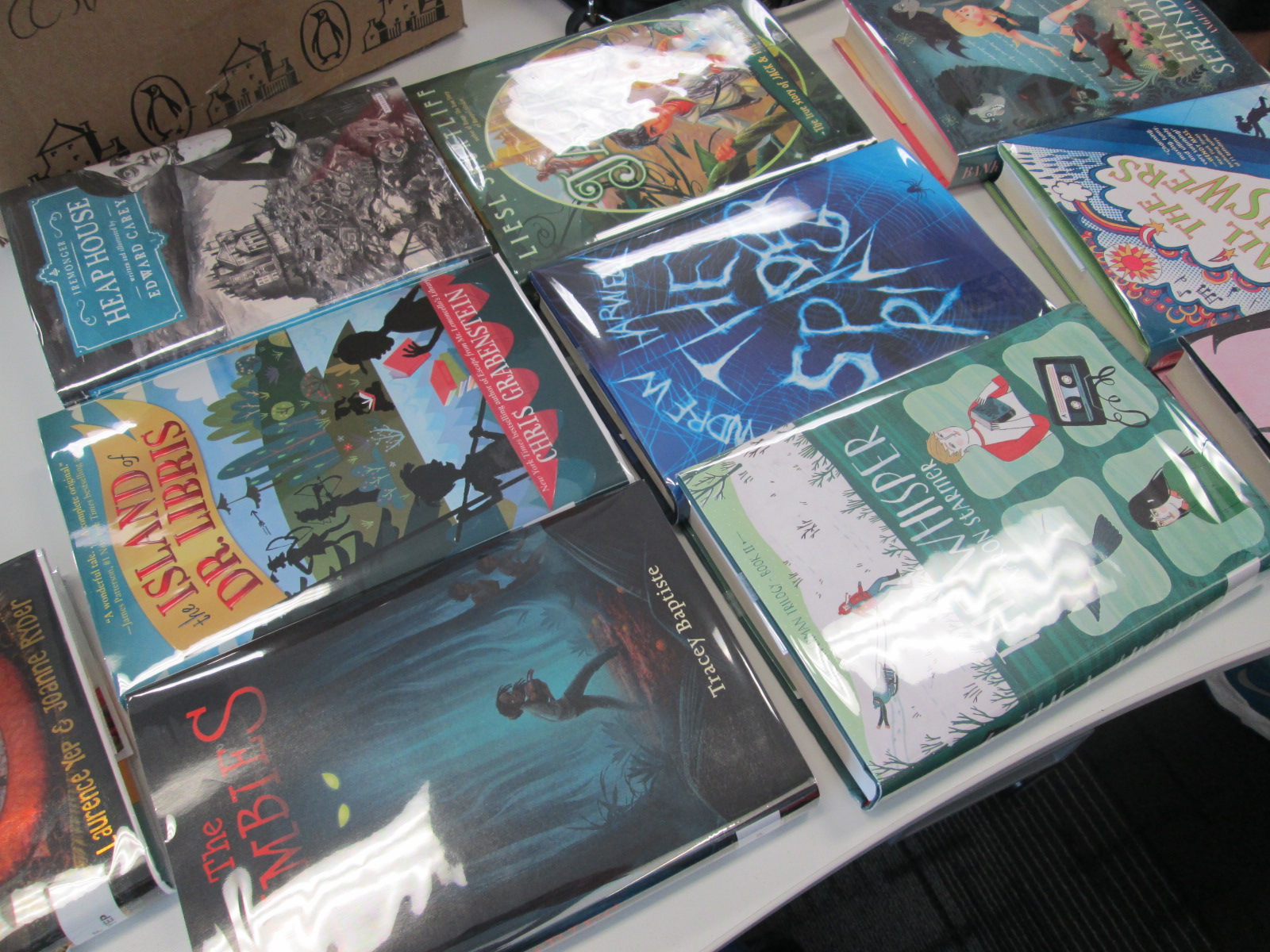
This year, we got started a bit late, so we didn’t get all of our books until the very last week of school.  After a lot of debate, the students decided to prepare the books for checkout, enjoy looking at them, and then set them aside for the beginning of the school year next year.  It was a hard decision, but we think it will be so exciting to walk into the library on the first week of school with over 150 new books to choose from.

unpacking (24)

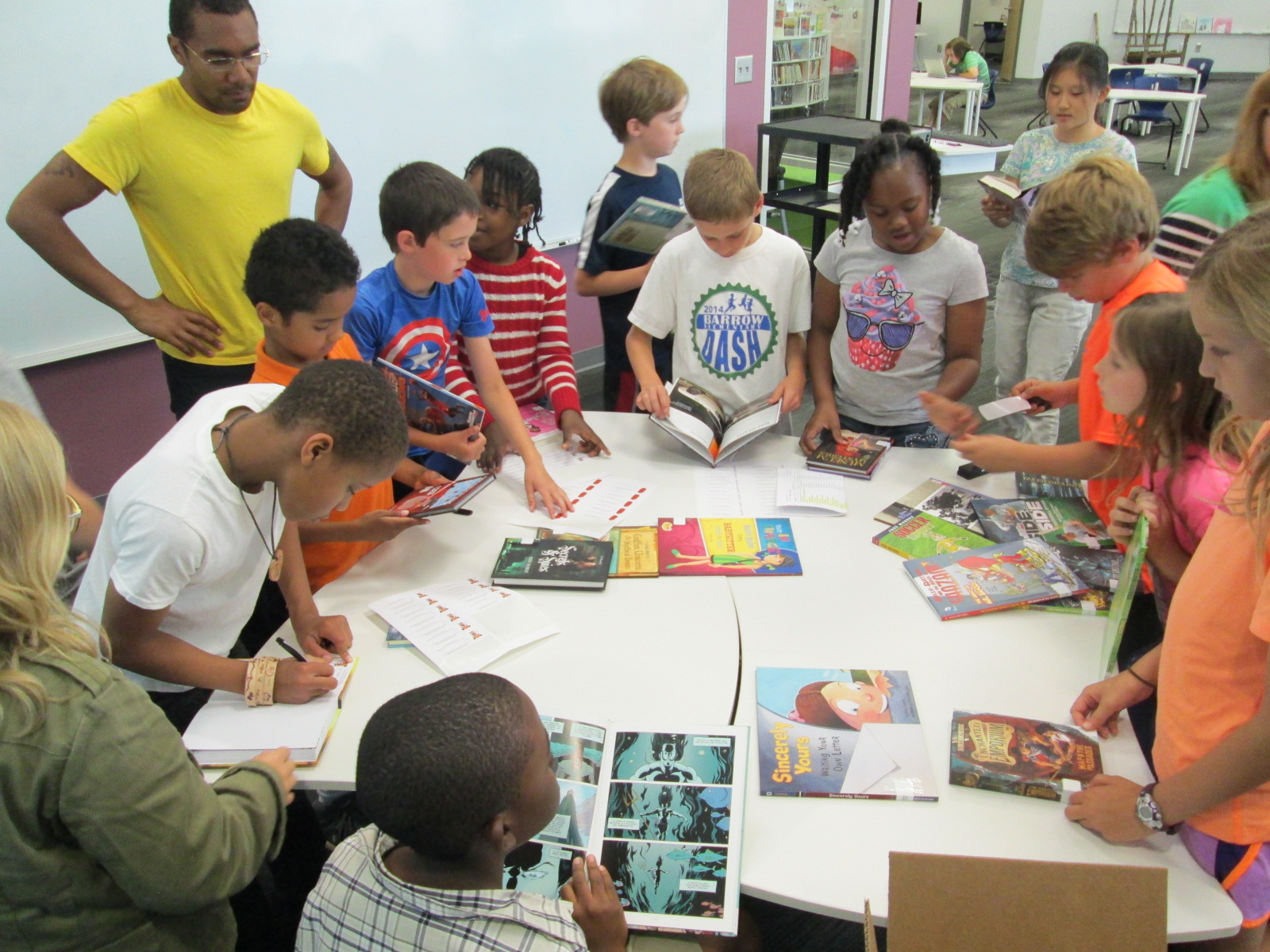
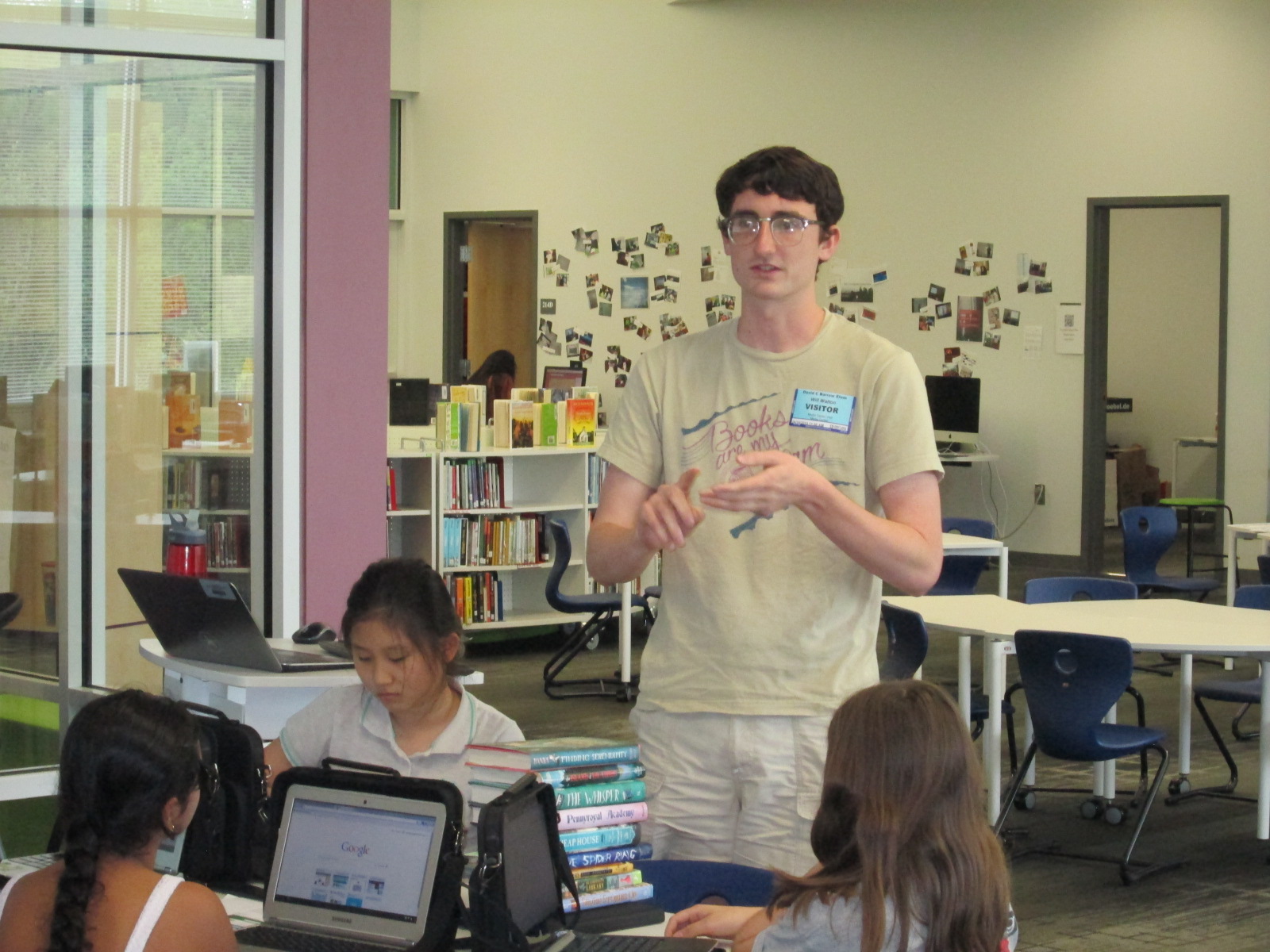
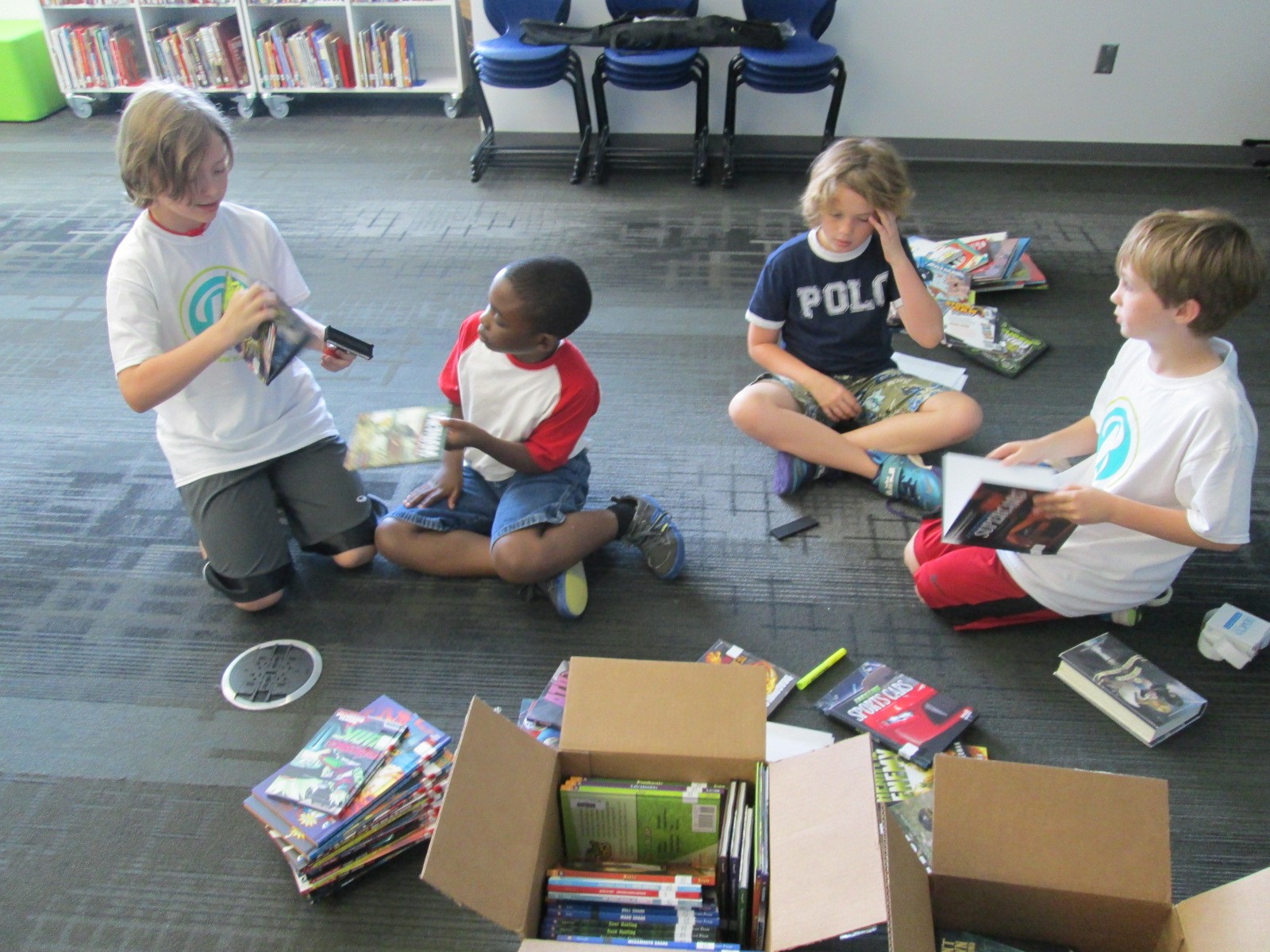
On our final day together, some of the students gathered in the library for the big unpacking. We highlighted the books on our packing list, inspected them, stamped them with the library stamp, and started enjoying them.  One student said, “This needs to be your motto. Unpack, stamp, and enjoy.”

unpacking (2)

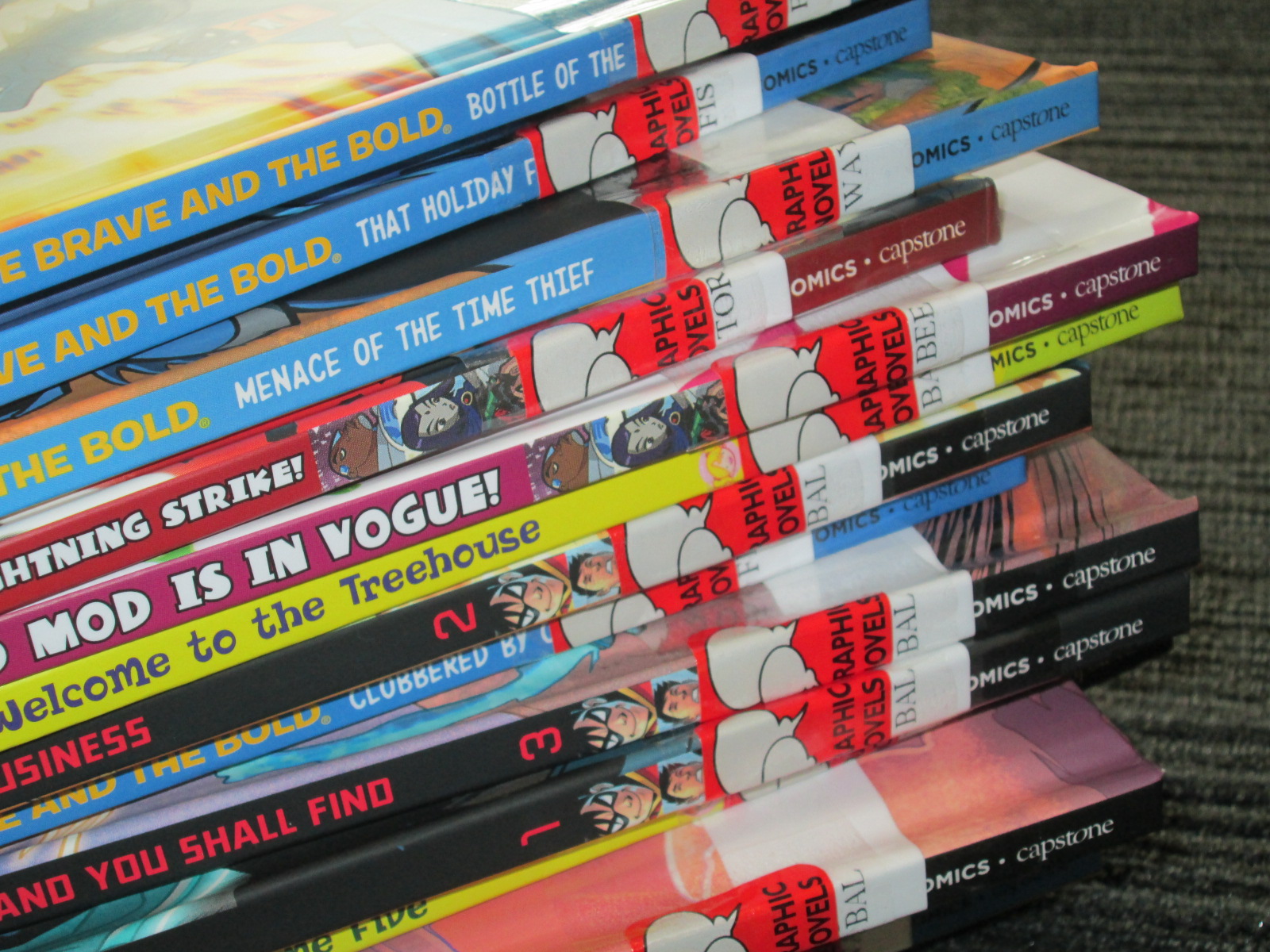
We realized that several of the books were cataloged as fiction but were really graphic novels, so we took time to label all of those books with a graphic novel sticker so that they could be easily found with other graphic novels.

unpacking (26) unpacking (25)

Once the books were enjoyed by the students, we sorted them into stacks by type of book and took their pictures.  These pictures will be used next year to promote the books at the beginning of the year.  It was fun to see all of the books grouped together to actually see how we distributed the money between our goals.  I think some of us realized we may have been a bit heavy in some areas of our budget, but I don’t think anyone will be disappointed in these great selections.

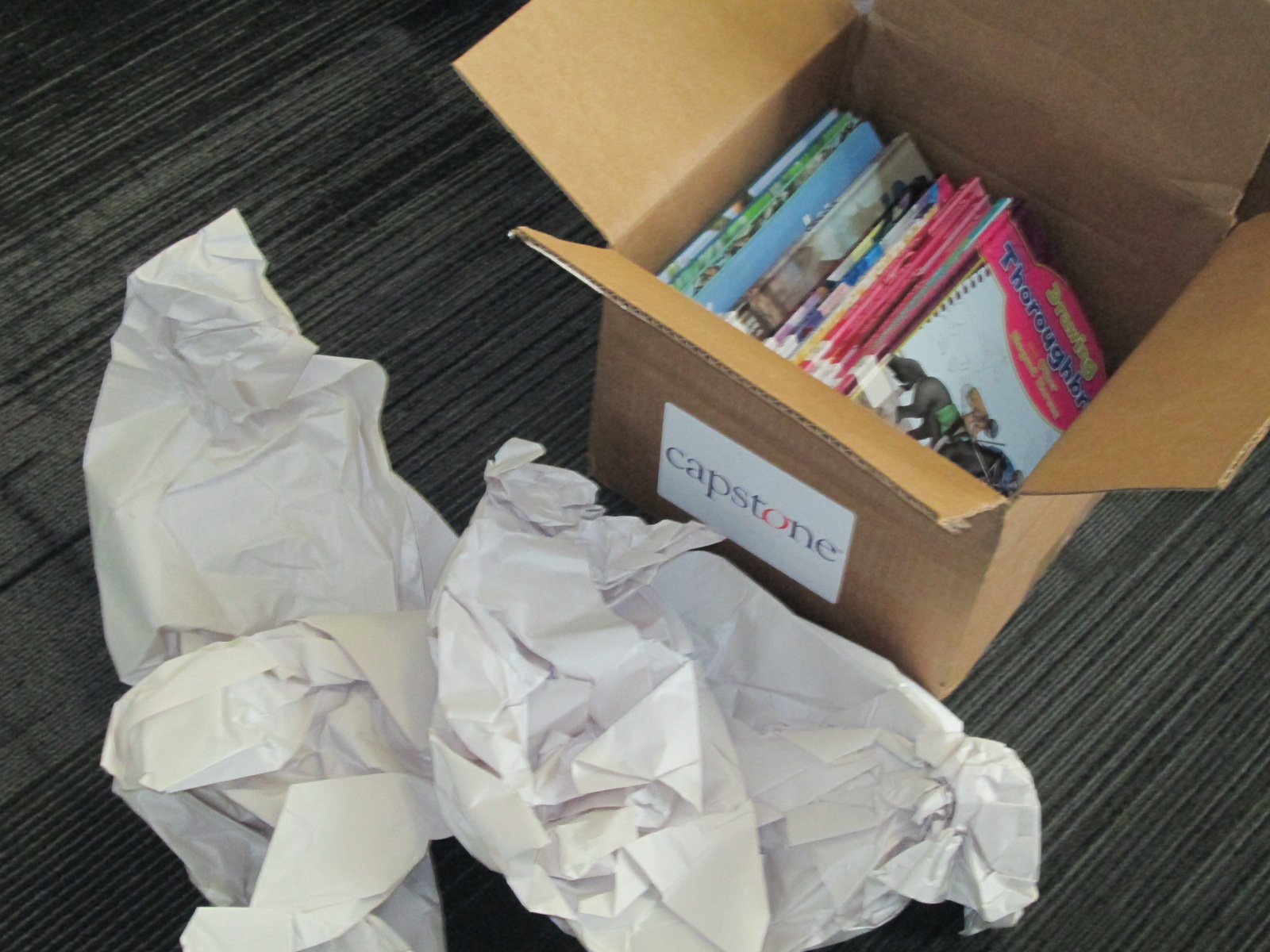
We thank Capstone and Avid Bookshop who were huge supporters of this project.  We wish the books were checked out right now, but with only one day of school left, we will wait with anticipation for the big checkout day.  It will be a nice way to inform students about the project who might want to participate next year.  My plan is to start much earlier next year!

A Year-Long Kindergarten Interdisciplinary Space Project

hocking makerspace exploration (6)

I have to take a moment to brag on another teacher and group of students in our school.  Kelly Hocking is an amazing Kindergarten teacher, and she has a talented group of Kindergarten students who are some of the biggest researchers and creators in our school.  I love how each year she finds something that her class takes an interest in and somehow weaves into every subject area and standard that they study in Kindergarten.  One year it was art.  Another year it was a study of maps and stretching the imagination.  This year it was space.

Kelly never knows at what point in the year something will pop up as an interest in her class, but this year it happened when they were doing a GoNoodle.  It happened to feature space, and it took the class into a series of questions and wonderings about space.

They started reading lots of books about space as well as studying the science standards about the day and night sky.

The more they read, the more they started to notice about space popping up in so many areas of their curriculum and life.

They launched into research mode and asked lots of questions.  In the library and classroom they used print and digital resources to learn about the planets and collect facts about each one.

In February, the class celebrated Fat Tuesday by dressing as planets and parading around the school.  Each costume was space-inspired and they handed out coins and beads to lots of classes.

Research continued in the classroom and the media center.  Students used all of their facts to write a series of notes.  In groups, the students put those notes in an order that made sense and prepared to make their own ebooks about space using the Storykit app.

At this point, we were approaching poetry month, so I suggested that the students think about space poetry.  I connected the class with several poetry books about space, and they started crafting some poems in class.  Ms. Kelly also has ukuleles in her classrooms, so the poems eventually were turned into songs with music composed by the students.

At our annual Poem In Your Pocket day, the groups of students performed their poetry songs for a live audience.  We even had poet, Laura Purdie Salas, listen in to the poetry since students were inspired by her space poems and songs.

At this point in the year, lots of attention turned to Mars and space exploration.  Students really didn’t want to travel to Mars themselves, but they did want to think about helping other people get there some day.  We created a Padlet to collect all of our research in the library and the classroom.

Eventually, the students wanted to start making some inventions to help Mars explorers, so we did a lot of tinkering in our Makerspace.  In class, students constructed elaborate prototypes of their inventions and did informational writing to accompany their creations.

If we had more time in our year, I’m sure Ms. Kelly and her students would have come up with even more miraculous things, but it truly was an amazing year of exploration and I’m glad that our library was a part of it.

hocking makerspace exploration (11)

You can read more about the library parts of this project in these posts:

Why Do We Explore Space: A Virtual Field Trip Opportunity

Can a Foodini 3D Printer Go to Space?

Kindergarten Mission to Mars: A Makerspace Exploration

Kindergarten Researchers in Action

Also, you can view Ms. Kelly’s full deck of slides which includes lyrics to a cumulative song that explores all of the planets and the facts the students learned.  They performed this song at our end of the year assembly.

View the full slidedeck here.