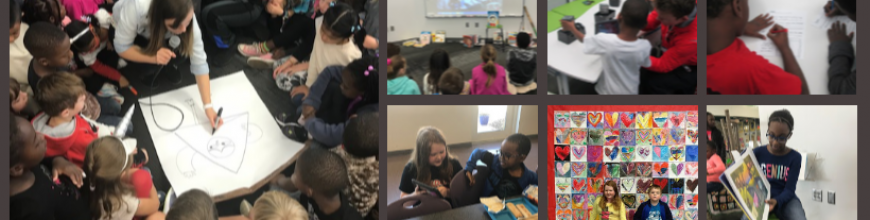
Cranking Up the Makerspace with Student Voice and Failure

IMG_6701

Since the first day of school, students have been asking me when our makerspace will start up.  Last year, we developed a great collaboration with Gretchen Thomas and her students at UGA to hold an open makerspace that students could visit on a weekly basis.  UGA is now in full swing, so we are finally ready to start our collaboration again.
IMG_6700

IMG_6702

This year, Gretchen has an eager class of students who will be coming in groups of about 4 every Tuesday and Thursday.  Rather than have every piece of the makerspace available right away, we’ve decided to focus on different aspects so that students develop some knowledge about the parts and gradually move to making choices about what they are really passionate about.  Students signup on an open signup sheet hanging outside the library.  There are 10-12 slots in three 30-minute sessions.  Each day has two choices.


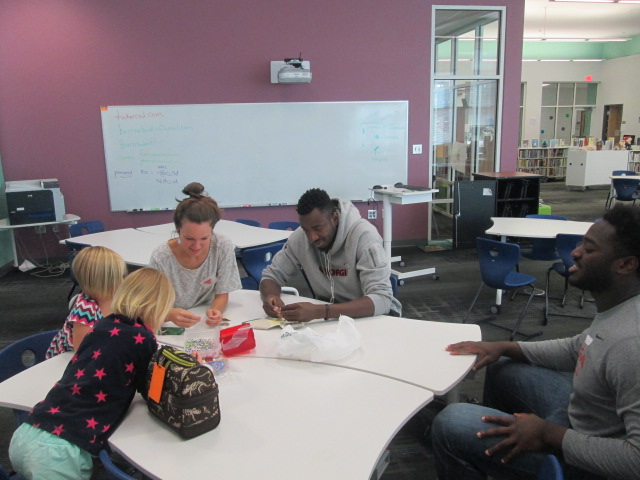
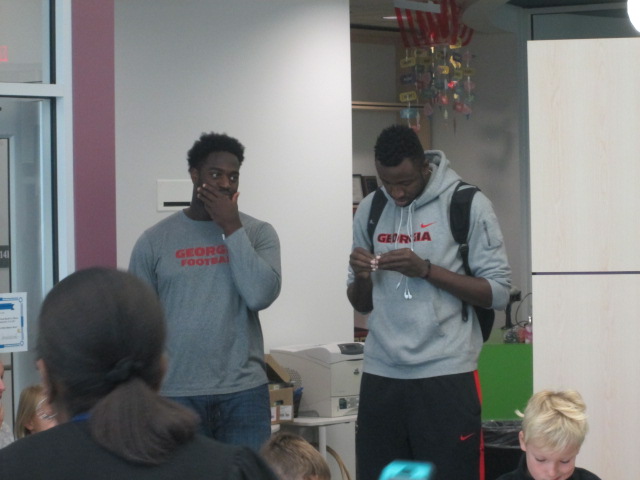
Eventually the UGA students will plan activities to bring, but for now, they are introducing things we already have in the space.  For our first session, I was excited to have Carlos and Carlena offer their craft.  Their story has grown so much since my first post about a craft they discovered in a magazine.  Just this week, Carlos and Carlena shared their craft during our Dot Day celebrations by telling Sherry Gick and her 2nd graders how they are making their mark by teaching others how to make this craft that they discovered.  I loved seeing them grow from an uncertainty of their interests to finding something they are excited to read about, make, and share with others.

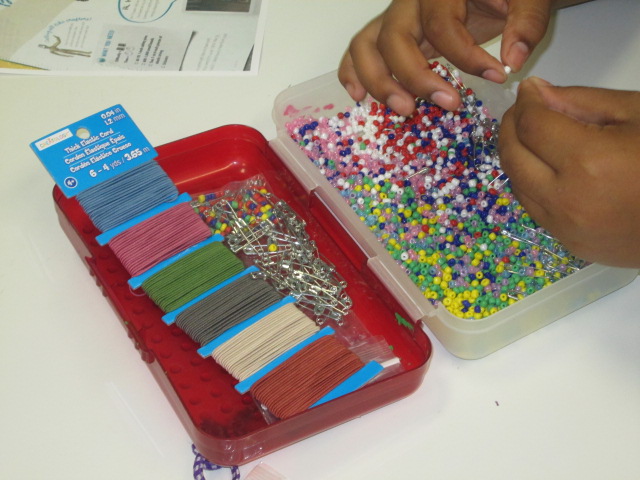
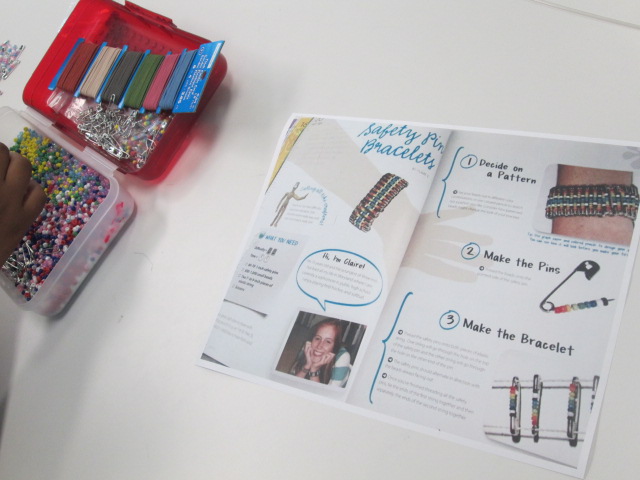
The UGA students in our makerspace this week brought supplies to do this beading craft with students as one option.  Carlos brought even more beads to use and shared his expertise with students in the makerspace as well as people just visiting the library with their mentors.

This aspect of our makerspace was very successful and calming.
IMG_6710

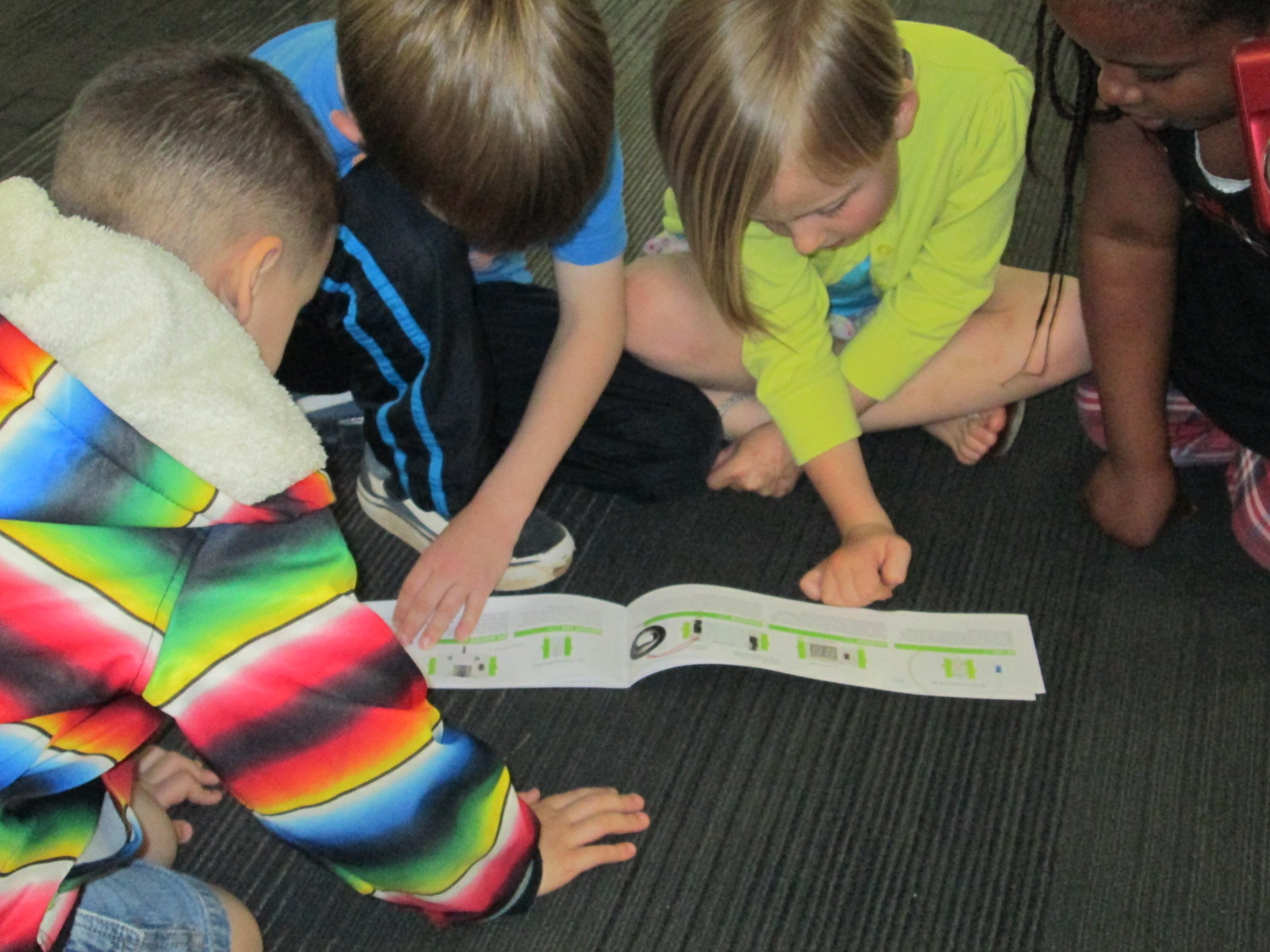
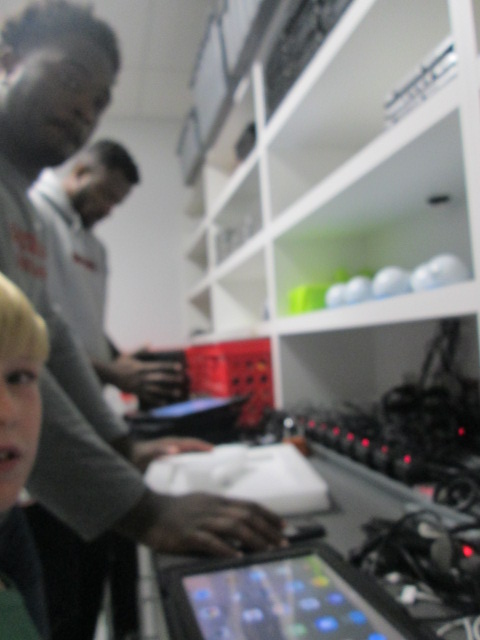
The other choice was to use the iPads with our Sphero robots.  Students were so excited to try out Sphero this year, but we ran into lots of problems.  First, the Spheros didn’t charge like they were supposed to.  Then, they were all connecting to random iPads instead of the one they were supposed to be connecting to.  Luckily, we had Sterling Bailey with us who had helped in our space last year.  He stay cool and collected through the whole epic failure and continuously thought of things he could try.  He helped the students to push through the frustration and keep trying different things to get their Spheros to connect and work.  While it wasn’t successful on the programming side of things, I think students learned a valuable lesson in maintaining patience in frustration and persevering.

We are ready to try again every Tuesday and Thursday through December!

Making Our Mark for International Dot Day 2015

What a week!  We connected the dots with so many places around our country, shared great stories, learned about other perspectives, and viewed student-created masterpieces.  I love the conversations that Dot Day brings out in our students.

It was an amazing week, and this time I’ll just let the pictures and tweets speak for themselves.

https://twitter.com/jbass2274/status/644218535430918146


Barrow Night at the Athens Clarke Public Library

library card 2

September is National Library Card Signup Month.  I’ve always dreamed that every student in our school would have a library card, but each year it seems to slip off my plate.  This year, I brought the idea up at our monthly media specialist meeting and we started brainstorming ideas with Evan Bush, the children’s librarian at the main branch of the Athens Clarke County Library.  At the same time, Deirdre Sugiuchi, librarian at Oglethorpe Elementary, shared how she invited students to meet her one night at the library to sign up for library cards.  This evolved into all of the 14 elementary schools signing up for a night to encourage families to visit the library.

Two weeks before the event, I sent home a flyer and wrote about it in my monthly newsletter.  I also created a Facebook event page on our David C. Barrow Elementary Facebook page.  Our principal also added it to her own newsletters that go out to families electronically and in print.  Each morning on our broadcast announcements, I shared 1-2 things that a public library card can get you.  I included things like holds from any PINES library in Georgia, ebooks, audiobooks, Bookflix, Mango foreign languages, ukuleles, and up to 50 books at a time.  I reminded students what families would need to bring in order to sign up for a card.  I also told students there would be a tour, a raffle, and a ticket to get a popsicle at school the following day.

From 5:30-7:00PM, I stayed in the children’s department of the Athens public library, and the Barrow students flooded in.  We had 43 students visit the library and multiple family members came along too.  Our principal and assistant principal came as well as several teachers.

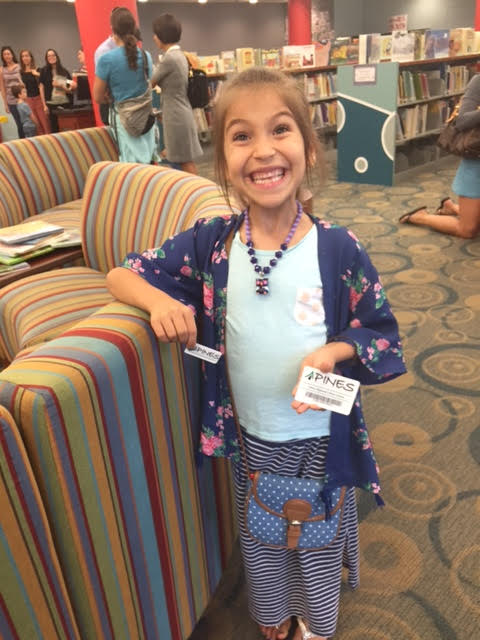
Students received bookmarks and buttons, entered a raffle, received their ticket for an ice pop, and had a great tour of the children’s department and all it had to offer.  Families connected with one another, and I showed several people how to search the online catalog and how to pair audio books with printed text.

library card

I would of course love to see more families attend, but this was a great first event.  We plan to hold a second event at a smaller branch of our library system that is right next to where some of our families live.

Happy Library Card Month!


Discovering Interests, Igniting Passions, and Amplifying Student Voice

IMG_6482

I’ve been doing a lot of work with teachers and students over the past couple of weeks focused on the IPICK strategy.  One of the big pieces of this strategy is “interest”.  The idea is that if we read things we are interested in then we are more likely to enjoy the books we read.  But…what if you don’t know your interests?

In each class I’ve taught, there has been a handful of students that no matter what you ask, what you suggest, or what stories you try to pull out they cannot name a single thing that they like.  This is frustrating, but rather than throw my hands up, it has made me very curious.  Why are these kids just shrugging their shoulders when you ask them what they like?  What can I do (we do as a school) to support all students in exploring their interests?

Ms. Spurgeon, a 4th/5th grade teacher, came to me with this exact same noticing. She had asked students to do an “All About Me” assignment, but when it came to interests, several students came up empty handed.  She wants us to do a project together this year using student interests, but we can’t start because we don’t know their interests.  We decided to try another route.

We were trying to decide what kind of text would immerse students in a variety of topics while still being very accessible to a range of reading levels.  I’m not really sure how we decided it, but we decided to try magazines.  I don’t really subscribe to magazines any more in the library, but we have all of the Ranger Rick, Zoobooks, Sports Illustrated, etc that we’ve subscribed to through the years.  I pulled out the boxes and put them all over the tables.  We did a very quick overview of how we really want to think about our interests and one way we do that is by trying as many things as we can.  Ms. Spurgeon talked about some foods she had tried like zebra and how she would never have known how much she liked the taste if she hadn’t tried it.  We modeled what “trying” a magazine looked like.  We were very specific to not read every page and were honest how we as adults often just flip through a magazine and pick out the pieces we want to read.  I loved this because I saw students perk up.  Knowing that they didn’t have to read the entire magazine was an invitation.  They dove in and started exploring.  They oohed and ahhed over so many pictures they saw, and Ms. Spurgeon and I had casual conversation with them about what they saw.

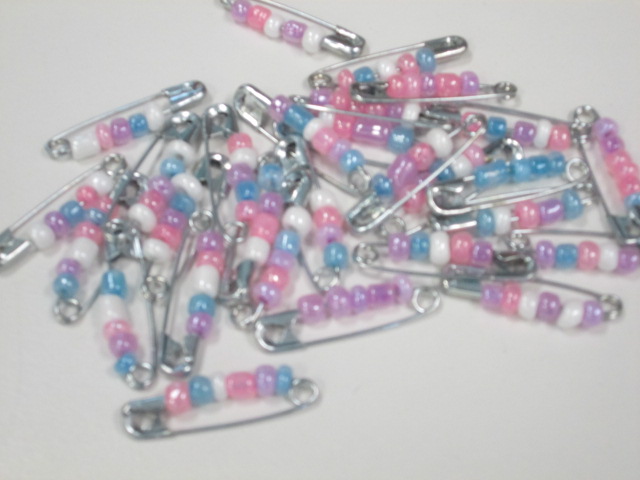
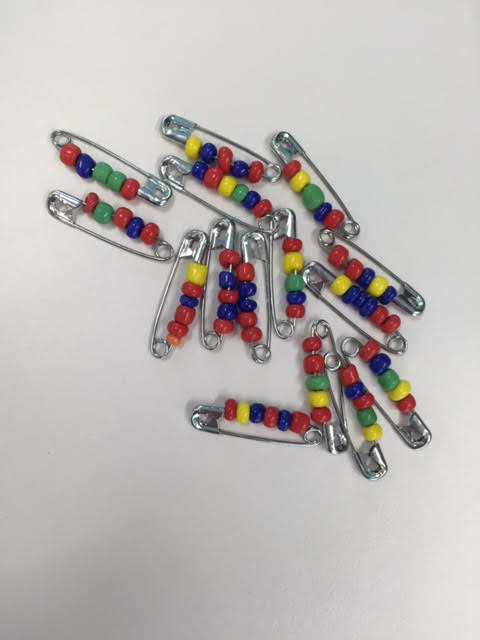
One moment stood out to me. Carlos and Carlena were looking at Kiki magazine together.  This magazine features a lot of fashion and crafts.  They discovered a page with a great 80’s style craft involving beads and safety pins.  The safety pins were put together on elastic string to create a bracelet.  They were glowing with excitement, so I told them I would take a picture of the page and send it to Gretchen Thomas at UGA to see if we could incorporate it into makerspace.

They looked a little shocked at first like, “You mean we could actually make this?”  Then, right after school I got an email from Carlos asking if I could email him the picture of the instructions.

It was that moment that told me I couldn’t let this momentum go.  This was a chance to empower individual students to explore a genuine interest.  Who cares if it was “just a craft”?  It was something they were suddenly passionate about when they had moments before been shrugging their shoulders.  That weekend, I went out and bought supplies, and I emailed them both first thing Monday morning.

I wasn’t surprised at all when I saw both of them walk in during their recess to get started on their project.

They came in for 3 days in a row during recess and didn’t even want to stop for lunch.

IMG_6481 carlos

As they’ve worked, I ‘ve shared their process via Twitter.  They have watched me documenting the process along the way, and I’ve told them that they are trying something out that they might teach to others or inspire other makerspace projects.

One day while we were working, Gretchen Thomas at UGA tweeted a picture of pins that her students had made.  When I showed it to Carlos and Carlena, they both smiled and said, “They’re doing that because of us?”

Another opportunity started to emerge because I saw how seeing the impact that they could have outside of our school walls was a motivator for them.  Next week for Dot Day, we are connecting with Sherry Gick and her 2nd grade class.  I asked Carlena and Carlos if they would share with this class how they are making their mark by being the first to try a craft in our makerspace and how they hope to pass on what they’ve learned along the way.  Without even blinking, they said yes.

IMG_6483

I have no idea where this is going to go, but I feel like I’ve tapped into something that I can’t let go.  I have to keep asking myself, my students, and our teachers how we can continue to explore interests, seek out individual passions, and amplify student voices beyond the walls of our school.  All of our students deserve to explore so many things to figure out what they are truly interested in.


Fostering Digital Leadership: A Next Step

chromville1I recently rolled out our 1 to 1 devices to grades 3-5.  During this orientation, I talked with students about digital leadership.  Since then, our oldest grades have started taking their computers home, but our 3rd graders are still waiting.  It’s their first year with their own computer and we are trying to do a better job of helping them understand what kinds of things they can do with their computer when they take it home.

The third grade teachers chatted with me about digital leadership and digital citizenship and we thought about what would be the most important thing to explore next.  We looked at Common Sense Media and their scope and sequence.  We also talked about ideas that I planted during the orientation.

Based on our discussions, I decided to focus on our digital snapshots.  What are we currently doing with technology?  What do we want to strive to do with technology?  What is ok to share?  What do we keep private?

I created a short set of slides to guide our conversation, and I’m fascinated by some of the things that came up.  I started with a small piece of my own digital snapshot.

It contained my blog as well as a screenshot of my home screen on my iPhone.  I asked students to look at this one piece of my digital life and see what they could learn about how I use technology.  They had conversations with partners and I eavesdropped.  I heard things like:

  • He misses a lot of calls and doesn’t answer his text messages
  • He likes to share things
  • He takes a lot of pictures
  • He likes to travel
  • He is very organized with his apps
  • He uses his phone to look up books in the library
  • He has 2 kids

The list continued to grow with each class, and each class inferred something more than the last class.  I was actually amazed about how much they could learn from me just by focusing on my phone.  In fact, that’s all they focused on.  Not a single student talked about the picture of my blog.  There focus was completely on the apps on my phone, which was also interesting to me.

I used their noticings to connect to some of the decisions I make as a user of technology.  I talked about how I know when I share a picture or a blog post that it is going to be seen around the world.  I once again shared our blog map to remind students where people are looking at our work.

Next, I had students talk with partners about what their digital snapshots look like.  How are they using technology in their everyday lives?  We started adding some of these ideas to a doc.  We didn’t capture everything, but I at least wanted a list we could refer to.

All of this was leading up to us spending more time talking about using our devices in school and at home for educational purposes.  I loved having this list because most students thought it was bad for them to go onto Youtube.  Many were surprised when I talked about all of the great things Youtube is for.  In most classes, we spent a bit of time brainstorming why we might use Youtube.  This list also gave me some insight into what students are doing at home that I haven’t even heard of.

After students reflected on their own digital snapshot, I showed students what other students have already done at our school with technology.  I couldn’t show everything, but I gave them a quick look at pictures to show some of the awesome ways we’ve used technology to connect, collaborate, create, and share.

Finally, I asked students to spend time brainstorming how they might use their 1:1 technology.  This was only a starting place.  Many students focused on videos, games, or websites they might visit, so we have some work to do in regards to thinking about our devices as creation tools and tools that connect us to opportunities.  Students added their ideas for how to use technology at home and keep it connected with learning and appropriate use for an elementary student to a padlet.

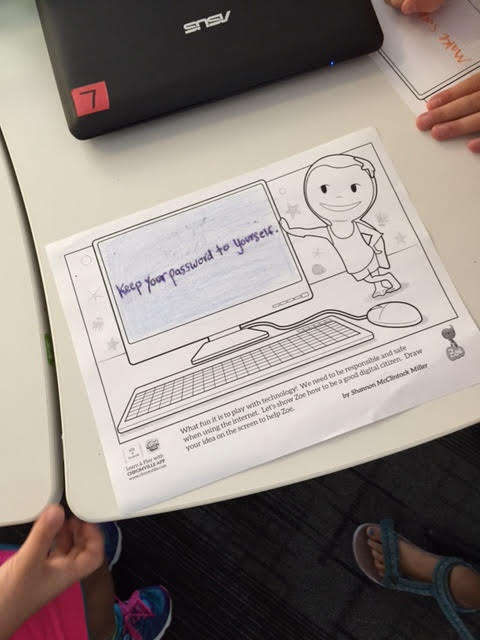
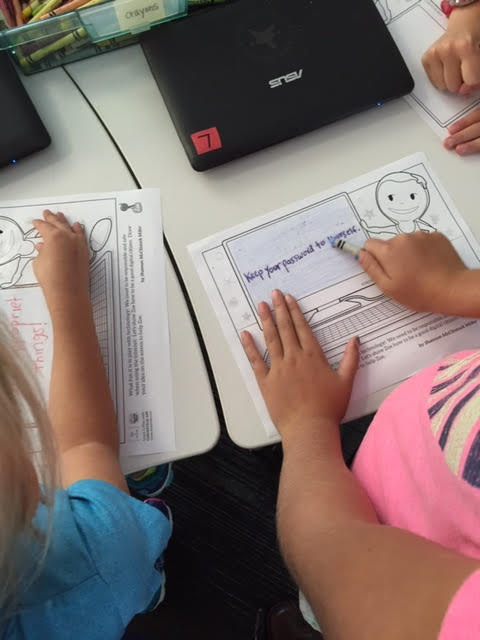
Some students were also able to move on to a wonderful coloring page from the augmented reality app, Chromville.  This coloring page features Zoe and a computer screen.

Students can draw or write about a digital citizenship message on the screen.

chromville 6 chromville 5

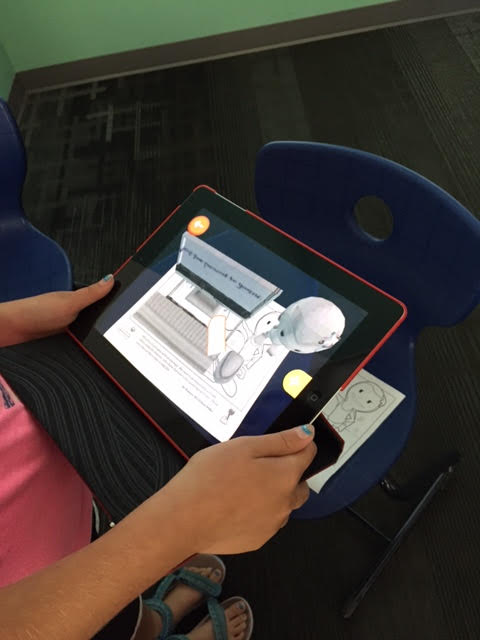
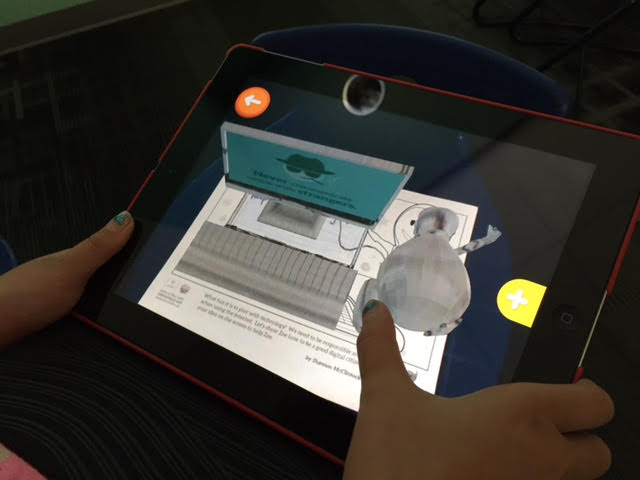
Using the Chromville app, Zoe comes to life on the screen displaying the students’ digital citizenship message and you can even click the mouse to display additional messages about staying safe online.  I want to make sure all of the students get to try this out, but only a few made it this far during our hour together.

chromville4 chromville 5 chromville 6

We will continue to revisit these topics in classrooms and during library projects and lessons throughout the year.  If you have an innovative way to have these conversations with your students, I would love to hear them.

chromville


Creating Hype for an Author Visit: Circus Mirandus

CMolfVfWsAA034H

We are over the moon with excitement that Cassie Beasley is coming to our school on September 3 thanks to her, her publisher Penguin Random House, and Avid Bookshop.  Sometimes author visits happen at the last minute, but this one has been in the works since the summer.  I read the book and fell in love with the story.  Even before I was done, I was talking with Avid Bookshop about the possibility of Cassie coming to our school.  We created a proposal together, and many emails and conversations later the visit was scheduled.

As a part of my proposal, I suggested that our PTA would buy a copy of the book for all 3rd-5th grade homerooms.  The book would be available to students to read or the teacher could even read it aloud.  I’m excited to say that our entire 3rd grade is reading the book aloud and many of the 5th grade classes are starting it. During our library orientation, I read aloud the beginning chapter of the book as well as the beginning of the chapter starting on p. 65 which details how Ephraim first made it into Circus Mirandus.  We learn that you can’t pay to get into the circus but must instead offer something of your own to the ticket taker.  For Ephraim, it’s a fish from his boot which results in a week-long pass to the circus.

mirandus 2

Reading from the book is enough to create hype because it’s just that good.  However, a circus theme as well as the contents of the book lend to some other fun opportunities for students to engage with the book ahead of the author visit.  Our wonderful PTA also bought 20 additional copies of the book to be given out at our discretion.  I’ve decided to give 10 of these away to students who participate in 2 opportunities in the library.

CMDQ8iAUkAADLgR

The first opportunity is to think about what your ticket into Circus Mirandus would be.  I’m encouraging students to either make, bring in, or even take a picture of the object they would offer as their ticket.  I made a short ticket template for them to fill out with their name, ticket description, and how long they think the ticket would be good for at the circus.

We are displaying these on the tops of the library shelves.  When they turn in their “ticket”, I give them a ticket to put their name on and drop into our fish bowl.

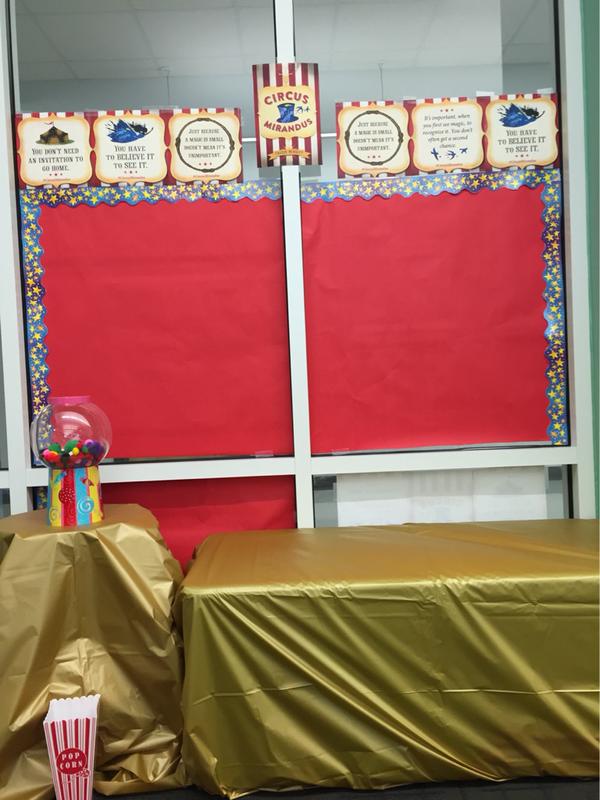
The second opportunity is a photo booth.  I made a backdrop of red with quotes from the book.  I covered a table and cushion with a gold tablecloth and filled an empty Mariah Carey perfume container with fuzzy pom poms to look like gum balls.  Then, I ordered a set of circus photo booth props from Oriental Trading.  I put all of this together and included the wearable books from Capstone which contain beards, hats, masks, and teeth.  If students take their picture in the photo booth, then they earn another ticket into the drawing for a book.  I plan to print out the photographs and display them on the library windows.

Before the author visit, I will draw out 10 names and announce the winners so that Cassie can autograph the book for them.

Along the way, I’m tweeting about our fun and tagging Avid Bookshop, Cassie Beasley, and the publisher so that they can all follow along in the fun.

I have some other special decorations in the works, which I plan to complete this week.  I’ll keep those under wraps for now.

I’ve been emailing with Cassie and planning the visit.  I know that it is truly going to be a magical experience for us all when she comes.

Expecting the Miraculous with Cassie Beasley & Circus Mirandus

I’m drawn to powerful words and stories, and over the summer, my eye was caught by the cover of Circus Mirandus by Cassie Beasley.  I had seen the book getting considerable buzz, but even without the buzz, the cover, with its cutout top hat and hidden world beneath the tent, caught my eye.

The back cover slogan, “You have to BELIEVE IT to see it”, spoke to me.  In fact, it spoke directly to our motto in the Barrow Media Center to expect the miraculous every day.  In our library, we believe in everything that we attempt.  We don’t always know what is going to happen, but we know that if we believe that we can do something, then miraculous things will happen even if they aren’t exactly what we thought would happen in the first place.

mirandus 3

This summer I visited our local independent bookstore, Avid Bookshop, and picked up my copy.

I only had to read a few words to know that I was holding magic in my hands.  Circus Mirandus is about a magical circus that only is visible to the people who believe in it.  In fact,  you can’t even get into the circus with a regular ticket.  Entry is different for each person who comes because each person has a different purpose for being there.  Micah Tuttle’s grandfather tells him fantastical tales of the Circus Mirandus and Micah first thinks these are only stories.  Granpa Ephraim becomes very sick and says that the magical Lightbender from the circus has promised him a miracle and he is doing his best to make sure the miracle is granted.  Micah realizes the circus is more than stories and makes it his mission to find the circus and bring the Lightbender to his grandfather to grant his miracle.  This book has the magic of Peter Pan, Wizard of Oz, Where the Mountain Meets the Moon, and more.

mirandus 2

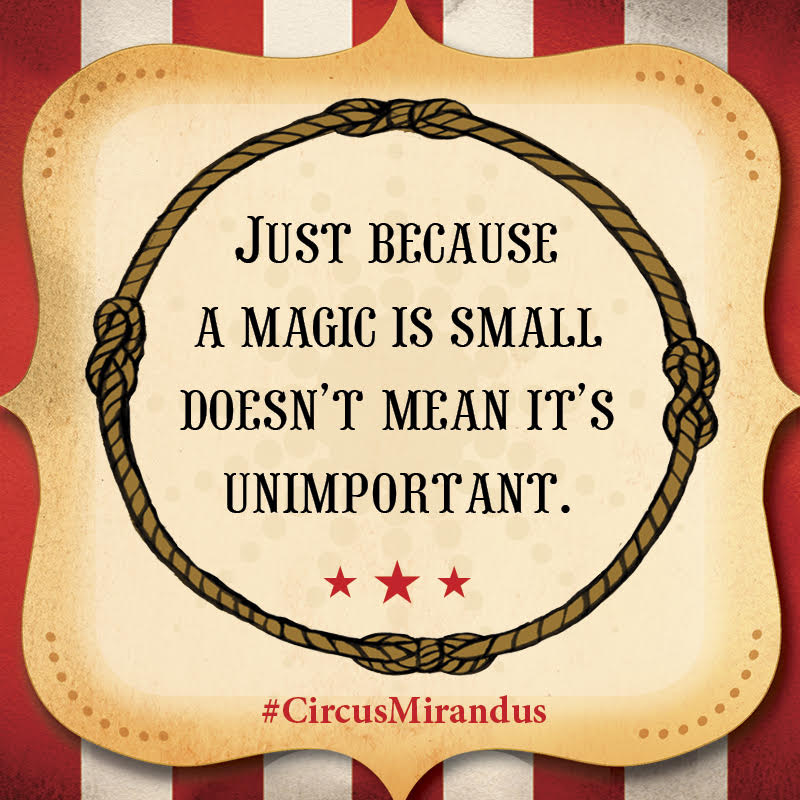
When I read, quotes stand out to me.  Sometimes there is a single quote from an entire book that resonates with me.  I often tweet it out.  It happened this time, too.  One quote stayed with me:

I won’t give away how this quote fits into the plot of the story, but for me, it reminded me of how every day in our library we expect the miraculous.  It reminded me that often times there are very small magical things that happen even though I may pulling my hair out, dwelling on all the things I haven’t accomplished, and thinking about all of the things that went wrong.  However, it’s those small, magical moments that stand out.  It’s those small magical moments that are the most important and remind me why I press on.  It’s those moments that remind me the importance of empowering the voices of our students.

mirandus 4

Even Cassie’s dedication in the book reminds me of the importance of empower our students to believe that they can do anything they set their minds to.  She writes in her dedication:

“For Daddy and Mama.  When I was little, you told me I could do anything.  I’m not so little now, but you keep saying it.  I’m starting to think you really believe it.  I love you for that.”

I didn’t even have to finish Circus Mirandus to know that I wanted my students to experience the book and that I wanted Cassie Beasley to visit our school, but when I did finish, I knew that she had to.  When I read that she lives in “rural Georgia”, I immediately emailed Rachel Watkins at Avid Bookshop to learn more.  Between me, Rachel, and Janet Geddis, we began a conversation about what an author visit would look like and started talks with the publisher and author.  It took some time, but in my heart, I really believed that Cassie Beasley would come to our school at some point this year.

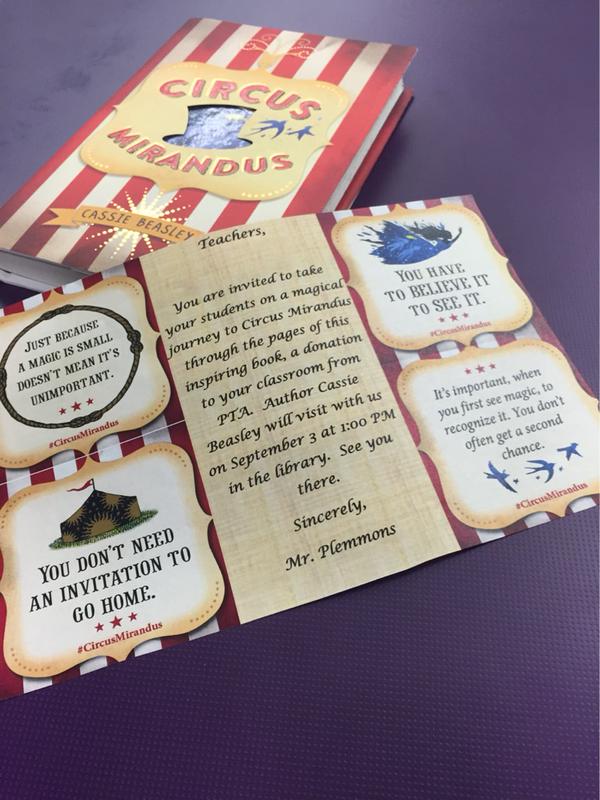
Just a few days ago, we got the confirmation that Cassie will visit our 3rd-5th grade on September 3 at 1:00.  She will also do an in-store visit at Avid Bookshop.  As part of my proposal, I said that I would introduce the book to all 3rd-5th graders and would also get a copy for every 3rd-5th grade classroom to use as a read aloud.  I love Avid Bookshop, because they got us our 10 copies for the classrooms just in time for school to begin.

Students will have an opportunity to pre-order her book for signing.  We are also purchasing additional copies of the book to give to classrooms thanks to our wonderful PTA.  You are probably wishing that you could also get your signed copy.

If you are in the Athens area, visit Avid Bookshop on September 3 from 4:30-5:30PM.  If you can’t make it to Athens, you can still get your autographed copy.  Just visit Avid’s website to order a copy.  Make a note that you would like to get your book signed, and they will ship your book to wherever you are!

We look forward to meeting Cassie Beasley in our school on September 3.  Expect to see lots of tweets and pictures during the event and a full post afterward.  I highly encourage you to read Circus Mirandus.  Your life will be rewarded!

mirandus 1


A Year-Long Kindergarten Interdisciplinary Space Project

hocking makerspace exploration (6)

I have to take a moment to brag on another teacher and group of students in our school.  Kelly Hocking is an amazing Kindergarten teacher, and she has a talented group of Kindergarten students who are some of the biggest researchers and creators in our school.  I love how each year she finds something that her class takes an interest in and somehow weaves into every subject area and standard that they study in Kindergarten.  One year it was art.  Another year it was a study of maps and stretching the imagination.  This year it was space.

Kelly never knows at what point in the year something will pop up as an interest in her class, but this year it happened when they were doing a GoNoodle.  It happened to feature space, and it took the class into a series of questions and wonderings about space.

They started reading lots of books about space as well as studying the science standards about the day and night sky.

The more they read, the more they started to notice about space popping up in so many areas of their curriculum and life.

They launched into research mode and asked lots of questions.  In the library and classroom they used print and digital resources to learn about the planets and collect facts about each one.

In February, the class celebrated Fat Tuesday by dressing as planets and parading around the school.  Each costume was space-inspired and they handed out coins and beads to lots of classes.

Research continued in the classroom and the media center.  Students used all of their facts to write a series of notes.  In groups, the students put those notes in an order that made sense and prepared to make their own ebooks about space using the Storykit app.

At this point, we were approaching poetry month, so I suggested that the students think about space poetry.  I connected the class with several poetry books about space, and they started crafting some poems in class.  Ms. Kelly also has ukuleles in her classrooms, so the poems eventually were turned into songs with music composed by the students.

At our annual Poem In Your Pocket day, the groups of students performed their poetry songs for a live audience.  We even had poet, Laura Purdie Salas, listen in to the poetry since students were inspired by her space poems and songs.

At this point in the year, lots of attention turned to Mars and space exploration.  Students really didn’t want to travel to Mars themselves, but they did want to think about helping other people get there some day.  We created a Padlet to collect all of our research in the library and the classroom.

Eventually, the students wanted to start making some inventions to help Mars explorers, so we did a lot of tinkering in our Makerspace.  In class, students constructed elaborate prototypes of their inventions and did informational writing to accompany their creations.

If we had more time in our year, I’m sure Ms. Kelly and her students would have come up with even more miraculous things, but it truly was an amazing year of exploration and I’m glad that our library was a part of it.

hocking makerspace exploration (11)

You can read more about the library parts of this project in these posts:

Why Do We Explore Space: A Virtual Field Trip Opportunity

Can a Foodini 3D Printer Go to Space?

Kindergarten Mission to Mars: A Makerspace Exploration

Kindergarten Researchers in Action

Also, you can view Ms. Kelly’s full deck of slides which includes lyrics to a cumulative song that explores all of the planets and the facts the students learned.  They performed this song at our end of the year assembly.

View the full slidedeck here.

Continuing Our Battle of the Books with Even More Student Voices

IMG_5936

Each year we have a program called Battle of the Books in 3rd-5th grade.  This is a reading competition where teams of 5 students read a list of 10 books.  They work together to answer questions about the books in several rounds of competition in order to be crowned the Battle of the Books Champion.  Each year there are students who don’t participate in battle of the books for many reasons.  Sometimes they are unsure if they want to do it and by the time they decide it’s too late.  Sometimes they have too many other things going on that they can’t fit it in.  Whatever the reason, there are students who are left out. This year, one of our teachers, Ms. Mills, recognized that in 3rd grade and wanted to give these students a 2nd chance to participate.

IMG_5943


Since we are near the end of the year, reading the long chapter books that are on the regular list weren’t reasonable to consider, so she pulled several books that students could realistically finish, understand, and compete with.  Students read these books in small groups as well as during state testing when they finished their test.

Deciding to choose new books  meant that there weren’t questions written for these books, so she knew she would have to come up with every question asked.  I love what she decided to do.  She took the books to a 5th grade class and asked them if they would read the books and come up with questions to ask the 3rd graders.  The 5th grade students worked with their teacher to craft questions and they put their names on each question written.  During the competition, Ms. Mills or Ms. Garrett would say who a question was written by.

IMG_5937

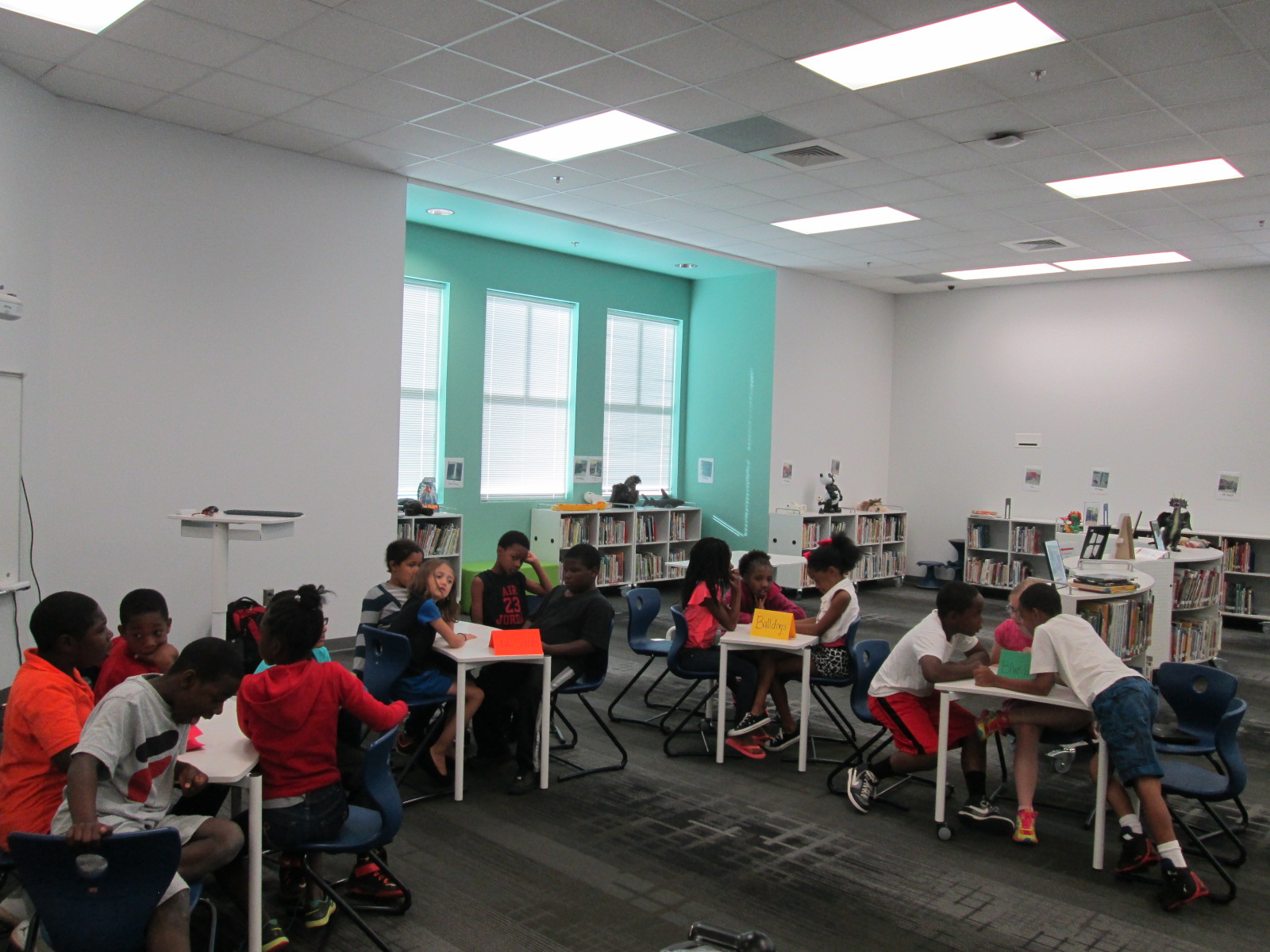
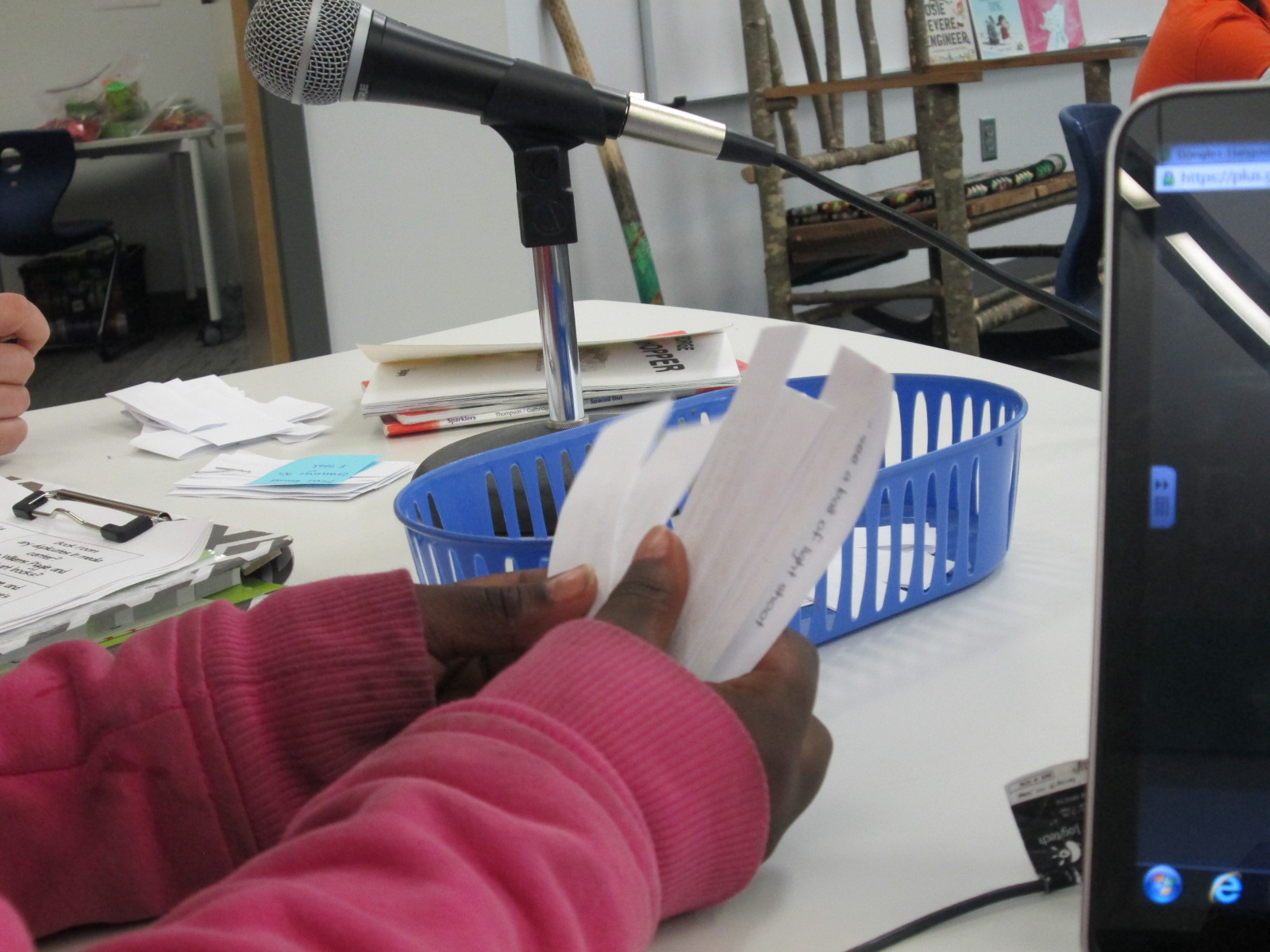
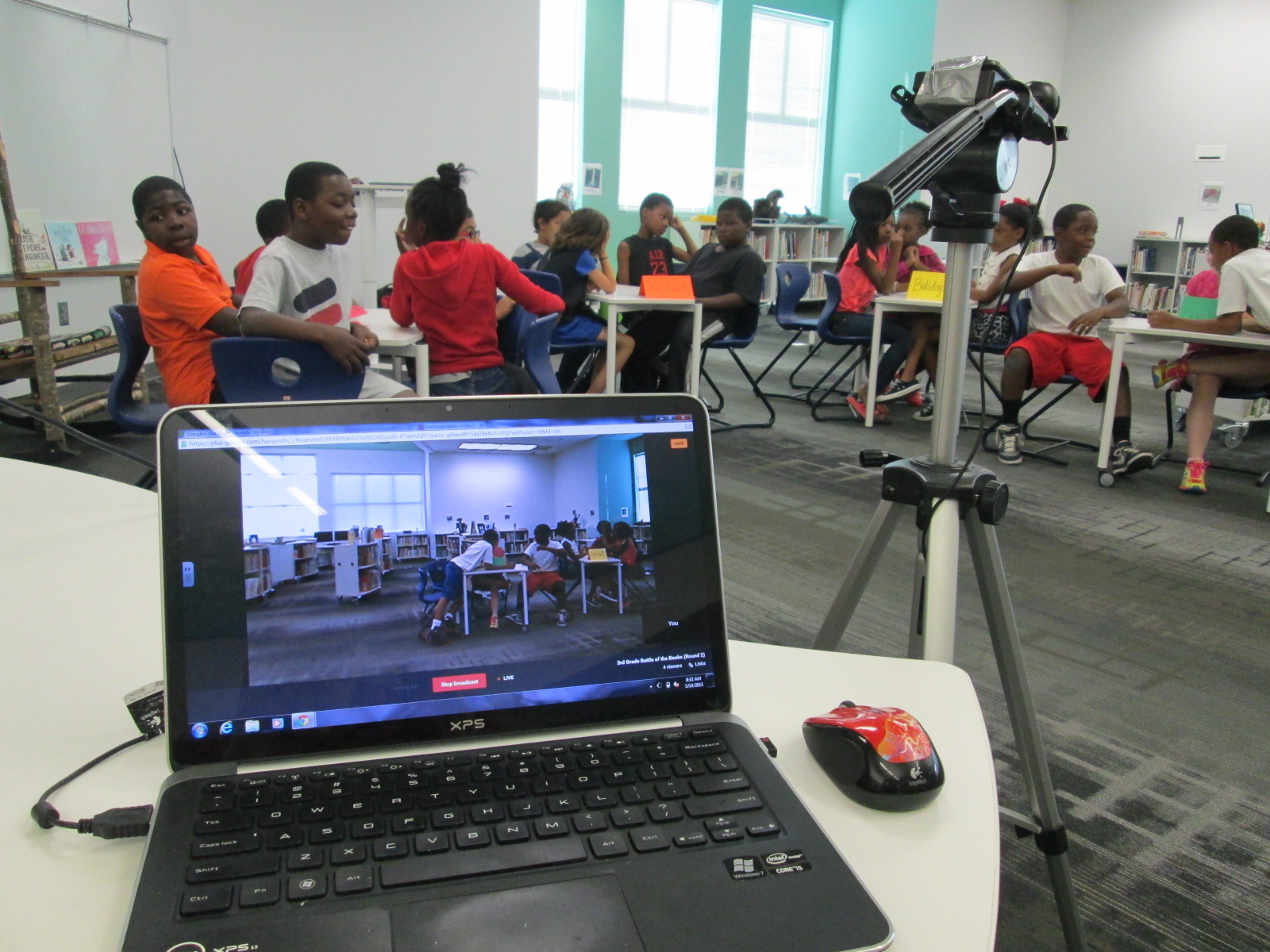
We decided to broadcast the competition through Google Hangouts on Air so that all 3rd grade classes could watch and support their friends.  I setup the hangout and emailed the link to all of the teachers, and of course, we now have an archive of our competition for anyone else who wants to watch.  Students helped pull the questions from a basket of questions and the teachers asked them. Each team received 8 questions and the teachers kept track of which team got the most questions correct.  It was a tight competition because the students knew the books so well.

IMG_5944

I take no credit for any of this competition, but I just had to highlight what these teachers and students did.  Bravo to Ms. Mills and Ms. Garrett for giving even more of our students a voice in this fun competition during the busy end-of-the-year rush.  They all did an awesome job, represented our school well, and showed that they knew their books well!

Student Book Budgets: Building Wish Lists and Making Tough Decisions

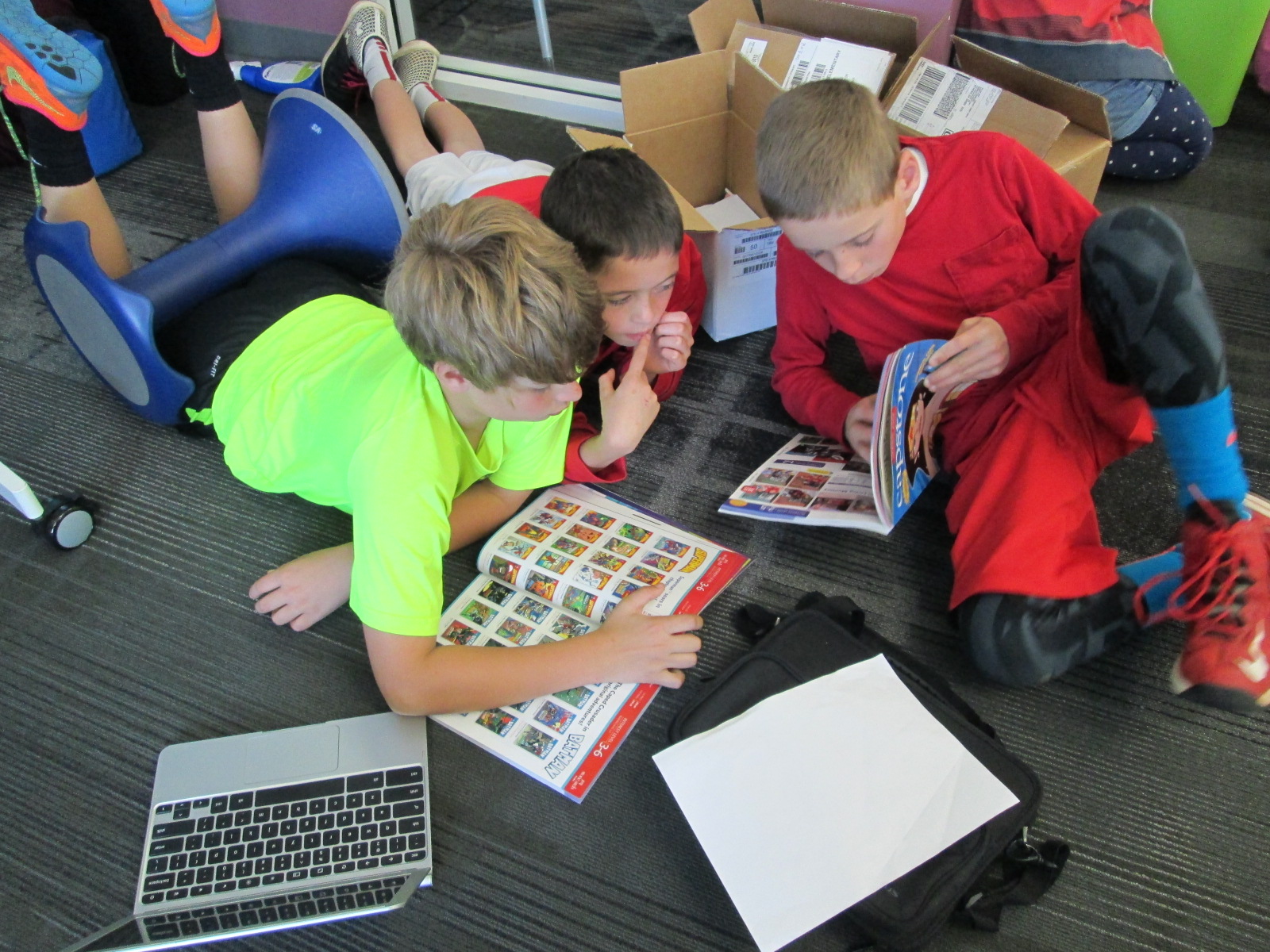
narrowing (12)Our student book budget group is hard at work.  So far, they have made lists that total almost $4,000, but our budget is $2,000.  Isn’ t this the struggle that we all face with budgets?  How do you decide what to buy and what not to buy?

During our most recent session, we revisited our goals.  We decided based on our survey data to purchase books about

  1. Animals
  2. Sports
  3. Mystery
  4. Comics and graphic novels
  5. Action Adventure
  6. Horror/Scary
  7. Fantasy
  8. Humor
  9. “How to”
  10. Music
  11. Games/Video games

As we made wish lists, our excitement over so many wonderful books caused us to add several things to our list that really didn’t match our goals so we had to think about this.  Do we stick with our goals or do we give ourselves permission to buy whatever we want?  The general consensus was to stick to our goals but possibly have some extra additions here or there.

Since we are way over budget, we have a lot of work to do.  During the most recent work session, we divided the responsibilities.  We identified 3 things that needed to happen:

  1. Continue searching through the Capstone catalog for books that match our goals and adding them to the list
  2. Examine the current Capstone list to see what does not match our goal or what might need to be cut
  3. Continue searching for books that match our goals that could be purchased from Avid Bookshop

One group of students formed an independent group to work on the Avid list.  They used Avid’s website, Amazon, and Novelist to look for books that might be of interest.

The students in the Avid group accidentally lost part of a title on our list, so we consulted our friend Will Walton at Avid via Twitter.

https://twitter.com/WillWalton8/status/591652594952568832

The author of the book even jumped in on the conversation.

https://twitter.com/AaronStarmer/status/591658670112509952

Another group of students worked with Mr. Coleman, a 4th grade teacher, to examine our existing list.  He was great at facilitating a conversation with this group.  Only one person at a time was in charge of the mouse to delete books from the list, but all students were engaged in conversation about the books.  As usual, it was heated at times and at other times there was quick consensus about a book.  They narrowed the list below $3,000, but they knew that another group was adding more books to the list.

I worked with the third group who each chose one of our goals and looked through the Capstone catalog for books that matched.  They once again used the easy scan feature to scan books into the list.  I had a great conversation with a student who was adding an animal book to the list.  She asked me, “Do you think this is a book that fits the nature category?”  It really seemed like she was just putting the book on the list because it matched instead of putting it on the list because she thought people would read it, so I asked her about that.  I asked, “Do you think this is a book that kids would be excited about reading?” She paused.  “Do you think this is a book that a teacher would assign someone to read?”  She said yes.  It was a good time for me to say that I strongly believe that the book budget group is a time for kids to buy books that they think kids will be excited about reading.  I can buy books that teachers can use or books that fill gaps in our collection at another time.  This budget is all about what students want.  She smiled and continued looking for a books that mattered to students.

At the end of our time, I don’t think we narrowed our cost at all, but we did get closer to finding books that matched our goals.  Our next step will be to look closely at our budget and the promotions that Capstone offers to consider what our budget really is.  With Capstone Rewards, we really have a lot more money because if you spend $1750 you get 30% in rewards.  This might help our decisions during our next meeting.